INVESTING IN STUDENT ACHIEVEMENT 2019 - OSTA-AECO
←
→
Page content transcription
If your browser does not render page correctly, please read the page content below
INVESTING IN
STUDENT ACHIEVEMENT
THE ONTARIO STUDENT TRUSTEES’ ASSOCIATION
2019 PRE-BUDGET SUBMISSION

                                            2019
About OSTA-AECO
The Ontario Student Trustees’ Association-l’Association des élèves conseillers
et conseillères de l’Ontario (OSTA-AECO) is a registered non-profit, nonpartisan
organization, and the largest student stakeholder group in Ontario, representing
approximately 2 million students. The General Assembly is comprised of
student trustees from public and Catholic school boards across the province.
Members of the association work tirelessly throughout the year to advocate for
student voice, and strive to work with provincial partners in government and
otherwise to improve Ontario’s education system for its students.

More information about OSTA-AECO’s work can be found at www.osta-aeco.org
08

Table of
Contents                                 10

05   Introduction

06   At a Glance
                                               13
08   Recommendations on:
     08   Learning Opportunities Grant
     10   Addressing Capital Repairs
     13   Rural and Northern Ed. Fund
     16   OSTA Supports

19   Conclusion

21   Appendices (OSTA-SUPPORTS)
     A
     B
          Student Trustee Budget
          Proposed Future Funding
                                              16
     C    OSTA-AECO Budget

23   Endnotes
“To fund Ontario
students is to fund
Ontario’s future. The
students of Ontario
deserve an equal
opportunity to achieve
their full potential,
regardless of the social or
economic barriers
they face.
Through strategic and equitable funding in much needed areas, we are able to build upon the
education system where every student can succeed and become responsible global citizens.
The 2019-2020 budget provides a critical opportunity to build an education system where no
student is left behind. In order to reach this objective, the province needs to invest in
supporting student success. Funding for Ontario education must be rooted in the fact that there is
no investment more important to the future of the province than a strong publicly-funded education
system. Education provides a range of crucial supports to the variety of learners in schools across
the province.

It provides world-class skill development for today’s youth so that they will be empowered to take
on not just the jobs of today, but of the future as well. Publicly funded education develops students
as capable global citizens, drives opportunities in communities, and ensures Ontario continues to
have one of the strongest and most diverse workforces in the world. Ontario’s students are indeed
Ontario’s future, and OSTA-AECO believes that committing to these next steps is the best way pos-
sible to safeguard this future and continue to build Ontario’s world class education system to be
the best it can be.”

                                                                                      Amal Qayum,
                                                                             President, OSTA-AECO

Introduction and Foreword                                                OSTA-AECO Budget Submission 2019   05
Recommendations
at a glance
01| Breaking Down
Barriers to Opportunity
a) The Government of Ontario should increase
the investment in the Demographic Allocation of
the Learning Opportunities Grant (LOG) to match
the recommended funding level of the

                                                         01
Ministry of Education Expert
Panel Report on the LOG.

Current Cost: $362.9 million (2018-19)
Additional Investment: $227 million

                                                         02
02 | The Foundations
of Success
a) The Government of Ontario should increase invest-
ments in the School Renewal Allocation to be 2.5% of
school replacement value to rectify the root cause of
the capital repair backlog facing Ontario’s schools.

Current Cost: $360.7 million (2018-19)
Additional Investment: $1.06 billion

b) The Government of Ontario should extend the
School Condition Improvement program and maintain
SCI funding at current levels until the capital repair
backlog is eliminated.

Current Cost: $1 billion (2018-19)
Additional Investment: $0

Recommendations at a Glance                               OSTA-AECO Budget Submission 2019   06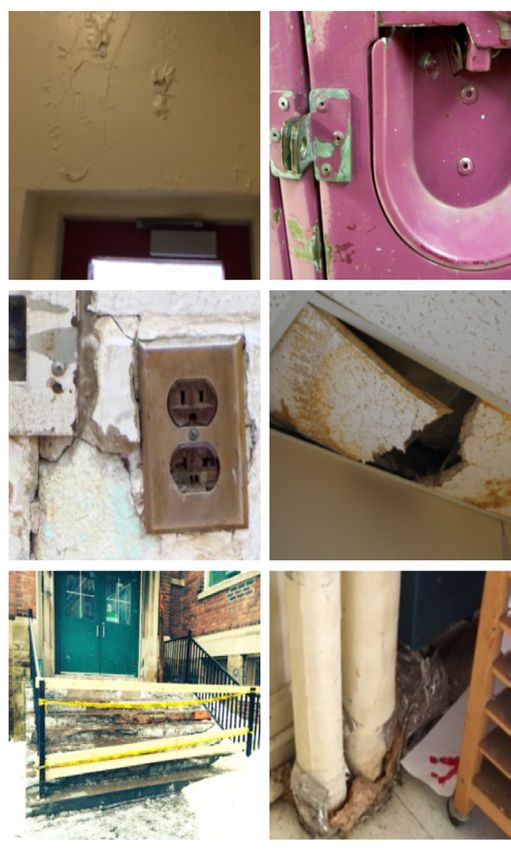
03 | Eliminating
                                   Geographical Obstacles
                                          a) The Government of Ontario should
                                      maintain the Rural & Northern Education
                                   Fund and retain its current level of funding to
                                       continue supporting students in remote
                                                        locations within Ontario.

                                         Current Cost: $20.2 million (2018-19)
                                                    Additional Investment: $0

                              03
                              04      04 | The Magnitude of
                                              Student Voice
                                               a) OSTA-AECO’s membership and
                                          conference registration fees should be
                                                included with the current funding
                                        provided by the Ministry, on an equitable
                                       basis, similarly to the funding provided to
                                         school boards that is used to purchase
                                             memberships for provincial trustee
                                                                     associations.

                                              Additional Investment: $324,000

Recommendations at a Glance                        OSTA-AECO Budget Submission 2019   07
01                Breaking Down Barriers
                    to Opportunity
  The Learning Opportunities Grant (LOG)

Why?

The Learning Opportunities Grant (LOG), a          Experiences students have during their time in
portion of the Grants for Student Needs (GSNs),    school shape the rest of their lives, affecting
                                                   areas such as their social skills, post-secondary
is a product of an expert panel appointed by
                                                   pathways, and various career opportunities.
the Ministry of Education in 1997 to establish a
                                                   However, many students face significant eco-
funding stream that allows boards to continue      nomic and social barriers to academic achieve-
the support of at-risk students. 1                 ment such as family income level and refugee
                                                   status.
The LOG is currently comprised of 10 different
monetary allocations, the largest being the        Regardless of the adversity students face, each
Demographic Allocation, currently set at $362.9    one enters Ontario’s schools with incredible
million for the 2018-19 academic year. The         potential; our publicly funded education system
                                                   must strive to provide all students with valuable
Demographic Allocation provides funding for
                                                   opportunities to help shape their futures.
students that are facing the following socioeco-
nomic barriers: low income, recent immigration,
low parental education, and single-parent fami-
lies.2

  (1) The Government of Ontario should increase the investment in
 the Demographic Allocation of the Learning Opportunities Grant to
      match the recommended funding level of the Ministry of
            Education Expert Panel Report on the LOG.
             Current Cost: $362.9 million (2018-2019)
               Additional Investment: $227 million

Breaking Down Barriers to Opportunity                                OSTA-AECO Budget Submission 2019   08
Investment Rationale
A key recommendation of the 1997 Expert Panel on the
LOGs was that funding be allocated at $400 million an-
nually; this would be roughly $590 million3 today adjust-
ed for inflation. However, only $185 million4 was invested
at that time, and this disparity in funding has never been
bridged. Nonetheless, the Demographic Allocation of the
Learning Opportunities Grant has an extraordinary track
record of improvement in results for Ontario’s students.

School boards across the province have used          The selected Model Schools then receive a range
the funding to create unique, innovative, and lo-    of additional supports, targeted to the specific
cally responsive programs which have done ex-        needs of each specific school. Through the mod-
ceptional work to enhance student achievement.       el school program, student success8 has been
This grant has provided schools with the option      significantly enhanced on a variety of indicators
to fund teacher aides, numeracy and literacy         as projected graduation rates are seeing a 15%
assessments, before and after-school programs,       increase in a 5-year span.9
and much more.5
                                                     Through the LOG, students who face barriers to
The Toronto District School Board’s Model            success are provided with assistance to achieve
Schools for Inner Cities program is an exam-         their full potential. When the government equips
ple of success, among several other incredi-         students with the necessary tools to succeed,
ble programs from school boards across the           they are not only investing in the present but
province. Model Schools6 provide additional          also the future of Ontario.
resource allocations and programming supports
to 56,000 learners in 150 schools in high-priority   Consequently, OSTA-AECO recommends that
neighbourhoods within the TDSB. The selection        the Demographic Allocation of the Learning
of schools is driven through the TDSB’s Learning     Opportunities Grant should be increased by
Opportunities Index, which “ranks each school        $227.1 million from the $362.9 million that was
based on measures of external challenges af-         allocated through the 2019-2018 GSNs, for a
fecting student success.”7                           total of $590 million.

Breaking Down Barriers to Opportunity                                 OSTA-AECO Budget Submission 2019   09
02               The Foundations
                   of Success
  Addressing Capital Repairs

Why?

In 2002, Ontario schools faced a capital repair       and executed to increase the longevity of
backlog of $5.6 billion.10 This backlog has in-       schools.
creased significantly to $15.9 billion11 today, and
is projected to reach $17 billion by the end of the   Currently, a substantive backlog exists. Count-
2018-19 school year.12 Ending this state of           less repairs in schools across the province must
disrepair requires a dual-track approach,             be made, but very few are being executed, leav-
concurrently addressing the root causes of the        ing students to attend schools in various states
capital repair backlog while providing clear fund-    of deterioration.
ing streams to reduce and ultimately eliminate
the accumulated unfunded renewal needs.               The students of Ontario will benefit
                                                      academically with a variety of improved school
A school in good state offers a safe environment      infrastructures such as temperature-regulated
for students to comfortably learn and excel in        classrooms, accessible water fountains, and
their studies. It is integral that repairs required   reliable electric services.
by school boards be addressed, understood,

 (1) The provincial government should increase investments in the
 School Renewal Allocation to be 2.5% of school replacement value
  to rectify a root cause in Ontario’s funding capital repair backlog.
                Current Cost: $360.7 million (2018-19)
                 Additional Investment: $1.06 billion

The School Renewal Allocation (SRA) provides          The root cause of the backlog in renewal needs
school boards with funding to address the cost        is the inadequate base funding provided by the
of renewal and renovation needs to schools. It        SRA. Current industry standards, supported by
is primarily funded through student enrolment         the Auditor General and Education Equality
and includes various benchmark renewal costs,         Task-force Report, state that 2-4% of a building’s
considerations for the age of buildings, and the      replacement value should be invested in renewal
unique design features of schools. The SRA is         expenditures annually.14
funded at $360.7 million for the 2018-19 school
year.13

The Foundations of Success                                              OSTA-AECO Budget Submission 2019   10
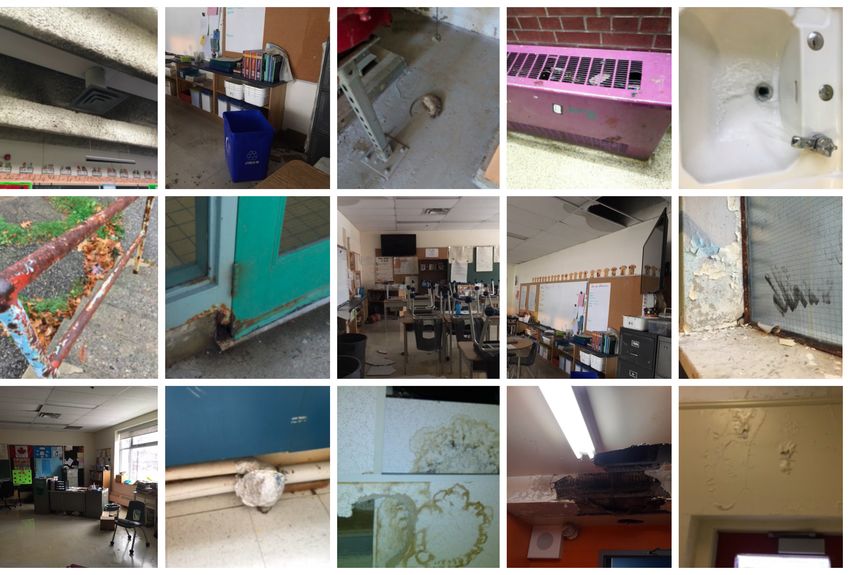
FIGURES 1: Structural disrepair plagues schools across Ontario. Photos courtesy of www.fixourschools.ca
Specifically, in her 2015 annual report, the Audi- Taking into consideration the $15.9 billion capital
tor General recommended that 2.5%15 of replace- repair backlog, OSTA-AECO recommends that
ment value be invested in order to maintain a the government invest an additional $1.06 billion
good state for Ontario’s schools. However, since to the funding provided in 2018-2019, for a total
the inception of the current funding formula, of $1.4 billion this upcoming academic year.
the base funding for capital repairs has never
matched the renewal of many Ontario school This additional investment on top of the cur-
boards. In the 2018-19 school year, the govern- rent SRA allocation would ensure this funding
ment is spending $360.7 million on base funding stream matches 2.5% of the current $56.9
for school repairs through the SRA, compared to billion17 replacement value of Ontario’s schools.
the replacement value of approximately $56.916
billion, which is only 0.6% of replacement value.
(2) To eliminate the capital repair backlog in Ontario schools, the
government of Ontario should extend the School Condition
Improvement program and maintain funding at current levels until
the capital repair backlog is eliminated.
Current Cost: $1 billion (2018-19)
Additional investment: $0
Breaking Down Barriers to Opportunity OSTA-AECO Budget Submission 2019 11Investment Rationale
The SCI program is a specialized, multi-year capital
repair program which provides additional funding for
school renewal beyond base funding provided by the
SRA. This funding has allowed boards to carry out
essential repairs regarding school structure, interior, fa-
cility services, and the overall site-issues.18 SCI funding is
currently allocated at $1 billion for the 2018-19 year.
In order to assess the renewal needs of Ontario ment cost of $7.6 billion To avoid these circum-
schools, the Ministry developed an objective stances, OSTA-AECO urges the government to
measurement system called the Facility Condi- maintain the SCI program until the capital re-
tion Index (FCI). The FCI is the “ratio of the esti- pairs backlog is eliminated, as currently funding
mated cost of necessary repair work in a school is only confirmed up to the 2018/19 school year.
to its replacement value.”19 According to the
most recent Ministry FCI data, 289 schools are The government should extend the SCI program
currently considered to be Prohibitive to Repair and ensure funding is maintained at the current
(PTR), meaning they have an FCI greater than yearly investment of $1 billion. This allows for
65% and should be consolidated or closed.20 The strategic investments that will ultimately elim-
cost to replace the schools currently stands at inate the capital repair backlog and avoid the
nearly $2.8 billion. 21 possibility of consolidation or replacement of
countless schools
Beyond this, there are also an additional 732
schools22 with an FCI of 45-64% at the average
age of 54 years, which have a combined replace-
ment value of just over $4.8 billion.
If these schools become PTR, the Government
of Ontario may be in a situation where they need
to consolidate or replace 23.7% of the 4290
Ontario schools with an FCI, with a total replace-
FIGURES 2&3 School classrooms can become stifling in
the summer months, impeding learning and concentration.
Breaking Down Barriers to Opportunity OSTA-AECO Budget Submission 2019 1203 Eliminating
Geographical Obstacles
The Rural and Northern Education Fund
Why?
The Rural & Northern Education fund (RNEF) A unique feature about this allocation is that
was established in the 2017-18 school year to while funding is provided for board-level expens-
provide new funding allocations to support the es, eligibility for school-level expenses is other-
Ministry of Education’s Plan to Support Rural wise determined on a school-by-school basis.
& Northern Education. A key pillar of this pro- Eligible schools must have student populations
gram is to “Support Quality Education in Rural with at least 50% of pupils attending from rural
and Northern Communities,”23 which led to the communities. 24The total funding for the RNEF
establishment of the RNEF, an allocation within is $20.2 million for the 2018-19 school year.
the broader Geographic Circumstances Grant.
(1) The Government of Ontario should maintain the Rural & North-
ern Education Fund and retain its current level of funding to contin-
ue supporting students in remote locations within Ontario.
Current Cost: $20.2 million (2018-19)
Additional Investment: $0
The RNEF provides rural, remote, and northern of the 72 school boards throughout the prov-
school boards with additional funds to com- ince. Among countless examples, here are
pensate for extra costs they incur due to their some school boards who have invested in
location within Ontario. This enhanced support unique local initiatives to better support their
funds a variety of programs such as increased students:
staff allocations, and services which benefit 70
Eliminating Geographical Obstacles OSTA-AECO Budget Submission 2019 13Rural and Northern
Education Funding
Teaching Staff
Algonquin Lakeshore
Initiatives
Catholic District School
Board invested in
additional teaching staff to
minimize triple grades and
large class sizes. Student Safety
Algonquin Lakeshore
Catholic District School
Board increased their
Deficit
secretarial allocation to
provide more support in
Recovery schools, specifically to the
safe arrival program.
Bluewater District School
Board earmarked/reserved
Technological
funds for the recovery of
operating deficits at rural
schools
Advances
Bluewater District School
Board Invested in technology
Fostering such as computer
replacement, wireless access
Innovation point upgrades, and
camera/audio systems for
video conference learning
Bluewater District School
Board invested in an
innovation fund by which
board staff are invited to Additional
Programming
develop creative, innovative
projects that can further the
achievement of students in
Bluewater. Bluewater District School
Board made additional
Expanded
investments in areas such
as devices, enhanced
staffing, outdoor
Learning education, and virtual
learning.
The Catholic District
School Board of Eastern
Ontario invested in
improved and additional Maintaining
programming for students
Operations
The Catholic District
School Board of Eastern
Transport Ontario invested in the
continued operations of
Safety schools in rural areas
The Catholic District
School Board of Eastern
Ontario invested in
enhancing transportation Providing
Guidance
options for rural and
remote students
The Upper Canada District
School Board invested in
providing guidance counsellors
to each rural schools and
providing them with specific
training for personal, academic,
and career counselling.Investment Rationale OSTA-AECO recommends that the government continue funding the RNEF to provide additional supports for stu- dents in rural, remote, and northern areas who often do not have the same access to programs and resources that stu- dents in more urban settings do. Every student deserves a high quality of education regardless of where they live; however, students in remote areas face unique barriers to accessing a well-rounded educational experience. The RNEF allows schools to allocate funds to enrich the education of rural students and ensure that they are re- ceiving an education just as valuable as their peers in ur- ban areas. Eliminating Geographical Obstacles OSTA-AECO Budget Submission 2019 15
04                The Magnitude of
                    Student Voice
  Equitably Include OSTA-AECO Membership and
  Conference Fees in Ministry Funding to School Boards

Why?

Despite the valuable work and ongoing success       These practices have a detrimental effect on
of OSTA-AECO, there are challenges that inhibit     student trustees’ abilities to gain the appropriate
the association and, by extension, the student      training and professional development to which
trustees of Ontario. Two of the most prominent      they are entitled, thus resulting in an inability to
and significant obstacles are inequitable and       effectively represent their constituents.
inaccessible professional development (PD)
budgets as well as insufficiency in annual reve-
nue. These ongoing changes hinder the ability of    As a result of the 1990 funding formula con-
student trustees to best represent and advocate     sultations, a modification to the formula was
on behalf of Ontario’s approximately 2 million      inserted considering the membership fees of
students.                                           school trustees associations in order to alleviate
                                                    the burden on school board budgets. At the time
Inequitable and Inaccessible P.D. Budgets           when these changes occurred, OSTA-AECO had
                                                    not yet been founded and therefore, to this day,
At each of OSTA-AECO’s three annual confer-         OSTA-AECO conference and membership fees
ences, a common topic of discussion among           do not see the same financial support as those
attending student trustees is their lack of a de-   of adult trustee associations.
fined, Ministry-funded professional development
budget. Section 55(7) of the Ontario Education      Consequently, although every board in the prov-
Act stipulates that “a student trustee has the      ince belongs to a school trustee association,
same status as a board member with respect to       OSTA-AECO lacks many member boards, and
access to board resources and opportunities for     possesses an even greater number of members
training.” Despite this legislation, and because    that do not attend conferences or provincial
Ministry-provided student trustee funding is not    meetings.
managed by student trustees, the current fund-
ing provided to boards with respect to student      There must be an emphasis placed on ade-
trustee professional development is insufficient    quately funding school boards to support the
and is allocated in such a way as to minimize       important work of their student trustees and to
the autonomy of student trustees.                   support a centralized student advocacy net-
                                                    work to serve Ontario’s approximately 2 million
                                                    students.

The Magnitude of Student Voice                                           OSTA-AECO Budget Submission 2019   16
In addition to the strained budgets of Ontario’s who often travel from great distances to take
student trustees, the current unpredictability of part in the efforts of the association. No student
annual revenue requires the association to ask trustee should be precluded from serving on the
the members of the Executive Council to absorb executive due to geographic and financial con-
the costs associated with these meetings into straints.
their own school board professional develop-
ment budgets. As a result, executive members Without Ministry support comparable to other
have reduced budget funds available to them for school trustee associations, the ability of
professional development. OSTA-AECO to deliver world class professional
development for student trustees, participate
Furthermore, school boards have noted that in provincial advocacy, and provide all Ontario
this requirement places an unfair onus on their students with the representation they deserve,
budgets. This is particularly challenging for will be severely jeopardized over the coming
executive members who live far from Toronto years.
(1) OSTA-AECO’s membership and conference registration fees
should be included with the current funding provided by the Minis-
try, on an equitable basis, to ensure student trustees have access
to the same resources as school trustees. Similar to the funding
provided to school boards that is used to purchase memberships
to provincial trustee associations.
Breaking Down Barriers to Opportunity OSTA-AECO Budget Submission 2019 17Investment Rationale
Each year, OSTA-AECO determines membership fees
using a two-part formula and charges a registration fee
for attendance at each conference. The organization pro-
poses that in addition to providing the fixed and variable
membership fee amount to school boards, an additional
$1,800 per student trustee be allocated to be used for
registration fees at provincial meetings.
The model would be structured as follows and Therefore, OSTA-AECO recommends that the
allocated in addition to the current $2,500 given Ministry of Education provide student trustees
to school boards to support student voice. and OSTA-AECO with the same financial resourc-
es as the school trustee associations. This will
FIXED BASE MEMBERSHIP FEE: allow the association to effectively plan and exe-
• $750 cute strategic priorities; additionally, the changes
will remove the financial strain currently placed
VARIABLE MEMBERSHIP FEE: on boards with student trustee(s) on the
• $1,800 per Student Trustee + Executive Council.
$0.05 per student
With the help of provincial partners, OSTA-AECO
Combined, the base and variable membership can continue to grow as an effective and equita-
fees allow for an equitable contribution to ble association that fosters a sense of communi-
OSTA-AECO across boards of all sizes, in addition ty across the province, providing student trust-
to the current funding that is provided to school ees with the necessary tools to best represent
boards to promote student voice activities. their constituents.
In Ontario, student trustees, pursuant to section Ultimately, these changes will not only free
55(7) of the Education Act, have the same status school boards from student trustees’ financial
as all board members with respect to access of challenges and improve the advocacy ability of
board resources and training opportunities. student trustees, but will equitably improve the
quality of education for Ontario’s most import-
ant investment: its students.
Breaking Down Barriers to Opportunity OSTA-AECO Budget Submission 2019 18Conclusion
The 2019 Ontario Budget has the potential to continue to
invest in and support a strong publicly funded education
system, and by extension, invest in the futures of two
million students.
By providing additional funding for the Learning Finally, Student Trustees, the voice for students
Opportunities Grant, school boards can mean- across the province, need additional support in
ingfully support at-risk students in reaching their their role as advocates through financial sup-
full potential as learners and as members of port in their membership of the Ontario Student
society. Trustees’ Association.
Students will excel in a comfortable, safe, and Public education does invaluable work support-
sanitary environment as highlighted through the ing individuals, communities, and our prov-
funding given to the School Renewal Allocation ince as a whole. By providing these strategic
and the School Condition Improvement program. funding enhancements to our publicly funded
schools, the Government of Ontario will be
By maintaining the Rural & Northern Education investing in economic competitiveness, the
Fund, students in the most remote areas of the success of Ontario’s youth, and the future of
province will benefit from the same learning op- our province.
portunities as their peers in urban locations.
Conclusion OSTA-AECO Budget Submission 2019 19Appendix
Appendix A – Student Trustee Budget: Current v. Future State
Current Future Notes
Base Budget
Student Trustee Budget $ 5,000 $ 5,000
OSTA-AECO Funding N/A $ 5,000 Average based on proposal (Appendix B in report, avg. of $5,063)
Expenses
Professional Development
OSTA-AECO Board Membership $ 2,000 Paid Estimated average among FY 2018 Members
OSTA-AECO Conference Registration $ 2,400 Paid Budgeted average among 4 conferences (1 in 2017-2018, 3 in 2018-2019)
OSTA-AECO Conference Associated Costs* $ 3,200 $ 3,200 Budgeted avg. among 4 conferences + food/travel assumption of $200 per conference
OPSBA/OCSTA AGM Student Registration $ 775 $ - Budgeted OCSTA AGM 2018 fee of $775; waived fee due to Ministry subsidy
OPSBA/OCSTA AGM Associated Costs* $ 500 $ 500 Assumption: Hotel at rate of $200 for 2 nights plus $100 for travel
School Board Initiatives & Costs
Student Senate Meetings $ 1,000 $ 1,000 Assumption: $100 in food and supplies for meetings once per month, 10 months
Student Trustee Travel to Meetings $ 500 $ 500 Assumption: $50 roundtrip travel for 1 board meeting per month
Budget Surplus (Deficit) -$ 5,375 -$ 200
* Includes accommodation and travel
OSTA-AECO | Board of Directors & Executive Council 2
osta-aeco.orgAppendix B – Proposed Future Funding
Inputs Outputs
Fixed Rate Cost/ST Cost/Student Avg Stud. VC Avg Total
$ 750 $ 1,800 $ 0.05 $ 1,474 $ 5,063
Board Name Sum of Enrolment # of STs Fixed ST Variable Student Variable Total
Algoma DSB 9,828 2 $ 750 $ 3,600 $ 491 $ 4,841
Algonquin and Lakeshore CDSB 11,761 1 $ 750 $ 1,800 $ 588 $ 3,138
Avon Maitland DSB 15,702 2 $ 750 $ 3,600 $ 785 $ 5,135
Bluewater DSB 16,332 2 $ 750 $ 3,600 $ 817 $ 5,167
Brant Haldimand Norfolk CDSB 9,697 1 $ 750 $ 1,800 $ 485 $ 3,035
Bruce-Grey CDSB 4,033 2 $ 750 $ 3,600 $ 202 $ 4,552
CDSB of Eastern Ontario 12,791 1 $ 750 $ 1,800 $ 640 $ 3,190
DSB Niagara 36,469 2 $ 750 $ 3,600 $ 1,823 $ 6,173
DSB Ontario North East 7,039 3 $ 750 $ 5,400 $ 352 $ 6,502
Dufferin-Peel CDSB 81,769 2 $ 750 $ 3,600 $ 4,088 $ 8,438
Durham CDSB 21,351 2 $ 750 $ 3,600 $ 1,068 $ 5,418
Durham DSB 69,468 3 $ 750 $ 5,400 $ 3,473 $ 9,623
Grand Erie DSB 26,802 2 $ 750 $ 3,600 $ 1,340 $ 5,690
Greater Essex County DSB 35,129 2 $ 750 $ 3,600 $ 1,756 $ 6,106
Halton CDSB 32,701 3 $ 750 $ 5,400 $ 1,635 $ 7,785
Halton DSB 62,726 2 $ 750 $ 3,600 $ 3,136 $ 7,486
Hamilton-Wentworth CDSB 29,146 1 $ 750 $ 1,800 $ 1,457 $ 4,007
Hamilton-Wentworth DSB 49,229 2 $ 750 $ 3,600 $ 2,461 $ 6,811
Hastings & Prince Edward DSB 15,071 2 $ 750 $ 3,600 $ 754 $ 5,104
Huron Perth CDSB 4,513 2 $ 750 $ 3,600 $ 226 $ 4,576
Huron-Superior CDSB 4,889 2 $ 750 $ 3,600 $ 244 $ 4,594
James Bay Lowlands SSB 182 1 $ 750 $ 1,800 $ 9 $ 2,559
Kawartha Pine Ridge DSB 32,011 2 $ 750 $ 3,600 $ 1,601 $ 5,951
Keewatin-Patricia DSB 4,946 1 $ 750 $ 1,800 $ 247 $ 2,797
Kenora CDSB 1,541 1 $ 750 $ 1,800 $ 77 $ 2,627
Lakehead DSB 8,970 1 $ 750 $ 1,800 $ 449 $ 2,999
Lambton Kent DSB 22,153 2 $ 750 $ 3,600 $ 1,108 $ 5,458
Limestone DSB 20,016 2 $ 750 $ 3,600 $ 1,001 $ 5,351
London District Catholic School Board 18,783 1 $ 750 $ 1,800 $ 939 $ 3,489
Moose Factory Island DSAB 311 0 $ - $ - $ - $ -
Moosonee DSAB 245 0 $ - $ - $ - $ -
Near North DSB 10,209 1 $ 750 $ 1,800 $ 510 $ 3,060
Niagara CDSB 22,086 2 $ 750 $ 3,600 $ 1,104 $ 5,454
Nipissing-Parry Sound CDSB 2,747 1 $ 750 $ 1,800 $ 137 $ 2,687
Northeastern CDSB 2,163 1 $ 750 $ 1,800 $ 108 $ 2,658
Northwest CDSB 1,289 0 $ - $ - $ - $ -
Ottawa CDSB 40,575 2 $ 750 $ 3,600 $ 2,029 $ 6,379
Ottawa-Carleton DSB 71,452 2 $ 750 $ 3,600 $ 3,573 $ 7,923
Peel DSB 153,776 2 $ 750 $ 3,600 $ 7,689 $ 12,039
Penetanguishene PSSB 236 0 $ - $ - $ - $ -
Peterborough Victoria Northumberland and Clarington CDSB 14,572 1 $ 750 $ 1,800 $ 729 $ 3,279
Rainbow DSB 13,462 1 $ 750 $ 1,800 $ 673 $ 3,223
Rainy River DSB 2,882 1 $ 750 $ 1,800 $ 144 $ 2,694
Renfrew County CDSB 4,571 2 $ 750 $ 3,600 $ 229 $ 4,579
Renfrew County DSB 9,374 2 $ 750 $ 3,600 $ 469 $ 4,819
Simcoe County DSB 51,263 3 $ 750 $ 5,400 $ 2,563 $ 8,713
Simcoe Muskoka CDSB 20,449 1 $ 750 $ 1,800 $ 1,022 $ 3,572
St Clair CDSB 8,783 2 $ 750 $ 3,600 $ 439 $ 4,789
Sudbury CDSB 5,967 1 $ 750 $ 1,800 $ 298 $ 2,848
Superior North CDSB 727 0 $ - $ - $ - $ -
Superior-Greenstone DSB 1,535 1 $ 750 $ 1,800 $ 77 $ 2,627
Thames Valley DSB 74,511 3 $ 750 $ 5,400 $ 3,726 $ 9,876
Thunder Bay CDSB 7,840 2 $ 750 $ 3,600 $ 392 $ 4,742
Toronto CDSB 90,442 2 $ 750 $ 3,600 $ 4,522 $ 8,872
Toronto DSB 244,543 2 $ 750 $ 3,600 $ 12,227 $ 16,577
Trillium Lakelands DSB 16,808 1 $ 750 $ 1,800 $ 840 $ 3,390
Upper Canada DSB 27,484 1 $ 750 $ 1,800 $ 1,374 $ 3,924
Upper Grand DSB 34,037 2 $ 750 $ 3,600 $ 1,702 $ 6,052
Waterloo CDSB 21,390 2 $ 750 $ 3,600 $ 1,070 $ 5,420
Waterloo Region DSB 62,338 2 $ 750 $ 3,600 $ 3,117 $ 7,467
Wellington CDSB 7,986 2 $ 750 $ 3,600 $ 399 $ 4,749
Windsor-Essex CDSB 20,728 2 $ 750 $ 3,600 $ 1,036 $ 5,386
York CDSB 55,062 2 $ 750 $ 3,600 $ 2,753 $ 7,103
York Region DSB 122,972 2 $ 750 $ 3,600 $ 6,149 $ 10,499
Grand Total 1,889,863 103 $ 44,250 $ 185,400 $ 94,353 $ 324,003
OSTA-AECO | Board of Directors & Executive Council 3
osta-aeco.orgAppendix C – High-level Estimate of OSTA-AECO Budget
L1 - Group Total Annual Budget
Conferences $ 180,000
General & Admin $ 17,000
Infrastructure $ 17,000
Initiatives $ 30,000
Meetings $ 80,000
Grand Total $ 324,000
L1 - Group L2 - Subgroup % of Budget
Conferences 55.6%
AGM 48.9%
BCC 25.0%
FGM 25.0%
Partner & Stakeholder 1.1%
General & Admin 5.2%
Banking 4.4%
Office 66.2%
Marketing 29.4%
Infrastructure 5.2%
Infrastructure 5.9%
Services & Policies 50.0%
Technology 34.1%
Capital Asset 5.9%
Rent 4.1%
Initiatives 9.3%
Provincial 66.7%
Public Board 16.7%
Catholic Board 16.7%
Meetings 24.7%
Board Meetings 20.6%
Exec Meetings 52.5%
Transitional Meeting 23.8%
Partner & Stakeholder 3.1%
Grand Total 100.0%
OSTA-AECO | Board of Directors & Executive Council 4
osta-aeco.orgNotes
1. People for Education, The Learning Opportunities Grant. (Toronto: People for Education, 2017).
2. Ontario Ministry of Education, Education Funding: Technical Paper 2018. (Toronto: Ontario Ministry of Education,
2018).
3. Bank of Canada Inflation Calculator. (Ottawa: Statistics Canada, 2019).
4. Ibid., 1
5. Ibid., 1
6. Toronto District School Board, TDSB Model Schools for Inner Cities. (Toronto: Toronto District School Board, 2013).
7. Toronto District School Board, The 2017 learning Opportunities Index: Questions and Answers. (Toronto: Toronto
District School Board, 2013)
8. Maria Yau, Bryce Archer & Ryan Romard, Model Schools for Inner Cities: a 10-Year Overview. (Toronto: Toronto
District School Board, 2018).
9. Ibid., 7
10. Mordecai Rozansky, Investing in Public Education: Advancing the Goal of Continuous Improve-
ment in Student Learning and Achievement; Report of the Education Equality Task Force (Toronto: Queen’s Printer
for Ontario, 2002).
11. Ontario Ministry of Education, School Facility Condition Data. (Toronto: Government of Ontario, 2017).
12 Hugh Mackenzie, The Fix is not in Report (Toronto: Fix Our Schools, 2017).
13. Ibid., 12
14. Ibid., 9
15. Office of the Auditor General of Ontario, Annual Report 2015. (Toronto: Office of the Auditor
General of Ontario, 2015), 293-294.
16. Ibid., 10
17. Ibid., 10
18. Ontario Ministry of Education, School Facility Condition Assessment Data Update for 2016 Assessment Year.
(Toronto: Government of Ontario, 2016).
19. School Renewal Initiative, Identification of “Prohibitive-to-Repair” Schools, 2003-04. (Toronto: Govenment of
Ontario, 2004).
20. Office of the Auditor General of Ontario, Annual Report 2008. (Toronto: Office of the Auditor General of
Ontario, 2008), 351-352.
21. Ibid., 10
22. Ibid., 10
23. Ontario Ministry of Education, Plan to Strengthen Rural and Northern Education. (Toronto: Queen’s Printer for
Ontario, 2017).
24. Joshua Paul, Andrew Davis, Cathy Montreuil, Plan to Strengthen Northern and Rural Education Memorandum.
(Toronto: Government of Ontario, 2017).
Endnotes OSTA-AECO Budget Submission 2019 23The Ontario Student Trustees’ Association
156 Shearer Crescent
Ottawa, ON K2L 3W3
www.osta-aeco.org
Recommended Citation:
OSTA-AECO Executive Council, Investing in Student Achievement; 2019
Prebudget Submission. (Toronto: Ontario Student Trustees’ Association, 2019)You can also read


