Irish Grassland Association - Members' Information Booklet Issue No. 47 Summer 2021 - The Irish Grassland Association
←
→
Page content transcription
If your browser does not render page correctly, please read the page content below
Irish Grassland
              Association
              Members’ Information Booklet     Issue No. 47 Summer 2021

“To advance the knowledge of good grassland management in Irish farming”
CORPORATE MEMBERS 2021                                                                                    CORPORATE MEMBERS 2021

                                                                                                                                                       CormacTagging
                                                                                                                                                        Animal Identification Tags

                                                             AGRICULTURE AND FOOD DEVELOPMENT AUTHORITY

                                                                                                                           Kells, Co. Meath, Ireland. Tel: (087) 96 26 483
     Want to have your company logo on this page?                                                               General Information: office@irishgrassland.ie    www.irishgrassland.ie
   Contact the Irish Grassland Association office today...
                                                                                                                       Corporate membership commences on the 1st January annually.
                                                                                                            Standard membership is deducted from all IGA members via direct debit on an annual basis.

IRISH GRASSLAND ASSOCIATION - MEMBERS’ INFORMATION BOOKLET                                                IRISH GRASSLAND ASSOCIATION - MEMBERS’ INFORMATION BOOKLET
                             2                                                                                                                         3
Contents Editorial
events will highlight the significant efficiencies
to be gained through excellent grassland
SECTION 1 management.
Editorial 5
IGA AGM 6
Our virtual beef event organisers will gain
access to the largest suckler farm in the
country. The management practices on the
SECTION 2: EVENTS farm are applicable to every suckler, cattle
IGA Dairy Conference review 7 and beef farm and should be considered a
IGA Sheep Event preview 10 ‘must view’ event. Applying one of the benefits
IGA Beef Event preview 12 of hosting a virtual event, our Dairy Team has
IGA Dairy Summer Tour preview 14 Matt O’Keeffe organised two host farms, 300 kms apart, one
Editor and in Galway and the other in West Cork, both
IGA Council Member highlighting the ongoing benefits of clover
SECTION 3: FARM FOCUS
inclusion in their grazing swards. The dates
Multi-species swards for silage production Thomas Moloney 16
and details of our Virtual Dairy, Beef and Sheep
IGA Student Photo Competition runner-up 18 Grass is still the IGA’s constitutional Summer Tours are included in this Newsletter
Farming in Partnership 20 imperative. with further information available nearer
the event dates on the IGA website. We are
The Irish Grassland Association was founded
SECTION 4: TECHNICAL FOCUS very grateful to our host farmers for sharing
in 1946. As the constitution of the IGA affirms,
Development of a high-output grass-based spring milk production system - UCD Lyons 22 their experiences with the Irish Grassland
the main objective for which the Association
Future Systems Growing Sustainably Brendan Horan, Donal O’Brien & David Wall 26 Association membership.
was established is to advance and spread the
Understanding the basics of soil health – Andy Doyle 31 knowledge of the best grassland production We also thank the many contributors to
Grass10 34 and management practices available for the this Newsletter, providing articles ranging
economic and sustainable development of Irish from Soil Health to Future Economic and
grass-based dairy, beef and sheep producers. Environmental Sustainability. In our Archive
SECTION 5
That continues to be the raison d’etre of the section we remember Brian Hussey, a former
IGA Archives of Past Presidents – Brian Hussey 36
Association. IGA President, who died earlier this year. Brian
made a hugely significant contribution to Irish
In this Newsletter we outline the calendar of
agriculture in his long and varied career.
events the IGA will organise over the Summer
DATES FOR YOUR DIARY months. Because of continuing Covid-induced Finally, we look forward with hope and
IGA Sheep event: June 22nd at 8pm, June 23rd at 8pm, June 24th at 8pm travel restrictions and attendance limits confidence that the essential collegial and
IGA Beef event: July 13th at 8pm on outdoor events, we have again adopted social aspects of IGA membership can again
electronic technologies to provide virtual visits be experienced in a few months time.
IGA Dairy Summer Tour Live: July 21st at 11am to many of the best livestock farms in Ireland
and beyond. All the farms have a singular
focus on manging grass to provide the core Matt O’ Keeffe
Follow us on nutrition for their animals. Our virtual sheep IGA Editor
Irish Grassland Association IGA @IrishGrassland
SUGGESTIONS & FEEDBACK PLEASE!
Any views, images, graphics or opinions presented in this or any Irish Grassland Association (IGA) publication are solely those If you have any suggestions for the members information booklet or any particular topics or
of the author. Care has been taken by the authors to ensure accuracy of content and the information is intended as a general features you would like us to include in our forthcoming issues, please send them via email to
guide. The IGA and its editor does not accept responsibility for any unforeseen errors, copyrights or omissions howsoever
arising. Photographs will be taken at all events and occasionally published.
office@irishgrassland.ie. We would love to hear from you!
IRISH GRASSLAND ASSOCIATION - MEMBERS’ INFORMATION BOOKLET IRISH GRASSLAND ASSOCIATION - MEMBERS’ INFORMATION BOOKLET
4 5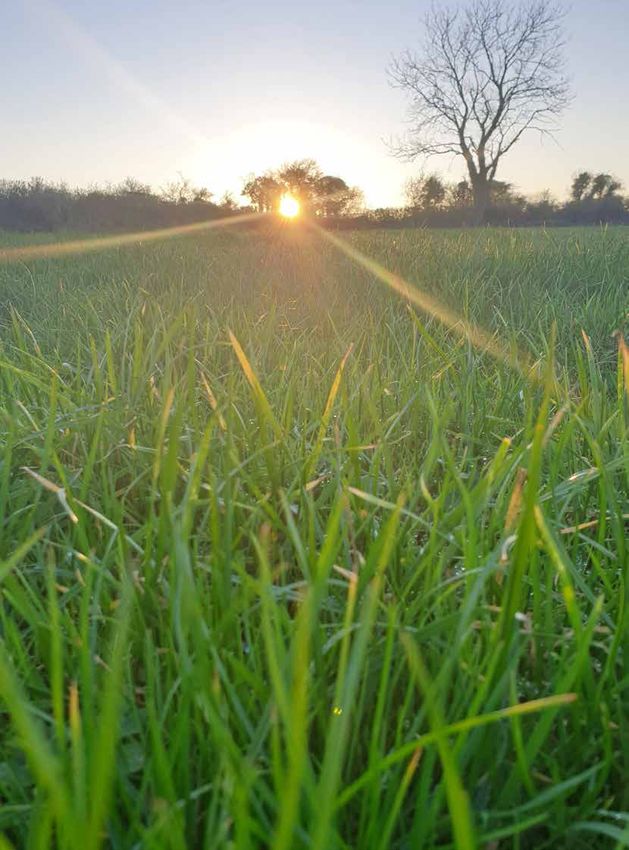
The presidential Team L-R
                                                                                  Paul Hyland Immediate Past
                                                                                   President IGA, Stan Lalor
                                                                                   President IGA and Christy
                                                                                   Watson Vice President IGA

The Irish Grassland                                                             Maura Callery                  A virtual view of Irish dairy                                                     Matt O’ Keeffe
Association AGM                                                             IGA Office Manager
                                                                                                                                                                                    Irish Grassland Association
                                                                                                                                                                                    Council Member and Editor

The Irish Grassland Association AGM is scheduled to take place in early September. As this is a good           The Irish Grassland Association Dairy                 Jim Woulfe: ‘Can we sell our milk?’
time away and lots of changes are still occurring with Covid19 restrictions, we are hoping that it will        Conference entitled ‘Future proofing Irish            Dairygold’s Chief Executive Jim Woulfe gave a
be possible for this meeting to be held in person in a hotel premises. Due to the logistical challenges        dairying’ took a remote format this year. It          comprehensive presentation on the outlook for dairy
in hosting events at present, it is paramount to register your interest if you wish to attend by emailing      consisted of three punchy presentations, each         to attendees at the Irish Grassland Association’s
the office office@irishgrassland.ie no later than 1st July 2021.                                                                                                     virtual Annual Dairy Conference last January. While
                                                                                                               followed by a questions and answer session
                                                                                                                                                                     being generally positive, Jim clearly outlined the
A roundup of the year’s activities will be presented by the outgoing President Stan Lalor and we will          chaired by IGA Council member and dairy
                                                                                                                                                                     challenges facing the sector and gave strong advice
also welcome the new incoming President Christy Watson into office. Each year a small number of                farmer Laurence Sexton. Sponsored by Yara,            on what milk producers need to do to reassure
seats on our council can become available to be filled through election on foot of existing council            the conference gave Irish dairy farmers a great       consumers and purchasers of our dairy produce on
members terms expiring. Last September we welcomed three new faces to our council namely, Alan                 insight into the future.                              international markets.
Bohan, Finbar Kiernan and Tomás O’Leary. We saw the retirement of Eddie Gavin, Pat Donnellan
and Ronan Delany.

IGA Annual Membership will be deducted from September. All fully paid-up members of the Irish
Grassland Association for the previous term are eligible to be nominated for election. If you wish to
put your name forward this year for election to our council, then please contact us to express your
interest by emailing office@irishgrassland.ie no later than 9am Thursday 1st July 2021 with your
supporting nominations. (Constitutionally we also need to receive two supporting nominations for
you in writing from two current Irish Grassland Association members).

We have a very large volume of farming families involved in bringing our summer event showcases to
you. We would like to take this opportunity on behalf of our President and Council to thank everyone
involved in running these virtual events. We would also like to thank you, our loyal farming and
corporate members for your continued support. We hope that you are all safe and well and we are
really looking forward to meeting you all very soon again.

                                                                                                                  Lawrence Sexton Irish Grassland Association                            Jim Woulfe
                                                                                                                      Council Member and Dairy Farmer                             Dairygold Chief Executive

              IRISH GRASSLAND ASSOCIATION - MEMBERS’ INFORMATION BOOKLET                                                    IRISH GRASSLAND ASSOCIATION - MEMBERS’ INFORMATION BOOKLET
                                                   6                                                                                                             7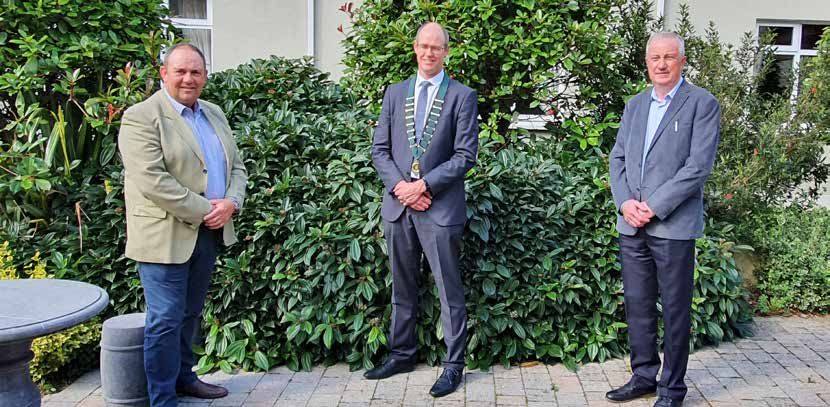
Listing Covid as an immediate issue, Jim’s comments            Grass-fed production model                                 The Moorepark-based researcher outlined
were reassuring, saying that with vaccinations and             Addressing milk producers directly, the Dairygold          successful research results from Moorepark
restrictions in the coming months, the biggest                 Chief Executive urged the adoption of grass-fed            in reducing N surpluses and losses, increasing
Covid-related challenges should be behind us by                production standards that the Irish dairy industry         nitrogen efficiency, while achieving higher herbage
the turn of the year. Brexit poses more permanent              can capitalise on to secure increased market share         production and milk solids. Deirdre advised greater
challenges, the Dairygold chief confirmed, adding              and added value. He insisted that accreditation will       management of fertiliser and grazing practices to
that while the Irish agri sector had prepared for              be necessary to provide proof to dairy buyers and          more closely match inputs with outputs from the
the UK departure as well as possible there will be             consumers that our grass-fed dairy production              farm. She noted significant increases in herbage
long term added costs to the supply chain, inevitably          system is valid. Kerrygold Butter’s success in the         production from the inclusion of white clover in
impacting on price. No conversation on dairy here              USA is underpinned by an awareness of the unique           swards, allied to improved milk solids production.
or globally could be complete without reference to             grass-fed status that Irish butter enjoys, he added.       Doing nothing, Dr Hennessy warned, will result in
climate change and Jim Woulfe advised farmers                  An effective ‘licence to produce’ in future will include   in increased feed input costs and/or lower stocking
to embrace the issue positively and deal with the              significant reductions in carbon footprint, water          rates. Optimum soil fertility, she concluded, will be
relevant aspects including carbon emissions,                   quality improvements, identifiable biodiversity            an absolute necessity in future grass production
ammonia, water quality and biodiversity.                       planning as well as corrective measures being              strategies.
                                                               undertaken in relation to anti-microbial resistance.                                                                                       Tom O’Connell
                                                               All of these, he warned, on top of operating               Tom O’ Connell: The SPRING dairy farming                                      Dairy Farmer, Cork
Global outlook
The ‘big picture’ global forces impacting on food              sustainable farming business practices, applying           strategy                                                     Practical choices
production were also outlined. These include, in               excellence in animal welfare and the previously            The farmer experience at this year’s IGA Dairy               With high numbers of cows calving in a short period,
                                                               mentioned certifiable grass-fed production model.          Conference was provided by Tom O’ Connell from               Tom O’ Connell adopts a once-a-day milking routine
Jim’s estimation, ongoing political uncertainty,
                                                                                                                          Cork. Tom highlighted his own experiences in                 until sixty percent of the herd is calved (achieved
the need for economic stability, tariff wars, anti-
                                                               Dr. Deirdre Hennessy: Rebalancing nitrogen input           promoting work/life balance on his farm while also           in three weeks). This has the obvious benefit of
microbial resistance and the rise of dairy alternatives.
                                                               and milk output.                                           being realistic in terms of expectations. He pointed         reducing labour requirements at a time of maximum
Underpinning the continued success of our dairy
                                                               Teagasc researcher, Dr. Deirdre Hennessy discussed         to the value of planning ahead in order to achieve           labour demand. Calf management, especially in
export industry will be the long-term dairy supply/
                                                               the challenge of maintaining herbage production with       goals and explained the simple routine of using a            the crucial first few days of life was well described
demand equation, he added. While noting ongoing
                                                               a lower N input. She put forward potential actions         whiteboard to establish priorities and necessary             in the Cork dairy farmer’s presentation. The
market volatility, Jim took some reassurance from
                                                               to mitigate the drive in European agricultural policy      and immediate tasks to be undertaken on a weekly             emphasis, he insists, is on ease of management,
historical developments in dairy consumption as
                                                               towards lowering inputs and less intensive agricultural    basis. “Get your ideas out of your head and onto a           high welfare standards and efficient use of labour.
well as confirming that current trends suggest a
                                                               production methodologies. Dr. Hennessy pointed             whiteboard” is Tom’s mantra. His Spring routines,            Good facilities, efficient labour utilisation, clear
reasonable alignment between supply and demand
                                                               out that filling potential chemical N deficiencies will    including calving and early grazing, were both               and simple communication all lead to a relatively
on global markets.
                                                               necessitate more focus on maximising the value             practical and immediately adoptable on most                  stress-free environment, Tom concluded. His
                                                               and use of available nitrogen from slurry and clover       dairy farms. The use of a diary to quickly enter             mantra is explained in an easily understood SPRING
The Dairygold CEO believes that continuing                                                                                calving details is again easily adopted and hugely
                                                               swards as well as optimising the benefits of allowable                                                                  acronym: S=Simple Systems, P=Purchase time
population     growth,    increased     urbanisation           applications of chemical nitrogen.                         beneficial for all farms. Tom’s tactics are well worth       (labour, contractors), R=Rest, I=inventory (have all
especially in Asian dairy deficit regions, a growing                                                                      viewing on the IGA website, where the conference             necessary inputs, purchases to hand), N=Necessary
middle class adopting increasingly dairy and meat-                                                                        is available for re-viewing.                                 work and G=Good communication.
based diets and improving income trends should all
have positive implications for dairy demand in the
years ahead. Jim Woulfe also referenced the greater
numbers of older people globally, all requiring the
essential nutrients present in dairy products to
maintain good health into old age.

Jim made his audience fully aware of the need to
acknowledge the changing eating trends of global
consumers and their expectations around food. He
highlighted the need to build the dairy story around                                                                             We would like to thank our sponsors
those expectations, especially in the sphere of
health and wellness.                                                                                                              YARA for their continued support
                                                                               Dr. Deirdre Hennessy
                                                                                      Teagasc

               IRISH GRASSLAND ASSOCIATION - MEMBERS’ INFORMATION BOOKLET                                                                IRISH GRASSLAND ASSOCIATION - MEMBERS’ INFORMATION BOOKLET
                                                           8                                                                                                                       9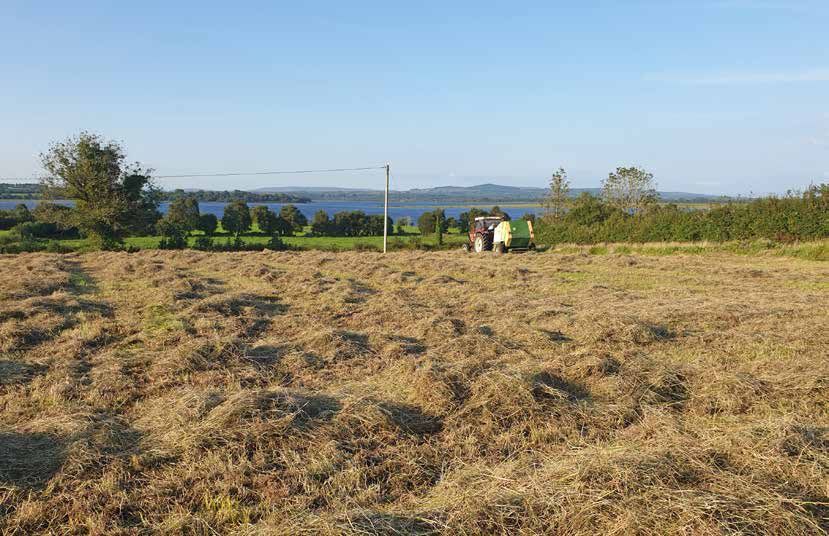
Cole Farm                                                    McGowan Farm

2021 IGA Sheep                                                                                                     The second speaker
                                                                                                                   will be Alan Cole from
                                                                                                                                                                                Our third speaker will be
                                                                                                                                                                                Neil McGowan of Incheoch
Event Preview
                                                                                          Alan Bohan
                                                                       IGA Sheep Chairperson, Council              Athy, Co. Kildare.                                           Farms      in    Perthshire,
                                                                            Member and Sheep Ireland               Alan farms a flock                                           Scotland where he farms
                                                                                                                   of 200 mid-season                                            alongside his wife Debbie.
The 2021 Irish Grassland Association Sheep event will be held online over three evenings on June 22nd, 23rd        lambing ewes and all                                         The McGowan’s are farming
and 24th at 8 PM. These events are sponsored by Mullinahone Co Op. Due to Covid-19 restrictions the option         lambs are finished                                           1,200 breeding ewes and
of a farm tour was not possible, but in place of that we are holding an online event with a strong farmer focus.   on farm. There are                                           220 suckler cows on 485
The theme for the event is ‘The use of innovative practices to enhance flock management and performance’.          multiple enterprises                                         hectares of upland ranging
The event will see three sheep farmers discuss their systems of production and will focus in on where each         on the farm with                                             from 400 to 750 feet above
farmer has used innovative practices or technology to improve the management of their flock and increase           spring barley, winter                                        sea level. The focus of the
overall flock performance. Each host farmer will discuss their farm and system of production, while video          wheat and contract                                           farm is to produce lamb
clips allow you to have a virtual stroll around the farm.                                                          rearing of 60 dairy heifers meaning that the farm            and beef from grass and forage crops grown on farm.
                                                                                                                   needs to be managed efficiently to ensure all                All ewes lamb outdoors from late April with minimal
                                                                                                                   enterprises run smoothly concurrently. Alan puts             intervention. Of the 1,200 ewes on the farm there
Host Farms                                                                                                         a big focus on grassland management for his                  are 800 performance recorded Lleyn ewes and 100
                                                                                                                   sheep flock and dairy heifers. The high level of             performance recorded Texel ewes. Neil and Debbie
                                                           October 1st with the remainder being sold as            grassland management is helped by the excellent              use EID technology to record a large amount of data
                                                           stores to allow the ewes to take grazing preference     grassland infrastructure with the farm split into 20         on each animal and from this estimated breeding
                                                           once again for the breeding season. The farm has        main paddocks that can easily be subdivided when             values are produced allowing for the selection of the
                                                           20 permanent paddocks that can be subdivided to         required. Alan’s aim is to finish as many lambs as           top performing animals to breed the next generation.
                                                           manage grass at different times of the year and         possible off grass and to achieve this he has a two-         Focusing on traits such as lambing ease, maternal
                                                           this along with 10% of the farm being reseeded          pronged approach.                                            ability and ewe efficiency allows the McGowan’s to
                                                           annually allowed Peter to grow an impressive 13.7                                                                    select for the most commercially viable ewes that
                                                           tonnes of grass per hectare in 2020. Peter spent        Firstly, he ensures that lambs have an ample                 need minimal shepherding. All sheep are involved in
                                                           some time in New Zealand on work placement              supply of fresh leafy grass in front of them at all          Faecal egg counting breeding programmes with the
                                                           and it was there that he discovered the value and       times and secondly, he ensures the lambs are not             Lleyn and Texel breed societies to breed for better
                                                           benefits of grass measurement. Peter embraced           under any parasitic burden that would hinder their           worm resistance. The careful selection for desirable
                                                           this technology and has implemented it on his           performance. Alan is very aware of the effects a high        traits has seen the twinning rate increase from 65%
                                                           own farm to great effect. Peter joined the Teagasc      worm burden can have on lambs’ performance and               to 75% over the past 10 years and lamb liveweight
                                                           Grass10 program in 2019 and started measuring           the worm burden of his flock is measured frequently          at 150 days increase by 3.8kg in the same period.
McGuinness Farm                                                                                                    over the grazing season using faecal egg sampling.
                                                           grass using a plate meter. Peter walks the farm                                                                      Grassland management is an area that is constantly
The first speaker will be Peter McGuinness. Peter          on a weekly basis throughout the grazing season         Faecal egg sampling serves two purposes for Alan,            being assessed to improve animal performance. All
farms in partnership with his father Tom in Trim,          with up to 33 measurements taken throughout             firstly it allows him to monitor the level of worm           lambs are finished off grass or forage crops with
Co. Meath. Over 800 ewes are lambed outdoors               the year. All grass measurements are uploaded           burden in the lambs and to treat the lambs with              no concentrate supplementation while ewes are
on the farm starting in mid-March. All single and          to PastureBase which helps Peter to manage the          anthelmintics when required and secondly it allows           outwintered on swedes. The aim of the farm is to
twin bearing ewes are outwintered with triplets            grass on the farm and to ensure there is always a       him to manage the level of anthelmintic use on               produce functional, efficient, and robust sheep which
being housed. Grassland needs to be extremely              good supply of good quality grass in front of the       his farm to avoid the development of anthelmintic            are then sold onto other farmers for breeding at their
well managed to allow for the out wintering of             ewes and lambs right through the grazing season.        resistance. Frequent faecal egg counts allow Alan            annual on farm “Working genes” sale where they sell
ewes and outdoor lambing from mid-March.                   The use of the PastureBase system also helps            to only administer anthelmintics when the lambs              80 to 90 rams. The achievements at Incheoch Farm
Peter’s excellent grassland management was                 Peter to make decisions on what paddocks to skip        are under a high worm burden which avoids                    have not gone unnoticed with Neil and Debbie being
acknowledged in 2020 when he received the award            in the rotation which ensures high quality grass        the overuse of anthelmintics which can lead to               awarded the 2018 AgriScot Sheep Farmer of the year
of Grassland Farmer of the Year in the sheep               for grazing but also high-quality silage from the       anthelmintic resistance.                                     award and the 2020 Farmers Weekly Sheep Farmer of
category. Once ewes are lambed the grassland               skipped paddocks. The high level of grassland                                                                        the year award.
focus turns to fattening lambs with ewes and               management means that the 13.7 tonnes of grass
lambs rotationally grazed in batches of 250 ewes           produced on farm supports a stocking rate of
and their lambs pre weaning and then lambs are             10.5 ewes per hectare, produces silage for a beef          We would like to thank our
grazed ahead of the ewes in a leader follower              finishing unit on farm and also supplies enough
system post weaning. The high lamb performance             surplus grass to feed by 100 dairy heifers that           sponsors Mullinahone Co-Op
                                                           are grazed on the farm on a daily rate during the
achieved by the flock is demonstrated by 96%
                                                           summer months.
                                                                                                                      for their continued support
of lambs being drafted for slaughter in 2020 by

               IRISH GRASSLAND ASSOCIATION - MEMBERS’ INFORMATION BOOKLET                                                         IRISH GRASSLAND ASSOCIATION - MEMBERS’ INFORMATION BOOKLET
                                                      10                                                                                                                   11
Allen farms in Co. Kildare in close proximity to the that consumers are familiar with - that holds a
Meath border. The farm - which is fragmented and positive association as premium.
IGA Beef Event 2021 Niall Claffey,
IGA Council Member
and Tradeforus
laid out in three blocks up to 4km from the farmyard
- is all laid out in permanent pasture. The beef Ireland is already strongly associated with grass-
system is based on the purchase of 100 continental fed production. This evidence points to a real
weanlings each autumn, with all stock brought opportunity to use existing grass-fed strengths
With Covid-19 restrictions preventing an on-farm sold direct off-farm for the export market, with a through to beef. to create an ISO accredited national standard and
tour again this year, the 2021 Irish Grassland proportion of these destined for southern Europe. deliver upon a clearly identified consumer desire for
Association Beef Event will take an online format - Despite the difficulties of managing grass on a ethical, premium, natural and healthy beef.
hitting mobile phone, tablet and laptop screens on During the breeding season, a large team of sires fragmented farm, Allen is determined to maximise
are introduced by way of AI and using stock bulls. live weight gain from grass and grass silage, and Bord Bia has adapted the scope of the standard to
Tuesday, July 6th – kicking off at 8:00pm. This event
The main breeds used are: Charolais; Limousin; minimise the amount of purchased concentrate in accommodate young bull beef. This means young
is kindly sponsored by Mullinahone Co Op.
Simmental; Red Angus; and Shorthorn. In addition the diet of the cattle. bull beef will now be eligible to be assessed in the
This year’s event will have something for everyone to this - to produce as many heifers as possible - grass-fed standard, along with steers, heifers and
– for both Irish suckler and beef-finishing farmers. synchronisation is introduced on several cows and Since joining a grass management course in cows.
The online event will carry two different segments: heifers each spring and sexed semen is used on Kildare, Allen has renewed his focus on grassland
management. The Kildare-based farmer has This standard will be implemented at processor
‘Inside the gates of Ireland’s largest suckler farm’ these females.
substantially improved the grazing infrastructure level and utilises information provided by farmers
and ‘Back to basics; the benefits of grass inside and
The autumn-calving herd (200) normally commences on the farm and installed a new water system - in their Sustainable Beef and Lamb Assurance
outside the farm gate’.
calving during the last week of September or the with large water troughs and up to thirty additional Scheme (SBLAS) audits to determine the grass-
Progressive Irish farmers will lead the visual first week of October, while the spring-calving herd paddocks. fed status of animals. The audit of standard will
video production showcasing and outlining the (300) starts calving in January. Splitting the calving ensure processors are engaging with the Bord Bia
management practises and tools – and the strategies across spring and autumn eases the workload, He is already reaping the rewards of good grassland database and performing checks correctly and - in
implemented – to make their systems tick. Our last but also provides buyers with more choice when management, with not only more grass grown, turn - ensuring correct traceability, segregation and
segment will examine the development of the grass- choosing stock. but it is of a higher quality resulting in more cattle labelling of grass-fed product.
fed standard for Irish beef. finished off grass without the need for concentrate
Prior to John taking over the farm and growing the input. In addition, grass silage regularly analyses Young bulls will be treated the same as other
Inside the gates of Ireland’s largest suckler farm herd, existing stock could graze in large fields for over 73% DMD which is a great achievement from animal categories, with their qualification as grass
long periods. This system has since changed and old permanent pasture. fed being dependent on meeting the criteria of the
Our first farmer is John a paddock system was introduced. In the height of standard in relation to the proportion of grass in the
Kingham, the manager of the grazing season, large groups graze paddocks The installation of additional paddocks and the new diet and grazing days.
Ireland’s largest suckler for three days before being moved onto the next water system has revolutionised grazing practices
enterprise - namely the on the farm. Allen gets great satisfaction from Our final speaker from
paddock, with a rotation length of 18-20 days.
Tateetra and Rathmore the fact that he is producing top-quality beef from Bord Bia, Rory Mannion,
Farms - based in Co. Louth Regular weighing complements the system of predominantly home-grown resources - grass and will dive a little bit closer
and Co. Meath. John and production and a state-of-the-art cattle handling grass silage. into the inner workings of
his team took the reins of facility was recently constructed on the farm, along the standard – detailing
the operation in September with improved wintering facilities for the large According to Bord Bia, the rationale to create a the required criteria to be
2017 and have grown the numbers present on the holding. Strict animal grass-fed standard to market Irish beef is based eligible for the standard. An
herd size to 500 cows – health protocols are adhered which maintain a high upon evidence from research conducted with update of progress to-date
consisting of Simmental, herd health status. approximately 13,000 customers and consumers will also be provided with
Limousin and Belgian Blue genetics. across Europe and in key international markets. the benefits to the primary
Back to basics; the benefits of grass inside and producer detailed.
The suckler herd spans across 1,000ac, with calving outside the farm gate The research highlighted a significant market
split between spring and autumn. All cattle are demand for grass-fed products. Grass-fed is a term
housed over the winter period. Looking around the Next, we will find out
paddocks on the farm, not one breed dominates in more about the grass-fed
the herd, with a wide range of breeds visible and standard for Irish beef.
progeny are produced for several different markets. Firstly, we will hear from
beef farmer, Allen Callagy, We would like to thank our
While some heifers are kept and used as who will talk about the
replacements on the farm, the backbone of the management of his beef- sponsors Mullinahone Co-Op
enterprise is the sale of these replacement heifers
for breeding – with two very successful sales
finishing enterprise and how
his slaughtered animals
for their continued support
completed to-date. Most of the bull weanlings are qualify for the standard.
IRISH GRASSLAND ASSOCIATION - MEMBERS’ INFORMATION BOOKLET IRISH GRASSLAND ASSOCIATION - MEMBERS’ INFORMATION BOOKLET
12 13
Kevin Moran                                                 John Joe and Andrew O’Sullivan

                                                                                                                      Kevin Moran farms near Caherlistrane, Co. Galway,           Then we will attempt to take you ‘back to the
                                                                                                                      and in the last few years has really focussed               future’ by visiting the farm of John Joe and Andrew
                                                                                                                      on reducing his nitrogen fertiliser inputs and              O’Sullivan near Rosscarbery, Co. Cork. John Joe
                                                                                                                      incorporating clover on his farm. He is some of the         began using clover as part of his farming system
                                                                                                                      way along his journey, and we will discuss with him         in the mid to late nineties and still does so to this
                                                                                                                      how he is finding the transition, what challenges he        day. We will discuss what clover has done for John
                                                                                                                      has encountered along the way and what he is doing          Joe in that time and what it continues to do for him
                                                                                                                      to overcome those challenges.                               and son Andrew, who is now working the farm with
                                                                                                                                                                                  John Joe. How clover has been incorporated and
                                                                                                                                                                                  more importantly maintained on their farm will be
                                                                                                                                                                                  the focus with the O’Sullivans.

IGA Dairy Summer Tour 2021
                                                                                         Stuart Childs
                                                                               IGA Dairy Summer Tour
                                                                              Chairperson and Council
                                                                                   Member & Teagasc

Focus on the management and potential of clover              Commenting at the launch of this year’s Summer
                                                             Tour, Donal Whelton, Head of Agriculture, AIB said:
While the country is are is gradually beginning to                                                                             Photo courtesy of Aurivo Co Op
open up as the vaccination programme rolls out,              “Despite being the most sustainable producer of milk
unfortunately COVID-19 restrictions will again               globally, Irish dairy farmers, wrongly, have all too
                                                                                                                       As there is much weight on the shoulders of
prevent us from being physically on-farm for our             often been portrayed in a very negative light within
                                                                                                                       clover to carry the livestock industry as a whole,
2021 Irish Grassland Association Dairy Summer                broader climate change discourse. While generally
                                                                                                                       but specifically help the dairy industry to reduce
Tour supported by AIB.                                       accepted that change is inevitable and required in
                                                                                                                       its reliance on chemical nitrogen, this online
                                                             certain instances, there is no other group in society
But the show must go on, so we welcome farmers                                                                         event will be of great interest to all. We look
                                                             as committed to truly being a fundamental part of
across the country to join the Irish Grassland team                                                                    forward to welcoming you to Cork and Galway
                                                             the climate change solution as are Irish farmers.
and sponsors AIB for a live online farm walk via our         And it is Irish farmers who hold the innate carbon        live at 11am on July 21st. Updates will be shared
website www.irishgrassland.ie to explore the role of         sequestration potential to offset the externalities of    on our website (www.irishgrassland.ie) and our
clover.                                                      production.                                               social media platforms closer to the date.

Throughout the hour and a half event at 11am on              AIB is delighted to once again partner with the
July 21st, we will take you from the start of the            Irish Grassland Association to provide, through
journey on the road to clover incorporation on your          experience and knowledge gleaned from these two                   We would like to thank our sponsors
farm to what the future will hold for you following
this journey. Being online allows us to bring you to
                                                             progressive and forward thinking ‘host’ farmers,
                                                             practical insights and strategies that can boost
                                                                                                                                 AIB for their continued support
see two farms that are nearly 300km apart. We will           further not only the environmental sustainability
take you from the start of the journey on the road to        of the Irish dairy sector, but also its economic
                                                                                                                                           #IGADairy #BackedbyAIB
clover incorporation on your farm to what the future         sustainability’.
will hold for you following this journey.

               IRISH GRASSLAND ASSOCIATION - MEMBERS’ INFORMATION BOOKLET                                                           IRISH GRASSLAND ASSOCIATION - MEMBERS’ INFORMATION BOOKLET
                                                        14                                                                                                                   15
Smartgrass project.
The Smartgrass project, a collaboration between
UCD, AFBI and Teagasc and funded by DAFM, was
one of the first research projects to examine the use
of multi-species swards in Ireland. The project’s
general aim was to explore these swards’ potential as
a strategy to improve the sustainability of ruminant-
based livestock production on Irish farms. The project
focused on three main topics: sheep production, silage
making and above- and below-ground biodiversity.
My PhD addressed silage making and was carried
out at Teagasc Grange with Drs Edward O’Riordan,
Padraig O’Kiely and Helen Sheridan (UCD). The study
at Grange assessed a range of grass monocultures,
grass-red clover binary mixtures and more complex Figure 1: Annual DM yield of perennial ryegrass (PRG),
multi-species mixtures under a 4-cut annual silage Mix 1 and Mix 2 at inorganic nitrogen rates of 0, 120, 240
harvesting regime. Additional treatments examined the and 360 kg/ha per year.
effects of incremental rates of inorganic N application
Multi-species swards and date of first harvest. For the purpose of this article
I will compare two multi-species mixtures (Mix 1:
Ensilability
The second set of objectives of the study were to assess
for silage production Thomas Moloney
DLF Seeds
perennial ryegrass, timothy, red and white clover
and Mix 2: perennial ryegrass, timothy, red clover,
the ensilability of herbage and the nutritive value of silages
produced from Mix 1 and Mix 2 compared to perennial
ribwort plantain and chicory) to a perennial ryegrass ryegrass. Despite herbage from the multi-species
monoculture. The full report including results for the mixtures having apparently poor metrics of ensilability (low
Perennial ryegrass has been the species of choice For example, herbs like ribwort plantain and chicory
remaining sward treatments can be viewed in the links water-soluble carbohydrate content and high buffering
for Irish grassland farmers for the last 50 years. The are highly digestible, mineral-rich forage species but
below. capacity), under favourable ensiling conditions, the multi-
popularity of perennial ryegrass is not unfounded as perhaps equally important is their strong summer
it excels in a range of agronomic traits including ease production and drought tolerance thanks to deep tap species mixtures preserved comparatively well relative
Compare and contrast to perennial ryegrass. However, when crop conditions
of establishment, high yield potential, persistence roots. These traits can complement grasses in the
The first set of objectives were to determine the were poor i.e. excessive crop moisture, the multi-species
and is well suited to both grazing and conservation sward as their production begins to decline in mid-
herbage yield and quality response of the two multi- mixtures preserved more poorly than perennial ryegrass.
systems. However, to achieve optimal performance, a summer.
species mixtures when managed in an intensive This finding suggests there is a greater requirement for an
high level of inorganic nitrogen input is required. Such
four-cut annual silage regime. Comparisons were adequate period of rapid wilting and/or use of preservative
requirement for high levels of fertiliser represents There is increasing interest in how these multi-species
also made of the response of these mixtures and a when ensiling multi-species mixtures than perennial
a significant challenge for grassland farmers at swards can improve the productivity and sustainability
perennial ryegrass monoculture to increasing rates of ryegrass swards. Silage digestibility was primarily
a time when sustainability, both financially and of grass-based agricultural systems with a growing
inorganic N fertiliser (0, 120, 240 or 360kg N/ha per influenced by the digestibility of herbage pre-ensiling for
environmentally, is a growing concern. body of Irish research lead by institutions like UCD
year). Both multi-species mixtures produced greater all sward types however where conservation losses were
and Teagasc showing the potential positive effects
annual yields than a perennial ryegrass sward, with high silage digestibility was negatively affected.
The role of legumes. associated with multi-species swards compared
the magnitude of this advantage greater at lower rates
Including legumes such as white and red clover in to grass swards. These benefits extend beyond
of inorganic N application (Figure 1). Conclusions
mixtures with ryegrass can increase herbage yields increased DM yields and animal performance, there
under grazing and cutting systems, respectively. are numerous benefits for the environment including The implications of these findings are significant for
Furthermore, Mix 2 had greater annual yields than Mix Irish farmers. On farms where rates of N application are
These increases in herbage production reflect the reduced requirement for nitrogen fertiliser and
1. This is likely due to the presence of ribwort plantain low multi-species swards represent an opportunity to
complementary interactions that occur when species biodiversity.
and chicory increasing the functional diversity of Mix 2 increase DM production, and thus animal output, without
with different growth habits are grown together. In
resulting in enhanced synergistic effects on production the extra N that would be required to achieve comparable
a grass-clover sward the best-known example of The ensiling issue
compared to Mix 1. Overall, herbage harvested from gains with a perennial ryegrass sward. It is important to
such complementarity is biological nitrogen fixation However, one of the big gaps in our understanding of
Mix 1 and Mix 2 was of lower digestibility and higher note that optimum soil fertility is required to achieve such
by rhizobia associated with the clover. As well as multi-species swards and a question repeatedly asked
crude protein content than perennial ryegrass. The gains. Conversely, on more highly stocked farms the use
increasing herbage production, this biologically fixed by farmers is ‘can multi-species swards be ensiled?’
greater crude protein content can be explained by the of multi-species swards may allow for a reduction in N
nitrogen can reduce the amount of fertiliser nitrogen Silage is the principal source of winter feed being
presence of clover in the mixtures while the digestibility fertiliser input while maintaining sward productivity.
required, therefore reducing the cost of producing produced on 82% of farms and after grazed grass is
findings must be interpreted with caution. The actual
feed for livestock. There are also animal performance the second most important crop produced in Ireland.
animal performance by ruminants fed grass-clover In regard to silage production it has been shown that
benefits associated with grass-clover swards as clover As well as producing a vital feedstuff, silage making
swards is generally greater than those fed grass-only multi-species swards can be preserved successfully under
tends to increase the palatability, digestibility and is an important grass management tool which allows
due to higher intakes and rate of digestion, however, optimal conditions. However, future research should aim
protein content of the sward. maximum utilisation of grass by storing spring and
in vitro DMD tests carried out in the laboratory do not to establish guidelines for successfully and efficiently
summer surpluses for use when demand exceeds
account for such plant-animal interactions and can ensiling multi-species swards. These guidelines will
Complementary species. supply. For multi-species swards to offer a viable
underestimate the true digestibility of grass-clover likely have much in common with those for perennial
Developing a grassland sward mixture beyond grass alternative to perennial ryegrass swards, they must
swards. ryegrass but with some slight alterations. The animal
and clover species provides an opportunity for further be at least suitable to a grazing regime where there is
complementary interactions that can enhance forage occasional silage harvesting. performance response of feeding such silages also needs
yields and quality throughout the growing season. to be examined.
IRISH GRASSLAND ASSOCIATION - MEMBERS’ INFORMATION BOOKLET IRISH GRASSLAND ASSOCIATION - MEMBERS’ INFORMATION BOOKLET
16 17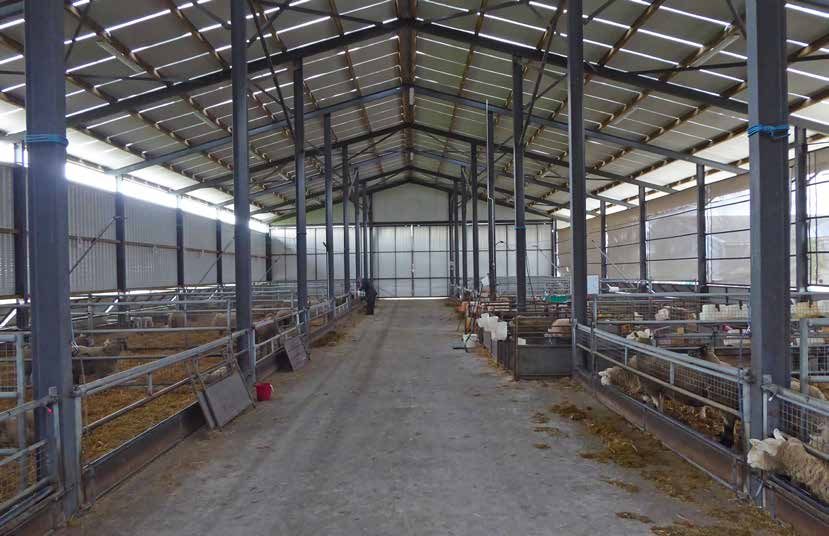
to the Irish farm. In Ireland we are lucky to have the
                                                                                                                       advantage of a grass-based systems. Irish farms
                                                                                                                       efficiently turn grass to beef, milk, or lamb, while
                                                                                                                       keeping costs low and little to no environmental
                                                                                                                                                                                        2nd
                                                                                                                       impact. I think organic, grass-based farming is the
                                                                                                                       way forward, especially with the focus on minimis-
                                                                                                                       ing environmental impacts and emissions in all
                                                                                                                       sectors but also because it is the traditional way to
                                                                                                                       farm. It’s this traditional way of farming that gives
                                                                                                                       Ireland its green image that’s famous across the
                                                                                                                       world, making our products sought after by modern
                                                                                                                       consumers. I believe grassland management is
                                                                                                                       very important and is becoming more talked about.
                                                                                                                       Any farmer can do a form of it as it often low-cost
                                                                                                                       solution. We use strip grazing, paddocks as well as
                                                                                                                       topping ground when stock comes off it as it really
                                                                                                                       helps encourage new growth.

                                                                                                                       Ag Science
                                                                                                                       I chose to study in UCD because of the job oppor-
                                                                                                                       tunities for graduates and the ability to do profes-
                                                                                                                       sional work experience in 3rd year. As I am in the
                                                                                                                       Agricultural Science Omnibus course, I get to pick
                                                                                                                       a specialised degree to study for the next 3 years.
                                                                                                                       This is a great route to go for anyone interested in          The Photo
                                                                                                                       agricultural science but not yet certain which area           I wouldn’t call myself a photographer by any means,
IGA Student Photo Competition                                                                                          to specialise in. I hope to continue my studies in the
                                                                                                                       Animal and Crop Production degree programme. I
                                                                                                                                                                                     but when out farming I sometimes take pictures of the
                                                                                                                                                                                     natural scenes around me. The timing of this photo was
runner-up
                                                                                         Cian Corcoran
                                                                                 UCD Ag Science student                like this degree as it will give me a broad knowledge         very lucky to get the sun as it was setting. It’s also one
                                                                                                                       of both animal science, crop production as well as            of the few pictures that I have taken that is not of the
                                                                                                                       some of the business associated with it. With this            lake, I actually had my back to the lake in this one. I
My name is Cian Corcoran. I am 18 years old, and I             of various breeds, as well as a few purebred Here-      degree I hope I will be able in the future to run my          entered this photo into the competition last year and
am currently in my 1st of studying Agricultural Sci-           fords which we AI to keep for breeding and growing      own farm part time as well work a professional ca-            called it “Green Gold” as it literally shines a light on one
ence in University College Dublin. I live on a farm            the herd. Cows due to calf are usually brough home      reer in the agricultural sector in the future.                of our most important resources, the Irish grassland.
near the village of Monasteraden in Co. Sligo. We              to the calving shed and keep an eye on them. We sell
keep a suckler herd, as well as sheep, and not for-            on stock as store cattle. We keep a Texel ram with
getting 3 donkeys. The farm is spread across dif-              around 40 crossbred ewes, and all are lambed by
ferent areas, but most of the land located along the           Easter. We try let them lamb outside but bring them
shores of Lough Gara. I have always had an interest            at night. My interest and view of farming as a future
in farming as long as I can remember. As a child I             really took off in the last year. We all have had to
enjoyed doing the different jobs with my father and            spend more time than ever at home with lockdowns,
my older brother, feeding cattle, going to marts and           but I count myself lucky because I could keep myself
getting spins in the tractor.                                  busy and get outdoors with the farming. I have be-
                                                               come more invested, have a better appreciation and
Farm agenda                                                    understanding of the farm now. In a normal year I
The farm was 40 hectares but last year a neighbour-            would not be at home during the day but now I can
ing farm was purchased, this has allowed me to see             run up to shed to check on the ewes lambing or cows
what it is like to start out. I spent most of last sum-        calving between lecturers. It can be tiring to spend
mer fencing the new fields and making our own si-              hours at a computer screen taking notes, checking                  We would like to thank FBD Insurance,
lage. This summer will be much the same. Current-              on stock and be outside is a welcomed break from
ly there is approximately 65 hectares spread across            the computer.
                                                                                                                                who have sponsored the student initiatives
3 locations. We also replaced our Hereford bull with                                                                             and events since their inception in 2010
an Angus bull last year and in recent weeks we have            Grass theme
been seeing his first calves. We have 30 suckler cows          On the farm it’s easy to see how important grass is

               IRISH GRASSLAND ASSOCIATION - MEMBERS’ INFORMATION BOOKLET                                                             IRISH GRASSLAND ASSOCIATION - MEMBERS’ INFORMATION BOOKLET
                                                          18                                                                                                                    19
lamb performance. All lambs are finished off grass well for the Connells. Purchasing replacements
and are sold through the Offaly Lamb Producers comes with risks with regards to biosecurity but
Group with 1.65 to 1.70 lambs sold per ewe put to Aidan and Eddie are well aware of these risks and
the ram. Although the aim is to finish all lambs have measures in place to counteract them. On
off grass Aidan and Eddie admit that things do not arrival to the farm the new replacements are foot
always go to plan and they have had to supplement bathed, dosed for fluke and dosed for worms with
lambs when drought conditions effect grass growth two types of wormer and are kept inside for at least
or when wet conditions reduce dry matter intake, as 24 hours. At this stage, the hoggets are vaccinated
happened in August of 2020. Eddie mentioned that for enzootic abortion, toxoplasmosis and are also
if concentrate is introduced before the lambs were vaccinated with Heptavac P. Even with all the
affected of the drop in grass quality, a relatively precautions mentioned above Aidan and Eddie still
small amount of concentrates was sufficient to treat the new arrivals as a separate flock until post
maintain lamb performance. lambing, this acts as an extended quarantine period
and also allows the hoggets to receive preferential
The main silage crop is saved in late May/early treatment as they are still growing. New stock rams
June and this means that there is a plentiful supply are sourced from the premier sales with Aidan and
of after grass for lambs post weaning in late June. Eddie always choosing a 5 Star ram. The new rams
At weaning Aidan and Eddie would hope to have are also treated as a biosecurity risk and are given
approximately 35% of their lambs drafted and very similar treatment to the replacement females with
few lambs remaining on the farm by the 1st of October regard to foot bathing, dosing, and a quarantine
in any year. The lambs are managed in groups of period upon arrival.
200 to 250 lambs to allow for easy handling and to
also allow for mixed grazing along with the cattle. Aidan has previously worked in engineering and
Mixed grazing improves the sward quality, reduces fabrication so in 2018 he drew up plans and set
the worm burden on the lambs and in turn increases about constructing a new purpose built shed for the
lamb performance. The lambs are regularly tested 400-ewe flock. The shed is 700 square meters, straw
for worm burden using faecal egg counts and apart bedded and adaptable to housing cattle if required.
Eddie Connell, from a dose for nematodirus in April/May the lambs Aidan was able to put his fabrication skills to good
IGA Council Member and only receive one worm dose in mid-July. use by fitting out the shed interior to make it as user
Farming in Partnership Sheep & Beef Farmer
Alan Bohan, By mid-July Aidan and Eddie are thinking of next
friendly as possible. Ewes can be fed from inside and
outside the shed by one person without the need for
IGA Council Member year and are beginning to prepare the ewe flock for
and Sheep Ireland walk through feeders. As Aidan qualified as a young
breeding in October. Ewes will be marked for culling farmer under the TAMS grant the Connell’s were
for reasons such as mastitis, poor performance, able to avail of the 60% grant on the first €80,000
Farming 90 hectares in Clonbullogue Tullamore Co. and ewes are pregnancy scanned and housed in lameness, and age with no 6-year-old ewes being of the shed cost and a further 40% on the remaining
Offaly, Aidan and Eddie Connell farm in a partnership mid-December. The flock is prolific, consistently retained in the flock. Aidan and Eddie have found cost which made the project financially viable. The
where they run mixed farm with beef, tillage and scanning 1.9 lambs per ewe joined and Eddie noted that when these older ewes are retained, they next stage of construction will see a handling unit
sheep enterprises managed concurrently. The beef that at this scanning rate there was approximately can be troublesome with many having poor body added beside the shed this year to improve the
enterprise consists of 150 to 170 bull weanlings that 20% singles and 12% triplets which allows ample condition, difficulty lambing or poor milk yield. handling facilities on the farm.
are purchased each autumn at approximately 350 opportunity to cross foster triplet lambs. Cross The strict culling in the flock results in an annual
to 400 kg. The strongest of these bulls are finished fostering surplus lambs is the preferred option with replacement rate of 25% with all replacements Aidan and Eddie are a great example of the benefits
out of the shed in the springtime of the year while artificially reared lambs being avoided, if possible, purchased as hoggets in early August. Purchasing of a farm partnership where both parties can
the lesser animals are castrated and finished off as the Connell’s feel there is very little margin for replacement hoggets from reliable sources rather combine their skillsets and knowledge and work
grass by the end of the following year. Traditionally profit when all inputs and labour are considered. than retaining their own replacements simplifies together to achieve the common goal of having a
all the bull weanlings would have been left entire This high scanning rate requires a good pre-lambing the systems and is an approach that is working productive, sustainable, and profitable farm.
regardless of whether they were being finished nutrition plan for the ewes to allow them to produce
indoors or off grass but due to discontinued markets health lambs and to ensure the ewes have adequate
for bulls and increased feed costs, Aidan and Eddie colostrum post lambing. As the Connell’s have their
decided to castrate the majority of the bulls and own barley on farm, they mix their own pre-lambing
finish them off grass which has improved the grass ration consisting of 50% barley, 25% beet pulp and
utilisation on the farm. The tillage enterprise on the 25% soya increasing to 30% two weeks pre lambing.
farm consists of 15 hectares of winter barley which A mineral package is also included ration to avoid
is mainly used as a source of feed and straw for the any deficiencies in the ewes or lambs.
beef and sheep enterprises.
Once ewes and lambs are put out to grass the focus
The sheep enterprise on the farm consists of a shifts to ensuring good quality grass is available at
400-ewe mid-season lambing flock with lambing all times. A rotational grazing system is in place
commencing on March 1st. The ram effect is used with paddocks being subdivided as needed to
at mating time to compact the lambing season ensure fresh leafy grass is available to ensure good
IRISH GRASSLAND ASSOCIATION - MEMBERS’ INFORMATION BOOKLET IRISH GRASSLAND ASSOCIATION - MEMBERS’ INFORMATION BOOKLET
20 21Project objectives:
¥ To develop a profitable high output grass-based spring milk production system.
¥ To incorporate the most recent advances in grassland management for dairy farms into a high output
system.
¥ Use a type of dairy cow that has good genetic indices for both milk production and fertility.
¥ Employ the best practices from nutrition research and dairy cow husbandry.
¥ Incorporate nutritional studies into a high output system.
¥ To incorporate management technologies and system attributes that enhance the environmental
sustainability of dairy production.
Targets of the system and milk production results to date
Maximising the use of grazed grass/home grown forage in the system by incorporating the most recent
advances in grassland management and the strategic use of supplementation thereafter is one of the key
aspects of the project. The performance target is 625 kg of milk solids per cow per lactation. This target is
approximately 50% higher than the national average figure of approximately 417 kg of milk solids per cow.
Milk yield and solids produced by the herd has steadily improved since the study began (Table 1). In 2016, 7407
kg and 588 kg MS/cow were produced. In 2020, the highest annual milk yield (7503 kg) and milk solids yield
(606 kg) since the project began were recorded.
The current herd of 57 cows are in the top 1% of herds nationally with an EBI of €204, a milk sub-index of €69
and a fertility sub-index of €81 (January 2021 evaluation).
Table 1. Milk production and grassland performance of UCD high output grazing herd.
Parameter Target 2016 2017 2018 2019 2020
Cow numbers 60 58 60 59 58 57
Development of a high-output grass-based Milking area (ha) 17.64 17.58 17.65 17.65 17.52 17.43
spring milk production system Grass grown (t DM/ha on MP)
Herbage utilized (t DM/ha on MP)
15.0 13.06
11.4
14.0
12.2
11.7
10.0
14.5
13.5
13.6
12.1
Grazed grass utilized (t DM/ha on MP) 9.7 10.2 8.6 11.6 10.7
Nicholas Ryan1, Zoe McKay2, Finbarr Mulligan1, Karina Pierce2, Bridget Lynch2, Ciaran McDonnell2,
SR on MP 3.4* 3.3 3.4 3.34 3.3 3.27
Niall Walsh,2, Alan Fahey2, Michael Wallace2
SR whole farm 2.4 2.18 2.4 2.4 2.34 2.33
School of Veterinary Medicine, University College Dublin, Ireland.
1 % heifers in herd 22 22.4 23.3 28 21 23
2
School of Agriculture and Food Science, University College Dublin, Ireland. Average lactation days 305 301 305 305 305 305
Yield kg/cow (305d) 7,750 7,441 7,548 6,680 7,541 7,771
Background emissions, facilitating farm expansion post EU- Milk solids kg/cow (305d) 625 592 602 558 597 621
Researchers at UCD Lyons are trying to develop a milk quota removal for land limited and fragmented
Yield kg/cow (actual) 7,750 7,407 7,466 6,790 7,381 7,503
high-output grass-based milk production system. In farms, increased requirement for dairy product
regions where it is possible to grow and graze large for export, lack of available skilled labour and Milk solids kg/cow (actual) 625 588 595 544 586 606
quantities of highly digestible perennial ryegrass, it infrastructure at farm level to deal with expanding Milk solids kg/ha MP 2,125 1,953 2,023 1,850 1,940 1,980
is favourable to produce as much milk as possible animal numbers and concerns over the continued Milk solids kg/ha whole farm 1,521 1,291 1,428 1,306 1,386 1,413
from this low-cost feed source. However, dairy allowance of high-stocking rate systems within the
*From 2021, the Target stocking rate on the milking platform will be 3.25 LU/ha.
production systems that have been developed to EU nitrates directive derogation.
utilise large quantities of grazed grass have mostly
Fertility
been based on low-output per cow. With these In this ongoing study, the animal and grassland
High fertility targets are required for efficient seasonal grass-based milk production systems and the targets
low-output systems, high levels of profitability are performance for a grazing system based on high-
chosen are similar to those used to benchmark for lower output high fertility herds (75% 6-week in calf rate
possible through avid cost control and comparatively output per cow and the resultant dairy production
for the milking herd). Similar to milk production, fertility has improved since the project began (Table 2). In
high stocking rates. Reasons to consider the system profitability will be reported. The project
2020, the 21-day Submission rate was 91% with a 1st service conception rate of 74%. Six week in calf rate was
development of grazing systems that are based began in 2016 and data has been collected for five
a very respectable 87%. The overall empty rate, including cows not selected for breeding, was 9%. High levels
on high-output per cow include concerns about full production years. To date, the system has been
of fertility are currently being achieved with a group of cows that are within the top 5% of herds for fertility
increasing dairy cow numbers and environmental profitable, achievable and sustainable.
sub-index.
IRISH GRASSLAND ASSOCIATION - MEMBERS’ INFORMATION BOOKLET IRISH GRASSLAND ASSOCIATION - MEMBERS’ INFORMATION BOOKLET
22 23Table 2. Fertility performance of UCD high output grazing herd.
2016 2017 2018 2019 2020
58 59 55 56 54
Number of cows bred
(of 58) (of 60) (of 60) (of 58) (of 57)
Length of breeding season (weeks) 12 13 12 10 10
Submission rate (%) 91 90 96 95 91
First service conception rate (%) 43 49 69 64 74
6-week in-calf rate (%) 59 54 83 79 87
Empty rate of total cows (%) 9 15* 13* 12* 9*
*Figure includes cows not selected for breeding.
Feed Budget 2020
From a feeding perspective, the focus is to maximise grass intake with approximately 75% of the diet
coming from grazed grass and grass silage (DM basis). On an as fed basis, the annual feed budget consists
of approximately 94% grazed grass and grass silage. However, achieving over 600kgs milk solids will not
happen with grass only and therefore cows are fed 1500kgs concentrates over the lactation to meet energy
requirements. Cows are fed a flat rate as seen in Table 3 with high feeding rates for the first 4 months post-
calving and high overall intakes are achieved.
Table 3. Feed budget of 2020
Days in milk 0 21- 61- 91- 121- 181- 241- 271- 306- 344- Total 2020 Total
-20 60 90 120 180 240 270 305 343 365 annual annual
(Est) (actual)
Silage kg DM/ 5 0 0 0 0 0 5 15 10.7 9.5 1.3t DM 1.7t DM
cow/day
Grass kg DM/ 10 15 15 15 15 14 7.5 7.5 0 0 3.5t DM 3.3t DM
cow/day Grassland turnout was 16th February and cows were kept
Concentrate kg/ 8 8 7.5 6 3.5 3 3 3 0 0 1.5t 1.4t The system has a very strong focus on growing indoors for two days in March due to poor weather
cow/day As fed As fed conditions. As of 1st April 2021, 966 kg DM/ha has
and utilising as much grass as possible. Grass
supply is measured weekly using a combination of been grown and the second grazing rotation has
cut and weigh, platemeter and visual assessment. begun. As grass is the corner stone of this system,
Measurements are recorded on PastureBase Ireland. we continue to aim to maximise grazed grass intake
In 2019 the milking platform grew 14.5 t DM/ha, with throughout the year.
9.6 grazing’s achieved on average per paddock with
cows at grass for 263 days. Should paddocks grow a Findings to date
high cover, they are baled for silage. Grazed grass High levels of milk and milk solids output per cow and
utilized equated to 11.6 tonnes of DM/ha in 2019, and per ha are achievable from moderate concentrate
overall utilisation was 93% (13.5 t DM/ha). In 2020, feed input in a grazing system. These high levels of
the milking platform grew 13.6 t DM/ha, despite output are possible from cows that score highly on
a drought period in May and June. There were 8.5 a selection index that has had a significant fertility
grazings achieved on average per paddock with cows component for some time. High levels of grass
at grass for 246 days. Grazed grass utilized equated utilisation can also be achieved in higher output
to 10.7 tonnes of DM/ha and overall utilisation grazing systems. The system has also been found
was 89% (13.6 t DM/ha grass grown). In 2020, we to deliver good levels of profitability and has a
incorporated protected urea and low emission slurry favourable life cycle analysis for carbon footprint.
spreading into fertilising strategies. Two paddocks
(1.82ha) were re-seeded with a mix of Abermagic Acknowledgements
(6.45kg/a), Aberclyde (4.3kg/a) and a white clover The authors would like to acknowledge funding from
blend (1.25kg/a). The closing cover on 1st December the European Regional Development Fund through
2020 was 711 kg DM/ha. In 2021, the opening cover Enterprise Ireland (2016 to 2018) and from Dairy
was 791kg DM/ha (17th January 2021). Full time Research Ireland (2019 to 2021).
IRISH GRASSLAND ASSOCIATION - MEMBERS’ INFORMATION BOOKLET IRISH GRASSLAND ASSOCIATION - MEMBERS’ INFORMATION BOOKLET
24 25You can also read


