Laboratory Informatics Guide 2021 - Understanding the needs of the laboratory - Scientific Computing World
←
→
Page content transcription
If your browser does not render page correctly, please read the page content below

Laboratory
Informatics
Guide 2021
Understanding the needs of the laboratory

                                   From the publishers of

                             SCIENTIFIC
                             COMPUTING
                             WORLD
                             www.scientific-computing.com/lig21
Transform
Digital Lab Consulting® provides independent strategic
consulting to enable organisations of all sizes to transform their
business through better use of informatics.

We provide clear, actionable advice to help
companies find the most effective solution
for their environment.

We have over 20 years of experience across
the entire value chain, from early research to
manufacturing.

We are based in the UK and work globally
with our clients and partners.

                                                 Discover more at
                                                            dlc.io

                                                    +44 (0)1543 547607
                                                             info@dlc.io
LABWARE
LIMS and ELN in a single platform
Automation software for all laboratories

                     Offices worldwide supporting customers
                                  in more than 125 countries

                                       www.labware.com
Contents
I
t is clear that Covid-19 has had a
significant impact on laboratory
operations. Even for laboratories that
are not working directly on Covid-19
testing, drug and vaccine development,
restrictions on laboratory space and access
to equipment are putting a significant
burden on scientists.
Thankfully, laboratory informatics
software tools can shoulder some of that
burden by providing a platform for remote
Software tools help combat
4 Covid-19 22 Digitial transformation access, automation of laboratory operations
or by providing access to data and tools for
collaboration to keep scientists working
Robert Roe looks at how Covid-19 is driving Sophia Ktori looks at the role software plays in productively.
changes in the laboratory transforming the laboratory This issue of the Laboratory Informatics
Guide aims to highlight the working
practices of researchers, and highlight
10 Vendor predictions 28 Looking at cancer technologies and tools that can help
overcome the challenges that scientists
How laboratory technology and software could Advances in computer vision combined with AI face in the laboratory. We start with an in-
change due to increased pressures to work computing help pathologists to more accurately depth look at the work that has been going
remotely caused by the pandemic identify subtypes of cancer on around the world to fight against the
pandemic on page 4.
We’ve a series of vendor predictions for
16
Making science open 30 Empowering collaboration
with the cloud
the year ahead beginning on page 10. Thie
features experts from several informatics
The European Bioinformatics Institute is Cloud technologies can simplify data sharing software providers discussing the role of
developing tools and infrastructure to promote and collaboration, writes Thermo Fisher’s Darren automation, cloud-based systems, remote
open science and provide programmatic access to Barrington-Light access tools, and other technologies that
biological data can ensure laboratory productivity, despite
reduced access for many users.
Starting on pages 16 and 20 are two
20 Leading
research
genomics
32 Supplier’s directory interviews with research leaders. The first
features the European Bioinformatics
Institute and the second takes a look at the
The Wellcome Sanger Institute’s Julia Wilson Our guide to find where to turn to for the Wellcome Sanger Institute. The interviews
discusses the role of the research centre and its suppliers you need share some of the work that has been
impact on the wider scientific community conducted on Covid-19 and the importance
of open science in fighting the pandemic.
Digital transformation in the laboratory
SUBSCRIPTIONS: The Laboratory
is the focus on page 22, as Sophia Ktori talks
EDITORIAL AND ADMINISTRATIVE TEAM
Informatics Guide 2021 is published
Managing Editor: Tim Gillett
to informatics software providers about the
by Europa Science Ltd, which also
publishes Scientific Computing World. (editor.scw@europascience.com) technologies and tools scientists can use to
Free registration is available to qualifying
Editor: Robert Roe advance lab operations.
individuals (register online at
www.scientific-computing.com). (robert.roe@europascience.com)
Subscriptions £100 a year for six issues to Feature Writer: Sophia Ktori On page 28 we consider how advances
readers outside registration requirements. Circulation/readership enquiries:
Single issue £20. Orders to ESL, SCW
in computer vision, combined with AI
subs@europascience.com
Circulation, 4 Signet Court, Cambridge
CB5 8LA, UK.
computing, are helping pathologists more
Tel: +44 (0)1223 221030. ADVERTISING TEAM accurately identify subtypes of cancer. And
Fax: +44 (0)1223 213385.
Advertising Sales Manager: Mike Nelson
©2020 Europa Science Ltd.
(mike.nelson@europascience.com)
finally, Thermo Fisher’s Darren Barrington-
Whilst every care has been taken in the compilation of this magazine,
errors or omissions are not the responsibility of the publishers or of Tel: +44 (0) 1223 221039 Fax +44 (0) 1223 213385 Light details the importance of cloud-based
the editorial staff. Opinions expressed are not necessarily those of
the publishers or editorial staff. All rights reserved. Unless specifically solutions on page 30.
stated, goods or services mentioned are not formally endorsed by DESIGN TEAM
Europa Science Ltd, which does not guarantee or endorse or accept Production manager: David Houghton
any liability for any goods and/or services featured in this publication. (david.houghton@europascience.com)
Senior graphic designer: Zöe Andrews
US copies: Scientific Computing World (ISSN 1356-7853/USPS No
018-753) is published bi-monthly for £100 per year by Europa Science (zoe.andrews@europascience.com)
Ltd, and distributed in the USA by DSW, 75 Aberdeen Rd, Emigsville PA
17318-0437. Periodicals postage paid at Emigsville PA. Postmaster:
CORPORATE TEAM
Send address corrections to Scientific Computing World PO Box 437,
Emigsville, PA 17318-0437. Managing director: Warren Clark
Web: www.scientific-computing.com
Cover image and all other images: Shutterstock.com
www.scientific-computing.com/lig21 3
LABORATORY INFORMATICS GUIDE 2021

Covid-19 changes
the laboratory
landscape
Demand for testing and requirements for remote working
tools drive changes in the laboratory

                                                                                     “The tooling and
T
         he pandemic has defined the    laboratory information management
         development of laboratory      system (LIMS) and electronic laboratory       solutions, like
         software and technologies,     notebook (ELN) software to help
as collaboration and remote working     manage collaborative work, and
                                                                                     the LIMS that we
tools become requirements to a          promote reduced-capacity working               offer, become
productive laboratory.                  environments in the laboratory.
   It has increased demand for             Patrick Rose, digital science product     more pivotal and
laboratory services in areas such as    manager at Thermo Fisher Scientific,              critical”
testing, genomics studies and vaccine   notes that there has been a pivot in
and drug development. However           the tools used in laboratories due to         ‘What we are seeing is an increased
these demands must be met with          Covid-19. ‘The labs are starting work      need to work remotely due to
restrictions on laboratory space and    leaner, they are having to collaborate     alternating days, slimmer shifts trying
more demanding project timelines.       with other partners, other contract        to minimise the time people are in there
   To facilitate this research and      research organisations [CROs] to           together. But, they still need to work
scale-up testing capabilities,          help battle the pandemic and find the      on their results, gather and share data
laboratory scientists are using         vaccine.                                   and collaborate,’ added Rose. ‘So the

4                                                                                    www.scientific-computing.com/lig21
LABORATORY INFORMATICS GUIDE 2021

tooling and solutions, like the LIMS
that we offer, become more pivotal
and critical. It is being able to see what           “We put automated software
other users have done – potentially
what they may have done in the last
                                                  processes in place to help capture
shift, what you need to do for the next         testing data: that may be challenging
shift.’
                                                   because you are out in the field
Tools facilitate remote working                             somewhere”
LIMS or ELN systems can help to
minimise the time scientists have
to spend in the lab, as mobile alerts
or other features can help notify
scientists when their experiments will       patient, according to their age, sex,       background. Importantly, it could also
be finishing. Streamlining data sharing      whether they have other diseases –          feedback information to the prescribing
and access also helps facilitate agile       comorbidities – and other factors, and      physician, so that they will know how
decision making, and lets scientists         thereby give guidance to clinicians on      well the patient is sticking to their drug
access data and analyse or work on           likely optimum dosing.                      schedule,’ Astic suggested.
data from home.                                  Development of the drug exposure           ‘Our first model, for paracetamol,
    Several LIMS and ELN vendors are         models will leverage data held in           could help dramatically reduce
now equipping their software with pre-       thousands of drug-related documents         overuse of the drug and even prevent
configured workloads to help scientists      in Elsevier’s PharmaPendium drug data       overdose-related deaths.’ ‘We signed
get set up with key laboratory               resource, which contains decades of         a partnership with Vidal, a key player
operations. This reduces the amount          searchable FDA and EMA regulatory           of medical information in France, to
of setup and administrative work that        approval and related documents on the       integrate our technology into their
needs to be done by scientists, which        drugs.                                      Vidal Sentinel platform designed
should lead to increased productivity.           Olivier Barberan, director of           for hospitals. They call our API
    Lauren Taylor, digital science           translational medical solutions at          [Application Programming Interface]
solutions manager at Thermo Fisher           Elsevier explains: ‘We will provide         and the pharmacist or doctor can run
Scientific, said: ‘Some of those             ExactCure with information held in          personalised simulations until they
workflows we have already pre-               PharmaPendium that spans more               reach what they estimate to be the best
configured to get customers up and           than 50 drug-specific parameters,           posology for a given patient,’ added
running as quickly as possible. In terms     including PK and pharmacodynamic            Astic.
of the integration of instrumentation,       data, safety data, adverse events and          Digital companion apps could also
for example, you may have specimens          drug-drug interaction records, together     be utilised by the pharma industry
in the lab that you want to sequence,        with data on drug efficacy. This may        to support clinical drug trials and
that information needs to be put onto        encompass many thousands of reports,        potentially speed time to market, while
the sequencer so that you know which         for example, there were in excess of        reducing attrition at the trials stage.
samples you are sequencing, and that         13,000 records just for the antiviral
information can be relayed back to the       drug ritonavir, which is one of the drugs   Dosing optimisation for Covid-19
correct sample.                              under consideration for Covid-19            Certara launched the Covid-19
    ‘The integration really is automating    therapy.’                                   Pharmacology Resource Center in April,
the push of information to the                   ExactCure is exploiting the             an online resource giving scientists
sequencers, so that you are not              PharmaPendium data and its own AI           around the world access to simulation
copying and pasting or uploading and         tools to build a simulation-based digital   and modelling tools to aid the design
downloading files manually.’                 companion – a digital twin application      of clinical trials and optimise dosing
                                             for smartphones that patients would         regimes for candidate drugs such as
Using AI in the fight against Covid-19       use to help make sure that they use         hydroxychloroquine, and lopinavir/
AI tools are becoming increasingly           medicines safely, and at an appropriate     ritonavir, against Sars-CoV-2. Funded by
useful to laboratory scientists. A           dose and frequency, ‘whether that           the Bill and Melinda Gates Foundation,
partnership announced between                be an OTC painkiller, or an antiviral       and supporting global collaboration in
Elsevier and ExactCure provides a            medicine,’ Fabien Astic, ExactCure          the drive to develop new treatments for
software platform collaboration to           co-founder, said. ‘This can help to         Covid-19, the centre offers researchers
develop and offer to hospitals – without     prevent underdosing, overdosing,            a workbench of in-silico modelling tools,
charge – drug-specific exposure              and to prevent drug-drug interactions       integrated with existing and emerging
models for 20 already approved               or adverse events relating to the           data.
medicines that are being tested as           individual’s health status, or even             The centre offers an accessible
potential treatments for Covid-19.           genetic profile.                            outreach of the expertise that Certara
    Each drug-specific model,                    ‘The AI-based software derives the      provides in the global Covid-19
generated using ExactCure’s AI-driven        personalised guidance according to key      Therapeutics Accelerator, which has
simulation platform, will help to predict    patient-specific characteristics such       been set up with an initial $125m in
a drug molecule’s pharmacokinetic            as weight, age, gender, renal and liver     funding from the Gates Foundation,
properties in each individual                function, smoking status and genetic        Wellcome and Mastercard, through

www.scientific-computing.com/lig21                                                                                               5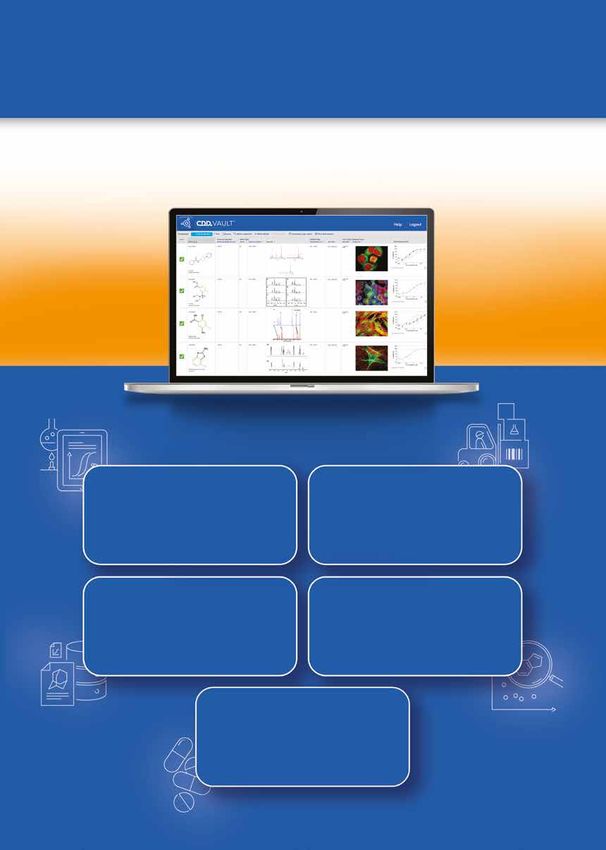
LABORATORY INFORMATICS GUIDE 2021

              “Manual data entry can lead to
               serious errors, meaning that
            samples cannot be tested or that the
            specimens cannot be traced back to
                    the correct source”

which the World Health Organization,          simulate drug pharmacokinetics (PK)          interaction with the host and symptoms.
governments, healthcare providers             that can predict and describe how the            ‘You can then link those models
and industry are collaborating to speed       body affects the drug-drug absorption,       together and that enables you to
the development of therapeutics to            distribution, metabolism and excretion       simulate what you think might happen
treat Covid-19 or prevent Sars-CoV-2          (ADME), and how PK may be altered by         in clinical trials. Ultimately, modelling
infection.                                    formulation, patient variables such as       and simulation can reduce the number
    Craig Rayner, president, integrated       age, gender or genotypic information,        of patients, or trial arms required, as
drug development at Certara explains:         or concomitantly administered                well as evaluate the influence of other
‘Certara is providing expertise in            medications.                                 design factors on trial outcomes, and
translational and clinical pharmacology,         The Simcyp Simulator links                so improve the probability of success,’
quantitative science and regulatory           laboratory data to in vivo ADME data         added Nieforth.
strategy to support critical stage            and when integrated with and extended
decisions, clinical trials design and         to pharmacodynamic (PD) information          Advancing viral testing
dosing optimisation for Covid-19.             (how the drug effects the body) such         With the world’s focus on the pandemic,
    ‘For a virus like Sars-CoV-2, for         as biomarkers or clinical efficacy and       LIMS providers are working to develop
example, Certara researchers invest           safety, is a powerful tool to support        solutions tailored to assist in the testing
significant efforts in bringing the           dosing decision-making in new trials.        and management of virus samples.
biology and math together to help                Keith Nieforth, senior director           By streamlining processes, increasing
improve decision making for new               of Certara’s software division, said:        connectivity and reducing manual data
therapeutics. One can now evaluate how        ‘Designing and running clinical trials for   entry samples can be tested more
the virus enters cells, how it interacts      any drug or vaccine is hugely expensive      efficiently and more accurately.
and replicates, what the immune system        and time consuming, so there is a great          Edward Krasovec, director of clinical
is doing in response, via sophisticated       need to boost efficiency, and improve        solutions at LabWare explains: ‘Manual
quantitative pharmacology frameworks          the likelihood of success.                   data entry can lead to serious errors,
and predictive tools and then simulate           ‘The Certara tools can also model         meaning that samples cannot be tested
new situations,’ he suggested.                drug activity at particular sites of         or that the specimens cannot be traced
    ‘We can take huge amounts of              action, and look at the physicochemical      back to the correct source. When
data from preclinical models, in vitro        properties of that molecule in the           dealing with healthcare, this means
testing and clinical experience, as a         context of other molecules with              potentially very sick patients missing
fundamental foundation on which to            similar structure and activity, to make      out on results from their tests.’
use math engines to model what will           predictions on whether the drug will             John Gabathuler, director of
happen in different trial scenarios, start    reach target tissues, such as the lung, if   industrial and environmental at
to simulate clinical trials accurately, and   we consider Sars-CoV-2,’ Nieforth said.      LabWare, also highlighted the
then add data derived from new trials            ‘In the case of Covid-19                  importance of removing errors from
back into the model, and validate in-         drug development, the Certara                manual data entry processes. ‘They are
silico learning,’ said Rayner.                models integrate simulations                 processes that have not been there
    Certara’s Simcyp Simulator has been       of drug pharmacokinetics and                 previously. They have had to set these
developed as a suite of modules that          pharmacodynamics, alongside virus            processes up, and therefore they are

6                                                                                             www.scientific-computing.com/lig21
Dive Into
Your Data
BSSN™ SciDiver lets you access and
analyze your laboratory data with
anyone, anywhere, on any device.

Scientific breakthroughs aren’t confined to the bench.
Collaborate with remote colleagues and connect your
instruments with SciDiver, a secure cloud solution
for organizing, harmonizing, and visualizing all your
analytical and biological data.

Learn more at bssn-software.com

The life science business of Merck KGaA, Darmstadt, Germany
operates as MilliporeSigma in the U.S. and Canada.
© 2020 Merck KGaA, Darmstadt, Germany and/or its affiliates. All Rights Reserved. MilliporeSigma, the vibrant M and BSSN Software are
trademarks of Merck KGaA, Darmstadt, Germany or its affiliates. All other trademarks are the property of their respective owners. Detailed
information on trademarks is available via publicly accessible resources. 34066 11/2020
LABORATORY INFORMATICS GUIDE 2021

                                                                                                As LIMS providers collect and
                                                                                           store data for laboratories, it is
                                                                                           crucial they play a role in working with
                                                                                           specialised software partners to ensure
                                                                                           interoperability. ‘It’s not just about
                                                                                           having an instrument that can do the
                                                                                           test. That is just one part of the process.
                                                                                           If you cannot get that test where it
                                                                                           needs to go, to the healthcare provider,
                                                                                           patient, or public health authorities, then
                                                                                           it is a wasted effort,’ noted Krasovec.
                                                                                           ‘Not to mention that the people you are
                                                                                           testing are out there, potentially not
                                                                                           knowing they are infected, and they
                                                                                           continue to infect others.
                                                                                                Gabathuler added: ‘That is why we
                                                                                           have this enterprise laboratory platform,
                                                                                           because there are a lot of parts to it and
                                                                                           they can all act up in a nice cohesive
going through them for the first time,       illness management. In addition to the        joined-up way to help in lots of different
or they are not as tried and tested, so      Covid-19 test, we are also developing         areas. You have got a functional
the chances of systems not getting           a sepsis panel and an antimicrobial-          platform and then everything can be
the right information can exacerbate         resistant panel, and are currently            leveraged from that going forward.’
problems. With the current situation you     looking for strategic partners for both.’          Rapid adoption of new technologies
want to be as accurate as you possibly           The firms are aiming to continue          requires LIMS providers to be agile in
can, as fast as you possibly can,            this partnership to include multi-target      ensuring interoperability with software
because people’s lives depend on it.         testing. The combination of Tangen’s          partners. This enables them to provide
    ‘We are trying to help by putting        rapid, highly sensitive and point-of-care     the infrastructure or platform that can
automated software processes in place        molecular diagnostics and LabWare’s           not only interact with instruments and
to help capture the testing data: that       real-time data reporting LIMS software        laboratory equipment, but also data
may be challenging because you are out       should enable public health systems           analytics or AI software frameworks.
in the field,’ added Gabathuler.             to react quickly in terms of quarantine            ‘There is a rapid adoption of
    Labware developed the Portable           guidelines, patient tracing, hotspot          new technologies in the healthcare
Disease Surveillance Lab kit in              monitoring and infection surveillance.        laboratory in terms of a genetic-based
partnership with Tangen Biosciences.                                                       testing platform which has spawned
They recently announced a partnership        Maintaining interoperability                  this order of magnitude difference in
for LabWare to distribute Tangen’s           Covid-19 demands that laboratories            the amount of data that is created – that
GeneSpark device as part of the kit in       adopt new practices and workflows             data has to be managed,’ said Krasovec.
response to the pandemic.                    quickly, but when new technologies            ‘Quite often it involves specialised
    The kit connects to the LabWare          are created and deployed quickly              technologies to interpret that data.’
LIMS software portal to capture patient      interoperability can become a                      ‘As a LIMS provider, we are not a
demographic and clinical information,        challenge. As Labware’s Krasovec              domain expert in analysing genetic
document field collection of respiratory     points out, the company’s strategy            data. It is important we are able to
swabs for Covid-19 testing, attaining        has been to recognise that no single          get data that may be captured from
the sample, and rapidly disseminate this     organisation can do it all – collaboration    an instrument and interact with
data to public health agencies.              with the right partners is crucial.           the software specialised to do that
    Beyond Covid-19, Tangen is making           With data analytics and AI                 interpretation of these gigabytes of data
a Flu/Covid-19 Panel that can detect Flu     applications becoming increasingly            that can be generated by sequencing
A, Flu B and Covid-19 simultaneously         widespread, new data sources and ways         processes,’ Krasovec added. ‘That is
from one patient sample in a single          of analysing data are now available. AI       obviously very important, because no
processing run, so that patients with flu-   and data analytics also asks questions        one system is the be all and end all,
like symptoms will know whether they         of existing data. Has legacy data been        and they need to coexist and share
have flu or Covid-19, or neither.            stored in a way that allows it to be easily   information with other systems.
    Richard Birkmeyer, president and         reused in the future? If that is not the           ‘We manage the workflow process
CEO at Tangen, said: ‘The pandemic is        case, then an organisation must clean         and there may be data analytics that
tragic for many families. Everyone at        and order that data before integrating AI     goes along with it that could be done
Tangen Biosciences has been working          into their workflows.                         by specialised software. Then we are
long hours to have our sensitive                Interoperability between software          responsible for distributing the final
Covid-19 assay on the market. More           systems, different workflows and the          report to whoever it needs to go to. We
importantly, we believe the combined         various outputs that these processes          have a role in the process. It is important
Covid-19 and Flu A/B test will be a          create, are key to providing a stable         that we are able to interact with the
critical surveillance tool for respiratory   platform for laboratory data.                 other systems as well,’ said Krasovec. n

8                                                                                             www.scientific-computing.com/lig21
More time for:
exceeding expectations.
Connect your QA/QC workflows to increase
productivity & stay ahead of schedule
QA/QC laboratories are all about processes. Processes to manage
the lab, processes to manage the data, processes to manage the
processes. Thermo Scientific™ SampleManager™ LIMS, LES and
SDMS software brings it all together and delivers more for your
organization, streamlining workflows, easing compliance and
enabling scientists to focus on delivering high quality results, faster.
Find out more at thermofisher.com/samplemanager
For Research Use Only. Not for use in diagnostic procedures. © 2019 Thermo Fisher Scientific Inc. All rights reserved.
All trademarks are the property of Thermo Fisher Scientific and its subsidiaries unless otherwise specified. AD80148-EN0219LABORATORY INFORMATICS GUIDE 2021
Laboratory
technology
changes
Informatics experts share their views on the
future of the laboratory and how things might
change due to the added pressure of Covid-19
What do you think will be the biggest a lot of work going on at the moment
change in the laboratory? around connected instruments and
Richard Milne VP and general how data can flow more easily.
manager of digital science at
Thermo Fisher: Stephen Hayward, Biovia technical
One of the things that 2020 has done marketing manager:
is it has created a tipping point in the Transformation of the user experience
laboratory. People will find they need with the inclusion of advanced
to reconfigure lab space and the techniques. For example, voice
configurations of labs. But we are also recognition, where a use case would
seeing higher demand to make the lab be dictating observations and results
available. utilising scientific awareness in the
How can people work from outside recording process.
the facility? How can people access Transfer to cloud-based systems,
data when they are not inside the driven by corporate IT policy changes
laboratory? How can they collaborate – this enables more remote access,
when they cannot travel as easily as which is becoming critical in times of a
they did? How can they control their pandemic
experiments and run their lab without AI – truly leveraging all existing
being inside it? knowledge from the lab to better
A lot of those drivers that we are guide future work. Finally, augmented
seeing in all aspects of society at reality technology which can transform
the moment are going to continue to lab process execution – visualising
persevere. We are finding that there is additional contextual information, or
a very significant increase in people alerts about sample status and pending
wanting to see technology shoulder tasks.
some of the burden and assist in Many lab technicians are considered
the changing parameters of the ‘essential workers’, so they have
workspace. We are seeing it in every continued working during a pandemic.
industry and every walk of life, but it But the way of working has changed.
is also being clearly illustrated in the Teams working in the lab are now split
laboratory. into smaller groups that are working
We are doing a lot of work around in shifts to minimise contact while
cloud-based computing platforms, covering the workload. This makes
collaboration environments, data efficient and flexible laboratory
moment and data storage. There is scheduling critical.
10 www.scientific-computing.com/lig21LABORATORY INFORMATICS GUIDE 2021
“We are doing a lot of work around
cloud-based computing platforms,
collaboration environments, data
moment and data storage”
Additionally, all tasks that are not
related to physical activities in the lab
are now performed remotely. Therefore,
it is important to be able to work with
experimental data away from the lab
while retaining contextual data for
decision making, which is typically
supported by cloud solutions.
How has Covid-19 changed how the
scientific ecosystem works together?
Arvind Kothandaraman, general
manager diagnostics, PerkinElmer:
A major takeaway from Covid-19 has
been that every second matters when
it comes to a response. In order to be
more nimble and agile, labs require
tools with high levels of sensitivity and
reliability in order to detect disease,
develop therapeutics and discover
preventive measures that can be
taken before there is an opportunity
for a surge to begin. Early detection
and diagnostics are vital for labs, as
screening becomes the new normal.
We will also see a shift towards
molecular testing and surveillance
in general over the next year or two.
Covid-19 necessitated this shift, and
labs have realised that they must
be equipped with life science and
diagnostic tools to better manage
the spread of infectious diseases
now and in the future. While we hope
to never experience a pandemic of
this magnitude again, it is in our best
interest for labs to proactively conduct
surveillance to better manage the
potential risk.
Collaboration among scientists is
the backbone of labs. The fight against
Covid-19 has been prioritised across
the globe, and this has accelerated how
all organisations work in a united effort
to ultimately serve the public. In that
sense, pharmaceutical and biotech,
which are conventionally considered
competitors, have joined together to
work towards the same goal.
Information sharing will help
www.scientific-computing.com/lig21 11LABORATORY INFORMATICS GUIDE 2021
ensure the abundance of testing kits distance. The value that our solution
and therapeutics for everyone and brings has never been greater in
“Teams working in
everywhere. The collaboration has today’s world of virtual companies and the lab are now split
been unprecedented, and we’ll see distributed research teams.
this approach continue in many ways In fact, we have written a white paper into smaller groups
moving forward. on the subject of remote data access, that are working in
and interested readers can find it on the
Dr Barry Bunin, CEO of Collaborative Scientific Computing World website. shifts to minimise
Drug Discovery (CDD):
While the concept of remote working What are the biggest challenges that
contact”
is nothing new, the Covid-19 pandemic lab users face?
has created a new reality where many Stephen Hayward, Biovia:
scientists are forced to spend less Higher project throughput with the still in a less digitised and connected
time in the lab and instead work from same number of staff requires efficient state. We expect that this will continue
alternate locations. One of the main tools for handling data, observations to increase as the benefits of efficiency,
challenges that comes with this is data and result analysis. Distributed labs better innovation, decision making
availability – do you have access to means that all data must be available to and faster time-to-market are too
your data outside of the lab? How do all team members in real time. compelling.
you share data with colleagues and Although most labs have electronic Disconnected systems, rigid
collaborate when everyone is physically solutions in place, they are very rarely applications and lack of sufficient
separated? And if you do share your integrated and users are forced to support from corporate IT in labs is
data, how do you make sure there is transfer data and results manually making it difficult for organisations
adequate access control to prevent between systems, which is time- to deploy new technology. Only a
unauthorised access? These are consuming and error-prone. Only transformative approach will enable
important considerations, in particular flexible, integrated solutions across labs to move to a truly digital lab that
in deadline-driven projects where sites and collaborating partners can also allows them to leverage new
achieving specific research milestones fulfill such requirements. technologies. This transformative
is critical for the success of the No competitive lab can work without approach is typically supported by
organisation. digital support for process automation, scientifically-aware collaborative
At CDD, we have been enabling data capture, sample management, data business platforms.
scientific collaborations for the last 16 sharing and analysis. Most laboratories
years through our CDD Vault-hosted in the life sciences space have already Oscar Kox, CEO at iVention:
informatics platform. Anyone with implemented digital solutions for We started with cloud from day one and
access privilege for a project can compliance and efficiency reasons. we said ‘we want automatic upgrades’
manage and analyse data from any web ‘We are observing that laboratories we do not do custom software. And if
browser anywhere in the world, and the in other process industries, as well as we do some custom software it will be
whole team can work together in real discrete industries, have started to taken up into the core product, so that
time, even when separated by physical implement electronic tools too, but are we can still do the automatic upgrades.
12 www.scientific-computing.com/lig21Dotmatics for Collaborative Research
For more information or to request a
demo go to dotmatics.com
The Dotmatics solution for collaborative network research is widely used by global pharmaceutical and biotech
companies as well as the world’s leading CROs.
Our hosted collaborative platform provides real-time scientific data exchange, informed project management
and, when appropriate, shared scientific decision making across the partners to help ensure success whatever
the project model.
···
With Dotmatics You Can
Deploy a Cloud Hosted Collaboration Platform Use Realtime Scientific Data Exchange
Accessed by all partners, project members can be spun up Molecules, sequences, assays, experiments, scientific
and down quickly images, and analytical as well as text and data
Enable Cross-Partner Scientific Workflows
Manage Projects and Monitor Performance
Capture experiments, molecular and biologics entities,
Assign work, track the status of work requests, and monitor
samples and assay results. Shared decision support tools
progress
drive cross-team decision making
···
Streamlining Scientific Workflows
The Dotmatics Platform provides a comprehensive scientific
informatics solution which can map to all stages of a research
workflow.
Capabilities include:
• Database management with federated searching ···
• Electronic lab notebook for chemistry, biology, analytical and
formulation
About Dotmatics
• Assay data management Dotmatics is a global organization supporting
• Laboratory data automation and management science-driven research around the world. Dotmatics
• Entity registration - biology and chemistry offices are situated to allow real-time support at any
• Inventory management and work request system time, ensuring your collaborative research can proceed
• Visual data analytics at full speed.LABORATORY INFORMATICS GUIDE 2021
We have now developed the
automated OQ scripts [IQ/OQ Validation
Protocol] and system to enable the
automated execution of these scripts.
When we release software and you do it
agile, every two weeks, it is impossible
to have everyone testing the software
manually.
For other providers, it can take
months to upgrade and even longer
to complete the validation. We do not
want to see upgrades taking longer than
days. We will validate, put the OQ scripts
in a document and even add some
screenshots. The system will try to login
in Chrome or Edge and this is how we
do it. It generates a complete report.
We are still doing really well in
implementations because we can work
with people using Teams meetings to do
configurations together, because we are
in the cloud. From an implementation
standpoint it is massive, because some
people who cannot work right now as Organisations (CROs) and Contract
they cannot go to the office, they can
“A major takeaway Development and Manufacturing
test software, when normally they would from Covid-19 has Organisations (CDMOs) that they are
do that next to their day jobs. working with, as well as within their own
The second thing is that if you look been that every organisation.
at the old-fashioned implementations second matters Our pharma services group is
from the more conventional providers, implementing our capabilities to
you need a VPN connection and then when it comes to a manage their [customer] CDMO
there are still Excel files that are stored
on your PC in the office. This means
response” operations across 25 sites. This has
enabled us to partner with them as a
you cannot get to all of your data. The customer ,but also as a part of Thermo
old-fashioned implementations with the our digital science team to make sure Fisher to find the ideal state as they talk
client on the PC in the office means that that [Amplitude] is working with minimal about their scientific ecosystem, and
you cannot access that when you are touch, minimal operator system. how they take it from where they are
working from home. today.
Trish Meek, director of marketing at
What role do automation and Thermo Fisher: Richard Milne, Thermo Fisher:
integration technologies play in One of the key things we are seeing We recognise that a lot of organisations
overcoming laboratory challenges? when we talk about connectivity and have legacy investments in software
Richard Milne, Thermo Fisher: lab automation and ensuring that applications and many of those
We are looking increasingly at how you organisations are leveraging their data can be deeply embedded in their
can connect devices to look at their effectively, is the value of the scientist. processes. Rather than looking at this
operating parameters and confirm that For years people were filling in the as a revolution where you disrupt the
they are online and within range. gaps, with a lack of automation the existing situation. We are looking at it
We want to be able to do that from scientists would fill the gap and do that more as how do you integrate into that,
a mobile phone at a safe distance work. I think there is a recognition from and therefore protect the investments
to ensure that your experiments are organisations that the scientists are that people have made in other
running, regardless of where you may their greatest asset, and any way that software tools but provide integration
be. they can automate and integrate data across those, so people can get an
We are doing a lot of work with our and the workflow means that scientists easier customer experience and also
laboratory automation team at the can be more effective and focus on the the value of the integration from the
moment. One of our most recent, big science itself. different toolsets.
and impactful solutions that we released When we talk about integration with I don’t think Covid-19 is causing
into the market was the Amplitude our customers, there are a few different it. This is just my perspective, I am
solution, which is the high-volume pieces. There are the partnerships basing this on my own conversations
Covid-19 testing solution that is being they have between organisations, the with customers, but my feeling is that
used across the world at the moment. integration with outsourcing and so we Covid-19 is the catalyst for this change.
There is significant integration work with our customers to facilitate the It would have happened anyway, but
between our laboratory automation and integration between Contract Research slowly and more sporadically.
14 www.scientific-computing.com/lig21SDMS
LIMS PORTAL
NEW INSIGHTS, MEANINGFUL
CONCLUSIONS, BETTER DECISIONS MOBILE
ELN
Part of our Integrated Solution, STARLIMS
Advanced Analytics allows you to quickly
answer questions for root cause analysis, ANALYTICS CLOUD
identify bottlenecks causing performance issues
and opportunities for improvement.
Proactively act on facts, apply remediation plans,
and see the outcome of your actions, ultimately
resulting in a more efficient organisation.
Discover more about STARLIMS solutions at www.informatics.abbott
Request a demo today!
INFORMATICSLABORATORY INFORMATICS GUIDE 2021
Open science drives
bioinformatics
research
The European Bioinformatics Institute is developing tools and infrastructure to promote
open science and provide programmatic access to biological data
T
oday the European
Bioinformatics Institute
(EBI) maintains the world’s
most comprehensive range of freely
available and up-to-date molecular
data resources. It provides 307
petabytes of raw data storage for
bioinformatics data and receives more
than 62 million web requests per day.
The focus on open science and
delivering infrastructure to support
scientists’ access to scientific data
is at the heart of EBI’s mission to
support bioinformatics research. The
first steps to creating bioinformatics
data resources so that scientists and
researchers could share sequence
data in Europe were in 1980, with
the creation of the EMBL Nucleotide
Sequence Data Library (now EMBL
Bank, part of the European Nucleotide
Archive). The archive was established and scientists realised other resources of bioinformatics data; providing
in 1980 at European Molecular Biology were being created that would also be training on the use of these resources;
Laboratory (EMBL) in Heidelberg, of great value if they could be shared hosting the Elixir hub; and supporting
Germany. with the wider community. What began scientific services and resources such
Johanna McEntyre associate as a straightforward task of abstracting as the European Nucleotide Archive
director of EMBL-EBI services, senior information from scientific literature (previously the EMBL Data Library).
scientist and head of literature soon grew to a major database, with
services, said: ‘EBI was started more researchers submitting data directly. Open access infrastructure supports
than 25 years ago now with a remit In 1992, EMBL Council voted Covid-19 research
to provide data resources for life to establish the EMBL-European Another aspect related to this open
sciences. The original resource, the Bioinformatics Institute (EMBL-EBI) and access data is research paper
EMBL data library, housed nucleotide locate it on the Wellcome Trust Genome preprints, which have been very
sequences for research. Sequencing Campus in Hinxton, UK, where it would valuable for sharing data during
technologies were taking off. They had be in close proximity to the Wellcome the pandemic. A preprint allows
moved out of being a research project Sanger Institute. In September 1994, researchers to share results with the
in themselves, to something that more EMBL-EBI was established in the UK. scientific community in advance of
and more people were doing. ‘EBI was created almost 27 years peer review, making data available
‘There was a requirement for ago. The institute grew from just a few much faster than was previously
a database to keep these things, pioneers at that time to an 800-strong possible.
because there is a lot of value in institute today,’ noted McEntyre. ‘Another very recent thing that
comparing sequences from different EBI’s mission is split into five we have done is a project based on
organisms.’ distinct areas: computational Covid-19 preprints,’ said McEntyre.
This initial EMBL data library grew research; supporting industry use ‘Instead of being behind closed doors
16 www.scientific-computing.com/lig21SCHEDULE
SCHEDULE
A
A FREE
FREE DEMO
DEMO
Share your plans with
Share your plans with
info@ivention.nl
info@ivention.nl
We are ready to take up
We are ready to take up
your challenge!
your challenge!
MORE
MORE THAN
THAN LIMS
LIMS WITH
WITH LES
LES
iLES enables efficient automation and regulatory compliance
iLES enables efficient automation and regulatory compliance
for your R&D-, Quality and Production processes with the
for your R&D-, Quality and Production processes with the
state-of-the-art iVention Lab Execution Platform.
state-of-the-art iVention Lab Execution Platform.
A
A FRESH
FRESH APPROACH
APPROACH IN IN LAB
LAB AUTOMATION
AUTOMATION
•EnableSingleefficient
All-in-Oneautomation and
and ••regulatory compliance
•Enable
Singleefficient
All-in-Oneautomation regulatory compliance
Platform Easy to implement
Platform Easy to implement
for your
•for100%
your R&D-,
R&D-,
web
Quality-
Quality-
based
and
and Production
Production processes
processes
• Continuous with
with
Delivery
the
the
•state-of-the-art
100% web basediVention Lab Execution Platform.
• Continuous Delivery
• state-of-the-art iVention Lab Execution Platform.
Cloud computing • Free (automated) Upgrades
• Cloud computing • Free (automated) Upgrades
• Mobile First • Low Total Cost of Ownership
• Mobile First • Low Total Cost of Ownership
GLOBAL HEADQUARTERS
GLOBAL
+31 (0)38 HEADQUARTERS
452 83 75 / info@ivention.nl
+31 (0)38
Zwolle, 452
The 83 75 / info@ivention.nl
Netherlands
Zwolle, The Netherlands
REGIONAL OFFICE US
REGIONAL OFFICE
+1 502 909 0317 US
/ info@ivention.us
+1 502 909 0317
Louisville, USA / info@ivention.us
Louisville, USA
REGIONAL OFFICE APAC
REGIONAL OFFICE
+91 79 40067697 APAC
/ info.apac@ivention.co.uk
+91 79 40067697
Ahmedabad, India/ info.apac@ivention.co.uk
Ahmedabad, India
info@ivention.nl / +31 38 452 83 75
info@ivention.nl / +31 38 452 83 75
ivention.nl
ivention.nlLABORATORY INFORMATICS GUIDE 2021
“Open science
is a great
equaliser”
science, as more people can see the
outputs and access the contextual
data that supports the research paper.
However, linking the data is also very
important for research, and trust in that
research.
‘Coming from the data point of view,
you might argue that linking to the data
is less important, but where that really
comes into its own is where people
you just post your finished manuscript Europe, and so it is called Europe PMC,’ have developed algorithms to search
to a preprint server. When you do that, said McEntyre. through the data,’ stressed McEntyre.
what happens is a very light screening Europe PMC is a global, free, ‘I think, and many other people think,
process. That means that your results biomedical literature repository, that linking to the data is very important,
are available in 48 hours of submitting providing access to worldwide because you need to have as big a
it, as opposed to months. life sciences articles, preprints, collection as possible of open access
‘During the pandemic pre-prints micropublications, books, patents literature for people to invent new ways
have been very important in very and clinical guidelines. The resource of doing things. For example searching
quickly sharing results. The model is currently contains more than 36 million or browsing literature.’
that it doesn’t avoid peer review, it’s abstracts and more than five million full- In order for AI and machine learning
just that peer review happens after the text articles. A subset of the full-text to be possible, data needs to be made
fact,’ McEntyre added. information corpus is the open access available, and in a way that allows
literature that can be downloaded and scientists to generate huge datasets.
Need for open access research data used from the FTP site, for example for Creating a large database of open data
Today EBI has a huge collection of tools text-mining research. enables researches to access data
and data resources, including Europe ‘This database was originally created from several different sources that have
PMC, a full-text database of research to support those open access policies all been stored and made available for
articles and abstracts that are openly introduced by research funders, but reuse.
available for everyone to read, with a it does lots of other things as well. If data is not managed in the correct
subset of those available for reuse. One of the most important things is to way, these types of activities are made
‘The point of running this database provide bulk downloads and APIs for much harder, as individuals would
is because funders of life science programmatic access to the content,’ need to seek out that data manually
research in the UK needed some said McEntyre. from several different sources. This
infrastructure to support their open- ‘The second very important data may be stored using different
access policies. Very simplistically thing is linking to the data. When formats, making data cleansing and
put, their policies will say something someone deposits data into one of pre-processing necessary. ‘Managing
along the lines of “we expect all our our databases, it is usually because in the correct way means open data, it
researchers to publish the outcomes of they have generated the data in the also means storing in formats that can
their research openly”,’ said McEntyre. course of doing some experiments, readily be consumed by machines and
‘That will often specify that these and typically those experiments will humans, and having the appropriate
papers should have a CC-BY licence, be written up in the form of a research amount of metadata,’ said McEntyre.
a licence that allows people to reuse paper. You want to link the data to the Open science infrastructure can
that work without having to request literature for the biological context, and open up new ways of conducting
permission – this can be very important you want to link from the paper to the research and interrogating data, but
for machine learning and AI,’ data, to show the provenance of the ultimately the driving factor of open
As the data volumes and types research results,’ McEntyre said. access research is to drive scientific
of resources increased, some of the ‘This means that you can look at discovery by sharing insights with other
organisations funding research were the data behind the paper and see researchers.
trying to find a way to make results for yourself whether it supports the ‘Open science is a great equaliser.
openly available. ‘A lot of research assertions that have been made in the It is far more likely that someone in a
funders, not just EBI, needed a research paper. That linking between developing country is going to have an
repository to support that open access the literature and the data is very internet connection, than access to a
policy. They invented what was called important in both directions.’ library of scientific data.
UK PMC at the time, which has also now Open access to the data generally ‘It opens up research to everybody in
grown to include 30 funders across improves the reproducibility of the the world,’ said McEntyre. n
18 www.scientific-computing.com/lig21ACD/Spectrus
Because Analytical Data is at the heart of R&D
Learn more: www.acdlabs.com/Spectrus
Realising the potential of data
through accurate research,
emil
Europa Market
lead generation and client-led Intelligence Limited
community creation
Scope fresh markets
Bespoke lead generation
Niche marketing
Make your data work harder
Research industry events
Think smart. Think small.
GDPR ready?
Europa Market Intelligence Ltd
Tel: +44 (0) 1354 610188
jon.hunt@europamarketintelligence.com
www.europamarketintelligence.comLABORATORY INFORMATICS GUIDE 2021
The leading-edge of
genomics research
Wellcome Sanger Institute’s Julia Wilson tells Robert Roe about the
research centre’s role and impact on the wider scientific community
T
he Wellcome Sanger Institute goals at Sanger which adapt and
aims to tackle some of the evolve over time to constantly
“When the rest
most difficult challenges in push the boundaries of scientists’ of the world can
genomic research. This demands understanding of genomics.
science at scale alongside a ‘The history, in a nutshell, was that
do what we do,
creative approach to research that Sanger was established to sequence then we need to
pushes the boundaries of scientific that first human genome. That took
understanding. ten years and cost millions of pounds change direction –
Sanger’s scientific niche is in to get that one first human genome we should always
large-scale, high-throughput biology, sequenced,’ said Wilson. ‘We needed
often incorporating systematic to then be able to understand the be breaking new
genome-wide screens. These are information in the human genome, ground”
enabled by major data generation map it to health and disease, so
platforms in DNA sequencing, and scientists can compare between
genetics with an accompanying large populations. Pushing the boundaries
IT platform supporting computational ‘Since then, Sanger has been One of the mandates or hallmarks
data analysis. studying the biology of genomes of scientific research at Sanger is
An overarching theme of the – the DNA code. Everything we do the constraint drive to break new
centre’s science is genome variation; at the Sanger Institute involves ground. Pushing the boundaries of
naturally occurring and engineered, understanding genome sequences understanding in genomics requires
inherited and somatic; explored in and applying them to improve human that the focus must frequently shift, as
human beings, pathogenic micro- health or increase the understanding the understanding of a certain topic
organisms, human cells and mice. of the living world,’ added Wilson. ‘Our becomes more ubiquitous.
The Wellcome Sanger Institute mission is to advance understanding ‘When the rest of the world can do
Associate director Julia Wilson of biology and to improve health. what we do, then we need to change
describes the history of the institute, Everything we do is about genomics direction – we should always be
which highlights the research so that runs through all of our science.’ breaking new ground in genomics,’
20 www.scientific-computing.com/lig21LABORATORY INFORMATICS GUIDE 2021
said Wilson. ‘That means we are at
the leading edge of technologies but
“There is always that push to adapt
also thinking about where genomics and evolve. Take on some of the
can take us. In that sense, it is quite a
fundamental research organisation.’ biggest scientific challenges”
The current research programmes at
Sanger are split into five distinct fields;
cancer, ageing and somatic mutation, programme has evolved, because to the DNA pipelines. Some of these are
cellular genetics, human genetics, remain at the leading edge we have had trained at PhD level and beyond but they
parasites and microbes and the Tree of to pivot and change direction. There are driven by working in team science
Life. have been many examples of this over to deliver something that is greater than
All of these projects are research at the organisations history. the sum of the parts,’ added Wilson.
scale, producing vast amounts of data ‘We get funded in five year tranches,
which must be analysed. ‘We have got so we can take on projects that may last Open science
an enormous fleet of data generation – five years, ten years or beyond. We can Another hallmark of Sanger science is
particularly DNA sequencing machines take on those riskier projects,’ added that the tools, software, data and other
that generate vast amounts of data Wilson. ‘There is always that push to resources at Sanger are made freely
that needs to be interrogated and adapt and evolve and take on some of available to the scientific community.
interpreted to generate findings,’ added the biggest scientific challenges. It is This means that other organisations
Wilson. a mixture of the technology and the can pick up these resources and carry
Two of the largest projects being ambition and evolution to remain right on the work, taking it in interesting
run are the Human Cell Atlas (HCA) at the cutting edge.’ directions as Sanger shifts focus.
and the Tree of Life. The Cellular However these large-scale projects ‘Everything we produce is made
Genetics’ Programme jointly leads do not come without their own freely available to the scientific
the HCA global consortium alongside challenges. For Sanger this can mean community with the expectation that we
the Broad Institute. The HCA vision is want others to take that data and those
to create comprehensive reference tools and build on our discoveries. We
maps of all human cells – the 37 trillion cannot follow all of the leads from the
fundamental units of life – as a basis data that we generate, so we want that
for understanding human health and data to be used by others,’ said Wilson.
diagnosing, monitoring and treating She also noted that this focus on
disease. open science was adopted at the start
The Tree of Life investigates the of the Sanger Institute. ‘This happened
diversity of complex organisms at the very outset, when genomics was
(eukaryotes) through sequencing a new thing and our founding director
and cellular technologies. Sanger John Sulston was working on that first
generates and uses high-quality genome at the time. It was mandated
genome sequences to explore the this data should be released in real-time
evolution of life, provide the raw for humanity to benefit,’ added Wilson.
materials for new biotechnology and ‘International parties who
Julia Wilson
deliver tools and understanding for contributed to that first genome signed
biodiversity conservation. This project up to these principles and historically
aims to sequence approximately 66,000 working to develop new methods or it used to be released each day. There
Eukaryotic organisms. tools that can support genomics at an was a ticker tape above reception and
However while these ‘juggernaut’ unprecedented scale. the genomic data would go across as it
projects may take five to ten years to ‘Another hallmark of Sanger would come off the machine. Obviously
complete, ‘the programmes adapt and science is that because we are a we cannot do that any more because
change to find new challenges and core-funded institute, we invest in this the data has increased by so much, but
break new ground in genomics. Some vast scientific infrastructure. We have genomics was founded on open data.
have evolved. The cancer programme got one of the largest fleets of DNA Wilson stressed that this drive for
was previously focused purely on sequencing machines, definitely the open data is necessary in genomics
looking at genes associated with largest in Europe but one of the largest research, because a single genome is
cancer,’ said Wilson concentrations of that technology in of very little use. ‘If they are all locked up
‘Now everybody can do that and as the world. We have to be applying it in individual labs, then none can benefit
it has been implemented into genomic to projects that only we can do – like from this,’ Wilson said.
medicine, we no longer need to make sequencing all of life in the UK, or ‘It is a principle of Wellcome funding
the associations between genes and looking at 37 trillion cells in the human as well. Wellcome, as a funder, has been
cancer. The programme evolved to look body,’ said Wilson. so influential, and that ethos of open
at the ageing process and the links ‘A huge amount of our budget goes science has filtered through Sanger
between cancer and ageing, and to take on kit and consumables, but also teams since it has been open,’ Wilson said. n
a deeper dive at what we call mutational of real deep-domain technical experts
signatures. that run these pipelines. We have got Julia Wilson is associate director at Wellcome
‘That is an example of where the expert, skilled technical staff running Sanger Institute
www.scientific-computing.com/lig21 21You can also read


