JUST TRANSITION IN THE INTERNATIONAL DEVELOPMENT COOPERATION CONTEXT
←
→
Page content transcription
If your browser does not render page correctly, please read the page content below
Just Transition in the international development cooperation context
Just Transition in the international development cooperation context

                                                                       JUST TRANSITION
                                                                       IN THE INTERNATIONAL DEVELOPMENT COOPERATION CONTEXT

                                                                                                      1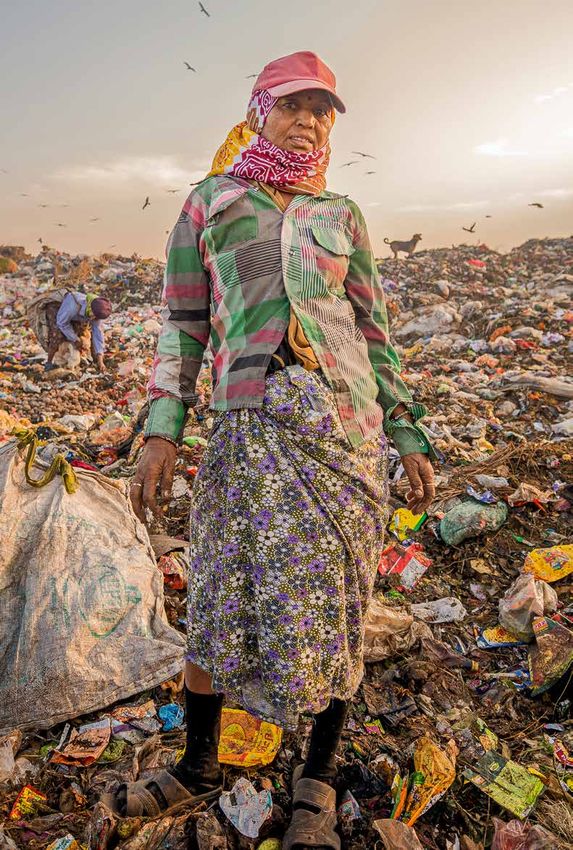
Just Transition in the international development cooperation context

                            Just Transition in the international development cooperation context
                                                            Report

                  Based on the study commissioned by Union to Union and written by the Just Transition Centre
                             with additional research and interviews conducted by Union to Union.

         This report is being published with financial support from Sida. Sida has not participated in its production
       and may not share the views reflected in the report. The content and recommendations in this report does not
     necessarily reflect the views of Union to Union´s members or their member unions. Responsibility for the contents
                                  of the report lies entirely with the authors and publisher.

ISBN: 978-91-985916-2-0
Cover photo: Bhagavatiben Girdharbhai Solanki, member of SEWA
Photo: David Lundmark
Graphic design: Ulrika L Forsberg, Press Art
Editor: Catarina Silveira
Print: TMG Tabergs, October 2020

Union to Union would like to thank all actors that contributed to this study including a special thank you
to representatives from Swedish trade unions confederations, SACO, LO and TCO for their contributions
in the study’s reference group.

                                                                      2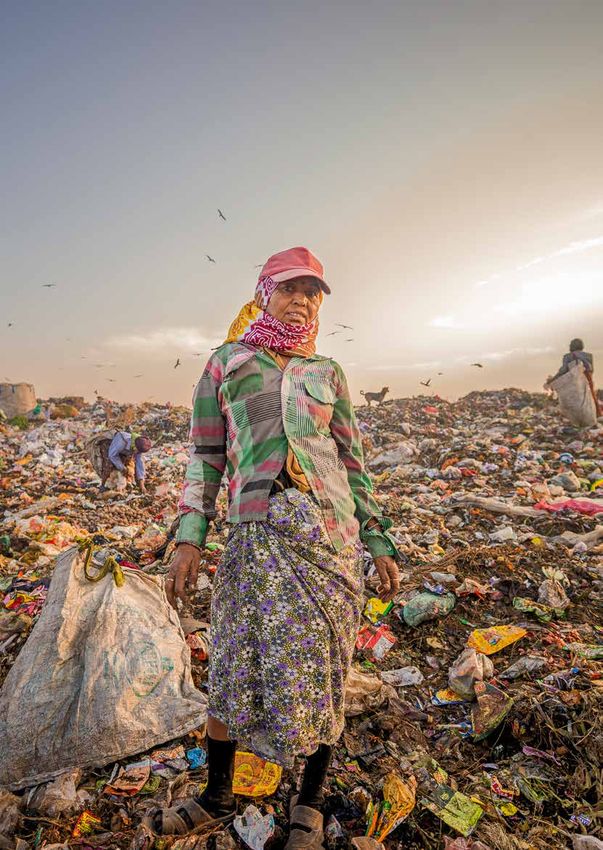
Just Transition in the international development cooperation context

Foreword
We are living a new situation – the COVID-19                 combined with addressing development challenges,
health pandemic has affected us all. In addition to          poverty and inequalities – leaving no one behind.
the loss of lives, it has brought a tough challenge          Focusing on just transition is key to achieve the
to health systems worldwide and led to massive               2030 Agenda for Sustainable Development.
job losses and reduced income opportunities. We
need to look forward; we need to build back better.          Union to Union believes that more information is
Building better means taking the opportunity to              needed on the development perspective of a just
design a greener and just recovery for the world of          transition. There is a knowledge gap on how to
work. If the current crisis has demonstrated one             design policies and how trade unions are agents of
thing, it is that vulnerable groups pay a higher price       change regarding climate action. We have therefore
in crisis and transitional processes.                        elaborated this report together with the Just
                                                             Transition Centre.
If climate change is to be treated as the crisis that
it is, implementation of plans to reduce greenhouse          The scale of the challenges when dealing with
gas emissions will need to be accelerated. We                climate change is significant in low- and middle-
know that those efforts will affect the world of             income countries. Vibrant trade union engagement
work. We at Union to Union believe that working              is central for a just transition. Enabling good
on ensuring a just transition can enhance climate            working conditions requires cooperation between
ambition. Our own ambition is to contribute to               different actors. This publication provides examples
a world with social and economic justice that is             on how trade unions are engaging in just transition,
also environmentally sustainable. Just transition            how it relates to international development
can provide that pathway to social justice on a              cooperation and provides guidance on how to
living planet. It gives us the opportunity to create         move forward and strengthen the work for a just
good jobs and to address climate change. In the              transition.
past, there have been discussions about the world
needing to choose between creating jobs and                  Finally, I would like to extend a big thank you to
growth on one hand or respecting the environment             everyone that is in engaged in the trade union
on the other. Today it is clear that these choices are       work, including the trade union development
not mutually exclusive. The necessary transition             cooperation, and those who contribute on a daily
is not only about phasing out polluting industries,          basis to a world of social justice and dignified
but also about creating new jobs, skills and                 working conditions. We are part of the world’s
investments and an opportunity for a more equal              largest movement for democracy – and we are
and sustainable economy.                                     needed more than ever!

Just transition is a concept that was born out of            Sofia Östmark, Secretary General, Union to Union
the trade union movement, and after several years
                                                                                                                            PHOTO: STEFAN TELL

of advocacy work, it was included in the Paris
Agreement within the United Nations Framework
Agreement on Climate change (UNFCCC). It was
further developed as guidelines adopted by the
International Labour Organization (ILO) and it is
discussed within the international community. In a
nutshell, just transition is about protecting workers
and communities affected by this necessary
transition so that economies can generate lower
emissions and have less environmental impact. It                                        Sofia Östmark, Secretary General,
                                                                                        Union to Union
allows for improvements to the environment to be

                                                         3
Just Transition in the international development cooperation context

                                                           Bhagavatiben Girdharbhai Solanki, member of Self Employed Women´s
                                                           Association (SEWA).                         PHOTO: DAVID LUNDMARK

                                                  4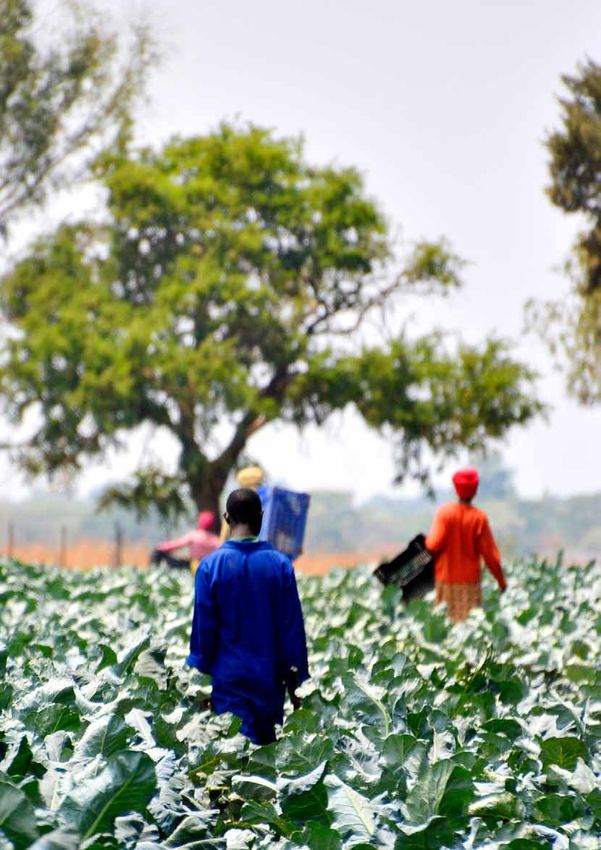
Just Transition in the international development cooperation context

Executive Summary
The current health crisis has demonstrated how              diversify economies and ensure that societies are
often vulnerable groups pay a higher price during           more resilient to climate change impacts, as well as
economic shocks or societal transformation. The             measures to address these impacts.
COVID-19 health pandemic has accelerated trends
in the world of work, for better or worse. Massive          The aim of just transition is to address
losses of working hours, workers who suddenly               environmental, social and economic issues
have found themselves unemployed and had to                 concurrently. The Just Transition Framework
walk long distances to go back home1 and workers            provides a set of components that can be
in the informal economy facing dramatic income              analysed (per productive sector, per country) and
losses as well as high exposure to health and safety        should be included in order to guarantee a just
risks. There are encouraging developments such as           transition. These components are social protection,
companies extending services to local communities           organisational health and safety policies, sectorial
and governments extending social protection                 and active labour market policies, skills and
schemes. Meantime, trade unions have taken the              development policies. Just transition is still a new
lead in outreach activities to raise awareness about        concept in the field of international development
COVID-19 impacts in the workplace and at home               cooperation, largely because international norms
such as increased rates of domestic violence.               for just transition are relatively new, as are social
                                                            dialogue processes focused on it. So, while
Efforts to advance environmental sustainability will        there is growing awareness of the concept and
also disrupt the world of work. These are related           an expanding field of academic and theoretical
to three main transformations that will take place          work relating to it, just transition in practice and
if countries are to achieve what was committed to           financing possibilities for it are thus far limited.
under the Paris Agreement: jobs will be transformed,
jobs will be lost and jobs will be created.                 Social partners have an important role in advancing
                                                            economic and social development. Likewise they
There are examples that it is possible to create            should reinforce reinforcing the role of international
decent work while promoting better practices                development cooperation for poverty eradication,
to safeguard the environment. Should emissions              the promotion of decent work and environmental
reductions integrate just transition framework              sustainability.
analysis, it would allow for an advancement
towards socially just and environmentally sound             The intention of this report is to shed light on how
societies. It would make it possible to take                just transition work has been advancing in low-
advantage of employment creation potential, e.g.,           and middle-income countries and highlight how
within ecosystem restoration and in efficient use           trade unions and development actors can enhance
of natural resources. It would provide the impetus          climate ambition. It provides examples of union
for a move towards circular economies and a                 responses in different productive sectors and how
move away from linear economic models towards               Nationally Determined Contributions (NDCs) will
sustainable ones that take into consideration the           shift labour markets and sectorial challenges.
planetary boundaries.
                                                            This report used methods such as desk review,
Just transition plans cover both measures for workers       interview and surveys. The cases studies were
who may lose their jobs or livelihoods and measures         selected to provide a set of examples from different
to make sure that new green jobs are good jobs. It          productive sectors and regions of the world. They
includes managing the phase-out or transformation           link climate change with improvements in working
of high emitting sectors and promoting the growth           conditions, the visibility of workers’ societal roles, the
of low emitting sectors with decent jobs. An                key role of capacity building and the impact of social
effective just transition plan includes measures to         protection. They draw attention to the fact that the

                                                        5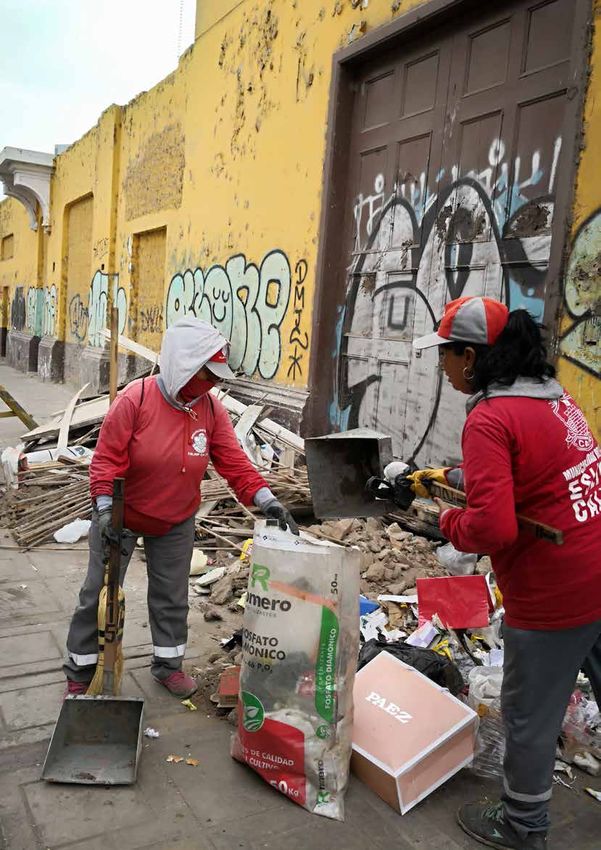
Just Transition in the international development cooperation context

necessary move towards greening our economies,                        agreements with multinational enterprises, and
if designed under a Just Transition Framework                         supporting trade unions in their efforts for basic
and embedded in social dialogue, can lead to                          labour rights.
transformative change. Each case study includes
a brief COVID-19 impact analysis, since there are                     Union to Union, as the joint international
lessons learned that could be applied when working                    development cooperation organisation of the
under a Just Transition Framework. However, the                       Swedish trade union confederations, presents
full extent of the profound transformations in the                    in this report a set of recommendations on
world of work is yet to be fully understood, and                      how development cooperation actors could
this publication aims to contribute to those ongoing                  integrate just transition on their agenda. It offers
processes. This report could be of use to, among                      guidance on how international development
others, practitioners, decision makers and policy                     cooperation could be channelled to enhance
makers in the international development cooperation                   participation of social partners, including workers
community.                                                            and their representatives. This report presents
                                                                      recommendation addressing how international
The international labour movement via the                             development cooperation could be applied to
International Trade Union Confederation (ITUC)                        promote interventions under a Just Transition
and the Global Union Federations (GUFs), play a role                  Framework in low- and middle-income countries,
in consolidating trade union positions, advocating                    and by doing so, would contribute to raising the
for international policy norms, negotiating                           level of climate ambition.

UNION TO UNION SUGGESTS THE FOLLOWING RECOMMENDATIONS FOR CONTINUED WORK
ON JUST TRANSITION FROM AN INTERNATIONAL DEVELOPMENT COOPERATION PERSPECTIVE:

n International development cooperation actors should                 n Governments, development actors and social partners
increase their support to trade unions, including on issues           should ensure an environment that is beneficial to social
related to just transition, climate change and biodiversity           dialogue and inclusive stakeholder engagement processes

n Development actors2 and trade unions should support and             n Social partners, International Financial Institutions
advocate for the incorporation of just transition strategies in       (IFIs) and development actors should analyse the COVID-19
Nationally Determined Contributions (NDCs)                            recovery package responses and apply lessons learned
                                                                      to enhance climate change action and investments for
n Development actors and trade unions should support
                                                                      Decent Work
capacity building initiatives, including via online
platforms, to increase knowledge on just transition,                  n Trade unions should continue to build alliances
climate change and biodiversity                                       on shared objectives, not least with environmental
                                                                      organisations
n Development actors, Trade Union Solidarity Support
Organisations and trade unions should support interven-               n Social partners, development actors including civil
tions at multiple levels that can lead to increased policy            society organisations should explore Human Rights Due
and resource coordination                                             Diligence (HRDD) as a tool to advance just transition

n Trade Union Solidarity Support Organisations and
development actors should support the creation of a
coordination mechanism for just transition

                                                                  6
Just Transition in the international development cooperation context

Content
Foreword                                                                                          3
Executive Summary                                                                                 5
Introduction                                                                                      9
What is Just Transition?                                                                         13
Just Transition as a way to foster social justice, tackle poverty
eradication and safeguard the environment                                                        17
Trade union positions on Just Transition                                                         19
Just Transition initiatives – examples of cooperation in low- and middle-income countries 23
Case studies in low- and middle-income countries                                                 27
     Just Transition for the energy and mining sectors in South Africa                           27
     Just Transition for the energy sector in the Philippines                                    30
     Just Transition for the textile sector in Bangladesh                                        32
     Just Transition for the agriculture sector in Nigeria                                       36
     Just Transition in coal mining and oil production in Colombia                               38
     Just Transition in recycling and waste picking in India                                     40
Recommendations: how to raise the level of climate ambition through Just Transition              45
Footnotes                                                                                        49
Bibliography                                                                                     51

                                                 7
Just Transition in the international development cooperation context

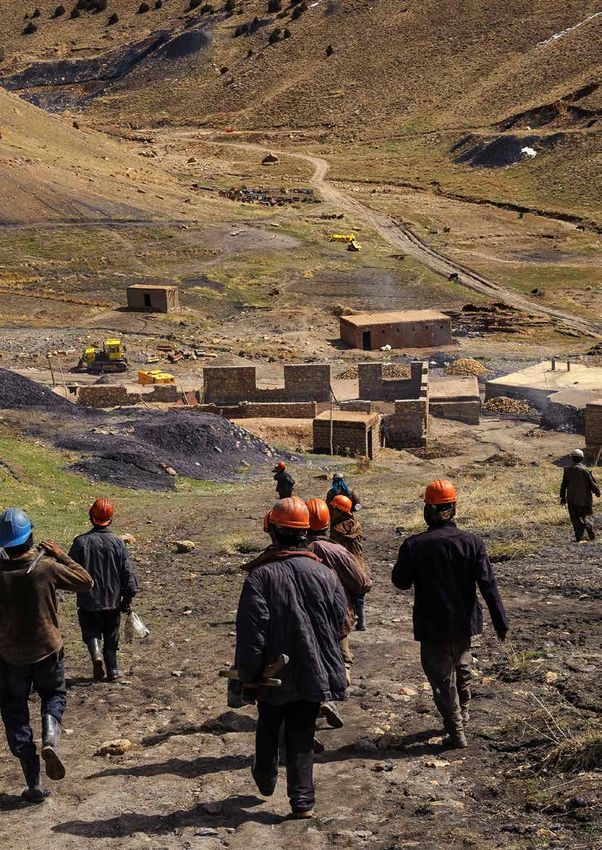
                                                           A group of coal miners in Afghanistan at the end of their shift.
                                                           		                         PHOTO: HOSSEIN FATEMI/PANOS PICTURES

                                                  8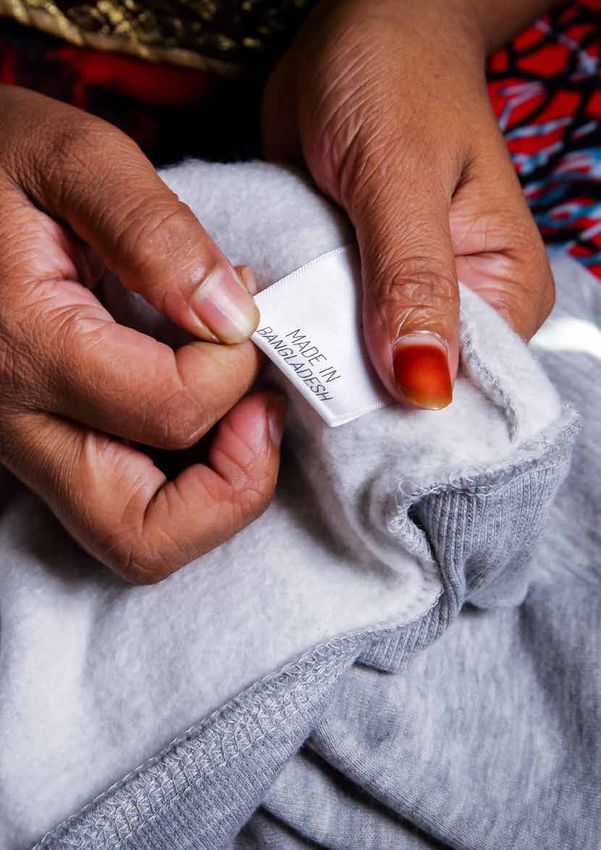
Just Transition in the international development cooperation context

Introduction
The year 2020 was believed to be a critical year               and governance institutions. Still, the deep
for climate action. It was the year in which                   transformation implies impacts on economic
governments were to submit their national plans to             sectors, firm, labour markets and trade patterns”.4
reduce national greenhouse gas emissions (GHG),
known as the second generation of the Nationally               However, the year 2020 brought us yet another
Determined Contributions (NDCs) to the United                  global crisis. COVID-19 has infected millions of
Nations Framework Convention on Climate Change                 people and killed hundreds of thousands. Over
(UNFCCC). This would happen against the backdrop               half the world’s population has been in lockdown
of 2019: it was the second warmest year on record; it          to protect communities and the most vulnerable
brought us the Australian bushfires and hurricanes             groups, with staggering impacts on working
Idai and Kenneth that led to catastrophic flooding,            people and the poor. The International Labour
damage and lives lost in South East Africa. It also            Organization (ILO) estimated that working-hour
brought the yellow vest demonstrations that were               losses in the final quarter of 2020 are expected

                           “
sparked by taxation for the transport sector in                to amount to 245 million full time equivalent
France. Although the                                                                  jobs. Youth unemployment
above mentioned policy                                                                was a challenge before the
aimed to encourage              climate protection and adaptation investments         COVID-19 crisis, with circa
modes of transportation         will become a precondition for peace and stability, 67.6 million young men
with lower emissions,           and will require unprecedented efforts to             and women unemployed.
it was considered by            transform   societies, economies, infrastructures     This situation is expected to
demonstrators to only           and governance institutions. Still, the deep          worsen. The informality rate
benefit groups in society       transformation implies impacts on economic            is high among youth, with
that were already               sectors, firm, labour markets and trade patterns”.4 around 77 per cent in informal
economically advantaged.                                                              jobs (328 million young
                                                                                      workers) compared to 60 per
Collectively we are not near the level of ambition             cent of adults (25 and above). Informal workers are
for action on climate change necessary to fulfil               estimated to have lost 60 per cent of their income
international agreements. The United Nations                   in the first month of the crisis alone.5
Environmental Programme (UNEP) has for the past
ten years published yearly reports on the “difference          In many countries social partners* have worked
between where we are likely to be and where we                 together to agree on responses that protect people
need to be”. UNEP’s Emissions Gap Report – 2019                and workers on the front lines, strengthen social
provides us with some answers: 1) GHG have risen               protection and especially health care, and to create
at a rate of 1.5 per cent per year in the last decade;         or to extend social protection schemes to provide
2) fossil CO2 emissions from energy use and                    income support. However, in other countries,
industry dominate the total GHG emissions;                     governments, employers, or both, have taken
3) there is no sign of GHG emissions peaking in the            advantage of the crisis to strip away workers’
next coming years.3 The report clearly points out              rights, shrink social dialogue, and impose new
that Nationally Determined Contributions (NDCs)                authoritarian laws.
need to be strengthened in 2020 and that countries
must increase their NDC targets threefold in order             Several governments, including the G20, as well as
to ensure that the increase in global temperature              the International Monetary Fund and the World
remains well below two degrees Celsius. Moreover,              Bank, have taken some positive steps on debt
“climate protection and adaptation investments                 relief for the poorest countries and deployment
will become a precondition for peace and                       of financial support. Some actors have been
stability, and will require unprecedented efforts              advocating for debt forgiveness, or a Global Fund
to transform societies, economies, infrastructures             for Universal Social Protection that would aid the

                                                        9
Just Transition in the international development cooperation context

poorest of the poor in low- and middle-income               inequality. Working under a Just Transition
countries.6 Another way forward would be to                 Framework that leaves no one behind should
increase cash transfer programmes.                          include workers at the table in social dialogue to
                                                            negotiate the implementation of policies and other
Responding to the devastation from COVID-19                 relevant decisions that affect the labour market. It
will require massive recovery plans, reconstruction         can provide the pathway to address decent work
and resilience. The same is true of the climate             deficits while tackling the climate change crisis.
crisis, with just ten years to stabilise the planet
and see a global reduction of 45 per cent of                Union to Union is one of the Trade Union Solidarity
emissions.7                                                 Support Organisations (TUSSO) in the international
                                                            development cooperation context. Just transition
Both crises require new levels of care, social              discussions in the international arenas have been
protection, decent jobs, and public investment.             ongoing for around ten years, but its potential
Building back better8 is not only possible, it is           in development cooperation remains to be fully
necessary9. It is a way to leave a living planet for        achieved. Union to Union recognises the Just
future generations while securing good jobs and             Transition Framework as a tool to advance social
livelihoods, eradicating poverty and reducing               justice and is committed to support it.

                                                       10
Just Transition in the international development cooperation context
JUST TRANSITION
JUST
JUST TRANSITION
TRANSITION
Speed up the process
■ International Development Cooperation
■ Alliance
Speed
Speed upBuilding
up the
theprocess
process
Policy Coherence
■International
■■ InternationalDevelopment
DevelopmentCooperation
Cooperation
■■Alliance
AllianceBuilding
Building
■■Policy
PolicyCoherence
Coherence
Policy and
Regulatory
Instruments Gender Decent Work on a living planet
Skills Policy
Policy and
and
Regulatory
Regulatory
Instruments Decent
Instruments Gender
Gender DecentWork
Workon
onaaliving
livingplanet
planet
Skills
Skills
Social Dialogue
Social Dialogue
Social Dialogue Social Protection
Social Protection
Social Protection
Occupational
Health and Safety
Occupational
Occupational
Health and Safety
Health and Safety
ILLUSTRATION: ULRIKA LARSSON FORSBERG/PRESS ART
11Just Transition in the international development cooperation context
Most workers in the waste management sector in Peru have poor wages and working conditions, something
that the trade union SINTRAESLIMP, for example, is working for a change. In a project with the Swedish
trade unions Fastighetsanställdas förbund and Svenska Transportarbetareförbundet (from 2020), UNI Global
12
Union and Union to Union, SINTRAESLIMP offers training on union organising. PHOTO: SOFIA SÖDERINJust Transition in the international development cooperation context
What is Just Transition?
Half a decade after the negotiation of the Global frameworks and norms for Just Transition
Sustainable Development Goals (SDGs) and the In 2015 the United Nations (UN) adopted a set
Paris Agreement, the world is not on track to meet of agreements that together comprise a global
the agreed targets.10 Governments are struggling framework on just transition. This framework
to gain popular support for ambitious climate comes primarily from the International Labour
action, while the crises of inequality and climate Organization (ILO), a tripartite United Nations body
change are getting worse. Now, with widespread that consists of workers and their representatives,
unemployment from the COVID-19 crisis, working employers’ organisations, and governments. The
people face fears for their families and futures. ILO negotiates global agreements and standards
related to work. In 2015, the ILO concluded
In a growing number of places, however, trade discussions on the Guidelines for a just transition
unions have supported and driven climate action. towards environmentally sustainable economies and
This is possible through a just transition approach. societies for all. The guidelines provide governments,
Just transition as a concept was developed by workers and employers with the main components
the labour movement at the end of the 1990s for how to design transition to a greener, low-
and is today a well-defined and accepted part carbon economy while creating decent jobs at scale,
of international and national frameworks on minimise impacts on workers, eradicate poverty
sustainable development and responses to climate and promote social protection.13
change.11
At the end of 2015, the negotiation of the Paris
Just transition plans cover both measures for Agreement produced another key piece of the
workers who may lose their jobs or livelihoods, global framework on just transition. The Paris
and measures to ensure that new green jobs are Agreement includes just transition in its preamble,
good jobs. It includes managing the phase-out referring to “the imperative of the just transition of
or transformation of high-emitting sectors and the workforce and the creation of decent work.”14
promoting the growth of low-emitting sectors with
decent jobs. A solid just transition plan includes Since 2015, the United Nations Framework
measures to diversify economies and ensure that Convention on Climate Change (UNFCCC), other
they are more resilient to climate change, along UN agencies, and international efforts on climate
with measures for communities. In short, just change have produced a range of initiatives on just
transition aims to address environmental, social and transition. These focus on the central importance of
economic issues concurrently.12 just transition in delivering climate targets and calls
for national action and social dialogue by states.
So far, however, well-known examples of just For example, in its capacity as President of COP 24,
transition have come from experience in countries Poland launched the Solidarity and Just Transition
such as Spain, Canada, Germany and the Silesia Declaration, which encourages countries
Netherlands. Nonetheless, some trade unions in to incorporate just transition into their national
low- and middle-income countries have also been plans under the Paris Agreement.15 In 2019, the UN
working on just transition strategies and adapting Secretary General launched the Climate Action
them to fit into their national contexts and with for Jobs Initiative, in which countries present
their development needs. This report provides their national commitments to promote action on
examples of how workers in low- and middle- decent and green jobs.16 Finally, the Powering Past
income countries are applying just transition Coal Alliance, a coalition of national governments
components in order to achieve better working and other actors, has established a Just Transition
conditions for workers and a sound environment at Task Force and is working on strategies for just
the same time. transition.17
13Just Transition in the international development cooperation context
Combined, these initiatives and the ILO Guidelines regulations on just transition. The ILO Guidelines
can be understood as an early stage of a global do, however, provide “practical orientation to
governance around just transition. One that governments and social partners with some specific
provides principles, norms and a set of criteria for options”. They are designed to support country-
national and subnational analysis to be taken into specific applications of just transition. (See quote).
consideration when designing and implementing
just transition strategies. The ILO Guidelines recognise that there may
be fundamental differences of approach to just
When a just transition takes place, job and income transition for developed and developing countries
“
gains are maximised, risks of job and income losses and even refer to the principle of common
counterbalanced and but differentiated
the vulnerable socially responsibilities from the
protected and included. Sharing a common global purpose, there are Rio Declaration.19
The economies generate different approaches, models and tools available
lower emissions and to each country, in accordance with its national Consistent with the
environmental impacts circumstances and priorities to achieve sustainable ILO Guidelines’ non-
while environmental development in its three dimensions, which is our prescriptive approach,
quality and resilience overarching goal.” 18 examples of just transition
improves. Just transition so far vary widely from
could be seen as a country to country.
framework without a standard set of rules but Social dialogue processes range from formal,
with components and a shared vision of the role constitutional fora such as the National Economic
of sustainable development, along with a process Development and Labour Council in South
based on social dialogue. An agenda negotiated Africa to time-limited commissions or task forces
and shared by social partners – workers, industry with broader membership, such as the German
and governments – taking into consideration Commission on Growth, Structural Change and
geographical, political, cultural, environmental and Employment. In Nigeria the government has
social contexts. involved trade unions in formal discussions of
national climate plans to be submitted under
The existing documentation does not provide the Paris Agreement. Similarly, national and
detailed guidance to states or social partners about subnational plans, laws, and regulations on just
what kind of social dialogue is required, nor set transition also vary between countries and between
the standard for good national laws, plans, or levels within countries: city, province and region.
14Just Transition in the international development cooperation context
15Just Transition in the international development cooperation context
Farm workers are vulnerable to climate change and price changes on the global food market. But workers
also face poor working environments and conditions. IUF, the Swedish trade union Kommunal and Union to
Union have worked together with local trade unions in Africa in a project that aims to reduce workplace
accidents and mobilise people to tackle working conditions. PHOTO: LINA KARLSSON
16Just Transition in the international development cooperation context
Just Transition as a way to foster
social justice, tackle poverty eradication
and safeguard the environment
Shortly after the negotiation of the ILO Guidelines, A social dialogue is widely recognised as a pathway
the UN agreed on the Sustainable Development to building strong cohesion when designing policies.
Goals (SDGs) in the 2030 Agenda. Achieving It requires all labour market partners to be involved,
the SDGs is closely connected to succeeding in invited and technically capable of joining in the
ensuring just transition, particularly through targets discussions. Democratically established trade unions
on social protection systems for all (SDG 1.3), that represent workers’ interests, with a deeper
gender equality (SDG 5), decent work for all (SDG understanding of how climate policies affect their
8), and climate change (SDG 13).20 sector and with the adequate technical expertise,
could contribute to a higher level of ambition
Poverty and vulnerability are exacerbated by regarding climate change. For policies to be fair, and
climate change impacts. They affect workers, to tackle the breadth of climate change implications,
“
their families and their communities. To deal they need to be analysed through a systems thinking
with these impacts, lens. That means including
there is a need for a the wider context of
shift in how we live, Decent work sums up the aspirations of people in a situation to avoid
produce and consume. their working lives. It involves opportunities for work unintended outcomes
To reduce global that is productive and delivers a fair income, security and/or consequences,
emissions and keep in the workplace and social protection for families, and – if consequences are
the global temperature better prospects for personal development and social unavoidable –not being
increase under 2.0°C, integration, freedom for people to express their blind/oblivious to them
as agreed in the concerns, organize and participate in the decisions and designing policies to
Paris Agreement, a that affect their lives and equality of opportunity and address them.
dramatic shift needs treatment for all women and men.” 21
to take place. The To be able to reduce
opportunities and emissions while also
obstacles to employment must not be overlooked addressing development issues, such as providing
– especially in a world of unemployment and citizens with access to energy, adequate transport,
decent work deficits, including high youth sanitation and housing, some countries need
unemployment. financial support. Other countries have agreed to
contribute via development cooperation funds. A
As efforts to advance environmental sustainability Just Transition Framework could be used to tackle
will change the world of work, it is necessary development challenges that integrate all three
to involve trade unions in the discussion and pillars of sustainable development – economic,
in the shaping of policies. There is substantial social and environmental – at the same time.
evidence that decent work can be created while
better practices to safeguard the environment are Decent work, one of the pillars of just transition,
promoted. A policy to reduce greenhouse gases is critical for development and alleviating poverty.
may lead to unemployment in a specific sector, as About half the world’s population still lives on two
it may create opportunities in another. As it will be dollars per day or less, despite the fact that many
demonstrated by some of the sectorial examples in work full-time.22 57 per cent of those living in
this publication, the transformation of our societies extreme poverty work, while one-third of working
will in particular require reskilling of workers or age people in developing countries lives in moderate
extension of social protection. poverty.
17Just Transition in the international development cooperation context
Sara Nyokabi is a bus conductor in Nairobi, Kenya. The city has introduced a more climate friendly public
transport system, to which Sara’s trade union is positive as long as the new jobs created are decent jobs.
Therefore, Sara’s trade union collaborates with the Swedish trade union Seko, International Transport Worker’s
18for a just transition.
Federation (ITF) and Union to Union PHOTO: ANNA NYLANDERJust Transition in the international development cooperation context
Trade union positions on Just Transition
Workers and their unions are essential actors in just with the components from the ILO Guidelines. They
transition. At the global level, union federations advocate for a fair, ambitious and binding global
work to strengthen international frameworks, climate agreement; national climate action; and just
support unions on the ground, and negotiate transition for workers and communities. Several
agreements on just transition with multinational global union positions include the following:
enterprises and other groups of actors.
n Just transition can be a way forward in terms
of addressing both the impacts of climate change
Internationally, trade unions are organised action and the impacts of technological changes,
geographically and by sector. The International such as automation and digitalisation.
Trade Union Confederation (ITUC) is the global n Emphasis on the role of the state in leading the
federation for most of the world’s national trade plans to cut GHG emissions, establishing sustainable
union federations, representing 200 million workers industrial policies, delivering public investments and
in 163 countries. Global union federations (GUFs) services, creating decent jobs, and ensuring universal
are federations of unions that represent millions of social protection such as pensions, income protection,
workers in specific sectors and trades. education and training.
n Emphasis on challenges related to the power
balance between social partners and an enabling
environment for social dialogue needing to be
THE GLOBAL UNION FEDERATIONS (GUFS) secured.
n BWI – Building and Wood Workers’ International n The role of public and community ownership,
n EI – Education International particularly of services, is highlighted.
n IndustriAll Global Union
Trade union positions on Just Transition in low-
n FIA – International Federation of Actors and middle-income countries
n ICN – International Council of Nurses National and sectoral unions in low- and middle-
n IFJ – International Federation of Journalists income countries have varying experiences and
institutional positions on just transition. For
n FIM – International Federation of Musicians
example, the Congress of South African Trade
n ITF – International Transport Workers’ Federation
Unions was an early advocate of just transition
n IUF – International Union of Food, Agricultural, Hotel, and climate jobs, with positions on the issues
Restaurant, Catering, Tobacco and Allied Workers’ Associ- dating from 2009. The National Union of Metal
ations Workers of South Africa adopted resolutions on
n PSI – Public Services International climate, just transition, and public ownership of
n UNI – UNI Global Union energy in 2012. Some unions have pointed out just
transition as a useful concept that can be adapted to
their country contexts, including Unified Workers’
The ITUC and the GUFs have positions, policy Central in Brazil (CUT Brasil - Central Única dos
proposals, and activities regarding climate change Trabalhadores), Confederation of All Indonesian
and just transition. The international structures Trade Unions (KSBI - Konfederasi Serikat Buruh
play a role in consolidating trade union positions, Seluruh) and the Nigerian Labour Congress.
advocating for international policy norms,
negotiating agreements with multinational Others, although well aware of climate change, are
enterprises, and supporting trade unions in their yet to prioritise it in comparison with what are
efforts for basic labour rights. traditionally seen as core issues for trade unions.
Some unions do not see opportunities to engage in
Global union positions on just transition are in line just transition via social dialogue due to lack of an
19Just Transition in the international development cooperation context
enabling environment. Therefore, they reject just Latin America have worked with their affiliates to
transition as they perceive it to be an incremental develop appropriate approaches to just transition.
approach that would lead to minor improvements They have developed a range of positions that
in working conditions. They advocate for a system identify climate change as a trade union issue. Some
change. barriers to the ability to implement Just Transition
Framework, as well as priority issues for trade
Global Union Federations (GUF) regional offices unions in low- and middle-income countries, have
and the International Trade Union Confederation’s been identified.23
(ITUC) regional centres in Africa, Asia Pacific and
BARRIERS TO A JUST TRANSITION PRIORITY ISSUES
n Lack of or limited social dialogue. n Consideration of poverty and the need for development
and energy access in climate change planning.
n The systematic violations of fundamental human and
labour rights and lack of an enabling environment for n Recognition of the skills, knowledge and expertise of
social dialogue. workers regarding how to ensure a just transition, and
workers’ inclusion in the discussions.
n High unemployment and informality: two billion working
people find themselves in informal jobs, with the majority n Adequate social protection, including active labour
in low- and middle-income countries. market policies and programmes. Safety nets are critical in
moments in which societies and a given productive sector
n Lack of social protection: including income support and
are in transformation.
essential public services such as education and health
care. n Highlight the impact of privatisation of public services
and state-owned enterprises. State owned enterprises
are perceived as offering better working conditions and
job security than the private sector in several countries.
The privatisation trend has been intensified in services
such as transport and waste management and has led to
displacement of informal workers while creating relatively
few new jobs.
n Need to recognise the principle of Common But Diffe-
rentiaded Responsibilities (CBDR). Workers in low- and
middle-income countries are already suffering climate-re-
lated impacts such as a rise in sea level, flooding, heatwa-
ves, droughts, and other extreme weather events.
20Just Transition in the international development cooperation context
21Just Transition in the international development cooperation context
Textile factory worker Fatima Akhter Faria holding the clothes she makes for overseas buyers.
Photo taken in Mirpur, Dhaka, Bangladesh. PHOTO: G.M.B. AKASH/PANOS PICTURES
22Just Transition in the international development cooperation context
Just Transition initiatives – examples of
cooperation in low- and middle-income
countries
Just transition is still a new concept in the field for work on just transition in low- and middle-
of international development cooperation. This income countries. With funding from the Canadian
is largely because international norms for just government, the World Bank will support coal
transition are relatively new, as are social dialogue phase-out and renewable energy in Asia.25 Another
processes focused on it. So, while there is growing financing stream from the United Kingdom will be
awareness of the concept and an expanding field used globally on energy transitions. The latter will
of academic and theoretical work relating to it, just include just transition in the case via a guide to
transition in practice and development finance for it just transitions in coal mine closure that the World
are limited so far. Bank published in 2019.26
A survey conducted by the Just Transition Centre to Powering Past Coal Alliance (PPCA)
a limited number of development and trade union PPCA is an alliance of national and subnational
actors, although without the aim of presenting a governments, as well as other actors that have
complete picture, demonstrates the range of just committed to phasing out coal-fired power by 2030
transition and the growing support for it among or shortly thereafter. Government members bring
state and non-state actors in low- and middle- diplomatic and financial resources to the group’s
income countries. In this publication they are efforts to persuade other countries to phase out
presented in three categories: Governments and coal-fired power, including efforts in Global South
intergovernmental entities such as International countries. PPCA has a Just Transition Task Force,
Financing Institutions (IFIs); Trade Union Solidarity including representatives from the labour movement,
Support Organisations (TUSSOs); and other and is exploring concrete work in this area.27
development cooperation actors such as NGOs and
political party foundations and institutions. Trade union activities and organisations
The ITUC and several GUFs provide direct support
Intergovernmental entities to their affiliates in work on just transition,
In the UN system, the ILO is responsible for including on social dialogue processes. Their
negotiating and driving international standards for support ranges from convening workshops to
just transition. It works to harmonise approaches training in the development of toolkits and more.
to just transition by other UN entities, such as the The ITUC established the Just Transition Centre
UN Framework Convention on Climate Change with the purpose of supporting its affiliates from
(UNFCC). It also provides considerable training, developed and developing countries in advancing
technical and analytical assistance to states on their positions on the issue.28
the issue via its Green Jobs Initiative, including
supporting pilot projects. Currently, the ILO Trade Union Solidarity Support Organisations
has pilot projects in Ghana, Uruguay and the (TUSSOs)
Philippines. These projects aim to produce results Some of the Trade Union Solidarity and Support
on the ground in the form of decent, greener jobs, Organisations (TUSSOs) have supported trade
as well as test interventions and demonstrate unions development projects on issues around
models and best practice.24 climate change, biodiversity and just transition in
low- and middle-income countries. These include
World Bank APHEDA-Union Aid Abroad (Australia), Mondiaal
The World Bank is the only IFI so far with concrete FNV (the Netherlands), Solidarity Center (United
plans to provide technical assistance and finance States of America), and Union to Union (Sweden).
23Just Transition in the international development cooperation context
Union to Union is currently working with just n Promote local ownership in the intervention
transition: logic: do not dictate the agenda nor offer
prescriptive views on how trade unions should
n Research and policy: conduction and commission engage on just transition.
of research on just transition and providing inputs n Listen, chart possibilities and draft strategies
to reports and strategies. together; partners need to take the lead in
n Development cooperation projects: supporting determining the interventions that are achievable
international development cooperation projects and realistic in their own context.
n Information projects: information and knowledge n Support capacity for how to include just
sharing by organising seminars, trainings and other transition in further advocacy agendas and social
events dialogue mechanisms.
n Strengthening trade unions’ capacity: providing and n Stimulate peer-to-peer learning through
supporting training on climate change, biodiversity exchange meetings and programmes.
and decent work. n Promote cooperation among like-minded
organisations.
Most but not all projects supported are in higher-
emitting sectors such as transport, agriculture Civil society, including NGOs and political
palm oil, mining, and oil and gas. During the study foundations
carried out by the Just Transition Centre, several International environment and development NGOs
of the TUSSOs contacted have spoken about their have begun to engage on just transition in the
interest in expanding support for and engagement low- and middle-income countries. For example,
in just transition projects in the near future. The ActionAid has developed principles for just
growing attention from TUSSOs in the field of transition in agriculture, Friends of the Earth works
just transition should be matched with strong with trade unions on the ground in some African
coordination among these like-minded donors.29 and Latin American countries, and World Wildlife
In this way, they are able to work on identifying Fund (WWF) works on just transition in South
synergies and gaps in the support, and even explore Africa, among other locations.
joint endeavours.
The Friedrich Ebert Stiftung (FES), a German
Six lessons learned from TUSSOs that should political foundation, has played a strong role in
be considered when supporting just transition supporting trade unions and trade union partners
engagement among trade unions are: in activities related to just transition. They have
produced technical reports on the concept of just
n Engage organisations at local level and promote transition and provided financial and other support
leadership involvement. to unions so that they can engage on the issue.30 In
n Promote the opportunities that exist in greening Sweden, the Olof Palme International Center** is
our societies, such as core social protection benefits engaged in trade unions issues including support
and the need to address underlying inequalities. related to climate change.
24Just Transition in the international development cooperation context
As we shift to a greener economy, the demand of metals is expected to increase. Solar panels, rechargeable batteries, phones, and electric cars
and scooters all have something in common: they all need cobalt, lead, lithium, manganese and cooper. However, there are health risks for the
workers in the factories who made your phone and the miners who extracted the minerals that powers your electric bike. Monitoring and demanding
compliance of international labour standards within global supply chains can play a substantial role in ensuring decent working conditions and
access to health and safety as we shift to greener economies. PHOTO: ANDREW MCCONNEL/PANOS PICTURES
25Just Transition in the international development cooperation context
Increasing renewable energy generation and energy efficiency is essential
to meet the goals of the Paris Agreement. PHOTO: LAURENT WEYL/ARGOS/PANOS
26Just Transition in the international development cooperation context
Case studies in low- and middle-income
countries
In the Paris Agreement, countries have committed people. The agriculture case study focuses on
to implementing plans that will keep the global Nigeria, a country that ranks as a four in the Index
temperature increase well below two degrees (“systematic violations of rights” category).
Celsius. They also committed to achieving net
zero emissions by 2050, which requires ambitious
Just Transition for the
climate action. Financial support was also agreed
upon in order to support climate mitigation and
adaptation efforts.
energy and mining sectors
Trade unions have been working on climate, decent
work, and poverty eradication in several sectors.
in South Africa
The global energy sector is responsible for over
The selection of case studies31 in this report aims two-thirds of global CO2 emissions, with coal-fired
to provide regional and sector representation while power producing 54 per cent of CO2 emissions from
illustrating the challenges and providing examples the sector. CO2 emissions from coal-fired power
of trade union responses to climate change. are the “single largest source of global temperature
However, they are not a complete list of trade union increase.”33 Phasing out coal-fired power, phasing in
engagement. It includes involvement from nurses to clean energy, and ensuring a just transition for coal
journalists, from transport to public utility workers. workers and communities is essential to meaningful
The case studies also contain a brief COVID-19 action on climate change. Most of South Africa’s
impact analysis. The health crisis has exacerbated emissions come from coal-fired power.
underlying vulnerabilities in these sectors that can
be used as lessons learned when operating under a South Africa – climate commitments
Just Transition Framework. South Africa needs to reduce its CO2 emissions
and has committed to doing so. Its Nationally
The stories raised in the cases show how unions Determined Contribution (NDC) contains a target
on the ground can contribute to climate action and to limit greenhouse gases to between 398 and 614
poverty eradication. In a couple of countries, unions MtCO2eq34 over the period 2025–2030. This target
are engaged in social dialogue with the government is equivalent to a 19–82 per cent increase based
and sometimes employers. Social dialogue is crucial in on 1990 levels. South Africa has included just
advancing just transition. However, in many countries, transition in its NDC.35
social dialogue is yet to take place. There, trade unions
and their partners are preparing by building capacity The energy and mining sectors
in their membership, forming alliances and developing South Africa’s coal-fired power fuels 90 per cent of
joint strategies for just transition. the country’s electricity via the state utility Eskom.
The remainder of the electricity supply comes from
In many countries, being involved in a trade union is nuclear, hydropower, and conventional renewables.36
a dangerous endeavour. ITUC’s Global Rights Index
analyses the world’s worst countries for workers Eskom, and the mines tied to it, is an important
by rating countries on a scale from 1 to 5+ on the source of employment. In a country with high
degree of respect for workers’ rights. Five of the unemployment, Eskom employs circa 131,000
six case studies concern countries that have been workers directly and many others on a contract
ranked by the ITUC Global Rights Index 202032 basis. Eskom plays a key developmental role in
as category five (“no guarantee of rights”) and also supplying low-cost electricity to poor and working-
among the top ten worst countries for working class South Africans, particularly black South
27Just Transition in the international development cooperation context
Africans who were deprived of access to modern unbundling. Generally, the unbundling of utilities
electricity by the apartheid state. Eskom’s low- is the first step in the privatisation process and
priced power is also crucial to the competitiveness results in job losses. The South African government
of South Africa’s export sectors, particularly has, however, said that no jobs will be lost and that
minerals, mining, and manufacturing.37 Eskom will remain a state-owned entity.43
South African trade unions and social dialogue The World Bank has concluded that unbundling
South African unions and national tripartite and privatisation do not promote a transition away
structures are strong and formalised. Although from coal and are not required to achieve it.44
trade union density is historically low at 28 per Similarly, trade union experiences from Australia
cent, it is still higher than in many other countries. and Canada show that decarbonisation in the
Its tripartite body, the National Economic power sector is more difficult to achieve when
Development and Labour Council (NEDLAC), has a the sector is privatised. Experiences from power
constitutional mandate. Unions have been engaged sector liberalisation in Eastern Europe indicate that
and have contributed in consultation processes.38 the process does not necessarily reduce prices for
consumers.45 Nonetheless, governments and IFIs
The impact of COVID-19 offering international finance to refinance Eskom’s
In response to COVID-19, South Africa moved debt and fund local just transition plans have
swiftly to lockdown, strengthened public health, two conditions: an accelerated plan for coal plant
and enacted a massive relief and recovery package closure, and the unbundling and privatisation of
equivalent to 10 per cent of the country’s GDP. Eskom.
Nonetheless, the impact on jobs is huge. Before
the COVID-19 crisis, South Africa’s official The South African government has promised
unemployment rate was 29.1 per cent. Prognoses coal and power station workers a just transition
on unemployment post-COVID-19 range from 40 but understand that it is going to be challenging,
per cent to 50 per cent. South Africa’s economy particularly in light of the COVID-19 crisis. Eskom
may decline by as much as 16 per cent in 2020 as is already closing its older coal-fired power stations
a result of COVID-19 and the economic effects of with no social or economic plans in place as
lockdown.39 required by law. If unbundling and privatisation go
forward, the scenario will be challenging due to job
Electricity demand in South Africa dropped by losses.46
9000 MW during March 2020. Eskom has since
notified both coal and wind producers that it To date there have been multiple processes to stake
may not honour contracts for supply due to the out a future course for Eskom, South Africa’s coal
COVID-19 crisis.40 It remains to be seen whether sector, and the tens of thousands of workers in the
and how quickly electricity demand rebounds sector. These range from social dialogue in NEDLAC
and what the COVID-19 crisis will mean for the to a Presidential Task Team, a process under the
workers at Eskom and in coal mines.41 National Planning Commission with strong
community engagement, and an agreement from the
The South African government’s approach government to form a Presidential Climate Change
To reduce emissions from the power sector, Commission to produce a just transition plan.47
the South African government has relied so
far on tenders to the private sector to develop Trade union responses
the renewable energy supply. Regulations limit South African trade unions support action on climate
the ability of municipalities, communities and change and efforts to cut emissions through just
companies to build renewable energy projects for transition. They were pioneers on these issues. The
their own use.42 Congress of South African Trade Unions (COSATU)
is South Africa’s largest federation of trade unions
Prior to COVID-19, Eskom faced financial and and was founded in 1985. It has 1,800,000 members
operational difficulties. The government intended and is a member of South Africa’s governing
to split Eskom up through what is known as Tripartite Alliance. Its affiliates include the National
28Just Transition in the international development cooperation context
Union of Mineworkers (NUM). It has had a long- n n Lessons learned and best practice
standing commitment to addressing climate change South Africa has a good starting point for just
through just transition, including a 2009 Congress transition in the power sector. It has strong unions
resolution that “climate change is one of the greatest with long-standing support for just transition,
threats to our planet and our people”.48 Similarly, in government commitments to reducing emissions
2012 the National Union of Metalworkers of South and just transition, established social dialogue
Africa (NUMSA) adopted a position on climate action forums, a single state-owned power sector utility,
through just transition.49 and a mobilised civil society.
However, South Africa’s rapidly deteriorating Yet transforming the coal sector has been proven
economic situation means that the unions oppose difficult. Certainly, power relations and the long-
any action that would cut existing jobs. South term effects of corruption under the previous
African workers now face a deep recession with government are key factors. But the biggest
accelerating job losses, increasing costs for energy, practical barrier has been the lack of new jobs. This
food, imported goods, and a hunger crisis during is perhaps the most important lesson learned. One
lockdown.50 consequence of the high unemployment scenario
is that workers need to see real plans for new, good
South African trade unions reject privatisation of jobs as a “benefit” of the sector transformation.
electricity generation, both because of the likelihood of Without that, changes will likely be opposed,
job losses and because it is inconsistent with Eskom’s including decarbonisation, because workers
developmental role in South Africa. They have also recognise that losing their jobs means going
opposed privatised renewable energy tenders.51 straight into unemployment, with few social safety
nets and therefore poverty.
The ILO, IndustriAll, ITUC Africa, and the Just
Transition Centre have worked with and learned In line with this, workers and unions have been
from South African trade unions on just transition opposing efforts to privatise and unbundle the
issues, particularly those associated with the phase- power sector unless they know this will not
out of coal. Activities have ranged from convening threaten jobs. Evidence from other countries shows
meetings, joint workshops, sharing experiences this opposition is well-founded. Privatisation and
and technical information, to acting as a labour unbundling almost always result in job losses.
resource in discussions and processes.
The government’s initial policy on decarbonisation
In early 2020 COSATU launched its own proposal involved privatising power generation through
for a social compact, with a rescue plan for Eskom, tenders to renewable energy developers. It produced
just transition, and expanded generation of a paradoxical result. Unions with longstanding
renewable energy by Eskom and municipalities as support for just transition, action on climate
essential elements. The social partners discussed the change, and renewable energy have opposed
plan in NEDLAC, where it received strong support. decarbonisation in part because it was coupled
COSATU has pointed out that international with privatisation and job losses. Thus, a second
financing should focus on job creation in renewable lesson learned is that power sector privatisation
energy manufacturing and other areas, as opposed could make the decarbonisation path more difficult,
to privatising Eskom.52 as it introduces additional threats of job losses.
Due to COVID-19, discussions about the social In this context COSATU’s social compact proposal
compact have been put on hold. When they are from January 2020 illustrates best practice by a
resumed, two things will be crucial: measures for social partner. The proposal was a step towards
Eskom, or the power sector, should maintain and improving the possibilities to power sector
create decent work, and employment creation decarbonisation. With contributions from all
should be a priority. partners, it brought together three core elements: a
financial plan for Eskom involving workers’ capital;
expanding renewable energy generation by public
29You can also read


