NORTH MANCHESTER GENERAL HOSPITAL SITE REDEVELOPMENT PROGRAMME - University
←
→
Page content transcription
If your browser does not render page correctly, please read the page content below
NORTH MANCHESTER
 GENERAL HOSPITAL
SITE REDEVELOPMENT
     PROGRAMME
 Draft Strategic Regeneration Framework

            November 2020

                                          University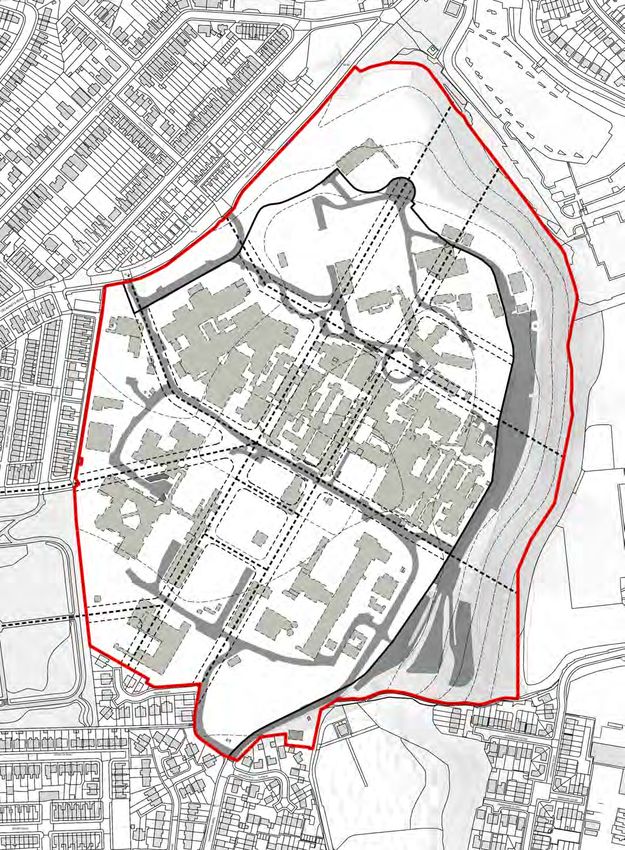
CONTENT
THE PARTNERS

FOREWORD                                       1

                                                              University
1.0   INTRODUCTION                             3

2.0   CONTEXT AND DRIVERS FOR CHANGE           7

3.0   THE VISION AND GUIDING PRINCIPLES       17

4.0   THE DEVELOPMENT FRAMEWORK               21

5.0   PLANNING FOR A ZERO CARBON MANCHESTER   45

6.0   IMPLEMENTATION AND PHASING              53

                                                   MASTERPLAN TEAM
7.0   OUTCOMES AND BENEFITS                   55

8.0   NEXT STEPS                              59

APPENDIX 1: STRATEGIC POLICY CONTEXT          61

APPENDIX 2: UNDERSTANDING PLACE               67

APPENDIX 3: MASTERPLAN OPTION TESTING         77

                                                                     STRATEGIC REGENERATION FRAMEWORK - CONSULTATION   iii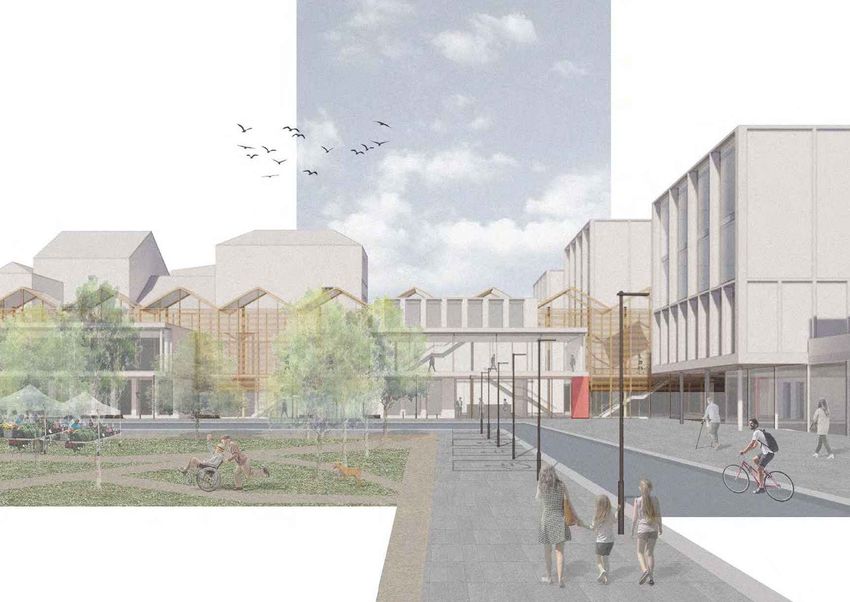
FOREWORD
FOREWORD

Over the past 30 years, Manchester has                   Centre, located in the same ward as the hospital
come a long way. Its economy is strong,                  and the Northern Gateway residential development
                                                         and renewal programme.
its population continues to grow, and
it has a reputation as a great place to
                                                                                                                         ‘‘As we all know, the
                                                         We have now reached an exciting stage in our plans
live, work, and study.                                   for a once in a generation, transformational change
                                                         at North Manchester General Hospital through our
However, economic growth and prosperity have
not benefited everyone equally. Communities such
                                                         draft Strategic Regeneration Framework (SRF).
                                                                                                                         current hospital site is in
as those within North Manchester continue to
experience some of the highest rates of deprivation.
                                                         The SRF proposes:
                                                                                                                         need of radical redesign
                                                                                                                         and investment to enable
                                                         • A new acute hospital and a modern mental health
The worst health outcomes are in North Manchester.         hospital providing a best-in-class healthcare
Children born in North Manchester can expect to            environment; embracing integration, innovation
live five years less than those born in other parts
of the country. Healthy life expectancy is below
                                                           and technology; and transitioning to a net zero-
                                                           carbon estate.
                                                                                                                         high quality services and
60 years for both men and women, who can expect
to live nine fewer years in good health than the         • A wellbeing hub to deliver modern, integrated                 a modern, joined up and
                                                           community health, care and wellbeing services;
                                                                                                                         integrated care system.’’
England average.
                                                           responding to the specific health and care needs of
North Manchester General Hospital is a critical            the local population. The new building will become a
anchor institution in the north of the city (the           destination for the local community, through its mixed
only organisation to employ over 2,000 people),            service offer, meeting spaces and community café.
and is in dire need of significant investment. The       • An education hub to support the necessary training
North Manchester General Hospital still operates           for staff and maximising the opportunity for local
within much of its original estate. Its facilities and     employment at the site.
infrastructure are in need of transformation and not
fit for 21st Century health and social care services.    • An inviting, publicly accessible estate that will integrate
                                                           seamlessly with the surrounding neighbourhoods
As we all know, the current hospital site is in need       to ensure local people can walk or cycle to the site
of radical redesign and investment to enable high          effortlessly and without any barriers.
quality services and a modern, joined up and
integrated care system. This will offer local people     • As part of the redevelopment, there will be a new
tailored services that will enable them to get well        neighbourhood offer which will integrate with the wider
and stay well. Such services will help address the         health and social care proposition, playing its part to
longstanding health inequalities in local communities      help tackle the fight against health inequalities with a
in North Manchester and surrounding areas.                 focus on healthy ageing. This will include residential uses
                                                           such as, key worker accommodation, affordable housing,
COVID-19 has exacerbated inequalities and impacted         stepdown care and extra care. There will also be the
Manchester’s economy. The redevelopment of                 opportunity for new high quality commercial space to
NMGH is one of the catalyst programmes for the             support local small and medium enterprises (SMEs).
city’s economic recovery and has a role to play in       • A village green. This will become a high quality outdoor
improving outcomes for local people.                       space, acting as a focal point for the Campus and links
                                                           with our ambitions to enhance biodiversity and green
The redevelopment of the hospital is a key
                                                           space, and adapt to climate change.
component of the opportunity to grow the North
Manchester economy. This can be seen as part of          This is an exciting step forwards for the future of             SIR MIKE DEEGAN
a broader public sector reform and regeneration          North Manchester General Hospital. We look forward              Chief Executive of Manchester
agenda for the north of the city which links to          to working with you and involving you in our plans to           University NHS Foundation Trust
existing initiatives such as the planned sport           develop the regeneration of the site and to improve the
and leisure improvements at the Abraham Moss             health of the communities in which we work and live.

                                                                                                                                                           STRATEGIC REGENERATION FRAMEWORK - CONSULTATION   2
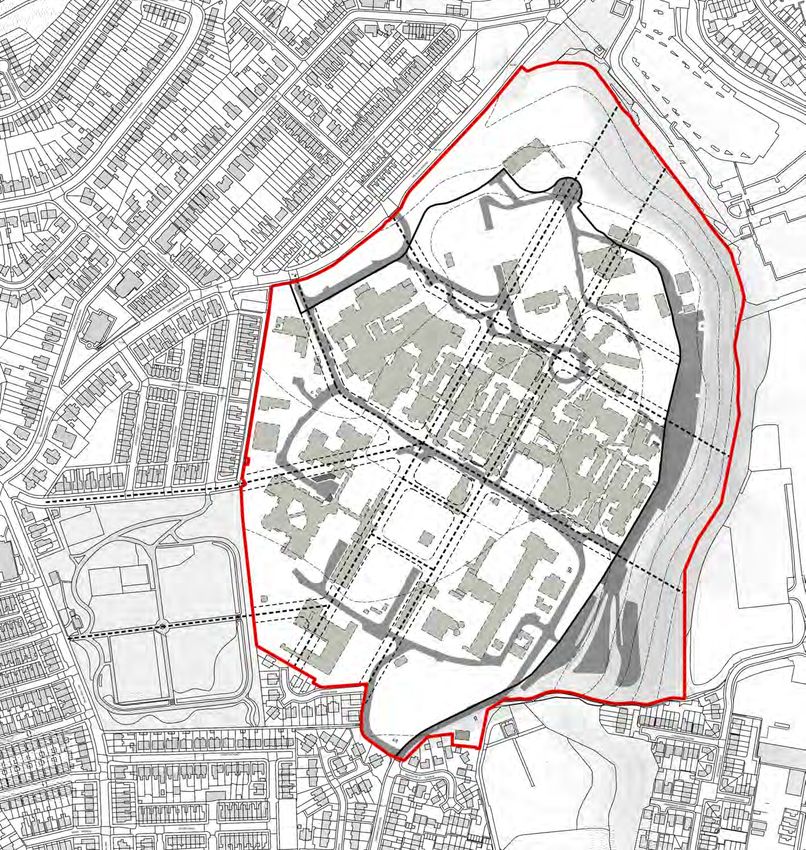
FIGURE 1: LOCATION PLAN

                                         NORTH MANCHESTER GENERAL HOSPITAL

  1.0
INTRODUCTION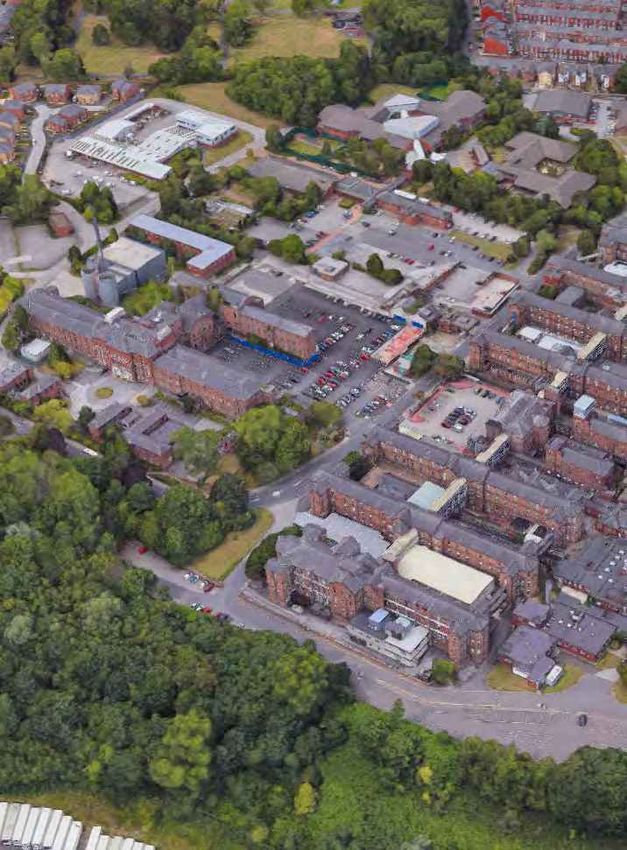
INTRODUCTION

Manchester University NHS Foundation     LOCATION                                                 THE SITE
Trust (MFT) has prepared this Draft
                                         NMGH is located about 2.5 miles to the north             The Site is a significant healthcare and employment asset. It comprises about 27 hectares and
Strategic Regeneration Framework         of Manchester City Centre, 0.5 miles to the north        it is the home to a district general hospital, an intermediate care facility (Crumpsall Vale) and
(“SRF”) to guide the comprehensive       of Crumpsall District Centre and 0.5 miles from          a mental health hospital (Park House).
regeneration of the North Manchester     Abraham Moss Centre.
General Hospital (NMGH) (“the Site”),                                                             The general hospital provides a full accident and emergency department, a comprehensive
acting as a catalyst for the NMGH Site   The immediate surrounding area is predominantly          range of general and acute surgical services, and the regional specialist infectious disease unit -
                                         residential in nature, with small areas of industrial/   while the intermediate care facility offers short-term rehabilitation to help people regain optimal
Redevelopment Programme (hereafter
                                         commercial development to the south-east of              levels of independence before returning home.
“the Redevelopment Programme”).          the site. The Hexagon Tower Business Park and
                                         associated surface-level car park are located to         The Site is owned by Pennine Acute Hospitals NHS Trust (PAHT). MFT operates the district
                                         the north-east.                                          hospital under a management agreement with PAHT. MFT is one of the largest acute Trusts in
                                                                                                  the UK and it is operates nine hospitals across Greater Manchester and employing over 20,000
                                         Crumpsall Park is situated to the south-west of the      staff. Crumpsall Vale is operated by Manchester Local Care Organisation (MLCO)
                                         Site and Crumpsall Jewish Cemetery is located to
                                         the south. To the east of the Site the land drops        Greater Manchester Mental Health NHS Trust (GMMH) manages the mental health inpatient
                                         steeply into the Irk River Valley, where previous        facility. This hospital specialises in caring for adults of working age, and offers assessment and
                                         industrial uses have been replaced with a lorry          treatment for a wide range of mental health needs.
                                         park and a vacant brownfield site.
                                                                                                  For many years, the NMGH site has suffered chronic and sustained underinvestment. Many of the
                                                                                                  buildings are now dilapidated and incapable of providing modern healthcare services and are in
                                                                                                  urgent need of intervention.

                                                                                                  The poor physical environment adversely impacts on the extent to which high-quality and cost-
                                                                                                  effective care can be delivered. It also makes the recruitment and retention of highly skilled
                                                                                                  doctors, nurses and other medical practitioners extremely challenging.

                                                                                                  Appendix 2 (Undertstanding Place) provides a full description of the NMGH including its current
                                                                                                  land uses and its existing built and natural environment.

                                                                                                                                                 STRATEGIC REGENERATION FRAMEWORK - CONSULTATION        4
F GURE 2: AER AL PHOTOGRAPH OF NORTH MANCHESTER GENERAL HOSP TAL

                                                                                                                  I
                                                                                                                            I
                                                                                                                                                                             I
          OUR VISION - THE REDEVELOPMENT PROGRAMME
          Over the past 30 years, Manchester has come a long way. The economy is strong, the city centre
          is thriving, and the population continues to grow rapidly.

          Despite this, economic growth and prosperity has not benefited all communities equally. North
          Manchester continues to experience some of the highest rates of deprivation and poorest
          health outcomes in the country. The reversal of this trend has been a longstanding regeneration
          objective for Manchester City Council.

          Manchester Health and Care Commissioning (MHCC) (a partnership between Manchester City
          Council and NHS Manchester CCG) came together to identify an unparalleled opportunity to
          create a modern healthcare environment at NMGH which will not only serve patients, but also
          the wider community in Crumpsall and North Manchester.

          By adopting an innovative approach to this redevelopment, there is an opportunity to reset the
          long-standing perception of hospitals as place of illness, based on a reactive healthcare model.
          Instead, the aspiration and vision is to radically redesign healthcare services and provide an
          integrated health and social care offer at NMGH, which could become an exemplar of the NHS
          Long-Term Plan.

          Site redevelopment will allow various healthcare providers to be brought together in one place
          through the co-location of hospital, mental health, intermediate and community services, and
          primary care. This environment would foster collaboration and ensure continuity of care as
          patients transfer from one part of the system to another.

          It will also provide the opportunity for a dedicated wellbeing hub to ensure local people are
          supported to get well and stay well by tackling the root cause of ill health. There will also be
          space to provide education and training facilities to maximise the employment opportunities
          and skills for local people. The wellbeing hub will also link with existing Voluntary, Community
          and Social Enterprise (VCSE) organisations, providing them with the infrastructure and support
          necessary to boost their impact.

          This is a once-in-a-generation opportunity. It will complement and build-on the ongoing and
          past regeneration initiatives in North Manchester, adding further momentum and vigour to the
          sustainable renewal of this part of the city.

               “Rebuilding of infrastructure on the site provides an unparalleled opportunity to bring about
           meaningful change. This is not about doing more of the same; instead it is about integrating local
            services, tailored to the needs of the local community and supporting citizens to take proactive
                                                            responsibility for their own health and wellbeing”
          Joanne Roney, Chief Executive, Manchester City Council

5   STRATEGIC REGENERATION FRAMEWORK - CONSULTATION
WHAT IS A STRATEGIC                                       WHY IS COMMUNITY AND
REGENERATION FRAMEWORK?                                   STAKEHOLDER ENGAGEMENT
                                                          IMPORTANT?
This SRF is a blueprint for the future regeneration
of the Site. It contains a vision and key                 MFT and partner organisations are committed to
development principles to guide and shape                 listening to local people in North Manchester to
future planning applications.                             ensure they are involved in shaping these proposals
                                                          and that they feel empowered to take charge of
The SRF has full regard to national planning              their own health and wellbeing.
policy and has been prepared to reflect the
planning policies in the adopted and emerging             The community and stakeholder engagement
Development Plan. Appendix (Strategic Policy              led by MHCC during 2018 and 2019 provides the
Alignment) provides a summary of the alignment            backdrop. However, further public consultation is
with this policy.                                         now required to inform the community about our
                                                          vision for the NMGH site and to consult them on
This SRF covers the following:                            the guiding principles.

                                                          WHAT HAPPENS NEXT?
        • Section 2
          Context and Drivers for Change                  MCC’s Executive will be asked to consider the draft
                                                          SRF and decide whether to approve the document
                                                          for public consultation, which will seek the views
        • Section 3                                       of the local community and other key stakeholders.
          Vision and Guiding Principles
                                                          Following a period of public consultation, MFT
                                                          and MCC will then consider the consultation
        • Section 4                                       responses and make any appropriate revisions
          Development Framework                           before the final SRF is put back before MCC’s
                                                          Executive for endorsement.

        • Section 5                                       Once endorsed, the SRF will become a material
          Planning for a zero carbon Manchester           consideration in the determination of all planning
                                                          application relevant to the NMGH site.

        • Section 6
          Implementation and Phasing

        • Section 7
          Outcomes and Benefits

        • Section 8
          Next Steps

                                                      STRATEGIC REGENERATION FRAMEWORK - CONSULTATION           6
2.0
CONTEXT AND DRIVERS
    FOR CHANGE
CONTEXT AND DRIVERS FOR CHANGE
WHERE IS NORTH MANCHESTER?
North Manchester extends from Manchester’s thriving city centre to the city’s WHAT IS NORTH MANCHESTER LIKE?
northern administrative boundary. It adjoins the metropolitan boroughs of Bury,
It is home to over 156,000 residents (31% of Manchester’s population) It is an area of rich ethnic,
Rochdale, Oldham, Tameside and Salford. cultural and religious diversity, including high placements of asylum seekers and refugees.
The area’s population is forecast to increase by around 26% by 2029; a rate which is significantly
higher than the projected population increase for Manchester as a whole.
FIGURE 3: NORTH MANCHESTER IN CONTEXT
North Manchester was once the home to many of Manchester’s industrial workers; reflected by
the area’s dense residential neighbourhoods and its rich assortment of municipal grand parks,
including Heaton Park, Crumpsall Park and Boggart Hole Clough.
Catchment area for NMGH While these neighbourhoods still enjoy a strong sense of community and pride, the departure
Rochdale of traditional manufacturing industries in the 1970s and 1980s left a legacy of worklessness and
inequality that remains today.
Bury
Oldham
NORTH MANCHESTER GENERAL HOSPITAL
Salford
Manchester
Tameside
Trafford
STRATEGIC REGENERATION FRAMEWORK - CONSULTATION 8F GURE 4: MOST EDUCAT ONALLY DEPR VED AREAS - ND CES OF DEPR VAT ON 2019
I
I
I
I
I
I
I
WHAT ARE THE KEY ISSUES FACING NORTH MANCHESTER?
Greater Manchester is now a significant Both men and women in North Manchester
driver of the UK and North West economies. can expect to live nine fewer years in good
health than the England average; boys born
However, there is disparity across the in North Manchester will, on average, have
conurbation and residents of North a life expectancy that is 5.1 years lower than
Manchester continue to experience some boys born elsewhere in England; girls can
of the highest rates of deprivation and the expect to live for 4.5 fewer years.
poorest health outcomes in England.
Rates of early death from respiratory
The cycle of low economic activity and ill diseases and cardiovascular disease in
health mean that the life chances of many North Manchester are double the England
residents in the north of the city have yet average. Manchester also has the highest
to significantly improve. rates of premature deaths in England for
heart disease, stroke and lung disease, and
The Index of Multiple Deprivation (Figure 4) is second-worst for cancer.
illustrates that North Manchester is home
to several neighbourhoods in the top 1% The North Manchester area also performs
most deprived in England in respect health, significantly worse than England on every
income and employment deprivation. single measure of childhood obesity, and has
a binge-drinking rate almost 50% higher than
The area has a high proportion of low- the national average.
income households. Over 16,500 working- Contains OS data © Crown copyright and database right (Turley © 2020)
age adults in the locality receive out of The causes of ill-health in North Manchester
work benefits, equating to 37% of the city’s are complex and varied. However, the
workless residents, and in some parts of Manchester Population Health Plan (2018)
North Manchester, over 35% of children live recognises that up to 80% of what makes F GURE 5: MOST HEALTH DEPR VED AREAS - ND CES OF DEPR VAT ON 2019
in low-income households. a difference to people’s health happens
I
I
I
I
I
I
outside of the health service. Factors
Parts of North Manchester have the lowest such as jobs, education, lifestyle, housing
levels of school-readiness in the city, and community cohesion all play a role
and some wards have less than 60% of in determining health outcomes. In North
children achieving the expected level of Manchester, health problems are inextricably
development at age five. Although most linked to a wider, intergenerational, social
children attend ‘good’ or ‘outstanding’ rated and economic malaise.
schools, some wards have the lowest rates
of educational attainment in the city and
over 14% of adults (twice the city average)
have no qualifications.
Many residents in North Manchester
have significant ill health and disability
problems, which is a significant factor in
reducing economic activity and suppressing
household incomes.
Contains OS data © Crown copyright and database right (Turley © 2020)
9 STRATEGIC REGENERATION FRAMEWORK - CONSULTATIONWHAT IS THE NORTH MANCHESTER GENERAL HOSPITAL’S ROLE IN
NORTH MANCHESTER?
The NMGH is the principal healthcare facility for The challenges associated with delivering modern
North Manchester and it provides employment to healthcare in this type of environment have
over 2,000 people, many of whom live locally. manifested as a hospital site that struggles to
provide high quality and cost effective care, attract
NMGH is geographically at the heart of the development and retain its workforce, with a
community but it is does not invite visitors in. This vacancy rate of 20% for doctors and 19% for nurses.
means that the local community rarely visit other
than to access existing healthcare facilities. A Care Quality Commission (CQC) rating of
‘Inadequate’ was given to NMGH in 2016. Sustained
Alongside this, for many years, NMGH’s facilities and efforts from the staff and a variety of stakeholders
infrastructure have suffered a chronic and sustained improved this position to ‘Requires Improvement’
underinvestment. The site’s estate is now dilapidated in 2018, but there is still a great deal of work to be
and is incapable of offering modern healthcare done to achieve a rating of ‘Good’.
services to the population of North Manchester.
Independent assessments have identified that
over 70% of the existing estate is in desperate
need of rebuilding.
“The COVID-19 pandemic has shone a bright light on
the inequalities that exist in our society and we must
take action to address these. The redevelopment of
the North Manchester General Hospital site offers a
unique opportunity to provide modern, integrated
health and care services; to stimulate economic
recovery and renewal; and to support improved
population health for some of the city region’s most
disadvantaged communities.”
Sarah Price, Interim Chief Officer, Greater Manchester Health and Social Care Partnership
STRATEGIC REGENERATION FRAMEWORK - CONSULTATION 10HOW CAN THE REGENERATION OF THE
REDEVELOPMENT PROGRAMME STIMULATE
POSITIVE CHANGE IN NORTH MANCHESTER? Delivering modern health and social care services Promoting healthier lifestyles and wellbeing
The Redevelopment Programme can provide the The Redevelopment Programme would promote
population of North Manchester with modern, healthier lifestyles and wellbeing to tackle, at
integrated and high-quality healthcare services. source, some of the root causes of ill health and
mental illness in North Manchester.
In 2015, NHS organisations and local authorities in
Greater Manchester signed a landmark devolution A Health and Wellbeing Hub would deliver services
deal to take charge of the £6 billion health and to support those who need a little more help to get
social care spending and decisions. well and stay well, enabling improved quality of life
and resilience.
This deal enables Greater Manchester to join-up all
things that affect health and transform the delivery This hub would support local people and help put
of services. It is now possible to combine health them in charge of their own health and wellbeing.
and social care services, and build them around A key aspect of this will be social prescribing,
the individual and the community for better, more utilising services such as the Be Well scheme,
responsive care. to support local people to consider everything
affecting their wellbeing – from employment to
The plans for the Site will be a key part of this housing, to family and money issues – directly
devolved approach. It will also be an exemplar addressing the wider determinants of health.
of the NHS Long-Term Plan, which promotes an
‘Integrated Care System’. The hub will be promoted by healthcare providers
on the site, supplementing and in some cases
Instead of simply rebuilding the existing hospital replacing medicalised care. The strategy will
facilities, the redevelopment programme will adopt an ‘every contact counts’ philosophy, where
radically redesign healthcare services becoming a all encounters will be seen as an opportunity for
leading example of integration. a brief intervention to support improved lifestyle
choices, or to allow underlying issues, such as debt
It will provide healthcare providers with a purpose to be addressed.
built environment where they can co-operate
seamlessly. The co-location of hospital, mental The the plans for the Site will also encourage
health, intermediate and community services, and physical activity and facilitate wellbeing for the
primary care in one location will help these services staff and patients, as well as local community
to work in tandem and aid the smooth transfer of groups and residents.
patients from one part of the system to another.
Green space, footpaths and cycle ways will be
This will offer local people tailored services that will principal features and other space will be available
enable them to get well and stay well. Such services for therapeutic and regenerative purposes, such
will help address the longstanding health inequalities as growing fresh vegetables and fruit, promoting
in local communities in North Manchester. neighbourhood engagement, and inclusive
activities and education.
In doing so, the new NMGH will reach out beyond the
physical hospital buildings, facilitated by technology
where appropriate. The early use of advanced
diagnostics and genomics would ensure patients
receive the most appropriate advice and treatment
as quickly as possible, reducing the number of
invasive procedures and prescriptions required, and
enabling people to live improved lives more quickly.
11 STRATEGIC REGENERATION FRAMEWORK - CONSULTATIONDelivering a more inclusive economy Building a stronger and safer community
Major investment at the scale of the Redevelopment The Redevelopment Programme presents
Programme can kick-start economic renewal by an opportunity to build a safer and healthy
sustaining job growth and boosting productivity. neighbourhood that encourages social inclusion,
community spirit, and healthy ageing.
At the heart of the Site will be an Education Hub.
This will equip local people with the necessary A new Healthy Neighbourhood will integrate with
healthcare training and skills to secure employment the wider health and social care proposition, playing
at the site. its part to help tackle the fight against health
inequalities with a focus on healthy ageing.
However, it will not be limited to healthcare-
related training, and the hub will be available for The Healthy Neighbourhood concept will push the
use by other agencies. There will be clear goals boundaries of healthy ageing innovation at all levels
regarding local employment rates and career and would encourage people of different ages and
path development. backgrounds to interact in their normal daily life. In
particular, it could include:
Alongside this, a social value approach will be
employed to ensure maximum local impact from • Commercial accomodation that focuses on healthy
the redevelopment process as whole. ageing and provides flexible accommodation suited
to companies in different stages of evolution
Involving local people in the design and construction
will provide the opportunity to bring local people • Extra care housing, providing ‘real world’ testing and
back to work, or help them to develop and advance commercialisation of products and services being
their careers. A significant focus on apprenticeships, developed in the commercial accommodation
use of local businesses, and the generation of social • Key worker and other residential accommodation
value within procurement will be vital. will create community cohesion through
intergenerational living with support mechanisms
Improvements in educational attainment can be physically, socially and across generations
converted into further education or aspirational
career paths ensuring that local employment • Services and accommodation for young people and
opportunities are not limited to lower-paid jobs. adults with learning difficulties and dementia
This holistic approach has the potential to bring • Training and education for the new skills and ways of
about a range of positive impacts for local working needed to create a cross service integration
people and local prosperity. Some of the tangible of care associated with healthy ageing, with such
economic benefits could include increased training being targeted at the local communities via
household incomes, improved profitability for local the Education Hub;
businesses, reduced benefit claims, and enhanced The Healthy Neighbourhood will support
local and national tax receipts. Manchester’s ambition to be a global
leader on health and care innovation and
commercialisation, while also improving the
health of the population, extending healthy,
independent life expectancy, whilst also reducing
inequalities and increasing productivity
The Redevelopment Programme can help North
Manchester become a ‘neighbourhood of choice’,
STRATEGIC REGENERATION FRAMEWORK - CONSULTATION 12ABRAHAM MOSS CENTRE
HOW CAN THE HOW WILL THE
REDEVELOPMENT REDEVELOPMENT PROGRAMME
PROGRAMME HELP NORTH COMPLEMENT WIDER
MANCHESTER RECOVER FROM REGENERATION INITIATIVES
THE IMPACTS OF COVID-19? IN NORTH MANCHESTER?
There is a high risk that COVID-19 and The Redevelopment Programme is a key
the associated pandemic response could component of a wider regeneration and
widen existing inequalities for people in renewal initiatives in North Manchester (see
North Manchester. Figure 5).
COVID-19 is having a disproportionate The Northern Gateway project is the single largest
impact on communities who already and most ambitious regeneration opportunity
experienced inequalities in our city. Given in Manchester. It is a joint venture between
North Manchester’s rich ethnic, cultural and Manchester City Council and the Far East
religious diversity, its communities are at risk Consortium (FEC) and it seeks to transform 155ha
of a disproportionate impact of COVID-19. of brownfield land to the north of the City Centre
into a series of vibrant, sustainable residential
The pandemic and national lockdown have neighbourhoods; delivering 15,000 new homes
also impacted Manchester’s labour market by 2039 (of which 20% will be affordable).
at an unprecedented pace and scale.
Between March and May 2020, the number The Northern Gateway will become a
of people in the city who were unemployed strategic neighbourhood of choice providing
and claiming benefits rose by 91%. Youth accommodation for a working age population
unemployment doubled. The number of around 40,000. The provision of high-
of advertised vacancies halved. When quality new homes and a network of green
analysed by neighbourhood, the highest spaces will ensure the new hospital is capable
rises in unemployment are in deprived areas of attracting and retaining talent locally.
with largely BAME populations, including NORTHERN GATEWAY
Cheetham ward in North Manchester. Other initiatives include the planned
investment at Abraham Moss Centre, located
Delivering the ambition for the NMGH in the same ward as the hospital. This
site and the associated regeneration facility is vitally important community asset.
and renewal which this will catalyse is of It includes a public library, a leisure centre,
increased importance in this context. The education (nursery, primary and secondary),
NMGH site has a fundamental role to play in and MCC services including Early Help Hub,
Manchester’s recovery from COVID-19, as a Adults, Adult Education. It is located beside a
host to local anchor institutions; a stimulus key transport hub. The health and wellbeing
for wider economic activity through its offer at the new hospital will complement
redevelopment; and an enabler for learning, these facilities and will leverage opportunities
training and skills development. to improve the physical and mental health
outcomes for the local community.
Together these initiatives provide the
opportunity to grow the North Manchester
economy and transform the perception of the
area. This can secure inclusive growth for local
neighbourhoods and act as catalyst for wider
regeneration. The synergistic impact of these
initiatives must be harnessed for maximum
health, social and economic benefit.
13 STRATEGIC REGENERATION FRAMEWORK - CONSULTATIONNORTH MANCHESTER GENERAL HOSPITAL
FIGURE 6: REGENERATION INITIATIVES IN NORTH MANCHESTER
CHEETHAM HILL DISTRICT CENTRE
HARPURHEY DISTRICT CENTRE
ENHANCE IRK VALLEY CONNECTIVITY
ABRAHAM MOSS LEISURE CENTRE
NORTHERN GATEWAY
STRATEGIC REGENERATION FRAMEWORK - CONSULTATION 14IS THERE POLICY SUPPORT FOR THE
REDEVELOPMENT PROGRAMME?
The development of proposals for the future of the Site
and the locality will be informed by the existing national,
regional and local policies.
Appendix 1 (Strategic Policy Alignment) provides an
overarching summary of the relevant policy commitments
and strategies that have informed the Redevelopment
Programme’s proposition.
Delivering a more inclusive North Transforming health outcomes by
This analysis shows extensive support for the Manchester economy integrating healthcare outcomes
Redevelopment Programme in local, regional and national
policy. In particular, the scheme will align with and
contribute toward the following specific policy objectives:
Investing in education, skills and
Creating neighbourhoods of choice
employment for all
Promoting sustainable and healthy Contributing to a net zero carbon city and
transport options a thriving environment
15 STRATEGIC REGENERATION FRAMEWORK - CONSULTATIONSTRATEGIC REGENERATION FRAMEWORK - CONSULTATION 16
3.0
THE VISION AND GUIDING PRINCIPLES
THE VISION AND GUIDING PRINCIPLES

This Section presents the Vision for
the Redevelopment Programme and
sets out the guiding principles that
underpin the Vision.

THE VISION
Together we aim to build a new high quality and
sustainable civic campus where people will want
to get well, learn, work, and live rather than just a
hospital complex.

It will provide a focal point for the community,
with integrated health and social care facilities,
high-quality new homes, and access to better                                                          Wellbeing Hub
education and training alongside more inviting          Healthcare Hub
public open spaces.

This transformational development will effect
generational change for the North Manchester
community, creating new jobs, promoting healthy
lifestyles, developing skills and contributing to a
zero-carbon environment for the benefit of our
local neighbourhood and beyond.
                                                                              The
                                                                         Village Green

                                                                                                         Healthy
                                                        Education Hub                                 Neighbourhood
                                                                                                           Hub

                                                                                         STRATEGIC REGENERATION FRAMEWORK - CONSULTATION   18
The Campus will comprise:
Healthcare Hub: A new acute hospital and a modern mental Healthy Neighbourhood There will be a new neighbourhood offer which
health hospital will anchor the Campus Hub: will integrate with the wider health and social
and complement the existing intermediate care proposition, playing its part to help tackle
care facility and the new Wellbeing Hub. the fight against health inequalities with a focus
These new buildings will provide a modern on healthy ageing. This will include residential
and best-in-class healthcare environment; uses such as, key worker accommodation,
embracing integration, innovation and affordable housing, stepdown care and extra
technology. care. There will also be the opportunity for new
high quality commercial space to support local
small and medium enterprises (SMEs).
Wellbeing Hub: This will enable the delivery of modern, Village Green: At the heart of these hubs will be a village
integrated community health, care and green. This will become a high quality
wellbeing services; responding to the outdoor space, acting as a focal point for
specific health and care needs of the local the Campus. It will feature green spaces and
population. The new building will become a water features, and patients, staff, visitors
destination for the local community, through and residents will use the green as a place
its mixed service offer, meeting spaces and for relaxation, exercise, and meeting.
community café.
Education Hub: This will allow all education teams to gather
under one roof. The new building will provide
the space to support the necessary training
for staff as well as an insight into future
roles. It will be charged with maximising
the opportunity for local employment at
the site. This might include taking positive
action to support local residents to overcome
any disadvantage they have by offering
additional training and support, and
targeting the promotion of opportunities.
19 STRATEGIC REGENERATION FRAMEWORK - CONSULTATIONGUIDING PRINCIPLES
The Vision is underpinned by a series of guiding principles:
1. Deliver a modern and integrated health and social care environment
2. Add momentum to the wider economic, social and civic regeneration in
North Manchester and maximise social value for local people
3. Create a high quality and sustainable health campus at the heart of the
community
4. Deliver high-quality architecture and an attractive, safe and unified public
realm (including a village green and attractive streetscapes) that provides
new social places for the community to meet, exercise and relax
5. Take account of the site’s heritage; considering the retention of heritage
assets where possible and fully justifying any changes
6. Promote new connections and increased legibility around the site via new
pedestrian and cycle routes, including integration with Crumpsall Park,
Abraham Moss and Metrolink
7. Achieve the highest standards of the sustainable design and biodiversity
net gain to contribute positively to Manchester’s zero-carbon ambitions
STRATEGIC REGENERATION FRAMEWORK - CONSULTATION 204.0 THE DEVELOPMENT FRAMEWORK
INTRODUCTION

This Section sets out the Development Framework for the
redevelopment of NMGH. It provides the overarching principles and
parameters for future development at the site. These are intended
to guide and inform the preparation of future planning applications.

The section is arranged as follows:

1. Development Zones and Land Uses: principles defining where
   on the site the different proposed uses would be located

2. Quantum of Development: principles defining approximately
   how much development is to be located in each zone (m2)

3. Building Heights: principles defining the maximum height of
   new buildings in each zone

4. Architecture and Public Realm: principles for each of the
   Development Zones designed to ensure the delivery of high
   quality buildings and the creation of attractive places

5. Green and Blue Infrastructure: site wide principles for the
   delivery of high quality landscape and waterscape features

6. Sustainable Travel: principles identifying how pedestrians,
   cyclists and those arriving by public transport could access
   and move around the site and how the site could be better
   integrated into the surrounding neighbourhood

7. Movement Strategy: principles identifying how blue light
   services, staff, patients and visitors would access the site
   and a strategy for car parking

                                                                       STRATEGIC REGENERATION FRAMEWORK - CONSULTATION   22
DEVELOPMENT ZONES AND
F GURE 7: PROPOSED DEVELOPMENT ZONES
LAND USES
I
Redevelopment of the Site should deliver a range of facilities and land uses
whose co-location and integration should facilitate the highest level of
medical care. This is an unparalleled opportunity to build a modern healthcare
environment which should not only serve the hospital and patients but also
the wider community in Crumpsall and North Manchester.
Investing in a new acute infrastructure provides the potential to
deliver meaningful change for the local community. The existing green
infrastructure within and around the edges of the site provides a unique
setting and an opportunity to use nature as key ingredient in directly
improving healthcare outcomes.
Z1
By adopting an innovative approach to redevelopment there is an opportunity
to challenge the long-standing perception of a hospital as a place of illness
based on reactive healthcare.
Redevelopment should deliver an outstanding centre of wellbeing with healthy
lifestyles promoted through education. An environment which encourages
people to visit should be created.
Table 1 below provides an overview of four Development Zones. Each Hub
is described in detail on the pages that follow
Z2
Table 1: Proposed Land Uses
Zone Uses
Z4
Z1 – Healthcare Hub 1 Acute Hospital, Administration Buildings, Education
Hub, wellbeing Hub and Multi-Story Car Park.
Development in this zone should comprise new
buildings and (where appropriate ) refurbishment Z4 Z1
and reuse of existing buildings.
Z2 – Village Green A new outdoor space which should act as a central
orientation and way-finding hub and integral clinical
and community asset facilitating healthier lifestyles.
Z3 – Healthcare Hub 2 Greater Manchester Mental Health Hospital and Z3
Multi-Story Car Park
Z4 – Healthy A mixed use neighbourhood which could
Neighbourhood Hub incorporate a mix of housing (including extra-care
/ elderly, step down housing, key worker housing
and intergenerational living) and commercial
accommodation for innovation and enterprise.
Development may include a combination of new
buildings and (where appropriate) refurbishment and
reuse of existing buildings
23 STRATEGIC REGENERATION FRAMEWORK - CONSULTATIONQUANTUM OF DEVELOPMENT
F GURE 8: PROPOSED BU LD NG HE GHTS
I
I
I
I
Table 2 below provides an indication of the quantum of development which
could be included within each of the Development Zones. The precise quantum up to 10m
of development should be determined during the detailed design phase and as 10m-15m
individual planning applications are prepared and submitted.
10m-25m
Table 2: Quantum of Development
20m-30m
Zone
25m-35m
Z1 – Healthcare Hub 1 Acute Hospital: c.45,000m2
Education Hub: c.3,000m2 Scale to respect existing
Health and wellbeing Hub: c.6,000m2 residential properties
Admin / FM Building: c.8,000m2
Car Park: c.1,000-1,250 spaces
25m-35m
Z2 – Village Green c.1.8 hectares
Z3 – Healthcare Hub 2 New GMMH Building c.12,500m2
Future Carpark c.450 spaces
Z4 – Healthy Mixed Uses c.7 hectares 25m-35m
Neighbourhood Hub
BUILDING HEIGHTS
Indicative maximum building heights for each of the Development Zones
20m-30m
have been defined having regard to their position within the site, prevailing
topography and relationship with existing residential properties.
There is an opportunity for the creation of taller buildings within Development
Zone 1 in the northern area of the site, given the degree of separation to
10m-25m 20m-30m
existing residential properties. Development within Zone 1 could be of a
similar scale to the existing Accident and Emergency Department.
At the western and southern edges of the site (within Development Zone 4)
new residential properties could be up to 3 storeys and of a similar scale to
those existing on Westbury Road, Birch Road and Delaunays Road increasing in 10m-25m 10m-25m
scale moving further into the site and towards the village green.
10m-15m
Within Development Zone 3, buildings could be up to two storeys in height
in the southern areas opposite and adjacent to existing residential properties
increasing to 4 storeys further to north.
STRATEGIC REGENERATION FRAMEWORK - CONSULTATION 24ARCHITECTURE AND PUBLIC REALM
F GURE 9: ZONE 1 KEY DES GN PR NC PLES
I
I
I
I
ZONE 1 - HEALTHCARE HUB
Development Zone 1 should accommodate the new acute medical facilities comprising
the following: Public Transport Route
Private Vehicle Route
Acute Hospital
To incorporate new buildings and (where appropriate) refurbishment and reuse of Pedestrian/Cycle Route
existing buildings. Facilities could include: Accident and Emergency Department, single
multi-purpose Outpatients department, independent Day Case unit, Women’s Services, Service Access Point
Imaging and Paediatrics. Active Frontage
B
Administration Building
X Vehicular Entrance
An agile and open working environment for an on-site Executive Team, Clinical and Non-
Clinical staff, visiting staff from other MFT sites and provision for third party providers.
X Pedestrian/Cycle Entrance
Z1
Plot/Building Entrance A
Education Hub
The Education Hub should be contiguous with the Acute facility but have a dedicated Indicative location for MSCP
front door. Services could include Café, Restaurant, Community Hub, flexible seminar
& lecture spaces, Library, Clinical Skills, Office Accommodation, Computer Facilities
and ancillary and FM provision.
Wellbeing Hub
A modern healthcare facility providing wellbeing services which respond to the Z1
specific healthcare needs of the local population. This facility should provide
integrated care across the public sector services and with wider VCSE provision.
The Wellbeing Hub should be a destination for the local community, through its mixed
service offer, meeting spaces and community café. It should be located adjacent to, D
overlook and be integrated with the Village Green.
Multi-Storey Car Park
A c1,250 space multi-storey car park to serve primarily this zone incorporating blue Opportunity for improved Z1
badge provision and cycle hub. walking routes to MetroLink
FRONTAGE AND ENTRANCES
Development within this zone should be built around, enclose and activate the Village
E
Green. Building entrances should be accessed directly from the Village Green.
Active frontage should be maximised in this zone, particularly adjacent to the Village
Green with appropriate ground floor uses such as reception areas, circulation spaces
and retail / commercial space incorporated into new buildings.
Within retained buildings, opportunities to reconfigure space at ground floor level
should be explored to ensure that existing accommodation addresses the Village Green
and Spine Road wherever possible.
Opportunities to remodel existing elevations to create activity and interest should also
be explored wherever possible.
C
Consideration should be given to the incorporation of weather protection into
building designs along key external pedestrian routes such as between the MSCP
and Acute hospital.
25 STRATEGIC REGENERATION FRAMEWORK - CONSULTATIONARCH TECTURAL LANGUAGE
I
Acute Hospital / Education Hub / Wellbeing Hub
New buildings should demonstrate a high standard of architectural design
and quality with use of appropriate materials. Careful consideration should be
given to the external treatment of retained buildings / elevations to ensure an
appropriate transition from old to new.
The building should be welcoming, modern and innovative. It should use a
palette of materials, which acknowledge the position of the building within
MAGE TO BE REPLACED
townscape and the existing (and proposed) natural landscape.
I
A mixture of modern and innovative materials such as textured GRC and high-
performance glazing could be used alongside a complementary palette of
brickwork, timber and coloured metals. St Olav’s Hospital | Trondheim Alder Hey Hospital | Liverpool St Olav’s Hospital | Trondheim
Administration Building
The palette of materials should compliment the adjacent hospital with similar
materials utilised in a different method of construction, colour or texture to
suit the typology. This will ensure the buildings complement one another as
a cohesively designed family of structures.
Multi-Storey Car Park
The multi-storey car park could be a large building without fenestration. The
detailed design stage should explore opportunities to break down the elevations
both horizontally and vertically.
Consideration could be given to facade materials which provide depth and
interest such as metal mesh which can offer opportunities to create subtle but
dynamic patterns. Similar materials could be utilised to visible plant areas on
the proposed hospital to create a visual / aesthetic connection.
SERV C NG
I
I
External servicing should be designed to protect the main public circulation
routes and Village Green area from larger vehicles. This could be achieved
by segregating servicing from public and clinical areas by locating external
servicing areas to the rear of buildings and by ensuring access is via the
perimeter service road.
PUBL C REALM / GREEN NFRASTRUCTURE
I
I
Opportunities to maximise the integration of the internal and external
environments should be explored during detailed design.
Each ward should have direct level access to external courtyard areas to assist
with rehabilitation, healing, and respite process. Detailed designs should also
seek to incorporate features such as green routes which allow movement between
buildings, the Village Green and existing woodland areas to promote the use of
the outdoors as part of the rehabilitation process. F GURE 10: ND CAT VE V EW TOWARDS ACUTE HOSP TAL ENTRANCE
I
I
I
I
I
I
STRATEGIC REGENERATION FRAMEWORK - CONSULTATION 26THE VILLAGE GREEN
ZONE 2 – VILLAGE GREEN
The Village Green should be a publicly accessible open space for patients, staff,
visitors and members of the wider community. The Village Green would be at the
heart of a new immersive healing landscape.
With a core area similar to the central green space at Manchester Royal Infirmary,
the Village Green should be focal point of the redevelopment around which all
of the hospital functions are located. The space should allow visitors to orientate
and navigate to different locations within the site.
A network of clear, attractive and safe walking routes should be incorporated
into the space for use by recuperating patients, staff, patients and the local
community. Paths should be of adequate width to accommodate patients in beds
and wheelchairs.
This landscaped space should include native planting, rainwater swales, and
water attenuation features. It should also incorporate cycle storage, public
Pavilion Community events and pop up facilities
transport drop off facilities and parking for the disabled.
Other uses which could be included within the Village Green include multi-use
games areas, children’s play areas and outdoor fitness facilities. Small scale
pavilion-type buildings could also be incorporated within the space providing
facilities for the local community such as cafes and other meeting spaces.
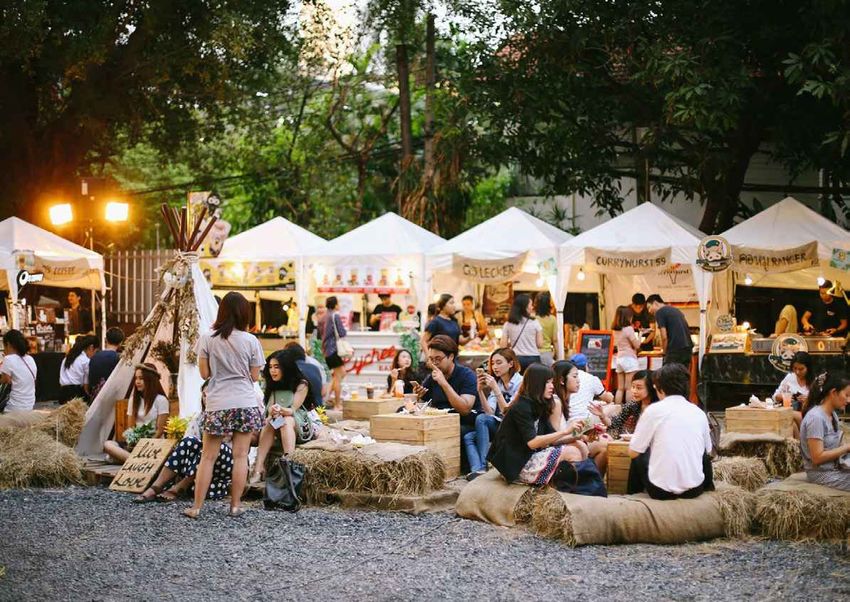
The Village Green could also become a canvas for programmed community events
such as musical / theatrical performances or pop-up food markets.
There is the opportunity for the Village Green to perform a variety of functions to
cover the development principles noted opposite.
F GURE 11: V LLAGE GREEN ND CAT VE ZON NG
I
I
I
I
I
I
Re-engage An integrated healing landscape Water Features
Relax
Recharge
Community events and performances A landscape for rehabilitation and relaxation
27 STRATEGIC REGENERATION FRAMEWORK - CONSULTATIONInteractive play-facilities Outdoor play / fitness facilities for the community Indicative illustration of play facilities
Play facilities Outdoor play and fitness facilities for the whole community
Activity and stimulation for all age-groups
STRATEGIC REGENERATION FRAMEWORK - CONSULTATION 28F GURE 12: ZONE 3 KEY DES GN PR NC PLES
I
I
I
I
ZONE 3 – HEALTHCARE HUB 2
This Development Zone should accommodate a new mental health hospital,
which will be delivered by GMMH. Land should also be safeguarded for the Public Transport Route
construction of a multi-storey car park in the future.
Private Vehicle Route
MFT’s current facility, Park House, is located to the western edge of the wider Pedestrian/Cycle Route
North Manchester General Hospital site and will be replaced by the new GMMH.
Service Access Point
The new hospital will comprise adult acute wards, older adult wards, an Active Frontage
B
assessment ward, Psychiatric Intensive Care Unit (PICU) and Section-136 X Vehicular Entrance
(S136) Suite.
X Pedestrian/Cycle Entrance
The wards will be supported by a range of facilities for patients and
visitors including therapy facilities, visitor facilities, café and shop. Staff Plot/Building Entrance A
facilities will comprise a staff welfare space and office, admin and facilities
Indicative location for MSCP
management spaces.
FRONTAGE AND ENTRANCES
The main entrance to the building should be located to the West facing the
village green with active frontage along the West elevation to complement the
adjacent Neighbourhood Hub.
The nature of this typology requires direct access to secure gardens while
maintaining a safe / secure environment and as such, enclosure by secure
fences or walls is essential. Methods to create interest and activity to these
elevations should be sought while maintaining the security required. D
The northern and eastern elevations of the building should seek to take
advantage of views to the woodland area beyond.
SERV C NG
I
I
Servicing should be to the South and West of the plot benefiting from direct
access from the southern site entrance.
E
PUBL C REALM / GREEN NFRASTRUCTURE Z3
I
I
The design of landscaped areas within this Development Zone should seek to
provide calming therapeutic outside spaces for service users.
Throughout the building, each ward could have direct level access to external
courtyard gardens to assist healing process. Dedicated therapy gardens could
be provided to support service user recovery.
Existing trees on site should be retained or replaced as outlined in the Green
Infrastructure section to provide a positive aspect for service users.
C
29 STRATEGIC REGENERATION FRAMEWORK - CONSULTATIONMateriality 3.4 Concept Visuals – Main Entrance Approach
3.6 Materials & Precedents Main Entrance
The early intended palette of materials have been initially chosen to
be homely and welcoming. Simple materials such as brick (1) and
render (3) are often seen on people’s own homes. The brick texture 1
also references the existing buildings on site while the buff colours
provideTECTURAL
ARCH a contemporary contrast the to historic reds of the original
LANGUAGE
I
brickwork. Brickwork is also a safe material for use in an in-patient 2
GMMH
mental healthcare setting.
The building should to be welcoming, therapeutic and calming. The palette of
3
The main
materials entrance
of should is intended
be traditional andto be a Simple
robust. shiny, materials
metallic such
material (2),(1)
as brick
and render (3) could be used. The use of brickwork would provide reference to
with bespoke pattern, possibly to be developed in conjunction with
the existing buildings on site. Feature window panels could be incorporated to
service
add rhythm users.
and colour to the elevations.
Opportunities
Feature windowto emphasise
panelsthewillentrance
be usedarea
to and
additsrhythm
engagement / activation
and colour to
of Village Green should be explored. The use of reflective / metallic materials [2]
elevations
could provide(4).
a contrast to the main brickwork and provide opportunities for the
incorporation of bespoke patterns / designs. Ward Wings
The roof in likely to comprise of metal standing seam too (5) for
Multi-Storey Car Park
pitched roofs.
The multi-storey car park could be a large building without fenestration. The
detailed design stage should explore opportunities to break down the elevations 5
both horizontally and vertically.
The use of façade materials which provide depth and interest such as metal mesh
can offer opportunities to create subtle but dynamic patterns which change
depending on the angle they are viewed and the location of the sun.
4
Precedents
2
3
1 Indicative view towards hospital entrance
New Park House Development
Design and Access Statement
2 2
5
New Park House Development
Design and Access Statement
STRATEGIC REGENERATION FRAMEWORK - CONSULTATION 30F GURE 13: ZONE 4 KEY DES GN PR NC PLES
I
I
I
I
ZONE 4 – THE HEALTHY NEIGHBOURHOOD
The Healthy Neighbourhood Zone should be a mixed use area bringing
together residential and commercial uses along with social infrastructure. Public Transport Route
It should encourage social inclusion and community spirit with a core
Private Vehicle Route
theme that promotes healthy ageing.
Pedestrian/Cycle Route
It could provide a range of types of housing to meet differing
Service Access Point
requirements (including apartments and townhouses) across a range of
requirements including:
Active Frontage
B
X Vehicular Entrance
• Key worker housing
• Extra care housing X Pedestrian/Cycle Entrance
• Elderly care housing Plot/Building Entrance A
• Step-down housing Indicative location for MSCP
• Intergenerational housing.
It should also create a commercial offer that has a focus on healthy ageing
and provides flexible accommodation suited to companies in different stages
of evolution. This would attract businesses and R&D uses to locate themselves
at the Site and become the focal point for further development and activities
of the Healthy Neighbourhood.
ARCHITECTURAL LANGUAGE Z4
There is an opportunity for the residential areas to accommodate a range of
housing typologies including terraced housing, townhouses and apartments.
D
Development should enhance the character and appearance of the
neighbourhood drawing reference from and being sensitive to the existing Z4
residential properties. Appropriate materials could include brick, render
and timber cladding. There is also an opportunity for alternative materials
to be justified.
Housing should be of lower, domestic scale (2-3) storeys along the existing
road frontages to Westbury Road and Magna Drive. There is an opportunity for E
an increased scale of development moving further east and north (see Figure
7). Taller feature buildings could be incorporated on street corners to aide
legibility and wayfinding.
Opportunities for the reuse of existing buildings within the eastern section of
this zone (adjacent to the Village Green) should be explored and incorporated
where it is feasible and appropriate to do so.
C
31 STRATEGIC REGENERATION FRAMEWORK - CONSULTATIONFRONTAGE AND ENTRANCES
To the northern / eastern part of the zone, the primary frontage and entrances
should address the village green. The retained building indicated could also be
developed / extended to provide an entrance opportunity to this plot.
The pedestrian routes established from Crumpsall divide the southern
/ western part of the zone into development plots. These routes are
considered essential to developing strong linkages between the Site and
existing residential communities; active frontages should address these
streets where possible.
Indicative access /entrance points to each plot are illustrated. Vehicualr access
should predominantly be from the the southern site entrance and the central
spine and not via the existing residential streets. Active frontages onto
Crumpsall Park will offer light and surveillance to this space and encourage
movement through the park to the NMGH site.
STRATEGIC REGENERATION FRAMEWORK - CONSULTATION 32SERV C NG & PARK NG
I
I
I
The plots should be serviced as illustrated on the diagram’s on the preceding page. The network of roads
proposed around these plots will permit some flexibility, but the primary pedestrian routes illustrated should be
kept free of service areas as noted above.
Parking provision will be different depending on the housing typology. Stepdown housing and housing for the
elderly with have different requirements from intergenerational housing and the mix proposed will drive the
requirements for on plot parking. The nature and quantum of car parking provision to be provided with each
type of housing should be determined at planning application stage.
PUBL C REALM / GREEN NFRASTRUCTURE
I
I
It is envisaged that allotments could be located within this zone. They are a place for the residential community
to spend time learning about growing and producing their own food and the psychological and wellbeing
benefits extend to both patients in short-term rehabilitation and residents in the long-term assisted living
community. Input from residents in Crumpsall and local community groups would enhance links between the
public and the NMGH site and offer voluntary work and small business opportunities.
Rainwater collection within the allotments and from the roofs of surrounding residential properties would offer
a means of irrigation for the food growing programme. Activity areas within the zone and adjacent village
green would promote active living. 1. Town houses 2. Intergenerational Living
DES GN PR NC PLES
I
I
I
Future planning applications will be expected to be accompanied by detailed proposals for all buildings (if
detailed permission is sought) or a Design Code (if outline planning permission is sought). The key design
principles to which detailed proposals should respond include the following:
• All residential accommodation should be designed to • Residential plot boundaries should be visually
meet the requirements of the Manchester Residential permeable where possible to encourage interaction
Space Standards and Manchester Residential Quality between neighbours.
Guidance 2017.
• Car parking spaces should ideally be provided
• New buildings should be arranged to overlook, immediately outside individual houses or within
activate and provide natural surveillance of adjoining communal parking areas. Where parking is required
existing streets and proposed streets, together with to be accommodated within the street, opportunities
Crumpsall Park. for shared surfaces should be explored.
• Entrances to new buildings should be provided on • Electric vehicle charging points should be provided 3. Extra care housing 4. Elderly care housing
the primary (front elevation) wherever possible in to all car parking spaces.
order to provide further activation to the street-
• Space for the secure storage of bicycles should be
scene.
provided within the curtilage of individual dwellings
• Within the residential areas, opportunities to ‘pair’ to the rear of the property and where possible,
front doors to encourage chance meetings between storage should be considered as part of the design
neighbours should be explored. and integrated within the dwelling. Facilities for the
secure storage of bicycles of each apartment should
• Safe, secure and well-lit pedestrian routes should
be provided on a ratio of 1:1.
be provided through the zone on an east-west axis
between the Village Green and Crumpsall Park. • Facilities for the storage of refuse should be provided
to the rear of individual properties or, where this is
• Where residential development is proposed, a
not possible, into the design of individual houses or
minimum separation distance of c.18 metres to the
apartment buildings. Levels of provision should meet
elevations of residential properties opposite on
with the requirements of MCC Waste Storage and
Westbury Road and Magna Drive should be provided.
Collection Guidance
Reduced distances may be considered appropriate
where the internal layout of houses minimises the
5. Key worker housing 6. A landscape for rehabilitation and relaxation
potential for overlooking.
33 STRATEGIC REGENERATION FRAMEWORK - CONSULTATIONYou can also read


