KING HENRY VIII SCHOOL - Key Stage 4 Learning Pathways 2019 2021 - Ysgol Brenin Harri'r VIII - Llyfryn Llwybrau Dysgu
←
→
Page content transcription
If your browser does not render page correctly, please read the page content below

KING HENRY VIII SCHOOL
   Ysgol Brenin Harri’r VIII

             UT PROSIM

     Key Stage 4
  Learning Pathways

   Llyfryn Llwybrau Dysgu

       2019 – 2021
CONTENTS PAGE
CYNNWYS
                                                                                     UT PROSIM

Page
 2     Contents                                        Cynnwys
 3     Headteacher’s Message                           Neges y Bennaeth
 4     Learning Pathway Overview                       Trawsdoriad Llwybrau Dysgu
       Compulsory Subjects                             Pynciau Craidd
15       English Language GCSE                           TGAU Iaith Saesneg
16       English Literature GCSE                         TGAU Llenyddiaeth Saesneg
17       Entry Level English                             Tystysgrif Llwybrau Mynediad Saesneg
18       Mathematics GCSE                                TGAU Mathemateg
20       Science GCSE                                    TGAU Gwyddoniaeth
22       ECDL-Extra ICT                                  ECDL-Extra Technoleg Gwybodaeth
23       Religious Studies GCSE                          TGAU Addysg Grefyddol
25       Entry Level Pathways Humanities                 Tystysgrif Llwybrau Mynediad Dynaethau
26       Welsh GCSE                                      TGAU Cymraeg
28       Entry Level Pathways in Welsh                   Tystysgrif Llwybrau Mynediad Cymraeg
29       Skills Challenge Certificate                    Dystysgrif her sgiliau
       Optional Subjects                               Pynciau Opsiwn
32       Art and Design GCSE                             TGAU Celf a Dylunio
33       Business BTEC Firsts Award                      CABTh Busnes
34       Drama GCSE                                      TGAU Drama
35       Engineering Level 1/2 Award Vocational          Gwobr Perianneg Lefel 1/2 Cymhwysol
37       Food and Nutrition GCSE                         TGAU Bwyd A Maeth
38       French GCSE                                     TGAU Ffraneg
39       Geography GCSE                                  TGAU Daearyddiaeth
40       Health and Social GCSE                          TGAU Lefel 2 Yng Ngofal Iechyd A
                                                         Chymdeithasol
41      History GSCE                                     TGAU Hanes
42      Information And Creative Technology BTEC         CABTh Gwybodaeth Cyntaf a Thechnoleg
                                                         Creadigol
43      Music GCSE                                       TGAU Cerddoriaeth
44      Physical Education GCSE                          TGAU Addysg Gorfforol
45      Product Design GCSE                              TGAU Dylunio Cynnyrch
46      Sport and Active BTEC Level 1                    CABTh Chwaraeon Lefel 1
47      Sociology GCSE                                   TGAU Cymdeithaseg
48      Spanish GCSE                                     TGAU Sbaeneg

                                                   2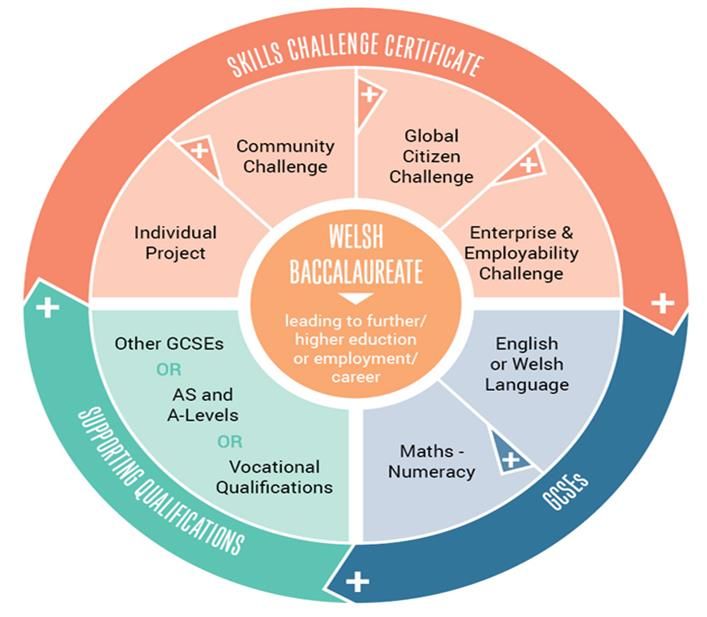
HEADTEACHER’S MESSAGE
 NEGES Y BENNAETH

                                                                                          UT PROSIM

In years 7-9 you have followed a curriculum designed for you by the school. As you prepare to enter
Key Stage 4, you will have the opportunity to make some choices regarding your education,
personalising aspects of your study.

Although you may not yet know what career you want to pursue in the future, King Henry VIII School
offers a broad curriculum allowing you to study a range of subjects so that you can keep your future
pathways open. You will have to make some important decisions in the next few weeks to ensure that
you choose the correct combination of subjects to study in year 10 and 11. Making the right choices
now will help to ensure that you go onto achieve your full potential in the future.

You have already had the opportunity to attend the careers fair and a Learning Pathways presentation
on February 14th. You have also had talks from subject leaders relating to courses on offer in Key Stage
4 that you have not previously studied.

The Key Stage 4 options process continues this week with you receiving this Learning Pathways
brochure and making an initial free choice of subjects which will form the basis of the option blocks.

Detailed advice will be available to you and your parents to help you choose the most suitable subjects,
and you will have an individual interview to make sure that you make the best possible decision.

Once your option choices are collated Mrs K Corken AHT Curriculum, will look to use your choices to
create option blocks which allow as many pupils as possible to follow their chosen pathway.

I hope you find this brochure informative and that you will choose a wise learning pathway.

Mrs E Lewis B. A. (Hons), MA
Headteacher/Pennaeth

                                                   3
LEARNING PATHWAYS OVERVIEW
TRAWSDORIAD LLWYBRAU DYSGU
UT PROSIM
Choosing your learning Pathway/Dewis eich Llwybr Dysgu
During the first three years at King Henry VIII School all pupils follow a common curriculum, apart
from Modern Foreign Languages.
In Year 10 there are significant changes. You can begin to shape your Learning Pathway by making
choices regarding your future studies. You may choose to:
Continue to study some subjects
End your study in some subjects
Start studying completely new subjects
For the first time YOU will have some choice in the subject you study.
A Learning Pathway should include:
Core National Curriculum Subjects – English, Maths and Science
Statutory lessons – Welsh, Religious Studies, Physical Education
Welsh Baccalaureate Skills Challenge Certificate, which includes Personal, Social and Careers
Education
A broad and balanced range of subjects. Many of you will make sure that you continue to
study a humanities subject, a language and a Creative or Technical subject
Subjects which will suit and extend your abilities
Subjects you need for your future career
4
Compulsory subjects / Pynciau Craidd
All students will study the following subjects. More details can be found in the subject pages later in
this brochure.

English
All students will study English Language GCSE, and most students will also study English Literature
GCSE

Maths
All students will study two Maths GCSE courses, Maths – Numeracy and Maths- Applications

Science
You will be entered for the most suitable Science pathway, depending on your achievement in all of
your school work so far. The final decision on Science pathway will be made by Mrs Corken,
Assistant Headteacher, in conjunction with leaders from the Maths, English and Science Faculties
together with information on your attitude to learning in KS3.

Most students will study the Double Science GCSE qualification.

Welsh Baccalaureate - Skills Challenge Certificate (WBQ)
You will have separate WBQ lessons in which you will continue your personal, social and careers
education and develop skills that will help you later in life. The WBQ leads to a qualification called
the Skills Certificate which is equivalent to one GCSE

Welsh
Nearly all students will take a GCSE in Welsh Language, and you have already begun the study of this
course in year 9

Religious Education
Nearly all students will aim to take a full GCSE in RE

Physical Education
In order to help encourage a healthy lifestyle, all students will continue to have PE lessons. If you
wish to gain a qualification in PE, then it is available as an option.

                                                    5
Options / Opsiynau
We generally advise that you choose a broad and balanced range of subjects. To help with this, the
list below is split into Humanities, Languages and Creative/Technical subjects.
You do not have to choose one from each list, but if you do it will ensure that you have a balanced
choice.
Humanities
GCSE Geography GCSE History GCSE Sociology
Languages
GCSE French GCSE Spanish
Creative and Technical
IVET Business Studies BTEC ICT GCSE Art
GCSE Music GCSE Drama GCSE Physical Education
GCSE Product Design IVET Engineering
GCSE Food & Nutrition GCSE Health and Social Care
Level 1 courses
We have some course aimed specifically at those students for whom positive achievement would be
at Level 1. Students will be advised if these are appropriate for them.
BTEC Level 1 Sport
BTEC Level 1 Supporting Employability and Personal Effectiveness
GCSE Level 1 Product Design
GCSE Level 1 Art
6Types of courses / Mathau o Gyrsiau
When you read the subject pages in this brochure, you will be told the type of qualification you will
be taking. This section explains the types you will see.
GCSE / TGAU
GCSE stands for General Certificate of Secondary Education. The qualification mainly involves
studying the theory of a subject, combined with some investigative work. Some subjects also offer
practical work.
GCSEs are graded from A*-U. All GCSE qualifications have at least one written exam and some also
have controlled assessments. Within some subjects there is a choice of tier, which will ensure that
you are examined on work that appropriately challenges you, giving access to a narrower range of
possible grades. Subject teachers will advise students and parents on which tier is most suitable, but
this decision will be made later in the course and will depend on progress made.
IVET (Initial Vocational Education and Training)
There are a range of subjects which come under the heading of IVET. In our curriculum offer we
have several BTEC subjects, and an ECDL Extra course. Pupils will be given clear guidance on the
sections that they need to include in a lengthy piece of work, and will have to show that they can
work hard consistently throughout the course to meet deadlines.
Each of these subjects will have less emphasis on examination, usually with 75% of the marks coming
from written work completed in lessons and 25% coming from an externally set test.
All of these vocational courses will lead to a final grade that is equivalent to one GCSE. The table
below shows how the grades awarded relate to GCSE:
IVET GCSE
Level 2 Distinction* A*
Level 2 Distinction A
Level 2 Merit B
Level 2 Pass C
D
E
Level 1 Pass
F
G
7WELSH BACCALAUREATE / BAGLORIAETH CYMRU
The diagram below shows the structure of the Welsh Baccalaureate Course
The course is available at Level 1 or Level 2, depending on the grades
achieved in each of the component parts of the qualification.
Skills Challenge
Certificate = 1 GCSE
3 additional GCSE or GCSE English Language
IVET Qualifications. and GCSE Maths or
(Up to 2 IVETs) Numeracy
The Skills Challenge Certificate work is done in timetabled lessons together with some whole days
off normal timetable. Details of what is studied in these lessons are included later in this booklet,
along with information about the grades that can be awarded.
8Types of learning experience / Mathau o Brofiadau Dysgu
At King Henry VIII School, we recognise the value of success in the compulsory and option subjects,
but are well aware that it is not all that matters in developing a rounded person. Many valuable
skills are gained from other learning experiences that you undertake, and should be discussed with
your form tutor.
Your learning Pathway can be split in to three areas:
•These are the learning opportunities you get through your lessons in
school leading to approved qualifications
Formal
•Many of you will be involved in extra-curricular activities such as the
Duke of Edinburgh award, additional lessons leading to qualifications
in Music and Dance, or volunteering with teaching sport leading to
Coaching qualifications
•Through form periods you will also be using LORIC tasks to build
Non-formal resilience and promote the health, mental wellbeing and positive
lifestyle choices
•These are wider experiences which don’t necessarily lead to formal
qualifications such as hobbies, sporting activities, membership of
clubs or societies, part-time employment. Keeping a careful record of
these activities will help you when you need to fill in application
forms for higher education or jobs. You will be able to show that you
Informal have a range of wider experiences than your academic results alone.
9Making a choice / Gwneud Dewis
All option choices must be taken for two years.
Whilst every attempt will be taken to allow you to study what you have chosen, remember:
Your ability to study the subject successfully will be considered and this may involve us
looking at your attitude to learning as well as your achievement in KS3
We have to balance numbers, which may lead us to restrict the number of pupils studying a
particular subject, or deciding that too few pupils have opted for a subject for it to be
allowed to run
You will be given advice and an individual interview to discuss your choices
We will discuss any problems with you and your parents as appropriate
Your Future / Eich Dyfodol
The decisions you make now about the subjects you will study in KS4 are very important because
they can affect your future career chances.
You will be helped in making these decisions by your subject teachers, your form tutors, Dianna
Macias (careers officer) and, of course, by your own parents. You will have to ask yourself questions
such as:
What subjects would best
help the career I want?
What opportunities exist
for jobs in the subjects at Do I want to go to a College
which I am good? of Further Education?
What are the job
opportunities
locally?
Do I intend to leave
school at 16 or stay on What do I do if I am weaker at the
into the sixth form? subjects that best suit the career I
would like?
What qualifications, personal qualities
and other experiences will I need to Do I want to go to
interest an employer offering jobs I am University or a College
interested in? of Higher Education?
You will also think of other questions. This booklet cannot give you all the answers, but it will help
you get the advice necessary for making sensible choices of subjects.
10How do I choose my Learning Pathway? / Sut ddylwn i ddewis fy Llwybr
Dysgu?
Good reasons Poor reasons
The subject will be useful for I like the teacher
my future plans My friend is taking the
I am good at the subject and subject
will be motivated to do well The subject is an easy option
in it
My teacher has told me I am
capable of doing well in the
subject if I do my best
Support for learners / Cefnogaeth i Ddysgwr
Explanation, guidance and help making your choices will be available from teachers/subject leaders,
form tutors, your Wellbeing Leader, Mrs Davies and from senior staff. Support is also available from
Diana Macias, the careers advisor at the Year 9 Parents’ Evening, and from the Careers Wales Online
website, http://careerswales.com
Mrs K Corken, Assistant Headteacher in charge of Curriculum, will deal with any queries about the
options process and what to do if you have a clash between two subjects you want to study.
You must also discuss your intentions with your parents/guardians. They will want to help you make
your decisions, and will know your strengths and interests.
You may well find it useful to talk to friends in year 10 and 11 about course content, as they will have
studied the courses which you are about to start.
More detailed information about each subject, whether compulsory or optional, is included later in
this brochure, including course content and methods of assessment. Further information can be had
from subject leaders.
11Additional Learning Needs
Mr M Williams Assistant Headteacher and ALNCO in charge of Inclusion and Additional Learning
Needs will talk to ALN students and their parents about the options process, offering advice as to
appropriate pathways for them.
In some of the compulsory subjects, such as RE, English and Science, we often dual-enter students
for Entry level alongside GCSE. Separate pages describing these entry level courses are included in
this booklet. In other subjects, such as Maths, Entry level is a possibility but experience suggests
that students who regularly attend school will attain at least a G-grade in the GCSE.
Pupils who follow the Single Award Applied Science pathway will have 6 hours of Science time,
which allows them to study an additional qualification, ECDL Extra ICT for 3 hours a fortnight. A page
describing this course follows the Science subject description.
There are choices on offer which are specifically aimed at pupils for whom level 2 study may prove
unrewarding. Pupils will be guided to these choices where appropriate.
These courses will include:
BTEC Sport Level 1.
BTEC Supporting Employability and Personal Effectiveness Level 1
GCSE Product Design. This will be a small group targeting the lower GCSE grades, but
following the same course as the other Product Design group.
GCSE Art. This will also be a smaller group targeting the lower GCSE grades.
12The Options Process / Y Broses Opsiynau
Options presentations / Gwasanaethau Opsiynau
During this term you have seen presentations introducing the options process and giving information
about subjects you have not previously studied
Parent’s and Options evenings / Nosweithiau Rhieni ac Opsiynau
You have an opportunity at the Parent’s Evening to get feedback on your progress. This will help you
be realistic about where your strengths lie, and what subjects you might wish to continue studying.
The careers fair on February 14th allowed you to find out more about careers and educational
opportunities and the Learning Pathways presentation by Mrs Lewis and Mrs Corken gave you more
details about what we offer along with the chance to answer questions. There was also the
opportunity to talk to Diana Macias, the careers advisor.
Early options forms / Ffurflennni Opsiwn Cynnar
These are issued with the options booklet at the year 9 parents evening. You need to get them to
your form tutor by Friday 15th March.
Pupil interviews / Cyfweliadau Opsiwn
These will take place in the second half of the spring term. Parents will be contacted as appropriate
if we need to discuss a change to your choice of options.
13COMPULSORY SUBJECTS
PYNCIAU CRAIDD
14ENGLISH LANGUAGE GCSE
TGAU IAITH SAESNEG
UT PROSIM
Subject Leader: Mrs L E Jones
KS4 Lead: Mrs L J Flynn
Examination Board: WJEC
Course outline
This GCSE in English Language promotes an integrated approach to oracy, reading and writing so that
writing and oracy work are stimulated by reading experiences.
All texts in the examination will be ‘unseen’, that is, learners will not have studied the examination
texts during the course.
GCSE English Language will focus primarily on the functional aspects of language. The term
‘functional’ here should be considered in the broad sense of providing learners with the skills and
abilities they need to take active and responsible roles in their communities, everyday life, the
workplace and in educational settings.
What will I study?
The English course is an important part of the Welsh Government’s plans to ensure students are
literate when they leave school. Assessment is divided between reading, writing and oracy skills.
Students will read a range of continuous and non-continuous texts and show their understanding
through a variety of tasks. The writing assessment focuses on the rules of grammar and its use in a
wide range of different forms. The oracy non-examination assessments will encourage students to
speak accurately and fluently, adapting style and language to a wide range of forms, contexts,
audiences and purposes.
How will I be assessed?
Unit 1 Non Examination Assessment (20%) Oracy.
Task 1 Individual Researched Presentation. Task 2 responding and Interacting Group Discussion
Unit 2 External Assessment 2hrs
Section A (20%) Reading.
This will include understanding of at least one description, one narration and one exposition
text including continuous and non-continuous texts, assessed through a range of structured
questions.
Section B (20%) Writing
One Writing task to be selected from a choice of two that could be either description, narration
or exposition.
Unit 3 External Assessment 2 hours
Section A (20%) Reading
Understanding of at least one argumentation, one persuasion and one instructional text,
including continuous and non-continuous texts, assessed through a range of structured texts.
Section B (20%) Writing
One compulsory argumentation writing task, and one compulsory persuasion task.
There is only one tier for GCSE English Language. The examination will be graded A* - G
15ENGLISH LITERATURE GCSE
TGAU LLENYDDIAETH SAESNEG
UT PROSIM
Subject Leader: Mrs L E Jones
KS4 Lead: Mrs L J Flynn
Examination Board: WJEC
Course outline
The English Literature course allows students to use their literacy skills to appreciate and respond to
important works of literature. Students will analyse a variety of types of text as detailed below.
Studying literature greatly improves not only students’ analytical skills, but also their emotional
literacy and ability to empathise.
What will I study?
You will study the following texts:
Of Mice and Men by John Steinbeck (Unit 1, Section A)
Either:
A View From The Bridge by Arthur Miller (Unit 2)
Lord of the Flies by William Golding (Unit 2)
Or
An Inspector Calls by J.B. Priestley
Heroes by Robert Cormier
How will I be assessed?
Unit 1 External Assessment (35%)
Prose (different cultures)
Unseen Poetry comparison (contemporary)
Section A 21%
Individual texts in context
Section B 14%
Unseen poetry comparison, the preparation for which will include the study of contemporary
poems
Unit 2b External Assessment (40%)
Contemporary drama and literary heritage prose
Contemporary drama 20%
Literary Heritage prose 20%
Unit 3 Non Examination Assessment 25%
Shakespeare and Welsh writing in English
The English Literature specification has two tiers; the Higher Tier is graded A*-D and the Foundation
Tier is graded C-G
Post 16 pathways and career opportunities
A Level English Literature. English can be combined with many other subjects in order to meet entry
requirements for a wide variety of degree courses. An A Level in English is regarded by employers and
universities as an academic and highly desirable qualification.
16ENTRY LEVEL CERTIFICATE IN ENGLISH
TYSTYSGRIF LLWYBRAU MYNEDIAD SAESNEG
UT PROSIM
Subject Leader: Mrs L E Jones
KS4 Lead: Mrs L J Flynn
Examination Board: WJEC
Course outline
The entry level English course allows students to:
communicate in a variety of situations and for a range of purposes and audiences
communicate with increasing independence and clarity
participate in group and individual activities
engage with a wide range of literary and non-literary texts, including non-continuous texts
identify and locate facts, ideas, information and opinions in texts
understand and express opinions
develop their skills in writing to communicate clearly
write for different audiences and purposes in a variety of forms
show increasing control of presentation of writing (including spelling, punctuation and
grammar).
What will I study?
Students will work in a variety of contexts designed to be enjoyable for all participants that allow
them to
make contributions to group and individual tasks
show their understanding of what is read
write with increasing independence
review accuracy of their own work
How will I be assessed?
Component 1: Written examination: 1 hour 25% of qualification
Section A Non-Literary reading Section B Functional writing
Component 2: Topic Tests: 4 0.5 hours 60% of qualification
Test 1: Response to twentieth/twenty-first century literature
Test 2: Editing and sequencing
Test 3: Narrative writing
Test 4: Proofreading
Component 3: Practical Assessment 2 × 2 hours 15% of qualification
Task 1: Presenting a point of view
Task 2: The World of Work
17MATHEMATICS GCSE
TGAU MATHEMATEG
UT PROSIM
Curriculum Leader: Mr S Williams
Examination Board: WJEC
Course outline
The Maths course consists of two GCSEs. They are:
GCSE MATHEMATICS – NUMERACY
GCSE MATHEMATICS
GCSE MATHEMATICS – NUMERACY
This will build on, and progress from, the levels of numeracy expected at the end of Key Stage 3
through the Literacy and Numeracy Framework and it will assess the mathematics that learners will
need in their everyday lives, in the world of work, and in other general curriculum areas.
GCSE MATHEMATICS
This course will extend to aspects of mathematics needed for progression to scientific, technical or
further mathematical study.
What will I study?
Below is a summary of the content and the focus for assessment.
How will I be assessed?
The assessment is done solely using written examination papers at the end of the course.
There are three tiers on entry for Mathematics GCSE:
Foundation – allowing grades D-G
Intermediate – allowing grades B-E
Higher – allowing grades A*-C
18The examinations follow the following structure for both qualifications:
Unit 1 Non-Calculator
Higher and Intermediate: 1 hour 45 mins
Foundation: 1 hour 30 mins
Unit 2 Calculator
Higher and Intermediate: 1 hour 45 mins.
Foundation: 1 hour 30 mins.
Post 16 pathways and career opportunities
It is difficult to find a career pathway that will not require the understanding and application of
mathematics and numeracy.
An interest in any of the following subjects will require a deep numerical understanding.
Mathematics
Statistics
Computer Science
Physics
Accountancy
Engineering
An interest in any of the following will require a substantial numerical understanding.
Geography
Psychology
Sociology
Sports Science
Medicine
Chemistry
Biology
Business
19SCIENCE GCSE
TGAU GWYDDONIAETH
UT PROSIM
Curriculum Leader: Mr M Herbert- Jones
Examination Board: WJEC
Course outline
Science had a revised suite of courses for first teaching from September 2017, and this will be the
second cohort of students studying this suite. There are a selection of different pathways to meet the
variety of students’ strengths and abilities at KHS. All courses will take students through the main
concepts of Biology, Chemistry and Physics. The topics covered are thought provoking and varied.
What will I study?
In Biology, students will study the beginnings of life on this planet and will take a journey through
evolution and life processes to the modern day, where humans now have the capability to alter the
code of life.
Physics will make you think of the world in a different way; forces, electricity, black holes, space and
the Big Bang are just some of the areas of study.
Chemistry is the ‘whizz bang’ of the three sciences and looks at how our world is built up from the
smallest of atoms to the huge variety of objects that surround us. The periodic table is the greatest
Lego box in the universe and the study of chemistry allows us to use it and build anything we can
imagine. All three sciences will contain practical elements to further understanding and excitement in
the subject.
How will I be assessed?
There are several pathways that students can follow each with different assessment criteria:
1. Separate Sciences
Students will study and attain a GCSE in all three sciences. Each science is composed of
three units.
Units 1 and 2 are examinations worth 45% each and last 1 ¾ hours, higher or foundation
tier, sat in the Summer of Year 10 and Summer of Year 11.
Unit 3 is the 10% practical exam. Each task will have two sections. In Section A, pupils
collect data by doing an investigation and this is worth 10 marks. Section B is an analysis
section and is worth 20 marks. This is sat in the spring of year 12.
There are 10 specified practical activities for each of the subjects
(Biology/Chemistry/Physics) within the syllabus that must be completed.
Students will have 12 hours of Science each fortnight, with one hour less than the rest of
the cohort for each of Maths, English and Welsh Baccalaureate
202. Double Award Science
Students will attain two GCSEs in science. There will be 7 units of assessment in total
Written examination units are 1 – 6 each worth 15%, half of which are sat at the end of
Year 10, the remainder at the end of Year 11.
Unit 7 is the 10% practical exam.
There are 21 specified practicals in the syllabus. These need to be completed to prepare
the pupils sufficiently for the 10% practical exam task sat in early Spring of Year 11.
Students will have 9 hours of Science a fortnight.
Some students will follow a combination of the next two Science Pathways, taking an Applied
Science GCSE, if they are capable of showing success in the examination component, but also
taking the entry level course in parallel with the GCSE as a back-up qualification. Students
following this pathway will have 6 hours of Science a fortnight.
3. Applied Single Award
Unit 1, Science in the Modern World has a 90 minute examination worth 40% of the
qualification
Unit 2, Science to Support Our Lifestyles also has a 90 minute examination worth 30% of
the qualification
Unit 3 is a task based assessment which will take place in autumn term of year 11 and is
worth 20% of the qualification
Unit 4 is the practical assessment, which will take place in the spring term of year 11 and
is worth 10% of the qualification
4. Entry Level
The work is at a level below that of GCSE, but based on the same subject content as
Applied Single Award
Unit one has a 60 minute exam worth 25% of the qualification
Unit 2 has 4 × 30 minute end of topic tests worth a total of 60% of the qualification
Unit 3 is an internally assessed practical investigation worth 15% of the qualification
Students who follow this pathway will also take the ECDL-Extra ICT course described on the next
page.
Post 16 pathways and career opportunities
There are several post 16 options available. Students can go on to study A-levels in Biology, Chemistry
and/or Physics, or continue with a level 3 BTEC course in Science.
These courses open many doors in universities with a wide variety of subjects and vocations to follow.
These include medicine, mechanical engineering, pharmacy, research and genetic engineering to
name but a few. Post 16 qualifications in Science are well respected and will also help gain entry to
non-scientific degrees such as Law and Accountancy.
21ECDL-EXTRA INFORMATION TECHNOLOGY
ECDL-EXTRA TECHNOLEG GWYBODAETH
UT PROSIM
Subject Leader: Mrs T Matthews
Examination Board: BCS
Course outline
This course is only for students who follow the Single Award/Entry Level Science Pathway and gives
students an opportunity to build on a their basic knowledge and experience to improve their
understanding of computer applications including word processing, spreadsheets and presentation
software.
What will I study?
Word Develops the learner’s ability to create word-processed documents: entering
processing text, editing and formatting work, using graphs, tables and pictures for a
professional finish, and effectively using tools such as the spell-checker and mail
merge.
Spreadsheet Helps the learner develop a working knowledge of spreadsheets, from entering
software data and formatting worksheets, to creating charts and producing high-quality
documents.
Presentation Shows the learner how to produce high-quality presentations using a variety of
software tools including charts, graphs and drawn objects.
Improving Enables the learner to work more effectively with IT. This unit looks at using tools
productivity to save time and effort when producing word processed documents,
using IT presentations and spreadsheets.
How will I be assessed?
The units are assessed through on screen tests, taken when students are ready for them.
22RELIGIOUS STUDIES GCSE
TGAU ADDYSG GREFYDDOL
UT PROSIM
Subject Leader: Miss H Davies
Examination Board: WJEC
Course outline
There is a statutory requirement that all students in Welsh schools should study Religious Studies at
Key Stage 4. In King Henry VIII School all students are given the opportunity to study for a Full Course
examination.
What will I study?
Year 10 Year 11
Unit 1: Religion and Philosophical themes Unit 2: Religion and Ethical Themes
Part A Part A
Core beliefs of two world Religions: Core beliefs of two world religions
Christianity Core beliefs teachings and Christianity core beliefs, teachings and
practices practices
Beliefs about God The Bible
Beliefs about Incarnation Afterlife
Morality Life’s journey
The Church Special places
Hinduism core beliefs teachings and Hinduism core beliefs, teachings and
practices practices
Brahman and atman Karma and reincarnation
Hindu Gods Varnashramadharma
Worship Festivals
Rites of passage Social concern
Part B: Philosophical Themes Part B Ethical Themes
Life and Death Relationships
The world Relationships
Origin and value of human life Sexual relationships
Beliefs about death and Issues of equality: gender,
afterlife prejudice and discrimination
Good and Evil Human Rights
Crime and punishment Human rights and social justice
Forgiveness Prejudice and discrimination
Good evil and suffering Issues of wealth and poverty
23How will I be assessed?
Two written examinations, both papers contribute equally to the final grade
There is no coursework in this option.
Post 16 pathways and career opportunities
A Level Religious Studies
Degree courses involving theology or ethics
Religious Studies is relevant to anyone interested in a career in
Business / international business - Marketing and management
Marketing and management
The government, foreign service, or the Peace Corps
Non-profit or non-governmental organizations
Counselling and Social Work
Journalism / publishing
Law
Medicine
Event planning, hospitality, or the service industry
Museums and the arts
Teaching
The police force
Armed forces
24ENTRY LEVEL PATHWAYS HUMANITIES
TYSTYSGRIF LLWYBRAU MYNEDIAD DYNAETHAU
UT PROSIM
Subject Leader: Miss H Davies
Examination Board: WJEC
Course outline
The Entry Level Humanities is built around the Religious Studies element of the course in so doing
fulfilling the statutory requirement to provide Religious Education at KS4. Students are taught in small
groups with three lessons per fortnight.
What will I study?
In year 10 the following three modules are completed
Places of worship
Religious festivals and celebrations
Prejudice and discrimination against people
In Year 11 the following two modules are completed
Important ceremonies in life and death
Contentious issues in the modern world
All units will be taught from the perspective of two religions. Each module is worth three credits.
How will I be assessed?
Pupils will use a variety of creative and experiential techniques to complete the modules which will
be set and marked by KHS staff.
All units completed are of Entry 2 or 3 standards leading to an Entry Level Certificate
25WELSH GCSE
TGAU CYMRAEG
UT PROSIM
Subject Leader: Mrs R Dickenson
Examination Board: WJEC
Course outline
Nearly all pupils will follow the GCSE course. There are three broad themes and the wider aim of the
course is to increase fluency in young learners and assess their ability to use language whilst
developing a range of skills including reading, writing and speaking as well as developing literacy.
What will I study?
The course concentrates on development of improved fluency and accuracy furthering language
acquired at key stage 3. There are three broad topics, namely Wales and the World, Employment and
Youth. Pupils will be expected to be able to tackle a range of scenarios with a larger focus being placed
on grammatical accuracy and structure.
Pupils will be taught how to respond to audio and visual stimulus to converse naturally and interact
with a group in Welsh. They will also be taught how to tackle a range of literary materials including
adverts, articles, poetry and other authentic materials as well as developing their written accuracy.
How will I be assessed?
This is an un-tiered specification therefore all pupils will sit the same examinations and answer the
same questions.
External Assessment
All examinations are externally assessed. There are two oral examinations and two reading and
writing examinations. 75% of the course will be completed in the final year of examination.
There will be an oral examination in April of Year 10 which is worth 25% of the overall grade. Pupils
will be required to respond to visual stimulus, this is a 2 minute video clip. In their discussion, pupils
are required to interact naturally, discussing the content of the video and marks will be given for
understanding as well as the ability to communicate in Welsh.
In Year 11, there will be two reading and writing examinations and a further oral examination. All oral
examinations are assessed in groups and assess speaking and listening skills. Each examination is
worth 25%.
Post 16 pathways and career opportunities
The development of Welsh as a language is a priority within Wales and almost every job advertisement
suggests that Welsh is desirable. The Welsh government have given a target of 1,000,000 Welsh
speakers by 2050 and this new specification is the next step in securing this goal.
The skills developed whilst learning a language are relevant to any work place and are highly desirable.
26Here are some of the areas where a Welsh qualification would be advantageous:
Banking
Business
Council or Government Departments
Retail Outlets
Tourist Industries
Public Services
Teaching
Police/Fire Service
The Media
Journalism
27ENTRY PATHWAYS CERTIFICATE IN WELSH
TYSTYSGRIF LLWYBRAU MYNEDIAD CYMRAEG
UT PROSIM
Subject Leader: Mrs R Dickenson
Examination Board: WJEC
Course outline
The entry pathways Welsh course enables pupils to
Develop oracy skills and build on confidence when speaking in Welsh.
Develop accuracy when writing and be able to write for a number of different purposes.
Develop understanding of spoken and written Welsh through reading and listening tasks.
Engage in the language in a meaningful way including purposeful tasks which teach skills as
well as language.
What will I study?
Students will work in a variety of contexts designed to be enjoyable for all participants that allow
them to
make contributions to group and individual tasks
show their understanding of what is read
write with increasing independence
review accuracy of their own work
How will I be assessed?
The course is made up of a number of assessments which take place within the classroom and a
portfolio of evidence is created.
Communicating in Welsh in familiar situations
Listening to and understanding others speaking
Welsh in familiar situations
Reading and understanding texts in Welsh in familiar situations
Preparing for the world of work in familiar situations in Welsh
Writing in Welsh in familiar situations
Context may include myself, the world of work, family, hobbies, school, holidays and the area.
28SKILLS CHALLENGE CERTIFICATE
DYSTYSGRIF HER SGILIAU
UT PROSIM
Subject Leader: Miss L Trew
Examination Board: WJEC
Course outline
The Skills Challenge Certificate aims to enable learners to develop and demonstrate an understanding
of and proficiency in essential and employability skills. These are the skills that employers and next
stage educators value and which learners need for learning, work and life.
The seven essential and employability skills are:
Literacy
Numeracy
Digital Literacy
Critical Thinking and Problem Solving
Planning and Organisation
Creativity and Innovation
Personal Effectiveness
The Skills Certificate will:
enable learners to consolidate and formalise learning of skills
provide a theoretical underpinning of knowledge and techniques related to skills; encourage
reflection, analysis and articulation of the learner’s own proficiency in the skills
engage learners in exploring, developing, practicing and applying the skills
increase confidence and effectiveness in the use and application of the skills in a range of
meaningful and ‘real-life’ contexts and purposes
What will I study?
There are four elements to the Skills Challenge Certificate that will be completed over two years. The
results will be combined with other supporting qualifications to gain the Welsh Baccalaureate.
Global Citizenship Challenge
The purpose of the Global Citizenship Challenge is to develop learners’ skills, whilst providing
opportunities to understand and respond appropriately to global issues. During the Global Citizenship
Challenge learners will explicitly develop skills of Critical Thinking and Problem Solving and Creativity
and Innovation and apply them in an appropriate manner.
Enterprise and Employability Challenge
The purpose of the Enterprise and Employability Challenge is to develop learners’ skills, whilst
providing opportunities for learners to develop enterprising skills and attributes and enhance
employability. During the Enterprise and Employability Challenge, learners will explicitly develop skills
in Digital Literacy, Creativity and Innovation and Personal Effectiveness and apply them in an
appropriate manner.
29Community Challenge
The purpose of the Community Challenge is to develop learners’ skills, whilst encouraging learners to
identify, develop and participate in opportunities that will benefit the local community. During the
Community Challenge learners will explicitly develop skills of Planning and Organisation and Personal
Effectiveness and apply them in an appropriate manner.
Individual Project
The purpose of the Individual Project is to develop learners’ skills, through carrying out a research
activity in an area of personal interest or one that reflects future educational or career aspirations.
During the Individual Project learners will explicitly develop skills in Digital Literacy, Planning and
Organisation and Critical Thinking and Problem Solving and apply them in an appropriate manner.
How will I be assessed?
Each element will be taught and then assessed through controlled assessment. At least one Challenge
has to be completed individually and one has to be completed as a group.
The qualification can be awarded a Foundation or National grade, depending on the level of work done
in each of the challenges.
The National Skills Challenge Certificate is graded A* - C. For a National award, the learner must
achieve all of the components, the Individual Project and the three Challenges, with a minimum of
80% at level 2 and the further 20% at level 1.
The Foundation Skills Challenge Certificate is graded Foundation Pass or Foundation Pass*. For
a Foundation award, the learner must achieve all of the components, the Individual Project and the
three Challenges, with a minimum of all at level 1.
Post 16 pathways and career opportunities
Students who remain in full time education will continue studying the Skills Challenge Certificate, at a
higher level. All skills used in the course will be of benefit in all areas of study and in any career choice.
Those students who plan to begin working will find that success in the Welsh Baccalaureate means
they have evidence for employers of the skills needed for the world of work.
30OPTIONAL SUBJECTS
PYNCIAU OPSIWN
31ART AND DESIGN GCSE
TGAU CELF A DYLUNIO
UT PROSIM
Subject Leader: Mrs A Evans
Examination Board: WJEC
Course outline
Students take time to gain skills by experimenting with media and techniques that can be later used
in their coursework. They also prepare for a controlled test.
What will I study?
Drawing & Painting
Graphic Design
Textiles/Fashion
Photography
3D Design/Sculpture
Print Making
One unit of coursework is produced using a variety of media. Drawing is important and you will be
expected to draw from life, imagination and from magazines. You will also collect visual inspiration
by taking your own photos.
Throughout the course you will look at a wide range of artists and will be expected to:
Copy the style/technique of an artist
Research the work of artists, which will include collecting images and relevant information
Create your own picture in the style of a chosen artist
Explain how the work of an artist has inspired you
How will I be assessed?
Coursework 60%
Controlled Test 40% - Ten hour practical session to complete a final piece of work
(the result of several weeks’ research, preparation and developing ideas).
CRITICAL UNDERSTANDING
Developing ideas through investigations that are informed by contextual and other sources and
demonstrating analytical and cultural understanding.
CREATIVE MAKING
Refining ideas by selecting appropriate resources, media and materials and experimenting using
different techniques and processes.
REFLECTIVE RECORDING
Recording ideas, observations and insights relevant to intentions in visual and/or other forms.
PERSONAL PRESENTATION
Presenting a personal, informed and meaningful response demonstrating analytical and critical
understanding. Realising intentions and where appropriate making connections between visual,
written, oral or other elements.
Post 16 pathways and career opportunities
‘A’ Level Art and degree courses. Career opportunities exist in areas such as Graphic Design, Film,
Video, Photography, Fine Art, 3D Design, Fashion/Textiles, and Theatre Design.
32BUSINESS BTEC FIRSTS AWARD
CABTh BUSNES
UT PROSIM
Subject Leader: Mrs N Williams
Examination Board: Pearson / Edexcel
Course outline
The course will provide opportunities for students to develop a range of skills and techniques, personal
qualities and attitudes essential for successful performance in working life. It will motivate students
via applied learning and assessment. Assignments and classwork will include; group work, internet
research, producing reports and financial documents, investigating real businesses and giving
presentations.
Students will develop a good understanding of the range of business organisations in the UK and the
factors that influence their success.
What will I study?
The following are the main areas of study:
Unit 1: Introducing Business
This unit introduces you to the language and terminology used in business. You will explore different
types of business ownership and how they relate to the size and scale of a business. You will learn
about the stakeholders of businesses and their impact on business success. You will also gain an
understanding of how and why businesses carry out market research to gain a better understanding
of the market and will review the marketing mix of a selected business making suggestions for
improvement.
Unit 2: Finance for Business
In this unit, you will explore the types of costs that businesses incur, from the initial start-up costs
involved in setting up a business to the ongoing daily costs of running the business. You will then
explore the ways in which the sale of products and services generates revenue, so that you can
develop your understanding of profit.
Unit 3: Enterprise in the Business World
This unit explores what businesses do, trends that affect them, how they operate and the factors that
influence their success. You will get to plan an outline and model for your chosen business idea.
Unit 4: Promoting a Brand
In this unit, you will find out what it takes to build a brand and what a business has to consider when
planning brand development. You will investigate the importance of branding to a business, the types
of branding that are available and why businesses need to review and update their brands.
NB – It must be noted that this course requires an end of Key Stage 3 Level 5 or higher in Mathematics and English
How will I be assessed?
Three of the units will be internally assessed through assignments. Unit Two has a 1 hour 15 mins
online examination. Each unit is worth 25% of the overall qualification.
A Pass or above in this qualification is equivalent to 1 GCSE:
Grades available are Pass (C), Merit (B), Distinction (A), Distinction* (A*)
Post 16 pathways and career opportunities
Allows access to Level 3 courses through BTEC and AS/A Levels
Careers including: Marketing, Retailing, Business Administration and Finance
33DRAMA GCSE
TGAU DRAMA
UT PROSIM
Subject Leader: Mrs Phillips-Nepean
Examination Board: WJEC
Course outline
Drama is a fun and challenging qualification and GCSE pupils should develop:
• The ability to review and analyse live theatre
• Their understanding of drama and theatre
• Subject specific terminology
• Performance and technical skills
• The ability to work creatively and collaboratively in a team
• The ability to analyse play texts and respond to them imaginatively
• The ability to work independently
• Knowledge of theatre, practitioners and playwrights
Pupils wishing to take GCSE Drama should have an enthusiasm for performing to an audience
What will I study?
Unit 1: Devising Theatre. Learners participate in the creation, development and performance of a
piece of devised theatre based on either the work of a theatre practitioner or a genre in response to
a stimulus set by WJEC. Learners complete a written evaluation of the devised performance under
formal supervision.
Unit 2: Performing Theatre. Learners participate in a performance based on two 10 minute extracts
from a performance text of their own choice.
Unit 3: Interpreting Theatre Written Exam.
Section A: Set Text. A series of questions on one set text explored as an actor, designer and director.
Section B: Live Theatre Review. One question, from a choice of two, requiring analysis and
evaluation of one live theatre production seen during the course.
How will I be assessed?
Unit 1: Devising Theatre: internally assessed, externally moderated 40% of qualification
Unit 2: Performing Theatre: externally assessed by a visiting examiner 20% of qualification
Unit 3: Interpreting Theatre: written examination 1 hour 30 minutes 40% of qualification
Post 16 pathways and career opportunities
Drama is a qualification that many prospective employers, colleges and universities respect because
it shows the pupil has the ability to work within a team, has self-control and is a motivated learner
with high social and communication skills.
Careers that might interest you include: Theatre, Television / Radio / Film, Journalism, Teaching,
Therapy / Psychology, Politics. What about starting your own stage school?
34ENGINEERING LEVEL 1/2 AWARD
VOCATIONAL
GWOBR PERIANNEG LEFEL 1/2 UT PROSIM
CYMHWYSOL
Subject Leader: Mr R Thomas
Lead Teachers: Mr J Curran
Examination Board: WJEC
Course outline
The course is focused on developing a range of skills, both practical and academic, through applied
learning that will be useful in the workplace and for future learning. It will provide learners with a
foundation of knowledge of engineering that will help learners progress to further study or enter the
workplace. It will motivate learners through purposeful tasks set in real world contexts.
What will I study?
The course consists of three units.
Unit 1 - Engineering Design (25%)
The purpose of this unit is for learners to analyse engineered products in order to propose design
solutions to meet requirements. In this unit, you will learn about that design process. You will learn
how to analyse a product so you can see what features make it work and how it meets certain
requirements. You will learn how to take ideas from different products in order to produce a design
specification for a product.
Unit 2 - Producing Engineered Products (50 %)
The purpose of this unit is for learners to use skills developed to produce an engineered product.
Through this unit, you will learn to interpret different types of engineering information in order to
plan how to make engineered products. You will develop the skills needed to work safely with a range
of engineering processes, equipment and tools. With these skills, you will learn to make a range of
engineered processes that are fit for purpose.
Unit 3 – Solving Engineering Problems (25%) (Formal Examination)
The purpose of this unit is for learners to use their knowledge and understanding of engineering
processes and material properties to solve problems. In this unit you will learn about how engineers
in the past have found solutions to problems and how other engineers use their ideas to solve
problems today. You will learn about materials, processes and mathematics that engineers use and
how they are used to solve problems. In solving problems, you will learn to follow a process and
develop drawing skills to communicate your solutions.
How will I be assessed?
There are two internally assessed units, which must be completed within school and then externally
moderated by the examination board.
Unit 1 - Engineering Design (25%)
Pupils will undertake this unit in the second year of the course in year 11. It will need to be
completed and internally assessed for moderation in May of that year.
Unit 2 - Producing Engineered Products (50%)
35Pupils will undertake this unit throughout the first year of the course in year 10. It will need to be
completed and internally assessed for moderation in May of that year.
There is one externally assessed unit by the examination board.
Unit 3 – Solving Engineering Problems (25%) (Formal Examination)
Pupils will sit the formal examination at the end of year 10 in May/June and will have the opportunity
to retake this examination in year 11 should they want/need to do so.
Post 16 pathways and career opportunities
Allows access to relevant Level 3 courses (including BTEC), as well as AS/A-Level Product Design.
Careers options:
Mechanical Engineering
Electrical Engineering
Agricultural Engineering
Civil Engineering
Manufacturing
36GCSE FOOD & NUTRITION
TGAU BWYD A MAETH
UT PROSIM
Lead teacher: Mrs K Brasington
Examination Board: WJEC
Course outline
Students develop their practical skills using a wide variety of foods, learning how ingredients can be
used safely and effectively. They will learn how to apply their understanding of food science and
nutrition to practical cooking. They will learn about the origins of foods, both in Wales and
internationally. It encourages students to cook and enables them to make informed decisions about
food and nutrition, allowing them to acquire knowledge to be able to feed themselves and others
affordably and nutritiously, now and in later life.
What will I study?
1. Food commodities
2. Principals of nutrition
3. Diet and good health (diets for different people, planning balanced diets)
4. The science of food (the effect of cooking on food and food spoilage)
5. Where food comes from (food provenance, food traditions and processing foods)
Cooking and food preparation – throughout the course, emphasis will be on understanding and
applying skills and knowledge in a practical way. Students will do a practical approximately every 1
to 2 weeks.
How will I be assessed?
1. Assessment 1 - 10 hours – 20%. Scientific food investigation
2. Assessment 2 - 15 hours – 40%. Research, prepare and cook three dishes
3. One exam of 1 ½ hours – 40%
Post 16 pathways and career opportunities
A level Food, Nutrition and Health
Health promotion
Food industry e.g. food science, product development, food manufacturing, quality control, health
& safety
Environmental health
Catering and Hospitality
Food retailing / marketing / packaging design
37FRENCH GCSE
TGAU FRANGEG
UT PROSIM
Subject Leader: Mrs C Pearman
Examination Board: WJEC
Course outline
Students will learn to read, write, speak and understand French through studying three broad
themes.
What will I study?
The context for learning the language is organised under the following themes:
● Identity and culture
● Wales and the World – areas of interest
● Current and future study and employment
How will I be assessed?
There are four units, each worth 25% of the overall qualification.
Unit 1 is an oral exam (role play, photo card and conversation)
Unit 2 is a listening examination
Unit 3 is a reading examination
Unit 4 is a written examination
All exams take place during the summer examination period in Year 11; pupils will sit either
Foundation or Higher Tier papers.
Post 16 pathways and career opportunities
GCSE French can lead onto AS studies.
A language is a valuable skill and asset in itself but can also be combined with many other subjects.
French is a major language of many European Institutions and International Organisation like
UNESCO, UN and Olympic Games committee.
You can study French with countless subjects at University. Many Universities are now demanding a
GCSE in a language for some of their courses, for example Medicine at UCL.
It is a highly regarded academic subject and, of course, there are huge benefits for holidays in
Europe.
Careers in translation, business, commerce, science, journalism and tourism are all possibilities with
a language.
38GEOGRAPHY GCSE
TGAU DAEARYDDIAETH
UT PROSIM
Subject Leader: Mr G Morgan
Examination Board: WJEC
Course outline
GCSE Geography adopts an enquiry approach to the study of geographical information, issues and
concepts. It is based on the principle that geographical education should enable learners to become
critical and reflective thinkers by engaging them actively in the enquiry process.
Fieldwork is an essential aspect of geographical education and of this qualification. It is placed at the
heart of this specification and will be embedded in much of the work that pupils undertake.
What will I study?
Landscapes and physical processes – Landscapes in Wales, river and coastal landforms
Rural-urban links – population issues, urbanisation and challenges in cities, rural issues
Coastal Hazards and Management – Hard and soft engineering approaches
Weather, Climate and Ecosystems – Climate Change, Climatic hazards,
Development and Resource Issues – economic inequalities, water supply issues
Environmental Challenges – Managing ecosystems
Fieldwork Enquires – Physical (rivers) and Human (urban) fieldwork
How will I be assessed?
Unit 1: Changing Physical and Human Landscapes, 90 minute written exam, worth 40%
Unit 2: Environmental and Development Issues, 90 minute exam, worth 40%
Unit 3: Fieldwork Enquiry, 150 minute non-examination assessment, worth 20% of the qualification
Post 16 pathways and career opportunities
Further and Higher Education – A level and degree level Geography
Geographers can: Geographers are:
• make a concise report • good communicators
• handle data • spatially aware
• ask questions and find answers • socially, economically and
• make decisions about an issue environmentally aware
• analyse material • problem solvers
• organise themselves • good team players
• think creatively and independently • computer literate
• well-rounded, flexible thinkers
39You can also read


