Konfido Secure and Trusted Paradigm for Interoperable eHealth Services
←
→
Page content transcription
If your browser does not render page correctly, please read the page content below
Konfido
              Secure and Trusted Paradigm for
              Interoperable eHealth Services

                                                                           Paolo Campegiani
                                                                                       Bit4id
                                                                             pca@bit4id.com

This project has received funding from the European Union’s Horizon 2020
     Framework Programme for Research and Innovation under grant
                          agreement no 727528.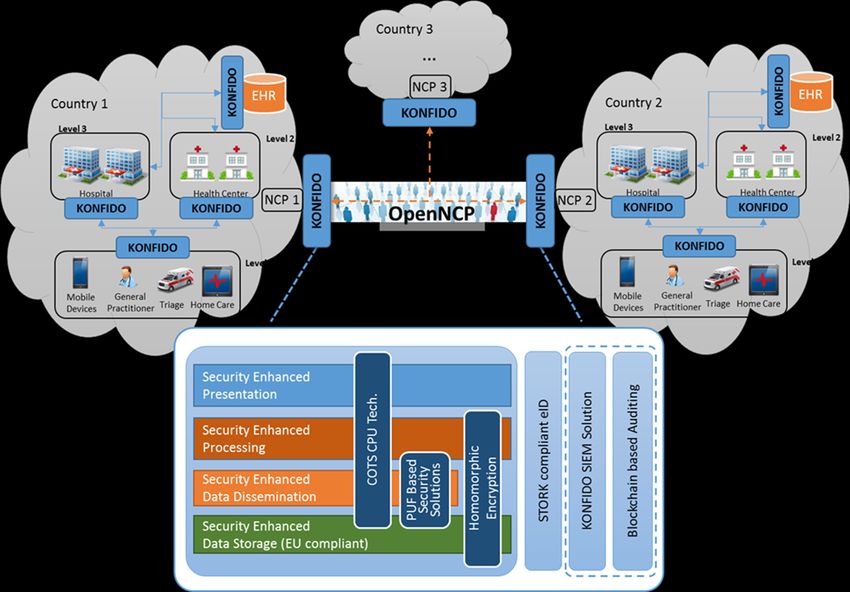
Cross-border exchange of eHealth data in Europe                                2

KONFIDO is an Horizon 2020 project that wants to facilitate the cross-border
exchange of eHealth data in Europe

Cross-border exchange happens when an EU citizen that is abroad needs
to access his/her eHealth data, stored in his/her country of origin.

How relevant is this for you?
Relevance of cross-border exchange of eHealth data                                                  3

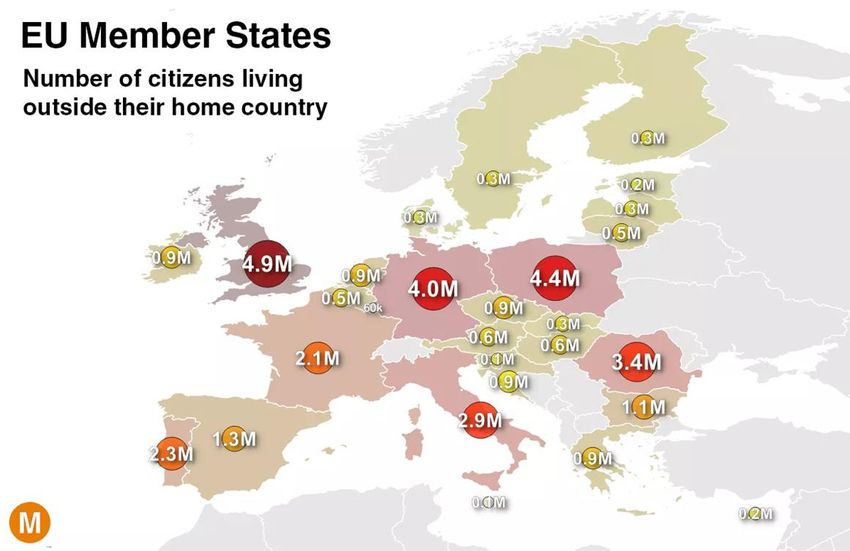
                                             -   There are around 40 M of Europeans living
                                                 abroad (in the world)

                                             -   A significant number of them is living in Europe

                                             -   There are around 0.9M of British people living in
                                                 Europe (source: Brexit data)

                                             -   Reasonable to say that there are at least 10M of
                                                 Europeans living in an European country different
                                                 the one of origin

                                             -   Plus, people temporarily        abroad     (tourists,
        (Source: U.N. Population division)       conference attendees…)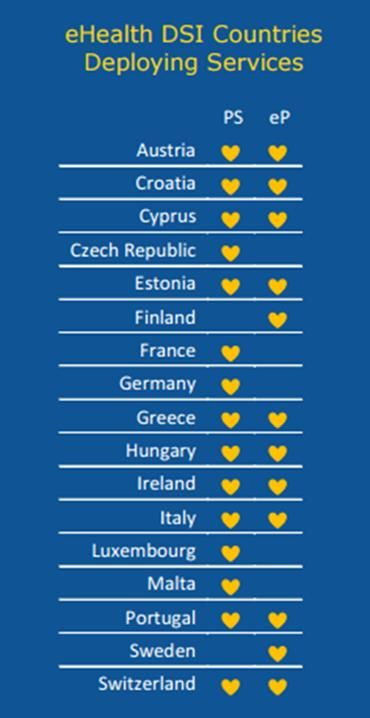
Cross-border exchange of eHealth data as an European                                   4
priority
-   Affordable and universal healthcare in Europe is a fundamental right of every
    European citizen

-   Making this possible for people abroad is a way to support citizens’ mobility in
    Europe (and citizens’ mobility in Europe leads to a better Union, a more
    functioning and productive labor market, a stronger economy)

-   Cross-border interoperability between Electronic Health Record in Europe was
    the focus of the epSOS project (2008-2014) and e-SENS project

-   epSOS developed the OpenNCP (Open National Contact Point) system

-   Directive 2011/24/EU on patients’ rights in cross-border healthcare

-   Development of OpenNCP is founded by the Connecting European Facility
    (CEF) vehicle

-   The «Joint Action to Support the eHealth Network» (JASeHN) is defining the
    guidelines for electronic exchange of eHealth data, including the Legal
    Agreement on the exchange of health data, to be signed by the Member States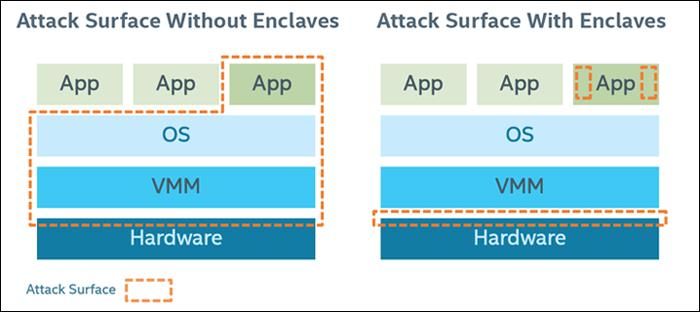
Connecting Europe Facility and Digital Service Infrastructure                             5

Connecting Europe Facility (CEF) is a regulation that defines how the Commission
can finance support for the establishment of trans-European networks to reinforce
an interconnected Europe. It’s defined for three different areas:

                              CEF Transport: 24,05 BN €
                               CEF Energy: 5,53 BN €
                              CEF Telecom: 1,04 BN €

A Digital Service Infrastructure describes solutions that support the implementation
of EU-wide projects, providing trans-european interoperable services. It is founded
by CEF

Building Block DSI: basic digital service infrastructures (key enabler, like eDelivery)
Sector Specific DSI: DSI for specific domains (eHealth, Cybersecurity, e-Justice, ...)
OpenNCP, the DSI for eHealth                                    6

OpenNCP is a Sector Specific DSI service that allows for the
exchange of eHealth Data in Europe (Patient Summary and
ePrescription)

Each Member State has a single OpenNCP that acts as a
gateway for all the cross-border requests of eHealth data

OpenNCP security model is Web of Trust: each OpenNCP
instance trusts the others and processes requests for eHealth
data on their behalf.
Konfido and OpenNCP                                                         7

• Horizon 2020 project to advance state-of-the-art eHealth technology and
  specifically OpenNCP along these dimensions:
    • Digital security
    • Data preservation
    • Data access and modification
    • Data exchange
    • Interoperability
    • Compliance

• Holistic approach:
    • User centric
    • Targeting all the levels of an IT infrastructure
    • Taking into account legal, organizational and operational contexts
Konfido partners                    8

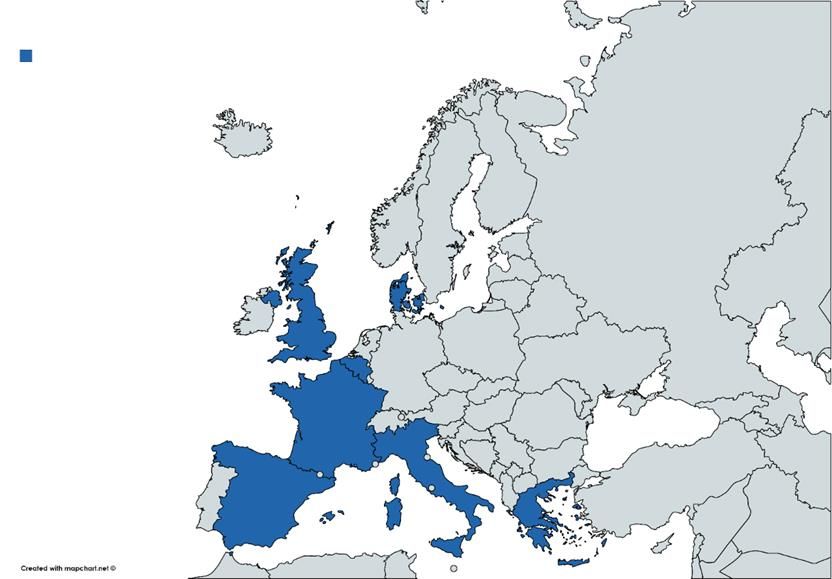
 Pilots in: Italy, Spain, Denmark
Konfido deployment view                                        9

                          Konfido works alongside OpenNCP
                          providing security related services:

                          -   eIDAS Authentication
                          -   Intel Safeguard Extension
                          -   Photonic Physically Unclonable
                              Functions (pFUP)
                          -   System Information and Event
                              Monitoring
                          -   Homomorphic Encryption
                          -   Blockchain based logging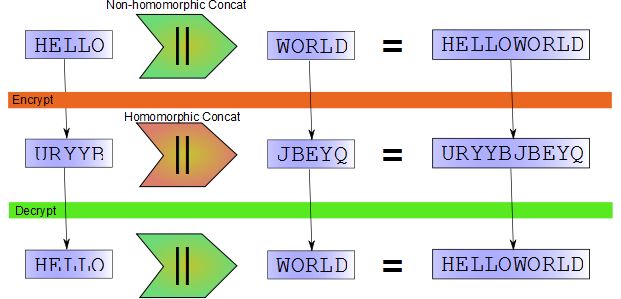
eIDAS Authentication                                   10

        Using an eIDAS eID for eHealth brings in a
      clear legal framework for interoperability and
                    security (assurance)

      We are not considering the general solution
        for the problem, only what is needed to
      support eIDAS eIDs in the three participating
                       countries
Intel SafeGuard Extensions 11
Intel Software Guard Extension protects some
memoy areas making them accessible only to a
specific program function
• The OS cannot access them
• The hypervisor cannot access them
In Konfido SGX could be applied to protect keys,
credentials and authenticated sessionsPhotonic Physically Unclonable Functions 12
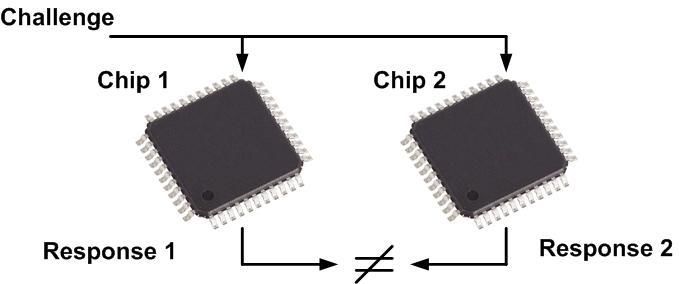
- Each chip has some physical defects
- These defects does not prevent the chip from working
- These defects are unique and not reproducible, even by
the chip manufacturer
These defects could act as a unique identification for the
chip as a base for an encryption mechanism or as a source
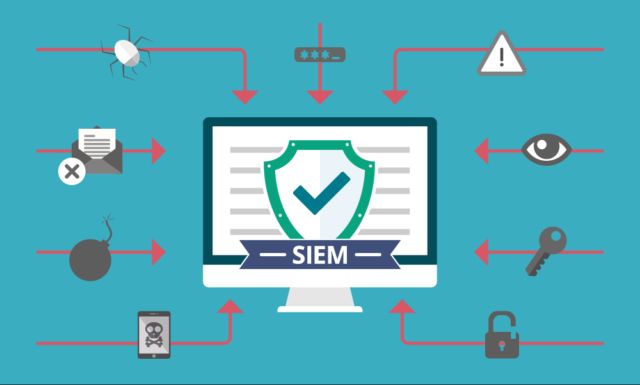
of entropySystem Information and Event Monitoring 13 OpenNCP does not have a system to collect and analyse system logs OpenNCP is a distributed system working with a «Circle of Trust» deployment principle A System Information and Event Monitoring should collect logs from the different OpenNCP instances to consolidate a view on the systems’ performance and behaviour
Homomorphic Encryption                                        14

 An Homorphic encryption scheme is a way to encrypt
 data that:
 -   Allows to perform computations on the encrypted
     data
 -   The result of the computation on encrypted data is the
     encrypted result of the computation on cleartext data

 Homomorphic encryption allows to let your data
 encrypted on cloud provider’s premises, letting it perform
 computations on these encrypted data and then making
 it possible only for you to decrypt the result of the
 computation.

 In Konfido, homomorphic encryption will be used to
 manage the ePrescription Summary (ePS).
Blockchain based logging 15 First class actors in OpenNCP are Member States A Member State requires or provide eHealth data These two (now) cooperating parties must reach an agreement that the actual request or provision of data has happened This kind of information will be stored on a permissioned distributed ledger
Konfido status and links
              Konfido started on 1st November, 2016

              Now we are entering the design phase, after the domain analysis and
              the user requirements gathering

              Web site: www.konfido-project.eu

              @konfidoproject

              Contact me: Paolo Campegiani | pca@bit4id.com

This project has received funding from the European Union’s Horizon 2020
     Framework Programme for Research and Innovation under grant
                          agreement no 727528.
You can also read


