L1P Principles and Gender - Insights from Côte d'Ivoire - Level One Project
←
→
Page content transcription
If your browser does not render page correctly, please read the page content below
L1P Principles and Gender: Insights from Côte d’Ivoire   1

L1P Principles and Gender
Insights from Côte d’Ivoire
2

Cover

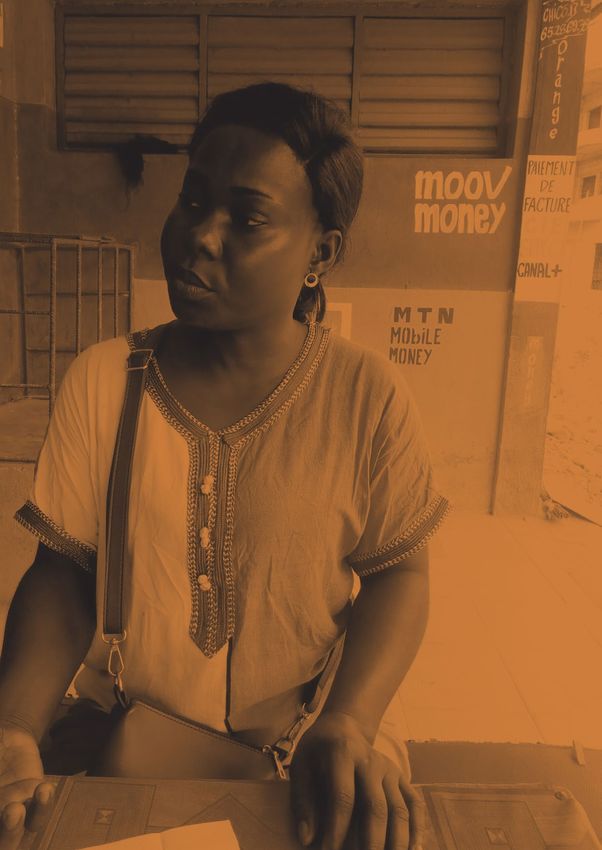
A young woman sitting in front of her kiosk in a
quiet street of a peri-urban village, tells us about
her own and her clients’ usage of mobile money.

Photo © H. Smertnik.

                                                       Design by tommcevoy.co.uk
L1P Principles and Gender: Insights from Côte d’Ivoire 1
Contents
Summary 2
A snapshot of women, finance and DFS in Côte d’Ivoire 4
The Level One Principles and End User Impact 10
Level One Principles: analysis of gender impacts and
recommendations for improvement 18
Cumulative impacts of the L1P Principles 18
Impacts of individual L1P principles 21
Interoperability 21
Scale 22
Push/real-time 23
Irrevocability 24
Identifiers/Directory 26
KYC and Tiered KYC 27
Pricing transparency 28
User experience 28
Inexpensive User Devices 29
Access Points 29
Notifications 31
Network and service availability 32
Enabling programs and Consumer education 33
Conclusion 34
Addendum: Contrasting Côte d’Ivoire with Kenya 36L1P Principles and Gender: Insights from Côte d’Ivoire 2 Summary The Gates Foundation has committed to the Level One Project (L1P) Principles—a set of principles and best practices to guide countries, regions, or commercial organisations working in DFS (digital financial services) to improve access to DFS, particularly for underserved populations.1 The Foundation sees certain DFS principles as core to this goal: for example, shared, open, standards-based components, including an interoperability service for transfers, and fraud and risk management services. The system aims to be governed by its direct participants: the providers of end-user digital financial services, who offer account opening services, consumer and agent management services, and merchant digital payment services (we provide more detail on the principles in Appendix A). However, one aspect of the principles about which more information would be useful is on women as end users—in brief, are any of the individual L1P principles or their cumulative impacts likely to affect women differently than men? Additionally, can the L1P principles be improved in any way so that they benefit women more? Because some aspects of the payments system in Côte d’Ivoire are L1P compliant (e.g., real-time push-transfers in the form of mobile money) but others are not (e.g., a lack of interoperability) our approach was to explore the costs and frictions as well as benefits generated by the non-L1P compliant components and L1P compliant components. Within this we were careful to probe for differences between how men and women experienced these effects. To research this, Caribou Digital conducted two weeks’ of qualitative fieldwork in Côte d’Ivoire, including expert interviews and 80 end-user insights (through focus groups and in-depth interviews with both men and women, but oversampling women). These were conducted in peri-urban areas (Yopougon and Koumassi), the urban area of the capital Abidjan (Marcory), and rural areas (Mondoukou and Akoupe Zeudji). As part of our sample, we also spoke to intermediaries such as DFS agents and super-users. 1 Bill & Melinda Gates Foundation. “The Level One Project Guide.” Summary
L1P Principles and Gender: Insights from Côte d’Ivoire                                         3

Figure 1      Map of interview locations in and around Abidjan

                         Akoupé

       CÔTE                                        Abidjan
     D’IVOIRE

           Abidjan                                   Marcory   Koumassi

                                                                                   Mondoukou

Source: Google Maps

We found that women’s use of DFS is generally low in Côte d’Ivoire and their (digital)
literacy is less, or significantly less, than that of men, with most DFS use limited to P2P
transfers and cash-in and cash-out at agents. In fact, many people ask agents to do the
P2P transfers for them at the agent point. As a result, women stand to benefit more
from the application of the L1P principles because women most actively need them—
particularly the principles on consumer education, tiered KYC, low and transparent
pricing, user experience, and access to agents. We summarise these differences and
hope that these findings can be integrated and serve as guidance for DFSPs building
inclusive financial services with special attention to the gender gap in DFS.

Summary
L1P Principles and Gender: Insights from Côte d’Ivoire 4
A snapshot of women, finance
and DFS in Côte d’Ivoire
Limited DFS use by women
I don’t want to leave money in my mobile money account. Once I receive it I take it
out. I feel like I am losing money if I leave money in my mobile, every time I want to do
something with the money it reduces and it certainly doesn’t grow. It’s not like that
with the Tontine [group savings] or the bank.
Vivienne, 34, fruit seller in Yopougon
Vivienne’s comment echoed that of many female respondents in our Côte d’Ivoire
fieldwork, where mobile money (what appeared to be the very first rung of digital
financial services) is widely used by women but only at a basic level, that is, mainly to
withdraw or send money. In our sample, the majority of the female respondents did
not have their own mobile money accounts for several reasons—citing lack of trust,
confidence, and access to devices. It also seemed to be true that more women than men
relied on agents to do their financial transactions.
The low use of digital financial services we found among women mirrors existing
literature on gender and financial inclusion, including DFS in Côte d’Ivoire. In financial
inclusion more broadly, FII (2018)2 found the following gender differences in a survey of
3,059 respondents:
Figure 2 Male and female differences in financial inclusion in Côte d’Ivoire
2× 50%
as likely to have an more likely to have
account in a bank or never used a formal
formal non-bank financial institution
financial institution
4× 2.5×
as likely to use an
as likely to be an active informal non-bank
user of a bank account financial institution
Source: Financial Inclusion Insights, 2018.
2 CGAP. “Financial Inclusion Insights.”
A snapshot of women, finance and DFS in Côte d’IvoireL1P Principles and Gender: Insights from Côte d’Ivoire 5
FII (2018) calculates that 46% of women and 62% of men in Côte d’Ivoire are financially
numerate, and 50% of men and 31% of women are financially included (having a
registered bank, MFI, or mobile money account). However, women are more likely to
restrict their use to mobile money, while men use a variety of methods:
Figure 3 Men are more likely to use a variety of financial methods, whereas women use a greater
proportion of mobile money
FORMAL
NBFI BANK BANK
0.8% FORMAL
NBFI
1% 0.2% 0.8%
3% 2% 0.8% 2%
8%
30%
40%
MOBILE MONEY
MOBILE MONEY
Source: Financial Inclusion Insights, 2018.
In our fieldwork, a number of female respondents (as in wider literature) saw mobile
money as safer than cash:
I was robbed at home. If someone steals my phone, I’ll just take out my chip and my
money will still be there. Before when I came back from the market, children took
40,000 CFA [$67.00], 50,000 CFA [$83.00], I cried and I don’t know who took it.
Two weeks after the thief did it again and I cried again. I lost more than 200,000 CFA
[$235.00]. Since then I have opened my mobile money account.3
Marianne, 50, fish seller in Akoupe Zeudji
Respondents also see mobile money as preferable to banks:
Banks ask you for evidence of your salary. We don’t have fixed salaries so we can’t
show that. With the mobile, we can withdraw money quickly, unlike banks where it’s
more difficult
Roseline, 40
3 Exchange rate calculated at 1 USD = CFA 596.236 on xe.com 15 March 2020.
A snapshot of women, finance and DFS in Côte d’IvoireL1P Principles and Gender: Insights from Côte d’Ivoire 6
Banks were seen as involving too much KYC paperwork, high fees, and dispersed
branches with long waiting times. One respondent said “I’m not going to stand in the
front of the cashier for 2,000 CFA ($3.65).” Another respondent told us that “banks are for
those people who earn a lot.”
However, despite women’s greater proportional use of mobile money in comparison
to other financial tools, men in Côte d’Ivoire are still 65% more likely to use mobile
money than women (FII, 2018). The main barriers women stated in FII’s study include
lack of device, lack of SIM, and lack of ID to register the SIM. In our interviews, these
were mentioned less (though some women did explore workarounds for lack of ID, such
as registering on their husband’s SIM if they were married), but women did mention
variable concerns of agent quality, network unreliability, fraud, and unclear fees.
Other than credit for airtime, none of our female respondents had taken a loan with
their mobile carrier. Like Vivienne, most female respondents preferred other methods
of procuring loans and savings: mainly tontines (savings groups) or “Mauritanians”4
(informal lenders) while a few wealthier respondents used banks. Other products such
as MTN’s Momo cash (mobile money credit) were barely used; only two respondents
had tested the service, but they weren’t actively borrowing. Respondents were more
cautious of microfinance institutions (MFIs)—we heard of bad experiences with MFIs
coming to villages to open savings accounts for people and then disappearing with the
money.
Figure 4 below outlines the places where women we spoke with keep their money. As
the research is qualitative (80 respondents in and around Abidjan), we cannot provide
representative percentages. However, informal methods (at home, carrying it on their
person, group savings, or individual savings) are still prevalent savings5 methods for
low-income women.
4 Le mauritanien is the name given to informal lenders, most often coming from Mauritania. They are considered a trustworthy source for borrowing
money, removing both the group factor of tontines (which some respondents considered unreliable and at times unsafe) and the high interest
rates of MFIs.
5 Note that, in the case of the respondents we spoke with, saving is often understood as merely keeping a limited amount of money rather than
more strategic savings.
A snapshot of women, finance and DFS in Côte d’IvoireL1P Principles and Gender: Insights from Côte d’Ivoire 7
Figure 4 Different places in which women save money (as recounted in focus groups and IDIs)
IN
AL
FO
RM
RM
FO HOME
AL
INE
BA
ME
NT
NK
O
HO
T
N”
IE
N
A
RIT
M
FI
“LE MAU
BILE MONEY
es)
MO
ur
ced
o
pr
al
rm
fo
es
in
AL
ometim R M
(with s
FO
Figure 5 below provides a visual representation of how the women we spoke to manage
their money. Very few female respondents did their financial transactions digitally (i.e.
sending money, paying bills) from the safety and comfort of their homes. As mentioned
earlier, most relied on agents for two main reasons—costs and lack of mobile money
accounts—and thus are not taking advantage of the convenience digital transactions offer.
Figure 5 Deliberate strategies to manage money in more or less accessible ways
(as recounted in focus groups)
MFS at agent’s
(basic deposit, withdrawal)
Tontine within
community/family BANK
$ kept in other
secure place
HOME
MFI transaction
Western Union
$ in
transaction
hand
$ kept
in house MFS agent comes
to collect tontine
money
(for personal
tontine)
A snapshot of women, finance and DFS in Côte d’IvoireL1P Principles and Gender: Insights from Côte d’Ivoire 8
Several of the women interviewed preferred keeping their money on their person, such
as Josephine, 47: “I don’t trust my children, I don’t trust my husband, I don’t have a mobile
money account or a bank account. So I keep my money right here on me. I got robbed twice
and it’s very hard every time to get back up from that.”
One possibility we observed in at least one small rural village and in one peri-urban
community was the possibility for mobile money agents to come to their customers’
home to collect their savings money, bringing back this convenience DFS provides.
During one interview with a female mobile money agent in Akoupe Zeudji, a customer
came to sign up for a personal tontine savings. At the end of each day, the agent would
go to the person’s house to collect the money they want to save. This appeared to be
an informal service that agents would propose when comfortable, such as in smaller,
known communities, to avoid risk. The benefit for the agent would be to keep a part of
the money as liquidity (float), including in remote areas, and keep the rest in their own
mobile money account. At a decided time, the agent will give the total amount saved
back to the customer.
One key inhibiting factor for women is the inconsistent and informal nature of mobile
money services in Côte d’Ivoire
As seen above, one of the main attractions of DFS in Côte d’Ivoire is that of tiered
KYC— a biometric national ID suffices to buy a SIM and conduct a transaction. However,
because agents are not consistent in asking for an ID, there are more opportunities
for fraud. Some agents also mention they are afraid to ask for ID, in case the customer
takes their business elsewhere. This leads to some confusion and lack of trust:
All agents should ask for an ID or at least get the ID number, but it creates a battle
between those agents who don’t ask and those who do. Those who are stubborn and
continue to ask for it can lose their clients.
Female agent, Koumassi
Another example of the type of informal transactions accepted by certain mobile
money agents are transactions conducted by third parties on behalf of the owner of a
mobile money account, particularly in rural areas and with the older generation who
may send a younger relative to collect cash without providing ID:
Often, when you do not have an account, in agreement with the mobile money agent,
you can communicate the number of the agent to your correspondent who must send
you money. The latter forwards the money via the agent number. Is it common in the
village? Yes, when you don’t have a cellphone, you’ll explain this to the agent and if he
accepts you can receive money via his number (rural area).
A snapshot of women, finance and DFS in Côte d’IvoireL1P Principles and Gender: Insights from Côte d’Ivoire 9 The issue with the mobile money agents’ lack of formality in conducting financial transactions is the possibility of fraud and the unsecure environment it creates. Mobile money fraud and fear of fraud is a major reason why women are cautious in using mobile money: You feel mobile money is not 100% secure because someone else can access your account. This fear of fraud is not only due to agents’ informality but is also anchored in experiences from the early days of mobile money in Côte d’Ivoire when fraud was not well contained. Orange, particularly, seemed to suffer from fraud and a reputation of fraud. One respondent mentioned: I remember at the end of 2018, I saved my bonus on my Orange account. I go to the agent to make a withdrawal and then go to my hairdresser. To my surprise, the mobile money agent tells me that there is nothing on my account. I was desperate and called Orange and they told me that I had made transactions on my account. Since this day I automatically withdraw the money I receive on the Orange account and then put it on the MTN account. In this context, trust in mobile financial transactions is limited in a way that seemed more prevalent with the female customers to whom we spoke. This lack of trust is emphasised by the unreliability of MFS. For example, women would choose to go to an agent to send money—instead of doing it on their phone—in order to get an informal receipt confirming their transaction. This receipt is an informal piece of paper on which the agent writes the date and the amount sent or deposited; these exist because SMS notifications have not been consistent and thus provide reassurances to customers even though its formal validity hasn’t been verified. If the recipient hasn’t received the money within 24 hours, the sender can go back to the agent with the receipt to verify the transaction. A snapshot of women, finance and DFS in Côte d’Ivoire
L1P Principles and Gender: Insights from Côte d’Ivoire                                10

The Level One Principles and
End User Impact

We found three categories of impact when applying the Level One Project
Principles to end users in Côte d’Ivoire. In Table 1, we map these in the
following way:

Inconclusive impact

Equal effect on men and women (as recounted in focus groups and IDIs)

Greater effect on women than men (both positive and negative impact, as recounted
in focus groups and IDIs)

For each principle with a greater effect on women than men, we have made a subjective
judgement as to whether the effect is positive or negative.

For example:

On balance: Our interviews suggest that this could have a positive effect on women.

On balance: Our interviews suggest that this could have a negative effect on women.

(We have abbreviated the wording in the table).

We also included any recommendations for updates to the L1P Principles. Where the
updates were specific wording changes, the new wording was highlighted . These
recommendations should be considered tentative pending the conclusion of the
research project.

The Level One Principles and End User Impact
L1P Principles and Gender: Insights from Côte d’Ivoire                                                               11

Table 1

                  How the
                  implementation
L1P               of L1P will affect                                            Negative effects /improvements to
Principle         women vs. men         Positive effect on women                principle

SCHEME DESIGN

 Interoperable    Greater effect on     Women had little knowledge of           Interoperability can cause more
                  women than men        how to conduct interoperable            uncertainty and reduce trust
                                        transfers between networks and          when not fully seamless—fear of
                  On balance:
                                        experts told us it was very difficult   “money hanging in the air” when
                  Positive effect
                                        even for people who were aware.         interoperable transfers are delayed
                                        When they did want to move              or fail. Right now, networks are
                                        money between networks they             investing more in fraud awareness
                                        would withdraw and re-deposit at        rather than interoperability—
                                        an agent. Interoperability would        implementation by MNOs will
                                        likely have saved significant time      need extensive awareness raising
                                        and cost for these women ( we           and confidence building as most
                                        found women were often more             users prefer to own multiple SIMs
                                        time or price sensitive). Very          or take cash out and redeposit
                                        few women (four in the sample           at an agent when transferring
                                        of 80) had locked accounts for          across value networks. At its core,
                                        savings—however, this was more          concerns around interoperability
                                        women than men. We feel these           can be addressed by ensuring
                                        accounts are a reasonable proxy         real-time payments, to give users,
                                        for the kinds of specialised services   especially women, confidence
                                        that would be more available with       that money is being transacted as
                                        interoperability and would seem         quickly and surely as possible.
                                        to be of greater interest to women
                                        based on FGDs.

 Scale (in the    Inconclusive          Unlike Kenya, the women and             It did seem possible that if scale
 form of many     impact (as yet)       men we interviewed in Côte              meant having more payment use
 use cases)                             d’Ivoire did mostly very basic          cases available on one account it
                                        transactions—cash in/out and P2P        could create some confusion if the
                                        transfers— often mediated by the        user experience was not managed
                                        agent over the counter. However,        well.
                                        the interviewees did mention
                                        differences in payment tasks
                                        where men were used to paying
                                        bills and school fees while women
                                        were more often in charge of
                                        saving. Savings behavior by women
                                        was almost entirely in cash or
                                        informal institutions (like tontines)
                                        while men’s lower frequency
                                        higher value use cases (bills and
                                        school fees) were more likely to
                                        be paid digitally. Given the gender
                                        differences across use cases, a
                                        payment system which facilitated
                                        more types of payment use cases
                                        might benefit women by assuring
                                        their use cases were included,
                                        especially high-frequency, low-
                                        value savings.

The Level One Principles and End User Impact
L1P Principles and Gender: Insights from Côte d’Ivoire 12
SCHEME DESIGN
Push/ Greater effect on Women in our sample voiced
real-time women than men greater concerns over network
drops or worries that payments
On balance:
were not going through, in relation
Limited positive
to a lower level of trust overall.
effect
The agent’s receipt is an example
Real time builds of how women feel reassured with
trust in the system physical evidence of a transaction,
when the digital evidence is not
always forthcoming in real time.
Currently the network drops
seem to contribute to a great deal
of mistrust. If women feel more
confident that transactions are
going through in real time, it will
build their trust and confidence in
the system and save them the time
of chasing the trails of transactions.
Irrevocable Greater effect on In Côte d’Ivoire, as in Kenya, it is Fear of both revocability and
women than men possible to revoke a payment made irrevocability is not as strong in
by mistake—including after it goes Côte d’Ivoire as in Kenya, but this
On balance:
through. could be because of the reliance on
Potential negative
agents. Agents feel under greater
client effect As in Kenya, the caveat to revoking
pressure to make the correct
(though we payments is that the recipient of
transaction, especially when in a
recognise the key the payment can’t have withdrawn
rush. As in Kenya, there should be
role this plays in the payment yet. Hence, the
more steps before the transaction
overall system approach is very ad hoc.
goes through to validate receiver
functioning)
Senders valued the possibility of and amount and to potentially
reversing when they made an error allow a short recall period.
but also it seemed like they relied
more on agents to reduce errors in
the first place.
While most SMEs were not using
mobile money. The few that did
had to come up with strategies
to limit the risk of revocation. A
few SME owners we talked to
allowed partial deposit with mobile
money but then asked for full
final payment in cash so the buyer
couldn’t dispute it later. Hence,
irrevocability would seem to be
critical for commerce-based use
cases.
Prefunded Inconclusive
impact
The Level One Principles and End User ImpactL1P Principles and Gender: Insights from Côte d’Ivoire 13
SCHEME DESIGN
Low-cost Inconclusive
mandate impact
Directory Inconclusive Some women suggested another
impact form of ID might be a good
alternative (“when we go to an
ATM it’s just a simple code”) but
overall there were no privacy
concerns raised by women in
sharing their phone numbers—this
may be more to do with the limited
use of DFS.
Fraud Inconclusive
management impact
Settlement Inconclusive
impact
Third-party Inconclusive
connection impact
Forex Inconclusive
providers impact
SYSTEM DESIGN
Technology Inconclusive
impact
System Inconclusive
components impact
Common core Inconclusive
impact
Additional Inconclusive
protocols impact
System Inconclusive
connections impact
GOVERNANCE
Equal Inconclusive
ownership impact
Participant Inconclusive
engagement impact
Not-for-loss Inconclusive
utility impact
GOVERNMENT SUPPORT
Regulated Inconclusive
impact
Supervision Inconclusive
impact
The Level One Principles and End User ImpactL1P Principles and Gender: Insights from Côte d’Ivoire 14
Government Inconclusive
use impact
Open to Inconclusive
non‑banks impact
Tiered KYC Greater effect on Several women stated that a
women than men main incentive for mobile money
compared to banks was the lower
On balance: Strong
ID requirement (a national ID
positive effect
when registering a SIM). However,
even that can pose a challenge and
many female respondents were
registered under other people’s IDs
which could leave them formally
disadvantaged, for example, if they
tried to reinstate their account
after losing their SIM.
If anything, the lower tier of KYC
that mobile money relies on in Cote
d’Ivoire should be even further
relaxed to allow a self registration
tier without ID as many women
found even its basic requirement
daunting.
END-USER EFFECT
End-user fees Greater effect on Both men and women were
women than men concerned about transaction costs.
However, the latter appeared
On balance:
to affect more women in our
Positive effect
sample than men because women
did not appear to have a clear
understanding of cost breakdown.
Further, there was some confusion
between paying for airtime and
mobile money (see row below).
Finally, as women in our sample
had tighter budgets than men, they
appeared to be more careful about
the mobile money fees.
Pricing Greater effect on Women we interviewed voiced
transparency women than men greater concerns around pricing
and lack of transparency.
On balance:
Positive effect In addition, there seemed to be
a lack of transparency and trust
around MNOs’ management
of fees as costs increased and
customers weren’t informed and
felt caught by surprise.
The Level One Principles and End User ImpactL1P Principles and Gender: Insights from Côte d’Ivoire 15
END-USER EFFECT
User Greater effect on As the women in our sample mainly
experience women than men access DFS through agents, direct
user experience feedback was
limited. One female MM agent
said she preferred using a feature
phone for her MM transactions.
This was because she felt she made
fewer errors on a keypad (rather
than touchscreen) because the
keys were separate, and she was
used to the codes. Understanding
these user experiences is essential
for better implementation of DFS.
Inexpensive Greater effect on In our sample, women tended to
user devices women than men have lower-end phones than men.
Cost of devices was mentioned as
On balance:
a key limitation by both men and
Positive effect
women. However, women are likely
more sensitive to these costs given
their smaller incomes.
Access points Greater effect on Access points largely mean agents While more mobile money-style
women than men in Côte d’Ivoire. Agents are agents are a net positive, the
critical for women in particular as informal nature of these agents
On balance:
many reported relying on agents did lead to some challenges with
Positive effect
to complete their transactions. unclear pricing and inconsistent
However, there seemed to be a service. Some women mentioned
lack of standardisation in terms hidden fees or arbitrary pricing and
of pricing and quality of agents, lack of awareness on redressal/
particularly as women may be complaints against an agent.
limited in choice within their Conversely, agents also need
geography. protection and support as many
were completing transactions for
users and felt under pressure if
there were problems.
The Level One Principles and End User ImpactL1P Principles and Gender: Insights from Côte d’Ivoire 16
Notifications Greater effect on Given the lack of trust women
women than men in particular have in DFS,
transactional confirmation
On balance:
messages are critical. Because in
Positive effect
CIV confirmation notifications do
not always come on time, women
in particular visit agents who have
gotten into the habit of providing
a small informal paper receipt with
a stamp of the agent’s kiosk name
and, on the back, the date, amount
transferred, and the number
to which it was transferred/
deposited— further confirming
the importance of real time
notifications controlled by the user.
Women also mentioned the
fraud alert messages sent after
transactions are made.Those
seemed to have made a difference
when it came to alerting people
(particularly in more vulnerable
communities) about the risks of
fraud.
Some men also complained of too
many notifications, and suggested
more choice over what is sent.
OTHER
Network Equal effect on Connectivity was an issue that
service and men and women was widely mentioned as a
availability (as recounted in challenge when wanting to do
FGDs and IDIs). transactions and—linked to
notifications—meant that people
would be delayed in receiving their
confirmation messages.
Enabling Inconclusive In our sample, respondents
programs impact. Men
did not mention any
mentioned privacy
more than women specific programs.
but no clear
difference.
The Level One Principles and End User ImpactL1P Principles and Gender: Insights from Côte d’Ivoire 17
OTHER
Consumer Greater effect on Women, especially in rural areas,
education women than men mentioned lack of knowledge
around mobile money—pricing and
On balance:
transparency. Very few knew about
Positive effect
interoperability, or savings or loans
services which they stated are not
very publicised. There is greater
awareness of fraud than of costs.
As mentioned in the access
category, women rely heavily
on agents for their transactions,
don’t often own accounts, and
sometimes decide not to learn new
approaches preferring instead that
the agent do it.
Data privacy Inconclusive
impact. Men
mentioned privacy
more than women
which could be
because of more
advanced use but
no clear difference.
Gender Inconclusive
disaggregated impact
data
Source: Based on the Level One Principles internal guide (forthcoming).
The Level One Principles and End User ImpactL1P Principles and Gender: Insights from Côte d’Ivoire 18 Level One Principles: analysis of gender impacts and recommendations for improvement Extrapolating from Table 1, the themes that appear stronger for women than for men according to our qualitative fieldwork in Côte d’Ivoire are trust, tiered KYC, consumer education, and agent access points. We expand in more detail on the likely gender-specific impacts of each of the principles below. Cumulative impacts of the L1P Principles In addition to evaluating the impact of each individual principle below, we also look at cumulative overarching impacts, under the assumption that the whole will be greater than the sum of its parts. The advent of “Lower fees and costs” and “Greater innovation and variety of financial choice” are two likely outcomes from the L1P principles that transcend individual principles. In this section, we ask what the likely impact of these two outcomes will be based on our client discussions in Côte d’Ivoire. Lower fees and overall costs matter equally to men and women but potentially impact women’s limited budgets more Most of the L1P principles contribute to lowering the cost-to-serve and the inherent costs of financial transactions which should lead to lower costs to consumers. While lower costs are clearly good for consumers, whether women are more sensitive to cost than men is an open question. Both men and women complained about the lack of transparency around costs, also echoed by an expert interviewee: “it would be fair to say that MNOs have spent a lot of time on fraud awareness campaigns and very little on transaction costs.” A male mobile money agent said “there’s no transparency—costs go up without you knowing about it.” In his case, he navigates transaction costs by making smaller payments to reduce the transaction fees. One issue is that high and/or unexpected transaction costs greatly disincentivise women, especially when they don’t understand where the fee goes: In 2014, I was employed in a company, we saved 10,200 CFA [$17.00] per month on Orange for 1 year. It was a blocked account. After 1 year, the amount to be received was 122,000 CFA [$104.00]. Hold on tight! Orange paid me only 91,000 [$151.00] or 92,000 CFA [$154.00]. I was really angry. Since that day, I no longer wanted to save Orange. After my complaint there was no follow-up. it demotivated me. I borrowed 500 CFA [$0.83] of airtime from Orange but I do not go further than that. Level One Project Principles: Analysis of gender impact and recommendations for improvement
L1P Principles and Gender: Insights from Côte d’Ivoire                                        19

Another female respondent said:

 Mobile money uses up your credit so quickly, you just don’t know where it goes.”

A third picked up the differences between agencies:

 My observation is that in one agent I am asked 300 CFA [$0.50] as a transaction
 fee for a withdrawal of 5000 CFA [$8.38] and in another agent I am asked 275 CFA
 [$0.46].

A female market trader said:

 The units disappear without anyone knowing why. I made a unit transfer of 1,000
 CFA in the early morning, I have 100 CFA [$0.16] left in call credit. I have inquired
 with the agents and they have told me that I have subscribed to an offer. We are made
 subscriptions without our agreement. They need to end all this.

In addition, some women complained that as airtime was often “eaten up” with services
they had not subscribed to, such as horoscopes, they worried the same may be the case
for mobile money. In this sense, women saw mobile money as “a place to lose money.”

We did not hear men raise concerns to the same extent as women, while women held
the opinion that: “men are salaried, they have good pay, but women do small informal
businesses… all these fees matter more for us.”

Our qualitative research in Côte d’Ivoire was not able to address the related questions
of total cost of ownership or handset costs, though the macro data indicates that
women are more often owners of basic or feature phones, a fact which may be driven in
part by price sensitivity but also other factors.

We believe on balance that the lower costs that L1P systems should have—and in
particular low and transparent transactional fees that would enable high-frequency,
small-value transactions as well as savings—will create a positive impact for women.
Lack of trust on pricing means that many women either try to avoid DFS or only use it
for cash in-cash out.

The Level One Project Principles enable financial innovation and diversity through
interconnected systems that impact women more than men
In addition to lowering costs, L1P principles create a more open, interconnected,
standards-based, and low-cost system that reduces barriers to users transferring
money between providers and also reduces entry barriers to financial services
providers. Taken as a whole, these features are likely to spur new entrants in the long
run, and more innovative and interconnected products that bundle capabilities from

Level One Project Principles: Analysis of gender impact and recommendations for improvement
L1P Principles and Gender: Insights from Côte d’Ivoire                                        20

multiple providers. The DFS landscape in Côte d’Ivoire is so nascent that there is not
yet a large number of new products or DFSP entrants. The lack of concrete examples
of innovative interconnected products to which to point made it nearly impossible
to explore this topic fully in the focus groups. That said, some experts speculated
that when a wider variety of products does emerge, it could very well benefit women
disproportionately as they have been an underserved segment in the past.

Level One Project Principles: Analysis of gender impact and recommendations for improvement
L1P Principles and Gender: Insights from Côte d’Ivoire                                         21

Impacts of individual L1P principles

Here we assess the likely impacts of each principle and make a few
suggestions for improvement based on our qualitative interviews and
research in Côte d’Ivoire.

Interoperability

Women would value interoperability, but currently don’t have enough knowledge
and trust to use it and have not been motivated with compelling use cases
At present, expert interviewees and respondents agree that interoperability is a
challenge in Côte d’Ivoire. There is low use across networks in Côte d’Ivoire by women.
Operators do not publicise the possibility of transferring money between Orange,
Moov, and MTN. “Why would an operator want money to leave their ecosystem?” as one
expert pointed out.

A male tailor stated:

  When a parent in Yamoussoukro wants you to send them money, you know MTN is
  difficult in the ‘interior’ so you have to use Orange. It’s possible to make a transaction
  between MTN and Orange but it’s a little complicated. You can’t go to any agent on
  the street —you can only go to authorised ones which are already overloaded. You can
  spend a lot of time there with long queues.

In our end-user interviews, we did not find any woman who had made a transfer across
networks on their own. Women either use agents or multiple SIMs precisely to avoid
transactions across networks—one woman said she had two SIMs (Orange and MTN)
because her mother was not on her preferred provider, Orange, but instead preferred
to receive transfers on MTN.

Where women do conduct transactions across networks, delays, failed transactions,
and network drops impact significantly on their trust (we explore this below). This could
be a risk in systems that were established according to L1P principles but where the
implementation or execution was lacking, leading to errors and delays. We believe that
implementing the interoperability principle in Cote d’Ivoire would benefit both men and
women but will disproportionately benefit women as they appeared to be more time
and budget constrained.

Recommendation
No changes recommended to this principle.

Impacts of individual L1P principles
L1P Principles and Gender: Insights from Côte d’Ivoire                                         22

Scale

Building for scale now will allow for diversity once women’s trust in DFS grows
In the Level One Project Principles, scale relates to the scheme supporting key
payments use cases, including P2P, C2B, C2G, G2P, B2C, and others. In Côte d’Ivoire,
we found low use of digital financial services other than mobile money, and within that
largely P2P transfers mediated by an agent.

From our interviews, it appeared that payment use cases associated with men are
better served by the current DFS landscape whereas women’s use cases were more
likely to be informal or cash. A few interviewees explained that men were largely seen
as the bill payers (for example, for cable TV, electricity bills, school fees) and women
largely managing household funds, daily purchases, and savings, indicating that use
cases are divided by gender (or at least are seen to). We encountered a few women who
used “locked accounts” which allow someone to deposit and lock away savings until
a future date, but in general there was less trust in digital financial products such as
savings accounts. As one female respondent said:

  It’s all virtual, there is no real person or place to go to if you have a problem, so it’s
  scary. I prefer a real place with receipts and confirmations.

Tontines were the norm for saving:

  A tontine is for saving, mobile money is for spending.

Similarly, almost no one paid for daily purchases in digitally.

While the variety of payment use cases is not very well built out in Côte d’Ivoire, the
low-frequency, high-value use cases like bill payments that do exist were seen as more
the domain of men. On the other hand there is clear potential for further development
of digital products that are better at meeting the higher frequency payment and savings
behaviors exhibited by women. Based on this we expect implementing this principle
would have a positive impact on women overall.

Recommendation
No changes recommended. (Except to rename this principle “Scope” rather than “Scale”.)

Impacts of individual L1P principles
L1P Principles and Gender: Insights from Côte d’Ivoire                                    23

Push/real-time

Women in our sample voiced greater concerns, related to a generally low level of trust,
over network issues and worries that transactions were not being completed. The
fact that many women valued an agent’s informal, paper receipt is an example of how
women feel reassured with physical evidence of a transaction when the digital evidence
was not always forthcoming in real time.

Currently the dropped transactions seem to contribute to a great deal of mistrust. If
women feel more confident that transactions are going through in real time, it will build
their trust and confidence in the system and save them the time of chasing the trail
of a transaction that appeared to not have gone through. Because transactions that
might occur with a delay would likely generate a lot of anxiety while waiting for the
final confirmation that it had gone through, and because this anxiety seemed to impact
women more than men, we feel that implementing this principle would likely have a
positive effect on women though it was not easy to know whether this would be strong
enough to be important.

It was not possible to explore the question of push vs. pull payments given the lack of
local pull payment options as comparisons.

Recommendation
No changes recommended.

Impacts of individual L1P principles
L1P Principles and Gender: Insights from Côte d’Ivoire                                  24

Irrevocability

The complexity of reversing payments hinders women more than men
Mobile money transfers in Cote d’Ivoire are revocable if the money transfered is still in
the receiver’s account and irrevocable if the money has been withdrawn. Thus, they are
revocable but in a fairly ad hoc manner.

Women payers or senders were particularly nervous about making a mistake and said
this was why they preferred USSD and keypad phones rather than on-screen keypads
which they found more prone to error. Here, the fact that there was no clear protocol
for revocation seemed to be a negative, particularly for women who were often more
cautious of errors than men and seemed more likely to seek a different option when
faced with the possibility of making a costly mistake.

Small business women payees, on the other hand, mentioned the fear of being
defrauded by people who might buy something and then revoke the payment after
they left with the goods, although this had not actually happened to anyone in our
sample. This fear prompted some to establish processes where deposits for larger
value products (e.g., for braids or dresses) are made through mobile money, but the full
amount must be paid in cash when the buyer comes to pick up the goods so that they
can’t revoke the payment. Thus, irrevocability would have clear benefits for payees in
commercial settings.

Some experts noted that the process of completing the transactions could be improved
to reduce the risk of sending the wrong amount or to the wrong recipient, while still
making transactions ultimately irrevocable. As an example, a number of respondents
including agents felt MTN provided a better process than Orange in terms of confirming
transactions—six steps as opposed to two with Orange (none of the Cote d’Ivoire
operators has a grace period for cancelling the transaction as M-Pesa does in Kenya).
Money sent mistakenly through Orange can be reversed more easily—returned within
three days—whereas with MTN it is considered a deposit and one has to go to an
agent to have it returned as well as report it to police. According to the experts we
interviewed and some of the women in our focus groups, women are often more time
constrained making this a greater challenge for them than for men, not to mention a
higher degree of intimidation in going to the police station and agency office.

Impacts of individual L1P principles
L1P Principles and Gender: Insights from Côte d’Ivoire                                 25

Making a mistake and then trying to reverse it also means losing money along the way.
One agent said:

  Last year I was doing my evening courses and the school sent me a number to pay
  through mobile money. I made a mistake with the number. I contacted the recipient
  directly who was honest and he sent me back my money. But I had paid 10,600 CFA
  [$17.80] and he returned 10,000 CFA [$16.75] [ because MTN had already taken
  600 CFA [$1.00]. I got back 9,900 CFA [$16.60] because 100 CFA [$0.16] went in
  state taxes.

This is another loss which potentially impacts women more than men, given they often
have smaller budgets. Another challenge mentioned by experts is that irrevocability
is harder with SIMs from neighbouring countries, such as from Ghana or Guinea; this
particularly impacts female cross-border traders. We did not encounter these in our
sample, but it is worth looking into this demographic more widely across Africa given
the number of female informal cross-border traders.
While irrevocability may benefit receivers such as female business women, it was seen
as off putting by women senders. The principle should be implemented with several
confirmation steps and a grace period to build confidence in female senders.

Recommendation
We recommend that the irrevocability principle be updated as follows: Final payment
orders cannot be rescinded once they reach the switch, providing assurance that the
receiver’s account cannot be debited without their consent. Schemes should mandate
some combination of a timed grace period to cancel payment, recipient name, and
transaction value confirmation before the transaction is completed and an easy
digital process for requesting return of funds from the recipient after an erroneous
transaction.

Impacts of individual L1P principles
L1P Principles and Gender: Insights from Côte d’Ivoire                                    26

Identifiers/Directory

Women may be unaware of alternatives to providing phone numbers as identifiers
In our sample of Côte d’Ivoire, we did not find any difference in women or men’s
willingness to share phone numbers with the people or businesses with whom they
transacted. This could be either because women did not know any other option (for
example, it is technically possible to link one’s account to a national ID) or because
there was an implicit acknowledgement of an agent’s professionalism (an agent being
the limited use case so far). There may be some privacy concerns, but, given low usage
by women, these may be limited. For example, Alice, a seamstress and an agent herself
was slightly ambivalent:

  It’s not a problem to share our number … but if we can find another way rather than a
  phone number, that would be good. Like an ATM doesn’t need all our information.

Finally, women may prefer another form of identifier simply to avoid making mistakes
in typing out a phone number—so this would implicitly address one of the fears women
raised in the focus groups around making costly errors while using mobile money.

While there were some indications that women would value a system where they didn’t
give out their phone number to counterparties, we didn’t reach a strong conclusion on
gender difference in Côte d’Ivoire. That said, research and expert interviews indicated
it would likely be important in other cultural contexts.

Recommendation
We recommend updating the principle with: The scheme uses a directory that enables
appropriate aliases for payments addressing—this may include phone number, account
number, national ID, email address, or other identifier. Allowing a non-phone number
identifier may be important for ensuring privacy and should be available for users who
prefer them.

Impacts of individual L1P principles
L1P Principles and Gender: Insights from Côte d’Ivoire                                    27

KYC and Tiered KYC

Tiered KYC is particularly important for women and there should even be a self serve
tier with no verification, but there also needs to be consistent KYC practices across
networks to make sure ID checks are adhered to
In the Financial Inclusion Insights (2018) study, survey respondents saw an ID as one
the three main “readiness indicators” in being able to access mobile money (the other
two were owning a SIM—which is dependent on ID—and mobile phone access). Female
focus group respondents more often mentioned challenges like issues in registering
a SIM and producing ID while conducting transactions. Different operators in Côte
d’Ivoire have different approaches to KYC and to enforcing the KYC procedures in their
network. Focus groups revealed that women often use the operator which has the most
lax KYC standards (Orange is perceived as the strictest).

Women appreciated when they did not need to show ID credentials at a local agent. As
did male customers too—one man said “I go where the agent knows me because he doesn’t
ask me for my ID.” In the village of Akoupe, women said they only used mobile money for
small transactions in the village as for bigger amounts they had to go to the cities where
they may be asked for identification which they didn’t have. A female agent in Akoupe
said she prefers not to ask for ID, “because you risk customers going elsewhere.”

Women typically had less access to identification, so SIMs were sometimes registered
on their friend’s or husband’s ID. Mattieu, a tailor in urban Marcory, says he got his
wife’s SIM using his ID as his wife has been waiting for an ID for four years:

  She has the ‘attestation d’identite’ [a holding document] but it has to be renewed every
  year. If she loses it, she might lose access to her SIM.

Another female respondent said:

  I had to identify a friend’s SIM by my name because she didn’t have an ID. We were in
  Bouaké together. Some months after I moved to Abidjan, this friend lost her phone. I
  was then the one who had to go to an agency for the removal of her SIM, but given the
  distance, this was not possible. So she lost her number and took another SIM on behalf
  of another person because she still does not have her ID documents. This is why you
  should not identify your number with the name of another person.

Access to a national ID is clearly more of a challenge for women than men in Côte
d’Ivoire, which creates significant challenges. Tiered KYC, including a zero tier where
no ID is required, is important in making sure women are able to open accounts with
minimum ID barriers and would likely improve women’s access significantly.

Recommendation
None.

Impacts of individual L1P principles
L1P Principles and Gender: Insights from Côte d’Ivoire                                 28

Pricing transparency

There appears to be a great deal of confusion among the female respondents in our
sample on pricing—not just transaction costs, but also confusing airtime and mobile
money costs as well as worries about the possibility of monthly fees. Clear and
transparent pricing might help address the issues of trust and confidence, which are
among the main barriers to women using DFS.

Recommendation
L1P principles should mandate every agent to clearly display costs. We recommend
updating as follows:

All fees charged to end-users are displayed prior to transaction execution and the
paying customer confirms the transaction; foreign exchange fees extracted through less
favorable exchange rates are included in this. Agents, branches, and other access points
should be mandated to display relevant costs where appropriate.

User experience

A good user experience is important to women in building trust
An easy user experience is valuable for women—it was mentioned more by women
than men. This can include clear information, good menu design, an agent you know
and trust who is close by, and features to avoid costly mistakes. One example is that
of keypads, preferred to touchpads on smartphones. Another is that women got used
to the language of one particular provider (especially if they were illiterate or had
only basic literacy, as they would just follow the sequences or “syntax” as respondents
termed it). Such gender differences are important for ensuring that the L1P principles
address women. There is some overlap with recommendations from other principles to
the extent they touch on user experience.

Recommendation
We recommend updating the principle as follows: The user interface is simple and
intuitive for a consumer; the user interface is designed to prevent user errors and
fraudulent activity; this includes features like confirming the recipient name and
transaction amount prior to transaction, saving frequent transaction addresses, and
enabling language localisation.

Another suggestion would be to explore standardisation of language and message
formatting across providers as one of the challenges women mentioned was that the
format and text are different for each provider.

Impacts of individual L1P principles
L1P Principles and Gender: Insights from Côte d’Ivoire                                     29

Inexpensive User Devices

Women in our sample size had lower end phones than men—we should continue
designing DFS for these
In contrast to our fieldwork in Kenya, Ivorian women did have lower-end phones to
men, a finding which is shared by our quantitative research. They also stated their
preference for USSD rather than an app as they “did not trust the internet” and
preferred keys rather than an on-screen keypad to avoid data entry errors. This
principle will undoubtedly positively impact women more than men.

Recommendation
We recommend updating the principles to support low-end devices with: All primary
functions should be accessible to users with inexpensive basic/feature phones and
low-end Androids.These functions are typically enabled on such devices through USSD
interfaces.

Access Points

Women appear to rely on access points (agents) more than men, but these need to be
better resourced
Agents are critical in Côte d’Ivoire. As an example, it was stated as early as 2015 that
99.9% of school fees in Côte d’Ivoire are paid through mobile money.  However, the
majority of these mobile payments are over the counter transactions at agents rather
than payments that pass through an individual’s wallet. Matthieu, a tailor who also
works as an agent, says he often makes payments for his friend’s children for their
school fees. Agents are therefore critical for transactions such as these but also as a
point of contact for reversals and grievances.

Another female agent says:

  The majority of women who come need help to validate their transaction. I’m helping.
  Women need more help than men.
      Female agent in Marcory

By and large women did not express a particular need for female agents. In fact, some
respondents felt that female agents were less available because they may work fewer
hours so they also need time to manage their households.

Impacts of individual L1P principles
L1P Principles and Gender: Insights from Côte d’Ivoire 30 Once at the agent, men and women also interact differently. Enoch, 29, is an agent in Marcory, an area of Abidjan. He says: I started to help out my sister who is an agent in an area with many seamstresses. The women here do use mobile money. More women than men, even though it is a little, a little. But men navigate the phones more than women [“les hommes maîtrisent plus les téléphones que les femmes”]. With women, I do the procedure on my phone and the woman just puts her code in. On the other hand, Enoch feels pressure to do more than what he was trained for: It’s not my job to raise awareness. When I did my training, I was shown how to do transactions, how to welcome clients and how to avoid risks and mistakes. I do advise clients how to reduce costs though. I earn very little. For a CFA 10,000 [$16.75] deposit we receive CFA 28 [$0.45], and CFA 38 [$0.50] for a withdrawal. It exhausts me and brings me nothing. Matthieu advises: It’s best to do all your transactions at the same agent. Mobile money is delicate and you don’t want to share your number with the whole world. Every time you receive a message, you think it’s a scam. But some people don’t have a good agent. A final point about agents as access points is that they need protection: An Orange agent says: Orange must carefully study the strategies of scammers to properly protect agents. Our numbers are accessible by customers after a transaction. These are the numbers they go through to scam. I would like Orange to make agent numbers invisible and block calls to these work numbers. I would also like Orange to make withdrawals mandatory with an ID otherwise you are at risk of a scam as an agent. In Côte d’Ivoire, pressure on agents and long queues mentioned by women suggests that agents as access points need more resourcing—more float as well as more personnel—especially at times of the day when women are likely to go to the agent. As of yet, agents are the main access points for the majority of women and appear critical in educating them and establishing trust. Based on these observations, we feel the principle of having readily available access points could benefit women more than men. Recommendation No changes recommended to the principle. Impacts of individual L1P principles
You can also read


