Land of the West Wind - Suisun Resource ...
←
→
Page content transcription
If your browser does not render page correctly, please read the page content below
Land of the West Wind
Volume 21 Issue 2                                                                                    March 2021

                    What is the California Drought Response?
California’s reservoir system can help insulate the state from seasonal variability in weather conditions.
Water is stored in wet years and the subsequent controlled releases from dams in northern California have a
significant impact on the salinity conditions we see downstream in the Delta and in Suisun Marsh. Unfortu-
nately for Suisun Marsh Duck clubs, we have had well below average rainfall this year in California for the
last several years, and the 2021 water year looks to be an extension of drought conditions. To mitigate
some of the worst effects of drought condition years, the 2015 Suisun Marsh Preservation Agreement
(SMPA) has provisions for the California Department of Water Resources and U S. Bureau of Reclamation
to fund a Drought Response Program.

How do we know if the drought response will kick in?
The determination is made using SMPA criterion of the prior water year’s final Water Year Type and a fore-
cast of the current Water Year Type. The forecast of the current Water Year Type is a preliminary determina-
tion made by DWR on the first of February, March, April, and May. It is published in DWR Bulletin 120
which is issued four times each year during the second week of February, March, April, and May. It is also
posted on DWR’s Water Supply Index webpage.

What’s up with our current water year?
The preliminary Water Year 2020 (October 2019 to September 2020) was classified as Dry, and February’s
Forecast for Water Year 2021 (October 2020 to September 2021) was Critical. Based on these factors, we
are now in a Deficiency Period for salinity standards, and the earliest it could end would be in the spring of
2023. During a Deficiency Period, the salinity standards in the Western Marsh Stations (S-21 and S-42) are
higher than during normal circumstances (see Table of Salinity Standards below).

                                                                            Folsom Lake Reservoir at
                                                                            30% capacity, March 2021

Drought Response Fund in 2021
                                                                                                                  Pho-
The drought response funding is allocated to the areas in
the marsh that are most affected by the increased salini-
ties during Drought Periods. In Suisun, this is almost ex-
clusively for the southwestern marsh region. A determi-
nation of the extent of affected areas will be released af-
ter May of this year.

                                                                                                       1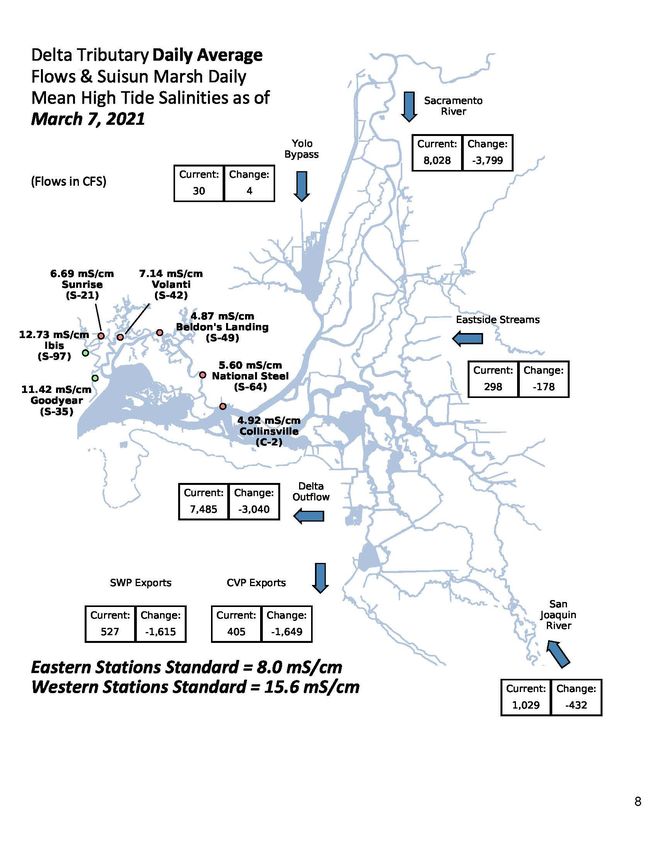
Land of the West Wind
                                                                        SRCD UPDATE
                                                     Suisun Resource Conservation District Water Managers
  Quarterly newsletter of the Suisun
   Resource Conservation District
  Address: 2544 Grizzly Island Road           The Portable Pump Program contin-
          Suisun, CA 94585                    ues to aid and enhance marsh habitats.
      Telephone: (707) 425-9302
         Fax: (707) 425-4402                  SRCD has 9 twelve-inch pumps that
 Water Manager office: (707) 426-2431         are available for draining operations
     E-mail: srcd@suisunrcd.org               (leach cycles) on individual owner-
     Website: www.suisunrcd.org
                                              ships and state-owned lands.
              SRCD Staff                      We have had yet another dry winter
  Steven Chappell, Executive Director
 John Takekawa, Operations Manager            and are entering a second year of
     Kelli Perez, Office Supervisor           drought conditions. Coming as no sur-
Tim Edmunds, Biologist/Water Manager          prise to managers, salinity conditions
Phelan McKinney Biologist/Water Man-
                  ager                        in Suisun Marsh continue to rise
 Jeff Taylor, Biologist/Water Manager         quickly. More information on current
        Jesirae Collins, Biologist            salinity levels are listed on page 7.
    Marque Mouton, Caretaker LJI
          Board of Directors
      Tony Vaccarella, President
             (650) 365-1642                   The Lepidium (Pepperweed) Spray
        Terry Connolly, Finance               Program continues this year. If you
             (707) 864-1105                   have problems with this troublesome invasive plant, you may purchase the
     Arnold Lenk, Agency Relations
             (925) 284-3100                   control chemical Telar, a broad-leaf selective herbicide widely used to treat
           Jim Waters, Legal                  Lepidium. You may obtain Telar from SRCD or contact SRCD to arrange a
             (510) 409-3864                   certified applicator crew to spray your property. Hiring a spray crew to
        Mike Lewis, Personnel
             (707) 224-3824                   treat your club costs roughly $200 per acre. Unfortunately, there is no cost
           Associate Directors
                                              share available for the 2021.
             Dennis Becker
               Kurt Black                     If you have Lepidium in areas that are difficult to access or treat, SRCD is
            H. Kent Hansen                    continuing to test alternative treatments in 2021 including treatment with a
             Steve Roerden
               Lalo Kwiat                     a spray-drone. Contact Operations Manager John Takekawa (707-425-9302
           Directors Emeritus
                                              x 2) for more information.
               (*deceased)
            James Bancroft*
           Paul Crapuchettes*                 The Phragmites Spray Program will begin in mid April. SRCD will send
               Ray Lewis*
           Dr. William Coon*                  a program letter to the primary contacts for each club. If you wish to make
           Greg Palamountain*                 a chemical order, please contact: Tim Edmunds at tel: (707) 426-2431 ext. 302,
             Timothy Egan*                    cell: (707) 639-6689, or email: tedmunds@SuisunRCD.org
            Leland Lehman*
       SRCD’s public meetings are
       held at 2 PM on the second
    Wednesday of each month at the            The 2021 Preservation Agreement Implementation (PAI) Cost-Share
  Solano County Supervisors Chambers          Program will not be taking any new applications this year. Projects that
            675 Texas Street
          Fairfield, CA 94533                 were approved in 2020 and were carried over to this year will be cost-
                                              shared, but there

SRCD represents private landowners of
the Suisun Marsh at the Federal, State, and
local levels. Its historic goal has been to
achieve a water supply of adequate quality
so that preferred wetland habitat values
will be retained through appropriate man-
agement practices Through cooperation
with landowners and various agencies,
SRCD seeks to develop new programs
aimed at protecting and improving the
Suisun Marsh for future generations.

                                                                                                                    2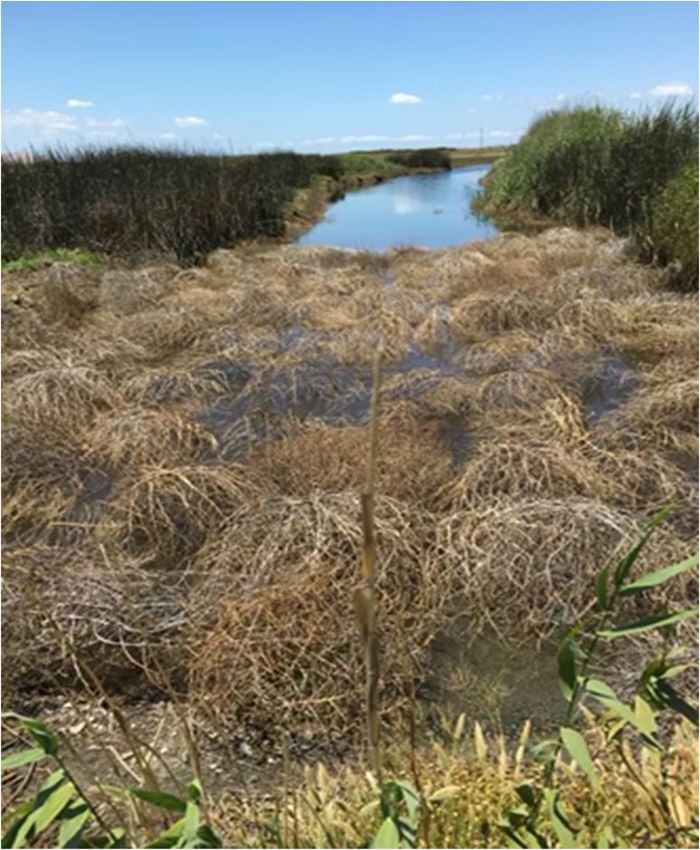
Summer wetland availability and salinity concentrations for ducklings
                           Josh Ackerman, Carley Schacter, and Sarah Peterson
             U.S. Geological Survey, Western Ecological Research Center, Dixon Field Station

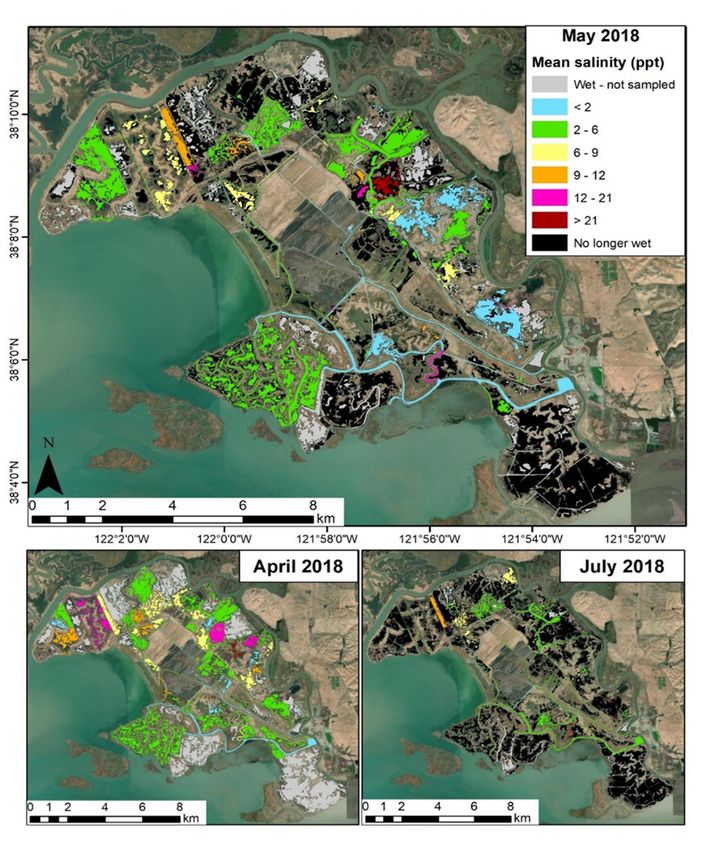
During the spring and summer, ducks need wetlands in
close proximity (2    2021). During a relatively dry year in 2018,
ppt), and salinities for up to 42% of the wetlands were      areas in black were wet earlier in the breeding
above levels associated with duckling mortality (>9          season (April or May) but dried up later in the
ppt). In May of the driest study year (2016), only 0.5       season (July).
km2 of low salinity water (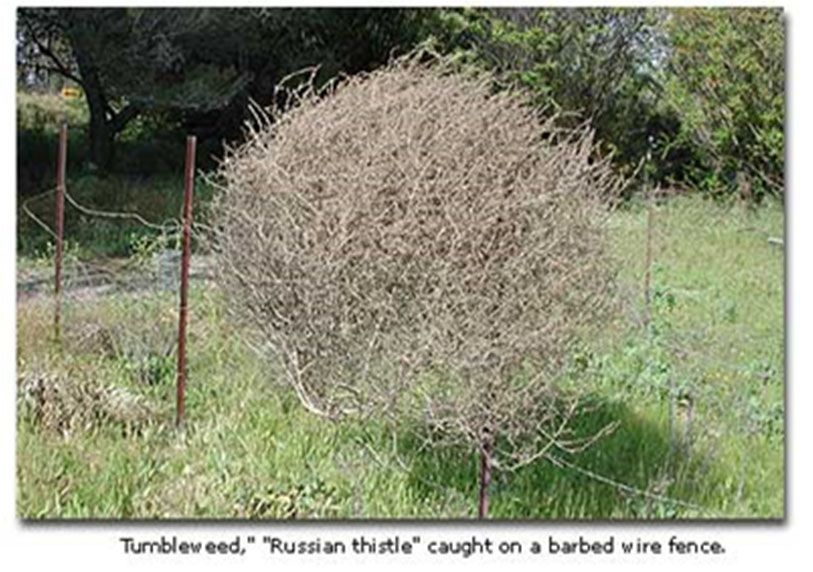
Russian Thistle, an Increasing Problem in Suisun Marsh
                        By Tim Edmunds, SRCD Water Manager

Battling invasive plant species and nuisance weeds is a struggle that everyone in Suisun Marsh
is well acquainted with. For years, Lepidium, cocklebur, aster, and especially Phragmites have
been problems dealt with through management practices that result in attrition or eradication of
some patches. However, these plants remain problematic in certain areas of the marsh, and con-
trol of these species will most likely always be an ongoing battle. Unfortunately, over the last
few years we have seen a new combatant enter the vegetative battle royal. Russian Thistle
(Salsola tragus) has quickly become a new threat in the southern, eastern, and central marsh.

What is Russian Thistle?
Russian Thistle is commonly known as tumbleweed. It
is a branched annual herb with a substantial taproot and,
unfortunately, abundant seed production. Most common-
ly, it has been found in disturbed and semiarid agricul-
tural areas. In prior years, you may have seen it along
highways or in rangelands, but now, you are able to spot
it on the drive to most duck clubs in the Marsh. Russian
Thistle can take over both high ground and low spots in
a pond, outcompeting more beneficial waterfowl food
plant species and producing spikey ground cover that is
difficult to walk through. It can clog ditches, preventing
adequate water flow and stopping boats from being able
to reach blinds. It has been observed to grow in pickle-
weed-dominated ponds as well as and in disturbed areas
such as levee backslopes.
Russian Thistle flowers in the summer to the early fall
and sets its seeds in the fall and then senesces. At that
point, the main stem of the Russian Thistle break off at
ground level, allowing the plants to disperse seeds as
they tumble with the wind. Most seeds germinate the
next spring, but seeds can be viable in the soil seed
bank for up to 3 years.

What are Options for Control?
Control of Russian Thistle can be difficult due to its
abundant seed production and its impressive ability to
disperse its seeds. Because Russian Thistle is a relatively
new problem, appearing sometime in 2013 but proliferat-
ing significantly since 2018, there are not yet tried and
true methods for control specifically tested in Suisun
Marsh.

                                                                                               4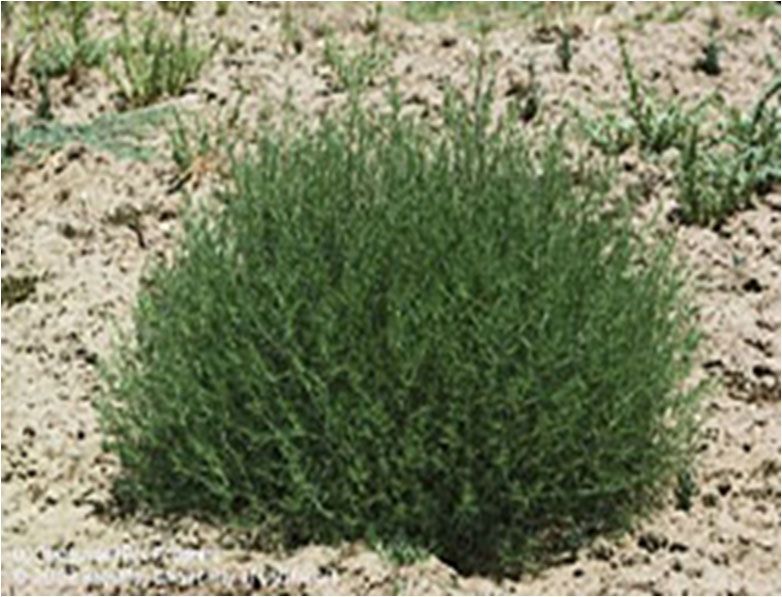
Russian Thistle continued…

What are Options for Non-Chemical Control?
Non-chemical control such as pulling, cutting, and disking can be effective, but are dependent
on the correct seasonal timing. Russian Thistle plants can be pulled out or hoed just below
ground level before seed set which is most effective for small infestations. Mowing older plants
tends to cause the plants to grow lower, but repeated mowing may improve control. Mowing
just before flower maturation has worked as a control practice in some cases, but it will need
more testing in the Marsh before becoming a recommended treatment. Mowing after seed set
(late summer) will simply disperse the seed. Tillage will control both seedlings and larger
plants, but to control an infestation, cultivation must be repeated until the short–lived soil seed
bank (3 years) becomes depleted. However, tillage increases disturbance which favors Russian
Thistle germination and establishment. Keeping ponds flooded and the immature thistle plants
inundated is effective, but keeping ponds flooded comes with drawbacks and may not be right
for all scenarios.
Chemical Control
Also, there are a few different chemicals that may work to control Russian Thistle before it
sprouts (preemergent) or after it sprouts (post emergent). UC Davis has published a weed report
on Russian Thistle at: https://wric.ucdavis.edu/publications/pubs.htm, and a link to this publica-
tion may be found on the SRCD website. This publication lists chemicals used to control Rus-
sian Thistle as well as the rate used and timing of application. Two of the chemicals in the pub-
lication that have been reported to work well are Garlon 3A and Telar XP. Garlon 3A is a post
emergent chemical and Telar XP is a preemergent chemical.
What Methods of Control should be Avoided?
Mowing after seed set will simply disperse the seed. It is for this reason that mowing in the late
summer and the early fall is not recommended. Avoid mowing in the fall. Most treatments
work better earlier in the year before the plant has had time to grow and become large and
tough. For example, hand pulling is relatively easy in the spring but almost impossible once the
plant has become large and spiky.

      SRCD Board Public Hearing on April 14, 2021 at 10:00 AM
      Individual Ownership Adaptive Habitat Management Plan Updates
Notice is given that the Suisun Resource Conservation District Board of Directors will hold a
special public hearing on April 14, 2021 at 10:00 AM regarding an Amendment to the SRCD’s
component of the Suisun Marsh Local Protection Program (LPP). The hearing will be conduct-
ed in accordance with 14 CCR § 11210(d). It will be held online through Zoom at URL: https://
us02web.zoom.us/j/84674081525 or by dialing: 1-669-900-6833 and entering code:
84674081525#.

SRCD Staff will recommend that the SRCD Board authorize revisions to each of the 120 exist-
ing private managed wetland water management programs and update them as Individual Own-
ership Adaptive Habitat Management Plans (Plans). The Plans identify multiple water manage-
ment program options and each private owner’s water management infrastructure in the Suisun
Marsh primary management area. This will be the first update of these plans since they were
first adopted in the 1980s.

A draft Plan, template supporting documentation, and appendices are available to review on the
SRCD’s website: https://suisunrcd.org/individual-management-plan-updates/ .

                                                                                                  5
SUISUN RESOURCE
                                  CONSERVATION DISTRICT’S
                  SPRING ANNUAL LANDOWNER WORKSHOP
                                    April 21th, 2021
                      Zoom Meeting Link: https://us02web.zoom.us/j/83323575651
 9:00 to 9:05    Welcome – Tony Vaccarella, President, SRCD Board of Directors

 9:05 to 9:15    SRCD Local Protection Program and Individual Management Plan Up-
                 dates – Steve Chappell and Jesirae Collins, SRCD

 9:15 to 9:25    2021 Preservation Act Implementation and Drought Response Status
                 – John Takekawa and Steve Chappell, SRCD

 9:20 to 9:30    2021 USACE RGP #3, LOP, and BCDC Marsh Development Permit – Jeff
                 Taylor and Steve Chappell, SRCD

 9:30 to 9:45    Sensitive Species Permit Requirements and Training (Jeff Taylor,
                 SRCD and Sarah Estrella, DFW)

 9:45 to 9:55    SRCD Water Managers and Pump Program – Phelan McKinney, SRCD

 9:55 to 10:05   Essential Fish Screen Update – Brett Williams, DU

10:05 to 10:20   Invasive Plant Update – Russian Thistle – Tim Edmunds, SRCD; Kent
                 Hansen, Goodyear Land Company, and Randy Mager, DWR

10:20 to 10:30   2021 Legislation Update – Bill Gaines, Gaines & Associates

10:30 to 10:40   Break (10 min)

10:45 to 10:55   Delta National Heritage Area – Blake Roberts, Delta Protection Commis-
                 sion

10:55 to 11:05   Wings Landing Tidal Restoration – Richard Skip Moss, Western Land
                 Group

11:05 to 11:15   Hill Slough Tidal Restoration – Sarah Estrella, DWR

11:15 to 11:25   DWR Bradmoor Tidal Restoration – Elaine Jeu, DWR

11:25 to 11:35   Tracking Wintering Waterfowl in Suisun Marsh – Austen Lorenz, USGS

11:35 to 11:45   Waterfowl Use of Tidal and Non-Tidal Wetlands – Mike Casazza, USGS

11:45 to 11:55   Spring and Summer Water Availability on Grizzly Island and Implica-
                 tions for Breeding Waterfowl – Sarah Peterson et al., USGS

11:55 to 12:00   Closing Comments and Adjourn – Steve Chappell, SRCD

                                                                                 6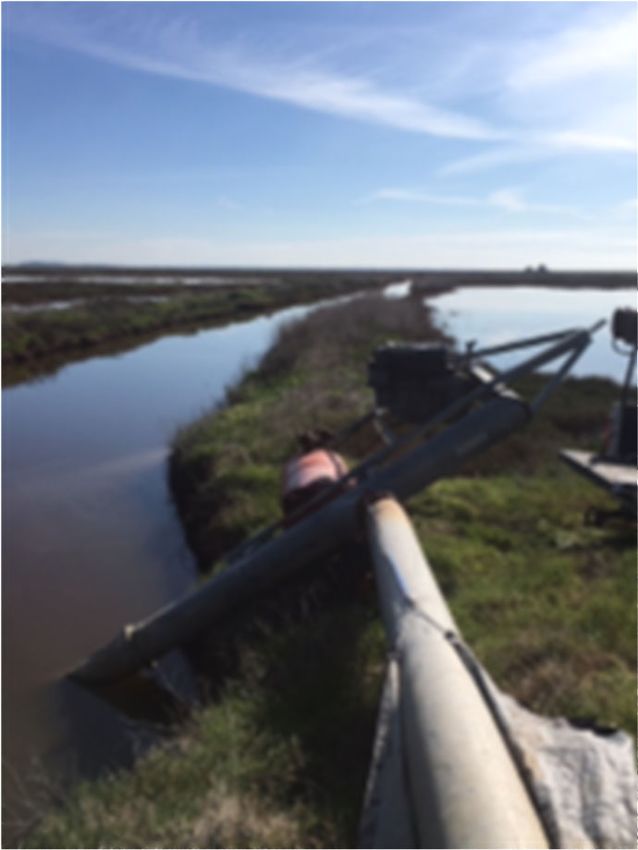
Water Salinity
Condi ons
By SRCD Water Managers
As we enter yet another low
precipita on year, salini es in
Suisun Marsh are high and are
likely to rise. Goodyear Slough
Sta on has already hit salini es
as high as 17 mS/cm in March.
For informa on on current sa-
lini es around the Suisun
Marsh and near your duck club,
check out the DWR daily salini-
ty readings at the monitoring
and compliance sta ons which
are posted on the SRCD web-
site at: h ps://suisunrcd.org/
hydrology/.
Keep salinity levels in mind as
you plan irriga ons, salt leach-
ing flushes, and other moist soil
management techniques. Salin-
ity is a crucial component for
the success of key food plants
for waterfowl. Late summer
water with low salinity may not
Landowner Diversion Restric on Reminder! be available in many areas of
The Spring Delta Smelt Unscreened Diversion Restric on is in effect the marsh this year, and drying
from April 1st to May 31st. Landowners are prohibited from opening out early is a good op on to
unscreened diversions more than 20% . The closure affects areas of de- prevent high soil salini es. The
termined cri cal smelt habitat, which include: SRCD Portable Pump program
Montezuma Slough can help!
Suisun Slough (From downstream of confluence with Boynton Slough
to Grizzly Bay) For all flushes and flood cycles,
Cutoff Slough including 1st & 2nd Mallard Branch and Sprig Branch remember to work around the
Sloughs Salmon and Smelt Diversion
Honker, Grizzly, and Suisun Bays Restric ons. The Smelt Re-
Goodyear Slough stric on will remain in place
SRCD will be checking all intake gates in the Delta Smelt restric on areas un l May 31st.
by boat during the monitoring period. Intake gate closure measurements
collected during past monitoring periods will be used to ensure compli-
ance during this period.
7
PRESORTED NONPROFIT
                                                                          U.S. POSTAGE PAID
                                                                           SUISUN, CA 94585
                                                                            PERMIT NO. 124

                                                           Address Correction Requested

                                Water Reporting Reminder!

Remember to fill out the diversion reporting for last year (2020). The deadline to report your
diversion is July 1, 2021. To file your diversion report, go to https://rms.waterboards.ca.gov
and login with your Water Rights ID and Password. Logins and passwords are included with
the letter that was mailed to you by the California Water Board. If you have questions on how
to file, SRCD Water Managers are happy to help you.

                                                   Phelan McKinney
Missing your Diversion ID and/or Pass-             (707) 631-0819
word? Contact the Office of the Delta Wa-          pmckinney@suisunrcd.org
termaster at the State Water Resources Con-
trol Board: Telephone: (916) 319-8264.             Jeff Taylor
                                                   Cell: (707) 639-6690
Contact your water managers for assistance         jtaylor@SuisunRCD.org
with diversion reporting.
                                                   Tim Edmunds
                                                   (707) 639-6689
                                                   @tedmunds@suisunrcd.org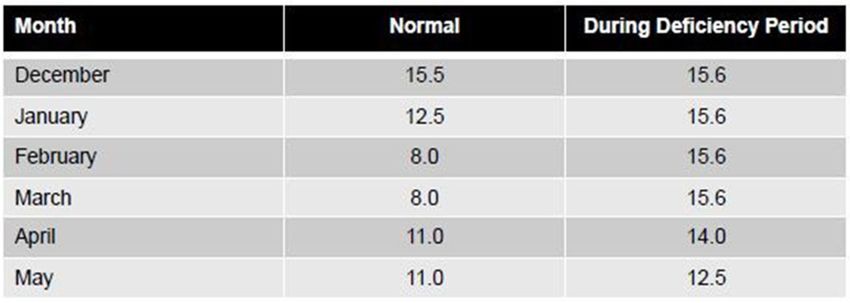
You can also read


