Leaving a legacy - strengthening society's wellbeing - Willmott Dixon
←
→
Page content transcription
If your browser does not render page correctly, please read the page content below
A N N U A L   R E P O R T   &   A C C O U N T S   2 0 1 7

                                     focus on quality

leaving a legacy

 strengthening society's wellbeing

                                                            01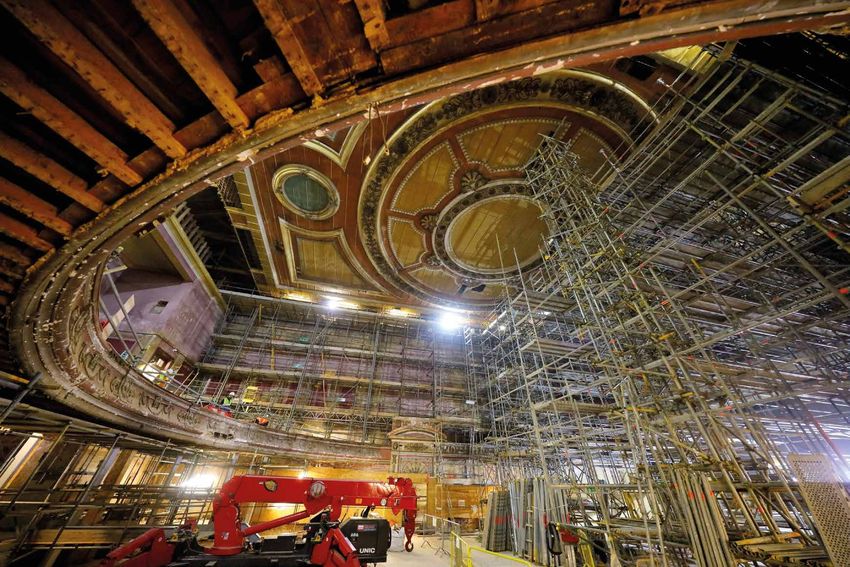
Contents

01 |   Company Information
02 |   Summary of Group Results
03 |   Group Strategic Report
03 |    Group Chairman’s Statement
15 |    Group Chief Executive’s Report
31 |    Principal Risks and Uncertainties
35 |   Sustainable Development
63 |   Directors’ Report
65 |   Statement of Directors’ Responsibilities
67 |   Independent Auditor’s Report

71 | Consolidated Statement of Profit and Loss
     and Other Comprehensive Income
72 |   Consolidated Balance Sheet
73 |   Company Balance Sheet
74 |   Consolidated Statement of Changes in Equity
75 |   Company Statement of Changes in Equity
76 |   Consolidated Cash Flow Statement
77 |   Notes to the Accounts

                                                     WILLMOTT DIXON ANNUAL REPORT & ACCOUNTS 2017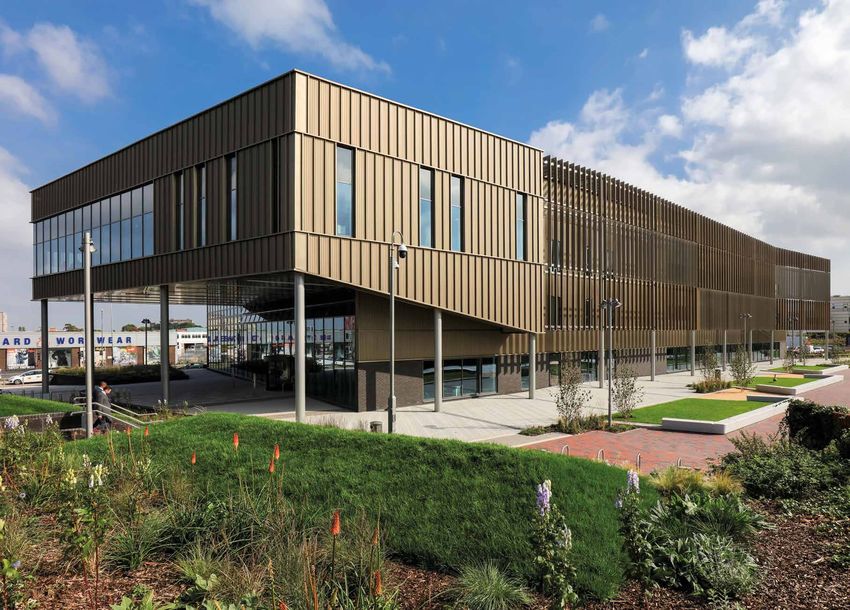
Willmott Dixon
Holdings Limited

                                Company Information                                                                                       Summary of Group Results

                                                                                                                                                                                                            2017        2016
                                                                                                                                                                                                            £000        £000

                                                                                                                             Turnover                                                                     1,296,414   1,222,999

                                                                                                                             Profit Before Tax Excluding Goodwill Amortisation                             35,528      31,149

                                                                                                                             Profit Before Tax                                                             33,510      27,960

                                     Colin Enticknap                        Rick Willmott                                    Net Current Assets                                                           130,866     150,391
                                              FRICS, FCIOB                                FCIOB
                                           Group Chairman                  Group Chief Executive
                                                                                                                             Shareholders’ Funds                                                          142,167     177,339

                                                                                                                             Cash And Bank Balances                                                        82,819      81,169

                                                                                                                                                                                             33
                                                                                                                                                                                              ,5
                                                                                                                                                                                              10
                                                                                                                                                                           27
                                                                                                                                                                             ,9
                                                                                                                                                                                 60
      Philip Wainwright             Jonathon Porritt                 Christopher Sheridan          Wendy McWilliams
                         ACA                           CBE                             FCIB, MSI                 LLB, ACIS
           Executive Director        Non-Executive Director               Non-Executive Director        Company Secretary

                                                REGISTERED OFFICE
                                   Spirella 2, Icknield Way, Letchworth Garden City
                                                 Hertfordshire, SG6 4GY

                                                        AUDITOR
                                               BDO LLP, 55 Baker Street
                                                 London, W1U 7EU                                                                        Profit Before Tax
                                                                                                                                                                                      2016         2017

01   WILLMOTT DIXON ANNUAL REPORT & ACCOUNTS 2017                                                                                                                                                                                 02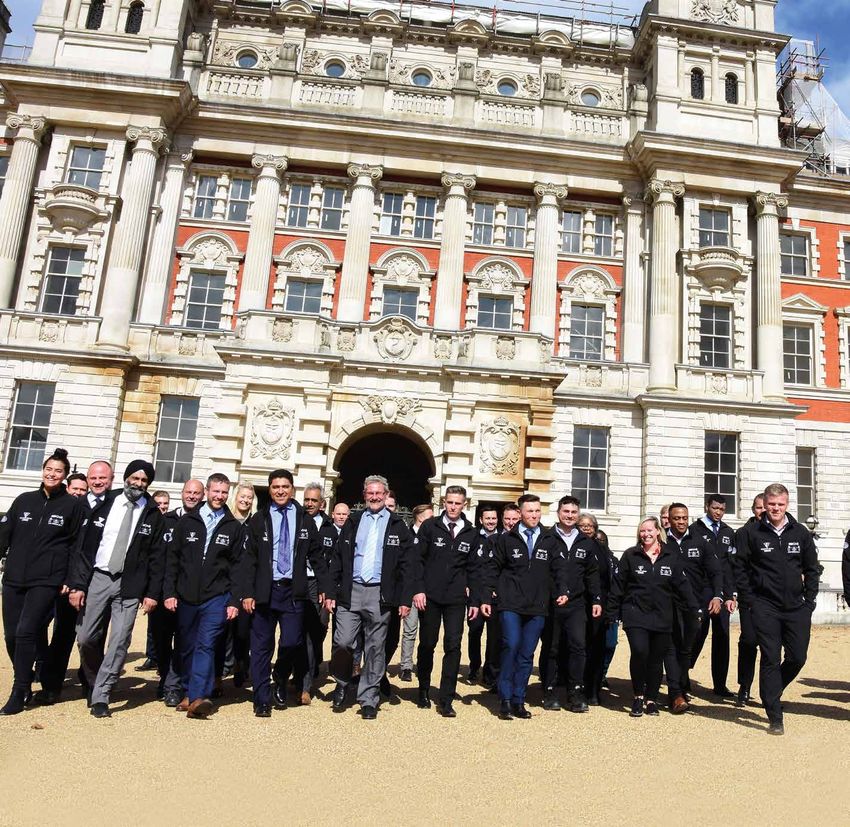
Our Interiors team are fitting-out over 11,000 square metres
                                                                                                                                                           of hospitality space in the newly modernised
                                                                                                                                                                        East Stand at Twickenham, the world
                                                                                                                                                                                    famous home of England Rugby

                           Overview
                           The Group’s overall financial performance for 2017
                           has been consistent with the position outlined in my
                           interim statement. In particular, I am pleased to report
                           that we delivered good growth, with increased turnover
                           from our contracting businesses more than compensating
                           for the demerger at the beginning of the year of the
     Colin Enticknap       Be Living Holdings (‘Be Living’) residential development
            FRICS, FCIOB
         Group Chairman    business and the Fortem active asset management business,
                           both of which have since been operationally independent
                           from Willmott Dixon Holdings (‘Willmott Dixon’) and made
                           no contribution to our 2017 figures.

                           Operational performance has been equally consistent, with
                           Willmott Dixon Construction (‘Construction’) continuing
                           to drive that growth and provide the bedrock for the wider                                   GROUP STRATEGIC REPORT
                           business. Whilst Construction’s business model has proved
                           extremely resilient over recent years, built upon nurturing an
                           excellent reputation amongst a carefully targeted customer base,
                                                                                                                   GROUP CHAIRMAN’S STATEMENT
                           most of whom choose to procure their capital projects through
                           long term frameworks, John Waterman and his team of regional
                           MDs refuse to be complacent; realising that continued success
                           demands constant evolution and improvement of their products and
                           services. As a result, the business is benefitting from its comprehensive
                           ‘Building on Better’ programme which has helped it to deliver its best
                           ever year and to leave 2017 in even stronger shape than it entered, with
                           the value of secured and probable workload (‘probable’ in this case being
                           defined as projects where we have already received orders for design and
                           enabling works and are just awaiting the final order) sitting at a record
                           £1,567 million.

                           That same emphasis and attention to detail is being applied to their
                           planned expansion into residential contracting, where they have inherited
                           significant opportunity from Willmott Partnership Homes (‘Homes’) following
                           the board’s decision last June to progressively wind down that business and
                           transfer its capability and future pipeline to Construction. It is too early to fully
                           judge how effective the change will prove, but there are encouraging signs that
                           recently launched residential projects are benefiting from stronger and more
                           rigorous control, and having been relieved of responsibility for new activity, the
                           small team charged with finally clearing Homes’ outstanding legacy issues seems
                           to have been given added momentum.

                                                                                                                                                           The National College of High Speed
                                                                                                                                                       Rail in Doncaster is just one of a series
                                                                                                                                                   of projects delivered in the Yorkshire town

03                                                                                                                                WILLMOTT DIXON ANNUAL REPORT & ACCOUNTS 2017                     04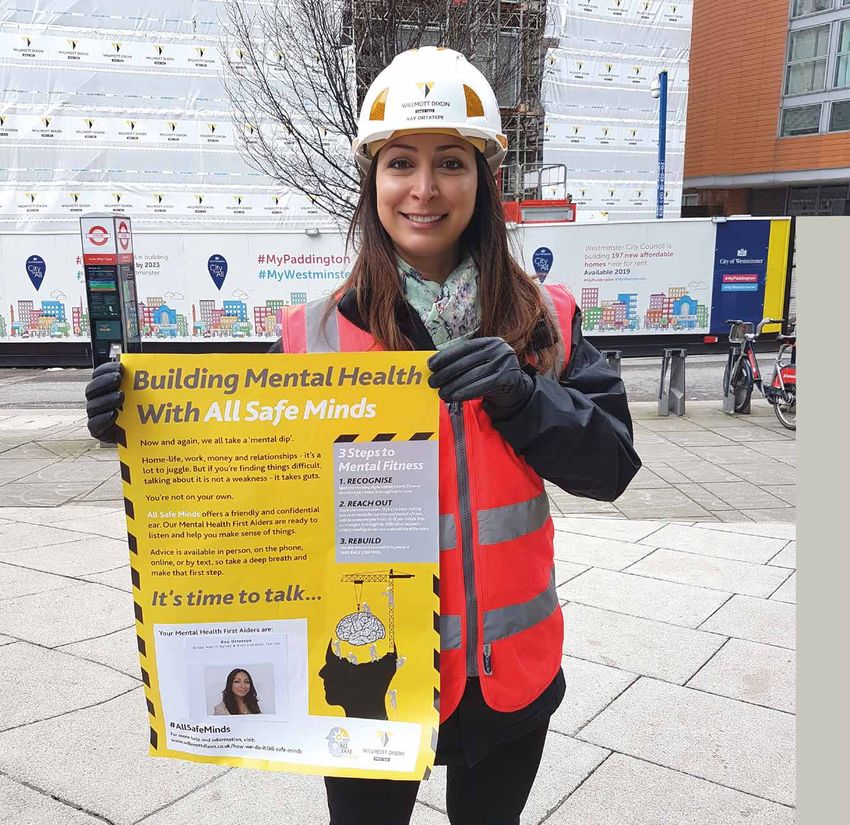
GROUP STRATEGIC REPORT
Group Chairman’s
Statement
CONTINUED

                                                    Our Interiors team are carrying out a complex refurbishment
                                                        of Canon Row at the House of Commons to create a new
                                                                            purpose for the former police station

                                                                                                                                  Overview (continued)
                                                                                                                                Interiors also delivered an excellent performance over the year, meeting or
                                                                                                                               exceeding most of its operational targets as it continued to grow in scale and
                                                                                                                              confidence under Mike Hart’s overall stewardship. There are clear signs that it is
                                                                                                                             now gaining greater traction through its accumulating track record, as well as an
                                                                                                                            important foothold in a number of market segments across both private and public
                                                                                                                           sectors, and a wider geographic reach. As a result, the business also left 2017 with
                                                                                                                           a strong order book of £201 million in secured and probable workload, as a result
                                                                                                                          of which the board has since given its consent to the imminent launch of a second
                                                                                                                         regional office in Birmingham.

                                                                                                                       And in strategic terms, with the organisational changes involving Be Living, Fortem and
                                                                                                                       Homes now behind us, we expect to benefit from a much simplified business structure
                                                                                                                      and much greater focus on our core contracting operations - where customer service,
                                                                                                                     product excellence, supply chain relationships and balance sheet liquidity are paramount,
                                                                                                                     and where we continue to perceive significant opportunity for self-improvement, growth
                                                                                                                    and value creation.

05   WILLMOTT DIXON ANNUAL REPORT & ACCOUNTS 2017                                                                                                                                                                  06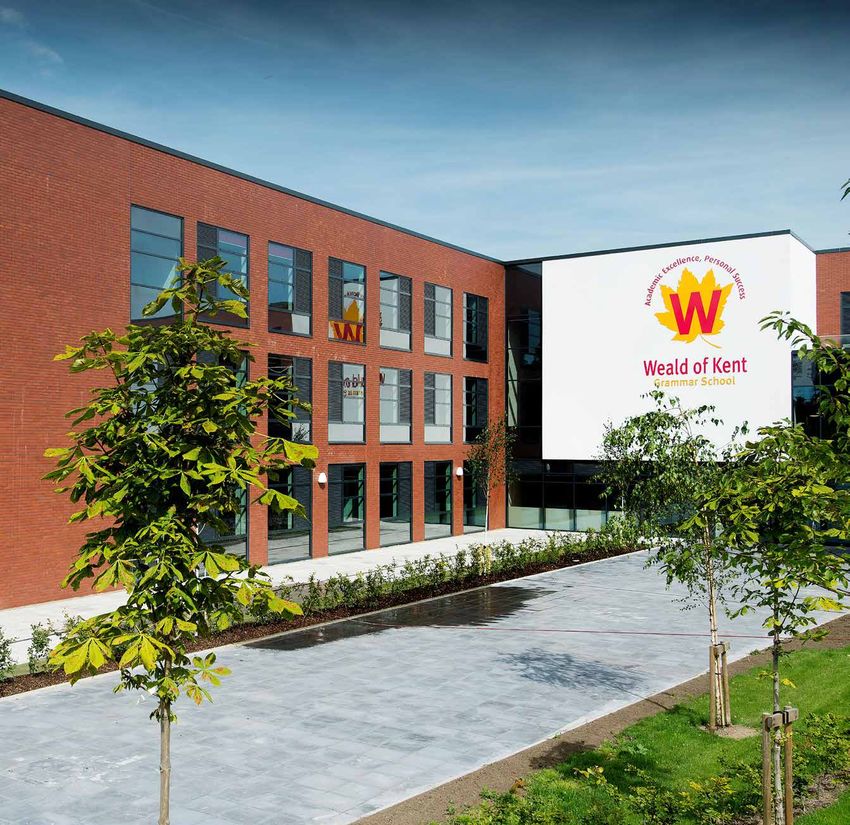
GROUP STRATEGIC REPORT
Group Chairman’s
Statement
CONTINUED

                                                                                                       Our annual Trainee of the Year awards recognise the huge
                                                                                                       contribution trainees make to our business; in 2017 it was
                                                                                                       won by Tom Arkley from Interiors

Results
2017 results have naturally been materially affected by the Group re-organisation
that took place at the beginning of January, with this year’s figures relating solely to
the Group’s contracting activity, whereas 2016 comparables relate to the previously
wider portfolio of contracting, development and total asset management businesses.

We were therefore delighted to see full-year turnover reach £1,296.4 million (2016:
£1,223.0 million), representing a material increase on last year even before adjustment
to eliminate the effect of discontinued activities and allow proper comparison. After
the appropriate adjustment, comparable growth in the year was a much greater 21%,
representing an excellent achievement.

Pre-tax profit before amortisation of goodwill also grew substantially to reach £35.5
million (2016: £31.1 million). After similar adjustment to eliminate the effect of
discontinued activities, comparable growth in the year was an impressive 32%. Whilst that
figure was exaggerated by £11.3 million (2016: zero) of profit flowing from the sale of the
subsidiary that holds Fortem as part of the reorganisation process, pre-tax profit before both
the sale of that subsidiary and also amortisation of goodwill, was still a satisfactory
£24.2 million.

Profit after tax, the figure that has greatest impact upon capital and reserves in our balance
sheet, was £29.6 million (2016: £21.3 million).

With Be Living and Fortem having been demerged, the consolidated balance sheet has
consequently been realigned to reflect only the retained contracting businesses. As at 31 December
2017, equity shareholders’ funds still remained at a healthy £142.2 million (2016: £177.3 million),
with approaching half of the adjustment reflecting a welcome reduction in intangible assets. Indeed,
cash and cash equivalents not only remained strong but improved, reaching £82.8 million (2016:
£81.2 million), and bank loans, which had previously related predominantly to development activity,
were reduced to zero (2016: £72.1 million).

Rick Willmott has expanded upon these and other important financial and operational measures within
the Group Chief Executive’s Report that follows.

07                                                                                                                                                                  WILLMOTT DIXON ANNUAL REPORT & ACCOUNTS 2017   08
Our role in building the first phase of
M-SParc in Anglesey, Wales’ first dedicated
science park, highlights our track-record in the
burgeoning science and technology sector

09      WILLMOTT DIXON ANNUAL REPORT & ACCOUNTS 2017   10
GROUP STRATEGIC REPORT
Group Chairman’s                                                                                                                After successfully delivering the 153-room Village Hotel in

Statement                                                                                                                                   Portsmouth, our team were appointed by the
                                                                                                                                                         same customer to construct another
CONTINUED                                                                                                                                                            Village Hotel in Bristol

Future
There is plenty of evidence from peer group reports and across the wider sector
that market conditions remain extremely tough, and with on-going uncertainty
about the post-Brexit world, we must expect that to remain the case for the
foreseeable future. It is, of course, no coincidence that the changes planned over the
past few years and implemented over the past 12 months should hold us in good
stead over what might be a rocky economic period. Indeed, we believe we are now as
well-placed as we could reasonably expect to be for 2018, with a simplified structure, a
robust order book, a visible future pipeline, and a more liquid balance sheet.

We will naturally need to remain cautious, organisationally nimble and prepared to
respond quickly to evolving circumstances, but our main emphasis will continue to be
centred around developing, expanding and nurturing our crucial platform of framework
opportunities. The Scape framework, now in its fourth iteration, is particularly significant
to us because of its national coverage across a wide variety of schemes valued at up to
£20 million. We are aiming to supplement that with a second national framework offering
the potential to expand coverage to schemes valued above £20 million, both of which would
then sit very comfortably alongside our wider portfolio of other frameworks - each of which
is equally important to us, but more geographically or sector-focused.

We also take great comfort from our future success continuing to be driven by a superb team
of very talented people, undoubtedly amongst the best in their field, who work unbelievably
hard and with unstinting professionalism and enthusiasm to make Willmott Dixon what it is -
an organisation not just characterised by financial and operational success, but also by an
overarching commitment to conduct business in a sustainable and responsible manner and with
a positive impact on the communities in which we operate - often through or with the support
of the Willmott Dixon Foundation.

I am pleased to say we have many examples of that commitment bearing fruit, the latest being
recognition through a second Queen’s Award for Enterprise, this time for ‘social mobility’ under a new
Promoting Opportunity category. We are understandably very proud of that achievement, but even
more so of the enormous impact our efforts through the Foundation are having on the life chances of
thousands of young people.

Finally, I am personally very grateful to Rick for the sound, stable and experienced leadership he brings to the
Group, to my board colleagues for their frank and open advice and support, and most of all to our COOs, MDs,
functional heads and all their respective teams across the country for their huge contributions during 2017.

                                                        Colin Enticknap
                                                        Group Chairman

11                                                                                                                 WILLMOTT DIXON ANNUAL REPORT & ACCOUNTS 2017                      12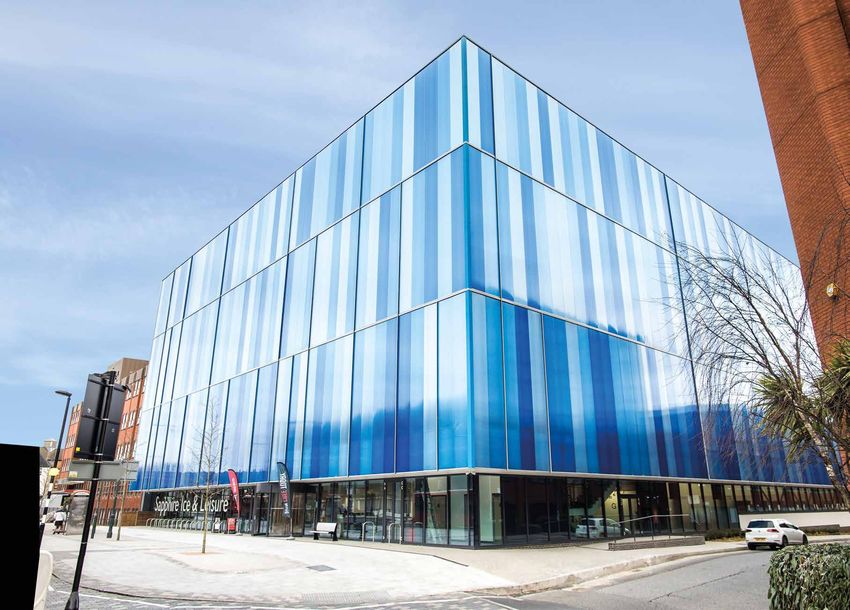
The Sapphire Ice and Leisure Centre is a
key part of Romford’s regeneration. With
an ice rink at the top that is the new home for
the London Raiders, it further underlines our role
as a major constructor of leisure facilities

13      WILLMOTT DIXON ANNUAL REPORT & ACCOUNTS 2017   14
We are using our skills for mixed-use accommodation to
                                                                                                                                            build Dudley House for Westminster City Council, providing a
                                                                                                                                                22-storey residential block, secondary school, key worker
                                                                                                                                                            accommodation, retail and leisure space,
                                                                                                                                                                          all in one development

                             Overview
                             In last year’s report to shareholders I highlighted the
                             structural changes that we had made to refocus ‘our’
                             company as a contractor, having de-merged Be Living
                             and Fortem from Willmott Dixon Holdings on the
                             1st January 2017. The successful results of those changes,
                             including further growth, are recorded in these reports
      Rick Willmott          and accounts, with both residential development and
                    FCIOB
     Group Chief Executive   active asset management activities now being reported
                             separately elsewhere. This report therefore concentrates
                             exclusively on our Construction and Interiors companies.

                             It is evident, when reviewing peer businesses, that there is
                             a growing trend towards the simplification and de-layering
                             of organisations and their associated market interests. I am
                             pleased to say that, whilst some are waking up to that need                             GROUP STRATEGIC REPORT
                             and some are planning for it, there are few that have considered,
                             planned and delivered such restructuring in order to be best
                             placed for the inevitable changes in how our industry operates.
                                                                                                              GROUP CHIEF EXECUTIVE’S REPORT
                             I have previously referenced the challenge of operating in a volatile
                             UK construction market. Particularly so, as we contemplated the
                             effect of Brexit on our supply chain’s workforce and the impact of
                             exchange rates on the costs of imported materials and products. We
                             are relatively confident that these specific matters are now better
                             understood and indeed ‘priced in’ to our workload, assuming the
                             execution of a ‘soft’ Brexit in 2019.

                             Brexit-related concerns have, however, been materially overshadowed
                             by two key events of national interest. Each will have, for different reasons,
                             far-reaching consequences for the UK construction industry.

                             The Grenfell Tower tragedy has raised significant awareness of the
                             complexity, interpretation, contradictions and ambiguity of Building and
                             Fire Regulations in the UK, particularly in high-rise construction. Matters of
                             this importance require absolute clarity and we therefore look forward to the
                             publication of the full Hackitt Review, which we hope will provide a route map
                             to ensure greater consistency of regulation and integrity of design to deliver
                             high-rise safety in the built environment.

                                                                                                                                                             Our track-record for restoring major
                                                                                                                                                          heritage landmarks is being further enhanced
                                                                                                                                                     at Alexandra Palace, where we are bringing the
                                                                                                                                                 East Wing back to life

15                                                                                                                                WILLMOTT DIXON ANNUAL REPORT & ACCOUNTS 2017                       16
GROUP STRATEGIC REPORT
Group Chief Executive’s
Report
CONTINUED
Overview (continued)
The collapse of Carillion, in early 2018, has sadly highlighted so many issues that
can go wrong in ‘big’ business, but in this instance to the detriment of the UK
construction industry – where questionable payment practices and short-term
decision making, judgment and fiduciary duty have not only led to the demise
of a once great business, but also a further blemish on one of the country’s most
important industry sectors. The most immediate effect has been an understandable
decline in appetite for exposure to the construction sector from the bond, banking
and professional indemnity insurance markets, resulting in cost escalation in fees and
premiums and, for some, it may even lead to the withdrawal of facilities.
With these salutary facts in mind, the emphasis of my report now turns to the operational
performance and activities of our two exceptional operating companies: Willmott Dixon
Construction (‘Construction’) and Willmott Dixon Interiors (‘Interiors’), within
Willmott Dixon Holdings (‘Willmott Dixon’).
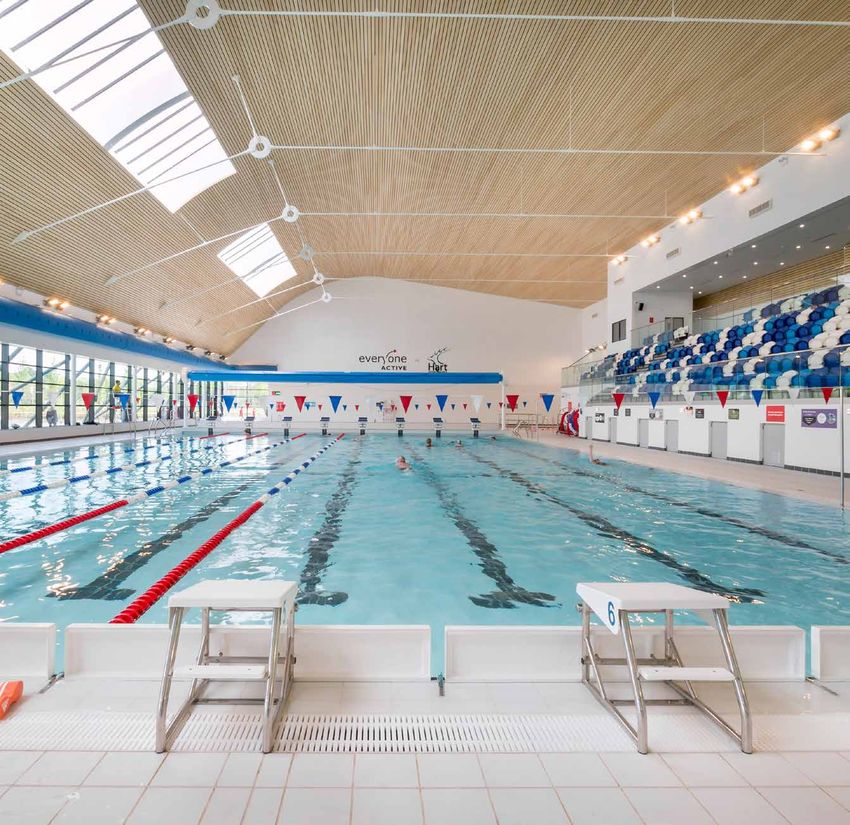
Hart Leisure Centre in Fleet was a key
building block for growth in the mid-
Southern Home Counties, which also included
launching the Farnborough office to target an
increasing pipeline of opportunities in Hampshire,
Berkshire, Wiltshire and Dorset
17 WILLMOTT DIXON ANNUAL REPORT & ACCOUNTS 2017 18GROUP STRATEGIC REPORT
Group Chief Executive’s
Report
CONTINUED
2017 Group Highlights
∇∇ Completion of Group streamlining by amalgamating residential contracting with Construction,
supplementing the January restructure
∇∇ A new Local Construction Office launched in Farnborough, with a strong order book
and already making a healthy positive margin contribution
Our successful collaboration with
Blueprint and Nottingham City ∇∇ A further potential for the Group to deliver up to £2.25 billion through our third renewal
Council at Trent Basin to build 45
homes has seen our residential
of the Scape framework, now in its fourth iteration
team now appointed on phase
∇∇ A carbon neutral group for the fifth successive year, unmatched in our sector and reaching
two to build a further 31 homes
our 2020 carbon target three years early
∇∇ Further improvements in Health and Safety performance with Accident Frequency Rates
reduced to AFR 0.1
∇∇ Leading on gender equality aspirations for the future and industry awareness
∇∇ Creating a lasting legacy through social value with over £2 million invested annually nationwide
∇∇ One of the market leaders in payment practices with our supply chain and spearheading
action to prevent Modern Slavery in our sector
∇∇ Awards and Industry recognition:
- Listed as one of the UK’s Most Admired Companies by Management Today
- Winner of a second Queen’s Award for Enterprise, this time for social mobility
- Voted the Southern Construction Framework’s Contractor of the Year for the
second successive year
- Best Company to Work With – Construction Enquirer Awards
- A Sunday Times Best Company
19 WILLMOTT DIXON ANNUAL REPORT & ACCOUNTS 2017 20We have combined skills from our Construction and Interiors companies to transform the iconic Old Admiralty Building into the Department for Education’s new home 21 WILLMOTT DIXON ANNUAL REPORT & ACCOUNTS 2017 22
GROUP STRATEGIC REPORT
Group Chief Executive’s
Report
CONTINUED

Construction
Turnover £1,168m, 2016 £973m

Construction’s journey of improvement under John Waterman’s leadership and
‘Building on Better’ strategy continues apace. Every key performance metric, be
that financial, behavioural or strategic, has been met or surpassed in the year.
Importantly, there remain a number of additional marginal gains to be made that will
continue to enhance the quality of our product, service and financial performance.

John and his seven managing directors have an average service with the company in
excess of 22 years each. These are individuals who have ‘grown’ within our business
into their roles. This sort of loyalty, experience and commitment, backed by exceptional
performance, can only be evolved, not bought, and is an outstanding feature that sets
Construction apart from its industry peers.

Part of John’s vision for Construction has been to insist that our customers are put first,
that they are served with skill and purpose, their opinions sought and their feedback heard
and responded to. Across Construction customer satisfaction scores are running at 86%, with
over 80% confirming a desire to work with us again or to recommend our services to others.
To support this drive we have created a School of Account Management, to further the skills
of our people in the vital area of customer service.

Critical to John being able to create these positive changes has been the sustained use and
growth of public sector procurement frameworks. The majority of these now clearly recognise
the importance of early contractor engagement, and the award of a place on any framework
being justified more through capability, capacity, evidenced quality and social value commitment
rather than price. In a business focused on customer satisfaction and margin generation, rather than
growth, these frameworks have been a source of optimism and inspiration. Most importantly, we
believe they produce the best outcomes for our customers.

As a result, our people are truly able to interact, design, engineer, build and satisfy customers in a way
that our sadly departed colleague Sir Michael Latham recommended in his ‘Constructing the Team’
report to Government some 24 years ago. He would have been proud of the journey travelled and
the ‘common purpose’ that has evolved between us, as contractor, and our customers.

Of course, Construction exists to successfully deliver capital projects for public and private customers in
many sectors and across a wide geography. Much of the change programme has sought to improve the
way that our teams work to improve management effectiveness in collaboration with our supply chain,
to streamline process through standardisation of systems and products and to increasingly ‘join up’ pre-
construction and operational delivery teams.

                                                                                                                                       Hounslow Waste Recycling Depot
                                                                                                                                   is another example of our expertise
                                                                                                                              for building industrial facilities

23                                                                                                            WILLMOTT DIXON ANNUAL REPORT & ACCOUNTS 2017               24
GROUP STRATEGIC REPORT
Group Chief Executive’s
Report
CONTINUED
Construction (continued)
This can be demonstrated through a range of solutions created to support
customer need:
∇∇ Adoption of the use of our leading range of standard products and
details in our ‘Yellow Book’
∇∇ The creation of a range of three standardised custody suites, under the
‘Code’ brand, for our police authority customers, with two live projects
under construction in Grimsby and Lincoln
∇∇ Adding a secondary school model and a sports hall model to our Sunesis
range of pre-designed regulation-compliant solutions
∇∇ Each solution created to reduce risk in procurement, project delivery
and solve the performance gap of completed buildings
Whilst Construction delivers upwards of 100 projects each year, those are not all new
buildings. Our business has a long-held and strong reputation for the renovation and
adaptation of historically important landmarks around the country, often resulting in a
complete change of use and the preservation of an iconic building.
Heritage buildings typically make up around £250 million of our workload each year, across
a range of sectors. Entertainment venues such as Colston Hall in Bristol, the Hippodrome in
Darlington, Alexandra Palace in North London and the Globe Theatre, Stockton are typical of
the scale and complexity of our projects.
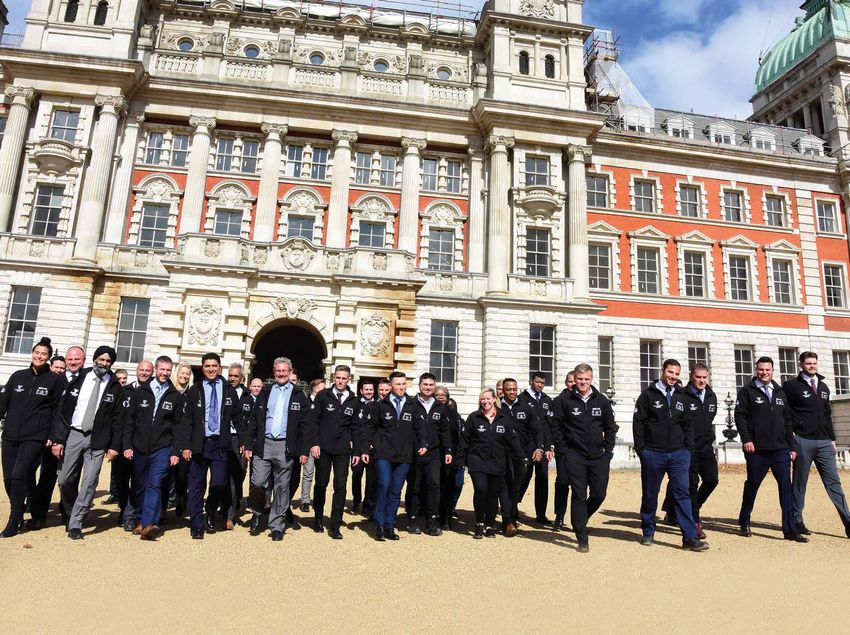
The £80 million transformation of the Old Admiralty Building in Whitehall into the head office of
the Department for Education and the amalgamation of a number of Grade II Listed buildings, with a
state of the art extension, to create The Box in Plymouth, are examples of strategic changes in use of
existing properties. In doing so, our project teams return value to often void facilities, translating them
into sustainable buildings offering exceptional performance, of which we are immensely proud.
The future for Construction within Willmott Dixon is strong and exciting; it is our past, our present
and our future, it is our DNA.
Our team delivered the first new
grammar school extension in 50 years,
with an annex in Sevenoaks to the Weald
of Kent Grammar School
25 WILLMOTT DIXON ANNUAL REPORT & ACCOUNTS 2017 26GROUP STRATEGIC REPORT
Group Chief Executive’s
Report
CONTINUED
Interiors
Turnover £128m, 2016 £101m
It is no coincidence that Interiors, under the astute direction of Mike Hart, has had
another year of steady planned progress and evolved to become a specialist asset
at the core of our ‘contracting’ offer to customers. Mike and his team have focused
their approach under the ‘Everything Completed with Pride’ philosophy and change
programme, which is central to the strategic plan for Interiors. Interiors’ aspiration is
to become the very best interior ‘fit-out’ business in the market place.
The company offers specific fit-out services to suit a range of customer needs, in a wide
array of differing properties and locations.
Interiors’ ‘Rollout’ teams work nationwide to remodel branded property portfolios; typically
in the banking, hotel and fitness sectors. These relationships and opportunities are cyclical by
nature, and often intense when commissioned to rollout a new ‘house style’ or brand concept.
Such changes are generally driven by brands responding to customer demands, technology
advances or new entrants to a brand’s market place.
But the majority of Interiors’ annual volume is made up of major project awards, currently biased
towards London and the South East. This workload is well balanced between public and private
sector customers and predominantly involves working within existing building envelopes.
As with Construction, the method of procurement utilised by an Interiors’ customer is considered
critical; the majority of the Group’s procurement framework appointments are accessible by both
Construction and Interiors, and there are increasing opportunities for both companies to work
together to deliver projects based on expertise and capability, rather than lowest price. This is perhaps
best demonstrated by the Old Admiralty Building, where Construction has been responsible for the
major structural conversion and enabling phase, whilst Interiors is appointed to fit-out and complete
each of the 600 offices.
The progress at Interiors over the last two years has been clearly evident in its financial performance, its
customer satisfaction and its high level of repeat business. Following the successful completion of the
office for the Department for Health and Social Care in central London, our teams have been requested
to continue their work at the Department’s administrative headquarters building in Leeds.
So, whilst to date Interiors’ business development focus has been rooted in London and the South East,
there are emerging opportunities across the rest of the country that should not be overlooked – and it is
in response to those that a new local delivery office has been established in Birmingham, to begin a new
phase of expansion that aspires to double the scale of the business by 2021, from a platform of customer
relationships that maintain both margin and volume consistency.
As I reported last year, succession and strategic planning is well advanced in this part of our Group, and Interiors carried out the refit of 1895-built
we look forward to its ambitious yet thoughtful advances in scale and geography. Bridge House on 181 Queen Victoria Street
to provide Grade A office space for the City of
London Corporation
27 WILLMOTT DIXON ANNUAL REPORT & ACCOUNTS 2017 28GROUP STRATEGIC REPORT
Group Chief Executive’s
Report
CONTINUED
We have now built over 100 homes in Doncaster
for the council as we work together to create a
new generation of homes for all tenures
Summary
We have demonstrated many times over the years that the act of
restructuring should not be seen as a negative response to an emerging
problem. Restructuring in Willmott Dixon is considered as a strategic step to
better achieve our corporate aspirations, by ensuring we deliver continuously
improved services and products for our customers.
So whilst we demerged former subsidiaries from the Group at the start of 2017,
our business has stepped forward in scale to remain not only one of the largest
private contractors in the UK but also one of the largest privately owned businesses
in the country.
This perennial success is driven by our people, who embrace our culture and the
values that we consider essential to the way we deliver our business goals. This is well
demonstrated by the commitment and achievements of each company in supporting
both sustainability and community investment initiatives, led by our Re-Thinking and
our Foundation teams. I remain astounded by their commitment and delighted by
their success.
I am sincerely thankful to all of our people and remain profoundly grateful to my
Board colleagues and our leadership teams around the Group for their continued
support and endeavour.
We look forward to another fulfilling year.
Rick Willmott
Group Chief Executive
29 WILLMOTT DIXON ANNUAL REPORT & ACCOUNTS 2017 30GROUP STRATEGIC REPORT Principal Risks and Uncertainties The principal risks and uncertainties facing the Group are outlined in the Group Chief Executive’s Report, namely: ∇∇ A volatile UK construction market. ∇∇ The impact of Brexit on our supply chain and exchange rates. ∇∇ Potential regulatory changes following the Grenfell Tower tragedy. ∇∇ A declining appetite for exposure to the construction sector from the bond, banking and insurance markets. In addition the Group is exposed to the ‘business as usual’ risks associated with its core operations: ∇∇ The operational delivery of large, complex projects in an industry characterised by low margins. ∇∇ Changes in the outlook for the UK economy and the impact on customer demand and supply chain costs. ∇∇ The credit risk associated with completing works ahead of being paid. ∇∇ The availability of sufficient skilled people. ∇∇ Competition in securing contracts and frameworks. ∇∇ The inflation risk associated with delivering fixed price contracts. ∇∇ The health and safety of our people in challenging operating environments. ∇∇ Changes in legislation or government policy. ∇∇ The impact of a material reduction in workload (in light of relatively high fixed operating costs). The board is confident that these risks and uncertainties are appropriately managed and mitigated by the Group’s strategies, procedures and commercial arrangements, through regular monitoring and by employing and continuously training people with the appropriate skills, qualifications, commitment and passion in their roles. By Order of the Board: Wendy McWilliams Secretary 25 April 2018 31 WILLMOTT DIXON ANNUAL REPORT & ACCOUNTS 2017 32
People are our biggest asset; they
     are the reason customers keep using
     us again and again

33    WILLMOTT DIXON ANNUAL REPORT & ACCOUNTS 2017   34
We joined up with the CIOB and our customer the Department
for Education to champion the diversity agenda at
the launch of Open Doors week in the
Old Admiralty Building
Making the
connections
between
Jonathon Porritt
diversity and
CBE
Non-Executive Director
sustainability
The beginning of the new financial year, when we verify our
sustainability data, gives us a good opportunity to reflect
on our achievements. And there were plenty in 2017. Our
remarkable reductions in carbon emissions and construction
waste intensity are rightly causes for celebration. Behind those
headline figures lies a lot of hard work, right across the business.
SUSTAINABLE DEVELOPMENT
However, I believe that our greatest achievement this year is the
way that our people have galvanised behind the issue of gender
diversity. This may, in part, be a reflection of the snowballing events
of the past year – whether it’s equal pay in so many sectors, the
realisation of the extent of the gender pay gap following mandatory
reporting, or the #metoo movement. But credit where it’s due: it’s
also because our business has taken a (long overdue) hard look at
itself, realised that current approaches weren’t working well enough,
and chosen a much more radical approach. Oh, and we’ve set ourselves
a pretty tough new target too: gender parity by 2030, at all levels in the
company, including Director level.
As someone who has spent most of their career campaigning on green
issues, I am sometimes asked why I get so exercised about gender diversity.
What’s it got to do with saving the planet?
Well, I would argue that gender is as much part of the sustainability agenda
as carbon or waste. Gender inequality is one of the worst stop-signs along
the road to social progress. We cannot tackle global issues like poverty, hunger
and violence until we sort out the fundamentals – the millions of girls denied
an education (and their children who grow up in poverty), parliaments where
decision-makers remain overwhelmingly male, the one in three women who are
victims of gender-based violence, the constant sexual harassment that remains
the norm in so many workplaces. Whether you think about this in terms of human
Senior project surveyor Hana Hassan
rights or of economic potential, the end result is the same: through oppression,
is just one example of a former trainee
discrimination, harassment and underpayment, we are ignoring the talent and
now progressing to a senior position within
potential of half the world’s population.
the company
35 WILLMOTT DIXON ANNUAL REPORT & ACCOUNTS 2017 36Sustainable
Development
CONTINUED
Improving gender equality in every walk of life is the right thing to do for the
greater good. But for us at Willmott Dixon, there are compelling reasons much
closer to home. As a business operating in a sector facing existential skills
shortages, it hardly makes sense to be “fishing” in just half of the talent pool.
There’s a lot of research showing a direct correlation between gender diversity
in leadership, operating profits and share price. Gender-diverse companies
significantly outperform their male-dominated competitors.
And there are many other, less tangible benefits. There’s strong evidence that teams
of people with more diverse backgrounds and perspectives make better decisions.
Men and women have different viewpoints, ideas, and market insights, which makes
for better problem-solving.
There’s also an interesting link between improving gender diversity and innovation.
Poor workplace gender diversity is partly due to what is often referred to as “unconscious
bias”. As a result of millions of years of evolution, we are instinctively drawn towards
people who are like us, and away from those who are different. If we’re not careful, these
subliminal prejudices affect our decisions everyday – including who we choose to hire
and promote.
Addressing unconscious bias means challenging our basic assumptions. Do I want to appoint
this person because of the unique skill-set they can bring to the job, or because they make
me feel comfortable? Is it necessary for everyone to work in the same way, or can we make
adjustments to accommodate the needs of different employees?
This culture of encouraging diversity and internal challenge quickly starts to permeate the way
we do our day-to-day business. Do we follow this process because it’s the right one, or is it just
because we’ve always done it this way? What would happen if we did it differently? It’s this
sort of thinking which makes us different, creative, innovative – and market leaders.
So I’m very proud of the progress that Willmott Dixon has made this year. But it’s just the start.
Ultimately, our aim must be to make our company a reflection of the society that we operate
in. Gender is just one of the areas that we need to tackle, if our company is to benefit from
the rich and varied talents which true diversity brings.
Jonathon Porritt
Non-Executive Director
Health and safety trainee Kay Ortatepe
is one of over 130 of our people trained as
mental health first aiders for sites and in offices,
as part of our ethos to safeguard the well-being
of our workforce
37 WILLMOTT DIXON ANNUAL REPORT & ACCOUNTS 2017 38Sustainable
Development
CONTINUED
2018 Highlights
Investing In Communities Developing Our People
∇∇ Well on track to meet our 2020 community target to ∇∇ World-leading employee engagement score of 79/100
enhance the life chances of 6,185 young people
∇∇ Came 14th in the Sunday Times Top 100 Companies
∇∇ The value of our community investment through the to Work For, and received a special ‘Giving Something
Our annual company bike ride for Willmott Dixon Foundation was £1.95m Back’ award
Action Medical Research again
raised over £50,000 to help this ∇∇ 80% of our people took part in community activities ∇∇
important charity find cures ∇∇ Nearly 47,000 hours of staff time volunteered on Leading The Sustainability Agenda
and treatments for medical
community activities
conditions affecting children ∇∇ Group CEO, Rick Willmott, was appointed a Trustee of the
∇∇ Our people raised nearly £200k for good causes UK Green Building Council
∇∇ ∇∇ Our people spoke at a range of industry events including
Reducing Carbon Emissions Ecobuild, UK Construction Week, CIBSE Build2Perform,
and BSRIA Soft Landings Conference
∇∇ Reduced our carbon emissions, relative to turnover, by
22% between 2016 and 2017, and by 58% since 2010, ∇∇ We developed an approach to understanding the total
smashing our 2020 target of a 50% reduction, three value of the contribution that our business makes
years early to society
∇∇ Carbon neutral for the 5th year running ∇∇ We were part of the discussion at the House of Commons
debate on the future of Social Value with Chris White
∇∇ Paid nearly £23k in green bonuses to employees choosing (author of Social Value Act)
low emissions cars
∇∇ We represented our industry at the Government Property
∇∇ Retained The Carbon Trust Standard Unit’s Soft Landings consultation meeting, and with Defra
∇∇ Still the only company in our sector to achieve The Carbon to influence its waste strategy
Trust’s Supply Chain Standard ∇∇ We published a range of sustainability blogs, films
∇∇ Average company car emissions 107gCO2/km and articles via a range of media platforms, including
the Aldersgate Group website and Public
∇∇ Executive Magazine
Reducing Waste
∇∇ Reduced construction waste relative to project turnover
by 11% between 2016 and 2017, and by 56% since 2012
∇∇ Diverted 97% of non-hazardous construction waste
from landfill
∇∇
Being A Good Neighbour
∇∇ Our average Considerate Constructors Scheme score across
all projects was 41.26 out of 50 – 14% higher than the
industry average
39 WILLMOTT DIXON ANNUAL REPORT & ACCOUNTS 2017 40Sustainable
Development
CONTINUED
Rick Willmott with the trainees who led teams delivering
our Trainee Challenge event for 2017. This saw a series of
projects carried out to improve the life opportunities of
people in their local communities
People
Community investment through
The Willmott Dixon Foundation
In 2013 we set ourselves an industry-first target: ‘to enhance the life-chances of
3,000 young people by 2015’. Our target energised our business and we met it
three months early. We then extended the target to 10,000 by 2020.
In early 2017, our residential and property maintenance businesses became separate
companies. We therefore split our target between Willmott Dixon and sister companies,
Fortem and Be. Willmott Dixon’s share of the target is to enhance the life chances
of 6,185 young people.
By the end of 2017 we had enhanced the life-chances of 5,112 young people and were 83%
of the way towards our 6,185 target. The financial value of the year’s community activities
was £1.95m – equivalent to nearly £900 per employee.
As part of our work to meet our target, we:
∇∇ Provided almost 900 work experience opportunities
∇∇ Attended 63 school and college careers events visited by nearly 12,000 young people
∇∇ Delivered over 1,000 mock interviews
∇∇ Visited over 60 schools and other organisations
An amazing 80% of our people took part in these and other activities in support of their
local communities.
2017 Management Trainee Challenge
We held our fourth Management Trainee Challenge in 2017, where trainees from across our business
identified, planned and delivered local community projects on behalf of the Willmott Dixon Foundation.
In 2017, eleven of our trainees entered the challenge. They were supported by 339 of their colleagues,
and at least 107 of our valued supply chain partners. As a result, local communities benefitted from
time, gifts and donations worth over £243k.
The winning challenge brought together colleagues, supply chain partners, a charity and long-term
homeless and socially-excluded people to refurbish Age UK’s Healthy Living Centre in Bermondsey.
41 WILLMOTT DIXON ANNUAL REPORT & ACCOUNTS 2017 42Sustainable
Development
CONTINUED
People (continued)
Calculating the value of our contribution to society
In order to better understand the value of the contribution our company makes
to society, we adapted the Crown Estate’s Total Contribution methodology. By
doing so, we were able to demonstrate that the annual net value of our societal
contribution is approximately £150m, making us almost Net Neutral.
Sustainable supply chain partners
Building stronger, more collaborative relationships with our supply chain partners
continued to be a key priority for 2017. Our Better.Together.Academy and our Product
Academy have provided platforms for our people and our supply chain partners to work
more closely together, tackling issues like modern slavery and gender diversity collectively,
so that we can learn and improve.
We are a founder member and partner of the Supply Chain Sustainability School and remain
committed to supporting this important and growing initiative. At the end of 2017, 1,472 of
our supply chain partners were members of the School, including 317 from our Category A list.
Modern Slavery Act
We have a key role to play in preventing hidden labour exploitation because many of the
estimated 11,000 people currently affected by modern slavery in the UK today work in
construction. In 2017 we launched Right to Work videos, in conjunction with the CITB, to provide
guidance to supply chain partners on how to check that their people have the right to work in
the UK. We trialled an audit process that can be used on sites. We also began to roll out training to
our people, so that they can spot the warning signs of forced labour and know how to report any
suspected incidences.
In 2017 we signed up to the Gangmasters’ and Labour Abuse Authority’s Construction Protocol. This
means that we have agreed to protect vulnerable workers, by sharing information with the Authority
and by working to raise awareness with our supply chain partners.
Our project teams regularly host visits from members of the
public to showcase the opportunities available by choosing
a career in construction
43 WILLMOTT DIXON ANNUAL REPORT & ACCOUNTS 2017 44Sustainable
Development
CONTINUED
We believe our people thrive when in mixed-gender teams that provide a
good balance of complementary skills. Women now comprise nearly 25 per
cent of our workforce and we are the first construction company to set a
target to achieve gender parity by 2030
People (continued)
We’re a Sunday Times Best Company to Work For
In 2017 we came 14th in the Sunday Times Best 100 Companies to Work For list,
and were awarded 3 stars. This is their top accolade, only achieved by companies
thought to be “extraordinary”. We were also awarded a special ‘Giving Something
Back’ award.
Gender balance and diversity
While we have always worked hard to ensure that we are a company where people are
given the opportunity to succeed – whoever they are and regardless of their background
– Willmott Dixon, like the industry in general, has a gender imbalance.
During 2016/17 we conducted a series of workshops with men and women from across
our business, and their feedback has helped shape our comprehensive gender diversity
strategy. We’ve been inspiring the next generation, through talks and workshops in schools,
to consider careers in construction. We’ve been challenging assumptions about the way we
work, trialling agile working practices in some of our offices and sites. We’ve been advertising
jobs on sites that women are likely to visit, and we’ve set targets for our management trainee
intake (our future leaders). In 2017 our target was 33% female. We achieved 38%. We are
aiming for 40% in 2018 and 50% beyond that.
In 2017 we became a headline partner for Construction News’ campaign ‘Inspire Me’, which aims
to improve gender diversity in the construction industry.
Two of our people were recognised at the 2017 Women in Construction Awards – director of
Re-Thinking, Julia Barrett, won the Green Leadership award, and assistant project surveyor,
Sarah Mills, won the Rising Star award.
Based on the work we started in 2016, we’ve already seen some improvement in our gender balance
– but we still have a long way to go to reach gender parity – particularly among more senior roles.
Gender diversity/ethnicity
2013 2014 2015 2016 2017
% female employees 21.2% 22.2% 21.7% 22.8% 24.3%
% workforce from minority
6.6% 6.9% 7.1% 6.9% 7.0%
ethnic backgrounds
45 WILLMOTT DIXON ANNUAL REPORT & ACCOUNTS 2017 46Sustainable
Development
CONTINUED
People (continued)
We are a Disability Confident Employer
Following our completion of a disability self-
assessment, we are now an approved Disability
Confident employer, and are able to use the badge
on our communications. The Disability Confident logo
replaces the ‘two ticks’ logo that we used to display.
We continue to be a member of the Business Disability Forum.
RICS inclusive employer
We have signed up to the RICS inclusive employer scheme. This
means that we have committed to drive behaviour change, and to
look carefully at our employment practices, to ensure that we place
inclusivity at the heart of what we do.
Supporting young people into the industry
Our industry needs more skilled people, so we are playing our part in developing the
construction workers of the future.
To encourage young people to consider a career within the construction industry, we are increasing
the number of work experience placements we provide and we are attending more careers fairs and
events at educational establishments. Our trainees have produced video blogs of their experiences at
Willmott Dixon, which we have posted on social media. These attracted over 14,000 views in 2017.
Our management trainee programme is a key way in which we are supporting young people into
the industry. Young people can enter the programme with or without a degree.
We aim to train up our management trainees as STEM or Construction Ambassadors. 152 of our
people are Construction Ambassadors and 12 are trained as STEM Ambassadors.
Management trainees and apprentices employed
2012 2013 2014 2015 2016 2017
Management trainees 87 100 99 123 119 134 The recent Open Doors week gave
hundreds of people the chance to visit our
projects, meet the teams and find out more
Directly-employed
7 17 13 5 3 8 about what we are building in their community
apprentices
47 WILLMOTT DIXON ANNUAL REPORT & ACCOUNTS 2017 48Sustainable
Development
CONTINUED
Jonathon Porritt and Rick Willmott join Ben Silsby and Anna Koukoullis,
who were declared our 2017 Sustainability Champions at the annual
Good Business awards
People (continued)
Members of the 5% Club
In 2015 we joined the 5% Club. As members of the club, we pledged that
by 2020 at least 5% of our workforce will be in formalised apprenticeships,
sponsored student or graduate development schemes. At the end of 2017,
7% of our employees fulfilled those criteria.
Being an employer of choice
Happy people are more efficient and productive, and play an important role as
ambassadors for our company. So we measure our people’s levels of engagement
with the business annually, through our staff survey, and with regular pulse checks in
between. Our 2017 employee engagement score was 79/100. This is a world-class score
– but we continue to strive for ways of ensuring we remain an employer of choice. All
feedback from our survey is analysed and comments suggesting possible improvements are
incorporated into forward plans.
Annual ‘Your Say’ Staff Survey employee engagement score (weighted score out of 100)
2012 2013 2014 2015 2016 2017
74 75 77 79 80 79
Both our Construction and Interiors businesses hold the Gold Investors In People accreditation.
Personal development of all employees
Continuous learning is critical to the success of our business, and we continue to lead the industry in
the amount we invest in the development of our people. The £3.1m we spent in 2017 represents over
£1,500 per employee.
Total amount spent on employee learning and development
Inspiring our people
2017 saw us roll out more training to our people 2012 2013 2014 2015 2016 2017
on a range of sustainability topics, including Selling
Sustainability, Designing Out Waste, Tackling the £1.1m £1m £1.5m £1.8m £2.5m £3.1m
Performance Gap, and Biodiversity. At our 2017
Superpowers for Sustainability Leaders conference In 2017 we introduced My Learning, a new learning management system, which enables our people to
we brought together our sustainability teams and take ownership of their development and access the training they need directly. My Learning has helped
representatives from across the business, to share our people take a more holistic approach to their regular meetings with their line managers, where they
best practice and celebrate successes. are prompted to reflect on work challenges and their own personal wellbeing.
49 WILLMOTT DIXON ANNUAL REPORT & ACCOUNTS 2017 50Sustainable
Development
CONTINUED
Project Sustainability
Health and safety Considerate Constructors Scheme We continue to encourage our people to report any potential
environmental issues they spot (observations), because we
Safeguarding the health, safety and welfare of our employees, those who work with We are associate members of the Considerate Constructors know that a culture of openness, where everyone recognises risk
us and anyone affected by our works, is always a top priority. Our core belief is that Scheme, and register all our eligible sites. Contractors signing and sees it as their responsibility to address it, is the best way
no one should suffer from ill health or an accident at work. up to the scheme agree to abide by its voluntary Code of to prevent incidents on site.
Considerate Practice, which covers site appearance, community
In 2017 we continued our work to promote a culture where everyone is prepared engagement, safety, care for the environment and care for
to speak up and challenge unsafe practices. In 2017, our accident frequency rates the workforce. 10 Point Sustainability Plan
went up slightly, but our overall trend is downwards. The statistics below include
sub-contractors as well as those directly employed by Willmott Dixon. Our 2017 average Considerate Construction Scheme score To support our Sustainable Development Strategy, each
across all projects was 41.26 out of 50 – 14% higher than the construction project has its own 10 Point Sustainability Plan.
industry average. The plan sets project-level goals and targets, which are widely
considered to be among the most challenging in the industry.
2014 2015 2016 2017 Projects starting before 2017 were expected to achieve at least
Considerate Constructors Scheme Score – average marks six of the plan’s ten points. From 2017, projects are expected to
Fatal 0 0 0 0 out of 50 across all projects achieve at least seven points, and at the same time, we set new,
harder targets for our projects. 73% of our projects achieved 7/10
Accident frequency rates* 0.17 0.19 0.08 0.11 points. Further analysis and discussions are now underway, to
2013 2014 2015 2016 2017 help us understand what we can do to improve in 2018.
* number of reportable accidents per 100,000 hours worked.
Willmott Dixon Average 10 Point Plan score across all projects, out of 10
In 2017 we launched a new and innovative campaign to improve mental health on our sites. Considerate
All Safe Minds aims to combat the stigma associated with mental illness – particularly among 38.71 39.87 40.29 40.58 41.26
Constructors
men – and encourages our people, and those we work with, to seek help if they are experiencing average 2013 2014 2015 2016 2017
mental health issues such as stress or depression.
4.8 4.7 5.9 6.9 6.4
We also employed the health and safety campaigner Dylan Skelhorn as an All Safe ambassador.
Throughout 2017, Dylan has been giving talks to our people across the country, bringing his Industry
Considerate
hard-hitting message to all our construction projects, urging people to challenge any action that 35.16 35.51 35.59 36.00 36.12
Constructors
could potentially be unsafe. average
Environmental systems
We aim for 100% compliance with our environmental
management systems, and in 2017 we met all our legal
environmental obligations. However, there were a couple of
instances where we could have done better. We undertook
an investigation regarding water standpipe compliance at
one of our sites, and are sharing the resultant learning across
our business. Noise nuisance was another issue which came
up, despite us following industry standards. We are reviewing
our systems and processes, to make sure that they are fully
compliant with current legislation.
51 WILLMOTT DIXON ANNUAL REPORT & ACCOUNTS 2017 52Sustainable
Development
CONTINUED
Carbon
Our performance
In 2015 we set a new, industry-leading target to halve carbon emissions intensity
by 2020 (compared with 2010). Between 2016 and 2017 we reduced our
emissions intensity by 22%, meaning that since 2010 we have reduced emissions
by 58% – surpassing our 2020 target three years early.
The reductions are mainly due to improvements made by our site teams.
By ensuring early grid connections, they are reducing reliance on carbon-intensive
diesel (our diesel usage has halved since 2012). Emissions from business travel have
also decreased. Our people are choosing more fuel efficient cars, and initiatives like
videoconferencing, and deploying people on sites closest to where they live are also
having an impact.
Total emissions (tCO2 e)
2010 2011 2012 2013 2014 2015 2016 2017
Total Willmott Dixon emissions 14,141 14,239 14,337 13,659 11,449 11,294 9,227 8,568
Intensity - emissions relative to
15.8 15.7 15.7 15.2 13.8 10.1 8.6 6.6
turnover (tCO2e/£m)
Carbon Trust certification
In 2017 we were re-accredited to The Carbon Trust Standard. Companies which achieve the Standard
must show continuous improvement over a three-year period.
We also continued our pioneering work on The Carbon Trust’s Supply Chain Standard – for companies
managing emissions from their supply chain. We remain the only company in our sector to hold
this certification.
Connor Lambourne with Katrina Jinadu at
Age UK after he led a team that refurbished
the charity’s Lewisham and Southwark Healthy
Living Centre. The task, which included helping
disadvantaged, homeless and excluded women get
back into work by giving them work experience during
the refurbishment, won our 2017 Trainee Challenge
53 WILLMOTT DIXON ANNUAL REPORT & ACCOUNTS 2017 54For the second successive year, our company was again acclaimed the best to work
for at the Construction Enquirer awards. We gained more votes than
Sustainable any other company at the awards to win the ‘Best Main
Development Contractor to Work For’ category for companies
with turnover above £250m
CONTINUED
Carbon (continued)
Carbon-reducing initiatives in 2017
In 2017 we:
∇∇ P aid out nearly £23,000 in bonuses for employees choosing low emissions
company or private cars
∇∇ Continued to offer generous car share and bicycle mileage
∇∇ ffered employees public transport commute mileage at the same rate as
O
car commute mileage
∇∇ roadened the choice of electric cars on our company car list, offering substantial
B
bonuses for employees choosing them, to cover the cost of installing
home-charging points
∇∇ ontinued to prioritise electrical zoning and out-of-hours master switches on
C
our construction sites
∇∇ Increased the proportion of construction projects avoiding the need to use
carbon-intensive generators for temporary supplies
∇∇ Used hybrid generators
∇∇ Promoted agile working
∇∇ Reduced average company car emissions from 108 gCO2/km to 107gCO2/km
In 2016 we signed a deal to power all our offices, where we are responsible for energy A carbon neutral company since 2012
procurement, with renewable energy. In 2017 we turned our focus to sites. All of our new In 2017 we invested in three carbon-reducing projects to offset our 2016 carbon emissions.
grid-connected construction sites (where we are responsible for providing power supplies)
are now powered by renewable energy, and we are turning our attention to the remaining sites Working with Natural Capital Partners we chose projects which provide additional social benefits to local communities,
which are powered by other sources. in line with the aims of the Willmott Dixon Foundation.
All the projects we invest in undergo rigorous investigation to certify that they achieve measurable and permanent
Tackling the performance gap reductions in emissions. We self-declare our carbon neutrality according to PAS 2060 guidelines.
Reducing the gap between a building’s expected energy performance and its actual performance
in use is a key challenge for our industry. In 2017 we continued our work on a holistic approach to These are the projects in which we invested:
improving energy performance. Our ‘Energy Synergy’ approach seeks to improve certainty of outcomes
for customers through a systematic focus on energy performance – from design approach and modelling, ∇∇
Improved Ugandan cookstoves project
through to supply-chain partner knowledge and capacity. We also carry out a short post-occupancy Nearly all Ugandans rely on solid fuels such as charcoal or wood for cooking, which emit high
evaluation on each construction project, and complete more in-depth studies on selected key projects, to levels of CO2 and air pollution. This project subsidises the sale of cleaner, more efficient
help us improve future performance. cookstoves, and provides finance for those who cannot afford upfront costs.
∇∇ R
imba Raya Biodiversity Reserve
This project, on the Indonesian island of Borneo, helps to preserve carbon-dense
tropical peat swamps by conserving 47,000 hectares which were originally going
to be converted to palm oil plantations. Now the area has become an
important natural buffer for the Tanjung Puting National Park, protecting
many endangered species, including the Borneo orangutan.
∇∇ K
itambar Renewable Biomass Fuel Switch project
This project has helped the Kitambar ceramics factory in
north-eastern Brazil to switch their fuel source of
forest wood to renewable biomass, protecting
endangered ecosystems.
55 WILLMOTT DIXON ANNUAL REPORT & ACCOUNTS 2017 56You can also read


