Legendary Names Have Very Specific DNA in Common - Igor Naming Agency
←
→
Page content transcription
If your browser does not render page correctly, please read the page content below
Legendary Names Have Very Specific DNA in Common
Category-defining brand names all share a well-defined set of qualities. To
find your perfect name, you need to identify and seek out these qualities.

The key is to find a fresh way into the hearts and minds of your customers,
redefine and own the conversation in your space, and engage people on as
many levels as possible.

Before you begin, it is essential to decide what you want your new product
or company name to do for you. Create a job description for it:

                                     1
Name / Brand Development
The relative strengths and weakness of the four major categories of names
are discussed in this section:

1. Functional / Descriptive Product & Company Names
When descriptive names work: When a company names products and
their brand strategy is to direct the bulk of brand equity to the company
name. Examples of companies that follow this name strategy are BMW,
Martha Stewart and Subway.

When descriptive names don't work: When they are company names.
Company names that are descriptive are asked to perform only one task:
explaining to the world the business that you are in. This is an unnecessary
and counterproductive choice.

The downside here is many-fold. This naming strategy creates a situation
that needlessly taxes a marketing and advertising budget because
descriptive company names are drawn from a small pool of relevant
keywords, causing them to blend together and fade into the background,

                                 Page 2 of 26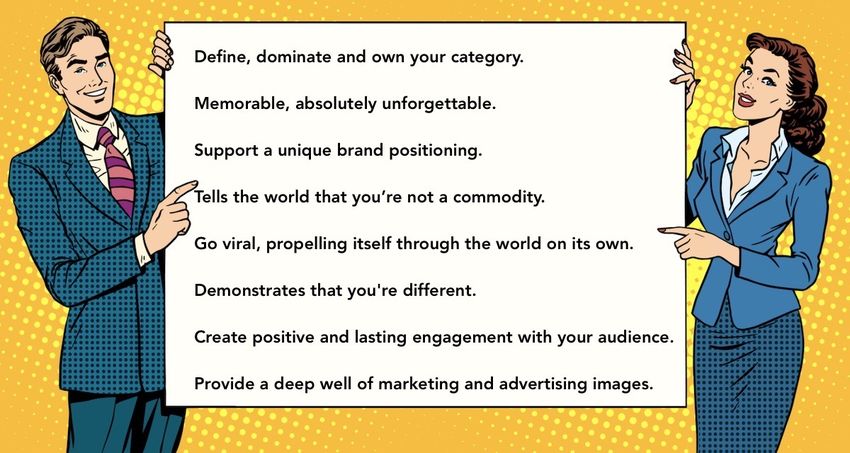
indistinguishable from the bulk of their competitors - the antithesis of
marketing.

As an example of the "brand fade out" caused by choosing descriptive
company names, consider the names of the following branding and naming
companies:

         Brand/Branding Companies          Name/Naming Companies

          Brand-DNA (.com)                 ABC Name Bank
          Brand-DNA (.net)                 Brighter Naming
          Brand A                          Moore Names
          Brand 2.0                        Name Development
          Brand Design                     Name Evolution
          Brand Doctors                    Name Generator
          Brand Evolve                     Name-It
          Brand Evolution                  Name Lab
          Brand Forward                    Name One
          Brand Juice                      Name Pharm
          Brand Ladder                     Name Quest
          Brand Link                       Name Razor
          Brand Maverick                   Name Sale
          Brand Mechanics                  Name Sharks
          Brand Meta                       Name-Shop
          Brand People                     Name Stormers
          Brand Positioning                Name Tag
          Brand Salt                       Name Trade

These kinds of company names are easily avoided if a thorough
competitive analysis is performed and if the people doing the naming
understand the following basic concept:

      The notion of describing a business in the name assumes that
      company names will exist at some point without contextual support,
      which is impossible. Company names will appear on websites, store

                                    Page 3 of 26
fronts, in news articles or press releases, on business cards, in
     advertisements, or, at their most naked, in conversations.

There are simply no imaginable circumstances in which company names
can exist without contextual, explanatory support, which means they are
free to perform more productive tasks.

2. Invented Product & Corporation Names
There are basically two types of invented names for products or
corporations:
      1) Names built upon Greek and Latin roots. Examples: Acquient,
      Agilent, Alliant, Aquent.
      The upside:

           •   These names breeze through the trademark process
               because they are unique, eliminating the potential for
               trademark conflict.
           •   For companies looking for a hassle-free way to secure a
               domain name without a modifier, this is a fairly painless
               route to go.
           •   They are free of negative connotations.
           •   Because these names are built upon Greek and Latin
               morphemes, they are felt to be serious sounding.
           •   For the above reasons, these are the easiest names to push
               through the approval process at gigantic global corporations.

     The downside:

           •   Because these types of names are built on Greek and Latin
               morphemes, you need the advertising budget of a gigantic
               global corporation to imbue them with meaning and get
               people to remember them.
           •   While they don't carry any direct negative messages, such
               names do cast a cold, sanitized persona.
           •   These are names with no potential marketing energy -- they
               are image-free and emotionally void.

                                 Page 4 of 26
2) Poetically constructed names that are based on rhythm and
the experience of saying them. Examples: Snapple, Oreo, Google,
Kleenex.
The upside:
• They breeze through the trademark process.
• Easy domain name acquisition.
• By design, the target audience likes saying these names,
which helps propel and saturate them throughout the target
audience.
• Highly memorable.
• Emotionally engaging.
• They are rich with potential marketing energy.
The downside:
• Tougher for a marketing department to get corporate
approval for. When making a case for a name based on
things like "fun to say, memorable, viral, and emotionally
engaging," you need to present a solid, quantifiable case.
Igor can show you how.
3. Experiential Product & Corporate Names
Experiential names offer a direct connection to something real, to a part of
direct human experience. They rise above descriptive names because their
message is more about the experience than the task.
For instance, in the web portal space, descriptive product names once
included Infoseek, GoTo, FindWhat, AllTheWeb, etc. Experiential names of
web portals include such product names as Explorer, Magellan, Navigator,
and Safari.
The upside:
• These names make sense to the consumer.
• They map to the consumer's experience with the company or
product.
• Because they require little explanation, experiential names are
easily approved in a corporate process.
Page 5 of 26• They work best for products within a brand strategy designed to
accumulate brand equity for both the company and the product.
• Experiential company and product names are most effective for
the early entrants in a business sector, becoming less effective for
later adopters.
The downside:
• Because they are so intuitive, experiential names are embraced
across many industries with high frequency, making them harder
to trademark.
• These are names that tend to be historically common in the
branding world.
• Their over-usage makes them less effective in the long run. The
similarity in tone of these names across an industry is indicative of
similarities in positioning. As web portal names, Explorer,
Navigator, Safari and Magellan are all saying exactly the same
things in exactly the same ways to exactly the same people.
Consequently, they aren't pulling any weight when it comes to
differentiating a brand.
4. Evocative Product & Company Names
One important way that evocative names differ from others is that they
evoke the positioning of a company or product, rather than describing a
function or a direct experience.
From the ride share sector:
RideCharge= Functional
Lyft = Experiential
Uber = Evocative
From the airline sector:
Page 6 of 26Trans World Airlines = Functional
United = Experiential
Virgin = Evocative
From the computer industry:
Digital Equipment = Functional
Gateway = Experiential
Apple = Evocative
The upside:
• A rare type of name, making it a powerful differentiator.
• Nonlinear and multidimensional, making it deeply engaging.
• Helps create a brand image that is bigger than the goods and
services a company offers.
• Trademark process is better than average.
• When created in sync with positioning, it is a branding force that
can dominate an industry.
The downside:
• When created out of sync with brand positioning, it's an ugly mess.
• Because evocative product and company names are created to
compliment positioning rather than goods and services, they are
the toughest type of names to get corporate approval for, being a
bit of an abstraction for those outside the marketing department.
Competitive Analysis
A competitive analysis is an essential early step in any naming process.
How are your competitors positioning themselves? What types of names
are common among them? Are their names projecting a similar attitude?
Do their similarities offer you a huge opportunity to stand out from the
crowd? How does your business or product differ from the competition?
Can you change and own the conversation in your industry? Should you?
Quantifying the tone and strength of competitive company names or
product names is an empowering foundation for any naming project.
Creating such a document helps your naming team decide where they
Page 7 of 26need to go with the positioning, branding and naming of your company or
product. It also keeps the naming process focused on creating a name that
is a powerful marketing asset, one that works overtime for your brand and
against your competitors. We display the results of a given sector of names
in the form of taxonomy charts.
Name Taxonomy Charts
We developed the name taxonomy format to bring an elegant simplicity to a
complex set of intertwined naming elements. The taxonomy chart keeps
the process focused on the competitive aspect, forces you to quantify both
the negative and positive attributes of each name under consideration, sets
a high standard for you to meet, and gives everyone involved a clean and
easy framework in which navigate the process
Women’s Yoga Wear Competitive Taxonomy
FUNCTIONAL INVENTED EXPERIENTIAL EVOCATIVE
5 Navel lululemon 5
4 Sweaty Betty 4
Lucy
Yoga Smoga Tonic
3 3
Athleta Teeki Electric Yoga
2 2
Onzie
Prana
Zella Mika
1 Lorna Jane Beyond Yoga 1
Alo Freya
WELOVE Lolë
Threads for Solow
0 Thought 0
Zobha
Page 8 of 26Airline Competitive Taxonomy
FUNCTIONAL INVENTED EXPERIENTIAL EVOCATIVE
5 Virgin 5
Ted
4 JetBlue 4
Jazz
Hooters
3 Aloha 3
Olympic
Go Song
2 Qantas* 2
Zip Frontier
1 Alitalia Vanguard Tower Air 1
Midway
Trans World
Pan American
Delta
Continental
0 United 0
American
Alaska
AeroMexico
Air France
British Airways
Northwest
Southwest
U.S. Airways
-1 -1
Eastern
America West
World Airways
Express Jet
ValueJet
-2 -2
AirJet
EasyJet
Page 9 of 26Project Workflow Competitive Taxonomy
FUNCTIONAL INVENTED EXPERIENTIAL EVOCATIVE
5 Slack 5
4 Basecamp Hive 4
3 GoPlan 5pm 3
Daylight
2 2
Huddle
Davinci
1 1
Merlin
Access FocalPoint
AceProject
AchievePlanner
Action Item Manager
Active Collab
Liquidplanner
MS project
ProTasker
ProWorkflow
ProWorkflow
Project Bubble
Project Cloud
Project Insight
0 0
ProjectManager.com
ProjectOpen
Projectplace
TeamWork Live
WORKetc
Work by Planbox
WorkOtter
Workbook
WorkflowMax
Workfront
Workgroups
Workspace
WorkZone
Accelo
Acheivelt
Acunote
-1 -1
Advanseez
Asana
Attask
Page 10 of 26SUV Competitive Taxonomy
This chart of SUV names reveals a singular positioning strategy that permeates most of
the brand names in this industry, resulting in the bulk of these names being assigned
low marks on this scale. It's not that the names themselves are poor, it's because the
names don't help to differentiate one vehicle from another; many of them are variations
on the same theme (rugged, outdoorsy) and not pulling any marketing weight. Why
does Suburban rate an elevated position? Because it's the most refreshingly different
and honest name in the Experiential category.
FUNCTIONAL INVENTED EXPERIENTIAL EVOCATIVE
5 Jeep Suburban 5
4 4
3 3
Hummer
2 Jackaroo Element 2
Jeepster
Amigo Avalanche
1 Xterra Aviator Cayenne 1
Sidekick Safari
Blazer
Discovery
Defender
Escape Armada
Excursion Frontier
Land Cruiser
Expedition Highlander
Overland
Explorer Matrix
Range Rover
0 Unimog Forester Passport 0
Pathfinder
Freelander Samurai
TrailBlazer
Mountaineer Silverado
Travelall
Navigator Tundra
Scout Typhoon
Tracker
Trooper
Wrangler
-1
4Runner Grand Vitara Envoy Aztek -1
Rav4 Korando Liberty Bordeux
Page 11 of 26Rendezvous Bronco
Tribute Cherokee
Comanche
Durango
Kahuna
Montana
Montero
Murano
Navaho
Rainier
Rodeo
Santa Fe
Sequoia
Sonoma
Sorento
Tacoma
Tahoe
Touareg
Yukon
CR-V
EVX
EX
LX 470
MDX
Bravada
ML55 Terracross
-2 Escalade Axiom -2
QX4 VehiCROSS
Sportage
SLX
SRX
X5
XC90
XL-7
FUNCTIONAL INVENTED EXPERIENTIAL EVOCATIVE
Page 12 of 26Positioning
The more specific and nuanced your positioning is, the more effective the
name will be. All great names work in concert with the positioning of the
business or product they speak for. The best positioning finds a way to
reinvigorate or change the conversation that an industry has been having
with its consumers.
Don’t confuse brand positioning with name positioning. Sometimes
the brand and the name carry an identical message and tone, while
some companies choose to have the name positioned to carry a very
different message and tone than the rest of the brand touch points.
The name Apple conjures simple, warm, human, approachable and
different. The rest of brand touch points communicate
While it's important to understand what competitors are doing in order to
act in a distinctive and powerful way, it's also useful to learn from their
mistakes and successes.
For instance, the company that became Apple needed to distance itself
from the cold, unapproachable, complicated imagery created by the other
computer companies at the time that had names like IBM, NEC, DEC,
ADPAC, Cincom, Dylakor, Input, Integral Systems, Sperry Rand, SAP,
PSDI, Syncsort, and Tesseract.
The new company needed to reverse the entrenched view of computers in
order to get people to use them at home. They were looking a name that
also supported a brand positioning strategy that was to be as simple, warm,
human, approachable, different with cutting-edge design with an upscale
price.
The name “Apple” doesn’t convey the entire positioning and in effect is
counter to “cutting-edge design with an upscale price”. That’s over.
Of course, once they had a clear positioning platform in place, there were
still hundreds of potential names for the new company to consider. The
process for finding that one perfect name is detailed in the next section.
Page 13 of 26NAMING TOOLS
Naming Process Filters – Evocative Names
One of the keys to successful company and product naming is
understanding exactly how your audience will interact with a new name.
Creating a filter that evaluates names in the same way that your target
market will is essential to both creating the best name possible and to
getting that name approved and implemented by your company. Since an
evocative name is one of the toughest to develop and obtain buy-in for,
we've detailed one of the necessary filters here.
The biggest challenge that evocative names face in surviving a naming
exercise is the fact that they portray the positioning of a company or
product rather than the goods and services or the experience of those
goods and services. Unless everyone understands the positioning and the
correlation between it and an evocative name, this is the type of feedback
that evocative names will generate:
Slack
• In business, Slack means “characterized by a lack of work or activity;
quiet”
• A Slacker is someone who works as little as possible. A terrible
message for our target audience
• Slack means slow, sluggish, or indolent, not active or busy; dull; not
brisk. Moving very slowly, as the tide, wind, or water. Neglect, reduce,
tardy
lululemon
• We are an upscale brand for women.
• lululemon sounds like a character from a 3-year olds’ picture book:
“lululemon and her best friends annabanana and sallystrawberry
were climbing Gumdrop Hill, when suddenly from behind a rainbow
the queen of the unicorns appeared…”
Virgin Air
• Says "we're new at this"
• Public wants airlines to be experienced, safe and professional
Page 14 of 26• Investors won’t take us seriously
• Religious people will be offended
Hotwire
• It has one meaning, “to steal a car!”
• Crime is the last thing we need to be associated with
Yahoo!
• Yahoo!! It's Mountain Dew!
• Yoohoo! It’s a chocolate drink in a can!
• Nobody will take stock quotes and world news seriously from a bunch
of "Yahoos"
Oracle
• Unscientific
• Unreliable
• Only foretold death and destruction
• Only fools put their faith in an Oracle
• Sounds like "orifice" – people will make fun of us
Clearly, the public doesn't think about names in this fashion, but internal
naming committees almost always do. Getting a committee to acknowledge
this difference and to interact as the public does is step one.
Having the naming committee evaluate evocative names based on their
positioning is the next step:
Virgin
• Positioning: different, confident, exciting, alive, human, provocative,
fun. The innovative name forces people to create a separate box in
their head to put it in.
• Qualities: Self-propelling, Connects Emotionally, Personality, Deep
Well.
Page 15 of 26Oracle
• Positioning: different, confident, superhuman, evocative, powerful,
forward thinking.
• Qualities: Self-propelling, Connects Emotionally, Personality, Deep
Well.
Slack
• Positioning: naming the problem we solve!
• Qualities: confident, different, focused on solving the target’s
problem.
Hotwire
• Positioning: a travel hack, exciting, fun. (Hotwiring a car is a hack,
that’s why this name works)
• Qualities: Exciting, different, memorable, viral
Name Evaluation
When considering potential names for your company, product or service, it
is vital that the process be kept as objective as possible, and that
subjective personal responses to names, such as "I like it" or I don't like it"
or "I don't like it because it reminds me of an old girlfriend/boyfriend" are
exactly that – subjective and personal, and have no bearing on whether or
not a potential name will actually work in the marketplace as a powerful
brand that supports all your positioning goals.
All well and good, but clients often ask us to be more specific, to explain
objectively just what makes a name work. With that in mind, we created a
straightforward way to dissect potential names into the following nine
categories to make it easier to understand why name work or don't work,
and to more easily weigh the pros and cons of one name versus another:
Page 16 of 26Appearance – Simply how the name looks as a visual signifier, in a logo,
an ad, on a billboard, etc. The name will always be seen in context, but it
will be seen, so looks are important.
Distinctive – Being distinctive is only one element that goes into making a
name memorable, but it is a required element, since if a name is not
distinct from a sea of similar names it will not be memorable.
Depth – Layer upon layer of meaning and association. Names with great
depth never reveal all they have to offer all at once but keep surprising you
with new ideas.
Energy – How vital and full of life is the name? Does it have buzz? Can it
carry an ad campaign on its shoulders? Is it a force to be reckoned with?
These are all aspects of a name’s energy level.
Humanity – A measure of a name’s warmth, its "humanness," as opposed
to names that are cold, clinical, unemotional. Another – though not
foolproof – way to think about this category is to imagine each of the names
as a nickname for one of your children.
Positioning – How relevant the name is to the positioning of the product or
company being named, the service offered, or to the industry served.
Further, how many relevant messages does the name map to?
Sound – Again, while always existing in a context of some sort or another,
the name WILL be heard, in radio or television commercials, being
presented at a trade show, or simply being discussed in a cocktail party
conversation. Sound is twofold – not only how a name sounds, but how
easily it is spoken by those who matter most: the potential customer. Word
of mouth is a big part of the marketing of a company, product or service
with a great name, but if people aren’t comfortable saying the name, the
word won’t get out.
"33" – The force of brand magic, and the word-of-mouth buzz that a name
is likely to generate. Refers to the mysterious "33" printed on the back of
Rolling Rock beer bottles that everybody talks about because nobody is
really sure what it means. "33" is that certain something that makes people
lean forward and want to learn more about a brand, and to want to share
the brand with others.
Page 17 of 26Do an A.S.S Count
Associations + Slogans Score - Let's say you've got two metaphorical
names under consideration for your new computer company, Apple and
Strawberry. Both names meet your brand positioning criteria:
Simple, warm, human, approachable, organic, disruptive.
Half your team champions Apple and the other half love the name
Strawberry. The names couldn't be more similar, so why not flip a coin and
move on? The Chief Obfuscation Officer calls for a month of testing,
reliably in the unreliable form of crowdsourcing or focus groups. At which
point you play the hero, jumping in and shouting, "I demand an A.S.S. test!"
- an ASSOCIATIONS + SLOGANS SCORE test.
When leading name contenders are locked in a battle, tallying up the
number of associations each have in our collective consciousness tells you
how emotionally connected people are to them. And reveals what each
brings to the table for marketing, branding and advertising campaigns.
Page 18 of 26Apple
• Garden of Eden (apple w/ bite logo)
• Isaac Newton (product name)
• William Tell
• Snow White
• The Tree of Life
• McIntosh (product names McIntosh, eMac, iMac, Power Mac,
MacBook, Mac Mini)
• One smart apple
• A bad apple
• Easy as apple pie
• An apple a day
• Apple of my eye
• Apple polisher
• Big Apple
• Apples and oranges
• How 'bout them apples?
• Apple doesn't fall far from the tree
• Upset the applecart
Strawberry
• Strawberry Fields
• Strawberry shortcake
• Strawberry blonde
Sometimes the positioning of the name your looking for is simply a single
big idea - an iconic, definitive name that captures the imagination.
This was the case for a B2B software startup we named, so the first and
winning tactic was to find a name that had the most cultural connections
that were really big ideas. The clear winner was Seven:
Seven
• Seven wonders of the world.
• Seven musical notes.
• Seven seas.
Page 19 of 26• Seven days a week.
• Seven continents.
• Seven deadly sins.
• Seven virtues.
• Seven colors of the rainbow.
• Seven chakras.
• Seven years of bad luck.
• Seven visible planets.
• Seven heavens.
• Seven dwarfs.
• Seven samurai.
• On the seventh day god rested.
• Lucky number seven.
Of course, there are many more, but you get the idea. Before we presented
Seven to our client, we needed to determine if Seven could possibly be
trademarked around the world, given the 700,000+ trademarked software
names globally. We came up with a strategy, and Seven is trademarked
worldwide. The ability to legally finesse a name like Seven is critical,
because naming is not simply about finding the best name for the job, it's
about finding the best name for the job that you can legally use.
Apple vs. Strawberry isn't a fair fight. But it's not always so lopsided. If the
A.S. portion of the test doesn't produce a winner, move on to Slogans. Put
two names side by side and see which inspires the most taglines that play
off the name.
None of the taglines anyone can remember actually play off the company
name, they're too expected and make the name one dimensional. Imagine,
"Virgin, A Brand New Experience" or "Apple, Easy as Pie". Deadly. But the
exercise does reveal the power, connectivity and relevance of an
unexpected name. Let's say you're naming a creative agency and a leading
name contender is:
Igor
• Igor. Bringing Your Vision to Life.
• Igor. Get Over the Hump.
• Igor. A Few Spare Parts and a Good Storm.
• Igor. Throw the Switch.
Page 20 of 26• Igor. A Moveable Beast.
• Igor. Own Your Shadow.
• Igor. No Job Too Horrifying.
• Igor. The Other White Meat.
• Igor. Never Say Die.
• Igor. A Good Brain Is Hard to Find.
• Igor. Alive!
• Igor. Better Living Through Science.
• Igor. Building the Perfect Beast.
BOTTOM LINE: The number or strength of ASSOCIATIONS + SLOGANS
that potential brand names generate tells you how emotionally connective
each name is and how much branding, marketing & advertising ammunition
they contain.
Don’t Fall for the Happy Idiot
If you’ve seen The Sting or an Ocean’s movie you know every con game
has a name. The Happy Idiot, as it’s known in professional naming circles,
is the reason ninety percent of agencies produce ineffective, forgettable
names that are a money sucking drag on your branding, marketing and
sales efforts.
Page 21 of 26It’s called The Happy Idiot because a naming, branding or advertising
agency deliberately delivers a name that’s a liability to a smiling client
who’s happy with the result. The Happy Idiot was designed to be the
fastest, smoothest route to client buy-in on a name, with the least amount
of effort by the agency. It came about because someone on the client side
will always object to some facet of the most powerful, memorable, effective,
interesting, conversation-owning names an agency presents. Rather than
pushback and take the time and effort to give the client the confidence that
a particular name is the best choice, the agency defers and smooths down
the edges until there is nothing interesting or effective left in the names
they are presenting.
The first step to protecting yourself is learning to spot The Happy Idiot.
There are three variants: The Happy Idiot, The Happy Idiot with a
Passport and The Happy Idiot with a Wallflower.
To illustrate each, we’ll use actual names and case studies from a single
anonymous naming agency.
The Happy Idiot
In this classic version the agency invents a word with no resemblance to
any existing word. Because the name neither means nor implies anything,
there are no objections from the client. It’s been sanitized for their
protection. But in order to sell the name the agency needs to convince the
client that the invented word has positive, relevant meaning. The agency
breaks the name down into morphemes(a morpheme is the smallest
meaningful unit of a language) and assigns positive meaning to each. They
have someone with a master’s degree in linguistics from Berkeley or
Stanford certify the meanings – in languages neither the client or their
target audience speaks – to give it weight and to assure the client that this
meaningless construction is not only full of meaning, it’s perfect for them.
When an agency rolls out morphemic rationale, you’re being played:
Page 22 of 26Mirvie
“Mirvie is a rich coining that draws on several Romance languages: Mira
means “objective” in Italian, “purpose” or “look!” in Spanish, and the
feminine form of “wonderful” in Latin. Vie is “life” in French and “means” or
“paths” in Italian. Mirvie suggests the wonder of pregnancy, a means to
your objective, and lifesaving, targeted insights”
Is it possible the naming agency believes, “Mirvie suggests the wonder of
pregnancy, a means to your objective, and lifesaving, targeted insights”?
Depends on what they’re smoking. What matters is the client believes
it. Nobody objects, a positive meaning was established by an expert no
one feels qualified to argue with, job done! Client is happy.
When agencies rely heavily on this strategy, it’s referred to as morpheme
addiction.
Invented words have their place in naming, but their rationale cannot be
morphemic pretzel logic based on multiple languages foreign to the
audience. An invented name has to work on its own, without explanation, in
the context of the company or product it represents: Neoverse, Ventrix. The
only exceptions are names of pharmaceuticals and chemicals, where
global regulations prohibit rational names.
The Happy Idiot with a Passport
Same basics as the original, but this variation uses real words from foreign
languages that neither the client nor the client’s target audience speaks.
The Happy Idiot with a Passport produces names that the client can’t object
to because they don’t mean anything to the client. Foreign language names
function as invented names, but the positive meanings the agency claims
the name has are based on their meaning in an obscure language.
When an agency tries to sell you on a meaning in a
language unfamiliar to your customers, you’re being played:
Page 23 of 26Ikena
“Ikena, a Hawaiian word meaning “vista, perspective, knowledge.” The
name also recalls “I ken” (an older English word for “know”) and “I can”
The Happy Idiot and Happy Idiot with a Passport both reveal an
essential naming truth: having a meaning doesn’t make a name
meaningful. Ikena has a meaning but is meaningless unless you
speak Hawaiian. Mirvie’s morphemes may have meaning, but Mirvie is
meaningless to everyone. Which is why in our opinion, both naming
approaches are scams. They’re nothing more than a sales pitch to a
client to end a project.
Foreign language names can make reasonable brand names, but they
have to work based on their look, sound and personality. Their “meaning” is
irrelevant to anyone who doesn’t speak the language.
The Happy Idiot with a Wallflower
The Wallflower version employs the one thousand most common words
used by brand names, words like Active, Arc, Atlas, Blue, Bridge, Care,
Clear, Complete, Core, Curve, Edge, Engage, Ever, Expert, Flex, Fly,
Force, Front, Fusion, Future, Gain, Go, Green, Hill, Hub, Key, Lead, Light,
Line, On, Next, Now, Path, Plus, Point, Power, Pro, Pulse, River, Sense,
Scape, Shift, Sky, Span, Splash, Star, Stream, Sun, Up, Via, Vista, Wave,
Wise and Zip. A single word Wallflower is rarely presented. They are
overwhelmingly “Compound Wallflowers”, as a combination of two
excruciatingly common words is much easier to trademark than one. These
words are so generic they don’t draw any objection from the client, and
each contains a slight, one-dimensional positive attribute. And so common
their effect is that of white noise on the audience. They’re Wallflowers,
forgotten in a heartbeat.
When an agency takes the path of least resistance by presenting
pairings of white noise words, you’re being sold a Wallflower:
Page 24 of 26Combining these wallflowers has gifted six different clients of this one
agency with these six names:
Bridgescape
Bridgespan
Everbridge
Flybridge
Gainbridge
PSI Bridge
What’s Lost in a Happy Idiot Process?
The names appeal only to the client and not to the client’s customers.
Happy Idiot names are incapable of doing anything a great brand name
does. Specifically:
– Define, dominate and own your category.
– Memorable, absolutely unforgettable.
– Support a unique brand positioning.
– Tells the world that you’re not a commodity.
– Go viral, propelling itself through the world on its own.
– Demonstrates that you’re different.
– Create positive and lasting engagement with your audience.
– Provide a deep well of marketing and advertising images.
Page 25 of 26Takeaways
When an agency rolls out morphemic rationale, you’re being played.
When an agency tries to sell you on a meaning in a
language unfamiliar to your customers, you’re being played.
When an agency takes the path of least resistance by presenting
pairings of overused words, you’re being sold a Wallflower.
Preventing a H.I. Jacking
If you’re looking for an advertising, branding or naming agency to create a
brand name, have a quick look at their naming portfolio. Agencies who’ve
somehow found a way to ethically rationalize The Happy Idiot don’t just
dabble, they’re all in. The vast majority of their portfolio will be chockfull of
Compound Wallflowers and mind-mangling Invented/Foreign Language
names. Now that you can spot a Happy Idiot, identifying the purveyors is
straightforward.
Page 26 of 26You can also read


