LET'S TALK ABOUT COMMUNICATION INSIGHTS - DIVERSITY & INCLUSION
←
→
Page content transcription
If your browser does not render page correctly, please read the page content below
COMMUNICATION INSIGHTS

LET’S TALK ABOUT
  DIVERSITY &
   INCLUSION
Fostering an inclusive work environment
        through communication
TABLE OF CONTENTS EDITORIAL
» Talking about diversity and
LET’S TALK ABOUT DIVERSITY & INCLUSION: KEY FINDINGS 04 inclusion is just a means to an
end. Eventually, it’s really about
WHY DIVERSITY AND INCLUSION MATTER 08
The cornerstones of thriving organizations and societies
changing people’s mindset. «
» EVERYBODY CAN CONTRIBUTE IN THEIR VERY OWN WAY « 16
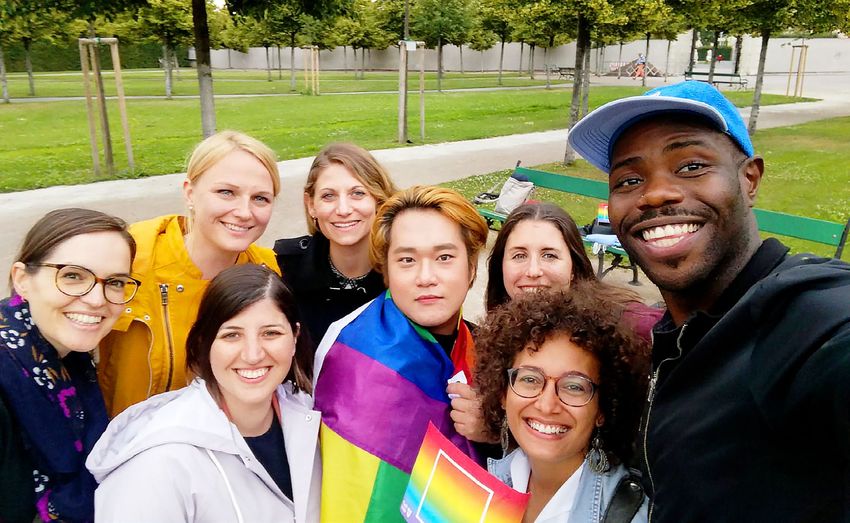
A few minutes with Katrin Harvey, COO of the Ban Ki-moon Centre for Global Citizens
MODERN DIVERSITY AND INCLUSION MANAGEMENT 19
Listen, plan, persuade, enable, and let it grow Corporate stakeholders from the general public and insights into D&I management and communication
politicians to employees increasingly expect corpo- in an organizational context. Our findings are based
SILENCE IS SILVER, SPEECH IS GOLDEN 31 rations to reflect the diversity that exists in society on an extensive literature review and three empirical
Communication as the key to an inclusive organizational culture within their workforce. The increasing recognition and studies, for which we conducted interviews with 20
influence of movements such as Black Lives Matter D&I experts and 84 employees as well as a survey
THE COVID-19 PANDEMIC AND ITS CHALLENGES FOR D&I MANAGEMENT 38 and ChooseToChallenge has reinforced public aware- among 1,000 employed persons.
ness and emphasized the need to manage diversity
CONCLUSION & OUTLOOK 40 and inclusion (D&I) within organizations. This is The central findings of our research are presented in
not just imperative to foster equality and fairness; this issue. Why and how are diversity and inclusion
FURTHER READING 41 strengthening an inclusive organizational culture is beneficial to organizations? How can organizations
also necessary to remain competitive. Thus, companies establish effective D&I management? What role does
REFERENCES 42 that genuinely support and successfully implement communication play in enhancing an inclusive organi-
D&I management will profit from its benefits, such zational culture?
THE ACADEMIC SOCIETY FOR MANAGEMENT & COMMUNICATION 43 as increased competitiveness and a reputation as an
organization that sincerely cares about human rights We would like to express our gratitude to all the partici
and equality. For D&I management to be successful, pants who devoted time and energy to the interviews
communication is a key driver. Communication helps and the survey. Our thanks also go to Marlen Born for
Imprint to create awareness, understanding, and support her support in writing up the results as well as to the
among employees on all hierarchical levels, which is Academic Society for Management & Communication
Authors and citation of this publication (APA style): Email: info@akademische-gesellschaft.com necessary to achieve the goal of establishing an inclu- for funding this research project and supporting the
Wolfgruber, D., Einwiller, S., & Brockhaus, J. (2021). Let’s Website: www.academic-society.net sive organizational culture. creation of this publication.
talk about diversity & inclusion. Fostering an inclusive work Proofreading by Chris Abbey
environment through communication (Communication In- Despite the growing importance of D&I management, We hope our findings prove valuable and that you
sights, Issue 11). Leipzig, Germany: Academic Society for Photos and illustrations by Adobe Stock: p. 4 (Angelina
Bambina), p. 8 (lvnl), p. 19 (Huhu Lin), p. 38 (bsd555), so far there has been very little in the way of research enjoy reading this issue!
Management & Communication. Available online at www.
p. 40 (melita); Colourbox Stockphotos (p. 31); Géraldine into the communication of D&I within companies.
academic-society.net
Aresteanu (Katrin Harvey, p. 16), Ban Ki-moon Centre for Therefore, a research team at the University of Vienna
Published by Academic Society for Management & Com- Global Citizens (Team Pride Month, p. 18); Flaticon.com headed by Daniel Wolfgruber and me set out to address
munication – An initiative of the Günter Thiele Foundation (p. 11, p. 15, p. 28, p. 33, p. 39)
the question of how strategic communication can
c/o Leipzig University, Nikolaistrasse 27–29, Layout and graphics by Zitronengrau Design support D&I management to create and strengthen an
Dr. Sabine Einwiller
04109 Leipzig, Germany All rights reserved. © July 2021 organizational culture of inclusiveness and belonging Professor of Public Relations Research
for all employees. The aim was to provide comprehensive University of Vienna, Austria
2 COMMUNICATION INSIGHTS - ISSUE 11 COMMUNICATION INSIGHTS - ISSUE 11 3
the social responsibility of companies to treat all knowing the needs and wants of the diverse work-
(prospective) employees equally and to enable force is necessary to engender D&I-embracing atti-
them to develop their full potential. Even though tudes and behaviors. To communicate D&I content,
the dichotomy of business and justice is often storytelling is a particularly promising approach to
emphasized, our findings clearly show that the two reach and engage employees and to motivate them
cases are interdependent in that economic ratio- to speak up and take action. (pp. 31-37)
nales and resources pave the way for a company’s
involvement in social justice issues. (p. 11) Interpersonal communication facilitates inclu-
sion: Interviews with employees show that inter-
Development and main ingredients of D&I personal communication has a greater impact on
management: To establish D&I management, the the development of employees’ sense of inclusion
overt commitment of the management board than mediated communication (e.g., articles on
is vital. The development of a D&I strategy that the intranet, videos, podcasts, email circulars,
is aligned with the corporate strategy requires a newsletters). While mediated communication is
thorough analysis of the status quo (both internally often desired by employees to obtain relevant
and externally) to subsequently create a D&I vision information on D&I and stay up to date, it is
from which goals can be derived. Involving and interpersonal communication in a formal context
listening to employees at all hierarchical levels that fosters a sense of inclusion most strongly.
and external stakeholders in the development Although informal conversations about D&I-re-
process is crucial to identify problem areas and lated issues among peers are also important,
it transpires that perceptions of exclusion
LET’S TALK ABOUT DIVERSITY & INCLUSION:
subsequently develop a strategy and measures to
achieve the set objectives. Central measures include are related to a lack of formal interpersonal
fair HR measures regarding recruitment, develop- communication on D&I topics (e.g., in the form
KEY FINDINGS ment, and promotion, competence development,
barrier-free infrastructures (spatial and digital),
of training, workshops, meetings, events), which
may lead to frustration and dissatisfaction with
quota policies as well as the introduction of diver- the work situation as a whole. (p. 34)
Objective: The aim of this research project was (e.g., genderidentity, ethnicity, social background). sity sensitive corporate language and trust-based
to examine the role and practice of communica- Inclusion is a positive psychological state in working hours. Furthermore, several companies D&I management as an enabler: Effective D&I
tion in D&I management. While there is already a which employees perceive a sense of belonging due offer their employees resources to carry out D&I- management means not only strategy develop-
considerable body of research on the management to the organization’s appreciation of their unique- related projects and events. The implementation of ment and implementation but also enabling and
practices of D&I, the communication aspects have ness and based on the provision of opportunities to inclusive leadership is also a key factor in fostering advising all organizational members. In this
been largely overlooked so far. By interviewing fully participate in decision-making processes as an inclusive culture. (pp. 19-26) sense, it is first and foremost a matter of providing
D&I experts in major organizations, we provide well as formal and informal practices. (pp. 8-10) executive personnel with the necessary tools to
insights into good practices of D&I management The necessity of strategic and authentic foster an inclusive leadership style, which is
and communication as well as challenges in this Reasons for introducing D&I management: communication: Establishing D&I management indispensable if a company wants to develop
field. Interviews and a survey among employees Besides legal requirements, the main reasons for needs strategic communication delivered authen an inclusive organizational culture. Managers
complement these insights by highlighting factors introducing D&I management are of an economic tically. Accordingly, communication needs to be should also be provided with resources such as
that influence employees’ perceptions of inclusion. and social nature. While the business case an integral part of the corporate D&I strategy budgets, time, and know-how to engender a D&I-
stresses the economic benefits from a diverse right from the word go. Organizational listening embracing climate in their teams.
Definition: Diversity refers to the reflection of workforce (e.g., increased creativity and thus the (e.g., surveys, interviews, focus group discussions)
social facts in an organization’s workforce based strengthening of innovative power, adaptation to lays the foundation for the “right” communication Another aim of D&I management is to empower
on observable and non-observable characteristics a diverse clientele), the justice case emphasizes strategy and the corresponding measures because the workforce. In addition to training and
4 COMMUNICATION INSIGHTS - ISSUE 11 COMMUNICATION INSIGHTS - ISSUE 11 5
mentoring programs, employees are often were included in the study. In total, 84 persons gender identity. Moreover, 130 participants with experts in the field of D&I in Germany and
provided with resources such as project-based employed in Germany and Austria were inter- reported a migration background (52 females, Austria (17 D&I managers, 2 D&I consultants,
budgets, know-how, and time to actively engage viewed between March and May 2020. The sample 78 males) while 154 respondents had a physical and the spokesperson of Charta der Vielfalt e.V.)
with D&I issues. Furthermore, issue-specific comprised: or mental impairment (84 females, 70 males). between October and December 2020. To ensure
networks and gamification elements such as Based on the literature review and findings from systematic sampling, only D&I managers whose
competitions (e.g., D&I awards) are implemented 21 persons without minority-characteristics (i.e., the qualitative interviews, a questionnaire was companies had previously signed the Diversity
to make employees active participants in D&I “white” males and females; eleven of them in designed for the survey of employed persons. In Charter were invited to participate in the study.
management. (pp. 27-29) management positions), order to ensure the high validity of the results, The most relevant results of the literature review
established scales were used, some of which were and the studies conducted beforehand were taken
RESEARCH DESIGN 26 persons with non-observable diversity charac adapted to fit the D&I context of the study. The into consideration when developing the interview
teristics (e.g., homo- or bisexuals, people with measurement tools used included the Organi- guide to ultimately draw a holistic picture of the
The research project “Let’s talk about Diversity & a low education level; eight of them in manage- zational Authenticity Scale by Men and Hung- status quo of D&I management and the concomi-
Inclusion” was overseen and conducted by Daniel ment positions), Baesecke (2015), Mael and Ashforth’s (1992) tant organizational communication. The interviews
Wolfgruber and Sabine Einwiller from the Department Organizational Identification Scale, as well as the addressed various dimensions of D&I and included
of Communication at the University of Vienna. In the 19 persons with observable diversity characteristics Climate for Inclusion-Exclusion and the Diversity questions about the reasons for establishing D&I
course of the project, an extensive literature review (e.g., people of color, people older than 55 regardless Climate scales developed by Mor Barak (2017). management, the development of the D&I strategy
and three empirical studies were carried out between of gender; six of them in management positions), The survey was conducted in cooperation with and corresponding measures, the conception and
February and December 2020: a panel service provider between August and implementation of communication measures to
18 persons with non-observable and observable September 2020. engender company-wide support for D&I manage-
1 Literature review diversity characteristics (e.g., homosexual person ment, as well as the (long-term) impact of the
with observable migration background; three of 4 Semi-structured interviews with 20 D&I experts COVID-19 pandemic on D&I management.
The project started with a systematic litera- them in management positions).
ture review. In addition to practitioner-oriented In the fourth phase, we conducted 20 interviews
literature on D&I, scientific publications from the 3 Survey of 1,000 employed persons
disciplines of communication studies, manage-
ment and organizational studies, business ethics, The goal of the online survey was to ascertain
psychology, and sociology were examined and the extent to which an organization’s handling Interviews with D&I experts - a selection of organizations that participated
amalgamated. These insights provided the basis of and communication about D&I issues impact
for the empirical parts of the research. employees’ identification with the organization
and subsequent behavior patterns. To increase
2 Semi-structured interviews with 84 employees the explanatory power and generalizability of
the results, quotas were predefined concerning
This first empirical study pursued two goals: company size (number of employees), gender,
firstly, to investigate employees’ experiences and age. Other sociodemographic variables were
gained with D&I-related measures and commu- gathered in the survey to determine the diver-
nication in their companies. Secondly, to deter- sity of participants including ethnicity, physical
mine the extent to which organizational commu- and mental condition, sexual orientation, and
nication on D&I issues impacts the perceived position in the company. A total of 1,000 people
inclusion/exclusion of employees and what types employed in for-profit and non-profit organi-
of communication promote a sense of inclusion. zations in Germany and Austria were surveyed.
To identify and compare a wide range of perspec- The unrepresentative sample was composed of
tives and experiences, a sociodemographic quota 503 females (103 of them in management posi-
system was created to ensure that employees tions) and 497 males (35 of them in management Twenty interviews with experts in the field of diversity and inclusion in German and Austrian companies and consultancies
with and without various diversity characteristics positions). No participants reported a “diverse” were conducted by the University of Vienna.
6 COMMUNICATION INSIGHTS - ISSUE 11 COMMUNICATION INSIGHTS - ISSUE 11 7
WHY DIVERSITY Most common diversity dimensions in D&I management
AND INCLUSION
MATTER Function
/ Job grading
THE CORNERSTONES OF THRIVING
ORGANIZATIONS AND SOCIETIES Pr
us of
tat Geeooggrraapphical e
s
G situatihoincal
ss
nt
us situation
ion
me
We first introduce and differentiate the concepts of diver- taattus Inc
Inco
al
s
ge
t om
illyy s
fie
na
sity and inclusion (D&I) with emphasis on the orga- i m
ld
Ma
mm
ee
FaFa
nizational context. As a rationale for promoting D&I,
organizations must emphasize the specific benefits of Age
ba E
the business case and the justice case. A discussion of l d na ckg
un
th un
ti
bac ocia
nic d &
ro ality
various (psychological and behavioral) outcomes of D&I
ro
dd
on
S
PaPraernetnhtohoo
kg
HH
management concludes this chapter.
abaibtists
r id e n t i t y
orientatio
ge G e n d e r &
roup, unit
Personality
S ex ua l n
Place of w
n de
WHAT ARE DIVERSITY AND INCLUSION?
reienncnece
ce
ate, g
DeDm
Deemm
xpeereirie
& R e l ig
apapp
&
appeaea
a l i t ie
ork
eaenaeaararnancnece
s
eanonuo ce
w o io n i c
ctor
s
keexpxp
Diversity and inclusion started in the USA in the 1950s differ in terms of cultural norms, political and educa- rl d P hy a b il
orkrrk e
v ie w
ouru/r
l
r
m e nt a
Dire
and 1960s during the civil rights movement. What tion systems, as well as legislation. However, with
r //
WWoWo
began with affirmative action and equal employ- societies becoming more diverse due to globalization, the
ment opportunity strategies led to the emergence of free movement of people, progressive equality policies, TrTar al l
two different approaches to reduce ethnic and gender and medical advances, all organizations are challenged
Traianiinn
ininigng c r e a taiitooinonnala
g t
ReReecrcerea vioror
R eha vaivoir
inequality: (1) a liberal approach and (2) a radical to deal with this social fact. Moreover, people expect Tra b beehha
b
approach. While the former approach refers to rather corporations to give something back to society. Thus, de n
voluntary “positive action” initiatives, the latter empha- D&I is also an inherently moral obligation.
un
ion liato
me
mbe of affi
sizes controversially debated “positive discrimination” rship ion
Durat
initiatives such as the implementation of quotas Diversity: Reflecting social facts in the workforce
(Hansen & Seierstad, 2017). The evolution of such Diversity Dimensions
initiatives and concepts of action has (partly) found The concept of diversity in organizations refers to the Outer Dimensions
its way into legislation over time. It has helped more (sociodemographic) differences among people in an Organizational Dimensions
women, members of ethnic minorities, people with organization on grounds of observable (e.g., gender/
disabilities, members of sexual minority groups, older gender identity, age, ethnicity, physical disability)
workers, and members of other marginalized groups and (mostly) non-observable (e.g., education, sexual
become part of the labor force (Mor Barak, 2015). Even- orientation, religion/worldview, cognitive abilities,
tually, diversity management was born and embraced, social background) characteristics (Charta der Viel- Source: Charta der Vielfalt (2021)
particularly by large multinational corporations, simply falt, 2021; Mor Barak, 2015; Roberson, 2006). The The diversity dimensions of the German Diversity Charter represent the main criteria on which corporate D&I management
because they operate in numerous countries that often German Diversity Charter defines seven diversity core can be based. The seven core dimensions are usually given the most attention.
8 COMMUNICATION INSIGHTS - ISSUE 11 COMMUNICATION INSIGHTS - ISSUE 11 9
dimensions that add up to an individual personality
(see figure on p. 9). This charter is part of the
(identity), ethnicity, disability, sexual orientation,
religion, etc. To accomplish this goal, organizations
BUSINESS CASE VS. JUSTICE CASE?
European Diversity Charter network comprising 26 have to remove all (potential) tangible and intangible NOT A BATTLE AT ALL!
national diversity charters across the EU. obstacles that may hamper employees’ full participa-
tion and contribution, which are considered crucial Organizations should address both the business case and reject D&I management that exclusively focuses on a
One of the main goals of D&I management is to bring in aspects of inclusion (Roberson, 2006). Possible the justice case for further diversity and inclusion as company’s bottom line (Jones et al., 2013).
and promote members of minorities in particular – in obstacles that impede a sense of inclusion are the they are interrelated and not opposites. Several experts
comparison to the sociodemographic majority of society, unjust dissemination of (work-related) information, we interviewed recommended initially emphasizing the Research findings indicate that there is indeed a
industry, or an organization. However, it must be borne diversity-insensitive (i.e., sexist and discriminatory) economic advantages of highly diverse staff to convince positive relationship between D&I management and
in mind that individuals often combine multiple diver- language and practices, nepotism, and unfair chances and motivate top management to invest in D&I manage- economic benefits such as increased sales revenue,
sity dimensions at once. For this reason, the term inter- for promotion. ment. However, it is also important to recurringly address more customers, and a greater market share (Herring,
sectionality has recently been introduced in research social justice issues. This is because merely focusing 2009). However, the impact of D&I management on
into diversity and equality issues (Hansen & Seierstad, To engender a sense of inclusion, it is vital to give all on economic objectives as drivers of D&I management the bottom line is considered rather multicausal and
2017). Consider, for example, a woman who is discrimi organizational members the opportunity to engage in can reinforce or yield inequalities by regarding human often mediated by psychological variables (Ravazzani,
nated against not due to her gender, but because of formal and informal activities and practices which are beings simply as a means to an economic end (e.g., 2018; Van Dijk et al., 2012). For this reason, the orga-
her skin color and creed. Diversity in organizations inherently communicative. Three aspects concerning Bendick et al., 2010; Bleijenbergh et al., 2010; O’Leary nizational context, as well as employees’ wants and
should thus be considered a reflection of the diversity communication and interaction have to be considered & Weathington, 2006). Neglecting ethical and social needs, must always be considered when establishing
of society in the respective workforce. when organizations genuinely want to foster an inclu- justice issues can also backfire because employees may D&I management.
sive work environment for all employees (Downey et
Inclusion: Empowering employees from all al., 2015; Mor Barack, 2017):
walks of life Reasons to establish D&I management
Enabling employees to take part in decision-
Michàlle Mor Barak (2015), one of the world’s most making processes Business case Justice case
renowned researchers in D&I, defines inclusion as Granting access to relevant information networks Utilitarian approach Deontological approach
employees’ perceptions that their unique contribution Assuring a high level of participation and
Economic benefits through: Societal benefits through:
to the company is appreciated and their full partici- involvement
Increased innovative power Equal career opportunities for everyone
pation encouraged, and thus as a sense of belonging. Enhanced problem-solving strategies Support of minority groups
Therefore, both inclusion and exclusion refer to either When these three aspects are ensured for all employees, Improved customer service Increased visibility of underrepresented
a favorable or adverse psychological state, resulting organizations can speak of an inclusive work envi- Lower staff turnover groups in management positions
Philanthropic image Influencing public opinion about minorities
from an organization’s structure, practices, values, ronment that facilitates a sense of belonging. This
Burnished employer brand Initiating changes in legislation/policy
norms, and above all communication. implies that diversity management aiming to facili- Serving as a model for organizations
tate an inclusive work environment for all employees,
A central goal of diversity management is to give all which we term D&I management hereafter, is in large “Doing good business” “Doing the right thing”
employees a sense of inclusion regardless of gender part a strategic communicative endeavor.
Overcoming the business-justice divide
Attracting the attention of (top) management by highlighting economic benefits
» Inclusiveness is a culture where diversity feels valued and where a sense of belonging and openness Thereafter, highlighting the social responsibility of the organization through emotional work
Consistently communicating the interdependency between economic and societal benefits of D&I
is pervasive. Diversity management only makes sense when companies place great value on equity,
Repeatedly assessing hard and soft facts to underpin the cohesiveness of business and justice issues
equal opportunities, and want to reflect the diversity of society, while at the same time deriving
economic benefit from it. «
To establish veritable D&I management, organizations should highlight and reconcile the specific benefits of the business
Hans W. Jablonski, Diversity & Inclusion Expert, Owner of Hans Jablonski Consulting case and the justice case.
10 COMMUNICATION INSIGHTS - ISSUE 11 COMMUNICATION INSIGHTS - ISSUE 11 11
FAVORABLE (PSYCHOLOGICAL) OUTCOMES OF DIVERSITY AND Authenticity is key to successful D&I How we measured it
management
INCLUSION To measure the impact of an authentic diversity
Our first hypothesis – that a pro-diversity climate exerts management on how employees identify with their
D&I management can affect individual employees, Further, D&I management leads to a higher level of a positive influence on organizational identification via organization, numerous questions were asked, such as:
workgroups, and, ideally, the whole organization. trust towards the organization, which subsequently organizational authenticity – is supported (see figure • Pro-diversiy climate: “Managers here give feed-
Yet, the presumed impact of D&I management and positively affects employees’ engagement (Downey below). The strong, highly significant indirect effect back and evaluate employees fairly, regardless of
an inclusive work environment on economic variables et al., 2015; Jaiswal & Dyaram, 2020). indicates that employees must be convinced that employees’ race, gender, sexual orientation, reli-
such as enhanced productivity and performance as the employer is serious about D&I to identify them- gion, age, or social background.” “The company
well as innovative strength are hard to detect (Van Effects of D&I: Our research findings selves with the respective organization. It is worth spends enough money and time on diversity
Dijk et al., 2012). This is because these effects are noting that the features fairness and enablement, awareness and related training.”
usually mediated by psychological factors such as In our second study (i.e., an online survey of 1,000 in particular, induce this positive psychological effect. • Organizational authenticity: “I believe that my
organizational commitment or job satisfaction. In employed persons), we were also interested in the Interestingly, people with a migration background feel company’s actions are genuine.”
our survey among employees, we tested the effects effects of diversity climate and organizational inclu- significantly more identified compared to natives if • Organizational identification: “When someone
of some relevant psychological and behavioral vari- sion on psychological and behavioral outcomes, the organization is fair and provides opportunities for criticizes my company, it feels like a personal insult.”
ables to explore the outcomes of D&I. respectively. One psychological variable of interest all employees to flourish.
was organizational identification, which refers to an
Effects of D&I: State of research employee’s sense of “oneness” with the organization Authentic D&I management as leverage factor for organizational identification
(Mael & Ashforth, 1992). We hypothesized that a pro-
An inclusive work environment has several direct and diversity climate may positively impact an employee’s
)
indirect favorable outcomes. The results of an online identification with their employer. However, we t (0.70 Rather
ng effec weak
effe
survey carried out by Acquavita et al. (2009) identi- assumed that the organization also needs to be y stro Pro-diversity ct (0.
Ver 14)
fied a highly significant positive correlation between authentic (i.e., genuine, reliable, trustworthy, and climate
perceived inclusion and job satisfaction. Going a step open to diverse viewpoints; Men & Hung-Baesecke,
further, studies show that an inclusive work environment 2015) for the positive relationship between diversity
(Hwang & Hopkins, 2015) and a pro-diversity climate climate and organizational identification to emerge. Organization
(McKay et al., 2011) have a highly significant positive Furthermore, we aimed to investigate (indirect) D&I is perceived
impact on employees’ commitment and job satisfaction, effects on behavioral outcomes, namely organizational as authentic
which consequently have a negative effect on turnover citizenship behavior (OCB), which comprises behavior
intentions. This means that the desire to leave the orga- that is (1) non-mandated, (2) based on individual
nization decreases if employees perceive a diversity- initiative, and (3) contributes to the best interests Str
on
ge Organizational
embracing work climate and/or feel highly included. of the organization (Bienstock et al., 2003). Hence, ffec identification 0 = no correlation at all
t (0
.47) 1 = perfect correlation
Moreover, research indicates that perceived inclusion has we hypothesized that a high level of inclusion leads
a highly significant impact on employees’ well-being and to organizational citizenship behavior once employees
that employees feel safe in inclusive work environments. identify with their organization.
Employees who perceive a pro-diversity climate strongly identify with their company. However, the organization must be
perceived as authentic for this effect to be achieved.
» For me, diversity and inclusion mean equal opportunities. That is, regardless of a person’s ethnic » The goal of our internal networks was to bring people together and create a space for like-minded
background, religion, gender, or age – everyone must be given the same opportunities. At the same people to connect and share. Now we have over 80 networks that are also involved in the development
time, diversity should be consciously perceived and used, because heterogeneous teams have better of policies. This means we don’t just ask them for their opinion, but we ask: ‘What would that ideally
problem-solving skills and innovative strength. « look like from your point of view?’ This creates a sense of inclusion and belonging. «
Theresia E. Pircher, Head of Corporate Social Responsibility, PORR AG Katja Ploner, Corporate Diversity & Inclusion Advisor, Siemens AG
12 COMMUNICATION INSIGHTS - ISSUE 11 COMMUNICATION INSIGHTS - ISSUE 11 13
A climate for inclusion leads to employee loyalty 55 show significantly more proactive behavior than Much room for improvement to foster an inclusive work environment
their younger colleagues if they feel highly included.
The second hypothesis – that employees who feel highly
included show self-initiated behavior that benefits the best How we measured it 38% 38%
interests of the organization if they feel highly identified feel (quite) included identify with their organization
(which can be promoted through
45%
– is also supported (see figure below). There is a highly To examine the impact of organizational inclusion on
a pro-diversity climate)
significant relationship between organizational inclu- employees’ loyalty to their employer, numerous ques-
56%
sion and loyalty in particular – one dimension of organi- tions were asked, such as: perceive their organization
zational citizenship behavior (OCB) – if employees feel • Organizational inclusion: “I have influence in as (quite) authentic
highly identified with their organization. However, the decisions taken by my work group regarding our
53%
perceive a pro-diversity
results only apply to the two OCB dimensions of loyalty tasks.” “I am typically involved and invited to
climate at work
and participation. Notably, the latter dimension has actively participate in work-related activities of
major overlaps with inclusion, as participation is a corner- my work group.” are (quite) loyal to their employer
stone of an inclusive work environment. No significant • Organizational identification: “When someone (which can be fostered by inclusion) N = 1,000 employees
correlation was identified for the third OCB dimen- criticizes my company, it feels like a personal insult.”
sion, obedience. Interestingly, employees older than • Loyalty: “I tell people that my organization is a The results of our survey show that there is still much room for improvement among companies in Germany and Austria when
good place to work.” it comes to creating an inclusive, diversity-embracing working environment.
Inclusion strengthens the loyalty to the employer
)
Conclusion of the survey
t (0.69 Rather
ng effec weak
effe
ro
y st Organizational ct (0.
Ver 16) To sum up, D&I management has a positive impact favorable behavior can be positively influenced by
inclusion
on employees if the organization is perceived as an inclusive work environment if employees iden-
authentic. The results indicate that employees with tify with their organization. Older employees (55+)
a migration background in particular scrutinize the in particular are likely to appreciate a high level of
Organizational authenticity of D&I measures. Furthermore, the inclusion with more proactive behavior than their
identification
findings suggest that loyalty to the employer and younger peers.
Str
on Loyalty
ge
ffec 0 = no correlation at all
AT A GLANCE
t (0
.43) 1 = perfect correlation
• D&I management is the strategic coordination organization) should be considered, linked, and
of practices that bring a diverse society into the well communicated.
Employees who feel included in their organization show a higher level of identification than those who feel less included.
Subsequently, employees who identify with their organization due to their sense of inclusion are more loyal to their employer.
organization and ensures that all employees, no
matter how “different” they may be, feel included. • D&I management can engender positive psychological
and behavioral effects like organizational identifica-
• When considering whether to implement D&I tion, perceived inclusion, commitment, job satis
management in an organization, both the busi- faction, and loyalty. However, it is important to ensure
» We have a number of employee networks, and what is intriguing right now is the burning
ness case (i.e., economic benefits) and the that the organization is authentic, i.e. genuinely
ambition of the younger generation. They always come up with their own ideas and are just
justice case (i.e., the social responsibility of an serious about its D&I endeavors.
bursting with energy and enthusiasm and want to do something about the injustice in the
world. I find that incredibly valuable. «
Silke Heinrichs, Head of Diversity & Inclusion, Roche Diagnostics GmbH
14 COMMUNICATION INSIGHTS - ISSUE 11 COMMUNICATION INSIGHTS - ISSUE 11 15
Global Citizenship focuses on the unifying rather than      such as education and job opportunities while protecting

                                                          » EVERYBODY
                                                                                                                         the dividing elements between people. A global citizen      the planet. The 17 SDGs include reducing inequality
                                                                                                                         is someone who self-identifies first and foremost not as    (i.e., empowering and promoting the social, economic

                                                            CAN CONTRIBUTE
                                                                                                                         a member of a state, a tribe, or a nation, but instead      and political inclusion of all citizens, irrespective of
                                                                                                                         as a member of the human race, looking beyond               age, sex, disability, race, ethnicity, origin, religion or

                                                            IN THEIR
                                                                                                                         the narrow scope of national or personal interests.         economic or other status), as well as achieving gender
                                                                                                                         Global citizens support peaceful solutions to today’s       equality (i.e., ending all forms of discrimination against

                                                            VERY OWN WAY «
                                                                                                                         global challenges.                                          women and ensuring equal opportunities for leadership).

                                                                                                                         The Sustainable Development Goals (SDGs) call for           The Ban Ki-moon Centre wants to assist in the imple-
                                                                                                                         action by all countries to improve the lives of people      mentation of the SDGs.
                                                                                                                         everywhere. The overall aim is to end poverty, to build
                                                                 A FEW MINUTES WITH KATRIN HARVEY,                       economic growth and to address a range of social needs      (Source: https://bankimooncentre.org/our-mission)
                                                                 COO OF THE BAN KI-MOON CENTRE FOR
                                                                 GLOBAL CITIZENS ON THE IMPORTANCE
                                                                 OF DIVERSITY AND INCLUSION

     Katrin Harvey is the Chief Operating Officer of the Ban Ki-moon Centre for Global Citizens. The Ban Ki-moon         we’re probably not going to reach all of them by 2030,      In our research, we’ve learned that D&I manage-
     Centre works for peace, poverty eradiction, empowerment of youth and women, justice and universal respect for       unfortunately. But we have to do everything we can to       ment is often viewed as an HR matter. Only a few
     human rights, regardless of age, gender, identity, religion, and nationality. We talked to Katrin Harvey about      get as close to them as possible. Corporations have a       companies assign D&I to the CSR department.
     how organizations can contribute to a world in which everyone can flourish as global citizens.                      huge part to play in this. They must understand the         What’s your view of this?
                                                                                                                         SDGs and integrate them into their everyday work.
                                                                                                                         For example, the Ban Ki-moon Centre works actively          That’s quite surprising to me because the social aspect
                                                                                                                         with companies and is a member of the Austrian UN           is even encapsulated in the acronym, so why pull
     Can you please briefly describe the Ban Ki-moon           young people and women, we can eventually give            Global Compact Network, where I’m part of a working         them apart? However, when you think of diversity and
     Centre for Global Citizens and its specific goals         them the tools needed to identify and resolve issues in   group to promote education for sustainability and           inclusion, people tend to think of their staff and HR
     and fields of activity?                                   their communities. Divided between policy and direct      global citizenship on the corporate level, meaning          processes, such as how we can get more women in lead-
                                                               cooperation with beneficiaries, our work is based on      integrating the SDGs and educating their staff. Corpo-      ership positions, how we can create a harassment-free
     The Ban Ki-moon Centre is a quasi-international organi-   four pillars: education, leadership, advocacy, and        rations play a huge role when it comes to shaping           work environment, or how we can include more people
     zation based in Vienna, founded in 2018. It arose from    peace and security.                                       the public dialogue, and the language they use ulti-        with diverse backgrounds, as they may contribute to a
     the friendship between the former Austrian President                                                                mately shapes reality. It’s crucial to keep that in mind.   more successful business. Another reason why compa-
     Heinz Fischer and the erstwhile UN Secretary-General      The Ban Ki-moon Centre strives for a world in             Also, so many people spend many hours at their work-        nies emphasize environmental issues in their CSR agenda
     Ban Ki-moon, who wanted to initiate a legacy project      which human rights are respected and observed,            place, and corporations are responsible for creating        can be found in the activism taking place around the
     to push forward his two main achievements during his      regardless of age, gender, identity, religion, or         a safe and inclusive environment. I think it should         world. Besides, companies can declare things as envi-
     tenure: the Sustainable Development Goals (SDGs) and      nationality. What role do you ascribe to compa-           become easier to have a diverse workforce, including        ronmental measures that they would have done either
     the Paris Climate Agreement. Within these two frame-      nies in fulfilling your mission?                          people with disabilities and different backgrounds. It      way. Did you change your light bulbs to save the envi-
     works, our Centre works in various ways to empower                                                                  shouldn’t be a question of whether or how to include        ronment or to save energy? The social aspect, however,
     young people and women to become future leaders           First of all, the frameworks that we work with – the      people in wheelchairs or to provide jobs and opportu-       is much more difficult. You see a lot of investment costs,
     living by global citizenship values, understanding the    Paris Climate Agreement and the SDGs – are a call for     nities for blind or deaf people. This includes everyone     for example when you build a ramp or make all hiring
     SDGs, and knowing what they can do to help promote        everybody. The whole world signed up to them and          from factory workers to office staff, and everybody can     processes more inclusive, but you don’t see the results
     and realize them. We believe that by working with         we all want to reach these goals. It’s really hard, and   contribute in their very own way.                           immediately. I think a lot still needs to be done here.

16   COMMUNICATION INSIGHTS - ISSUE 11                                                                                                                                                                           COMMUNICATION INSIGHTS - ISSUE 11   17
In what ways could the Ban Ki-moon Centre ability and global citizenship education across the world
support organizations to establish socially just in all kinds of training. We’re always very happy to get
and economically beneficial D&I management? more support for this. We work closely with governments
and regional institutions such as the City of Vienna to
We’ve started building a very interesting pool of leaders promote know ledge of the SDGs and then hopefully
and young activists that could participate in manage- instill it in people of all ages, making them realize that
ment processes. We host regular SDG training, online or they can do something to support the SDGs. These are
in-person, depending on the circumstances. One of our some of the things that companies and institutions can
MODERN DIVERSITY & INCLUSION
key activities is advocating for the inclusion of sustain- also participate in and benefit from.
MANAGEMENT
LISTEN, PLAN, PERSUADE, ENABLE, AND LET IT GROW
Katrin Harvey, Chief Operating Officer of the Ban Ki-moon Centre,
has over a decade’s experience in sustainability, climate change, Establishing effective D&I management requires a strategic approach combining analytical skills, creativity, empathy,
clean energy, and organizational management. Having led business communication skills, and business expertise. Developing and implementing a D&I strategy and corresponding
development, strategic growth, and communications at an inter- measures are non-trivial tasks that can have a significant impact on the overall corporate strategy and business
national non-profit organization for clean energy access, she now processes. This chapter therefore addresses the main ingredients of D&I management, the main steps of the strategy
combines her academic background in language studies and interna- development process, the role of D&I management as an enabler, and the backlash that can occur when D&I manage-
tional development to enhance the impact of projects and programs ment is considered or introduced.
related to the Sustainable Development Goals.
18 COMMUNICATION INSIGHTS - ISSUE 11 COMMUNICATION INSIGHTS - ISSUE 11 19INGREDIENTS OF EFFECTIVE D&I MANAGEMENT » I don’t think it’s appropriate to do diversity management for such a huge company from the
headquarters alone. My small team can ensure that we get attention and incorporate diversity in the
business strategy. We provide advice on implementation, of course, and we also initiate some measures
Our results indicate that there is no blueprint for a more and more attention, an increasing number of centrally, but ultimately, they are implemented independently in the various units. «
D&I strategy and its management due to the mani- employers now offer their staff flexible working time
fold, frequently complex contexts and environments models, telework, company kindergartens, flying Christine Epler, Head of HR-Strategy, Innovation & Diversity, Deutsche Bahn AG
in which organizations have to operate. Nevertheless, nannies, reintegration programs after parental leave, and
there are several pivotal ingredients of D&I manage- the consulting services of social workers. This focus on
ment, as our analyses have shown. the individual’s desires and needs is at the heart of the
New Work concept, which emphasizes agility, flexibility,
The strategic role of D&I participation, and sensemaking (Hays, 2021). Further-
more, the definition and constant monitoring of stra- inclusive leadership that appreciates diversity and is occasionally intertwined with common leadership
First of all, effective D&I management has to be built tegic goals and KPIs are vital to evaluate the effec- facilitates participation and involvement is important training. While sensitivity and unconscious bias
on an elaborate strategic foundation. The efficacy of a tiveness of D&I management. The development of a if organizations truly want to become a workplace in training are mandatory for people in leadership posi-
D&I strategy increases when it is integrated into the D&I strategy and corresponding measures and KPIs are which employees from all walks of life feel a sense of tions in almost all the companies interviewed, only
overall organizational strategy and implemented in discussed in more detail on pp. 23-26. belonging and can therefore tap their full potential. a few organizations offer such training to employees
all business processes, as discussed in more detail on However, D&I managers and communicators should without a management role. Nevertheless, some organi-
pp. 23-26. A well-resourced team responsible for D&I Effective D&I management needs persuasion refrain from putting a D&I label on all communica- zations have adapted diversity training for employees to
(and ethical) matters that directly reports to the board and communication tion measures, processes, and practices, as an over- create “aha moments” in which the participants realize
is the key element of an organization’s D&I manage- emphasis may also cause reluctance within the work- how biased they are against people who are different
ment. This team is in charge of the development of To ensure the alignment of the D&I strategy with the force. The key role of communication in fostering an from them. Additionally, employees need to learn
D&I-related documents such as a code of conduct overall corporate strategy, the commitment of the inclusive organizational culture is explained in more intercultural competence and conflict resolution,
and anti-discrimination policies, which set rules for management board is crucial. Additionally, continuous detail on pp. 31-37. as – despite the numerous advantages of diverse teams –
organizational practices such as recruitment, talent persuasion of and communication with all organiza- the conflict potential is fairly increased (Herring, 2009).
management, performance appraisals, promotions, tional members are key to engender a genuinely inclu- Competence development as a crucial factor It is important to keep in mind for training sessions
supply chain management, and how all organizational sive culture over time. Communicating the underlying for an inclusive work environment that the group of participants should be diverse so that
members should treat each other and external stake- organizational (moral) values and their embodiment they can learn from each other in roleplays and share
holders. Other vital elements of effective D&I manage- in everyday work life is thus essential to successfully Certainly, D&I managers cannot assume that all the insights gained (Jones et al., 2013). Ultimately,
ment are competence development in the form of establish and maintain an inclusive work environment. employees are familiar with the meanings of diver- the goal of diversity training is to engender personal
training and mentoring programs (see p. 21) as well Executive personnel in particular should continuously sity and/or inclusion, or the potential economic and business cases that prompt participants to ask them-
as a barrier-free infrastructure (spatial and digital). exemplify D&I values in their words and deeds to act social benefits. Therefore, the development of an selves why and how D&I could be beneficial to their
As the compatibility of family and work is receiving as respected D&I role models for employees. Hence, inclusive environment heavily depends on competence own lives.
development through training. Such training imparts
the need for and importance of valuing diversity, and Typical (soft) skill training is another D&I measure,
raise employees’ awareness (Mor Barak, 2017). More- as diverse skills and competencies enrich the organi-
over, developing competencies plays a crucial role in zation. This also holds true for mentoring programs,
decentralizing D&I management, which is inevitable which can be used to gently integrate underrepre-
in large corporations. sented (minority) groups. However, it is important
» Unfortunately, diversity management is often left to the HR department. We don’t think that’s to note that mentoring can also lead to people
good, because it needs to be at the very top. There has to be at least one person who is in touch Diversity sensitivity and unconscious bias training, eventually adapting and thus losing their individu-
with all the processes in the organization and who permanently examines and optimizes them as well as train-the-trainer programs for executive ality (Trittin & Schoeneborn, 2017). Thus, mentoring
through the lens of diversity. « personnel, are especially conducted in corporations programs should not be deemed the panacea for
with a considerably diverse workforce. Such training fostering an inclusive workplace.
Stephan Dirschl, Spokesperson, Charta der Vielfalt e.V.
20 COMMUNICATION INSIGHTS - ISSUE 11 COMMUNICATION INSIGHTS - ISSUE 11 21The D&I Management Model D&I management means listening discrimination and similar transgressions, or evalu-
ating comments on internal and external social media
The effectiveness of a D&I strategy and its manage- channels. Competence development and listening are
ment hinges on the interaction between the managers not only important ingredients of effetive D&I manage-
ive) Customers
Prospect in charge and the organization’s internal and external ment but also the cornerstones of its enabling and
(
Ma
ss stakeholders. To ensure an inclusive organizational advisory function, which is discussed in more detail
me
dia culture, the “polyphony” of voices (i.e., the organi- on pp. 27-29.
s
nd zation listens to all relevant internal and external
ma
voices) is vital to achieve true diversity and inclusive- The D&I Management Model on p. 22 provides an over-
de
Management ness (Trittin & Schoeneborn, 2017). Helpful listening view of the main ingredients and processes of effective
&
Board
ds
measures include conducting employee and customer D&I management, which is considered the centerpiece
dar
Lab
surveys and interviews, gathering feedback in meet- of an inclusive organizational culture, which in turn is
stan
or
1
ings, implementing reporting channels in case of in constant interaction with its environment.
mar
Public advocacy
try
•
of D&I D&I
ket
Indus
• Enabling Management
New Work
• Barrier-free 2
infrastructure • Competence
• Inclusive
development HOW TO DEVELOP A D&I MANAGEMENT STRATEGY
leadership Executive • Listening
Personnel • Resources
Our research findings indicate that to ensure effective the board has decided to invest in D&I initiatives, it
Laws &
• Join-in activities
lues
3 D&I management, its underlying strategy ought to be is important to appoint one or more people respon-
& va
intertwined with the overall corporate strategy and sible for D&I affairs (Ravazzani, 2018). It is advisable
Workforce
regu
the corresponding formal and informal practices. D&I to position D&I management at the interface between
ms
managers need to keep in mind that the adoption of HR, CSR, and corporate communications, with a
lati
nor
D&I management is a long-term change management
ons
direct reporting line to the management board. This
Inclusive organizational culture
ral
and learning project with cultural change as the ulti- is important because D&I is both a strategic human
Cherishing D&I values, open &
ltu
mate goal. To achieve this goal, changes in behavior resource and a sustainability issue that needs the
transparent communication, Cu and attitudes among managers and employees must be support of the communications department to initiate
fair practices, promoting participation
Po initiated so that D&I management is seen as an essen- and accompany the cultural change. Furthermore, it is
liti tial means to ensure societal legitimacy and sustainable advisable to investigate the state of the art and best
cal
sys ess corporate success. practices in the industry and beyond as well as the
tem progr
ical legal situation on D&I-relevant issues to not only
Technolog
1 Getting started: Making an abstract idea collect ideas but also obtain an overview of standards
tangible in D&I management and legal requirements.
1 D&I strategy 2 Competence development 3 Competence development
To even consider implementing D&I management, the 2 Checking the status quo: Status analysis
D&I policies Listening Listening veritable commitment and support of the board of
Resources Resources Resources
D&I goals, KPIs & measures Inclusive leadership management are required. After initial discussions on A profound analysis of the status quo within the
Periodic monitoring and reporting the topic with top management, where both the poten- organization must precede strategy development.
tial economic benefits and the social necessity are The starting point is to analyze the diversity of the
Interaction between the board, D&I managers, executive personnel, the workforce, and the environment is vital to identify addressed (p. 11), workshops with board members are workforce, including the gender ratio (at the manage-
and manage D&I-related issues. The board’s commitment to D&I, the establishment of New Work, the provision of a barri- recommended to work out the pros and cons of imple- ment level), yet also the age structure and the number
er-free infrastructure, resources, and development possibilities as well as the cultivation of organizational listening and menting D&I management. If needed, those workshops of employees with disabilities. If the information is
inclusive leadership are essential ingredients of effective D&I management. can be moderated by external D&I consultants. Once available, the internationality of the workforce should be
22 COMMUNICATION INSIGHTS - ISSUE 11 COMMUNICATION INSIGHTS - ISSUE 11 23assessed, too. Secondly, all relevant business processes at all levels and walks of life. Based on this, flexible The development process of a D&I management strategy
and their underlying conditions concerning D&I need to SMART goals (i.e., specific, measurable, achievable,
be examined. In addition to HR practices and processes relevant, time-bound) have to be developed, which will
(e.g., recruitment, retention, promotion, development), serve as the cornerstones of a goal-driven D&I strategy. Management board’s commitment to D&I initiatives
procurement, manufacturing, service and sales To monitor the effectiveness of the D&I strategy and its
processes should be analyzed for D&I compliance. management, associated KPIs (hard and soft) should
Thirdly, input from organizational members at all be defined. Hard KPIs include quotas regarding gender,
levels regarding their perceptions of D&I needs to be
assessed by employing systematic “listening” practices.
Finally, it is useful to study the organizational environ-
age, disability, internationality, the fluctuation rate,
and the number of participants in D&I training courses.
Job satisfaction, commitment, perceived inclusion, and
1 2
ment. Besides examining industry standards regarding well-being are soft KPIs that should be measured regu- Getting started Conducting status analysis
D&I, it is helpful to obtain input from customers, larly. In the best case, the D&I strategy complements Appointing D&I manager(s) Analysis of D&I-related key figures
suppliers, and other external stakeholders on their the overall strategy in that D&I management opti- Doing research on D&I-related legislation, Analysis of D&I-related business processes
perceptions and demands concerning D&I in order to mizes the corporate strategy and processes. A way to (industry) standards, and best practices and existing conditions
be able to develop a holistic D&I strategy. This can be facilitate this process is to employ a balanced (D&I) Involving consultants/facilitators Systematically obtaining input from internal
done by analyzing existing secondary data and docu- scorecard or existing certified instruments such as Initiating an internal project kick-off meeting and external stakeholders
ments on D&I as well as by conducting primary research ISO 30415, GDEIB (Global Diversity, Equity & Inclusion SWOT analysis
using surveys, interviews, focus group discussions, Benchmark), or ÖNORM S2501.
and guided workshops. Based on all information
gathered, a SWOT analysis can provide the necessary An occasionally neglected task, but one that can have a 4 3
systematic overview of the current and desired status, major impact on the effectiveness of D&I management,
opportunities, and risks regarding D&I in the organiza- is the development of a corresponding communication Developing the D&I measures Developing the D&I strategy
tion (Jablonski, 2017). strategy that bolsters the D&I management strategy Appointing a D&I task force with Formulating a D&I vision and related values
and the corresponding measures. The communication employees at all hierarchical levels Defining D&I goals
3 One step at a time: Developing a D&I strategy for D&I must be aligned with the corporate Conducting workshops, focus group Developing a D&I strategy that is attuned
discussions, and interviews to develop ideas to the overall business strategy
strategy communications strategy to avoid contradictions and
Budgeting for D&I measures Determining D&I KPIs
increase the company’s authenticity. The achievement
Developing D&I measures Mapping out a D&I communication strategy
Once all the necessary preliminary work has been carried of the defined communication goals, which are derived Employing a balanced (D&I) scorecard
out, it is important to map out a D&I vision with the from the respective D&I goals, largely depends on deci- Considering certified D&I standards
associated values and put it into writing in the form of
5
sions regarding what content is packaged how (keyword:
a mission statement and D&I-related policies. This storytelling) and communicated via which channels
should be done with the involvement of employees (interpersonal and/or mediated communication).
Rollout of D&I measures
Ensuring basic conditions for rollout Inclusive
Communicating the necessity of D&I organizational
and the initiatives employed culture
Testing and monitoring the D&I measures
» I would say that without the board’s commitment, such efforts are doomed to fail. I’ve been in a selected business unit
If successful, organization-wide rollout
working in this field for 14 years now, and in those years, I’ve reported three times a year to the
Group’s executive board to discuss the latest figures, data, and facts on diversity. To me, that’s key to
success. Unfortunately, an executive board regularly putting diversity on the agenda is not a matter To foster an inclusive culture, a well-wrought D&I strategy has to be developed, which above all requires the commitment of
of course for many companies. « the management board. Based on this, it is necessary to define areas of responsibility, analyze the initial situation, develop
a well-conceived D&I (communication) strategy, and derive D&I measures. The measures should be communicated, tested,
Ursula Schwarzenbart, Head of Talent Development & Diversity Management, Daimler AG and evaluated in a selected business unit before organization-wide rollout.
24 COMMUNICATION INSIGHTS - ISSUE 11 COMMUNICATION INSIGHTS - ISSUE 11 25You can also read


