LEVERAGING GLOBAL ROAD SAFETY SUCCESSES - VOL 02 - World ...
←
→
Page content transcription
If your browser does not render page correctly, please read the page content below
GLOBAL ROAD
       SAFETY FACILITY
LEVERAGING GLOBAL ROAD SAFETY SUCCESSES
                                VOL 02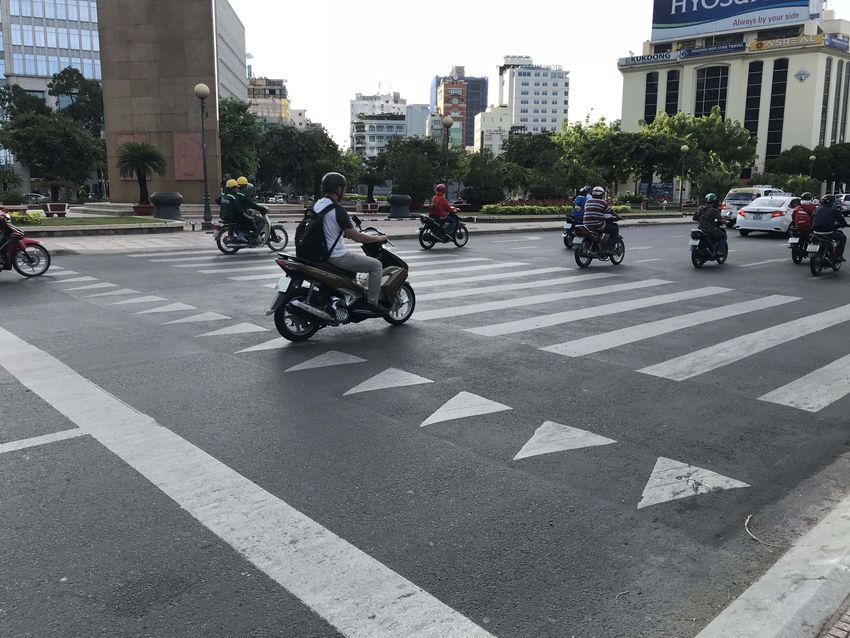
© 2020 Global Road Safety Facility – World Bank
1818 H Street NW
Washington DC 20433
Telephone: 202-473-1000
Internet: bit.ly/GlobalRoadSafetyFacility

This report was written by Giannina Raffo (GRSF), Sara Sultan (Senior Knowledge & Learning Officer, World
Bank) and Soames Job (Head of the GRSF and Global Road Safety Lead, World Bank). Alina F. Burlacu,
Blair Turner, Juan Miguel Velasquez Torres, Dipan Bose, Hanayo Taguchi and Sudeshna Mitra contributed
with vital editing and refinement. Valuable inputs were also provided by Radoslaw Czapski and Mauro
Azeredo (External Affairs Lead, World Bank).

The findings, interpretations, and conclusions expressed in this work do not necessarily reflect the views of
the World Bank, its Board of Executive Directors, or the governments they represent.

The World Bank does not guarantee the accuracy of the data included in this work. The boundaries, colors,
denominations, and other information shown on any map in this work do not imply any judgment on the part
of The World Bank concerning the legal status of any territory or the endorsement or acceptance of such
boundaries.

Rights and Permissions

The material in this work is subject to copyright. Because the World Bank encourages dissemination of its
knowledge, this work may be reproduced, in whole or in part, for noncommercial purposes as long as full
attribution to this work is given.

Any queries on rights and licenses, including subsidiary rights, should be addressed to World Bank
Publications, The World Bank Group, 1818 H Street NW, Washington, DC 20433, USA; fax: 202-522-2625;
e-mail: pubrights@worldbank.org.

Attribution

Please cite the work as follows: “GRSF/World Bank (2020). Global Road Safety Facility: Leveraging Global
Road Safety Successes. Washington, DC., USA: World Bank.”

Cover photo: © Daniel Silva Yoshisato/GRSF. Further permission required for reuse.

Cover design: Giannina Raffo.
WHAT IS
          The Global Road Safety Facility (GRSF) is a global multi-donor
          fund hosted by the World Bank. Its mission is to help governments

 GRSF?
          develop road safety management capacity and scale up road safety
          delivery in low- and middle-income countries (LMICs).

  GRSF
          GRSF provides funding, knowledge, and technical assistance
          designed to scale-up the efforts of LMICs to build their scientif ic,

 GOALS
          technological, managerial and delivery capacities for road safety.

          GRSF operates as a hybrid grant-making global program, allowing
          it to distribute funding externally for global, regional and country
          activities, and internally through World Bank-executed grants,
          which enhance the work of the World Bank’s transport Global
          Practice and leverage road safety investments in transport
          operations in client countries. GRSF also directly delivers road
          safety projects, research, peer-reviewed papers, reports, in-country
          guidance, and manuals to enhance road safety knowledge,
          capacity, and delivery.

          Since its inception in 2006,

          GRSF has received total donor pledges of $74 million,
          in addition to unquantif ied support f rom the World
          Bank in its hosting capacity. GRSF work has
          expanded to 78 countries, improving road safety
          outcomes through technical assistance, training and
          capacity building, and grant-funded activities.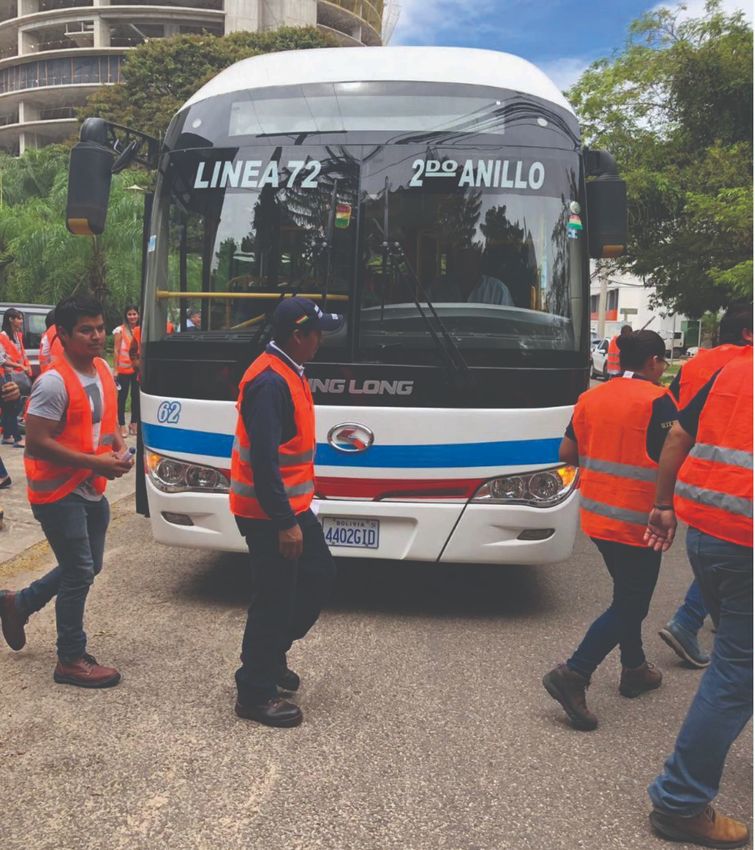
GRSF
                               GRSF plays a key role in global road

              IN               safety research, leadership and advocacy

              ACTION
                               by participating in numerous influential
                               initiatives. Some highlights of the GRSF
                               impact are:

 15,325                                         10,669
 KILOMETERS                                     PROFESSIONALS
 of roads surveyed under the                    trained under
 GRSF – Bloomberg Program                       GRSF – Bloomberg
 (2015-2019)                                    Program (2015-2019)

 133      APPLICATIONS
          RECEIVED                              $7.54                  MILLION
                                                                       APPROVED
 for the Multi-Donor Trust                      resulting in 53 grants on
 Fund (MDTF) FY19 Call for                      road safety research, advisory
 Proposals                                      and capacity building

 $40       ADDITIONAL
           FUNDING                              41        RESEARCH
                                                          PAPERS
 for road safety leveraged                      and reports published
 and informed by each                           by GRSF
 $1 spent by GRSF

 251      TRAINING
          EVENTS               These numbers correspond to the period of 2017-2019. For
 GRSF presentations,           this report, GRSF collected the data starting from the
                               previously studied years in the first volume of this publication;
 training/module, and
                               noting the exception of the timeline of the Bloomberg
 workshop events               Program, that corresponds to the period of 2015-2019.
                                                                                                   3
GRSF
                         This booklet highlights a few examples of GRSF’s effective
                         delivery of global road safety solutions for the period of
                         2017-2019. Since the f irst volume of this publication, GRSF
                         work has come to f ruition in these years and has pushed
SUCCESS STORIES          the road safety agenda forward signif icantly.

                 01                       02                         03
            VIETNAM                COLOMBIA                     ETHIOPIA
   GREEN TRANSPORT                       BIGRS           LEVERAGING RATIOS

                04                        05                         06
              NEPAL                 MOROCCO                      BOLIVIA
  ROAD SAFETY BARRIERS     ROAD SAFETY STRATEGY       ROAD SAFETY PROGRAM

                  07                       08                        09
GLOBAL ROAD SAFETY                       TOGO       CHINA & THAILAND
       OBSERVATORIES                      AVIS                   iRAP                   4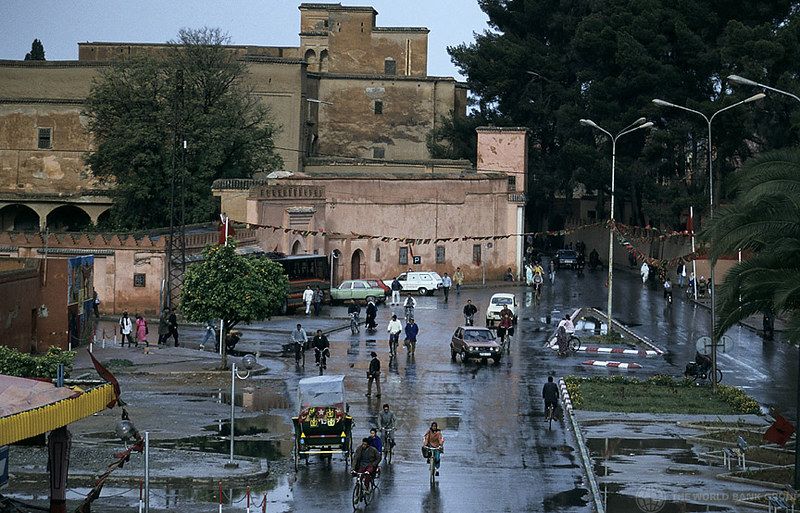
HO CHI MINH CITY
                                          GREEN TRANSPORT DEVELOPMENT
                                                               PROJECT
                                                        HO CHI MINH CITY, VIETNAM

REDUCING ROAD CRASH                             In Ho Chi Minh City, the BIGRS has supported:
DEATHS AND SERIOUS
INJURIES IN HO CHI MINH CITY                    308 km          roads surveyed
                                                                and assessed

The GRSF is part of the Bloomberg
Philanthropies Initiative for Global Road          77 km        roads where designs,
                                                                scenarios or implementation
                                                                have been star rated
Safety (BIGRS). The Program objectives are
to reduce road crash deaths and serious
injuries in 10 cities: Accra, Addis Ababa,

                                                2,198+
Bandung, Bangkok, Bogotá, Fortaleza, Ho
                                                                 potential deaths and
Chi Minh City, Mumbai, São Paulo and
                                                                 serious injuries to be
Shanghai and 5 countries (China, India,
                                                                 prevented over 20 years
Philippines, Tanzania, Thailand).

                                                The network level of iRAP assessments predict a
As part of the partnership, GRSF leverages
road safety in Bank-f inanced projects, by      42% reduction in fatalities and serious
capturing synergies f rom BIGRS-funded          injuries compared to the existing situation
technical assistance and training activities.   if all recommendations were to be
                                                implemented.
Support f rom GRSF includes:
                                                Using municipality budget, and based on iRAP
  evaluation of road inf rastructure at the     and BIGRS partners recommendations, the
  network level for safety                      local administration has built and upgraded
                                                across the city:
  guidance on investment options for
  safer designs                                    157 refuge islands
                                                   11 raised pedestrian crossings
 enhanced road safety management
                                                   8 footbridges
 capacity to relevant institutions
                                                   11 bus stops
                                                                                                  5
BLOOMBERG INITIATIVE FOR
                                                         GLOBAL ROAD SAFETY (BIGRS)
                                                                           B O G O TÁ , C O L O M B I A

IMPROVING ROAD SAFETY                                       Under this program GRSF and the BIGRS
THROUGH SPEED MANAGEMENT                                    partnership has supported:
IN BOGOTÁ

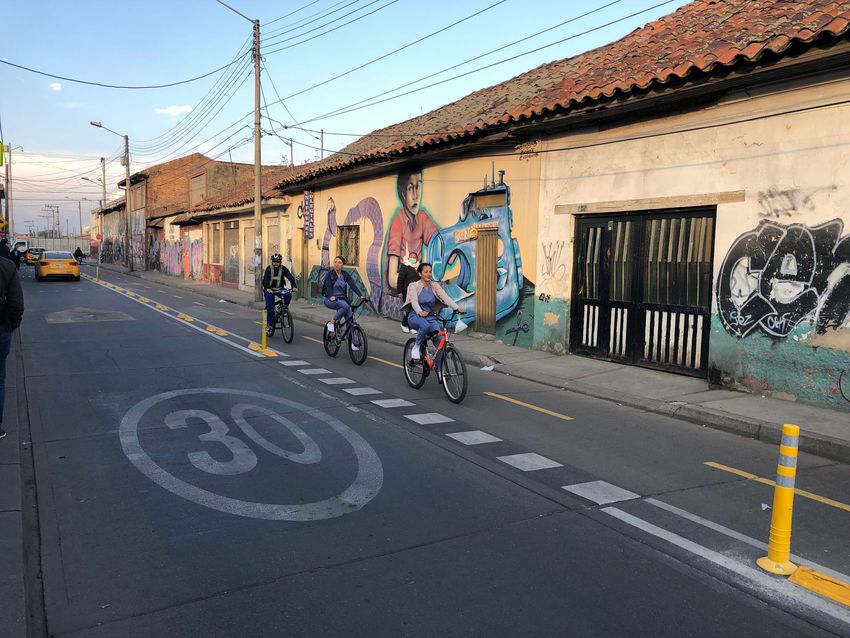
In Bogotá, a network of approximately 200 km
of roads has been assessed for road safety risks
                                                            200 km           roads surveyed
                                                                             and assessed

                                                            200 km
in the BIGRS program. The results show that
                                                                             roads where designs,
over 40% of this network has an iRAP star rating                             scenarios or
of 1 or 2 for bicyclists, and over 60% is 1 or 2 stars                       implementation
for pedestrians.                                                             have been star rated

Scenarios tested using iRAP, along with input

                                                               77 km
                                                                             of construction
f rom the BIGRS partnership, showed signif icant                             completed or speed
safety benef its f rom reducing the speed limit                              limits modif ied based
f rom 60 to 50 km/h in key arterial roads. The city                          on iRAP survey
of Bogotá gradually reduced speed limits in 10                               recommendations
arterial roads, along with manual enforcement
and planned installation for the f irst time in the

                                                             1,565
city of automated enforcement cameras.                                       professionals
                                                                             trained on road
This has resulted in a 22% reduction in
                                                                             safety
traff ic fatalities on those roads.

                                                           6,410+
In order to complement the road safety
recommendations provided through BIGRS and                                   potential deaths
to increase the number of cyclists on the roads,                             and serious injuries
the city requested World Bank and GRSF                                       to be prevented
advisory services to improve data analytics on                               over 20 years
bicycle travel patterns; assist in the
development of a personal security strategy;
and advise on policy issues related to pedicabs.
                                                                                                          6
LEVERAGING RATIOS FOR THE
                                                GLOBAL ROAD SAFETY FACILITY
                                                                ADDIS ABABA, ETHIOPIA

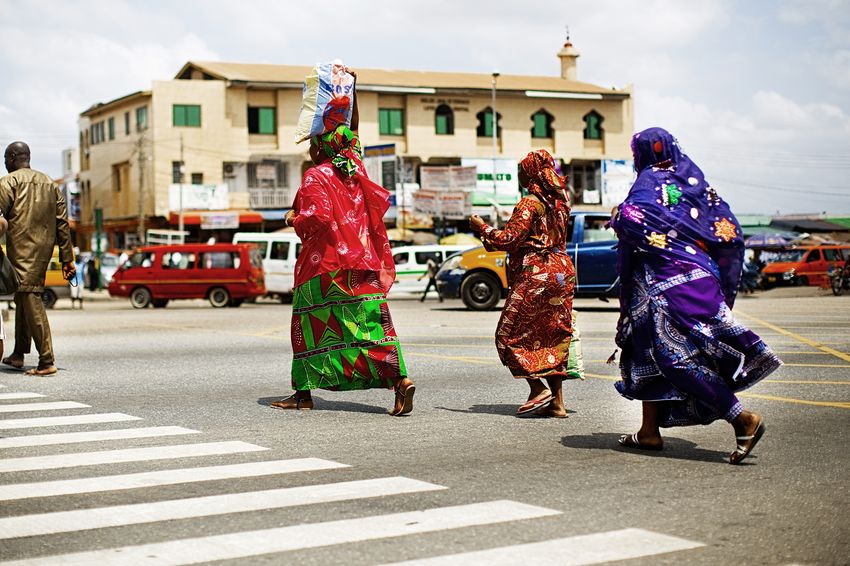
INCREASING ROAD                                    For the Tulu Dimtu – Kality Interchange
                                                   Road Rehabilitation Project, an initial
SAFETY INVESTMENTS IN
                                                   investment of:
ADDIS ABABA

In 2018, the GRSF funded an iRAP analysis
of the Tulu Dimtu – Kality Interchange Road.
                                                   $216,800 by GRSF
The assessment resulted in a series of                led to
recommendations and a subsequent road

                                                   $17,500,000
rehabilitation project led to $17.5 million                                  of country road
in interventions, including:                                                 safety investment

   pedestrian fencing
                                                   [a leveraging ratio of 1:80]

   raised pedestrian crossings

   rumble strips; improved delineation                             Each $1 of
   footpath provision on driver side                               GRSF investment
                                                                      resulted in
The GRSF Leveraging Ratio is def ined as

                                                   $80
the dollars GRSF provides to a project
relative to the dollars other sources provide                     additional for road
for road safety on the same project.                              safety in Addis Ababa
The term has been used to measure the
amount of investment that is sparked by            The GRSF Leveraging Ratios method is
an initial investment.                             a useful technique that can provide
                                                   quantitative evidence of the high impact of
                                                   GRSF investments on subsequent projects.
                                                                                                 7
INSTALLATION OF SAFETY GUARD
RAILS UNDER THE RSDP PROJECT
N E PA L
ROAD SAFETY BARRIERS These represented:
76%
FOR OPEN ROADS IN NEPAL of the high-risk locations
under the project
At high embankments and hilly terrain,
critical road safety inf rastructure treatments
An evaluation after the installation of
are needed to guide the out-of-control
the barriers indicated that at least 7 hits
vehicles back to the traveled way.
were recorded and vehicles carrying
270
One of the ways to mitigate the risk, is the
effective use of road crash barrier systems passengers
which are appropriate for such road were saved
environment. Road crash barriers do not
only reduce the likelihood of crashes f rom departing f rom the roadway and
happening, but also lower the severity of potentially falling into the valley.
the outcome in such cases..
In Nepal, thanks to the World Bank Road
Given the terrain, many of the 270
Sector Development Project (RSDP), in
support of GRSF, the outcomes of the passengers would have died if these
project included that: vehicles had left the road and fallen down
the cliff. If similar rates continued in future
73,000 meters of years, that could equate to
crash barriers
were installed on selected sections of the
roads targeted under the project, based on
the recommendations of a Road Safety Audit.
3,456 lives
saved
ove r a 2 0 yea r p e r i o d
88DIAGNOSTIC ON THE NATIONAL
ROAD SAFETY STRATEGY
MOROCCO
A NATIONAL ROAD SAFETY
The new strategy calls
STRATEGY SAVES LIVES for cutting 50% the
IN MOROCCO number of road deaths
Morocco has a high road traff ic mortality rate
(10 deaths per 100,000 people) compared to
by 2025
its peer countries. In this context, and to
further improve road safety management The Bank team partnered closely with
capacity and institutional reforms, the the government counterparts on the
Ministry of Equipment, Transport and various recommendations emerging
Logistics of Morocco sought technical
f rom the strategy assessment, including
assistance f rom the GRSF.
detailed comments on the draft law
The assistance included a detailed needed for the creation of a Lead Agency.
diagnostic on the National Road Safety
Strategy for 2004-2013 and preparation of
a new strategy for the period 2016-2025. A signif icant outcome of the engagement
has been the creation of the National
The detailed evaluation of the old National
Road Safety Strategy highlighted some Road Safety Agency, as well as the focus
remarkable achievements in terms of on these high risk road-user groups:
country-level road safety performance.
While the length of the paved road network pedestrians
and the vehicle km travelled has increased
substantially during the strategy
implementation period (2004-2013), there motorized two and three
had been an overall reduction in road wheelers
deaths with estimated 9,210 deaths averted
compared to trends observed during the children under 14 years
pre-strategy period.
9COMPREHENSIVE ROAD
SAFETY PROGRAM
TARIJA | SANTA CRUZ | LA PAZ | EL ALTO
BOLIVIA
DEVELOPING URBAN MOBILITY Additionally, GRSF has worked with
AND ROAD SAFETY CAPACITY Bolivian authorities to advance:
BUILDING IN BOLIVIA
A methodology for streets
The Bolivia Comprehensive Road Safety and highways speed limit
Program is a program funded by the GRSF, determination in Bolivia and
managed by the World Bank and executed application on newly
by CAF. The main objectives are to: developed highways.
Promote Safe Urban Mobility: To deliver An alternative Traff ic Fines
a road safety plan for four Bolivian cities Scheme and a core training
that will be developed as an integrated course for professionals.
part of the Urban Mobility Plans.
Recommendations to improve
Road Safety Capacity Building: To
the Bolivian Traff ic Code
diagnose the road safety situation in
(speed, institutional)
Bolivia and suggest actions to be taken by
nationally.
the Lead Agency and key partners in road
safety in line with the country’s goals.
With this project, GRSF has actively
GRSF has supported contributed to the update
L A PA Z
the development of of the National Traff ic Law
EL ALTO
Road Safety Action in its transformation to a
Plans in Bolivia through SAN TA
road safety and traff ic law.
CRUZ
comprehensive
technical support and
TAR I JA
consultations.
10DEVELOPMENT OF GLOBAL
ROAD SAFETY OBSERVATORIES
LATIN AMERICA, AFRICA AND ASIA
IMPROVING CRASH DATA AND With the support of GRSF, these initiatives
MONITORING IN THREE CONTINENTS have advanced in:
Accelerating country-level
Reliable safety and traff ic data are essential to
improvements in data collection
assess the full nature of the road safety problem,
measure the real economic costs associated with
Fostering a positive collaboration
road crashes, and design the most cost-effective
between countries to improve their
road safety interventions.
crash data systems, raise road
Responding to this need, GRSF has expanded its safety on the policy agenda and
scope of activities through the establishment share data and information
of Road Safety Observatories – a formal network
of government representatives to share and
exchange road safety data and experience in OISEVI has led to:
order to reduce traff ic injuries across countries
in the region. A strong regional cooperation between
+20 countries.
Building on the successful regional observatory
Institutional reforms in the region. Creation
model in Latin America with the Latin American
of lead agencies and national observatories
Road Safety Observatory (OISEVI) in 2011, and
in several countries.
following GRSF continuous cooperation with
international partners and f inancial support
provided by UK Aid, the Af rican Road Safety ARSO has implemented:
Observatory (ARSO) was formally launched at A governance structure of +40 countries and
the f irst Annual Assembly meeting in South Af rica an initial work-plan for the period 2019-2021.
in June 2019, while a kick-off event and a second
workshop for the Asia-Pacif ic Road Safety
Observatory (APRSO) took place in Singapore
APRSO has facilitated:
(March 2019) and Bangkok (December 2019), with Initial meetings and consultations between
support f rom UK Aid, FIA Foundation and the the Asian and the Pacif ic countries in
QII Partnership between the World Bank and the partnership with ADB, OECD/ITF, FIA,
Government of Japan. UNESCAP, among others.
11TOGO ASSESSMENT OF VEHICLE
INSPECTION SYSTEMS (AVIS)
TOGO
MAKING VEHICLE INSPECTIONS With AVIS, GRSF helped Togo
COUNT IN TOGO to establish the essential
technical requirement for the
In Togo, a joint project between the World
Bank’s GRSF and CITA (Comité International import of vehicles, which was
de l’Inspection Technique Automobile) is not in place.
assisting the government in assessing its
vehicle inspection regimes (current and The project models are
imported vehicles) to suggest better ways to replicable to different country
manage and improve inspection stations and contexts and produced valuable
the administrative oversight of this sector. This lessons on the importance of
has been done through the Assessment of empowering authorities.
Vehicle Inspection Systems (AVIS) — a new
analysis tool developed by GRSF and CITA.
Project highlights include: The Togolese Government and
the World Bank are working
in-country and in-depth AVIS by professional on the implementation of
experts of the status of vehicle inspection recommendations emerging
control in Togo f rom this assessment to
formulate a way forward to
context specif ic recommendations to
address vehicle inspections
improve the way these inspection
effectively.
programs contribute to the country’s
overall ability to manage the motorization
In parallel, the Government of Togo is working on
process, improve road safety outcomes and reforms in its legislation, building its capacity to be
achieve other public policy objectives able to either take over the vehicle inspection from
the concessionaires, or to effectively monitor a
an overall program of capacity building
selected operator through a competitive process.
toward implementing the recommendations.
12GRSF AND IRAP:
A ROAD SAFETY PARTNERSHIP
FOR SAVING LIVES
CHINA & THAILAND
SUPPORTING ROAD SAFETY ChinaRAP
INTERVENTIONS AND BUILDING
ChinaRAP has played a central role in the State
SUSTAINABILITY Council supported national Highway Safety to
Cherish Life program, which implemented
The International Road Assessment
engineering safety improvements on
Programme (iRAP) is the umbrella program
300,000km of roads worth approximately CNY
for Road Assessment Programmes (RAPs)
36 billion (USD 5.1 billion) in 2016-18.
that is working to save lives with its risk
mapping, star rating, safer roads investment Through the BIGRS Initiative, the GRSF, iRAP
plans and performance tracking tools. and the ChinaRAP team have been supporting
Shanghai’s Yangpu District Transport
Over f ive years (2015 – 2019), iRAP has worked
Commission in improving non-motorized
with the World Bank’s GRSF and local
traff ic facilities on its streets.
partners to assess more than 15,200
carriageway-kilometer roads in ten cities and
ThaiRAP
f ive countries as part of the BIGRS Program.
This work has driven evidence-based
interventions and road upgrades saving In Thailand, under the BIGRS Initiative with
7,000 lives f rom countermeasures already support f rom the GRSF, a partnership was
implemented or scoped in designs. established between iRAP and Chulalongkorn
University, through a series of projects which led
Using the iRAP methodology, it is estimated to the assessments of more than 1100km of
that if all the safety countermeasures high-risk roads during 2015-19.
suggested in these assessments of existing
roads are implemented, approximately This partnership is training and accrediting
7,000 fatalities in the cities and 23,300 local experts and ensure that the application
of road assessments across Thailand are
fatalities in the countries could be
completed to the high standard expected as
prevented between 2020 and 2030.
part of the global program.
13OTHER EXAMPLES BETTER DATA FOR SAFER ROADS
IN THE PHILIPPINES
OF GRSF SUCCESS
STORIES
In the Philippines, the government and the World
Bank designed and deployed ‘Data for Road
Incident Visualization Evaluation and Reporting’,
or DRIVER, a web-based, open-source platform for
geo-spatially recording, analyzing, and reporting
road crashes.
The GRSF team is currently piloting DRIVER in
Mumbai, São Paulo, Fortaleza, and Bangkok
through the BIGRS and Dhaka through a Bank
lending operation. The GRSF team supports the
cities by facilitating inter-agency discussions and
providing training as well as adaptation and
evaluation of the system.
IMPACT EVALUATION OF INTEGRADED
URBAN CORRIDOR DEVELOPMENT IN
ADDIS ABABA
As part of the cooperation between GRSF and
ieConnect for Impact, which is a dedicated
grant-funded initiative implemented as part of
Development Impact Evaluation (DIME) program
by the World Bank Development Research Group,
several grants are supporting research activities
focusing on improving impact evaluation of
transport project’s safety results.
This GRSF grant-funded project is assessing road
safety outcomes f rom the upgrading of 250+
junctions and 5 corridors in Addis Ababa, under a
complete street design concept, and focusing on
intermediate road safety outcomes to measure
likelihood of future collisions, injuries and fatalities.
14GRSF From its inception, GRSF has provided funding, knowledge,
and technical assistance to the following 78 countries to
IN THE WORLD strengthen road safety interventions and save lives.
GRSF funded countries (which may have missions to the country as well)
GRSF advice and missions
15There are many other success stories that
were guided or supported by GRSF funding
and expertise. Thanks to the efforts of all the
teams and donor partners involved in GRSF,
including Bloomberg Philanthropies, UK’s
Department for International Development
(DFID), Department for Health and Social
Care (DHSC) through the National Institute
for Research (NIHR), CITA, Total
Foundation, the World Bank, and other
partners who make this work possible, GRSF
can offer more road safety success stories
and greater sustainable outcomes and
results across the world.
16GRSF DONORS & FOUNDERS
GRSF PARTNERS
MDBs
17For more information, please contact:
grsf@worldbak.org
bit.ly/GlobalRoadSafetyFacility
@WBG_Transport
_________
Global Road Safety Facility
World Bank
1818 H St NW, Washington D.C.You can also read


