Leveraging Social Media for Cardio-Oncology - eScholarship
←
→
Page content transcription
If your browser does not render page correctly, please read the page content below
Curr. Treat. Options in Oncol. (2020) 21:83
DOI 10.1007/s11864-020-00775-3

 Cardio-oncology (MG Fradley, Section Editor)

Leveraging Social Media
for Cardio-Oncology
Sherry-Ann Brown, MD PhD1,2
Ryan P. Daly, MD3
Narjust Duma, MD4
Eric H. Yang, MD5
Naveen Pemmaraju, MD6
Purvi Parwani, MBBS7
Andrew D. Choi, MD8
Juan Lopez-Mattei, MD9,10,*
Address
1
 Department of Cardiovascular Diseases, Mayo Clinic, 200 First St SW, Rochester,
MN, 55905, USA
2
 Cardio-Oncology Program, Division of Cardiovascular Medicine, Medical College
of Wisconsin, 8701 W Watertown Plank Road, Wauwatosa, WI, 53226, USA
3
 Franciscan Health-Indianapolis. Indiana Heart Physicians, 5330 East Stop 11
Road, Indianapolis, IN, 46237, USA
4
 K4/554 5666 Clinical Science Center, University of Wisconsin Carbone Cancer
Center, 600 Highland Ave., Madison, WI, 53792, USA
5
 UCLA Cardio-Oncology Program, Division of Cardiology, UCLA Cardiovascular
Center, 100 Medical Plaza, Suite 630, Los Angeles, CA, 90095, USA
6
 MD Anderson Cancer Center, Leukemia, 1515 Holcombe Blvd, Unit 0428, Hous-
ton, TX, USA
7
 Division of Cardiology, Department of Medicine, Loma Linda University Health,
11234 Anderson Street, Room 4404, Loma Linda, CA, 92354, USA
8
 Division of Cardiology and Department of Radiology, The George Washington
University School of Medicine, 2150 Pennsylvania Avenue NW, Suite 4-417,
Washington, DC, 20037, USA
9
 Departments of Cardiology & Thoracic Imaging, University of Texas MD Anderson
Cancer Center, 1515 Holcombe Blvd, Houston, TX, USA
*,10
    Departments of Cardiology & Diagnostic Radiology, University of Texas MD
Anderson Cancer Center, 1515 Holcombe Blvd, Houston, TX, 77030, USA
Email: jlopez9@mdanderson.org

* Springer Science+Business Media, LLC, part of Springer Nature 2020

This article is part of the Topical Collection on Cardio-oncology

Keywords Social Media I SoMe I Twitter I CardioOnc I CardioOncology I PrevCardioOnc I JACCCardioOnc I
SoMeCardioOnc

Opinion statement
  As the world becomes more connected through online and offline social network-
  ing, there has been much discussion of how the rapid rise of social media could
  be used in ways that can be productive and instructive in various healthcare
  specialties, such as Cardiology and its subspecialty areas. In this review, the role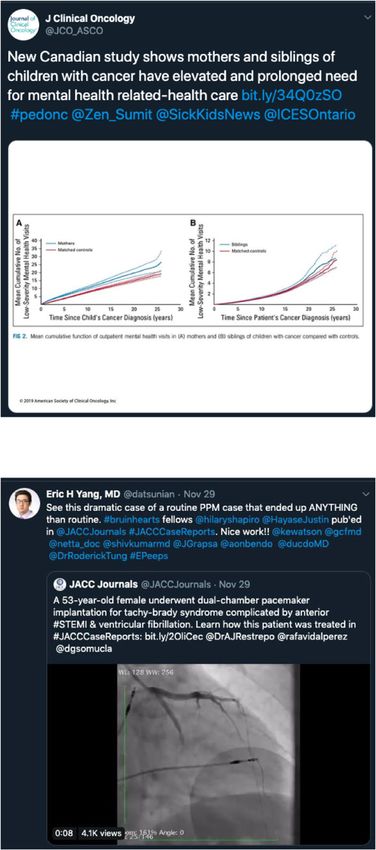
83    Page 2 of 19                                         Curr. Treat. Options in Oncol.      (2020) 21:83

 of social media in the field of Cardio-Oncology is discussed. With an estimated 17
 million cancer survivors in the USA in 2019 and 22 million estimated by 2030,
 more education and awareness are needed. Networking and collaboration are also
 needed to meet the needs of our patients and healthcare professionals in this
 emerging field bridging two disciplines. Cardiovascular disease is second only to
 recurrence of the primary cancer or diagnosis with a secondary malignancy, as a
 leading cause of death in cancer survivors. A majority of these survivors are
 anticipated to be on social media seeking information, support, and ideas for
 optimizing health. Healthcare professionals in Cardio-Oncology are also online for
 networking, education, scholarship, career development, and advocacy in this
 field. Here, we describe the utilization and potential impact of social media in
 Cardio-Oncology, with inclusion of various hashtags frequently used in the Cardio-
 Oncology Twitter community.

 Introduction
Scholarly works on social media in the broader             information continues to exponentially increase. Novel
fields of Adult and Pediatric Cardiology, as well          therapeutics with a multitude of side effects, toxicities,
as Oncology and Hematology, set a precedent for            and important drug-drug interactions are being pro-
the role of social media in Cardio-Oncology [1–            duced at a rapid pace. Social media can help busy clini-
10]. These works describe both benefits and limi-          cians and researchers keep up-to-date on current ad-
tations of Cardiology and Oncology on social me-           vances. Real-time educational debates and informed
dia. The described benefits include opportunities          discourse often follow publication of key articles or trials
for networking among multidisciplinary healthcare          on social media platforms such as Twitter, often led by
professionals and patient advocates, education of          trialists and content experts. Fast dissemination and
colleagues and patients, raising public and societal       discussion of recent literature usually ensues, with
awareness for various diseases and conditions af-          reporting and discussion of approaches to unusual ad-
fecting children, adolescents, and adults in Cardi-        verse effects of cancer treatments. Social media is there-
ology, as well as advocacy and professional brand-         fore changing the landscape of how we communicate,
ing [1–10]. In our quest to achieve these goals in         network, collaborate, and discuss current trends in car-
Cardiology on social media, it is important for us         diovascular medicine, and particularly Cardio-
to do so in a way that promotes equity, diversity,         Oncology.
and inclusion, particularly for women and ethnic               Here, we review current and proposed use of
minorities. It is also important to ensure that            social media in Cardio-Oncology for networking,
healthcare professionals protect the privacy of pa-        education, advocacy, branding, and academic career
tients, and that patients and the general public           development. The presence and impact of Cardio-
understand that medical advice cannot be given             Oncology on social media at national scientific
on these platforms, nor should patient-doctor rela-        meetings, as well as the physician professionalism
tionships be formed on social media in their cur-          and patient perspectives, are also addressed. In ad-
rent forms.                                                dition, the roles of the Cardio-Oncology clinician
    While Cardio-Oncology is relatively young within       or physician scientist on social media and of
the field of Cardiovascular Medicine. Yet, the cardiac     Cardio-Oncology social media editors and consul-
sequelae of many anti-neoplastic regimens, such as         tants are discussed. We primarily focus on Twitter
mantle radiation, anthracyclines, and targeted therapies   as the main social media platform, as it has been
(e.g., trastuzumab), have been known for many years.       heavily embraced by the global Cardio-Oncology
The volume of new and clinically important                 community.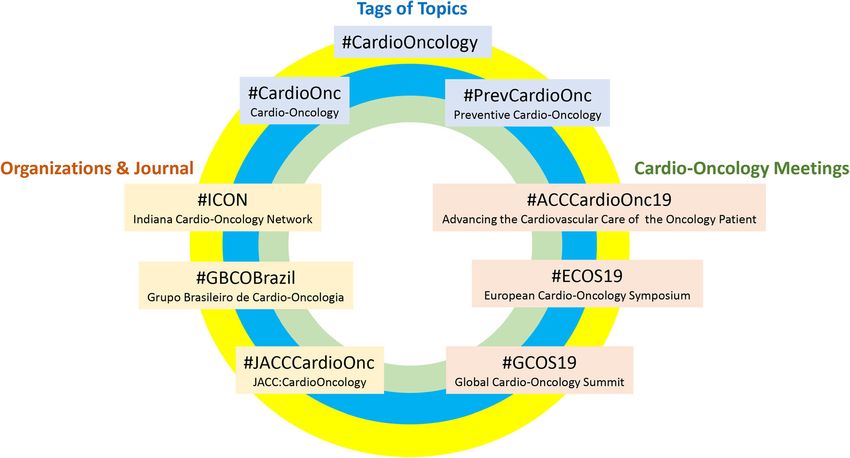
Curr. Treat. Options in Oncol.       (2020) 21:83                                                   Page 3 of 19   83

Organization and curation with hashtags
                                       Popular and appropriate Cardio-Oncology hashtags have been introduced and
                                       should continue to be widely used (Fig. 1). These hashtags are metadata tags on
                                       Twitter that help us organize, curate, and find content relevant to the field [7,
                                       11] (Tables 1 and 2). Such hashtags have been useful in various Cardiology
                                       subspecialties on Twitter. They connect active and engaged cardiologists, e.g., in
                                       prevention (#CvPrev), CV imaging (#EchoFirst for echocardiography,
                                       #WhyCMR for cardiac MRI, #YesCCT for cardiac CT, #CVNuc for nuclear
                                       cardiology), or structural heart disease (#TAVR, #MitraClip). Hashtags have
                                       also been used to establish overlapping interest areas in Cardiology and Dia-
                                       betes (#CardioDiabetology) or Cardiology and Obstetrics (#CardioObstetrics;
                                       to highlight the relationship between the two specialties over the course of a
                                       woman’s lifetime), among others.

Oncology and hematology meet cardiology in social media
                                       Cancer care has evolved in the last 20 years, once an isolated specialty, oncology
                                       is now composed of multidisciplinary teams and international collaborations.
                                       The survival of our patients with cancer has significantly improved with the
                                       introduction of targeted therapy and immunotherapy, and we continue to learn
                                       the long-term consequences of those treatments, particularly cardiovascular
                                       toxicity [12].

Fig. 1. Popular Cardio-Oncology twitter hashtags.
83 Page 4 of 19 Curr. Treat. Options in Oncol. (2020) 21:83
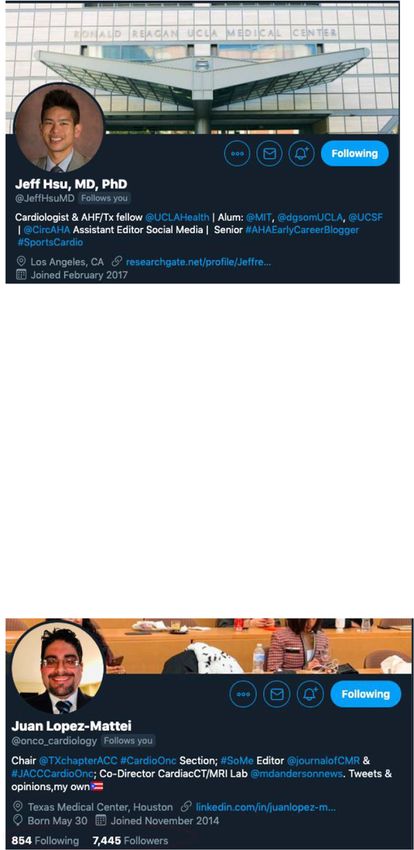
Table 1. Key Twitter terminology
Term Definition Example
bio Short (up to 160 characters)
personal description that
appears in the user’s profile
that serves to characterize
their persona on Twitter.
https://twitter.com/JeffHsuMD
@ Used to mention usernames @UCLAHealth
in Tweets (“Hello @twitter!”) @Twitter
Twitter users can have their @CircAHA
@username mentioned in @JACCJournals
Tweets, communicate via @ASCO
direct messaging or have a @JCO_ASCO
link to their profile.
# A word or phrase immediately #cardioonc
(hashtag) preceded by the # symbol. #echofirst
When hashtags are clicked #melanoma
on, users will see other #breastcancer
Tweets containing the same #immunotherapy
keyword or topic
Follow/ Follow: Subscribing to a
Follower Twitter account. Any post by
that Twitter account will be
posted on the Twitter user’s
feed.
Follower: A Twitter account
that is following the user to
receive the user’s Tweets in
the Home timeline.
https://twitter.com/onco_cardiology
]Curr. Treat. Options in Oncol. (2020) 21:83 Page 5 of 19 83
Table 1. (continued)
Tweet (noun definition): A post of up
to 280 characters that can
contain photos, GIFs, videos,
and text.
(verb definition): Act of
sending a Tweet. Tweets get
shown in Twitter timelines, or
are embedded in websites
and blogs.
https://twitter.com/JCO_ASCO/status/119499593
1302834176?s=20
Retweet (noun definition): A Tweet that
is forwarded to a user’s
followers.
(verb definition): Act of
sharing another account’s
Tweet to a user’s followers.
https://twitter.com/datsunian/status/1200475058390437888
Examples of user profiles used with permission. Adapted from Twitter Glossary, https://help.twitter.com/en/glossary.
Accessed November 28, 201983 Page 6 of 19 Curr. Treat. Options in Oncol. (2020) 21:83
Table 2. Sample of disease-specific hashtags frequently used by the Oncology and Hematology communities on Twitter
Hashtag Disease
#AYACSM Adolescent and young adult cancer
#BCSM Breast cancer
#BMFSM Bone marrow failure syndromes
#BMTSM Bone marrow transplantation
#BPDCN Blastic plasmacytoid dendritic cell neoplasm
#BreastCancer Breast cancer
#ChildhoodCancer Childhood cancer
#CRCSM Colorectal cancer
#Globonc Global Oncology
#GynCSM Gynecologic cancer
#ImmunoOnc Immuno-oncology
#Immunotherapy Immunotherapy
#KCSM Kidney cancer
#LCSM Lung cancer
#Leukemia Leukemia
#LeuSM Leukemia
#LungCancer Lung cancer
#LymSM Lymphoma
#MDSSm Myelodysplastic syndrome
#MMSM Multiple myeloma
#MPNSM Myeloproliferative neoplasms
#PallOnc Palliative oncology
#PancSM Pancreatic cancer
#PCSM Prostate cancer
#PedCSM Pediatric cancer
#SuppOnc Supportive care in Oncology
The online oncology and hematology communities have been part of the
early implementers of hashtags in order to decrease the signal-to-noise ratio that
can be seen in the Twitter and Facebook communities. The first reported cancer-
specific hashtag was #bcsm (breast cancer social media), followed by #btsm
(brain tumors social media) in 2011 and 2012, respectively [7]. Subsequently,
more cancer-specific hashtags have been developed. The influx of a disease-
specific hashtag is generally correlated with the clinical research advances in the
field [8]. For example, in 2015, the hashtags #lungcancer and #immunotherapy
were on the top five of the most commonly tweeted hashtags in the 2015
American Society of Clinical Oncology (ASCO) Annual Meeting [8]. This
correlated with the presentation of clinical trials that would ultimately change
the care of patients with lung cancer. The Collaboration for Outcomes on SocialCurr. Treat. Options in Oncol. (2020) 21:83 Page 7 of 19 83
Media in Oncology (COSMO) encourages all social media participants to use
the designated disease specific hashtags to clean the message, help new users
find accurate information, and allow better data collection when research in
social media is conducted [9].
Social media also provide us with the opportunity to network among many
specialties, with the discussion of cases among cardiologists, oncologists, pa-
thologists, and radiation oncologists. This unprecedented exchange of informa-
tion and ideas can be guided by the use of hashtag Twitter medical communi-
ties, pioneered in part by many colleagues in Hematology, Oncology, and
Cardiology, with specific hashtags developed for common use; widespread
collaboration has aided in providing a framework for ongoing discussions [7,
13, 14]. Ultimately, social media has therefore brought the Cardio-Oncology
community together (including our colleagues in Hematology, Vascular Med-
icine, and others), and has helped increase awareness about many new entities
and the subspecialty itself. Several resources exists for medical trainees and new
social media users [1, 2, 7, 15], many of which are discussed in this review.
Cardio-oncologist on social media
Each cardio-oncologist on social media plays a role in the education of not only
other cardio-oncologists, but also other physicians and advanced practice pro-
viders involved in the care of patients in Cardio-Oncology. Both radiotherapy
and chemotherapy independently and synergistically appear to injure the peri-
cardium, myocardium, valves, conduction system, and coronary vessels [16,
17]. Immunotherapy and targeted therapies can also injure the pericardium,
myocardium, coronary vessels, or conduction system [18–21]. Therefore, it
would be prudent to educate all physicians and other healthcare professionals
in cardiology at all career stages about #CardioOnc. Other disciplines crucial to
Cardio-Oncology, such as Medical Oncology, Radiation Oncology, Surgical
Oncology, Hematology, and Internal Medicine, should also be engaged. This
collaborative learning community would be best for patients, as we seek to
prevent, manage, and limit the burden of existing cardiotoxicity. Both clinicians
and physician scientists in Cardio-Oncology and Preventive Cardio-Oncology
could take up the mantle of patient care, research, and education, along with
community engagement and global collaborations. Different yet complemen-
tary perspectives from clinical practice, basic science, and translational medicine
can coalesce to form a cohesive field and learning community on social media.
The entire Cardio-Oncology social media community participates in a disrup-
tive public crowdsourced peer review process in which educational items can be
evaluated and advanced. In this way, robust discussions and debates among
physicians and scientists at various stages of their careers, as well as patients,
patient advocates, and other stakeholders rigorously and democratically
sharpens and disseminates ideas internationally [1, 2]. Daily, “case reports”
are posted for the purpose of educating our colleagues and patients in a manner
that can be judicious and meaningful [1]. Cases should not include identifiable
patient information, and should be accompanied by informed patient consent
[22]. Often, prior publications are shared, as well as professional anecdotes, in
collective wisdom or query, sprinkled with reflections on self-care and physician
burnout and moral injury [22, 23].83 Page 8 of 19 Curr. Treat. Options in Oncol. (2020) 21:83
Educational content: cardio-oncology initiatives
Professional societies and academic institutions use the hashtags #CardioOnc
and #CardioOncology on Twitter to highlight scientific content in tutorials
termed “tweetorials,” as well as case-studies, educational webcasts, and
podcasts, many of which are free to access. Many journals have also created
their own unique hashtags. For example, the new journal JACC:
CardioOncology routinely tweets their content accompanied by a central illus-
tration and link to the article with the hashtag #JACCCardioOnc. An online
medical education platform MedPage (MedPage.Com) uses a unique hashtag
#CardioOncoConnect to facilitate Cardio-Oncology twitter chats about various
topical #CardioOnc, in collaboration with ACC and ASCO.
A few ACC chapters have also followed suit. The Texas-ACC chapter (Twitter
handle: @TXChapterACC) sponsors the Texas CardioOncology Seminar
#TCOS2020, as well as an educational blog on Cardio-Oncology topics. The
Indiana-ACC chapter (Twitter handle: @InACC) and the Indiana
CardioOncology Network (#ICON) together sponsor educational events that
can be freely accessed through Twitter and YouTube.
Several individuals practicing in Cardio-Oncology have also established
themselves as influencers in education on social media. Social media
influencers are those who regularly post and garner a substantial following of
engaged individuals focused on specific topics or themes, generating content
using the hashtags #CardioOnc, #CardioOncology, and #PrevCardioOnc.
Influencers set the trends and tone in discussions related to the relevant topics
and themes. Followers grow to trust influencers, who establish themselves as
thought leaders. As early career and midcareer clinicians (and some researchers)
in Cardio-Oncology, all authors of this article frequently post trendsetting
articles, polls, questions, tips, and other information that help engage and
educate the community. It should be noted that influence can be carried by
tweeting under one’s own name, the name of a specialty, the name of a program
or institution, a journal or any of the above. In fact, many influencers oversee
multiple social media accounts if the focus of each account is somewhat
different from the other accounts, or if a particular field or program should be
emphasized. A great case example is of @PrevCardioOnc and #PrevCardioOnc
on Twitter (and the upcoming social education blog PrevCardioOnc.Com).
This Twitter handle and hashtag were created to introduce and disseminate
various new ideas for prevention in Cardio-Oncology, while building a specific
community around these ideas.
There are other #CardioOnc influencers on social media who also help
engage the community. Some community members post about recent scientific
and medical journal publications from others (or themselves); others promote
their podcast through Twitter. Other authors develop “tweetorials,” which are
essentially tweets threaded together to form mini-lectures on focused topics By
actively participating in the vibrant social media community, several physicians
and trainees have had the opportunity to forge successful international collab-
orations for data analysis and publication in #CardioOncology. From among
such pools of active participants in academic #CardioOnc communities on
social media often are drawn tweeters for specialty tracks at Cardiology confer-
ences. The ACC has been an early adopter engaging cardiologists on Twitter.Curr. Treat. Options in Oncol. (2020) 21:83 Page 9 of 19 83
Several national and international societies are also beginning to integrate
social media coverage into their meetings and literature. The American Heart
Association, European Society for Cardiology, Heart Failure Society of America,
Association of Black Cardiologists, and several other societies are now desig-
nating societal “tweeters,” “influencers,” “catalysts,” “ambassadors,” and “com-
mentators,” who often are assigned to specific subspecialty tracks for knowledge
dissemination during the societies’ national or international annual scientific
sessions. Such influencers are often regarded as the “go-to folks,” and may
frequently receive direct messages for opinions or collaboration. These are also
typically the individuals who serve as social media editors and consultants for
journals for societies such as the ACC, American Society for Nuclear Cardiology,
and other journal editorial boards on which the authors of this article serve,
many of which have formal CardioOncology journal sections.
Cardio-oncology conferences on social media
Activities related to networking and education in the Cardiology social media
community (commonly referred to as #CardioTwitter) often occur around the
time of large national scientific sessions for major professional societies in Cardi-
ology, such as those of the American College of Cardiology (ACC), American Heart
Association (AHA), and European Society of Cardiology [1, 24, 25]. Indeed, there
has been a tremendous increase in Twitter usage by cardiologists at around the time
of these conferences [1]. Similar findings have been reported for major Oncology
meetings, as cancer specialists are also leading the way on Twitter [8, 26–28]. The
ASCO annual meeting, for example, has seen an 11-fold increase in the number of
social media participants and content [8]. Most participants in the social chatter
surrounding (especially the multidisciplinary) sessions at these conferences are
actively tweeting pearls and insights from the conferences, while others are tweeting
their responses to the scientific data and appreciation for being able to participate
online. This allows physicians and other healthcare providers that are not attending
the conferences to remain up to date regarding new research findings and changes
in practice [10].
Such efforts by those at the conference and those remotely “listening” to the
conference chatter on social media help to increase engagement of cardiologists,
oncologists, and hematologists worldwide, even if unable to be physically
present. This broadens access to educational material that would otherwise be
limited to those attending in person. Sessions, courses, or conferences on
Cardio-Oncology are catching up as well. Specifically tweeting from and about
Cardio-Oncology sessions, posters, and gatherings at these conferences or at
conferences dedicated to the field. There is great need to spread awareness and
educate others currently in practice or those in training, to meet the needs of the
growing cancer survivor population.
Conference speakers should [29]
& Consider the fact that your slides will likely be photographed and tweeted.
& Design your slides accordingly and include your Twitter handle and the
conference hashtag.
& Speak slowly give the physical audience the opportunity to prepare and
send off their tweets about your work.83 Page 10 of 19 Curr. Treat. Options in Oncol. (2020) 21:83
& Finally, engage your worldwide virtual audience on social media (#SoMe)
to promote your talk in advance and then continue the conversation
online after the presentation and even the conference.
Such efforts help to broaden access to educational material and enhance the
social media presence of your work and also the professional societies and
sections hosting the conference or supporting your work.
Role of the social media editorial board
In addition to individuals and professional societies, scientific journals
have also adopted the use of social media. Social media is being used to
promote new articles and upcoming journal issues, enhanced by journal-
initiated Twitter Journal Clubs and Twitter Chats [30]. Previous studies
in Cardiology had shown that editorial board members at top journals
were not appreciably present or active on Twitter. The findings suggested
a chasm between academic Cardiology thought and science leadership
and potential consumers of the vast knowledge being published in the
journals. While consumers engaged with the actual journal Twitter han-
dles, interaction from academic cardiology journal thought leaders was
lacking.
Since then, many scientific journals have expanded their editorial
boards to include members that are responsible for sharing journal con-
tent and highlighting select in-press manuscripts on social media, with
inclusion of author twitter handles now being requested with each man-
uscript submission. Some journals also request draft tweets from authors
of submitted or accepted manuscripts (e.g., https://www.
thepermanentejournal.org/authors/prepare.html). Roles that have been
assigned to social media editors consist of composing tweets about accept-
ed journal articles, assigning composition of online contents (blogs),
editing authors’ composed tweets and associated media, creating, and
either posting or delegating content [31]. In JACC:CardioOncology, for
example, the social media editorial board consists of Social Media Direc-
tors (SMD) and Social Media Consultants (SMC) [32]. The role of SMDs
and SMCs is to leverage the power of social media and the associated
global audience to facilitate the dissemination of cardiovascular and
Cardio-Oncology health information and education rapidly and efficiently
[30]. The SMDs develop educational content in collaboration and upon
approval of the editorial board. The content creation and dissemination
are performed in collaboration with the SMCs. One example of education-
al content creation in social media is a series of tweets disseminated using
the @JACCJournals Twitter account. The tweets highlighted seminal papers
in Cardio-Oncology shared under the heading “How far we’ve come in
#CardioOnc with #JACCCardioOnc” [33]. The intention behind these
series of tweets was to educate the Twitter audience on some of the most
important papers in the field of Cardio-Oncology, by summarizing find-
ings and sharing the most relevant graphics and references. This campaign
was developed to promote the release of JACC:CardioOncology. The social
media editorial board in a Cardio-Oncology journal may create content by
developing blogs related to the journal’s articles, hosting live journal clubsCurr. Treat. Options in Oncol. (2020) 21:83 Page 11 of 19 83
using social media platforms, developing or editing and sharing summa-
rized visual abstracts, establishing or participating in podcasts, and
tweeting articles in-press with the most appropriate accompanying
illustrations.
One of the main goals of any organization that promotes or supports
Cardio-Oncology should be education, as this has been reported previously as
one of the most important barriers in establishing Cardio-Oncology programs
in hospitals [34]. Multidisciplinary collaborations among cardiologists, oncol-
ogists, and other stakeholders (e.g., nurses, advanced practitioners, administra-
tion executives, patient advocacy groups) using social media can foster syner-
gistic relationships and develop mutual interests, thereby strengthening the
field. In this way, social media can be used to encourage engagement of more
stakeholders. This ensures that education is not limited to those that subscribe
to a particular journal or read a particular issue.
Strategic plans need to be developed by SMDs during Cardio-
Oncology meetings and other Cardiology meetings with Cardio-
Oncology sessions to share educational content from the journal rele-
vant to discussions at the meetings. It is important to support the
participation of other journal editorial board members, to increase the
attention and engagement of the audience, for example, by sharing brief
video clips of interviews and perspectives of the editorial board. Smart
and considerate engagement is key, as is abiding by specific journal
policies regarding social media activity. Best practices on the use of
#CardioTwitter have been described [35]. In general, “strive for accuracy
and quality, give credit, share perspectives, and be civil [35].
Opportunities for patient engagement in cardio-oncology on
social media
We are connected globally. While on social media, cardio-oncologists are
accessible to patients and providers worldwide. Globally it is estimated
that 5 billion people have mobile devices, with half of these devices being
smartphones. According to Pew research, smartphone ownership in the
USA exceeds 65% of the population Most Americans are online daily;
Twitter has 126 million daily active users. The internet and social media
have become major sources of information for all. Nearly 75% of all
seniors use the internet daily, with more than half of these individuals
doing so for health-related concerns. An overwhelming majority of pa-
tients (89%) in one survey of 1500 cancer patients, survivors, and care-
givers reported using the internet to search for information about their
diagnoses. More than 70% of adults in the USA use at least one social
networking site. In addition, 90% of physicians use some form of social
media for personal or private reasons, with 65% of physicians using social
media for professional reasons [36].
Given these statistics for both patients and physicians, social media
has the opportunity to dramatically extend the reach and amplify the
voice of the cardio-oncologist. Instead of reaching 20–30 patients each
day as many of us do in clinic, #SoMe offers the opportunity reach83 Page 12 of 19 Curr. Treat. Options in Oncol. (2020) 21:83
hundreds, or perhaps thousands, of patients daily [37]. Benefits may
include providing patients with trusted, timely, understandable, and
targeted health information vetted by physicians and professional socie-
ties. Social media allows cardio-oncologists to curate and provide edu-
cational content for patients. Social media provides an opportunity to
educate the misinformed and uninformed about health behavior change
and best practices to improve outcomes. The instantaneous exchange of
information is incredibly powerful. Use of social media may allow a
physician to keep an ongoing relationship with the patient community,
allowing for ongoing education and communication opportunities. Pa-
tients for the most part are reliant on physicians for insights, interpre-
tations of medical literature and recent studies on medical advances,
resolution of medical controversies, and importantly limitations to our
current knowledge and understanding of their disease and its treatment
[38]. Furthermore, some patients appreciate the transparency that comes
with public debate about trial results and different treatment modalities
[39]. Hard data remain lacking regarding the outcomes on social media
content in terms of knowledge or behavioral change of followers, al-
though anecdotes abound.
Notably, patients may benefit from interacting with or following healthcare
professionals on social media. A salient illustration involves a survivor of breast
cancer who was diagnosed with cardiomyopathy and wanted to learn more
about her condition and the field of Cardio-Oncology and wished she could
find a relevant hashtag. She was introduced to the Cardio-Oncology commu-
nity, and it seemed she had found what she was looking for. Perhaps patients
should be intentionally invited to enter into the #CardioOnc,
#CardioOncology, and #PrevCardioOnc communities as patient advocates, to
help us as healthcare professionals better understand their path and needs.
Only by understanding them can we continue to optimally impact them.
Patients are quite active on Twitter by following hashtags such as
#CardioOnc, #lcsm (lung cancer social media), and #bcsm (breast cancer
social media) [7, 38, 40, 41] (Table 2). Indeed, patients already access
social media to gain increased knowledge regarding their disease and its
treatment and prognosis. Patients may also use social media to express
their emotions, share their experience with others, get advice, or be in
touch with healthcare professionals. Patients and their families create
their own virtual online community centered on the disease they are
battling in the setting of their own specific circumstances (e.g., late-stage
disease, disease in the very young). Facebook and Twitter are currently
homes for many of these disease-specific groups and hashtags [7, 38].
The cardio-oncologist may choose to interact with these communities to
provide current and peer-reviewed content, which may both inform and
empower patients and their caregivers, and also help them to seek and
obtain appropriate care. Cardio-oncologists, oncologists, and patients
may read disease-specific news about various advances regarding various
cancers, by searching for frequently used hashtags (Table 2, Fig. 1).
While social media may be a useful tool, there are age and demo-
graphic disparities regarding internet access and frequency of use of
social media. Younger people are more likely to have internet access
and use social media than older people, although internet use hasCurr. Treat. Options in Oncol. (2020) 21:83 Page 13 of 19 83
increased in older persons [42]. From among those who have internet
use, social media use appears to be higher among racial and ethnic
minorities than among non-Hispanic whites [42]. Unfortunately, social
media is not a panacea and access will remain a problem, especially in
patient populations that suffer from language barriers, mental or cogni-
tive difficulties, lower socioeconomic status, or literacy barriers [37].
Patient perspectives of physicians on social media
There is limited data on patient perceptions of physicians’ social media use and
their perceptions of physicians’ professionalism. One study demonstrated that a
physician’s Facebook profile may influence a patient’s perception of the pro-
vider’s professionalism. Data are lacking regarding patients’ perception of phy-
sician professionalism in the context of Twitter usage.
In this modern era, patients also use the internet to research their physicians
before meeting them for the first time. Their first impression is therefore in part
influenced by the information they encounter online. Social media may be a
tool for physicians to optimize their online presence and present a positive
image, to help shape that first impression [43].
Adolescents and young adults
In every medical field, it is important to reach out to all potential subgroups of
patients. One critical group consists of adolescent and young adult cancer
survivors (ages late teen to under age 40) [44]. This group is designated by
the National Cancer Institute (NCI) as vulnerable and with unique needs [45].
Greater emphasis should be placed on information exchange for this group of
patients, many of whom are experiencing relationships, body changes, transi-
tion of life from parents’ house to their own, first jobs, fertility and parenting,
higher education, financial and insurance barriers, and other life events for the
first time [46, 47]. Multiple groups have shown that this group of patients may
have the highest level of interaction on social media in their general lives, and
this continues throughout their journey as cancer survivors many of whom
develop cardiovascular diseases at young ages [6].
Pitfalls and solutions in social media
Important pitfalls of using social media for healthcare communication should
be discussed. Anything shared is public, and a digital trail is left behind even
after a post is deleted. All posts instantly become public knowledge accessible to
patients, colleagues, and future prospective employers. All posts should be
thoughtful and ideally useful additions to academic community discussions.
The quality and lack of reliability of health information on social is also of
concern. It may be challenging for patients and clinicians alike to discern the
reliability of information found online. Physicians should make every effort to
avoid posting errant information. Patients using social media may be unaware
of the risks of disclosing personal information online or of using incorrect
advice. Patients may also become overwhelmed and overloaded with83 Page 14 of 19 Curr. Treat. Options in Oncol. (2020) 21:83
information, even if reliable and accurate. It is possible for the general public to
be uncertain about how to correctly apply online information to their personal
health situation, especially given the subtleties and complexities of care.
Concerns about privacy, confidentiality, and data security should also be
considered. Specific patient details or details from which a patient can be
identified should not be shared on social media. In addition, informed consent
should be obtained from patients whose clinical information is shared on the
internet. Patients should be educated about how such platforms operate, and
how the online community may respond to information being posted. It is also
important to not give patients specific medical advice through social media
platforms, and instead to speak more generally about disease processes, treat-
ment, and prevention. The American Medical Association (AMA), the American
College of Physicians (ACP), and the Federation for State Medical Boards
(FSMB) have created guidelines for healthcare professionals to help create and
maintain a social media presence while ensuring standards of patient privacy
and confidentiality [48].
Current ACP/FSMB recommendations are as follows [49]:
& Keep professional and personal accounts separate; do not individually
“friend” or contact patients from your practice through social media.
& Text messaging with patients for a medical interaction even with an
established patient and with consent is discouraged.
& Email only patients with patient consent and an established patient-
physician relationship.
& Recognize that documentation about patient care is part of the medical
record.
& If approached for clinical advice through electronic media outside of a
patient-physician relationship, this should be handled with good judg-
ment; consider scheduling the individual for an office visit, or if urgent
patients should visit the nearest emergency department.
& Establishing a professional profile so it appears first during a search rather
than a physician ranking site can help guide the accuracy and utility of
information read by patients prior to their initial encounter.
The AMA cautions that physicians should monitor their own internet pres-
ence to ensure the accuracy and appropriateness of their personal and profes-
sional content. Physicians are cautioned to maintain appropriate boundaries of
the patient-physician relationship congruous with standard professional ethic
guidance. The AMA also holds a stance that physicians who see unprofessional
content from their colleagues have a responsibility to bring the unprofessional
content to the attention of the posting physician. It is vital that physicians
recognize that online behavior and content may affect their reputations, have
downstream consequences to their medical careers, and undermine public trust
in the medical profession.
Career development
With the acute and chronic cardiovascular conditions of cancer survivors comes
the need for specialized care by health professionals with sufficient exposure to
Cardio-Oncology. This necessitates networking and recruitment for both trainingCurr. Treat. Options in Oncol. (2020) 21:83 Page 15 of 19 83
and hiring of individuals dedicated to caring for these patients. Social media vastly
expands the opportunity for such networking on Twitter, blogs, employment
opportunities (e.g., CardioOncTrain.Com/Fellowships-Jobs), and other plat-
forms. The international multidisciplinary community on social media consists
of cardiologists, oncologists, cardio-oncologists, and other related specialists, who
can scour the terrain and identify appropriate candidates for training or hiring.
Networking and thought leadership on social media can also help facilitate
faculty promotion at academic institutions. Social media portfolios can be devel-
oped to catalog important contributions to social media, e.g., dissemination of
new publications, journal clubs, tweetorials, and so on. Many large academic
institutions are incorporating social media contributions into their curriculum
vitae templates [50–54]. Online methods of sharing and disseminating these
papers may be effective in expanding their reach and readership, as well as
citations [55–59]. One study noted a strong association between social media
exposure on Twitter and rates of journal article citations [59]. In another study,
articles that were tweeted by several individuals were 11 times more likely to be
highly cited than those tweeted by only a few individuals [56].
In the world of alternative metrics (from which “Altmetrics” is derived), it has
been suggested that “tweetations” be used to calculate a “twimpact factor” that
may predict and estimate traditional citations [11, 58]. Thus, increased presence
and engagement with these papers on social media can represent the breadth of
impact of journal articles, and by extension, a faculty individual’s work. Although
such a construct is still yet to be widely embraced, social media portfolios on
digital scholarship are currently being used by early adopters to assist in decisions
to determine academic promotion and tenure. Digital scholarship has been
thought to be a gamechanger in the path to academic permanence and leadership.
A real-life example by Jeard Gardner, MD is publicly available online and could be
adopted and used.1 Similarly, we should become leaders in our institutions’
efforts to incorporate digital scholarship into academic career development.
As we think about building social media portfolios and using analytics for
academic promotion, as a community, we will need to determine metrics,
regulation, adoption, and standardization. Who will determine appropriate
metrics, and regulate how these portfolios and analytics are used? Will there
be standardization across institutions nationally, and perhaps also internation-
ally? Do we need to create a regulatory body for academic social media? Would
this benefit from or be appropriate for a guidelines or scientific statement
document? All of these considerations need to be addressed, as all of these will
likely continue to become part of routine academic practice. Several groups
have published recommendations for establishing portfolios and other means
of curating digital scholarship for academic promotion and tenure [50–54].
Such recommendations could be endorsed by the #CardioOnc community to
help advance the concept in academic medicine.
Conclusion
In our efforts to provide the best care for our patients in Cardio-Oncology, we
need to be part of their healthcare conversations. The majority of patients are
1
For ease of access, we have shortened the weblinks to TinyUrl.Com/SoMeOverview and TinyUrl.Com/SoMeDropbox.83 Page 16 of 19 Curr. Treat. Options in Oncol. (2020) 21:83
outliving their malignancies and subsequently developing acute or chronic car-
diovascular diseases. Many of these patients are turning to social media for
support and information. It is prudent for their cardiovascular team to provide
reliable information online, e.g., on Twitter. Social media can be used as a tool to
augment our listening to patients’ views, better understand their needs, and
provide topical, accurate, and trusted healthcare information to inform the
misinformed and uninformed. As digital methods become more common in
the recruitment of patients for clinical trials, Cardio-Oncology should be at the
helm of adopting digital transformation for patient-centered research.
Not only do we then have the opportunity to develop awareness among our
patients, but we also benefit from interacting with other healthcare professionals,
journals, societies, and conferences. In fact, social media gives us increased op-
portunity for national and international collaborations across disciplines related
to care of our shared patients. The digital transformation in Cardio-Oncology can
include new methods for education and study regarding differential mechanisms
of various cardiovascular toxicities. This will likely improve our understanding of
mortality risk and epidemiology, and help us further advance our efforts at both
management and prevention.
Utilizing specific hashtags on social media, we have the ability to link instan-
taneously in real-time the entire world’s Cardio-Oncology community to discuss,
debate, educate, share, and support and learn from one another. Twitter, along
with social media in general, presents a free global platform to disseminate
education and Cardio-Oncology information. Creating online presence enhances
visibility for both patients and the referring physician base. Consequently, we
would encourage all Cardio-Oncology practitioners, administrators, and aficio-
nados to grab their Twitter handle and swing into gear!
Let us use the social media platform to educate one another. Network with
colleagues to identify gaps in knowledge, appraise current literature, identify
important barriers to care (e.g., financial toxicity and burdens to patients, excessive
prior authorization, administrative burdens), propose solutions, motivate pa-
tients, and provide healthcare information to the global Cardio-Oncology com-
munity. Engage the community frequently, schedule several posts and create
others in real time, adhere to institutional social media or communications
policies, and protect your authentic personal brand and professional reputation,
with utmost professionalism and camaraderie [60]. This will help us all to
establish our ground as early adopters of social media for online and offline
community and career development. We hope that our perspectives in Cardio-
Oncology will help to provide a roadmap for appropriate and fruitful use of social
media for a myriad of benefits in this emerging Cardiology subspecialty.
Compliance with Ethical Standards
Conflict of Interest
Sherry-Ann Brown declares that she has no conflict of interest. Ryan P. Daly serves as a social media
consultant for JACC: CardioOncology Narjust Duma has received compensation from Inivata for serviceCurr. Treat. Options in Oncol. (2020) 21:83 Page 17 of 19 83
as a consultant. Eric H. Yang declares that he has no conflict of interest. Naveen Pemmaraju has received
research funding from AbbVie, Stemline Therapeutics, Novartis, Samus Therapeutics, Cellectis, Plexxikon,
Daiichi Sankyo, Affymetrix; is supported by grants from the Sager Strong Foundation and Dan’s House of
Hope; has received compensation from AbbVie, Celgene, Stemline Therapeutics, Incyte, Novartis, Mustang
Bio, Roche Diagnostics, and LFB for service as a consultant; and has served as a board member/volunteer
for Dan’s House of Hope and the HemOnc Times/Oncology Times. Purvi Parwani has received compen-
sation for service as a consultant on the Journal of the American College of Cardiology. Andrew D. Choi
declares that he has no conflict of interest. Juan Lopez-Mattei has received compensation from Arterys for
service as a consultant.
References and Recommended Reading
1. Parwani P, Choi AD, Lopez-Mattei J, Raza S, Chen T, 13. Pemmaraju N, Gupta V, Mesa R, Thompson MA. Social
Narang A, et al. Understanding social media: opportu- media and Myeloproliferative neoplasms (MPN)–fo-
nities for cardiovascular medicine. J Am Coll Cardiol. cus on twitter and the development of a disease-spe-
2019;73(9):1089–93. cific community: #MPNSM. Curr Hematol Malig Rep.
2. Mandrola J. Futyma P. Trends Cardiovasc Med: The 2015;10(4):413–20.
role of social media in cardiology; 2019. 14. Pemmaraju N, Utengen A, Gupta V, Thompson MA,
3. Schumacher KR, Lee JM, Pasquali SK. Social media in Lane AA. Blastic Plasmacytoid dendritic cell neoplasm
paediatric heart disease: professional use and oppor- (BPDCN) on social media: #BPDCN-increasing expo-
tunities to improve cardiac care. Cardiol Young. sure over two years since inception of a disease-specific
2015;25(8):1584–9. twitter community. Curr Hematol Malig Rep.
4. Rosselló X, Stanbury M, Beeri R, Kirchhof P, Casadei B, 2018;13(6):581–7.
Kotecha D. Digital learning and the future cardiologist. 15. Widmer RJ, Larsen CM. Call for FITs/ECs to become
Eur Heart J. 2019;40(6):499–501. engaged with social media. J Am Coll Cardiol.
5. Pemmaraju N. Editorial overview: emerging impor- 2016;68(4):422–5.
tance of social media for real-time communication in 16. Chang HM, Moudgil R, Scarabelli T, Okwuosa TM, Yeh
the modern medical era. Semin Hematol. ETH. Cardiovascular complications of Cancer therapy:
2017;54(4):175–6. best practices in diagnosis, prevention, and manage-
6. Perales MA, Drake EK, Pemmaraju N, Wood WA. Social ment: part 1. J Am Coll Cardiol. 2017;70(20):2536–
media and the adolescent and young adult (AYA) pa- 51.
tient with Cancer. Curr Hematol Malig Rep. 17. Chang HM, Okwuosa TM, Scarabelli T, Moudgil R, Yeh
2016;11(6):449–55. ETH. Cardiovascular complications of Cancer therapy:
7. Katz MS, Utengen A, Anderson PF, Thompson MA, best practices in diagnosis, prevention, and manage-
Attai DJ, Johnston C, et al. Disease-specific Hashtags for ment: part 2. J Am Coll Cardiol. 2017;70(20):2552–
online communication about Cancer care. JAMA 65.
Oncol. 2016;2(3):392–4. 18. Hu JR, Florido R, Lipson EJ, Naidoo J, Ardehali R,
8. Pemmaraju N, Thompson MA, Mesa RA, Desai T. Tocchetti CG, et al. Cardiovascular toxicities associated
Analysis of the use and impact of twitter during Amer- with immune checkpoint inhibitors. Cardiovasc Res.
ican Society of Clinical Oncology annual meetings 2019;115(5):854–68.
from 2011 to 2016: focus on advanced metrics and 19. Zarifa A, Salih M, Lopez-Mattei J, Lee H, Iliescu C,
user trends. J Oncol Pract. 2017;13(7):e623–e31. Hassan S, et al. Cardiotoxicity of FDA-approved im-
9. Sedrak MS, Dizon DS, Anderson PF, Fisch MJ, Graham mune checkpoint inhibitors: a rare but serious adverse
DL, Katz MS, et al. The emerging role of professional event. Journal of Immunotherapy and Precision On-
social media use in oncology. Future Oncol. cology. 2018;1(2):68–77.
2017;13(15):1281–5. 20. Touyz RM, Herrmann J. Cardiotoxicity with vascular
10. Dizon DS, Graham D, Thompson MA, Johnson LJ, endothelial growth factor inhibitor therapy. NPJ Precis
Johnston C, Fisch MJ, et al. Practical guidance: the use Oncol. 2018;2:13.
of social media in oncology practice. J Oncol Pract. 21. Brown SA, Nhola L, Herrmann J. Cardiovascular tox-
2012;8(5):e114–24. icities of small molecule tyrosine kinase inhibitors: an
11. Walsh MN. Social media and cardiology. J Am Coll opportunity for systems-based approaches. Clin
Cardiol. 2018;71(9):1044–7. Pharmacol Ther. 2017;101(1):65–80.
12. Siegel RL, Miller KD, Jemal A. Cancer statistics, 2019. 22. Cifu AS, Vandross AL, Prasad V. Case reports in the age
CA Cancer J Clin. 2019;69(1):7–34. of twitter. Am J Med. 2019.83 Page 18 of 19 Curr. Treat. Options in Oncol. (2020) 21:83
23. Yeh RW. Academic cardiology and social media: navi- frontier of medicine. BMC Med Inform Decis Mak.
gating the wisdom and madness of the crowd. Circ 2016;16:91.
Cardiovasc Qual Outcomes. 2018;11(4):e004736. 38. Hawkins CM, DeLa OA, Hung C. Social media and the
24. Hudson S, Mackenzie G. Not your daughter's patient experience. J Am Coll Radiol. 2016;13(12 Pt
Facebook': twitter use at the European Society of Car- B):1615–21.
diology Conference 2018. Heart. 2019;105(2):169–70. 39. Kuehn BM. Social media becomes a growing force in
25. Tanoue MT, Chatterjee D, Nguyen HL, Sekimura T, cardiology. Circulation. 2019;140(9):790–2.
West BH, Elashoff D, et al. Tweeting the meeting. Circ 40. Attai DJ, Cowher MS, Al-Hamadani M, Schoger JM,
Cardiovasc Qual Outcomes. 2018;11(11):e005018. Staley AC, Landercasper J. Twitter social media is an
26. Pemmaraju N, Mesa RA, Majhail NS, Thompson MA. effective tool for breast Cancer patient education and
The use and impact of twitter at medical conferences: support: patient-reported outcomes by survey. J Med
best practices and twitter etiquette. Semin Hematol. Internet Res. 2015;17(7):e188.
2017;54(4):184–8. 41. Thompson MA, Younes A, Miller RS. Using social me-
27. Søreide K, Mackenzie G, Polom K, Lorenzon L, Mohan dia in oncology for education and patient engagement.
H, Mayol J. Tweeting the meeting: quantitative and Oncology (Williston Park). 2012;26(9):782, 4–5, 91.
qualitative twitter activity during the 38th ESSO con- 42. Chou WY, Hunt YM, Beckjord EB, Moser RP, Hesse
ference. Eur J Surg Oncol. 2019;45(2):284–9. BW. Social media use in the United States: implications
28. Chaudhry A, Glodé LM, Gillman M, Miller RS. Trends for health communication. J Med Internet Res.
in twitter use by physicians at the american society of 2009;11(4):e48.
clinical oncology annual meeting, 2010 and 2011. J 43. Widmer RJ, Shepard M, Aase LA, Wald JT, Pruthi S,
Oncol Pract. 2012;8(3):173–8. Timimi FK. The impact of social media on negative
29. Gorodeski E. Make your mark at medical meetings online physician reviews: an observational study in a
with social media 2018 [Available from: https://www. large, academic. Multispecialty Practice J Gen Intern
medpagetoday.com/practicemanagement/ Med. 2019;34(1):98–101.
informationtechnology/72320. 44. Bleyer A, Barr R. Cancer in young adults 20 to 39 years
30. Redfern J, Ingles J, Neubeck L, Johnston S, Semsarian C. of age: overview. Semin Oncol. 2009;36(3):194–206.
Tweeting our way to cardiovascular health. J Am Coll 45. Wood WA, Lee SJ. Malignant hematologic diseases in
Cardiol. 2013;61(15):1657–8. adolescents and young adults. Blood.
31. Lopez M, Chan TM, Thoma B, Arora VM, Trueger NS. 2011;117(22):5803–15.
The social media editor at medical journals: responsi- 46. Parsons HM, Schmidt S, Harlan LC, Kent EE, Lynch CF,
bilities, goals, barriers, and facilitators. Acad Med : Smith AW, et al. Young and uninsured: insurance pat-
Journal of the Association of American Medical Col- terns of recently diagnosed adolescent and young adult
leges. 2019;94(5):701–7. cancer survivors in the AYA HOPE study. Cancer.
32. JACC: CardioOncology – Launching in September 2014;120(15):2352–60.
2019 [Website]. 2019 [updated 2019. Available from: 47. Woodruff TK, Smith K, Gradishar W. Oncologists' role
http://www.onlinejacc.org/JACC-CardioOncology. in patient fertility care: a call to action. JAMA Oncol.
33. @JACCJournals. Twitter2019 [tweet]. Available from: 2016;2(2):171–2.
https://twitter.com/JACCJournals/status/ 48. Farnan JM, Snyder Sulmasy L, Worster BK, Chaudhry
1156580649932926980?s=20. HJ, Rhyne JA, Arora VM, et al. Online medical profes-
34. Barac A, Murtagh G, Carver JR, Chen MH, Freeman AM, sionalism: patient and public relationships: policy
Herrmann J, et al. Cardiovascular health of patients statement from the American College of Physicians
with Cancer and Cancer survivors. A Roadmap to the and the Federation of State Medical Boards. Ann Intern
Next Level. 2015;65(25):2739–46. Med. 2013;158(8):620–7.
35. Parwani P, Choi AD, Lopez-Mattei J, Raza S, Chen T, 49. Farnan JM, Sulmasy LS, Chaudhry H. Online medical
Narang A, et al. Understanding social media. Oppor- professionalism. Ann Intern Med. 2013;159(2):158–9.
tunities for Cardiovascular Medicine. 50. Cabrera D, Vartabedian BS, Spinner RJ, Jordan BL, Aase
2019;73(9):1089–93. LA, Timimi FK. More than likes and tweets: creating
36. Househ M, Borycki E, Kushniruk A. Empowering pa- social media portfolios for academic promotion and
tients through social media: the benefits and chal- tenure. J Grad Med Educ. 2017;9(4):421–5.
lenges. Health Informatics J. 2014;20(1):50–8. 51. Cabrera D, Roy D, Chisolm MS. Social media scholar-
37. Campbell L, Evans Y, Pumper M, Moreno MA. Social ship and alternative metrics for academic promotion
media use by physicians: a qualitative study of the new and tenure. J Am Coll Radiol. 2018;15(1 Pt B):135–41.Curr. Treat. Options in Oncol. (2020) 21:83 Page 19 of 19 83
52. Sherbino J, Arora VM, Van Melle E, Rogers R, Frank JR, dissemination of a traditional surgical research article. J
Holmboe ES. Criteria for social media-based scholar- Surg Educ. 2017;74(1):79–83.
ship in health professions education. Postgrad Med J. 58. Eysenbach G. Can tweets predict citations? Metrics of
2015;91(1080):551–5. social impact based on twitter and correlation with
53. Quinn A, Chan TM, Sampson C, Grossman C, Butts C, traditional metrics of scientific impact. J Med Internet
Casey J, et al. Curated collections for educators: five key Res. 2011;13(4):e123.
papers on evaluating digital scholarship. Cureus. 59. Smith ZL, Chiang AL, Bowman D, Wallace MB. Longi-
2018;10(1):e2021. tudinal relationship between social media activity and
54. Carpenter CR, Cone DC, Sarli CC. Using publication article citations in the journal Gastrointestinal Endoscopy.
metrics to highlight academic productivity and re- Gastrointest Endosc. 2019;90(1):77–83.
search impact. Acad Emerg Med. 2014;21(10):1160– 60. Chan TM, Stukus D, Leppink J, Duque L, Bigham BL,
72. Mehta N, et al. Social media and the 21st-century
55. Widmer RJ, Mandrekar J, Ward A, Aase LA, Lanier WL, scholar: how you can harness social media to amplify
Timimi FK, et al. Effect of promotion via social media your career. J Am Coll Radiol. 2018;15(1 Pt B):142–80.
on access of articles in an academic medical journal: a
randomized controlled trial. Acad Med. 2019.
56. Finch T, O'Hanlon N, Dudley SP. Tweeting birds: on- Publisher’s note
line mentions predict future citations in ornithology. R
Soc Open Sci. 2017;4(11):171371. Springer Nature remains neutral with regard to jurisdic-
57. Buckarma EH, Thiels CA, Gas BL, Cabrera D, Bingener- tional claims in published maps and institutional
Casey J, Farley DR. Influence of social media on the
affiliations.You can also read


