MINIMUM INCOME: THE ITALIAN TRAJECTORY - ONE, NO ONE AND ONE HUNDRED THOUSAND MINIMUM INCOME SCHEMES - Centro Einaudi
←
→
Page content transcription
If your browser does not render page correctly, please read the page content below

Ilaria Madama, Matteo Jessoula, Marcello Natili

MINIMUM INCOME: THE ITALIAN
TRAJECTORY
ONE, NO ONE AND ONE HUNDRED
THOUSAND MINIMUM INCOME SCHEMES

                                                  per
                                                  a
                                               ngp
                                            rki
                                          wo

    Centro Einaudi
N1 2014   ISSN 2036-1246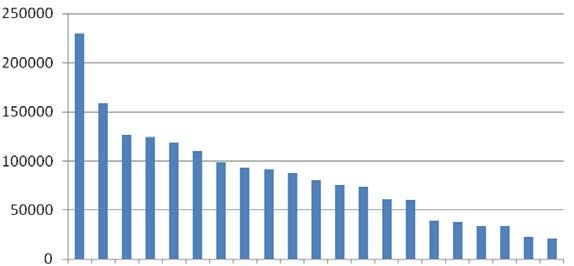
ILARIA MADAMA, M ATTEO JESSOULA, M ARCELLO NATILI

       MINIMUM INCOME: THE ITALIAN TRAJECTORY
           ONE, NO ONE AND ONE HUNDRED T HOUSAND
                  M INIMUM I NCOME SCHEMES

      This work was written in the context of the European Commission
                      7th Framework Programme project
        “Combating Poverty in Europe: Re-organising Active Inclusion
     through Participatory and Integrated Modes of Multivel Governance”
       supported by the European Union (Grant Agreement no. 290488)
                           [http://cope-research.eu/]

Centro Einaudi • Laboratorio di Politica Comparata e Filosofia Pubblica
               with the support of Compagnia di San Paolo

                    Working Paper-LPF n. 1 • 2014
2 WP-LPF 1/14 • ISSN 2036-1246
© 2014 I. Madama, M. Jessoula, M. Natili and LPF • Centro Einaudi
Ilaria Madama [ilaria.madama@unimi.it] is Assistant Professor at the Department of
Social and Political Sciences, University of Milan. Her research interests focus on
comparative welfare state research and in particular on social inclusion and labour
market policies. She has recently published “Beyond Continuity? Italian Social Assis-
tance Policies Between Institutional Opportunities and Agency” (International Journal
of Social Welfare, 22 (1), 2013) and the volume Social Assistance Policy (in Italian, 2010).
Matteo Jessoula [matteo.jessoula@unimi.it] is Assistant Professor at the Department
of Social and Political Sciences, University of Milan, and Director of the Welfare
Laboratory at Centro Einaudi, Turin. Among his recent publications, the volumes
Labour Market Flexibility and Pension Reforms. Flexible Today, Secure Tomorrow? (edited with
K. Hinrichs, 2012), The Roots of the Italian Style Welfare State. The Origins and Future of an
Unbalanced Social Model (in Italian, with M. Ferrera and V. Fargion, 2012) and Pension
Policy (in Italian, 2009).
Marcello Natili [marcello.natili@unimi.it] is PhD candidate in Political Studies at
the Graduate School of Social and Political Sciences of the University of Milan. His
research interests focus on comparative welfare state research and in particular on
social inclusion policies.
The Comparative Politics and Public Philosophy Lab (LPF) at Centro Einaudi
is directed by Maurizio Ferrera and funded by Compagnia di San Paolo. It includes
the Welfare Laboratory (We.L) and the Bioethics Lab (La.B). LPF analyses the
transformation of the political sphere in contemporary democracies with a focus on
the relationships between policy choices and the value frameworks within which
such choices are, or ought to be, carried out. The reference here is to the “reasonable
pluralism” singled out by John Rawls as an essential feature of political liberalism.
The underlying idea is that implementing forms of “civilized” politics is desirable
as well as feasible. And, as far as the Italian political system is concerned, it is also
urgently needed, since the system appears to be poorly prepared to deal with the
challenges emerging in many policy areas: from welfare state reform to the governance
of immigration, from the selection criteria in education and in public administration
to the regulation of ethically sensitive issues.
In order to achieve this end, LPF adopts both a descriptive-explanatory approach
and a normative one, aiming at a fruitful and meaningful combination of the two
perspectives. Wishing to foster an informed public debate, it promotes theoretical
research, empirical case studies, policy analyses and policy proposals.
LPF • Centro Einaudi
Via Ponza 4 • 10121 Torino, Italy • phone +39 011 5591611
segreteria@centroeinaudi.it • http://www.centroeinaudi.itIlaria Madama, Matteo Jessoula, Marcello Natili • Minimum Income: The Italian Trajectory 3
T ABLE OF C ONTENTS
MINIMUM INCOME: THE ITALIAN TRAJECTORY
ONE, NO ONE AND ONE HUNDRED THOUSAND MINIMUM INCOME SCHEMES 5
1. Introduction 5
2. Italy, mid-1990s: a weak minimum income protection model 6
3. The ambivalent policy trajectory at the national level 9
3.1. The first modernising attempts, 1996-2001 9
3.2. Policy reversal and resilience of the traditional model, 2001-2008 11
3.3. 2008-2012: revival of charity or progress towards a fully-fledged
minimum income scheme? 12
4. Italia, Italiae? Divergent regional policy developments 16
5. The incomplete social safety net meets the economic crisis 18
6. Conclusion 21
List of interviews 22
References 23
Appendix 1 25
Appendix 2 26
K EYWORDS
Minimum income protection, social assistance, poverty, Italy4 WP-LPF 1/14 • ISSN 2036-1246
A BSTRACT
MINIMUM INCOME: THE ITALIAN TRAJECTORY
ONE, NO ONE AND ONE HUNDRED THOUSAND
MINIMUM INCOME SCHEMES
Several studies in comparative welfare state research have emphasized the absence
of a proper anti-poverty strategy and especially the lack of a minimum income
scheme (MIS) in Italy; others focused on the failed attempt to introduce a national
MIS in the late 1990s; while some scholars investigated the existence of several
(yet often meagre) local anti-poverty programs. The Pirandellian title One, No One
and One Hundred Thousand looks therefore as a suitable metaphor able to capture
the nature of the Italian anti-poverty policy scenario. Against this backdrop, though
constrained by austerity measures and permanent lack of resources, social assis-
tance gained more salience over the last years and a closer look at its transfor-
mation reveals that, albeit timidly, things are moving both at the national and
regional level. Building on this framework, the paper has a twofold purpose. First,
it aims at presenting the developments occurred in the Italian anti-poverty strategy
during the last two decades. Second, the paper provides an overview of the latest
trends in terms of poverty and material deprivation in comparative perspective,
that—in the light of the current economic crisis—call for a rapid modernisation of
the national social safety net of last resort.Ilaria Madama, Matteo Jessoula, Marcello Natili • Minimum Income: The Italian Trajectory 5
MINIMUM INCOME: THE ITALIAN TRAJECTORY
ONE, NO ONE AND ONE HUNDRED THOUSAND
MINIMUM INCOME SCHEMES
1. INTRODUCTION
The increase of poverty and social exclusion among working-age individuals in
recent decades can be read as the effect of the complex interplay between social
needs and risks on the one side, and the decreasing protective capacity of ‘core’
social institutions on the other. Since the Eighties, in Western Europe wide socio-
economic transformations have started to undermine the protectiveness of labour
market institutions—either through unemployment compensation and employ-
ment security—and the capability of families to act as effective social shock
absorbers and to prevent poverty. These developments have resulted in a growing
functional salience of minimum income protection (MIP) for working-age indi-
viduals in many European countries. Within the post-industrial social protection
architecture, MIP has then overcome its traditional boundaries restrained to peo-
ple suffering severe social marginality, and has started to represent a key response
for people facing “rather general life-course and labour market risks, which may
however in certain cases be compounded by complex personal circumstances and
barriers to social and economic (re)integration” (Clegg 2013, 1).
This paper deals with the ambiguous development of minimum income protection
in Italy in the last two decades, focusing on social assistance income support
measures. In accordance with the South-European imprint (Ferrera 2005 and
2010), Italy is a laggard as regards MIP for working age individuals: crushed
between insurance based income benefits and universal health care, the last resort
safety net has traditionally had a marginal role and was characterised by high
institutional fragmentation, wide regional/local differentiation and low spending
(Fargion 1997; Gough et al. 1997; Kazepov and Sabatinelli 2005).
Over the last decades, several studies in comparative welfare state research have
emphasized the absence of a proper anti-poverty strategy and especially the lack of
a minimum income scheme (MIS) 1 in Italy (i.e. Bahle et al., 2011); others focused
1 In the paper we adopt the following definition of MIS: a general (non categorical) anti-poverty
scheme that provides right-based means-tested income support, typically tax financed and flat-rate. MIS
then envisages a universal yet selective last resort safety net.6 WP-LPF 1/14 • ISSN 2036-1246 on the failed attempt to introduce a national MIS since the mid-1990s (i.e. Sacchi and Bastagli 2005); while some scholars investigated the existence of numerous— yet, often meagre—local anti-poverty programs (i.e. Saraceno 2002). The Piran- dellian title One, No One and One Hundred Thousand looks therefore as a suitable metaphor able to capture the nature of anti-poverty policy developments in Italy. Against this backdrop, though constrained by austerity measures and permanent lack of resources, social assistance gained more salience over the last years and a closer look at its transformation reveals that, albeit timidly, things are moving both at the national and regional level. Building on this framework, the paper has a twofold purpose. First, it aims at pre- senting the developments of the Italian anti-poverty strategy during the last two decades. Second, the paper provides an overview of the latest trends in terms of poverty and material deprivation in comparative perspective that—in the light of the current severe economic crisis—call for a rapid modernisation of the national social safety net. The paper is structured as follows. Section 2 briefly illustrates the historical con- figuration of Italian anti-poverty policy and its main weaknesses in comparative perspective. Sections 3 and 4 outline the reform trajectory in the field of minimum income protection between the mid-1990s and 2012, analyzing the main develop- ments in this policy area at the national level and sketching some divergent policy solutions framed at the regional level. Section 5 deals with recent social trends in comparative perspective, exploring the main outcomes in terms of poverty and material deprivation. Section 6 concludes. 2. ITALY, MID-1990S: A WEAK MINIMUM INCOME PROTECTION MODEL In the mid-1990s Italy presented a weak minimum income protection model com- pared to several other European countries: the public last resort safety net was limited and fragmented, social services and activation measures were underdevel- oped, while households, kin networks and third sector organisations played a major role in providing assistance. More in depth, one of the distinctive features of the Italian model in the European scenario was the lack of a general means-tested minimum income scheme aimed at protecting working age people from the risk of poverty and social exclusion. The fight against poverty thus largely relied on categorical, mostly contributory, means-tested measures, charitable organisations and family solidarity (Saraceno 1994; Naldini 2002). In the post-war period a number of anti-poverty schemes—such as pension sup- plements ad minima, social pension, invalidity pension and family allowances— targeted to specific social groups had been put in place. Overall, the system was
Ilaria Madama, Matteo Jessoula, Marcello Natili • Minimum Income: The Italian Trajectory             7

nonetheless unbalanced, as on the one side access to anti-poverty schemes was
mainly linked to categorical requirements (having a contributory pension, or having
an employee in the household), and on the other hand more than 80% of the total
expenditure for social assistance was attracted by old age and disability functions,
thus reproducing in the social assistance sector the distortions that characterised
the Italian welfare state as a whole (see Appendix 1 for a detailed overview).

As table 1 shows, taken as a whole the Italian welfare state was not an outlier: total
(public) social protection expenditure was below the EU-15 average but did not
deviate significantly from other countries. The Italian anomalies actually lied in the
expenditure structure, much geared towards the protection of ‘insiders’ through
contributory schemes (so called distributive distortion) and the over-protection
of old age (functional distortion) (Ferrera et. al. 2012). In 1995 a major share of
resources for social protection was absorbed by the “old age and survivors” func-
tion—61% against 42.5% of the EU15 average, as more than half of social protec-
tion expenditure was devoted to old-age measures (especially pensions); by con-
trast, expenditure for “family”, “unemployment”, “housing and social exclusion”
remained comparatively very low over total spending. Interestingly, resources tar-
geted to the latter category, mainly representing general social assistance measures,
were extremely limited, 0.2% of total social expenditure vis à vis a EU average of
3.3%. No other country displayed such a marked distortion along the functional
dimension.

Table 1 – Public social protection expenditure on GDP and by sector as a per-
centage of total social expenditure, 1995, selected countries
                                                                                           Housing and
                                                             Sickness/       Old age
                  Total         Family/      Unemploy-                                        social
                                                            healthcare         and
                (% GDP)         children       ment                                         exclusion
                                                           and disability   survivors
                                                                                              n.e.c.
EU-15              27.6           17.7           17.9          19.5           42.5             3.3
Germany            28.3           17.8           18.2          10.9           39.7             1.8
Spain              21.6           11.9           15.9          17.5           42.5             1.6
France             30.3           19.5           17.4          19.8           41.2             4.2
Italy              24.3           13.9           12.8          16.9           61.0             0.2
Sweden             33.5           11.2           10.8          11.1           37.3             6.2
UK                 27.1           18.5           15.3          19.0           41.2             7.1

Source: Eurostat database online

Social assistance measures in Italy showed a further limitation, as the main
schemes were to some extent inefficient in terms of vertical redistribution, and not
very effective in reducing the poverty risk (table 2). Most of them had in fact a
distributive efficiency below 60%, implying that more than 40% of resources spent
on each of them—and actually more than 55% in the case of the invalidity
pensions—went to families that were above the poverty line already before the
8 WP-LPF 1/14 • ISSN 2036-1246
transfer. The effectiveness in reducing poverty thus was severely limited: for
example, it was calculated that the invalidity pension and the social pension reduced
the poverty risk of about 0.2 percentage points.
Table 2 – Distributive efficiency and poverty reduction of Italian social assistance
schemes, 1995
Family Social Disability Pension
allowance pension pension supplements
Distributive efficiency 59% 52% 43% 44%
Effectiveness
1.2 p. 0.2 p. 0.2 p. 4.3 p.
in reducing poverty
Source: Elaboration on Baldini et al. (2002), Toso (2000)
Measures set at the national level were complemented by a plethora of schemes in
the field of social services and income support managed at the regional and local
level, with huge territorial variation. The decentralization process started in the
1970s in the social assistance field had in fact far reaching consequences in terms
of overall system coherency and territorial heterogeneity, giving raise to functional
overlaps but also coverage gaps. If social assistance spending was concentrated on
cash transfers (in 1995 monetary benefits absorbed between 90% and 95%), local
social services and benefits suffered the lack of resources as well as the absence of
a binding legislative frame at national level able to set minimum standards for the
whole country. Moreover, unlike the national benefits—that took the form of
enforceable rights—at the local level assistance benefits tended to be discretionary,
uncertain in their delivery and heavily conditioned by budgetary constraints
(Fargion 1997; Kazepov and Genova 2006; Saraceno 2002). The high variability
emerged from this framework is clearly captured by regional per capita social assis-
tance spending, which in the 1990s varied from 21,000 Italian Lira in Calabria to
124,000 in Emilia Romagna (figure 1). As a general rule, the differences in spend-
ing to a large extent reflected wide differences in the availability of local schemes
of income support and social care services (CIES 1997).
In such a scenario of incomplete, incoherent and differentiated intervention, in
which poverty per se was not a sufficient condition to receive public support, exist-
ing measures—especially disability pensions and, partly, family allowances—were
widely exploited as general poverty alleviation schemes and as instruments for
clientelistic exchange (cf. Ferrera 1984; Ferrera, Fargion and Jessoula 2012), being
subject to frequent abuses. Despite this, for a long time the introduction of a
universal yet selective minimum income scheme had not even been considered
an option in national debates. First, because of the perceived risks of managing
means-testing in a “soft state” (cf. Ferrera 2000), characterised by the concentra-
tion of material deprivation in the Southern part of the country—where the black
economy and the illegal sector were pervasive. Second, due to the fact that in theIlaria Madama, Matteo Jessoula, Marcello Natili • Minimum Income: The Italian Trajectory 9
First Republic era (1948-1994) the two main parties of the Italian polarized and
pluralist party system (Sartori 1976)—the Christian Democrats (DC) 2 and the
Communists—had limited interest in MIS, yet for different ideological and mate-
rial reasons. The former (DC) was a party of religious defence which embraced
the principle of horizontal subsidiarity by emphasising the importance of tradi-
tional family ties and supporting the existing broad network of religious commu-
nity-based charities (Madama 2010). The latter, the Italian Communist Party (PCI),
showed a clear pro-labour and pro-insider bias, being far more inclined towards
the extension of generous social insurance schemes targeted to employed popula-
tion rather than sponsoring residual MIS (Ferrera, Fargion and Jessoula, 2012).
Figure 1 – Regional per capita social assistance spending, 1994 (Italian Lira)
250,000
200,000
150,000
100,000
50,000
0
Emilia Romagna
Trentino A.A.
Valle d’Aosta
Lombardia
Campania
Friuli V.G.
Sardegna
Basilicata
Piemonte
Toscana
Calabria
Abruzzo
Marche
Umbria
Veneto
Liguria
Molise
Puglia
Sicilia
Lazio
I taly
Source: Commissione di Indagine sulla Povertà e sull’Emarginazione (1997)
Against this backdrop, after the political turmoil of the early 1990s and the advent
of the Second Republic some interesting novelties occurred, and some attempts to
reinforce anti-poverty measures were made both at the national and regional level.
3. THE AMBIVALENT POLICY TRAJECTORY AT THE NATIONAL LEVEL
3.1. The first modernising attempts, 1996-2001
The underdevelopment of the social assistance model and its fragmentation (both
institutional and territorial) in a number of schemes providing modest benefits,
with the family—and charities—working as a fundamental redistributive agency
for the least well-off, were for long not considered dysfunctional by policy-makers.
Welfare state “recalibration” became a priority only in 1996-97 when the centre-
2 The DC, a centrist party, dominated in the Italian political system from 1944 until 1993.10 WP-LPF 1/14 • ISSN 2036-1246 left cabinet led by Romano Prodi appointed an expert commission (so called Commissione Onofri, including some leading scholars in welfare studies) which laid emphasis on the two acute “distortions” of the national welfare state men- tioned above. In the field of social assistance, the work of the Commission con- tributed to the debate, by both tracing a clear diagnosis of the deficiencies and weaknesses of this sector and advancing policy proposals. The Commission par- ticularly pointed at institutional fragmentation, policy overlapping, dominance of cash benefits at the expense of in-kind services, marked territorial differentiation and, last but not least, the lack of a last resort social safety net such as a minimum income scheme to combat poverty. Turning to remedies, it recommended an in- crease in expenditure, the rationalisation of interventions, the definition of essen- tial levels of provision (LEP) to be guaranteed throughout the national territory, and the introduction of a minimum income scheme inspired by the principle of “selective universalism” (Commissione Onofri 1997; Jessoula and Alti 2010), according to which eligibility to social assistance benefits was to be universal yet selective on the basis of need only. Several measures were adopted by the end of the 1990s in accordance with the principle of selective universalism. Three novel means-tested schemes are worth to mention: 1) the allowance for families with more than two underage children, 2) the maternity allowance for low income mothers not entitled to contributory benefits, 3) a special social fund for supporting low income tenants. Also, the two most promising innovation of this period were the launch in 1998 of “Minimum insertion income” (MII) pilot scheme, and the approval of the social assistance framework law in 2000 (Law 328). The MII—designed as universal, non categorical, tax financed measure targeted to people with an income below a pre-defined poverty threshold—was initially intro- duced for two years as a pilot scheme in a number of selected municipalities. The cash transfer was to be complemented by integration programs aimed to tackle social exclusion and stimulate recipients’ autonomy. The budget law for 2000 then provided for a two-year extension of the experimentation of the MII and increased the number of municipalities involved in the pilot project. The adoption of a national regulatory framework in 2000 appeared as a further rel- evant step forward for the Italian social assistance sector. The national framework law on social assistance drew on the operational model of the national health ser- vice and envisaged a wide re-organisation of the sector (cf. Gori 2004). The aim was to overcome territorial fragmentation through the creation of an integrated sys- tem based on the definition of a common minimum standard of public provision to be granted over the whole national territory and a multi-level model of govern- ance—involving the central state (with supervisory and leading roles), regions and municipalities, and open to the cooperation of the third sector (for further details see Kazepov and Genova 2006). Also, the reform envisaged an ambitious scenario, especially via the introduction of a coherent and inclusive anti-poverty scheme, the re-launch of social care services, the reduction of regional differences.
Ilaria Madama, Matteo Jessoula, Marcello Natili • Minimum Income: The Italian Trajectory   11

It’s important to note that in 2001 a significant change took place also concerning
the organisation of the State, with partially unexpected consequences as regards the
successive development of social assistance policy. Following requests for greater
autonomy put forward by both regional governments and regionalist parties—
particularly the Northern League—in the 1990s regionalism experienced a new
surge in Italy, culminating in the constitutional reform of 2001 (Baldi 2006). Con-
stitutional Law 3/2001 had two main consequences as regards MIP. First, it rati-
fied a new division of competences between the various levels of government in
many areas of public policy, including social assistance which became a matter of
exclusive regional competence. This change implied that in this sector the State has
the sole responsibility for defining “essential levels of provision” (LEP) for the
national territory and supervising their implementation. Recognising regions’
exclusive responsibility in this matter restrained the powers of central government
as regards planning or exercising in depth guidance, thus making the long-awaited
reform of social assistance enacted in 2000 in some respects obsolete. The second
consequence regarded financial autonomy: the reformed art. 119 of the Constitu-
tion, in fact, asserted the principle of fiscal federalism, now still to be concretely
implemented.

3.2. Policy reversal and resilience of the traditional model, 2001-2008
After the encouraging developments of the 1990s, the new century saw a decline
of interest in minimum income protection. The broader debate on welfare reform
was also affected by the new context of economic recession—GDP growth rang-
ing between 0% and 1.1% in 2001-2005 (IMF)—exacerbated by the ten year long
loss of competitiveness of the national economy. By contrast, public finances
gradually improved, with low deficits (generally below 3% of GDP) and a (slowly)
declining public debt. Therefore, if during the previous decade the “keyword”
in the public discourse had been fiscal consolidation, in the early 2000s it turned
to be “competitiveness” (Radaelli 2002), to be reached mainly through increased
labour market flexibility and cost containment measures.

Despite some more room for (fiscal) manoeuvre, in the period 2001-2008 the
social assistance sector was all but reinforced. The centre-right governmental coali-
tion that ruled till 2006 privileged a welfare model based on family and community
networks (cf. Ministero del Welfare 2003), and opposed the development of a
robust national anti-poverty strategy. National social policy funds were cut and the
MII scheme, explicitly portrayed as too expensive and ineffective by the Northern
League Minister of Welfare, Roberto Maroni, was not extended to the whole
national territory and ultimately discontinued. Even though such a measure could
well be one of those essential levels of provision concerning social assistance
rights the central government was expected to set in accordance with Law 328/
2000—and one of the easiest to craft, at least as regards its monetary component
(Sacchi and Bastagli 2005)—the centre-right majority decided instead to use the
fiscal lever to support primarily middle income families. In 2002 and 2003 new tax
relieves in the form of a no tax area and family deductions were introduced.
12                                                                  WP-LPF 1/14 • ISSN 2036-1246

During the short parenthesis represented by the centre-left government led by
Prodi, from 2006 to 2008, the Italian social safety net of last resort was not dealt
with. Intra-coalition dynamics, as well as the political weakness and internal
fragmentation of the government (resulted in the pulverization of welfare compe-
tences among five distinct ministries) made it difficult to draft a coherent strategy
(Interview 10), and notwithstanding the reference to MIS in its electoral program,
the government proved to pay only scant attention to this policy sector. Labour
market and pensions became priority fields of action, as testified by the “Scalone
affair” 3, whereas the introduction of a minimum income scheme never became
prominent in the policy/political debate (Interview 10). Only minor interventions
in the area of income protection for the worse-off in society were set as one-off
(i.e. a lump-sum benefit for those below the no tax area, 1,200 euro a year, in
2007). Yet some novelties occurred in the field of social services, thanks to the
increase of resources dedicated to some social assistance funds (cf. figure 2), with
a special emphasis on the fronts of long-term care and child-care (through the
2007-2009 Childcare National Plan and the 2007-2009 Fund for long-term care).

Figure 2 – National funds for social assistance and social services, 2006-2012 (million
Euro)
                   1,600
                  1600
                   1,400
                  1400
                   1,200
                  1200
                   1,000
                  1000
                     800
                   800
                     600
                   600
                     400
                   400
                     200
                   200
                      00
                             2006      2007     2008     2009      2010      2011     2012

Source: Own calculations on IRS (2012) and Ministero del Welfare online database

In the 2001-2008 period the traditional configuration of social assistance policy
then proved to be highly ‘resilient’. Overall, progress in the social assistance sector
was modest and characterised by policy reversal dynamics (Madama 2013).

3.3. 2008-2012: revival of charity or progress towards a fully-fledged minimum income scheme?
When the centre-right coalition came back to power in spring 2008, it had to con-
front the consequences of the economic and (later) sovereign debt crises. Similarly
to the previous centre-right period, the main parties of the parliamentary majority
were Berlusconi’s Popolo della Libertà (PdL)—a new party created from the merge

     3In 2007, the so called “Welfare protocol” signed by the centre-left cabinet and trade unions
prevented the phasing in as of January 2008 of the 2004 pension reform, and consequently avoided the
abrupt increase in retirement age for seniority pensions (three years) defined by that reform, the so called
‘Scalone’ (big step). This measure was interpreted and criticised as favouring a small number of core-
insiders workers, with significant cost for the whole pension system.
Ilaria Madama, Matteo Jessoula, Marcello Natili • Minimum Income: The Italian Trajectory 13
of FI (Forza Italia) and AN (Alleanza Nazionale)—and the Northern League, with
the latter consistently strengthened in the 2008 elections. In spite of mounting
unemployment and poverty, measures in the field of last resort income support
remained extremely weak and no social rights were introduced to fight absolute
poverty.
An emergency measure, the so called Carta Acquisti (Social Card, SC), was none-
theless launched in 2008. Outlined and sponsored by the Minister of Treasury,
Giulio Tremonti, and welcomed by the Ministry of Labour and Welfare, Maurizio
Sacconi—both from PdL—the SC was a debit card to be used to purchase food
and pay basic utilities. However, the very low amount, the categorical approach
combined with limited coverage and tight income eligibility criteria 4, and, last but
not least, the absence of any form of conditionality and activation requirements
indicate the residual and passive—if not merely symbolic—nature of the measure.
Conceived to provide limited economic support to an extremely narrow segment
of low income families (less than 1.2% of Italian families), it was financed from
public resources and private donations, the latter also increasing the “charitable
flavour” of the programme (table 3).
Table 3 – The Social Card, main features, 2008-ongoing
Italian low income persons over the age of 65 or below the age
Population coverage
of 3
Territorial coverage The whole country
Targeting ISEE < 6,000 Euro per year
Access’ priorities No
Benefit Flat-rate, 40 Euro per month
Other social inclusion services No
Conditionality No
Central government (Ministry of Treasury and Ministry of
Institutional management Labour and Welfare), no involvement of local governments and
third sector organisations
It is worth noting that the launch of the Social Card helped to reinvigorate and
open a debate among stakeholders and political parties about the need for anti-
poverty measures, and about the effectiveness of the SC as a last resort safety
net. In general, centre-left parties and stakeholders shared a very negative view of
the SC. The Democratic Party in 2009 submitted a proposal for the introduction
of a fully-fledged active inclusion minimum income scheme (Draft Law n. 2649,
4 Following the typical approach of Italian social assistance, the Card was initially intended to support
low income Italian pensioners (over 65) only; however, coverage was later extended to children below the
age of 3, following a debate on the reduction in milk sales during the fourth week of the month.14 WP-LPF 1/14 • ISSN 2036-1246 27 July 2009), however the bill was never discussed neither in Social Affairs Committee nor in Parliament. At the same time, the Christian Associations of Ital- ian Workers (ACLI), one of the key stakeholders in the social assistance field, ini- tiated a pragmatic reflection on the ways to ameliorate the SC, that allowed to de- velop a national plan to combat poverty in a few months (cf. Gori et al. 2011). The three-year plan, presented in late 2010, foresaw a gradual extension of the Social Card as regards its coverage and generosity (from the current 40 Euro to 129 Euro a month for one-person households, to be increased according to households size) and the introduction of social inclusion measures to be attached to the benefit. The costs were estimated to be of about 2.4 billion Euro a year. The proposal was illustrated to the Minister of Labour and Welfare that formally appreciated the plan, but it was considered too expensive and far-reaching. In the same months, however, the central government outlined a second version of the Social Card, named New Social Card (NSC), that was intended to shadow— as pilot project—the ordinary social card scheme in a selected number of big municipalities, with a dedicated fund of 50 million Euro, for 12 months. Its main novelties were essentially two: the envisaged combination of cash transfer with social inclusion measures, and the direct involvement of selected charities in the scheme management with no role for local governments. The measure thus foresaw a direct link between the Ministry of Welfare and the charities, with the former as sponsor and the latter as main managing bodies. The proposal was, however, strongly opposed by the association representing municipalities (ANCI) as well as by regional governments (Interview 4), and it was not welcomed by third sector organisations either—worried to be invested of a too broad responsibility (Interview 5). Despite this opposition, in February 2011 the law envisaging the new scheme was passed (Law n. 10/2011) and the Ministry of Welfare started to work on its implementation, but it was eventually abandoned due to the fall of government in late 2011. The new technical cabinet led by Mario Monti, in power from November 2011, outlined new priorities for action as regards social assistance. The Minister of Wel- fare, Elsa Fornero, an economist from the University of Turin, and her Deputy- Minister, Maria Cecilia Guerra, an economist from the University of Modena and key expert in the field, shared a very different view about minimum income pro- tection, demonstrated by the fact that the NSC bill was immediately abandoned. A second New Social Card proposal (NSC 2.0) was then drafted with features very distant from both the ordinary SC and the NSC (table 4): first, the measure was universal in scope, even though it foresaw some access’ priorities; second, it provided a mix of cash transfers and social services; third, its generosity was much higher than the ordinary SC; fourth, local municipalities and third sector organisa- tions played a key role; fifth, the scheme introduced an element of conditionality envisaging rights and duties for beneficiaries to be signed in a personal pact that had to involve all the members of the household, paying particular attention towards the wellbeing of underage children.
Ilaria Madama, Matteo Jessoula, Marcello Natili • Minimum Income: The Italian Trajectory            15

Table 4 – The New Social Card 2.0, main features
Population coverage                Low (no) income households, with at least one underage child
                                   12 major municipalities (Bari Bologna, Catania, Firenze,
Territorial coverage               Genova, Milano, Napoli, Palermo, Roma, Torino, Venezia,
                                   Verona) plus Sicilia
Targeting                          ISEE < 3,001 Euro and ownership value < 30,000
                                   Housing problems; lone-parents households, large families
                                   (three or more underage children); presence of children with
                                   disabilities; jobless households with at least a work experience in
Access’ priorities
                                   the previous 36 months, or households with workers on flexible
                                   contracts or low pay dependent worker (maximum 4,000 Euro
                                   net total wage in the previous six months)
                                   2 persons – 231 Euro
                                   3 persons – 281 Euro
Benefit
                                   4 persons – 331 Euro
                                   > 4 persons – 404 Euro
                                 Household-tailored pact involving a wide range of additional
                                 services: job counselling, after-school caring and educational
Active Social Inclusion Services support; additional income support; access to social housing;
                                 thigh network cooperation with local employment services,
                                 education institutions, third sector organisations
                                   The benefit may be revoked if beneficiaries do not comply with
                                   the household-tailored pact, which can involve:
                                   a) scheduled meeting with social services
Conditionality                     b) active job seeking activities
                                   c) attendance of training or work programmes
                                   d) school attendance
                                   e) personal care and healthy life style
                                   Central government (Ministry of Economy and
                                   Finance + Ministry of Welfare) and local governments with
Institutional management
                                   a key role for third sector organisations for active inclusion
                                   measures

The design of this measure turned to be clearly inspired by the ACLI proposal,
and had an European flavour for its reference to active inclusion and the multi-
dimensionality approach reserved to the fight against poverty (Interviews 1, 10, 14,
3). Moreover, the pilot project was meant to produce evidence before its generali-
sation to the national territory. In this perspective, a key function was given to
monitoring and evaluation procedures, that appeared quite sophisticated, as the
presence of two different control groups was envisaged. The outcomes of the pilot
project with reference to beneficiaries’ households were then be expected to be
evaluated on the basis of several aspects, i.e. adults labour market participation and
work history; children wellbeing with reference to health, education and socializa-
tion; households’ life style and access to primary goods. Beside this, in 2012 the
Deputy-Minister of Labour and Welfare proposed to use resources coming from
the national cohesion fund to support the extension of NSC 2.0 pilot project
to four Southern regions (Campania, Puglia, Calabria and Sicilia). However, just
16 WP-LPF 1/14 • ISSN 2036-1246
one of them (Sicilia) agreed to proceed with the pilot project, whereas the others
preferred to use the resources for locally selected goals and programmes 5.
To sum up, since 2008 three different social cards were drafted. The latter repre-
sented an important step forward with respect to the Italian tradition of anti-
poverty policies, as it overcame the passive and charitable orientation of the other
two versions, by promoting an integrated approach between government levels
and the involvement of civil society organisations. Moreover, monitoring and
evaluation appear as key stones of the NSC 2.0. The main weakness of this
measure is the fact that it is (again) a pilot project, scarcely financed, with no
enforceable right, and easily subject to policy reversal decisions. However the im-
portance of the scheme must not be underestimated. As stressed by a trade union
representative, one must be “aware that the perspectives to introduce a minimum
income scheme in Italy will depend on the positive result of this measure” (Inter-
view 2).
4. ITALIA, ITALIAE? DIVERGENT REGIONAL POLICY DEVELOPMENTS
The policy dynamics that emerged at the national level in some cases replicated
also at the regional level, where an inconsistent and somehow contradictory evo-
lution of minimum income protection can be observed. In the last ten year, in
addition to schemes already introduced at the beginning of the 1990s in some
autonomous regions of the North 6, several other regions introduced regional
measures of income support. In 2004 Campania launched the experimentation of
a Reddito di Cittadinanza (R.L. n. 2/2004), a minimum income scheme targeted to
citizens potentially active in the labour market and facing situations of need. Simi-
larly, regional programmes were introduced in Basilicata (R.L. n. 3/2005), Friuli
Venezia Giulia (R.L. n. 6/2005), Lazio (R.L. n. 4/2008), Puglia (R.L. n. 19/2006),
Sardegna (R.L. n. 23/2005). As a result, in the mid 2000’s almost one third of the
Italian regions had introduced a regional minimum income scheme, yet with wide
heterogeneity in terms of breadth, eligibility criteria, benefits’ generosity, organisa-
tional features. What appears particularly striking about those experiences is
that they developed in very different socio-economic contexts, in some of the
richest regions of the North as well as in the most economically backward regions
of the South.
Overall the result is a geography of minimum income protection at the sub-
national level extremely differentiated, as the case of Lombardy and Basilicata
clearly show. These two regions are in fact situated at the opposite ends of the
5The following year (2013), it was agreed to extend the pilot project to all the eight Southern regions.
6Valle d’Aosta (R.L. n. 19/1994) and Trentino Alto Adige (in the autonomous province of Bolzano,
P.L. n. 13/1991; in Trento, P.L. n. 14/1991).Ilaria Madama, Matteo Jessoula, Marcello Natili • Minimum Income: The Italian Trajectory 17 policy (and political) spectrum, having drafted two very distinctive minimum in- come protection models. Basilicata is a region characterised by unusual political stability, with centre-left coalitions obtaining an wide majority in all elections held after the electoral re- form of 1995. Social assistance in Basilicata, like in other regions of the South, has long been an example of the familialist, fragmented and categorical approach which characterised this sector in Italy, in a context in which the small size of municipalities led to further difficulties in the implementation of reforms to inte- grate social services. In this scenario, the national MII experimentation, despite some difficulties in the implementation of the measure, represented a turning point, introducing for the first time a link between passive policies of income support and activation. Soon after the end of the national MII pilot project, its institutional legacy was captured by a new regional programme, very similar in scope and institutional design, the Cittadinanza Solidale (Solidarity Citizenship). Introduced in January 2005 (R.L. n. 3/2005), it took the form of a bi-annual experimentation of a mini- mum income scheme consisting of an economic transfer to supplement income of poor families, closely related to activation programmes involving households’ members. As for the governance structure, the Region had a leading role, linked to the financing and monitoring of the implementation of the measure. Municipali- ties, in association with NGOs and social partners, were then responsible for so- cial integration programmes, whereas public employment services at the provincial level organised training and active labour market policies. At the end of the first phase, the Region approved a new two-year intervention, called Programme to combat poverty and social exclusion (COPES). Albeit in continuity with the previous experience, in the new pilot project the regional gov- ernment envisaged a wider role for the municipal level. The main structural limits of regional MIS to date lay in the uncertainty about its future institutionalization and the inadequacy of resources, which do not allow a full implementation of the intervention in its universal component. As regards Lombardy, since 1995 the Region has been ruled by centre-right coali- tions with strong majorities, and the outcome of the elections was never seriously questioned. Several studies highlighted the distinguishing features of Lombardy’s welfare system in the national scenario, and, in particular, its marked emphasis on subsidiarity, both vertical and horizontal (see e.g. Maino 2001; Gori 2005; Pesenti 2008; Neri 2010; Carabelli and Facchini 2011). With reference to the social assistance sector, one of the main characteristics of the “Lombardy model” concerned the absence of specific regional lines in the fight against poverty and social exclusion, in particular with regard to income sup- port. Interventions against situations of lack of monetary resources had typically
18                                                         WP-LPF 1/14 • ISSN 2036-1246

been left to Municipalities, free to intervene with discretionary measures in case of
need. Beside the benefits managed by Municipalities, the Region directly support-
ed charitable organisations through regional funds, and in particular the Banco Al-
imentare (Food Bank), an association that recovers food surplus and redistributes it
to primarily Catholic charitable organisations, thus clearly supporting a model of
community based welfare.

More recently, however, the most distinctive feature of the Lombard social system
is represented by the so called sistema delle doti (bonus system). The bonus system
is based on public calls used to allocate funds, which define eligibility criteria,
plus a range of services that recipients can benefit from credited private providers
through vouchers. The bonuses typically cover a wide variety of needs, including:
active labour market policies (i.e. skills assessment, coaching, advice and support
to self-entrepreneurship, training, scouting company and active job search, tutor-
ing guidance and counseling), social care services and income support for specific
needs. Typically, recipients are unemployed and/or inactive, and benefits widely
vary depending on the type of bonus 7.

5. THE INCOMPLETE SOCIAL SAFETY NET MEETS THE ECONOMIC CRISIS

Sections 3 and 4 showed that, despite some promising attempts occurred both at
the national and regional level, the recalibration process of the Italian welfare state
towards the less protected categories has so far been limited. Some measures—
such as the maternity allowance directed to mothers having no insurance coverage,
the benefit to families with more than three children, the fund to support low
income tenants, and the New Social Card—partially redirected social assistance
expenditure towards the wide group of outsiders (see Appendix 2 for a detailed
overview). Those measures, however, due to their narrow focus and/or limited
budgets, did not alter the overall structure of minimum income provision in Italy
for working age people that still lacks a coherent and inclusive social safety net of
last resort. Still in the late 2000s, social expenditure for able-bodied working age
individuals was less than 17% of total social assistance expenditure, with a large
part of these resources allocated to the family allowance scheme, that—as men-
tioned—was a hybrid measure of income support structured along contributory
lines, thus excluding the worse off in society.

Since 1995, public spending for general social assistance (excluding old-age and
disability benefits), family burdens and unemployment compensation, has re-
mained fairly low if compared to that of the most advanced European countries.
As figure 3 highlights, expenditure (% GDP) targeted to deal with working-age

   7 For example, the maximum amount of dote lavoro (employment bonus) in 2009 was 6,000 Euro,

which covered services and income support, with a maximum duration of 12 months.
Ilaria Madama, Matteo Jessoula, Marcello Natili • Minimum Income: The Italian Trajectory          19

social risks (excluding healthcare and disability) in Italy was less than half that of
Germany, France, Spain, United Kingdom, Sweden and EU-15 average.

Figure 3 – Social spending (family, unemployment, social exclusion and housing
functions), 1995-2011, selected countries (% on GDP)
         10.0
          9.0
          8.0
          7.0
          6.0
          5.0
          4.0
          3.0                                                                         1995
          2.0
          1.0                                                                         2011
          0.0
                EU-15 Germania Spagna     Francia      I talia   Svezia Regno Unito

Source: Eurostat database online

Accordingly, the effectiveness of the Italian welfare state in reducing poverty, if
you spin off the effect of pension transfers, remained comparatively limited during
the last two decades. In 1995, social transfers (excluding pensions) reduced the
risk of severe poverty 8 by 3 percentage points compared with an average reduction
in the EU-15 average of about 8 percentage points (table 5), whereas in 2012 the
decrease was of 3.3 against 9.1 on average for EU-15.

Table 5 – Severe poverty risk reduction, social transfers other than pensions,
selected countries, 1995-2012* (percentage points)
                                                    1995                  2012
                     EU-15                            8                    9,1
                     Germany                          6                    9,9
                     Spain                            8                    7,3
                     France                          10                    8,8
                     Italy                            3                    3,3
                     Sweden                         n.a.                 10,6
                     United Kingdom                  13                    15

* Poverty treshold set at 40% of median equivalised income.
Source: Eurostat database online

Against this background, the advent of the 2008 economic crisis—the first for
Italy in a post-industrial labour market scenario (cf. Jessoula and Vesan 2011)—
further exacerbated the mismatch between needs and policy responses. Beside the

    8 The “severe poverty risk” rate is estimated setting the poverty line threshold at 40% of median

equivalized income, instead of 60% as usually done.
20 WP-LPF 1/14 • ISSN 2036-1246
coverage gaps of the fragmented safety net of last resort, the social consequences
of the economic crisis were further amplified by the weak protective capacity of
unemployment insurance benefits, together with the lack of a dedicated unem-
ployment assistance scheme (cf. Jessoula et al. 2010). In 2012, the risk of severe
poverty 9 for people below 65 was about 9%, a rate significantly higher than the
corresponding one for the EU-15 (6.3%) and several other European countries
(figure 4).
Figure 4 – Severe poverty risk rate, people < 65, selected countries, 2004-2012 (%)
10.0
9.0
8.0
EU-15
7.0
6.0 Germania
5.0 Francia
4.0
I talia
3.0
2.0 Svezia
1.0 Regno Unito
0.0
2004 2005 2006 2007 2008 2009 2010 2011 2012
* Poverty treshold set at 40% of median equivalised income
Source: Eurostat database online
Looking at national statistics based on consumption expenditure 10, in 2012 abso-
lute poverty concerned 1,725 thousands families (6.8%), equal to 4.8 million
people (8%), with an impressive increase with respect to the previous year of 1,5
million persons. If relative poverty remained substantially stable over the last few
years, absolute poverty recorded in fact quite a different development: steady
between 2005 and 2007 (4.1%), in the following years it kept growing, reaching
5.2% in 2009 and then 6.8% in 2012. Not unexpectedly, the main factors influenc-
ing the risk of poverty were the area of residence, the presence of underage chil-
dren and the occupational status.
More precisely, the social groups that experienced a consistent deterioration of
their condition were families residing in Southern regions, those with underage
children, lone parents families, and single earner households. For single earner
families, absolute poverty risks almost doubled in the last years, passing from 5.5%
in 2007 to 11.5% in 2011. Families with at least one underage children had a risk
of absolute poverty of 8.9% (it was 3.9% in 2007), but when underage children
were more than two, absolute poverty rates reached 17.1% (10.9% in 2011). The
unemployed were widely concerned by absolute poverty as well. For households
9 See note 8.
10 Figures provided by the Italian National Office for Statistics (Istat), http://www.istat.it.Ilaria Madama, Matteo Jessoula, Marcello Natili • Minimum Income: The Italian Trajectory 21 with the reference person unemployed absolute poverty reached 23.6% (15.5% in 2011). Slightly better was the situation for older people, both single-living and couples, whose rates registered a decline (from 10.1% to 8.6%). 6. CONCLUSION Over the last decades, minimum income protection for working-age individuals has gained more salience within the welfare state architecture of many European countries. Since the 1990s MIP has actually started to represent a key response for people facing rather general life-course and labour market risks not fully covered by core social insurance schemes. In line with the South-European imprint, Italy has traditionally been a laggard in this policy field, though in the last decades some novelties can be detected both at the national and regional level. From the analysis presented in previous sections, we may draw two main conclu- sions. The first is substantive, and concerns the development of the Italian mini- mum income policy, whereas the second regards the implications of the empirical evidence presented here for further analysis and research. In a nutshell, despite some promising innovations—such as the MII pilot project and the introduction of the New Social Card 2.0—the national last resort safety net has remained fairly weak if compared to the MIP systems established in most continental and nordic European countries. As no clear cutting binding reform was passed and implemented to modernise the overall frame in a coherent way, poverty alleviation in Italy can still be portrayed as a puzzle made up of several, highly fragmented schemes—due to existence of a plethora of poorly coordinated and partly overlapping measures—but also coverage gaps. Moreover, the presence of a variety of regional (and local) strategies as regards last resort assistance and social services further increased the complexity of the system and undermined its overall consistency and fairness. In this scenario, the advent of the economic crisis has worsened the pre-existing mismatch between needs and policies, with poverty and deprivation figures on the raise. Turning to the second point, some analytical consequences of our research from a political science perspective can be outlined. As illustrated, in the last two decades minimum income measures developed in a rather inconsistent way in Italy. Several “institutional seeds” were introduced both at the national and the regional level, but—despite harsh functional pressure—they have poorly consolidated. Last resort social assistance schemes were subject to policy reversal and did not institu- tionalize. Which factors allow to make sense of these puzzling developments? We argue that two sets of factors appear particularly promising to interpret the Italian policy trajectory in this field. The first concerns the role played by Europe and especially European coordination processes in the novel complex scenario of
22                                                    WP-LPF 1/14 • ISSN 2036-1246

multi-level governance that emerged in the anti-poverty field, where supranational,
national and subnational arenas are strictly intertwined (cf. Agostini, Sabato and
Jessoula 2013). If the literature pointed at the key role played by European pres-
sure in prompting (the attempt to) path-departure from the traditional model of
MIP at the end of the 1990s (cf. Sacchi 2006; Jessoula and Alti 2010), more recent
dynamics still need to be unveiled.

Second, differently from previous claims in the literature about the limited scope
for political competition dynamics in the field of social assistance—due to the
modest number of beneficiaries, their weak participation and potential for political
mobilisation—our findings seem to support the “politics matters” hypothesis and
call for a more precise investigation of political competition dynamics in this
camp. This can be particularly promising with regard to the Italian case, in light of
the multi-party system which reflects the complex underlying political cleavage
structure. We suggest that the political activation of cleavages other than the right-
left divide, such as State-Church and centre-periphery, should in fact be explored
with reference to the politics of minimum income, as they might be possibly more
salient in the field of social assistance than in other social policy sectors. Further
research is therefore advisable to detect the potential links between cleavage
structure, political competition dynamics and development of minimum income
protection in Italy.

INTERVIEW LIST
[Note: All interviews were conducted in Italian and translated by the authors for
the purpose of quotation in this paper.)
1. Ministero del Lavoro e delle Politiche Sociali, Social Inclusion Unit (Public
    officer) – conducted on November, 15th 2012, Rome
2. Trade Union (Representative) – conducted on November 15th 2012, Rome
3. ANCI, Associazione Nazionale dei Comuni Italiani (Representative) – con-
    ducted on November 28th 2012, Lodi
4. Social partner (Representative) – conducted on December 4th 2012, Rome
5. Conferenza Stato-Regioni (Representative) – conducted on December 5th
    2012, Rome
6. Social partner (Representative) – conducted on December 5th 2012, Rome
7. Social partner (Representative) – conducted on December 17th 2012, Rome
8. Conferenza Stato-Regioni (Representative) – conducted on January 15th 2013,
    Genova
9. Social partner (Representative) – conducted on January 22nd 2013, Rome
10. Political actor, Partito Democratico – conducted on January 23rd 2013, Rome
11. Dipartimento Politiche per la Famiglia (Public officer) – conducted on January
    23rd 2013, Rome
12. Dipartimento per la Coesione Territoriale (Public officer) – conducted on
    January 23rd 2013, Rome
You can also read


