Linking Personal Experience to Global Concern: How Zoo Visits Affect Sustainability Behavior and Views of Climate Change - MDPI
←
→
Page content transcription
If your browser does not render page correctly, please read the page content below
sustainability

Article
Linking Personal Experience to Global Concern: How Zoo
Visits Affect Sustainability Behavior and Views of
Climate Change
Josie A. Taylor * and Leslie A. Duram *

                                          School of Earth Systems and Sustainability, Southern Illinois University, Carbondale, IL 62901, USA
                                          * Correspondence: taylor.josie@comcast.net (J.A.T.); duram@siu.edu (L.A.D.)

                                          Abstract: Globally, many species are threatened by habitat loss and are impacted by climate change
                                          due to human activities. According to the IUCN Red List, nearly 9000 animal species are now
                                          endangered or critically endangered. Yet, humans are largely ignorant to the impact they have on the
                                          environment due to lack of effective sustainability education. Currently, one of the most practical
                                          ways to connect with our global natural world is by visiting a local zoo. Zoos engage people with
                                          numerous species that they would otherwise never have the opportunity to see. Environmental
                                          education at zoos has come to address issues such as sustainability, personal green habits, and global
                                          climate change. Given the important role of zoos in sustainability education, there is a surprising
                                          lack of research on the topic. Due to its innovative nature, the research shown in this study acts as a
                                          pilot study set to gauge the impact of zoos on sustainability and climate change perspectives. This
                                          article investigates the extent to which adult survey respondents believe their current sustainability

                                          behaviors and their perceptions of global climate change have been influenced by their childhood
                                   visits to zoos and the environmental education topics learned during these visits. To investigate
Citation: Taylor, J.A.; Duram, L.A.       the long-term impact that zoos have on common sustainability behavior, a survey of 136 university
Linking Personal Experience to            students from various academic fields was conducted. The analysis found that 76% of respondents
Global Concern: How Zoo Visits            believe they act sustainably in their daily lives through actions such as sustainable shopping and
Affect Sustainability Behavior and        recycling, with only 35% of individuals indicating that they learned their sustainable behaviors
Views of Climate Change.                  at zoos. Yet, 65% of respondents indicated that they believe zoos impact their overall level of
Sustainability 2021, 13, 7117. https://   environmental concern, primarily regarding knowledge of animal welfare and endangered species.
doi.org/10.3390/su13137117                Results suggest that individuals who are very concerned about climate change spent time at zoos,
                                          more than just one annual visit, and those zoo visits encourage global sustainability learning for the
Academic Editor: Marc A. Rosen
                                          individual. This study suggests that zoos should expand visitor engagement through environmental
                                          education that encourages meaningful sustainability behavior and climate change knowledge.
Received: 26 April 2021
Accepted: 21 June 2021
Published: 24 June 2021
                                          Keywords: climate change; content analysis; endangered species; environmental education; mixed
                                          methods; sustainability; zoo education
Publisher’s Note: MDPI stays neutral
with regard to jurisdictional claims in
published maps and institutional affil-
iations.                                  1. Introduction
                                               Human activities cause the endangerment or extinction of thousands of animal species
                                          around the globe. Technological advancements flourish, but many people are unaware of
                                          the impact that their modern lifestyle has on the environment due to a loss of connection
Copyright: © 2021 by the authors.         with nature and lack of access to environmental learning opportunities [1].
Licensee MDPI, Basel, Switzerland.             Environmental education in zoos allows students to learn how their decisions and ac-
This article is an open access article    tions affect the global environment. Zoos have shifted their focus to broader sustainability
distributed under the terms and           topics as they aim to teach their visitors environmentally friendly daily habits [2]. Zoos
conditions of the Creative Commons        engage individuals with new species and learning opportunities that they are unlikely
Attribution (CC BY) license (https://     to have on their own. According to the Association of Zoos and Aquariums (AZA), zoos
creativecommons.org/licenses/by/          give the public access to the natural world, with over fifty million children visiting accred-
4.0/).

Sustainability 2021, 13, 7117. https://doi.org/10.3390/su13137117                                       https://www.mdpi.com/journal/sustainability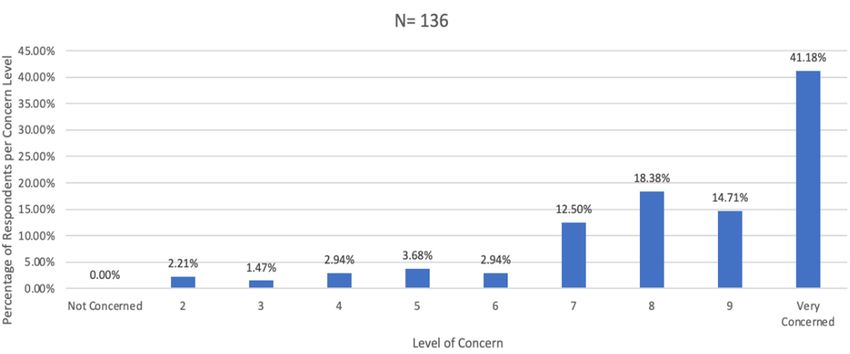
Sustainability 2021, 13, 7117                                                                                            2 of 14

                                ited zoos and aquariums each year. This makes zoos an essential tool in environmental
                                education [3].
                                      Zoos demonstrate leadership in sustainability lessons and science learning [4–8].
                                Most zoos use conservation education to promote emotional connections between people,
                                animals, and the environment [9]. In fact, zoo mission statements show two predominate
                                themes: conservation and education [10]. Zoos are making strides to educate the general
                                public, but because zoos and aquariums “attract visitors of all ages, from early childhood
                                to late adulthood . . . visitors greatly differ in prior knowledge” [11] thus, varying learning
                                opportunities must be provided.
                                      Age and gender need to be considered because, according to prior research, female
                                children tend to be more concerned about animal welfare and feel more empathy toward
                                other species [12]. This is linked to the finding that females are more environmentally
                                oriented and willing to participate in environmental organizations, learning opportunities,
                                and surveys [13]. The Association of Zoos and Aquariums reported that 54% of the over
                                183 million annual zoo and aquarium visitors identify as female [14]. Based on prior
                                research, it seems that gender plays a role in environmental attitudes. In other words,
                                more women seem to be interested in environmental sustainability concepts [15]. These
                                various learning opportunities are linked to social experiences at the zoo, especially when
                                friends and families are able to expand their known relationships, solve puzzles, and build
                                empathetic bonds while seeing and learning about animals [6,16]. Research indicates that
                                these empathetic bonds are particularly important because they enhance visitor support
                                for global conservation initiatives [17].
                                      Other research explores the degree to which enjoyment is compatible with leisure time
                                learning at a zoo [17]. Learning opportunities can promote family connections, as well as
                                identity and activism, especially among families that purchase zoo memberships multiple
                                years in a row [6,16,18]. This type of bond with the zoo promotes free choice learning,
                                meaning that visitors are personally motivated to obtain first-hand information. Many
                                visitors want to enjoy the social aspects of their trip and they want to enjoy learning for its
                                own sake, not feel pressure to gain new knowledge [19,20].
                                      The many educational approaches undertaken by zoos to both capture interest and
                                provide knowledge to visitors implies a deeper capacity for environmental education.
                                Zoos can encourage specific pro-environmental behaviors and can provide continuing and
                                crucial education to the public. Zoos have the ability to be a positive influence in climate
                                change education since they allow easy access to nature and provide practical instruction
                                for handling environmental education challenges [21]. Zoos can provide visitors a personal
                                connection with animals, which builds compassion and promotes a greater concern about
                                global issues such as climate change [17,21]. In fact, visitors rank zoos second only to
                                scientists in terms of trustworthiness regarding climate change information [17,21]. Climate
                                change is causing a myriad of problems, including habitat loss and harm to various species
                                of plants and animals, resulting in heightened risk of extinction for many species [22,23].
                                Zoos act to educate their visitors about these issues and teach behaviors that are effective
                                in battling global environmental degradation and climate change [21].
                                      Zoo exhibits are not only educational—through informal (signage, docent interaction)
                                techniques, and formal techniques (camps, field trips)–but also result in an emotional
                                connection between visitors and respective species. When visitors recognize this empathy
                                in others and see that they are interested in doing more, a type of social connection emerges
                                that nurtures collective action towards climate change [21]. At the end of the day, zoos only
                                reach a self-selected audience–those who choose to visit the zoo–but this audience is broad
                                and encompasses people from across the political, social, and cultural spectra, including
                                many children who attend with school groups [17]. This wide variety of visitors has the
                                potential to learn in informal and formal education settings at the zoo, which may later
                                impact their environmental actions.
Sustainability 2021, 13, 7117 3 of 14
The goal of this pilot study is to investigate how visiting zoos as a child influences
one’s later adult stainability behavior and global climate change attitudes by answering
the following research questions:
1. Do university students who visited zoos more frequently in their childhood self-assess
as more sustainable in their current daily actions?
2. Do university students who self-assess with higher sustainability behaviors now tend
to have visited zoos for personal reasons or educational purposes?
3. Do university students who state they have visited zoos more frequently in their
childhood show a high level of concern regarding global climate change?
Rather than accepting simple yes/no answers, this research investigated deeper
perceptions from a longitudinal view. This provides an understanding of the long-term
role zoos can play in educating the public about nature and global sustainability practices.
A survey questionnaire was used explore how university students self-assess the influence
of previous childhood zoo visits on their current behavior and attitudes.
2. Materials and Methods
2.1. Survey Instrument
The survey was developed based on literature from previous studies, but since this
topic is innovative, the questions were written specifically for the purposes of this project.
The survey was designed to identify how respondents self-assess their sustainability be-
haviors as adults by examining their childhood zoo visitation experiences, specifically
zoo-based education programs (formal and informal) and current beliefs about climate
change. The survey was comprised of 14 questions and was a combination of closed- and
open-ended questions. Questions one through five gathered respondents’ demographic
data (i.e., education level, gender, year of birth) and remaining questions assessed child-
hood zoo experiences and measured respondents’ sustainability actions and attitudes about
climate change (Table 1).
Table 1. Survey Questionnaire.
Response Options (Open
Question
If Not Listed)
Undergraduate freshman
Undergraduate sophomore
Undergraduate junior
Undergraduate senior
1. Please indicate your current year of study:
1st year graduate student
2nd year graduate student
PhD student
Other:
2. What is your major?
3. If applicable, what is your minor?
4. What year were you born?
Male
5. Please check one: Female
Prefer not to answerSustainability 2021, 13, 7117 4 of 14
Table 1. Cont.
Response Options (Open
Question
If Not Listed)
Less than 5 miles
5–20 miles
21–40 miles
On average, during your childhood, how far away did
6. 41–60 miles
you live from a zoo?
61–80 miles
81–100 miles
Greater than 100 miles
0–1
On average, during your childhood, how many times did 2–4
7. you visit a zoo annually? 5–8
9+
As a child, were you more likely to visit zoos for personal Personal reasons
8.
reasons or for educational school field trips/ camps? Educational purposes
Did you participate in zoo education programs or camps Yes
9.
as a child? No
9.1. If yes, what type(s) of program?
Yes
10. Do you remember learning sustainable actions at the zoo?
No
10.1. If yes, what type(s) of sustainable actions?
Yes
11. Do you believe you act sustainably in your daily life?
No
11.1. If yes, what type(s) of sustainable activities or
behaviors do you participate in?
Do you believe visiting zoos has impacted your level of
12.
environmental concern?
12.1. If yes, how?
On a scale of 1–10, with one being not very concerned and
13. ten being very concerned, how concerned are you about
Climate Change?
14. What are your opinions on Climate Change?
2.2. Procedure
An invitation to participate in this research survey was posted on the online campus
learning management website for Southern Illinois University Carbondale, which can
be accessed by all students. In the “announcement” section, this message was posted:
“Sustainability and Zoos: Research is being conducted to assess if visiting zoos as a child im-
pacts how people self-assess their sustainable habits and behaviors as adults . . . Interested
in participating? Take the survey here: [link]”.
The survey was advertised as an announcement twice over the course of the univer-
sity’s Summer 2020 academic session, specifically on 16 June and 25 June, and was offered
online as a sustainable approach to reaching as many voluntary participants as possible. It
is important to note that there are frequent updates with new announcements “pushing”
older ones below the user’s view. Thus, these announcements were purposefully posted at
times with fewer competing announcements and on dates to avoid the busy atmosphere
that accompanies week one of classes.Sustainability 2021, 13, 7117 5 of 14
3. Results and Discussion
Zoos provide many children an opportunity to learn about the natural world, and
this study evaluated the linkage between current sustainability behavior and previous zoo
Sustainability 2021, 13, 7117 5 of 14
visitation. Findings suggest that as children, many respondents were not aware of gaining
global sustainability messages from zoos. However, as adults, participants have indicated
that they believe zoos encourage sustainability and conservation, further indicating that this
thisinfluenced
has has influenced
theirtheir
levellevel of environmental
of environmental concern.
concern. Environmental
Environmental concern
concern is gener-
is generally
ally referred to as an evaluation of a person’s beliefs, attitudes, and behaviors based
referred to as an evaluation of a person’s beliefs, attitudes, and behaviors based on facts on
regarding the environment [24], while environmental sustainability is defined as a conditiona
facts regarding the environment [24], while environmental sustainability is defined as
condition
of of interconnectedness
interconnectedness that allowsthat allows humans
humans to satisfytotheir
satisfy theirwithout
needs needs without exceed-
exceeding the
ing the capacity
capacity of the ecosystem
of the ecosystem [25]. [25].
3.1.
3.1. Age
Age of
of Respondents
Respondents
There
There were
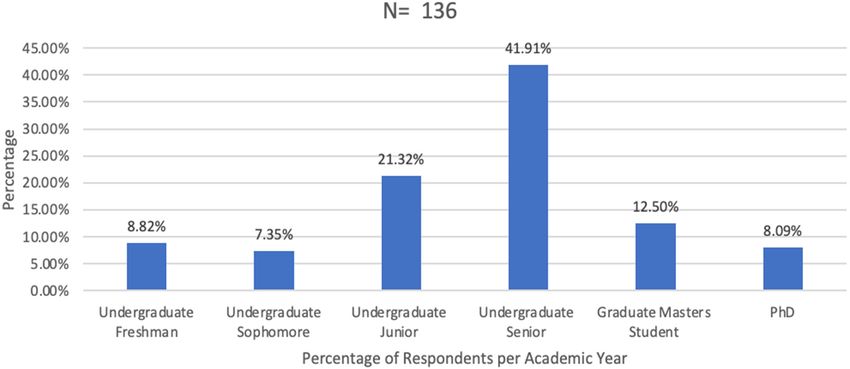
were 136
136 individuals
individuals who
who participated
participated in the study,
study, ranging
ranging from
from first-year
first-year
undergraduates
undergraduates through
through PhD
PhD students
students (Figure
(Figure 1).
1). Respondents were from a wide wide age
age
range
range due
due to
to the
the presence
presenceof ofseveral
severalnontraditional
nontraditional students
students and
and graduate
graduate (Master’s
(Master’s and
and
Doctoral)
Doctoral) students. The Thebirth
birthyears
yearsranged
ranged from
from 1954
1954 to 2002,
to 2002, withwith the years
the years 19981998 and
and 1999
1999 comprising 42% of the total. This reflects that a majority of survey respondents
comprising 42% of the total. This reflects that a majority of survey respondents were un- were
undergraduate
dergraduate seniorsseniors (42%).
(42%).
Figure1.
Figure 1. Respondent
Respondent academic
academic year.
year.
Age
Age can
can play
play aa role
roleininpeople’s
people’senvironmental
environmentalattitudes
attitudesandandbehaviors.
behaviors. Cognitive
Cognitive
development progresses at different rates
development progresses at different rates based on a based on a wide variety of factors, so the behav-
iors
iors exhibited
exhibited by by children
children change
change gradually
gradually [2].
[2]. The
The common
common assumption is that younger
people
peopleare aremore
morelikely
likelytotobe
be concerned
concerned withwith the
the state
state of
of the
the environment,
environment, which which is is the
the age
hypothesis
hypothesis[24].[24].However,
However,older olderageagegroups
groups can bebe
can equally
equally concerned
concerned about human
about human impact
im-
on
pacttheonenvironment
the environmentbecause it willitharm
because futurefuture
will harm generations; this is this
generations; known as legacy
is known think-
as legacy
ing [26]. For
thinking example,
[26]. a sociala survey
For example, of 792 people
social survey over theover
of 792 people age the
of 55age
explored the concept
of 55 explored the
of attitudes and behaviors towards the environment and found that
concept of attitudes and behaviors towards the environment and found that 96% of indi- 96% of individuals
think
vidualsthethink
environment should be
the environment maintained
should for future
be maintained forgenerations, clearly exemplifying
future generations, clearly exem-
legacy thinking [6].
plifying legacy thinking [6].
According
According to to our
our survey
survey of of college
college students,
students, individuals
individuals who who were
were born
born before
before 1997
1997
(classified as a nontraditional student because they are older than 24 years
(classified as a nontraditional student because they are older than 24 years of age) [27] of age) [27] were
just
were asjust
concerned with the
as concerned impacts
with of their of
the impacts actions
their on the environment
actions as those of
on the environment as younger
those of
students. When respondents were asked if they believed they act
younger students. When respondents were asked if they believed they act sustainably sustainably in their dailyin
lives, manylives,
their daily answered
manyyes (76%), regardless
answered yes (76%), of age. They
regardless ofalso
age.provided
They alsowritten
provided responses
written
to the open-ended
responses question asking
to the open-ended for asking
question specificfor examples. Representative
specific examples. commentscom-
Representative are
noted here:
ments are noted here:
I recycle what I can. I use reusable containers. I try to minimize my waste and water
usage (R128, born 1964).
I use reusable shopping bags, biodegradable trash bags, no single use plastic (R89, born
1976).
I’m vegetarian, I ride a bike (don’t own a car), participate in community farming, car-Sustainability 2021, 13, 7117 6 of 14
I recycle what I can. I use reusable containers. I try to minimize my waste and water
usage.
(R128, born 1964)
I use reusable shopping bags, biodegradable trash bags, no single use plastic. (R89, born
1976)
I’m vegetarian, I ride a bike (don’t own a car), participate in community farming, carpool,
purchasing home goods and clothing second-hand, buying local goods rather than online,
re-using glass jars and plastic containers, composting when I can, etc. (R95, born 1999)
However, when examining how respondents learned these sustainability behaviors, a
majority of individuals born between 1953 and 1989 reported that they did not participate
in zoo education programming or remember learning sustainability actions at zoos. This is
likely due to the fact that conservation and sustainability education at zoos did not become
common until the 1970s, when the US environmental movement stimulated concern
about local and global issues. Yet, it was not until the mid-1980s that high quality zoo
environmental education became more common place in the US [28]. It took many years for
top-notch zoos to reach the level of excellence shown today, which may have impacted the
perception of sustainability learning of participants whose childhood zoo visits occurred
prior or during the 1980s.
3.2. Global Sustainability Learning at Zoos
Several survey questions evaluated how respondents link global sustainability learn-
ing to their childhood zoo visits. A variety of questions were asked regarding sustainability
education, including the main purpose of the zoo visits. Of the 136 surveyed, 69% said that
they had primarily visited zoos during their childhood for personal purposes, rather than
being brought to zoos for only educational reasons, such as a mandatory school field trip.
Using open-ended responses, the survey also investigated whether respondents partic-
ipated in zoo education programs and if so, what type. The responses were then categorized
using summative content analysis [29]. Only 10% of respondents indicated that they had
participated in formal zoo education programs such as summer camp or volunteer activities
(Table 2).
Table 2. Types of zoo programs, as indicated in written responses.
Zoo Program Details of Program Responses
Participation in zoo run camps; can be daily, weekly,
Zoo Camp 5
or monthly
Participation in a youth career program; seeing what
Junior Zookeeper 4
it would be like to be a zookeeper
Participation in educational classes offered at the zoo
Educational Classes or other wildlife facilities such as raptor 4
rehabilitation, and ecosystem maintenance
Participation as a zoo volunteer, consisting of
various tasks, including:
Volunteering Habitat Docent
1
Food Preparation
Enrichment Creation
Only 35% of the respondents indicated that they could recall learning any sustainabil-
ity activities at zoos. Below are representative examples of the affirmative responses to the
survey question: “Do you remember learning sustainable actions at the zoo?”:
Yes, looking for the sustainability certifications on products, planting native species to
fight biodiversity. (R17)Sustainability 2021, 13, 7117 7 of 14
I remember having trash bins saying to recycle what trash we could, and they offered us
cute reusable cups with animals on them. I would buy one because I loved the animal
and would take it with me around the zoo to get refills or use at other places instead of a
throw away cup. (R55)
Summative content analysis [29] of written comments further shows that zoos prompted
these respondents to think more about how their actions impacted various species, espe-
cially those on the endangered species list, due to educational signage (Table 3).
Table 3. Sustainable actions taught at zoos, based on content analysis of written responses.
Sustainability Topic Discussion Details Responses
Discussion over
Reduce, Reuse, Recycle
Sustainable products
Sustainability at Home 12
Composting
Diet
Plastic use
Use of hydroelectric and wind power to conserve
Renewable Resources 6
energy
Discussion regarding:
Deforestation
Palm Oil Industry
Ecosystems Native Species 5
Invasive Species
And how to assist with conservation efforts
surrounding these topics
Discussion covering the rehabilitation of endangered
Endangered Species species at zoos, and what actions can be taken to 4
assist with these topics
Kindness Overall attitude towards the environment 3
3.3. Zoo Visits Influence Sustainability Behavior
Respondents were asked to estimate the approximate average annual number of times
they visited a zoo during their childhood. According to the data, 45% respondents listed their
visits as zero to one time per year, and 37% visited two to four times annually (Figure 2).
The survey asked the straightforward question: “Do you believe you act sustainably
in your daily life?” Approximately 76% of respondents indicated that they do indeed
believe they act sustainably now. When asked to describe their sustainability actions,
most respondents listed one or two daily actions. Summative content analysis [29] was
conducted to group the written responses based on similar sustainability activities and six
categories emerged: Activism, Community Action, Food Sustainability, Personal Action,
Positive Thinking, and Transportation (Table 4). When the two data points were compared,
76% of respondents who believe they act sustainably in their daily lives had an average
childhood zoo visitation rate of two to four times per year, which is a higher average
visitation rate than respondents who did not believe they act sustainably in their daily lives.
Furthermore, 7% of individuals who say they act sustainably as adults reported a very
high annual frequency of visiting zoos as children (nine or more times per year) compared
to those who say they do not believe they act sustainably in their daily lives (1%). This
implies that zoo visitation seems to have a positive effect on sustainability behavior.3.3. Zoo Visits Influence Sustainability Behavior
Respondents were asked to estimate the approximate average annual number of
Sustainability 2021, 13, 7117
times they visited a zoo during their childhood. According to the data, 45% respondents
8 of 14
listed their visits as zero to one time per year, and 37% visited two to four times annually
(Figure 2).
Figure2.2.Annual
Figure Annualzoo
zoo visitation
visitation rates.
rates.
Table 4. Self-Identified sustainability behaviors, based on content analysis of written responses.
Sustainable Activity Ways to Participate in Sustainable Activity Number of Responses
Reduce, Reuse, Recycle
Sustainable shopping (thrifting, reusable bags, etc.)
Personal Action Electricity consumption 83
Water consumption
Plastic consumption
Supporting Local Business
Public Litter Clean-Up
Community Action 34
Community Gardening
Community Compost Centers
Walking more
Carpooling
Transportation Electric cars 17
Scooters and bikes as alternate means of
transportation
Concerns regarding red meat consumption
Food Sustainability Veganism 10
Vegetarianism
Kind attitude toward nature
Optimistic; seeks guidance Not sure how to start being sustainable
6
Thinks they don’t have financial resources to be
sustainable
Peaceful protests
Activism 6
Education Rights
Most respondents (69%) indicated that they visited zoos for personal purposes, such
as family trips. Investigating the correlation between purpose and outcome, it can be noted
that the 76% of respondents who believe they act sustainably in their daily lives as adults
visited zoos for personal reasons as children. On the other hand, of those who self-assess asSustainability 2021, 13, 7117 9 of 14
less sustainable in their daily lives only 23% visited the zoo for personal reasons. Instead,
these less-sustainable respondents say they mostly visited zoos for educational purposes
as children, such as mandatory participation in school field trips.
Of the 136 respondents, 65% believe that visiting zoos has impacted their level of
environmental concern. Below are representative examples of respondent affirmative
responses to survey question: “Do you believe visiting zoos has impacted your level of
environmental concern?”
It has made me realize environmental topics that are occurring across the globe, such as
unsustainable resource mining in Africa and other such topics. It has also opened my
eyes to urban sustainability issues. (R17)
In more recent zoo visits, I have been exposed to more information about conservation
efforts and environmental issues we are facing. (R30)
Based on the data shown, many respondents do not believe that their sustainability
behaviors as adults were specifically influenced by zoos because they do not remember
learning global sustainability actions at the zoo during their childhood visits. However, as
adults, these respondents do recognize the value of global sustainability information that
zoos possess.
Those who indicated that they visited the zoo for personal reasons (i.e., not a required
school trip) also indicated a higher level of personal sustainability actions. This could
indicate that the social connections played a role in influencing future actions. The desire
and motivation to learn also has the potential to be affected by peers, family, and learning
setting. Learning approach plays a role in sustainability education and cognitive perception,
as some students may absorb more information in a formal school setting, while others
learn better outdoors or in more hands-on settings [30].
Individuals who indicated that they went to the zoo for personal purposes were
more likely to believe that visiting the zoo impacted their levels of environmental concern,
specifically due to the presence of educational interactions and information signage at the
zoo (Table 5). The data was categorized using summative content analysis [29].
Table 5. Do zoos impact levels of environmental concern?
Response Description
Information provided through education materials (signage and classes)
Zookeeper passion
Yes Species extinction
Habitat destruction
Reduce, reuse, recycle
Negative view of zoos as a whole
No Cages are cruel
Common thought: Zoo habitats use a lot of energy, are they really sustainable?
Indeed, when asked if they believed zoos impacted their overall environmental con-
cern, 65% of respondents indicated “yes”. Environmental concern is generally referred to
as an evaluation of a person’s beliefs, attitudes, and behaviors based on facts regarding the
environment [24], while environmental sustainability is defined as a condition of intercon-
nectedness which allows humans to satisfy their needs without exceeding the capacity of
the ecosystem [25]. Even though individuals who were brought to the zoo for educational
reasons tend to rank their sustainability actions at a low level, they still believe that zoos
impact environmental concern. A large majority (90%) of survey respondents indicated
that they did not participate in zoo education programs as a way to learn sustainability be-
haviors at zoos. These findings indicate that zoos must assess their education and outreachSustainability 2021, 13, 7117 10 of 14
techniques to ensure that sustainability information is accessible to the highest possible
number of people.
Research done on the cognitive perception capability of children indicates that by age
four, children develop the capability to construct simple representative relationships. This
increases so that by the age of seven, children can comprehend complex problems. At the
age of ten children, can construct categories based on concrete instances [2]. Factors such
as the age of the child at the time of initial exposure to the zoo, which are linked to distance
from the zoo, cost of tickets, amount of time spent annually at the zoo, may vary among
respondents. Motivation to learn might indicate how childhood participation in events
(such as going to the zoo) could impact views of global issues.
3.4. Attitudes on Climate Change
In order to better understand the attitudes of respondents and why they partake in
the global sustainability activities they listed; respondents were asked the open-ended
question: “What is your opinion on climate change?” since personal sustainability actions
can have an impact on climate change knowledge and mitigation. In the US, climate change
is a key environmental issue that often separates people with more pro-environmental
attitudes and behaviors [21]. Furthermore, zoos often act to educate their visitors about
climate change and sustainability issues and teach behaviors that are effective in battling
global environmental degradation and climate change [21].
An additional question asked participants to rate their overall concern regarding
climate change on a 1–10 scale. Answers were analyzed and categorized ranging from
denial to extremist (Table 6). Five categories were created based on the contents and tone of
responses. For instance, a respondent would fall into the category “Denial” if they stated
that global climate change was not real.
Climate Change is a hoax used to give money to companies that will not do anything to
help the earth. They only use the money to line their pockets. (R122)
Individuals were categorized as “Not Concerned” if they stated that climate change is
a natural phenomenon that should not concern humans.
The climate has always changed. The current fantasy version being batted around is a
political rather than scientific construct—and I have actually run the numbers from raw
data to confirm this. (R42)
Individuals who claimed they did not have enough scientific background regarding
climate change were categorized as “unsure”.
I don’t think I know enough about climate change and the science behind to have an
informed opinion. (R13)
Comments acknowledging that there is a problem and advocating for more discussion
on the topic comprise the “Concerned” category.
I think climate change is a very important topic that we need to discuss more so we can
take more action to reduce our environmental impact and slow the current rate of climate
change. (R30)
Respondents who realize there is a problem and advocate for finding immediate
solutions through action and policy were labeled as “Very Concerned”.
It’s our responsibility as a society to take care of the planet we live on, but that can’t
simply be a burden carried by the working class. As children we’re taught that we can do
plenty of things like recycling or riding bikes to reduce our carbon footprint, and it’s true
that we all have a part to play, but we can’t successfully fix any of the problems we’ve
created without determined leaders or the proper legislation. Big corporations and fossil
fuel companies must be held accountable for their actions if the general public is expected
to make any real changes at all. (R130)Sustainability 2021, 13, 7117 11 of 14
Finally, a respondent exemplifies the “Fear” category if their response notes extreme
concern and that drastic measures must be taken in order to respond to the climate crisis.
It is very real. It is here now. People will die. I want to move north, possibly to Canada.
(R11)
Written comments in response to open-ended survey questions showed that a majority
of respondents (83%) see effects of climate change in their lives as they fall into categories
of “concerned, very concerned, and extremist” based summative content analysis that
discovered similarities in responses [29].
Table 6. Respondents’ opinions on climate change, discovered through content analysis.
Response Category Key Points of Response Number of Responses
Climate change is fake
Denial 1
“Hoax”
Climate change is a natural process
Not Concerned 7
People should not worry
Claim they don’t have enough information
Unsure 7
Climate change might not be real
Realize there is a problem
Concerned Encourage discussion 27
“Needs to be addressed”
Realize there is a problem
Very Concerned Advocate for action and policy 51
“Action plan”
Scary problem
Advocate for extreme action
Fear 7
Pessimistic view
“Moving” or “death”
Inadequate answer
Outlier 2
Cannot be categorized
No Written Response 34
In addition to these descriptive categories, respondents rated their overall concern
regarding climate change, on a scale of 1–10, with 1 being “not concerned” and 10 being
“very concerned”. A majority of individuals (41%) chose 10 and no respondents indicated
one as their response value (Figure 3).
These data were then analyzed to investigate correlations between respondents who
rated their concern about climate change very high (8–10) and other characteristics. In
the survey, respondents were asked to indicate their gender through the options “male,
female, prefer not to answer”. Of the 101 (74%) of respondents who indicated a high level
of concern (rating it 8–10) regarding climate change, 72% were female. This matches the
overall response rate of 72% female, and further supports previous research on the role
that gender plays on environmental thinking and behavior [8,15].
The majority of high level of concern respondents indicated that they visited zoos
two to four times per year, and 71% of high level of concern respondents indicated that
they visited the zoo for personal reasons. These results verify that individuals who are
very concerned about climate change spend time at zoos in a way that positively promotes
global learning for that individual.No Written Response 34
In addition to these descriptive categories, respondents rated their overall concern
regarding climate change, on a scale of 1–10, with 1 being “not concerned” and 10 being
Sustainability 2021, 13, 7117 12 of 14
“very concerned”. A majority of individuals (41%) chose 10 and no respondents indicated
one as their response value (Figure 3).
Figure
Figure 3. Respondents’
Respondents’ level
level of
of concern
concern regarding
regarding climate change.
Finally,
These survey
data wererespondents were
then analyzed to asked to indicate
investigate their area
correlations of academic
between study.who
respondents The
responses were then categorized based on whether the field was ecological in
rated their concern about climate change very high (8–10) and other characteristics. In thenature.
Ecological
survey, fields of study
respondents werewere defined
asked as thosetheir
to indicate in thegender
S.T.E.M. field—Science,
through Technology,
the options “male,
Engineering, and Mathematics—which all play a part in sustainability education [31]. Of
the 74% (101 out of 136) of individuals who indicated they had a high level of concern
regarding climate change (8–10), 65% indicated that they had a S.T.E.M. related primary
or secondary field of study. This indicates that individuals who show a high level of
concern regarding climate change have a high likelihood of incorporating S.T.E.M. into
their academic pursuits.
4. Limitations
This study gleaned new data regarding zoos and attitudes towards sustainability
action, but several limitations must be acknowledged. The 2020 COVID-19 pandemic
halted our planned in-person survey research, and we kept this online questionnaire
extremely brief due concern about students feeling online overload (i.e., Zoom fatigue). We
opted to have fewer questions in order to encourage a higher number of valid responses.
Based on this study, we realize that, in the future, various potential confounding variables
could be assessed through additional survey questions (i.e., income, future occupation,
average duration of visit to the zoo, group composition). Furthermore, a small population
size during the summer semester led to insufficient sample size for inferential statistical
analysis. This could be avoided in the future by submitting a Freedom of Information Act
request to obtain email addresses for all students in order to send the survey directly to
each student, rather than rely on the learning management system that is not consistently
used by all students during the summer session. Finally, it should be noted that there is an
assumption of bias within the results due to the fact that individuals with prior interest in
the subject are more likely to be motivated to participate in the survey. However, despite
these limitations, the study provides original research on an innovative topic that can be
used as a baseline data in future research.
5. Conclusions
Given the magnitude of global environmental problems that humans must address,
local and personal environmental actions must be part of the solution. Likewise, for many
people in urban areas, their only experience with nature and diverse species comes from
an opportunity to a visit zoo. To assess the innovative topic of the role that local zoos can
play in providing globally relevant environmental education, this pilot study evaluated
self-assessed sustainability behavior and global climate change attitudes among university
students in terms of their childhood zoo visitation. A diverse campus setting led to a variety
of responses, indicating that global sustainability attitudes and environmental concerns
are present among multiple generations and from students in varying academic fields.Sustainability 2021, 13, 7117 13 of 14
Females self-selected to participate at a higher rate than males in the survey, supporting
prior research that females are historically more interested in environmental issues, having
higher levels of concern about endangered species and the impacts of global climate
change [12]. There is also a relationship between the reasons that individuals visit the zoo
and how highly they assess their sustainability actions. Specifically, people who visit a zoo
for personal purposes (as opposed to a required school trip) are more likely to participate
in individual sustainability actions in daily life. This indicates that learning in an enjoyable
zoo setting plays a role in influencing future environmental actions among individuals.
Indeed, learning should be fun and embedded in the zoo visit. Analysis found that 76%
of respondents believe they act sustainably in their daily lives, but only 35% of individuals
indicated that they learned their sustainable habits at zoos. Yet, 65% of respondents
indicated that they believe zoos impact their overall level of environmental concern. This
underscores the need for environmental education that is entertaining, practical, and
accessible to many people. Furthermore, research suggests that zoo visitors are interested
in sustainability topics and zoos are the ideal setting to provide this link between local
visitors and global environmental issues. These results also verify that individuals who are
very concerned about climate change spend time at zoos in a way that positively promotes
global sustainability learning for that individual.
Our research shows that key aspects of local-to-global learning can occur at zoos. Zoos
can have a positive influence on climate change education since they allow easy access to
nature, opportunities for life-long learning, and practical instruction for handling environ-
mental education challenges [21]. They promote learning by providing a comfortable, fun,
low-pressure setting in which to acquire information about the earth and its species, which
could be expanded to promote a conservation-minded society. Indeed, zoos already have a
broad audience, and they should continue to develop new ways of engaging visitors in
order to reinforce and extend global sustainability messages and actions.
Author Contributions: Conceptualization, J.A.T. and L.A.D.; methodology, J.A.T. and L.A.D.; inves-
tigation, J.A.T.; writing—original draft preparation, J.A.T.; writing—review and editing, J.A.T. and
L.A.D.; supervision, L.A.D.; project administration, J.A.T. All authors have read and agreed to the
published version of the manuscript.
Funding: This research received no external funding.
Institutional Review Board Statement: The study was conducted according to the guidelines of
the Declaration of Helsinki, and approved by the Institutional Review Board of Southern Illinois
University Carbondale (protocol number 20180, 2 June 2020).
Informed Consent Statement: Informed Consent was obtained from all subjects involved in the
study.
Conflicts of Interest: The authors declare no conflict of interest.
References
1. Chawla, L. Childhood nature connection and constructive hope: A review of research on connecting with nature and coping with
environmental loss. People Nat. 2020. [CrossRef]
2. Fischer, K.W.; Bullock, D. Cognitive development in school-age children: Conclusions and new directions. In Development during
Middle Childhood: The Years from Six to Twelve; The National Academy of Science: Washington, DC, USA, 1984; pp. 85–161.
3. AZA-Annual. Annual Report on Conservation and Science. Association of Zoos and Aquariums. 2018. Available online:
https://www.aza.org/annual-report-on-conservation-and-science (accessed on 22 June 2021).
4. Clayton, S.; Luebke, J.F.; Saunders, C.; Matiasek, J.; Grajal, A. Connecting to nature at the zoo: Implications for responding to
climate change. Environ. Educ. Res. 2013, 20, 460–475. [CrossRef]
5. Dickie, L.A. The sustainable zoo: An introduction. Int. Zoo Yearb. 2009, 43, 1–5. [CrossRef]
6. Fraser, J.; Sickler, J. Measuring the cultural impact of zoos and aquariums. Int. Zoo Yearb. 2009, 43, 103–112. [CrossRef]
7. Schwan, S.; Grajal, A.; Lewalter, D. Understanding and engagement in places of science experience: Science museums, science
centers, zoos, and aquariums. Educ. Psychol. 2014, 49, 70–85. [CrossRef]
8. Street, B.; Jenkins, J.; Frasier, J. Research on visitor receptiveness to conservation messaging and its impact on exhibit design. Int.
Zoo Educ. 2012, 48, 60–63.Sustainability 2021, 13, 7117 14 of 14
9. Luebke, J.F.; Grajal, A. Assessing mission-related learning outcomes at zoos and aquaria: Prevalence, barriers, and needs. Visit.
Stud. 2011, 14, 195–208. [CrossRef]
10. Patrick, P.G.; Matthews, C.E.; Ayers, D.F.; Tunnicliffe, S.D. Conservation and education: Prominent themes in zoo mission
statements. J. Environ. Educ. 2007, 38, 53–60. [CrossRef]
11. Roe, K.; McConney, A. Do zoo visitors come to learn? An internationally comparative, mixed-methods study. Environ. Educ. Res.
2014, 21, 865–884. [CrossRef]
12. Birney, B.A.; Heinrich, C. Understanding demographic data on zoo visitors. J. Mus. Educ. 1991, 16, 19–22. Available online:
https://www.jstor.org/stable/40478897 (accessed on 22 June 2021). [CrossRef]
13. Taylor, D.E. Race, class, gender, and American environmentalism. U.S. Department of Agriculture, Forest Service, Pacific
Northwest. Research Station. Gen. Tech. Rep. 2002, 51, PNW-GTR-534. Available online: https://www.fs.fed.us/pnw/pubs/gtr5
34.pdf (accessed on 22 June 2021).
14. AZA-Demographics. Visitor Demographics. Association of Zoos and Aquariums. February 2021. Available online: https:
//www.aza.org/partnerships-visitor-demographics?locale=en (accessed on 22 June 2021).
15. Ballew, M.; Marlon, J.; Leiserowitz, A.; Maibach, E. Gender Differences in Public Understanding of Climate Change. Yale
University. 20 November 2018. Available online: https://climatecommunication.yale.edu/publications/gender-differences-in-
public-understanding-of-climate-change/ (accessed on 22 June 2021).
16. Mkhize, B.N. Who visits a nature based urban attraction and why? An exploratory study of the motivations to visit the pretoria
zoo in South Africa. Tour. Leis. 2020, 9, 1–14.
17. Clayton, S.; Fraser, J.; Saunders, C.D. Zoo experiences: Conversations, connections, and concern for animals. Zoo Biol. 2009, 28,
377–397. [CrossRef]
18. Godinez, A.M.; Fernandez, E.J. What is the zoo experience? How zoos impact a visitor’s behaviors, perceptions, and conservation
efforts. Front. Psychol. 2019, 10, 1746. [CrossRef]
19. Packer, J.; Ballantyne, R. The role of zoos and aquariums in education for a sustainable future. New Dir. Adult Contin. Educ. 2010,
2010, 25–34. [CrossRef]
20. Yocco, V.S.; Heimlich, J.E.; Myers, C.; Jenike, S.D. Visitors’ social expectations of a trip to the zoo. Int. Zoo Educ. 2010, 46, 36–40.
21. Luebke, J.F.; Clayton, S.; Saunders, C.D.; Matiasek, J.; Kelly, L.D.; Grajal, A. Global Climate Change as Seen by Zoo and Aquarium
Visitors; Chicago Zoological Society: Brookfield, IL, USA, 2012; p. 97.
22. IUCN. The IUCN Red List of Threatened Species. International Union for the Conservation of Nature. 2021. Available online:
https://www.iucnredlist.org (accessed on 22 June 2021).
23. Junhold, J.; Oberwemmer, F. How are animal keeping and conservation philosophy of zoos affected by climate change? Int. Zoo
Yearb. 2010, 45, 99–107. [CrossRef]
24. Fransson, N.; Gärling, T. Environmental concern: Conceptual definitions, measurement methods, and research findings. J.
Environ. Psychol. 1999, 19, 369–382. [CrossRef]
25. Morelli, J.J. Rochester Institute of Technology environmental sustainability: A definition for environmental professionals. J.
Environ. Sustain. 2011, 1, 1–10. [CrossRef]
26. Frumkin, H.; Fried, L.; Moody, R. Aging, climate change, and legacy thinking. Am. J. Public Health 2012, 102, 1434–1438. [CrossRef]
27. Jinkens, R.C. Nontraditional students: Who are they? Coll. Stud. J. 2008, 43, 979–987.
28. AZA-Accreditation. About AZA Accreditation. Association of Zoos and Aquariums. 2 February 2021. Available online:
https://www.aza.org/what-is-accreditation?locale=en (accessed on 22 June 2021).
29. Hsieh, H.-F.; Shannon, S.E. Three approaches to qualitative content analysis. Qual. Health Res. 2005, 15, 1277–1288. [CrossRef]
[PubMed]
30. Hamilton, L.C.; Hartter, J.; Bell, E. Generation gaps in US public opinion on renewable energy and climate change. PLoS ONE
2019, 14, e0217608. [CrossRef] [PubMed]
31. USDE. Science, Technology, Engineering, and Math, including Computer Science. United States Department of Education. 2021.
Available online: https://www.ed.gov/stem (accessed on 22 June 2021).You can also read


