Farmer Perspectives on Data 2021 - Demeter
←
→
Page content transcription
If your browser does not render page correctly, please read the page content below
Farmer Perspectives on Data 2021
Actionable insights to empowering businesses and farmers
to scale farm-level production data activities
Original research prepared by Trust In Food, a Farm Journal Initiative in collaboration
with The Sustainability Consortium
Lead Researchers                                                 Research Partners
Drew Slattery                                                                          Trust In Food is a purpose-driven division of
Trust In Food, a Farm Journal Initiative                                               Farm Journal dedicated to mainstreaming and
Kinsie Rayburn                                                                         accelerating the transition to more sustainable and
                                                                                       regenerative ag practices, making every
Trust In Food, a Farm Journal Initiative                                               dollar invested in conservation agriculture more
Christy Melhart Slay, Ph.D.                                                            impactful. We bring business intelligence to
The Sustainability Consortium                                                          agricultural production behavior change: helping
Teresa Garcia-Moore                                                                    farmers understand, want and feel capable of
The Sustainability Consortium                                                          undertaking practice change through data science,
                                                                                       social research and strategic communications
                                                                                       deployed through the omnichannel Farm Journal
                                                                                       platform in collaboration with our partners.
                                                                                       Visit trustinfood.com & farmjournal.com to learn
Acknowledgments                                                                        more.

Amy Skoczlas Cole – Trust In Food, a Farm Journal Initiative
Nate Birt – Trust In Food, a Farm Journal Initiative

                                                                                       The Sustainability Consortium (TSC) is a global
                                                                                       organization transforming the consumer goods
                                                                                       industry to deliver more sustainable consumer
Special Thanks                                                                         products. We are dedicated to improving the
                                                                                       sustainability of consumer products. Our
The authors especially wish to thank all the farmers, ranchers                         members and partners include manufacturers,
                                                                                       retailers, suppliers, service providers, NGOs, civil
and growers who took time out of their schedules to
                                                                                       society organizations, governmental agencies
generously share their unique perceptions and experiences                              and academics. TSC convenes our diverse
related to data by completing this survey.                                             stakeholders to work collaboratively to build
                                                                                       science-based decision tools and solutions that
                                                                                       address sustainability issues that are materially
                                                                                       important throughout a product’s supply chain and
                                                                                       life cycle. TSC also offers a portfolio of services to
                                                                                       help drive effective implementation.
                                                                                       Learn more at sustainabilityconsortium.org

                                                                                                           Farmer Perspectives on Data          2
                                                                     Trust In Food, a Farm Journal Initiative & The Sustainability Consortium
About This Report
How Farmers View Data

The lack of a robust, integrated data ecosystem that starts on the farm presents a major
challenge for efforts to increase supply chain transparency, sustainability and resiliency. Not to
mention, the threat of this lack of integrated data poses to the sustainability and resiliency of
farm operations themselves.

Nearly half of food companies and retailers, using TSC’s Food, Beverage, and Agriculture (FBA)
assessments to track their supply chain sustainability Key Performance Indicators (KPIs), could
not determine the upstream farm-level management practices for their agricultural inputs,
according to research produced by The Sustainability Consortium (TSC).

To address this, TSC and Trust In Food, a Farm Journal initiative, have collaborated to undertake
an annual survey of U.S. row crop farmers to identify emerging trends around digital agriculture
and learn more about farmer perspectives on data collection and sharing.

The purpose of this report is to equip organizations with an improved understanding of the
realities farmers face related to production-level data collection and sharing by providing
actionable intelligence and a roadmap for change. This is an annual report, published each
spring. The 2020 report, based on the 2019 cropping year, can be viewed here.

                                                                                                                   Farmer Perspectives on Data          3
                                                                             Trust In Food, a Farm Journal Initiative & The Sustainability Consortium
About This Report

Methodology Notes
We provide descriptive statistics pertaining to survey responses as well as breakout
comparisons between those answering in specific ways across multiple questions. All statistics
presented throughout this report are rounded to their nearest whole number and a 5% margin of
error should be considered. Questions were phrased to reference the 2020 growing season. This
research is not meant to be representative of all American agriculture; rather, it is a snapshot
in time of row-crop and specialty-crop growers. Completed surveys were received from 610
farmers; the (N)-value should always be considered to be 610 unless otherwise stated. A full
breakdown of the survey sample’s demographic trends can be viewed in the Appendix at the end
of this document.

Year-Over-Year Differences
Direct comparison to previous years' reports should be handled carefully; the survey sample
size, respondents and makeup are different between years, and we continuously refine
our survey questions/answer choices and analysis methodology. There may be significant
differences year-over-year in certain statistics. While this may be a reflection of a changing
world, it is also surely a reflection of differences in survey methodologies. This should be kept in
mind while comparing reports.

COVID-19 Considerations
The effects of the coronavirus pandemic over the last year can be felt and seen across every
sector of business and society—and agriculture is no different. This survey was fielded in early
2021. Please note the potential impact the ongoing pandemic had on those who responded,
their answer selections and their farm management decisions.

                                                                                                                   Farmer Perspectives on Data          4
                                                                             Trust In Food, a Farm Journal Initiative & The Sustainability Consortium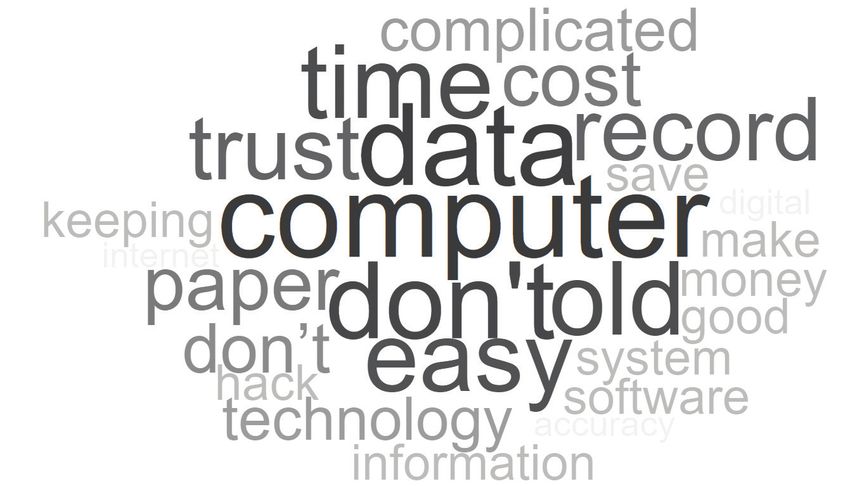
About This Report

Terminology
This survey centers around digital farm management tools and farm-level production data.
While there are many different definitions and classifications across the sector for what
qualifies as this, as well as much overlap in categories, for the purposes of this report:

   > Farm Management Information Systems, or FMIS, refers to any commercially
     available farm management software suite designed to help farmers collect, store and use
     their production data.

   > Digital Sustainability/Conservation Tools refers to any software suite designed to
     help farmers collect, store, use and report data specifically related to conservation and
     sustainability.

It is possible that, in this context, FMIS and Digital Sustainability/Conservation Tools may be the
same software in certain cases and different software in other cases.

Additionally, the term digital transition is used throughout this report to denote the transition
of farm management from analog, hard copy (such as taking measurements by hand and
recording them in paper record books) to digital and FMIS solutions.

This report and the findings presented here represent those individual authors and do not reflect the views of the U.S. government, any federal or
state agency, research institution, or any funding source or business partner of either Farm Journal or The Sustainability Consortium.

                                                                                                                                                       Farmer Perspectives on Data          5
                                                                                                                 Trust In Food, a Farm Journal Initiative & The Sustainability Consortium
Table of Contents
Foreword................................................................................................................ 7
Key Findings........................................................................................................... 9
Actionable Insights............................................................................................... 14
Trends in Data Collection, Management and Use................................................. 20
   Farmer Perspectives......................................................................................... 21
   Key Findings..................................................................................................... 28
Data Collection/Sharing Software Platforms....................................................... 31
   Farmer Perspectives......................................................................................... 32
   Key Findings..................................................................................................... 40
Trust & Beliefs...................................................................................................... 43
   Farmer Perspectives......................................................................................... 44
   Key Findings..................................................................................................... 46
Conservation Agriculture Trends.......................................................................... 47
   Farmer Perspectives......................................................................................... 48
   Key Findings..................................................................................................... 51
Conclusion............................................................................................................ 53
Appendix: Survey Respondents Sample............................................................... 54

                                                                                                                                     Farmer Perspectives on Data          6
                                                                                               Trust In Food, a Farm Journal Initiative & The Sustainability Consortium
Foreword
The on-farm digital transition is critical;
and it needs our help.
Since our ancestors planted their first seeds, observations and Additionally, data collection enables the transparency
data have continuously played a central role in enabling the consumers are demanding in regards to the food they eat and
sustainability, resilience and indeed, the survival of agricultural provide to their families. The rise of the “connected farm” is
systems. very much upon us and not a moment too soon.
This remains true in 2021. In fact, agricultural data is now Through this research, we present the case for helping farmers
more important than ever. As we race to reshape agricultural better understand the digital transition, find value in making
production to provide for a growing world in the shadows the transition and feel capable and equipped to make the
of disruptive crises, like climate change and the COVID-19 transition. We also make the case for food, feed and biofuel
pandemic, the need for ag data is urgent. Detailed farm-level companies to better understand the barriers that farmers in
production data is one of the single greatest tools we have to their supply chains are facing related to collecting and sharing
mitigate climate change, improve supply chain sustainability data, as well as the incentives (financial and otherwise) that
and build a resilient, equitable production system. are necessary for growers to make the transition to improve
resiliency and sustainability in agricultural systems in the U.S.
Farmers have had a close and powerful relationship with
their production and management data for millennia. But the At Trust In Food, we hope that people working with farmers
breakneck pace of technological change in today’s world is across the country can use the findings of this report to evolve
complicating this relationship. This report illuminates a farming their work around digital ag to more effectively and efficiently
sector broadly leaning into the opportunities that digital ag can empower and support farmers in their digital transitions.
provide, but being hindered by significant challenges that hold
many back, preventing their full digital transitions. – Amy Skoczlas Cole
Executive Vice President, Trust In Food
This is one of the most immediate opportunities in front of
agriculture—the transition to increased data collection and
digital management will empower farms to reduce their
environmental impact while providing more efficiently grown
crops through thriving business operations.
Farmer Perspectives on Data 7
Trust In Food, a Farm Journal Initiative & The Sustainability ConsortiumFarmer
Farmer
Perspectives
Perspectives
USDAOn Ag
on by
Photo Data 82
Lance Cheung
Trust In Food, a Farm Journal Initiative & The Sustainability ConsortiumKey Findings
Farmer Perspectives on Data Collection and Sharing
There is a significant digital gap. Trusted advisors play a critical role, but those
More than half of all respondents supporting the digital transition are sparse.
(62%) said they don't rely on Farm Only 52% of all respondents said
Management Information Systems they have a trusted advisor who
(FMIS) exclusively. Almost a third of could answer questions related to
respondents (28%) said their primary FMIS and digital ag; those who do
data storage method is paper or other have a trusted advisor for digital
non-digitized method. Of those that ag are 24% more likely to use FMIS
don’t use digital, only half have ever than those who do not.
considered transitioning to digital.
Satisfaction with FMIS outputs is mediocre. Strong relationship exists between total
Less than half of all respondents who acreage and FMIS use, but it’s not universal.
use FMIS (47%) report being entirely FMIS use rates reliably increase
satisfied with its outputs while 6% report with overall operation size, but
being entirely dissatisfied. usage rates for smaller operations
are still significant, and this group
should not be ignored.
Farmer Perspectives on Data 9
Trust In Food, a Farm Journal Initiative & The Sustainability ConsortiumKey Findings
Farmer Perspectives on Data Collection and Sharing
With cost barriers addressed, precision Trust issues are significant, but lenders
technology use could increase significantly. are the most trusted data holders.
$
79% responded that they would start 73% of respondents don’t trust
or increase their use of precision farm private companies with their data,
management technologies if they and 58% don’t trust the government
could acquire the equipment needed with it; conversely, 71% do trust their
(software, sensors, etc.) at no charge financial institutions with their data.
or incentivized discount.
Farmers have transparency concerns. Significant differences in FMIS usage exist
65% said their customers do not across crop marketing outlets.
have a right to know how the crop The respondents who primarily
was produced; this sentiment is market their harvest to a food or fuel
shared equally among FMIS users company are more likely to use FMIS
and non-users. as compared to respondents who
market to other outlets, especially
those who use their harvest for animal
feed on their own operations.
Farmer Perspectives on Data 10
Trust In Food, a Farm Journal Initiative & The Sustainability ConsortiumKey Findings
Barriers and Pathways to Farm-Level Data Efforts
Barriers farmers face collecting data (N=610)
There is no benefit in 23%
collecting more than I am
There is no demand 37%
for my data
Poor data network 44%
connectivity
Lack of time needed 45%
Lack of equipment / 50%
technology needed
Lack of training or 53%
understanding
Cost 59%
0% 5% 10% 15% 20% 25% 30% 35% 40% 45% 50% 55% 60%
Farmer Perspectives on Data 11
Trust In Food, a Farm Journal Initiative & The Sustainability ConsortiumKey Findings
Barriers and Pathways to Farm-Level Data Efforts
Barriers farmers face sharing data (N=610)
I fear being 35%
penalized because
Poor data network 40%
connectivity
There is no demand 40%
for my data
There is no benefit in 41%
sharing more than I am
Collection is a problem, 45%
making sharing difficult
Lack of training or 52%
understanding
Privacy concerns 69%
Fear of additional 69%
regulation
0% 5% 10% 15% 20% 25% 30% 35% 40% 45% 50% 55% 60% 65% 70%
Farmer Perspectives on Data 12
Trust In Food, a Farm Journal Initiative & The Sustainability ConsortiumKey Findings
Barriers and Pathways to Farm-Level Data Efforts
Interest in incentives for collecting and sharing data (N=610)
Better lease terms 61%
with landowners
Access to a facilitated 65%
peer group
Government support via 65%
payment programs
Lower rates from a 65%
financial institution
Direct payment by a 68%
private company
Training and technical 76%
resources
Crop insurance benefits or 77%
payment reductions
Tools to make their 86%
operations more profitable
0% 5% 10% 15% 20% 25% 30% 35% 40% 45% 50% 55% 60% 65% 70% 75% 80% 85%
Farmer Perspectives on Data 13
Trust In Food, a Farm Journal Initiative & The Sustainability ConsortiumActionable Insights
How To Empower Farmers' Digital Transitions
Farmer Perspectives on Data 14
Trust In Food, a Farm Journal Initiative & The Sustainability Consortium
USDA Photo by Kirsten StroughActionable Insights
Barriers To Change Exist
The comprehensive use of FMIS and farm-level data is central to sustainability and resilience, both on farm and downstream in
the supply chain. But barriers exist that prevent farmers from incorporating data and FMIS into their operations at the rate and
scale needed to meet emerging challenges. Here are the key barriers the survey identified and then recommendations, so the
sector can empower farmers to move through the barriers and to a greater level of FMIS on farms.
Trust is an issue. Producers don't trust the government or Opportunities to partner with lenders to ensure supply chain
private companies with their data, claiming issues related to sustainability measurement and improvements are occurring
trust and proper data usage, as leading reasons why they don't
on the farm without having to require growers’ sensitive
collect / share more.
information could be a viable option.
Action: Private organizations and government agencies must
Bottom Line: Farmers’ concerns about how their data will be
address issues related to trust, as it is complicating the digital
used and shared is the single biggest issue preventing their
transition for many farmers. Trust can be built by redesigning data
digital transitions. Significant progress in data privacy and
governance and privacy policies, based on farmer concerns, which
governance is required to overcome this barrier.
focus on companies being more transparent, fair and equitable.
Almost twice as many farmers trust their data with their
financial institutions than with government agencies or a
private company. Government agencies and private businesses
could adapt policies and procedures based on the principles
that financial institutions use to gain trust and related to
protecting data.
Farmer Perspectives on Data 15
Trust In Food, a Farm Journal Initiative & The Sustainability ConsortiumActionable Insights
Barriers To Change Exist
The lack of support for FMIS and related technologies by farmers’ trusted advisors is a critical
bottleneck in the adoption of digital ag solutions. At the same time, farmers cite lack of training
and understanding as a key barrier.
Action: We know farmers listen to their advisors, heavily rely on them for decision making and
strongly value the technical resources/support they provide. The sector should develop new
ways to empower and incentivize the trusted advisor network to more effectively engage with
farmers on the topics of data collection, FMIS and related digital technologies.
Respondents' desire for increased technical support could provide an opportunity for
organizations to address education and training. Organizations could provide educational
training opportunities for advisors that empower them to better understand technology tools
and benefits themselves, and therefore communicate to producers the tangible production and
business benefits of collecting farm-level data.
Bottom Line: If farmers are to transition exclusively to the use of FMIS, they must first believe
themselves capable of utilizing digital solutions and see value to their operations in adopting
new practices. The network of trusted advisors can play a key role here if they are empowered
with knowledge.
Farmer Perspectives on Data 16
Trust In Food, a Farm Journal Initiative & The Sustainability ConsortiumActionable Insights
Barriers To Change Exist
Use of digital data management solutions is low, and among non-users, there is a low
propensity for change.
Action: Widespread adoption of digital farm management solutions is critical along with
transitioning producers to rely on them exclusively instead of analog methods. But a significant
portion of the current farmer population may simply not convert due to their proximity to
retirement or other similar immutable cultural factors that no intervention will affect.
Rather than focusing on attempting to convert these individuals, organizations should prioritize
addressing the concerns and needs of partial adopters in order to transition them to full-scale
adoption. Attention should also be placed on empowering the next generation of farm operation
leadership, especially transitioning them from long-term analog management. At the same time,
the supply chain must account for this reality in its reporting—understanding that there will likely be
farmers who will not change to digital data management in the foreseeable future.
Bottom Line: Each farmer’s challenges with digital transition are unique; organizations should
custom build solutions for these. It may be impossible for some farmers to transition to digital.
Rather than expending resources here, organizations should prioritize investments that prime the
next generation’s transition.
Farmer Perspectives on Data 17
Trust In Food, a Farm Journal Initiative & The Sustainability ConsortiumActionable Insights
Pathways To Change Are Clear
Several opportunities exist to improve stakeholder efforts aimed at empowering farmers to
undertake the digital transition towards exclusive FMIS use and improved data collection. Here
are the key pathways forward and what stakeholders can do.
Producers want tools to help them make better management decisions and are willing to step
up where these are present.
Action: Organizations should prioritize developing and refining decision-making tools and
accompanying outreach programs with a focus on farmer-informed designs to solve the gaps
farmers believe exist in usability. Critical focus should also be placed into how current iterations of
these tools and outputs are marketed to farmers, as there may be misunderstanding.
Bottom Line: Farmers are willing to step up to digital transition if they believe they are able to
make better decisions by doing so, but many don’t feel like the current toolset allows them to
do this, so they do not necessarily value the transition. By amplifying direct farmer benefits of
digital transitions, FMIS and digital ag organizations are likely to improve adoption rates by
ensuring farmers find value in adoption.
Farmer Perspectives on Data 18
Trust In Food, a Farm Journal Initiative & The Sustainability ConsortiumActionable Insights
Pathways To Change Are Clear
Supply chain buyers may have a significant role to play; Providing value to farmers and helping them feel capable of making
among respondents who market primarily to food and fuel changes are key to helping scale a digital transition.
companies, FMIS use is significantly higher than among
those who primarily market their harvests in other ways, FMIS usage and conservation practice adoption have an
such as feed. important relationship, one that may not be fully utilized—but
could be.
Action: While more research is needed to understand the linkage,
this may point to a potential influencing connection that buyers of Action: The need for promotion and engagement around
agricultural commodities have regarding how likely a farmer is to conservation practices will only increase in the coming decade
use FMIS. Organizations who buy from farmers should evaluate as will the demand for increased transparency into on-farm
their relationships with farmers around FMIS and data collection production practices. Organizations should focus on evolving
to understand how they can better foster digital transitions across their digital solutions to account for these trends and better
incorporate the outcomes of conservation activities in their
operations they buy from. This could take the form of technical
outputs.
support resources or financial incentives. Additionally, FMIS-
related organizations must work to ensure their solution set is Bottom Line: Considering the symbiotic outcomes of
tailored for their target audiences’ marketing needs. combining conservation practices with FMIS usage and
widespread production data collection, organizations can
Bottom Line: Any organizations purchasing from farmers should evolve their engagement programs to focus on this “package
critically consider their role in digital transitions on farms and then deal” for farmers. Promoting both simultaneously or promoting
empower farmers in their supply chain to transition to digital data one in order to lead to the other sequentially are likely effective
management. Buyers of harvested crops can empower digital strategies.
transitions to scale amongst the farmers they buy from through
activities, such as incentives and technical training resources, as
outlined throughout this report.
Farmer Perspectives on Data 19
Trust In Food, a Farm Journal Initiative & The Sustainability ConsortiumTrends in Data Collection, Management and Use
Farmer
Farmer
Perspectives
Perspectives
On Ag
on Data 20
2
Trust In Food, a Farm Journal Initiative & The Sustainability Consortium
USDA Photo by Lance CheungTrends in Data Collection, Management and Use
Farmer Perspectives
How big of a role does the data you collect play in your decision making? (N=610)
A lot 43%
Some 54%
None 3%
0% 5% 10% 15% 20% 25% 30% 35% 40% 45% 50% 55%
43% of respondents report that data plays a critical role in their decision-making process.
Did your operation increase the amount of production data you collected in the 2020 season
compared to the 2019 season? (N=610)
Yes 25%
No 17%
Stayed 57%
the same
I am 1%
unsure
0% 5% 10% 15% 20% 25% 30% 35% 40% 45% 50% 55% 60%
57% of respondents reported that the amount of data they normally collect stayed the same in 2020 while 25% reported
an increase.
Farmer Perspectives on Data 21
Trust In Food, a Farm Journal Initiative & The Sustainability ConsortiumTrends in Data Collection, Management and Use
Farmer Perspectives
What type of production data did you increase your collection of? (N=153)
Yield rates 79%
Nutrient management 64%
Results from a soil and/or tissue test 58%
Weather/precipitation data 49%
Financial (e.g., revenue and expenditures) 46%
Marketing/sales information 42%
Pest management (herbicide, fungicide, etc.) 39%
Irrigation 17%
Other 4%
0% 5% 10% 15% 20% 25% 30% 35% 40% 45% 50% 55% 60% 65% 70% 75% 80%
Of the 25% of respondents who reported they increased the amount of data they collected in the 2020 season, the collection of yield rate data (79%), nutrient
management data (64%) and soil or tissue test results (58%) were identified as the data types with the highest increases in collection rates.
Farmer Perspectives on Data 22
Trust In Food, a Farm Journal Initiative & The Sustainability ConsortiumTrends in Data Collection, Management and Use
Farmer Perspectives
Did your operation purchase or lease additional production data collection technologies, either hardware, sensors,
equipment or software in the 2020 season? (N=610)
Yes 22%
No 77%
I am unsure 1%
0% 5% 10% 15% 20% 25% 30% 35% 40% 45% 50% 55% 60% 65% 70% 75% 80%
77% of respondents did not purchase or lease additional production data collection technologies in 2020 while 22% reported that they did.
What type of additional data collection tools? (N=132)
Precision ag farming equipment 78%
Computer, laptop, tablet, etc. 46%
Software 38%
Field/soil sensors 24%
0% 5% 10% 15% 20% 25% 30% 35% 40% 45% 50% 55% 60% 65% 70% 75% 80%
Of the 22% who reported that they purchased or leased additional production data collection technologies in 2020, 78% of those purchases/leases were for precision ag
farming equipment.
Farmer Perspectives on Data 23
Trust In Food, a Farm Journal Initiative & The Sustainability ConsortiumTrends in Data Collection, Management and Use
Farmer Perspectives
Did your operation purchase or lease additional production data collection technologies, either hardware, sensors,
equipment or software in the 2020 season? (N=610)
We do not collect this We collect some of We collect all possible
type of data this type of data data of this type
Yield rates 3% 30% 67%
Financial (e.g., revenue and expenditures) 8% 34% 57%
Results from a soil and/or tissue tests 9% 44% 47%
Nutrient management 11% 47% 42%
Pest management (herbicide, fungicide, 16% 43% 41%
etc.)
Marketing/sales information 17% 49% 34%
Weather/precipitation data 25% 50% 25%
Irrigation 75% 16% 9%
Yield rates (67%), financial (57%) and soil/tissue test results (47%) were the highest-ranking types and level of data collected.
Farmer Perspectives on Data 24
Trust In Food, a Farm Journal Initiative & The Sustainability ConsortiumTrends in Data Collection, Management and Use
Farmer Perspectives
What is the primary way you store and manage your operation's Have you ever considered transitioning to digital
data related to production and management practices? (N=610) methods of data management? (N=168)
In one or more farm
management 38%
software systems
In an Excel spreadsheet, Word
document, Google document 32%
or other similar format
Mostly in a notebook 28% Yes No
50%
or on paper
50%
Other (please describe) 2%
I am unsure 1%
0% 5% 10% 15% 20% 25% 30% 35% 40%
38% of respondents use one or more FMIS systems to store and manage their operations
data while 28% reported they do so mostly in a notebook or on paper.
There is a 50/50 split between those who don't already use FMIS
when asked if they have considered transitioning to digital methods.
Farmer Perspectives on Data 25
Trust In Food, a Farm Journal Initiative & The Sustainability ConsortiumTrends in Data Collection, Management and Use
Farmer Perspectives
Why haven't you considered going digital? When asked why respondents
(open-ended; N=168) would not transition to more digital
methods, computer equipment
issues, interest, time and mental
energy were the most prevalent
reasons why they had not
considered investing in the digital
transition.
Select Responses:
• “Too old to learn new tricks.”
• “I am not good with computers.”
• “Retiring soon, so no point.”
• “Can’t train my partners.”
• “More security with hard copy—it
can’t be hacked or crash.”
• “Don’t trust my data won’t be used
for gain by someone else.”
Farmer Perspectives on Data 26
Trust In Food, a Farm Journal Initiative & The Sustainability ConsortiumTrends in Data Collection, Management and Use
Farmer Perspectives
The percentage use of FMIS by age group is shown here; as age goes up, usage goes down. (N=610)
27%
18-34
73%
37%
35-64
63%
48%
65+
52%
0% 5% 10% 15% 20% 25% 30% 35% 40% 45% 50% 55% 60% 65% 70% 75%
n No FMIS Use n FMIS Users
Farmer Perspectives on Data 27
Trust In Food, a Farm Journal Initiative & The Sustainability ConsortiumTrends in Data Collection, Management and Use
Key Findings
Use of digital data management solutions is low, and among those who do not use digital
solutions, there is a low propensity for change.
Almost one-third of respondents manage their farm’s data using paper methods; more than half don’t
rely on a digital FMIS solution primarily. Widespread adoption of digital farm management solutions is
critical. Transitioning from analog methods to digital exclusively is also crucial. To drive comprehensive
use of digital solutions among partial adopters, organizations must first address the unique challenges
each farmer faces, understanding that each has unique needs requiring a unique solution. A significant
portion of the current farmer population may simply never adopt digital data management systems
due to their proximity to retirement or other similar immutable cultural factors that no intervention can
affect. This was exemplified in the responses shown in the previous word cloud of the most common
reasons why an individual would not consider transitioning to digital. Respondents over 65 were nearly
twice as likely to not use FMIS as respondents 18-35.
Bottom Line:
Each farmer’s challenges with their digital transition are unique; organizations should custom
build solutions for these. It may not be possible for some farmers to transition to digital
regardless of incentives or changes in the sector; rather than expending resources here,
organizations should prioritize investments that prime the next generation’s transition.
Farmer Perspectives on Data 28
Trust In Food, a Farm Journal Initiative & The Sustainability ConsortiumTrends in Data Collection, Management and Use
Key Findings
Farmers recognize the benefit and role of data in how they manage their operations, but for many,
the level of data they collect has plateaued.
43% of farmers report that the data they collect play an important role in deciding how they
manage their farm operations, but only one quarter of farmers report increasing the level of data
they keep. This indicates that a significant portion of the farm base feels they have reached
optimal capacity for the benefits of digital data management, based on the level of data they
collect. However, the benefits of increasing the level of data collected are widespread, and some
farmers may not be aware of these added benefits, such as decision validation, input modelling,
crop protection, profit mapping and the ability to see the ROI on decisions year-over-year. While
yield monitoring, financials, nutrient management and soil test results are the types of data most
commonly collected – organizations can focus on the added value of increased data collection
– as an engagement tactic that goes beyond tracking farm profitability and allows farmers to
manage their operations more holistically.
Bottom Line: There are more benefits to increasing the amount of farm-level data beyond profits
and input monitoring. Amplifying the added value of data collection could engage farmers more
deeply and highlight how to use their farm-level data more comprehensively to benefit their
entire operations.
Farmer Perspectives on Data 29
Trust In Food, a Farm Journal Initiative & The Sustainability ConsortiumTrends in Data Collection, Management and Use
Key Findings
Investment into additional production data collection technologies was low for 2020 but impactful
for those who did increase their investments in this aspect of their operations.
77% of respondents reported that they did not purchase or lease additional production data
collection technologies in the 2020 season. Of the 22% who did increase their investment in
this area of their farm business, the majority (80%) invested in precision ag farming equipment
while 46% invested in additional computer equipment, 38% invested in software and 24% in
field sensors. The year 2020 was full of complexities not previously encountered, and the ag
sector was no exception to this. While uncertainties were prevalent and payment programs
were deployed to bolster farm business, nearly 1 in 5 farmers continued to invest in additional
data collection technologies. FMIS organizations should seek to learn more about why, in a
year riddled with unknowns, farmers chose to make such an investment in technology and then
analyze their motivations before engaging with other farmers more widely.
Bottom Line: Even in a year of unknown complexities, 1 in 5 farmers chose to invest in
production technologies. Understanding farmer motivations to do so could result in additional
engagement tactics.
Farmer Perspectives on Data 30
Trust In Food, a Farm Journal Initiative & The Sustainability ConsortiumData Collection/Sharing Software Platforms
Farmer Perspectives On Ag Data 2
Trust In Food, a Farm Journal Initiative & The Sustainability Consortium
USDA Photo by Lance CheungData Collection/Sharing Software Platforms
Farmer Perspectives
In 2020, did your operation use any of the following farm In 2020, did your operation utilize or participate in any of the
management software to centralize, manage or optimize the following software-based sustainability/conservation tools?
production activities of your operation? (N=610) (N=610)
No Yes No
41% 59% 71%
Yes
29%
41% of respondents reported that they used no FMIS to centralize, manage or 71% of respondents reported that they did not use or participate in any software-
optimize the production activities of their operations. Respondents could select based sustainability tools. Respondents could select multiple systems.
multiple FMIS systems.
Farmer Perspectives on Data 32
Trust In Food, a Farm Journal Initiative & The Sustainability ConsortiumData Collection/Sharing Software Platforms
Farmer Perspectives
How satisfied are you with the outputs you receive from the
farm management software you use? (N=366)
Satisfied 47%
Neither satisfied 47%
nor dissatisfied
Not satisfied 6%
0% 5% 10% 15% 20% 25% 30% 35% 40% 45% 50%
Less than half of respondents report being fully satisfied with the outputs they receive from the FMIS they use.
What would need to change in order to increase your satisfaction with the farm
management software you use? (N=366)
Of those who reported they were semi or fully
dissatisfied with the outputs they received from the
FMIS they use, improving the ease and lessening
the time commitment needed to incorporate FMIS
would improve their satisfaction.
Farmer Perspectives on Data 33
Trust In Food, a Farm Journal Initiative & The Sustainability ConsortiumData Collection/Sharing Software Platforms
Farmer Perspectives
For each of the following choices, please describe how beneficial the use of farm management software has been. (N=366)
2%
Increasing 49%
yield
49%
3%
Annual profit 58%
improvements
39%
3%
Reducing farm 68%
operation costs
28%
35%
Reducing farm 51%
labor needs n Not beneficial at all
13%
n Somewhat beneficial
40%
Reducing impacts
49% n Very beneficial
from extreme
weather events 11%
0% 5% 10% 15% 20% 25% 30% 35% 40% 45% 50% 55% 60% 65% 75%
Respondents who use FMIS reported the most beneficial use cases for FMIS in their operations were increases in yields (49%), annual profit improvements (39%) and reducing
operation costs (28%).
Farmer Perspectives on Data 34
Trust In Food, a Farm Journal Initiative & The Sustainability ConsortiumData Collection/Sharing Software Platforms
Farmer Perspectives
Has your operation previously used a farm data platform in the past but since discontinued its use? (N=610)
Yes 11%
No 82%
I am unsure 6%
0% 5% 10% 15% 20% 25% 30% 35% 40% 45% 50% 55% 60% 65% 70% 75% 80%
Only 11% of respondents report discontinuing the use of FMIS if they used one in the past.
You said your operation previously used a farm data platform in the past but discontinued using it. Why is that? (N=28)
Too complex or
difficult to use
46%
Too expensive, return
on financial investment 43%
not worth it
Did not provide valuable 29%
information outputs
Other 21%
Technology, equipment 18%
sensor issues
Internet connection too slow 11%
or unstable to handle it
0% 5% 10% 15% 20% 25% 30% 35% 40% 45% 50%
Of those who had discontinued use of an FMIS solution in the past, most attribute their discontinuation to the platform being too difficult, and many attribute to the cost being too high or an unrecognized financial benefit.
Farmer Perspectives on Data 35
Trust In Food, a Farm Journal Initiative & The Sustainability ConsortiumData Collection/Sharing Software Platforms
Farmer Perspectives: Barriers
Please indicate if any of the options below prevent you from collecting production data. (N=610)
77%
75%
70% n This is a reason n This is NOT a reason
65% 63%
59%
60% 56%
55%
55% 53%
49% 50%
50% 47% 45%
44%
45% 41%
40% 37%
35%
30%
25% 23%
20%
15%
10%
5%
0%
Cost Issues Training Issues Equipment Issues Too Time Date Network Limited Demand No Benefit
Consuming
Farmer Perspectives on Data 36
Trust In Food, a Farm Journal Initiative & The Sustainability ConsortiumData Collection/Sharing Software Platforms
Farmer Perspectives: Barriers
Please indicate if any of the options below prevent you from sharing production data. (N=610)
69% 69%
70% n This is a reason n This is NOT a reason 65%
65%
60% 61%
59%
60%
55%
55% 52% 52%
50% 48% 48%
45%
45%
40% 40% 39%
40%
35%
35% 31% 31%
30%
25%
20%
15%
10%
5%
0%
Fear of Privacy Lack of Training Too Time Collection No Benefit No Demand Data Network Fear of Penalty
Regulation Concerns Consuming Issues Prevent it
Respondents identified regulation (69%) and privacy (69%) issues as the major barriers to sharing production data with lack of training (52%) ranking at a close third.
Farmer Perspectives on Data 37
Trust In Food, a Farm Journal Initiative & The Sustainability ConsortiumData Collection/Sharing Software Platforms
Farmer Perspectives
If I have a question about farm-level data collection How likely would you be to start or increase your use of
methods, technology, sharing or privacy – I know an expert precision farm management technologies if you could
who I can call to ask to help me understand. (N=610) acquire the equipment needed (software, sensors, etc.) at
no charge? (N=610)
Likely
Agree 79%
Disagree
52%
48%
Not
Likely
21%
48% of respondents do not feel they have an expert they can ask to help them 79% of respondents report that they would be likely to start or increase their use of
understand farm-level data collection should they have a question. precision farm management technologies if they could do so at no charge.
Farmer Perspectives on Data 38
Trust In Food, a Farm Journal Initiative & The Sustainability ConsortiumData Collection/Sharing Software Platforms
Farmer Perspectives: Opportunities
How likely would you be to both collect and share more data about your operation if you received [one of the following]? (N=610)
35%
Lower rates and/or longer terms on 43%
loans from financial institutions 21%
23%
Free training and technical support 55%
provided by industry experts 21%
Government support such as 35%
tax incentives or direct payment 48%
17%
programs (federal or state level)
A direct payment made to the 31%
54%
farmer by a company or group 14%
(non-federal or state dollars)
14%
Tools to make your operation more 50%
profitable using the data 36%
23%
Additional cost and/or premium benefits 50% n Not likely
provided through crop insurance 27%
n Somewhat likely
40%
Access to longer lease 41% n Very likely
terms on rented land 20%
Access to a peer-to-peer learning 35%
50%
group with other farmers in your region 15%
who are collecting and sharing data
0% 5% 10% 15% 20% 25% 30% 35% 40% 45% 50% 55%
The incentives that are most likely to motivate farmers to collect and share more data about their operations are lower rates and/or longer terms from financial institutions, free training, government support and direct payments.
Farmer Perspectives on Data 39
Trust In Food, a Farm Journal Initiative & The Sustainability ConsortiumData Collection/Sharing Software Platforms
Key Findings
Producers want tools and training to help them make better management decisions and are
willing to invest where these are present.
Out of the top three potential incentives most likely to motivate farmers to collect and share
more data, two are tools and training that enable the farmer to make better business decisions
with their data. But a lack of usable outputs is one of the largest complaints about FMIS this
survey uncovered. Organizations should prioritize developing and refining these tools and
accompanying outreach programs with a focus on farmer-informed design to solve the gaps
farmers believe exist in usability. Critical focus should also be placed into how current iterations
of these tools and outputs are marketed to farmers, as they may be misunderstood by farmers.
Bottom Line: Farmers are willing to step up to the digital transition if they are able to make
better decisions by doing so, but they don’t feel like the current toolset allows them to do
this. Therefore, many producers may minimally value the transition . FMIS and digital ag
organizations can evolve their solution set to better meet farmer needs and entice more to
transition to digital.
Farmer Perspectives on Data 40
Trust In Food, a Farm Journal Initiative & The Sustainability ConsortiumData Collection/Sharing Software Platforms
Key Findings
Supply chain buyers may have a significant role to play; among respondents who market
primarily to food and fuel companies, FMIS use is significantly higher than among those who
primarily market their harvests in other ways, such as feed.
The farmers marketing primarily to food and fuel companies are roughly 24% more likely to be
users of FMIS than the farmers primarily marketing to other outlets, all of which see near identical
FMIS usage rates, except for those engaged in animal feeding. While more research is needed to
understand the linkage here, this may point to a potential influencing connection that buyers of
agricultural commodities have regarding how likely a farmer is to use FMIS. Those organizations
should evaluate their relationships with farmers around FMIS and data collection to understand
how they can better foster the digital transition across those they buy from. This could take the
form of technical support resources or financial incentives.
Bottom Line: Any organization purchasing from farmers should critically consider the role it
plays in digital transition and do all it can to empower farmers in its supply chain to transition
to FMIS. Buyers of harvested crops can empower the digital transition to scale amongst the
farmers they buy from through activities, such as incentives and technical training resources,
as outlined throughout this report. Providing value to farmers for making the transition to digital
data and helping them feel capable of making the change are keys to helping scale.
Farmer Perspectives on Data 41
Trust In Food, a Farm Journal Initiative & The Sustainability ConsortiumData Collection/Sharing Software Platforms
Key Findings
The lack of support for FMIS and related technologies by Producers want the tools to help them make better management
farmers’ trusted advisors is likely a critical bottleneck in the decisions and are willing to step up where these are present.
adoption of digital ag solutions. [FIGURE 19 ]
Organizations should prioritize developing and refining
About half of producers who responded to the survey don't decision-making tools and accompanying outreach programs
have a trusted advisor they can call on for support related with a focus on farmer-informed designs to solve the gaps
to FMIS and digital technologies. In last year’s survey, 71% farmers believe exist in usability. Critical focus should also be
said their primary agronomic advisor or retailer had not placed into how current iterations of these tools and outputs
recommended that they increase their data collection. Farmers are marketed to farmers, as farmers may not fully understand
listen to their advisors, rely on them heavily for decision making how these tools help.
and strongly value technical resources/support. The sector
should develop new ways to empower the trusted advisor Bottom Line: Farmers are willing to go through digital
network to more effectively engage with farmers around FMIS transitions if they believe they are able to make better
and related digital technologies. decisions for their operations by doing so, but many don’t
feel like the current toolset allows them to make any better
Bottom Line: If farmers are to transition exclusively to FMIS decisions than they currently do. They do not necessarily
use, they must first believe themselves capable of utilizing value the transition. By amplifying the direct-farmer benefits of
digital solutions and see value to their operations in adopting. digital transitions, FMIS and digital ag organizations are likely
The network of trusted advisors—and indeed any organization to improve adoption rates by ensuring farmers find value in
working with farmers—can play a key role here, if empowered adoption.
to do so.
Farmer Perspectives on Data 42
Trust In Food, a Farm Journal Initiative & The Sustainability ConsortiumTrust & Beliefs
Farmer
Farmer
Perspectives
Perspectives
On Ag
on Data 43
2
Trust In Food, a Farm Journal Initiative & The Sustainability Consortium
Photo Credit: USDA NRCS MontanaTrust & Beliefs
Farmer Perspectives
Who do I trust with the security and use of my farm’s data? (N=610)
Federal, state and county
level government offices Private companies My lenders and bankers
42% 58% 27% 73% 71% 29%
Agree Disagree Agree Disagree Agree Disagree
58% of respondents do not trust federal, 73% of respondents do not trust private 71% of respondents do trust their lenders
state and county level government offices companies with the security and use of and bankers with the security and use of
with the security and use of their farm data. their farm's data. their farm's data.
Farmer Perspectives on Data 44
Trust In Food, a Farm Journal Initiative & The Sustainability ConsortiumTrust & Beliefs
Farmer Perspectives
I believe that my customers have a right to know how I I believe collecting and sharing data on my farm’s production
manage my farm. (N=610) and management practices will help my operation be more
35% 65%
financially successful in the future. (N=610)
58% 42%
Agree Disagree
65% of respondents do not believe that their
customers have the right to know how they
manage their farms.
$ Agree Disagree
42% of respondents believe that collecting and
sharing data on their farm’s production and
management will NOT help their operations be
more financially successful in the future.
Data about my farm’s production and management practices
should be as tightly secured as my family’s health records.
(N=610)
87% 13%
Agree Disagree
87% of farmers believe that their farm’s
production data should be as tightly secured
as their family's health records.
Farmer Perspectives on Data 45
Trust In Food, a Farm Journal Initiative & The Sustainability ConsortiumTrust & Beliefs
Key Findings
Trust is an issue; producers don't trust the government or Farmers may be undervaluing the suite of benefits that use of
private companies with their data, claiming issues related to FMIS can provide.
trust and proper data usage as leading reasons why they don't
collect / share more. Respondents report that the most common types of data they
collect are related to their yields, financials, nutrient inputs and
Private organizations and the government must address issues soil tests. While capturing these types of data are incredibly
related to trust, as it is complicating digital transitions for many valuable, the use of more sophisticated data management
farmers. This could be achieved by redesigning data governance practices, such as FMIS, can serve as a force multiplier for that
and privacy policies, based on farmer concerns, to be more value. Farmers may not recognize many different ways digital
transparent, fair and equitable. Almost twice as many farmers data management can benefit them, such as: the legacy value
trust their data with their financial institutions than with the of the data they collect, validating on-farm change to partners
government or a private company. Businesses and government and lenders and help them enter, or remain in compliance, with
agencies could adopt policies and practices related to data the markets they supply. Organizations looking to increase
based on the trusted methods of financial institutions. engagement with famers who do not use digital solutions could
gain headway by presenting a wider suite of benefits to farmers.
Bottom Line: Farmers perceive too much risk related to the
organizations who may have access to their data, and it is Bottom Line: Increasing the sophistication of how on-farm data
preventing widespread adoption of digital data management. is collected and managed has a suite of benefits that need
These organizations and companies must address these trust to be communicated to farmers alongside the more widely
issues, or efforts, in assisting producers with digital transitions, understood benefits.
or will likely fall short of their intended targets.
Farmer Perspectives on Data 46
Trust In Food, a Farm Journal Initiative & The Sustainability ConsortiumConservation Agriculture Trends
Farmer Perspectives On Ag Data 2
Trust In Food, a Farm Journal Initiative & The Sustainability Consortium
USDA Photo by Lance CheungConservation Agriculture Trends
Farmer Perspectives
What farming practices related to conservation and
sustainability does your operation utilize? (N=610)
Nearly all respondents
Select all that apply Choice count
implement one or more of the
Conservtion tillage - (any tillage practice that covers 30% or more of soil with residue after planting. 62% listed conservation ag practices
Include such practices as reduced-till or strip-till) on their operations.
Grassed waterways 57%
Conservation crop rotation 53%
Integrated pest management strategies 38%
Single or muli-species cover crops 38%
Conservation planning with NRCS 35%
Wildlife habitat protection, including for pollinators 29%
100% no-till 27%
Drainage water management structures on sub-surface drainage systems 27%
Field borders 27%
Filter strips 25%
Vegetative barrier/windbreaks 20%
4R nutrient stewardship use 19%
Water and sediment control basins 17%
Contour strip cropping/contour buffer strips 11%
Riparian herbaceous cover/stream habitat management 9%
Field strip cropping 7%
Farmer
Farmer
Perspectives
Perspectives
on Ag
on Data 48
Trust In Food, a Farm Journal Initiative & The Sustainability ConsortiumConservation Agriculture Trends
Farmer Perspectives
Of the conservation agriculture practices you utilize on your operation, what are the reasons for doing so? (N=610)
93% n Stewardship - It is the right thing to do
for the land and the environment
85% n Legacy - It helps to ensure I pass on a
profitable and viable operation
83% n Improvements in overall farm profitability
n Increases in yield
78% n Decreases in input costs (inputs, fuel,
labor, time, etc.)
n Access to valuable marketing
73%
opportunities otherwise closed to me
n To protect my operation from erosion,
28%
fire, flooding, drought, pests, etc.
n It is required for participation in
92% government payment program
n Consumers are requesting more
44% conservation and sustainability practices
n My landowner requires it
25% n Other (fill in the blank)
n My financial lender offers lower rates &
12% incentives for it
24%
6%
0% 5% 10 15% 20% 25% 30% 35% 40% 45% 50% 55% 60% 65% 70% 75% 80% 85% 90% 95%
Stewardship (93%), climatic or pest risk mitigation (92%), legacy (85%), profitability improvements (83%) and yield increases (78%) were the highest ranking reasons for why respondents implement the conservation practices they do.
Farmer Perspectives on Data 49
Trust In Food, a Farm Journal Initiative & The Sustainability ConsortiumData Collection/Sharing Software Platforms
Farmer Perspectives
What is your primary barrier to implementing conservation agriculture?
(N=610)
I see no reason
to do more
35%
Startup cost 19%
Lack of equipment 14%
Lack of time/ 13%
energy to do it
Lack of technical support 12%
and/or understanding
Maintenance cost 8%
0% 5% 10% 15% 20% 25% 30% 35%
The highest ranking barriers to conservation practice implementation
reported by respondents were not seeing a reason to do more (35%)
and the initial startup costs (19%).
Farmer Perspectives on Data 50
Trust In Food, a Farm Journal Initiative & The Sustainability ConsortiumData Collection/Sharing Software Platforms
Key Findings
There may be untapped opportunities to position FMIS as a tool to help drive conservation
practice adoption and vice-versa.
While the reported adoption of conservation ag practices is widespread, with every respondent
reporting they use at least one or more practices, use of FMIS is not as widespread. The use
of FMIS and conservation practices simultaneously is mutually beneficial, but many users
of conservation practices aren't using FMIS and extensively collecting digital data. Given the
feedback related to how farmers view FMIS and its place on their farms, they may not recognize
the benefits that increased data collection can add to their overall operation management
approach where conservation is concerned. Organizations should recognize that farmers feel
a need to quantify not only financial-related data but also the impact of conservation practice
choices on their operational efficiency as well as ROI of conservation adoption.
Bottom Line: Farmers may not understand how to fully utilize FMIS solutions to increase the
overall efficiency of how they manage their farm operations and track their ROI related to
conservation. Similarly, the adoption of conservation practices on more acres is an ongoing
need. Considering the symbiotic outcomes of combining conservation practices with FMIS
usage and widespread production data collection, organizations can evolve their engagement
programs to focus on this “package deal” for farmers. Promoting both simultaneously or
promoting one in order to lead to the other sequentially are likely effective strategies.
Farmer Perspectives on Data 51
Trust In Food, a Farm Journal Initiative & The Sustainability ConsortiumYou can also read


