LM-4 Architecture - UniGe
←
→
Page content transcription
If your browser does not render page correctly, please read the page content below
LM-4 Architecture
MASTER’S DEGREE IN ARCHITECTURE

• FUTURE ARCHITECTS
The architect who completes the Master’s Degree Program is professionally recognized at national and
European levels. She/he combines technical knowledge, professional skills and cultural preparation
through formation in a highly interdisciplinary environment. Underlying all activities there is a design
approach, innovative and creative, able to answer responsibly to the needs of contemporary society:
improving the quality of life, managing fragile territories, restoring and enhancing cultural heritage,
building in an environmentally conscious and sustainable way. The variety of problems to face and the
variety of stimuli contribute to prepare an architect capable of confronting, understanding and managing
the complexity of the world we live in, contributing to the well-being of the community.

WHY STUDY IN GENOA

• The Campus
The Architecture and Design Department is located in the ancient heart of Genoa, close to a metro station
and places for socializing and entertainment; it is a small “green” campus, rebuilt in a modern manner on
the ruins of the medieval convent of the Sisters of St. Sylvester.

• Relations with national and international research
The professors teaching in the Master’s Program maintain a close relationship with the world of research,
both national and international, with significant contributions to education and its rapport with the
world at large.

• Diversified teaching approaches
The Master’s Program includes in-depth disciplinary courses and design workshops, at different scales
and on different topics, often in coordination with public and local authorities. Workshops, summer
schools, visits to construction sites, study trips, contribute to forming the architect of the future.

• International experiences, internships
The Department offers numerous scholarships for training                                            and
work abroad. The Renzo Piano Foundation provides an annual
internship at the RPBW studio in Paris. The Master’s
Program also offers internships and job placement.

FIRST YEAR

FIRST SEMESTER

Cultura tecnologica della progettazione - Tecnological Culture of Design (6 CFU)

Impianti tecnici per l’architettura - Technical Systems for Architecture (6 CFU)

Legislazione urbanistica - Town Planning Legislation (4 CFU)

Teoria delle strutture - The Theory of Structures (4 CFU)

Urbanistica e fattibilità - Urban Planning and Feasibility (12 CFU)

SECOND SEMESTER

Laboratorio di progettazione architetonica e urbana A - Architectural Design Workshop A
(12 CFU)
Laboratorio di progettazione architettonica e urbana B - Architectural Design Workshop B
(12 CFU)
Laboratorio di restauro architettonico A - Architectural Restoration Workshop A (12 CFU)

Laboratorio di restauro architettonico B - Architectural Restoration Workshop B (12 CFU)

Progetto di strutture - Structural Design (4 CFU)

SECOND YEAR
                                                                              Torna all’indice

FIRST SEMESTER

Metodologie di rappresentazione per il progetto - Methodologies of Representation for the
Project (6 CFU)
Storia dell’architettura – History of Architecture (6 CFU)

ONE WORKSHOP AMONG:

Laboratorio di progettazione integrate, costruire nel costruito - Integrated Design
Workshop. Building on Existing Buildings (12 CFU)

Laboratorio di progetto, tecnologia e ambiente - Design, Technology and Environment
Workshop (12 CFU)

Laboratorio di progettazione per il restauro e la valorizzazione del patrimonio culturale -
Design Workshop for the Restoration and Enhancement of the Cultural Heritage (12 CFU)

Laboratorio di urbanistica avanzata e nuovi habitat - Workshop on Advanced Urban
Planning and New Habitats(12 CFU)

ONE COURSE AMONG:

Progettazione tecnologica per il costruito - Technological Design for Existing Buildings
(8 CFU)
Sostenibilità ambientale nel progetto di architettura - Environmental sustainability in
the architectural project (8 CFU)

Teoria, pratiche e procedure dell’architettura costruita - Theories, Practices and
Procedures of the Architecture of Existing Buildings (8 CFU)

Urbanistica e innovazione - Urban Planning and Innovation (8 CFU)
ELECTIVE COURSES
                                                                                  Torna all’indice

FIRST SEMESTER

Coastal design and others extreme environments (6 CFU)

Progettazione integrata con il metodo B.I.M. - Design Integrated with the B.I.M. Method (6 CFU)

SECOND SEMESTER

Architettura degli interni - Interior Architecture (6 CFU)

Architettura del paesaggio contemporanea - Contemporary Landscape Architecture (6 CFU)

Architettura e città medievale nel mediterraneo e nel mondo islamico - Architecture and the
Medieval city in the Mediterranean and in the Islamic World (6 CFU)

Diagnosi, progettazione e certificazione energetica degli edifici - Diagnosis, Design and
Energy Certification of Buildings (6 CFU)

Ecologia per il progetto di territorio - Ecology for the Territorial Project (6 CFU)

Geomorfologia per il progetto del paesaggio - Geomorphology for the Landscape Project (6 CFU)

Morfologia strutturale - Structural Morphology (5 CFU)

Progettazione esecutiva - Detailed Design (6 CFU)

Progetto Villard - Villard Project (6 CFU)

Storia delle scienze e delle tecniche costruttive - History of Construction Science and
Techniques (6 CFU)

Urban design (6 CFU)
FIRST SEMESTER - FIRST YEAR

Technological Culture of Design                                                                  Torna all’indice
Cultura tecnologica della progettazione (6 CFU)
      Prof. Arch. Giovanna Franco
      Prof. Arch. Adriano Magliocco

PRESENTATION, OBJECTIVES AND CONTENTS
The course explores some fundamental topics
of the “constructive” culture of contemporary
design, transversal to the process of design and
implementation, through the critical reading of
paradigmatic examples and the development of
specialized technical knowledge. The knowledge
and skills acquired will be useful for sustainable
architectural design in response to the needs of
the contemporary society, at different levels and
in different contexts.
The course, of a theoretical-methodological
                                                      Museo Guggenheim, Bilbao, Frank O. Gehry
character, deals with the following topics:
1) Technique, technology and architecture: the
role of technological disciplines in the process of
design and construction
2) Technology, digital processes and new
materiality in contemporary architectural design
3) Constructive approaches between tradition
and ephemeral design: dry construction in steel
and wood
4) Casings and decoration: matter and expression,
detailed solutions
5) Requirements and performance of the building
envelope: strategies and materials for thermal,
acoustic and light control
                                                      MUCEM, Marsiglia, Rudy Ricciotti
6) Architecture and systems: problems concerning
integration
7) Quality and building process, construction
and construction site
8) Relations and interactions of the concepts of
duration and durability in building construction
At the end of the course, the student will be
able to confront and manage the complexity of
the themes underlying an architectural project
planned on the basis of quality objectives and
criteria; to correctly set up a design theme, also
in terms of requirements and performance; to
understand the potential and limitations of
digital tools; to learn about aspects and problems    La Cité du Vin, Bordeaux
related to actual feasibility and the growing role
of the envelope as a technical and expressive
element.
FIRST SEMESTER - FIRST YEAR

Technical Systems for Architecture                   Torna all’indice
Impianti tecnici per l’architettura (6 CFU)

     Prof. Ing. Stefano Lazzari

PRESENTATION, OBJECTIVES AND CONTENTS
The course aims at illustrating the fundamental
aspects relating to the physical behavior of
buildings and systems together with the main
technological systems that are adopted in a
building to create conditions of thermal, acoustic
and light well-being and energy efficiency.

During the teaching activities the main types
of systems that characterize a building are
illustrated and in particular:
- The air conditioning system
- The hydro-sanitary system
- The electrical system

The teaching activities also include the carrying
out of numerical exercises relating to some topics
dealt with in a theoretical way.
FIRST SEMESTER - FIRST YEAR

Town Planning Legislation                             Torna all’indice
Legislazione urbanistica (4 CFU)

      Prof. a.c. Mauro Vallerga

PRESENTATION, OBJECTIVES AND CONTENTS
The course aims at providing the basic notions
of urban-environmental laws and legislation
deemed necessary and fundamental for carrying
out the profession in a broad sense.
In fact, reference is made both to future freelance
activities and to any work activity as an employee
of the Public Administration or private Companies
operating in the construction sector and/or
dealing with the transformation of the territory.
Therefore, on a theoretical level, topics of
various scales and of particular relevance in the
contemporary context are dealt with.

The Theory of Structures
Teoria delle strutture (4 CFU)

      Prof. Ing. Luigi Gambarotta

PRESENTATION, OBJECTIVES AND CONTENTS
The Theory of Structures module is part of the
integrated subject of Theory and Design of
Structures.
During the teaching activities, knowledge is
provided for the acquisition of the foundations
and methodologies for the study of the
deformation and of the equilibrium of complex
structures.
This knowledge includes:
-      the fundamental elements of the dynamic
and seismic response
-        the fundamentals of the analysis of the
states at the limit of plastic collapse
-     assisted structural analysis methodologies,
useful for safety assessment and the design of
architectural construction systems. The course
consists of lessons and exercises in calculation.
FIRST SEMESTER - FIRST YEAR
Urban Planning and Feasibility Torna all’indice
Urbanistica e fattibilità (12 CFU)
Prof. Arch. Roberto Bobbio
Prof. Arch. PAolo Rosasco
REG(RE)ENERATION
CONTESTO
Zona IV - Media Val Bisagno
PRESENTATION, OBJECTIVES AND CONTENTS GENOVA - 44°27’34’’N 8°57’13’’E
Quartieri e Zone Urbanistiche
SUDDIVISIONE TERRITORIALE DEL COMUNE DI GENOVA
Zona IV - Genova Media Val Bisagno
Ex- circoscrizione Trensasco
The course is integrated and consists of an Urban
18. STAGLIENO
19. MOLASSANA
Unità urbanistiche
STAGLIENO
49. PARENZO
50. S. PANTALEO
MOLASSANA
Planning module and an Evaluation module
51. MONTESIGNANO
52. S. EUSEBIO
53. MOLASSANA
Popolazione residente
20.000
and is divided into lessons and subsequent
15.000
San Gottardo
10.000
5.000
applications, training exercises in reading and
1971 1981 1991 2001 2011 2017
Confronto dati della popolazione residente ai censimenti:
50 S. Pantaleo - 1971: 9.168; 1981: 8.389; 1991: 7.076 ; 2001: 6.205; 2011: 6.306; 2017: 5981
51 Montesignano - 1971: 15.019; 1981: 17.506; 1991: 16.142; 2001: 14.498; 2011: 13.536; 2017: 12.932
90 +
surveying the territory, a case study, in which a
85 - 89
80 - 84
75 - 79
70 - 74
65 - 69
60 - 64 Bisagno
55 - 59
50 - 54
territory will be examined in order to develop
45 - 49
40 - 44
35 - 39
30 - 34
25 - 29
20 - 24
15 - 19
10 - 14
critical planning skills, according to a learning
5-9
0-4
1000
1000
750
500
250
250
500
750
0
0
Maschi Femmine
Popolazione residente per classi quinquennali d’eta - Confronto
Staglieno
process that is mainly inductive.
Molassana
500 m 1000 m
Analisi del territorio Forte Fratello Minore
450 m
The training course in the urban planning module
Forte Diamante
400 m Forte Fratello Maggiore
350 m
Via Forte
300 m Diamante
250 m
Forte Puin
is aimed at acquiring knowledge and skills Via
Fili
pp
regarding the tools with which the transformations
o Tu
rati
Viabilità carrabile
of the city, the territory, the environment and
Traffico veloce
15 m
inu
ti
Zamperini
the landscape are analyzed, controlled and Rivarolo
designed. The urban and territorial plan are
Via Trensasco
Forte Crocetta
Forte Fratello Maggiore
Forte Begato
Forte Fratello Minore
considered in their interpretative and design
Forte Sperone Sant’Olcese
Forte Diamante
Casella
Forte Puin
Trensasco
value, in the applications of different scales and
Piazza Manin
Via
Acquario Pia
cenz
Struppa a
Forte Castellaccio
sectors as a reference framework as a beginning
Uscita
Centro Marassi Staglieno San Gottardo Molassana
Stadio Ge-Est
L. Ferraris Via
Em
ilia
Brignole Deposito AMT
to the critical use of the knowledge, analytical
ti
7 minu
apparatus, operational and planning tools of the
10 minuti
100 m 200 m
urban planner. Accomo_Boretto_Croce_Benedici_S Gottardo_A.A. 2020-2021
Universtià degli Studi di Genova
Anno Accademico 2020/2021
Corso di Laurea Magistrale in Architettura LM-4
Corso: Urbanistica e Fattibilità
Prof. R. Bobbio - Prof. P. Rosasco
Studenti: G. Accomo, F. M. Benedicti, C. Boretto, A. Croce
TITOLO DEL PROGETTO: REG(RE)ENERATION
TAV. 1
The theme of the valuation module is assessment
PROPOSTA
Forte Diamante
630 m sul livello del mare
as a tool in support of the complex decision-
Forte Fratello Minore
535 m sul livello del mare Bike Repair
Bike Repair
making processes such as those inherent
in urban and territorial transformations.
In particular, the qualitative-quantitative
assessment methodologies will be dealt with
which make it possible, in an integrated way, to
Forte Diamante
- Sentiero dei Forti
630 m sul livello del mare Nastro azzurro
assess the economic, social and environmental Centro Polivalente
sustainability of the design proposals developed
in concert with the urban planning module.
In the academic year 2020-2021 the students Elementi progettuali Analisi dei costi
sa -
Se n
tiero
dei Forti
worked on Valbisagno, a territory in transition.
Recupero reti sentieristiche o ro
str
Messa in sicurezza e ripristino della rete per Na
la pedonalizzazione e la percorrenza ciclistica €550.000 ca.
50€/ml
• Manutenzione e gestione del patrimonio forestale
• Aggiornamento della segnaletica 0 50 100
• Chiusura delle buche pericolose lungo i percorsi con inerti
• Consolidamento muretti a secco liomitrofi al tracciato
• Opere di sistemazione idrogeologica e idraulica
Valbisagno is an Apennine valley largely included
• Sfalcio vegetazione invasiva
Costi di gestione/annui ............................................................................... 4.500€
Centro polivalente
Demolizione dell’edificio esistente e
costruzione degli spazi polifunzionali €260.000 ca.
400€/m2
in the Municipality of Genoa, very distinct from an
• Analisi geologica dell’area
• Sbancamento dell’area di costruzione
5m • Demolizione dell’edificio preesistente
Bike Repair Centro polivalente I moduli per biciclette proposti • Costruzione moduli ex-novo + bike shelter
si dividono in due tipologie: i • Messa in opera dell’impiantistica
Polo enogastronomico e area sagre + tensostruttura all’aperto bike repair (2.5x2.5) vengono • Collegamento delle varie attrezzature al centro
collocati puntualmente sui • Costruzione della tensostruttura
Museo dei Forti
percorsi escursionistici e
Noleggio bici e manutenzione + infopoint (per prenotazione gite Costi di gestione/annui ..............................................................................15.000€
escursionistiche/ciclistiche guidate e prenotazione pernottamento nei bike shelter)
ciclabili, e saranno articolati
in un punto ristoro e uno
Laboratori didattici per bambini e ludoteca spazio per la manuenzione
environmental point of view and as a settlement,
Bike shelter e il posteggio delle biciclette;
i bike shelter (5x5) invece, Bike repair
Area di parchggio Senso di percorrenza del parcheggio
vengono collocati vicino al Installazione puntuale di moduli a servizio Concept 3D
centro polivalente e prevedono dei ciclisti €21.000 ca.
l’installazione di un piccolo
3.000€/cad. Forte Diamante
modulo abitativo comprendente • Piccolo basamento di fondazione
tutti i confort: una camera da • Costruzione modulo
letto matrimoniale, un posteggio
Bike Shelter bici interno, un piccolo bagno e Costi di gestione/annui .................................................................................. 200€
2.5 m zona giorno con angolo cottura.
where the evolution of new integrated economies
I rifornimenti per le utenze
Bike Shelter Prospetto polo enogastonomico + tensotruttura per le sagre saranno gestiti dai manutentori
del centro polivalente. Si Bike shelter
prevede la collocazione di una
cisterna per l’acqua potabile Installazione puntuale di moduli abitativi per il riposo
e un piccolo rifornimento a dei ciclisti e il posteggio bici €48.000 ca.
bombole per il gas. 8.000€/cad.
• Basamento di fondazione
Il centro polivalente si articola
• Costruzione modulo
in 5 moduli ognuno con la
• Inserimento degli impianti
propria funzione per realizzare
• Allaccio alle reti elettriche, idriche e scarichi
and new lifestyles that connect the local and the
un polo attrattivo per i visitatori,
• Inserimento dell’arredo di base
escursionisti e non, in ogni
periodo dell’anno.
Gli edifici, i moduli e il Costi di gestione/annui ............................................................................... 9.000€
Prospetto moduli - parcheggio sono stati progettati
Da sinistra: Noleggio bici + infopoint, Laboratorio, Museo dei Forti
su una griglia 5x5, base per
regolarizzare il lotto di progetto.
Alcuni edifici del centro Recupero dell’acquedotto storico
polivalente e shelter sono ruotati
di 30° sulla griglia rispetto al Recupero ai fini della pedonalizzazione dell’area €600.000 ca.
centro del l’area comprendente
global, proximity and distancing can be envisaged,
200€/ml
polo enogastronomico e la • Messa in sicurezza dei parapetti
tensostruttura. • Ripristino della pavimentazione
Legno Vetro • Consolidamento della muratura
5m
Costi di gestione/annui ............................................................................... 5.000€
Cronoprogramma degli eventi Attrezzatura PRODUCED BY AN AUTODESK STUDENT VERSION
Vista bike repair
putting local resources back into circulation and
PRODUCED BY AN AUTODESK STUDENT VERSION
PRODUCED BY AN AUTODESK STUDENT VERSION
Set. Ott. Nov. Dic. Gen. Feb. Mar. Apr. Mag. Giu. Lug. Ago.
Sagra del salame di Sant’Olcese
Collaborazione con la Città dei
Bambini
Seduta porta bici
involving the inhabitants in alternative strategies
Spettacoli all’aperto PRODUCED BY AN AUTODESK STUDENT VERSION
PRODUCED BY AN AUTODESK STUDENT VERSION
Escursioni organizzate
PRODUCED BY AN AUTODESK STUDENT VERSION
PRODUCED BY AN AUTODESK STUDENT VERSION
Visite guidate scolastiche
Festa di fine estate
Festa di Primavera
Percorso enogastronomico -
of development in order to build landscapes
PRODUCED BY AN AUTODESK STUDENT VERSION
Degustazione specialità tipiche liguri Tavolo da pic-nic
Eventi natalizi - Mercatini, prese- PRODUCED BY AN AUTODESK STUDENT VERSION
pe vivente, concerti natalizi
PRODUCED BY AN AUTODESK STUDENT VERSION
PRODUCED BY AN AUTODESK STUDENT VERSION
Festa patronale di San Rocco
Eventi ai forti (spettacoli, cinema
all’aperto)
Festa di Beneficienza AMRI
where cities and the countryside find renewed
Festa della birra
PRODUCED BY AN AUTODESK STUDENT VERSION
Rastrelliera per bici
Sagra paella e sangria
Percorso enogastronomico -
Degustazione specialità tipiche regionali PRODUCED BY AN AUTODESK STUDENT VERSION
PRODUCED BY AN AUTODESK STUDENT VERSION
PRODUCED BY AN AUTODESK STUDENT VERSION
integration.
PRODUCED BY AN AUTODESK STUDENT VERSION
Autunno Inverno Primavera Estate Seduta Vista centro polivalente
Accomo_Boretto_Croce_Benedici_S Gottardo_A.A. 2020-2021 Universtià degli Studi di Genova
Anno Accademico 2020/2021
Corso di Laurea Magistrale in Architettura LM-4
Corso: Urbanistica e Fattibilità
Prof. R. Bobbio - Prof. P. Rosasco
Studenti: G. Accomo, F. M. Benedicti, C. Boretto, A. Croce
TITOLO DEL PROGETTO: REG(RE)ENERATION
TAV. 3
SECOND SEMESTER - FIRST YEAR
Architectural Design Workshop A Torna all’indice
Laboratorio di progettazione architettonica A (12 CFU)
Prof. Arch. Christiano Lepratti
PRESENTATION, OBJECTIVES AND CONTENTS
regola
legenda
A. trave in cl
105.0 cm
I
930.0
copriferro;
30.0 cm A B
B. solaio late
The workshop has as its primary objective
60.0 cm
N
42x20x25 cm
C. solaio late
40x16x25 cm
P
110.0 cm F
D. blocco lat
the teaching of architectural composition,
280.0 cm
cm;
E. massetto d
100.0 cm
J
F. mattone cl
understood as an activity of formal, functional and
G
progressivam
H
E
620.0
16.0 cm
30.0 cm C
G. mattonelle
60.0 cm
D
M
H. mattonelle
I. travetti di le
constructive synthesis of the various disciplines,
cm;
regola J. isolante te
210.0 cm
Q cm;
humanistic, technical-scientific, which compete
legenda
105.0 cm
A. trave in cls armato 30x30, 2 cm di
K. isolante te
cm;
I
930.0
copriferro;
30.0 cm
0.0
A L
B
B. solaio latero-cementizio con pignatte L. guaina bit
28 cm N
42x20x25 cm e travetti 14 cm; M. controsof
in the building activity. The objective of the
60.0 cm
30 cm O
K
C. solaio latero-cementizio con pignatte
40x16x25 cm e travetti 12 cm;
N. plafoniera
O. magrone
-60.0
P
280.0 cm
110.0 cm F
D. blocco laterizio coibentato 25x26x40
cm; P. finestra os
course is therefore to encourage interaction
E. massetto delle pendenze; legno 90x110
100.0 cm
F. mattone clinker 25x5x12,5 cm, orientato
620.0
E
G J
H
progressivamente verso est di 0-37.5°;
Q. porta in le
16.0 cm
sezione di dettaglio30.0 cm C
G. mattonelle in ceramica
prospettoquadrate 40 cm;
nord-est
with different levels and scales of intervention,
60.0 cm
D
M
H. mattonelle in ceramica quadrate 30 cm;
I. travetti di legno a testa rettangolare 6x4
cm;
J. isolante termo-acustico EPS, pannelli 3
variante
cm;
spatial, functional and environmental.
Q
210.0 cm
K. isolante termo-acustico EPS, pannelli 5
cm; legenda
0.0
L
L. guaina bituminosa 1 cm; A. trave in cl
M. controsoffitto in cartongesso 1 cm;
28 cm
copriferro;
The workshop has as its primary objective the
K
30 cm O
N. plafoniera;
-60.0
O. magrone di fondazione 30 cm;
D
B. solaio late
P. finestra oscillo-battente con telaio in 42x20x25 cm
legno 90x110 cm; C. mattone c
activity of creating designs applied to complex
Q. porta in legno 90x210 cm;
D. mattone c
sezione di dettaglio prospetto nord-est scala 1:50 radialmente
90°;
E. torba 20 c
and integrated designs for architecture, the city,
105.0 cm
variante
F. terreno dre
I
E L F G
H
480.0
trie, rete anti
15.0 cm
B
legenda A
30.0 cm
N K
A. trave in cls armato 30x30, 2 cm di G. canaletta
the landscape. It deals with the different scales
M J
copriferro;
D
B. solaio latero-cementizio con pignatte
H. mattonelle
42x20x25 cm e travetti 14 cm;
C I. travetti di le
C. mattone clinker 25x5x12,5 cm; cm;
D. mattone clinker 25x5x12,5 cm, orientato L. guaina bit
of design by verifying them through drawings and
radialmente progressivamente 90-60°/60-
90°;
J. isolante te
105.0 cm
E. torba 20 cm; 435 cm
K. massetto
F. terreno drenante a diverse granulome- M. controsof
I
E L F G
models. The activities of design are carried out in
H
480.0
trie, rete antiradice 10 cm;
15.0 cm
B A
30.0 cm N. plafoniera
G. canaletta di scolo;
O. magrone
N M K J
H. mattonelle in ceramica quadrate 40 cm;
C I. travetti di legno a testa rettangolare 6x4
seminar form, through critical comparisons and
cm;
L. guaina bituminosa 1 cm;
J. isolante termico EPS, pannelli 5 cm;
25.0 cm
0.0
O
435 cm
K. massetto delle pendenze;
M. controsoffitto in cartongesso 1 cm;
group discussions within the workshop.
N. plafoniera;
prospetto sud-est sezione 25
O. magrone di fondazione di dettaglio
cm;
0.0
O 25.0 cm
prospetto sud-est sezione di dettaglio scala 1:50
esploso regola scala 1:50 esploso variante scala 1:50
SKIN
esploso regola scala 1:50
SKIN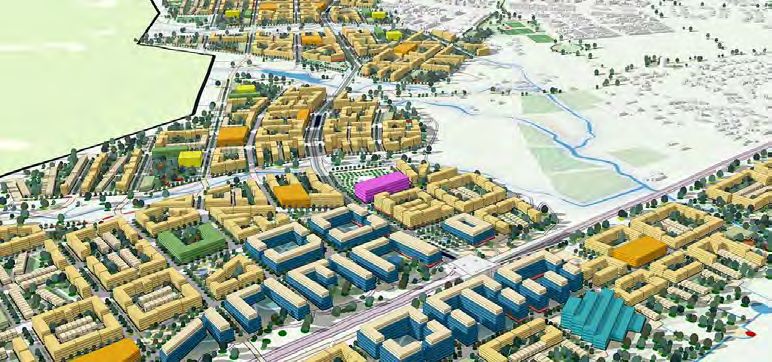
SECOND SEMESTER - FIRST YEAR

Architectural Design Workshop B                                                                Torna all’indice
Laboratorio di progettazione architettonica B (12 CFU)

      Prof. Arch. Marco Casamonti

PRESENTATION, OBJECTIVES AND CONTENTS
The workshop has as its primary objective
the teaching of architectural composition,
understood as an activity of formal, functional and
constructive synthesis of the various disciplines,
humanistic, technical-scientific, which compete
in the construction activity. The objective of the
course is therefore to encourage interaction with
different levels and scales of intervention, spatial,
functional and environmental. Exploring and
pursuing complexity, celebrating and articulating
diversity, encouraging and giving impetus to
multi-faceted interaction - between processes
and information, programs and uses, contexts and        Bertamino _ LifeZone_A.A. 2019-2020

realities - by designing new spaces, new transversal
scenarios (architectural, urban, territorial and
social), in tune with a new (open) relational logic.
The course is divided into ex-cathedra lectures,
seminars, mainly group exercises, seminar
corrections of the exercises, a final intensive
workshop. The lessons cover issues that are
considered essential for the acquisition of
critical skills and design skills appropriate
to the theme of the workshop. The exercises
are conceived of as a path of progressive in-
depth study of the topic of the workshop.

                                                        Traversa_Cuvato_Celle_A.A. 2019-2021

                                                        Cuccu_LifeZone_A.A. 2019-2020
SECOND SEMESTER - FIRST YEAR
Architectural Restoration Workshop A Torna all’indice
Laboratorio di restauro architettonico A (12 CFU)
Prof. Arch. Anna Boato
PRESENTATION, OBJECTIVES AND CONTENTS
The workshop provides students with the basic
knowledge and methodological preparation
necessary to: - choose and use the procedures
and techniques of direct and indirect architectural
analysis, with particular regard to the survey,
history, archaeological analysis of existing
buildings, examination of the architectural and
construction components, the identification
and characterization of materials, the analysis
of the phenomena of the degeneration of
materials and of the elements of construction;
- draw up the technical papers summarizing
the analytical and diagnostic phases (thematic
maps, diagnostic frameworks, reports, ...); -
define the general and detailed objectives of
restoration design, in light of the disciplinary
debate on restoration and taking into account
the specific potential of the building, its current Wolfsgruber_A.A. 2020-2021
or planned function, its territorial and landscape
context and the problems brought to light during
the analysis, - identify the needs, priorities and
possible methods of intervention, also taking
into account the relevant legislative regulations;
- choose the most appropriate restoration
techniques in order to preserve those parts that
are subject to protection, consolidating, cleaning
and possibly integrating them, and designing
what is necessary to use the building safely
and in a manner appropriate to its nature as a
historical-artistic asset; - prepare the technical
Wolfsgruber_A.A. 2020-2021
and administrative papers for the restoration
plan, from the illustrative report to the graphic
drawings, all the way up to the quantitative and
economic estimates.
Wolfsgruber_A.A. 2020-2021SECOND SEMESTER - FIRST YEAR
Architectural Restoration Workshop B Torna all’indice
Laboratorio di restauro architettonica B (12 CFU)
Prof. Arch. Daniela Pittaluga
PRESENTATION, OBJECTIVES AND CONTENTS
The aim of the workshop is to provide students
with conceptual and operational information
and tools necessary to consciously act upon
existing buildings and, in particular, on the
oldest architectural heritage that is subjected to
protection.
The didactic activities include, in a brief summary:
- ex-cathedra lectures, even with the participation
of experts from the world of the profession,
Torre Rossa - Borghetto Santo Spirito. Studenti: Crosta, Ludovico, Pastorino, Roca
businesses and institutions, aimed at providing
a broad and general picture of the tools and
technical and operational problems regarding
architectural restoration in our contempory
scenario. Among these, the following stand
out: the methods and forms of analysis and
non-destructive diagnosis of architecture; the
methods and tools of historical analysis of
indirect sources; the forms and tools for analyzing
direct sources, through contributions from the
Archaeology of Architecture; the contents, forms
Torre Rossa - Borghetto Santo Spirito. Studenti: Crosta, Ludovico, Pastorino, Roca
and requirements of the project of conservation,
maintenance and restoration; the framework
regarding regulations and protection in Italy and
abroad;
- operational workshop activities, carried out in
the classroom and/or in situ, by means of which
students will be guided in the process, from the
analysis and the diagnosis of the existing artifact,
chosen in agreement with the teacher, up to the
final design of the interventions aimed at its
conservation, maintenance and/or restoration.
The activities of the workshop make use of the Torre Rossa - Borghetto Santo Spirito. Studenti: Crosta, Ludovico, Pastorino, Roca
technical support provided by the Department’s
Workshop for Analytical Methods of Restoration
and History of Existing Buildings (MARSC).
Torre Rossa - Borghetto Santo Spirito. Studenti: Crosta, Ludovico, Pastorino, RocaSECOND SEMESTER - FIRST YEAR
Structural Design Torna all’indice
Progetto di stutture (4 CFU)
Prof. Ing. Stefano Podestà
PRESENTATION, OBJECTIVES AND CONTENTS
The module, which belongs to the integrated
subject of “Theory and Structural Design”, aims at
providing the necessary knowledge to correctly
identify, formulate and solve the structural
problems of architectural design and understand
the technical language of construction
engineering. The fundamentals of the physical-
mechanical properties of the materials that most
affect the structures are:
- concrete,
- steel,
- wood
- structural glass.FIRST SEMESTER - SECOND YEAR
Methodologies of Representation for the Project Torna all’indice
Metodologie di rappresentazione per il progetto (6 CFU)
Prof. Arch. Cristina Càndito
PRESENTATION, OBJECTIVES AND CONTENTS
The course aims at providing functional knowledge
for an in-depth study of and experimentation
in the methodologies of representation for the
project (at different scalar dimensions) and for
the critical analysis of what already exists. In this
general vision in which design is configured as an
elaborative medium to confront the complexity
of the design (understood as a de-novo creative Multivibes_A.A. 2020-2021
act or as a system of operations and phases
functional to cognitive processes) we also want
to underline the value of the representation as
an aesthetic autonomous subject, expressive of
forms of critical and authorial research.
The student will be confronted with a theoretical
and practical path that will lead him/her to
acquire knowledge of the scientific foundations
(geometric, optical and perceptual) and the
technical methods of using some updated
tools for the creation of models, drawings and
images (parametric modelling, photo-insertion,
rendering, panoramic photography, video).
Training exercises are proposed that consist
in creating a spatial configuration through Merluzzi e compagni_A.A. 2020-2021
parametric modelling systems, in its insertion
in an urban context and in its representation by
choosing the expressive modes considered most
effective.
The student will acquire not only the technical
tools, but also the critical ones that will enable
him/her to motivate and illustrate the different
stages of elaboration.
Bavassano_Bertamino_Castaldi_Storace_Traversa_A.A. 2020-2021FIRST SEMESTER - SECOND YEAR
History of Architecture Torna all’indice
Storia dell’architettura (LM) (6 CFU)
Prof. Marco Folin
PRESENTATION, OBJECTIVES AND CONTENTS
The course aims at presenting some of
the fundamental concepts of architectural
historiography - tradition and innovation,
language, author, design ... - illustrated via
some specific cases, read and analyzed starting
from some general questions. Two different
perspectives, which are not irreconcilable
in themselves, will be privileged: on the one
hand, the history of culture and ideas; on the Cole_Il sogno dell’architetto
other hand, attention to urban spaces and their
contexts (social, political, cultural ...) considered
as essential factors of any constructive dynamics.
At the end of the course, the student will have to
know the main episodes and monuments of the
history of the city and urban planning in Europe
between the sixteenth and nineteenth centuries.
He/she will also have to master the issues and
concepts discussed in the lessons:
- the various configurations in the history
of the dynamics of urban planning;
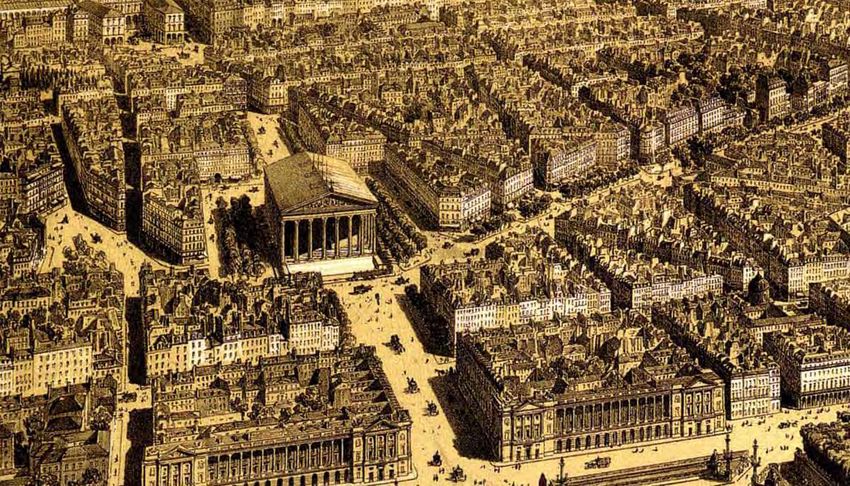
Parigi di Hausmann
- the cultural meanings and the political,
economic, social role of architecture;
- the specificity of the contexts and related
dynamics.
Teaching takes place via theoretical lessons and
activities by students.
Greenwich_Queen’s House
Scarpa_Negozio OlivettiA workshop to be chosen from 4 2nd-year ones
Integrated Design Workshop. Building on Existing Buildings Torna all’indice
Laboratorio di progettazione integrata, costruire nel costruito (12 CFU)
Prof. Arch. Carmen Andriani
Prof. Arch. Alessandro Valenti
PRESENTATION, OBJECTIVES AND CONTENTS
The workshop has as its objective the design
resolution of a complex building or a finite system
of buildings and the design exploration of forms
and spaces inherent to interior architecture
namely urban installations, the structures
suitable for exhibitions, museums, interior design.
Guided choice: Optional workshop concerning the
architectural design and composition consisting
of these modules:
MODULE ON ARCHITECTURAL AND URBAN
PLANNING (10 university credits) Merluzzi_Panozzo_Segura_A.A. 2020-2021
The objective is the teaching of architecture
from the point of view of architectural and urban
design, understood as an activity of formal,
functional and constructive synthesis of the
various disciplines, humanities and technical-
scientific, which contribute to the building
activity and its relationship with the context
in an interrelated and multiscalar vision of
environmental regeneration.
URBAN INTERIORS (SETTINGS, TEMPORARY
EXHIBITIONS, PUBLIC ART) (2 university credits)
Celle_Cuvato_A.A. 2020-2021
The goal of Interior Architecture is the design
exploration of forms and spaces inherent to
interior architecture or urban settings, that is the
structures suitable for exhibitions, curatorial and
exhibition activities, the relationship between
art and public spaces.A workshop to be chosen from 4 2nd-year ones
Design, Technology and Environment Workshop Torna all’indice
Laboratorio di progetto, tecnologia e ambiente (12 CFU)
Prof. Arch. Adriano Magliocco
Prof. a.c. Enrica Cattaneo
PRESENTATION, OBJECTIVES AND CONTENTS
Guided choice: Optional workshop concerning
technological and environmental design,
consisting of these modules:
MODULE ON ARCHITECTURAL TECHNOLOGY (10
university credits)
The objective of the module is to focus attention
on the environmental assessment of the
Architectural project in its various components, Guasco_Orlanno_Puppo_A.A. 2019-2020
in order to relate the choices deriving from
functional requirements and expressive will to the
control of the impact on the environment of the
construction activity. Through the development
of a theme regarding the building scale, the main
areas of influence are analyzed: characteristics of
the site, application of the principles of bioclimatic
design and microclimatic management of the
building, selection of materials, use of renewable
energy sources in addition to the identification
of the structural system.
MODULE ON TECHNOLOGY AND THE ENVIRONMENT
Guasco_Orlanno_Puppo_A.A. 2019-2020
(2 university credits)
The workshop, through a designing experience,
aims at focusing attention on the relationships
that exist between the definition of the functional
and formal requirements of architecture and
the effects on the environment, under different
aspects: indoor and outdoor environmental
comfort, use of material resources and renewable
and non-renewable energy, environmental
Guasco_Orlanno_Puppo_A.A. 2019-2020
quality and human health.
Guasco_Orlanno_Puppo_A.A. 2019-2020A workshop to be chosen from 4 2nd-year ones
Design Workshop for the Restoration and Enhancement of the Cultural Heritage Torna all’indice
Laboratorio di progettazione per il restauro e la valorizzazione del patrimonio culturale(12 CFU)
Prof. Arch. Stefano Francesco Musso
Prof. Ing. Stefano Podestà
PRESENTATION, OBJECTIVES AND CONTENTS
The Workshop offers an integrated experience of
design in the field of the protection, conservation,
restoration and enhancement of the architectural
heritage of Interest and Cultural value. Guided
choice: Optional workshop on restoration
design, consisting of Restoration and Structural
Consolidation modules.
MODULE ON RESTORATION (10 university credits)
The module aims at guiding students towards the
acquisition and development of the competences
and technical skills necessary for the preparation
of a definitive (final working plan) project in
restoration, complete with all of the analytical and
preventive diagnostic elements, technical-design
elements and those of an administrative nature
necessary for its implementation on site. The
course will make use of specialist contributions
to provide students with technical-practical
knowledge relating to the sectors of possible
intervention: from structures to systems, from
surface treatment to the solution of accessibility
and safety problems.
MODULE ON STRUCTURAL CONSOLIDATION (2
university credits)
The objective of the module is to provide the
critical and analytical tools necessary to be able
to choose, apply and coordinate the various
techniques of intervention from the preliminary
design to the final working plan of the project of
restoration.A workshop to be chosen from 4 2nd-year ones
Workshop on Advanced Urban Planning and New Habitats Torna all’indice
Laboratorio di urbanistica avanzata e nuovo habitat (12 CFU)
Prof. Arch. Manuel Gausa Navarro
Prof. Arch. Adriana Ghersi
PRESENTATION, OBJECTIVES AND CONTENTS
Guided choice: Optional workshop oriented
towards multi-scalar, urban planning and
landscape design, consisting of the following
modules:
MODULE ON ADVANCED URBAN PLANNING (8
university credits)
The goal of the workshop is the acquisition of
knowledge, skills and criteria suitable for the
contemporary challenges and transformations
of the city, the territory, the environment and
the landscape. The course aims at assuming
urban design in a strategic and transversal
logic with respect to contemporary urban and
territorial scenarios. In this perspective, the
project becomes a “multi-scalar” tool to be seen
as a transversal interpretative factor among
City-Architecture-Landscape, considered in their
analytical-synthetic value.
MODULE ON THE ANALYSIS OF AND STRATEGIC
PROJECT FOR THE LANDSCAPE (8 university
credits)
We aim at presenting a synthesis of the methods of
analysis, interpretation and design of landscape
architecture with the goal of promoting the
knowledge of different approaches, methods
and techniques for the analysis and design of the
landscape itself, understood as an eco-system
and as a multi-scalar scenario. The key element
of the course will be the public space understood
as an active, productive and social space in its
relations with the new multidisciplinary condition
of the contemporary city. The course will make
use of the collaboration of the Geo-Morfo-Lab.A workshop to be chosen from 4 for the 2nd year
Technological Design for Existing Buildings Torna all’indice
Progettazione tecnologica per il costruito (8 CFU)
Prof. Arch. Giovanna Franco
Prof. a.c. Marta Casanova
PRESENTATION, OBJECTIVES AND CONTENTS
The course makes an in-depth study of the
specialist knowledge necessary to correctly and
responsibly set up a project of recovery and
reuse, starting from the understanding of the
construction methods, the main phenomena
of the deterioration, instability and functional
deficiencies of existing buildings, also with
reference to environmental issues and energy
saving. Guided choice: The optional course on
Planning for the restoration and enhancement of
the cultural heritage is divided into two modules:
MODULE ON TRADITIONAL MASONRY BUILDINGS
(5 university credits)
The module makes an in-depth study of the
knowledge of construction principles and rules,
pathologies, phenomena of deterioration and
deficiencies of traditional load-bearing masonry
buildings, as well as their energy behavior
and eventual techniques for restoration and
consolidation.
MODULE REGARDING REQUALIFICATION AND
REUSE OF RECENT HERITAGE (3 university credits)
The module explores the problems of
redevelopment and reuse of the recently built
heritage of Twentieth century architecture.
Particular attention is devoted to construction
episodes considered to be of greatest value,
Heritage of the Modern, which require
maintenance, conservation, reuse and
redevelopment, also being attentive to the values
that these kinds of architecture express.A workshop to be chosen from 4 for the 2nd year
Environmental sustainability in the architectural project Torna all’indice
Sostenibilità ambientale nel progetto di architettura (8 CFU)
Prof. a.c. Maria Canepa
PRESENTATION, OBJECTIVES AND CONTENTS
Guided choice: Optional teaching on design and
environmental technology, consisting of the
following modules:
MODULE ON ENVIRONMENTAL SUSTAINABILITY (4
university credits)
The objective of the module is to provide
basic knowledge relating to the evolution
of the environmental problem in its various
components - limited resources, pollution, use
of renewable energy sources - and its effects
on land management, architectural design and
construction procedures.
MODULE ON BIOCLIMATIC TECHNOLOGIES (4
university credits)
The goal is to make an in-depth study of the
knowledge of materials and passive and active
technologies for the control of environmental
quality in architecture.A workshop to be chosen from 4 for the 2nd year
Urban Planning and Innovation Torna all’indice
Urbanistica e innovazione (8 CFU)
Prof. Arch. Giampiero Lombardini
PRESENTATION, OBJECTIVES AND CONTENTS
The aim of the course is to provide a theoretical
framework regarding the approaches used
today in the processes of urban-territorial
transformation and to proceed with the tools of
simulation, to the analysis of concrete cases.
Guided choice: Optional course, with an
international orientation, consisting of the
following modules:
MODULE ON URBAN THEORY AND INNOVATION (4
university credits)
The module introduces urban planning through
the fundamental elements of the discipline.
Starting from a solid technical-operational
basis, the module will carry out a series of
morphological-spatial, economic and social
simulations on the territories of the contemporary
city, reconstructing an exercise in evaluation of
the potential outcomes of urban transformation.
MODULE ON URBAN SYSTEMS AND NEW
TECHNOLOGIES (4 university credits)
The module is aimed at acquiring an awareness
of the processes of transformation that affect
the city and the territory starting from new
technologies and a substantially informational
approach. The module provides basic knowledge
of the theory and practice of urban planning
as well as the skills and new profiles of the
urban architect and introduces the reading and
interpretation of the contemporary city.A workshop to be chosen from 4 for the 2nd year
Theories, Practices and Procedures of the Architecture of Existing Torna all’indice
Buildings (8 CFU)
Prof. Arch. Massimiliano Giberti
Prof. Arch. Vittorio Pizzigoni
PRESENTATION, OBJECTIVES AND CONTENTS
The course pursues the transmission of the
theory, techniques and procedures of completed
and/or feasible architecture, both modern and
contemporary, in order to provide useful elements
for the knowledge of the process of construction,
as a formal synthesis of all specific aspects; as a
detailed study and as a unitary and integrated
design of both the architectural exteriors and
interiors. It is divided into two modules: The
construction Site, from the procedures to the
realization of the architectural form and The
Construction of Contemporary Interiors.
The first module explores the theory, principles
and methods of the relationship among form,
structure and technical systems in defining the
form of the architectural project up to the phases of
construction and the construction site. Particular
attention is paid to modern and contemporary
concrete works, following the evolution of patents
and consequent technologies.
The second module explores the theory, principles
and methods of creating interior architecture
as a spatial resolution of the work, with an
investigation into the innovative materials that
make its creation possible.ELECTIVE COURSE
Coastal design and others extreme environments (6 CFU) Torna all’indice
Prof. Arch. Matthew Hamilton Rice
PRESENTATION, OBJECTIVES AND CONTENTS
The scope of this course in coastal design and urban
architecture is to develop a design process and
project proposal that:
• is clearly urban, architectural and architectonic,
• establishes networks of public space where city
meets water,
• responds to environmental events and changing
climatic conditions,
• allows change over time by having a permanent Kociolek Micolaj _A.A. 2019-2020
‘infrastructure’, temporary infill, and ephemeral
elements.
The student will conduct basic research and form a
reasonable design response that is integral to the
architectural proposal involving:
• sea level rise
• sun shading and wind protection of facade
• generally sustainable material choice/use
The learning process depends on steady work in
regular steps: research, schematic approaches, Estrela Capistrano, Belen Salgado_A.A. 2019-2020
development of urban strategy, development of
architectural strategy, development of architectural
responses to environmental events and climate
change.
Students will develop architectural proposals
responsive to change, including day-night, summer-
winter, and programmatic changes over longer
periods of time. The work will be carried out
through digital models (and some diagrams and
freehand drawing) using Rhinoceros software. The
digital model is to be organized to demonstrate
the logic and hierarchy of the design proposal,
Kociolek Micolaj _A.A. 2019-2020
from diagrammatic and schematic to its final form.
Visualization and representation of the design
ideas and process will be key to the evaluation
of the course. Students will learn quick methods
of visualization using Rhinoceros and Adobe
Photoshop software, and no further rendering
software will be used. Students will develop ability
with diagrammatic, orthographic, parallel (isometric
and true axonometric) and perspective projection.
INTERNATIONAL INTERACTION
For Fall 2021 an online activity is planned with
Lisowska, Piatek_A.A. 2019-2020
professors and students of Florida International
University to develop a component of the overall
design.ELECTIVE COURSE
Design Integrated with the B.I.M. Method Torna all’indice
Progettazione integrata con metodo B.I.M. (6 CFU)
Prof. Ing. Arch. Giorgio Mor
Dott. Maurizio Bertagna
PRESENTATION, OBJECTIVES AND CONTENTS
Through the B.I.M. systems it is possible to
anticipate most of the choices that are usually
made on site, during the phases of execution, to
the early phases of design; this new method of
operating thus makes it possible to obtain greater
quality control, in terms of phases and execution
times and, consequently, of production costs.
The B.I.M. method, in fact, involves all the players
in the construction process such as the client,
designers and other professionals, construction
companies, end users and maintenance workers.
During the theoretical-methodological lessons
the student is presented with the peculiarities
of an integrated path of design, analyzing the
relationships and the consequentiality between
the project of technical and economic feasibility,
the final and working project (typical phases of
the design of public works, but not only) in its
architectural, structural and system components,
without neglecting the knowledge obtained from
the economic and legal fields.
Through practical experiments, the student
acquires the ability to design in a B.I.M. environment
in n Dimensions (nD) associating costs, execution
times, management, maintenance and more
to the three geometric dimensions. Moreover,
the suitable software and related innovative
tools and methods related to the concept of
interoperability are illustrated, L.O.D. (Level of
Detail), L.O.I., model checking, clash detection,
which make it possible to achieve a high level of
control of the entire construction process.ELECTIVE COURSE
Interior Architecture Torna all’indice
Architettura degli interni (6 CFU)
Prof. Arch. Alessandro Valenti
PRESENTATION, OBJECTIVES AND CONTENTS
The course focuses on contemporary experiments
in the field of interior design applied to highly
topical issues such as those of the reuse and
restyling of the heritage of existing buildings.
Attendance and participation in the proposed
training activities (lectures and group exercises),
combined with the individual study of the
recommended texts, will allow the student to:
• deal with the issues of contemporary
interior design, acquire information regarding
the protagonists of design and interior
architecture, learn about and select brands of
excellence, read and decode the most recent
projects on the international scene;
• gradually become acquainted with the
field of hôtellerie, with the study of the target
audience, the choice of furnishings and the
satisfaction of both aesthetic and functional
performance;
• learn and experiment with the techniques
of reuse and reactivation that lead to the
definition, in the field of interior design, of
new models of accommodation;
• be able to apply the acquired knowledge
and use the necessary tools aimed at designing
a micro space studied and set up taking care
of the smallest detail, taking into account
the control of light, the role of colour, the
characteristics of the materials, the ergonomics
of the shapes, sustainability and well-being.ELECTIVE COURSE
Contemporary Landscape Architecture Torna all’indice
Architettura del paesaggio contemporanea (6 CFU)
Prof. Arch. Francesca Mazzino
PRESENTATION, OBJECTIVES AND CONTENTS
The course focuses on the evolution of the
landscape architecture of the nineteenth and
twentieth centuries and aims at developing skills
of critical interpretation of landscape projects
(conceptual principles, cultural trends, aesthetic
theories and social contexts that determined
the design of important works of contemporary
landscape architecture). The course provides
theoretical-methodological tools to:
• develop conceptual ideas on a design
theme, assigned from time to time, identifying
cultural references drawn from the visual arts,
architecture and design;
• apply the knowledge on plant species and
the related needs in relation to the maintenance
of landscape composition;
• become familiar with construction
materials and techniques also considering the
construction and management costs;
• get to know and use effective representation
tools.
The following topics are presented and discussed
during the course: the importance of the role
of landscape and gardens for the conservation
of biodiversity and for the improvement of
living conditions in contemporary cities; soil
covering with plant or inert materials, choice
of tree and shrub species with environmental
and ecological functions, low-maintenance
perennial herbaceous species, bulbous plants
to be naturalized, water elements, paths and
permeable paved areas.
Students will develop a project proposal by
participating in a national or international
competition.ELECTIVE COURSE
Architecture and the Medieval city in the Mediterranean and in the Torna all’indice
Islamic World
Architettura e città medievale nel mediterraneo e nel mondo islamico (6 CFU)
Prof. Arch. Alireza Naser Eslami
PRESENTATION, OBJECTIVES AND CONTENTS
The course introduces the student to the historical
knowledge of the architecture and urban spaces
of the Islamic world in its artistic relations with
Mediterranean Italy, from the seventh to the
seventeenth century.
The course is divided into a cycle of lessons,
concerning the central themes of the history of
Islamic architecture. Seminars on in-depth studies
are also planned, even with the participation of
external specialists.
The lectures will focus on the fundamental
themes of Islamic architecture and its relations
with Mediterranean Italy, and in particular, the
most significant examples of Arab-Norman
architecture in southern Italy, and the artistic
interactions with the Italian maritime city-
republics will be analyzed such as Genoa, Pisa,
Amalfi and Venice.
In addition, there is an educational research
activity developed by the student who, after
choosing a topic - in agreement with the teacher
who will provide the relevant bibliography – he/
she is required to draw up a historical-critical
report.ELECTIVE COURSE
Diagnosis, Design and Energy Certification of Buildings Torna all’indice
Diagnosi, progettazione e certificazione energetica degli edifici (6 CFU)
Prof. Ing. Stefano Bergero
PRESENTATION, OBJECTIVES AND CONTENTS
In the European Union, the civil sector is
responsible for about 35% of the energy
consumption, contributing significantly to
greenhouse gas emissions.
Since 2002, the Union legislation has introduced
a policy attentive to the issue of energy saving in
buildings, implemented at the national level.
Davide Desideri
Technical legislation has met this need by
promoting procedures and methods aimed at
uniformly calculating the energy performance of
the buildings.
The course aims at providing the student with
knowledge on the energy performance of
buildings with particular reference to current
legislation and technical regulations.
Also dealt with are aspects concerning the energy
diagnosis of the existing buildings, the minimum
performance requirements that new buildings
or buildings undergoing major renovations or
energy redevelopments must possess and, finally,
the energy certification of buildings.
The course involves applying the knowledge
acquired to a real case study through the use of
commercial software. At the end of the teaching Davide Desideri
activity, the student must be able to create an
energy model of a building and to evaluate
the main parameters that affect its energy
performance.
The exercises will deal with the analysis and
diagnosis of a real case study.
Davide DesideriELECTIVE COURSE
Ecology for the Territorial Project Torna all’indice
Ecologia per il progetto di territorio (6 CFU)
Prof. Arch. Roberto Bobbio
Prof. Dott. Paolo Vassallo
PRESENTATION, OBJECTIVES AND CONTENTS
Understanding ecology and understanding
the know-how regarding ecology is absolutely
necessary for addressing the environmental
issues that are raised today for those involved
in land and architecture; it provides tools for
understanding, evaluating and intervening in
biotic relationships and in energy exchanges
between living beings and inanimate matter.
Ecology and urban planning find complementarity
in the design of the built-up space, in the
governance of the territory, in the construction of
shared choices by communities that are deciding
on their own future.
The course is integrated, consisting of the
modules: Elements of Ecology and Urban Planning
and the Environment, and is aimed at teaching
the future designer to consider and address the
environmental implications of the land project
and that of built-up space.
In particular, the module regarding elements of
ecology aims at providing solid basic knowledge
on the structure and functioning of the natural
systems, with particular emphasis on the
mechanisms that determine both the distribution
and abundance of organisms and their
relationships with the environment. This module
aims at introducing students to the study of the
main applications of ecology by understanding
the characteristics of the environmental
components with particular reference to the
effects of human-induced alterations on the
environment.
The module on urban planning and the
environment aims at developing in the designer
an awareness of the complex relationships
between the environment and settlement
systems, the ability to recognize them, evaluate
them critically and deal with them using design
techniques and tools.
The integration of the two modules is achieved
through practical application in which there is a
convergence of the teachings that were provided
separately in the two modules.You can also read


