Caring Architecture - The Design of a New Building for Children and Adolescent Psychiatry in Gothenburg - Chalmers Publication Library
←
→
Page content transcription
If your browser does not render page correctly, please read the page content below
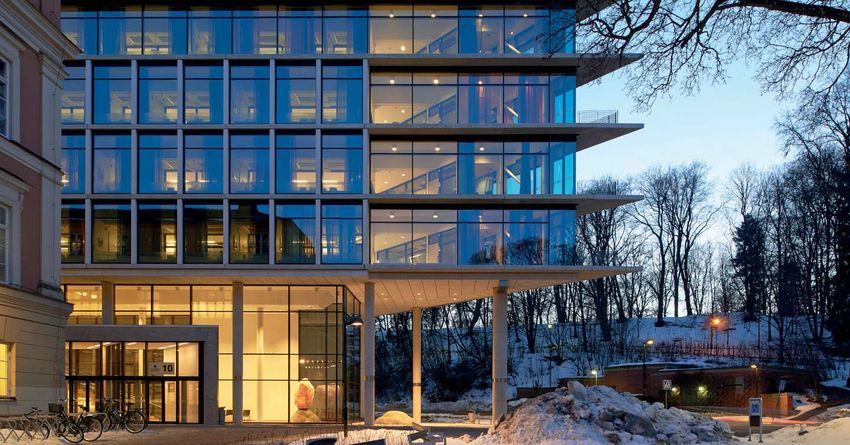
Caring Architecture
- The Design of a New Building for Children and
     Adolescent Psychiatry in Gothenburg

                     Master Thesis

              Chalmers Shool of Architecture

                     Anita Mustonen

                  Examiner: Peter Fröst
               Tutor: Christine Hammarling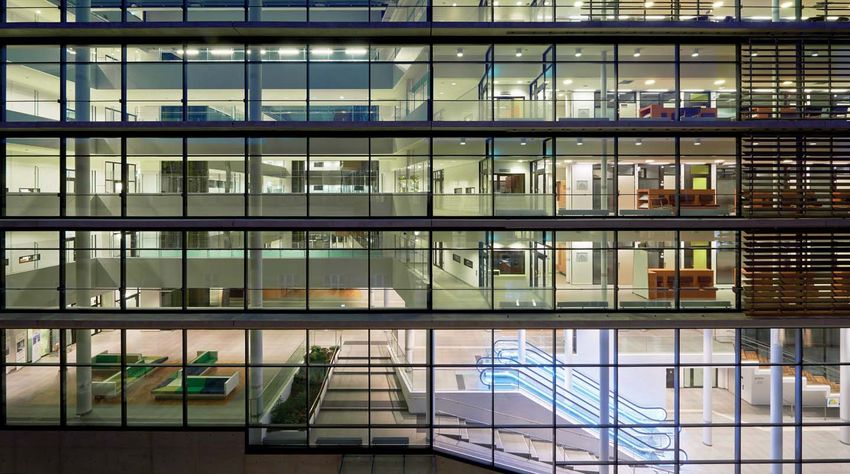
Caring Architecture
- The Design of a New Building for Children and Adolescent Psychiatry in Gothenburg

                                 Anita Mustonen

                              Examiner: Peter Fröst
                           Tutor: Christine Hammarling

                                 Master Thesis
                        Chalmers School of Architecture
                 Department of Architecture and Civil Engineering
                    Architecture and Urban Design, MPARC

                                    June 2017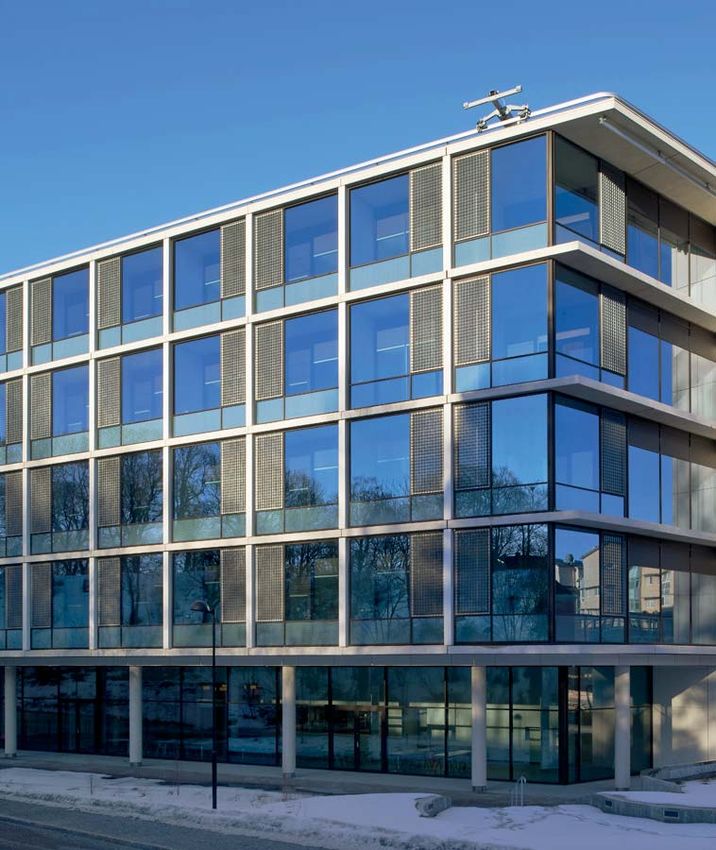
Caring Architecture
 - The Design of a New Building for Children and Adolescent Psychiatry
in Östra Sjukhuset in Gothenburg

Anita Mustonen

© Anita Mustonen 2017

Chalmers School of Architecture
Department of Architecture and Civil Engineering
412 96 Göteborg
Sweden

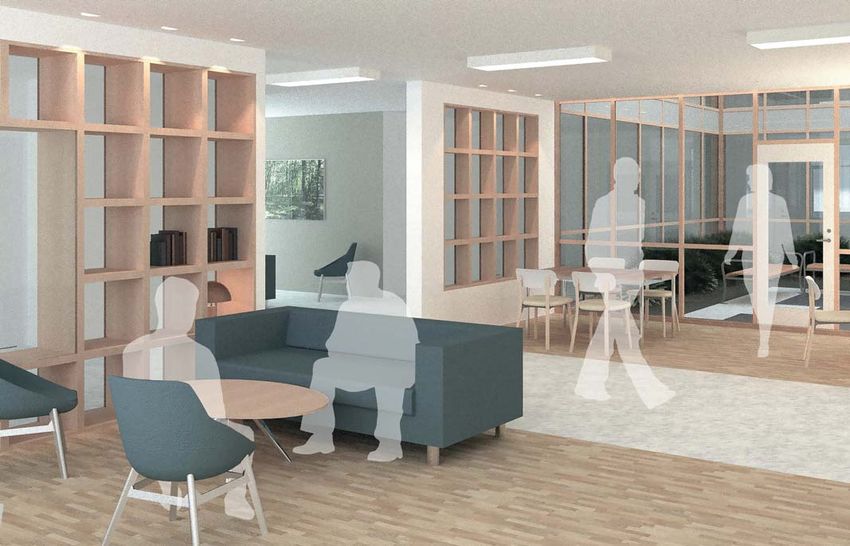
Cover: Illustration of a patient room

Göteborg 2017
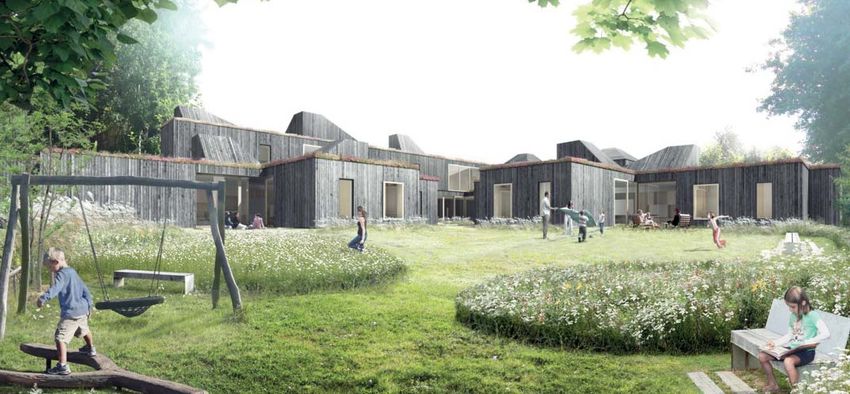
Abstract
  The number of children and adolescents in Sweden that        forming the program and have given input to the sketch
are admi ed to a hospital for psychiatric care have been       proposal in the process.
increasing for the past 20 years. Meanwhile, the children         The concept for the building is to work with places for
and youth psychiatry in Östra Sjukhuset in Gothenburg has      different levels of engagement with your surroundings.
too small and dysfunc onal locali es. This Master Thesis is    The building should allow for pa ents to sit alone, sit on
about the design of a new building for them.                   the side of an ac vity and look at what’s happening or to
  Väs as gheter has ini ated the process for a new building    take part in the ac vity. This have been achieved through
for children and adolescent psychiatry, and this project has   designing the building so that you can sit in a private place
run parallel of the pre-study in that process. The building    and watch things that happen elsewhere in the building,
will contain both inpa ent and outpa ent care, as well as      divide the pa ents into small groups, and have different
administra on and staff areas.                                  sizes of dayrooms to choose between.
  A theore cal framework for the design has been made by          Through this project I want to give an example of how
searching literature and analyzing case studies. During the    to design a healthcare facility for children that supports
process, there has been mee ngs with people working with       their healing process. Hopefully some of the ideas from
children and adolescent psychiatry in Östra Sjukhuset where    my design will s ck with the staff group I’ve met with and
they have told about their wishes and I have presented         inspire them in the process for a new building.
and discussed my sketches. Those mee ngs have helped in
My thanks

   During this semester there are many people that have
helped and supported me in different ways, and I would
like to send a big thank you to the following:
   My tutor Chris ne Hammarling for helping me in my
process, coming with valuable input and poin ng at things
I’ve either forgo en, or chosen not to see.
   My examinor Peter Fröst, for valid comments in the
seminars and for always answering quickly if I had
ques ons.
   Erik Tari and Henrik Hagejärd for all the comments,
smalltalk and input during the project, and for always
pu ng up with me when I took a break from my project by
disturbing you.
   The group for the pre-study at BUP Östra Sjukhuset;
Reino Moberg, Kenneth Bergersson, Marie Carlsson,
Camilla Ersdal and Suzanne Ågård, for all the input from
the mee ngs and for being engaged and posi ve about my
work.
   Saga Karlsson and Stefan Lundin for good comments
on the final seminar. The comments where truly inspiring
for me and they (almost) made me want to work another
semester on the project.
   Erik Hedborg for good comments on the mid-term
seminar, and interes ng discussions during the process.
   Håkan Sigurdsson for a very interes ng discussion at
Universeum that I have though about throughout the
project.
   Philip Rasko for being there when I came home from
school and wanted to think about something else, and for
understanding how demanding a master thesis process is.
   My family for always asking me how it is going, believing
in me and congratula ng me on progress.
   And finally, all the students in my corridor for good input
and for bearing with me when I asked about your projects.

Anita Mustonen
June 2017
Content

Introduction                                 Design proposal
  Background                             6     The program                    42

  Purpose and aim                        6     The site                       44

  Research ques on                       7     Building form - step by step   46

  Method                                 8     Site plan                      48

  Reading instruc on                     9     Departments in BUP             50

  Terms                                  9     Arrangement of departments     51

                                               Groundfloor (floor 0)            52
Theory
                                               Floor 1                        54
  A healing environment?                10
                                               Floor 2                        56
  Evidence-based design                 11
                                               Emergency department           58
  Design for psychiatry                 12
                                               Wai ng areas                   59
  Design for children and adolescents   14
                                               Ward unit                      62
  Stages of development                 15
                                               Pa ent room                    64
  Summary: theory                       18
                                               Ac vity square                 66

Case studies                                   Sec ons                        68

  Psychiatry Östra sjukhuset            20     Facade                         70

  Psykiatrins hus                       24
                                             Conclusion
  Slagelse psykiatri                    28
                                               Conclusion                     72
  Sofieskolen                            32
                                               Reflec on                       72
  Summary: case studies                 34
                                             References
Östra Sjukhuset
                                               References                     74
  Östra sjukhuset                       36
                                               List of figures                 76
  The buildings                         38

  Traffic and flows                        39

  visions for the future                40

  BUP in Östra sjukhuset                41

                                                                               5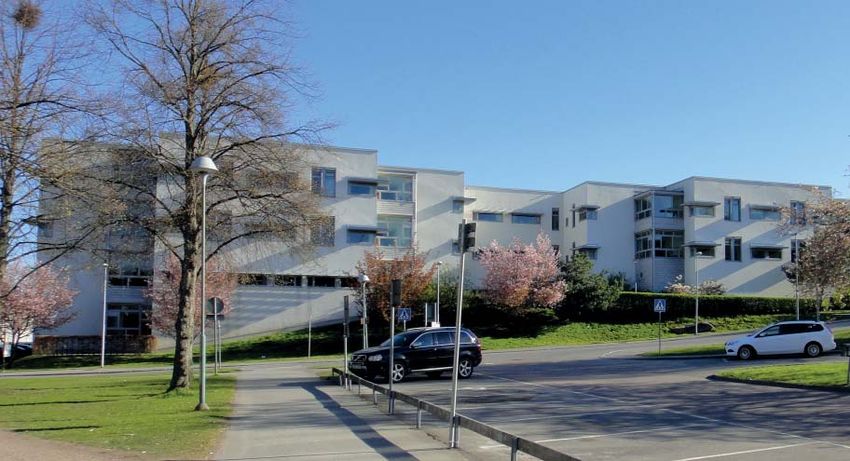
Introduction

Background                                                       Purpose and aim
  In Sweden today mental illness is considered one of the          The aim with this project is to design a new building for
biggest health issues (Socialstyrelsen 2016). The number         Children and Youth Psychiatry where all of its departments
of children that are submi ed to psychiatric care for            can exist in the same building at Östra Sjukhuset in
depression has increased during the last 30 years and the        Gothenburg. Focus is on designing an environment where
number of pa ents in children and adolescence outpa ent          children and their rela ves can feel safe and get recover
care has increased since 2005 (Cederblad 2013). While            from illness.
mental illness is increasing, the s gma around it is s ll very     The purpose with this is to show an example of how to
present. Even though three quarters of the popula on             create a healing environment for children and adolescents
are es mated to be in close contact with mental illness in       in the need of psychiatric care. Another purpose with
some way, people are s ll scared to talk about it and the        this project is to give the staff at BUP Östra Sjukhuset an
care is worse than for many other diseases (Riksförbundet        alterna ve project to the one that is being developed in a
Hjärnkoll).                                                      pre-study for a new building for them.
  To give psychiatric care a natural and worthy place in our
hospitals might contribute to encourage people to seek
care, and make them feel like they are accepted in the
society.

BUP Östra Sjukhuset
  Children and Youth Psychiatry (Barn och
Ungdomspsykiatri [BUP]) at Sahlgrenska University Hospital
in Gothenburg have two departments in Östra Sjukhuset
and three departments on other loca ons in the city. The
facili es in Östra Sjukhuset are too small and not designed
to suit today’s ideas for psychiatric care, and collabora on
between the departments in the hospital site and the
other departments is difficult since there is such a distance
between them.

6
Introduction

Research question

Main question
  How can we design healing environments for children
and adolescents in psychiatric care?

Sub-questions
  How can a new building look like that will be added to
the exis ng structure of a modernist hospital?

Delimitations
   Focus in the design proposal will be on the areas for the
pa ents. Areas for staff will be designed in an overview
scale, but will not be studied more thoroughly.
   The design project focuses on the built part of the facility
and will not go deep into furniture or equipment.
   The construc on will be studied just briefly to see how
it affects the building, but for some details that are of
interest for the design.
   Regarding the outdoor areas some ideas will be shown,
but not drawn in detail.

                                                                             7
Introduction

Method

Dialogue                                                     Case studies
   This project runs parallel to a                             To find examples of how to achieve certain quali es
pre-study for a new building for BUP                         and learn more about how to design for psychiatry I have
in Östra Sjukhuset. This has made                            looked at some case studies. Four of them are presented in
it possible for me to par cipate in                          the report, chosen because they have interes ng elements
mee ngs with representa ves from BUP, a representa ve        that I’ve implemented in some way in the design.
from Väs as gheter, and an architect making the pre-           I have used case studies as a way to get more knowledge
study. The first of these mee ngs where mainly about          about the program for a building for psychiatric care as well
forming the program for the building and learning what       as a reference for room sizes and placement of func ons.
the departments wanted. Later on I had the opportunity to
present and discuss my sketches with the staff group, and     Sketching
to adapt my design a er their comments.
                                                                Throughout the project I have used
                                                             sketching as a tool, both by hand
Literature study                                             and digital sketches using Revit. The
  My literature study will include                           sketching has been a way to take
reading about evidence based                                 the process forward and to create a base for discussing
design, healthcare architecture,                             my project with others. The sketching have influenced
psychiatry in general and children and adolescents           my search for literature in the way that I’ve tried to find
psychiatry, as well as some about children’s development.    literature about things I wasn’t sure how to design.
  The sources have been found using mainly Chalmers
Library’s tool Summon, with some use of Google Scholar
to find sources that are referenced in reports I’ve read
that couldn’t be found in Summon. The references include
books, printed reports, digital reports, scien fic ar cles,
newspaper ar cles and websites.

8
Introduction

Reading instruction                                            Terms

                                                               Children and adolescents psychiatry
                                                                 Psychiatric care for everyone below the age of 18.
                                                                 The abbrevia on BUP (Barn och Ungdomspsykiatri) will
                                                               be used in the report.
          Theory
                                                               Oupatient care
                                                                 Healthcare that does not require the pa ent to stay
                                Design proposal                overnight.
    Case studies
                                                               Inpatient care
          Analysis                                               Healthcare where the pa ent is admi ed to the hospital
       Östra Sjukhuset                                         and stay overnight.

  The report is divided in two main parts. One which
explains the theore cal framework on which the design
proposal is based and one that present the design
proposal. The theore cal part is divided in three parts; a
summary of the literature study, a presenta on of four
case studies and a presenta on of Östra Sjukhuset.
  Each part of the report can be read separately, but
preferably it’s read from cover to cover. In the end of each
of the first three part is a summary that sums up important
elements that will be used in the design.

                                                                                                                          9
Theory
A healing environment?
“
A very brief search of the websites of some Swedish
and Danish architecture firms that do healthcare Experiences and new research
Experienc
buildings, show that it is obvious that the term “healing
environment” is a bit of a buzz word in Scandinavia today.
show
how a stro
strong connec on between
“
In many of the project descrip ons for new healthcare the physical healthcare environment
buildings, and most of the new buildings for psychiatry, and the wellbeing and recovery of
the term healing environment or some equivalent to that
was used, o en in combina on with health promo on and
the pa ents.
- Quote from White Architects’ descrip on of the new
pa ent centered care.
psychiatry building in Södra Älvsborgs Sjukhus.
ukhus.
khus. Translated
Healing environment can mean many things. In evidence
from Swedish
based design it is about the things we can measure
and put numbers on, in a salutogenic approach it is
about crea ng an environment that is easy to read and
orientate in, as well as being aesthe cally pleasant. In the
anthology Architecture as Medicine (From, L. Lundin, S.
“ “
2009) Lena Walther states in the chapter Six li le houses
(pp 21-32) that a healing environment should, among
other things, contain s mula on of all senses, have
a connec on to nature, minimize stress factors, have
sufficient work spaces, include spaces for spiritual issues, (...) the building
b should provide the
show a variated architecture and display art in some form. materiali l condi ons for a dignifi
gnified
Most of these factors have evidence that they actually do
affect healthcare outcomes, these will be treated in the
and healing environment(...) ...)
- Quote from Liljewalls Architects’ descrip
p on of Rågården,
Rågården
paragraph about evidence-based design. Stefan Lundin
a new building for forensic psychaitric care in Gothenburg.
discuss the term healing architecture in his licen ate thesis
Translated from Swedish
Evidence, Intui on, Dialogue (Lundin, S. 2015) and argues
that it cannot be based solely on evidence, since there i not
enough to be fount, but that the architect must use his/
hers intui on, meaning more or less concious knowledge
“ “
that has been developed over me. The dialogue with the
client is also important in achieving a healing environment,
since it is the client that knows the func onality of the care
the best.
The suppo
suppor ng ideas in thehee project
are ((...)) Healing
H architecture
re (..)
(
- Quote from Karlsson Arkitekter’s descrip p on of the new
psychiatric hospital in Slagelse. Translated from
f Danish
ih
10Theory
Evidence-based design
Evidence-based design [EBD] in healthcare is about
making informed decisions in the design process. The
evidence in the design comes from research and studies
that have found rela ons between certain design elements
and healthcare outcomes.
In the paper A Review of the Research Literature on
Evidence-Based Healthcare Design (Ulrich, 2008) Ulrich et
al. iden fy eleven elements of which there are evidence
that they affect the outcomes of healthcare. Some of Single pa ent rooms compared to having shared rooms
these, like ceiling li s and noise-reducing finishes might be can increase pa ent sa sfac on, increase pa ent privacy,
too specific to apply to this project, but many of the others improve pa ents’ sleep and reduce pa ents’ stress.
are of hight relevance.
Single bed rooms and access to daylight improve pa ent
sleep, reduce pa ent stress and increase the pa ent
sa sfac on, and a view of nature can reduce stress and
depression as well as the me the pa ent spend in the
hospital (Ulrich 2008).
The Center for Healthcare Architecture [CVA] at Chalmers
published a paper called Evidensbas för vårdens arkitektur
1.0 (Evidence-base for healthcare architecture 1.0) wri en
by Roger Ulrich. In this report eight areas on which there
are evidence for how architecture affect outcomes are
iden fied. Those are single-pa ent rooms, pa ent safety,
Access to daylight and views to nature both have the
daylight, working environment, way-finding, posi ve
effect that they can reduce the length of stay for pa ents,
distrac ons, sound-environment and a rac veness.
reduce pa ent stress, improve pa ents’ sleep and reduce
depression.
Posi ve distrac ons such as nature and art, as well as
an a rac ve environment in general have been shown
to increase pa ent sa sfac on with the care given, and
reduce anxiety.
11Theory Design for psychiatry When designing for psychiatry there are many things to think about. The pa ents can have a distorted view on reality, need a lot of personal space, want to withdraw and be alone or need social training to adapt to the world outside the hospital. Golembiewski (2010) states that a sence of coherence [SOC] is essen al when designing for psychiatric care. SOC can be achieved from working with comprehensibility, meaning that the building should be easy to read and understand; manageability, giving the pa ents chans to influence his/hers surroundings; and meaningfulness, which might be reached through an aesthe cally pleasing environment and sufficient space for visitors to enhance the social support for the pa ent. Golembiewsky (2010) also recommends using natural materials and trying to create homelike environments so the pa ents feel that they are in a familiar place. A study conducted in a psychiatric ward by Beauchemin and Hays (1996) show that pa ents that stayed in a room that got direct sunlight during part of the day had in average a 13% shorter stay than pa ents in rooms that lay in shadow all day. 12
Theory

Gradients of engagement
  The suppor ng triangle describes the different levels of
ac vi es that a person can take part in depending on his or
hers state of well-being (Bengtsson & Grahn 2014).
  In a healthcare project this can be used as guidelines for                                      High well-being

what kind of places to create in the building.                               Outward-directed                       Activating and stimulating
In the pa ent room the inward-directed engagement could                      engagement                             surroundings
take place in the bed, but also on a bench by the window
with a view to the nature outside, or by a desk where                        Active
                                                                                                                    Activating surroundings
handicra s or other alone ac vi es can take place. There                     engagement
can also be emo onal engagement to the surroundings by
looking up at what happens outside or open the door to                       Emotional                              Active but not demanding
the corridor and listen to the life in the department. Ac ve                 engagement                             surroundings
engagement can be to work at the desk or talk to someone
in the sofa.
                                                                             Inward-directed                        Calm and private
  In the common areas of the ward there will also be                         engagement                             surroundings
places for different levels of engagement. Places to sit                                           Low well-being
alone in the garden, a winter garden, ac vity rooms and
areas for hanging out with each other.
                                                                             Figure 1. The suppor ng triangle. (Bengtsson & Grahn 2014)

                       Patient room                   Corridor               Day room                           Activity room

                 Inwards directed engagement                                                  Outwards directed engagement

Figure 2. Sec on illustra ng how the gradient can look like in a building.
Made by the author

                                                                                                                                              13
Theory Design for children and adolescents As childhood is a period of great developments for a person children of different ages have very different needs. Younger children are more dependent on their parents while teenagers might want to be more independent and regarded as adults. During a visit to Universeum, a science center for children and adults in Gothenburg, I had a discussion with Håkan Sigurdsson, scien fic leader and project manager at Universeum. We discussed the differences between different ages. Small children can some mes be very focused for a quite long me, but then suddenly they get bored and need something else to do, otherwise they might start running around making noise or playing with trashcans. When discussing how to work with teenagers Håkan said that teenagers want to be met as adults so if you design for adults, teenagers most o en like it be er than if you try to direct the design specifically to them. Universeum has recently changed their target group according to this, earlier it was Children and Youth, now it’s Children and Adults, since teenagers are best met by being met as adults. Håkan said that it is not easy to try to figure out before hand what children might like. Universeum had an exhibi on when I was there about health where the most popular part was to see how long you could hang from a bar, a very simple and cheap thing to build, but much more liked than more complicated stands. Håkan talked about the teenage years as being difficult since a teenager is s ll in many aspects a child but wants to be an adult, but it’s good to try to encourage the childish sides some mes. He had an example of an area where you could build large structures using different forms of building blocks that was very popular among teenagers, as long as they where first to the site. If the area was occupied by seven-year-olds the teenagers wouldn’t play there in fear of appearing childish, the same would happen if there would be older children in the room. To build things and manipulate their surroundings in a no ceable way seems to be fascina ng to children of all ages, including those well past the age of 18. 14
Theory

Stages of development

   Children of different ages have very different needs and
since children of all ages come to BUP the facility must fit
all their needs.
   Following development stages are based on Piaget’s
theory of cogni ve development as it is presented in Maria
Nordström’s research report ”Barns boendeföreställningar
i e utvecklingspsykologiskt perspek v” (Nordström, 1990)
and a slideshow from a lecture held by Helena Fagerberg
Moss in the Centre for Healthcare Architecture’s theme
day “Liten blir stor - om barnets utveckling och behov”
(Fagerberg Moss, 2014).

Age 0 - 1,5
Experience the world with all senses
Object constancy
Dependent on parents
Forming bonds with people
Trust

Architectural challenges:
Engage all senses
Create interes ng views on crawling level

Age 1,5 - 4
Rapid development
Develop a language
Own will
Vivid imagina on
Pretend play
Rooms are defined by what happens there

Architectural challenges:
Something to do while wai ng
S mulate imagina on

                                                                  15
Theory Age 4-7 Concrete thinking Ques oning Rooms are defined by what you can do there Understanding of inside/outside Finding an iden ty Architectural challenges: S mulate crea vity Allow for play Age 7 - 12 Internalized ac ons Logic thinking Analyzing Understand how spaces relate to each other Social Awareness of other’s perspec ves Architectural challenges: Easily readable structure Places for play, places for thinking Age 12+ Abstract thinking Awareness of own thinking Rela onship to parents change Architectural challenges: Create a feeling of dignity Avoid childish environments, wants to iden fy more with adults 16
Theory

Creating a daily life
   In daily life children move between different places.
They wake up at home, go to school, then maybe some
leisure ac vi es or a friends house and then home again                                      School

(Rasmussen 2004). When a child is in a hospital though,
this part of everyday life easily gets lost since everything
is in the same building. To get to school you go through a
corridor, iden cal to the one where your room is, and same
thing when you get to some kind of ac vity. This could
be avoided if each part gets its own expression and if the
                                                                  Home                                         Friend’s home
borders between different parts are clear.
   In the building there will be an ac vity square which
should have access to the outdoors, and be easily available
both for people visi ng the outpa ent departments as well
as the pa ents staying in the wards.
   The wards should feel more like a home than a hospital,
without long corridors, and with several spaces to move                                Leisure activities
freely between. To make it feel safe there should be a good
overview over the ward, but without elimina ng places to
withdraw and sit alone.
   The school should be placed so that it is possible to       Places for children
have a small schoolyard for it, and that the pa ents can          Rasmussen (2004) argues that there is a difference
go out of the main door, and enter somewhere else to get       between places for children, e g places that adults have
into the school. This is important as it gives the pa ent a    designed for children, and children’s places, meaning
small break from being in the hospital, and it makes the       places that children make their own. An example of a place
school feel like something different than the rest of the       for children could be a playground, while a child’s place
departments.                                                   might be a tree that is good for climbing (Rasmussen 2004).
                                                               Rasmussen argues that “a place, including ‘places for
                                                               children’, becomes a ‘childrens place’ a er a child connects
                                                               with it physically”(p 165). To enhance the possibility that
                                                               children will make a place theirs the text takes up two
                                                               criteria that can be used; to invite to movement and to
                                                               allow for changing the environment in some way, like
                                                               building structures or pu ng up pictures. In a hospital
                                                               se ng the child’s choice of place is limited and all places
                                                               around him/her are designed by adults. Therefore it is very
                                                               important to try to design places that children can connect
                                                               to in a hospital se ng.

                                                                                                                           17
Theory
Summary: Theory
Following illustra ons show elements and ideas picked
up in the literature study that will be incorporated in the
design.
Single pa ent rooms
Pa ent rooms should face south or east
N
W E
S
Pa ent rooms should have windows towards nature
with greenery
Make good use of daylight in the building
18Theory
Dayroom Dayroom Groups of 3-5 pa ents around a small dayroom
1 pat. 1 pat. 1 pat. 1 pat.
1 pat. 1 pat. 1 pat. 1 pat.
TV/ Groups of 6-10 pa ents make a ward that share a
Team Dining Kitchen
Dayroom bigger dayroom, dining and kitchen
Work with posi ve distrac ons such as nature views
and art
Create places where pa ents can sit and watch ac vi es
without taking part
Create places that the pa ent can make their own in
some way, like building structures, changing colors or
pu ng up photos and drawings.
19Case studies
Psychiatry Östra sjukhuset
Figure 3. The psychiatric clinic at Östra Sjukhuset
Photo taken by the author
Facts
Loca on: Göteborg, Sweden
Year: opened in 2009
Architect: White
Area: 18800 m2
Pa ent rooms: 120
The building for psychiatry in Östra Sjukhuset in
Gothenburg has been awarded with the Healthcare
Building Prize 2007. It is designed with the pa ent in focus
with small pa ent groups, good daylight in all pa ent
rooms, atriums in the common areas and easy access to an
enclosed yard.
There are lots of wooden materials in the building and the
yards are full of green plants. It is a low building, 2-4 floors
to keep the connec on to nature for all wards.
Figure 4. Atrium in the ward unit
(White Architects)
20Case studies
3
2 4 5 5 4
1 6
7
3 3 3
1 Café
2 Kitchen
3 Care unit
4 Teaching facilities
Figure 5. Floor plan over the wards 5 Occupational therapy, training
(From, Lundin 2009) 6 Drug evaluation
7 Contemplation room
Building layout
The entrance for the building is in the north-west corner.
Along the east side in the first two floors are the
emergency department, floor 3-5 are wards, administra on
and different kinds of therapy rooms.
The wards are placed along the south and eastern facade,
and together with a slim volume towards north they
enclose three big yards that the pa ents have access to.
Figure 6. Yard in the psychiatric clinic
(White Architects)
21Case studies
Patient unit
Patientroom
Dayroom
Activity room
Dining
Kitchen
Atrium/yard/balcony
Conversation room
Nurse station
Conference room
Staff room
Serving functions
Figure 7. Illustra on of the ward layout
Ward layout
The wards are arranged in departments of 14 pa ents,
which are then divided into smaller groups of three to five
pa ents that share a small dayroom.
The pa ent rooms are arranged around a “heart” to
minimize the corridors and give a central point to the
department. In this “heart” is a nurse sta on, dining area
with kitchen, a bigger dayroom and an ac vity room.
From the common areas the pa ents can reach an
enclosed yard.
22Case studies
Figure 8. Small day room in the ward unit
(White Architects)
My inspiration from this
The main idea from this project that I will take into mine
is to work with different steps of social engagement in the
building. The pa ent can sit alone in his/her room, but with
an open door look at what happens in the common areas,
or look at the yard through the window. The next step is
the day room shared by four pa ents, and from that you
can advance into the big common area, or even into the
yard that is shared by several units.
I also like how they have worked with light and that
many pa ent rooms have light from two direc ons.
The small atrium in the common areas is a good way to
bring light into a quite thick building.
23Case studies
Psykiatrins hus
Figure 9. Main entrance to Psykiatrins hus.
(Åke E:son Lindman)
Facts
Loca on: Uppsala, Sweden
Year: opened in 2013
Architect: Tengbom
Area: 33 000 m2
Pa ent rooms: 104
Psykiatrins hus, the new building for psychiatry in the
hospital in Uppsala has been praised by architects and
cri cized by pa ents. The posi ve comments mean that
the glazed building will break the s gma around psychiatric
illness (Tengbom), while cri c pa ents say that the glazing
makes you too visible in the building and that the buidling
is cold and impersonal( Uppsala Nya Tidning, 2013).
The main idea is pa ent centered care and to break the
s gma around psychiatric care through making an open
building.
The entrance hall is a high open atrium with water
mirrors, a library open for the public and some sea ng.
From the atrium you can reach the rest of the floor where
the care facili es are.
Figure 10. Main entrance to Psykiatrins hus.
(Åke E:son Lindman)
24Case studies
Figure 11. Floor plan from the compe on proposal by Tengbom Architects
(Tengbom Architects)
Building layout
Each floor contains both outpa ent and inpa ent areas,
as well as staff administra on an pause areas.
The administra on is gathered in the middle of the building
towards the atria, while pa ent rooms and exam rooms are
along the outer facades.
In the outpa ent care the pa ent waits in a wai ng area
with big windows, and the counseling rooms are placed
between two corridors to give them doors from two ways
to eliminate the risk of staff being cut off from the exit.
Wai ng areas are placed along the facade in a long space
which gives the pa ents possibility to choose to sit away
from others, but s ll by a window.
Figure 12. A view of the buidling showing the balconies in the pa ent rooms
(Åke E:son Lindman)
25Case studies
Patient unit
Patientroom
Dayroom
Activity room
Dining
Kitchen
Atrium/yard/balcony
Conversation room
Nurse station
Conference room
Staff room
Serving functions
Figure 13. Illustra on of the ward layout
Ward layout
In the wards the pa ent rooms are arranged along the
facade over a corner, with a nurse sta on placed in the
corner for good overview.
The common areas and conversa on rooms are mainly
placed with windows to the atria.
Since this building is high there is no possibility to get
access to a courtyard form the ward, but each pa ent
room has a small private balcony to give them some form
of outdoor area.
26Case studies
Figure 14. The main atrium in psykiatrins hus
(Åke E:son Lindman)
My inspiration from this
From this project I take inspira on from the idea of
having both inpa ent and outpa ent care on each floor,
but in different parts of the building.
The team sta on is centrally placed with good overview
and the pa ent rooms are directed out from the building.
To give some counseling rooms two doors provide be er
security for staff since they can’t be blocked from the exit
by aggressive pa ents.
27Case studies
Slagelse psykiatri
Figure 15. Slagelse Psykiatrisygehus
(Architectural Review)
Facts
Loca on: Slagelse, Denmark
Year: Opened in 2015
Architect: Karlsson Architects and
Vilhelm Lauritzen Architects
Area: 44 000 m2
Pa ent rooms: 194
The psychiatric hospital in Slagelse is a result of a
compe on which Karlsson Architects won with the
proposal “The park in the house, the house in the park”
(Parken i huset - huset i parken). The building is one of
the first new psychiatric hospitals in an extensive work
on improving buildings for psychiatric care in Denmark
(Godt Sygehusbyggeri, 2017). Focus in the project where
to design healing environments for psychiatric care by
working with a low scale, a well-worked concept for natural
and ar ficial light and a care for materials and details
(Karlsson Arkitekter).
Figure 16. Atrium by the main entrance
Source: h p://www.karlssonark.com/nyt-psykiatrisygehus-i-slagelse/
28Case studies
Figure 17. Structural plan for the psychiatric hospital in Slagelse
(Karlsson Arkitekter)
Building layout
The outpa ent care and administra on are gathered in
a high building in the north, and south of them the wards
stretch out into the park in a one floor building.
There are many courtyards of different forms, either
open or closed, for watching, for being in and to let light
into the building.
Figure 18. Floor plan for pa ent rooms
(Karlsson Arkitekter)
29Case studies
Patientroom
Dayroom
Activity room
Dining
Kitchen
Atrium/yard/balcony
Conversation room
Nurse station
Conference room
Staff room
Serving functions
Figure 19. Illustra on of the ward layout
Ward layout
Each ward consists of 17 pa ent rooms arranged around
a small courtyard. The pa ent rooms all face a courtyard on
one side, and a glazed corridor along the small courtyard
on the other. This give all pa ent rooms very good daylight
condi ons, as well as an interes ng view through the door
to the pa ent room.
The staff areas are gathered by the entrance to the
ward, by the dining area for pa ents. Because of the
yard the staff have a very good overview over the whole
department.
30Case studies
Figure 20. Yard between the ward units
(Architectural Review)
My inspiration from this
Slagelse psychiatric hospital had great condi ons with
the big site and surrounding nature and the architects
managed to take care of this and make a small scale
building with good contact to nature.
When looking from the pa ent room out through the
door the pa ent look through a glazed corridor into a
common yard. To give the pa ent a view through the
pa ent door allow for him/her to stay in a safe and private
place but s ll see things happening outside.
This project show an example of how to give the staff
good overview by placing a glazed yard in the middle of the
department.
31Case studies
Sofieskolen
Figure 21. Render of Sofieskolen
(Archdaily)
Facts
Loca on: Ballerup, Denmark
Year: planned opening 2018
Architect: Creo Arkitekter & JAJA architects
Sofieskolen is a home for children with au sm. It’s
built to be a building that feels like a home and not an
ins tu on, with small groups of dwellings gathered around
a living room.
It is low scale with only two floors. The upper floor is
Figure 23. Render of corridor
withdrawn towards the neighboring forest to make the
Source: archdaily.com h p://www.archdaily.com/784811/creo-and-jaja-
scale even lower towards nature. to-design-home-for-children-with-au sm-near-copenhagen
Figure 22. Sec on of the common areas
(Archdaily)
32Case studies
Figure 24. Exploded sketch of the building
(Archdaily)
My inspiration from this
What I like with this building is the low scale and the
broken up volume that brings the nature into the building.
Place built furniture made of wood that works both for
storage and sea ng make corridors and common areas feel
though ul and welcoming.
The smaller groups of dwellings around an open living
room is an element that has been used in other psychiatry
buildings as well and might be a way to make the building
feel less like an ins tu on.
33Case studies
Summary: Case studies
Following illustra ons show quali es picked up from the
case studies which are incorporated in the design proposal.
A small atrium in the ward brings daylight and greenery
into the building
Get daylight from two direc ons in the pa ent room
Create a good overview for the staff
34Case studies
Make conversa on rooms with double exits to eliminate
the risk for staff of being cut off from the exit
Give the corridors access to daylight; place them either
towards or along windows
Give the pa ent a view through the open door. The door
should not face straight into a wall.
Weave nature into the building
35Östra Sjukhuset
- The hospital area and the situation today
Östra sjukhuset
5 km
Östra Sjukhuset is part of Sahlgrenska University Hospital 3 km
[SUH] in Gothenburg. SUH also consists of the Sahlgrenska
hospital area, Mölndals Sjukhus and Högsbo Sjukhus.
Östra Sjukhuset is situated east of the city centre in Östra Sjukhuset
Gothenburg and can be reached with tram, bus, car and by Central
foot/bike. Station
Typology
Östra Sjukhuset has a very orthogonal layout of the
building. With a few excep ons, all lines run straight along
south-north or east-west. This layout very much follows
the urban planning ideas of the me when the hospital
was built.
Figure 25. Östra Sjukhuset in Gothenburg
Illustra on by the author
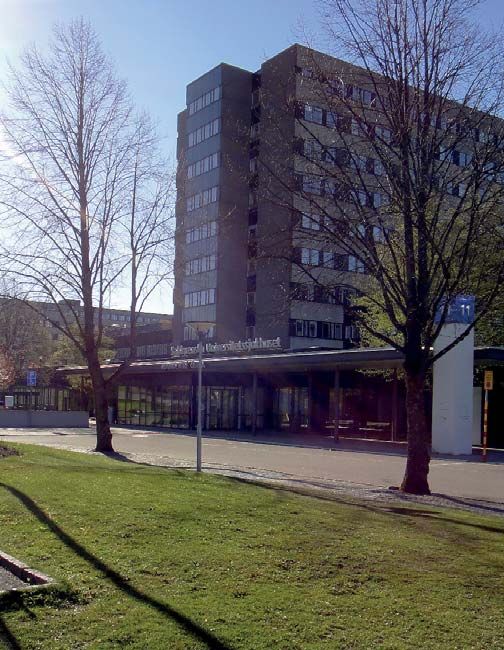
Figure 26. Le : Main entrance to the hospital with the central clinic towering above
Figure 27. Top right: The central clinic
Figure 28. Bo om right: The children’s clinic. Photos taken by the author
36Östra Sjukhuset
MC
SH
IK
1970
KK
CK 1968
PK
1978 2007
BK
1973
NBS
2020
2004
BUP
1988
R McD Hus
1999
37Östra Sjukhuset
The buildings
The first part of Östra sjukhuset, the womens clinic (KK),
was finished in 1968, then infec on (IK), the children’s
clinic (BK) and the central clinic (CK) followed in the next 10
years. The two buildings in the north, marked SH and MC
are service buildings for the hospital.
In 1988 the first addi on to the hospital since CK was
done, a building for Children and youth psychiatry (BUP).
In 2004 the children clinic got an addi on and in 2007 the Figure 29. The high, modernis c buildings
new building for adult psychiatric care (PK) was finished. (Göteborgsposten 2016)
The next big building project in the area is the new
building for Dro ning Silvia’s Children´s Hospital (NBS)
that will welcome it’s first pa ents in 2020 (Västra
Götalandsregionen 2011).
All the buildings built between 1968 and 1978 have
a cohesive look; the higher buildings have facades of
concrete elements with exposed aggregate and window
ribbons, and the lower are clad with green glass, also with
window ribbons.
The building for BUP is similar to the rest, with window
ribbons, but clad with a board material, and overall with
a less permanent look to it, with less aten on taken to
detailing like day water management and how the wall
ends in the top. Figure 30. The psychiatric clinic at Östra Sjukhuset
Photo taken by the author
PK s cks out with it’s white plaster facade and varied
window placements.
MC
SH
IK BK
KK
CK
PK CK
PK
KK
BK
IK
SH
MC
Figure 31. Views over Östra Sjukhuset
(Västra Götalandsregionen 2011)
38Östra Sjukhuset
Traffic and flows
P
Cars are allowed into the hospital area to reach the
entrances to the departments. There are parking areas at
the edges of the hospital area, mainly in north-west and P
south-east.
There is a big stop for trams and buses at the north-west
corner of the hospital area, and a bus stop east of the
hospital.
Goods come to the hospital via the building SH in the
north, and are distributed to the hospital through a culvert
system.
The entrances to the buildings are marked with a white P
concrete column with a sign saying which building it is.
Most of them have a canopy to protect from the weather.
P
P
Cars
Cars with permission
Figure 32. Main entrance to Östra Sjukhuset.
Photo taken by the author
Tram stop
Bus stop
Goods access
Parking
P
Figure 35. Traffic flows in Östra Sjukhuset
Figure 33. Entrance to the children’s hospital. Illustra on by the author
Photo taken by the author
Figure 34. Entrance to the psychiatric clinic.
Photo taken by the author
39Östra Sjukhuset
Visions for the future
The buildings in Östra Sjukhuset are star ng to
get outdated andthey need to be refurbished and 2
complemented by new buildings.
The first step in the development is the new children’s 3
hospital that are being built now, next is an addi on to the 1
women’s clinic and the new building for BUP. Buildings that
are further into the future are an addi on to the central
clinic and the exis ng children’s clinic, and a new service
building north of the hospital.
If we move even further into the future the hospital have Figure 37. Östra sjukhuset ca 2025
expanded with even more buildings, mostly towards west (Västra Götalandsregionen)
and north.
3
1
2
Figure 38. Östra Sjukhuset 2030, with an addi on the central clinic (1),
an addi on to the children’s clinic (2) and a new service building (3) in the
north.
(Västra Götalandsregionen)
Figure 39. A vision for how the hospital area might develop in the future
Figure 36. Vision for future expansion of Östra Sjukhuset
with many new buildings and a high tech area in the middle of the hospital
(Västra Götalandsregionen)
(Västra Götalandsregionen)
40Östra Sjukhuset
BUP in Östra sjukhuset
Children and youth psychiatry [BUP] in Östra Sjukhuset
includes an emergency department, a clinic for ea ng
disorders with both inpa ent and outpa ent care, a
psychiatry ward and outpa ent care. In another site there
ismore inpa ent care, and collabora on with them is very
hard.
BUP has its own hospital school for the children that get
admi ed to the wards or children that for different reasons
can not go to a regular school for a while.
The patient
The pa ent group for BUP range from 0-18 years (0-25 in
the department for ea ng disorders). Most of the pa ents
in the inpa ent care are of the age of 12 and up, mainly in
the age of 16-17, while the younger pa ents are found only
in the outpa ent care.
BUP
The building
The building was built in 1988 and is referred to as a
temporary structure made of wood in Byggnadsplan 2011, BUP in Östra Sjukhuset
a document with plans for the hospital, this can be seen as
the building doesn’t have the a en on to detailing that the
other buildings in the area have.
It is placed in connec on to the children’s hospital in the
south end of the hospital area.
The departments that are in the building have outgrown
it, and in the future they want to bring in the departments
that are now located elsewhere, thus there is a big need
for larger locali es.
Figure 40. The low building to the le is the building for BUP in Östra Figure 41. Main entrance to BUP
Sjukhuset today. Photo taken by the author
Photo taken by the author
41Design proposal
Design proposal
The program
BUP today has a great need for expansion as it is today, Building gross area*: 8000 m2
and with the popula on increasing the need will only grow
bigger.
The new building will contain three different outpa ent Effective care area**: 4000 m2
departments, a day ward department and five ward units.
The program I received from the group of representa ves Patient rooms: 38
from BUP included many rooms with office and counseling
combined in the same room. With new visions for how the
administra ve workplaces in a hospital should look like and Patient rooms/ward: 8 (1 ward with 6)
the idea to meet the pa ent on equal terms in a neutral
counseling room, I have decided to work more with open Utility area***/ward: 535 m2
administra on areas and dedicated counseling rooms. This
allows for the staff to choose between different kinds of
rooms depending on the situa on. Utility area ward/patient: 67 m2
I have chosen to take away ac vity spaces from each
department and gather them in an “ac vity square” *Building gross area is the buildings total area, exterior
in the center of the building so they can be used by all walls included.
departments. **Effec ve care area is the area for all rooms, without
communica on and technical rooms.
*** U lity area is the total area without exterior walls
42Design proposal
Entrance and conference Specialist outpatient care Eating disorders
Staff pause 15 m2
Coat room 20 m2 Outpatient care
WC 3 m2 WC 3 m2
Staff pause 15 m2
RWC 5 m2 RWC 5 m2
Print/storage 5 m2 WC 3 m2
Office 10 m2 RWC 5 m2
Office 10 m2
Reception 20 m2 Print/storage 5 m2
Silent room 5 m2
Conference mingle 30 m2 Office 10 m2
Admin desk 5 m2
Silent room 5 m2
Conference 25 p 45 m2 Waiting 30 m2
Admin desk 5 m2
Conference 12 p 25m2 Team 10 m2
Waiting 30 m2
Conference 8 p 15 m2 Storage 10 m2
Team 10 m2
Disinfection 5 m2
Administration/staff Relatives 15 m2 Storage 10 m2
Staff room 60 m2
Exam room 10 m2 Disinfection 5 m2
Print/storage 5 m2 Relatives 15 m2
Counseling 10 m2
Office 10 m2 Weighing 7 m2
Changing rooms 45 m2 Emergency department Exam room 10 m2
Staff pause 15 m2 Counseling 10 m2
Reception 20 m2
On-call room 15 m2
School
Office 10 m2
WC 3 m2 Eating disorders
RWC 5 m2
Print/storage 5 m2 Day ward
RWC 5 m2 Office 10 m2 Office 10 m2
Classrom 8 p 25m2 Silent room 5 m2 WC 3 m2
Conference 6 p 15 m2 Admin desk 5 m2 Kitchen chef 20 m2
Wait/play 15 m2 Training kitchen 15 m2
Storage 6 p 15 m2
Waiting 30 m2
Dining 15 m2
Team 10 m2
Activity square Dayroom 25 m2
Office 15 m2 Storage 10 m2
Disinfection 5 m2
WC 3 m2
RWC 5 m2 Relatives 15 m2
Creativity 25 m2
Exam room 10 m2
Lounge 10 m2
Counseling 10 m2
Music 10 m2
Senses 10 m2
Big room 45 m2
Winter garden 60/30 m2
Ward 8 patients
Team 15 m2
Meeting 20 m2
Kitchen 10 m2
Storage 10 m2
Small dayroom 10 m2
Dayroom 35 m2
Dining 15 m2
Patient room 17 m2
Patient WC/S 5 m2
Ward 6 patients
Team 15 m2
Meeting 20 m2
Kitchen 10 m2
Storage 10 m2
Small dayroom 10 m2
Dayroom 35 m2
Dining 15 m2
Patient room 17 m2
Patient WC/S 5 m2
Dayroom 1 p 20 m2
43Design proposal
The site
The site is situated in the eastern side of the hospital
area, south of the adult psychiatric clinic. On the site today
is a parking deck that is old and will be demolished and the
parking spaces replaced on another site.
The topography of the site is sloped towards west, with
the highest point towards Smörslo sgatan, a quite calm
street with a bus stop right by the site.
The slope is so steep that the entrance in the west will be
one floor below the groundfloor in the east. Adult psychiatry
Remissvägen
Site for
Children’s new BUP
hospital
tan
Smörslottsga
Psychiatric
y clinic Adults
Children’s emergency
Walkway Smörslottsgatan
Schema c site sec on showing the slope
Outpatient Ward
Outpatient Ward
Outpatient Parking
Schema c site sec on with a new building
44Design proposal
Surrounding buildings, Building that will be
and almost the en re demolished. The parking
hospital area, follow a strict will in part be replaced in a
orthogonal system parking deck under the new
BUP building, the rest will
Parking
be located elsewhere. deck
Roads and pedestrian paths Greenery and trees around
around the site. For privacy Cars vis
the site. The hospital area
it ing the
hospit
the building will keep a al has a lot of greenery and
distance from the streets. the site is not an excep on.
s
buse
Pedestrian walkway
d
rs an
h ca
t wit
Stree
Heights on the site. The
slope rise about 4,5 meters +46,0
+48,0
between the east and +50,5
the west side of the new +47,5
+52,0
building.
+50,0
+53,0
+47,5
+51,5
45Design proposal
Building form - step by step
The new BUP follows the strict orthogonal plan of Östra
Sjukhuset. The shape have long, straight lines to the west
where it meets the hospital and a more broken up form to
the green are in the east towards smörslo gatan, and the
housing area.
The steps to reach the final form are schema cally
described below.
The patient ward
Patient rooms
The first step in the design of the building was to design
a pa ent ward. All pa ent rooms face either south or east
for good daylight and to face the green area in the east
part of the plot.
N
Patient rooms
Arrange them on the site
When the ward was decided they had to be arranged on
the plot. There are five units, three on the first floor and
two on the second.
The wards follow the terrain and are placed to give sun
to all pa ent rooms.
46Design proposal
Add the outpatient care
The outpa ent care are placed towards the hospital and
have a more strict form to meet the orthogonality of the
hospital area.
Connect the two parts and split the yard
To create two yards and to connect the wards with the
outpa ent care a building is placed in the middle. This
part will be the ac vity square which can be used both
by pa ents visi ng the outpa ent departments, and the
pa ents submi ed to the inpa ent care.
Create an entrance point
Since pa ents will come to the building both from the
north and the south the entrance will be placed on the
middle of the western facade. The outpa ent building is
distorted in the middle to create an entry point, placed
so that it meets the emergency entrance to the children’s
hospital.
47Design proposal
Site plan
The building rests in a green se ng, surrounded by trees
and different kinds of green areas.
The protruding volume with the entrance is highly visible
both from north and south and the school in the south gets
a small schoolyard that is sunlit all a ernoon.
The two yards enclosed by the building have different
func ons. The south yard is an ac ve space with
cropboxes, a sunlit wooden decking and a place for
outdoor group therapy. The north is more passive, for
being outdoors, si ng in the grass or strolling on the paths.
View towards the entrance from the north Bird view over the building from the north-west
View towards the entrance from the south
Bird view over the building from the south-east
48Design proposal
Ambulance
entrance
Main
entrance
Entrance
school
N
Meter
Site plan 1:800
49Design proposal
Departments in BUP
Emergency department Eating disorders outpatient care
BUP’s emergency department is open for pa ents under The department for ea ng disorders treat pa ents
the age of 18. It treats acute psychiatric illness or problems of the ages of 16 through 25 and involves outpa ent
and since the pa ents are minors they o en come care, dayward and inpa ent care. The ea ng disorders
accompanied by parents or rela ves. Some pa ents arrive department in Östra Sjukhuset have pa ents from the
with ambulance, those are o en ac ng out and needs to en re region.
be in a calm room without other pa ents. The treatment is adapted to each pa ents needs, for
Func ons needed in the emergency department are pa ents under the age of 18 family is always involved, and
different kinds of conversa on rooms, administra ve areas if the pa ents are older it is strongly recommended, but
and exam rooms. Connected to the emergency department not mandatory to involve family or close rela ves.
are twelve in-pa ent rooms. In the first evalua on of the pa ent a medical exam
Children that come to this department can be of all ages. is carried out. Some methods used in the treatment are
family therapy, group therapy, cogni ve behavioral therapy
Specialist department and physical therapy.
The specialist department is an outpa ent care
department that treats many psychiatric disorders. Some Eating disorders inpatient care
are depression, bipolar disorder, Toure e syndrome, The inpa ent treatment program usually lasts for three
obsessive-compulsive disorder and different kinds of months, where the pa ents go through different care
phobias. zones called red, yellow and green. In the red zone the
Children of all ages come to this department. pa ent have a big need for support, in the yellow the need
for support is s ll high, but the pa ent is given more own
Inpatient care responsibility and in the green zone the focus is on own
responsibility, but with some support.
The inpa ent care department is for children suffering
The treatment in the inpa ent wards involves group
from different forms of mental illness that is so severe that
therapy, family therapy, meal therapy, mee ngs with a
they no longer func on at home. In the inpa ent care the
physiotherapist and different kinds of ac vi es such as a
pa ents get treatment and counseling, as well as a form
wri ng circle and handicra s.
of daily life in the hospital school and the play therapy.
There are two departments for inpa ent care today, one
connected to the emergency department and one called Eating disorders day ward
short-stay inpa ent care where the pa ents most o en Treatment in the day ward looks like the treatment in the
stay at home over weekends. inpa ent care, but the pa ents stay at home. They come to
In the inpa ent care the pa ents are mostly twelwe or the hospital during day me to par cipate in meal therapy,
older, it is not common prac ce to admit younger children counceling, family therapy and group mee ngs.
to inpa ent care.
50Design proposal
Arrangement of departments
Floor 2
Eating disorders outpatient care
Eating disorders day ward
Activity square
Ward
Staff
Floor 1
Emergency department
Admin
Activity square
Ward
Staff
Entrance floor
Specialist outpatient care
Admin
Reception
School Public stairs
Staff Elevator
Technical/parking Staff/emergency stairs
The groundfloor contain a recep on, the pa ent school,
conference rooms and the specialist department. Since
the site is sloped the back side of the ground floor is below
ground level and houses parking and technical spaces as
well as changing rooms for staff.
On the first floor we find the emergency department, 22
pa ent rooms divided on three wards, an ac vity square,
the main administra on for BUP and the two yards.
The second floor has gathered all func ons for ea ng
disorders, the oupa ent care, the dayward and 16 pa ent
rooms divided on two wards. In the south is a roof terrace
connected to the staff room.
There are three elevators in the building, two by the
main entrance and one in the ac vity square. The main
stair for pa ent comunica on is by the main entrance, and
there is also one for pa ents in the wards in the ac vity
square. Staff/emergency stairs are placed in the south-west
and north-east corners of the building.
Public stairs
Elevator
Staff/emergency stairs
51Design proposal
Groundfloor (floor 0)
The entrance to the building is placed in the middle of the
west facade, protected in a corner that is created through
the offset of the yards.
The entrance hall will contain a recep on and a small
wai ng area.
North of the entrance is the specialist department and to
the south is the conference area.
The school has its own entrance and is placed in the
southern end of the building.
Along the east side of the building is a parking garage. This
part is under ground because of the sloped site.
Patients
Staff
Public stairs
Elevator
Staff/emergency stairs
52Design proposal
5 11 11 10
Specialist outpatient care
5
5 9 12
8 10
4
5 6 5
5
5 6 5
5 2
3 Parking
1 Technical
11
13
Conference
14
15
14
14 14
14 9
1 Main reception
2 Team station/reception
3 Waiting 10
4 Family/relatives room 17
5 Counseling room
School
6 Exam room 17
16 Technical
7 Reception
8 Disinfection 16
9 Storage
10 Administration 17
11 Private office 16 9
12 Silent room
13 Coat room
14 Conference room
15 Conference mingle 1:500
16 Class room
17 Changing room staff
53Design proposal
Floor 1
The pa ents reach the floor via the main staircase in the
entrance hall. From the entrance lobby the emergency
department, the ac vity square and the administra on
are reached directly. The wards are reached through the
ac vity square, that by this is given a very visible place in
the building. There is an office in the ac vity square to that
staff can have control over who moves through the area.
The flow of pa ents are mainly in the western and the
central part of the building, while staff move around mainly
in the east part of the building, separated from the public
pa ent flow.
The ward by the ambulance contains only six pa ent
rooms, and has two pa ent rooms with private dayrooms
for pa ents that need to be alone. This ward can easily be
locked off from the rest of the building but keep access to
the north yard to be used by pa ents with an escape risk.
Flow from ambulance
Patients
Staff
Public stairs
Elevator
Staff/emergency stairs
Access to the yard
54Design proposal
Emergency department
5 10 11 11 13 15 23
5
5 5
16
5 6 10 10 12 14 9 6 5 2 17
8
20
3
22 18 19
5
4 9
5 16
21
5 5 19
5 16
2
9
3
16 20 16 16
Activity square
Ward 6 patients
24 25 26 27
10
28
14
11 16
1 Main reception 17
Administration
2 Team station/reception 11 2
3 Waiting 16
11
4 Family/relatives room 11 22 18 19
13
5 Counseling room 11 9
6 Exam room 16
11 21
7 Reception 14 19
8 Disinfection 11 16
9 Storage 11 9
10 Administration
11 Private office
16 16 16 16
12 Silent room
13 Staff pause 14 22 9 19 16 Ward 8 patients
14 Conference room 2
15 On-call room 16
16 Patient room 17 18 21
17 Day room
16
18 Dining
19 Day room small 16
20 Day room 1 patient 19
21 Atrium
16 16 16 16
22 Kitchen
23 Ambulance entrance
24 Creativity room
Ward 8 patients
25 Music room 1:500
26 Room for the senses
27 Activity room
28 Winter garden
55Design proposal
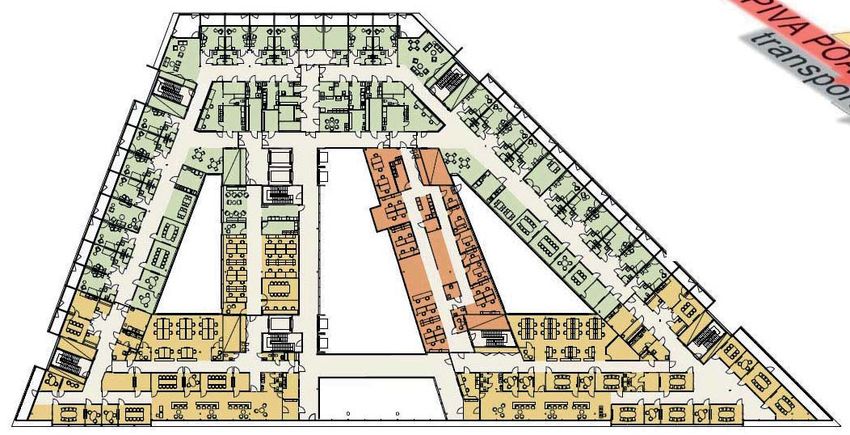
Floor 2
The second floor houses the departments for ea ng
disorders, including an outpa ent department, a day ward
and 16 pa ent rooms, that will mainly be used for pa ents
with ea ng disorders, but also for some other pa ents.
The organiza on is very much like the first floor, but with
some differences. The outpa ent care for ea ng disorders
does not have the need for double access to conversa on
rooms, so the double corridor is removed in favor of some
extra area for rooms.
In the south, above the third ward on the first floor,
there is a roof terrace connected to the staff room. This
space can be used for future expansion if the departments
outgrow the building.
Patients
Staff
Public stairs
Elevator
Staff/emergency stairs
56You can also read


