LOCKING THROUGH Safely - Procedures and useful tips - Nautisme Québec
←
→
Page content transcription
If your browser does not render page correctly, please read the page content below
D-1379-ParcsCanada-EcluserANG-2019.qxp 2019-04-08 13:08 Page 1

              LOCKING THROUGH
              Safely
              Procedures and useful tips

                                                                 Chambly Canal
D-1379-ParcsCanada-EcluserANG-2019.qxp 2019-04-08 13:08 Page 1

     Quebec Historic Canals
     Lachine Canal                           Sainte-Anne-de-                       Carillon Canal
     Located in Montreal, the Lachine        Bellevue Canal                        The Carillon Canal is located along
     Canal runs 14 kilometres between        At the west end of Montreal island,   the Ottawa River, on the inland
     the Old Port and Lake Saint-Louis.      the Sainte-Anne-de-Bellevue Canal     Montreal-Ottawa-Kingston
     This inland waterway has five locks     links Lake Saint-Louis to Lake des    navigation route, to skirt the Long
     in a pleasant urban setting, allowing   Deux Montagnes, at the mouth          Sault rapids. Its impressive lock is
     boaters to bypass major rapids in       of the Ottawa River. Used for         unique in North America, with a
     the Saint Lawrence River.               commercial purposes since it          nearly 200-tonne guillotine gate
                                             opened in 1843, this Canal quickly    that enables passage up or down a
     The Canal opened in 1825 and has
                                             became an integral part of the        20-metre drop in just one operation!
     also become a linear park that hosts
     major events and more than a            navigable Montreal-Ottawa-            The site includes a park where you
     million visitors each year. Conside-    Kingston inland waterway.             can watch the movements of the
     red one of the most beautiful urban     Today, the Sainte-Anne-de-Bellevue    lock, enjoy the surrounding land-
     paths in the world according to Time    lock is used mainly for pleasure      scapes, picnic, walk, or kayak. An
     magazine, the Canal and its shore-      craft, and docking services are       interpretive trail and archeological
     line pathway offer boaters, pedes-      available onsite at both the          remains unveil the rich history of
     trians, and cyclists a glimpse into     upstream and downstream ends of       the Canal, which opened in 1834
     the history of Canada’s cradle of       the Canal. A magnificent boardwalk    originally for military purposes.
     industrialization. Montreal is alive    and many restaurants and bistros      Navigation information:
     with activity day and night, and        line the Canal, making its lock the   450-537-3534
     various marinas and wharves             most popular in Canada!
     welcome boaters with safe docking
     facilities.
                                             Navigation information:               Technical data
                                             514-457-5546
     Navigation information:                                                       Draught: 2.74 m (9 feet)
     514-595-6594
       @LachineCanal                         Technical data                        Overhead clearance: 12.8 m
                                             Draught: 2.74 m (9 feet)              (42 feet)
     Technical data                          Overhead clearance:                   Lock dimensions:
     Draught: 2 m (6 feet, 6 inches)         between 10.67 m (35 feet)             54.86 m (180 feet) x 11.89 m
                                             and 12.80 m (42 feet)                 (39 feet)
     Overhead clearance:
     2.45 m (8 feet)                         Lock dimensions:                      Transit time: 1 hour

     Smallest lock dimensions:               54.86 m (180 feet) x 11.89 m
     50.29 m (165 feet) x 11 m               (39 feet)
     (36 feet)                               Transit time: 30 minutes
     Transit time: 3 to 5 hours
     Length of canal:
     14 km (7.56 NM)

      ATWATER

     1           Locking Through Safely                                                                            E-19
D-1379-ParcsCanada-EcluserANG-2019.qxp 2019-04-08 13:08 Page 2

                                                                                               Contact us
     Saint-Ours Canal                          Chambly Canal                                                    VHF 68
     The Saint-Ours Canal enables boats        Along the Richelieu River, the
     to bypass the Richelieu River’s           Chambly Canal enables boats to                You can contact canal staff by
     shallows, making it easier to             bypass rapids and climb or descend                   VHF radiotelephone on
     navigate between the Saint                a large drop between the Chambly               channel 68 during operating
     Lawrence River and Lake                   Basin and the Upper Richelieu.                    hours. It is recommended
     Champlain. Inaugurated in 1849,           About 19 kilometres long, the
                                                                                                     that you tune into this
     the Canal proved invaluable to            navigable waterway has nine locks,
     international trade between               three that are stepped, which is                 frequency while you travel
     Montreal and New York for over            unique in Quebec. Most of the locks                          through a canal.
     a century.                                are operated manually, like in the
                                                                                              Telephone: 1-888-773-8888
                                               old days, including their many
     The Saint-Ours Canal, rich in                                                        (Toll free in Canada and the US.)
                                               bridges that turn, roll, and tilt.
     history, is a place to observe the
                                                                                            pc.infocanalqc.pc@canada.ca
     Vianney-Legendre fishway, which is        The Chambly Canal opened in 1843
     a unique structure that helps protect     and played a major role in Quebec’s
     endangered fish species. Darvard          forestry industry, facilitating exports
     Island also offers a wonderful place      to the United States. Today, recrea-
     to stop, stretch your legs, and enjoy     tional boaters and tourists are
     a picnic. Also, as of summer 2016,        charmed by the rich heritage and
     you can also stay overnight at the        natural décor of the site, where you
     oTENTik accommodation site.               can enjoy cycling, family picnics,
     A cross between a tent and a rustic       walks, and boat-watching.
     cabin, there are a total of six           Navigation information:
     oTENTik units available on the site,      Chambly sector: 450-658-4381
     each of which can accommodate up          Saint-Jean sector: 450-348-3392
     to six people (or four adults). A great
     way to get back to nature in an
     enchanting location.                      Technical data
     Navigation information:                   Draught: 2 m (6.6 feet)
     450-785-2212
                                               Overhead clearance: 8.84 m
     oTENTik accommodation                     (29 feet)
     information:
     450-785-2053                              Smallest lock dimensions:
                                               33.52 m (110 feet) x 6.7 m
     Technical data                            (22 feet)
     Draught: 3.66 m (12 feet)                 Transit time: 3 to 5 hours
     Overhead clearance: 8.84 m                Length of canal:
     (29 feet)                                 19 km (10.29 NM)
     Lock dimensions:
     97.54 m (320 feet) x 11.89 m
     (39 feet)
     Transit time: 30 minutes
                                                                               BRIDGE 1

                                                                                          Carillon Canal

                                                                                          Locking Through Safely          2
D-1379-ParcsCanada-EcluserANG-2019.qxp 2019-04-08 13:08 Page 3

     Safety                                                › Watch the traffic lights (similar to road traffic
                                                             lights):

     procedures                                            Green
                                                           You may enter the lock
     to follow when                                        Flashing red
                                                           lockage preparations underway. –
     locking through                                       do not enter the lock
                                                           Solid red
     through                                               Lock not in operation or locking through
                                                           in progress – do not enter the lock

     APPROACHING                                           › Follow the lock operators’ instructions. Vessels
     THE CANAL                                               are locked through on a “first come, first ser-
                                                             ved” basis. However, priority may be given to a
     › Reduce your speed until you eliminate your
                                                             specific vessel for logistical or safety reasons, in
       wake.
                                                             particular to place it alongside another one
     › Keep the canal entrance clear so you don’t            when there is lots of traffic. Be attentive to the
       hinder the passage of boats exiting.                  lock operators’ instructions.
     › Contact the lock/bridge operators by VHF radio      In a Parks Canada canal, you are under
       or telephone to inform them of your position and    the care of lock operators. Be polite to them.
       your intention to be locked through, find out the   Verbal abuse will not be tolerated.
       wait time, and obtain locking-through
       instructions.
     › Moor your vessel at the holding wharf. The blue
       line painted on mooring wharves marks the
       boundary for boats waiting for the next
       lockage. This zone is reserved strictly for them.
     › Install your mooring lines and fenders on the
       wharf side inside the lock. You must have a mini-
       mum of two mooring lines of sufficient length and
       in good condition, one in front and one in back.
       Your floating fenders must be securely fastened,
       the correct size, and of sufficient quantity that
       neither your vessel nor the canal is damaged.
     › If there is no wharf inside the lock (such as in
       the Chambly Canal), lock operators will inform
       you of the side on which to moor and will
       provide you mooring lines.
     › Ensure that you have at least one person capa-
       ble of doing the work required for each mooring
       line. Entrance to the canal will be refused if
       you are alone aboard the vessel.
                                                             Saint-Ours Canal

     3          Locking Through Safely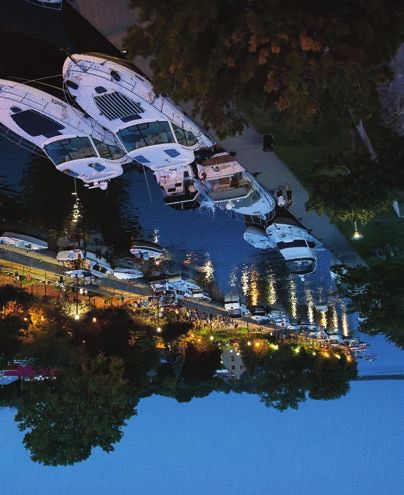
D-1379-ParcsCanada-EcluserANG-2019.qxp 2019-04-08 13:08 Page 4

                                                            › During the lockage, each mooring line must
     INTO THE LOCK                                            be tended by a crew member.
     › Once the navigation light is green, enter the lock
                                                            › At the Chambly Canal, use a boat hook to
       following the instructions of the lock operators.
                                                              distance your craft from the lock wall. Do not
     › Dock your watercraft in the area indicated by          use your feet or your hands.
       the lock operators, either along the wharf or
                                                            › To simplify the work of lock operators, and out
       beside another boat.
                                                              of respect for other boaters, please lower the
     › Immobilize your craft by putting it in reverse.        volume on your music or other sounds during
     › Switch off the engine only after the craft is          the lockage.
       securely moored.                                     › Be ready to pay or show your locking permit to
                                                              the lock operator.
     It is the responsibility of                            › When you navigate through the Chambly or
     pleasure craft operators to                              Lachine canals, always report your arrival at
     ensure that their vessels are                            locks and bridges. Inform staff of your naviga-
     properly docked and moored.                              tion plans. If you decide to make a stop or
     Staff may provide assistance                             change course, inform the lock/bridge operators
     when you arrive, if they are                             so they can adjust their operations.
     available.
     › At the Saint-Ours, Lachine, Saint-Anne-de-Belle-
       vue and Carillon canals, ensure that your craft is   EXITING
       securely tied to the wharf. Tie up the back first
       by taking up all the slack, then tie up the front.
                                                            THE LOCK
                                                            › Wait until the lock gates are fully open and lock
     › At the Chambly canal, do not attach mooring
                                                              staff give you the signal to start the engine and
       lines to your cleats. Loop the line around the
                                                              unhook your moorings.
       cleat, making sure to lighten or loosen it during
       the lockage process.                                 › Exit the lock slowly, according to the lock
                                                              operators’ instructions. If boats are side by side
     › Once your craft is well-moored, follow these
                                                              in the lock, they must exit width-wise, one line
       instructions:
                                                              at the time, from the wall to the wharf.
           Turn off the engine. Don’t restart the engine
                                                            › Respect the 10 km/h (6 mph, 5.5 NM) speed
           during lockage.
                                                              limit and watch your wake until reaching the
           Ensure there are no open flames on board.          lateral buoys at the canal channel exit.
           No smoking or vaping is allowed.                 › The speed limit on Parks Canada canals
           Ensure the bilge blower is working.                is 10 km/h at all times.

     › Turn off your radar.

                                                              Lachine Canal

                                                                              Locking Through Safely               4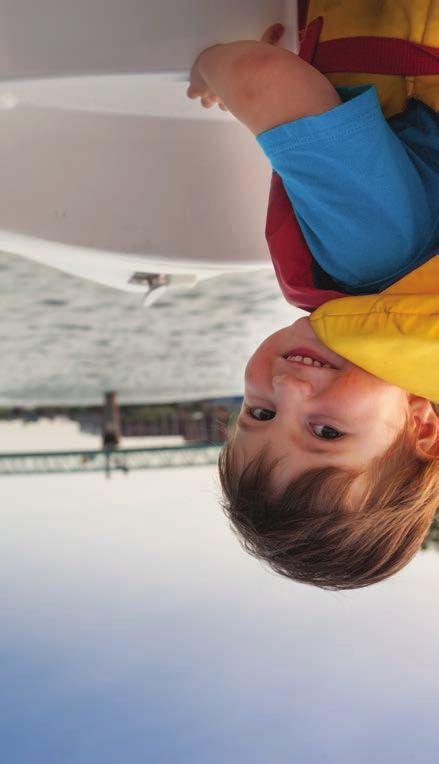
D-1379-ParcsCanada-EcluserANG-2019.qxp 2019-04-08 13:08 Page 5

     MOORING
     AND LOCKING
     PERMITS
     › A locking permit is required to travel through a    › Mooring payment notices can be paid at any
       Parks Canada canal. Permits are sold online           lock station during canal operating hours. It is
       (parkscanada.gc.ca/canals) and at all lock            also possible to pay by cheque, payable to the
       stations.                                             Receiver General of Canada, sent to:
     › The same applies to night mooring permits.          Parks Canada,
       When you dock at a wall or wharf adjacent to a      1899 De Périgny Boulevard,
       lock or a bridge, you must pay for mooring upon     Chambly, Quebec J3L 4C3.
       entering or exiting a canal. Double-moored          Fees must be paid within 30 days. Otherwise,
       vessels must also pay.                              administrative fees will be charged.
     › The maximum mooring period is 48 hours.             For more information on permits and rates, visit:
       You must wait at least 24 hours before returning    www.parkscanada.gc.ca/canals
       to moor in the same lock. This regulation is        or consult the brochure entitled Parks Canada
       subject to change, based on management              Canals in Quebec – Schedules and fees, available
       recommendations.                                    at all lock stations during the navigation season.
     › All vessels, even those being towed, must
       have a locking and mooring permit, regard-
       less of their size. The minimum chargeable
       length is 12 feet.
     › To be valid, seasonal locking and mooring per-
       mits must be installed in full view on the lower
       edge of the vessel’s front windshield.
     › If you have a six-day locking permit, you must
       have it with you while travelling, otherwise
       locking fees will apply.
     › Keep your receipts in a safe place, as proof that
       you have a permit.
     › Locking and mooring permits are not interchan-
       geable or refundable. They are valid only for the
       year in which they are issued.

                                                            Sainte-Anne-de-Bellevue Canal

     5         Locking Through Safely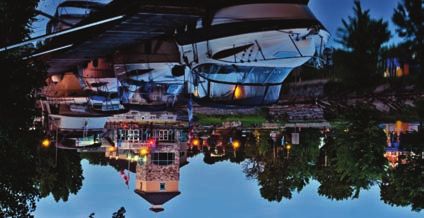
D-1379-ParcsCanada-EcluserANG-2019.qxp 2019-04-08 13:08 Page 6

     Chambly Canal

                                                             Locking Through Safely   6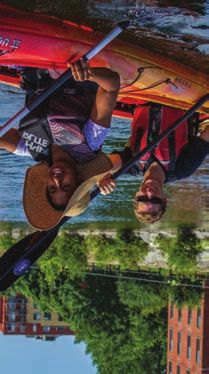
D-1379-ParcsCanada-EcluserANG-2019.qxp 2019-04-08 13:08 Page 7

     HISTORIC CANAL
     REGULATIONS
     It is the responsibility of pleasure boat operators to be informed of and familiar with the regulations in
     effect in historic canals. Certain activities are prohibited in a canal. Users must demonstrate judgment
     and civic mindedness on Parks Canada sites at all times.
     The following list of regulations is not exhaustive.

     It is forbidden to:
     - cause excessive noise in a historic canal between 11 p.m. and 6 a.m. (section 7 (c)).
     - fish within 10 m of a lock or approach wharf, or from a bridge over a navigation channel
       (section 7 (e)).
     - dive, jump, scuba-dive, swim or bathe in a navigation channel or within 40 m of a lock gate or a
       dam (section 10 (b)).
     - water-ski or engage in any activity that involves being towed behind a vessel in a navigation channel
       (section 10 (a)).
     - moor at an approach wharf during operating hours if you do not intend to lock through
       (section 40.2).
     - camp on historic canal lands, except at boater campgrounds clearly identified for that purpose
       (section 18).

     Domestic animals must, at all times, be restrained by a leash or confined in an enclosure. You must
     pick up your animal’s excrement and properly dispose of it in a receptacle (section 24).
     Every boat equipped with a motor other than a stock (unmodified) outboard engine must have a muf-
     fler* and use it while operating within five nautical miles (9.26 km) of shore (subsection 1000 (3) (d),
     Small Vessels Regulations).
     *Your muffler (silent choice) must be in operation at all times when you are navigating on a Parks
     Canada canal.
     Use of drones
     All Parks Canada places are ‘no drone zones’ if you do not possess a permit or special permission.
     Piloting a motor craft while under the influence of alcohol is an offence under the Criminal
     Code of Canada.
     Historic Canals Regulations, Small Vessels Regulations, and Collision Regulations are in force
     in all historic canals. These regulations are enforced by by the park wardens, the Sûreté du Québec,
     RCMP and the municipal police.
     In the case of a repeated offence or refusal to obey the regulations in place, Parks Canada
     reserves the right to revoke, at any time, a permit or to forbid travel on the historic canals
     (section 6).

     7          Locking Through Safely
D-1379-ParcsCanada-EcluserANG-2019.qxp 2019-04-08 13:08 Page 8

     SPEED                                               MORE
     LIMITS                                              REFERENCES
     The maximum speed limit is 10 km/h                  Other laws and regulations are in force on historic
     (6 mph, 5.5 NMPH) at all time. You must slow        canals
     down when you reach the red and green buoys at      – Act Respecting the Ministère des Transports
     the canal’s entrance; you can speed up after you
     pass the same-coloured buoys at the canal’s exit.   – Canada Shipping Act
                                                         – Parks Canada Agency Act
                                                         – Criminal Code of Canada
                                                         – Canadian Environmental Protection Act.
                                                         These documents may be consulted at
                                                         http://lois.justice.gc.ca

     Wake limits must be respected and take
     precedence over the speed limit.                    PARKS CANADA
     When you see a “no wake” sign, you must reduce      Quebec historic canals
     your speed until your wake is completely            1899 De Périgny Boulevard
     eliminated—regardless of the applicable speed       Chambly, Quebec J3L 4C3
     limit.                                              Telephone : 1 888 773-8888
     The wake from boats causes major problems on        (Toll free in Canada ans the US.)
     Canada’s waterways:                                 pc.infocanalqc.pc@canada.ca
     - eroding banks;
     - disturbing wetland habitats;
     - flooding the nests of aquatic birds;
     - damaging piers and moored boats;
     - damaging lock mechanisms;
     - making navigation dangerous;
     - threatening lives.

     You are responsible for your
     wake and any damage it may
     cause.

                                                              @LachineCanal
                                                         www.parkscanada.gc.ca/canals

                                                         Lachine Canal

                                                                          Locking Through Safely          8
D-1379-ParcsCanada-EcluserANG-2019.qxp 2019-04-08 13:08 Page 9

         LES CANAUX HISTORIQUES DE PARCS CANADA
         PARKS CANADA HISTORIC CANALS

                                                                                                  N

                                 Parc national de la Péninsule-Bruce
                                                                                                                   CANADA
                                 et Parc marin national Fathom Five
                                 Bruce Peninsula National Park
                                 and Fathom Five National Marine Park
                                                                                                                                                                        C
                                                                                         Parc national des
                                                                                         Îles-de-la-Baie-Georgienne
                                                                                         Georgian Bay Islands
                                                 La Baie Georgienne/                     National Park
                                                 Georgian Bay

                                                                                                            VOIE-NAVIGABLE-TRENT-SEVERN                               Sm
                                                                                                            WATERWAY
                                                                              Port Severn

                                                                                                                                                              Kingston
                                                                                                    Peterborough                                              401

                                                                                                                                         Trenton

                                                 ONTARIO
                                                                                            Toronto                                 CANAL-MURRAY CANAL

                                                                                                                                        Lac Ontario/Lake Ontario

                                                                                                                                                                    CANAL
                                                                               401

                                                                                                                                                             Oswego
                                                                                                                   Niagara Falls
                                                                        CANAL DE WELLAND CANAL

                                                                                                                      Buffalo
                                                                             Lac Érié/Lake Erie

                                                                                                                                CANAL ÉRIÉ CANAL
                                       DISTANCES PAR VOIE D’EAU (approximatives)                       90

                                       NAUTICAL DISTANCES (approximate)                                                          CANAL CAYUGA-SENECA CANAL

                                       Montréal                 Sorel                         38   NM         70   km

                                                                                                                                                                      ÉTA
                                       Sorel                    Chambly                       38   NM         70   km
                                       Chambly                  Lac Champlain Lake            30   NM         55   km
                                       Chambly                  New York                     281   NM        520   km
                                       Montréal                 Québec                       135   NM        250   km
                                       Montréal                 Ottawa                        97   NM        180   km
                                       Montréal                 Kingston                     148   NM        275   km                LÉGENDE/LEGEND
                                       Montréal                 Toronto                      270   NM        500   km
                                                                                                                                           Voies navigables de Parcs Ca
                                       Chambly                  Saint-Ours              27 NM                 50 km                        Parks Canada Waterways
                                       Saint-Ours               Lachine                 49 NM                 90 km
                                       Lachine                  Sainte-Anne-de-Bellevue 11 NM                 20 km                        Voie maritime du Saint-Laure
                                       Sainte-Anne-                                                                                        St.-Lawrence Seaway
                                       de-Bellevue              Carillon                         24 NM        45 km
                                       Carillon                 Canal Rideau                     54 NM       100 km                        New York State Canals System

     9        Locking Through Safely
D-1379-ParcsCanada-EcluserANG-2019.qxp 2019-04-08 13:08 Page 10
Québec
Trois-Rivières
QUÉBEC
CANAL-DE-LACHINE CANAL
Sorel
A
CANAL-DE-SAINT-OURS CANAL
CANAL-DE-CARILLON CANAL
Montréal
Ottawa Chambly
CANAL-DE-CHAMBLY CANAL
CANAL-DE-SAINTE-ANNE-DE-
r
CANAL-RIDEAU CANAL
Rive
BELLEVUE CANAL 15
lieu
Saint-Jean- iche
sur-Richelieu
re R
Riviè
Smiths Falls
Lac Champlain Lake
Plattsburg
Burlington
91
Kingston 87
Parc national des Mille-Îles 89
01 Thousand Islands National Park
81
o
CANAL OSWEGO CANAL
Whitehall
swego
90
Syracuse
CANAL CHAMPLAIN CANAL
CANAL ÉRIÉ CANAL
Boston OCÉAN
Albany ATLANT
90
dson River
ÉTATS-UNIS/USA
Rivière Hu
84 Cape Cod
Newport
arcs Canada
ways
87
nt-Laurent
y
New York
s System
Locking Through Safely 10You can also read


