Making Digitalisation Work - for Peaceful Development - Stiftung Entwicklung und Frieden
←
→
Page content transcription
If your browser does not render page correctly, please read the page content below
: Conference
                      Report
                      Potsdam Spring Dialogues 2021 – Online

                      Making Digitalisation Work
                                                                                                              ––––––––––––
                      for Peaceful Development                                                                Ingo Nordmann

                      Digitalisation in Africa is in full swing. Online tools   The main themes of the conference were digital vio-
                      can bring people together and help prevent violence.      lence and conflict prevention in Africa, democratic
                      Participation in democratic processes becomes             participation and digital rights, and the impacts of
                      easier and more inclusive. New business opportuni-        digitalisation on development prospects for Africa’s
                      ties emerge in the digital space. Social movements        youth. A specific emphasis was put on regional
                      increasingly connect online and bring change to           cooperation within Africa, between nation states, Re-
                      rural and urban regions alike. At the same time,          gional Economic Committees (RECs) and the African
                      hate speech spreads online at unprecedented speed,        Union (AU), and on the cooperation between the AU
                      authoritarian governments use new technologies to         and the European Union (EU).
                      control their citizens, and extremist groups recruit
                      members online. Digitalisation has multiple beneficial
                      and harmful aspects, and reliable political frame-
                                                                                   Online hate speech, real-life violence
                      works are needed to strengthen the positives and
                      mitigate the threats. This was the focus of the Pots-        and possible counter-measures
                      dam Spring Dialogues 2021, which took place online
                      on three afternoons from 10 – 12 May 2021.                Digital tools can bring people together, but they can
                                                                                also be misused for violent purposes. Online hate
                                                                                speech, in particular, has horrific real-life conse-
                                                                                quences in many African countries. Nanjala Nyabola,
                                                                                a prominent researcher and author from Nairobi,
                                                                                explained how online hate frequently turns into ac-
                                                                                tual violence on the streets, citing the current conflict
                                                                                in Ethiopia as an example. Online media can also
                                                                                contribute to the spread of violence when news of
                                                                                killings is shared online and causes targeted reprisal
                                                                                killings as a direct consequence. The range and speed
                                                                                of these mutually inflammatory exchanges are far
                                                                                higher than before the internet and social media
                                                                                existed.

                                                                                Ambassador Fred Ngoga Gateretse, Head of the Con-
                                                                                flict Prevention and Early Warning Division at the
                                                                                African Union Commission, agreed that hate speech
                                                                                has been spreading “like bushfires”. He pointed out
Impressions from the Mogadishu Tech Summit, organized by iRise Hub, Somalia     that even the most extreme opinions, which used to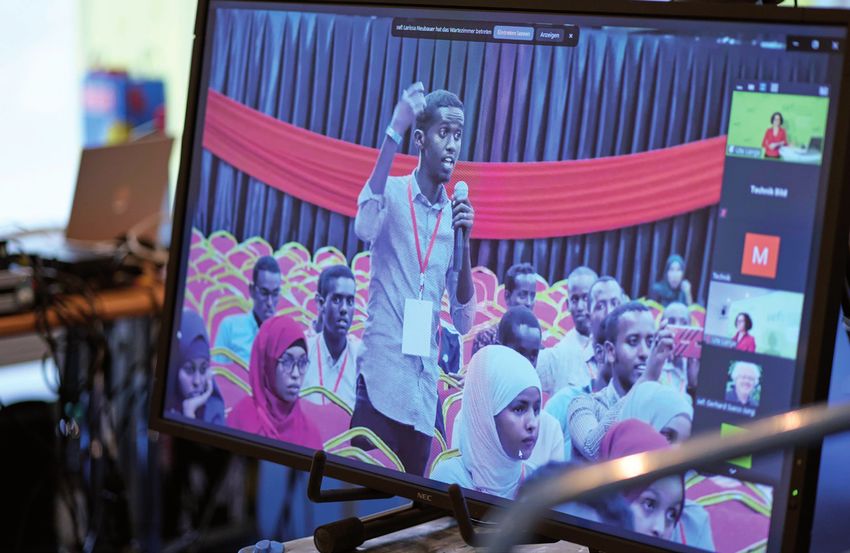
Making Digitalisation Work for Peaceful Development                                                                                       2

                         get little to no attention, can now become normalised    emphasised how striking this was, considering that
                         in echo chambers on social media. Digitalisation         many of these languages, such as Amharic, Hausa
                         could and should, however, also be used to tackle the    and Somali, are spoken by tens of millions of people.
                         problem: “When intolerance becomes the norm, we
                         must beat perpetrators at their own game.”

                         Civil society organisations have developed innovative
                         ways to do exactly that. For instance, the #defyhate-
                         now campaign in South Sudan and other countries
                         provides community-based and data-driven solutions
                         to fight hate speech and misinformation online. As
                         Programmes Director Nelson J. Kwaje stated, it has
                         also helped with debunking dangerous myths around
                         the coronavirus pandemic. Tuwindi from Mali offers
                         apps to users with which they can fact-check infor-
                         mation spread online, thus reducing the danger of
                         fake news. CEO Tidiani Togola also presented an app
                         that provides access to reliable political information
                         online prior to elections, enabling users to make
                         informed decisions. And the Humanitarian Open-
                         StreetMap Team (HOT) aims to reduce violent effects
                         of online communication in the real world, using
                         digital tools in innovative ways (see Box).
                                                                                  Chair Ute Lange getting ready for the first session

                                                                                  Nicole Stremlau also spoke about the considerable
                             The power and responsibility of tech
                                                                                  influence of international technology companies in
                             companies                                            Africa. She highlighted the discrepancy between the
                                                                                  power of some small African nation states and “Big
                         Dr Nicole Stremlau, Programme Head at the Univer-        Tech”, referring to the largest global IT companies
                         sity of Oxford and Research Professor at the Univer-     such as Facebook and Google. Their total turnover
                         sity of Johannesburg, added that online-related vio-     is much greater than many countries’ GDP, invert-
                         lence in Africa receives much less attention from tech   ing the power balance between the state and the Big
                         companies than it does in other parts of the world.      Tech businesses. As Nelson Kwaje from #defyhate-
                         A reason for this is that many hate speech incidents     now pointed out, many global tech companies “were
                         happen in local languages to which companies do not      started by some white guys in Silicon Valley” but now
                         pay attention. They lack the linguistic capacities for   have very considerable influence on the conditions
                         effective community management, social network           in countries they have never even visited. In many
                         rules are often not translated, and algorithms do not    cases, they are not accountable to any government.
                         work in these languages. Consequently, hate speech
                         in Africa often cannot even be efficiently flagged,      Nanjala Nyabola was equally critical of the rising
                         much less sanctioned or prevented. Nanjala Nyabola       power of European companies such as Vodafone and
                                                                                  Orange in Africa. Unlike larger European countries,
                                                                                  which may have working policies to rein in Big Tech’s
                                                                                  influence in their domestic markets, many small
                            Preventing violence with map data: the
                                                                                  African countries cannot do that. Intensified interna-
                            Humanitarian OpenStreetMap Team
                                                                                  tional cooperation is needed here, as supranational
                            A practical example of how digital tools can          organisations may be able to set frameworks to keep
                            be used to fight violence was given by Monica         the extensive power of these foreign companies in
                            Nthiga, Regional Director at the Humanitar-           check.
                            ian OpenStreetMap Team (HOT) in Kenya.
                            HOT uses online map data to enable swift and
                            precise responses to natural disasters or violent        Strengthening inter-regional
                            incidents. For example, during the last elec-
                            tion in Kenya, plans for an incoming attack by
                                                                                     cooperation
                            a violent gang became public. Map data was
                            used to help the police establish roadblocks          Nicole Stremlau called for more robust engagement
                            and successfully stop the attack, with the data       from the African Union. This could be a promising
                            being shared in real time via Facebook, Twitter       opportunity for collaboration between the AU and
                            and SMS. HOT also uses map data to validate           the European Union, which has already developed
                            information online and to fight fake news and         some good strategies to deal with these issues. As
                            misinformation in digital spaces.                     a representative from the European Commission,
                                                                                  Marc Fiedrich agreed that the two continents face
Potsdam Spring Dialogues 2021 – Online                                                                                                      3

                         many similar challenges in fighting online violence         tal tools might “allow autocrats to become even more
                         and pointed to regular dialogues between the EU and         autocratic”. They enable them to control their people,
                         the AU on the effective regulation of social media.         e.g. by collecting data and enhancing surveillance
                         He added that Africa should, however, not just copy         technologies. As a particularly worrying example, she
                         Europe, as Europe is still looking for answers in this      cited the case in which the Chinese government sold
                                                                                     facial recognition software to Zimbabwe’s authori-
                                                                                     tarian government, which used it to monitor people
                                                                                     in the capital Harare. In return, the government
                                                                                     provided the collected data to the Chinese software
                                                                                     company, which used it to improve their algorithms
                                                                                     and software capabilities.

                                                                                     Another shocking and relatively blunt tool to restrict
                                                                                     communication is shutting down the internet com-
                                                                                     pletely, which many autocratic governments have
                                                                                     done. Nanjala Nyabola said that currently, govern-
                                                                                     ments are “shifting from closing civic space online to
                                                                                     controlling the predominant narrative”. It is virtually
                                                                                     impossible in countries such as Ethiopia, Rwanda
                                                                                     and Nigeria to criticise the government online with-
                                                                                     out being drowned out by government-controlled
                                                                                     bots. Nelson Kwaje cited an example from Uganda
                                                                                     where Facebook had to ban several accounts con-
Ambassador Ngoga, Marc Fiedrich and Nicole Stremlau in dialogue                      nected to the government for spreading false infor-
                                                                                     mation and targeted harassment of users. As critics
                         fast-paced and volatile area. Many policies may have        generally work alone, they struggle to gain traction
                         to be adapted in a few years’ time, given the rapid         against these organised spamming techniques. As
                         developments in digitalisation.                             Marc Fiedrich pointed out, inverse cases have been
                                                                                     known as well, when governments attempted to bal-
                         Exchange and collaboration should be intensified            ance large amounts of misinformation, for example
                         not only between Africa and Europe, but also within         about health issues. All these examples show that
                         the Global South, as Nanjala Nyabola argued. Africa,
                         Asia and Latin America face similar challenges in the
                         field of digitalisation. For example, Brazil is currently
                         the world’s largest WhatsApp market, followed by In-
                         dia and Nigeria. Therefore, Whatsapp (which belongs
                         to tech giant Facebook) might attempt to consolidate
                         and expand its market dominance in similar ways in
                         all three countries. The Nigerian and Indian govern-
                         ments should therefore try to learn from Brazil’s
                         experience in dealing with this. Besides governments,
                         civil society organisations from different continents
                         should collaborate more often when tackling chal-
                         lenges related to digital innovations.

                             Regulating online communication
                             without restricting digital rights and
                             free speech

                         When governments are asked to intervene in digi-
                         tal conflict, a dilemma may arise: How can online
                         communication be regulated without jeopardis-
                         ing democratic achievements such as free speech?            Nanjala Nyabola, researcher and author from Nairobi
                         Nanjala Nyabola urged considerable caution when
                         calling for more state regulation. She warned that if       governments have become more capable of fram-
                         governments were given the power to regulate online         ing the online discourse and influencing it to their
                         communication with the intention of fighting hate           advantage.
                         speech, they might first and foremost use it against
                         critics of the state, to silence any unwelcome voices of    Julia Leininger further warned that when elections
                         activists. Dr Julia Leininger, Programme Head at the        are increasingly digitalised, manipulation and vote
                         German Development Institute, concurred that digi-          rigging may become easier. Tech companies provid-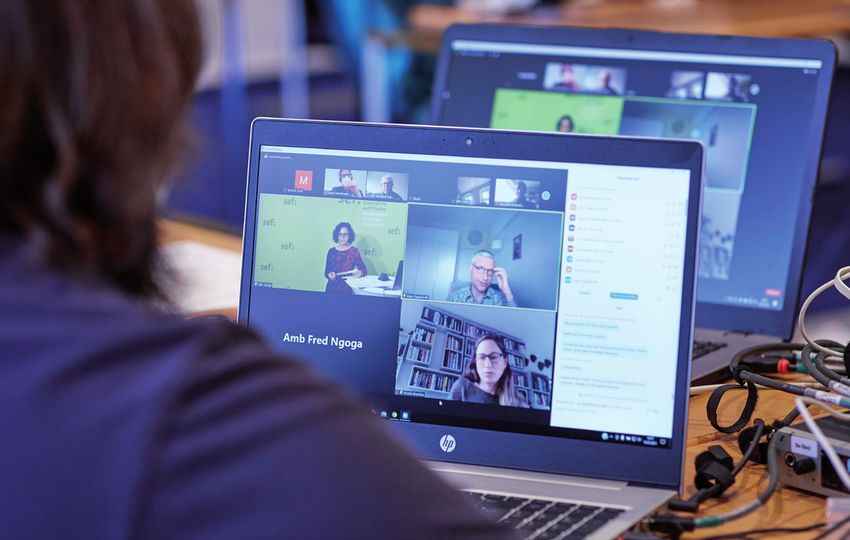
Making Digitalisation Work for Peaceful Development                                                                                       4

                         ing digital election management tools may be easily       the work lies with the national governments, while
                         influenced by politicians, especially if governments      regional organisations and civil society can only
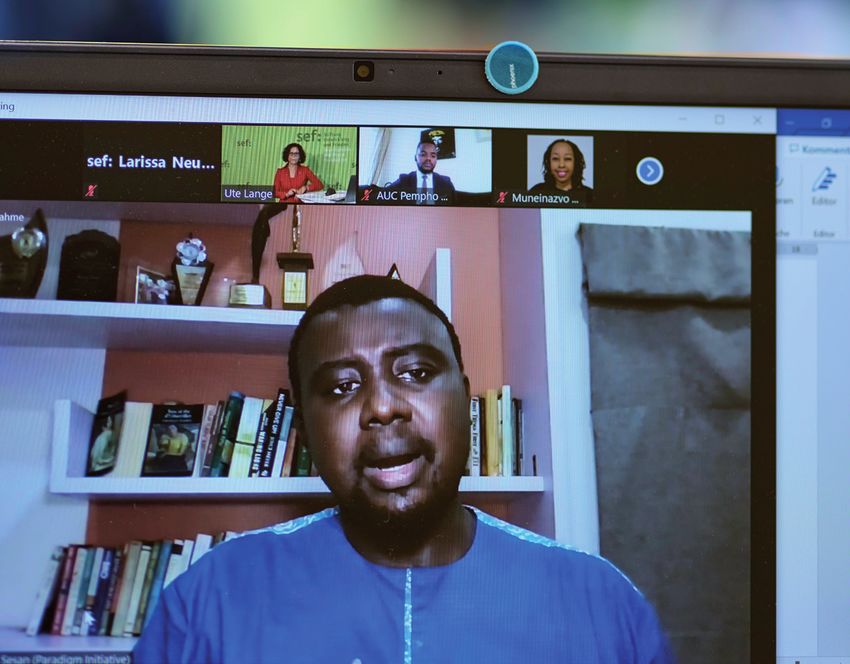
                         hold a substantial proportion of the company’s            increase pressure. As ‘Gbenga Sesan, Executive Direc-
                         shares. This would make conflicts of interest almost      tor of the Paradigm Initiative in Nigeria, said in his
                         unavoidable and render politicians particularly prone     closing remarks: “There is still reason for optimism,
                                                                                   but also a gap between optimism and reality. That is
                                                                                   where the work lies, and it lies with the nation states.”

                                                                                      Offering Africa’s youth prospects
                                                                                      through digitalisation

                                                                                   Africa is the continent with the world’s youngest
                                                                                   population. All panellists agreed that if the continent
                                                                                   is to flourish, young people must be given the pros-
                                                                                   pect of earning a sufficient and stable income. How-
                                                                                   ever, with a de facto unemployment rate of around
                                                                                   20% and an extremely high working poverty rate
                                                                                   of 40%, it is still a long way off. This makes young
                                                                                   people more susceptible to the influence of violent
                                                                                   groups. As Nelson Kwaje stated, “criminal organisa-
                                                                                   tions are preying on exactly those people who have
Ute Lange (Chair), Thomas Helfen, Pempho Chabvuta and Muneinazvo Kujeke in         experienced historical injustices, exclusion, identity
dialogue (clockwise)                                                               crises and economic issues”. Young people who join
                                                                                   extremist groups are both perpetrators and victims
                         to corruption. Attempts have been made by civil so-       simultaneously. Therefore, if the problem of violent
                         ciety to rein in such negative behaviour, for example     extremism is to be solved, the underlying issues
                         by monitoring politicians’ actions and making this        which drive young people to join these groups in the
                         information digitally available (see Box). In this way,   first place must be addressed.
                         digital tools may also contribute to more transpar-
                         ency and accountability in governance.                    Abdihakim Ainte, co-founder of the iRise Hub in
                                                                                   Mogadishu, knows many of these difficulties first-
                                                                                   hand. His organisation tries to empower young entre-
                                                                                   preneurs in Somalia with business opportunities, for
                             Regional organisations to set the
                                                                                   example by organising the Mogadishu Tech Summit,
                             frame, but national implementation                    one of the most important networking events for
                             needed                                                Somali start-ups, initiatives and businesses. iRise has
                                                                                   received direct threats from extremist groups trying
                         There is clearly a need for more regional coopera-        to interfere with its work. He confirmed that violent
                         tion within Africa in order to tackle issues of cor-      groups both “abuse and use” young people, most of
                         ruption and accountability across state borders as        whom come from severely disadvantaged families in
                         well. Ambassador Ngoga pointed out that while the         rural regions.
                         African Union has already introduced many politi-
                         cal frameworks in this area, some nation states lack
                         the political will to implement them. He claimed that
                                                                                     Monitoring the activities of Ghanaian Members
                         states often invoke national sovereignty, rejecting
                                                                                     of Parliament (MPs): Odekro
                         external influence from organisations such as the AU.
                         Therefore, it must be conveyed to nation states that        The Accra-based non-profit organisation Odek-
                         implementing international frameworks and coop-             ro monitors the activities of parliamentarians
                         erating with international organisations is actually        and makes the information digitally available to
                         sovereignty-enhancing. In fact, refusing to give up         Ghanaian citizens. In this way, voters can track
                         some national sovereignty in conflicted times may           what their elected representatives vote for, what
                         threaten a country’s very existence.                        statements and speeches they make, and how
                                                                                     often they attend parliamentary sessions, allow-
                         Muneinazvo Kujeke, Research Officer at the Institute        ing citizens to make informed voting decisions.
                         for Security Studies in Pretoria, pointed out that          As Odekro’s Principal Lead Nehemiah Attigah
                         Africa was not short of ambitious policies on paper,        explained, in one case it was discovered that 19
                         and challenged the view that they should be compiled        “silent MPs” did not make a single statement
                         by the African Union in far-flung Addis Ababa. She          during four years in parliament. When the data
                         argued it should instead be done closer to home by          was published, 12 of them lost their seats at the
                         Regional Economic Committees (RECs) and member              next election.
                         states. Nevertheless, she concurred that the bulk of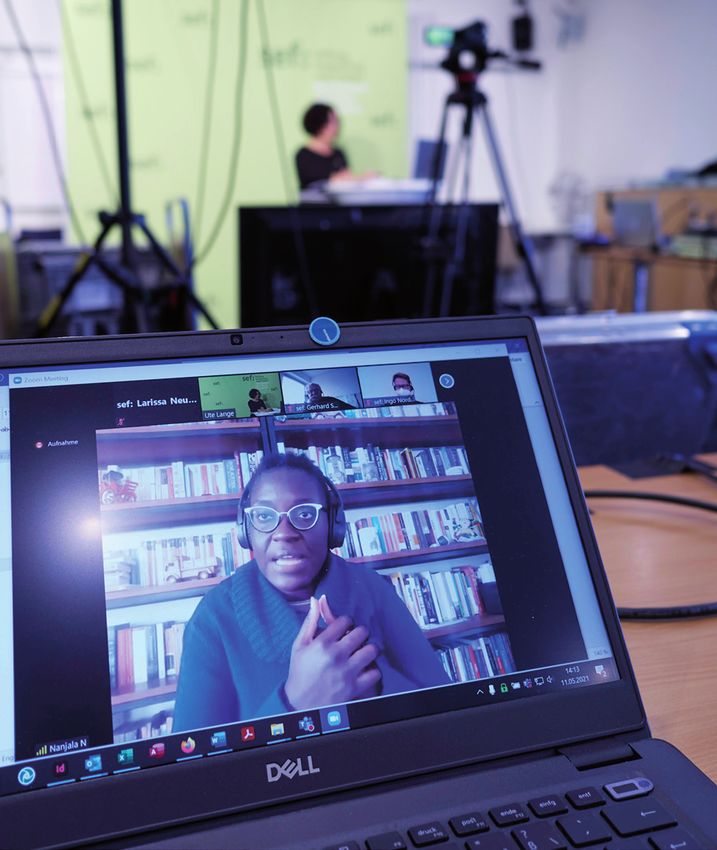
Potsdam Spring Dialogues 2021 – Online                                                                                                                                                             5

                                    Digital innovation can benefit people in disadvan-
                                    taged communities and promote their economic                                               Empowering young people in Nigeria with
                                    and social participation. For example, new digital                                         digital skills: the Aspilos Foundation
                                    payment methods can empower small business own-
                                                                                                                               The Aspilos Foundation is a youth-led non-
                                    ers by enabling them to conduct quick and reliable
                                                                                                                               profit organisation dedicated to empowering
                                    financial transactions with customers or business
                                                                                                                               young people in Nigeria by teaching them digi-
                                    partners. However, these methods are also harder
                                                                                                                               tal competence, data science and programming.
                                    to regulate and tax, and innovations such as mobile
                                                                                                                               The focus is on young women and girls from
                                                                                                                               rural or semi-rural regions, with the aim of
                                                                                                                               qualifying them for jobs in the digital economy.
                                                                                                                               Executive Director Simi Olusola explained that
                                                                                                                               Aspilos has taught more than 500 young people
                                                                                                                               on six-month courses, which are followed up by
                                                                                                                               mentoring programmes and internship place-
                                                                                                                               ments.

                                                                                                                           He underlined the need to boost the economy with
                                                                                                                           digital investment, while at the same time empower-
                                                                                                                           ing young people with digital skills. This is where
                                                                                                                           organisations such as the Aspilos Foundation in Ni-
                                                                                                                           geria come in; it teaches digital competence to young
                                                                                                                           people, which hopefully leads to further employment
                                                                                                                           opportunities and economic prospects (see Box).

                                                                                                                           Over the course of the three-day conference, it be-
                                                                                                                           came clear that we must be ready to shape the digital
                                                                                                                           world for the long term. As Nanjala Nyabola stated
                                                                                                                           in her final remarks, we must address issues in the
Key findings presented by ‘Gbenga Sesan, Paradigm Initiative, Yaba, Nigeria
                                                                                                                           digital space with determination and perseverance to
                                                                                                                           shape them in the same way we have shaped offline
                                    lending (often at very disadvantageous rates) can be                                   media over a long period of time. It requires hard
                                    risky for a population with little experience and/or                                   thinking, painstaking work and constant vigilance.
                                    education in financial matters.                                                        Neither a hands-off mentality, which many govern-
                                                                                                                           ments have shown in the past, nor a naive “techno-
                                    Dr Thomas Helfen, Division Head at the German                                          utopian trust” (Stremlau), which hopes that digital
                                    Federal Ministry for Economic Cooperation and De-                                      innovations will magically solve our problems, is
                                    velopment, also saw economic prospects as crucial,                                     suited to addressing present and future challenges.
                                    and identified unemployment and under-employ-                                          Digitalisation is neither Africa’s (or humanity’s)
                                    ment as the greatest challenges facing African youth.                                  doom, nor its salvation. It is whatever we make of it.

                                    Cooperating partners

 Imprint

 The Development and Peace Foundation (sef:)      The reports to the conferences and       Published by                               Editor          Design Basic Concept         Contents do not
 was founded in 1986 on the initiative of Willy   events of the Development and Peace      Development and Peace Foundation (sef:)/   Hillary Crowe   Pitch Black Graphic Design   necessarily reflect the
 Brandt. As a cross-party and non-profit-         Foundation (sef:) provide information    Stiftung Entwicklung und Frieden (sef:)                    Berlin/Rotterdam             views of the publisher.
 making organisation, the sef: provides an        about the discussions and results in a   Dechenstr. 2 : 53115 Bonn : Germany
 international high-level forum for shared        compact form.                            Phone +49 (0)228 959 25-0 : Fax -99                        Layout                       © sef: 2021
 thinking on urgent peace and development                                                  sef@sef-bonn.org :      @sefbonn                           Gerhard Süß-Jung
 issues.                                                                                   www.sef-bonn.org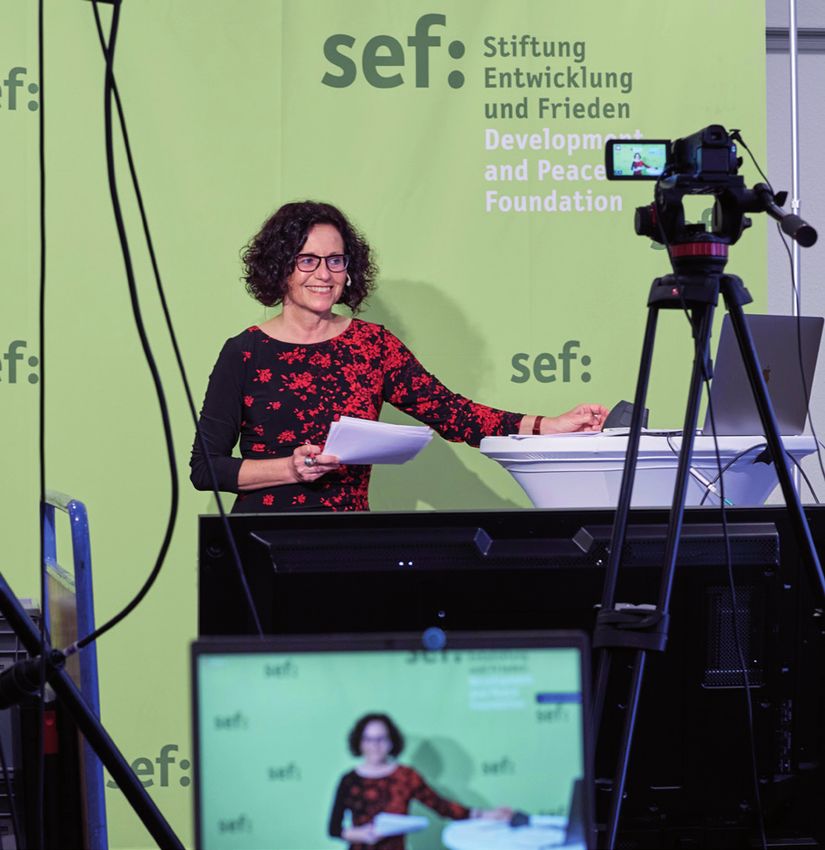
You can also read


