MAKING IT REAL GENUINE HUMAN ENCOUNTER IN OUR DIGITAL WORLD - SOCIAL JUSTICE STATEMENT 2019-20 - Australian ...
←
→
Page content transcription
If your browser does not render page correctly, please read the page content below

MAKING IT REAL
       GENUINE HUMAN ENCOUNTER IN
            OUR DIGITAL WORLD

SO C I A L   J U ST IC E       S TATEMENT                  20 19 –2 0

                  Australian Catholic Bishops Conference
FOREWORD
    F
            or those of us who are not ‘digital natives’, finding             as a community to ensure digital inclusion so that
            our way around the wide range of contemporary                     our neighbours are not left by the side of the digital
            digital platforms can be challenging. Fear of                     highway. It is also becoming increasingly clear that digital
            falling victim to hoaxes, fake news, privacy                      platforms require wise governance and that international
    breaches – or just wasting time scrolling endlessly                       cooperation is required to achieve this. The common good
    through social media feeds – can hold us back. Some                       requires intervention rather than leaving digital platforms
    of us find it difficult to learn new technologies, and                    to govern themselves.
    appreciate the help of younger people who know how
                                                                              In this Social Justice Statement, the Australian Bishops
    to make use of them. Listening to people in parishes, I
                                                                              invite you to reflect on how the internet has changed
    hear that often it is the desire to keep in touch with far
                                                                              the way we communicate, work, learn, and do business
    flung family and friends that draws us to engage with
                                                                              – and how we can contribute towards a more just and
    social media. Our parishes, schools and other Catholic
                                                                              loving digital world. We are called to ‘make real’ the love
    organisations have been quick to embrace the positive
                                                                              of God in the lives of our neighbours – both offline and
    possibilities for communication and connection, and Pope
                                                                              on. I commend this Statement and the care of our digital
    Francis himself encourages us to ‘boldly become citizens
                                                                              world to you.
    of the digital world’.
    People of all generations hunger for friendship and
    genuine human encounter because we are made for
    community. Our digital world enables us to be more
                                                                                                                 Most Rev. Terence J Brady DD
    connected than ever before, but sadly it can also be a
                                                                                                                 Delegate for Social Justice
    place of manipulation, exploitation and violence. This
                                                                                                                 Bishops Commission for
    too calls us to active citizenship because, at their heart,
                                                                                                                 Social Justice - Mission and
    these problems are not technological, but rather moral.
                                                                                                                 Service
    We can choose how we behave online, and we can
    collectively shape the online world, building a more just
    and loving online neighbourhood.
    For example, as more and more essential services
    such as banking move online, we need to act together

        The Australian Catholic Bishops Conference thanks those involved in the drafting of the Social Justice Statement for 2019–2020 including
       Dr Kimberley Doyle, Matthew Howard, Fr Peter Smith and John Ferguson with the assistance of the Australian Catholic Social Justice Council
                                                         and Catholic Social Services Victoria.
                                                     Editors: John Ferguson and Dr Sandie Cornish.
                                   Typesetting and page make-up: Project X Graphics. Printing: Imagination Graphics.
                                                 Cover images: shutterstock/KAMPUS & iStock/loops7
                                                     ©Australian Catholic Bishops Conference 2019
                                             ISBN: 978-0-6483727-3-8 (print); 978-0-6483727-4-5 (online).
        An electronic version of this Statement is available on the Australian Catholic Bishops Conference website at www.catholic.org.au and the
                                            Office for Social Justice website at www.socialjustice.catholic.org.au

                        Australian Catholic Bishops Conference
                        The Australian Catholic Bishops Conference is the permanent assembly of the bishops
                        of our nation and the body through which they act together in carrying out the
                        Church’s mission at a national level. The ACBC website at www.catholic.org.au gives a
                        full list of Bishops Conference commissions as well as statements and other items of
                        news and interest.

2          S O C I A L J U S T I C E S TAT E M E N T 2 0 1 9 –2 0 2 0
MAKING IT REAL
GENUINE HUMAN ENCOUNTER IN OUR DIGITAL WORLD

                                                    Anxious Lawyer
                                                     Today 12:36pm
      Master, what must I do to inherit eternal life?

                                         What is written in the Law? What is your reading of it?

      You must love the Lord your God with all your heart, with all your soul, with all your
      strength, and with all your mind, and your neighbour as yourself.

                                         You have answered right, do this and life is yours.

                                                                                                               Luke 10:25-28

T
      he lawyer’s challenge sounds a lot like some of the online discussions that take place on Facebook or Twitter.
      Often the aim is to undercut an opponent, to win an argument or gain the approval of those who are gathered
      online. It seems the lawyer was more interested in tripping Jesus up in the presence of the disciples than
      he was in the subject of eternal life. Jesus goes to the heart of the matter, drawing the lawyer to the great
commandment to love our God and our neighbour.
‘And who is my neighbour?’ the lawyer asks. Jesus makes his answer real in the parable of the Good Samaritan. It
is not the priest or the Levite who come to the aid of the man dying at the side of the road. They pass by. It is the
Samaritan who breaks down all divisions and tends to the wounded man and sees him back to health.

                                                          Jesus
                                                     Today 12:45pm

              Which of these three, do you think, proved himself a neighbour to the man who
              fell into the bandits’ hands?

     The one who showed pity towards him.

                                                                      Go, and do the same yourself.

                                                                                                               Luke 10:36-37

Jesus does not give a long list of rules and regulations, or a customised etiquette for how we should behave towards
one another. He calls us first to something deeper – a way of living and a presence in this world that brings God’s love
to each and every person we meet.
The hallmark of our discipleship can be seen in how we make that love real in our relationships, how we serve our most
vulnerable sisters and brothers, and how we break down divisions that undermine human dignity and the solidarity of
our communities.
Where do we encounter our neighbour? Increasingly it is online.

                                                                  S O C I A L J U S T I C E S TA T E M E N T 2 0 1 9 – 2 0 2 0   3
M A K I N G                  I T   R E A L                      -    G E N U I N E              H U M A N

                                                                                      Pope Francis has often spoken of the great potential
                                                                                      for ‘genuine human encounter’ in this space:
                                                                                         Good communication helps us to grow closer,
                                                                                         to know one another better, and ultimately, to
                                                                                         grow in unity ... Media can help us greatly in
                                                                                         this, especially nowadays, when the networks of
                                                                                         human communication have made unprecedented
                                                                                         advances. The internet, in particular, offers
                                                                                         immense possibilities for encounter and solidarity.
                                                                                         This is something truly good, a gift from God.3
                                                                                      He has also warned of those elements of our digital
                                                                                      world that are harmful – information overload;
                                                                                      social isolation; marginalisation of the vulnerable;

                                                                      iStock/alexsl
                                                                                      consumerism and fake news.
                                                                                         Whenever communication is primarily aimed at
                                                                                         promoting consumption or manipulating others,
         This year marks the 30th anniversary of the World
                                                                                         we are dealing with a form of violent aggression
         Wide Web. The Web gave us access to the internet
                                                                                         like that suffered by the man in the parable, who
         and revolutionised the way we communicate, work
                                                                                         was beaten by the robbers and left abandoned
         and learn, do business, seek entertainment and
                                                                                         by the side of the road ... It is not enough to
         socialise. It is hard to believe that MySpace was
                                                                                         be passersby on the digital highway, simply
         launched a little over 15 years ago, with Facebook,
                                                                                         ‘connected’; connections need to grow into true
         Twitter, YouTube, Instagram, and others following.
                                                                                         encounters.4
         Half of the world’s population is now online. Over 4.3
                                                                                      A vital step to realising this encounter is to ask
         billion people are using the internet and 3.5 billion are
                                                                                      ourselves what kind of ‘digital highway’ we are
         social media users. Here in Australia, connectivity has
                                                                                      on. Just as we would not accept a highway built of
         also grown rapidly, with over 20 million people on the
                                                                                      rubble, that leads us nowhere we want to go, so too
         internet and 18 million using social media.1
                                                                                      we cannot accept a digital world designed to exploit
         The internet and social networking platforms                                 our weaknesses and bring out the worst in people.
         encompass so many aspects of our lives that it is                            It is clear that digital platforms are built to make a
         virtually impossible to imagine a world that isn’t online.                   profit. But where they operate to maximise profit by
                                                                                      undermining human dignity and the common good, we
                                                                                      must question their structure, ownership and goals.
    DID YOU KNOW?                                                                     Every social media user, community, and political or
    • every day, over one million people worldwide are                                corporate leader is called to do more to build online
      coming online for the first time                                                neighbourhoods ordered towards genuine human
    • the world’s average internet user spends over six                               encounter.
      and a half hours online each day
                                                                                      And every member of the Church has a distinct role
    • the top three websites visited are Google, YouTube                              to play. Pope Francis is calling us to ‘boldly become
      and Facebook                                                                    citizens of the digital world’, with the image of the
    • on average, social media users spend over two hours                             Good Samaritan as our inspiration. We are called not
      on social media platforms each day                                              only to love our neighbour, but to bring the love of
    • Facebook has 2.3 billion active user accounts;                                  God to the new global neighbourhood.
      YouTube, 1.9 billion; WhatsApp, 1.5 billion;
      Instagram, 1 billion
    • five billion people use mobile phones2

4        S O C I A L J U S T I C E S TAT E M E N T 2 0 1 9 –2 0 2 0
E N C O U N T E R               I N       O U R         D I G I T A L              W O R L D

     LOVE YOUR
          NEIGHBOUR
          The digital world is a public square, a meeting place where we can either encourage or
          demean one another, engage in meaningful discussion or unfair attacks… Access to
          digital networks entails a responsibility for our neighbour whom we do not see but who
          is nonetheless real and has a dignity which must be respected… The encounter between
          communication and mercy will be fruitful to the degree that it generates a closeness
          which cares, comforts, heals, accompanies and celebrates.5 Pope Francis

     W
                     ithin twelve hours of its 2016 launch,
                     the Pope’s Instagram account
                                                                        HUMAN DIGNITY
                     amassed one million followers. That
                                                                        The essential question is whether the current
                     was record time but it still pales
                                                                        information system is contributing to the betterment
     next to the 18 million who follow him on Twitter.
                                                                        of the human person; that is, does it make people
     Pope Francis has strongly advocated for the Church
                                                                        more spiritually mature, more aware of the dignity
     to embrace digital media as spaces for dialogue,
                                                                        of their humanity, more responsible or more open to
     evangelisation, and authentic community.6
                                                                        others, in particular to the neediest and the weakest.11
     Here in Australia, the Church is also embracing the
     digital transformation. An increasing number of
     bishops and religious leaders have a regular social           The new digital media cannot be a place where
     media presence. And there is a proliferation of Catholic      anything goes. They cannot be seen as neutral or
     blogs, videos and online publications. We are finding         ‘unaffected by any moral considerations’.12 Whenever
     ways to harness the possibilities for evangelisation          we engage online we ought to be seeking both
     and online formation, especially for young people.            to create and to receive an authentic culture of
                                                                   encounter; an encounter that never loses sight of
     There is a role here for the Church to accompany this
                                                                   the human dignity in ourselves and those seemingly
     generation of ‘digital natives’ as they grapple with
                                                                   anonymous people on the other side of our screens.
     how to use and manage the online world in healthy,
     life-giving ways.7 Young people also show us the              We all share a responsibility to hold ourselves and the
     many ways social media can be harnessed.                      platforms we use to this standard.
     There are immense benefits for humanity: staying
     connected with family and friends – sometimes                 A CULTURE OF ISOLATION AND
     over vast distances; meeting people from diverse              OBJECTIFICATION
     cultures and geographies; educational and economic
                                                                   Far too often, the digital world has become a place of
     opportunities for previously excluded groups; and
                                                                   hatred. Digital technologies, especially social media,
     greater participation in political life.8 Digital platforms
                                                                   provide a perfect platform for a range of behaviours
     have a role to call communities to action in the face
                                                                   that are offensive to human dignity.
     of natural disasters, humanitarian crises, and human
     rights abuses.9                                               One of these includes the widespread sexual
                                                                   objectification, exploitation and trafficking of
     Yet, for all its present and potential use for good,
                                                                   women and children and the related production and
     the ‘web can be a place of loneliness, manipulation,
                                                                   dissemination of pornography.13 Recent studies have
     exploitation and violence’.10

                                                                         S O C I A L J U S T I C E S TA T E M E N T 2 0 1 9 – 2 0 2 0   5
M A K I N G                  I T   R E A L       -     G E N U I N E               H U M A N

    iStock/Marcos Calvo

                          shown that three quarters of young Australian women           Bullying in Australian schools costs the economy
                          have experienced online harassment. For over 40 per           $2.3 billion a year, but the more frightening statistic
                          cent, the abuse was misogynistic, and for 20 per cent         is that over 20 per cent of Australians aged under
                          it included threats of sexual and physical violence.14        18 have experienced online bullying. Tragically, the
                                                                                        relentlessness of cyberbullying is sometimes so
                          The data is not much better for teenagers and
                                                                                        extreme that it drives victims to suicide.18
                          children. Fifteen per cent of teens are approached
                          by strangers online each day and as many as 14 per
                                                                                             I was sent loads of horrible messages on
                          cent of households with children are exposed to
                                                                                             several social media accounts, sent death
                          inappropriate material.15
                                                                                             threats with people telling me to kill myself.
                          The proliferation of pornography online is a serious               I also received phone calls and text messages
                          concern. There is more likelihood of children being                attacking me. Furthermore, they were
                          exposed to it at a younger age due to the high                     standing outside my house being abusive
                          number of pornographic websites and young people’s                 and saying horrible things to me. Fake
                          high levels of internet use. The use of pornography                accounts were made using my name to be
                          has a host of serious consequences, such as poor                   horrible to others and to me.
                          mental health and earlier, riskier and aggressive                       A young woman, 13, bullied19
                          sexual behaviour. It impedes the maturation of
                          the individual’s sexual identity and damages                  Even without the bullying and its devastating
                          relationships, marriages and families.                        effects, an overreliance or even addiction to social
                                                                                        media is having harmful effects and contributing to
                          Access to such a highly sexualised world, one very
                                                                                        poorer mental health. ‘Fear of missing out’ (FOMO),
                          often based on violence and humiliation, is reshaping
                                                                                        ‘compare and despair’, and ‘Facebook depression’ are
                          how we understand intimacy and respectful
                                                                                        now common terms.
                          relationships. Fundamentally, human dignity is
                          undermined where the person is reduced to an object           A recent psychological study has shown, for the first
                          for trade and sexual gratification.16                         time, a causal link between the use of social media
                                                                                        and lower rates of wellbeing. It examined Facebook,
                          Cyberbullying reveals another way in which digital
                                                                                        Snapchat and Instagram and found that, along
                          technology is used without regard for human dignity.
                                                                                        with the displacement of real offline relationships,
                          During the recent Synod on Young People, the Faith
                                                                                        high levels of social comparison on these platforms
                          and Vocational Discernment, participants from
                                                                                        contributed significantly to feelings of isolation and
                          around the world raised this concern.
                                                                                        depression. Limiting time online to 30 minutes a day
                             Often, young people tend to separate their                 reduced the symptoms dramatically.20
                             behaviour into online and offline environments …
                                                                                        While the digital platforms themselves have
                             Online relationships can become inhuman. Digital
                                                                                        significant responsibility in addressing all of these
                             spaces blind us to the vulnerability of another
                                                                                        areas where the dignity of the person is undermined,
                             human being and impede our self-reflection.17
                                                                                        we each remain responsible for our online choices.

6                         S O C I A L J U S T I C E S TAT E M E N T 2 0 1 9 –2 0 2 0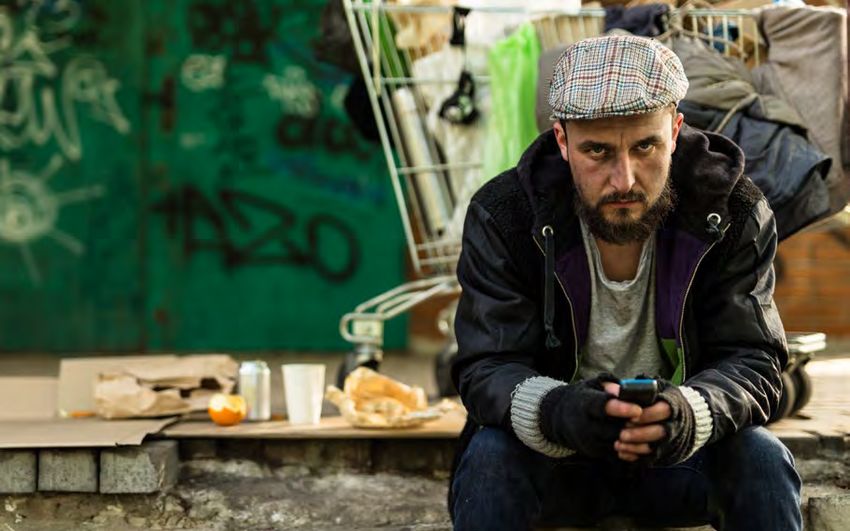
E N C O U N T E R              I N      O U R          D I G I T A L            W O R L D

     We can either ‘grow in sympathy and compassion              now more connected than ever. However, almost 1.8
     or become isolated in a narcissistic, self-referential      million Australian households are still not connected.
     world of stimuli with near-narcotic effects’.21             The fact that the number of people using the internet
                                                                 has not grown over recent years suggests that digital
     When we don’t choose to see the real people, our
                                                                 inclusion is concentrating, not expanding.22
     neighbours whom God calls us to love, who live on
     the other side of our posts, tweets and photos, we          Those who most need access are missing out. Age,
     risk accepting not just bad behaviour but a culture of      income, geography, cultural background, and having
     isolation with real-world consequences for our most         a disability are just some of the factors behind
     vulnerable.                                                 this divide. Aboriginal and Torres Strait Islander
                                                                 peoples, both in urban and rural areas face lower
     THE GREAT DIGITAL DIVIDE                                    rates of digital inclusion. Older people face higher
                                                                 rates of exclusion than the young, largely driven
     Just as digital technology has transformed the way          by differences in digital abilities. Many low income
     we interact personally, it is also revolutionising the      families and people who are long-term unemployed
     way we interact with the state and some essential           are without the technology that is now essential for
     services.                                                   accessing basic services and finding work.23
     Digital or ‘e-government’ services have become              Access to the internet is particularly important when
     increasingly commonplace over the last decade.              people are in crisis; when they are most vulnerable
     They have made it simpler and more convenient for           to hardship and their personal security is at risk.
     many of us to access support from the state and             Those experiencing homelessness or families fleeing
     community sector. However, the gains in technology          domestic violence need technology capable of
     have not been shared equitably. Various kinds of            connecting with essential and emergency services.
     exclusion from the digital world have resulted in a
     ‘digital divide’ which is compounding the real-world            The phone card is important because being
     marginalisation of too many people.                             in a position where life can get pretty
     This divide means not being able to access, afford or           tough, I just thought that in the event of an
     effectively use digital technologies. Nationally, digital       emergency I could give my friend a call or my
     inclusion improved from 2014 to 2018 with a steady              family a call. It’s just having that safety net.
     increase in internet access and devices so that we are               A young man who is homeless24
                                                                                                                                     shutterstock/Vitaliipixels

                                                                      S O C I A L J U S T I C E S TA T E M E N T 2 0 1 9 – 2 0 2 0                                7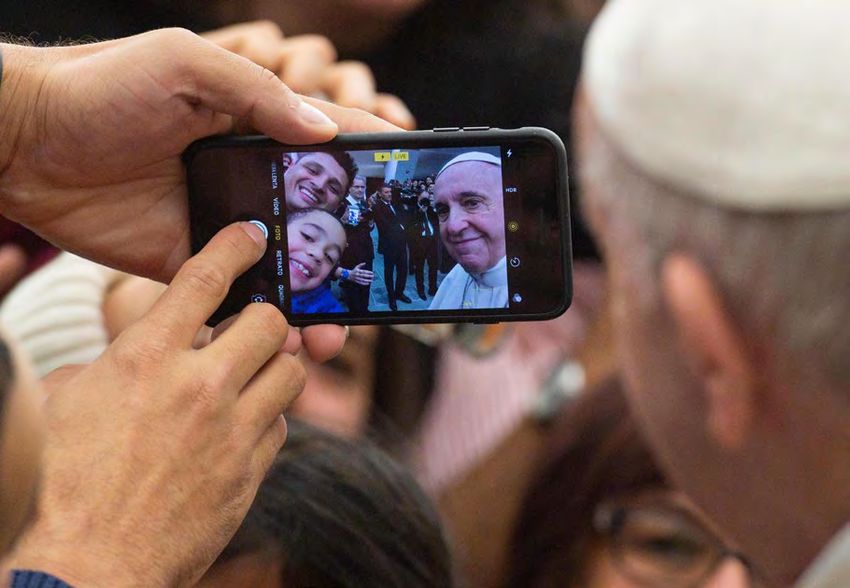
M A K I N G                  I T   R E A L        -    G E N U I N E              H U M A N

                                      It is clear that social divisions are being replicated         Just as in our social media interactions and
                                      online. More worryingly, as essential services                 behaviours, the fundamental question is whether
                                      continue to shift online, digital inclusion becomes            we will choose to use digital technology to make
                                      mandatory for basic participation in society. It should        faceless, nameless and soulless the human beings
                                      therefore be considered a human right.25 This is               on the other side of our devices or whether we will
                                      especially important in the context of e-government,           choose to authentically encounter and honour their
                                      where the welfare of the most vulnerable is at stake.          humanity, and our own.
                                      Because online services usually have improved                  This requires entering into relationship with each
                                      efficiencies for government, face-to-face services             other and not turning away from suffering and
                                      are shrinking. This not only forces more interaction           injustice by consenting to a digital world built on
                                      online, but reduces previously relational services. It         anonymity and denial of our humanity. Any technical
                                      is unlikely that interpersonal services for people with        solutions will only ever be as good as the culture and
                                      multiple and complex needs is best delivered digitally.        values we decide they are going to serve.
                                                                                                     In his Apostolic Exhortation, Christus Vivit, Pope
    COMMON GOOD                                                                                      Francis recognises the important role of young people
    The common good therefore involves all members                                                   entering the virtual world ‘as if setting foot on an
    of society, no one is exempt from cooperating,                                                   undiscovered global continent’. They have a vital role
    according to each one’s possibilities, in attaining it and                                       to bridge the ‘real’ and the ‘virtual’.
    developing it. The common good must be served in its                                                Young people today are the first to have to effect
    fullness, not according to reductionist visions that are                                            this synthesis between what is personal, what is
    subordinated by certain people to their own advantage                                               distinctive to their respective cultures, and what
    … it requires the constant ability and effort to seek the                                           is global. This means they must find ways to
    good of others as though it were one’s own good.26                                                  pass from virtual contact to good and healthy
                                                                                                        communication.27

                                      It is tempting to think that the digital divide can            The child who is bullied, the woman who is
                                      be solved with only technical solutions. But digital           objectified, the poor who are denied resources and
                                      exclusion is primarily a moral and social problem. It          opportunities the majority take for granted – they
                                      requires us to ask how much we value the poor and              are waiting for the neighbourliness that bridges the
                                      marginalised and whether we want a community                   divide; the friendship of the Good Samaritan made
                                      built for the common good in which we recognise and            real in this virtual world.
                                      love each other as neighbours.
       shutterstock/Photographee.eu

8                                     S O C I A L J U S T I C E S TAT E M E N T 2 0 1 9 –2 0 2 0
E N C O U N T E R              I N      O U R         D I G I T A L          W O R L D

     LOVE YOUR
     NEIGHBOURHOOD
          If the Internet represents an extraordinary possibility of access to knowledge, it is also
          true that it has proven to be one of the areas most exposed to disinformation and to the
          conscious and targeted distortion of facts and interpersonal relationships, which are often
          used to discredit. We need to recognise how social networks, on the one hand, help us to
          better connect, rediscover, and assist one another, but on the other, lend themselves to
          the manipulation of personal data, aimed at obtaining political or economic advantages,
          without due respect for the person and his or her rights.28 Pope Francis

     A
               s a Church we speak out strongly               using this new digital space to preach the Good News
               against the epidemics of cyberbullying,        and strive for justice and peace.
               pornography and sexting, and rightly so.
                                                              Unfortunately, ideologies antithetical to these values
               However, interpersonal relationships are
                                                              are able to use this space with the same efficiency. A
     not the only space where our attention is needed.
                                                              lack of understanding of what the platforms we are
     We must look at the structures of the platforms
                                                              engaged in are, at their core, has most users believing
     themselves.
                                                              they are partaking in a free and neutral technology
     In the parable of the Good Samaritan, Jesus              meant to serve as a social network. While these
     introduces us not only to the two central characters.    spaces do connect us in ways that were unimaginable
     As it is in all stories, he speaks of the context; the   a mere 25 years ago, they are not free or neutral.29
     road travelled, the powerful who walk by without
                                                              We are living in a time where millions of Australians
     assisting, and the resources and institutions that
                                                              are handing over their most intimate details to
     could make real change for people who are in need.
                                                              advertising brokers with little understanding of how
     We need to think about how we love our neighbour
                                                              this information is used. In those areas where the
     and how our love can shape the structures, processes
                                                              technology has reduced people’s personal lives to
     and institutions of our online neighbourhood.
                                                              data that is traded for profit or power, we cannot
     The digital landscape has the capability not only to     say that this is a space for an integral development
     reach, but to transform the lives of billions of users   that recognises the God-given dignity of each person
     around the world. This technology has been heralded      beyond a mere economic valuation.
     as a tool for democratisation and the common good.
     From the Arab Spring to the #MeToo movement,
     digital communication has challenged tyrants and              INTEGRAL HUMAN DEVELOPMENT
     provided a platform for solidarity and human rights.          In order to make society more human, more worthy
     More and more we are a global village where the joys          of the human person, love in social life – political,
     and hopes, griefs and anxieties of people around the          economic and cultural – must be given renewed
     world can become real to us.                                  value, becoming the constant and highest norm for
     The Church is no stranger to the changing means of            all activity… guaranteeing the common good and
     communications, as seen by the advent of Vatican              fostering integral human development: love ‘makes
     Radio in 1931; one of the first radio stations ever to        one see in neighbour another self’.30
     broadcast. Much like Vatican Radio, the Church is

                                                                   S O C I A L J U S T I C E S TA T E M E N T 2 0 1 9 – 2 0 2 0   9
M A K I N G                  I T   R E A L        -     G E N U I N E                 H U M A N

     iStock/goir

                   PROFIT PUT BEFORE PEOPLE                                      Advertising is big business. Last year, 2.8 billion
                                                                                 people purchased consumer goods online with a total
                   Most of us do not question the platforms we are               sales revenue of US$1.79 trillion.33 The top ten digital
                   on or why we are receiving the product for free.              firms have dominated online advertising over the
                   They are seen as essential services provided by               past two decades. Google and Facebook together
                   regulated entities that are to be trusted to act              have taken almost 75 per cent of total US digital
                   ethically. Perhaps this is why as few as six per cent         advertising of around $60 billion per annum.34 Here in
                   of Australians read all the privacy policies or terms of      Australia, of the $8 billion spent on online advertising
                   use of the online services they sign up to.31 There is a      in 2017 over half went to Google and Facebook.35
                   reason these products are free and reasons why they
                   need to be questioned.                                        This is a time of ‘information asymmetry’. The corporate
                                                                                 entities holding our data have swaths of information
                   Put simply, if you are not paying for the product, you        on individuals while the general population knows very
                   are the product.                                              little about those holding their data or their motives.36 It
                   The core business of social media platforms is to             is hard to talk about integral human development when
                   sell advertising and maximise profits. With massive           our most meaningful experiences, relationships, hopes
                   amounts of our data in the hands of advertisers or            and fears are monitored and traded to commercial
                   political campaigners, equipped with behavioural              advertisers or political campaigners.
                   science modelling, we can be directly targeted and            In order to maximise attention to these advertisers,
                   influenced in ways previously unthinkable.                    users must be engaged. The longer we are on the
                                                                                 platform the more advertising revenue is generated.
                        Facebook’s business model involves having                However, we must ask; to what lengths are these
                        people go to the site for social interaction,            corporations willing to go to maintain engagement,
                        only to be quietly subjected to an enormous              and how far is too far?
                        level of surveillance. The results of that
                        surveillance are used to fuel a sophisticated            When we search for information on platforms
                        and opaque system for narrowly targeting                 such as YouTube, we choose the subject and topic.
                        advertisements… by profiling us and then                 However, we do not choose what is recommended
                        selling our attention to advertisers, political          for us to view next. These related videos are chosen
                        actors and others. These are Facebook’s true             by algorithms designed to ensure we remain on the
                        customers, whom it works hard to please.                 platform generating revenue. Everything that is
                             Professor Zeynep Tufekci,                           clicked, liked, shared, purchased or commented upon
                             Techno-sociologist32                                is recorded as ‘signals’ of consumer preference. This
                                                                                 enables the platforms and their clients to target
                                                                                 products and ideas to users.37

10                 S O C I A L J U S T I C E S TAT E M E N T 2 0 1 9 –2 0 2 0
E N C O U N T E R I N O U R D I G I T A L W O R L D
The goal of the recommendation process is to people’s attention by appealing to stereotypes
promote content based on popularity, not truth. and common social prejudices, and exploiting
instantaneous emotions like anxiety, contempt,
Popularity and the degree to which anger and frustration’?39
information provokes outrage, confirmation
bias, or engagement are increasingly
important in driving its spread. The speed SOLIDARITY
and scale at which content ‘goes viral’ grows Solidarity highlights in a particular way the intrinsic social
exponentially, regardless of whether or not nature of the human person, the equality of all in dignity
the information it contains is true. and rights and the common path of individuals and
Philip Howard & Samantha Bradshaw – peoples towards an ever more committed unity.40
Social media and internet scholars38
This is what researchers have dubbed ‘computational In this virtual neighbourhood it is important to
propaganda’, a factor in online radicalisation. It is encounter our neighbours through authentic
about more than just seeing things that are not true. communications. In order for us as Church to follow
the authentic path in this space, we will need to know
UNDERMINING SOLIDARITY AND if we are communicating with a person on the other
side of the screen, not a computer program.
DEMOCRACY
Our digital community is falling prey to automated
Pushing users to more extreme positions and programs designed to interact with us while behaving
promoting fake news and conspiracy theories sells. like a human. In broad strokes these programs are
But this is at odds with human solidarity. We are known as bots. When they are created as a means
called to stand as one human family regardless of our of amplifying digital misinformation they become a
differences. How can we build online communities real threat to democracies. Twitter bots played a role
rooted in the principle of solidarity when the in the tweeting and retweeting of falsehoods and
platforms themselves promote content that ‘grasps misinformation during the 2016 US election.41
iStock/metamorworks
S O C I A L J U S T I C E S TA T E M E N T 2 0 1 9 – 2 0 2 0 11M A K I N G I T R E A L - G E N U I N E H U M A N
shutterstock/DeymosHR
In an industry that is facing a growing backlash This technology is nascent. Like many new
over the real impact of disinformation, electoral technologies or scientific findings it takes time for
interference and data misuse, it is apparent to us to educate ourselves and mobilise to take action.
many that social media networks need some form We need only look to the regulatory actions we have
of governmental accountability. Unfortunately, taken in the past 50 years for examples of how our
some nation states are doing the opposite and human solidarity has made the world a better place.
either ceding more of their responsibilities to tech Cigarettes now have warning labels, cars now have
monopolies or failing to adequately protect their seatbelts, the ozone layer is healing. These changes
information systems from malicious cyber activity.42 were brought about by concerted efforts and acts of
solidarity, and we are thankful for that.
These tech companies are responsible to their
shareholders, first and foremost. This does not mean Our society is now asking questions about how
they cannot be good corporate citizens. Without we use the technology. Schools are implementing
accountability, however, we cannot expect that they education programmes, legislators are questioning
will work for the common good. Should we rely on what regulatory controls need to be placed on digital
trust when the common good is in conflict with platforms and even the industry is questioning
corporate profits? its own responsibility. A global IT company has
established the first ever Office of Ethical and
• Children and teens are particularly sensitive to
Humane Use of Technology.46 Increasingly we are
the dopamine cravings social media and mobile
seeing governments, markets and civil society
devices offer.43 Who is responsible to bring this to
recognise the deleterious effects abuse of the
the attention of the consumer and parents?
online world can have and the initiatives required to
• When a major platform allows the likes of ameliorate the harm.
Cambridge Analytica to mine the data of 87
This is our digital common home, and the principles we
million accounts to influence an election, we
find in Catholic Social Teaching and the words of Pope
cannot be sure our own data and democracy are
Francis can help guide us to a more just digital space.
secure.44
• And, when a white supremacist walks into a
Christchurch Mosque and broadcasts on social
media the killing of 50 of our Muslim brothers
and sisters, it becomes clearer that these
platforms need to be held to account.45
It would be easy to read the criticism of these
platforms and their scope with a defeatist lens;
however, we are people of hope.
12 S O C I A L J U S T I C E S TAT E M E N T 2 0 1 9 –2 0 2 0E N C O U N T E R I N O U R D I G I T A L W O R L D
A CALL TO ACTION
I would like to encourage everyone to engage in constructive forms of communication that
reject prejudice towards others and foster a culture of encounter, helping all of us to view
the world around us with realism and trust.47 Pope Francis
W
e are called not just to be inhabitants of this new digital world, but active citizens shaping it.
We all have a role to play in rejecting hatred, divisions and falsehoods. More than this, we have
a duty to foster a neighbourhood that promotes all of the human attributes and social values
that lend themselves to genuine human encounter – love, understanding, beauty, goodness,
truth and trustworthiness, joy and hope.48
THE CALL TO EVERY USER
Make your online presence one of dignity and respect.
Always remember that each person we communicate with on social media is a real person – made in the image
and likeness of God. Be careful not to access or post anything that is demeaning, inappropriate or exploitative.
Do not be dismissive, judgemental or aggressive in your conversation.
As one social media author advocates: ‘Tweet others as you would wish to be tweeted’.49
Be present to others in the real and virtual worlds.
The speed and brevity of communication on the platforms can be open to misinterpretation and a superficiality
that makes others feel that they have not been truly heard or accepted. Similarly, excessive time spent on social
media can deprive families and friends of your ‘real’ presence in their lives.
Limit the time you spend on devices. A ‘digital detox’ is important for your health and wellbeing. Times of
abstinence and reflection fit well with the Seasons of Lent and Advent.
Take care of yourself and others online.
Unfortunately, cyberbullying, trolling and the objectification of others is not an uncommon experience. We
cannot stand by when another is denigrated or threatened. We can call out bad behaviour and stand by
the victim. This can require diplomacy. Be mindful that sometimes abusive behaviour is so irrational and
unrelenting, the best option is to disengage.
Discuss experiences of cyberbullying with your family, friends or school. Report abuse and access helpful
information from the eSafety Commissioner (esafety.gov.au).
S O C I A L J U S T I C E S TA T E M E N T 2 0 1 9 – 2 0 2 0 13M A K I N G I T R E A L - G E N U I N E H U M A N
iStock/VioletaStoimenova
THE CALL ON COMMUNITIES
Every community should promote digital literacy.
Digital technologies are so prevalent and increasingly necessary in our day to day lives. People of all ages need
the know-how to access and navigate the online world. They need information on the operation of platforms
and how personal data is used. Education is key to being aware of the great possibilities but also the pitfalls.
Apathy or resignation to the current state of play is not an option.
Through greater awareness, ‘we will employ technology wisely rather than letting ourselves be dominated by it.’50
We cannot leave our sisters and brothers behind.
Too many vulnerable Australians remain offline and without the means to access essential services and
opportunities. They are excluded because of problems of affordability, gaps in access, or low digital literacy.
There is a role for governments to guarantee internet access, technological devices and user skills as a basic
human right. Interpersonal support must remain where access is difficult or technology cannot meet complex
human need.
The local community is a place to make the virtual real.
Social media platforms are venues not just for socialising, but for raising awareness of local issues, becoming
politically engaged, and harnessing the power of crowdsourcing. This engagement can be limited where it does
not cross over to the physical community. Advocacy for justice can be reduced to e-petitions, and civic affairs to
mere ‘clicktivism’.51
Pope Francis is encouraging young people to ‘find ways to pass from virtual contact to good and healthy
communication’.52 Local government, churches and community groups have a vital role in offering a physical
space where the online community is made welcome and supported face-to-face.
14 S O C I A L J U S T I C E S TAT E M E N T 2 0 1 9 –2 0 2 0E N C O U N T E R I N O U R D I G I T A L W O R L D
THE CALL ON POLITICAL AND INDUSTRIAL LEADERS
We must protect the personal data of citizens.
There is a growing awareness that personal data is subject to corporate surveillance and misuse. Research
shows nine out of ten Australians using platforms want to know with whom their information is being shared.
They want the platforms to be open about how they use data and to have the ability to opt out of having
certain information collected.
We can join the growing call for regulation of platform data gathering which increases notification and
consumer consent requirements, with external audits and penalties for breaches of privacy.53
We call for transparency and accountability in all online systems.
Governments around the world need to be much more coordinated in working with tech corporations. Civil
society and user organisations also need to have a role in the governance of the internet and platforms,
ensuring basic standards are not undermined by the drive for profit and market domination.
Major corporations need to open their algorithms, data governance and business models to the communities in
which they operate.54
Truth and trustworthiness must be guaranteed.
Honesty and trust are fundamental to the operation of our social, economic and political institutions. Half-
truths, lies and slander gone viral can harm the solidarity of a people, particularly during important periods like
election campaigns.
Our right to truthful information and trustworthy broadcasting requires greater regulation of digital platforms,
with sanctions for the spread of fake, divisive and offensive content. Governments have a responsibility to
support robust and independent journalism, particularly through the public broadcaster.55
Action at all these levels – by users, communities and leaders in industry and government – is needed
to infuse the digital world with a realism and trust that allows for genuine human encounter.
iStock/Ildo Frazao
S O C I A L J U S T I C E S TA T E M E N T 2 0 1 9 – 2 0 2 0 15M A K I N G I T R E A L - G E N U I N E H U M A N
THE CALL TO US
AS CHURCH
G
enuine relationships are based on truth and work across cyber space without the need for face-to-
develop over time. They are not fleeting face contact. Even when forced out of our private cars
or characterised by falsehood or discord. onto public transport, the power of the device allows
Relationships that are truly human recognise us to cocoon ourselves from fellow travellers.
the dignity of the other, made in the image and
There is a risk that our cities, towns and suburbs are
likeness of God. They foster an integral development
moving from being communities to a collection of
beyond immediate wants and needs to build up the
individuals.
person socially, culturally and spiritually. True encounter
makes real the love of God in the life of our neighbour. Our Church has an important role to play in building
There can be nothing that isolates or divides. the city of God in reality and online.
We live in an increasingly ‘private’ world, which Keeping the doors of our churches open also means
mitigates against human interaction in the real world. keeping them open in the digital environment so
Entertainment, travel and even our working lives are that people, whatever their situation in life, can
becoming more isolating. Why go to the theatre when enter, and so that the Gospel can go out to reach
a movie can be streamed at home? Why go out to a everyone. We are called to show that the Church is
restaurant when a myriad of choices can be delivered the home of all.56
with the click of a mouse? Technology allows us to
EPA/Vatican Media
16 S O C I A L J U S T I C E S TAT E M E N T 2 0 1 9 –2 0 2 0E N C O U N T E R I N O U R D I G I T A L W O R L D
iStock/AndreyPopov
God’s encounter with creation is incarnational; a key challenge for the people of God. It is in these
primarily in the person of Jesus. Jesus, the God who areas that we are called to draw near and reach out to
became man gathered children in his arms, touched those who are devalued and distressed.
and healed the leper, the blind, the sick and the broken.
Now more than ever we have the opportunity to be
This incarnational presence continues sacramentally in Samaritans to a robbed and beaten world. We have
the Church as we gather to hear God’s Word and receive the ability to connect with others in ways never
the Eucharist. We are anointed with oil, sprinkled with dreamed of and to use that ability to bandage the
water and have ashes deposited on our foreheads. Even wounded, lift them up and lead them to a safe place
the best of digital encounters cannot replace the Real in both the online and real world.
Presence of Christ, given and received sacramentally, or
Jesus’ response to the lawyer – ‘Go, and do the same’
the real presence of human encounter.
– are the words he speaks to us today.
We have highlighted the areas of the online world
As a community of faith, let us make real the love of
where the vulnerable are bullied, people are excluded,
God in our virtual world.
profits are put before people and misinformation
undermines the solidarity of communities. Here lies
S O C I A L J U S T I C E S TA T E M E N T 2 0 1 9 – 2 0 2 0 17M A K I N G I T R E A L
A PRAYER FROM POPE FRANCIS 57
Lord, make us instruments of your peace.
Help us to recognise the evil latent in a communication
that does not build communion.
Help us to remove the venom from our judgements.
Help us to speak about others as our brothers and
sisters.
You are faithful and trustworthy; may our words be
seeds of goodness for the world:
where there is shouting, let us practise listening;
where there is confusion, let us inspire harmony;
where there is ambiguity, let us bring clarity;
where there is exclusion, let us offer solidarity;
where there is sensationalism, let us use sobriety;
where there is superficiality, let us raise real
questions;
where there is prejudice, let us awaken trust;
where there is hostility, let us bring respect;
AP/Alessandra Tarantino
where there is falsehood, let us bring truth.
Amen.
Become an ACSJC Subscriber
The Australian Catholic Social Justice Council subscription service includes:
• Justice Trends – quarterly newsletter addressing current Australian and world political issues
• Catholic Social Justice Series – offering theological and social thought
• Position Papers and Discussion Guides – addressing critical social justice issues
• The Australian Catholic bishops’ annual Social Justice Statement
• Prayer Card and Ten Steps Leaflet
• Social Justice Calendar
Cost: $30 a year (inc GST)
For further information contact the Office for Social Justice:
PO Box 7246, Alexandria, NSW 2015
Ph: (02) 8306 3499 • Fax: (02) 8306 3498
Email: admin@acsjc.org.au • Web: www.socialjustice.catholic.org.au
18 S O C I A L J U S T I C E S TAT E M E N T 2 0 1 9 –2 0 2 0NOTES
1 We Are Social & Hootsuite, Digital 2019 Australia, accessed May 1, 2019a, https:// 27 Pope Francis, Christus Vivit, Post-Synodal Apostolic Exhortation to Young People
wearesocial.com/au/digital-2019-australia, 6, 15. and to the entire People of God, Vatican City: Libreria Editrice Vaticana, 2019, n.90.
2 We Are Social & Hootsuite, Digital 2019: Global internet use accelerates, accessed 28 Pope Francis, We Are Members One of Another: From social network communities
May 1, 2019b, https://wearesocial.com/au/blog/2019/01/digital-2019-global- to the human community, Message for the 53rd World Communications Day,
internet-use-accelerates, 2, 5, 7, 9–10. Vatican City: Libreria Editrice Vaticana, 2019.
3 Pope Francis, Communication at the Service of an Authentic Culture of Encounter, 29 Anderson & Rainie, 2018, 55–60.
Message for the 48th World Communications Day, Vatican City: Libreria Editrice
Vaticana, 2014. 30 Pontifical Council for Justice and Peace, 2004, n.582
4 Ibid. 31 Phuong Nguyen & Lauren Solomon, Consumer data and the digital economy:
Emerging issues in data collection, use and sharing, Melbourne: Consumer Policy
5 Pope Francis, Communication and Mercy: A Fruitful Encounter, Message for the
Research Centre, 2018, 31.
50th World Communications Day, Vatican City: Libreria Editrice Vaticana, 2016.
6 Jonathan Crowl, ‘How the Vatican’s Social Media Strategy Became a Surprise 32 Zeynep Tufekci, ‘YouTube, the Great Radicalizer’, The New York Times, March 10,
Success Story’, Content Standard, June 12, 2018; Michael J O’Loughlin, ‘Following 2018.
Francis: The Pope’s Social Media Ministry Takes Off’, America Magazine, December 33 We Are Social & Hootsuite, 2019b, 14.
29, 2017.
34 Matthew Hindman, The Internet Trap: How the Digital Economy Builds Monopolies
7 XV Ordinary General Assembly of the Synod of Bishops, Instrumentum Laboris: and Undermines Democracy, New Jersey: Princeton University Press, 2018, 4.
Young People, the Faith and Vocational Discernment, Vatican City: Libreria Editrice
35 Australian Competition & Consumer Commission, Digital Platforms Inquiry:
Vaticana, 2018, nn.160–161; Michael J O’Loughlin, ‘Can the Catholic Church Help
Young People Figure Out How to Use Social Media Online’, America Magazine, April Premininary Report, Canberra: Commonwealth of Australia, 2018, 3, 38–39.
6, 2018. 36 Ibid, 8; Nathan Newman, How Big Data Enables Economic Harm to Consumers,
8 Janna Anderson & Lee Rainie, The Future of Well-Being in a Tech-Saturated Especially to Low-Income and Other Vulnerable Sectors of the Population,
World, Washington: Pew Research Centre, 2018, 5–6, 19–29; Pontifical Council for Submission to the ‘Big Data: A Tool for Inclusion or Exclusion?’ workshop,
Social Communications, Ethics in Communications, Vatican City: Libreria Editrice Washington: U.S. Federal Trade Commission, 2014.
Vaticana, 2000, nn.8–12; Grace Jennings-Edquist, ‘How Technology Can Help 37 Wael Ghonim, Transparency: What’s Gone Wrong with Social Media and What Can
Combat Loneliness and Social Isolation’, ABC Life, December 3, 2018; Joy Adan, We Do About It?, Shorenstein Centre on Media, Politics and Public Policy, Harvard
‘Social Media for Catholics’, Catholic Outlook, December 17, 2018. University: Harvard Kennedy School, 2018.
9 United Nations, E-Government Survey 2018: Gearing E-Government to support
38 Philip Howard & Samantha Bradshaw, Why Does Junk Media Spread so Quickly
transformation towards sustainable and resilient societies, New York: United
Across Social Media? Algorithms, advertising and exposure in public life, Miami:
Nations, 2018, 16–17, 20, 52–53; Andrew Skuse & Tait Brimacombe, Social
Knight Foundation, 2018, 11.
Networking, Social Media and Complex Emergencies, Adelaide: The University of
Adelaide, 2014, 13–14, 28–33, 43–48. 39 Pope Francis, The truth will set you free: Fake news and journalism for peace,
10 XV Ordinary General Assembly of the Synod of Bishops, 2018, nn.34–35. Message for the 52nd World Communications Day, Vatican City: Libreria Editrice
Vaticana, 2018.
11 Pontifical Council for Justice and Peace, Compendium of the Social Doctrine of the
Church, Vatican City: Libreria Editrice Vaticana, 2004, n.415. 40 Pontifical Council for Justice and Peace, 2004, n.192.
12 Pope Benedict XVI, Caritas in Veritate, Encyclical Letter On Integral Human 41 Chengcheng Shao, Giovanni Luca Ciampaglia, Onur Varol, Kai-Cheng Yang,
Development in Charity and Truth, Vatican City: Libreria Editrice Vaticana, 2009, n.73. Alessandro Flammini & Filippo Menczer, ‘The spread of low-credibility content by
13 Kim-Kwang Raymond Choo, Online Child Grooming: A literature review on the social bots’, Nature International Journal of Communications, November 20, 2018;
misuse of social networking sites for grooming children for sexual offences, Hillary Grigonis, ‘Social (Net)Work: How does social media influence democracy?’,
Research and Public Policy Series No. 103, Canberra, 2007: Australian Institute Digital Trends, March 20, 2018.
of Criminology; Mark Latonero, Human Trafficking Online: The role of social 42 Scott Galloway, ‘Silicon Valley’s Tax-Avoiding, Job-Killing, Soul-Sucking Machine’,
networking sites and online classifieds, University of Southern California: Centre on Esquire, February 8, 2018; Katharine Murphy, ‘Australia’s Major Political Parties
Communication Leadership and Policy, 2011. Targeted by “Sophisticated State Actor”, PM Says’, The Guardian, February 18, 2019.
14 Australian Human Rights Commission, Human Rights and Technology, Sydney: 43 Anderson & Rainie, 2018, 5, 11, 30–36.
AHRC, 2018, 20.
44 Mike Sosteric, ‘Why we should all cut the Facebook cord. Or should we?’, The
15 Australian Psychological Society, Digital Me: A survey exploring the effect of social
Conversation, April 5, 2018; Siva Vaidhyanathan, ‘Violating our privacy is in
media and digital technology on Australians’ wellbeing, Melbourne: APS, 2017,
Facebook’s DNA’, The Guardian, December 20, 2018.
4; Australian Bureau of Statistics, Household Use of Information Technology,
Australia 2016–17, Cat. No.8146.0, Canberra: ABS. 45 Katie Kenny, ‘Facebook hasn’t improved its live-steaming service following
16 Senate Committee on Environment and Communications , Harm Being Done to Christchurch attacks, it tells Privacy Commissioner’, Stuff.co.nz, April 3, 2019.
Australian Children Through Access to Pornography on the Internet, Canberra: 46 Cara Waters, ‘Billionaire Marc Benioff takes swipe at tech companies over data
Commonwealth of Australia, 2016, 7–25; Australian Catholic Bishops Conference, use’, The Sydney Morning Herald, September 26, 2018.
Submission to the Senate Committee on Environment and Communications Inquiry,
47 Pope Francis, ‘Fear not, for I am with you’ (Is 43:5): Communicating Hope and Trust
Canberra: ACBC, 2016, 2–4; Robin Gomes, ‘Holy See: New Digital Technology Being
in our Time, Message for the 51st World Communications Day, Vatican City: Libreria
Used to Perpetrate Violence Against Women’, Vatican News, June 22, 2018.
Editrice Vaticana, 2017.
17 XV Ordinary General Assembly of the Synod of Bishops, 2018, n.58.
48 Pope Francis, Message for the 48th World Communications Day, 2014.
18 Alannah and Madeline Foundation, The economic cost of bullying in Australian
schools, Australia: PricewaterhouseCoopers, 2018, 1–3, 7; Peta Doherty, ‘Bega 49 Beth Doherty, Tweet others as you would wish to be tweeted: A scripture-based
School at Centre of Bullying Complaints, as Anti-Bullying Campaign Ramps Up’, guide to social media for the Church, Melbourne: David Lovell Publishing, 2015,
ABC News, July 6, 2018; A. Odysseus Patrick, ‘A Teenager’s Suicide May Help Break 75–78.
Australia’s Inaction on Bullying’, Washington Post, January 11, 2018. 50 Pope Francis, Communicating the Family: A Privileged Place of Encounter with
19 Ditch the Label, The Annual Bullying Survey 2017. United Kingdom: Ditchthelbael. the Gift of Love, Message for the 49th World Communications Day, Vatican City:
org, 2017, 19. Libreria Editrice Vaticana, 2015.
20 Melissa G. Hunt, Rachel Marx, Courtney Lipson & Jordyn Young, ‘No More FOMO: 51 Sarah Maddison & Andrea Carson, Civil Voices: Researching Not-For-Profit
Limiting social media decreases loneliness and depression’, Journal of Social and Advocacy, Melbourne: University of Melbourne, 2017, 18–19; Luke Bretherton, ‘Is
Clinical Psychology, 37(10), 2018, 751–768. Facebook the new opium of the masses? Social media and real political change’,
21 Pontifical Council for Social Communications, 2000, n.2. ABC Religion & Ethics, September 17, 2013; Rosie Niven, ‘The role of social media in
22 Siobhan O’Sullivan & Christopher Walker, ‘From the interpersonal to the internet: community building and development’, The Guardian, December 8, 2011.
social service digitisation and the implications for vulnerable individuals and 52 Pope Francis, Christus Vivit, 2019, n.90.
communities’, Australian Journal of Political Science, 53 (4), 2018, 490–507; Julian 53 Australian Competition & Consumer Commission, 2018, 13–14, 172.
Thomas, Jo Barraket, Chris Wilson, Kay Cook, Ellie Rennie, Yee Man Louie & Indigo
Holcombe-James, Measuring Australia’s Digital Divide: The Australian digital 54 Anderson & Rainie, The Future of Truth and Misinformation Online, Washington:
inclusion index, Melbourne: RMIT University, 2018, 10–17. Pew Research Centre, 2017, 55; United Nations Internet Governance Forum, ‘IGF
Messages – Cybersecurity, Trust and Privacy’, The Internet of Trust, Paris: Internet
23 Ibid.
Governance Forum, 2018, 2.
24 Harriet Tatham, ‘Homelessness and digital exclusion; why a $10 phone card can be
a matter of life or death’, ABC Radio Sydney, July 4, 2018. 55 Anderson & Rainie, 2017, 22, 84–89; United Nations Internet Governance Forum, ‘IGF
Messages – Media and Content’, The Internet of Trust, Paris: Internet Governance
25 Australian Human Rights Commission, Human Rights and Technology, Sydney:
Forum 2018, 2–3; Margaret Van Heekeren, Real News or Fake News: The Future of
AHRC, 2018, 12–13, 19–21, 36–38; Australian Council of Social Service, Staying
Journalism, Sydney: Catholics in Coalition for Justice and Peace, 2017, 10.
Connected: The impact of digital exclusion on people living on low-incomes and the
community organisations that support them, Sydney: ACOSS, 2016, 7. 56 Pope Francis, Message for the 48th World Communications Day, 2014.
26 Pontifical Council for Justice and Peace, 2004, n.167. 57 Pope Francis, Message for the 52nd World Communications Day, 2018.
S O C I A L J U S T I C E S TA T E M E N T 2 0 1 9 – 2 0 2 0 19The Diocese of Broome, Western Australia, urgently requires volunteers to assist with the
work of the local Church on Aboriginal Missions. There are various important voluntary
tasks: administration, building maintenance, gardening, shop staffing, cooking, cleaning.
Placements are preferred for a period of six months to two years.
In return for being part of the team, we offer accommodation, living expenses and
an allowance.
For further details and an application form please contact:
Anneliese Rohr, Coordinator, Kimberley Catholic Volunteer Service
Phone: 08 9192 1060 • Email: volunteers@broomediocese.org
Web: www.broomediocese.org • Mail: PO Box 76, BROOME WA 6725
The digital world is a public square, a meeting place where we can
either encourage or demean one another, engage in meaningful
discussion or unfair attacks … Access to digital networks entails
a responsibility for our neighbour whom we do not see but who
is nonetheless real and has a dignity which must be respected …
The encounter between communication and mercy will be fruitful
to the degree that it generates a closeness which cares, comforts,
heals, accompanies and celebrates.
Pope FrancisYou can also read


