SOCIAL HOUSING - Foscadh Housing
←
→
Page content transcription
If your browser does not render page correctly, please read the page content below
SOCIAL HOUSING
Newsletter of the Irish Council for Social Housing (ICSH)
                                          Spring/Summer 2020

                 Housing Associations:
                 Innovation, Resilience
                 and Continuity in the
                 Face of COVID-19

                     COVID-19 Regulation – Impact on AHBs

                       Change & Delivery Across the Sector

    Key Housing Issues for 2020 Programme for Government
Contents
        Editorial                                         3

        Regulation and Legislation Update                 4

        Housing Associations: Innovation, Resilience      6
        and Continuity in the Face of COVID-19

        Delivery Across the Sector                        8

        Social Housing – Key Issues for 2020 and Beyond   14

        ICSH News and Events                              18

        Housing Overseas                                  20

2   ICSH Social Housing
COVID-19 Reinforces Value of Social Housing and
its Major Role in Ireland’s National Recovery Plan

The social housing sector, local authorities and housing
associations, have been responding rapidly to the
widespread housing, health, social and financial issues
arising out of the COVID-19 pandemic. A huge range
of initiatives and supports have been put in place to
safeguard the health of tenants and employees. This has
involved a range of partnerships that have emerged with
Government departments, public bodies (including local
authorities, the HSE and the Gardai), private companies,
as well as the wide range of volunteer and community
organisations who have given freely of their time. There
have been challenges: from ensuring the availability of
PPE, social distancing and cocooning, to development
issues (with the initial closure, and subsequent
reopening of sites) while ensuring continued allocations
in compliance with public health guidelines.
                                                                       Dr Donal McManus, CEO, Irish Council for Social Housing

Common objective
Having a common objective amongst all stakeholders                Government and, indeed, over the next decade and well
has ensured a rapid response to changing conditions,              beyond. Otherwise, the lack of affordable housing will be
including implementing new working and business                   a defining issue for the next generation. Climate action
practices. The work of all those individuals and                  plans are to have shorter targets and a longer-term goal
stakeholders has to be acknowledged at this time,                 of zero carbon by 2050. Housing as social investment
although people have generally adapted with a minimum             should be responded to in a similar manner.
of fuss. Working with, and supporting vulnerable
households such as older people, homeless households,             One of the key differences and positives is that there
people with disabilities and low income families is still the     is much more development and housing management
key focus for social housing providers such as housing            capacity in the housing association sector to assist local
associations.                                                     authorities in addressing their social and affordable
                                                                  housing need. Compared to when we emerged from the
It is ironic that one of the initial drivers for the              last economic and housing crisis, there are now far more
development of social housing throughout the world over           projects on site waiting to be completed or in the pipeline
a century ago was the provision of good quality housing           than ever before. The last two recorded years had the
                                  to prevent the spread of        highest ever level of delivery by AHBs.
                                  diseases such as cholera.
                                   The quality of new social      The COVID-19 restrictions that were introduced will
                                   housing with increased         obviously slow delivery of new homes in 2020. However,
                                   space standards was a          the recent reopening of some designated social housing
                                   form of enhanced social        sites was welcome, as well as the future proposal to
                                    distancing at that time,      reactivate all construction with the required social
                                    which demonstrated the        distancing measures. This may help to make up some
                                    inherent link between good    lost ground and also provide some opportunities. Over
                                    housing, health and quality   the coming months, there will be a significant impact
                                     of life.                     assessment of how the pandemic has affected (and will
                                                                  continue to affect) social housing providers and their
                                                                  tenants. Already there has been much discussion in the
Social and affordable housing as                                  sector on service delivery, housing management and
                                                                  organisational issues and how we can plan for the changes
social investment                                                 needed to be able to deliver housing and services to
One thing that is still present, even after the current           tenants in a new era.
health crisis has passed, is the critical need for social
and affordable housing. Other EU countries have viewed            If we, as Ireland Inc., can successfully project manage and
social housing investment as a counter cyclical measure           transition out of a complex crisis like COVID-19, a new
with a central role in boosting economic activity where           Government should be encouraged to view the housing
residential construction has major spillover economic             crisis as something that can be tackled successfully, if
and social benefits both locally, and then nationally, as         we apply the same ambition and commitment, including a
part of a national recovery plan. The key challenge will be       collective shared goal for an increase in affordable homes
to ensure that sufficient capital expenditure and revenue         for a changing society.
expenditure is committed to in a new Programme for

                                                                                                        ICSH Social Housing      3
Back to Work: Sites Reopening, Allocations and Social Housing Delivery 2019
    The ICSH welcomed the designation in April of 35 social          Alongside the publication of the Social Housing Construction
    housing projects (across 14 counties) as essential within the    Status Report Q4 2019, the DHPLG has released details
    meaning of the COVID-19 health regulations. In total there       of social housing delivery for 2019. In 2019, the stock of
    are now 67 projects in 18 local authority areas. Rigorous        social housing increased by 10,007 through new builds,
    criteria applied in order to designate a project as essential,   acquisitions and leasing (a significant increase on the 2018
    and included: to prevent, limit, minimise or slow the spread     figure of 7,862). The ICSH will shortly publish a detailed
    of COVID-19; that the completion of the housing project          breakdown of AHB delivery. However, almost 50% of new
    was necessary to alleviate homelessness, overcrowding,           builds (excluding part V) were delivered by AHBs and 30%
    and reduce numbers in emergency or temporary                     of acquisitions. The Rebuilding Ireland target (to end 2021)
    accommodation; and that projects could be completed and          is 50,483 new homes comprised of 33,617 new build homes,
    be available for allocation/occupation by 29th May 2020.         6,830 acquisition and 10,036 leased homes. Cumulative
                                                                     delivery for build, acquisition and leasing by end Q4 2019
    Since 18th May, a phased return of outdoor workers               was at 26,310, a little over 52% of the 2021 target.
    (including construction workers) has commenced. However,
    rigorous social distancing requirements continue to apply.
    In relation to allocations at this time, the ICSH has been
    liaising with the DHPLG, the County and City Management
    Association and the Housing Agency. Allocating properties
    continues to be a priority in terms of providing secure
    accommodation to households and are continuing under
    the public health guidelines and according to safe practice
    and risk assessment. As of May 18th, routine and casual
    vacancies have resumed and will essentially be treated
    as a priority. Works on voids properties can also resume
    again so long as appropriate public health guidelines are
    followed. It is recommended that the Construction Industry
    Federation’s Construction Sector C-19 Pandemic Standard
    Operating Procedures should be adhered to on sites.

    Regulation and Legislation Update

    Emergency Measures in the Public Interest (COVID-19) Act 2020
    The Emergency Measures in the Public Interest (COVID-19) Act 2020 (the “Act”) was signed into law by the
    President on 27 March 2020. The Act includes exceptional provisions made in the public interest having
    regard to the risks to human life and public health posed by COVID-19 and AHBs will be by now familiar
    with these provisions. These provisions will remain in force for the duration of the current health crisis
    (emergency period currently defined as 3 months). The key provisions are set out below.

    No increases in rent during the                                   No evictions during the COVID-19
    COVID-19 emergency period                                         emergency period
    No rent increases are allowed during the                          There are no evictions allowed during the emergency period.
    emergency period. All notices of rent increases                   Tenants do not have to leave their rental accommodation
    that were served before the emergency period,                     during the COVID-19 emergency period unless a notice of
    and were due to start during this period, are                     termination was issued before the emergency period, and the
    paused and the tenant is not required to pay the                  RTB issues a Determination Order supporting the termination
    increased amount of rent during the emergency                     of the tenancy for breach of tenant obligations.
    period. A rent decrease is allowed and tenants
    should contact their AHB in this regard if they                   A notice of termination cannot be served during the COVID-19
    experience a loss in income. Also, tenants are                    emergency period. All notices of termination which were
    still required to pay rent to their landlord during               served before the emergency period and fall within this period
    this emergency period.                                            are paused and the tenant cannot be told to leave their rented
                                                                      accommodation during this time.

4    ICSH Social Housing
AHB Regulation and Governance During COVID-19 Crisis
The Housing Regulation Office has issued guidance to AHBs regarding regulation and reporting
requirements during the COVID-19 Emergency. These focus on two main areas.
For large and medium sized AHBs            u Impact on staffing which may limit       annual regulatory meetings except in
it has issued a document outlining           the organisations ability to deliver     the most serious circumstances.
six key areas for consideration              key services
for AHBs during the coronavirus            u Impact on service delivery due to
pandemic. These include areas                breakdown in contracts
such as Business Continuity,
                                           u Issues concerning tenant safety
Establishing and Maintaining Critical
Business Functions, Operating and          u Impact on rental income and
Communicating, Tenants and Housing           arrears
Functions, Financial Management and        u Cashflow and liquidity issues
Decision-Making/Governance/Risk              impacting financial viability
Management.                                u Impact on current delivery of new
                                             social housing
In addition to this, it has reminded all
those that are signed to the VRC on        The Regulation Office has also
the process surrounding Notifiable         postponed the issuance of regulatory
Events, and these could include, but       statements for AHBs as well as all
are not limited to:

RTB Registration Renewal 2020
AHBs came under the remit of the RTB on 7th April 2016. Under the
legislation at the time, any tenancies still in existence after a period of 4
years would need to be re-registered. This is called a further Part 4 tenancy.
During the discussions between              after 4 (or 6) years still stands. The      easing the administrative and financial
the ICSH and the Department                 re-registration of these tenancies is       burden.
of Housing, Planning and Local              now €90 per tenancy, or composite fee
Government (DHPLG) on bringing              where applicable.                           ICSH recognise that this is a huge
the AHB sector under the RTB, it                                                        administrative and financial burden
was agreed at the time that future          Over the last number of months, the         for our members at a time of already
annual re-registrations of tenancies        ICSH has been working on this issue         increased pressure on resources.
would be required but that the fee          with the Department of Housing              We will continue to liaise with the
for doing so would be waived. This          and the ICSH has raised this with           Department and the Minister as well
was in recognition of the fact that         Minister Murphy to ensure that the          as the RTB to ensure that this process
the sector is providing long term           sector is supported and not adversely       runs as smoothly as possible. If any
tenancies for life rather than short        affected by this requirement. Given the     issues arise, please do let us know and
term tenancy cycles. The situation          additional resources that have been         we can follow this up with the relevant
as it currently stands is that the new      allocated by AHBs at the frontline,         Departments. If you have any queries
annual registration requirement and         in order to ensure tenant safety and        about the process, please contact the
fee waiver are not as yet in place. So      well-being during this public health        RTB directly on 01-7028100 or
the existing requirement to re-register     crisis, the Department has responded        AHB@rtb.ie.
                                            with a number of measures aimed at

Governance Challenges
The ICSH is fully aware that many boards will not be able to meet at present due to the
restrictions on gatherings and social distancing requirements.
Your board may wish to consider conference calls or video/Skype calls with fellow trustees to discuss issues of
importance to your association and to enable key decisions to be made. Some charities will have particular rules around
meetings, so your association’s governing document should be checked. Where your governing document is silent on
the holding of virtual meetings, the Charities Regulator does not believe that this should be an issue given the current
situation and public health considerations. However, in accordance with principles of good governance, where trustees
decide to meet virtually, then it is important that this is recorded and that any decisions that are taken are also recorded.
Many AHBs are already using video conferencing calls to carry-out their meetings.

                                                                                                       ICSH Social Housing      5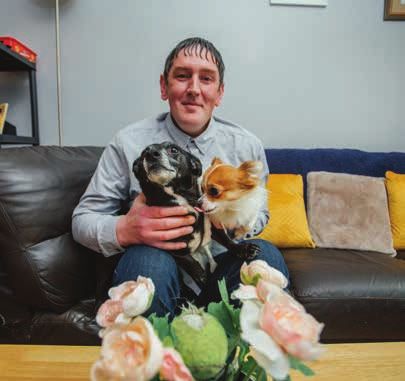
Housing Associations: Innovation, Resilience
          and Continuity in the Face of COVID-19
          We are currently witnessing an event that is unprecedented in our lifetimes. Internationally, we’re seeing countries
          responding and adapting, and the impact is, and will continue to be, deeply interconnected across societies,
          economies, communities and at a very individual level. Critically, it has required us all to ‘stay at home’. And home has
          never meant so much.
          We have seen a coordinated community response to the pandemic with the establishment of local authority ‘Community
          Call’ forums across the nation, working with state agencies and community and voluntary groups to provide supports
          or services to any vulnerable person who needs them. Our member ALONE has had a key role in these forums, having
          responded to 19,000 cocooning older people (by mid-May) seeking advice and supports during the pandemic. And
          our member HAIL (Housing Association for Integrated Housing), for example, has extended its support by providing a
          telephone support line for people with mental health issues who are not HAIL tenants or clients, but have been referred
          from the organisation’s Approved Housing Body partners.
          Our larger homeless services member organisations including Focus, Simon and the Peter McVerry Trust have
          recognised how challenging it is to self-isolate in hostel or hub accommodation and have been working alongside the
          likes of the Dublin Region Homeless Executive (DRHE), sourcing additional capacity from hotels and the private rental
          sector to enable their clients to self-isolate.
          We’re seeing the rapid adoption of new infrastructure to facilitate speedy learning and communications between housing
          associations doing similar jobs. The ICSH team has organised members virtual meetings and forums for providers of
          sheltered/supported housing, homelessness service providers and housing services for people with disabilities, and
          these will continue. The forums have been excellent at giving organisational support and providing opportunities to share
          good practice on the ground.
          Housing associations manage over 35,000 homes for families on low incomes, older people, people with disabilities,
          supported housing for women leaving domestic violence and households experiencing homelessness. The recent
          activities of our not-for-profit housing association members demonstrate a highly skilled, creative and responsive sector,
          with deep seams of resilience. This is not at all surprising to the ICSH. And we feel it’s important to share some of the
          inspiring work of our member organisations during these challenging times.

          Tuath Housing Wellbeing Calls
          and Allocations
          Since Mid-March to Mid-April, Tuath Housing staff made nearly 1200 welfare
          calls to tenants. Tuath are attempting to call as many residents as possible
          to see how they are managing during this difficult time. Since the outbreak
          of COVID-19 and subsequent lockdown, Tuath Housing has allocated more
                                                                                                  Positive vibe
          than 170 properties to families in need of a safe and secure environment,                             s in a Peter
                                                                                                  McVerry Trus
                                                                                                                 t family hub
          where they are able to start a new life and a place to call home. With some
          creative thinking, Tuath have been able to move their allocations process
          online, reducing the associated risk of face-to-face interactions between staff
          members and our new tenants.
                                                               Tenants of Fold
                                                                                Ireland and St
                                                               Brendan’s Villa
                    ’s                                                         ge cocooning
Caroline from Tuath
Cork office making
tenant welfare calls

                                                                                                                            on members
                                                                                                                  associati
                                                                                                         Housing ncing
                                                                                                                   ta
                                                                                                         social dis
                                 Recent Tuath allocations.
                                 Happy households!

      6    ICSH Social Housing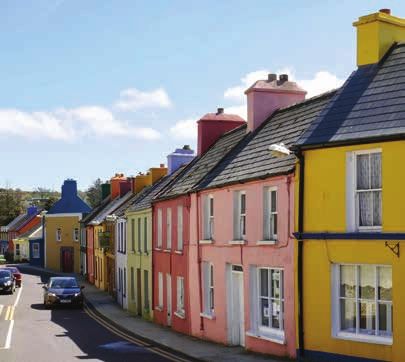
Sheltered/Supported Housing Responses to COVID-19
    The coronavirus has had a dramatic impact on all aspects of social housing management and provision. But supported
    housing has been particularly impacted due to its higher support nature and its more vulnerable client group. It has been
    a particularly challenging time with the support needs of vulnerable tenants increasing alongside challenges to staff and
    volunteer capacity. However, our supported housing members have responded to the many challenges that the virus has
    presented through innovative working, contact and support practices.

     Embury Close Sheltered                        Westgate Foundation
     Housing: Social Initiatives                   Westgate Foundation is providing
     Embury Close is a supported                   phone support to over 100 service
     housing complex situated in                   users and people cocooning/self-
     Adare, Co. Limerick. The support              isolating that may not normally avail
     shown to the residents from the               of its service. It has also expanded its
     community of Adare has been                   Meals on Wheels service following           Members of the Ballincollig Community
     fantastic and, through their                  increased requests for support in           Response Forum
     innovative ‘Walkathon’, residents             Ballincollig and surrounding areas.
     sought to give back, using the
     remaining time of the lock down to
     raise some much needed funds for
                                                        Bingo! – McCauley Place,
     deserving charities such as ALONE,
     Barnardos and the (local) Milford
                                                        Naas & Iveagh Trust, Dublin
     Care Centre.                                       McAuley Place in Naas is an
                                                        independent living scheme based on
                                                        a creative rather than medical model
                                                        using the arts to connect people and
                                                        enhance wellbeing. The Iveagh Trust is
                                                        our oldest housing association and their
                                                        Kevin Street Community ran a balcony
Residents of Embury Close,
                             Adare, Co. Limerick
                                                        bingo raising €3,000 for front line
                                                        workers and lifting everyone’s spirits.

     Conna Community Housing                                                                  Tintean Housing
     The day centre building in Conna Co. Cork                                                Association - Urgent
     is normally a hub of activity for the village of
     Conna and its hinterland, and maintaining
                                                                                              Recruitment Drive During
     levels of support have been key here with                                                the Pandemic
     the closure of this. Dinners are now being                                               Homeless services throughout the country
     dropped to tenants in the scheme and                                                     have expanded their work in response to the
     throughout the parish with a member of the                                               COVID-19 pandemic and the risks to their
     organisation also making daily contact to                                                client group. Tintean Housing Association in
     offer support.                                                                           Waterford is working in partnership with the
                                                                                              HSE and Waterford City & County Council to
                                                                                              ensure that homeless people in the South
                                                                                              East region, particularly those with added
     Ardara Sheltered Housing
                                                                                              complex issues, will be given the best
     One of the biggest challenges is to ensure that the common areas within                  possible opportunity to protect themselves,
     the complex are santisied more regularly, and this has been challenging                  and others from COVID-19. Assisted by fast-
     given the reduction in the availability of Community Employment scheme                   tracked Garda vetting provided by the ICSH,
     workers. Ardara Sheltered Housing has decided to dedicate a resource to                  Tintean is sourcing appropriate staff for the
     just welfare calls and sanitising, which is working well.                                3-4 month emergency positions in their new
                                                                                              services.

                                                                                                                         Tintean sunbstance
                                                           Teague McFadden,
                                                                                                                         misuse service
                                                           Residential Services
                                                                                                                         using technology
                                                           Manager at St. Shanaghan
                                                                                                                         to provide remote
                                                           House Sheltered Housing
                                                                                                                         harm reduction and
                                                           Association (Photograph:
                                                                                                                         support services
                                                           Richard Wayman)

                                                                                                              ICSH Social Housing      7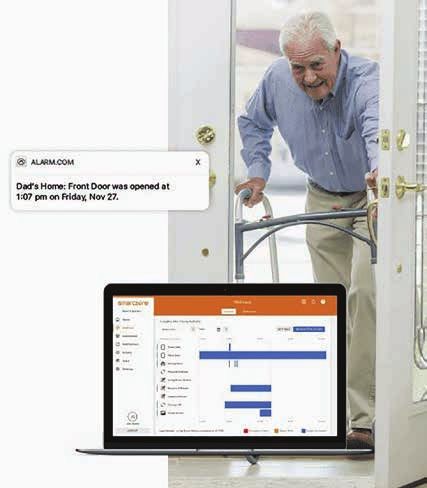
Delivery Across the Sector
    First Buy & Renew for Good Shepherd
    in Callan, Killkenny
    The project saw the completion of the first Buy & Renew
    Scheme for the Good Shepherd Kilkenny, under Rebuilding
    Ireland and supported by Kilkenny County Council.
    This development of six apartments on Upper Bridge Street, Callan, Kilkenny is
    unique in its approach to addressing problems that are at the fore in modern day
    Ireland. That is: homelessness, housing shortages, vacant sites in urban areas and
    the hollowing-out of vibrant town centres.

    The previous development of the building was left half-finished and abandoned in
    2010, and working with Kilkenny based CANICE Architects, the proposal involved
    a change of use at ground floor level from commercial to residential, therefore                            © Brian Cregan
    providing six new single bedroom apartments each with their own
    outdoor space along with a larger outdoor communal area to the rear at
    ground floor.

    The architects believed it was important to address the brief, while also
    addressing the historical and urban context of the site. As a commercial
    street, they believed it vital that a change of use at ground level to
    residential does not mean that the streetscape should have to read
    as such. The scale, proportion and materiality of the new facade was
    inspired by what was found locally both historically and present day.
    Glazed tiles used on a much-loved local bakery on the same street are
                                                                                                               © Brian Cregan
    present here applied in a more contemporary fashion.

    19 Social Homes Planned for Historic Gem ‘The Stanwix Home’ Thurles
    Thurles Lions Trust Housing Association CLG recently
    received approval from the DHPLG to advance the
    development of The Stanwix Village to tender. This
    development, on completion, will see 19 units of social
    housing provided. The complex was built in 1889 to
    provide homes for widows over sixty, and was named
    after its patron Emma Stanwix. The protected complex is
    historically and architecturally important, as it is a rare
    example of an almshouse built at a domestic scale, in
    contrast to the larger institutional buildings of the time.

    The project will involve a complete refurbishment of
    the existing one-storey terrace to provide nine one-
    bedroomed units and the construction of five new one-
    bedroomed, terraced, one-storey units. The projects will
    also include the construction of a new five-bedroomed          provides support and a listening ear to those who are
    bungalow that will accommodate four adults who require         experiencing challenges and need someone to talk to in
    residential supported accommodation as well as one             confidence and privacy.
    carer.
                                                                   Standing in all its glory at the top of Kickham Street,
    A complete refurbishment of the two-storey former              Thurles for over one hundred and thirty years, The Stanwix
    Director’s House, also a protected structure, will provide     (Widows) Home is close to the hearts of generations of
    a community centre for the use of the residents of the         Thurles people and those of surrounding parishes.
    Stanwix Village as well as the residents of the area in
    general. This Centre will also become the home to “The
    Blue Door”, an initiative of Thurles Lions Club, that

8    ICSH Social Housing
Launch of ‘Clann’ –
Dedicated Age-Friendly Housing Service
Clann, a dedicated age-friendly housing body, was launched in February 2020
by Broadcaster Brendan Courtney.
Speaking at the launch, Head of Clann Ms Aoife Flynn              People at the ICSH/Allianz Community Housing awards
Kennedy said: “Clann is committed to empowering our               2019.
residents to live for as long as possible in sustainable, high-
quality, affordable homes in their own community. The key         We must begin planning now to meet that need, otherwise
to achieving this is to provide a safe and secure environment     we risk a serious housing crisis for this age group.
with access to all relevant services and community supports.      This will benefit the entire housing market too as it will
Our ambition is to expand and improve housing options for         allow people who want to, to graduate to age-friendly,
people over the age of 55. That means supporting people           sustainable housing.
to remain living independently for as long as possible and
                                                                  Barbara Maher, a Clann resident, said: “My kids would
providing more age-friendly homes for people who are
                                                                  like to take care of me, but I wouldn’t like it. I have my own
inappropriately housed.”
                                                                  independence and I love being able to go about my day as I
Describing the service as exciting and refreshing, Brendan        please, and to enjoy my own space. I have the best of both
Courtney said that we need to have a frank and honest             worlds at Marewood in that way.”
conversation about how we are going to manage the future
housing needs of people over the age of 55.

                                                                                           Clann resident, Barbara Maher

                  Pictured at the recent launch of Clann are
                  Head of Clann Aoife Flynn Kennedy and           Clann resident, Jimmy King said: “I love life. I am very
                  broadcaster Brendan Courtney                    active; I go for a walk every morning from Marewood to the
                                                                  Botanic Gardens. To be honest, I don’t feel 81. I enjoy my
Already the largest provider of age-friendly housing in           independence, but Danny, our Scheme Manager, is there if
Ireland, having transferred units from Clúid Housing,             we need his help with anything. We have a good community
Clann has an ambitious growth strategy that will deliver          here.”
800+ age-friendly homes before the end of 2022. However,
Ireland is facing a potential crisis in older persons’
housing. The CSO’s population projections anticipate that
Ireland’s older population will increase by around one
million by 2051. By 2030, one in five people living in Ireland
will be 65 years of age or older. Now is the time to ensure
we have the right housing supports in place so that people
don’t see nursing homes as their only housing option.

The population of Ireland has been getting steadily older
since the 1980s. Over 13% of the population is 65 years
and older, and these numbers continue to increase. There
is a gap in housing and support options for older people,
between remaining at home and going into a nursing                                           Clann resident, Jimmy King
home. Clann is dedicated to filling that gap through
building more schemes like Broome Lodge in Cabra,
which was nominated in the category of Housing for Older          For more Information, go to
                                                                  www.clannhousing.ie

                                                                                                          ICSH Social Housing      9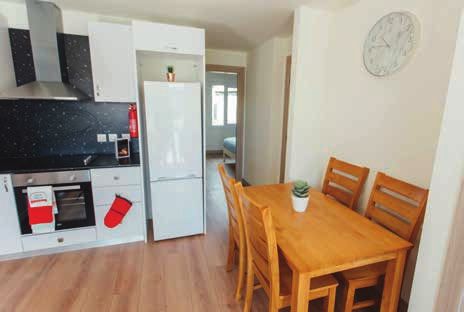
58 Mixed Housing Underway for Tuath Housing
 in Westmeath
 Just before the close of 2019, Minister Damien English was welcomed to two new Tuath
 Housing projects in Westmeath.
 First stop of the day was to Farran in Mullingar with 14        Tuath already manage 100 homes throughout the county
 homes being built to include four 2 bed bungalows, funded       with a further 120 homes due for delivery by 2021 which
 through the Department of Housing’s CAS grant scheme,           includes 12 homes in Rotchfortbridge and 32 homes
 and five 3 bed and, five 2 bed semi-detached houses,            in Athlone. Tuath currently have over 5,600 homes in
 funded via private finance from the Housing Finance             management nationwide catering for over 15,000 people,
 Agency and a CALF loan approved by the Department of            300 homes on site and a strong pipeline to deliver a
 Housing. The land was provided by Westmeath County              further 2,500 new homes by 2023.
 Council under the low-cost sites scheme.

 Second up, was a visit to a site for 44 new homes at Royal
 Canal, just off the Ardmore Road and within walking
 distance of Mullingar town centre. The scheme contains
 a mix of housing types catering for varying needs such
 as single person and family requirements, older persons
 and people with disabilities. All homes will be disabled
 access compliant with lift access to the main apartment
 block and some homes will have level access wet rooms
 for persons with disabilities or mobility issues. All of the
 energy efficient homes will be allocated to persons from
 the Council’s housing waiting list.

 Respond Brings New Life to Mountjoy Square
 Renovating old or derelict buildings to a high standard         The property had been badly damaged by a fire and
 has always been a part of Respond’s work. Respond were          vacant for some years. Repair and renovation works, with
 delighted to receive support from Dublin City Council           relevant planning permissions, were carried out with due
 to acquire 1-2 Mountjoy Square (this also incorporates          regard to best practice in conservation and architectural
 69 Upper Gardiner Street) for social housing. Respond           heritage protection guidelines. NDBA Architects and Chris
 subsequently applied and received funding through Capital       Ryan Architects worked alongside Dublin City Council
 Advanced Loan Funding from the DHPLG funding and the            Conservation Officer, Building Control and Fire Officer
 Housing Finance Agency.                                         during the renovation works. Works were completed and
                                                                 handed over to Respond in December 2019.
 This 200 year-old building is located in one of five Georgian
 squares in Dublin, and lies on the north side of the city       The first phase of tenants moved in at the beginning of
 centre just under a kilometre from the River Liffey. The        2020 and the next phase will be moving in over the coming
 square’s own park has both playing areas for football,          weeks. We are delighted that the property provides 31
 basketball and table tennis, playgrounds for children and       much needed new homes for tenants and we hope they will
 a green park area. Situated close to the centre of Dublin       be very happy in their new homes.
 city and the major artery, Gardiner Street to its west side,
 Mountjoy Square has considerable transport links in its
 immediate locality.

10   ICSH Social Housing
Fold Ireland Developing
Ireland’s Smartest
Social Housing
Cork-based Smartzone is working with Fold Ireland
on deploying next-stage connected wellness
technology at the 31-apartment Abelard Square
development close to the Phoenix Park, which will
be Ireland’s smartest and safest social housing.
Smartzone’s technology allows the option of its new
wellness suite of services, which includes motion
and connected health monitoring, allowing loved
ones and carers to either communicate in real time
to the resident or be notified of changes in their
routine. Smartzone’s wellness suite learns usual
behaviours within a living space and then recognises
when these change, triggering agreed alerts.
Fold Ireland is leading the way in Ireland by utilising
an expansive set of solutions and personal safety
notifications to create a safe environment for ageing
in place. Smartzone will engage with Fold on 300
more homes before the end of the year.
Carbery Housing Association Purchases Six Properties
under Mortgage to Rent
Carbery Housing Association (CHA), Cork is purchasing
six houses, of those households in mortgage arrears,
taking the total number of properties owned around Cork
county and city to 14. The housing association began
leasing privately-owned homes for rent to families in
need from the Council’s housing list and in 2018 CHA
became a participant in the Mortgages to Rent initiative,
purchasing the mortgages of owner-occupiers unable to
repay their mortgages, and on the understanding that they
will remain in their homes as permanent tenants of the
association, paying differential rents.
Company secretary and co-founder José Ospina said:
‘CHA is undergoing a period of massive growth. At this
time we are actively seeking new members to work with us
and participate in the future provision, management and
improvement of homes and communities, and the growth of
the association.’
CHA has also researched the extent of fuel poverty among
its tenants and prospective tenants, and is working to
address this affordability deficit by making tenants’ homes
more energy efficient and integrating renewable energy
systems into its properties.
ICSH Social Housing 1152 Sophia Housing Homes Key to Vision for Portlaoise
Laois County Councillors have given the green light to an ambitious new housing project
in the centre of Portlaoise. The project is led by Sophia Housing and is supported by Laois
County Council, the Department of Housing, Planning and Local Government, and Project
Ireland 2040. The development will consist of 52 new homes built on lands and buildings
formerly owned by the Presentation Sisters and Portlaoise Parish.
This development will see a renewal and reinvigoration The impact on the community of such a development will
of the Town Centre utilising the former Sacred Heart go beyond providing much needed housing. The project
Secondary School and surrounding lands, which have will create a new public park and garden in the heart of
been lying empty for a number of years. The project the site and also access to the proposed new ‘blue-way’
is one that has been in the pipeline for over ten years. that will follow the course of the Triogue River which will
Geoff Corcoran, Head of Development with Sophia said link Portlaoise Town centre with a large town park on the
that the project is sign of Laois County Council, and New Road. The original school building will be converted
the Department of Housing’s commitment to solving into a community space and a building known locally as
the housing and homelessness crisis in Laois and he the Ha’Penny babies will be converted into a space to be
commended the vision and ambition of the Local Council used for local arts and history projects.
in supporting this project.
Three new three-storey apartment blocks will also be built
Sophia has praised the scheme as an example of the on the site, which will have 23 two-bedroom apartments
positive partnership that Sophia Housing has developed and 10 one-bedroom apartments. There will also be four
with religious congregations. “Working together, two-bedroom houses built by Sophia.
Sophia and the congregations have identified lands and
buildings that can be used to build supported housing for Councillor Thomasina Connell, who is Chair of Laois
individuals, couples and families who have experienced County Council’s Housing Strategic Policy Committee,
homelessness in Ireland. The Sophia model of housing hailed Sophia’s development as an important aspect of
with support aims to give people a home for life, not just the regeneration of the town centre. John Mullholland,
a bed for the night. This project in Portlaoise will see over C.E.O of the local authority, said that the scale and scope
120 people move into a home of their own in the next three of the development created a real sense of urban renewal
years.” in Portlaoise. The development is one that is part of the
Portlaoise Local Area Plan 2018 -2024 and will be part of
The scheme, designed by OBFA Architects, will see 48 the Portlaoise Cultural Quarter in the towns vision for the
apartments and 4 houses built on the site. The former future - 2040 and Beyond a Vision for Portlaoise.
convent, vacant since 2000, is a protected structure and
will be converted into three one-bedroom apartments Since 2016, the number of people supported by Sophia
and six two-bedroom apartments while the two- housing has grown by 79%. The organisation is embarking
storey school building will be converted into four one- on a period of ambitions growth. Over the next 5 years,
bedroom apartments. Keeping these buildings and their Sophia plans to build over 200 homes across the
architectural heritage in the town centre has been an country, getting planning permission for this major new
important part of the project. development is a huge step towards meeting that target.
12 ICSH Social HousingModular Family
Hub is Peter
McVerry Trust’s
First Galway
Service
Peter McVerry Trust, has
begun operating its first
service in Galway, managing
Westside Modular Family
Hub in Galway City. The
modular family hub is the
first of its kind in Ireland and
was developed by Galway
City Council in partnership
with the Department of
Housing, Planning and Local
Government, and the Housing
Agency. The first families were
placed in the homeless service
on the 6th of May.
Pat Doyle, CEO of Peter McVerry Trust
said: “This family hub service is about
recognising that there is a need to offer
families impacted by homelessness
high quality, professional services
and supports. While we don’t want or
accept any family being homeless, we
realise that at the present time we
need to offer many families emergency
accommodation. The Westside Modular
Family Hub will offer own-door, two
and three-bedroom units that will
enable families to return to something
approaching normality.
“Each unit has its own kitchen, dining
space, bathroom, and bedrooms. The
families can do their washing and
cooking in the privacy of their own units.
There is an on-site playground. We
have staff on-site 24-7 and we have a
dedicated resource centre on-site where
we can carry out key working sessions
with families and where families can
access IT services and engage with staff
around progressing into housing.”
ICSH Social Housing 13Social Housing – Key Issues for 2020 and Beyond
Programme for Government for the 33rd Dáil
While the Election feels like a distant memory at this point, there are very real and urgent
decisions facing the parties who are considering entering Government under the 33rd Dail.
The country has changed, the world has changed and yet asset – not in financial terms - but in sustaining our health
we still have the same enduring problems to deal with as and keeping us safe. Special efforts have been made
we did on the 8th February. The major issues during the during this crisis to provide accommodation to people who
Election were housing and health: the deficits in these two are homeless, extra services and supports to people who
pillars of public policy and social infrastructure have been are vulnerable. In the Programme for Government there is
deepening despite political and societal attention. Access an opportunity to build further on the consensus that has
to housing (and health) in Ireland is inequitable and for emerged.
those on the lower end of the income spectrum, a secure
home can be little more than a pipe dream. The ICSH has submitted proposals to all political parties
outlining our vision for our housing system. These include
The housing problem can be resolved, but it will take a a strong social housing delivery programme; the return
long-term sustained approach that will rely on political of AHBs to ‘off-balance sheet’ classification; active land
and public support and the commitment of long-term management; a new cost rental programme; measures
funding. While all parties have committed to rising to to end combat homelessness and a network of housing
the challenge of dealing with housing, the situation has with care developments for older people and people
become more difficult in the intervening weeks since with disabilities. Approved Housing Bodies (AHBs) can
Election Day. Economic forecasts are pointing to dramatic assist the new government in implementing these plans
deterioration with a steep contraction in the economy and are well placed to do so. With experience in housing
coupled with high unemployment. The outlook will depend management, development, homeless services and
on many assumptions including the timing of the lifting of supported housing, AHBS are poised to step up as trusted
restrictions and how the world economy will recover. partners in ensuring we can achieve Housing for All.
The experience of the public health emergency has The clearest message during this pandemic is that being
pointed to the central importance of the home in providing at home is what will protect you, your family and the wider
safety, security and protecting our health. The recurring community. Surely this is the simplest argument for a
messages emphasising the need to ‘Stay Home Stay Safe’ housing plan that will provide a home for all our citizens
demonstrate in the purest form how housing is a vital so that everyone can ‘Stay Home Stay Safe’.
14 ICSH Social HousingRole of the Land Development Agency
In the ongoing debates and discussions on the housing crisis, there has been much focus
on the role of land, its impact on our housing system and how reforming our land policy
could help solve our housing problems.
Within the ICSH, we have much experience of how the John Coleman, interim
cost and availability of land has cast a long shadow over Chief Executive of the
the supply of affordable housing. While it is not the only Land Development
Agency, speaking at the
factor that must be dealt with to see a more balanced
ICSH Social Housing
housing system emerge, it is certainly a central one. The Conference 2019
National Economic and Social Council has identified land
management as key to ‘fixing Ireland’s broken system’.
Considering the centrality of land as a factor in shaping
our housing system, a state agency dedicated to land
development could act as a significant tool to achieve
a public policy goal of affordable housing for all. The public housing supply. While at the same time, households
aims and objective of this agency should be carefully are being supported in private housing at a high cost to the
articulated so that ‘action follows purpose’. In our view, state through HAP.
the overarching objectives for a new Land Development
Agency (LDA) should be to increase the supply of housing In progressing the legislation, we would sound a note of
in line with the recommendations of the National Planning caution over the proposed commercial remit of the LDA.
Framework, increase the number of social and affordable Otherwise, the social dividend will come at a commercial
homes, create an engine for housing supply that can price. In addition to assisting in the delivery of social
enable counter-cyclical investment and a secure pipeline housing, the LDA potentially has a significant role to play in
that ensures a consistent flow of homes. The question that the expansion of a cost rental sector in Ireland and explicit
therefore follows is: does the Land Development Agency objectives to achieving this could be included.
fulfil these criteria?
Powers to Act and Intervene
Proposed Objectives of the LDA mechanisms and collaborative structures between public
to develop land for housing or other related development and private entities to develop relevant public lands and
purposes on relevant public lands and other lands in other lands
support of the implementation of the National Planning
Framework on a commercial basis The LDA should be invested with active powers to enable
it to lead master-planning of sites that will result in the
For some time, the ICSH has advocated that there is an reduction of costs for developers particularly through
urgent need for the strategic management of state lands to facilitating infrastructure and mitigating risk. It is not clear
meet the housing needs of those most acutely failed by the yet how the ‘other lands’ will come under the remit of the
private housing market. In our view, when it comes to the LDA.
development of valuable state assets, the public interest is
best served by ensuring that a very significant proportion There are good examples from other European countries
of social and affordable housing is built on state lands. of effective land management including Austria, the
Netherlands and Scotland. The Scottish Land Commission
In terms of the proposed objectives of the LDA, as stated focuses on land reform and achieving a fair, inclusive and
in the General Scheme of the Land Development Agency productive system of ownership, management and use
Bill 2019, we welcome the proactive role being adopted by of land that delivers greater benefit for all the people of
the State in the management of public land. In particular, Scotland. Just recently, at the end of April, they launched
the ability to drive strategic land assembly is a strong the Community Right to Buy for Sustainable Development.
power, which will be deployed for the public good. Any This is the most radical part of the measures to promote
interventions that drive down the cost of land for housing community ownership and gives community bodies the
are to be welcomed and supported. right to buy land or assets to further the achievement of
sustainable development.
However, the objective of strategic land development on a
‘commercial basis’ presents some difficulties. Currently The LDA will be stronger in the longer term if there are
the LDA operates on the basis of 40% social and affordable accompanying measures introduced through constitutional
housing on their sites. This means that on state lands only reform or clarification to rebalance the protection of
40% of homes will be for households in need of social and property rights in favour of the common good. This,
affordable housing and 60% for private housing. While coupled with a strong focus on delivery of social and cost
there may be arguments for a mix depending on location rental housing, will bring much needed reform to our
and local factors, it means public land is not being used for system of land management and activation.
ICSH Social Housing 15Housing First - Making Impact Nationally
The Housing First model, the proven solution to homelessness for people who are
sleeping rough and long-term users of emergency accommodation, is now active
right across the country.
In 2018 the first National Implementation Plan for
Housing First was published by the Department of
Housing, Planning and Local Government together with
the Department of Health, the HSE, Genio and the Dublin
Regional Homeless Executive. That plan, driven by the
National Director of Housing First and implemented by
Local Authorities and NGOs, is now active in every local
authority area and hopes to reach a target of 663 Housing
First tenancies by the end of 2021.
Originally, Housing First was limited to the Dublin
region, where it was piloted as far back as 2011. The
initial success of the pilot project saw the Housing First
model grow, and in 2014 a new enlarged programme
was announced, which was delivered jointly by Focus
Ireland and Peter McVerry Trust and this ran until 2019.
Since then, local authority clusters have tendered for the
provision of Housing First services in their regions and the
model is now being delivered across the country by Peter
McVerry Trust, Focus Ireland, Cork Simon, Galway Simon
Community, Cope Galway and Sligo Social Services.
The Housing First model, which originated in America with
Dr Sam Tsemberis, has a number of key principles, among
which is the recognition of housing as a human right.
Other core principles are:
Sam Tsemberis speaking at Peter McVerry Trust
u Warmth, respect, and compassion
Housing First Event in Dublin
u Commitment to the participant
u Scattered site housing
u Separation of housing and services issues/
requirements
u Self-determination and choice
u Recovery orientation
u Harm reduction
As part of the Housing First model, participants will have
time-unlimited access to support and treatment services,
for as long as the participant requires. Even if a tenancy
fails, Housing First continues to support the individual
to another tenancy and the support service continues to
engage with the participant.
You can find the National Implantation Plan for Housing
First on the website of the Department of Housing,
Planning and Local Government www.housing.gov.ie
Keith, a Housing First tenant in Dublin
16 ICSH Social HousingCost Rental – Stable Rental Tenure for
Moderate Income Households
Cost rental is housing where the rents charged cover the cost of delivering, managing and
maintaining the homes. As the rent paid by the tenant in a cost rental tenancy is designed
to only cover the actual costs, rents will not be driven by market movements.
Cost rental is different to the private and social rented
sectors. Rents in the private sector are set by the market,
which may lead to high rents in high demand areas.
Rent in the social rental sector is directed at those
within defined income brackets and is linked to income
levels. In contrast, the rent paid by a household in a cost
rental tenancy covers exclusively the cost of designing,
procuring, building, managing and maintaining the
property. As a result, the rent will not be driven by market
demand. cost rental is another form of tenure that will
encourage investment in the provision of additional homes
for moderate-income households.
A core objective of cost rental is to offer moderate
income households the choice of a more affordable and
stable form of rental tenure. Over the longer term, as
cost rental homes are delivered at scale, it is envisaged
that cost rental would have a stabilising effect on the
broader private rented market. Cost rental housing is a
complement to existing housing tenures and ideally the
delivery of such accommodation should be part of mixed
Enniskerry Road Cost Rental pilot project, Stepaside Co. Dublin
tenure developments with diverse communities.
Ideally for cost rental to work you must have:
1. provision of low-cost publicly owned sites; u Land and infrastructure costs should be separated
from the residential development.
2. design with long-term maintenance in mind;
u Defining affordability in terms of qualifying income
3. state contribution to development costs (Serviced criteria is important.
Sites Fund); and u It is important to ensure security of tenure for tenants.
4. availability of low-cost, stable finance that is paid This first cost rental pilot project under Rebuilding Ireland
back over a long period of time. is the result of an innovative collaboration between Dún
Laoghaire-Rathdown County Council, the Housing Agency,
In Vienna (which is regularly ranked first in international
the Housing Finance Agency, the Department of Housing,
quality of living scales), 45% of people live in homes that
Planning and Local Government, Respond and Tuath
are rented on a means tested cost-rental housing model.
Housing Associations. The groundbreaking project will
These people can earn as much as €53,000 a year and
deliver 105 social homes and 50 two-bedroom cost rental
qualify for city-owned and subsidised apartments. The
homes.
Local Authority, which manages more than 220,000 homes
in Vienna, receives almost €500m annually from the Tenants were to pay an estimated €1,200 per month to
city in subsidies, €212m of which it spends on building live in the two-bedroom cost rental homes delivered as
apartments. The scheme is funded by a property tax and part of this project. This project offers moderate income
the authority builds on average 7,000 apartments each households the choice of a more affordable, long-term
year. and stable form of rental tenure than exists presently with
the added benefit that their rent will not be driven by price
There are however challenges when it comes to cost
changes in the private rental market. The new homes will
rental housing:
be delivered in 2021.
u The role of capital subsidy is vital in terms of the
overall development costs.
u The Subsidy must lower development costs and thus
lower rents.
ICSH Social Housing 17ICSH News and Events
ICSH COVID-19 Webinar Series
In recent weeks, the ICSH has held a number of
webinars through Zoom to keep members informed
and updated on the latest developments during the
COVID-19 crisis. Thank you to all our speakers and participants for their time, engagement
and willingness to share their experiences. These webinars have demonstrated time and
again the power of the AHB sector working together.
Housing for People with
Sheltered/Supported Housing Webinar Disabilities
Our Sheltered/Supported Housing Webinar (23rd April)
On May 7th, the ICSH hosted the latest in our series
looked at issues specific to our sheltered/supported housing
of webinars which focused on Housing for People with
member organisations, with examples and experiences of
Disabilities During COVID-19. With around 30 delegates
how they are responding to the COVID-19 crisis. Our housing
attending from around the country, there was a very
association participants heard from Edie McGarry, Director
positive sharing of experience and emerging best
and Company Secretary of Merrick House in Dublin and Mark
practice. Delegates heard inputs from Tony Cunningham,
Hazzard, General Manager of McAuley Place McAuley Place
National Director of Services in Irish Wheelchair
Naas in Kildare.
Association, Eimear O’Hagan, Head of Housing and
A number of important issues were raised in relation to both Property Management in HAIL and Paul Kenny, CEO
residents and staff presenting with COVID-19 symptoms, of St. Michael’s House Housing Association, providing
and subsequently testing positive. Some of the challenges updates on how housing and service providers to people
included delays in receiving test results, managing the with physical, mental health and intellectual disabilities
closure of communal facilities and ensuring adequate have been responding to the unique challenges posed by
staffing. The depth of experience, coupled with a strong the COVID-19 emergency.
advocacy function on behalf of both residents and staff within
We heard how AHBs have adjusted their services
our member organisations, has helped them to overcome the
quickly to continue to support tenants including moving
many difficulties they have faced to date.
day services to an outreach model, delivering support
Positive stories have emerged that are worth sharing. meetings through online platforms such as Zoom,
Responsive HSE staff meant that early delivery of PPE in providing practical food and pharmacy deliveries
response to requests from our sheltered housing members and more. There were operational considerations
enabled staff to perform their duties with less anxiety. Early discussed around ongoing repairs issues, the need to
planning for the virus, and a rigorous cleaning regime of map a pathway out of current restrictions, how to deal
communal areas has helped keep the virus at bay. The with incidents of anti-social behaviour with current
challenges facing cocooning residents from both a physical restrictions, and, most of all issues, around PPE. The
and mental health perspective are also being addressed sourcing, cost of and appropriate use of PPE is an
through planned entertainment in the form of balcony bingo, ongoing concern for members and this is an area we will
socially distant exercise classes and musical performances. endeavour to assist members in going forward.
Another topic of interest was around governance,
specifically business contingency planning and managing
risks and costs as we adjust to the “new normal” of
COVID-19. Hearing what members are dealing with in
a practical sense and what their concerns are for the
future was incredibly enlightening for the ICSH and it
will inform our support, policy and advocacy work in the
coming months.
18 ICSH Social HousingHomeless Services & Housing ICSH Supports During
Our 30th April Webinar was specifically for our Homeless COVID-19 Crisis
Services & Housing members. This webinar looked at specific
challenges, learnings and experiences of members to date, Early in the COVID-19 crisis, ICSH staff contacted all
sharing emerging best practice on how homeless services are affiliated members individually to see how they were
responding to the crisis. Speakers included Martin Hannigan managing and adapting to the vastly changed operating
from Dublin Simon Dublin Simon Community, Martin O’Connor environment and to offer supports where we could.
from Cope Galway COPE Galway, Pat Doyle, ICSH President Approved housing bodies have very much risen to the
and CEO of The Peter McVerry Trust Peter McVerry Trust and challenge posed by COVID-19 and ICSH members are
Lisa Marmion from Safe Ireland Safe Ireland. supporting tenants in new and innovative ways.
Our contributors spoke highly of their engagement with Following our initial contact, the ICSH has been in contact
Safetynet, the primary health care service that is providing with members through weekly email bulletins, which
testing of suspected COVID-19 cases, and spoke positively of have summarised relevant official advice, provided access
their experiences moving clients from Supported Temporary to vital PPE and provided updates on regulatory issues at
Accommodation (STA) to freed-up hotel accommodation, this time. The ICSH is also holding weekly webinars with
student housing and private sector accommodation to facilitate each week focusing on a different topic or area of need.
social distancing and isolation where required. These weekly webinars will continue for the foreseeable
future as we adapt to new ways of engaging with
Issues over early sourcing of PPE were raised. However, the members and disseminating vital information.
effectiveness of interagency working and the pivotal role of in-
house clinical staff alongside GP and nursing support over the We have also prioritised Garda vetting as many ICSH
past two months were highlighted. members are recruiting new relief staff and volunteers, in
preparation for the possibility that existing staff may need
Challenges for member organisations have included dealing to self-isolate or become ill. The National Vetting Bureau
with staff reductions (to facilitate staff presenting with has prioritised any vetting applications that are related to
COVID-19 symptoms to self-isolate), as well as trying to ensure COVID-19 roles and results have been issued very quickly,
clients were adhering to guidelines around social distancing. some having a turnaround time of just a few hours.
The fact that homeless services staff are experienced at dealing
with complex issues amongst their client base has also meant The ICSH has ensured that working group meetings
that the sector has been very effective in responding to the such as the Tier 3 Working Group, Finance, Development
pandemic. and Supply, and the Special Needs Supported Housing
group have continued online over the last few months.
In relation to domestic violence refuges, Lisa Marmion from Given current constraints, this approach has proved
Safe Ireland referred to the pre-COVID-19 limited capacity of effective. Since 2014, the ICSH and CIH Housing Academy
Safe Ireland’s member organisations (at less than 33% of the have partnered to deliver the popular CIH Certificate in
Council of Europe recommended capacity), and said that the Housing course and this too is continuing online.
sector has not been facilitated with social isolation pathways.
She said they were currently All ICSH staff are available by email or phone and we can
working with DEASP on also facilitate online or virtual meetings. If there is any
rent supplement measure issue emerging for your organisation that you would like
for clients and she also assistance with, please don’t hesitate to contact the ICSH.
highlighted the critical fact
that victims of domestic
violence in refuges are not
counted in the monthly ICSH Affiliation
homelessness figures.
During this unprecedented time of crisis, we feel it is
imperative that the voluntary housing sector works
together to support the most vulnerable in our society,
Will Chambré - New ICSH Board Member as well as looking forward and continuing to keep social
The ICSH Board of Directors is very housing at the top of the political agenda one this crisis
pleased to welcome Will Chambré, a has passed.
new external member of the Board.
ICSH members benefit from a wide range of services at
Will has been managing director
all times and we are endeavouring to support members
of his own communications agency
as best we can through this time of crisis, delivering
established in 2002 and has worked
advice and guidance in new ways.
for 25 years in politics and strategic
communications. He has worked We would encourage any members who have not yet
with a range of clients in the private returned their affiliation for 2020 to do so as soon
and public sector in the UK and as possible. For any queries, please contact Mairéad
Ireland. Holohan on mairead@icsh.ie.
ICSH Social Housing 19You can also read


