MANDATORY DISCLOSURE - PA Aziz College
←
→
Page content transcription
If your browser does not render page correctly, please read the page content below
MANDATORY DISCLOSURE
             MANDATORY DISCLOSURE: UPDATED ON 10/02/2021

The College

P.A Aziz College of Engineering & Technology (PAACET) was established in 2003 under
the patronage of P.A Aziz Trust. The Engineering College and the Trust is formed to fulfil
the vision of Late P.A. Aziz. PAACET is the epitome of the vision of P.A. Aziz Trust. The
Trust shall continue to strive in building institutions of academic brilliance.

The Location
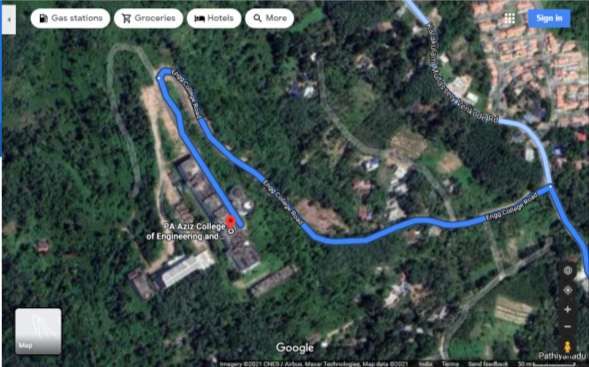
PAACET is situated at a scenic campus which is 500 meters above the sea level, just 7Kms
away from Kowdiar Palace, Trivandrum City. The campus is spread over 37 acres of
landscaped land providing natural ambience for academic quest. The College campus and its
surroundings offer a picturesque panoramic view.

Infrastructure
The College is equipped with state-of-the-art facilities and infrastructure enabling the students
to develop their knowledge and skills in a perfect environment. Highly qualified and
experienced teaching staff (most of them from IITs and other pioneer institutions) guide the
students with total focus on achieving set targets. Extended academic support by classroom
discussion, group discussions, series tests, re-tests, model examinations and seminars are our
priorities. The College gives great importance for cultural and social activities for the overall
development of student’s personality.

“We equip students with everything they need to succeed in today’s globalized world”
1. AICTE File No
F. No. South-West/1-7007213051/2020/EOA
Date & Period of last approval : 30.06.2019 for the Academic Year 2019-2020
2. Name of the Institution
P.A AZIZ COLLEGE OF ENGINEERING & TECHNOLOGY
Address of the Institution : GREENHILLS, KARAKULAM,
City & Pin Code : THIRUVANANTHAPURAM, PINCODE – 695564
State / UT : KERALA
Longitude & Latitude : N 760 97’00”, E 80 57’ 63”
Phone number with STD code : 0471-2370112, 2370113
FAX number with STD code : 0471-2370114
Office hours at the Institution : 09.00AM to 04.00PM
Academic hours at the Institution : 09.00AM to 04.00PM
Email : paacet2003@gmail.com
Website : www.paacet.in
Nearest Railway Station : THIRUVANANTHAPURAM CENTRAL (7kms)
(Distance in Km)
Nearest Airport (Dist in Km) : THIRUVANANTHAPURAM AIRPORT (12kms)
Vision of the InstitutionA centre of higher learning in engineering that nurtures inquisitive young minds, fosters
innovative research and reaches out to society, while incessantly improving itself.
Mission of the Institution
To become an academic institution with national reputation and global footing by providing
continuous excellence in curricular and extracurricular activities through amalgamation of
advanced infrastructure with cutting edge technology and high-quality faculty to achieve
societal acceptance, employment and research focus and empowerment to meet the growing
challenges in advanced technology.
3. Type of Institution : Private-Self - Financing
Category (1) of the Institution :
Category (2) of the Institution :
4. Name of the Organization : P. A AZIZ TRUST, KOLLAM
running the Institution
Type of the Organization : TRUST
Address of the Organization : P A Aziz Complex, Vadakkevila Post, Pallimukku,
Kollam,
Pincode : 691010
Registered with : Sub Registrar office Eravipuram
Registration Date :
Website of the organization : www.paacet.in
5. Name of the affiliating : A P J Abdul Kalam Technological University (KTU)
University / Board
Address : CET Campus, Thiruvananthapuram
Website : www.ktu.edu.in
Latest affiliation period : 2020-2021
6. Name of Principal / Director : Dr.(Prof) A. Kharim Kutty
Exact Designation : PRINCIPALPhone number with STD code : 0471-2370113
FAX number with STD code : 0471-2370114
Mobile No :
Email : paacetprincipal@gmail.com
Highest Degree : Ph.D.
Governing Body Members
Sl. No Name and Address Position in BoG
1. Mr. Mohammed Thaha Chairman
2. Dr.N Prabhakaran Member
3. Dr.R Raveendran Nair Member
4. Dr.Y V K S Rao Member
5. Dr. Sanooj Thaha Member
6. Mrs. Shobitha Thaha Vice- Chairman
7. Dr.Noumamony Member
8. Dr. Bhattacharya Member
9. Dr. S M Rao Member
10. Dr. A Kharim Kutty Prinicipal
Frequency of Board Meetings : Four Times in a Year
Date of Last Meeting : 7th January, 2021Organizational Chart
BOARD OF GOVERNORS
CHAIRMAN
PRINCIPAL
Head of Departments Administrative Officers
Professor Technical Staff Administrative Staff
Associate Professor
Assistant Professor
• Student Feedback Mechanism : Yes
Frequent evaluation of faculty and general performance of the institution through online mechanism
is conducted regularly. In addition to the online feedback, monthly and mid semester feedbacks are
obtained from students to monitor the performance of the faculty and facilities. Feedback from
parents and students on the need for promoting extracurricular activities was welcomed. The
institution do promote the mental health of the students and thereby has a wide range of activities
planned for the years to come.
• Grievance Redressal Mechanism : Yes
We have a Grievance Redressal Committee as per the direction of AICTE, constituted to redress the
complaints of faculty, staff and students of the college. The committee meets every month and
addresses the grievances received of any kind. The committee will find solutions to the problems
raised and issues by the students for the Smooth functioning of the college• Parent Teachers Association : Yes
A Parent Teacher Association is actively working in the college. The objectives of the association
are
❖ To work for the welfare of the students and the institution.
❖ To offer constructive suggestions for the smooth and successful functioning of this college.
❖ To promote better participation of the parents in the various programs of the college and to
establish better liaison with the teachers.
The PTA provides financial assistance to meritorious and needy students with consistent
academic record. The best student in each branch of Engineering is awarded by the PTA. Cash
awards are also
Given to top scorers of even semesters for the university examination.
7. PROGRAMMES at PAACET
The below pictures the various undergraduate, postgraduate and diploma courses at P.A
Aziz College.
UNDERGRADUATE
Sl Name of the Programme No of Seats Duration
No.
1 Civil Engineering 30 8 Semesters
2 Mechanical Engineering 30 8 Semesters
3 Electrical & Electronics Engineering 30 8 Semesters
4 Electronics & Communication 60 8 Semesters
Engineering
5 Applied Electronics & Instrumentation 30 8 Semesters
Engineering
6 Computer Science Engineering 30 8 Semesters
POSTGRADUATE
Sl No. Name of the Programme No of Seats Duration
1. MCA 30 4 Semesters
DIPLOMA IN ENGINEERING
Sl No. Name of the Programme No of Seats Duration
1. Mechanical Engineering 60 6 Semesters
2. Civil Engineering 60 6 Semesters
3. Bio-Medical Engineering 60 6 Semesters4. Auto-Mobile Engineering 60 6 Semesters
5. Computer Engineering 60 6 Semesters
8. Facilities at PAACET:
8.1 Career Guidance and Placement Unit (CGPU)
The Career Guidance and Placement Unit (CGPU) of the college is is intended
primarily to assist students in their career planning and provides information that
helps the students to give a direction to their aspirations and interests. The
College boasts of a well-structured Career Guidance & Placement Unit, which
ensures that the students are capable to attend any kind of situations, be it an
interview or addressing a group of people or even conduct seminars or group
discussions.
Training & Placement Cell of PAACET strives to enhance students’ soft skills
and nurture the wellbeing of the student to make him/her capable to meet the
tough situations of outside word. Job opportunities are multiplying rapidly and
at the same time market is getting acutely competitive. Training sessions
conducted on Presentation & Communication Skills, Quantitative & Technical
aptitude and Reasoning, equipping students with tools like Microsoft Excel,
Auto CADD are few of the major initiatives of this unit.
The College has been a recruitment hub for major Multinationals, few of them
being Organizations like Infosys, TCS, Wipro, Accenture, VSNL, HCL, Dell,
IBS, Larson and Tubro, Greaves Cotton, Anglo-Eastern Ship Management,
Computer Science Corporation, Informatica, Nest, US Technology. These
organizations have pre-defined standards for candidates and The main objective
of our Training & Placement cell is to equip our students with these
requirements. Only those candidates having required eligibility will be
considered for the selection process.
Special coaching programs will be arranged for students to enhance their skills
and enable them to attend the interview with ease and get hold of their first job.
Trainings on soft skills, group discussions, role plays, how to face interview etc
are being conducted on regular basis. Master trainers from institutions are also
invited to campus for giving skill development to our students and empower
them in attaining good placements. Industry experts are also invited to campus
for giving exposure on various state-of-the-art technologies.
8.2 Industry-Institute Interaction Cell (IIIC) :
Highly motivated interactions between Institutions and Industry is the need of
an hour. For students this gives an opportunity to see what is happening in the
real world and they get exposure to such advents. On the other hand, with the
globalization and opening of Indian economy to outside world, competition
among the industries has become stiff. So industries need good students who are
well aware of industry standards and capable of achieving so. Therefore, this
gives a mutual stand for industry and the institution benefitting both parties. Acommittee consisting of representatives from industry and the faculty is
monitoring the activities of the cell.
8.3 Industrial Training:
The industrial training department of PAACET, facilitate an Industrial
attachment programme to give the students, a feel of the work culture. Industrial
training is usually carried out in the reputed firms such as KAL, BRAHMOS,
Cochin Shipyard, Hyundai Motors, Toyota Kirloskar Motors, Travancore
Titanium Ltd, Kelton, BSNL, AIR etc. The students are encouraged to write to
corporates and factories for providing intern facilities. The college supports
students in such initiatives and encourages students for their pro-activeness. Few
planned initiatives of this cell for this year are
• Industrial Research
• Usage of industrial labs by college
• Research guidance from industry
• Patents and fellowship support
• Short term training programmes
• Intern opportunity
• Creation of collaborative labs/testing centres
8.4 The Visiting Faculty Program:
The Visiting Faculty Program (VFP) seeks to increase the research
competitiveness of faculty members and students. Selected faculty /students of
other colleges collaborate with PAACET on certain research projects of mutual
interest. Under this program experts from industries and reputed research
institutions are invited to deliver lecturers or conduct seminars on latest
technological and scientific developments. Distinguished faculty from
prestigious academic institutions (IISc Bangalore, IIT Madras, IIT Bombay, IIT
Kharagpur, IIST, NIT Trichy, NIT Calicut etc) and experts from industry,
visited the college and delivered lectures on a host of topics ranging from core
concepts to cutting edge technologies.
8.5 College Library:
College library is the most important and integral part of the teaching
programme. PAACET Library is not merely a depository of books, but an active
workshop instrument in the production of original thinking. The main objective
is to acquire, update, maintain and provide a qualitative and quantitative
collection of books, periodicals and other instructional material of electronic
resources to support the academic programme and educational objectives of the
college. It has a good collection of books which cater to the needs of students.
Periodicals and technical journals are available in the library. A separate
reference section is also arranged for the students to read various topics of their
interest. Various E-Journals like IEEE, ASME, ASCE, Science Direct etc. are
available in the library. A computerized library information system with easy
search facility has also been implemented.
8.6 College Hostel:A boy’s hostel is functioning in the college since July 2003. The hostel provides
accommodation to 200 inmates on campus. The on campus residential experience
with the lush green campus borders surely gives our students a home far away
from their home. We have ensured that our female students stay close to the city
to cater to any of their urgent needs and we have hostel facilities for female
students at Kowdiar ,one of the prominent locations in Trivandrum.
Transportation facilities are arranged for the hostel students and we further
support our female students with extended hours pick and drop facility in case
they need to return by a late train from hometown or in case any emergency.
8.7 Personal Growth Centre
The major threat to society today is not identifying the issues faced by an
individual. Be it study related, behaviour difficulties, family and relationship
issues, emotional, depression, issue are many and seen to be grave or less
important and tend to get ignored, but this sometimes lead to very serious
problems that hamper the normal living of an individual. Identifying issues and
supporting such individuals is the key to any such initiatives we conduct at
PAACET. We bring in Professionals, who may not fix such an issue but gives
confidence and an helping hand to work on such issues and thereby sail past the
problems they face. These Professionals are qualified masters in this field and
helps to arrive at more effective solutions, skills and decisions.
8.8 The Ladies Amenity Centre:
The amenity centre for women is at the central block of PAACET, TVM. The
centre serves as a rest room for the sick and provides facilities for first aid and
other basic amenities. Chess boards are available on request during leisure time
and we ensure the students can meet up with staff counsellors inside the amenity
centre to sip a coffee and discuss of any issues that bothers them. We have
ensured that staff counsellors and students are well aligned and the amenity centre
acts as a meeting point for such discussions.
8.9 Student Facilitation Centre (SFC):
Student Facilitation Centre is the centre of attraction of PAACET. It aims to
provide Textbooks, stationery and refreshments for students at a very discounted
rate. This will act as a single window for the students to get forms, certificates,
mark lists, information or guidance for various portals and all under one roof. The
Student facilitation centre also aims to provide music and dance sessions for
students. This will help the students to break free the stress of education and help
them reignite and rejuvenate. Student Facility team has been set up under the
guidance of Senior staff to bring innovative designs. PAACET FEST is a well
sought cultural extravaganza.
8.10 Back to College Programme:
PAACET Alumini boasts of various PAACET chapters all around the globe. We
here at PAACET conducts get together, hosts WebEx meetings, live interactions
and experience sharing with the present students of PAACET. The wide networkof PAACET alumini and the various levels of greatness achieved by the students
is displayed and thereby motivate our present students to plan what they need to
align to reach greater heights.
9. Scholarships offered:
• National Scholarship Scheme:
10. Department Details: Undergraduate courses
A. B. Tech in Mechanical Engineering
Students of this course are taken through fundamental concepts of thermal science and
metallurgical engineering, towards cutting edge technologies like computational fluid
mechanics, Computer Aided Manufacturing, CAD Lab, Metrology, Statistical Techniques
in Modern Manufacturing, Finite Element Software Analysis, Industrial Heat Transfer etc.
After undergoing the common courses in the first two semesters, the students undergo
courses in Numerical Analysis and Programming, Electronics, Thermal Science,
Mechanics of Solids, Mechanics of Fluids, Foundry Technology and theoretical Induction
courses in Kinematics and Dynamic of Machines, Heat Transfer and IC Engines. Electrical
Machines, Operations Research, Manufacturing, Computer Graphics and Multimedia in
semester 3 and 4. All these courses are supplemented by Lab Work and Practical
Experimentation.
In semester 5 and 6, the students are trained in latest subjects like LAN and Networking,
Machine Designing, Press Working, Data Base Management Systems, Micro Processors,
Fluid Systems, Metal Cutting etc. Fracture Mechanics, Precision Engineering, Turbo
Machinery, Advanced Management Types etc(supplemented by appropriate practical and
laboratory work).
In semester 7 and 8, the subjects covered are the most modern and advanced, involving
Metrology, Computer Aided Manufacturing, Mechatronics, Quality Control and Quality
Assurance covering Statistical Techniques, ISO-9000 standards, Advanced Methods of
Manufacturing including Non-traditional Machining methods like EDM and ECM.
As an elective subject and to cover advanced techniques, the students are given courses in
Computer Aided Design, Automotive Engineering, selected specialised topics in
Management etc, supplemented by appropriate practical work in the laboratories.
Name of the Department Mechanical Engineering
Course B.Tech in Mechanical Engineering
Level UG
Ist Year of approval by the Council Nil
Accreditation status of the course Nil
Doctoral Courses NoForeign Collaborations, if any NIL Professional Society Memberships ISTE, IEEE Professional Activities B. B. Tech in Civil Engineering Students of this course are taken through the design, construction and operation of the facilities essential for modern life ranging from transportation systems such as roads, railways, bridges, highways, waterways and to look after the day to day needs such as water supply & public health, water treatment plants & supply system, energy-efficient buildings etc. Civil engineers are problem solvers, meeting the challenges of pollution, traffic congestion, drinking water & energy needs, urban redevelopment and community planning. We aim at moulding professional Engineers who can occupy an essential position in the socioeconomic development of the nation. After undergoing the common subjects in basic sciences in the first two semesters, the students undergo courses in Building Drawing, Surveying & Levelling, structural analysis & design, strength of materials, open channel hydraulics and concrete technology in semesters 3 and 4. In semesters 5 and 6, the students are trained in Computer Aided Design and Drawing, Numerical Analysis & Programming methods, Highway, Railway & Airport Engineering, Bridge Engineering, Geotechnical & Foundation Engineering, Environmental Engineering, Hydraulics and water resources engineering. All these courses are supplemented with laboratory work. In the final year, the students are trained on the design and drawing of various hydraulic structures, steel structures and RCC structures. Elective papers on IT related subjects and Finite Element method add to the versatility of the curriculum. Thus we provide both the academic background and practical experience to set on the path to become an excellent Civil Engineer with good prospects in India and abroad. The laboratory practical work for this course includes Surveying, Strength of materials, Concrete Technology, Computer Aided Design and Drafting, Open Channel Hydraulics, Hydraulic Machinery, Geotechnical, Transportation & Environmental Engineering Name of the Department Civil Engineering Course B.Tech in Civil Engineering Level UG Ist Year of approval by the Council Nil Accreditation status of the course Nil Doctoral Courses No
Foreign Collaborations, if any                      NIL
 Professional Society Memberships                    ISTE, IGS,ICI
 Professional Activities                             ISTE, IGS,ICI

C. B. Tech in Electrical & Electronics Engineering

This branch is one of the main or parent branch of Engineering. It is considered as a lifeline
of any industry. It offers job opportunities in almost every industry since electricity is the
main source of energy. With the increasing demands of growing population, its future
anywhere in the world is very bright. There is vast potential of its further development in
the country.

The students of this branch get a strong foundation in Allied Sciences and Basic
engineering across a spectrum of disciplines, in the first year of their course work. In the
third semester they get to know about DC motors, Transformers, Solid State Devices &
Network analysis. In the next semester they get basic idea regarding Power System,
Measurements & Instrumentation and Engineering Material Science. In the fifth semester
they learn in depth about Synchronous Machines, advanced Measurements & Power
Electronics. Induction machines, Microprocessors, Electronic Instrumentation, Energy
conservation, and Bio-medical instrumentation are covered in sixth semester. Seventh
semester covers diverse topics such as Control System, Industrial Engineering &
Management, Operating system and Electronic Communication. Seminars are conducted
during this semester on advanced Electrical & Electronics topics. Eighth semester syllabus
includes advanced control theory, Machine Design, Systems design & Digital Signal
Processing.

The major laboratories included in the scheme are Electrical Machines Lab, Power
Electronics lab, Electronics Circuits Lab, Microprocessor Lab, Control System lab and
Power System lab.

 Name of the Department                           Electrical & Electronics Engineering
 Course                                           B.Tech in Electrical & Electronics Engineering
 Level                                            UG
 Ist Year of approval by the Council              Nil
 Accreditation status of the course               Nil
 Doctoral Courses                                 No
 Foreign Collaborations, if any                   NIL
 Professional Society Memberships                  IEEE, ISTE
 Professional Activities                          IEEE, ISTE

D. B. Tech in Electronics & Communication Engineering

Being the foundation of the IT revolution, the students of this branch are prepared with a
sound knowledge of basis sciences, provided with a deep understanding of digital systems
design, digital and analog communication, computer software and circuit simulation tools.
Starting with basics of Mathematics, Physics and Chemistry, the students are trained in
Programming Techniques, Data Structure, Operating Systems and Computer Graphics.
After the end of second year, they have six-week in-house practical training in which they
get hands-on experience in simulation and design software tools-PSPICE, ORCAD and
Electronic Work Bench. Special training of circuits simulation software like MATLAB
and VLSI software is given in the third year.

At the end of fifth semester, students take advanced courses like Digital Signal Processing,
VLSI design, Data Communication Networks, Advanced Microprocessors and Microwave
Engineering and more than adequate practical knowledge of software, hardware and
interfacing techniques. At the end of the sixth semester, the students take a six-day
industrial training. This gives them a chance to experience the real world working
environment. In the seventh semester, specialized electives include fibre optical
communication and advanced VLSI fuzzy systems.

In the final semester, with prior sound knowledge of hardware, software and industrial
exposure, the students carry out their final year working projects. Along with that they
study advanced subjects like Satellite and Mobile Communication, Artificial Neural
Networks, Photonic Systems, Embedded Systems, Pattern recognition etc.

The department is having well established

   •   DSP Lab equipped with MATLAB, Code Composer Studio, Texas Instruments
       Processors etc.
   •   Communication Engineering Lab equipped with modern analog and digital
       modulation kits.
   •   Microwave and Optical Communication Lab equipped with Klystron and Gunn
       Microwave set-up Analog and Digital Optical Link kits, Advanced antenna systems
       etc.
   •   Microprocessors and Microcontrollers Lab equipped with 8085, 8086, 8051, 8052
       processors, embedded Development kits and IDE.

 Name of the Department                           Electronics & Communication Engineering
 Course                                           B.Tech in Electronics & Communication
                                                  Engineering
 Level                                            UG
 Ist Year of approval by the Council              Nil
 Accreditation status of the course               Nil
 Doctoral Courses                                 No
 Foreign Collaborations, if any                   NIL
 Professional Society Memberships                  ISTE, IEEE
 Professional Activities                          ISTE, IEEE

E. B. Tech in Applied Electronics & Instrumentation Engineering
This is an advanced branch of engineering in which students are trained to handle any
situation associated with instrumentation and is widely developing to involve day to day
life activities. This branch offers a wide range of job opportunities.
After providing a sound foundation in applied science, mathematics and basic engineering
disciplines in the Ist and 2nd Semester , the student enter the world of electronics as well as
instrumentation . They are trained in programming techniques, operating systems software
tools like ORCARD, PSPICE, MATLAB etc.
From 5th semester onwards, the students concentrate on instrumentation subjects. They get
a through knowledge in industrial and biomedical instrumentation and a good idea of
control systems, a widely discussed subject in research and development wings, through
computer control of processes, process control instrumentation etc.
All advanced software facilities like MATLAB, SIMLINK, Image Pro Express, Code
Composer Studio, Keil, Multisim, emulators and simulators for TMS and Analog DSP ICs
etc are available to the students for their technical endeavors at the DSP Lab.
The Microprocessor lab is equipped with processors, hardware kits, evaluation boards, and
all latest Microcontroller chips with RTOS facilities for tests and experiments in the field
of Embedded systems.
The Analog communication laboratory has Mixed Signal Oscilloscope, Logic Analyser,
Storage Oscilloscope, LCR-Q meters and signal sources and analoge and digital measuring
instruments for a range of electrical parameters.
The advanced Bio Medical Laboratory has facilities such as embedded patient monitoring
system, Image Processing Work Station, Respiratory Analyser and Nerve Simulator.
The Process Control laboratory has workstations for temperature, pressure, flow and other
control parameters. These laboratories help the students to learn about PLCs and PLC
programming.
Name of the Department Applied Electronics & Instrumentation
Engineering
Course B.Tech in Applied Electronics &
Instrumentation Engineering
Level UG
Ist Year of approval by the Council Nil
Accreditation status of the course Nil
Doctoral Courses No
Foreign Collaborations, if any NIL
Professional Society Memberships ISTE, IEEE
Professional Activities ISTE, IEEEF. B. Tech in Computer Science Engineering The students of this discipline learn to face and win any situation they come across in the area of Computer Science and Engineering. After providing sound foundation of basics sciences, mathematics and computer fundamentals in the first year, the students of this stream are trained for procedural programming concepts using C language and Computer Organization in the second year. Then they are made to study Object Oriented concepts which are implemented with the help of C++. Courses like Data Structures and Algorithms, Operating systems and Computer Hardware Design are the other subjects in the second year. The students are also trained on hardware aspects of Computer Science with the help of courses like Digital Circuit Design and Digital System Design.Data base Management, Compiler Design, advanced topics in Microprocessors, Computer Graphics and Multimedia are taught in the third year with laboratory exercises to provide the case concepts of efficient data handling and design of algorithms. System Programming, Computer Communication, Software Project Management and Theory of Computation are also taught in the second year. Advanced courses like mobile Computing, Software Engineering, knowledge Based System etc are taught in the final year to familiarize the students with the art of analysis and design in familiar systems. The students are also given sufficient courses related to communication systems and circuits with special emphasis on computer networks. Cryptography, Artificial Intelligence, Distributed Computing, Pattern Recognition, Wireless Networks, Computer Architecture, Neural Networks etc are also covered in the final semesters. Current developments in Computer Science and future trends are discussed in regular seminars in which resource persons are invited from premier institutions, industries and research centres. The laboratory sessions include programming in C, Data Structures, Data Base, System Software, Microprocessors, Algorithm Analysis and Design, Operating System and Networking Lab, Project Work etc. Name of the Department Computer Science Engineering Course B.Tech in Computer Science Engineering Level UG Ist Year of approval by the Council Nil Accreditation status of the course Nil Doctoral Courses No Foreign Collaborations, if any NIL
Professional Society Memberships   ISTE, IEEE-CS, CSI

Professional Activities            ISTE, IEEE-CS, CSI
11. Department Details: Postgraduate Course

Master of Computer Application (MCA)

Computer Applications is a use of computer to solve a problem or to accomplish a particular job.
This course is designed to meet up with the demand of qualified professionals in the IT field. The
MCA course comprises of four contents like Mathematics behind Computer Science, concepts in
core computers and systems science, non-core computer courses and software development or
design.

       Master of Computer Applications (MCA) is a three year long professional post-graduate
       programme for candidates wanting to delve deeper into the world of computer application
       development with the help of learning modern programming language. The programme is
       a blend of both theoretical and practical knowledge. An MCA degree endows students’ an
       opportunity to work with tools meant to develop better and faster applications.
       In the first year first semester the students learn subjects like Problem solving & computer
       programming, Discrete Mathematics, Applied Probability & Statistics, Principles of
       Management, Digital Fundamentals, Programming lab & Statistics lab.
       In the Second Semester the students undergo course work & Practical on theoretical
       concepts of Object Oriented Programming, Data Structures, Operating Systems,
       Operations Research, Computer Organisation & Architecture .

       In the second year 3rd Semester , the students are given awareness of subjects like ,
       Computer Networks, Software Engineering, Database Management Systems, Design &
       Analysis of Algorithms, Web programming . The practical labs prescribed are Database
       lab & Web programming lab.
       In the 4th Semester the students are given an overview of the theoretical concepts of Big
       Data Technologies, Application Development & Maintenance, Mobile Computing,
       Introduction to Machine learning, along with Elective Paper 1 which the students have to
       choose from the prescribes list of subjects namely Functional Programming, Design &
       Analysis of Parallel Algorithms, Advanced Database systems, Advanced Java
       programming, Business Intelligence & its Application.
       In the final third year of 5th Semester the students are allotted with subjects like Web Data
       Mining , E Commerce, Cryptography & Cyber Security, along with elective papers 2 & 3
       with subjects namely IPR & Cyber Law, Cyber Forensics, Internet of Things, Python
       Programming, Social Network Analysis & Compiler Construction.
       The subjects allocated under Elective 3 are Cloud Computing, Human Computer
       Interactions, Bio- informatics, Computer Graphics, Parallel & Distributed Computing &
       Artificial Intelligence.
       In semester 6 the students are required to complete project work Dissertation and Viva
       Voce.
Name of the Department MCA
Course Master of Computer Application.
Level PG
Ist Year of approval by the Council Yes
Accreditation status of the course Nil
Doctoral Courses No
Foreign Collaborations, if any NIL
Professional Society Memberships ISTE, IGS,ICI
12. Department Details: Diploma in Engineering & Technology
A. Diploma in Bio-Medical Engineering
Bio- Medical Engineering is the application of engineering principles and design concepts
to medicine and biology for health care purposes like diagnostic and therapeutic purposes,
and closes the gap between engineering and medicine by combining the design and
problem-solving skills of engineering with medical biological sciences to advance health
care treatment.
Students of this course are taken through the fundamental concepts of Biomedical
Electronics, Biomaterials, Computational Biology, Cellular, Tissue & Genetic
Engineering, Medical Imaging, Orthopaedic bio engineering etc.
After undergoing the common courses in Applied Mathematics & Science, along with
basic concepts of electronics and the laboratory works of Electronics lab, in Semester 3 &
4, the students undergo courses in Basic Medical Science, Electrical Technology,
Electronic Devices & Circuits, Analytical & Diagnostic Equipment, Linear Integrated
Circuits, Microcontroller & Interfacing & C Programming and supplemented by
appropriate practical & Laboratory works making the students familiar with the operation
and troubleshooting of the Medical equipments.
In Semester 5 & 6, the students are trained in latest technologies in Therapeutic
Equipments, Bio INFORMATICS, BIO Materials & Prosthetic Devices, Medical Imaging
Techniques, Bio MEMS, Bio Photonics &Servicing and Maintenance laboratory works in
Embedded Systems, Biomedical Instruments, Medical Electronics & Computer Hardware
and Networking.
After the Successful Completion of the Three Year Six Semester Diploma in Bio Medical
Engineering one can take up the career of Biomedical Technician, which entices one with
the following responsibilities in Health Care Service Industries and Hospitals:
1. To design Artificial Internal Organs & Machines to diagnose Medical Problems.
2. To design and fabricate Substituents for the replacements for the various body parts.
3. To Install, Test, Adjustment, Maintenance & Repair of Bio Medical equipments.
4. To Evaluate the Safety, Effectiveness, & Efficiency of all Biomedical equipments.
5. To Design Electrical Circuits and program the softwares to run the various medical
equipments used in Hospital & Health Care Industries.
6. To develop Computer Simulations to test the new drug therapies.Name of the Department Bio- Medical Engineering
Course Diploma in Bio- Medical Engineering
Level Diploma
Ist Year of approval by the Council Yes
Accreditation status of the course Nil
Doctoral Courses No
Foreign Collaborations, if any NIL
Professional Society Memberships ISTE, IGS,ICI
B. Diploma in Automobile Engineering
Automobile Engineering, also known as Automotive Engineering, is a branch of Vehicle
Engineering, incorporating the elements of Mechanical, Electrical, Electronic, Software,
and Safety engineering as applied to the Design, Manufacture and Operation of Motor
cycles, Automobiles and Trucks and their respective engineering subsystems & is a field
concerned with Vehicle design, Repair, Development, Operation, Production, and Safety
testing of Light, Medium and Heavy duty Road Vehicles.
The students of Automobile Engineering branch in their first year 1st & 2nd Semesters, get
a strong foundation in Applied Mathematics, Allied Sciences and an introductory course
work on Automobile Engines and Systems Laboratory.
In the Second Year, THIRD & FOURTH SEMESTER the students undergo Specialisation
coursework on Automobile Production Processes, Automobile Electrical & Electronic
Systems, Automobile Engineering drawing , TWO & Three WHEELER Service Lab,
Petrol & Diesel Engine Service Lab , Auto Electrical Lab along with the inclusive
knowledge of core Mechanical basic course and laboratory sessions on subjects like
Hydraulics, Thermodynamics, Machine Drawing, Material Science & Strength of
Materials.
In the Third Year of the diploma course,in the fifth semester, the students are given external
Industrial practical exposure on a wide range of knowledge of super specialisation in
Automotive domain such as, Auto Design, Auto Transmission, Fuels & Combustion,
Earth Moving Farm Equipments & Tractors , Automotive Air Conditioning, along
withFactory Visits &Industrial Training & Internships in Automotive Service Industries &
Manufacturing.
In their final Sixth Semester of the diploma course, the students are given training on
Automobile Servicing & Maintenance of Auto Chassis, Auto-tronics, Vehicle Body
Repairing & Testing, legal Training on Traffic & Transport related Motor Vehicle Acts
&Motor Vehicle Driving skills.
Name of the Department Automobile Engineering
Course Diploma in Automobile Engineering
Level Diploma
Ist Year of approval by the Council Yes
Accreditation status of the course Nil
Doctoral Courses No
Foreign Collaborations, if any NILC. Diploma in Civil Engineering
Students of this course are taken through the design, construction and operation of the facilities
essential for modern life ranging from transportation systems such as roads, railways, bridges,
highways, waterways and to look after the day to day needs such as water supply & public health,
water treatment plants & supply system, energy-efficient buildings etc. Civil engineers are
problem solvers, meeting the challenges of pollution, traffic congestion, drinking water & energy
needs, urban redevelopment and community planning. We aim at moulding professional Engineers
who can occupy an essential position in the socioeconomic development of the nation.
After undergoing the common subjects in basic sciences in the first two semesters, the students
undergo courses in Building Drawing, Quantity Surveying & Levelling, Theory of structural
analysis & design, Construction materials, Building Planning & Drawing, Disaster Management,
Open channel Hydraulics and Concrete Technology & Irrigation Engineering in semesters 3 and
4.
In semesters 5 and 6, the students are trained in Computer Aided Design and Drawing, Structural
Design, Highway, Railway & Airport Engineering, Bridge Engineering, Geotechnical &
Foundation Engineering, Environmental Engineering, Hydraulics and water resources
engineering. All these courses are supplemented with laboratory work. & Industrial Visits.
Thus, we provide both the academic background and practical experience to set on the path to
become an excellent Civil Engineer with good prospects in India and abroad.
The laboratory practical work for this course includes Surveying, Strength of materials, Concrete
Technology, Computer Aided Design and Drafting, Open Channel Hydraulics, Hydraulic
Machinery, Geotechnical, Transportation & Environmental Engineering.
Name of the Department Civil Engineering
Course Diploma in Civil Engineering
Level Diploma
Ist Year of approval by the Council Yes
Accreditation status of the course Nil
Doctoral Courses No
Foreign Collaborations, if any NIL
Professional Society Memberships ISTE, IGS,ICI
Professional Activities ISTE, IGS,ICI
D. Diploma in Mechanical Engineering
Students of this course are taken through fundamental concepts of thermal science and
metallurgical engineering, towards cutting edge technologies like, Computer Aided
Manufacturing, CAD Lab, Metrology, Statistical Techniques in Modern Manufacturing, Industrial
Heat Transfer etc.
After undergoing the common courses in the first two semesters, in the second year of diploma
course in Semester 3 & 4, the students undergo courses in Fluid Mechanics & Pneumatics,Electrical Technology, Manufacturing Process, Machine Drawing, Metallurgy & Machine Tools,
Automobile Engineering, Applied Mechanics & Strength of Materials, Thermal Engineering and
Production Drawing. All these courses are supplemented by Lab Work and Practical
Experimentation on Workshop Practice, Electrical Technology, Fluid Mechanics,Material Testing
Lab & Heat Engines Lab.
In the final year diploma, in semester 5 and 6, the students undergo subjects like Industrial
Engineering & Management, Machine Designing, , Power Plant Engineering, Alternate Energy
Sources, Industrial Maintenance & Servicing, Refrigeration & Air Conditioning, Advanced
Production Process, Industrial Automation & Mechatronics, Hydraulic Machines & Fluid Power
etc(supplemented by Industrial Training , Internships, Industrial Visits & appropriate practical
and laboratory work & Project Work).
As an elective subject and to cover advanced techniques, the students are given courses in
Computer Aided Design & Manufacturing, Maintenance Engineering, selected specialised topics
in Management etc, supplemented by appropriate practical work in the laboratories.
Name of the Department Mechanical Engineering
Course Diploma in Mechanical Engineering
Level Diploma
Ist Year of approval by the Council Yes
Accreditation status of the course Nil
Doctoral Courses No
Foreign Collaborations, if any NIL
E. Diploma in Computer Engineering
The students of this discipline learn to face and win any situation they come across in the area of
Computer Science and Engineering. After providing sound foundation of basics sciences,
Mathematics, C Programming and computing fundamentals in the first year, the students of this
stream are trained for procedural programming concepts using C++ language, Digital Computer
Principles, Object oriented programming, Data base management systems and Computer
Architecture in the 3rd Semester of the second year. In the 4th Semester the students undergo course
work and practical lab seession on Data Communication , Operating Systems, Data Structures
and Algorithms and Computer Hardware Design with the help of Digital Circuit Design and
Digital System Design.
Project Management & Software Engineering, Web programming, advanced topics in
Microprocessor & interfacing, Cloud Computing Ethical Hacking, Information security and
practical lab session on Web programming lab, Microprocessor lab, Computer Network
Engineering lab are taught in the 5th Semester in the third year. Students undergo Internship
Training and Industrial Visits & first Phase of Project work and Seminar at this stage.Students undergo the course work & Practical lab on Micro Controllers, Smart Device Programming, Mobile Communication, Network Infrastructure Management, Computer Networks & Software Testing in their final year 6th Semester. Current developments in Computer Science and future trends are discussed in regular seminars in which resource persons are invited from premier institutions, industries and research centres. Name of the Department Computer Engineering Course Diploma in Computer Engineering Level Diploma Ist Year of approval by the Council Yes Accreditation status of the course Nil Doctoral Courses No Foreign Collaborations, if any NIL Professional Society Memberships ISTE, IEEE-CS, CSI Professional Activities ISTE, IEEE-CS, CSI
ACADEMIC EXCELLENCE-23 UNIVERSITY RANKS DURING 2010-2016

                              OUR RANK HOLDERS

1) ECE- Angitha S.V.
   S1S2 2nd rank, S3 1st Rank, S5 5th Rank, S6 1st Rank

2) CSE- Renjini. S.P.
   S5 5th Rank, S6 3rd Rank

3) ECE-Happy M.V.
   S1S2 5th Rank, S5 1st Rank

4) ME- Vysakh M
   S5 2nd Rank

5) AEI- Aneesha Antony
   S6 2nd Rank

6) ME- Shahis Hashim
   S7 3rd Rank

7) AEI-Keerthi Prakash
   S5 3rd Rank, S7 4th Rank

8) ECE- Aiswarya V. A.
   S1S2 4th Rank

9) EEE- Shibina R
   S4 4th Rank S8 4th Rank

10) AEI- Neethu Prem
    S3 5th Rank, S4 9th Rank, S6 5th Rank, S8 10th Rank
11) EEE- Sheena Latheef
University 5th Rank
PAACET FESTIVAL
P.A.AZIZ College of Engineering & Technology is in its 18th year of existence and carved
a name among the private engineering colleges in the state of Kerala. Today, we are
bracketed in the elite group of colleges for its unique nature of academic standards and
discipline. PAACET has set high standards in all spectrum of engineering education.
Although the primary focus is on academic excellence and discipline standards, students
are also encouraged for overall development of their personality. PAACET festival is a
platform to develop leadership skills, confidence and to bring out creative talents in both
technical and cultural fields. The competitions are open to students of colleges affiliated to
universities particularly in southern states. We believe that this fabulous, exotic and mind
blowing cultural extravaganza will certainly prove to showcase their knowledge, technical
competence and talents.
The151 sovereign 22 Carat Gold Rolling Trophy in the fond memory of late P.A. Aziz is
being offered to the college securing the overall championship. Amazing prizes are being
offered to all winners. I request the students all over the country to actively participate in
the unique event. All the major programs in this Festival are being telecasted in established
Television Channels.
We, at PAACET once again extend a warm welcome to the young men and women of
colleges across this country to participate and attain glory personally and for their
institution. Your participation in PAACET FESTIVAL will certainly take you to the door
steps of fame and stardom
11. TEACHING STAFF DETAILS
A. Department of Electronics & Communication Engineering
SL.No Faculty Name Designation Qualification
1 Dr.Rajendran N Professor Ph.D
2 Mrs. Reshma Mariam Jacob Assistant Professor M.Tech
3 Mrs.Keerthy L Assistant Professor M.Tech
4 Mr. Kishore S Assistant Professor M.Tech
5 Mrs.Remya M Assistant Professor M.Tech
6 Mrs. Mithra Elsa Thomas Assistant Professor M.Tech
7 Ms. Mridula M Assistant Professor M.TechSL.No Faculty Name Designation Qualification
1 Mrs. Linsa Assistant Professor M.Tech
2 Mrs. Parvathy Nair Assistant Professor M.Tech
3 Ms. Vismi Vijayan Assistant Professor M.Tech
4 Ms. Krishna P Assistant Professor M.Tech
5 Ms. Ahalya R K Assistant Professor M.Tech
6 Ms. Ajana A Assistant Professor M.Tech
8 Ms. Shilpa S Assistant Professor M.Tech
9 Ms. Gauri Assistant Professor M.Tech
10 Mrs. Soorya Gayathri Assistant Professor M.Tech
11 Mrs. Anju Krishna M Assistant Professor M.Tech
B. Department of Applied Electronics & Instrumentation
C. Department of Electrical & Electronics Engineering
SL.No Faculty Name Designation Qualification
1 Mr. Aneesh A Assistant Professor M.Tech
2 Mrs. Aswathy Chandrasekharan Assistant Professor M.Tech
3 Ms. Ashida Pradeep Assistant Professor M.Tech
4 Mrs. Aswathy Assistant Professor M.Tech
5 Mr. Gokul P H Assistant Professor M.Tech
D. Department of Civil Engineering
SL.No Faculty Name Designation Qualification
1 Mr. Mohammed Abdurahiman Professor M.Tech
2 Mrs. Thahira A Assistant Professor M.Tech
3 Mrs. Revathy Krishna R Assistant Professor M.Tech
4 Ms. Anju Sasidharan Assistant Professor M.Tech
5 Mr. Achu A Assistant Professor M.TechE. Department of Mechanical Engineering SL.No Faculty Name Designation Qualification 1 Mrs. Linsa Assistant Professor M.Tech 2 Mrs. Parvathy Nair Assistant Professor M.Tech 3 Ms. Vismi Vijayan Assistant Professor M.Tech 4 Ms. Krishna P Assistant Professor M.Tech 5 Ms. Ahalya R K Assistant Professor M.Tech 6 Ms. Ajana A Assistant Professor M.Tech SL.No Faculty Name Designation Qualification 1 Mr. Mohammed Abdul Jaleel Professor M.Tech 2 Mr. Mohammed Sunij Assistant Professor M.Tech 3 Mr. Mahendran M Assistant Professor M.Tech 4 Mr. Chaithran. V Assistant Professor M.Tech 5 Mr. Ajmal A Assistant Professor M.Tech 6 Mr.Abhijith Assistant Professor M.Tech F. Department of Computer Science Engineering SL.No Faculty Name Designation Qualification 1 Mrs. Anuradha P Assistant Professor M.Tech 2 Mrs. Vineetha G Assistant Professor M.Tech 3 Mr. Jebin R Oliver Assistant Professor M.Tech G. Department of Physics SL.No Faculty Name Designation Qualification 1 Dr. Maniammal Assistant Professor Ph.D 2 Mr. Ahammedsha B N Assistant Professor M.Sc H. Department of Chemistry SL.No Faculty Name Designation Qualification 1 Dr. Ananthakrishnan R Assistant Professor Ph.D I. Department of Mathematics SL.No Faculty Name Designation Qualification 1 Dr. M R Chandramohanan Professor & HOD Ph.D 2 Mrs. Anuradha M Thampy Associate Professor M.Phil 3 Mr. Girish S Assistant Professor M.Sc 4 Mrs. Divya S Kumar Assistant Professor M.Sc J. Department of English SL.No Faculty Name Designation Qualification
1 Mr. Anoop Ajith Assistant Professor MBA
You can also read


