Transgender and Gender-Nonconforming Policy Guidance
←
→
Page content transcription
If your browser does not render page correctly, please read the page content below

June 2015 Transgender and Gender-‐ Nonconforming Policy Guidance Submitted by: Office of Youth Engagement 1200 First Street, NE | Washington, DC 20002 | T 202.442.5885 | F 202.442.5026 | dcps.dc.gov
Transgender
and
Gender-‐Nonconforming
Policy
Guidance
Message
from
the
Chancellor
Dear
DC
Public
Schools
Community,
We
are
excited
to
be
working
to
ensure
all
DCPS
students,
including
transgender
and
gender-‐nonconforming
students,
reach
their
fullest
potential
by
creating
safe
and
supportive
environments
in
our
schools.
This
is
a
key
component
of
our
five-‐
year
strategic
plan,
“A
Capital
Commitment.”
A
Capital
Commitment
is
a
roadmap
for
building
a
high-‐quality,
vibrant
school
district
that
provides
all
DCPS
students
a
world-‐class
education.
The
plan
identifies
the
following
five
goals
that
are
key
to
our
success:
1.
Improving
achievement
rates;
2.
Investing
in
struggling
schools;
3.
Increasing
the
graduation
rate;
4.
Improving
satisfaction;
and
5.
Increasing
enrollment.
Within
DCPS,
the
Office
of
Youth
Engagement
(OYE)
strives
to
build
the
capacity
of
school
communities
to
coordinate
student
supports
and
ensure
that
students
are
healthy,
present
and
positive
members
of
a
safe
learning
community.
In
support
of
the
Capital
Commitment
goals,
OYE
acknowledges
that
it
is
responsible
for
promoting
safe
and
welcoming
schools
for
all
students,
regardless
of
sexual
orientation,
gender
identity,
or
gender
expression.
Supporting
the
OYE
mission
and
the
Capital
Commitment
goals
can
only
be
achieved
by
promoting
equitable
treatment
for
all
students,
including
transgender
and
gender-‐nonconforming
students,
and
ensuring
that
they
have
the
same
protections
and
resources
as
their
peers.
The
DCPS
Transgender
and
Gender-‐Nonconforming
Policy
Guidance
is
intended
to
be
a
tool
for
schools,
parents
and
students
to
effectively
navigate
existing
laws,
regulations
and
policies
that
support
transgender
or
gender-‐nonconforming
DCPS
students.
It
provides
guidance
to
ensure
that
all
students
are
treated
equitably
and
with
dignity
at
school.
Resources
include
the
following:
• Direction
to
schools
on
meeting
our
federal/district
obligations
to
ensure
equitable
treatment
of
transgender/gender-‐nonconforming
students;
• Insight
for
families,
students,
and
school
staff
who
may
have
questions;
and
• Templates,
tools,
and
resources
for
administrators,
school
staff,
families,
and
students.
We
also
know
that
we
can
best
support
students
by
supporting
the
adults
in
their
lives,
so
we’ve
included
direction
schools
to
ensure
staff
and
community
members
also
receive
equitable
treatment.
We
hope
you
will
find
the
information
helpful.
For
further
assistance,
please
contact
the
Office
of
Youth
Engagement
at
(202)
442-‐5103
or
dcps.lgbtq@dc.gov.
Kaya
Henderson
Chancellor
District of Columbia Public Schools | June 2015 Page 2 of 38 Transgender
and
Gender-‐Nonconforming
Policy
Guidance
The
Need
According
to
the
national
2013
Gay
Lesbian
and
Straight
Education
Network
(GLSEN)
School
Climate
Survey,
transgender
and
gender-‐nonconforming
students
in
schools
were
more
likely
than
students
whose
gender
expression
conformed
with
societal
expectations
to
feel
victimized
and
miss
more
days
of
school
due
to
feeling
unsafe.
A
2009
study
by
GLSEN
that
focused
solely
on
experiences
of
transgender
and
gender-‐nonconforming
students,
found
that
nearly
six
out
of
10
students
experienced
verbal
harassment
in
the
last
year,
compared
to
only
29
percent
of
their
peers.
Because
these
students
are
harassed
and
ostracized,
they
have
low
satisfaction
with
their
educational
environment
and
are
less
likely
to
attend
school,
which
creates
barriers
to
their
academic
achievement.1
“Supporting
and
Caring
for
Our
Gender
Expansive
Youth,”2
a
2013
report
by
the
Human
Rights
Campaign
and
Gender
Spectrum,
encountered
similar
findings,
as
illustrated
below.
_
School
Acceptance
Less
than
one-‐third
(30
percent)
of
gender-‐expansive
students
report
“strongly
agreeing”
that
most
of
their
peers
do
not
have
a
problem
with
their
LGBT
identity.
Exclusion
and
Harassment
Approximately
40
percent
of
transgender
or
gender-‐nonconforming
students
report
being:
• Excluded
frequently
or
often
by
their
peers
• Verbally
harassed
and
called
names
at
school
• Called
names
involving
anti-‐gay
slurs
frequently
or
often
at
School.
Ambitions
For
all
seven
ambitions,
as
noted
on
the
figure
to
the
right,
students
reported
a
significant
drop
in
the
likelihood
of
it
happening
if
they
stayed
in
the
same
city/town
in
which
they
currently
lived.
Of
particular
interest
to
DCPS,
nearly
70
percent
of
students
are
interested
in
going
to
college,
but
only
42
percent
think
it
will
happen
if
they
stay
where
they
are.
1
Harsh
Realities:
http://www.glsen.org/sites/defaultiles/Harsh%20Realities.pdf
2
Supporting
and
Mentoring
Gender
Expansive
Youth:
http://hrc-‐assets.s3-‐website-‐us-‐east-‐
1.amazonaws.com//files/assets/resources/Gender-‐expansive-‐youth-‐report-‐final.pdf
District of Columbia Public Schools | June 2015 Page 3 of 38 Transgender
and
Gender-‐Nonconforming
Policy
Guidance
Definitions
These
definitions
are
intended
to
assist
in
understanding
this
policy
guidance
and
the
legal
obligations
of
DCPS
staff.
Students
may
or
may
not
use
these
terms
to
describe
themselves.
Additional
definitions
can
be
found
in
Appendix
II.
• Cisgender:
Refers
to
people
whose
sex
assignment
at
birth
corresponds
to
their
gender
identity
and
expression
(Cis-‐
from
Latin
meaning
"on
the
same
side
[as]"
or
"on
this
side
[of]").
• Gender
Expression:
The
manner
in
which
a
person
represents
or
expresses
gender
to
others,
often
through
behavior,
clothing,
hairstyles,
activities,
voice
or
mannerisms.
• Gender
Identity:
A
person’s
deeply
held
internal
sense
or
psychological
knowledge
of
their
own
gender,
regardless
of
the
biological
sex
they
were
assigned
at
birth.
Everyone
has
a
gender
identity.
• Gender-‐nonconforming:
An
umbrella
term
that
will
be
used
throughout
this
guidance
for
people
whose
gender
expression
differs
from
stereotypical
expectations
of
the
sex
they
were
assigned
at
birth
• LGBTQ:
An
acronym
for
the
Lesbian,
Gay,
Bisexual,
Transgender,
Queer,
and
Questioning
community.
• Queer:
Deemed
an
offensive
term
historically
and
still
by
some
people
today,
queer
has
been
reclaimed
by
many
members
of
the
LGBT
community
as
a
term
of
empowerment.
The
term
can
have
different
meanings
to
different
people,
but
in
this
context
it
generally
refers
to
a
member
of
the
lesbian,
gay,
bisexual,
or
transgender
community.
This
term
may
be
used
by
a
member
of
the
LGBT
community,
who
may
not
identify
themselves
by
any
of
the
other
letters
in
that
acronym.
Since
this
term
has
a
negative
history,
it
should
only
be
used
to
describe
those
individuals
who
identify
themselves
as
queer
and
give
permission
for
others
to
use
that
term
to
describe
them.
• Transgender:
An
umbrella
term
describing
a
person
whose
gender
identity
or
expression
is
different
from
that
traditionally
associated
with
their
assigned
sex
at
birth.
• Preferred
Gender
Pronouns:
The
pronoun
a
person
prefers
to
have
used
when
referred
to
in
conversation
(i.e.,
a
person
with
a
traditionally
male
gender
identity
likely
prefers
he,
him,
and
his).
Please
note
that
young
people
may
choose
to
go
by
they,
ze,
or
no
pronouns.
• Transition:
The
process
in
which
a
person
goes
from
living
and
identifying
as
one
gender
to
living
and
identifying
as
another.
Transitions
are
not
linear
and
may
include
any
combination
of
physical,
social
and
medical
processes.
Not
all
transgender
or
gender-‐nonconforming
people
transition
or
desire
to
transition
in
the
same
way.
And
most
importantly,
transitions
are
private
and
personal
information
about
a
transition
should
not
be
discussed
unless
conversation
is
initiated
and
led
by
the
transgender
or
gender-‐nonconforming
student.
District of Columbia Public Schools | June 2015 Page 4 of 38 Transgender
and
Gender-‐Nonconforming
Policy
Guidance
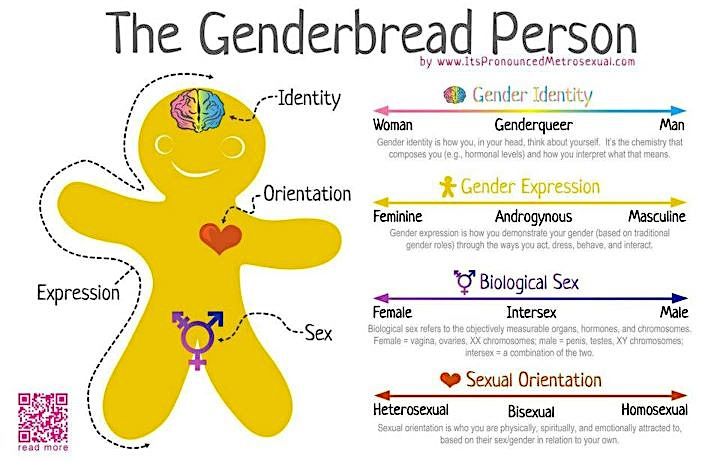
The
Genderbread
Person
“The
Genderbread
Person”3
provides
a
visual
aid
in
explaining
some
definitions.
Quick
Tip
for
School-‐Based
Staff:
There
are
some
words
that
should
NEVER
be
used
to
describe
a
transgender
or
gender-‐nonconforming
student.
These
include:
• “He-‐She”
• “Boy-‐Girl”
• “Hermaphrodite”
• “Tranny“
• “it”
• “Transgender-‐ed”
• “Transvestite”
3
http://itspronouncedmetrosexual.com/wp-‐content/uploads/2012/01/Genderbread-‐Person.pdf
District of Columbia Public Schools | June 2015 Page 5 of 38Transgender and Gender-‐Nonconforming Policy Guidance Student Transitions Not all gender-‐nonconforming students identify as being transgender, so transition may look very different for each student and not all people who undergo a transition desire the same outcome. In most cases, transitioning is a very private matter. Students may choose to have their parents participate in this process; however parental participation is not required. When appropriate, schools should work closely with the student and family in devising an appropriate plan regarding the confidentiality of the student’s transgender status. A sample school planning tool is included in Appendix III. This planning tool provides a list of topics for a transitioning student to review with a trusted adult in the school and/or a school administrator. Please note that the student chooses who should be involved in these meetings. Privacy considerations also may vary with the age of the student. Please see below for additional guidance specific to elementary-‐aged students. The contents of the plan should be discussed only with the persons who are responsible for implementing the plan. For example, the PE teacher should be notified that a student who had previously used a boys locker room would move into the girls area. Information in the school planning tool contains personal notes about the student and is maintained by school officials involved in developing the school plan. Information should not be considered an official educational record under the Family Educational Rights and Privacy Act (FERPA). This means that information from the school planning tool may be shared with the student’s parents or guardians only if the student has expressed the desire to have their involvement, but parents are not entitled to access this information under FERPA. DEVELOPMENTALLY APPROPRIATE PROTOCOLS In order to maintain privacy and confidentiality regarding their transition and gender identity, transgender students may wish—but are not required—to transition over a summer break or between grades. Regardless of the timing of a student’s transition, the school shall act in accordance with the following developmentally appropriate protocols. These protocols are guidelines, but each student situation should be handled according to the maturity of each individual student, while still respecting that student’s rights. Grades PK3-‐5 Generally, the parent or guardian will inform the school of an impending transition. However, it would be appropriate to approach the family of an elementary school student if school staff believes that a gender identity or expression issue is presenting itself at school and creating difficulty for the student. Together, the family and school can then identify appropriate steps to support the student. A guide of community resources can be found in Appendix VII and a school-‐level planning document can be found in Appendix III of this document. District of Columbia Public Schools | June 2015 Page 6 of 38
Transgender
and
Gender-‐Nonconforming
Policy
Guidance
Grades
6-‐12
Generally,
notification
from
the
student’s
parents
or
guardians
about
their
gender
identity,
gender
expression,
or
transition
is
unnecessary,
as
they
may
already
be
aware
and
supportive.
In
some
cases,
however,
notifying
parents
or
guardians
carries
risks
for
the
student,
such
as
being
kicked
out
of
the
home.
Prior
to
notification
of
any
parent
or
guardian
regarding
the
transition
process,
school
staff
should
work
closely
with
the
student
to
assess
the
degree
to
which,
if
any,
the
parent
or
guardian
will
be
involved
in
the
process
and
must
consider
the
health,
wellbeing,
and
safety
of
the
transitioning
student.
Quick
Tip
for
School-‐Based
Staff:
Since
students
are
likely
to
be
m ore
comfortable
in
some
areas
of
school
than
others,
their
transition,
particularly
in
the
early
phases,
m ay
be
“site-‐specific,”
meaning
they
choose
to
go
by
one
name
or
have
one
pronoun
used
in
one
place
and
another
name
or
pronoun
used
in
another.
For
example,
a
student
may
feel
m ore
comfortable
expressing
their
gender
identity
in
a
student
club
or
small
group,
but
not
to
the
larger
school
community
or
at
home.
Whatever
the
student
prefers
should
be
acknowledged
and
respected.
Be
aware
of
the
preference
of
the
student
and
always
use
their
preferred
reference
w hen
you
are
speaking
to
the
student
and
about
the
student
to
another
person.
Being
sensitive
about
where
the
student
is
open
about
their
identity
is
crucial
to
being
an
effective
ally.
District of Columbia Public Schools | June 2015 Page 7 of 38 Transgender
and
Gender-‐Nonconforming
Policy
Guidance
Names/Pronouns
Students
have
the
right
to
be
addressed
by
the
name
and
pronoun
that
correspond
to
the
student’s
gender
identity.
A
court-‐ordered
name
or
gender
change
is
not
required,
and
the
student
does
not
need
to
change
their
official
records.
If
a
student
wishes
to
go
by
another
name,
the
school’s
registrar
can
enter
that
name
in
the
“Preferred
First”
name
field
of
the
STARS/Aspen
database.
The
image
below
provides
a
screenshot
from
the
STARS
database
that
illustrates
how
an
unofficial
name
change
can
be
entered
in
the
system
after
discussion
with
the
school
registrar.
Please
note
that
the
name
in
the
database
is
part
of
an
official
educational
record
and
is
therefore
covered
by
the
Family
Educational
Rights
and
Privacy
Act
(FERPA),
meaning
that
if
a
parent
or
guardian
requests
access
to
see
their
student’s
records,
they
will
have
access
to
the
student’s
preferred
name.
If
a
student
transitioning
at
school
is
not
ready
to
share
with
their
family
about
their
transgender
status,
this
should
be
respected.
In
this
scenario,
school
staff
should
make
a
change
socially,
calling
the
students
by
the
preferred
name,
while
their
official
STARS/Aspen
information
remains
the
same.
If
the
student
does
obtain
a
legal
name
change,
the
appropriate
fields
should
be
updated
in
STARS/Aspen.
This
will,
in
turn,
generate
a
new
DC
ONE
Card
for
the
student.
Please
note
that
a
student’s
diploma
must
be
the
legal
name
of
the
student.
The
counselor
or
graduation
point
of
contact
for
the
school
will
meet
with
each
student
to
ask
what
their
name
preferences
are,
such
as
the
arrangement,
or
use,
of
initials
for
first
and
middle
names.
Schools
should
work
with
students
on
a
case-‐
by-‐case
basis
to
ensure
that
their
individual
needs
are
met
and
respected.
Generally,
if
a
student
wishes
for
their
name
to
be
changed
at
school,
despite
whether
or
not
a
student
has
brought
in
a
legal
name
change,
all
unofficial
records
should
reflect
their
preferred
name.
Examples
of
unofficial
school
documents
include
yearbooks,
team
and
class
rosters,
and
newspapers/newsletters.
Quick
Tip
for
School-‐Based
Staff:
It
is
always
appropriate
to
ask
a
student
their
preferred
name
and
gender
pronoun.
This
can
set
the
tone
for
a
more
respectful
and
trusting
relationship.
District of Columbia Public Schools | June 2015 Page 8 of 38 Transgender
and
Gender-‐Nonconforming
Policy
Guidance
School
Facilities
and
Requirements
Bathrooms
Having
safe
access
to
restroom
facilities
is
important
to
the
health
and
wellbeing
of
all
people,
including
those
who
identify
as
transgender
and
gender-‐nonconforming.
Students
are
allowed
to
use
the
same
bathrooms
as
their
peers,
unless
they
request
alternate
accommodations.
This
means
that
transgender
and
gender-‐nonconforming
students
are
entitled
to
use
the
bathroom
that
matches
their
gender
identity.
Any
student,
transgender
or
otherwise,
who
has
a
need
or
desire
for
increased
privacy,
regardless
of
underlying
reasons,
also
has
the
right
to
access
a
single-‐user
restroom,
such
as
a
staff
bathroom
or
the
bathroom
in
the
nurse’s
office.
However,
the
single-‐user
bathroom
may
not
be
given
as
the
only
option
for
transgender
or
gender-‐nonconforming
students.
Locker
Rooms
Schools
may
maintain
separate
locker
room
facilities
for
male
and
female
students.
However,
all
students
must
have
access
to
the
locker
room
facility
that
corresponds
to
their
gender
identity.
If
there
is
a
request
for
increased
privacy,
any
student
should
be
offered
access
to
a
reasonable
accommodation,
such
as:
• A
separate
changing
schedule
• Use
of
a
private
area
in
the
facility
(e.g.,
a
restroom
stall
with
a
door
or
an
area
separated
by
a
curtain)
• Use
of
a
nearby
private
area
(i.e.,
nearby
restroom
or
health
suite)
• Assignment
of
student
locker
in
close
proximity
to
staff
office
or
a
supportive
peer
group.
Ultimately,
if
a
student
expresses
discomfort
to
any
member
of
the
school
staff,
that
staff
member
should
review
these
options
with
the
student
and
ask
the
student
permission
to
engage
the
school
LGBTQ
liaison
or
another
designated
ally
in
the
building.
Quick
Tip
for
School-‐Based
Staff:
Some
students
may
feel
uncomfortable
using
shared
facilities.
Facilities
that
are
currently
designed
for
single
users
m ust
be
designated
as
gender-‐neutral.
Dress
Code
Schools
may
enforce
dress
codes,
but
any
dress
code
must
be
gender-‐neutral.
Students
must
have
the
right
to
dress
in
accordance
with
their
gender
identity,
within
the
constraints
of
the
dress
codes
adopted
by
the
school.
School
staff
must
not
enforce
a
school’s
dress
code
more
strictly
against
transgender
and
gender-‐nonconforming
students
than
other
students.
Quick
Tip
for
School-‐Based
Staff:
Gender-‐neutral
dress
code
guidelines
apply
to
regular
school
days
as
well
as
any
special
events,
such
as
graduation
ceremonies
and
prom.
For
example,
schools
m ay
require
formal
attire
for
all
students
at
a
ceremony,
but
m ay
not
specify
that
girls
must
w ear
dresses
and
boys
must
w ear
ties.
District of Columbia Public Schools | June 2015 Page 9 of 38Transgender and Gender-‐Nonconforming Policy Guidance Gender-‐based Activities Intramural/Interscholastic Athletics DCPS athletics are managed and operated by the DC Interscholastic Athletics Association (DCIAA); athletics activities at the District level are managed and operated by the District of Columbia State Athletic Association (DCSAA). Both the DCIAA and the DCSAA support the participation of transgender and gender-‐nonconforming students in all athletics activities in alignment with the DC Human Rights Act, Title IX, and other laws and regulations prohibiting discrimination or promoting participation in interscholastic programs and activities. All students should have the opportunity to participate in DCIAA and DCSAA activities in a manner that is consistent with their gender identity, irrespective of the gender listed on a student’s records or identification documents. Physical Education All students must be permitted to participate in physical education classes and intramural sports in a manner consistent with their gender identity. A Note to School Staff Wherever arbitrary gender dividers can be avoided, they should be eliminated. For example, when dividing the class into two lines based on male and female, perhaps the students could be divided by the first letters of their last names, type of shoe, color clothing, etc. Lunch divisions can be handled similarly, by dividing the students in half by last name as opposed to gender. Simple things, such as calling students “students” or “scholars” instead of “boys and girls,” may seem insignificant but actually make a notable difference to students who feel alienated because they may not identify as being part of either of the two binary categories. District of Columbia Public Schools | June 2015 Page 10 of 38
Transgender and Gender-‐Nonconforming Policy Guidance Privacy and Confidentiality Privacy All persons, including students, have a right to privacy, and this includes the right to keep one’s gender identity private at school. Information about a student’s transgender status, transition process, legal name, or gender assigned at birth also may constitute confidential medical information. Disclosing this information to other students, their parents, guardians, or other third parties may violate privacy laws, such as FERPA. This is why schools must use caution when sending out any notification to other parents about a student who is transitioning. The District must ensure that all medical information relating to transgender and gender-‐nonconforming students will be kept confidential in accordance with applicable DC and federal privacy laws. School staff may not disclose information that may reveal a student’s transgender status or transition process to others, including parents, guardians, and other school staff, unless legally required to do so (e.g., such information is contained in an educational record under FERPA), or unless the student has authorized such disclosure. The only exception is when working with elementary-‐aged students. For more information, please refer to the discussion regarding Developmentally Appropriate Protocols beginning on Page 7 of this guidance. Transgender and gender-‐nonconforming students have the right to discuss and express their gender identity and expression openly and decide when to share information, with whom, and how much to share. When contacting the parent or guardian of a transgender or gender-‐nonconforming student, school staff should use the student’s legal name and the pronoun corresponding to the student’s gender assigned at birth unless the student, parent, or guardian has specified otherwise. Outside Media and Community Communication When communicating to the media or community about issues related to gender identity, schools should contact the DCPS Press Secretary. Rather than directly commenting on the issue, DCPS staff should direct inquiries from families or the immediate school community to the principal. District of Columbia Public Schools | June 2015 Page 11 of 38
Transgender and Gender-‐Nonconforming Policy Guidance A Note About Staff, Parent/Guardians and Visitors As with young people, not all gender nonconforming adults identify as being transgender, so transition may look very different for each staff member, parent, guardian or school visitor, and not all people who undergo a transition desire the same outcome. Staff members, parents, guardians and visitors in our schools also have the right to keep their transgender identity private and confidential, be addressed by the name and pronoun that correspond to their gender identity, and dress in accordance with their gender identity. They also have the right to use the bathrooms and locker rooms that match their gender identity. See Appendix V and VI for sample letters to school communities regarding staff and family transitions. District of Columbia Public Schools | June 2015 Page 12 of 38
Transgender and Gender-‐Nonconforming Policy Guidance Frequently Asked Questions What do we do about bathrooms? Transgender and gender-‐nonconforming students have the right to utilize the restroom that corresponds with their gender identity. Students cannot be required to utilize a single use restroom or the nurse’s office. DC nondiscrimination laws protect students; students are eligible to file a complaint with the DC Office of Human Rights against an individual or entity who deny them access to school facilities for a discriminatory reason. How do we manage locker rooms and sports participation? The DCIAA is currently creating specific guidance for its athletics programs consistent with the general policy that students can participate in athletics and use locker facilities in a manner consistent with their gender identity. The DCSAA handbook states that students are eligible to petition to compete in gender-‐specific sports according to their gender identity when they are denied the right by a coach or other person. With this in mind, the general protocol should be to allow transgender and gender-‐nonconforming students to participate in the PE classes and join the sports teams that align with their gender identity. As a part of this inclusion, accommodations should be made to facilitate transgender students entering and using the locker room that aligns with their gender identities. Specifics on how to make this accommodation must be dealt with on a case-‐by-‐case basis in coordination with the student, the student’s family (if applicable) and school staff. For example, a student who expresses discomfort with changing or showering around other students, transgender or not, should be offered alternative facilities (e.g., a changing stall separated by a shower curtain or single-‐user restroom). What do I call the student? When talking both to and about transgender students, these students should be addressed by their preferred name and gender pronoun. If you are unsure about a student’s preferred name or pronoun, it is appropriate to privately and tactfully ask the student what they prefer to be called. Additionally, when speaking about a student, it is rarely necessary to label them as being transgender, as they should be treated the same as the rest of their peers. If, for administrative reasons, it is necessary to acknowledge the student’s gender identity or transition, use the term the student uses to identify themselves. If you don’t know how they identify, say “gender-‐nonconforming” or “gender variant.” Transsexual is a clinical term used to describe people who have transitioned from one gender to another through gender reassignment surgeries or sex affirmation surgeries. Some people identify in this way but it can be considered offensive, since this was a term that the medical profession imposed on the community. Always ask a person first before assuming they identify as transsexual. Transgender is an umbrella term—more questions are needed to be able to accurately address an individual. Asking for their preferred name and pronouns is a first step. I’m an elementary school teacher with a gender-‐nonconforming student. Should I talk to their parents about this? Generally, it will be the parent or guardian who informs the school of the impending transition. However, it is not unusual for a student’s desire to transition to first surface at school. If school staff believes that a gender identity or expression issue is presenting itself and creating difficulty for the child at school, it is appropriate to approach the parents about the issue. The family and school can then identify appropriate steps to support the student. District of Columbia Public Schools | June 2015 Page 13 of 38
You can also read


