Market Relevant Codes and Communication Leadership
←
→
Page content transcription
If your browser does not render page correctly, please read the page content below
NATIONAL FARM ANIMAL CARE COUNCIL
  CONSEIL NATIONAL POUR LES SOINS AUX ANIMAUX D’ELEVAGE

Market Relevant Codes and
Communication Leadership
        PROJECT ACHIEVEMENTS REPORT

 Year One (May 2014 - March 2015)

                           Funding for this project has been provided through the AgriMarketing Program
                                under Growing Forward 2, a federal–provincial–territorial initiative.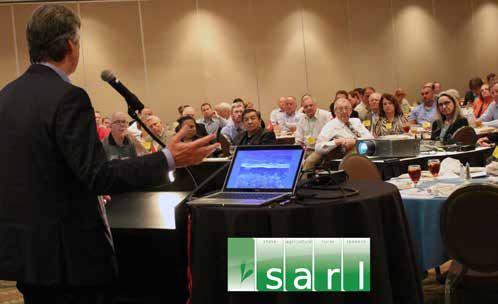
Table of contents                                          Driving Canada’s progress
Driving Canada’s progress. . . . . . . . . . . . . . . 2
Launching a new generation. . . . . . . . . . . . .  3
                                                           Working together to shape a strong future
Communication leadership . . . . . . . . . . . . . .  4    A new chapter is underway to advance farm animal care and welfare in Canada. The National
                                                           Farm Animal Care Council (NFACC) plays a central role by coordinating national processes
Team Canada for Codes development . . . . . . . 5
                                                           to drive this progress. This helps Canada shape a strong future for its agriculture industries,
Canada taking charge: The Codes in action . . . 6          growing a reputation as a farm animal care leader.
Did you know? Code facts. . . . . . . . . . . . . . .  8
                                                           Raising the bar
NFACC partners                                             NFACC made a number of significant strides in 2014. We completed the Agricultural Flexibility
                                                           project “Advancing Animal Care and Addressing Market Expectations,” setting a high bar for
Agriculture and Agri-Food Portfolio (AAFC, CFIA)           ourselves. We also received funding for the “Market Relevant Codes and Communication
Alberta Farm Animal Care Association                       Leadership” project under Growing Forward 2. Through Agri-Flex funding we updated and
British Columbia SPCA                                      released six Codes of Practice (pigs, sheep, beef cattle, equine, mink and farmed fox). The new
                                                           project allows us to complete revisions to two other Codes (poultry – layers and meat birds),
British Columbia Farm Animal Care Council
                                                           initiate and complete the review of two additional Codes (bison and veal calves) and develop a
Canada Fox Breeders Association                            Code for rabbits. It is great to see more industry groups following the NFACC Code development
Canada Mink Breeders Association                           process and to see governments investing in this important bedrock piece of work.
Canadian Bison Association
                                                           Meeting new challenges
Canadian Cattlemen’s Association
                                                           Being under a very compressed time frame for completing Codes has posed a challenge. The
Canadian Federation of Agriculture
                                                           Council is committed to reviewing Codes every five years and renewing them every ten years.
Canadian Federation of Humane Societies                    We recognize the importance of spacing out the Code revisions to avoid over-taxing our most
Canadian Food Inspection Agency                            valuable commodity -- people.
Canadian Hatching Egg Producers
                                                           The wealth of human resource contributions has been simply remarkable. From 2010 to 2014
Canadian Meat Council
                                                           stakeholders contributed over 24,000 professional hours to the development of the Codes and
Canadian Pork Council                                      the assessment framework. The Council will be working on a planned review/renewal schedule
Canadian Poultry and Egg Processors Council                that best manages resources and responds to developments in science and other areas to keep
Canadian Sheep Federation                                  Code content up to date and relevant.
Canadian Veal Association                                  In addition, NFACC is considering opportunities to update the transport Code. It is also exploring
Canadian Veterinary Medical Association                    the advantages of becoming an incorporated body, and looking into new ways to support growth
Chicken Farmers of Canada                                  in membership and strengthen its financial management options.
Dairy Farmers of Canada                                    Broadening participation and value
Dairy Processors Association of Canada
                                                           New members continue to come forward showing that interest in NFACC is growing. We will
Egg Farmers of Canada                                      continue to ensure that all groups are engaged and receive value from NFACC.
Equine Canada
Farm & Food Care Ontario                                   The year 2014 also saw a transition in Chairs. Edouard Asnong has been a champion for
                                                           NFACC since before he became Chairman in 2006. Growing the Council, seeing the successful
Farm & Food Care Saskatchewan
                                                           completion of many Codes of Practice and the initiation of the Animal Care Assessment
Ontario SPCA                                               Framework are among his key accomplishments. I hope to continue growing the Council,
Ontario Trucking Association                               increasing its durability and keeping the conversation about farm animal care in Canada broad
  (Livestock Transporters’ Division)                       and inclusive.
Provincial Ministries of Agriculture
  (currently represented by Ontario)
                                                           Strengthening Canada’s leadership position
Retail Council of Canada                                   Industry groups continue to develop and renew Codes and move forward with on farm animal
                                                           welfare assessment, as all stakeholders engage in open and inclusive discussion. I am confident
Saskatchewan SPCA
                                                           these “pillars of progress” on multiple fronts will serve the Canadian farmed animal care system
Turkey Farmers of Canada                                   well and strengthen our leadership position internationally.

Associate Members
A & W Food Services of Canada Inc.
Burnbrae Farms
Loblaw Companies Ltd.
Manitoba Pork Council                                                               Ryder Lee
                                                                                    NFACC Chairman
McDonald’s Restaurants of Canada Ltd.
Saputo Inc.
Sobeys Inc.
                                                           Layer and veal calf photos on the cover: Ontario Agriculture Photo Library
Tim Hortons
                                                           2   NFACC PROJECT ACHIEVEMENTS REPORT      MAY 2014 - MARCH 2015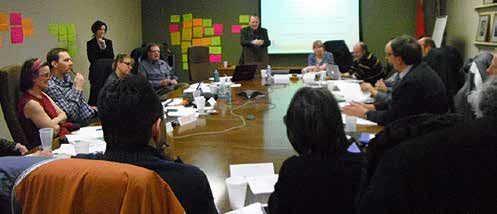
Launching a new generation
Market Relevant Codes and Communication Leadership                                                     Building a resource for
project kicks-off                                                                                      knowledge transfer
A new infusion of activity was announced in July 2014 through the office of Agriculture Minister       Developing Codes and assessment approaches
Gerry Ritz. It heralded a new investment of over $2 million for a project that will allow Canadian     is a major undertaking. Equally important is
animal agriculture to continue to address the increasing public interest regarding farm animal         an engagement strategy to support awareness,
welfare. The investment was made through Agriculture and Agri-Food Canada’s AgriMarketing              participation and uptake.
Program, a five-year, $341-million initiative under Growing Forward 2. Many thanks to the              The NFACC website is an important engagement tool.
Canadian Animal Health Coalition for providing management services for this project.                   The site, nfacc.ca, has steadily expanded to become
New wave of Codes activity                                                                             a leading source of information on all things NFACC
                                                                                                       as well as on the state of stakeholder-driven farmed
Canada is marching ahead with next priorities for updating national Codes of Practice for the          animal care and welfare progress in Canada.
care and handling of farm animals. Progress continues on the chicken/turkeys/breeders and
                                                                                                       A few key metrics:
layer Codes that were initiated under Agri-Flexibility funding. Out of the gate are new efforts for
bison, veal calves and rabbits.                                                                        • Strong visits. NFACC.ca has averaged 5,000 visits
                                                                                                         per month over the past two years.
Perspectives on progress                                                                               • Interest spikes at key times. Visits increase when
Bison. “Since the last Code was published in 2001, the benefits of science and another 14                a Code is in public comment or an animal welfare
years of experience with these majestic animals will allow us to update the present Code to              issue is in the news.
provide producers and other stakeholders with clear and transparent practices on accepted              • Use by both new and repeat visitors. Most visits
bison care and handling practices.” – Mark Silzer, President of the Canadian Bison Association           are from new visitors, but a strong following of
                                                                                                         repeat visitors account for about 35% of the visits.
Veal calves. “The Canadian Veal Association is looking forward to partnering with NFACC on             • Loyalty and value demonstrated. A quarter of the
the veal Code of Practice review process. Review and update of the 1998 veal Code will involve           repeat visits are from direct entry, demonstrating
stakeholders from a wide cross section of the industry and will be focused on ensuring up-to-            user loyalty. Direct entry comes from people who
date and practical approaches to the care and welfare of calves raised for the veal market.”             have typed nfacc.ca directly into their browser,
– Bob Wynands, President of Canadian Veal Association                                                    visited web pages via a bookmark, or clicked on
                                                                                                         an untagged link from an email or document.
Rabbits. “The development of this Code is an excellent opportunity for Canada’s rabbit sector
                                                                                                       • Strong referrals. Approximately 30% of the repeat
to come together and establish a national standard that ensures a good quality of life for
                                                                                                         visits are through links from other web sites.
rabbits raised in Canada. The NFACC Code process ensures this Code is relevant, current and
                                                                                                         This shows that others are referring people to the
developed with input from across our diverse sector.” – Maxime Tessier, Vice-President of the
                                                                                                         NFACC web site.
Syndicat des producteurs de lapins du Québec
See the Codes of Practice overview chart on page 8 for further details. Visit www.nfacc.ca/codes-      The website showcases a range of information with
of-practice for progress reports including meeting summaries and a progress timeline.                  a user-friendly, easy-to-navigate format including

   “
                                                                                                       the latest news; comprehensive Codes coverage;
                                                                                                       background on everything ‘NFACC’ and a news
         NFACC is essential to the livestock industry as a forum for stakeholders                      archive that provides a useful reference for media
         to discuss animal welfare challenges. NFACC engages a diverse range of                        and industry communicators.
         stakeholders all across the value chain to produce and update the Codes of

                                                                                         ”
                                                                                                       The following diagram shows where people are going
         Practice for farm animal care, lending great credibility to this process and                  when they visit the web site.
         ensuring all voices are heard. We are proud to support such an organization.
                                                                      - Burnbrae Farms

                                                                                                                                      Other
                                                                                                                                  (ACAF, events...)
                                                                                                            Codes -                    23%
                                                                                                         specific species
                                                                                                               41%
                                                                                                                                        News
                                                                                                                                         16%
                                                                                                                            Codes
                                                                                                                            overall
                                                                                                                             20%

                                                                                                       Get NFACC news directly. If you would like to
                                                                                                       join NFACC’s mail list to receive communication
                 Initial veal calves Code development meeting in Guelph, Ontario                       materials, ranging from newsletters to news releases
                                                                                                       email mikki@nfacc.ca
                                     NFACC PROJECT ACHIEVEMENTS REPORT     MAY 2014 - MARCH 2015   3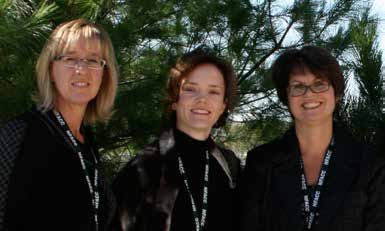
Public Comment Period                                         Communication leadership
powers progress
Open process lets all Canadians have                          Championing Canada’s commitment to farmed animal
their say                                                     welfare progress
Public feedback is an essential part of Canada’s              Learning from one another, sharing knowledge and boosting collaboration are all necessary to
process for developing Codes of Practice. The Public          support good processes and effective implementation at all levels – and all depend on a strong
Comment Period ensures everyone, from farmers                 commitment to communications.
to consumers, has the opportunity to have a say in
the development of each Code. Feedback collected              “Promoting NFACC and its processes as our national approach to farm animal care is essential
through the comment period plays a critical role in           to build Canada’s brand as a farmed animal welfare leader,” says Robin Horel, Vice Chair of
supporting robust discussion on revisions needed              NFACC. “It demonstrates that we have a strategy and processes in place to address farm animal
before a Code is released.                                    care and that this is a legitimate approach encompassing all stakeholders. It’s about building
                                                              trust. It’s about delivering animal welfare leadership. It’s about building a strong and sustainable
The 60-day comment period begins after the Code
                                                              future for our agriculture industries.”
Development Committee finalizes the draft Code,
approximately eight months before the Code is                 Direct engagement with stakeholders
finalized.
                                                              A major part of NFACC’s communications leadership
Feedback strengthens results                                  approach is the personal engagement delivered
A customized online comment system enables NFACC              by meeting directly with major stakeholders and
to collect and sort thousands of comments. The Code           influencers. For example, in the past year NFACC’s
secretary reviews all submissions, organizes the data         Chair and General Manager have had the opportunity
and presents it to the Code Development Committee             to present on the Codes and Code development
for deliberations in preparing the final Code.                process to a number of groups including:
Visit www.nfacc.ca/public-comment-period for more             •    Council of Chief Veterinary Officers
information.                                                  •    FPT Regulatory and Policy ADMs
                                                              •    Ontario Veterinary College Animal Welfare Forum
By the numbers                                                •    National Farmed Animal Health and Welfare
Following is the approximate number of submissions                 Forum
received for each of the Codes during their respective        •    Legislative Ag Chairs Summit in Florida
public comment period. They provide a window into             •    Alberta Agriculture Food and Rural Development
the interest and diversity of perspectives on farm            •    Farm and Food Care Ontario IMPACT information
animal welfare.                                                    session
                                                              •    Ministère de l’Agriculture, des Pêcheries               NFACC GM presenting at the IMPACT
                                                                   et de l’Alimentation du Québec.                           information session in Ontario
                                              4,700

  800
  700
  600
  500
  400
  300
          Beef Cattle

  200
                        Equine

                                                      Sheep
                                 Mink

  100
                                        Fox

                                              Pig

    0

“Gathering ideas and building consensus through
a multi-stakeholder approach is the backbone of
our process. The Public Comment Period is a vital
component. We encourage participation by anyone
with an interest in farm animal care because this
ultimately supports a robust process and helps
make the Codes the best they can be.”
        – Jackie Wepruk, General Manager of NFACC
                                                                              Legislative Ag Chairs Summit in Florida (www.agandruralleaders.org)

  Managing the rising expectations in farm animal care is not only about doing the right thing, it’s about
  engaging with all stakeholders both within and outside of agriculture.

                                                              4   NFACC PROJECT ACHIEVEMENTS REPORT   MAY 2014 - MARCH 2015
Introducing your Team Canada for Codes development
Expertise, passion and dynamic teamwork support a successful process
NFACC’s progress is driven by the outstanding people who provide the skill        Caroline Ramsay
sets required to support Code development.
                                                                                  Caroline is Code development secretary for the veal calves and rabbit
Betsy Sharples                                                                    Codes. Caroline also served as Code secretary for the equine Code and as
Betsy is the Code development secretary for the poultry Codes (layers             coordinator of the Animal Care Assessment Framework.
and meat birds). Her past experience with NFACC includes representing
                                                                                  Caroline’s interest in agriculture stemmed from an early career as a chef.
the livestock transportation sector on the dairy Code and serving as Code
                                                                                  She has worked on farms in Ontario and Alberta and studied agriculture
secretary on the pig Code.
                                                                                  at the University of British Columbia obtaining a B.Sc. Caroline also
Prior to NFACC Betsy represented the interests of livestock trucking              worked with the BC SPCA’s farm animal department assisting with its
companies for 20 years with the Ontario Trucking Association. In this role,       farm certification program. Caroline is professionally trained in project
she was involved in the launch of NFACC. In the farmed animal sector,             management, communications, facilitation and negotiation. She is currently
Betsy has delivered on project-based contracts for Farm & Food Care               pursuing a Masters in Public Policy at Simon Fraser University. She is an
Ontario and Alberta Farm Animal Care.                                             Articling Agrologist with the B.C. Institute of Agrologists and member of The
                                                                                  Institute of Public Administration of Canada.
“I believe that NFACC’s collaborative Code Development process sets
Canada apart from other jurisdictions,” says Sharples “I have enjoyed my          “We have so much to be proud of when it comes to our Codes of Practice
role in serving as Code secretary and appreciate the opportunity to be            – not only the credible approach we take but the specific standards that
part of this important and, at times, very challenging process. I think that      have been agreed to,” says Ramsay “The discussions around the Code
the individuals who serve on Code Development Committees need to be               table, while difficult at times, are an extremely valuable way to build
recognized for their contributions; they have had to do the heavy lifting so      understanding across stakeholders.”
to speak, by making some very difficult decisions and then getting their
constituents to support them.”
                                                                                  Jeffrey Spooner
                                                                                  Jeff is the most recent addition to the
                                                                                  team. He came onboard in January
                                                                                  2015 and is leading the revisions to
                                                                                  the bison Code.

                                                                                  Jeff is a social scientist working in the
                                                                                  field of animal welfare. Academically,
                                                                                  he is interested in the nature of
                                                                                  human values, attitudes and beliefs.
                                                                                  As a consultant, he draws on that
                                                                                  knowledge to facilitate agreeable
                                                                                  animal care and handling policies.
                                                                                  Jeff frequently reviews articles for
                                                                                  publication in scientific journals and
                                                                                  collaborates on academic and public
                                                                                  research projects. He has also worked
                                                                                  as a writer and editor.                              Jeff Spooner
            Mikki Shatosky, Caroline Ramsay and Betsy Sharples
                                                                                  “Since my introduction to NFACC at the 2007 national conference, I
Mikki Shatosky                                                                    have been a great admirer of the people and processes responsible
                                                                                  for facilitating such important advances in animal care and welfare in
Mikki has been on contract with NFACC since 2010. As the Code technical           Canada,” says Spooner “Being a long-standing proponent of consensual
and communication assistant her work includes many diverse roles:                 based policy development, it is an honour to have been invited to make
managing the web site; developing and managing the public comment                 a small contribution to such a noble effort. I am looking forward to the
period system; coordinating conferences and events; graphic design and            opportunity.”
layout for the final Codes; coordination, layout and distribution of all major
communications, including news releases, updates, achievement reports,            Thank you to other key team members
and assisting with project reporting.                                             NFACC would also like to extend a thank you to Nadine Meade and Allison
                                                                                  Taylor. Nadine led the revisions to the sheep, ranched fox and mink Codes.
“Animal welfare has always been important to me,” says Shatosky “I
                                                                                  Allison worked on the beef cattle Code and helped set up the chickens,
know that if you’re going to earn a living raising animals, you have to
                                                                                  turkeys and breeders Code.
take good care of them. I’m proud to be part of a process that is built
on collaboration – seeing all these groups come together with the goal            “We are so fortunate for the talented people that have worked and continue
of producing standards that are good for the animals and that provide             to work with NFACC,” says Ryder Lee, Chair of NFACC.
farmers with practical and cost-effective solutions that meet the
animals’ needs.”

                                      NFACC PROJECT ACHIEVEMENTS REPORT     MAY 2014 - MARCH 2015   5
Canada taking charge: The Codes in action
The Codes of Practice are nationally developed guidelines for the care and handling of farm animals. Since 2009 seven Codes have been updated and
released through the NFACC process.

How the Codes are being used: Three snapshots of progress

                                                                              Equine1
                                                                                                                                   :
                                                                                                            entice 2070
                                                                                      Virtual Appr

                                                                                                                                port
                                                                                                                       de to Sup
                                                                                                             rning Gui
                                                                                                   ce and Lea y Studies
                                                                                          g Resour
                                                                               A Teachin eer and Technolog
                                                                               Alberta Car
                                                                                          Equine1
                                                                                CTS 2070:

                                                                                                                                             Swine Resources
                                                                                                                                                                    line
                                                                                                                                               • Code of Practice on
                                                                                                                                                 modules
                                                                                                                                                                    procedures
                                                                                                                                               • Interactive how-to to Tail”
                                           www.ctsanimals.ca                                                                                      videos - from “Tooth
                                                                                                                                                • Swine Handling
                                                                                                                                                   • Train the Trainer
                                                                                                                                                                       Low Stress
                                                                                                                                                   • Interactive DVD –
                                                                                                                                                     Handling
                                                                                                                                                                      resources
                                                                                                                                                • Swine Euthanasia

                                                                                                                                                                                                     www.farmimpact.ca

                                                                                                                                                              Education and training
  www.spca.bc.ca/pet-care/care-behaviour/horses

                              Veterinary Medical Centre
  Seminars bring horse health to communities

  A series of six “backyard horse seminars” this spring will deliver vital equine health management information to Saskatchewan horse
  owners right in their own communities.

  The Farm Animal Council of Saskatchewan (FACS) is organizing the seminars in partnership with the Western College of Veterinary
  Medicine (WCVM), Saskatchewan Horse Federation (SHF) and the Saskatchewan Ministry of Agriculture.

  The seminars aim to educate horse owners on basic standards of care and to introduce Canada’s updated Equine Code of Practice.

  “The seminars are partly to raise awareness about the code but also to provide education about the care and handling of horses for
  everyone from the beginner horse owner to the person who has been in the industry for a long time,” explains Dr. Steve Manning, an
  associate professor at the WCVM and a member of the FACS board of directors.

  Two WCVM veterinarians will attend each seminar to give presentations and to answer horse owners’ questions.

  Everyone is welcome to attend the free seminars. Registration begins at 6:30 p.m. and presentations will run from 7-9 p.m. Each
  seminar will feature four half-hour segments on the following topics:

         routine equine care including deworming, vaccinations and dental work
         hoof care
         equine nutrition
         the revised Code of Practice for the Care and Handling of Equines that was released in 2013

  The National Farm Animal Care Council of Canada (NFACC) produces Codes of Practice for most livestock industries including the
  equine industry. The equine code was updated in 2013 with input from the WCVM as well as from other universities, horse owners

           www.usask.ca/vmc/news/2014/seminars-
  and equine organizations across Canada.

  The comprehensive document covers all aspects of horse care from duty of care to facilities and housing, feed and water, health,
                                                                                                                                                                                    www.beefresearch.ca
            bring-horse-health-to-communities.php
  feedlot and reproductive management, husbandry practices, change or end of career and euthanasia.

  The code sets out both minimum requirements and recommended standards of care.

  Copies of the updated Equine Code of Practice will be available for attendees, or horse owners can download an electronic version
  of the code from the NFACC website.

                                                                                                                                        6   NFACC PROJECT ACHIEVEMENTS REPORT         MAY 2014 - MARCH 2015
Foundation for
Search
AUDIO
animal care
Printer Friendly Version
Audio Manitoba Listen
Audio Saskatchewan Listen
Pork Council Plans to Seek Improvements to
Manitoba's Proposed Municipal Planning Act
Peter Mah - Manitoba Pork Council
Rate this Article: Farmscape for May 6, 2005 (Episode 1799)
assessment
1 2 3 4 5
Manitoba Pork Council is applauding the province's introduction of
Name: a proposed municipal planning act but it will be looking for some
key changes before the bill becomes law.
Email:
Bill 33 was introduced in the legislature last week and is intended
programs
to streamline the municipal planning process.
Comments: It outlines the roles and responsibilities of councils, establishes
guidelines for livestock development and compels municipalities to
adopt development plans and zoning bylaws.
Pork Council Community Relations and Sustainable Development
Submit
Director Peter Mah says, while the bill sets a pretty good balance,
there are areas of concern.
TOP STORIES
Manitoba Agrees to Allow New Hog Clip-Peter Mah-Manitoba Pork Council
Barn Construction Under Special
Pilot Project Permit Evaluation Updated animal care assessment program
In our review of Bill 33, there are some good elements about it.
There are some areas of some concern still to Manitoba Pork
New animal welfare assessment module
Protocol
Manitoba Pork AGM Audio Special Council and indeed to agricultural producers across the province.
for April 16, 2015 In the move to try and develop a new planning legislation they
Increased Saskatchewan Hog wanted to try and increase opportunities for public participation.
Production Expected to Come From
Empty Facilities While that's good, they have provided in our view almost too much
Improved Immunity and Stepped discretion and flexibility on the part of a council to approve or not
Up Biosecurity Credited for approve a livestock application even though it meets all of the
Reduced PED Losses
development plan and zoning bylaw siting requirements and
“
Interest Builds Among Western
Canadian Pork Processors in separation requirements of the local area as well as all the
Expanded Pork Production provincial requirements.
Better Education Needed in Our concern really rests that, in spite of all of that, meeting those
Chemistry, Biology, and Physics at
Elemenatary and High School requirements, that council could in and of itself use one of the Focusing on animal welfare enhances
Levels criteria to turn down an application.
Consumers, Media, Regulators
Increasingly Interested in Antibiotic
We think that's not fair.
It's not consistent.
Canada’s reputation as a great place
Resistance
It's not good public accountability, particularly when the act does
not compel a council to give any reasons for the decisions.
for our farm animals, our farmers and
It leaves people wanting in terms of knowing and understanding
how and why their application either got approved or not approved. for the products from these farms.
on Improving the lives of farm animals
iry Science Associati
to the American Da helps foster a sense of pride in our
May 2014 farms and in the people who care for
”
these animals.
- Dr. Dan Weary, Animal Welfare Program,
Ron Maynard University of British Columbia
Updated industry expectations
Industry Notice
ANIMAL
September 25, 2014 WELFARE
The welfare of animals
Business
Consultation Decision: The Way We Do bility Report
raised for products in
al Responsi
Corporate Soci
Amending Order 16 - The BC Milk Marketing Board approves a mandatory
2013
Striving to be a force
for positive chang
e on the social and
ers,
our stores is important
that matte r most to our custom
Code of Practice for the Care and Handling of Dairy Cattle (Code) on-farm environmental issues
our colleagues and
our business. to us. We are working
closely with industry
At its September 3, 2014 Board meeting, the BC Milk Marketing Board conditionally partners and animal
approved a Draft Amending Order for a mandatory Code, pending an additional two welfare experts to
week final consultation. The Board received input from stakeholders, including the
ensure animal welfare
following organizations: the BC Dairy Association, the Island Milk Producers
Organization and the BC Dairy Council. In addition, the Board acknowledges the input standards and codes
received from the Milk Industry Advisory Committee (MIAC) at its September 15, 2014 of practice are in place that promote the care, protection and
meeting. safety of farm animals. Loblaw is an associate member of the National Farm
Animal Care Council (NFACC), a group of organizations that work together
Subsequently, on September 24, 2014, the Board approved the attached Amending to develop standard codes of practice for farm animals.
Order 16 to the Consolidated Order of September 1, 2013. This Amending Order
makes the applicable on-farm requirements of the Code of Practice for the Care and
Handling of Dairy Cattle: http://www.nfacc.ca/codes-of-practice/dairy-cattle
mandatory for all BC producers. The Amending Order is effective October 1, 2014.
NFACC PROJECT ACHIEVEMENTS REPORT MAY 2014 - MARCH 2015 7
The enactment of mandatory compliance with the Code is in accordance with the
consensus direction from dairy industry stakeholders at the June 26, 2014 “Industry
Meeting on Dairy Animal Welfare requirements in BC.”
Farm Structures
Evolution of the Codes Did you know? Code facts:
Not only has the Code content been updated over Order No. 345.000-1
the years, the look has also changed. Below is the
1989
Strong tradition. Canada has had Codes of Practice for the care and handling of farm animals
evolution of the poultry Codeof- one of Canada’s firstthe since the early 1980’s. The Canadian Federation of Humane Societies was the first to coordinate
Recommended Code Practice for
Codes of Practice. the process of developing Codes for all livestock species. The Canadian Agri-Food Research
Care and Handling of Poultry from Council then led the process from 1993-2003.
Hatchery to Processing Plant
Rise of NFACC. NFACC was initiated in 2005 and facilitated consultations in 2006 that led to
an updated Code development process. The updated process was test piloted in 2007-2009,
with an update to the dairy Code.
Producing updated Codes of Practice. Since 2009 seven Codes have been updated and
released through the NFACC process and five additional Codes are being updated/developed.
Once completed we will have 15 Codes for farm animals in Canada. See chart below.
How the provinces reference the Codes. A number of provinces incorporate the Codes by
reference within their provincial animal protection legislation (i.e., Manitoba, Saskatchewan,
New Brunswick, Newfoundland and Labrador and PEI). Other provinces use the Codes as a
reference guide for generally accepted management practices.
Code revision Estimated Estimated
Current version
Original version (1989)
Code initiated public comment Code release
This code is an updated version of the 1983 publication of the care and handling of chickens, and has been expanded
released
to include recommendations for the care and handling of turkeys. Each section pertaining to a particular type of
poultry (eggs, broilers and roasters and turkeys) is to be considered as a self-contained entity, to be used by the
through NFACC period date
industry in question. For this voluntary code to be fully effective those involved in the care and handling of poultry
should accept and adopt the code’s recommendations. To obtain a copy, please contact:
Beef Cattle 2013*
AGRICULTURE CANADA
Website: http://www.agr.ca/poultry/pub1757e.pdf
Bison 2001 Dec 2014 Fall 2016 Fall 2017
Recommended code of practice for the care
Page 1 of 1
Chickens, Turkeys & Breeders 2003 Oct 2011 Fall 2015 Spring 2016
and handling of pullets, layers and spent fowl
Dairy Cattle 2009*
Poultry - Layers Equine 2013*
Farmed Deer 1996
Farmed Fox 2013*
Goats 2003
Mink 2013*
Pigs 2014*
Poultry-Layers 2003 Jan 2012 Winter 2015 Summer 2016
Rabbit Dec 2014 Fall 2016 Fall 2017
Sheep 2013*
Current versions (2003)
Transport 2001
Veal Calves 1998 Dec 2014 Fall 2016 Fall 2017
Visit nfacc.ca/codes-of-practice for more details and a timeline.
* Codes developed through the NFACC development process
CODE OF PRACTICE
NFACC upholds processes that assist Canada’s farm animal
sectors and associated businesses to remain competitive,
FOR THE CARE AND HANDLING OF profitable and demonstrate social responsibility.
LAYERS CODE OF PRACTICE
FOR THE CARE AND HANDLING OF
CHICKENS,
TURKEYS AND National Farm Animal Care Council
BREEDERS Box 5061
Lacombe, Alberta T4L 1W7
403.783.4066
Mock up of the Codes scheduled nfacc@xplornet.com
to be released in 2016 www.nfacc.ca
(photo subject to change)
8 NFACC PROJECT ACHIEVEMENTS REPORT MAY 2014 - MARCH 2015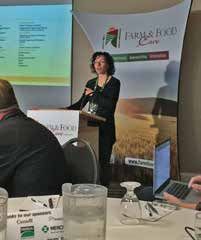
You can also read


