Mcgarryconsult.com NI FLAG STRATEGY - FInal Draft (Dec17)
←
→
Page content transcription
If your browser does not render page correctly, please read the page content below
NI FLAG STRATEGY 2018 - 2020

    mcgarryconsult.com
     McGarry Consulting | Business Planning & Funding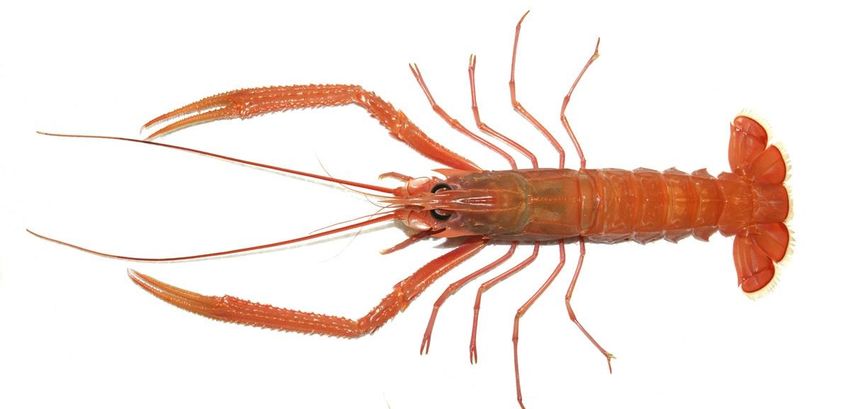
Disclaimer: McGarry Consulting reserve all rights to this report. This report was prepared for Newry,
Mourne and Down District Council in line with agreed terms of reference, and for no other purpose.
Anyone else who uses, reads or relies on this report does so entirely at their own risk, and by doing so
absolves and indemnifies McGarry Consulting of all liabilities. Version: Final Draft (December 2017)

Photos & Images Used:
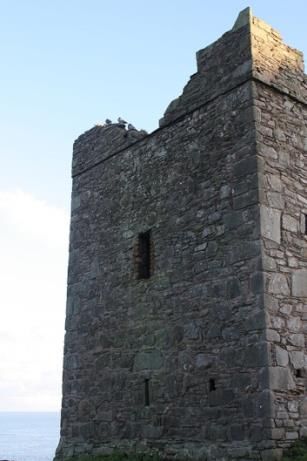
Ardglass Castle (© Ardfern 2010 and used under Creative Commons licence)
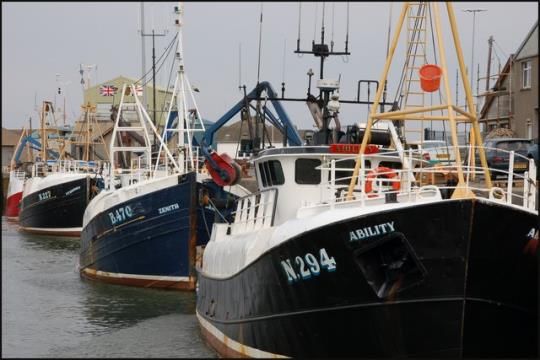
Kilkeel Trawlers (© Albert Bridge 2007 and used under Creative Commons licence)
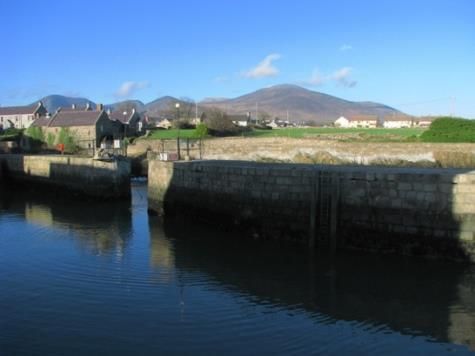
Annalong Harbour (© Rossographer 2007 used under Creative Commons licence)
Portavogie Aerial Shot (from 2014 Portaferry Village Plan)

Nephrops (© Dieno 2008 used under Creative Commons licence)
Vector Fish (© OpenClipart-Vectors used under Creative Commons (CC0 1.0) licence)
Give a man a fish and
  you feed him for a
day. Teach him to fish
and you feed him for a
       lifetime

This strategy is designed to help sustain NI fishing communities. To invest in skills, job
creation, enhancing the environment, maritime heritage and improving local governance
of local resources. It was determined by local communities for local communities. Local
communities who thought what can we do today to best prepare ourselves for tomorrow.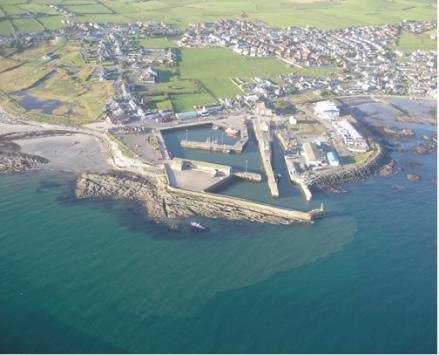
Contents
INTRODUCTION ................................................................................................................. 1

AREA PROFILE .................................................................................................................... 4

SWOT ANALYSIS & NEEDS ........................................................................................... 9

CONSULTATIONS............................................................................................................ 12

AIM & TARGETS ............................................................................................................... 14

DELIVERY............................................................................................................................ 16

APPENDICES ...................................................................................................................... 18

APPENDIX (I)                    FLAG-2 Committee
APPENDIX (II)                   FLAG Area – Profile
APPENDIX (III)                  Consultation Contribution Form
APPENDIX (IV)                   Target Information
APPENDIX (V)                    FLAG-1 Spend
ACRONYMS
Several acronyms are used in this report. They are listed below to make this report easier to read.

Table 0.1: Acronyms

 Acronym                Full Name
 A&NDBC                 Ards and North Down Borough Council
 CLLD                   Community Led Local Development
 DAERA                  Department of Agriculture, Environment and Rural Affairs
 EFF                    European Fisheries Fund (ran 2007 – 2013)
 EMFF                   European Maritime and Fisheries Fund (runs 2014 – 2020)
 FLAG                   Fisheries Local Action Group
 FLAG-1                 FLAG Committee/Strategy under EFF (i.e. 2007-2013)
 FLAG-2                 FLAG Committee/Strategy under EMFF (2014-2020)
 FPO                    Fish Producers Organisation
 NISRA                  NI Statistics and Research Agency
 NM&DDC                 Newry, Mourne and Down District Council
 RDP                    Rural Development Programme
 SEA-EMFF               South East Area – European Maritime Fisheries Fund
 SEAFLAG                South East Area – Fisheries Local Action Group
introduction
EMFF BACKGROUND
The European Maritime and Fisheries Fund (EMFF) is a European Structural Fund covering the period
2014-2020. It replaces the European Fisheries Fund (EFF) and aims to promote ‘smart sustainable
and inclusive growth’ across all sections of the fishing industry. Total EMFF funding in NI is 10% of
the UK total, of which €2.73m has been set aside to implement Community Led Local Development
(CLLD) strategies in NI. This CLLD strategy document outlines how that €2.73m should be spent.

FLAG
CLLD funding is delegated to local partnerships consisting of public, private, and community sector
representatives. There are over 2,600 such partnerships now across Europe including 307 fisheries
partnerships. Fisheries partnerships are limited to coastal areas and are known as FLAGs (Fishing
Local Area Groups). The NI FLAG area – under EFF and EMFF – is known as the South-East Area
FLAG and comprises the following fishing dependent villages of south eastern Co. Down:

    •   Ardglass
    •   Kilkeel (including Annalong)
    •   Portavogie

The South-East Area FLAG (SEAFLAG) is profiled in section 2.

FLAG RESPONSIBILITY
A 16-member NI FLAG Committee (known as FLAG-2) was established in October 2017, see Appendix
I for details. FLAG-2 members are representative of the local fishing community, and are responsible
for managing and overseeing this strategy. Newry, Mourne & Down District Council (NM&DDC) is
responsible for the administration and delivery of the strategy on behalf of FLAG-2. NI’s Department
of Agriculture, Environment and Rural Affairs (DAERA) match-fund the EMFF funding, and are
responsible for the overall EMFF fund in NI.

           December 2017                                                                           1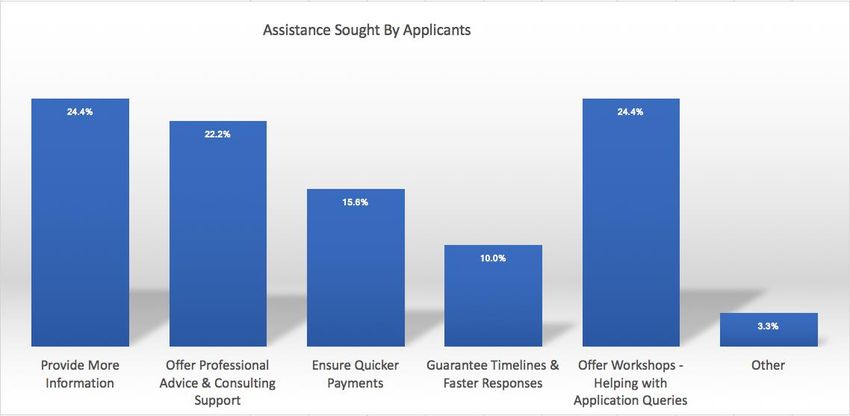
NI FLAG Strategy 2018 - 2020                                                    mcgarryconsult.com

EMFF PRIORITIES
Under the EMFF programme there are six priorities, of which Priority 4 specifically concerns CLLD:

Union Priority 4 –

       “Increasing employment and territorial cohesion by pursuing the following specific
       objective: the promotion of economic growth, social inclusion and job creation, and
       providing support to employability and labour mobility in coastal and inland
       communities which depend on fishing and aquaculture, including the diversification
       of activities within fisheries and into other sectors of maritime economy.”

DAERA directly manages the other five EMFF priorities. If a project can be supported under another
priority it cannot be supported under Priority 4.

EMFF – PRIORITY 4 OBJECTIVES
Art 63 of the EMFF regulation (no. 508/2014) refers to the implementation of CLLD strategies; and
outlines five specific objectives to be supported:

    A. Adding value, creating jobs, attracting young people and promoting innovation at all stages
        of the supply chain of fishery and aquaculture products

    B. Supporting diversification inside or outside commercial fisheries, lifelong learning and job
        creation in fisheries and aquaculture areas

    C. Enhancing and capitalising on the environmental assets of the fisheries and aquaculture
        areas, including operations to mitigate climate change

    D. Promoting social well-being and cultural heritage in fisheries and aquaculture areas,
        including fisheries, aquaculture and maritime cultural heritage

    E. Strengthen the role of fisheries communities in local development and governance of local
        fisheries resources and maritime activities

These five objectives are consistent for all FLAG projects across the EU, and cannot be changed.
Therefore, these objectives will guide this strategy and the projects it can support.

            December 2017                                                                             2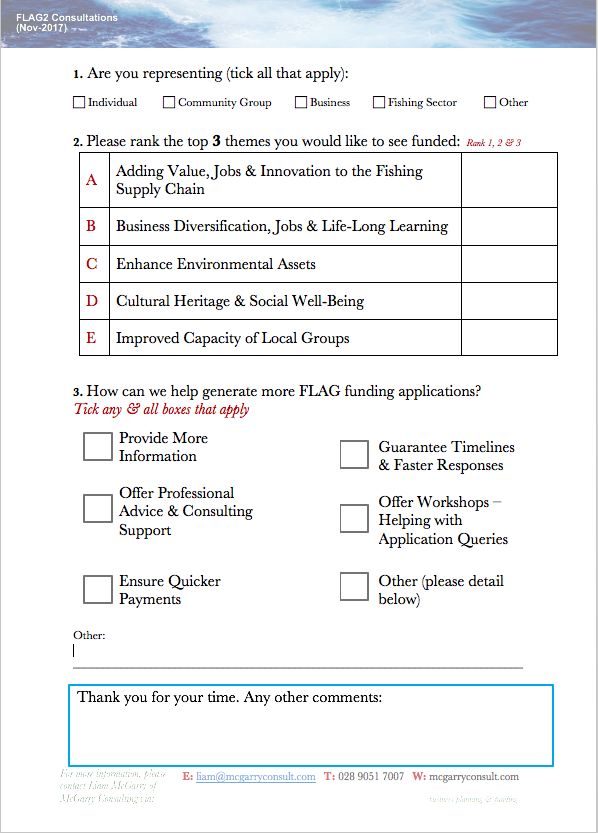
NI FLAG Strategy 2018 - 2020                                                    mcgarryconsult.com

FLAG STRATEGY EVALUATION
SEAFLAG submitted their first FLAG strategy in August 2013. In total £2m was subsequently
allocated across four themes and programme administration, see Appendix V for breakdown. Whilst
there were many successes (e.g. branding, strategic fit, FLAG staff/operations) key lessons learned
included:

    •   Need for targets and indicative spend per theme
    •   Encourage and enable more project applications, especially from private businesses
    •   Ensuring the strategy was in place earlier and promoted widely
    •   Ensure staff training is identified and supplied
    •   Reduce the possibility of underspend

The lessons will be applied throughout this strategy.

REPORT BACKGROUND
This strategy builds on the work of the previous FLAG strategy, and its subsequent 2015 evaluation.
Additionally, the strategy learns from DAERA research, reports, and other pertinent community led
strategies (e.g. village plans, masterplans and Council-led community plans). A public consultation
process, involving a series of events in each village ensured direct community input into this strategy.
Finally, this document was presented to – and shaped by – the FLAG-2 committee. It has been
deliberately kept clear and concise to ensure it is easily read, shared and understood.

            December 2017                                                                             3
area profile
DEFINING SEAFLAG AREA
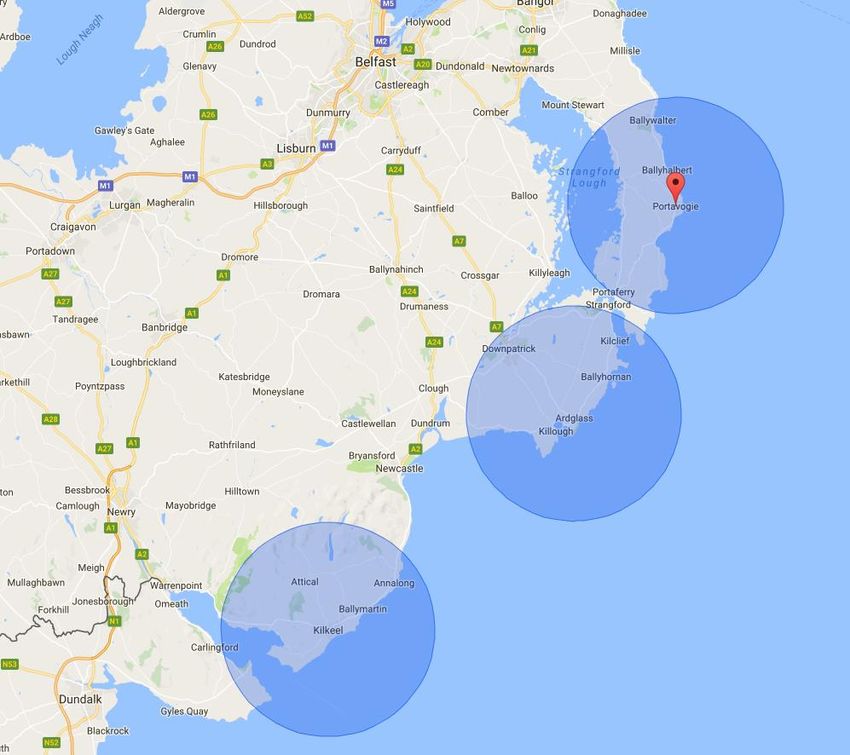
SEAFLAG covers 190 square miles on land encapsulating over 12,000 people. Ardglass, Annalong,
Kilkeel and Portavogie are fishing dependent communities and account for the vast majority of the
NI Fishing Industry.
Map 1.0: SEA-FLAG Defined Area
SEAFLAG area is defined as a 7-
mile radius from the centre of
Ardglass, Kilkeel and Portavogie.
Map Data © Google 2017
Ardglass, Annalong and Portavogie villages comprise approximately 2,000 people each. Kilkeel is a
town with over 6,500 people. Although all are historical fishing communities, each area is unique.
December 2017 4NI FLAG Strategy 2018 - 2020 mcgarryconsult.com
VILLAGE SUMMARIES
Annalong is a coastal village that lies at the foot of the
Mourne Mountains. It is 6 miles south of Newcastle on the
main A2 coastal route. Originally the village centre was
based on its harbour, and its involvement in the granite
industry. Annalong services a rural hinterland providing a
primary school, church, GP surgery, businesses, services
and active community groups.
Ardglass was noted as a prosperous port as far back as the 15 th
century, when it was Ulster’s busiest port. Sitting by a natural inlet the
harbour has two fishing piers and is fairly unique in being accessible at
all states of tide. Even today, this sense of history persists with
Ardglass having more medieval town houses (four) than any other
town in Ireland; and eight archaeological sites in or near the village
(e.g. Jordan’s Castle, opposite). Ardglass golf club attracts many
visitors, and has the oldest golf clubhouse in the world. It is the
smallest of the villages, with lower levels of economic activity.
Kilkeel is known as the capital of the ‘Kingdom of Mourne’.
The development of a new harbour in the late 19 th century
led to Kilkeel expanding to become the biggest fishing port
in NI. It is an important local service centre, especially for
fishing organisations, producers and fleets. Kilkeel is also
within the Mourne AONB and was previously famous for its
granite production and dressing skills. It has the youngest
population and the greatest number of ethnic minorities
Portavogie’s sheltering surrounding rocks and a sandy beach
proved welcoming to boats, and the area was first settled by
fishermen. A new industrialised harbour (1985) and a
community centre (1999) were both officially opened by the
Princess Royal. Located on the east coast of the Ards Peninsula,
16 miles from Newtownards, it acts as a local service centre and
attracted significant residential growth in recent years.
December 2017 5NI FLAG Strategy 2018 - 2020 mcgarryconsult.com
DEMOGRAPHIC PROFILE
The most recent and comprehensive demographical and statistical research in NI is the 2011 Census.
NISRA provides information for each settlement in NI based on the census data as follows:
Table 1.1: NI Census 2011, NISRA
Annalong Ardglass Kilkeel Portavogie NI
Population (2011) 1,805 1,635 6,542 2,123
Under 16 20.83% 20.0% 21.27% 22.52% 20.95%
Over 65 15.79% 16.45% 15.15% 15.11% 14.56%
Median Age 38 37 35 38 37
Good Health 76.4% 75.29% 78.6% 76.77% 79.51%
No Access to Car/Van 21.44% 22.33% 21.98% 12.81% 22.7%
Ethnic Minorities 1.45% 1.27% 5.32% 1.87% 3.14%
Degree 14.7% 18.2% 14.74% 12.48% 23.65%
No Qualifications 48.64% 45.64% 46.85% 49.97% 40.63%
Economically Active 65.17% 59.52% 64.28% 61.08% 66.22%
Notable points are:
• Similar age profile to the NI average, with Kilkeel slightly younger
• Significantly lower access to private transport in Portavogie
• Higher concentration of ethnic minorities in Kilkeel
• Poorer levels of educational attainment, with Ardglass more degree level qualifications
• Lower economic activity levels, in particular Ardglass and Portavogie
SOCIO-ECONOMIC & DEPRIVATION PROFILE
The NI Multiple Deprivation Measures (NIMDM) 2017 report is the most authoritative and recent
analysis of deprivation in NI. It divides NI into 890 zones or Super Output Areas (SOAs). It then ranks
them across seven domains before providing a single weighted average ranking. In summary: SEAFLAG
covers 10 SOAs, 8 of which are below the NI average with 2 (Ardglass-1 and Kilkeel South-2) among
the 20% most deprived areas in NI. Overall SEAFLAG fairs best for Living Environment and ranks
worst for Income. More detail and individual rankings in Appendix II.
December 2017 6NI FLAG Strategy 2018 - 2020 mcgarryconsult.com
FISHING SECTOR
Local people consider the fishing sector to be in a healthy state. The NI fishing fleet comprises 351
licenced vessels with an average age of 38 years. Although the NI fleet is the oldest in the UK, they
can increasingly be used for alternative reasons (e.g. off-shore guard duty). This brings in new revenue
streams without impacting on their quotas. Since 2006, the number of fishermen in NI has increased
by 43% - in sharp contrast to the rest of the UK, where numbers have all decreased. As at 2016, there
are 700 full-time and 175 part-time fishermen in NI. Fish landings are distinguished between those
landed by NI vessels and those landed in NI. By recent standards 2016 was a poor year for NI vessels
but good for NI ports and harbours (for full details and further information see Appendix II):
Table 1.2: UK Sea Fisheries Statistics 2016, Marine Management Organisation
NI Fishing Sector 2012 2016 5 Year Change
Jobs 808 875 8.3%
All NI Registered Vessels
Landings - Value £56,300,000 £41,600,000* (26.1%)
Landings - Tonnage 51,700 29,400* (43.1%)
Price per Tonne £1,089 £1,415 29.9%
Landings into NI by UK Vessels
Landings - Value £28,900,000 £28,700,000 (0.7%)
Landings - Tonnage 21,000 19,500 (7.1%)
Price per Tonne £1,376 £1,472 6.9%
*2016 figures distorted by the sale of the Voyager, NI’s largest pelagic vessel. This was replaced by a new 86m Voyager in 2017.
Most NI vessels are below 10m in length. This reduces the regulations they’re subject to and allows
them more places to harbour at. Two in five vessels were built before 1980. The NI fishing sector is
heavily reliant on just one species. These highlight the need for diversification and modernisation.
202 57% 38%
58% of NI Fishing Fleet by value of all landings of NI vessels are at least
is below 10m are one species 36 years old
December 2017 7NI FLAG Strategy 2018 - 2020 mcgarryconsult.com
Fish is categorised into three types – demersal, pelagic and shellfish. NI fishermen primarily rely on
shellfish, in particular Dublin Bay Prawns (nephrops). Nephrops account for 57.5% by value of NI’s
entire catch, and 40% by tonnage. Most of the NI catch is exported, with much of the fish bought in
local supermarkets exported into NI. Since 1984 the UK has been a growing net importer of fish.
Fishermen are getting older with fewer local young people replacing them. Fishing organisations must
search globally for crews. Many now come from the Philippines, Ghana and Eastern Europe. Recruiting,
retaining and training crews is an issue. Language proficiency and existing qualifications can also pose
challenges. This poses a risk to long-term sustainability and to alternative vessel use (e.g. off-shore
guarding) that may require additional training, certification or compliance.
In summary, the fishing sector is diverse and has changed considerably over the last few decades and
may change significantly in the future post Brexit. There needs to be a minimum threshold in certain
sectors to sustain them and those indirectly relying on them. A focus on innovation and higher value
goods is necessary to compete and provide higher margins. Diversification is required to reduce a
precious reliance on one key species. Skilled apprenticeships are needed to replace key roles and people
who may leave the industry over the next decade.
The fishing sector covers a broad spectrum, including at times competing interests that need to work
together in the future. Fishing communities encompasses wider interests still (e.g. public services,
community, businesses, sporting, heritage and environment) and need to carefully evolve to sustain
and progress themselves in the times ahead.
December 2017 8swot analysis & needs
SWOT ANALYSIS
Based on the research to date, and in line with EMFF guidance a SWOT analysis is outlined below:
Table 2.1: SWOT Analysis – Strengths & Weaknesses
Strengths Weaknesses
• Fishing sector is growing (jobs up 43% in the • Low demand for seafood in NI, barrier in itself
last 10 years), in contrast to rest of UK and to development of high value products
• Alternative income opportunities for vessels • Difficulty in getting young people interested
(e.g. guard duty) in the fishing sector as a career
• New £30m 86m Voyager launched in 2017 • Fleet is old (~40% built pre-1980)
• Strong community spirit • Kilkeel Harbour upgrade delays
• Proud maritime heritage • Harbour facilities and need for dredging
• Natural environment and setting • Underdeveloped land and derelict/underused
• Funding (e.g. EMFF, Coastal Funds, RDP) buildings that take from environment
• Recent EI Schemes (e.g. Esplanade) have • Limited transport options for those without
improved area access to a car
• Strong FPOs that support fishing sector • Attracting visitor spend within village
• Dedicated community organisations • Holiday rental accommodation options
• Sports clubs play positive role in area • ‘Things to Do’ for young people and visitors
• Aquaculture sector is robust • Poor youth, leisure and health facilities, with
• Good places to live limited services for older people
• Councils working together • Informal places to meet
• Established FLAG groups across UK & Ireland • 1 in 2 has no qualifications
NI’s fishing Industry has fared comparatively better than the rest of the UK over the last few decades.
Many fishing communities across the UK and Ireland face similar challenges and are testing out ideas
to revive the local sector e.g. Last Fisherman Standing (Heritage), Catch Box (Fish Selling) and Fishing
School. It is important that NI is willing to work with and learn from other UK, Irish & European FLAGs.
December 2017 9NI FLAG Strategy 2018 - 2020 mcgarryconsult.com
Table 2.2: SWOT Analysis – Opportunities & Threats
Opportunities Threats
• Mourne Way and natural setting • Brexit – uncertainty with respect to long-
• Growing tourism industry in NI term regulation, quotas and funding. NI has
• Off-shore energy – guarding and facilitating gained from significant EFF & EMFF funding
• Harbours are in place and are historical focal opportunities that may not be replaced
points for villages • Inability to recruit and retain crews with good
• Community and sports clubs keen to improve English, training and fishing skills.
skills, capacity and facilities • Training needs study completed but difficult
• Growth of online services (e.g. Airbnb, to retain dedicated training range in NI
Booking.com) that make it easier to attract • Reduced and/or increasingly centralised
and facilitate tourists within the area public services
• New village plans for Ardglass and Portavogie • Quotas and regulation (e.g. landed fish)
• Maritime history and heritage of wider area • Demographics, older fishermen (and skills)
• Internet - making it easier to start, manage not being replaced and ageing population
and grow businesses from rural areas • Failure to exploit funding opportunities
• Harbour development plans in place • Loss of key people in few key positions
• 86m Voyager, largest new vessel in UK/RoI • Delays in funding to key infrastructure
• UK opt out of London Fisheries Convention • Loss of critical threshold and/or competition
NEEDS ANALYSIS
Needs were also expressed by DAERA and the local community that tie in with findings thus far.
Community Needs
Comment cards returned at the public consultations (see p12) highlighted the following needs:
• Harbour Development & Infrastructure
• Visitor Accommodation, Services & Appeal
• Training – Fishing, Business
• Refurb/New Quayside Buildings
• Skills e.g. Boat Building, Repairs, Engines, Net Mending
• Trailer and Tele-Handler at Ardglass Harbour
• Portavogie – Football & Rowing Club Houses Investment
December 2017 10NI FLAG Strategy 2018 - 2020 mcgarryconsult.com
DAERA – NI Fishing Needs
DAERA published a report in 2015 outlining the needs of the NI fishing industry that could be met
through EMFF. Of twenty needs identified, eight related to this strategy as follows:
• Ensuring key skills and critical infrastructure are preserved during transitory phases
• Encourage diversification into other activities in the marine environment
• Support for adaptation to climate and other environmental change
• Improve supply chain mechanisms and market access with a view to value adding and
delivering higher value prices to fishermen
• Addressing price decline
• Improving access to credit and other forms of financing
• Improving the resilience of operators who depend on very few species
• Maintaining a critical mass to ensure viable infrastructure
Further Needs:
New village plans are currently being revised and/or created in the SEAFLAG area (e.g. Portavogie).
These will be published in early 2018 and will provide more detail on the needs of the specific village
areas. They will have a wider remit and be aimed primarily at RDP funding.
December 2017 11consultations
OPEN & PUBLIC CONSULTATION PROCESS
Three public consultations were held in Ardglass, Kilkeel and Portavogie. Phone calls, face-to-face
meetings and two presentations to the FLAG committee were also carried out. Public events involved
explaining the origins and potential for Priority 4 within the local area. Group discussions followed to
address any queries raised. These built on the extensive consultation process previously undertaken
by the FLAG strategy and local village plans. All forms, slides and information was available free online.
Representative & Inclusive
All sectors within the local fishing communities were represented at the public consultations. One third
of attendees were from the community sector, one third from the business sector and one third
representing individuals, fishing sector and other groups - including colleges and elected councillors.
Registration details were taken on the night, with attendees asked to complete a feedback form.
December 2017 12NI FLAG Strategy 2018 - 2020 mcgarryconsult.com
RANKING PRIORITIES
As part of the consultation process local people were asked to rank their top three EMFF objectives.
This was recorded on the feedback forms provided to the attendees on the night. The forms were then
collected and tallied. Funding was then apportioned proportionately to the number of votes cast:
Table 3.1 Community Led Prioritisation of EMFF Objectives
Objective % £ Rounded
A 26% £526,316 £525,000
B 27% £549,708 £550,000
C 12% £245,614 £245,000
D 22% £432,749 £430,000
E 12% £245,614 £245,000
100% £2,000,000 £2,000,000
PREFERRED METHOD OF SUPPORT
To improve the quality and quantity of projects, people were asked what support they would like FLAG-
2 to provide. Respondents were keen for more information, more hands-on help with application
queries and more access to professional advice, as illustrated below:
There were many questions and queries with respect to eligibility and specific rules that could not be
answered at the events. This indicates interest and the need to provide, and widely publicise, this
level of detail as soon as possible to help people prepare potential applications. Further information
on the consultation, in particular the comment cards, is contained in Appendix III.
December 2017 13aims & targets
VISION
SEA FLAG is representative of the sectors it supports. It seeks to sustain the fishing industry and
associated communities; and encourage a bottom-up approach to developing viable projects.
SEA FLAG vision statement:
“The SEA FLAG has been established to provide support for the sustainable
development of the fisheries area. SEA FLAG seeks to address the social and
economic issues in the fishing dependent communities through the development of
community and private sector capacity to initiate, deliver and manage sustainable
projects.”
At the SEA FLAG committee meeting of 22nd November 2017, the following four strategic goals
were agreed for the new fund:
1. SEA FLAG fund will be flexible, fair and easily managed
2. SEA FLAG fund will be an open, appealing and accessible opportunity to people, businesses
and organisations across the three areas
3. SEA FLAG fund will support a broad variety of quality projects that can be delivered on time
4. SEA FLAG fund will represent a sound investment that improves the social, economic and
environmental conditions of the NI Fishing Communities
TARGETS
Targets are important to measure performance and prioritise investment. To be effective targets must
be meaningful, easily measurable and readily understood. FLAG-2’s targets are based on evaluation of
FLAG-1, comparison with RDP (2014-2020), DAERA guidance, consultation feedback and specific
wording of EMFF objectives. Full explanatory notes and derivation are contained in Appendix IV.
December 2017 14NI FLAG Strategy 2018 - 2020 mcgarryconsult.com
Table 4.1 SEAFLAG Funding Targets – Split by Objective
Indicators A B C D E Total
Fund £525,000 £550,000 £245,000 £435,000 £245,000 £2,000,000
Project Spend £1,165,000 £1,220,000 £340,000 £600,000 £340,000 £3,665,000
Projects Funded 12 13 4 7 4 40
New Jobs (FTE) 14 15 7 12 7 55
New Business 8 8 1 3 2 22
New Product or
4 4 10
Service
New
16 56 8 15 35 150
Qualification
Improved
1 3 2 6
Facilities
Social Well-Being 1,000 3,000 2,000 6,000
Environmental TBC
All targets must be achieved within the SEAFLAG timeframe and be verified by DAERA. Primary
targets are new jobs and new businesses, as highlighted above. Indicative funding guidelines are below
based on research and consultation feedback to date. These should be re-examined in March 2019, as
part of the wider interim review. Grant rates (bottom row) are set by EMFF and non-negotiable.
£50k 40 £125k
average project grant number of projects project grant cap
50% 5% 80%
max grant rate for max grant rate for non-
min cash contribution
commercial projects commercial projects
December 2017 15delivery
MANAGEMENT & GOVERNANCE
Experience from administering, delivering and evaluating FLAG-1 should provide a solid base to work
on. Having DAERA Fisheries Team, NMDDC, and FLAG Committee meetings in the same place should
also facilitate communication and working relationships. New personnel will be required immediately
to set-up and run the SEA-EMFF team. Prospective SEA-EMFF team members should be familiar with
fishing communities, funding programmes, social media and engaging with local communities.
Panels, policies and training need to be put in place in respect of project assessment, selection, appeals,
monitoring and procurement. Given the EMFF 2014-2020 timeframe it is important that all eligibility
and application rules are clarified by March 2018. A call for applications should then be opened as
soon as feasible. All parties must be clear as to roles, responsibilities, and reporting structures and be
suitably trained for those roles. Perception, and governance, wise it is crucial that a robust conflict of
interest policy is in place and that all projects are independently assessed. In addition, all selection,
assessment and monitoring records should be retained and stored securely.
SUPPORTING APPLICATONS
To fulfil their strategic goals, SEA-EMFF should support potential applicants by way of:
• Clearly defining eligibility rules, targets, timeframes and guidelines before first call opened
• Promoting call widely and equally across the three main fishing communities
• Ensuring at least an 8-week window for applications to be submitted from call opening
• Offering roadshows to promote fund, clarify key issues and outline scoring matrix
• Encourage groups to consider joint applications that lead to stronger projects
• Sign-posting potential financial support (e.g. match funding and working capital) providers
• Sign-posting a variety of community, public and private sector partners who can offer advice
SEA-EMFF should consider engaging professional advice and consultants to assist applicants, where
workshop feedback and/or application numbers (e.g. registrations) indicate this is required.
December 2017 16NI FLAG Strategy 2018 - 2020 mcgarryconsult.com
MONITORING
SEA-EMFF need to decide on milestones, monitoring, evaluations, phased or performance based
payments and clawbacks. This is to reduce risk of underspends, ensure individual project targets are
realistic and that overall SEA-EMFF funds are invested fairly, sustainably and successfully. Monitoring
should be a standalone agenda item at each SEA-FLAG meeting.
MARKETING & COMMUNICATION
SEA-EMFF should create an outline marketing strategy at the outset and review it regularly, and the
resources available to sustain it. In addition to an updated website, SEA-EMFF should sustain twitter
and Facebook accounts as low cost efficient and speedy ways to connect with people. These should be
in place before the workshops and mentioned prominently in all other promotional material. Social
media use should be proportionate to marketing goals and in line with respective employer policies.
A series of workshops should be held when the first call is announced, and promoted widely online and
via press releases and press adverts. All FLAG-2 members should be requested to promote details of
the new SEA-EMFF fund on their websites, communiques and member correspondence. Marketing
effectiveness should be included in the interim review.
December 2017 17appendices
APPENDIX (I) FLAG-2 Committee
APPENDIX (II) FLAG Area – Profile
APPENDIX (III) Consultation Contribution Form
APPENDIX (IV) Target Information
APPENDIX (V) FLAG-1 Spend
December 2017 18NI FLAG Strategy 2018 - 2020 mcgarryconsult.com
APPENDIX (I) FLAG-2 Committee
Table 5.1: FLAG-2 Committee
Name Organisation
Alan McCulla ANIFPO
Alderman Angus Carson Ards & North Down Borough Council
Caroline Nolan Strangford Lough & Lecale Partnership
Councillor Dermot Curran Newry Mourne & Down District Council
David Henderson David Henderson Design
David Vint Southern Regional College
Harry Wick NIFPO
James Cunningham Kilkeel Chamber of Commerce
Janice Symington Down Business Centre
John Rooney Scampi Processors Association
Katherine Coffey NI Women in Fisheries
Kevin Quigley NIFHA
Lynn Gilmore Seafish UK
Martin Carey Mourne Heritage Trust
Nicholas McCrickard County Down Rural Community Network
As at 30th November 2017
December 2017 19NI FLAG Strategy 2018 - 2020 mcgarryconsult.com
APPENDIX (II) FLAG Area – Profile
FISHING SECTOR - PROFILE
Overall, the NI fishing sector is considered to be in a relatively healthy state with a fleet of 351 licenced
vessels. EU regulations, quotas, funding and environmental guidelines heavily influence the local
fishing sector. Fishing sector is diverse and includes: trawlers, fishing boats, inshore fishing,
aquaculture, producers, processors, harbours, auctioneers, boat builders and repairers, crew, fishermen
organisations, training providers, and those selling or distributing final fish products. Many other local
businesses and families rely indirectly on the fishing sector.
Fish is categorised into three types – demersal, pelagic and shellfish. NI fishermen primarily rely on
shellfish, in particular Dublin Bay Prawns (nephrops). Nephrops account for 57.5% by value of NI’s
entire catch, and 40% by tonnage. Most of the NI catch is exported, with much of the fish bought in
local supermarkets exported into NI.
Overall the UK fishing fleet is the second biggest in the EU by gross tonnage, although the number of
vessels has fallen 29% between 1996 and 2016. In NI, there are 351 fishing vessels, of which 202
(58%) were under 10m and 149 (42%) were over 10m (UK Maritime & Coastguard Agency and
Fisheries Administration). The NI fishing fleet is older by comparison to the UK fleet, with 41% of
vessels built before 1980 and two-thirds before 1990. Many NI vessels are therefore less efficient and
costlier to run than other UK vessels.
NI is home to two of the larger Fish Producer Organisations (FPOs). NIFPO has 239 members and is
the second biggest in the UK. Anglo NI FPO (ANIFPO) has 76 members and is the 6 th biggest in the
UK. Since 2006, the number of fishermen in NI has increased by 43% - in sharp contrast to the rest
of the UK, where numbers have all decreased. There are 700 Full-time and 175 part-time fishermen
in NI. The dangers are ever present. In the last five years (2012-2016), there have been 961 accidents
across the UK fleet resulting in 34 fatalities and 60 lost vessels.
NI Landings – show decrease (see graph). Fishermen can choose were to land their fish based on
harbour accessibility, producer availability and prices. Producers require a minimum throughout to be
viable. Non-NI vessels can land at NI ports and vice-versa highlighting competition for boats and
producers. The gradual phasing in of the Landing Obligation (Discards Ban) will present a challenge to
fishermen and producers. The legislation is complex but in simple terms seeks to ensure that all fish
caught at sea are landed.
December 2017 20NI FLAG Strategy 2018 - 2020 mcgarryconsult.com
Noble Indicators | NI Multiple Deprivation Measure - PROFILE
The ‘Noble Indicators’ are used to measure deprivation within NI. The most recent Noble report was published in November 2017. Noble Indicators are named
after the original author, and categorise deprivation across seven domains (often referred to as ‘indicators’). For statistical reasons NI is divided into 890
zones, called Super Output Areas (SOAs) with a population of approximately 2,100 each. Deprivation statistics are scored for each domain and then each
SOA is ranked from 1 (most deprived) to 890 (least deprived) within that domain. The Multiple Deprivation Measure (MDM) is a weighted average of the
seven domains, providing a single unified deprivation rank. The SOAs for the SEAFLAG area and their noble indicator scores are highlighted below:
Table 5.2: NI Multiple Deprivation Measures 2017, NISRA
Ardglass 1 Ardglass Annalong 1 Annalong 2 Kilkeel Kilkeel Kilkeel Kilkeel Portavogie Portavogie
2 Central 1 Central 2 South 1 South 2 1 2
MDM 176 305 363 187 540 258 500 113 225 472
Income 285 302 169 66 376 445 570 78 226 457
Employment 115 263 574 300 534 177 412 122 218 445
Health Deprivation &
204 372 590 288 570 212 514 158 276 438
Disability
Education, Skills &
175 474 441 282 405 272 335 201 208 419
Training
Access to Services 227 104 153 302 563 383 345 401 203 157
Living Environment 612 350 236 563 437 234 623 365 763 691
Crime & Disorder 259 449 530 355 333 185 190 228 414 545
8 of 10 SOAs are below the NI average with 2 (Ardglass 1 and Kilkeel South 2) of the 10 among the 20% most deprived wards in NI. Kilkeel shows the stark
difference between two neighbouring SOAs. SEAFLAG is considered above average for Living Environment but worst for income.
December 2017 21NI FLAG Strategy 2018 - 2020 mcgarryconsult.com
APPENDIX (III) Consultation Contribution Form
SURVEY FORM
December 2017 22NI FLAG Strategy 2018 - 2020 mcgarryconsult.com
SURVEY FORM - FEEDBACK:
Comments and feedback contained in the collected consultation forms:
ARDGLASS
• More information through social media (Fishing Sector)
• Tourism should be a priority (Business Sector)
• Too much paperwork (Individual)
• Advice on Governance Being in Order (Community, Business, Fishing Sectors)
Sample Project Sizes:
£400k
KILKEEL
N/A
PORTAVOGIE
• Is there a need to help people in the local area to identify suitable project and then do
preparation work? (Councillor)
• New Fishermen cannot avail of funding as can’t submit 3-year accounts. Can you not have
some form of funding for new fishermen/vessels to make vessels safe i.e. life rafts and jacket
with PLBs (Business & Community Group)*
• More funding available (Fishing Sector)
*Eligibility guidelines and application processes have changed in recent years. They will now facilitate
a broader range of applications. Also, new businesses are a primary target under the new strategy.
December 2017 23NI FLAG Strategy 2018 - 2020 mcgarryconsult.com
COMMENT CARDS – NEEDS OF THE AREA:
Comments received via individual comment cards spread throughout the room.
ARDGLASS:
Ardglass Harbour Developments:
(1) Harbour Deepening Technical Study (~£60,000)
(2) Fishing Boat Repair Facility (Slips? x2) – Technical Study
Community Investment
Infrastructure
Facilities
Tourism
Increased Beds
Visitor Services
Visitor Attractions
Visitor Recreation
Infrastructure for Industry
Ensuring the Harbour is Operating at Full Capacity
Holiday Accommodation
Local training needs to be identified
Local delivery of requirements of maritime courses
Educating local business owners of subsidies and training support available
Tourism to be enhanced to the standard of towns such as Newcastle and Carlingford
Refurbishment & development of old Quayside Buildings
Provision of new buildings to be used by fishing fleet for repairs/gear/storage etc
Increase in Maritime Skills
Facility for Recreational Water use – Rowing & Boat Building
December 2017 24NI FLAG Strategy 2018 - 2020 mcgarryconsult.com
Investment in Skills
Wood Work
Boat Building
Boat Repairs
Touring Caravans
Motor Homes
Camping
Glamping
Air BnB
Jobs
Environment
Somethings to draw more tourists to the village, and accommodation to keep them
Regeneration of harbour facilities to enhance employment and create job stability and variety
Job Creation
Refurbish Ardglass Arms to provide bar & accommodation
Trailer & Tele-Handler
An adjustable boat submersible trailer of 15 tonne capacity (~£50,000); and a tele-handler to
manoeuvre it. This would facilitate the majority of leisure craft using the marina and also fishing
boats up to 15 tonnes. All of which need to be lifted to dry storage and repairs at least once a year.
This would also act as a pilot scheme for a major hoist for larger fishing boats. A hoist would allow
the trailer to move the lighter boats to other work areas. The tele-handler would be of great benefit
to the fishing and leisure boats in its own right.
Community owned and managed motor home parking facility at the marina.
KILKEEL
N/A
December 2017 25NI FLAG Strategy 2018 - 2020 mcgarryconsult.com
PORTAVOGIE
Football Club – Clubhouse
250+ children from multi-cultural society
Building for Mental Health awareness talks
Finish project already started with 4G pitch
Football
Updated facilities (i.e. Clubhouse)
Portavogie Regeneration Forum
Coffee Shop (social enterprise)
Museum (Fishing)
Develop tourism
SFITA
Net Mending Workshops
Engineering Course – Needs Working Engine & Place to House it
Portavogie Coastal Rowing Club
Boathouse somewhere to store 2 boats and equipment
Somewhere to launch the skiffs from
Focus on safety training in fishing industry
Investment in training – new regulations ILO-88 and STOW-P
December 2017 26NI FLAG Strategy 2018 - 2020 mcgarryconsult.com
APPENDIX (IV) Target Information
TARGETS
Targets are important to measure performance and prioritise investment. To be effective targets must
be meaningful, easily measurable and readily understood. No targets were set for the previous FLAG-
1 funding. However, the FLAG-1 evaluation and A&NDBC’s new RDP provide a guide as follows:
Table 5.3: Comparative EU Funding Targets
Indicators Unit FLAG-1* RDP^ (2014-2020)
Total Fund £716,024 £3,085,000
Per New Job 27 £26,519 £20,986
Per Job Safeguarded 130 £5,508
Per New Business 30 £23,867 £25,000
Per Existing Business £50,000 - £75,000
Per Qualification 102 £7,020
*FLAG-1 Theme 2: Business Development and Diversification ^RDP Business Investment Scheme
Under the RDP’s Rural Basic Services Programme £2.055m has been set aside for improving 15
community and youth facilities. This averages at £137,5000 per facility, with individual caps set at
£300,000 for a community facility and £50,000 for a youth facility.
FLAG-2 TARGET INDICATORS
Applying the same indicators to the FLAG-2 Fund:
Table 5.4: FLAG-2 Target Indicators
Indicators Average Unit FLAG-2 Notes
Total Fund £2,000,000
Leverage 1.83 £3,665,000 1
Projects Funded £50,000 30 2
New Jobs £25,000 55 3
New Business £25,000 22 4
New Product/Service £75,000 8 5
New Qualification/Skills £7,500 130 6
Improved Facility £125,000 5 7
Social Well-Being Activity Sessions 5,000 8
Environmental TBC 9
December 2017 27NI FLAG Strategy 2018 - 2020 mcgarryconsult.com
Table 5.5: FLAG-2 Target Indicators – Explanatory Notes
EXPLANATORY NOTES
1 Under FLAG-1 the fund-project leverage ratio was 1.68, i.e. for every £1 funded via FLAG 68p
was provided in match funding. Match funding ratios have changed for FLAG-2. Therefore,
assuming that objectives (a)-(b) are funded at 45% (90% of 50% cap on commercial
projects); and objectives (c)-(e) funded at 72% (90% of 80% cap for non-commercial
projects) and allowing for rounding the new leverage ratio is 1.8325. Equating to a total
estimated project cost of £3,665,000
2 Under FLAG-1, excluding outliers (projects over £200,000 or under £5,000) the average
project investment was £48,630. Rounding this up to £50,000 keeps it consistent with FLAG-1
and in line with the “relatively small local projects” guidance provided by EMFF.
3 DAERA has confirmed that SEAFLAG funding should provide 55 Full Time Equivalent (FTE)
jobs. This equates to £36,364 grant per FTE job, and is a higher amount of assistance per job
than under RDP (Business Investment Support) or FLAG-1
4 DAERA has confirmed that SEAFLAG funding should provide 22 new business. New businesses
should have assistance capped at £25,000. This is consistent with RDP funding caps, in line
with ratio under FLAG-1, EMFF (UK) goals and desire to encourage a variety of projects. New
business will require significant match funding (minimum 50%), so caps also need to be
cognisant of that. All caps will be examined as part of the interim reviews
5 Established businesses should be able to secure up to £125,000 to develop new products and
services. EMFF specifically references “adding value”, “promoting innovation” and “supporting
diversification”. Along with job creation these should be easier for an established business
seeking to invest. Eight commercial businesses should be supported.
6 Life-long learning was mentioned within (B) with improved governance mentioned in (E).
Research and consultations identified demand for improved skills within non-commercial
sector. Qualifications vary considerably in scale and sophistication, with new skills hard to
measure. However, each new business, new job, new product and service will also require some
level of new training. There were 130 qualifications provided under FLAG-1, and a similar
target seems appropriate under FLAG-2 with most under objectives (B) & (E).
7 Research and consultations reviewed a need for new and improved facilities. Based on RDP
average of £137,000 and requirement for ‘relatively small’ projects there will be a cap of
December 2017 28NI FLAG Strategy 2018 - 2020 mcgarryconsult.com
EXPLANATORY NOTES
£125,000 per community, social well-being and maritime cultural heritage project (e.g. facility
improvements). The target is between 4-6 facility improvements, funded through objectives
(C)-(E).
8 Each facility improvement should create a minimum additional 1,000 activity sessions per
annum, based at or from the improved facility. There is a combined minimum target of 5,000-
6,000 sessions across the SEAFLAG area. This will be primarily from Objective (D), but will also
be applied to Objectives (C) and (E).
9 Environmental Targets are to be confirmed on a case by case basis, but should refer to a clearly
recognisable, independent and authoritative target. This will be examined closely in the post
project evaluation.
Job Safeguarding has been excluded among the final targets as it not required by DAERA or
RDP; or mentioned by EMFF. EMFF specifically refers to “job creation” and provides a clear
target of 55 FTE new jobs.
December 2017 29NI FLAG Strategy 2018 - 2020 mcgarryconsult.com
APPENDIX (V) FLAG-1 SPEND
FLAG-1 SPEND
Under FLAG-1 Strategy, launched in August 2013, £2m was allocated to 21 projects and programme
administration as follows:
Table 5.6: FLAG-1 Spend
FLAG 1 Themes Project Grant Match Funding Total Cost
Community Development 2 £419,071 £159,998 £579,069
Business Development &
12 £639,209 £1,181,877 £1,821,086
Diversification
Tourism & Leisure
3 £634,095 £0 £634,095
Development
Technical Assistance 3 £64,965 £12,810 £77,775
Programme Admin 1 £242,512 £0 £242,512
TOTAL 21 £1,999,852 £1,354,684 £3,354,536
Based on figures supplied by DAERA in October 2017
December 2017 30mcgarryconsult.com
ask@mcgarryconsult.com | 028 90517007
McGarry Consulting help organisations with business planning, funding and strategy. Check out our
website for a full range of case studies, services, testimonials and more or contact us via above.You can also read


