Winning the War for Talent - Workplace: LEVERAGING ON DIVERSITY, CHOICE AND COMMUNITY TO ENSURE EMPLOYEES ARE HAPPY, ENGAGED AND PRODUCTIVE
←
→
Page content transcription
If your browser does not render page correctly, please read the page content below
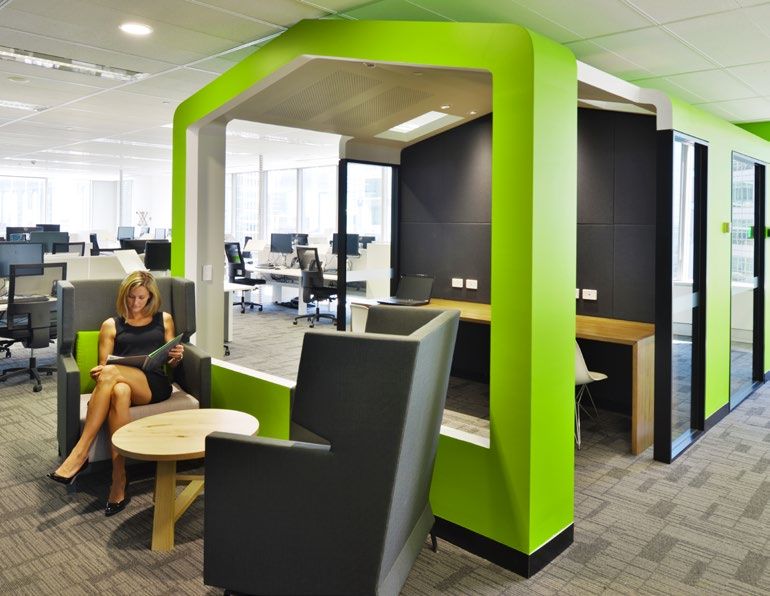
Workplace:
Winning the War for Talent
LEVERAGING ON DIVERSITY, CHOICE AND COMMUNITY TO
ENSURE EMPLOYEES ARE HAPPY, ENGAGED AND PRODUCTIVE
CBRE RESEARCH   CBRE WORKPLACE STRATEGY
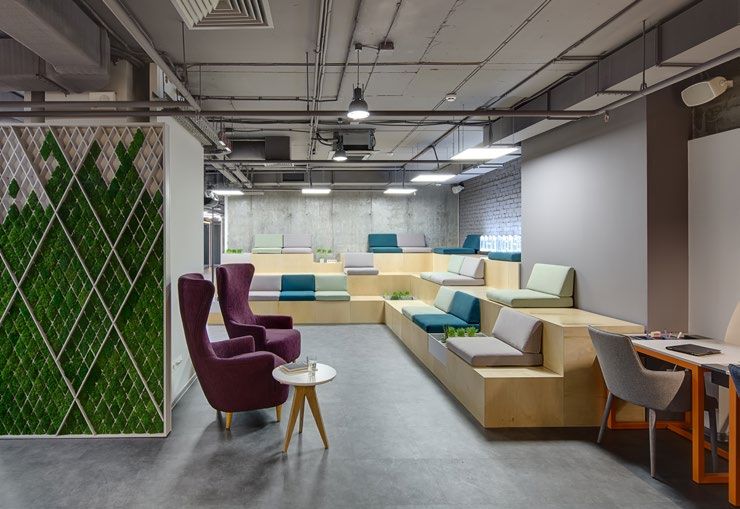
01

                                        Table of Contents
                                        1. People-centred workplace strategy                                  02

                                        2. How sharing and mobility is changing                               03
                                            the way we work

                                        3. What mode of work and workplace is right                           05
                                            for your organisation?

                                        4. Impact on the landlord-tenant relationship                         15

                                        5. Conclusion                                                         16

  Workplace: Winning the war for talent
  LEVERAGING ON DIVERSITY, CHOICE AND COMMUNITY TO ENSURE EMPLOYEES ARE HAPPY,
  ENGAGED AND PRODUCTIVE

  Pick up any magazine, or scan through your LinkedIn newsfeed, and you will see weird and wonderful
  examples of the latest “cool” workplaces. Articles will extol the virtues of these new workplaces,
  particularly their ability to attract, retain and motivate the millennial generation.

  Underlying these workplaces are much more fundamental shifts in the nature of work. These shifts are
  providing opportunities for all organisations to rethink the places where their people work without resorting
  to playful or flippant design concepts.

  This special report by CBRE Research outlines a variety of approaches to creating a physical workplace
  environment that satisfies the high expectations of the millennial generation, whilst controlling or even
  reducing real estate costs. The report explains how people-centric workplace strategies that embrace
  diversity, choice and community keep talent happier, more engaged and more productive, and also
  explores how these changes might impact the landlord-tenant relationship.

  You don’t have to be a cutting edge tech company to build great people-centric workplaces. Even in Asia
  Pacific, these workplaces are becoming mainstream solutions, so don’t be left behind.

© CBRE Ltd. 2016                                                                          CBRE WORKPLACE STRATEGY
02

     The drivers of workplace design
     are shifting from real estate and cost criteria
     to attracting and retaining talent

     Key elements required to align human factors and real estate parameters

                      BALANCING “ME” AND “WE” SPACE

                        Focused       Enclosed      Address-free        Shared            Meeting             Work
                      touchdown        office       workstation          table             room               Cafe
                         area

                           ME (FOCUSED)                                          WE (COLLABORATION)

                      INCLUSIVE FOR DIFFERENT PEOPLE

                                 Ergonomic design               Provide a wide                    Focus on wellness
                                 Encourage movement           range of amenities                   Indoor environment
                                  Adjustable furniture        Understand expectations                Promote health
                                                                   Social elements

                      CONNECTING THE INDOORS AND OUTDOORS
                                                         Accessibility Visual and physical connection with other public
                                                         spaces, public transportation and buildings

                                                         Walkability Easily walkable to and from the surrounding
                                                         business precinct, promote active streets and pedestrianisation

                                                         Community Provide a wide range of amenities and leisure
                                                         areas for social activities and events

       CBRE WORKPLACE STRATEGY                                                                           © CBRE Ltd. 2016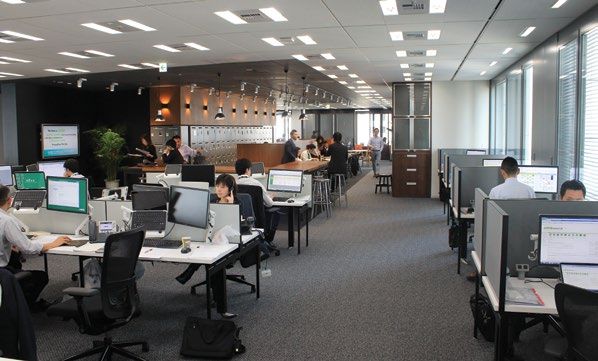
03

The relationship between landlords and
tenants is changing from a contract based
on a lease agreement to a partnership with
the common goal of creating a rewarding
workplace experience for employees

                    Open lines of
                                              Create a sense
                    communication
                                              of community
                    to understand and
                                              by providing
                    cater to tenants’
                                              communal space
                    requirements beyond
                                              within and outside
                    basic property
                                              buildings
                    management

 © CBRE Ltd. 2016                            CBRE WORKPLACE STRATEGY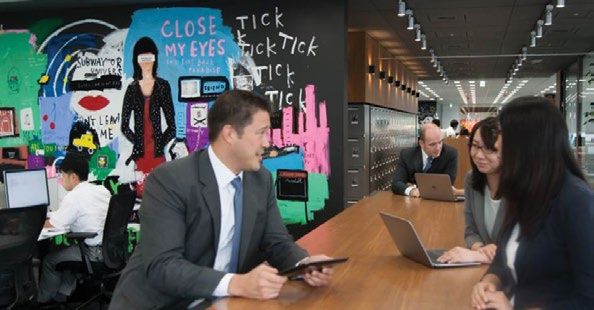
04 1. 2. 3. 4. 5.
People-centered How sharing and mobility is What mode of work and Impact on the landlord-tenant Conclusion
workplace strategy changing the way we work workplace is right for your relationship
organisation?
1. People-centred
workplace strategy
The increasingly fierce war Figure 1. In the war for talent, workplace has to be a talent
for talent is prompting more attraction strategy
organisations to take into account
Employers have Most important features
human factors in the workplace
difficulty finding talent for employees in workplace
to complement their talent %
60 100
attraction strategy and shape
% of having difficulty
50 80
workplace cultures that will help 40
60
them survive and succeed in the 30
40
changing world of business. In 20
20
the hunt for talent, workplace 10
0 0
is generally seen as a “hygiene
Flexible
working
Connectivity to
partners,
suppliers
Flexible
workspace
options
Indoor
environmental
quality
Provision of
amenities
Public
transport
accessibility
Sustainability
2008
2009
2010
2011
2012
2013
2014
2015
factor”. A great workplace is
unlikely to be in the top three
reasons why a talent will work Global APAC Global APAC
for an organisation, but a poorly
Source: 2015 Talent Shortage Survey. Source: CBRE Asia Pacific Occupier Survey
considered workplace is symbolic Manpower Group (2016)
of an organisation that is not
people-centric – and that’s a amenities and transport, and lower just now starting to create people-
huge detractor. emphasis on flexible working. centric workplace strategies.
However, there is a growing
Finding the right talent is becoming awareness of alternative, flexible However, in mature markets and
more challenging, according to workplaces and work practices gateway cities such as Sydney, Hong
Manpower Group’s 2015 Talent amongst the younger generation, Kong, Singapore and Tokyo, the
Shortage Survey. The difficulty is so we expect demand for this rapid transformation of office design
higher in Asia Pacific compared to to increase. is already evident. Companies are
globally (48% vs 38% respectively). creating environments where people
Employers are more aware of the Whilst there are some notable world love to work and workplace settings
potential for workplace design to class exceptions, generally speaking that align with business needs for better
attract talent and they are putting companies in Asia Pacific are only collaboration, efficiency and job loyalty.
more emphasis on flexible working,
environmental quality and the
provision of employee amenities,
according to CBRE’s Global
Occupier Survey 2015/16 (Figure 1).
Figure 1 demonstrates that the talent
challenge is even higher in Asia
Pacific than the rest of the world.
From an employee perspective,
it indicates that employees in this
region place stronger importance
on resolving the basics, such as
Source: CBRE Tokyo
CBRE WORKPLACE STRATEGY © CBRE Ltd. 2016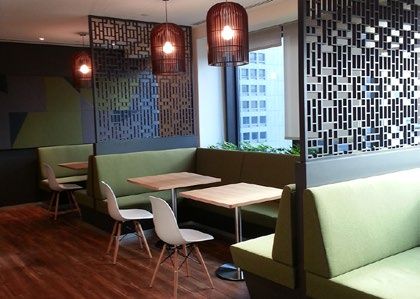
1.                                 2.                                 3.                                    4.                            5.        05
 People-centered                How sharing and                   What mode of work and              Impact on the landlord-tenant            Conclusion
workplace strategy            mobility is changing the           workplace is right for your                 relationship
                                   way we work                        organisation?

2. How sharing and mobility is changing
   the way we work

Traditional working                                      The model in Figure 2 explores how mobility has created four modes of work
arrangements, whereby all                                and places to work.
employees come to work at
one site at the same time and
sit at rows of homogenous                                 1. HUB                                                 2. HOME
individual assigned desks,                                represents what could be called                        refers to working in places
are being challenged.                                     the “traditional” workplace.                           where you have a defined
                                                          People have an assigned desk                           personal workplace but you are
Not only boring and culture-                              or office, but at times may                            outside corporate premises.
destroying, these mostly open plan                        work from other places on the                          This could be at home or
environments no longer respond to                         premises or campus, or leave                           could be temporarily at a
the diversity and complexity of work                      their desk to use a quiet room                         hotel, but the individual has
activities, work processes and                            or collaborative area. People                          full control over a private work
team relationships. Arguably they                         working in a HUB are in a secure                       environment.
never did. New technology                                 environment in terms of both
provides alternatives.                                    space and technology.

                                                          3. CLUB                                                4. ROAM
                                                          refers to working in an                                refers to those people working
                                                          environment that has a diversity                       off premises in shared work
                                                          of different settings where people                     environments. These might be
                                                          in an organisation can choose                          free public spaces or places
                                                          where they sit and who they sit                        that make work settings
                                                          with in order to get their job done                    available by the hour, day or
                                                          in the best possible way. Some                         week. Starbuck’s built this into
                                                          CLUB environments have at least                        its business model for a period
According to Citrix’s Workplace of                        one work setting available for                         of time and we are now seeing
the Future report, about 89% of                           every person in the organisation.                      the dramatic emergence of
global organisations will offer mobile                    Other organisations choose to take                     co-working spaces that support
workstyles by 2020 enabled by mobile                      advantage of the fact that on most                     these types of workers. The
working technology1. As the world                         days only a proportion of their                        next stage of evolution will
shifts from workplaces to places to                       employees come into the office2. In                    see government and building
work, the information & technology,                       this case, there may be less settings                  owners create places to work in
human resources and corporate real                        than employees – but always                            and amongst buildings.
estate functions must work together                       carefully calculated to ensure that
with leaders and staff alike to craft new                 employees can find a place to
workplace policies and solutions that                     work – even at peak turn up days.
respond to this change.

1
    This global market research report surveyed 1,900 senior IT decision makers in August 2012. They largely represent organisations with more
    than 1,000 employees across 19 countries across the globe.
    (https://www.citrix.com/content/dam/citrix/en_us/documents/products-solutions/workplace-of-the-future-a-global-market-research-report.pdf)
2
    Global studies have shown that on average in most offices only 60% or people are in the office at any point in time. Source: Space Utilisation:
    The Next Frontier, CBRE Research, 2015.

© CBRE Ltd. 2016                                                                                                          CBRE WORKPLACE STRATEGY
06              1.                                      2.                               3.                                              4.                                              5.
          People-centered                    How sharing and mobility is      What mode of work and                        Impact on the landlord-tenant                              Conclusion
         workplace strategy                  changing the way we work        workplace is right for your                           relationship
                                                                                  organisation?

     Figure 2: The four different approaches to work

                                                                                                 Ownership of Space
                                                                                            Individual           Shared

                                                                                                                        One desk per person,

                                                                                                                                                                         Higher staff-to-desk
                                                                                                    touchdown space /
                                                                           Work at traditional

                                                                                                                                                 Diversity of setting
                                                                                                    Occasional use -
                                                                           assigned desk

                                                                                                                        non-territorial
                                                                                                    quiet room

                                                                                                                                                                         ratio
                                            Work from home
                             Other places

                                                                                            HOME                                               ROAM
                                            Work in remote
                                              private space                             SECONDARY                                               WORKING
         Geography of Work

                                                (e.g hotel)
                                                                                        WORKPOINT                                              IN TRANSIT
                                                  Work from
                                            remote premises
                                              /satellite office
                             On Premises

                                            Work elsewhere
                                               on premises
                                                                                                 HUB                                            CLUB
                                                                                                 ASSIGNED                                      UNASSIGNED
                                                                                                   SPACE                                         SPACE
                                                    Work at
                                                 traditional
                                              assigned desk

     Source: DEGW (CoreNet Summit Hong Kong 2004)

     CBRE WORKPLACE STRATEGY                                                                                                                                            © CBRE Ltd. 2016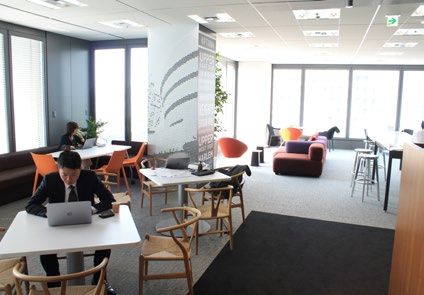
1.                                 2.                                3.                                     4.                            5.           07
 People-centered                How sharing and                  What mode of work and               Impact on the landlord-tenant            Conclusion
workplace strategy            mobility is changing the          workplace is right for your                  relationship
                                   way we work                       organisation?

3. What mode of work and workplace
   is right for your organisation?

                                                         In Asia Pacific, there is still strong               Most organisations prefer to
                                                         resistance among employers to                        let working from home happen
                                                         letting people work from home                        informally and without a corporate
                                                         during core hours, despite the fact                  mandate to avoid the complexity of
                                                         that more than 50% of employees                      ensuring that home workplaces are
                                                         in Asia Pacific would like to work                   safe and ergonomic, and avoid staff
                                                         from home one or two days per                        asking questions such as who will
                                                         week3. In most cases, this comes                     pay for the Wi-Fi, heating/cooling
                                                         down to issues of trust and the ability              costs and home insurance. Those
                                                         to manage people remotely. In                        companies that do officially support
                                                         other cases, it comes down to team                   working from home will typically
                                                         dynamic and work processes, either                   have formal assessment processes
WORKING FROM HOME                                        the need for people to be able to                    to determine who is eligible to do
                                                         easily interact face to face, or paper               so. Alternatively, others allow people
When contemplating the four                              driven processes.                                    to work from home until such time
modes of work there are two
key workplace decisions for an
organisation to consider: options
outside premises and options
within premises.

OPTIONS OUTSIDE PREMISES

To what degree and how should
work be supported outside corporate
premises (HOME or ROAM)? Every
organisation needs to make their
own decision based upon a number
of factors. To some degree the “genie
has already left the bottle” as laptops
and smartphones allow employees
to do some or all their work from
outside corporate premises. For most
people, however, this off premises
work is in addition to working “core”                       CO-WORKING CENTRE
hours within the hub.

3
    DEGW client research presented at CoreNet Mumbai Summit, 2008. The drivers for working from home varied by country: India and Japan were
    interested in reduced commute times. In other countries, flexibility to work around family/life commitments was important. In many cases it was seen as
    a way to get focused work done – something that can be addressed by better workplace design.

© CBRE Ltd. 2016                                                                                                          CBRE WORKPLACE STRATEGY
08              1.                         2.                               3.                                 4.                         5.
          People-centered       How sharing and mobility is      What mode of work and           Impact on the landlord-tenant         Conclusion
         workplace strategy     changing the way we work        workplace is right for your              relationship
                                                                     organisation?

     as they prove themselves unable/                office at all – and just occasionally          The predominant yet traditional
     untrustworthy to do so. Once a                  host pop-up offices in order for               open plan workplace was based
     decision is made to formally support            employees to build relationships with          on the old premise of work, which
     work from home, then policies and               one another face to face.                      is increasingly irrelevant. The
     support processes must be in place.                                                            alternative is to create workplaces
                                                     OPTIONS WITHIN PREMISES                        that have the same level of diversity
     Allowing employees to ROAM has                                                                 as the nature of work that is
     also been happening informally                  One of the biggest questions facing            happening, and then give people the
     for some time. However, some                    organisations today is to what degree          choice as to where they want to work
     corporations are now formally                   should some, or all, employees move            and how they want to work; self-
     considering hybrid real estate                  from a HUB work environment to                 organising their work and delivering
     strategies that reduce the base HUB             a CLUB work environment within                 to clear targets rather than turning
     (or CLUB) footprint and supplement              corporate premises? Put more simply,           up to be seen at work.
     that work space with subscriptions to           this is a question of whether or not
     shared workspaces outside the office            people should be assigned a desk,              Every company seems to have a
     – in particular co-working spaces.              or whether they should be free to              different name for its workplace
     This creates the ability to drive down          choose where they sit, such as within          programme: Smart Working,
     the base real estate costs whilst               their teams local neighbourhood, or            New Workplace, Agile Working,
     providing significant flexibility to cope       more broadly.                                  Connected Workplace, and so on.
     with volatile headcount. Alternatively,                                                        It can be very hard to distinguish
     some organisations see it as a way to           Before answering that question,                one from another – and in most
     get their staff out of the more formal          it is worth examining what is high             organisations this often leads
     corporate office and into creative              performance work in a modern                   to unnecessary concerns about
     innovative spaces – often mixing                workplace. Productivity is no longer           proposed new workplaces being out
     with people from outside their own              simply about how many widgets/hours            of alignment with how people work
     organisations to stimulate ideas.               a person creates or processes. In the          in the organisation.
                                                     world of knowledge, work productivity
     Building owners and developers                  is much more about innovation, rapid           Cutting through all these names,
     around the region are grappling with            sharing of information, leveraging             there are fundamentally four kinds
     new lease structures, service offerings         ideas, speed and quality of decision           of workplaces to choose from – and
     and partnering with new types of                making, and even “fail often fail fast”.       there is no right or wrong answer.
     flexible space providers to capitalise          Work is also no longer simple and              Every organisation’s leadership needs
     on opportunities associated with                repetitive. It is complex, often involves      to make a decision in terms of what
     these changes.                                  interaction with others and can move           works for their business – based on
                                                     between highly collaborative and               ambitions for workplace culture, the
     At the far extreme, there are new               highly focused activities, the physical        nature of work and the objectives of
     types of organisations emerging                 and the virtual, the individual and            the business.
     around the world that have no formal            the group.

     CBRE WORKPLACE STRATEGY                                                                                                     © CBRE Ltd. 2016
1. 2. 3. 4. 5. 09
People-centered How sharing and What mode of work and Impact on the landlord-tenant Conclusion
workplace strategy mobility is changing the workplace is right for your relationship
way we work organisation?
FOUR WORKPLACE MODELS Figure 3: The CBRE Workplace Compass
To help explain these four options,
CBRE created the Workplace HUB CLUB
(assigned space) (unassigned space)
Compass.
Traditional Solution Hot Desking
The four workplace models are:
1. Traditional Solution (basic)
Basic
2. Hot Desking (basic)
3. Collaborative Workplace
(high performance)
4. Activity-Based Workplace
(high performance)
To determine which option is right Collaborative workplace Activity-Based Workplace
High performance
for your organisation there are two
principle elements to consider:
Should people be assigned
to desks or be free to choose
where they sit?
Do you need a basic
or a high performance
Desk space Group / collaborative space Mobility enabled options
workplace?
If assigned desks is the right strategy Source: CBRE Asia Pacific Occupiers’ Fit-Out Cost Guide (2015)
for your business, then you have
two options: Traditional Solution Although the capacity to drive space In terms of cost per sq. m., all four
or a Collaborative Workplace. The efficiency through sharing is high, options fall within 2-3% of each other.
difference is the diversity of work sharing ratios need tto be very So in that sense, cost should not be a
settings (and therefore variety of carefully calculated to ensure that determining factor. However, it makes
work supported) and the degree there is always a workspace to work. more sense to answer this question
of mobility that employees have to In the case of ABW workplaces, it’s from a cost per person perspective.
enable work from more than also important that the full diversity Using the traditional workplace as
one place. of different types of settings are a base, the collaborative workplace
available to choose from at most can be up to 10% more expensive
If unassigned desks is the right times (quiet spaces, team spaces, (because desk space is reallocated
strategy for your business then collaborative spaces, private rooms.) to shared collaborative and focus
you have two further options: Hot workspace); the hot desking option
Desking or Activity Based Working In either case there can be hybrid can be 10-20% cheaper (because you
(ABW). Both solutions offer the solutions. The level of diversity is a have less desks than people) and the
potential to save space and real sliding scale between low and high. Activity Based Workplace can
estate costs through having more Companies can have environments be 20-30% cheaper (because the
people assigned to the space than where some people have assigned diversity of individual work settings
there are desks. The primary driver desks and others are mobile. offsets the need to create additional
of Hot Desking is the ability to share Workplace strategists are the people shared facilities.)
desks and save money. The primary who can help companies make these
driver of ABW is to provide a diversity decisions and develop the detail of a
of settings and the mobility that strategy, regardless of what choices
enables choices. organisations make.
© CBRE Ltd. 2016 CBRE WORKPLACE STRATEGY010 1. 2. 3. 4. 5.
People-centered How sharing and mobility is What mode of work and Impact on the landlord-tenant Conclusion
workplace strategy changing the way we work workplace is right for your relationship
organisation?
Traditional Workplaces and Basic Hot Desking Workplaces are generally well understood workplace options. However, it
is worth diving deeper into these two high performance options to understand the differences and the benefits.
1. High Performance HUB: 2. High Performance CLUB:
The High Performance HUB workplace is characterised The High Performance CLUB is an ABWwhich enables
by each person having an assigned workspace. people to share a diversity of different ergonomic work
However, compared to traditional HUB spaces, the high settings that support a variety of focused and collaborative
performance space allocates a higher proportion of space work activities. Private “owned” enclosed offices are less
to shared activity spaces to support collaboration and common; typically there are sufficient small work rooms
focused work. The high performance HUB recognises for all staff and not just leaders to find enclosed spaces to
the human need for personalised space and a sense of work for as long as they need. High performance CLUB
belonging. One challenge, however, is that people get too spaces are very responsive to business change and project
comfortable at their individual settings and whilst excited needs and allow staff to self-organise themselves, trading
by all of the “cool” alternative spaces to work actually off flexibility and choice for the ownership of their own
often don’t use them as often as might have been attended desk. Aside from work preferences, these environments
(one reason why some tech companies provide free food also cater to introvert and extravert personality types –
is to lure their engineers to spaces where they have to each able to choose the type of setting that best suits their
interact with others.) High performance hub spaces also needs4. When properly executed, the desire for ownership
do not have the “agility” of a CLUB space and people are of a single desk tends to diminish, although it’s
generally told where to sit and teams are well defined. This invariably a big sticking point when introducing the
limits the ability of teams to self-organise themselves, or for concept to employees.
people to easily work across multiple teams.
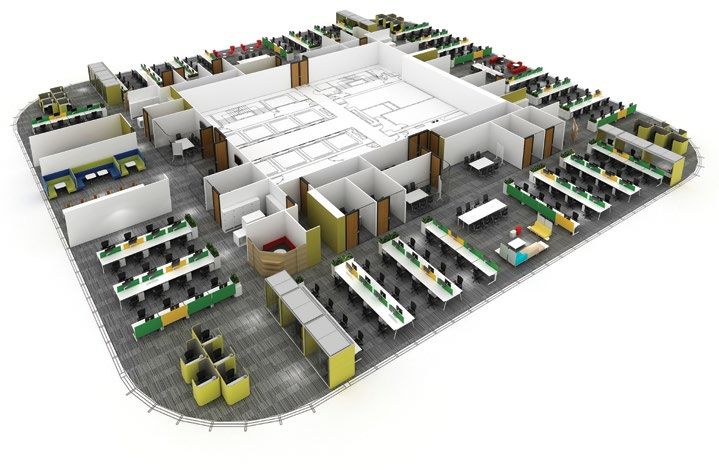
Figure 4: High Performance CLUB - Activity Based Workplace
This illustration below is a representative image of an ABW. Space types and
names are included, but not limited to the below.
Enclosed office
Enclosed meeting room
An acoustically insulated
An acoustically insulated room to support
room to support focused
multiple work modes ranging from
work or light collaboration.
focused to collaborative activities.
Open shared table
Work Cafe
Space for team
Multi-functional space for social
collaboration.
interaction, team gatherings
and individual work.
Ergonomic work setting
Open meeting space
Unassigned desks to support
Space for ad hoc activities
both work and light
and informal meetings.
collaboration.
Focused touchdown area
High-walled pod
An acoustically insulated
Designed to support
room to support focused or
focused work.
confidential work.
Source: Haworth
4
https://www.csuchico.edu/eap/docs/empathia-advisor2014-04-IntrovertsExtroverts_and_the_Workplace.pdf
CBRE WORKPLACE STRATEGY © CBRE Ltd. 20161. 2. 3. 4. 5. 011
People-centered How sharing and What mode of work and Impact on the landlord-tenant Conclusion
workplace strategy mobility is changing the workplace is right for your relationship
way we work organisation?
Activity Based Workplace Case Study – CBRE Tokyo office
In 2014, CBRE consolidated its four Tokyo offices into a single location in Marunouchi under ‘Workplace 360’ –
a workplace solution to move into an ABW which enables employees to work anywhere based on their needs. The
rationale is that nowadays people undertake various work activities which require different work settings to fit the required
levels of focus or collaboration.
CBRE’s Tokyo office provides a variety of choices for various work activities including unassigned desks in open areas,
unassigned workstations in focus space, enclosed phone booths, enclosed meeting rooms, open meeting space,
collaboration space, high counter area and a substantial multi-functional cafe area.
CHALLENGES KEY SUCCESS FACTORS RESULT
Employees’ concerns about Strong support and endorsement The new environment provides an open,
moving to an ABW model from senior management collaborative experience which has
Creating a workplace that A clear change management increased connectivity and instigated the
supports CBRE’s business programme following changes:
operations in a more effective Listened to and engaged
and optimal way with staff 100% unassigned seats
Implementing a new technology Established training and 100% employees have laptops
strategy and platform including etiquette for the new office and softphones
laptops, softphones and VPN Implemented the right IT to 18% space saved in new office
for staff support the new workspace 84% reduction on file storage
25% reduction in electricity costs
More meeting rooms, enclosed
phone booths and focus desks.
In the post occupancy evaluation,
76% employees feel
more productive
88% employees did not want
to go back to old way of working
92% employees think the office
reflects company brand and
corporate values
Photo credit: CBRE Workplace 360
© CBRE Ltd. 2016 CBRE WORKPLACE STRATEGY12 1. 2. 3. 4. 5.
People-centered How sharing and mobility is What mode of work and Impact on the landlord-tenant Conclusion
workplace strategy changing the way we work workplace is right for your relationship
organisation?
CBRE has identified three key areas for consideration when companies design their high performance workplaces:
Balancing “Me” and “We” spaces; designing an inclusive workplace; and connecting the workplace with its
surroundings. All three are discussed in more detail below.
i) Balancing “Me” & “We” spaces
A major focus of the high The next generation workplace “We” spaces normally would include
performance workplace is providing should provide a range of space collaborative settings such as
a range of different workspaces to options for employees to choose ergonomic work stations or shared
balance the “Me” (focused, solo and from, depending on whether tables in a collaborative zone, and
quiet work) and “We” (collaborative they want to work alone or in meeting rooms ranging in capacity
and often noisy work) within the collaboration (Figure 5). For from 4-6 persons and containing
same office, and for people to example, when work requires intense presentation, teleconferencing
choose the workspace depending focus or is confidential in nature, and videoconferencing facilities.
on the tasks they need to do. The then employees can select an Larger meeting room facilities and
“Me-We” balance also ensures enclosed space. When work requires conference rooms can also be
workspaces are provided for both focus but a certain level of distraction provided, along with more informal
introverts and extroverts. is acceptable, a high-walled pod “We” spaces such as cafes which can
booth is suitable. host meetings and social activities.
Figure 5: Examples of different workspaces in a high performance workplace
Focused Enclosed Ergonomic Shared Meeting Work Cafe
touchdown office work setting table room
area
ME (FOCUSED) WE (COLLABORATION)
Focus space Ergonomic work setting Collaborative space Social space
Focused touchdown area Ergonomic work setting in quiet zone Large-size collaborative space Multi-functional work cafe
High-walled pod Ergonomic work setting in collaborative zone Small-size collaborative space Multi-functional work cafe
Source: CBRE Research, 2016.
CBRE WORKPLACE STRATEGY © CBRE Ltd. 20161. 2. 3. 4. 5. 13
People-centered How sharing and What mode of work and Impact on the landlord-tenant Conclusion
workplace strategy mobility is changing the workplace is right for your relationship
way we work organisation?
The high performance workplace must feature a variety of ergonomic work settings as one size does not fit all. Ergonomic
work settings can support a diversity of work activities ranging from quiet, noisy, collaborative and inspirational
working zones.
As workplaces have become more diverse and complex, forecasting space requirements has become much more about
probability analysis (“what’s the likelihood of someone needing this type of space?”) rather than traditional linear or
hierarchical calculation processes. Deliberate ambiguity in the physical design of spaces will also help users experiment
and find their own best ways to use spaces – rather than just following the diktats of designers.
ii) Designing an inclusive workplace
Companies’ workforces are increasingly diverse in terms of age, life stage5 , gender, ethnicity and personality types. A
well-designed high performance work environment can easily take into consideration all aspects of employee diversity
including their needs and aspirations and therefore be more inclusive than traditional office solutions. In addition to
providing a diversity of settings, there are three other key areas of consideration (Figure 6):
Figure 6: Elements of inclusive office design
1. 2. 3.
Ergonomic Provision of Wellness:
design: amenities: Best-in-class companies value
Ergonomics is crucial for Research indicates that the their employees’ physical,
workplace health and safety. millennial generation is mental and social health. At
When designing and planning attracted to workplaces offering the same time, employees
an office, ergonomics a wide range of amenities. want to improve their work-life
should be customised to suit Popular facilities include balance. The next generation
employees’ profiles. Features daycare facilities; showers workplace must therefore
include height-adjustable and changing rooms for factor in wellness. Companies
workstations (ideally with a sit staff who cycle to the office; should ensure their workplaces
to stand range); ergonomic gaming rooms, rest areas provide features to promote
chairs; position-adjustable and green space. Providing physical health, such as natural
display screens; and individual these types of facilities to light, temperature and indoor
adjustable lighting. Medical employees will make them feel air and water quality, but also
research in the United States valued by the company and mental wellbeing, such as
indicates that every US$1 spent drive engagement and staff space choices to reduce stress.
on ergonomics has an US$18 retention. However, care needs
return on investment.6 to be taken when assessing
requirements as employees
often ask for facilities that are
then never used once built. The
use of social and recreational
facilities is often influenced by
the culture of the organisation
– often requiring senior leaders
to “give permission” to use
facilities – particularly if the
intention is that they are used
during working hours.
5
In workplace culture ‘life stage’ is a stronger indicator of employee needs and aspirations than their ‘generation’.
6
Dr. Alan Hedge, Cornell University, at CBRE Business Intelligence Lunch, Singapore March 2016.
© CBRE Ltd. 2016 CBRE WORKPLACE STRATEGY14 1. 2. 3. 4. 5.
People-centered How sharing and mobility is What mode of work and Impact on the Landlord-Tenant Conclusion
workplace strategy changing the way we work workplace is right for your Relationship
organisation?
Ergonomic design Provide a wide Focus on wellness
Encourage movement range of amenities Indoor environment
Adjustable furniture Understand expectations Promote health
Social elements
• Stand to sit workstation • Rest Area • Access to natural light
• Ergonomic chairs • Wellness facilities • Thermal comfort
• Encouraging movement • Green space in buildings • Noise control
in the office • Games rooms • Indoor air and water quality
• Bring green elements
Ergonomic Provision of
Wellness
design Amenities
Food & Beverage
Bring green elements
in workplace
Sleeping pod
Sit-to-stand workstations Exercise space Access to natural light Clean drinking water
Photo credit: CBRE Workplace 360
CBRE WORKPLACE STRATEGY © CBRE Ltd. 20161. 2. 3. 4. 5. 15
People-centered How sharing and What mode of work and Impact on the Landlord-Tenant Conclusion
workplace strategy mobility is changing the workplace is right for your Relationship
way we work organisation?
iii) Connecting the workplace with its surroundings
The next generation workplace which are often a major factor The next step is to integrate
should not only fulfill the functional in attracting and retaining staff. the building into its immediate
needs of office users, but should Combining internal and external surroundings. Since most office
also improve their psychological and placemaking can create a complete buildings are standalone entities
social wellbeing. While discussion experience for employees. and are separate from one another,
in this report so far has been largely there are opportunities to create an
focused on internal workplace Relatively straightforward measures “arrival experience” long before an
design, it is equally important to look include making better use of employee arrives in their workplace.
beyond the physical confines of the common areas at the building
office to its external surroundings entrance. These areas should Poor or non-existent connections
and look at ways to strengthen function as a source of inspiration, between a building and its
employees’ sense of belonging to rather than just a lobby or hallway. immediate locality can weaken the
the community. By adding F&B or art installations, arrival experience. Good urban
permeable small scale public spaces design can add value to real estate
The adoption of mobile working can be created. These areas can be by facilitating the coordination
means the quality of the space linked to outdoor areas featuring of public transport, public space,
outside a building is becoming street furniture, vegetation, paths, pedestrian routes and amenities.
more important than ever. Areas cafes, exhibitions and so on, which General design guidelines to
surrounding a building or spaces could also provide opportunities for integrate a building into its vicinity
between buildings can be utilised community engagement. are illustrated in (Figure 7.
as part of a network of workspaces,
providing employees an even greater Figure 7: Connecting the indoors to the outdoors
choice of locations and settings to
work and socialise.
When a building does not have
sufficient internal common area to
accommodate amenities, external
locations can be used to house
facilities catering to staff and
help build a sense of community.
Examples include outdoor furniture
and dedicated areas for events,
games and performances. Where
possible, these areas should be
linked to other amenities such as
F&B, gyms and entertainment areas,
Accessibility Visual and physical connection with other public
spaces, public transportation and buildings
Walkability Easily walkable to and from the surrounding business
precinct, promote active streets and pedestrianisation
Community Provide a wide range of amenities and leisure areas for
social activities and events
© CBRE Ltd. 2016 CBRE WORKPLACE STRATEGY16 1. 2. 3. 4. 5.
People-centered How sharing and mobility is What mode of work and Impact on the landlord-tenant Conclusion
workplace strategy changing the way we work workplace is right for your relationship
organisation?
Case Study – International Towers Sydney in Barangaroo South, Sydney
The International Towers Sydney 50% of the site area of Barangaroo new business district for Sydney, but will
comprises three buildings in is allocated to public space and provide a high quality of life for those
Barangaroo South in the Walsh including urban parks, a waterfront who live, work and play there.
Bay precinct of the Sydney CBD. plaza, a harbour cove, public piers,
Barangaroo South is part of the waterfront promenades, boardwalks, The three towers have already
22-hectare Barangaroo renewal public squares, streets and laneways. attracted global anchor tenants
project and is being positioned as The entire 2.2 km Barangaroo including Westpac, KPMG, Lendlease,
a business precinct with residential waterfront is fully accessible to PwC, HSBC, Swiss Re, Gilbert + Tobin
and leisure components. Lendlease the public. and Marsh & McLennan Servcorp9.
was selected as the developer for Major tenants include:
Barangaroo South in 2009 by the All tenants on the site intend to
Barangaroo Delivery Authority implement ABW. As a logical extension Tower One (open end 2016)-
on behalf of the New South there are a diversity of workplaces PwC, HSBC, Marsh & McLennan
Wales Government. spread throughout public spaces to Servcorp
allow people to work outside their Tower Two (opened 1 July 2015)-
The three towers were designed by corporate premises but remaining Westac, Swiss Re, Gilbert + Tobin
Lord Rogers and Ivan Harbour of within the precinct. Tower Three (open mid to late
Rogers Stirk Harbour + Partners and 2016)- KPMG, Lendlease
provide approximately 270,000 sq. m. The International Towers Sydney and
of large floor plate, premium-grade Barangaroo South will not only be a
office space7. The three towers have
attracted international investors
including the Hong Kong Monetary
Authority, Qatar Investment
Authority, Canadian Pension Plan
Investment Board and Dutch pension
fund APG, which have all co-
invested with Lendlease.
To minimise the impact of cars,
the three towers share a common
basement accessed from a
single point of entrance, leaving
the surrounding streets largely
pedestrianised8. This creates a
vibrant and safe public space to
foster a community with direct links to
residential apartments, hotels, shops,
cafes, restaurants and metro stations.
7
https://www.barangaroosouth.com.au/news-and-updates/lend-lease-celebrates-a-high-point-at-tower-2-international-towers-sydney
8
http://www.rsh-p.com/assets/lib/2016/07/12/6120_BarangarooTowers_JS_en.pdf
CBRE WORKPLACE STRATEGY © CBRE Ltd. 20161. 2. 3. 4. 5. 17
People-centered How sharing and What mode of work and Impact on the landlord-tenant Conclusion
workplace strategy mobility is changing the workplace is right for your relationship
way we work organisation?
4. Impact on the landlord-tenant relationship
The next generation workplace CBRE Research believes the coming their tenants create an attractive
will impact the landlord-tenant years will see the landlord-tenant working environment for
relationship. Just as a company relationship move beyond a their employees.
must provide an appealing straightforward contract based on a
workplace to attract and retain lease to more of a partnership type Building a community will also be
employees, a landlord must agreement with the common goal crucial. Occupiers will demand
provide an attractive building to of providing a satisfying workplace that landlords provide them with a
sign and retain tenants. experience for employees. work environment that helps them
create a sense of community and
This is particularly true for landlords Key to this will be landlords fosters a sense of belonging, which
of older office buildings which may maintaining regular and open in turn will aid them in attracting and
struggle to compete with newer communication with tenants to retaining talent. Landlords can do
properties. Apart from offering lower understand their needs beyond this by equipping their buildings with
rents or providing longer free rent basic property management. They a full range of amenities or holding
periods, landlords should consult will have to deliver more complete community events.
tenants to ascertain their most solutions for their tenants and help
desirable amenities or facilities. Best
practice examples include Chiswick Figure 8. Future landlord-tenant partnership
Park in West London, where the
landlord is working closely with
tenants to build and maintain a
community through a comprehensive
programme of activities, art and
culture events. Amenities include a
wide range of restaurants, cafés,
bars and a large multi-purpose
outdoor event space featuring a
lake, waterfall and boardwalk. A
Open lines of
Create a sense
fitness club, swimming pool, cycling communication
of community
and pedestrian routes are also to understand and
by providing
provided. Tenants at Chiswick Park cater to tenants’
report a high employee retention rate
communal space
requirements beyond
and better productivity. within and outside
basic property
buildings
management
© CBRE Ltd. 2016 CBRE WORKPLACE STRATEGY18 1. 2. 3. 4. 5.
People-centered How sharing and mobility is What mode of work and Impact on the landlord-tenant Conclusion
workplace strategy changing the way we work workplace is right for your relationship
organisation?
5. Conclusion
To survive in a rapidly changing world, corporations not only need great
talent; they need inspired people who are given the tools, encourage-
ment and freedom to perform in the best way possible. The physical
workplace environment can play a critical role in not just attracting and
retaining talent, but helping employees to be successful and productive.
Talent scarcity is a challenge, and companies who understand this are
already transforming their physical workplace to drive talent attraction,
strengthen employee engagement and boost employee wellness.
Don’t be fooled by fads - there is no single right workplace solution. Equally,
there are only a few basic choices that a corporation needs to make to align
its workplace strategy with its business needs. Key considerations include the
degree of mobility needed to support work inside and outside premises; the
value of providing a choice of diverse settings; and weighing up the need for
personalisation and ownership of settings versus the need to maximise diversity
and organisational agility. The key is putting people at the centre of the process
of making these decisions.
Building owners need to work in closer alignment with tenants to create new
leasing options that provide greater ability for tenants to manage volatile head-
counts. These can include mixing core leased spaces with short term alternative
working places and other facilities that enhance the experience of people using
the building and the surrounding precinct. More than just providing spaces,
those owners can provide events and experiences that enhance the everyday
experience of building users.
The easiest things to measure are often the least important, and the most
important things to measure are often the most difficult to measure. Whilst it is
important to control, or sometimes reduce, the cost of creating and operating
workplaces, it is also critical to understand the value that workplaces create in
terms of attracting, retaining, motivating and enabling a workforce. That value
proposition is unique to every organisation and deserves thorough considera-
tion and alignment with overall business objectives and aspirations.
Workplace matters.
CBRE WORKPLACE STRATEGY © CBRE Ltd. 201619
Bibliography
AMP Capital, The Workplace Fingerprint of the Future (AMP, 2016)
CBRE, Asia Pacific Occupiers’ Fit-Out Cost Guide. (CBRE, 2015)
CBRE, Global Occupier Survey 2015/2016 (CBRE, 2016)
CBRE, Space Utilisation: The Next Frontier (CBRE, 2015)
Citrix, Workplace of the Future report (2012)
Manpower Group, 2015 Talent Shortage Survey (Manpower Group, 2015)
• https://www.csuchico.edu/eap/docs/empathia-advisor2014-04-IntrovertsExtroverts_
and_the_Workplace.pdf
• https://www.barangaroosouth.com.au/news-and-updates/lend-lease-celebrates-a-
high-point-at-tower-2-international-towers-sydney
• http://www.rsh-p.com/assets/lib/2016/07/12/6120_BarangarooTowers_JS_en.pdf
• http://www.lendlease.com/projects/barangaroo-south/?id=b7d8e348-d6fa-45f3-
be0e-e502b5aba8a7
DISCLAIMER
Utilisation data contained herein has been obtained from CBRE MOBY, our proprietary mobility profiling software. The data
includes studies of 14 countries; 36 cities; 77 clients; 63,235 workpoints; and 3,315,170 observations. While we do not doubt its
accuracy, the sample size varies for each country, city and industry resulting in varying degrees of level of confidence in the results
in drawing out conclusions. These results should be treated as indicative of the broad industry trends.
© CBRE Ltd. 2016 CBRE WORKPLACE STRATEGYCONTACTS
RESEARCH GLOBAL WORKPLACE ADVISORY &
SOLUTIONS TRANSACTION SERVICES
Henry Chin, Ph.D. Phil Rowland Manish Kashyap
Head of Research, Asia Pacific Chief Executive Officer, Asia Pacific Regional Managing Director,
+852 2820 8160 +852 2820 8122 Asia Pacific
Henry.chin@cbre.com.hk Phil.rowland@cbre.com.hk +65 6326 1220
Manish.kashyap@cbre.com.sg
Ada Choi, CFA Peter Smyth
Senior Director, Asia Pacific Managing Director, Asia Pacific Rohini Saluja
+852 2820 2871 +852 2820 8181 Executive Director, Asia Pacific
Ada.choi@cbre.com.hk Peter.smyth@cbre.com.hk +65 6326 1665
Rohini.saluja@cbre.com.sg
Jonathan Hills
Director, Asia Pacific Paul Hubbard-Brown
+852 2820 2881 Executive Director, Asia Pacific
Jonathan.hills@cbre.com.hk +852 2820 2843
Paul.HubbardBrown@cbre.com.hk
Jason Chiang
Manager, Asia Pacific Peter Andrew
+852 2820 8151 Senior Director, Asia Pacific
Jason.chiang@cbre.com.hk +65 6326 1677
Peter.andrew@cbre.com.sg
Cynthia Chan
Manager, Asia Pacific Josh Bank
+852 2820 2839 Director, Asia Pacific
Cynthia.chan@cbre.com.hk +65 6326 1606
Josh.bank@cbre.com.sg
Mukesh Hemrajani
Director, Asia Pacific
+65 6229 1107
Mukesh.hemrajani@cbre.com.sg
Follow CBRE
CBRE RESEARCH
This report was prepared by the CBRE Asia Pacific Research Team, which forms part of CBRE Research—a network of preeminent researchers who
collaborate to provide real estate market research and econometric forecasting to real estate.
© CBRE Ltd. 2016 Information contained herein, including projections, has been obtained from sources believed to be reliable. While we do not doubt its
accuracy, we have not verified it and make no guarantee, warranty or representation about it. It is your responsibility to confirm independently its accuracy
and completeness. This information is presented exclusively for use by CBRE clients and professionals and all rights to the material are reserved and
cannot be reproduced without prior written permission of CBRE.
Printed on recycled paper
© CBRE Ltd. 2016You can also read


