Media Kit - Phoenix Sky Harbor
←
→
Page content transcription
If your browser does not render page correctly, please read the page content below
Media Kit

  2021
Phoenix Sky Harbor International Airport
                                       Fact Sheet
•   The Phoenix Airport System is the largest economic engine in the State of Arizona.

•   The total economic impact (including multiplier effects) is $38 billion. It supports 269,000
    jobs in Arizona, with a payroll of $13 billion.

•   Prior to the COVID-19 pandemic, the average number of passengers at Sky Harbor per
    day was nearly 125,000. In 2020, the average number of passengers per day at Sky
    Harbor was a little more than 59,000.

•   In 2020, a little more than 21.9 million passengers traveled through Sky Harbor - down
    52.6 percent from the 2019 record of nearly 46.3 million passengers.

•   Twenty airlines serve Phoenix Sky Harbor International Airport offering service to more
    than 115 domestic and 16 international destinations. Service to many international
    destinations has been temporarily suspended as a result of the pandemic.

•   In 2019, an average day at Sky Harbor consisted of 1,200 takeoffs and landings
    including commercial, general aviation, military and cargo flights making a total of more
    than 438,000 operations per day.

•   Prior to COVID-19, the PHX Sky Train® served about 5.3 million people, or
    approximately 14,600 people per day. It provides a seamless connection between airport
    terminals, East Economy Parking, and Valley Metro Rail, which offers quick access to
    downtown Phoenix, Tempe and Mesa. In 2020, the PHX Sky Train® served a little more
    than 6,300 passengers per day.

•   The City of Phoenix runs two general aviation airports in the Phoenix area. In 2020,
    Phoenix Goodyear Airport handled nearly 80,000 operations. Phoenix Deer Valley
    handled more than 402,000 operations (take-offs and landings) and is the busiest
    general aviation airport in the country. In 2019, Phoenix Goodyear Airport handled
    117,000 operations, and Phoenix Deer Valley Airport handled more than 456,000
    operations.

•   The Wall Street Journal ranked Phoenix Sky Harbor as the Best Large-Scale Airport in
    the United States in 2019.

•   Phoenix Sky Harbor was ranked number two by The Points Guy for The Best Airports in
    the United States in 2019.

                                                                          Updated Feb. 17, 2021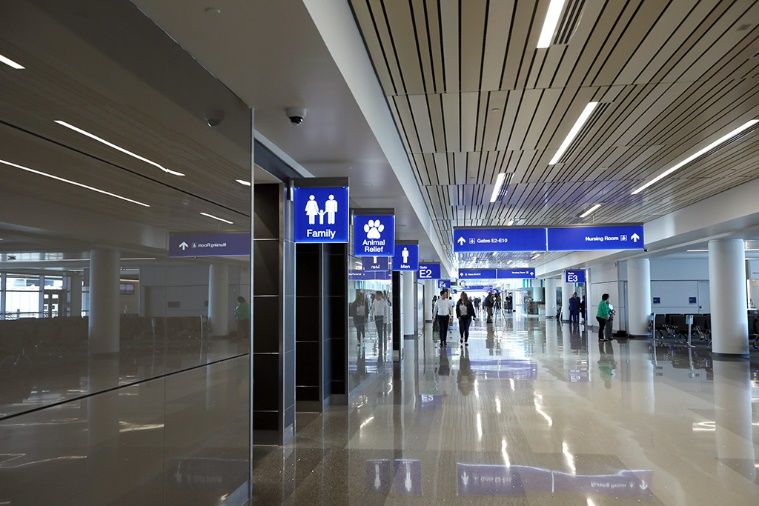
Phoenix Sky Harbor International Airport – Key Initiatives
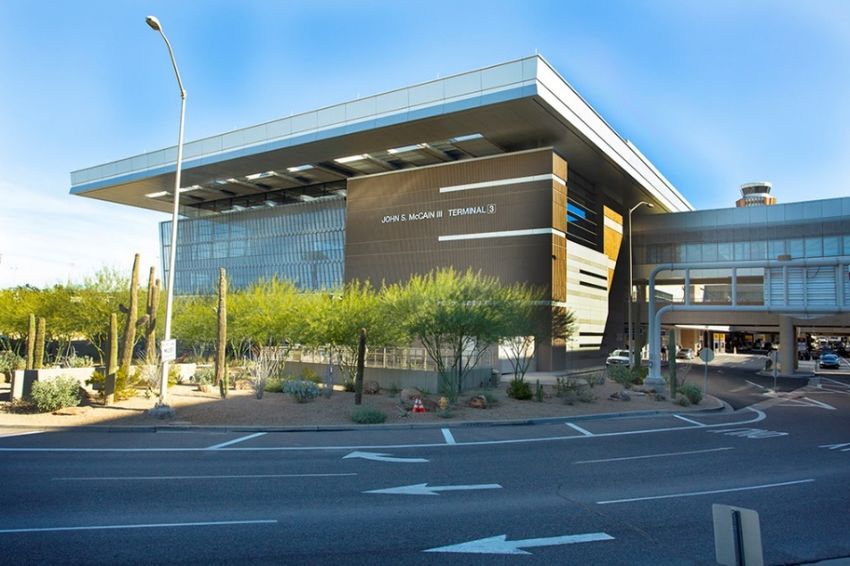
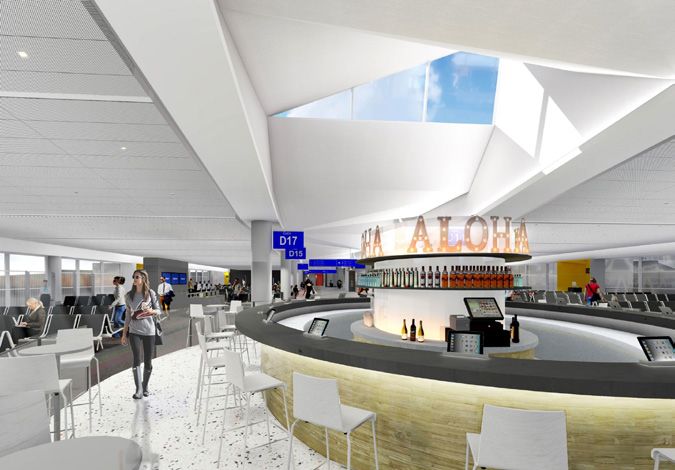
Terminal 3 Modernization
                                                             Phoenix Sky Harbor International
                                                             Airport’s Terminal 3
                                                             Modernization Program was
                                                             completed in Feb. 2020 with the
                                                             opening of the final component,
                                                             the North Concourse. The
                                                             modernized Terminal 3 provides
                                                             an enhanced customer
                                                             experience for travelers with new
                                                             shops, restaurants, amenities
                                                             and more. The program was
                                                             completed in three distinct
                                                             components to maximize
                                                             flexibility and minimize impact to
                                                             travelers.

Component 1 was completed in December 2016 and included changes to the Terminal
Processor, provided a consolidated security checkpoint and new airline ticket counters.
Component 2 opened in January 2019 with the new South Concourse. This concourse added
15 gates and several additional customer amenities. The terminal was also renamed the John
S. McCain III Terminal 3. The final component, the North Concourse, opened Feb. 2020 and
included new shops, restaurants and enhanced amenities such as a post-security animal relief
area, nursing room and more. The entire program represents an approximate cost of $590
million.

Visit skyharbor.com/TerminalModernization for more information.

                                                                         Updated Feb. 17, 2021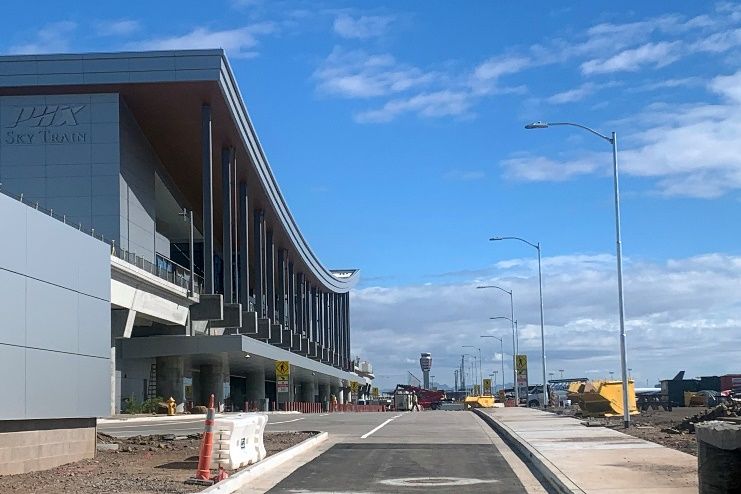
Terminal 4 Eighth Concourse

                          The new Eighth Concourse at Terminal 4 will add
  OPENING                  eight new D Gates to the south side and will be
                         occupied by Southwest Airlines. A new connector
   2022                 bridge will allow travelers to easily access all gates
                            in Terminal 4 without leaving the secured area.
                             Other improvements also include upgrades to
    Contractor                                        Security Checkpoint D.
   McCarthy Building
    Companies, Inc.

   Project Cost
   $310 Million
     Will Add
    130,000 square
   feet to Terminal 4
     Will Add
    New shops and
     restaurants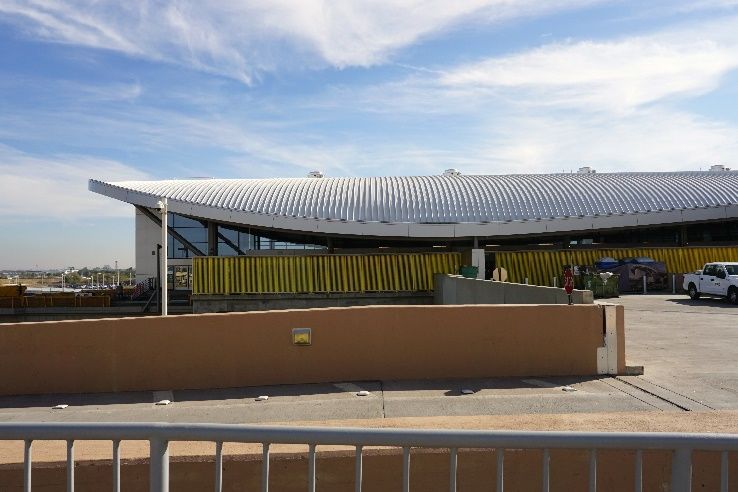
PHX Sky Train® Stage 2
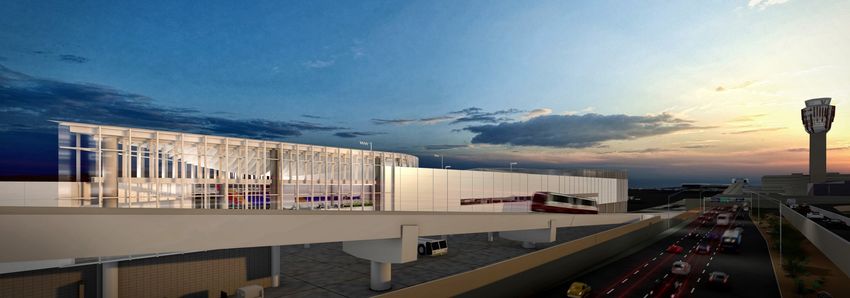
Stage 2 construction of the PHX Sky Train® is
underway. It will connect passengers from the
airport terminals to the Rental Car Center more
                                                               OPENING
quickly and conveniently, and will also help
reduce traffic along Sky Harbor Blvd.                                2022
                                                            Paid for
                                                           with Rental
                                                         Car Center and
                                                          user fees. No
                                                        local tax dollars          Project Cost
                                                              used.                $745 Million

                                             24th St.
                                           PHX Sky Train®
                                              Station
                                            Added parking
                                           on the west side
                                            of the Airport
Rental Car Center PHX Sky Train® Station                           24th St. PHX Sky Train® Station

2.5 Miles Added                                                    13 Minutes
       5 Miles Total                                           End-to-end time from the
    from the 44th St.                                           44th St. PHX Sky Train®
 PHX Sky Train® Station to                                          Station to the
  the Rental Car Center                                           Rental Car Center
Images of PHX Sky Train® Stage 2 Construction
24th St. Station

Rental Car Center Station

                                                Updated Feb. 17, 2021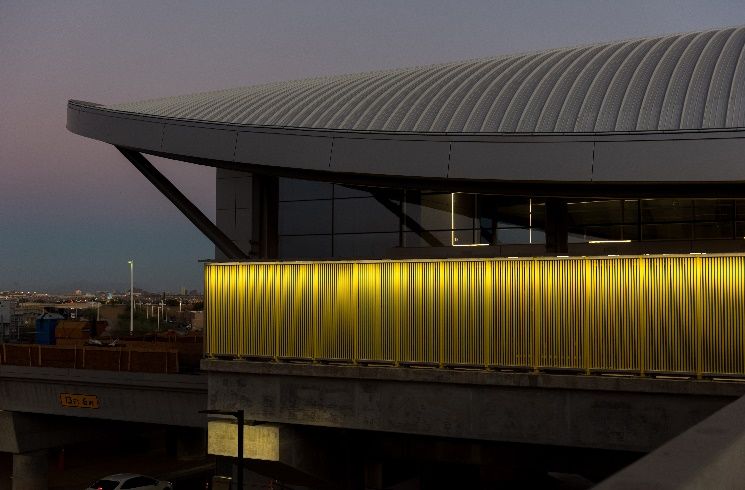
Phoenix Sky Harbor International Airport – PHX Sky Train® Facts
  •   Stage one, between Valley Metro Rail, East Economy parking, and Terminal 4 opened
      April 8, 2013 and is 1.7 miles long. Stage 1a opened Dec. 8, 2014, continuing .7 miles
      from Terminal 4 to Terminal 3, with a short walkway to Terminal 2.
  •   The airport broke ground on Stage 2 in early 2018 with completion expected by mid-
      2022.
  •   Trains run continuously in both directions 24 hours a day, seven days a week and arrive
      as frequently as every three minutes. They travel at an average speed of 23 mph, but
      can go up to 38 mph.
  •   It currently takes seven minutes to travel from the 44th Street station to Terminal 3.
  •   It will take less than three minutes to travel from Terminal 3 to the future West Ground
      Transportation Center, and about six minutes to go from Terminal 3 to the Rental Car
      Center.
  •   The trip from Terminal 4 to the future West Ground Transportation Center will take about
      five minutes, and less than eight minutes to go from Terminal 4 to the Rental Car Center.
  •   In total, it should take about 13 minutes to go from the 44th Street PHX Sky Train®
      Station to the future Rental Car Center station.
  •   Initial projections indicated about 2.5 million passengers were expected to ride the train
      in its first year (7,000/day). However, ridership has exceeded expectations with on
      average about 14,000 riders per day.
  •   The total project cost of the first two stages from 44th Street to Terminal 3 was $884
      million, paid for with airport revenues and passenger fees (no local tax dollars).
  •   The 44th Street, Terminal 3, and Terminal 4 stations are air conditioned. The East
      Economy station is outdoors, with shade and fans to cool passengers during their short
      wait.
  •   Stages 1 and 1A construction accounted for 8,000 jobs.

                 PHX Sky Train® Stage 2 – Did You Know…?
  •   Total length of the PHX Sky Train® (44th Street to Rental Car Center): 5 miles
  •   Number of columns that make up the guideway: 137
  •   Guideway column shafts at the future West Terminal Station: 10 feet wide and 120 feet
      deep
  •   Average precast beam weight: 125,000 pounds
  •   Number of precast tubs shipped to the site and erected on columns: 324
  •   Guideway between former Terminal 2 and Terminal 3 is wide enough for an RJ-900
      aircraft to pass
  •   Number of miles of medium voltage cabling for the primary power system: 66 miles
  •   The PHX Sky Train® is adding 24 additional train cars for a total of 42
  •   Trip time from 44th Street to Rental Car Center: 13 minutes
  •   System opens: 2022

                                                                          Updated Feb. 17, 2021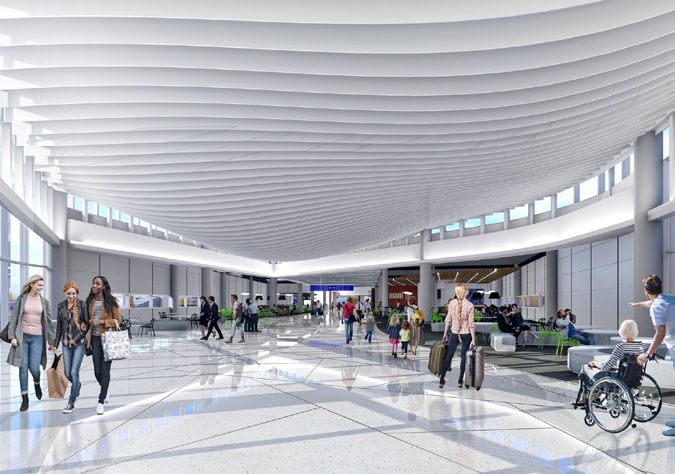
Comprehensive Asset Management Plan (CAMP)
Phoenix Sky Harbor International Airport is the largest economic engine in the state of Arizona.
The Airport provides vital opportunities for businesses both large and small, and it is critical that
the Airport has the facilities and services to serve the region well into the future. The Airport’s
Comprehensive Asset Management Plan (CAMP) provides a roadmap for meeting future
demand.
Elements of the plan include:
       • Building more gates to provide availability to the airlines. To build more gates, space
       must be cleared that is currently occupied by non-terminal uses.
       • These non-terminal uses can be moved to the north area of the airport. To utilize the
       north area, the railroad must be adjusted to partially run below grade.
       • Constructing new terminal space to provide comfortable and operable terminals. This
       includes renovating some of the older spaces in Terminal 4.
       • Adjusting the Airport’s roadways to increase traffic flow and security as well as improve
       access to and from the freeway system.
       • To provide the Air National Guard with the additional space to expand, cargo
       operations must be moved to the north side of the airport.
       • Cargo operators will also need room to expand. Adjusting the railroad to run partially
       below grade will allow the Airport to move cargo to the north side, where it can operate
       more efficiently and have room for growth.
       Each individual project would be required to go through an approval process and finance
       plan. No local tax dollars would be utilized. All projects would be paid for through grants,
       airport revenues, facility charges and bonds. For more information, visit
       www.skyharbor.com/camp.

                                                                               Updated Feb. 17, 2021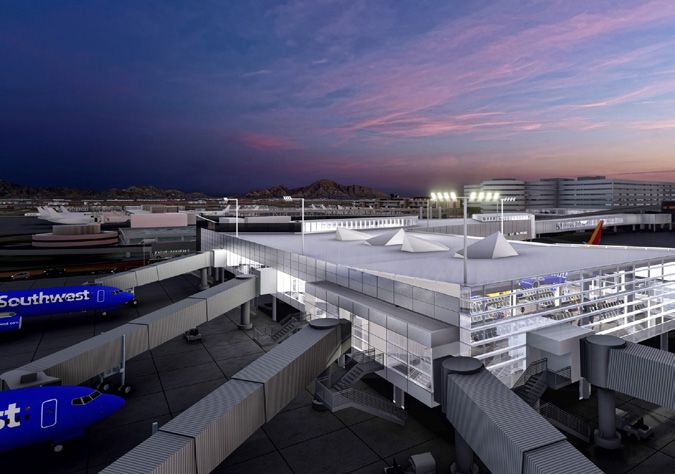
You can also read


