MODEL UNITED NATIONS Münster University International - Point of no Return? - Altering the Course Towards a Future That Lasts' - MUIMUN
←
→
Page content transcription
If your browser does not render page correctly, please read the page content below
1

Münster University International
MODEL UNITED NATIONS
Delegates Handbook 2019
‚Point of no Return? - Altering the
Course Towards a Future That Lasts’
2

    Münster, March 2019

    Münster University International Model United Nations
    c/o Arbeitsstelle Forschungstransfer
    Robert-Koch-Straße 40
    48149 Münster

    Web: www.muimun.org
    E-Mail: coordination@muimun.org

    Content:
    MUIMUN Organizing Team under the coordination
    of Julia Katharina Neumann and Daniel Ulrich Stöckl (editors)

    Publisher:
    Münster MUN e. V.
    Scharnhorststraße 12
    48151 Münster

    Print:
    Techniker Krankenkasse
    Hafenstraße 32
    48153 Münster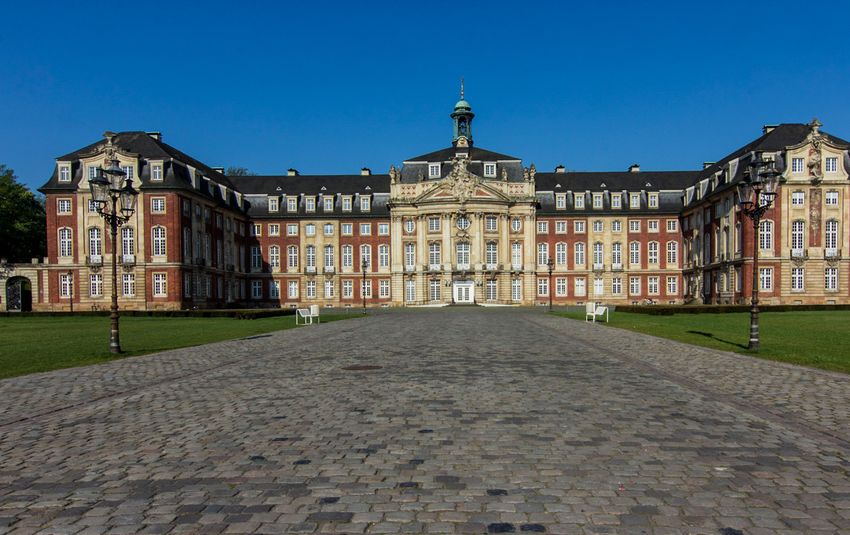
CONTENT           1

                                      Page

IMPRINT
CONTENT                                  1

WELCOMING NOTES

  General Secretariat                   2
  Prof. Dr. Johannes Wessels            3
  Markus Lewe                           4

CONFERENCE SCHEDULE                      5

CONFERENCE

  MUIMUN Impressions                     6
  General Conference Topic               7
  Committees                   8–13/ 16–17
  Workshops                          18-21
  Social Events                         24

RULES OF PROCEDURE                   22-23
                                             The MUIMUN Conference is hosted by:

THE CIT Y OF MÜNSTER

  City Map (Middle Layer)           14–15
  About Münster                        25
  Münster‘s Universities               26

REALIZING MUIMUN 2019

  The MUIMUN Team 2019                 27
  The Münster MUN e.V.                 28
2                  WELCOMING NOTES

                    WELCOMING NOTE GENERAL SECRETARIAT

    Honourable Delegates,                                              With our motto “Point of No Return? – Altering the Course
                                                                   Towards a Future That Lasts” we question the sustainability
    Esteemed Chairs and Rapporteurs,                               of today’s politics, policies, and polities. Sustainability, or
                                                                   the lack thereof, is relevant in all aspects of life. As seen in
    Dear guests and friends,                                       countless conflicts around the world, the underrepresentation
                                                                   of minorities has a lasting negative impact on societies. Un-
   It is with great delight that we, the General Secretariat of    regulated and corrupt financial markets can plunge the world
MUIMUN 2019, can welcome you to the 13th edition of the Müns-      economy into crisis. Nationalistic, populist and firebrand po-
ter University International Model United Nations conference.      litics endanger the rules-based international system and cast
In March 2019, you will be among students from all over the        an uncertain light on the future. And last but not least, the
globe coming to Münster, the city of the Westphalian Peace. In     ever-growing challenges of climate change demand immediate
the historic castle or “Schloss” of Münster University, we will    action, by the leaders of today and tomorrow.
convene once again to fiercely debate in committees, attend
exciting socials and build lasting relationships.                      We are therefore looking forward to welcoming you to our
                                                                   humble conference. For five days, together with the Delegates,
    Nonetheless, Model United Nations conferences are about        Chairs, Rapporteurs and Legal Service, all of us will be part
more than just resolutions, socials and coffee breaks. At the-     of a unique world inside the Münster Castle. Coming together
se conferences, many different cultures, worldviews and inte-      from all corners of this planet, we will work on our vision of a
rests are confronted with each other, both in and outside of the   shared future through challenging debates, during much-nee-
debate. One quickly experiences that decisions in a setting of     ded coffee breaks and at our dazzling late-night socials. Eve-
international politics aren’t easily made. To reach a consensus    ryone from our beloved organising team has worked incredibly
with various actors and varying positions, it takes time, com-     hard to make this conference an unforgettable experience for
promise and a vision of cooperation instead of confrontation.      all of you. We cannot wait for you to come to Münster, chal-
As challenging as these decisions are, they hold special value,    lenge yourselves, find new directions, think beyond borders,
as supranational or intergovernmental organisations such as        build bridges, and alter the course towards a future that lasts.
the United Nations have the freedom of a decision making that
is independent of legislative periods, presidential terms and         Yours sincerely,
party politics.

   To find sustainable solutions in a globalised, multicultural
and interconnected world, cooperation and participation of all
nations and actors are quintessential.                                Valentina Breitenbach                     Adam Teufel
WELCOMING NOTES                      3

                           WELCOMING NOTE RECTOR OF WWU

   Dear students, dear participants of MUIMUN,                       ten years of success, MUIMUN will be very helpful in this sen-
                                                                     se. MUIMUN’s idea to bring together students from all back-
   Welcome to the University of Münster – WWU - to this year’s       grounds, all ages and all continents perfectly fits this concept.
MUIMUN-conference debating “Point of no Return? - Altering           Additionally, it will further enhance WWU’s international visi-
the Course Toward a Future That Lasts“. Again, Münster Uni-          bility.
versity International Model United Nations“ – MUIMUN – has               For the coming days, our university will be the place where
identified a highly topical subject for its discussions.             the special atmosphere of typical United Nations debates find
                                                                     their parallel. I very much welcome that students will debate
    Just like in the past, this year’s title is inspired by recent   within the university environment, since political education
global debates. By raising the question “Point of no return?”,       and awareness are part of a vivid university life. I wish you ex-
MUIMUN will be able to address a whole bundle of topical sub-        citing and inspiring discussions, lasting and novel approaches
jects, from today’s societal debates to environmental issues.        to a subject of global concern and new contacts, possibly even
The term “point of no return”, well known from climate talks,        friendships.
is certainly suitable to be applied to other subjects as well.
Hence, one workshop, for example, is dedicated to sustainabi-           I am sure that you will enjoy being in Münster and hope that
lity - its dimensions and deficiencies. Discussions on a broad       you may return to WWU someday.
spectrum of topics such as health and justice or human dignity
in the light of sustainability will give participants the opportu-
nity to deliberate urgent topical concepts.                             Yours sincerely,

   In the context of its Excellence Strategy, the Rectorate has         Prof. Dr. Johannes Wessels,
identified that excellent research at the WWU is often guided           Rector of WWU Münster
by the UNO’s sustainable development goals. In the future,
we shall address one challenge annually and involve society
by opening upcoming events to the public. Looking back on
4   WELCOMING NOTES

                WELCOMING NOTE MAYOR

                             Dear participants of MUIMUN 2019,

                             the European entity and our international community were
                          able to grow in the past especially because we all felt connec-
                          ted and lived together respecting the same political values. It
                          almost appeared naturally. However, at this moment we are ex-
                          periencing a growing unbalance in this social cohesion which
                          is therefore no longer self-evident. One reason may be that
                          cohesion and optimism is only felt when people live under cir-
                          cumstances which provide them with confidence for the future.
                          Consequently, when they say “We do not have a future here”,
                          there must be something wrong. All over the world – also in
                          Germany – there are many cities and regions facing these chal-
                          lenges. That is why it is necessary to act.

                             Last October the German federal government, federal sta-
                          tes and municipalities formed a commission to reconstitute
                          equal living conditions in Germany. It is our duty to genuinely
                          support this process. Furthermore, we have to maintain and
                          further strengthen the solidarity to return to the self-evident
                          attitude towards life in Europe and the world.

                             Currently, there are many movements questioning the de-
                          mocracy. The determining powers to stabilize not only the de-
                          mocracy but also the trust in our institutions are coming from
                          the municipalities. This has proven especially regarding the
                          immigration of refugees. Without the municipalities and their
                          self-governance, we would not have been able to master the
                          difficult situation. Who has the recipes for proximity to the citi-
                          zens in a time of globalization, anonymization and complexity?
                          Mostly the municipalities.

                             With this in mind I wish all participants, organizers and
                          guests of MUIMUN 2019 enriching, diverse and cheerful days
                          in Münster, the city of the Westphalian Peace. Hopefully, you
                          will have the opportunity to get to know our city with its ami-
                          ability and its characteristics in addition to the events of the
                          conference.

                             Markus Lewe,
                             Lord Mayor of the City of Münster
SCHEDULE 5
6   CONFERENCE

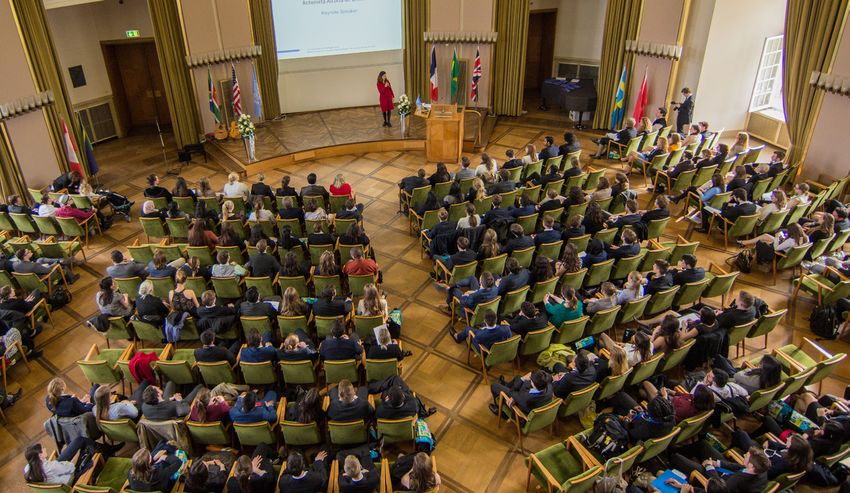
      MUIMUN IMPRESSIONS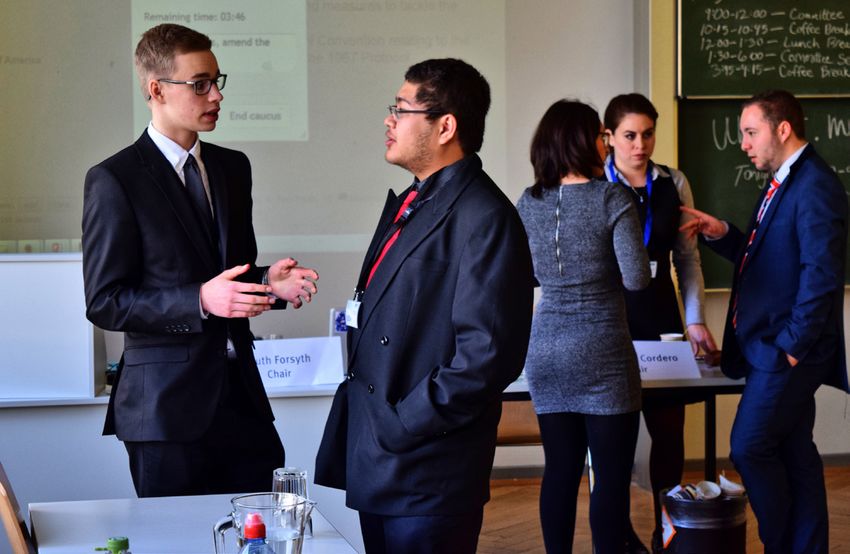
CONFERENCE                   7

                                              GENERAL CONFERENCE TOPIC

 MUIMUN 2019
 ‚Point of No Return? - Altering the Course
Towards a Future That Lasts’
   Sustainability is living on nature’s income rather that living   of greenhouse gases, bears irreversible consequences for the
on its capital.                                                     ecosystem. Through destruction caused by violence or natural
   -Murray Gell-Mann                                                disasters, many people are left with no choice but to migrate,
                                                                    leaving their homes without hope of return. In macroecono-
   Sustainability is a virtue that should be at the core of every   mics, a point of no return is reached once a country has prin-
action we take. It is humanity’s greatest challenge to recog-       ted more money than it can cover with its reserves, resulting in
nise the long-term impact of its actions and to act accordingly.    uncontrollable hyperinflation. These few examples show how
                                                                    the impact of human activity, both on the ecosystem, society
   With our motto “Point of No Return? – Altering the Course        and economies can be harmful, devastating and everlasting.
Towards a Future That Lasts” we question the sustainability of
today‘s politics, policies and polities. The status quo cannot          Altering the course towards a future that lasts
be upheld indefinitely. What we need today is a sense of reco-          Considering these problems experienced all over the world
gnition and urgency that there will soon come a point we will       today, we seem to be heading into the wrong direction. A decis-
not be able to turn back from. What we need today is a change       ive change in thinking and acting is essential. One such neces-
of direction, leaving behind us strife and conflict and moving      sary shift is to strengthen the role of women in international
forward together. What we need today is a renewed effort to         politics and public policy. Only by including all sexes equally,
work together, on both an international and internal level.         solutions that are sustainable and profitable for everyone can
                                                                    be reached. In times of war-mongering and incitement of hate,
   Be it the need to include underrepresented minorities in         confidence in international organisations and platforms regar-
decision-making processes, to ensure political effectiveness        ding political and economic cooperation should be strengthe-
by working towards stability and building up trust in the Uni-      ned, not eroded. Countries must be mindful of the consequen-
ted Nations, or to consolidate the world economy, all areas of      ces of their actions. Even though short-term profit can be made
international politics demand for sustainable solutions. How-       from unsustainable means of production, this profit is negated
ever, the most underlying challenge is a sustainable relation-      by its long-term negative cost caused for example by pollution
ship with the ecosystem of our planet. While this is not a new      of the environment. The well-being of future generations needs
responsibility, the international community still lacks concrete    to be taken into consideration. However, climate sustainability
measures and actions. Especially western governments exhibit        and economic growth do not have to be mutually exclusive, an
worryingly little motivation and sense of necessity to enforce      important aspect especially for developing industrial nations.
the many existing protocols and accords in their policies.
                                                                        As the impact of climate change is manifesting around the
    Fortunately, grassroot support for sustainable climate so-      world in extreme weather events such as flooding, drought,
lutions exists throughout the globe and is increasing day by        wildfire or ice melt, a Point of No Return seems ineludible. It
day, among young people in particular. As former UN Secreta-        is only through collective, meaningful and dedicated action by
ry-General Ban Ki-moon stated in 2015, “We are the first ge-        all countries around the globe that we together can work to-
neration that can put an end to poverty and we are the last         wards a future that lasts.
generation that can put an end to climate change”.

    Point of No Return
    The phrase “point of no return” originates from air naviga-
tion. It is used to describe a situation in which one has to keep
to the current course, because turning back is not a plausible
option any more. Points of No Return can be found in all as-
pects of life. Endangered animal populations, decimated due
to loss of habitat or poaching are on the brink of extinction.
Deforestation, leading to erosion, flooding, and the release
8                   CONFERENCE

                        COMMITTEES

The United Nations Framework Convention on Climate Change (UNFCCC)

                                                                                         WINONA KAMPHAUSEN, HENI HTIRA
    The United Nations Framework Convention on Climate Change
(UNFCCC) is an international convention ratified by 197 countries
and is committed to finding solutions for sustainable, low-carbon
and resilient development under a changing climate. Its objective
is the stabilisation of greenhouse gas concentrations in order to
prevent dangerous anthropogenic impact on the climate system.
The convention dates from June 1992, the date at which it was open
for signatures by parties at the Earth Summit in Rio de Janeiro.

  1. Water as a Human Right - the Necessity of Sustainable                 2. Means to Reinforce Article 12 of the Paris Agreement to
Development and Solutions                                               Raise Awareness and Promote Education and Participation of
                                                                        the Public

    Water is a precondition for human existence and the sustai-            Throughout the past decades, the attention of the United
nability of our planet. It is the essence of sustainable develop-       Nations has been brought to the environment. The changing
ment and necessary for socio-economic development, healthy              climate has become a top priority for the modern world ever
ecosystems and human survival. The use of water is important            since. International efforts were directed at the United Nations
for improving health and tackling diseases, as well as economic         Conference on Environment in Stockholm in 1972, the first in-
welfare and productivity.                                               ternational agreement to recognise the need for states to pre-
                                                                        serve the environment with all its components. The Rio Decla-
    Despite the necessity of water for life on earth, it is also cru-   ration of 1992 and the Kyoto Protocol of 2005 followed.
cial for the adaptation to climate change. Water functions as a
link between the climate system, environment and human soci-                Today, the Paris agreement on Climate Change 2015 is
ety. The UNFCCC warns that “without proper water governance,            deemed a legal step of great importance. It is the first time in
there is likely to be increased competition for water between           history that a global agreement has been reached to counter
sectors and an escalation of water crises of various kinds, trig-       climate change. Under this pact, parties who ratified are re-
gering emergencies in a range of water-dependent sectors.” Wa-          quired to adopt green energy strategies, cut down on green-
ter is not only an environmentally concerning topic but also one        house gas emissions and contribute to controlling the increase
of socio-political nature. It can often be an important factor in       of global temperatures. Article 12 of the agreement calls for
managing risks such as famine, migration, epidemics, inequali-          raising awareness and promoting education and participation
ties and political instability. Even though the right to water and      of the public. During the 21st session of the Conference of the
sanitation has been internationally recognised by the General           Parties (COP21), there has been a consensus towards the ur-
Assembly, the numbers draw a different picture. Still around            gent need to accelerate climate change education among state
2.5 billion people worldwide lack access to improved sanitation         parties, and the UNFCCC embraced Action for Climate Empo-
facilities. Further 884 million people do not have access to im-        werment. Although article 12 might not deeply affect the pro-
proved sources of drinking water. According to the Office of the        gress of National Determined Contributions (NDC) during the
High Commissioner for Human Rights of the United Nations “the           upcoming follow-up conferences, it is believed that education
roots of the current water and sanitation crisis can be traced to       and public awareness are the only mid and long term key solu-
poverty, inequality and unequal power relationships, and it is          tions to climate change today.
exacerbated by social and environmental challenges: accelera-
ting urbanization, climate change, and increasing pollution and
depletion of water resources.“
CONFERENCE 9
COMMITTEES
UN Women
BIANCA CUNHA, ASIM MUSHTAQ
Founded in July 2010, the United Nations Women committee
aims to promote the social and economic equity of women and
girls around the world. The main challenges the committee tack-
les include ending violence against women, involving women in all
aspects of peace and security processes, and strengthening the
economic empowerment of women. The committee works closely
together with other UN bodies to ensure women’s equality and em-
powerment as an integral part to all dimensions of inclusive and
sustainable development.
1. Reproductive Rights for Women Working in the Labour 2. Reducing Violence Against Women by Addressing Ho-
Force nour Killings
Formal labour markets are dominated by men worldwide, Sustainable Development Goal 5 includes ending all violence
although women dominate the unpaid workforce of care work, against women and girls. Gender-based violence can result in
usually being classified as a „housewife“, a reality which is poor physical and mental health of women. The WHO’s World
shifting slowly due to the fact that this time is being either Report on Violence and Health notes that „one of the most com-
shared with men or reduced overall, giving space to partici- mon forms of violence is that performed by a husband or male
pate in paid activities. partner”. The extent of this violence is hard to measure as it usu-
ally occurs within the confines of the victims’ homes. Complex
Due to progressive laws and policies taken by most coun- and gender discriminatory legal systems, religious beliefs and
tries over the last century, women have been increasingly cultural norms make it easy for men to carry out such violence
participating in the labour force. However, the goal of gender and women don’t speak out for fear of social exclusion or threat
parity still lies in the distance. to life.
Reproduction is one aspect that influences women’s work- One major issue being faced by women is honour killing. Hu-
force participation. To achieve the Sustainable Development man Rights Watch defines honour crimes as acts of violence,
Goal 5, and realise equal rights for women all over the world, usually murder, committed by male family members against fe-
ensuring reproductive rights for women is essential. male family members, who are held to have brought dishonour
upon the family. This is usually the result of factors such as the
The history and empowerment of women in the formal female relative’s choice of marital/sexual partner, education
labour force need to be addressed, especially focussing on and employment, dress, behaviour and conduct, sexuality and
reproductive rights. This includes a guaranteed access to general conformity to societal or familial expectations.
modern contraceptive methods and adequate information
on family planning. Long-lasting solutions and education are With an estimate of over 5,000 (according to the United Na-
necessary for ensuring access to quality services in terms of tions Population Fund (UNFPA)) honour killings performed an-
women‘s sexual and reproductive health, age-appropriate nually on women and girls, it is evident that more has to be
comprehensive sexuality education, that are more supportive done to eliminate this practice once and for all. However, as a
of the rights and aspirations of women and girls. result of societal shortcomings and systemic failures such as
dogmatic beliefs and widespread corruption, many perpetrators
of honour killings still go unpunished every year, and cases go
unreported or are covered up as suicides. The actual number is
likely far higher.10 CONFERENCE
COMMITTEES
La Comisión Económica para América Latina y el Caribe (CEPAL)
TERESA GARCIA, MATTEO SCHMIDT
The “Comisión Económica para América Latina” or “Commission for
Latin America and the Caribbean” functions as a sub committee to
the ECOSOC, and represents one of the five regional commissions of
the United Nations based in Santiago, Chile. Its focus lies in the soci-
al and economic developments of South American countries and the
Caribbean. It promotes close regional and international cooperati-
on to achieve sustainable development in the region and the world.
1. La economía del cambio climático en América Latina y el
Caribe (The economy of climate change in Latin America and 2. Recursos naturales y su explotación en América Latina
the Caribbean) y el Caribe (Natural resources and their exploitation in Latin
America and the Caribbean)
Climate change is a consequence of greenhouse gas emissi-
ons, which are believed to be generated mainly by anthropoge-
nic activities. In Latin America and the Caribbean these changes Mankind has used natural resources for thousands of ye-
in temperature patterns, precipitation, sea level rise, glacier ars. On the one hand, it has done so for the sake of its sur-
reduction and transformations in extreme event patterns are vival, on the other hand, natural resources can contribute to
already observed. society’s well-being and facilitate lives. Due to the growth of
the world population and the increasing quality of life in re-
From an economic perspective, climate change can be un- cent decades, it has been realised that there are renewable
derstood as a global negative externality, since the set of eco- and non-renewable natural resources. This represents one of
nomic activities generates greenhouse gas emissions as a side the biggest and most important challenges of the 21st centu-
effect that are deposited in the atmosphere without any econo- ry. Bearing in mind these developments, the need to rethink
mic cost. The solution to this negative externality requires the the exploitation of natural resources becomes apparent. This
implementation of various public policies and the correction or is not only the opinion of some environmental activists, but
construction of new markets. it is a topic to which even the most important politicians and
economists are dedicated to.
Due to the temptations to obtain benefits without any com-
mitment, it is necessary to apply public policies, regulations Natural resources play an essential role in Latin America
and market instruments in the framework of a global agreement and the Caribbean. When looking at the export statistics of
that recognises common but historically differentiated respon- the countries, a very high percentage of natural resources is
sibilities. Climate change is consubstantial with the current sty- notable. This report will examine the current situation in the
le of development where lifestyles are highly dependent on the region and provide an insight into the problems and solutions
burning of fossil fuels and with negative effects on the environ- regarding the issue of natural resource.
ment such as deforestation.
Thus, taking into account the magnitude of the structural
transformations that will be necessary to simultaneously miti-
gate the negative impacts of climate change, adapt to these new
climatic conditions and reduce greenhouse gas emissions, cli-
mate change is one of the great challenges of the 21st century.CONFERENCE 11
COMMITTEES
United Nations High Commissioner for Refugees (UNHCR)
AYOUB MAHI, LEA BILKE
As a successor to the International Refugee Organizati-
on (IRO) the Office of the United Nations High Commis-
sioner for Refugees (UNHCR) was established in 1951.
Its main mission is the insurance of rights and well-being of refugees.
It seeks sustainable solutions to refugee problems by helping refu-
gees to voluntarily return home, assisting in their local integration
or resettlement to another state. The UNHCR also aims to protect
the respect for and observance of their fundamental human rights.
1. Legal Status of Refugees and Internally Displaced Persons 2. Social Integration of Unaccompanied Refugee Children
in Camps
People have been forced to leave their countries for thousands
Since the first quarter of the twentieth century, the internatio- of years. Since then, there have been refugee crises and migrati-
nal community has been concerned with the challenges of forced onal flows throughout time. Then and now, one of the most vulne-
migration and, for humanitarian reasons, has begun to assume the rable group of refugees has been the group of unaccompanied or
role of protection and assistance of refugees. separated children, mostly referred to as “unaccompanied mino-
rs”. Reasons why children are fleeing on their own vary from the
From the end of the Second World War, frameworks concerning loss of family members, the separation from their family during
refugees and their concerns have been built and are steadily incre- the flight, the resettlement of family members or a lack of money,
asing. Alongside the States, non-governmental and supranational which leads to a situation where not all family members can es-
actors are now defining the contours of global problems and formu- cape from war or other circumstance in their home country.
lating guidelines to solve them.
Realising the fact that in countries like Italy and Spain the
Refugees and internally displaced persons (IDPs) often have to amount of unaccompanied minors is at such a high, it becomes
deal with an uncertain future as existing barriers hinder their par- obvious that the international community needs to focus more on
ticipation in and contribution to the social, economic, political and this important group of refugees. In this Research Report, we will
cultural life in their host communities. Therefore, it is important to focus on the social opportunities states have to facilitate the so-
address the question of displacement by extending the existing cial integration but we will also have a closer look at the circum-
treaties or negotiating new ones and also by increasing the effici- stances which lead to problems of integration all over the world.
ency of asylum procedures.
Social integration has never been easy to put into effect. Pre-
The 1951 Convention Relating to the Status of Refugee is the judices, fear, racism and unwelcoming societies are unfortunate-
main legal framework document for refugees. It contains the de- ly not always an exception in the 21st century. However, the integ-
finition of a refugee and their rights as well as the States’ obliga- ration of refugees is a very important issue states worldwide have
tions towards them. to face. Speaking about unaccompanied or separated children in
particular, most nations do not have enough working systems
The United Nations Guiding Principles on Internal Displacement and laws concerning the integration of this fragile group of peop-
provide useful guidance on various aspects of internal displace- le. Changes and improvements are of highest importance.
ment. They are widely recognised by the international communi-
ty and many states have incorporated them into national law. The
Guiding Principles describe in detail the safeguards that should be
made available to internally displaced persons.
Considering the high numbers of people already displaced and
the high estimates of future refugees and internally displaced per-
sons, lasting solutions are needed and of highest importance.12 CONFERENCE
COMMITTEES
General Assembly First Committee: Disarmament and International Security (DISEC)
DANAI GEORGIADOU, MUHAMMAD HAMZA ZULFIQAR
The General Assembly’s First Committee for Disarmament and Inter-
national Security is tasked with coordinating action against threats
to the international peace. This is achieved by encouraging disarma-
ment and regulating armament to back international stability and mi-
litary cooperation. It recommended the first ever General Assembly
Resolution in 1946, which dealt with the dangers of nuclear power.
1. Strengthening Guidelines for the Prevention of an Arms 2. Measures to Ensure Stability in Afghanistan as a Stepping
Race in Outer Space Stone to Bring Peace to the Region
Humankind has always been interested in space and its It is difficult to find a conflict in recent history that has been
mysteries. Nevertheless, this interest was fulfilled only after longer, more expensive or devastating than the war in the Is-
the Second World War, when the necessary technology was in- lamic Republic of Afghanistan. Since the first ISAF troops de-
vented and thus enabled us to discover and understand a big- ployed 18 years ago, the United States of America (USA) alone
ger part of space. This advancement was the outcome of the spent $737.6 billion on warfighting. Since the UN started do-
creation of rockets, radio technology and long-range missiles. cumenting casualties in 2009, around 50.000 Afghan civilians
However, the aforementioned technologies were developed for have been killed or injured. After nearly 40 years of war since
military usage during the Cold War, when the so-called “space the Soviet Invasion in 1979, Afghanistan remains in a state of
race” began and created threats for humanity. Over the past insecurity. The ongoing conflict between the central govern-
years, the United Nations have given great attention to the ment and the Taliban, as well as other insurgent groups, the
possibility of an arms race in outer space. The First Committee lack of administrative government control over large parts of
of the General Assembly, being the UN body responsible for the country, the uncertainty over the withdrawal of US troops,
dealing with disarmament issues, has been long involved with other foreign influence and interest, consequences of 40 years
the issue. Without a doubt, outer space provides humanity of war and the extreme poverty are all major challenges to be
with vast opportunities for ameliorating everyday life. Commu- faced. This report will give a brief insight into the history of
nications and navigation via satellites are the best examples the conflict and the current situation, illustrate the main is-
and make it clear why countries seek to advance their space sues and challenges, identify key actors and institutions and
technologies. However, alongside the development of these explain the main stances of the international community on
mainly peaceful programmes, there is a risk that nations will the topic.
acquire destructive capabilities. Therefore, despite the fact
that there is no nation that has placed weapons in orbit yet,
there is a growing threat of outer space weaponisation and/or
militarisation.CONFERENCE 13
COMMITTEES
The Economic and Social Council (ECOSOC)
LEAH MATHIESEN, STAVROS-CHRISTOS PAPAKYRIAZIS
The Economic and Social Council focuses on economic, social
and environmental development, emphasising on sustainabi-
lity and global partnership. As one of the six main organs of the
United Nations, it has the unique role of following up on interna-
tional conferences and treaties to ensure their implementation.
1. Stimulating Sustainable Growth in Countries Reco- 2. Tackling the Impact of Artificial Intelligence in the La-
vering from Natural Disasters by Promoting Innovation, Indus- bour Force and the Economy
try and Infrastructure
In the past industrial revolutions in the 18th and 19th cen-
One of the most severe threats that the international com- tury, we have seen major shifts in our workforce that, in their
munity faces on an ongoing basis is the phenomenon of natural time, were seen as a threat to the labour force. Back then the
disasters. Natural disasters are dangerous, mostly due to their implementation of steam power, steal and electricity did not
destructive and unpredictable nature, and they have a variety of have the consequences of mass unemployment as feared by
repercussions at a human, environmental and economic level. some. But the changes in the economy back then happened
Especially after the increased negative impact of human activity over time, usually giving an entire generation the time to adapt
on climate, the situation has deteriorated. One of the current to the new working environment. Artificial intelligence is al-
main goals of the United Nations remains the development and ready starting to play a major role in our society, and with the
economic growth of all of its members, in order to reach national industry advancing more and more, AI technology is entering
and international prosperity. into different areas of our labuor force. With all the advantages
that could come with the implementation of AI, at least some
It addresses the issues of poverty, damaged infrastructure, negative effects are also deemed inevitable. One of the ma-
environmental degradation and prosperity through the Susta- jor issues surrounding AI are its possible effect on our labour
inable Development Goals. One of the most important and re- force and economy. If routine jobs usually performed by hu-
levant goals for the sustainable growth in countries recovering mans are outsourced to machines, could this mean that milli-
from natural disasters is SDG 9, regarding innovation, industry ons of people will be put out of work permanently? As machi-
and infrastructure. Through investments in infrastructure and nes become more capable of doing jobs that previously were
technological progress, the consequences of any natural di- done by human workers, the question to what extent this could
saster can be diminished. However, this issue remains one of change how today’s society works is becoming more pressing,
challenging nature and the international community needs to and the necessity to prepare for potential issues or conflicts
undertake many measures to promote the sustainable growth is prevalent.
of the countries recovering from natural disasters. ECOSOC, as
the main forum for the discussion of the SDGs, can set the basis If the application of Artificial intelligence in our workforce
for the promotion of political dialogue and innovative ideas, in in the future could puts a percentage of people out of work, we
order to resolve this matter. have to figure out how we can ensure a function society after
one of its major pillars has been taken away.14 THE CIT Y OF MÜNSTER
CITY MAP
Münster Nord (77), BAB 1 Osnabrück/Bremen
B 54 MS-Nienberge, Gronau, Niederlande
MS-Kinderhaus, Sprakel
Ibbenbüren
Grevener Str.
Friesenring
St
Horstmarer Lan
e in
dweg
g
fu
s-Rin Raesfel
rt e
éan
Or l
r
Mendelstr.
tr.
MS-Gievenbeck dts
Wilh Stu Heerdest
elm
tt-
St
str.
r.
e
st
ar
r.
z
ng
La
Ri
Kleimannstr.
ns-
Ne
Cor
a
uto
Orlé
ren str. r
MS-Gievenbeck stein H Münzstr.
Ein
sstr.
H
Holl
Taxi
MS-Roxel
Jü
enb str.
de str.
fel
.
Von-Esmarch Kuhstr
ecke
de
-Str. H
r-
Überwasserst R
r-
WC r.
legend
Kat t
Schlossplatz
ag
h
e
car park WC
car park with Botanischer
Rishon-Le-Zion-Ring
limited space Schloss-
Garten Schlossgarten Schloss
Frauenstr.
Domagkstr.
multi-storey car park
platz
coach park
n
coach stop
e
Timp
P + R park & ride
Gerichtsstr. H
Universitäts- Univ
H bus stop ers H
kliniken i
tä
Taxi taxi rank Hüfferstr.
ts
Krum er
str.
m
str.
tourist information dois Bispin
Lan
hospital
Am
tr.
WC public toilet -S
ch
S ta
Pro
Ro
multi-storey bicycle park ber t-Ko
dt
me
g
with bicycle hire
ra
na
be
Kardinal-von-G
de
camping site
n
post office Zentralfriedhof
pedestrian area
Taxi
H Ade
WC nau
alen-Ring
erallee
venue H
l lee
restaurants -A
ette
nn A
A
Wese
evening programmes
Franz-Hitze
starting point ee
all
ler
e
Haus Mensa am Aasee
e
Night Watchman Tour ck
ar
as
g H
and City Tour we sm
s
Bi
Str.
A
hn Hier und Jetzt
rso
de
Mo
D
J H
r.
r St
upe
ntr str.
Se Mühlenhof orst
arnh
Sch
Naturkundemuseum
Planetarium
Kolde-Ring
Str.
Sentm
ler
e
se
se
We
Allwetterzoo
Aa tr.
P+R
S
er
ec
k MS-Mecklenbeck
le nb MS-Albachten
ck
WC
Me MS-Amelsbüren
Dülmen
Preu
stad
Münster Süd (78)
C MÜNSTER MARKETING 01/19 BAB 1 Dortmund M
Kartographie: Vermessungs- und Katasteramt BAB 43 Recklinghausen MTHE CIT Y OF MÜNSTER 15
CITY MAP
MS-Kinderhaus, Sprakel
Cherusker MS-Coerde
ring
Lublinring
str.
Raesfeld Nied
Nordstr.
ersa
lstr.
chs
en
Kana
Aa
rin
g
eerdestr.
Am
Kreuz
Gar
WC
nstr.
te
e nade
tor
Prom
nstr
l
Breu
.
Taxi
str.
MS-Handorf
Lot
tr.
Holl
Stif tsherrenstr.
lweg MS-Gelmer
kens
h
Kreu
Tibusstr.
n- H Boh
arin
enb str.
de tr.
ud s H
rüc
str.
z
ger
Ber
ecke
B
str un-
str.
gst
ub
hla
str.
Rosen- r.
.
r-
str. H
Ne
platz H
Sc
Ro
Kaiser-W
s str.
ster
agen
Kat t
Bergstr.
Hör
en
ag Vo
str
Fürste
h
Katth
en
ß ga
.
Spie
Prom
ss
ilh
H
kerho WC
e
BüH WC
f Bog
Sonne
elm-Ring
lee
e
nberg
str. n-Ro Taxi
e
lt
nade
kt
m er
sal
m
ar
t
Al
h
Piu
gg kt
nstr.
c
str.
ar
Fis
en - Drub-
Domplatz (CathedralAlSquare)
rkt bel
a
t
A
er
WC
Taxi WC Sa Taxi
Syn l
Ste
DomplatHz H dikaz-
se
ma
t-
inw
pl. Warendo
egas
pal
WC rfe r
eg
Str.
nin -
Brüinrich
Str. -
Rathaus-Innenhof (Townhall
H Courtyard)
nzi
hstr.
g
MS-Handorf
Pferd
nstr.
Pri
MS-Gelmer
He
c
KlemenH
Friedri
Eisenbah
f
str
pingho sstr. Taxi
r.
Bis rg
.
WC H Rothenbu
se
Aegidii- H
Stubengas
markt Taxi WC
Hohenzoll ernring
tr.
Gazelle
rs
e
Lo
tr.
r.
Hötte-
Manfred-von-
ist
rs
H
Ludgeristr.
weg Raphaels-
te
di
H klinik Richthofen-Str.
os
Königsstr.
gi
tr.
Ae
Kl
e
-S
Gr
ad
Krum
ke
Wo
fstr.
ün
en
H eG
nc
Urba lb
om
nstr. ec
Bahnho
i
as
Pr
-V
se ke
me Str.
rS
n
Vo
W tr.
Sch Verspoel ind
ütze t t ho Cuba Nova
nstr. Taxi rs
r.
rsts
Prom ste tr.
enad K lo Bremer
e
H H Platz
onengraben
Kan merstr. MS-Wolbeck
Am le Berliner
or Platz Taxi
Ludgeri-H Sch
tr.
platz WC
n-S
tr.
Aasee Taxi
be
ls
tr.
H
ge
WC
eu
fs
tr.
Str.
En
-St
nho
ck-S
Ha
Her
n
fen
Bremer
Vo
Bah
str
er Str.
Klu
m
. H
ann
ng
n-
Vo
a ri
str.
Hamm
Süds
ns
Josefstr. str.
Ha
ker
Jun
tr.
Ge
ist
str
.
Hafenweg
Sta
.
Str
dth
r t-
Sentmar afe
inger Weg
be
-E nI
ch al
dri
Weißen-
burgstr.
Frie an
-K
ms
Hammer Str.
Kiesekamps
d-E
Industrieweg
Al
Mühle
un
be
Messe u. Congress
m
rs
Centrum
ort Telgte
lo
Halle Münsterland D
he
Warendorf
rW
eg
B 51 P+R
P+R
Preußen-
stadion
MS-Hiltrup B 54 Hamm MS-Gremmendorf
MS-Amelsbüren Dortmund MS-Angelmodde16 CONFERENCE
COMMITTEES
United Nations Security Council (UNSC)
SASKIA MILLMANN, JANNIK SONNENBERG
As one of the principal and most powerful organs of the United
Nations, the Security Council is tasked with taking action to pre-
serve international peace and resolve conflict, usually in form of
resolutions or sanctions. It responds to regional and global cri-
ses, be it military, environmental or economic. Fifteen members
are part of this council, of which five are permanent and ten are
elected for a duration of two years. The permanent members,
namely China, France, the Russian Federation, the United King-
dom and the United States of America, are accorded special
veto rights. The Security Council has deployed numerous peace-
keeping and peacebuilding operations around the world, as
well as applied and lifted countless sanctions and embargoes.
1. Failed Peacebuilding Operations - Rape, Torture and 2. The Yemeni Civil War - a Humanitarian Crisis Caused by
Murder committed by Blue Helmets Foreign Interests?
The UN Department for Peacekeeping Operations (UNDPKO) The Yemeni Crisis started with the revolution against pre-
is dedicated to assist member states in their peacebuilding sident Ali Abdullah Saleh in 2011 which occurred during the
efforts. It provides political and executive direction for all UN Arab Spring and ultimately failed to secure a political transiti-
Peacekeeping operations and acts as a point of contact and on from the authoritarian ruler.
connection to the Secretary-General, the Security Council, local
troops as well as parties to the conflict. In 2015 the conflict escalated after the Houthis seized con-
trol of big parts of the country and forced President Abdrabbuh
While the objective of peacekeeping missions is to aid host Mansour Hadi to flee. Upon this, a coalition of Saudi Arabia
countries in the transition from a time of conflict to lasting and and seven other Arab states intervened in an attempt to resto-
sustainable peace, there has been large-scale evidence that the re the government. In order to achieve their mission, the coali-
very missions that are supposed to achieve these goals in fact tion of Arab states received logistical and intelligence support
destabilise the regions and sabotage UN and Security Council from the US, the UK and France. Unlike Saudi predictions, the
objectives. conflict did not last a mere number of weeks but is still ongo-
ing and has caused the death of at least 6,475 civilians and
A study by UNICEF in 1996 connected an increase in the se- injured another 10,231.
xual exploitation and prostitution of children to the arrival of
peacekeeping forces for the first time. Furthermore, UN peace- International observers such as the UN Office for the Coor-
keepers have been found to have committed a gross number dination of Humanitarian Aid, Médecins Sans Frontières (MSF)
of human rights violations and international crimes in various and the International Committee of the Red Cross (ICRC) criti-
missions. A particularly grave example is the United Nations cised Saudi Arabia for blocking Iranian humanitarian aid and
Interim Administration Mission in Kosovo where peacekeepers for targeting airports and seaports because this complicates
were found to have committed several hundred crimes of sexu- their efforts to reach all Yemenis with their relief efforts. Apart
al exploitation or the United Nations Multidimensional integra- from few and short ceasefires, the fighting has been ongoing
ted stabilisation mission in the Central African Republic where since early 2015 and no peace talk has been successful as of
blue helmets committed at least 18 counts of murder as well as yet.
crimes of sexual exploitation.
One can conclude that all parties involved in the Yemen con-
Possible solutions for this ongoing problem need to address flict committed and continue to commit war crimes. Furthermo-
various aspects, in order to prevent this behaviour from signifi- re, all parties involved need to “allow and facilitate rapid and
cantly hurting the legitimacy of Security Council and UN manda- unimpeded passage of humanitarian relief, including medici-
tes both with member states and the general public. ne, food and other survival items.” according to the UNHRC.
Nevertheless, it is also apparent that foreign involvement first
triggered the escalation of the conflict and continues to desta-
bilise the region.CONFERENCE 17
COMMITTEES
International Criminal Court (ICC)
LOLYA KRYLOVA, FURY JAIN
As one of the principal and most powerful organs of the United
Nations, the Security Council is tasked with taking action to pre-
serve international peace and resolve conflict, usually in form of
resolutions or sanctions. It responds to regional and global cri-
ses, be it military, environmental or economic. Fifteen members
are part of this council, of which five are permanent and ten are
elected for a duration of two years. The permanent members,
namely China, France, the Russian Federation, the United King-
dom and the United States of America, are accorded special
veto rights. The Security Council has deployed numerous peace-
keeping and peacebuilding operations around the world, as
well as applied and lifted countless sanctions and embargoes.
1. A hypothetical case based on the following main issues:
1. The crime of aggression, vis-a-vis proxy wars. 2. Attributa-
bility of crimes committed during UN peace enforcement mis-
sions.
The International Criminal Court (ICC) came into being in
2002, following the ratification of the Rome Statute by 60 sta-
tes. As of 1st December 2018, 123 State Parties have ratified
the Rome Statute. The Court is the only permanent internatio-
nal judicial body to try individuals for genocide, crimes against
humanity and war crimes. It can only prosecute crimes that oc-
curred from 2002 onwards – the date of its establishment.
The ICC has automatic jurisdiction over crimes committed
either (I) on the territory of a state party to the Rome Statute;
or (II) by a national of a state party to the Rome Statute, irres-
pective of the location.
Under the principle of complementarity in the Rome Statu-
te, the ICC only acts when national courts are unable or un-
willing to keep their responsibility to prosecute atrocities at
home. The Court does not have independent power to arrest
and thus depends on the willingness of the states to arrest and
transfer the wanted person.
The ICC is equipped with 18 judges which are elected by the
Assembly of State Parties that was created through the Rome
Statute. The Office of the Prosecutor is an independent organ
of the Court which is responsible for examining situations and
scenarios that fall under the jurisdiction of the ICC. Their task
is to investigate against those persons who have allegedly
committed the three core crimes. All suspects are presumed
innocent until proven guilty and have the right to a fair trial. All
defence counsels are independent and not ICC staff.18 CONFERENCE
WORKSHOPS
MUIMUN meets Experts 2019
As in previous years, one afternoon of MUIMUN is reserved
not for committee work but our workshop program “MUIMUN
meets Experts”. This will provide the delegates an opportunity
to get to know professionals from different areas of studies.
In several workshops these specialists will share their know-
ledge with the delegates.
Not only will this enable our delegates to think beyond
their represented countries’ positions and obtain knowledge
of issues not debated within their committee. It offers parti-
cipants the chance to gain some firsthand insight into some
of the most pressing issues of today’s world. All speakers are
experts in their respective field and happy to answer any and
all questions the delegates may have.
This year’s workshops will take place on Monday, March
25th, from 1.30 pm - 5.30 pm. The workshops will cover a wide
range of issues, from global economy, ethics and internatio-
nal military operations to more skill-oriented workshops such
as negotiation training. The workshops will be carried out in
small groups of about 20 people in an interactive way.
As of March 1st, the following workshops are confirmed but
still open to changes. More and updated information can be
obtained on our homepage (muimun.org).CONFERENCE 19
WORKSHOPS
Humanitarian Crises and Our Responsibility - Joachim Gar-
demann
For many of us, humanitarian crises seem to occur only
in remote countries and only for local or regional reasons. A
closer look to some scenarios like the 1994 Rwandan genoci-
de, the ongoing Syrian war or even the 2014 Ebola outbreak
in West Africa however will demonstrate our responsibility as
former colonial power, belligerent nation or as big player in
global markets. We will have to accept our responsibility for
causation of today´s postcolonial conflicts and inequities, but
as well for our capabilities, being one of the richest countries
worldwide. Compared to countries like Tchad or Lebanon, we
only spend a little fraction of our wealth for the alleviation of
suffering. But we are responsible, either for causation or for
our capabilities to help.
Joachim Gardemann, born 1955, is a medical doctor, speci-
alist in child and youth medicine, specialist doctor for public
health systems and master of public health. Since 1994 he is
member of the Emergency Response Units for international di-
saster relief of the Red Cross and Red Crescent Movement. As
a delegate for ICRC or IFRC he took part in humanitarian missi-
ons to Rwanda, Tanzania, Macedonia, Iran, Sudan, Sri Lanka,
China, Haiti, Jordan and Sierra Leone. Joachim Gardemann is
head of the Centre of Competence for Humanitarian Relief of
the Muenster University of Applied Sciences.
A Career with the United Nations - Isabel Hofstaetter
During this workshop we will take a look at a variety of ways
to join the United Nations workforce, ranging from internships
to entry-level programs like the YPP- or JPO-program. Next to
a general overview on the working conditions at the United
Nations (professional fields, career prospects, salary, core
values and competencies), the workshop will also entail con-
crete information and exercises regarding the UN-application
process.
Isabel Hofstaetter works as Junior Professional Officer
(JPO) in Information for the United Nations Regional Informati-
on Centre (UNRIC) in Bonn. She holds an M.A. in Human Rights
and International Relations from Roehampton University in
London. Before joining UNRIC, Isabel worked with the German
Development Cooperation in Uganda and, most recently, with
the United Nations in Timor-Leste.20 CONFERENCE
WORKSHOPS
The ethical dimensions of sustainability - Michael Quante
In this workshop the concept of sustainability and its ethi-
cal dimensions are discussed. In specific contexts (Health and
Justice; Integrity in Politics; Human Dignity and vulnerable
Groups) discussed in three parallel sessions the concept will
be applied. This workshop addresses normative questions re-
lated to sustainability based on philosophical ethics. These
workshops are run by Dr. Simon Derpmann, Mrs. Lisa Schmidt
and Dr. Katja Stoppenbrink (they take place as parallel sessi-
ons).
Prof. Dr. Michael Quante is professor of philosophy with
specialisation in „practical philosophy“ at the University of
Münster. He is also involved in the Excellence Cluster „Religi-
on and Politics“. He wrote his dissertation on “Hegel’s Concept
of Action”, and habilitated on “Personal Life and Human(e)
Death”. Between 2012 and 2014 he held the office of President
of the German Association of Philosophy. Since 2016 he holds
the position of Vice-Rector for Internationalisation and Know-
ledge Transfer at the WWU Münster.
Negotiation Skills - Henning Höber
Negotiations are a recurring part of both our private and
professional lives. But many of us – and even experienced po-
litical leaders – know little about the strategies, tactics and
applied psychology of effective bargaining. The workshop is
designed as a crash course in basic and intermediate negotia-
tion techniques, based on the proven methods of leading law
schools and business schools. Participants will explore distri-
butive and integrative bargaining tactics in two highly interac-
tive simulations. These role plays enable them to experience
the essential concepts and pitfalls of negotiation first-hand
and reflect upon their performance during the debriefing of the
case studies.The workshop is limited to 30 participants and
requires the willingness to actively negotiate with a randomly
assigned counterpart during the session.
Henning Höber is a lecturer in the departments of business
administration and political science at the University of Müns-
ter, where he is teaching negotiation and dispute resolution.
In addition, he is currently completing a part-time PhD pro-
gram in management at the University of St. Gallen. As part of
his studies, he was a researcher at several leading business
schools in Europe and the Americas. Prior to his graduate stu-
dies in business administration and economics in Germany
and Mexico, Henning spent two years in Barcelona, working in
the shipping and insurance sectors.CONFERENCE 21
WORKSHOPS
Current Risks for the Global Economy - Thomas Apolte
The world economy has been booming until recently.
Thanks to that boom we have been observing a huge catch-up
growth in emerging markets. This grossly reduced poverty in
both relative and absolute terms, not just in China but in a con-
siderable number of countries worldwide. This trend, however,
seems to be at risk for mainly three reasons. The first is the po-
pular recurrence to protectionist conceptions of international
and global trade. The second is the emergence of a new form of
state-capitalism, that started out in China and Russia but has
become popular in the US and many EU countries as well. The
third threat stems from the awkward current state of the Euro-
pean Union, facing both the Brexit problem and mushrooming
populist and anti EU movements. In our workshop, we want to
shed more light on the three problems at hand and to work out
interdependencies between the three problems areas.
Thomas Apolte is professor of political economy at the Cen-
ter for Interdisciplinary Economics of the University of Müns-
ter. Although trained as an economist, he works as an inter-
disciplinary social scientist, crossing the borders to political
science, sociology, and psychology. In the last decade, his
core interest has been in the economic theory of autocracy as
well as in theories of political conflict, terrorism, and revoluti-
on. He has published in international Journals such as “Public
Choice”, “Economics of Transition”, “Constitutional Political
Economy” and “Defence and Peace Economics”. He is the foun-
der of the conference series “Political Economy of Democracy International military operations in Africa with the United
and Dictatorship” which is held every spring in Münster, brin- Nations - 1st German-Netherlands Corps
ging together some 70 interdisciplinary scholars from more
than 20 countries worldwide. The 1st German-Netherlands Corps is engaged in milita-
ry actions in various countries. This workshop will include a
presentation about the 1st German-Netherlands Corps. After
this there will be a presentation about the UN mission in Mali
(MINUSMA) especially their structure, mandate, capabilities
and challenges. In addition a briefing about the French mili-
tary operations in the Sahel region and their cooperation and
challenges in the cooperation with the MINUSMA mission of
the UN will be addressed. The workshop will be concluded with
a scenario that is used in trainings for Political Advisors about
a challenging military situation in such a mission with a dis-
cussion about a possible solution and the related implications
of the solution.
This workshop will be conducted by LTC Ellert Klotz from the
German Army, LTC Wycliffe Nieboer from the Netherlands Army
and LTC Stephane Collet from the French Army. The 1st German-
Netherlands Corps is a multinational formation consisting of
units from both the Royal Netherlands Army and German Army.
The corps‘ headquarters is situated in Münster and also takes
part in NATO Response Force. The corps has national and mul-
tinational operational responsibilities. Currently the 1st Ger-
man-Netherlands Corps consists of twelve nations: Belgium,
Czech Republic, France, Germany, Greece, Italy, Netherlands,Points and Motions
RULE POINT PURPOSE
19 Point of Personal Privilege Address discomfort of a dele-
gate (e.g., speaker is inaudible)
20 Point of Order Correct an error in procedure
22 Point of Information Ask questions regarding the conference proceedings
(to the Chair)
22 Ask questions regarding the rules of procedure
Point of Parliamentary Inquiry
23 Point of Information Ask questions about a previous speech; only during formal
debate
(to the Delegate)
RULE MOTION PURPOSE VOTE DEBATE
26 Minute of Silent Prayer Minute of silence for prayer or None None
meditation
27 To Appeal the Decision of the Chair Challenge the decision of the Two-thirds None
Chair
28 To Set Speaker’s Time Limit speaker’s time to a spe- Majority 1 in favour
cific length 1 against
29 To Suspend the Meeting Recess break Majority None
30 Unmoderated Caucus Informal Debate Majority None
31 Moderated Caucus Narrow formal debate con- Majority None
cerning specified issues
32 To Extend an (Un)Moderated Cau- Extend the previous caucus Majority None
cus
33 To Set the Agenda Set the order in which the Majority 1 in favour
agenda items are discussed 1 against
34 To Adjourn the Meeting Close plenary meetings until Two-Thirds None
next year
35 To Adjourn the Debate Table discussion on current Majority 2 in favour
agenda item 2 against
MOTION PURPOSE VOTE DEBATEYou can also read


