MONASH PHARMACY AND PHARMACEUTICAL SCIENCES 2020 - UNDERGRADUATE COURSE GUIDE - Monash ...
←
→
Page content transcription
If your browser does not render page correctly, please read the page content below
2020
MONASH
PHARMACY AND
PHARMACEUTICAL
SCIENCES

UNDERGRADUATE
COURSE GUIDE

AT MONASH
    PHARMACY AND
    PHARMACEUTICAL
    SCIENCES WE’RE ON
    A MISSION TO MAKE
    HEALTHCARE BETTER.
    From developing new medicines
    to improving old ones to – perhaps
    most importantly – educating the
    next generation of pharmacists and
    pharmaceutical scientists, everything
    bends towards this simple goal.
    It’s why we focus on small group learning that allows
    our students to receive individual attention from some
    of the world’s leading educators.
    It’s why we focus on equipping you with not just the most
    up-to-date knowledge but also with the skills you need
    to put that knowledge into action.
    And it’s why both of our undergraduate degrees offer
    extensive placements, so you can integrate what you’ve
    learnt in the classroom with what goes on in
    the wider world.
    It’s the mission we’ve had since 1881, long before
    we became one of the world’s most highly regarded
    institutions in our field, when we began serving Victoria
    as the Melbourne College of Pharmacy.
    Studying here offers a unique opportunity to become part
    of a tight knit community of people at the highest echelons
    of their professions, all utterly dedicated to improving
    the world around them.
    Please, join us.

2
CONTENTS
Life at Monash Parkville              5
Bachelor of Pharmacy (Honours)/
Master of Pharmacy                    6
Careers in Pharmacy                  10
Bachelor of Pharmaceutical Science   15
Bachelor of Pharmaceutical Science/
Bachelor of Engineering (Honours)17
Careers in Pharmaceutical Science    18
Entry requirements                   21
Pathways22
The Monash Guarantee                 22
Scholarships23
Programs for schools                 23

                                           3
4
MONASH
PARKVILLE.
THE BEST OF
BOTH WORLDS.
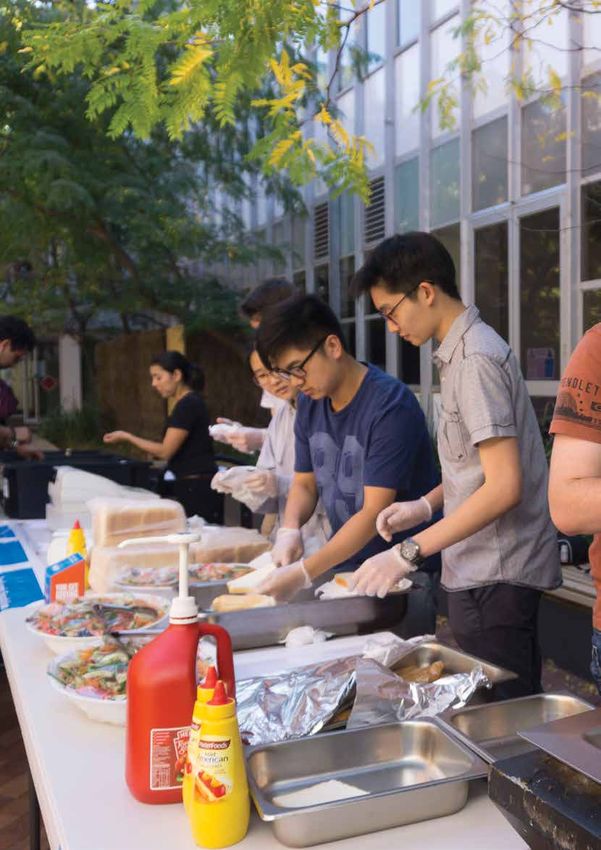
IN ONE WAY, WE’RE SMALL.
We’re a community of about 1500 people (researchers, educators,
students, administrators) bound together by a shared passion for
the transformative power of medicines.
We’re fascinated by the biology, chemistry and biomedical science that
underpin them and we’re dedicated to making sure they’re used safely,
effectively and with maximum benefit for our communities.
Our small size means students get to know each other and their
instructors well. At Monash Parkville, it’s hard to slip through the cracks.

BUT IN ALL THE WAYS THAT MATTER,
WE’RE BIG.
We’re part of Monash, Australia’s largest university and a highly regarded
global brand.
This means you can enjoy the resources of Australia’s largest university.
Student leadership and professional development programs. Festivals.
Clubs and societies.

Location is everything
Perched on the edge of Melbourne’s CBD and easily accessible by tram
and train, we’re a stone’s throw from buzzing inner-city suburbs like
Carlton and Brunswick.
We’re also in the heart of Melbourne’s world-renowned Biomedical
Precinct, a mecca for research and healthcare talent the world over.
That comes in handy when it’s time to go on placement.

What will your week look like?
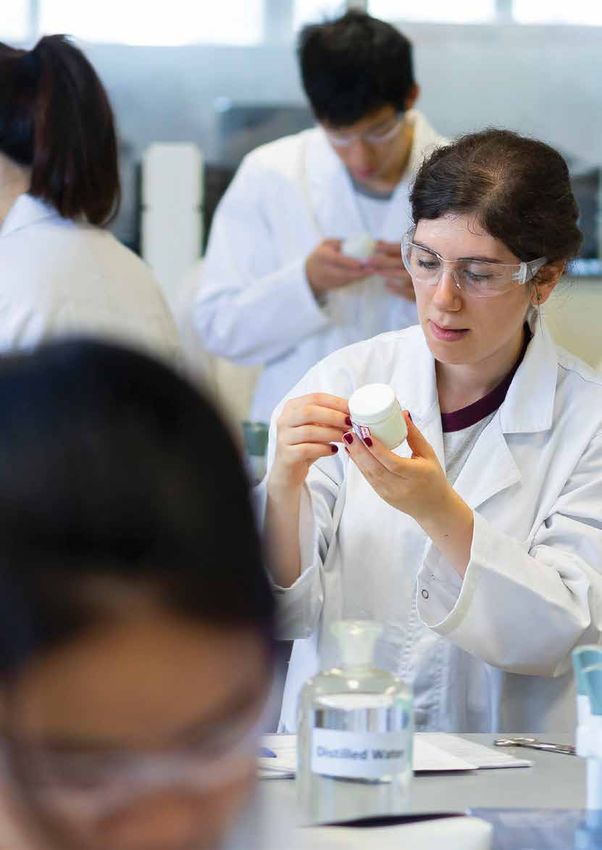
Studying at Parkville involves a mix of interactive lectures, small-group
classes, self-directed learning and lots and lots of hands-on practical
skill-building in labs and workshops.
In a typical week, you’ll spend time familiarising yourself with the key
concepts by reading, or watching videos and completing exercises online.
You’ll then explore the ideas further through interactive lectures with skilled
teachers, and have the chance to apply your new-found knowledge in small
group workshops with pharmacists and scientist facilitators.
Finally, you’ll spend some time consolidating what you’ve learnt and
ensuring it makes sense in the context of your overall course, by reflecting
on your plans for continuing development.
The exact make-up depends on which course you’re in – our budding
pharmaceutical scientists spend more time in the lab than our pharmacists
in training, who focus more on developing their clinical skills.
Students in both courses also meet regularly with a ‘skills coach’ who help
them develop and implement personalised learning plans and ensure they’re
on track.
We call this model “DEAR”, for Discover, Explore, Apply, Reflect. If you can
make sure you do each of these for every unit you’re enrolled in every week,
you’ll be well on track for academic success!

                                                                                  5
PHARMACY
    SUPPORTING HEALTHIER
    COMMUNITIES
    The world needs pharmacists. As the experts in medicines
    and the way they interact with the body, pharmacists play                     A pharmacist in training from day one
    a vital role in improving the health of their communities.                    From the very beginning, we go beyond ensuring you have
    As the global population grows and ages, and as medicines                     a thorough grasp of the underlying scientific disciplines
    become more complex, the need for pharmacists intensifies.                    – chemistry, biology, pharmacology and so on. We also
    The World Health Organisation estimates that there is the                     focus on the key skills that make the difference between a
    potential for creation of some 40 million additional healthcare               good pharmacist and a great one. We call these skills your
                                                                                  POWERIT-Inq skills and you’ll get a chance to practice them
    jobs across the world by 2030 – almost double the current
                                                                                  in weekly workshops
    number. Pharmacists figure prominently amongst them.

                                                                                     P
    Building a better pharmacist
    Monash has long been considered the leading pharmacy program provider                                                  PROBLEM-
    in Australia. For the last three years we have been consistently ranked                                                SOLVING
    within the top three pharmacy and pharmacology schools in the world,
    amongst universities like Harvard and Oxford. In part, this is because

                                                                                     O
    we believe the world doesn’t just deserve more pharmacists; it deserves
    better pharmacists.
                                                                                                                           ORAL
    That’s why in 2017 we launched an innovative new course: Australia’s                                                   COMMUNICATION
    only combined Bachelor of Pharmacy (Hons)/Master of Pharmacy.
    It means our graduates go out into the world equipped with a higher level

                                                                                    W
    of learning.
    You’ll also undertake work placements in community pharmacies, hospitals,                                              WRITTEN
    and other environments, practicing your new skills while learning from some                                            COMMUNICATION
    of Australia’s best pharmacists about areas such as primary health care,
    medicines information, and patient-focused pharmacy services.

    Same duration, higher qualification
    The pathway to registration as a pharmacist in Australia generally takes
    five years.
    Traditionally, this has been structured as a four-year bachelor degree plus
                                                                                     E                                     EMPATHY

                                                                                     R
    a one-year internship. At Monash, our program takes the same amount
    of time but instead you’ll graduate with a master as well as a bachelor.                                               REFLECTIVE
    The fifth year of the course combines a year of supervised practice (during                                            PRACTICE
    which time you are paid as a provisionally registered pharmacist), with
    intern studies (Intern Training Program and Intern Foundation Program).

                                                                                      I
    This intensive combination of learning and working prepares you for
    registration as a pharmacist. It will be your responsibility to arrange
                                                                                                                           INTEGRITY
    the internship and ensure your workplace is credentialed by the faculty.

    Flexible course options

                                                                                     T
    Your Monash BPharm(Hons) is your entry point to an internship in Australia.
    You don’t have to complete the MPharm during your intern year, especially
    if you are an international student not requiring completion of an intern                                              TEAMWORK
    year to register in your home country. In that case you can graduate
    with a standalone, four year Bachelor of Pharmacy (Hons).

                                                                                   INQ
    Only Monash BPharm(Hons) graduates are eligible to undertake the
    MPharm in their intern year. That’s because our BPharm(Hons) contains
    some master’s-level material which is credited towards the Master.                                                     INQUIRY

6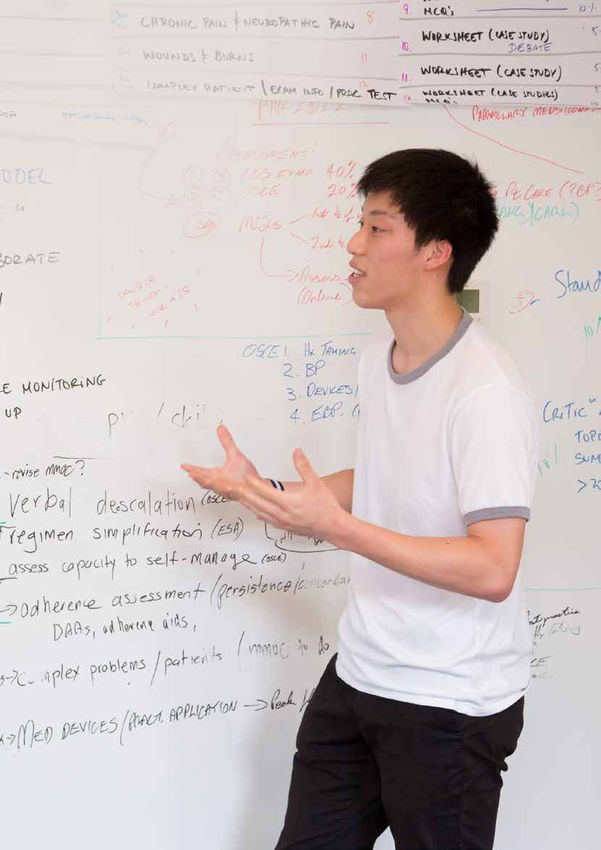
Since I started at Monash, I’ve seen
a big improvement in not only my
scientific knowledge but also in my
communication skills. Employers
want pharmacy graduates who can
not only understand how medicines
work, but can also work effectively
with patients, doctors and other
healthcare professionals to get the
best outcomes for patients.”
KEVIN WU
Bachelor of Pharmacy (Honours) /
Master of Pharmacy student

                                       7
BECOME A PHARMACIST FASTER:
    GRADUATE ENTRY PATHWAY
    Graduate Entry Pharmacy is for those of you who choose                          In assessing your eligibility we’ll take into account the number of relevant
    to study a more general science degree after high school,                       subjects you’ve completed. The units completed in the degree should be
                                                                                    appropriate and science based. As shown below, you’ll have to complete
    or didn’t meet our pharmacy course requirements at the                          and pass a 6.5 week summer school before entering into the course,
    end of Year 12. You’ll commence into third year of our                          as well as an overload unit on top of your Year 3.
    Bachelor of Pharmacy/Master of Pharmacy program,
                                                                                    For more information about Graduate Entry Pharmacy, including eligibility
    eligible for registration as a pharmacist in just three                         and application information, visit: monash.edu/graduate-pharmacy
    years, including a paid internship.
                                                                                    How do I apply?
    Who’s eligible?                                                                 Applications for 2020 entry open on our website from 5 August,
    It’s important you know our eligibility requirements for Graduate Entry         2019 and close on 13 December, 2019. Early applications are
    Pharmacy and build them into your course progression if necessary.              encouraged.
    You may be eligible for graduate entry if you have a minimum distinction
    average of 70% (or equivalent) and have graduated from a relevant               Apply at: applicant.connect.monash.edu.au/connect/webconnect
    degree in the last ten years.
    Relevant degrees include:
    • Bachelor of Biomedical Science/Bachelor of Biomedicine
    • Bachelor of Health Sciences
    • Bachelor of Pharmaceutical Sciences
    • Bachelor of Science

      BPHARM (HONS)/MPHARM
      Graduate entry pathway
                                                                                                                                               Masters

                                                                                                    Bachelor
                                                                                                   (Honours)

                                                   Summer
                                                    school
                                                  6.5 weeks
                                                                          Bridge to
                                                                         practice II
                                                                         – overload
              Prior undergraduate                  Bridge to
                science degree                     practice I

                                                                           Year 3                    Year 4                                     Year 5

         Right from day one, I’ve been learning how to
         treat patients. Not just the science that underpins
         the medicines that pharmacists dispense, but the
         communication skills required to help patients
         understand what’s going on and to work effectively
         with other healthcare professionals.”
         TAYYABAH MAHMOOD SHEIKH
         Bachelor of Pharmacy (Honours)/
         Master of Pharmacy student

8
BACHELOR OF PHARMACY (HONOURS)/
MASTERS OF PHARMACY
COURSE MAP
YEAR 1                    UNITS
                           PHR1011                          PHR1021                    PHR1031
 Semester 1                Professional practice I          How medicines work I       How the body works
 24 Credit points
                           6 Credit points                  6 Credit points            12 Credit points

                           PHR1012                          PHR1022
 Semester 2                Professional practice II         How medicines work II
 24 Credit points
                           6 Credit points                  18 Credit points

YEAR 2
                           PHR2011                          PHR2021                    PHR2041                      PHR2141
 Semester 1                Professional practice III        How medicines work III     Respiratory and              Dermatology and pain
 24 Credit points          6 Credit points                  6 Credit points            gastrointestinal disorders   6 Credit points
                                                                                       6 Credit points

                           PHR2012                                                     PHR2042                      PHR2142
 Semester 2                Professional practice IV                                    Endocrinology and renal      Cardiovascular
 24 Credit points
                           12 Credit points                                            6 Credit points              6 Credit points

YEAR 3
                           PHR1001
 Summer Semester           Bridge to practice I (Bridge to practice students only)
 12 Credit points
                           12 Credit points

                           PHR1101                          PHR3041                                                 PHR3141
 Semester 1                Bridge to practice II (Bridge    Blood, brain and cancers                                Pathogens, host defence and treatment
 30 Credit points          to practice students only)       12 Credit points                                        12 Credit points
                           6 Credit points

                           PHR3042                                                     PHR3062                      PHR5052
 Semester 2                Acute care                                                  Student experiential         Inquiry and innovation I
 24 Credit points          12 Credit points                                            placements                   6 Credit points
                                                                                       6 Credit points

YEAR 4
                           PHR4061                                                     PHR5051
 Semester 1                Student experiential placements                             Inquiry and innovation II
 24 Credit points
                           12 Credit points                                            12 Credit points

                           PHR4012                          PHR4042                                                 PHR5152
 Semester 2                Professional Practice V          Integrated care                                         Inquiry and innovation III
 24 Credit points
                           6 Credit points                  12 Credit points                                        6 Credit points

YEAR 5
                           PHR5061                          PHR5161
 Semester 1                Applied pharmacy practice I      Foundation practice I
 12 Credit points
                           6 Credit points                  6 Credit points

                           PHR5062                          PHR5162
 Semester 2                Applied pharmacy practice II     Foundation practice II
 12 Credit points
                           6 Credit points                  6 Credit points

Themed, integrated units                                                               Earlier and enhanced placements
Like many primary healthcare courses, your units are taught thematically,              You’ll be exposed to real-life practice environments as early as possible.
ensuring you’ll gain knowledge in an applied and engaging way. They also               Right from first year, you’ll spend time in experiential placement sites
integrate with each other, meaning your knowledge will consolidate and                 working with some of the best pharmacists in Australia.
build as you progress through the course.
                                                                                       To ensure you’re ready for placement, we credential you to provide
If you want details about what you’ll specifically be learning in your units,          appropriate patient services, allowing you to assist in contributing
you’ll find them in our online handbook:                                               to patient care throughout your degree.
monash.edu/pubs/2019handbooks/

                                                                                                                                                                    9
CAREERS IN
     PHARMACY:
     A DEGREE OF
     OPPORTUNITY
     If you’ve ever had a prescription filled at your local community
     pharmacy, you probably think you know what pharmacists
     do. The fact is, community pharmacy represents only one
     of dozens of career paths our graduates pursue.
     Any place there are medicines, there are pharmacists.
     Here are a few places you’ll find both.

     Aged care pharmacist
     Older people often have complex needs when it comes to medications.
     They are frequently taking a number of different medications and can be
     more susceptible to side effects. They may also need adjustments to their
     medications to accommodate difficulties with vision, hearing, memory
     or cognitive function.

     Clinical trials pharmacist
     Pharmacists in this area support the management and delivery of clinical
     trials of new medicines. The role involves coordinating studies from a
     medicinal perspective, ensuring that drugs used in the trials are imported,
     stored, accounted for, compounded, dispensed and used in accordance
     to strict protocols. It may involve liaising with hospital staff, counselling
     participants and carers, and educating medical and nursing staff.

     Complex care coordinator
     A relatively new career path, complex care coordination involves working
     with a hospital healthcare team and is often combined with consultant
     pharmacy work. The job involves providing early post-discharge
     medication review and follow-up plans for patients identified as being
     ‘high risk’ by hospital clinicians.

     Consultant pharmacist
     Accredited consultant pharmacists conduct home medicines reviews
     and residential medication management reviews. As with many roles,
     consultant pharmacists often work part time undertaking medication
     reviews, while also working in other healthcare settings such as working
     at a community health centre, working with chronic disease management
     groups, or providing nurse education.

                                                                                     PHARMACISTS IN INTERNATIONAL
                                                                                     DEVELOPMENT
                                                                                     Monash alumna Erin Nunan has used her pharmacy training
                                                                                     to improve health in various lower resource countries. She says
                                                                                     she never planned to work in these settings, “but the opportunity
                                                                                     came up and it was a wonderful chance to do something
                                                                                     different”.
                                                                                     In the Solomon Islands Erin worked with the World Health
                                                                                     Organisation on the country’s National Medicines Policy. Her work
                                                                                     with resource-poor and remote communities has had a valuable
                                                                                     impact on the advancement of global health practices.

10
11
Drug safety officer                                                          Researcher / Academic
     Pharmacovigilance is an area focusing on monitoring drug safety.             Many students find their passion for research while studying and
     A pharmacist working as a drug safety officer liaises regularly with         go on to make a career of exploring and developing ideas in pharmacy.
     government and industry bodies, consumers and other healthcare               Through research and evaluation, pharmacists can make a huge practical
     professionals. Their responsibilities include receiving and processing       difference to health policy and services. Common research areas for
     reports of adverse drug events and conducting regular conciliation           pharmacy graduates include pharmacy practice, pharmacotherapy, drug
     with health authorities. They use their skills and qualifications to         discovery, toxicology, clinical sciences, public health and much more.
     ensure the public has access to safe and reliable medications.
                                                                                  Specialty practice pharmacists
     Hospital pharmacist                                                          There are many different types of specialty practice pharmacists,
     Hospital pharmacy involves a lot of collaboration as you find yourself       below are just a few of the most common.
     working closely with a team of other healthcare professionals, including     • Mental Health pharmacist
     doctors and nurses, to provide the best care for patients.                   • Women’s and newborn’s pharmacist
                                                                                  • Antimicrobial steward
     According to the Society of Hospital Pharmacists of Australia (SHPA),
     “…it offers variety, both in the roles you can have, such as clinical        • Pain educator and consultant
     [i.e. direct patient care] or management, and in the types of hospitals      Mental health pharmacist
     you can work in – city or country, small or large, general or specialist.”   Mental health pharmacists in hospitals are responsible for providing
     Working as a hospital pharmacist helps you develop valuable skills that      clinical pharmacy services to the adult mental health in-patient wards,
     are highly sought after in other pharmacy settings. Many pharmacists         and psychiatric assessment and planning units. It is a highly specialised
     will spend some part of their career in a hospital environment.              career path that includes managing the supply of anti-psychotic
                                                                                  medications to mental health patients in government units, outpatient
     Primary care pharmacist                                                      clinics, community centres and specialist hospitals.
     A practice pharmacist doesn’t dispense medicines. Instead, they work         Women’s and newborns’ pharmacist
     within a general medical practice to deliver direct support to general       Providing safe and effective dosing and administration of medications
     practitioners, practice nurses, and patients. They can often give more       during pregnancy and for infants is the focus of the role. One of
     time and attention to individual cases, providing quality care and           the biggest challenges can be assisting in the care of babies born
     specialised services such as smoking cessation.                              prematurely. But it is also a highly rewarding area to work in; a skilled
                                                                                  pharmacist can play a crucial role in giving a baby a better chance
     Public health advisor                                                        at a healthy life.
     Pharmacists have knowledge, skills and experience that can contribute
     to advisory roles, both for the government as well as non-government         Antimicrobial steward
     institutions, such as health funds and private hospitals. The range of       Antimicrobial stewardship is a vital role in any hospital and health facility,
     possible roles in this area is extensive, including medicines access,        with responsibilities that include promoting the appropriate use of
     public health, developing eHealth services and more.                         antimicrobials (including antibiotics), reducing microbial resistance,
                                                                                  and decreasing the spread of drug resistant infections.
     Regulatory affairs associate                                                 Pain educator and consultant
     Working in regulation involves ensuring the appropriate licensing of         Chronic and acute pain are fascinating areas to work in. Pain
     and legal compliance by pharmaceutical and medical products. Following       management is a constantly evolving field that encompasses many areas
     this career path, you are involved in ensuring that a company’s products     of treatment, not just pharmacy and pain medications. Pharmacists work
     comply with regulations and legislation.                                     with pain sufferers to manage their medications and coordinate other
                                                                                  forms of treatment.

          A VARIED, FLEXIBLE CAREER
          Monash alumnus Mounir Mina now works for pharmaceutical
          company Novartis, but previously spent a number of years
          working for the Therapeutic Goods Administration (TGA).
          He found the role brought together the clinical, legal and
          regulatory aspects of his pharmacy studies.
          The TGA is responsible for regulating therapeutic goods, including
          medicines, medical devices, blood and blood products,” says
          Mounir. “My role involved preparing reports that examined the
          chemistry, quality control, bioequivalence and clinical data
          supplied by pharmaceutical companies.”

12
?
DID YOU KNOW?
Pharmacy graduates almost universally
get jobs straight out of university, with
97.2 per cent in full-time employment
within four months of graduating.*
*Source: Graduate Outcomes Survey 2018
13I’ve done so many great things in this course.
Last year I made an anti-epileptic drug from
scratch. And the lecturers are so approachable.
When you’re struggling with something, it’s
amazing to be able to walk along the hall and
knock on the door of someone who is one of
the world-leading researchers in the area.”
JOMO KIGOTHO
Bachelor of Pharmaceutical Science student
14PHARMACEUTICAL
SCIENCE
IMPROVE HEALTHCARE
ACROSS THE WORLD
A pharmaceutical science degree from Monash will Medicinal chemistry
springboard you into an exciting career. Your understanding This represents the intersection of biology and chemistry, and involves
the development of potential pharmaceutical compounds from conception
of the powerful interplay between chemistry and biology through to their clinical use. You’ll study how drugs work, and how they’re
will set you apart from the crowd. designed and made. By applying the principles and techniques of organic
Learn what it takes to invent, develop and approve a new medicine chemistry, medicinal chemists discover and develop compounds that
from internationally renowned scientists. prevent, treat or cure disease.
You’ll also get lots of time in the lab, working with industry-standard Formulation science
research instrumentation. When you accept your first job offer after This enables you to understand the principles of designing pharmaceutical
graduation, you’ll hit the ground running. And because the faculty has products and how medicines are absorbed and travel around the body
long standing relationships with employers in the sector, you’ll emerge to the site of action.
armed with the skills employers are looking for. Drawing on techniques used in the pharmaceutical industry, you’ll also
learn how to formulate chemical products in a wide range of applications,
Use industry-standard instrumentation such as consumer products, cosmetics, paints and food.
As well as gaining a deep understanding of the fundamental concepts
in chemistry, biology and product formulation, you’ll learn how to design Flexible pathways: three-year bachelor vs the
and conduct experiments using sophisticated instrumentation, and most four‑year advanced (honours)
importantly how to interpret your data. Some of our students want to complete their degree, get out there
and start working.
A growing sector
The global pharmaceutical sector is rapidly expanding, with the World For them, the three-year Bachelor of Pharmaceutical Science is the
Health Organization projecting a 33 per cent growth between 2016 and perfect pathway into a career in the pharmaceutical sector or any of
2019, from $US300 billion a year to $US400 billion. Victoria is a global its allied industries such as skincare, cosmetics, chemicals or even
centre of excellence in medical technology and pharmaceuticals. This food manufacturing.
sector is our most valuable high-tech export, worth almost $10 billion in Other students find that their natural curiosity and passion to work
2013–14. With significant support from the government in such initiatives on innovative research leads them on to further study, such as a PhD.
as the Medicines Manufacturing Innovation Centre (head-quartered at our For those students, the Bachelor of Pharmaceutical Science Advanced
Parkville campus) the opportunity to interact with industry and undertake (Honours) is excellent preparation. The third year of the degree includes
placements will allow you to start developing your networks early. an extended placement in one of our world-class pharmaceutical research
groups, which will give you the skills and independence to conduct
The chance to specialise
a substantial research project in your fourth (honours) year.
During the course, you’ll choose one of three specialisations:
Don’t know which of these categories you fall into? Don’t worry –
Drug discovery biology as long as you have a sufficient grade point average, you can transfer
This focuses on the biomedical science and pharmacology between the two courses.
of drug discovery.
You’ll learn about the biotechnological aspects of drug design
that lead to:
• discovering and evaluating new targets for testing drugs
• investigating the biological effects of drug candidates
• translating outcomes into pharmaceutical products.
You’ll develop expert knowledge of biological drug targets and their
modulation by different types of active drug compounds, a concept
that’s at the core of innovative drug discoveries.
15If you want details about what you’ll be specifically learning in each of your units,
you’ll find them in our online handbook: monash.edu/pubs/2019handbooks
BACHELOR OF PHARMACEUTICAL SCIENCE / BACHELOR
OF PHARMACEUTICAL SCIENCE ADVANCED (HONOURS)
BACHELOR OF PHARMACEUTICAL SCIENCE COURSE MAP (3 YEARS)
YEAR 1 UNITS
BPS1011 BPS1021 BPS1031 BPS1041
Semester 1 Human physiology I: Medicinal chemistry I: Physical chemistry I: Scientific Inquiry
Cells to systems Structure Equilibria and change
BPS1012 BPS1022 BPS1032 BPS1042
Semester 2 Human physiology II: Medicinal chemistry II: Physical chemistry II: Pharmaceutical science in context
Body systems Reactivity and biomolecules Solutions, surfaces and solids
YEAR 2
BPS2011 BPS2021 BPS2031 BPS2041
Semester 1 Pharmacology I: Synthetic chemistry I: Analytical methods I: Drug delivery: Absorption pathways
Biochemical signalling Structure and reactivity Principles and applications
BPS2012 BPS2022 BPS2032 BPS2042
Semester 2 Pharmacology II: Drug discovery and design Analytical methods II: Drug development
Drug action Investigation design
MAJOR SPECIALISATIONS
YEAR 3 DRUG DISCOVERY BIOLOGY
BPS3111 BPS3121 BPS3131 Elective unit – Choose one of:
Pharmacology III: Disease-focused pharmacology Microbiology and immunology BPS3211 Computational drug design
Advanced concepts – Peripheral BPS3321 Biotechnology products
Semester 1
BPS3311 Applied pharmacokinetics and
pharmacodynamics
BPS3711 Analysis of drug-receptor interactions
BPS3112 BPS3122 BPS3132 Elective unit – Choose one of:
Semester 2 Professional experience in Disease-focused pharmacology Toxicology BPS3232 Molecular basis of drug action
drug discovery biology – CNS BPS3322 Drug delivery nanotechnology
YEAR 3 MEDICINAL CHEMISTRY
BPS3211 BPS3221 BPS3231 Elective unit – Choose one of:
Computational drug design Synthetic chemistry II: Advanced experimental BPS3121 Disease-focused pharmacology
Emerging methods spectroscopy – peripheral
Semester 1
BPS3131 Microbiology & immunology
BPS3321 Biotechnology products
BPS3711 Analysis of drug-receptor interactions
BPS3212 BPS3222 BPS3232 Elective unit – Choose one of:
Professional experience in Synthetic strategies for drug Molecular basis of drug action BPS3122 Disease-focused pharmacology – CNS
Semester 2
medicinal chemistry design BPS3132 Toxicology
BPS3322 Drug delivery nanotechnology
YEAR 3 FORMULATION SCIENCE
BPS3311 BPS3321 BPS3331 Elective unit – Choose one of:
Applied pharmacokinetics and Biotechnology products Pharmaceutical product BPS3121 Disease-focused pharmacology
pharmacodynamics development and manufacture –peripheral
Semester 1
BPS3131 Microbiology & immunology
BPS3211 Computational drug design
BPS3711 Analysis of drug-receptor interactions
BPS3312 BPS3322 BPS3332 Elective unit – Choose one of:
Professional experience in Drug delivery nanotechnology Industrial formulation BPS3122 Disease-focused pharmacology – CNS
Semester 2
formulation science BPS3132 Toxicology
BPS3232 Molecular basis of drug action
BACHELOR OF PHARMACEUTICAL SCIENCE (HONOURS) YEAR
An Honours year gives you a taste of a research career and enhances your job prospects upon graduation. The Bachelor of Pharmaceutical Science
Advanced (Honours) contains a Year 4, shown below.
PSC4311 Advanced drug discovery biology (12 points)
Year 4
PSC4111 Advanced medicinal chemistry (12 points)
Semester 1
PSC4211 Advanced formulation science (12 points)
PSC4312 Research in drug discovery biology (36 points)
Year 4
PSC4112 Research in medicinal chemistry (36 points)
Semester 2
PSC4212 Research in formulation science (36 points)
16BACHELOR OF PHARMACEUTICAL SCIENCE/
BACHELOR OF ENGINEERING (HONOURS)
Combining chemical engineering with pharmaceutical Pharmaceutical engineers work in all aspects of the design and
science, this double degree is unique in Australia and production process, from experimenting with innovative formulations
to manufacturing commercialised products. A pharmaceutical
rare worldwide. engineer might:
Not only will you learn how to invent and test new products such as • design, develop and improve industrial processes and equipment
pharmaceuticals, food and cosmetics, but you will have the know-how for large scale chemical and pharmaceutical manufacturing
to manage the product process beyond the laboratory stage. • plan and test methods of manufacturing
This double degree allows you to graduate as a qualified engineer capable • develop methods for the treatment of by-products
of covering the full spectrum of the pharmaceutical product design • devise production processes that are safe, efficient, profitable
and production process. and environmentally sound
• develop and implement cleaner production technologies.
?
DID YOU KNOW?
Bachelor of Pharmaceutical Science/Bachelor of Engineering
(Honours) is taught between two Monash campuses – Parkville and
Clayton. You’ll study Year 1 and 3 at Parkville, and Years 2, 4 and 5
at Clayton.
I’m continually impressed with the labs and equipment
we get to use. The research opportunities are incredible
– you get to study under internationally‑renowned
academics, and from as early as third year I’ve had
the opportunity to undertake original research.”
MICHAELA VERMEULEN
Bachelor of Pharmaceutical Science student
17CAREERS IN
PHARMACEUTICAL
SCIENCE
The course material sounds fascinating, all that time using
high-tech lab equipment sounds really fun, and the internship
opportunities mean you’ll graduate ready for the workforce.
So what exactly does a pharmaceutical scientist do?
That’s a trickier question to answer than you might think. Although the
course is primarily focused on understanding medicines, the skills you
learn will translate to a range of chemistry-related or biomedical research
opportunities. Our graduates can be found in industries from paint and
coatings to cosmetics to food manufacturing.
Here are some of our more common graduate destinations.
Biomedical researcher
Biomedical researchers investigate how the human body works with the
aim of finding new ways to improve health. Usually based in a laboratory,
you will conduct experiments and clinical tests and record and report
on the findings.
In general, biomedical researchers within a university will tend to focus
on improving tools and techniques, studying biological processes and the
causes and progress of diseases, whilst private sector labs are usually
developing high value products that generate considerable income
for the company.
Clinical research associate
As a clinical research associate you will use your experience in running
experiments, gathering data and documenting the results during clinical
trials. Typical employers for this role include clinical research organisations,
pharmaceutical and biotechnology companies and even hospitals and
universities. There is growing demand for this role in Australia, as we
are one of the leading countries for phase one clinical trials.
Forensic scientist
Forensic science is the application of scientific research to help
investigate crimes, accidents and other incidents. It’s not always like
what you see on your favourite crime investigation TV shows, but can
entail tasks such as analysing illicit drugs or suspect situations.
A SURPRISING CAREER, IN A GOOD WAY
After graduating from Monash, Reshma Prakash worked as
an R&D chemist in the cosmetics and mining explosives sectors.
However she soon discovered that her degree could open up
many doors. Reshma now works in marketing as a product
support manager for a mining company, Orica Mining Services.
I never imagined working in the mining industry,” she says.
“My job involves product support for packaged explosives
and initiating systems in the mining industry throughout
Australia and Asia.”
She enjoys the challenge of combining commercialisation with
technical knowledge while developing her marketing skills.
1819
International development officer                                                Product developer/formulation scientist
     For graduates with a desire to work in the social advancement field,             Product development scientists work in a variety of industries, including
     one career path is to work with an International Non-Governmental                food, biotechnology, pharmaceutical science, and medical device
     Organization (“INGO”), like the World Health Organization (“WHO”).               manufacturing. They are typically based in the lab, developing new foods,
                                                                                      drugs, and medical technologies or researching and developing ways
     With a goal to build a better, healthier future for people all over the world,   to enhance existing products.
     WHO staff work side by side with governments and other partners
     to ensure the highest attainable level of health for all people.                 Quality control and quality assurance chemist
     Medicinal chemist                                                                These two areas in manufacturing are closely related, but they have
     Medicinal chemistry is an interdisciplinary science, drawing graduates           important differences. Where QA is about ensuring that development
     from a range of different fields. A career in this area usually involves         and maintenance processes are adequate in order for a system to
     working on the development and testing of potentially therapeutic                meet its objectives, QC is a set of activities designed to evaluate
     compounds. This might be within a company that is developing new                 the developed products.
     products, for a research facility exploring new compounds, or at                 QA is a systems-based career, often focused on designing, implementing
     a regulatory agency testing pharmaceuticals for compliance.                      and managing new systems for the manufacturing process to ensure
                                                                                      their quality.
     Paints and protective coatings scientist
     Not all pharmaceutical science graduates go on to work with products             A QC chemist is responsible for testing the products themselves.
     for human consumption. Graduates can find a role working on the                  They prepare and test samples from all phases of a manufacturing
     development of many of the products we come into daily contact                   or other handling process, with the goal of determining if the substance
     with, such as paints, pigments and protective coatings.                          meets particular standards or requirements.

     These compounds are present in our living and working spaces, our clothing,      Regulatory affairs associate
     our food packaging and many, many other products and environments.               Regulatory affairs involves ensuring a company and its products meet
     We are exposed to them on a regular basis, so manufacturers must                 government regulations. For companies producing new products, it is
     study them and be sure that they are safe.                                       a crucial discipline. A skilled regulatory affairs associate can be the
                                                                                      difference an effective product reaching the market or not. Regulatory
     Patent attorney                                                                  professionals are expected to know the ins and outs of the medical
     To be successfully taken to market, new discoveries need to be                   regulation, and to understand how changing regulations will impact
     commercialised and a company’s intellectual property protected.                  their industry.
     That’s where a patent attorney comes in.
                                                                                      Skincare and cosmetics developer
     A patent attorney will typically work for a specialist consultancy, advising
     a range of clients. A law degree is not required, but patent attorneys           Youthful, clear skin is big business, with skin care and cosmetic companies
     do need a deep understanding of relevant legislation, potentially across         around the world spending millions on researching and developing new
     a number of different countries and regions.                                     products. There are plenty of opportunities in this fast-moving industry,
                                                                                      with competing companies striving for the next breakthrough that will
     Pharmaceutical salesperson                                                       give them the edge.
     The best people for selling the benefits of a product are often those            It’s not just big name international cosmetic brands that offer employment
     with the deepest understanding of how it works. For complex products             though. Many smaller companies exist in the field and it is ripe for
     developed and manufactured using pharmaceutical or chemical science,             entrepreneurs.
     there is often a need for sales and marketing representatives able to talk
     with authority about the science behind the product.
     This is a skill many graduates have and for some, sales and marketing can
     be their next step beyond the lab after working in research and development.

                                                                                      ENSURING QUALITY MEDICINES
                                                                                      Jeremy Shonberg works for the Therapeutic Goods
                                                                                      Administration as a pharmaceutical evaluator. He was originally
                                                                                      drawn to medicinal chemistry because it involves a lot of problem
                                                                                      solving and can deliver interesting results and great benefits
                                                                                      in terms of drug design.
                                                                                      With both a bachelor and a PhD from Monash, Jeremy’s current
                                                                                      role involves evaluating the chemistry, manufacture, quality
                                                                                      controls and bioavailability data supplied by pharmaceutical
                                                                                      companies to support the products they submit for government
                                                                                      approval.

20
ENTRY REQUIREMENTS
Years of Monash
Course study ATAR* IB Guarantee Prerequisites
VCE
English: Units 3 and 4: a study score of at least 35 in English (EAL) or 30 in
Bachelor of Pharmacy (Honours)/ English other than EAL.
5 90 33 84 Maths: Units 3 and 4: a study score of at least 25 in one of Mathematical Methods
Master of Pharmacy
(any) or Specialist Mathematics.
Science: Units 3 and 4: a study score of at least 25 in Chemistry
IB
English: At least 5 in English SL or 4 in English HL or 6 in English B SL or 5 in
English B HL.
Bachelor of Pharmacy (Honours)/
5 98.1 40 NA Maths: At least 4 in Mathematics SL or 3 in Mathematics HL or 3 in Further
Master of Pharmacy Scholars Program Mathematics HL.
Science: At least 4 in Chemistry SL or 3 in Chemistry HL.
VCE
English: Units 3 and 4: a study score of at least 30 in English (EAL) or 25 in
Bachelor of Pharmaceutical Science 3 84.3 30 75 English other than EAL.
Maths: Units 3 and 4: a study score of at least 25 in one of Mathematical Methods
(any) or Specialist Mathematics.
Bachelor of Pharmaceutical Science Science: Units 3 and 4: a study score of at least 25 in Chemistry
4 90.1 33 84 IB
Advanced (Honours)
English: At least 4 in English SL or 3 in English HL or 5 in English B SL or 4 in
English B HL.
Maths: At least 4 in Mathematics SL or 3 in Mathematics HL or 3 in Further
Bachelor of Pharmaceutical Science/ Mathematics HL.
5 92.1 34 86
Bachelor of Engineering (Honours) Science: At least 4 in Chemistry SL or 3 in Chemistry HL.
* ATARs shown are indicative scores for 2020 entry only, and should just be used as a guide.
21PATHWAYS THE MONASH
If you didn’t meet our course requirements at the end of Year 12,
we offer a number of pathway options. You may be able to transfer
GUARANTEE
into either Pharmacy or Pharmaceutical Science after completing first
The Monash Guarantee recognises that your potential to succeed
year in another degree if you achieve a minimum 70% GPA and meet
at university is about more than just your ATAR. It ensures fair entry
course prerequisites. Course prerequisites can be met through the
for students to Monash, so that even if your achieved ATAR is below
study of tertiary units, and must meet VCE equivalent scores or higher.
the lowest selection rank to which an offer was made in 2018,
Note that transfers into the BPharm(Hons)/MPharm will receive you could still land a place at the University.
no credit, even if you have studied pharmacy at another university.
You’ll be eligible if you:
Graduate Entry Pharmacy is another pathway to consider, further
information about the program and eligibility can be found • have experienced financial disadvantage;
on pages 8-9. • are an Indigenous Australian; or
• attend a school under-represented at Monash.
Visit the Monash Guarantee website for further information: monash.
edu/study/how-to-apply/entry-schemes/the-monash-guarantee
Monash Guarantee scores for our courses can be found on page 21.
22SCHOLARSHIPS PROGRAMS
We want as many bright minds as possible to benefit from a Monash
education. That’s why we offer one of the most generous scholarship
FOR SCHOOLS
programs in the country.
The faculty runs a number of outreach programs and events
There are too many scholarships available to list here. To find for students studying VCE Chemistry and Biology. For more
out how you can achieve your full potential and make your mark information or to express interest in having your school involved,
on the world, visit monash.edu/scholarships and hit “Pharmacy visit: monash.edu/pharm/future/outreach
and Pharmaceutical Science” under “Browse by Faculty”.
23Monash Pharmacy and
Pharmaceutical Sciences
monash.edu/pharm
FACEBOOK
@MonashPharm
INSTAGRAM
@MonashPharm
TWITTER
@MonashPharm
YOUTUBE
@pharmonash
Join us at our 2019 Open Days
• 4 August – Monash Clayton
• 18 August – Monash Parkville
To register and plan your day,
visit: monash.edu/open-day
MONASH ONLINE
monash.edu
FIND A COURSE
monash.edu/study
INTERNATIONAL STUDENTS
monash.edu/study/international
SCHOLARSHIPS
monash.edu/scholarships
OFF-CAMPUS LEARNING
monash.edu/offcampus
MONASH ON YOUTUBE
youtube.com/monashunivideo
FUTURE STUDENT ENQUIRIES
Australian citizens, permanent
residents and New Zealand citizens
T 1800 MONASH (666 274)
E future@monash.edu
monash.edu/study/contact
International students
T Australia freecall: 1800 MONASH (666 274)
T +61 3 9903 4788 (outside Australia)
E study@monash.edu
Wechat: MonashUniAus
Youku: Monash 蒙纳士大学
The information in this brochure was correct at the time of publication
(April 2019). Monash University reserves the right to alter this information
should the need arise. You should always check with the relevant faculty
office when considering a course.
CRICOS provider: Monash University 00008C Monash College 01857JYou can also read


