MOUNT STIRLING A CONTEMPORARY VISION - Mt Stirling
←
→
Page content transcription
If your browser does not render page correctly, please read the page content below

MOUNT STIRLING
2030
A CONTEMPORARY VISION
Mount Stirling 2030 is approved for implementation. A long-term vision,
            its purpose is to direct all aspects of future planning for the Mount
            Stirling Alpine Resort until the document is reviewed.

            © Mt Buller Mt Stirling Resort Management, April 2018.

            As part of a community consultation program, Mount Stirling 2030 was
            on public display between Monday 18 December 2017 and Sunday 21
            January 2018, a period of 34 days. A total of 26 complete responses
            were      received    from      an     online    feedback     survey.
            All submissions were carefully considered in preparing Mount Stirling
            2030.

            Every effort has been made to ensure that the information in Mount
            Stirling 2030 is accurate. Mt Buller Mt Stirling Resort Management does
            not guarantee that the publication is without flaw of any kind and
            therefore disclaims all liability for any error, loss or other consequence
            that may arise from you relying on any information in the publication.

            Document control
             Version                   Version no.         Date endorsed
             Final                     Version 1           March 2018
             Draft for consultation    Version 9           December 2018

            Photo credits: Cover - T Kelly, pg. 6 - A Railton, pg. 8 - J McCormack, pg.
            9 - L Perrin, pg. 10 - V Anthony, pg. 11 - J McCormack, pg. 12 -
            A Railton, pg. 13 - T Kelly, pg. 14 - Mt Buller Mt Stirling Resort
            Management, pg. 15 - T Kelly, pg. 16 - T Kelly, Back Cover -
            V Anthony.

            Mt Stirling Stakeholder Group
            Mount Stirling 2030 was developed by the Mt Stirling Stakeholder
            Group, facilitated by Mt Buller Mt Stirling Resort Management.
            Formed in 2016, the Group comprises representatives from recognised
            user groups with active links to the Mount Stirling Alpine Resort. The
            Group provides the platform for ongoing stakeholder engagement
            relating to Mount Stirling Alpine Resort.

Mount Stirling 2030                                                                       2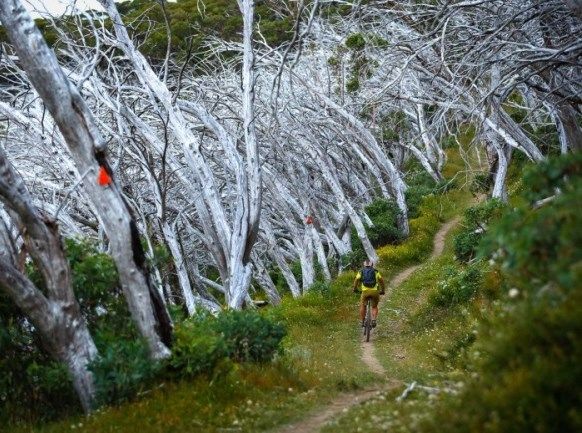
Contents
            Mount Stirling 2030 Vision        4
            Purpose                           5
            Background                        6
            Core Principles                   8
            Opportunities                    11
            Implementation                   13
            Relevant documents               17

Mount Stirling 2030                      3
Mount Stirling 2030 Vision

            Key themes and objectives
            Supporting the Vision are three key themes: Core Principles, Opportunities and Implementation.
            Objectives and strategies of each key theme enable the achievement of the Vision.
                                            Drawn from a strong legislative base, Core Principles
                                            objectives form the basis for management of the Mount
                                            Stirling Alpine Resort including: environment, heritage and
                                            climate adaptation.

                                            Tourism and Recreation and Education and Research
                                            Opportunities support the visitor experience and integrity of
                                            Mount Stirling being nature-based, affordable and accessible.

                                            Implementation objectives support Opportunities and Core
                                            Principles including: Infrastructure and Services; Natural
                                            Resource Management and Environmental risk;
                                            Partnerships; and Access and Transport.

Mount Stirling 2030                                                                                4
Purpose
            Mount Stirling 2030 provides the framework for sustainable development and operation of the
            Mount Stirling Alpine Resort as a significant nature-based asset for the State of Victoria. Mount
            Stirling 2030 presents a contemporary vision that reflects community and stakeholder
            aspirations, celebrating the social and environmental values of the mountain and addressing
            challenges of climate change. Mount Stirling 2030 identifies clear stakeholder and community
            direction for contemporary future management of the Mount Stirling Alpine Resort.

            Mount Stirling 2030 has been developed with extensive stakeholder input and engagement.
            Through collaboration of the Mount Stirling Stakeholder Group and wider community
            consultation, it was clear the core principles of the Mount Stirling Alpine Resort – being nature
            based, all season, affordable and educational – continue to be conserved and enhanced.
            Operations and management of the Resort need to continue to maintain strong community
            connections with winter and summer recreation, tourism and education offerings.

            Mount Stirling 2030 will be monitored and reviewed periodically by the
            Mt Stirling Stakeholder Group facilitated by Mt Buller Mt Stirling Resort Management to ensure
            it is meeting its objectives and remains current and relevant. Any review will provide
            opportunity for public consultation and an appropriate document inspection period.

            Mount Stirling 2030 - governance framework
            Mount Stirling 2030 has strong connection
            with the Environmental Effects Statement
            (1996), planning framework and legislation.
            Mount Stirling 2030 guides strategic
            direction, development, planning, and
            effective management of the Mount
            Stirling Alpine Resort in partnership with
            stakeholders, industry associations and
            government bodies. The vision, objectives
            and strategies presented provide direction
            for the development of Strategic
            Management Plans and Operational Plans
            developed by Mt Buller Mt Stirling Resort
            Management.

Mount Stirling 2030                                                                                   5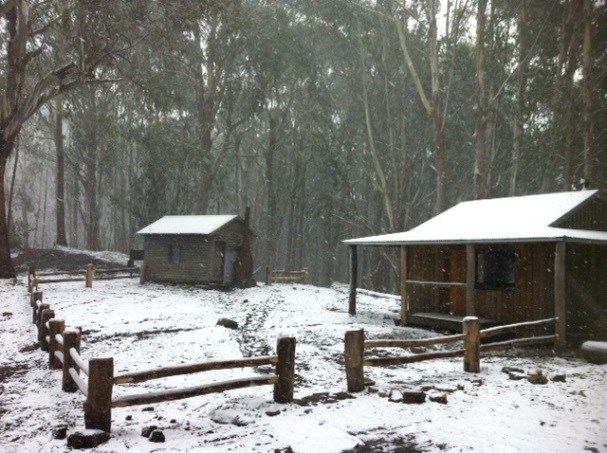
Background
            Mount Stirling Alpine Resort is located 230 kilometres from Melbourne and is the only Victorian
            Alpine Resort with an unspoiled true alpine summit, offering accessible
            semi-wilderness experiences for visitors. At 1749 meters above sea level, the summit offers
            360-degree panoramic views of the high country landscape. A majestic 500-year-old
            Snow Gum stands alone on the summit of Mount Stirling, known as the ‘Stirling Tree’.

            There are more than 68 km of maintained trails, 35 km of which are groomed for winter
            activities. Mount Stirling Alpine Resort is the only alpine destination where trails pass through
            towering forests of Alpine Ash on the lower slopes and rise through Snow Gum forests to the
            open treeless area of the summit. The Resort provides access to the Greater Alpine National
            Park, and Mansfield State Forest that contains the iconic tourist destination Craig’s Hut - of both
            international and domestic appeal.

            Public facilities at the Resort are located at Telephone Box Junction (1234 m elevation), with a
            visitor centre offering a cafe, ski hire, ski school and Resort Management office/Ski Patrol
            available during winter. Year-round facilities include car parking, public shelters and toilets at
            Telephone Box Junction, Cricket Pitch, King Saddle, Machinery Shed, King Spur Hut, Bluff Spur
            Memorial Hut, Howqua Gap Hut and at Geelong Grammar School Hut. Power is supplied by a
            micro-hydroelectric system, gas via tanks and sewerage treatment via a septic system (at
            Telephone Box Junction) or pump out tanks (at remote facilities).

            Mount Stirling Alpine Resort has strong indigenous and post-contact social and cultural
            connections. In the traditional lands of the Taungurung language group, the area appears to
            have been occupied by the Yowung-illam balung clan. Post-contact history of the area includes
            timber, mining and grazing activities. High country timber harvesters and graziers constructed a
            number of alpine huts for shelter and refuge, some of which still exist within the Resort today.

            The Resort supports a unique assemblage of plants and animals characteristic of alpine and sub-
            alpine environments. Specialised alpine species found within the Resort include the threatened
            Broad-toothed Rat, Stirling Stonefly and Alpine Marsh Marigold. Ecologically, the Mount Stirling
            area provides refugia for many species and communities, critical to support of regional
            biodiversity.

Mount Stirling 2030                                                                                     6
The Visitor Experience

                      ”Escape to Mount Stirling for authentic alpine adventures.
                      Engage with rich heritage and the healthy natural environment”
            The vision, objectives and strategies within Mount Stirling 2030, strive to maintain and improve
            visitor experiences that reflect the integrity of Mount Stirling being nature-based, affordable
            and accessible. Mount Stirling Alpine Resort offers unique nature based experiences with limited
            options for commercial activities in accordance with the Assessment and Panel Report on the
            Environment Effects Statement, February 1997. The Resort is highly valued for the year-round
            nature based recreational and interpretive experiences offered, including cross-country and
            backcountry skiing, snowboarding, snow-camping and snowshoeing in the winter and camping,
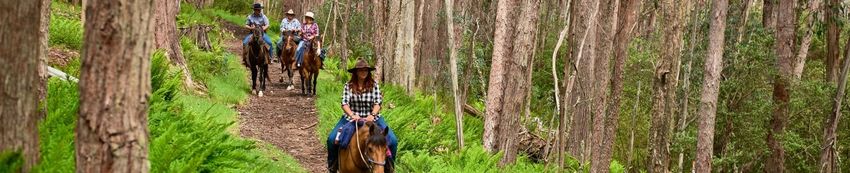
            bush walking, four wheel driving, horse riding, mountain biking and outdoor education at other
            times of the year.

            Operations Timeline
            Operations of Mount Stirling Alpine Resort are year-round. It is the only Victorian Alpine Resort
            with higher visitation in the non-winter period; with much of the summer visitation comprising
            camps and schools participating in outdoor education programs.

                      Jan      Feb    Mar   Apr    May    Jun    Jul    Aug    Sep    Oct    Nov    Dec

                            Summer activities; café and resort information available weekends and holidays
                            Environmental rest and preparation for oncoming winter/summer

                            Winter shoulder, market to snow conditions, Resort services operational,
                            opportunities for niche activities and events
                            Core winter activities, all Resort services and commercial services operational

            Winter and summer markets
            Anticipated highly variable and low snow conditions require that the Mount Stirling Alpine
            Resort focuses on core and emerging markets to 2030. These include outdoor education
            groups/schools, alpine tourers, snow campers, snowshoers, and split boarders – who can be
            serviced well and whose experience is less affected in low snow/variable snow conditions.
            Traditional cross country skiers and families looking for tobogganing and snow play experiences
            can be intensively sought when weather conditions deliver snow to Telephone Box Junction.

            During the summer months, horse riders, mountain bikers, four wheel drivers and
            hikers/campers are the core and growing markets. The mountain already services these groups
            very well; however the challenges to 2030 will include capacity management, user conflicts via
            shared trail use, and risks from extreme weather events.

Mount Stirling 2030                                                                                       7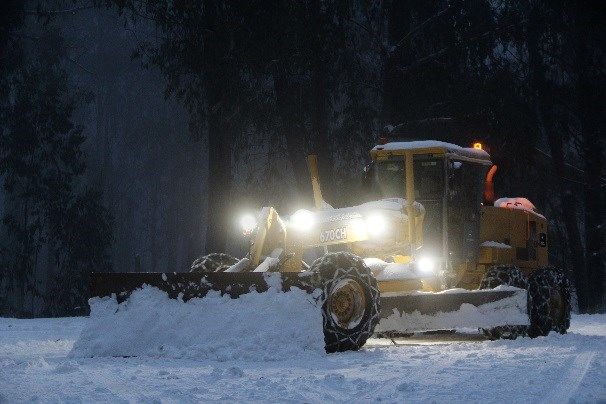
Core Principles
            Environment, Heritage, Climate Adaptation

            Objective 1 - Environment
            Best practice environmental management protects and enhances natural
            features and processes

            Mount Stirling Alpine Resort has significant
            conservation, scenic, heritage, education,
            recreation and tourism values. The alpine
            and sub-alpine environment as a whole is a
            valuable resource forming an important
            part of the Australian landscape. By 2030,
            sustainable use and development will
            complement natural assets that are the
            primary focus for visitation. Best practice
            environmental       management        limits
            disturbance    and     potential    adverse
            environmental impacts.

                           1.1 Ensure that the present diversity and viability of species and ecological communities
                           within the Resort are maintained or improved.
                           1.2 Continue to identify areas of the Resort that contain threatened species, habitat and
                           communities and ensure that development and use does not detrimentally impact upon
              Strategies

                           these.
                           1.3 Establish and implement periodical monitoring and evaluation of key indicators of
                           environmental features of the Resort and report findings every five years.

                           1.4 Implement an environmental management plan or identify other relevant systems
                           that incorporate and deliver best-practice and adaptive management.

Mount Stirling 2030                                                                                           8
Objective 2 - Heritage
            Cultural heritage is preserved and celebrated

            The Mount Stirling Alpine Resort is an area
            rich in both pre- and post-contact cultural
            heritage. There are significant opportunities
            to educate visitors and the community of
            the rich history of the Resort and to
            enhance and grow the interpretive,
            recreational and tourism experiences
            derived        from        this       heritage.
            Active management of culturally historic
            places, identification of sites of significance,
            and       improving       awareness         and
            interpretation of the Resort’s cultural
            heritage are essential.

                           2.1 Ensure that future use and development respects the pre- and post-contact
                           historical features of the Resort including sites of major cultural and scientific
                           significance.
                           2.2 Continue to acknowledge and respect the Taungurung Clans as the traditional
                           people of Mount Stirling, support Taungurung culture and traditions and encourage
                           greater participation in decision-making processes.
              Strategies

                           2.3 Continue to work with indigenous custodians to identify, acknowledge and
                           celebrate sites and artefacts of significance.
                           2.4 Investigate and increase awareness of the cultural history of the Resort including
                           traditional custodians, pioneering heritage, and the present and link this information
                           with educational and research activities.
                           2.5 Continue to provide suitable education, interpretation and signage targeting
                           visitors transiting through the Resort (e.g. through to Craig’s Hut) in partnership with
                           neighbouring land managers.

Mount Stirling 2030                                                                                           9
Objective 3 - Climate Adaptation
            Operations and the mountain community are resilient and adaptive

            The physical impacts of climate change are               capabilities. Operations of the Resort are
            predicted to impact socio-cultural factors,              inherently highly adaptable and impacts of
            which will require adaptive management and               climate change will likely compound the need
            operational responses. More broadly, the                 for further innovation and adaptation in
            impact on biodiversity will vary, with some              management and operations.
            ecological communities including upland
            wetlands and snow patch communities,
            montane forests and alpine fauna more
            susceptible to impacts of climate change.
            Decreased persistence of snow and increased
            fire frequency will be key vectors of change.

            Mount Stirling Alpine Resort is uniquely
            positioned to respond positively to impacts of
            climate change and support social changes
            through     adaptation    and      educational

                           3.1 Partner with other agencies and communities in responding to impacts of climate
                           change.
                           3.2 Identify, monitor and manage climate change risks and potential impacts on the
                           environment, operations and communities through adaptive management and
                           operations.
                           3.3 Support landscape and physical functions to provide flora and fauna the ability to
                           respond to current and future impacts of climate change.
                           3.4 Resort development and activities support socio-cultural changes in the community
                           and tourism sector that arise from climate change.
              Strategies

                           3.5 Continue to promote and facilitate year-round use through improved amenities and
                           access that supports suitable activities and events that uphold the Resort’s natural and
                           social values.
                           3.6 Whilst maintaining environmental values, adaptively plan to improve winter
                           experiences to mitigate the potential impacts of climate change on winter visitation.
                           3.7 Investigate the feasibility of snowmaking within the Resort as an adaptive
                           management tool for environmental assets only.
                           3.8 Power requirements of the Resort are achieved through appropriate renewable
                           energy sources.
                           3.9 Facilitate a reduction in emissions arising from management and operations
                           including through use of innovative technologies.

Mount Stirling 2030                                                                                          10
Opportunities
Tourism and Recreation, Education and Research
Objective 4 - Tourism and Recreation
Affordable nature based adventures to support sustainable increases in
visitation year-round
Mount Stirling Alpine Resort supports year-
round tourism and recreation offerings that
are nature-based, affordable and equitable.
Delivered through a sustainable trail
network, opportunities for Ecotourism are
promoted where they support the Resort’s
Core Principles. Interpretive functions
support tourism and recreation offerings,
incorporating education into all experiences.
4.1 Maintain the Mount Stirling Alpine Resort as a nature based educational, tourism
and recreational resource.
4.2 Facilitate passive and active recreational activities in balance with the conservation
and protection of the natural environment of the Resort.
4.3 Continue to maintain and enhance a track and trail network that provides for year-
round tourism and recreation, in such a manner that environmental impacts are
minimised and quality of experience is maintained or improved.
4.4 Ensure that any further design and development of trail infrastructure and/or ski
Strategies
field terrain is undertaken in a manner that minimizes impacts to the natural
environment.
4.5 Investigate and collate data to understand and engage the needs of user-groups.
4.6 Continue to provide and enhance educational and interpretive
signage/campaigns/information that support visitor experiences and promote values of
the Resort.
4.7 Continue to maintain a schedule of approved tracks and trails that supports visitor
experiences (zones and activities) and maintains environmental values.
4.8 Plan and create zones for, and maintain a schedule of, approved recreational
uses/activities and investigate technologies for promoting these.
Mount Stirling 2030 11Objective 5 - Education and Research
Learning experiences that create social and environmental benefit
The Mount Stirling Alpine Resort is a
mountain for learning. The Resort provides a
safe and affordable destination for outdoor
education and school groups. Opportunities
exist to increase educational experiences,
working with education institutions and
communicate research findings. Strong
relationships with research bodies and
evidence-based research are critical to
inform adaptive management practices
essential for the Resort’s future.
5.1 Partner with educational and research institutions, agencies and community to
engage students and visitors in learning and research.
5.2 Enhance interpretive functions – including behaviour change – that promote
environmental, heritage or sustainability values.
5.3 Partner with Taungurung Clans to identify and promote awareness of Traditional
burning and landscape management tasks as they relate to Mount Stirling, including
post-fire surveys (where possible).
5.4 Continue to share and develop knowledge with community, agencies and
Strategies
institutions that further promote the environmental, socio-cultural and land
management values of the Resort.
5.5 Support research into management techniques that safeguard environmental
quality.
5.6 Continue to support research into species ecology and monitoring of flora, fauna
and communities, including exotic species.
5.7 Partner with educational and research institutions, agencies and community to
educate visitors and community of the regional and national significance of the
Australian Alps.
5.8 Maintain and promote an online publically accessible repository of research
conducted at the Resort.
Mount Stirling 2030 12Implementation
Infrastructure and Services, NRM and Environmental Risk,
Partnerships, Access and Transport
Objective 6 - Infrastructure and Services
Functional and appropriate infrastructure and services support efficient,
safe and positive visitor experiences
Mount Stirling Alpine Resort – currently and environment, and better facilitate safe year-
into the future – does not provide for round use of the Resort.
permanent on-mountain visitor
accommodation other than camping, refuge
huts and shelters and a commercial seasonal
alpine camp located in vicinity of the Cricket
Pitch. Functional and appropriate physical
infrastructure and services are crucial to the
efficient and safe operation of the Resort and
a positive visitor experience. Ski-lift
infrastructure is not provided. The design and
construction of new infrastructure will be
sympathetic to Core Principles, minimize
impacts on the surrounding natural
6.1 Infrastructure and services are designed and located to minimize their
environmental and visual impact.
6.2 Improve and enhance the existing network of public facilities using innovative
environmental technologies where possible.
6.3 Cost-effective infrastructure, services and commercial developments are related to
the Resorts function and core principles.
Strategies
6.4 Infrastructure is powered by renewable energy.
6.5 Continue to provide essential services (power, water, waste management, ski patrol,
communications) in line with best practice.
6.6 In collaboration with other agencies, provide other emergency services that cater
for the Resort year-round.
6.7 In consultation and collaboration with user groups and neighbouring
land managers, maintain and enhance existing user group infrastructure.
6.8 Ensure infrastructure is maintained and provided in a way that continues to facilitate
year-round use of the Resort and meets best practice requirements in relation to safety.
Mount Stirling 2030 13Objective 7 – Natural resource management and Environmental risk
High quality, safe and sustainable natural resources
Mount Stirling Alpine Resort is located
within the Upper Goulburn catchment and
declared a Special Water Supply Catchment
area. Geotechnical stability of the Resort is
an important environmental and safety
issue. The location, siting and management
of infrastructure and services must have
regard to surface drainage and groundwater
to minimize risks associated with ground
stability within the Resort and to minimise
risks to water catchments, quality and
supply. Risks associated with climate
change – including bushfire – and
associated impacts must be planned for and
adaptively managed to ensure safety year-
round.
7.1 Continue to maintain and regularly review the Risk Register, with particular focus on
natural resource and environmental risks for the Resort.
7.2 Continue to implement the Emergency Management Plan (includes the Bushfire
Management Plan).
7.3 Mitigate social, economic and environmental impacts from bushfire through
appropriate fire management strategies.
Strategies
7.4 Identify, monitor and manage sites in the Resort that may be susceptible to
geotechnical risk.
7.5 Manage drainage on roads, tracks and trails to minimize erosion and sedimentation
and implement rapid rehabilitation programs on exposed sites.
7.6 Continue to implement best practice waste minimisation and management
programs including management of effluent from Resort infrastructure and services
according to legislative requirements.
7.7 Continue to monitor and manage pest plants and animals through integrated and
innovative programs.
Mount Stirling 2030 14Objective 8 – Partnerships
Strong relationships and engagement enhance the Resort’s community
and environment
Partnerships are essential to success in all
areas of the Resort’s future. The Resort
borders Mansfield State Forest and the
Alpine National Park. Effective
management, particularly regarding tourism
and environment, requires strong
relationships and collaboration between
land managers, traditional owners, agencies
and communities. Particularly as use
capacity issues arise, the large number of
stakeholders and diversity of users of the
Mount Stirling Alpine Resort will require
strong engagement and collaboration.
8.1 Continue facilitation and engagement of the Mount Stirling Stakeholder Group to
improve consultation and collaboration with key stakeholders.
8.2 Build and strengthen relationships with relevant agencies and stakeholders, to
achieve complementary land management objectives, including addressing potential
use capacity issues in the future.
Strategies
8.3 Continue to strengthen and expand collaborative relationships and partnerships
with educational and research institutions.
8.4 Continue to investigate opportunities to engage volunteer support across a range of
activities.
8.5 Develop partnerships with neighbouring communities to improve connections with
off-mountain accommodation, tourism and recreation opportunities.
8.6 Actively encourage growth in community engagement and involvement with
the Mount Stirling Alpine Resort through use of targeted media and communications.
Mount Stirling 2030 15Objective 9 - Access and Transport
An equitable, safe, and easy gateway
Accessibility of Mount Stirling Alpine Resort
is essential for positive visitor experiences
and safety year-round. Seasonal closures
are in place to protect environmental values
and permit safe operations during the
declared snow season. Management of
roads and tracks provide for a positive
visitor experience whilst minimizing impacts
to the natural environment. Key
management issues include access to the
snowline in low snow conditions;
minimizing user conflict and equitable
access for all visitors.
9.1 Using existing infrastructure, continue to enhance the equity of accessibility to and
within the Resort, and between Mount Buller and Mount Stirling, having regard to the
maintenance of environmental values, visual amenity and experience.
9.2 Continue to manage roads, carparks, tracks and trails to improve drainage and
minimize erosion, sedimentation and geotechnical risk.
9.3 Investigate options for improved management of impacts relating to the use of the
tracks within the treeless area of the summit.
9.4 Continue compliance operations and visitor education in partnership with
neighbouring land managers to reduce environmental impacts and negative visitor
experiences.
9.5 Engage with VicRoads (the responsible authority) to improve surfacing of the Mount
Strategies
Stirling Road from Mirimbah to Telephone Box Junction.
9.6 Investigate and implement suitable transport options from Mirimbah to Telephone
Box Junction and to strategic on-mountain locations to access the snowline, excluding
ski-lift infrastructure and snow mobile tours.
9.7 Continue to provide access opportunities including recreational links with the
Mansfield State Forest and the Greater Alpine National Park.
9.8 Continue to permit over-snow vehicles for operational and safety purposes only.
9.9 Continue to implement seasonal road and track/trail closures to protect areas of
high environmental value and permit safe operations during the declared snow season
in collaboration with neighbouring land managers.
9.10 In consultation with user groups and neighbouring land managers, investigate and
implement recreational zoning and permitted activities areas/tracks/trails to minimize
user conflict and manage capacity issues.
Mount Stirling 2030 16Relevant documents
Alpine Resort (Management) Regulations 2009.
Alpine Resorts (Management) (Amendment) Act 2004.
Alpine Resorts (Management) Act 1997.
Alpine Resorts Planning Scheme – Mt Stirling Local Planning Policy, Local Planning Policies –
Clause 21.07 – Mt Stirling, 17 June 2004.
Alpine Resorts Planning Scheme - Mt Stirling Strategic Statement, Strategic Statements – Clause
21.07 – Mt Stirling, 31 May 2012.
Alpine Resorts Strategic Plan 2012.
Climate Change Adaptation in the Australian Alps: Impacts, Strategies, Limits and Management,
NCARFF 2011.
Greater Alpine National Park Management Plan 2015.
Mount Stirling Environmental Effects Statement. Victoria. Dept. of Infrastructure. May 1996.
Mt Buller Mt Stirling Emergency Management Plan.
Mt Buller Mt Stirling Resort Management Risk Register.
Mt Buller Mt Stirling Strategic Plan 2013.
Mt Stirling Alpine Resort – Assessment and Panel Report on the Environmental Effects
Statement, Department of Infrastructure. February 1997.
Mt Stirling Development Taskforce Position Statement.
Mt Stirling Stakeholder Group Terms of Reference, February 2017.
Protecting Victoria’s Environment – Biodiversity 2036.
‘Resort Master Plan' and 'Strategic Management Plan' prepared by the Friends of Mount Stirling.
Taungurung Clans Aboriginal Corporation Strategic Plan 2016.
The Potential Impacts of Climate Change on Victorian Alpine Resorts 2016.
Mount Stirling 2030 17Mt Buller Mt Stirling Resort Management Alpine Central, Summit Road Mt Buller, VIC 3723 (03) 5777 6077 www.mtstirling.com.au
You can also read


