Multi-dimensional Soundscape Interaction Design at Xi'an Small Wild Goose Pagoda
←
→
Page content transcription
If your browser does not render page correctly, please read the page content below
E3S Web of Conferences 189, 03017 (2020)                                                             https://doi.org/10.1051/e3sconf/202018903017
ASTFE 2020

          Multi-dimensional Soundscape Interaction Design at Xi'an Small
          Wild Goose Pagoda
          Yi Wang1, Qin Song1, and Rongchuan Li1,*
          1
              Xi’an university of Technology, Xi; an, China

                        Abstract. Based on the analysis of the soundscape at Small Wild Goose Pagoda (also Xiao Yanta, according
                        to its Chinese pronunciation) from the perspective of “audience-sound-environment”, this article explores the
                        audience's perception information of the “Yanta Morning Bell”, the symbolic soundscape of the Small Wild
                        Goose Pagoda. To probe audience's way of acquiring the perception information of the pagoda and the mode
                        of constructing cultural contacts, this article starts with the uniqueness of the soundscape at the Small Wild
                        Goose Pagoda, incorporating visual, hearing, touch and other interactive forms. By immersive experience,
                        audiences can receive cultural information and enrich their cultural knowledge. This study hopes to provide
                        new ideas for the multi-dimensional soundscape interaction design at Small Wild Goose Pagoda.

      1         Introduction                                                  initially formed different research directions. Studies by
                                                                              combining design research with sound research form a
      When talking about soundscape, their visual effects are                 new interdisciplinary exploration as well as an attempt to
      unavoidably noticed by people at the first sight, such as               integrate social science knowledge and technology,
      the color, shape, and style. With the development of                    which can achieve a two-way breakthrough in the fields
      society, people are not satisfied with visual enjoyment                 of design and sound [3].
      only, they prefer multi-sensory and multi-channel
      integration experience with different interactions. A good
                                                                              2.2 Soundscape interaction design status in
      soundscape design can not only meet people's visual needs,
                                                                              China and the rest of the world
      but also let them feel unique elements and culture of a
      specific area. Therefore, to facilitate the development of              The contemporary research on soundscape design in
      historical sites and help people better understand the                  China and the rest of the world develop rapidly. Different
      history, this article discussed how to increase historical              regional characteristics are gradually integrated into the
      and cultural elements in the multi-dimensional interaction              system design of sound and environment, creating unique
      design of soundscape with Xi'an Small Wild Goose                        soundscapes and landscapes [4] (Table 1).
      Pagoda as the design object.                                                It can be seen from Table 1 that the soundscape
                                                                              designs (3D shell sound effect room, drum wall, etc.)
      2 Literature of soundscape                                              generally bring people auditory as well as visual
                                                                              enjoyment simultaneously, achieving the multi-
                                                                              dimensional interaction of soundscape. Multi-
      2.1 Current study on soundscape                                         dimensional interaction enables soundscape design to
                                                                              integrate vision, hearing, touch, smell and taste, so that
      The word "soundscape" was first proposed by a Finnish                   people can have immersive experience. However,
      geographer Granoe in 1929. Soundscape is the acoustic                   soundscape design usually has a weak connection with
      environment as perceived by humans or society. It takes                 regional culture and history, which makes the design lack
      the word “landscape” which originated from the German                   of regional cultural differences. Floor piano and music
      word "landxchaft" as the reference [1]. In China,                       fountain can be easily found in large shopping malls,
      systematic research on soundscape design started from the               parks, squares, subway stations and other places, making
      publication of the article Overview of Soundscape by Li                 similar sounds.
      Guoqi, which has aroused attention and resonated among                      Each historical site contains different historical culture.
      the academic field. The research on soundscape further                  Therefore, when designing the soundscape of historical
      probed the ideas, specific design methods and                           sites, we need to take into account the historical and
      characteristics of soundscape design [2] based on the                   cultural characteristics of different historical sites and
      “human-sound-environment” interrelation.                                design representative and unique soundscapes.
          Scholars have rich theoretical research on
      “soundscape” from different perspectives, and have

          *
              Rongchuan Li: 444302763@qq,com
© The Authors, published by EDP Sciences. This is an open access article distributed under the terms of the Creative Commons Attribution License 4.0
(http://creativecommons.org/licenses/by/4.0/).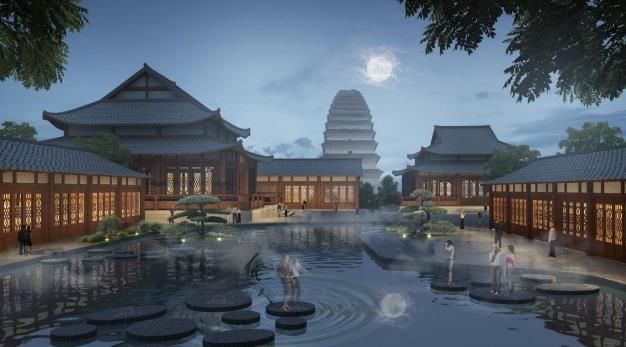
E3S Web of Conferences 189, 03017 (2020)                                                         https://doi.org/10.1051/e3sconf/202018903017
ASTFE 2020

                                           Table1. Analysis of soundscape at home and abroad

                                                                                                                   Sensory
                                                                                  Regional                                       Material
         number      name        picture       region      Pronunciation                          Interactivity   interactio
                                                                                   culture                                      properties
                                                                                                                      n

                                              U.S.A
                   3D Shell                  ( NASA                                                                vision
                                                                                 The sound of                                  Aluminum
            1       sound                                   Natural wind                          Participative
                                              orbital                              the sea                                       sheet
                    room                                                                                           hearing
                                             Museum)

                                             Britain                                                                            Anodized
                                                                                                      Non           vision
            2       Flame                   (Middlesbr      Natural wind        Middles Castle                                  aluminum
                                                                                                  Participative    hearing
                                             ough)                                                                                 plate

                                             Germany                                                              Vision,
                   The fallen                                                      Jewish
            3                                (Berlin       Human walking                          Participative   hearing,     Sheet metal
                    leaves                                                        Memorial
                                            Memorial)                                                              touch

                                               Japan          Steel pipe
                    A chair                                                      Urban sound          Non           vision
            4                                                   Voice                                                          Metal tube
                    for ears                                                      collection      Participative    hearing
                                               (Park)       transmission

                                              Canada                                                              Vision,
                     Piano                                   Electronic             Park
            5                                                                                     Participative   hearing,        Metal
                     swing                    (park)         phonation          Entertainment
                                                                                                                   touch

                                              China                                                               Vision,
                     Floor                                   Electronic         Shopping malls                                  stainless
            6                                                                                     Participative   hearing,
                     piano                   (Yantai)        phonation            and parks                                       steel
                                                                                                                   touch

                                              China                                                               Vision,
                     Drum                                     Take the
            7                                                                   The Olympics      Participative   hearing,     Leatherwear
                     Wall                    (Xi'an)          initiative
                                                                                                                   touch

                    Music                     China          Electronic           Big Wild            Non           vision
            8                                                                                                                     Metal
                   Fountain                  (Xi'an)         phonation          Goose Pagoda      participative    hearing

                                                                           dynamic situation, comprehensively stimulating people's
      2.3. Trend of interactive soundscape design                          multi-sensory experience, and enabling them to form the
      highlighting regional cultural characteristics                       interaction or resonance between the invisible landscape
                                                                           culture and their own emotions in the specific cultural
      The concept of interaction originated from the interaction
                                                                           context of historical sites.
      between human and computer in 1960s. With the
      development of interaction technology, the people-
      oriented industrial design thinking mode enlarges the                3 Soundscape cultural elements extrac-
      definition and application scope of interactive design.              -tion at Small Wild Goose Pagoda
          The human-landscape interaction in soundscape
      includes the “invisibility” and “spatialization” of the
      interactive interface and the “time dimension” during                3.1. Soundscape cultural origin of Small Wild
      practice. This “human-sound-field” interaction creates a             Goose Pagoda

                                                                   2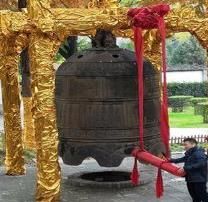
E3S Web of Conferences 189, 03017 (2020)                                                              https://doi.org/10.1051/e3sconf/202018903017
ASTFE 2020

      Small Wild Goose Pagoda is an artistic heritage of                       of man and nature”. For example, the existing bells in the
      Buddhist architecture of the Tang Dynasty (618-907).                     pagoda were made of bronze, on which were decorated
      Bell sound, as one of the most common sounds in                          different symbols. These bonze bells with low luster
      Buddhist culture, has special meanings. The bell sound at                reflect a sense of simplicity and solemnness, together with
      the Small Wild Goose Pagoda was regarded as one of the                   the stone steles and ornaments displayed in the pagoda,
      Eight Eight Outstanding Views of Ancient Chang’an by                     bringing us the strength of history. As shown in Figure 2.
      Zhu Jiyi, a poet of the Qing Dynasty (1636-1912), and it
      was named as “Yanta Morning Bell (meaning the morning
      bell chime sound at the Small Wild Goose Pagoda)”. This
      is a typical soundscape in the early stage that we get to
      know.

      3.2. Color elements extracyion

      Built in the Tang Dynasty, the Small Wild Goose Pagoda
      was featured with typical color characteristics of that
                                                                                     Fig. 2. Texture of materials in the Small Wild Goose Pagoda
      period. People in the Tang Dynasty preferred pure natural
      mineral color. The direct use of natural mineral color in
      works could manifest a sense of heaviness, showing a                     4 Multi-dimensional interactive expres-
      feeling of solemnness and the beauty of natural simplicity.              -sion of soundscape at Small Wild
      As shown in Figure 1.
                                                                               Goose Pagoda

                                                                               4.1 Subjective sound environment perception
                                                                               mechanism of Small Wild Goose Pagoda

                                                                               The perceptual evaluation of sound environment is one of
                                                                               the elements of soundscape design, which is also the
                                                                               biggest difference from the traditional sound research [5].
                                                                               Therefore, we carried out a walking perception
      Fig. 1. color extraction of cultural elements of little wild goose       experiment in the environment of “Yanta Morning Bell”
                                   pagoda                                      to explore people's actual feelings when immersed in the
                                                                               environment. We analyzed the collected “feeling
      3.3     Pattern elements extraction                                      vocabulary” in factor analysis method to summarize the
                                                                               factors that brought the public feelings among people [6].
      As one of the symbolic cultural signs of the Small Wild
      Goose Pagoda, the bell sound has irreplaceable emotional
                                                                               4.2 Collection of audiences’ perceptions
      meanings to people. We extracted patterns on existing
      bells in the Small Wild Goose Pagoda. See Table 2 for                    We have collected the adjectives used by people to
      details.                                                                 describe their feelings to the “Yanta Morning Bell”
                                                                               through literature inquiry and audience interview. The 7-
                      Table 2. Pattern extraction on bell
                                                                               Point Likert Scale was adopted to make a first-stage
            Pattern        Pattern       Combined
                                                                               analysis to the perceptual vocabulary. Based on the
                                                             Moral             correlation degree of semantics and words, there were 1,
            picture       extraction       form
                                                                               2, 3, 4, 5, 6, and 7 points, with the two ends referring to
                                                                               “inconsistent” and “very consistent”. It can be seen from
                                         Wave type          glorious
                                                                               the rotated component matrix below that the 13 sound
                                                                               perception words were classified into four categories,
                                                                               namely, spectacular, harmonious, solemn, and ethereal.
                                           Scatter
                                            type
                                                        Good Fortune           Therefore, the soundscape design of Small Wild Goose
                                                                               Pagoda would be better to be “attached to” the large
                                                                               environment. See Table 3 for details.

      3.4     Textural elements extraction                                                  Table 3. Rotated component matrix

      Define abbreviations and acronyms the first time they are                                                         Ingredients
      used in the text, even after they have been defined in the
      abstract. Do not use abbreviations in the title unless they                                            1           2          3         4
      are unavoidable.As for the material texture, the Small                         Spectacular            .900
      Wild Goose Pagoda was mainly composed of natural
      materials because of traditional Chinese belief “the unity                    Magnificent             .854

                                                                           3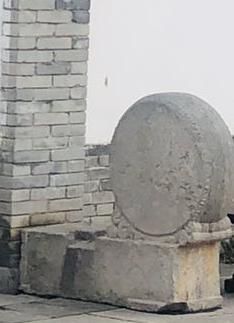
E3S Web of Conferences 189, 03017 (2020)                                                       https://doi.org/10.1051/e3sconf/202018903017
ASTFE 2020

             Pleasure           .674
            Prosperity          .604
             Harmony                       .848
             Towering                      .766
        Simple and elegant                 .662
               Low                                  .846
               Fresh                                .815
              Strong                                .535
               Dark                                 .505
             Ethereal                                       .778
               Clear                                        .759

      5 Multi-dimensional soundscape intera-                                 Fig. 3. Logical analysis diagram of participant behavior
      -ction   design at Small Wild Goose
      Pagoda

      5.1. Decision analysis on soundscape design
      at Small Wild Goose Pagoda

      Through analyzing the cultural contacts of the Small Wild
      Goose Pagoda, the soundscape design was considered to
      reflect a certain sense of ritual and involve some Buddhist
      elements, such as meditation in water. Audiences were
      expected to participate in the whole soundscape by
      ringing bells or stepping on slates to produce sounds, etc.,
      which can enhance the interaction and audience's
                                                                                Fig. 4. Design concept interactive contact diagram
      enjoyment. On bells, the carriers of bell sound, we can
      draw decorative patterns with the typical cultural
      characteristics of the Small Wild Goose Pagoda, such as             5.2. Design description
      the image of the Pagoda or patterns used to be cast on bells,
      etc., which will bring audience a strong visual impact. The         The soundscape design at the Small Wild Goose Pagoda
      multi-dimensional interaction design involving vision,              takes the bell as the prototype and is decorated with
      hearing and touch, etc., can create a historical and cultural       elements relevant to the Tang Dynasty to enhance the
      atmosphere in rituals and sound, which may leave a sound            visual cultural impact. The bell is placed in a landscape
      environment in audience's memory and enhance their                  garden that highlights the Zen culture of Buddhism to
      enjoyment. Through the multi-sensory immersed                       increase audience’s artistic conception. Because the
      experience, audiences can not only entertain themselves,            physical propagation of the bell sound affects the flow of
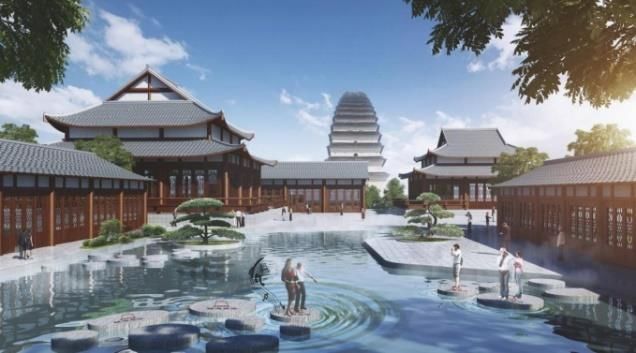
      but also understand the culture at the same time. Plan the          water, and the vibration of water causes different water
      tourist route as shown in figure 3.The design concept               waves, the sound will be visualized, and the audience can
      interactive contact is shown in figure 4.                           obviously feel the fluctuation of water when standing on
                                                                          stones in the water. The entire design enables the audience
                                                                          to not only hear the sound, but also see the sound and feel
                                                                          the sound, bringing the audience an immersive feeling, so
                                                                          that they can accept the cultural sense contained in the
                                                                          soundscape more easily. The perception flow chart is
                                                                          shown in figure 5 and the rendering is shown in figure 6.

                                                                                         Fig. 5. Design perception flow chart

                                                                      4
E3S Web of Conferences 189, 03017 (2020) https://doi.org/10.1051/e3sconf/202018903017
ASTFE 2020
construction,Accounting Monthly.vol. 18,pp.124-
130,(2019)
During the day
Night
Fig. 6. Design rendering
6 Conclusion
The multi-dimensional soundscape interaction design at
Small Wild Goose Pagoda attaches great importance on
culture promotion. Comparing multi-sensory stimuli with
people’s cultural contacts of the Small Wild Goose
Pagoda, the design meets the audience's different needs
and increase the uniqueness of the soundscape. Based on
the analysis of audience's perception, we can improve the
cultural attributes in multi-dimensional interaction design
of soundscape by grasping the cultural contacts of the
Small Wild Goose Pagoda and incorporating multiple
senses.
References
1. Zhang Deshun. Research and development of sound
landscape abroad and Its Enlightenment to China,
Journal of Tianjin Urban Architecture Institute.vol.
1,pp.6-9,(2013)
2. Li Guoqi. Soundscape announcement sound
landscape research, Journal of Beijing Union
University.vol. 1, pp.97-99,(2001)
3. Xian Yongjun. The significance and construction
method of sound landscape,Interior design and
decoration.vol. 5,pp.187,(2016)
4. Wang Kexin. Study on the experience of sound
landscape, M.S. thesis.Hubei Institute of Fine
Arts,Wuhan,China,(2016)
5. Zhang Dongxu. Soundscape in han Chinese
buddhisttemples,Ph.D. dissertation,Harbin Industrial
University,Harbin,China ,(2015)
6. Zhang Dahai. Factor analysis and entropy method for
environmental evaluation of our past
5You can also read


