MALAYSIA'S SOUTHERN GATEWAY - JOHOR PORT AUTHORITY GREEN PORT INITIATIVES IN JOHOR
←
→
Page content transcription
If your browser does not render page correctly, please read the page content below
MALAYSIA’S SOUTHERN GATEWAY
                           JOHOR PORT AUTHORITY

GREEN PORT INITIATIVES IN JOHOR
MR. MOHD ZAHARI BIN MOHD RUSJUNA
SCIENCE OFFICER
JOHOR PORT AUTHORITY
zahari@lpj.gov.my
019-7905879 / 07-2534039

                                       JOHOR PORT AUTHORITY
PRESENTATION SCOPES
INTRODUCTION OF JOHOR PORT AUTHORITY (JPA)
HISTORY
VISION & MISSION
FUNCTIONS
LOCATION
PORT LIMITS
PASIR GUDANG PORT (JPB)
PORT OF TANJUNG PELEPAS (PTP)
ENERGY, OIL & GAS HUB
PRIVATE JETTIES
GREEN PORT INITIATIVES
JPA GREEN PORT POLICY
BASELINE STUDY OF BALLAST WATER MANAGEMENT
THE STUDY OF FUEL QUALITY OF SHIPS IN PORTS
ENERGY, ELECTRICITY AND FUEL SAVING INITIATIVE
ENVIRONMENTAL INITIATIVES
JOHOR PORT AUTHORITY
•   Renowned Regional Port Industry
     – Strategically Located Between Main Shipping Line
     – Connecting East-West Trading
     – Natural Draught
     – Connecting To Various Ports Around The World

•   Developing Economic Corridor
     – Iskandar Malaysia & Economic Transformation Program
     – Rapid Growth of Economic Corridor
     – Facilitate High Income Nation

                                      •   Malaysia Trading Gateway
                                          – Modern and Efficient Transportation Network
                                          – Linking to all industrial estate withing Johor and
                                            Peninsular Malaysia

                                                     JOHOR PORT AUTHORITY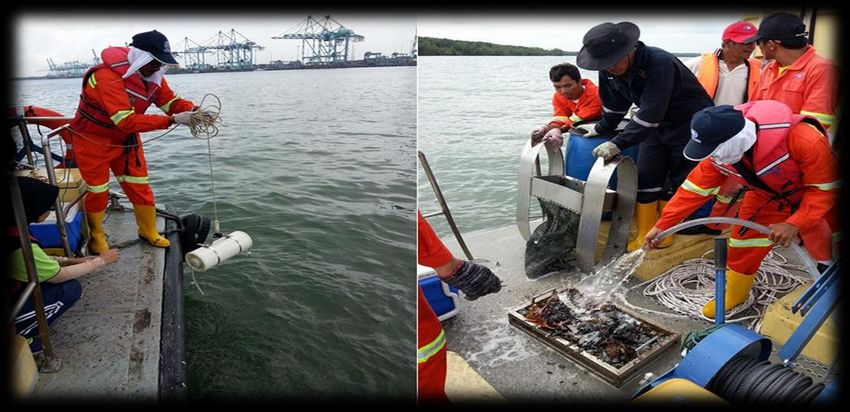
PRIVATE JETTIES

          JOHOR PORT AUTHORITY
1976   Establishment of Johor Port Authority (JPA) Under Port Authorities Act 1963

1977   Operation started & gazette as free trade zone, first port received such title in
       Malaysia

1993   Corporatization of JPA, function changed as Regulatory Authority

1995   Privatization of Pasir Gudang Port to Johor Port Berhad (JPB). Second port started
       construction

1999   Port of Tg Pelepas (PTP) started operation

2012   Development of Oil & Gas Terminal in Tanjung Bin & Pengerang

                                                 JOHOR PORT AUTHORITY
VISION
 TO BE THE LEADING PORT AUTHORITY DRIVING JOHOR AS THE
                PREFERED PORT OF CHOICE

                         MISSION
TO REGULATE AND FACILITATE WITH PROFESIONALISM, INTEGRITY
    AND COMMITTED IN SUPPORTING THE ADVANCEMENT OF
  MARITIME INDUSTRY TO ENHANCE THE COMPETITIVENESS OF
                     PORTS IN JOHOR

                              JOHOR PORT AUTHORITY
As a regulatory body, JPA is responsible:

1.To ensure that port operations follow the rules
  and regulation laid down by the government;
2.To ensure that security in port operations are as
  specified in the relevant acts and areas of
  authority;
3.To act as a landlord in ensuring that the land is
  properly used;
4.To control port tariffs imposed by port
  operators on all port users;
5.To set standard of ports performance;
6.To facilitate trade and promotion campaign;
7.To regulate companies runs maritime related
  services within port area;
8.To maintain high competency of pilots serving
  with port operators;
9.To regulate activities and development of
  private jetties along Port Water Limits.

• Port Authorities Act 1963
• Privatization Act 1990
• Free Zone Act 1990
• Free Zone Regulations 1991
• JPA By-Laws 1979
• JPA (Tanjung Pelepas) By-Laws 2000
  International Act / Regulation / Code
  (IMDG Code, ISPS Code, etc)

                                  JOHOR PORT AUTHORITY
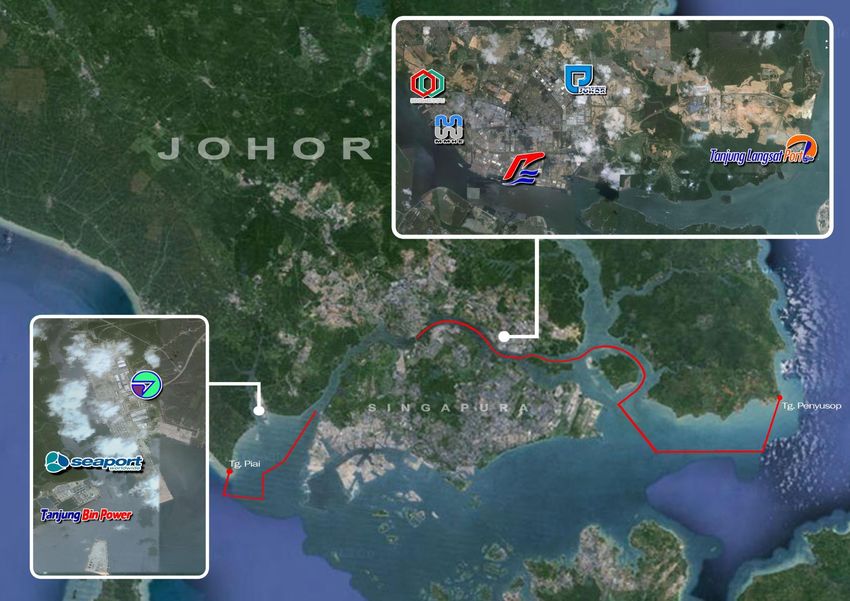
PENGERANG INTERGRATED
          PETROLEUM COMPLEX

JOHOR PORT AUTHORITY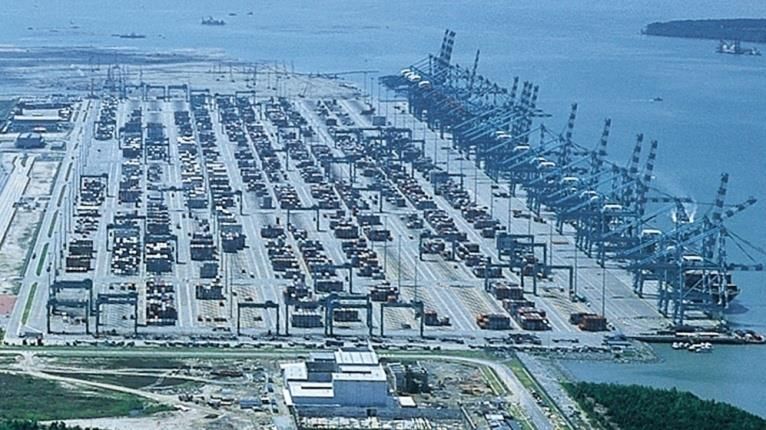
FROM CAUSEWAY TO TG.PENYUSOP
FROM SECONDLINK TO TG.PIAI
Multi-purpose Port
1000 acres of port area
5.5km – 25 wharves
Draught - 6m-13.8m
Annual capacity of 40 million
matric tonne
Container capacity of 1.2 million
TEU
2013 Statistics
Total Cargo Handling 26,979,880 MT
Total Container Handling 757,023 TEU
Total Number of Ship Call 4,133
• World Biggest Palm Oil Exporting Port
• Ranked 7th From 35 LME Cargo Port
JOHOR PORT AUTHORITY Transhipment Port
2000 acres of port area
5km - 14 berth
Draught – 16m-19m
Annual Capacity of 8.4 mil TEU
2013 Statistics
Total Container Handling 7,627,832.75 TEU
Total Number of Ship Call 4,793
• Ranked 19th in The Top 50 World Container Port
• One of 5 Ports Capable Of Handling Triple E Vessel
JOHOR PORT AUTHORITYRank Port, Country Volume 2012
(Million TEUs)
1 Shanghai, China 32.53
2 Singapore,Singapore 31.65
CONVENTIONAL (Million FWT)
3 Hong Kong, China 23.10
4 Shenzhen, China 22.94 Singapore 538.0
5 Busan, South Korea 17.04 Port Klang 195.8
6 Ningbo-Zhoushan, China 16.83
Ports of Johor 142.1
7 Guangzhou Harbor, China 14.74
8 Qingdao, China 14.50
9 Jebel Ali, Dubai, UAE 13.30
10 Tianjin, China 12.30
11 Rotterdam, Netherlands 11.87 CONTAINER (Milion TEU)
12 Port Klang, Malaysia 10.00
Singapore 31.6
13 Kaohsiung, Taiwan, China 9.78
Port Klang 10.0
14 Hamburg, Germany 8.86
15 Antwerp, Belguim 8.64 Ports of Johor 8.5
16 Los Angeles, U.S.A. 8.08
* Port Klang Authority, Maritime And Port Authority of Singapore
17 Dalian, China 8.06
18 Keihin ports, Japan 7.85
19 Tanjung Pelepas, Malaysia 7.70
20 Xiamen, China 7.20
* Top 50 World Container Port, World Shipping Council JOHOR PORT AUTHORITY2,100 MW 3M CBM 2M CBM 5M CBM
1.    Malakoff Tg. Bin
                  Power Plant
            2.    ATT Tg. Bin
            3.    Petlog Sdn Bhd.
            4.    Kelana Megah Sdn
                  Bhd
            5.    Idemitsu Chemicals
                  (M) Sdn Bhd
            6.    Malaysia Marine
                  Heavy Engineering
                  (MMHE)
            7.    Tenaga Nasional
                  Bhd (TNB)
            8.    Grand Banks Yacht
                  Sdn Bhd
            9.    Concrete
                  Engineering
                  Product Sdn Bhd
            10.   Mohd bin Long
            11.   TJ & TJ Sdn Bhd
            12.   Belungkor Services
                  Sdn Bhd
            13.   Image Hexa Sdn
                  Bhd

JOHOR PORT AUTHORITY
GREEN PORT INITIATIVES
JOHOR PORT AUTHORITYJohor Port Authority (JPA) Green Port Policy
(2014 – 2020)
• General guide for all port operators in moving towards a green port environment.
• The Green Port Policy has been identified as one of the Key Performance Indicators
(KPI) for creating a safe and health port working environment under JPA’s Strategic
Plan 2013 - 2020.
• The Green Port Policy acts as a standard document for the integration of
environmental sustainability principles and initiatives to guide business decisions,
development and operations towards achieving a sustainable port development
and operation.
• The Green Port Policy outlines some simple principles, strategies and practices in
areas where port development and operation can be both environmentally
friendly and commercial viable.
• The Green Port Policy suggests some proactive approaches and simple solutions
where impacts on the local community and the environment can be better
managed.
• The POLICY guiding principles are based on 3 main elements, which is
Environment, Community Engagement & Promote Sustainability.
JOHOR PORT AUTHORITYBaseline Study of Ballast Water Management
• In the collaboration with University Malaysia Terengganu, Malaysia (UMT), JPA
conducted the study at two designated ports water front (1st phase);
a) Johor Port Berhad at Pasir Gudang, Johor (28-29 May 2014)
b) Port of Tanjung Pelepas at Gelang Patah, Johor (30 May – 1 Jun 2014)
• The Objectives:
a) To provide a baseline assessment of native, and non-indigenous species.
b) To determine the distribution and relative abundance of a limited number
of target species in shipping ports and other high risk points of entry for
non-indigenous marine species.
c) To determine the physico-chemical environment .
d) To determine the effect of the monsoon on species abundance and
distribution.
JOHOR PORT AUTHORITYBaseline Study of Ballast Water Management (cont)
• The Scope of Study:
a) Physical parameters in seawater samples and wind.
b) Heavy metals in sediment samples.
c) Hydrocarbons (Oil and Grease and Total Petroleum Hydrocarbon) in
sediments sample.
d) Marine biological parameters in seawater and sediment samples.
e) Bacteria in water sample.
• Next Action : Will conduct 2nd phase of baseline study on Jan 2015.
JOHOR PORT AUTHORITYBaseline Study of Ballast Water Management (cont)
JOHOR PORT AUTHORITYThe Study of Fuel Quality of Ships in Ports
• In the collaboration with University Technology Malaysia (UTM), JPA will conduct
the study of fuel quality of ships berthing in ports (Pasir Gudang Port & Port of
Tanjung Pelepas).
• Duration : 6 months
• The objectives :
a) To comply with MARPOL Annex VI – Regulations for the prevention of air
pollution from ships.
b) To perform a survey on the various types of shops coming to ports
considering its age, size, vessel and engine type, usage of fuel, time for
cruising, maneuvering and berthing.
c) To predict the emissions (NOx, SOx, CO2, HC and PM) by the various ships
during cruising, maneuvering and berthing at ports.
d) To set new regulations / policy / for further study on emission reduction
strategies such as incorporation of shore power to reduce the use of
diesel generations by ships in the port area.
JOHOR PORT AUTHORITYEnergy, Electricity and Fuel Saving Initiative
1) Variable Refrigeration Flow (VRF) Air-Conditioner System
• VRF system installed as cooling system in building for its energy and cost saving
benefits.
• Use R410A refrigerant as the cooling or heating medium, VRF ensure no
greenhouse gases emitted to environment.
• VRF has several features such as heat recovery, reduced suction line copper piping,
digital compressor and condenser outdoor fans which help the system to use less
energy.
• Its heat recovery technology allows individual indoor units to heat or cool as
required and save up to 55% of energy.
• While digital compressor and condenser outdoor fans will reduce the running
ampere mean the way reduces energy load.
• VRF had successfully installed at PTP Main Building and New PUB Building. This
VRF system planned to be installed at new Engineering Workshop area.
JOHOR PORT AUTHORITYEnergy, Electricity and Fuel Saving Initiative (cont)
2) Quay Crane Lighting Project
• The project includes the installation of energy saving lights which is capable of
ensuring a more efficient and effective use of all lights emitted towards a safe
handling of goods and equipment that exist in PTP.
• At the same time it adds value by reducing carbon dioxide (CO2) emissions,
reduces costs and enhances performance and productivity through the application
of efficient lighting.
• This project involves Prismalence Booster 210w for Quay Crane (QC) Floodlights
and Prismalence Booster 315w for High Mast Lights.
• Estimated 4000 tonnes of CO2 emissions will be reduced per year.
• From data of June, a massive difference in consumption of electricity by
Prismalence lighting where 76% of reduction recorded.
JOHOR PORT AUTHORITYEnergy, Electricity and Fuel Saving Initiative (cont)
3) Retrofitted of RTG to E-RTG
• This on-going project started in December 2011 with aims to reduce consumption
of diesel as well as to reduce costs and numbers of CO2 emitted.
• There are ninety (90) RTG had been retrofitted from RTG, that use diesel to E-RTG
that use electricity. In addition, 26 of E-RTG branded Terexs been purchased to
stimulates this project.
• Forty percent (40%) reduction in diesel consumption had been recorded this year
if compared to last year.
JOHOR PORT AUTHORITYEnergy, Electricity and Fuel Saving Initiative (cont)
4) LED System
• Established LED system at BT3 and BT4( Non-Edible Cargo Jetties) of JPB.
• In the planning to convert with LED system for entire port areas.
JOHOR PORT AUTHORITYEnvironmental Initiatives
1) Adopting “ Merambong Island” as marine sanctuary area
• Adopting “Merambong Island” as marine sanctuary area was an initiative mooted
by PTP in view of ensuring the natural marine habitat surrounding the island that
includes corals and fauna is well preserved and to avoid its depletion due to the
port expansion development works taking place at PTP. PTP have contributed RM
60,000 to the Malaysian Nature Society of Johor for this purpose against
environmental issues pertaining to the above.
JOHOR PORT AUTHORITYEnvironmental Initiatives (cont)
2) Collaboration with Malaysian Nature Society of Johor (MNSJ)
• PTP has been collaborating with Malaysian Nature Society of Johor (MNSJ) since
2007 to preserve including create awareness on the importance of environment
within Pulai River. Amongst initiatives which have been organized with MNSJ are:
a) Launching of coffee table book called “Echoes of Life” which illustrates the
marine life of the ecosystem that live along the banks of Pulai River. This
fully illustrated coffee-table book with full-colored photographs of the rare,
the common and the unusual took 2 years to complete and YAB Menteri
Besar Johor was honored to launch it in February 2010.
b) PTP has organized several expeditions to Merambong Island including
scientific expedition. This expedition demonstrated full cooperation
between the NGOs, Government, institution and Government’s agencies
undergoing scientific study on Merambong’s marine life.
JOHOR PORT AUTHORITYEnvironmental Initiatives (cont)
3) Beach Cleaning & Mangrove Planting
• Beach Cleaning & Mangrove Planting Tg Piai 2013 had been conducted on Thusday,
16 May 2013 as one of PTP CSR program for 2013 which focusing on environment.
The half a day program was held at Tg Piai National Park, Pontian. This was PTP’s
3rd year of organizing the mangrove planting and beach cleaning which
participated by officers from various government agencies such as Marine
Department, Department of Environment, Pontian District Department and Johor
National Park with an estimation of 200 participants were involved in this program.
JOHOR PORT AUTHORITYEnvironmental Initiatives (cont)
4) Environmental Quarterly Monitoring
JOHOR PORT AUTHORITYEnvironmental Initiatives (cont)
5) Waste Management
• Waste Management includes general and schedule waste
management. JPB & PTP’s direction in waste management is
inclined more towards recycling activity. They has successfully
established Schedule Waste Management System where
licensed schedule waste contractors by the Department Of
Environment are engaged in collecting, disposing or recycling
of schedule wastes. Waste management is all done in
accordance to the legal requirement.
JOHOR PORT AUTHORITYJOHOR PORT AUTHORITY
You can also read


