Multi-disciplinary Diagnostic Centre - UCLH Cancer Collaborative annual event
←
→
Page content transcription
If your browser does not render page correctly, please read the page content below
Multi-
         disciplinary
          Diagnostic
              Centre

          UCLH Cancer
    Collaborative annual
                   event
              26th June 2018

                Andrew Millar
Gastroenterologist and
         Hepatologist

                 Statement of Interests
 Shareholder in Medefer Ltd, Director of
   GI Diagnostics, Funding from Gilead,
Janssen and Norgine, Member of PCUK
                        Advisory Board
Background
Current cancer pathways are unsustainable and not fit for purpose
35000
Number of 14 day referrals by Providers - Rolling 3 years Key findings of 2ww
referrals
30000
25000 NICE guidance (NG12)
2ww pathways - 3% cancer
20000
conversion
2015
15000
2016
2017
10000 Most cancers (around 66%)
5000
are not diagnosed on 2ww
pathway
0
Barts Health Barking, Homerton Great Ormond Moorfields Eye North Royal Free Royal National University The Princess
NHS Trust Havering and University Street Hospital Hospital NHS Middlesex London NHS Orthopaedic College London Whittington Alexandra
Redbridge Hospital NHS for Children Foundation University Foundation Hospital NHS Hospitals NHS Hospital NHS Hospital NHS
University
Hospitals NHS
Trust
Foundation
Trust
NHS
Foundation
Trust
Trust Hospital NHS
Trust
Trust Trust Foundation
Trust
Trust Trust
A quarter (25%) diagnosed
on routine pathways
In the last 3 years 2ww referrals
have risen by 17% A fifth (21%) are diagnosed
via A&E
Source: Collated by Centre for Cancer Outcomes. In strictest confidence for NHS internal use only. CRUK website: 2
http://www.cancerresearchuk.org/health-professional/cancer-statistics/diagnosis-and-treatment#heading-Zero
What are MDCs?
MDC pathway: avoiding the hospital pinball machine

     What is an   1. MDCs - fast track diagnostic centres for patients with suspected cancer
      MDC?        2. MDC runs within a hospital and uses current hospital infrastructure

                  1.   CT
                  2.   Bloods
        Main      3.   Endoscopy
     Diagnostic   4.   Colonoscopy
        tests     5.   MRI
                  6.   PET CT
                  7.   ERCP

                  1. Named CNS contact for every patient from time referral is received
      Benefits
                  2. Fast access to diagnostics for patients with non-specific symptoms

                  1. If shown to be beneficial will be rolled out nationally
       Future
                  2. Opportunity to support more DIRECT and STRAIGHT TO TEST

                                                                                               3
Project overview
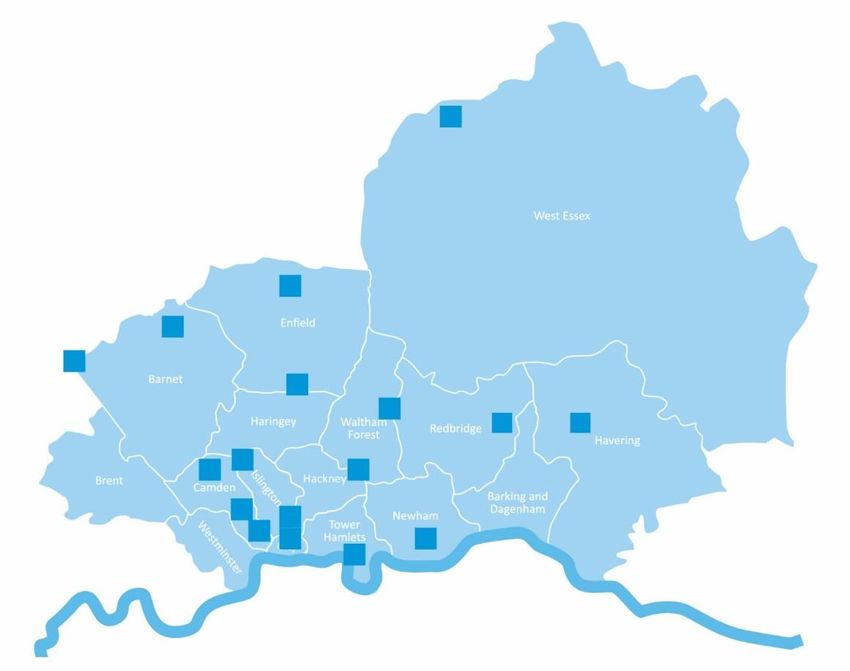
MDC referral criteria and geographic spread of MDC sites
Who to refer
EITHER Does not fit an existing 2WW
pathway or unclear which 2ww pathway
OR Are too unwell to wait for a 2WW North Middlesex
appointment - not needing admission
Royal Free
Barts Health BHRUT
1. New unexplained abdominal pain
2. Unexplained weight loss
3. Painless jaundice
4. New and persistent unexplained UCLH
nausea / loss of appetite
5. GP has concern /gut feeling of an
underlying gastrointestinal (GI) cancer
4Project overview
MDCs align with national and local strategy
Potential Area of
Aligns with Aligns
Rationale national with NCL
benefits of MDCs benefit strategy? strategy?
Diagnosis •Rapid access to diagnostics
within 28 days •Improves patient experience
•Earlier diagnosis in pathway increases time tor
Improve
quality and
Aid treatment
within 62 days
treatment decisions and delivery
•Will improve survival rates
outcomes
Reduction in
A&E cancer
•Cancer diagnosis following ED presentation has
poorer outcome, even when controlling for other
factors1
diagnosis
•Better use of hospital resources
Improve Diagnosis
patient •Patients benefit from CNS support
through
experience appropriate •Better access to diagnostic tests and access to
setting specialist cancer and holistic support
Reduction in •Reduce number of GP visits
Reduction in
cost
number of
wasted
•Reduce referrals to incorrect pathways
•Meets needs of primary care
consultations
5
1 - Plaser TR et al 2013; Schneider C et al. 2013Project overview
Case study
Patient referred in June 2017
1 Referral received
Day 0-1
2 Referral triaged by CNS
3 Patient seen in MDC Day 3
CT
Diagnostics
4 ERCP / bile duct brushing
Day 3-5
Upper GI MDT
4 Patient informed of diagnosis Day 9
Diagnosed
within 28 days:
5 Imaging sent to RLH for discussion
treated in 41
days
6 Patient seen by surgeon and informed of Day 9-41
care plan
7 Surgery
6Patient experience
Patient case study
Patient perspective
‘I had a routine blood test for diabetes at my GP surgery and then received a call
from the practice to say I was very anaemic,’
GP
‘My GP was concerned that it could be something serious, even though I felt fine,
and she insisted on referring me to the multidisciplinary diagnostic centre at
UCLH for a fast diagnosis.’
‘At the MDC I met Vicky, the nurse, who asked me some questions and arranged
for me to have a CT scan as well as an endoscopy and colonoscopy the following
Hospital week. The consultant told me that I had bowel cancer and I would need an
operation. The operation was successful – I was lucky that the cancer hadn’t
spread to any other parts of my body and I didn’t need chemotherapy afterwards.’
‘I had no outward symptoms of bowel cancer and feel incredibly lucky that a
Overall experience routine blood test flagged that there could be a problem to my GP. I am so
of MDC service grateful to the MDC service at UCLH for being available to make sure I could
receive a speedy diagnosis and get my cancer treated quickly.’
7Patient experience
Patient data
90 80% of patients are extremely
80 likely to recommend the MDC
70 service to family and friends
60
82.8 % felt they received their
50
first hospital appointment as
40
soon as was necessary
30
20 89.3% felt their test results
10 were explained in a way they
0 could understand
Extremely Likely Neither Don’t Not likely 78.6% felt they waited a
likely likely or know
unlikely reasonable amount of time
while attending clinics and
appointmentsData
Referral numbers and reason (April 17 – April 18)
50 250
45
40 200
35
30 150
No of patients
25
100
20
15
50
10
5 0
0
Apr- May Jun- Jul- Aug Sep- Oct- Nov Dec Jan- Feb- Mar Apr-
17 -17 17 17 -17 17 17 -17 -17 18 18 -18 18
UCLH 14 12 22 19 24 26 24 35 30 36 42 29 45 UCLH NMUH BHRUT RFH
BHRUT 0 1 3 2 12 9 4 16 10 8 15 22
NorthMid 0 1 1 8 4 9 12 13 16 19 20 24 9 Total referral rate on an upward trend
Royal Free 0 0 0 0 0 0 0 0 0 0 9 12 20 Highest proportion for Weight loss:
51.4%
Second highest for Abdominal pain:
Source: UCLH, North Middlesex , Royal Free and BHRUT data
33.47 %
9Data
Diagnosis and cancer conversion rate
Diagnosis
140
120
100
80
60
40
20
0
Cancers Non cancer All Test normal
North Mid 6 11 75
BHRUT 5 41 42
UCLH 14 131 36
Royal Free 0 1 7
North Mid BHRUT UCLH Royal Free
Cancer conversion rate
Site
Number of Cancer conversion Time to cancer Cancer conversion rate at has increased for
referrals rate diagnosis (mean)
North Mid from 3.14 % to 4.41%
UCLH 406 3.44% 35.92
North Mid 136 4.41% 25.3 Time to cancer diagnosis at ULCH has also
BHRUT 113 4.42% 16 improved from 37.1 to 35.92 days.
Royel Free 41 0.00% 0
Source: UCLH, North Middlesex , Royal Free and BHRUT data
10MDC outcomes
Diagnosis of MDC patients
Cancer Diagnosis Non-cancer Diagnosis
30 Broad Description N %
Diseases of the digestive system 166 39
Symptoms, signs and abnormal clinical and laboratory findings,
25 44 10
not elsewhere classified
Diseases of the respiratory system 42 10
Diseases of the genitourinary system 31 7
Percentage
20
Neoplasms (benign) 28 7
Diseases of the musculoskeletal system and connective tissue 20 5
15 Diseases of the circulatory system 19 5
Certain infectious and parasitic diseases 14 3
Endocrine, nutritional and metabolic diseases 14 3
10
Mental, Behavioural and Neurodevelopmental disorders 14 3
Diseases of the blood and blood-forming organs and certain
13 3
disorders involving the immune mechanism
5
Congenital malformations, deformations and chromosomal
6 1
abnormalities
0
Diseases of the nervous system 4 1
Diseases of the skin and subcutaneous tissue 2 0
Injury, poisoning and certain other consequences of external
2 0
causes
Factors influencing health status and contact with health services 2 0
Grand Total 421 100
11Data
Diagnostic tests performed in MDC (April 17 – June 18)
400
UCLH
350
BHRUT
300 North MID
Royal Free
250
Total
200
150 CT most common
diagnostic 49 %
100
followed by
50
Endoscopy 25%
0
CT Endo Colon USS MRI CT colon Chest X-ray CT Colon least used
Site CT Endo Colon USS MRI CT colon Chest X-ray diagnostic test 1.85%
UCLH 227 78 57 25 10 8 0
BHRUT 51 52 19 22 9 1 7
North MID 70 50 20 9 3 4 26 Data exclude blood
Royal Free 32 34 6 8 0 6 0 tests
Total 348 180 96 56 22 13 33
Source: UCLH, North Middlesex , Royal Free and BHRUT data
12Embedding the patient voice
What do we need to drive patient and user involvement?
Develop feedback
•Ongoing patient feedback
methods
Patient
•Patient representative on Steering Group
involvement in
involved in strategy decisions
strategy Continuous
improvement
Patient
•Patient representative on Steering Group
involvement in Develop
involved in operational decisions Shared
operations feedback
learning
•Enable organisational learning of patient methods
Organisational Embed the
involvement through promotion of
learning patient
changes and success
voice
•A clinician-led approach to sharing patient Patient
Organisation
involvement developing best clinical using involvement
Shared learning learning
of informatics with emphasis on learning in strategy
Patient
and knowledge transfer
involvement
in
Continuous •Involve patients in continuous operations
improvement improvement by implementing agreed
changes and then assess impact
13Key learning points
What have we learnt?
Overarching
learning theme Area of learning Rationale
•Key staff involved from conception
Change driven by
•Open communication and collaboration
staff
Culture •Promotion of early successes
•Buy in from Trust executives, clinical leads, matrons, admin
Led by key staff and primary care
stakeholders
•Strategic influencers promoting the project
Training, •Ensure the necessary talent is available at the right time
development and
education •Necessary to deliver an effective and productive team
Workforce
Flexibility and •Open to new ways of working
agility •Aids costs efficiencies
Measurement •Enables monitoring of progress during the project
metrics •Provides evidence to quantify impact
Analytics •Promotion of success from project encourages future
Sustainability of adoption of programmes
change
•Sharing of best practice
14The Future
How MDCs / RADICs support for the Future NHS
Overarching
learning theme Development area Action
•Expand to include all suspected cancer not fitting 2WW
Function •Increase A&E referrals
Strategic Fit
•Develop strategies for self-referral, pharmacy referral
•Integrate with primary care DTT testing – patient support for
Integration with test and if positive result
Primary Care
•Potential for primary care clinicians to be MDC clinicians
Workforce
Training and •Define training required for MDC clinician and CNS
development •Structure of whole MDC team (Danish model)
Growth and •Focus for research into biomarkers
learning •Test bed for use of AI in diagnosis
Analytics
Economic
•Ensure MDC delivers value for money
Evaluation
15You can also read


