NAVIGATING INFLATION - JULY 2019 - AMCHAM EGYPT INC
←
→
Page content transcription
If your browser does not render page correctly, please read the page content below
NOT FOR SALE
         www.amcham.org.eg/bmonthly

                                           JULY 2019

NAVIGATING
INFLATION
Firms and consumers grapple with costs

ALSO INSIDE
        3D PRINTING EVOLVES IN EGYPT
▲ ▲ ▲
▲ ▲ ▲

        RETURN OF CAIRO BIENNALE
        ESCALATING EXPORTS



JULY 2019
         VOLUME 36          |       ISSUE 7

 Inside
 8 Editor�s Note
 10 Viewpoint

 The Newsroom
 12 In Brief
 A thumbnail view of the top
 monthly news.

 Emerging Trends
 14 3D finds foothold
 Research leads to local manufacturing

 20 InDepth
 Fixing export support
 Who benefits from subsidy
 program?

 Investor Focus
 24 Our analysts assess
 exporters

 Market Watch
 38 A mixed bag after slow
 Ramadan

                                              © Copyright Business Monthly 2018. All rights reserved. No part of this magazine may be reproduced without the prior written consent of the editor.
                                                       The opinions expressed in Business Monthly do not necessarily reflect the views of the American Chamber of Commerce in Egypt.

4•   Business Monthly - JULY 2019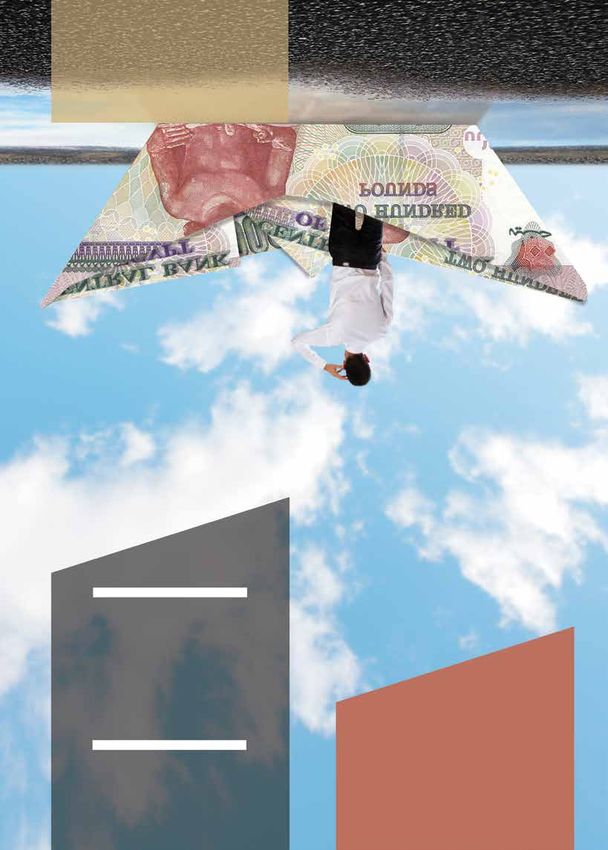
From Buildings to LANDMARKS
In ContrackFM, we believe in the detail. We believe in
our people and we believe in consistent quality of service
delivery that allows the transfer of assets into landmarks.
Founded in 2004 as one of its kind in Egypt, ContrackFM
provides total and professional integrated Facilities
Management Services to large and specialized intelligent
high-tech buildings.
We customize our services and design them to specifically
meet the bottom line business and commercial needs
of our esteemed clients. We provide best practice
innovative value for our clients, driven with optimum cost
considerations that best suit the asset in its operating
context.

                                                              Building 2 Mivida Business Park, Road 90,
                                                              5th Settlement New Cairo, Egypt.
                                                              Postal Code: 11835
                                                              Phone: (+202) 24619278 / 79
                                                              Fax: (+202) 24619277
                                                              E-mail: info@contrackfm.com
                                                              Website: www.contrackfm.com
JULY 2019
          VOLUME 36          |       ISSUE 7

     Cover Story
     26 Caught in a Cost Crunch
     As power bills rise, inflation
     takes center stage
     Cover Design: Nessim N. Hanna

     At a Glance
     34 Decoding Inflation Figures
     A story in infographics

     American Impact
     36 Two Way Street
     Egyptian firms look at investing
     in the USA.

     Executive Life
     40 Dining Out
     Beeja replaces Sequoia in Zamalek

     42 Cairo Biennale
     Seminal art show returns

              The Chamber
                           46 Events

               51 Exclusive Offers

                     52 Media Lite
                An irreverent glance
                         at the press

                                               © Copyright Business Monthly 2018. All rights reserved. No part of this magazine may be reproduced without the prior written consent of the editor.
                                                        The opinions expressed in Business Monthly do not necessarily reflect the views of the American Chamber of Commerce in Egypt.

6•    Business Monthly - JULY 2019

Editor’s Note

                                                                                              Director of Publications & Research
                                                                                              Khaled F. Sewelam
                                                                                              Senior Editor
                                                                                              Jacob Wirtschafter

                                                                                              Contributing Editors
                                                                                              Tamer Hafez

Preferred Problems
                                                                                              Kate Durham

                                                                                              Consulting Editor
                                                                                              Bertil G. Peterson

 W        e can notice improvements in our lives by measuring the weight of today�s
          worries with those that troubled us last month or last year.
 Brownouts were still a daily occurrence with continuity for lighting, air condition-
                                                                                              Writers
                                                                                              Ola Noureldin
                                                                                              Adam Skaria
 ing, and internet service a constant uncertainty threatening the ability to get work
 done or comfortably relax at home when I first arrived in Egypt in the summer of             Senior Art Director
                                                                                              Nessim N. Hanna
 2015.
    Today I�m more anxious about the fifteen percent hike in the monthly power bill           Senior Graphic Designer
 mandated both by the subsidy reduction and the need to pay my share of the billions          Emy Emile
 of dollars the government has invested in bringing new electricity plants online.            Graphic Designer
    I prefer 2019�s challenges to the 2015 situation.                                         Verina Maher
    A dynamic of �preferred problems� informs our cover story by Contributing
 Editor Tamer Hafez.                                                                          Advertising & Business Development
                                                                                              Director
    The resilient pound and realistic electricity bills are resulting in an inflationary
                                                                                              Amany Kassem
 cost crunch for Egyptian manufacturers and consumers, with both constituencies
 finding ways to cope.                                                                        Advertising Coordinator
    Hafez also gives us an accounting of how an improved balance of payments envi-            Lamia Seleit
 ronment allowed the government to re-calibrate its previously underfunded export             Circulation Coordinator
 subsidy program and re-envision it as a multiplier for job creation and industrial           Ashraqat Helmy
 investment.
                                                                                              Photographers
    Indicators of Egypt�s economic resilience are illustrated by advances of local entre-
                                                                                              Soha El Gabi
 preneurs in adopting new technologies such as 3D printing, a development writer
                                                                                              Karim el Sharnouby
 Ola Noureldin details in her Emerging Trends article.                                        Said Abdelmessih
    We close out this issue with the return of the Cairo Biennale after an eight-year
 hiatus, signaling a revival of Egypt as a hub not only for Middle East and North             Production Supervisor
 African business but as a global cultural capital.                                           Hany Elias
    May your most significant problem this summer be to find parking at the Opera             Market Watch Analyst
 House complex where Cairenes and jet-set culture vultures are flocking to Biennale           Amr Hussein Elalfy
 to see the 78 artists from 52 nations before the show closes in August.                      Chamber News Contacts
                                                                                              Nada Abdalla, Azza Sherif,
                                                       JACOB DANIEL WIRTSCHAFTER              Susanne Winkler
                                                                          SENIOR EDITOR
                                                              JWirtschafter@amcham.org.eg

                                                                                            U.S. address: 1615 H Street, NW • Washington, D.C. 20062
                                                                                            Please forward your comments or suggestions to the Egypt editorial office:
                                                                                            Business Monthly
                                                                                            American Chamber of Commerce in Egypt
                                                                                            33 Soliman Abaza Street, Dokki 12311 • Cairo • Egypt
                                                                                            Tel: (20-2) 3338-1050 • Fax: (20-2) 3338-0850
                                                                                            E-mail: publications@amcham.org.eg
                                                                                            www.amcham.org.eg/bmonthly

                                                                                            CTP and printing: Sahara Printing Company, SAE – Nasr City Free Zone

                                                                                                   @BusinessMonthlyEg         @BusinessMonthly          @BusinessMonthly

8•   Business Monthly - JULY 2019
Classic Fusion Ferrari GT 3D Carbon. Designed in collaboration with Ferrari. Three-dimensionnal carbon case inspired by the "Gran Turismo" universe. In-house chronograph UNICO movement. Leather on rubber strap. Limited edition of 500 pieces.
Viewpoint

                                   The Future of Work

                                   I
                                             n the academic world, June is usually a month of celebration and reflection.
                                             With the end of the year, graduates mark the successful completion of one phase
                                             in their lifelong learning journey and reflect on what to do next as they begin
                                             looking for employment opportunities and venture into an ever-changing global,
                                             dynamic and competitive marketplace. Last month, I enjoyed attending this
                                   year�s commencement ceremony at the American University in Cairo. We celebrated the
                                   graduation of over 750 future leaders, entrepreneurs and potential movers and shakers
                                   who together with their peers graduating from other universities across the country,
                                   hope to contribute to Egypt�s economy and future endeavors.
                                      Naturally, like other job seekers from around the world, our graduates vary in aspirations
                                   and career plans; as well as in the way they think about the type of work they want to do.
                                   However, in this time and age, they leave the university when the future of work is changing
                                   fast and is increasingly getting affected by the Fourth Industrial Revolution and its
                                   associated emerging innovative and collaborative technologies including artificial
                                   intelligence, robotics, data science, and the internet of things with several potential
                                   consequences and possible disruptions to the economy and the society. These
                                   developments are changing the nature of the jobs that we do and the way we do them.
                                      The change in infrastructure, organizational setup and even how the workplace itself will
                                   look like is coupled by changing habits, behaviors, and expectations from both employers
                                   and employees. Accordingly, in recent years, our young job seekers are increasingly
                                   pondering where to go and what to do; wondering how their career will evolve alongside
                                   digital transformation. Furthermore, business and industry leaders, policy-makers, and the
                                   society at large are raising questions about the strategic adjustments likely needed to
                                   accommodate the accelerated digitization in every sector from services to manufacturing.
                                      With every challenge faced, there is always an opportunity created. Consequently,
                                   digital transformation and its implications on the future of work have the potential to
                                   create a massive economic opportunity for Egypt, with enhancements for productivity
                                   and quality. This is especially true when the need is for creativity and innovation hence
                                   more human interaction in contrast to structured and machine-run operations.
                                   Agriculture, manufacturing, healthcare, energy, tourism, education, and transportation are
                                   all primarily reliant on social interaction even as they adopt digital automation.
                                      To reap the benefits from the transformation, Egypt must grow an ecosystem to develop
                                   a tech-savvy workforce, revamp processes and policies, and cultivate the will to depart from
                                   legacy systems while safeguarding the proper legal and regulatory environment.
                                      Digital transformation and the future of work undoubtedly offer a potential engine
                                   for economic development and growth as well as a platform for effectiveness,
                                   competitiveness and agility. This could be a game changer for Egypt.
                                      Next month, another viewpoint…
                                                                                                           SHERIF KAMEL
                                                                                                           President, AmCham Egypt

10• Business Monthly - JULY 2019
Musician. Actor. Director. Icon. For over
a decade, the ‘King of Asian Pop’
has pushed boundaries around the
world. From Taipei to Hollywood,
he is always ready to go where the
next challenge takes him. Some
are born to follow. Others are
#BornToDare
BLACK BAY
FIFTY-EIGHT
JAY CHOU
FELOPATEER PALACE
CIT Y STARS MALL , HELIOPOLIS , CAIRO T. 24802299 - JW MARRIOTT, MIRAGE CIT Y , CAIRO T, 24111444
WWW.FELOPATEERPALACE.COMTHE NEWSROOM
IN BRIEF
Egypt has cheapest taxi fares worldwide
Despite hikes in fuel prices, Egypt ranked once again as as Sweden $11.11 and France $11.21.
the cheapest place on the planet to hail a ride at the cost While in Britain, you can expect to pay $11.30 for the same
of just $0.95 for a 5km trip, according to research by distance. And the base fee for taxi fare in Britain is $3.32 � one
Taxi2Airport. of the highest prices recorded.
The base fee for taxi fare in some Egyptian cities can On the other side of the world, New Zealand is the priciest
reach lows of $0.24 for the first kilometer, and each fol- with a fare that is marginally higher than that in Britain, at
lowing kilometer priced at $0.15 $11.80. Austria $13.00, Belgium $14.46, the Netherlands $15.02
Egypt�s low fare for a 5km ride is followed closely by and Germany at $15.47.
India at $1.45, Thailand at $1.58 and Indonesia at $1.88. In However, the two most expensive countries to take a taxi
Malaysia, you can grab a 5km cab ride for $1.91. at are Japan � at the cost of $17.53 for just 5km � and
Rounding off the top ten cheapest countries is Turkey at Switzerland � at $25.42.
$2.51, followed by China $2.70, Argentina $2.73 and Viet- It�s not the first time that Egypt has been labeled one of the
nam � a cost of just $2.77, for a 5km taxi fare. cheapest countries in the world for taxi fares. In 2017, Cairo was
At the other end of the spectrum, taxi fares for a 5km named the city with the most affordable taxi service out of 80
journey are far more expensive in European countries, such cities worldwide, with a $0.55 cost for a 3km ride.
Comparing 5 km taxi fares
Egypt
India
$0.95 $1.45 Thailand Indonesia
$1.58 $1.88 Malaysia
$1.91
Sweden
$11.11
&
France
$11.21
Egypt automotive sales down 5% y-o-y in 4M2019
Total vehicle sales in Egypt fell 5 percent y-o-y to 46,589 vehicles automotive market after it sold 1,737 vehicles during 4M2019
in the first four months of 2019 �4M2019�, compared to 49,062 and BYD taking a 3.6 percent share with its 1,655 sold cars.
vehicles in the same period last year, according to figures from Japan�s Suzuki ranked ninth acquiring 3.4 percent market share,
the Automotive Information Council �AMIC�. selling 1,562 cars. Finally, Mitsubishi captured 2.75 percent with
Passenger car sales dropped 10 percent y-o-y to 31,349 units, its 1,259 purchased vehicles.
with Chevrolet topping the charts with a 24.9 percent market Bus sales, however, climbed up 8 percent y-o-y to 4,504 com-
share and a total of sold 11,500 cars. pared to 4,189 during the first four months of the year, as truck
Nissan is among the ten top-selling brands holding a 12.6 per- sales also hiked 7 percent y-o-y reaching 10,589 units versus
cent market share as it sold 5,856 cars during 4M2019, followed 10,062 the same period last year. Sales of locally assembled cars
by Hyundai at 5,360 vehicles, or 11.5 percent share of sales, Toy- dropped 11.2 percent to 23,512 during the first four months of
ota at 4,178 vehicles or 10 percent market shares, and Renault the year compared to 26,483 a year earlier.
having sold 2,378 cars, with a 5.1 percent market share. The local automotive industry signaled a recovery last
Peugeot came in sixth place as it sold 2,335 cars and owned a year following a slump that was exacerbated by the EGP
5 percent share of sales. Kia caught a 3.7 percent share in the devaluation in 2016.
12• Business Monthly - JULY 2019In Brief
Foreign Direct Investment into Egypt Fell 8.2% in 2018
Egypt retained its position as the largest recipient of foreign South Africa came in as the second largest recipient of
direct investment �FDI� in Africa last year despite inflows fall- FDI with a 165.5 percent increase in inflows to reach $5.3
ing 8.2 percent to $6.8 billion, according to UN figures. UNC- billion, followed by Congo at $4.3 billion, despite a 2.1 per-
TAD�s 2019 World Investment Report shows inflows mostly cent drop in inflows. Ethiopia topped the Eastern Africa
went to the oil and gas sector, but large projects in other in- region, even as inflows declined by 18 percent, to $3.3 bil-
dustries � including Nibulon�s $2 billion grain infrastructure lion. In Northern Africa, FDI to Morocco increased by 36
investment and Atraba�s $1 billion medical city � helped to percent to $3.6 billion on the back of inflows in finance
diversify the country�s sources of foreign investment. and the automotive sector. Global FDI declined for the
2018 is the second consecutive year FDI has declined. In- third consecutive year in 2018, falling to a low of 13 percent
vestment rose to a peak of $8.1 billion in 2016, before falling to $1.3 trillion, the lowest since the 2008 financial crisis.
to $7.4 billion in 2017. Outflows of foreign currency have been The report attributes a large part of this drop-off to the
more occasional over the past two years, decelerating slightly US tax reforms passed in 2017, which provided tax incen-
from $207 million in 2016 to $199 million in 2017, but accel- tives to US multinationals to repatriate their foreign-held
erating last year to $324 million. capital and invest it in the US economy.
Egypt’s ready-made garments exports rise 2% y-o-y in Q1, 2019
Egypt�s ready-made garments exports rose two percent in the percent to $4.7 million compared to $13 million during the same
first quarter of 2019 �Q1, 2019� to reach $406 million compared period the previous year.
to $397 million in the same period of 2018. Belgium imports, however, rose by 5 percent to $6.4 million,
The United States topped importing countries recording $224 compared to $6.2 million a year earlier. The value of garments
million worth of ready-made garments, compared to $193 mil- exports to the Netherlands also rose by 1 percent to $4.9 million
lion in the same period of 2018, an increase of 16 percent. in Q1, 2019 compared to $4.8 million in the same period of 2018.
Spain�s imports followed, marking a 24 percent growth to Exports to African countries also dropped 58 percent to
reach $39 million compared to Q1, 2018�s $32 million. $317,000 in Q1, 2019 from a high of $748,000 a year earlier.
Ready-made garment exports to Britain and Ireland ranked Egypt was the third largest exporter of ready-made garments
third despite a 17 percent drop in Q1, 2019 at $25 million com- in Africa in 2018 after Morocco and Tunisia.
pared to last year�s $30 million. On the upside, Arab countries� imports of Egyptian garments
Moving on to Canada, its imports of ready-made Egyptian rose 16 percent to reach $22 million compared to $19 million a
garments rose 84 percent to reach $5 million compared to $3 year earlier.
million the same period last year. Exports of ready-to-wear garments to the United Arab Emi-
Overall, exports to European countries dropped nine percent rates rose by 334 percent to $7 million from $2 million during
in Q1, 2019 to $123 million compared to $35 million in the same the same period in 2018. Kuwait�s imports from the Egyptian
period last year. textiles rose 42 percent to $2.3 million compared to $1.6 million.
Exports to Italy dropped 33 percent to $13 million in Q1, 2019 Meanwhile, Saudi exports dropped by 56 percent in Q1, 2019 to
compared to $20 million in the same period last year. France�s $4.6 million compared to $10.6 million during the same period
imports of ready-made Egyptian garments also dropped by 45 last year.
Egypt’s ready-made garments exports (% increase)
84% 16% 24% 5% 1%
Imports of Egyptian U.S topped importing countries Spain’s imports Belgium’s imports Netherlands’s
garments rose 84% recording $224 mn worth marked a 24% rose by 5% to imports rose by
to reach $5 mn Egyptian garments growth to reach $6.4 mn 1% to $4.9 mn
$39 mn in Q2019
Netherlands
Spain Belgium
United States
Canada
Business Monthly - JULY 2019 •13Emerging Trends
3D Printing Establishes
Foothold in Egyptian Manufacturing
As the technology produces custom parts in record time using stronger materials, including metals,
has 3D printing advanced enough to give Egyptian industry a boost?
By Ola Noureldin
S
ix years ago, Ahmed Adel, then
23, was sipping a tropical fruit
drink at Farghaly juice bar in
Nasr City with four of his high
school buddies, when they decided to
start a business based on 3D printing.
Until recently, Egypt relied on costly
imported printers, and the team
believed that helping technical insti-
tutes and university engineering facul-
ties acquire and use affordable, locally
built 3D devices could be a viable busi-
ness model.
Adel had earned his bachelor�s
degree in mechatronics�a branch of
engineering that integrates mechani-
cal and electronic systems design�at
10th of Ramadan University. He and
his partners won an EGP 150,000
grant �about $9,000� to build a proto-
type of a digital light processing
�DLP� printer that could be used by
students to complete 3D projects.
Throughout 2014, the business cre-
ated by Adel and his partners�
Mogassam�struggled. �It was a hard
year for Egypt and the team began to
fracture,� Adel says. �We started to
question if the global demand for 3D
printers could be mirrored here.�
Seeking new investment, they revised
their business plan. In 2015, the team
applied to Misr El Kheir Foundation�s
GESR Incubation program for money the printer. After thorough market Dental applications of 3D printing
to test prototype printers. They won research, they decided to market their include fixing broken teeth, making
the first tranche of another grant in printers to the dentistry sector, rather transparent aligners and night guards.
August, using the capital to improve than educational applications. and creating crowns, surgical guides
14• Business Monthly - JULY 2019Emerging Trends
and models, says Amr Aziz, co- Khaled Ismail, who supplied a For the $12.7 trillion global manu-
founder of Smile Design Academy. He $100,000 seed fund in June toward facturing market, 3D printing repre-
says about 600 clinics and labs in achieving the targets of a three-year sents less than a tenth of a percent of
Egypt have installed the technology. plan. total production, according to 3D
In 2017, Adel met with a local dental The company started selling dental Printing Trends, an industry publica-
products distributor and agreed to tag 3D printers prior to 2018, grabbing a tion. But the report also cites fore-
along to an industry exhibition to 74 percent market share. Last year, casts that 3D printing could become a
showcase Dent 1, Mogassam�s first Mogassam sold 60 DLP 3D printers to $125 billion industry.
locally manufactured 3D printer for dentists, labs and dental X-ray clinics Industry leader HP announced
oral health applications. He gave his for EGP 140,000 �about $8,400� each, plans to use 3D printed parts in its
team an ultimatum, either sell at the Adel says, six times the revenue the internal supply chain, and Adidas
trade show or halt operations alto- company had generated a year earlier. released a limited-edition sneaker
gether. The company also started exporting with a 3D printed insole.
�We sold five printers. The exhibi- to Kenya, U.A.E. and Sudan. 3D printing�s most significant inroads
tion was an excellent starting point for This year, Mogassam released are happening at auto and aerospace
Dentcase, a new version of the companies, with Bugatti showcasing a
printer offering complete work- 3D printed titanium brake caliper;
flow, an integrated dental comput- BMW announcing a 3D printed bracket
er-aided design software and a for use in a commercial vehicles; and
post-curing system. The company General Motors using 3D printing for
also participated in the thousands of electric car parts. Porsche,
International Dental Show in Audi and Mercedes-Benz use the tech-
Cologne, Germany. Mogassam�s nology primarily for manufacturing
team of seven has been taking spare parts.
pre-orders since March, aiming to
deliver printers and corollary
materials this month. Beyond Prototypes
Another Egyptian working to In Egypt, industries mostly use 3D
achieve industry-changing results printing to develop prototypes, says
by locally manufacturing 3D print- Hesham Abdel Aziz, founder of
ers is 30-year-old Osama Kamal. ADMA Labs. �We had an edge,� he
An electronics and communica- says. �No one in the market had a
tions engineering Cairo sandstone printer that offered multi-
University alumnus, Kamal was color printing.�
immersed in the field of digital ADMA Labs targeted real estate
fabrication as a student through companies that built large-scale mock-
his part-time job at a factory in ups and maquettes for developers,
10th of Ramadan City. In 2015, including a Saudi company printing a
three years after graduation, he 3D model of a large factory. The order
started his company, Shisan, brought in $20,000. �The final prod-
which specializes in designing and uct was not as sharp as the clients
manufacturing fused deposition wanted, even though the price and
modeling �FDM� printers with timeliness of a 3D order were compet-
educational, medical and industri- itive, compared to traditional mock-
al applications. ups,� says Abdelaziz.
�I started an online portfolio to �There were times when we had no
document the process of building orders at all. Even at the peak of stu-
a machine, and that linked my dents� finals, the capacity of orders
name with anything related to 3D was not how we imagined when we
printing,� Kamal says. He sells his first decided to invest in the machin-
Mogassam. We got a boost from word- printers to multinationals like General ery,� says Abdelaziz.
of-mouth and sold 17 more printers Motors and Procter and Gamble. In 2017, a pharmaceutical company
throughout 2017,� Adel notes. Printers manufactured by Shisan cost ordered 10,000 3D-printed promotional
Mogassam got support from investor EGP 15,000 to EGP 45,000. gifts, but the order was dramatically
15
Business Monthly - JULY 2019 •Emerging Trends
scaled back due to its high price. ble results,� says Abdelmohsen. In his ity by importing more FDM printers
At that point, ADMA decided to digital design studio course, more than from the Czech Republic.
diversify production to print en masse 80 percent of students used 3D print- Orange Labs Egypt uses FabLab for
to lower the cost, while still using 3D ing to develop models. research purposes to create mockups
modeling. ADMA bought machines At Fablab Egypt�s small villa in and prototypes for an electronic water
that could process rubber, which was Maadi, cosmetics manufacturer L�Oreal meter. The lab�s 3D printing cost per
cheaper than the plastic used in 3D started submitting orders last year for gram ranges between EGP 6-10.
printing. The company then opened a custom-made bottle holders. �Prior to FabLab Egypt also offers a regional lab
production line using rubber and 3D printing, the holders were imported installation service for universities or
started receiving orders of 10,000 and had to be redesigned and remanu- NGOs. In the past six years, the com-
pieces or more, which drove down the factured whenever the product was pany set up 17 labs in the Middle East,
per-unit price to EGP 10. rebranded each year,� says technical according to El Shehawy.
Printing 50 customized staff tro- supervisor Mrehan El Shenawi. �When people open their minds to
phies for Orange worth EGP 190,000 As FabLab Egypt expanded to new ideas,� he says, �there will always
is the largest order in size for ADMA industrial applications, gears and cogs be room for innovation to boom.�
to date, but Abdelaziz is still plugging
away at fulfilling orders for local
clients and regional ones in Saudi
Arabia and Oman.
�I realized that as much as 3D print-
ing has a wow-factor, costs to do it
locally are prohibitive for any applica-
tions beyond prototyping,� Abdelaziz
says.
Research and Practice
�3D printing is visibly changing the
landscape of manufacturing and com-
merce,� says Sherif Abdelmohsen,
associate professor of digital media
and design computing in the
Department of Architecture at the
American University in Cairo. �It
empowers future generations, democ-
ratizes innovation and accelerates
mass customization.�
AUC integrates 3D printing and
additive manufacturing across the
campus and the curriculum.
At the Department of Architecture,
3D printing is integrated into courses
as a tool for design, prototyping and
model-making. Graduate students in
engineering work with hands-on
experimentation in the use of additive
manufacturing techniques, and the
student-led FabLab is equipped with
digital fabrication tools offering 3D
printing as a service to students.
�By enabling this back and forth
digital-physical exploration, students became the most ordered items. Until Unlocking Potential
become immersed in their designs and 2018, the lab had only one machine, Egypt is positioned to become a 3D
are better able to turn ideas into tangi- but with the increased number of printing pioneer in Africa and the Middle
orders it was able to quadruple capac- East, says AUC�s Abdelmohsen.
16• Business Monthly - JULY 2019Emerging Trends
He points to Creative Hub Egypt at Abdelmohsen says Egypt�s 3D pio- One year after the company�s launch
Cairo Festival City Mall as a prime neers can develop custom technology in 2015, founders Mohamed El
example of how the Industrial that stems from local materials and Hossary and Ahmed Mohsen noticed
Modernization Centre�s Innovation resources. an uptick in new businesses opening
and Entrepreneurship program is sup- Omar Helal, founder of e-NABLE small 3D printing services, while the
porting young designers and entrepre- Egypt, which makes 3D printed pros- focus on specialization and innovation
neurs in building out 3D printing as thetic hands. However, worries about stagnated.
part of strategic efforts to upgrade how to compete with giant companies Hossary and Mohsen took it as a
local manufacturing. that entered the field decades ago. sign to pursue partnerships building
Apart from its onsite FabLab, the �What we are trying to manufacture is on the existing 3D community in
hub offers programs for building tech- already obsolete on an international Egypt rather than enlarging their lab
nical and business capacity, product level,� Helal says. �Multinationals direct in New Cairo. Today, the core team
development workshops, co-working their R&D investment toward digital includes seven people, but 30 others
spaces, B2B networking, advice and fabrication, so there is no way we would are available work alongside them
other services, says George Mounir, reach their quality or technology.� depending on project demands.
To move ahead, many experts say the �We decided the technology does
industry needs to use materials other not have to be in-house and focussed
than plastic, such as sand, clay, and on our competitive advantage; conve-
ceramics. nient service for the end-user,� El
Abdelmohsen agrees, noting the mis- Hossary says. �We strive to make the
conception that 3D printing technolo- tool accessible alongside educating
gy in Egypt is only related to small-scale people on its various applications.�
production and cannot be used for big The company offers an online on-
structures. He adds that manufacturing demand service where clients can
is being transformed by large-scale upload a design on the company�s
robots using hardware, such as extrud- website where the team then responds
ers; arc welding; and 3D printing pens. with a price and delivery schedule.
�Efforts at research labs in Europe, Orders usually take one to three busi-
for example, have achieved amazing ness days at Etba3ly, and the company
results with the 3D printing of bridges, regularly refers orders to other print-
as well as rapid 3D printing of one- ing services when technologies other
story houses in China, the U.A.E. and than FDM or acrylonitrile butadiene
Saudi Arabia,� Abdelmohsen says. styrene �ABS� are involved. If clients
In Egypt, Etba3ly 3D is assessing the don�t have a design ready or post-
market to see if it can expand to large- processors for painting, plating, pol-
scale production. �Machines are accessi- ishing or welding, Etba3ly connects
ble to shift 3D printing from prototypes them with 3D modelers, students and
to the manufacturing of huge, complex, professionals.
functional parts,� El Hossary says. Etba3ly 3D prints spare parts and
Apart from financing difficulties, sandcasts models for companies
importing 3D printers can be an �excru- including Dell, Heinz, El Sewedy
ciating process� due to national security Electric, Kandil and Keryazi. It
concerns including a �misplaced� fear the charges EGP 8 to EGP 20 per gram.
devices could be used to counterfeit cur- The beauty of 3D printing, says El
rency, says Mohamed El Hossary, CEO of Hossary, is that all processes�from pro-
Etba3ly 3D. He says printers can be stuck totyping to production�are driven by a
in customs six months or more. single digital design refined through
analysis, feedback and testing.
Utilizing Community Kandil, Egypt�s leading supplier of
Etba3ly�s business model is based on galvanized steel, changed its business
public relations supervisor at leveraging an improvisational commu- model and operation to utilize 3D
Creative Hub. About 38 projects nity of designers, post-processors and printing last year after using Etba3ly
have been designed and printed at printing services. several times contributing to a 35 per-
the hub. cent jump in orders compared to 2017.
17
Business Monthly - JULY 2019 •Emerging Trends
Among partnerships El Hossary
used last year is one with e-
NABLE Egypt. Along with
Enactus Cairo University, Giza
Systems Education Foundation
and Drosos Foundation, they
started Project Nitrous to involve
people with disabilities in the
process of digital fabrication.
They launched a FabLab where
disabled people make their own
prosthetics, then sell them to gen-
erate a sustainable income. They
also collaborate with government
schools to 3D print aids for visual-
ly impaired students and produce
prosthetic hands for refugees in
Egypt and Syria.
Since the initiative�s launch last
year, e-NABLE and Project
Nitrous have supplied about 30
individuals with devices to assist
with everyday challenges, says
Helal, founder of e-NABLE
Egypt, adding that social accep-
tance of a colorful, Marvel
Comics-themed hand is a chal-
lenge.
�We are trying to provide a bet-
ter device that looks more natur-
al,� he says. �We also are looking
into other resources such as myo-
electric sensors, which use muscle
signals to power prosthetic
hands.�
As awareness of the applications
of 3D printing grows, more com-
panies are adopting the technolo-
gy. As a result, lead times between
when clients confer with Etba3ly
about how they can assemble
models, parts and products, and
when they start placing orders is
shortening, El Hossary explains.
�Last year, our average was six
months between presentations
and orders, it�s already gone down
to four,� he says. �By 2020, we
hope to narrow the awareness-to-
action timeline down to two
months.� n
18• Business Monthly - JULY 2019Emerging Trends
3D Printing - A Business Monthly Primer
By Ola Noureldin
A
sked how he would explain
3D printing to his nieces
and nephews, Omar Helal,
founder of e-NABLE
Egypt says: �It�s like building a loaf of
bread slice by slice.�
3D printing, also known as additive
manufacturing, is a manufacturing
process where the �press� creates three-
dimensional objects by depositing
materials layer-by-layer in accordance
with a digital model. In our intercon-
nected world, the ability to quickly
modify products to adapt to a variety of
cultures and climates is crucial.
Helal explains that this flexibility
allows additive manufacturing to offer
personalization, sustainability,
economies of scale and complex and prototypes is embodied in Fused Meanwhile, another type of 3D
design options. Deposition Modeling �FDM� printers. printing is done through large indus-
Hesham Abdelaziz, founder of �You can think of the process as if try- trial Digital Light Processing �DLP�
ADMA labs, says 3D printing is elimi- ing to make an object using a tooth- machines. CEO of Mogassam, Ahmed
nating expensive tooling costs permit- paste tube and your right and left Adel, who locally manufactures DLP
ting designers to test the market, do hand,� explains Osama Kamal, the printers for dentistry applications,
small production runs, and finance first manufacturer of FDM 3D print- says this type of device uses a laser to
new products via crowdfunding. ers in Egypt. melt, or sinter, thin layers of metal or
�It is also less risky as it is relatively �The toothpaste is analogous to the plastic powders. More brittle than
easy to change designs at the proto- filament, the tube is the extruder, your FDM, they produce parts with high
typing phase without compromising left hand is the build platform, your dimensional accuracy, intricate details,
more formal and expensive manufac- right hand and arm are the motion and a very smooth surface finish ideal
turing orders,� Abdelaziz adds. stage,� Osama adds. for visual prototypes.
Helal from e-NABLE explains that FDM squeezes out a spool of fila- Depending on the size of the part
traditional manufacturing methods are ment that is loaded into the printer and the type of printer, a print usually
subtractive. This means significant mate- and then fed to the extrusion head, takes about 4 to 18 hours to complete.
rial is wasted during the assembly equipped with a heated nozzle. Once 3D printed parts are rarely ready-to-
process. By contrast, 3D printing�s addi- the nozzle reaches the desired temper- use out of the machine though. They
tive process only use the supplies needed ature, a motor drives the filament often require some post-processing to
for making the model. Most 3D printing through it, melting the material. achieve the desired level of surface
materials can be recycled and repurposed �Each layer is built on top of the layer finish.
for subsequent printed objects. before, creating a solid form represent- Each 3D printing process is compat-
ing the virtual 3D model in all of its ible with different materials. Plastics,
complexity and detail without requir- both thermoplastics, and thermosets
Types of 3D Printing ing additional forms of machining and are by far the most common followed
The most cost-effective way of pro- treatment necessary in traditional by metals. Some composites and
ducing custom thermoplastic parts forms of manufacturing,� he says. ceramics can also be 3D printed. n
19
Business Monthly - JULY 2019 •In Depth
Fixing the export
support formula
After years of grumbling, the government is retooling its dormant export subsidy program.
Egyptian manufacturers say measures are crucial for bottom line profitability.
By Tamer Hafez
M
ohamed Farahat, a 45- unsuccessful this time, I would have been working on a retooled version to
year-old grower and stopped exporting because I would be implemented this month. �Exports
exporter of onions in have no money to work with any- are a matter of life or death for Egypt�s
Dakahlia Governorate, more.� economic stability,� says Hossam
was relieved when he finally received Farahat is in the tough position of Farid, an adviser to the minister of
part of his export subsidy payment having to sell his onions at cost to trade and industry for micro, small
after seven years of delays. �I hadn�t Arab countries as part of his strategy and medium enterprises. He is also
received my subsidy payment since to increase sales by an average of 10 responsible for implementing the
2013,� he says. �Now, I am just waiting percent annually. His profit margin is revised export subsidy program newly
for 2017 and 2018 payments.� entirely dependent on the Ministry of branded as a �repayment of costs� pro-
Obtaining it was a bureaucratic ordeal, Trade and Industry�s Export gram. �When drafting this system, we
yet Farahat was persistent. �This is my Development Fund �EDF�. �All the sat with all export councils and got
eighth trip to Cairo this year alone to other onion growers and �small-scale� 100 percent approval on how the new
follow up on the subsidy payment. It exporters I know are in the same posi- subsidy would work,� says Farid.
took three days of running around var- tion,� he explains.
ious government agencies until I got Acknowledging inefficiencies in the Subsidized Exports
the money,� he says. �If I had been subsidy regime, the government has The idea of government reimbursement
20• Business Monthly - JULY 2019In Depth
for costs that exporters incur to boost in North and South America, the accumulated over the years,� explains
their competitiveness abroad was Middle East, and Europe. Farid.
introduced in 2002. The program cov- Although Universal Household
ers up to 10 percent of a company�s Equipment is a large-scale manufac- Second Attempt
export bill with the amount deter- turer with a strong presence in Egypt The state passed a new export subsidy
mined by the product and barriers to and a long history of exporting, law last year to make the export sub-
entry in the destination market. Chairman Yousri Kotb says the com- sidy more effective. But the legislation
After a year of introducing the pany still depends on EDF money to includes complex provisions and tight-
subsidy, goods sold abroad were val- stay competitive abroad. Universal ens eligibility requirements. Officials
ued at about $6.16 billion, according Household�s sales outside Egypt say they aim to increase exports from
to the World Bank. Meanwhile, the account for nearly 35 percent of the $25.8 billion in FY 2017/2018 to $55 bil-
export subsidy budget was EGP 400 entire sector�s exports. The substantial lion in five years.
million, with 1,000 companies bene- market share should produce enough One significant change in the new
fiting from it, according to Farid. By economies of scale to reduce the com- system is exporters will be offered a
FY 2017/2018, exports reached $25.8 pany�s cost per unit, making the sub- variety of support options in addition
billion with a subsidy budget of EGP sidy more of a bonus than a necessity. to traditional cash payments directly
3.6 billion. About 2,000 companies Kotb mainly blames rising production to companies. That budget will be 40
benefited. costs due to recent �significant� reduc- percent of the EGP 6 billion allocated
As more exporters became aware of tions in energy subsidies, coupled with for subsidies under the new program.
the program, the subsidy value high inflation, taxes and interest rates, Meanwhile, 30 percent of the over-
increased from 6.5 percent of total for his firm�s increasing dependency all budget is earmarked for non-cash
exports in FY 2002/2003 to 13.9 per- on state support. subsidies, such as the trade ministry
cent in the last fiscal year. For FY paying taxes and customs on behalf of
2018/2019, the export subsidy budget Administrative Woes the exporter. The ministry can cover
was EGP 4 billion, but this year�s Relying on the export subsidy has its the exporters� loan interest directly
export figures are not yet available. risks due to payment delays that can with banks. Additionally, this portion
Not all industries benefited equally stretch over three years and is delaying of the budget can secure industrial
from subsidy funding. According to Universal Household Equipment plots and treasury bills, which would
Farid, seven sectors got the most from expansion plans. �We are not investing be given to eligible exporters at no
the subsidy: engineering, chemicals, this year in new facilities, one factor charge.
cotton ginning, textiles, ready-made being the late subsidy payments. The remaining 30 percent pays for
garments, granite, petrochemicals and Instead, we are focusing on increasing services to exporters, including train-
construction materials. The value of sales from current production lines,� ing courses and the expenses of par-
Egyptian goods in these sectors explains Kotb. ticipating in international exhibitions
topped $5.8 billion in FY 2017/2018, SFII operates at 60 percent capacity and fairs.
comprising 22.5 percent of all exports. due to late state-assistance payments. The other crucial change from the
�Their huge contribution to exports is �We definitely need a more �timely outgoing system is the new subsidy
partially due to the subsidy. It is mak- paid� subsidy program to reach full program is valid for only one year.
ing them more competitively priced capacity, which would translate to During the first quarter of every year,
abroad,� says Farid, who declined to more investment in the business,� says the fund�s performance will be
reveal how much export subsidy they Sherdy. reviewed by the Cabinet, Ministry of
receive. Farid acknowledges delayed pay- Trade and Industry, and export coun-
Exporters from all sectors increas- ments are a reality. �The outstanding cils. If needed, the ministry would
ingly depend on subsidy assistance. value of approved late payment sub- modify EDF executive regulations for
�Our entire pricing model relies on missions is about EGP 7.8 billion,� he the following 12 months. �This will
getting this subsidy,� says Youmna el says. Meanwhile, some export council allow us, for example, to subsidize
Sherdy, chairman of Special Foods heads estimate the total value of late shipping to Africa until we reach set
Industries International �SFII�, a small subsidy payments at EGP 22 billion. targets. The following year we could
processed-foods exporter. �Without Farid says the delays can be attrib- reduce this subsidy and use the money
this money, we can�t compete with the uted to poor economic performance in elsewhere,� says Farid. �From the
Moroccan and Turkish companies that the wake of the 2011 and 2013 revolu- onset, we realized this program must
benefit from dedicated state subsidy tions, and the 2015 foreign currency be flexible to accommodate each sec-
programs.� SFII exports its entire pro- crisis. �The problem got worse tor�s needs in an ever-changing world.�
duction of olive-based products, because exporters didn�t stop working, In addition to annual assessment
including pickled and stuffed olives, as and therefore their payments due meetings, MTI will follow up with
well as pickled peppers to 20 countries
Business Monthly - JULY 2019 •21In Depth
export councils every two or three and those opening new export mar- introduce sector-specific customiza-
months to identify problems as they kets will see their subsidy payments tion within the operational policy doc-
happen, according to Farid. increase by 50 percent. Products with ument of the new program.
The third change in the new pro- more than 40 percent locally sourced
gram is that exported products eligible components will receive a bonus equal Lingering Concerns
for the subsidy must have 40 percent to between 1 percent to 12 percent of Farid believes the new export subsidy
of their components sourced from their subsidy bill. SMEs get an extra 1 program will have an immediate posi-
local manufacturers. This compares to percent, while exporters to specific tive impact on the seven major sectors
25 percent in the outgoing system. In destination markets get 10 percent on benefiting from the outgoing export
return, the subsidy coverage range is their shipping bills only. �These incen- subsidy system. In the long term, the
better in the new regimen. It starts tives are not mutually exclusive. Smart renewed system should help other
from 8 percent until 12 percent of the exporters would always try to be eligi-
export bill. That compares to a 1 per- ble for as many as possible,� says Farid.
cent to 10 percent subsidy in the out- He says these new features derive
going system. �The �new system�s� sub- from benchmarks found in export sub-
sidy percentage depends on which sidy programs implemented by trading
region of the country the exported partners in Europe, North and South
product assembled or harvested, and America, and Asia. Yet, one apparent
how much value was added, and where omission is any plan to roll out sep-
will it be sold abroad,� says Farid. arate subsidy programs tailored
The regulatory document stipulates for specific sectors. Farid
that exporters based in Upper Egypt explains the idea is to
22• Business Monthly - JULY 2019In Depth
industries, such as property market- months to secure a country-of-origin export bill,� says el Sherdy. �However,
ing. In anticipation of the move, real certification to be able to export and it they give us the most exposure,
estate executives formed their own must be renewed for a hefty fee every which is particularly useful when we
export council last year to encourage year. Additional issues include separate are opening new markets.� Farid, the
foreigners to buy property in Egypt. licenses required for each product government official, points out that
�Exporting real estate is a new idea shipped abroad and each destination last year�s trip to a Nairobi exhibition
that can greatly benefit from the market. �Neither the new law nor its generated nearly 25 percent of
�right� type of export subsidy,� says regulations say anything about expe- Egypt�s annual exports to Kenya.
Farid. diting this process, making it more For Magdy Tolba, head of the
Enthusiasm for the changes is not convenient, or cheaper,� says el Sherdy. Textiles and Garments Export
universally shared. �Despite what the Another concern is the dollar value Council, one major benefit of the
government is saying, the new subsidy of the EGP 6 billion subsidy budgeted new program is that exporters can
program may prove useless or unfeasi- for FY 2019/2020 compared to that of choose the type of support they
ble for many exporters,� says Ali Eissa, the EGP 3.1 billion export subsidy want. �Some companies are more
head of the Egyptian Businessmen�s budget in FY 2015/2016 before the concerned about getting a new plot
Association. �Some new entries are pound lost over half its value. �In dol- to expand. Others may have low prof-
worse than in the previous system.� lars, both budgets are roughly the it margins or a bad year, and hence
One example is that unused same,� says el Sherdy. �In that respect, prefer additional income from trea-
funds from the export subsidy we are going backward.� sury bills,� he says.
budget from previous years She also complains about how com- The impact of the new initiatives
would not roll over to the new ponent parts of the subsidy budget ultimately rest on effective on the
one. �The current system are allocated. According to el Sherdy, ground implementation. For Abdel
allows this. So we can catch up most exporters, especially the smaller Hamid el Demerdash, head of the
the year after, safe in the knowl- ones, would prefer direct cash pay- Agriculture Export Council, the best
edge that the money is there,� ment. �I think �non-cash incentives� thing about the new program is that it
says Eissa. will likely take a back seat until we can be modified every year to respon-
He points out there is no way come to terms with our new cost sively address problems that arise. �For
to forecast how much money the structure,� says el Sherdy. �Therefore, the longest time, we have been asking
EDF would have next year, nor with cash payments capped at only 40 for such flexibility,� he says. However,
the eligibility terms and condi- percent of the total subsidy amount, el Demerdash hopes ongoing changes
tions. �We likely will not know any- the money will likely run out faster won�t affect existing positives. �This is
thing about the new changes to the than in previous years.� vital to the program�s success,� he says.
subsidy program before the new year
El Demerdash, however, believes
starts. Worse, the government may
decide to freeze it for one year, and we
Hoping for the Best the government will get it right this
On the plus side, el Sherdy believes time. �For the first time, the president
wouldn�t know about it until it is too
allocating a separate budget for train- and prime minister are directly
late.�
ing and other services should relieve involved in the process, so I hope
Some criticize vague language in the
her of having to pay for teaching new there is now enough clout to solve our
technical details of the governing doc-
hires. �We partially pay for those administrative problems on the
ument. �We should not have to be ask-
courses because we are part of several ground permanently,� he says.
ing for such basic clarifications just
vocational training initiatives with From a statistical perspective, the
weeks before the new system is
foundations, associations and the gov- critical benchmark for the success of
applied,� says Mahmoud Bazan, a
ernment,� she says. �Yet it still is a the new program is to increase the
board member of the fast moving con-
noticeable cost for us.� annual growth rate from about 10.5
sumer goods export council. �This is a
The new export initiative bundles percent, expected in FY 2018/2019, to
worry for us. Also, the new program
the international exhibitions and an average of 20 percent in the next
doesn�t tackle the administration of
fairs budget with training as a sepa- five years. �It is a huge task,� says
dispersing money. And that is at the
rate line item in the subsidy budget. Farid. �Therefore, we have to be care-
core of our problems with the outgo-
�For us, 60 to 70 percent of our ful with tailoring the subsidy every
ing system.�
export budget goes for attending year to accelerate exports of slow-
El Sherdy, the olive exporter, agrees
these international events. They are growing sectors without impacting
with Bazan. She points out it takes
the most expensive item on our the high-fliers.� n
Business Monthly - JULY 2019 •23Investor Focus
EGX Investors
Assess Exporters
By Tamer Hafez
Data provided by Shuaa Securities-Egypt
W
hen it comes to production. To achieve that, it will EGP 674.77 million in 2017. However,
buying stocks of start a Sub-Saharan Africa sales initia- according to an EGX disclosure filing in
companies export- tive. That would increase OWsubsidy April, the company�s first quarter of
ing half their pro- bill by 50 percent under the new sub- 2019 saw year-on-year standalone profits
duction or more, Egyptian Exchange sidy law. drop 33.35 percent to EGP 215.3 million,
�EGX� investors are influenced by a An exporter of 59 percent of its MOPCO has yet to report on its sub-
firm�s ability to secure the state sub- production, Dice Sports and Casual sidy payment status.
sidy. Government support is vital to Wear has seen its stock drop from As a result, MOPCO stock
an exporter�s financial health; with- EGP 4.95 in June 2018 to EGP 2.25 in dropped from nearly EGP 100 in
out it, some may cease selling abroad. June 2019. June 2018 to EGP 66 a year later. In
Here we focus on four EGX-listed That was mainly because the com- November, the company was
exporters, where over the past 12 pany, as of March, had not yet removed from the MSCI Small Cap
months both stock prices and busi- received any of its subsidy, which index, which foreign investors use to
ness decisions were informed by totaled EGP 125 million as of make investment decisions in risky
export subsidy developments. December. Dice was forced to take and emerging markets.
By the end of 2018, Oriental EGP 25 million in loans to cover Egypt Aluminum �EGAL�, which
Weavers �OW�, which exports about operating costs. The company is wait- exports about 59 percent of its pro-
62 percent of production, received ing for EGP 50 million in value- duction, has been struggling for the
EGP 136 million out of EGP 528 mil- added tax �VAT� reimbursements. past year due to energy cost hikes
lion in outstanding subsidy support. That delay forced Dice to take an now accounting for 40 percent of
The stipend helped OW stock additional EGP 10 million loan to production costs. The company�s
reach EGP 10.4 by June, up from cover expenses VAT should have prices have eroded its competitive-
EGP 7.25 in October. The share price paid. ness in global markets, and EGAL
began increasing when word circulat- In 2018, the company achieved a has yet to report on whether it
ed the company would bank some of net profit of EGP 160 million, com- received the export subsidy.
its subsidies by the end of 2018. pared to EGP 178.4 million in 2017. In the first three months of 2019, the
That cash infusion was vital. The Of the four Investor Focus compa- company reported an EGP 43 million
company reported in its first-quarter nies, Misr Fertilizer Production Co. loss after recording an EGP 715 million
EGX disclosure that export volume �MOPCO� is the most dependent on profit a year earlier. That loss compares
increased nearly 9 percent, yet the exports and the state subsidy. It sells to EGP 289 million in profit during the
value dropped by almost 9 percent. nearly 75 percent of its production last three months of 2018. Over the past
That meant income from selling outside of Egypt. The rest is sold to 12 months, the stock price dropped
abroad was practically the same dur- the government at regulated prices. from EGP 34 to EGP 15.
ing that time frame. The drop in Production costs rose by 19.2 per- To find a way out, the company�s
value was because OW offered sea- cent since November, when the state chairman, Abdel el Zaher Abdel Satar,
sonal discounts due to fierce interna- increased annual export license says EGAL aims to raise exports to
tional competition. Including the renewal fees by 300 percent. 70 percent of total production by
subsidy, export revenue topped EGP MOPCO, in turn, raised prices, mak- expanding in the EU, adding that in
136.3 million. ing them less competitive abroad. an ideal world his company would
In 2019, OW aims to increase In 2018, the company achieved a net target all of its production toward
exports to about 70 percent of total profit of EGP 3.17 billion compared to external markets. n
24• Business Monthly - JULY 2019InFocus
In Partnership with
Base Erosion and Profit
Shifting (“BEPS”)
T
hanks to technology, free capi- domestic and international instruments Accordingly, MLI signatories must
tal movement, gradual removal better aligning taxation with economic automatically adopt the changes into
of trade barriers, the integra- activity and value creation. their respective DTTs, without renego-
tion of national economies and markets Coordination is the main objective of tiating. Egypt has approved the MLI,
is increasing. That trend is extending to the BEPS project, which is a new-nexus entailing that changes brought by the
corporations, enabling multinational of rules designed for taxation coherence. BEPS project would impact many of its
enterprises �MNEs� identify lucrative The BEPS project aims to complement DTTs.
opportunities worldwide. That allowed existing standards, such as provisions There is no obligation to adopt BEPS,
companies to develop one global busi- under DTT agreements and local laws. but given its impact; countries that do
ness model that works everywhere. The BEPS action plan is a 15 point not adopt it, or fail to work on changing
International tax standards are mechanism designed to tackle vital tax regulations to reflect global norms
reflecting this intensified integration, international tax issues. will lag behind global standards and like-
gaps and friction occur when sovereign- The changes are immense; requiring ly suffer adverse consequences.
ty issues arise between parties operating international transparency, effective and With BEPS, there have been signifi-
in different countries. Increased simultaneous implementation. cant changes introduced into the taxa-
accounting sophistication in tax plan- Countries need to implement these tion world. For businesses, aggressive
ning and tax avoidance schemes and also changes in parallel to eliminate tax avoidance techniques will no longer
complicate cross-border tax payments. exploitable tax code gaps that have in pass muster under the BEPs rules.
Illegal practices exploit ambiguity the past caused frictions between gov- Businesses in Egypt and all over the
from the interaction of different tax ernments. world are challenged, and even denied
rules and Double Tax Treaties �DTTs�. Realizing the importance of a global benefits under DTTs agreements when
These Base Erosion and Profit Shifting coordination in plan implementation, they are abused. Reported transactions
�BEPS� avoidance strategies enable the OECD and G20, in 2016, developed must reflect economic and commercial
MNEs to minimize their tax burden, the BEPS inclusive framework which reality so that levied taxes are in line
eroding government revenue bases by allows additionally for non-OECD with the value they create in the
strategically transfering profits. countries to benefit from the pact. domestic economy. Tax authorities are
BEPS schemes lead to �double non- Once signed, the concerned country exchanging information about taxpayers
taxation� outcomes when income is not must satisfy four basic requirements. and implementing other mechanisms to
taxed at all or at minimal rates failing to They stop harmful tax practices, pre- ensure that commercial arrangements
reflect the firm�s economic reality at the venting treaty abuse, and ensure transfer reflect economic reality.
jurisdictional site of created value. pricing documentation among others. Therefore businesses in Egypt need
Recently, the pervasiveness of BEPS Over 125 countries signed the BEPS to thoroughly understand how such
has come under intensified scrutiny, inclusive framework, including Egypt. changes can impact their day to day
especially in high-tax jurisdictions. The OECD developed the operations and business activities.
Accordingly, tax authorities and interna- Multilateral Instrument �MLI�. It aims As the BEPS project is applied global-
tional bodies like the OECD are to modify the application of thousands ly, countries, taxpayers, and MNEs are
advancing changes to existing rules. The of DTT agreements to effectively elim- all changing procedures. Responsive
modifications aim to address weakness- inate double taxation, counter treaty businesses are modifying revenue
es in the current global system. abuse, and improve dispute resolution reporting structures and international
In 2013, G20 finance ministers asked mechanisms. MLI also provides flexibil- capital transfers certifying that they
OECD to develop a unified action plan ity to accommodate specific tax treaty report actual transactions of economic
to address BEPS issues. The resulting policies introducing BEPS into DTTs substance and avoid designing accoun-
program provides governments with without having to revisit each. tancy practices mainly to evade taxes. n
Business Monthly - JULY 2019 •25You can also read


