NAVIGATING THE NEW Insurance in the Asia-Pacific - Accenture Insurance Blog
←
→
Page content transcription
If your browser does not render page correctly, please read the page content below

NAVIGATING
THE NEW
Insurance in the Asia-Pacific

                          © ACCENTURE 2020
SUMMARY                                                                      Page 2

          1. The COVID-19 pandemic has affected industries globally, includ-
          ing insurance. Research pre-dating the pandemic showed the Asia
          Pacific (APAC) region’s insurance industry led the world in growth
          for life and general insurance premiums, and predicted both would
          keep growing faster than the global average.

          2. That research forecast that by 2022, APAC’s life insurance market
          would still be the world’s largest, and that APAC’s general insur-
          ance market would remain its second-largest.

          3. Although it is too early to calculate the impact that COVID-19 will
          have on APAC’s insurance market, we remain bullish as recovery in
          many countries in this region is ahead of much of the world.

          4. China, India and the Southeast Asian (ASEAN) nations are all
          well-positioned given that, prior to the pandemic, the majority of
          countries had relatively high rates of insurance growth and low
          levels of insurance penetration.

          5. At the same time, demographic and economic changes are
          altering the industry, as is the impact of digitalisation on consumer
          expectations.

          6. Pressures on profitability and the industry’s extreme suscep-
          tibility to disruption are among the reasons insurers should take
          pre-emptive action to protect their market share – and to position
          themselves against competitors. That starts with understanding
          shifting consumer demands, and using data to anticipate needs
          and provide relevant services.

          7. Given that consumers in key APAC markets are more open to
          integrated propositions than their global peers, insurers should
          look at opportunities for cross-industry bundling of products and
          services.

          8. Insurers must also improve their digital delivery of products and
          services, and make them more accessible – COVID-19 has has-
          tened the urgency of acting – with the emphasis on technologies
          such as artificial intelligence (AI), data analytics and cloud services.

          9. To survive and thrive, APAC insurers must:

          i) Adapt their business models to better incorporate the winning
          strategies being used by digital competitors – including the use of
          ecosystems and marketplaces;

          ii) Adopt a “future systems” approach, strategically integrating
          technology across their organisations;

          iii) Become “Living Businesses” – future-proofing themselves by
          being able to adapt to changing customer needs and move
          seamlessly from one opportunity to the next.

                                                                        © ACCENTURE 2020
SECTION TITLE                           Page X

                                        1.
                              GROWING
                             MOMENTUM

                                   © ACCENTURE 2020
 COPYRIGHT @ACCENTURE 2020
GROWING MOMENTUM                                                                                        Page 4

                                         Although COVID-19 has upended markets and industries globally,
                                         our research indicates that APAC is better placed for economic
                                         recovery than the rest of the world. That in turn will underpin
                                         what we expect to be a return to premium growth in APAC.1

                                         In each scenario, GDP growth in APAC is projected to fare better
                                         than Europe, North America and the global average. We forecast
                                         that APAC insurers would see strong life and non-life premium
                                         growth compared with their peers elsewhere - even in the
                                         worst-case scenario – with life and non-life insurance premium
                                         growth returning to 2019 levels by 2021 and 2022 respectively
                                         (see charts for an L-shaped recovery).

                                                   OUR FOUR RECOVERY SCENARIO TYPES ARE:

                                                                   BEST CASE
                                                 V-shaped recovery, where recovery is relatively
                                                       fast and with a one-time sharp fall;

                                                                  MODERATE
                                                 U-shaped recovery, where recovery is slower
                                                   but where there is no second pandemic;

                                                                  MODERATE
                                                 W-shaped recovery, where recovery is slower
                                                   but where there is a second pandemic;

                                                                 WORST CASE
                                                 L-shaped recovery, where the pandemic crisis
                                                                is prolonged.

1. The insurance premium forecast is
based on simple linear regression with
constant currency GDP across regions
and countries.                                                                                     © ACCENTURE 2020
GROWING MOMENTUM                                                                 Page 5

                   The charts show growth by life and non-life premiums for an
                   L-shaped recovery, compared across geographies - Global, Europe,
                   North America and APAC.

                                       L - SHAPE (LIFE PREMIUM GROWTH)

                   10.0%

                   5.0%

                   0.0%
                            2019             2020               2021              2022

                   -5.0%

                   -10.0%

                                   GLOBAL      EUROPE     NORTH AMERICA   APAC

                                    L - SHAPE (NON-LIFE PREMIUM GROWTH)

                   15.0%

                   10.0%

                   5.0%

                   0.0%
                            2019             2020               2021              2022

                   -5.0%

                   -10.0%

                   -15.0%

                                   GLOBAL      EUROPE     NORTH AMERICA   APAC

                                                                           © ACCENTURE 2020
GROWING MOMENTUM                                                                                        Page 6

                                       Thus, the longer-term outlook for the insurance market in the
                                       Asia-Pacific region remains positive, and it is set to continue
                                       outpacing its peers elsewhere in the coming years.

                                       That performance already comes off a strong base: APAC is the
                                       world’s largest life insurance market, with 42 percent of pre-
                                       mium income in 2019, and the second-largest general insurance
                                       market, with a 17 percent share.2

                                       In dollar terms, APAC’s premium income in 2019 totalled more
                                       than US$1.6 trillion. But that hides an important point - premiums
                                       are not evenly distributed across lines and markets. Premiums
                                       for APAC’s life insurance market are worth about US$1.1 trillion,3
                                       more than twice the size of the US$505 billion-worth of premi-
                                       ums in its general insurance market.4

                                       Looking ahead, we expect life insurance premiums to retain
                                       their dominance, growing faster than general insurance premiums.
                                       We also expect that both lines in APAC will comfortably exceed
                                       global averages.

                                       Another point is that APAC is not a uniform market - some
                                       countries are more robust and have better prospects than
                                       others. Before the pandemic, the rising stars in this landscape
                                       were Greater China, India and ASEAN:5 all boasted high rates
                                       of insurance growth. Although forecast CAGR of 7.6 percent
                                       through to 2022 for life and 6.2 percent for general insurance
                                       (see chart) is expected to be lowered due to the impact of
                                       COVID-19, APAC will remain strong relative to the rest of the world.6

2. Source: GlobalData insurance
database.
3. Ibid.
4. Ibid.
5. The 10-member ASEAN grouping
comprises Brunei, Cambodia, Indo-
nesia, Laos, Malaysia, Myanmar, the
Philippines, Singapore, Thailand and
Vietnam.
6. Ibid.                                                                                           © ACCENTURE 2020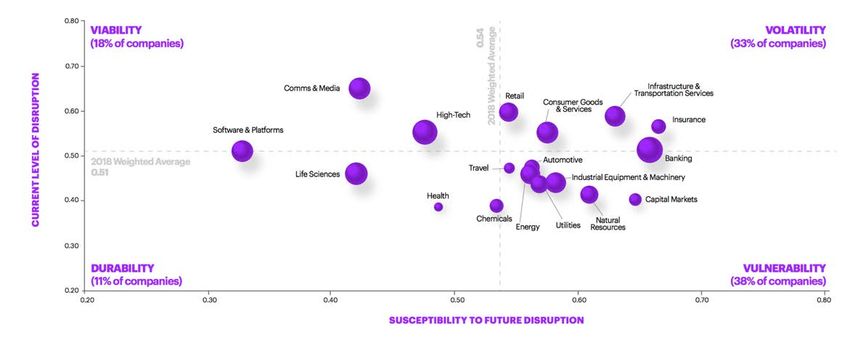
GROWING MOMENTUM                                                                                                                                              Page 7

                                              It is also the case that all have relatively low insurance penetration rates –
                                              defined as insurance premiums as a percentage of per-capita GDP. Mainland
                                              China, India, Indonesia, the Philippines and Malaysia, for example, have life
                                              insurance penetration rates under 3 percent as of 2018.7 That compares against
                                              Taiwan (18 percent8), Hong Kong (15 percent9) and Japan (7 percent10).

                                              In short, the long-term outlook is positive, with China set to dominate the
                                              growth story. Less well-appreciated is the potential for growth in, for example,
                                              ASEAN, whose nations can broadly be characterised as having low insurance
                                              penetration rates along with fast-growing economies and insurable markets.

                                              Regardless of the markets in which companies operate, the question for incumbents
                                              and newcomers alike is whether this insurance growth can be sustained – and
                                              how they can ensure they secure market share.

                                                                APAC LIFE INSURANCE PREMIUMS (DIRECT-WRITTEN)

                                                               1800                                 APAC: 7.6% CAGR
                                                               1600
                                                                               APAC: 5.6% CAGR
                                                               1400                                                                   238
                                                               1200                                          193
                                                 GWP , US$ B

                                                               1000                      171                              456
                                                                                                  415
                                                                800
                                                                                  412
                                                                600
                                                                400                                                       842
                                                                                                  626
                                                                200              465

                                                                  0
                                                                                 “16             “19E                     “22F

                                                               Greater China     Korea, Japan    India          ASEAN             ANZ

                                                    APAC GENERAL INSURANCE PREMIUMS (DIRECT-WRITTEN)

                                                                700                                 APAC: 6.2% CAGR

                                                                600            APAC: 4.8% CAGR
                                                                                                                                       142
                                                                500
                                                                                                             118
                                                 GWP , US$ B

                                                                400                      100                              209
                                                                                                 188
                                                                300
                                                                                  174
                                                                200
                                                                                                                          256
                                                                100                              200
                                                                                 168

                                                                  0
                                                                                 “16             “19E                     “22F

                                                               Greater China     Korea, Japan    India          ASEAN             ANZ

                                                                                                   Source: GlobalData Insurance database and Sigma
                                                                                                  Explorer – taken from ‘Insurance in Asia: Navigating
                                                                                                 the New, Accenture (SAS APAC Frontline Experience
                                                                                                                           Keynote, January 21, 2020)’

7. See: https://www.sigma-explorer.com/index.html
8. Ibid.
9. 2018 China Insurance Review, Winston & Straw LLP (April 8, 2019). See:
https://www.lexology.com/library/detail.aspx?g=ecd67fba-25ea-4ff2-8011-7d8ecfd9da84
10. See: https://www.sigma-explorer.com/index.html                                                                                                       © ACCENTURE 2020
GROWING MOMENTUM                                                                                 Page 8

                   Broadly positive …
                   Despite the challenges facing incumbents in the broader financial services
                   sector – the need to digitise, for instance, growing competition from FinTechs,
                   and the impact of COVID-19 – there are good reasons to believe that APAC’s
                   insurance growth can be sustained, due to the following tailwinds:

                   1. The increased demand for, and consumption of, healthcare in APAC. Citizens
                   of both developed and emerging nations are more affluent and living longer,
                   and can therefore better afford Insurance to ensure they can access quality
                   healthcare should they need it.

                   2. The region’s economic growth has seen rapid industrialisation and a rise in
                   the number of small- and medium-sized enterprises (SMEs), with a consequent
                   increase in demand for indemnity products. Despite challenges in the short-
                   term – such as the effects of the U.S.-China trade war, as well as the coronavirus
                   pandemic - economic growth is likely to continue in the years ahead.

                   3. The predominance of “digital” in the financial services sector, shown by
                   the rise of FinTechs locally and the entry of others from abroad. Operating in
                   a Digital Age means that, more than ever before, insurance providers can use
                   technology to unlock value, including, for example, by analysing data generated
                   by businesses and individuals to target them cost-efficiently with bespoke insurance
                   products and services.

                   That said, companies should expect some obstacles: the very nature of the
                   insurance market is changing fast, and that is as true in APAC as it is anywhere.
                   Incumbents would be wise to become adept at using digital technologies to
                   create new revenue pools and keep competitors at bay.

                                                                                            © ACCENTURE 2020
GROWING MOMENTUM Page 9
It is worth looking more closely at how that can work. Operating in the Digital
Age not only allows firms to devise products and services based on customers’
individual needs; it has changed how those services and products are distributed,
making digital a far more cost-effective solution. This fundamental change in
how products and services are conceived, designed and distributed is especially
resonant for Asia, which is highly digitally aware. For example, two-thirds of
proximity mobile payment users worldwide are in China and India (see chart).11
TOP PROXIMITY MOBILE PAYMENT USERS (2019)
700
PROXIMITY MOBILE PAYMENT USERS (M)
2 in 3
600 577
OF THE WORLD’S MOBILE PAYMENT
USERS RESIDE IN CHINA AND INDIA
500
400
300
415million
UNBANKED PEOPLE IN
CHINA AND INDIA
200
100 93
17 18 16 3
0
China India Japan Indonesia S.Korea Australia
Source: Statistics on the unbanked are drawn from “Implications of Asia’s Gender Gap in Financial Inclusion”,
Federal Reserve Bank of San Francisco (July 30, 2019).
See: https://www.frbsf.org/banking/asia-program/pacific-exchange-blog/implications-of-asias-gender-gap-in-financial-inclusion/
Source: All other statistics: https://www.sigma-explorer.com/index.html
The advance of digital technologies can be an opportunity or a threat for
established players, and that outcome largely depends on how they respond.
On the positive side, it has facilitated online purchases of products and services,
including in the insurance sector, and it improves trust between the buyer and
the seller, which cuts fraud. That is already common for personal lines, and will
become increasingly prevalent across other retail and SME lines.
Indeed, the Digital Age could, and should, see providers tap previously unreached
groups, with products simplified to facilitate digital purchases, including the
development of micro or bite-sized products that are affordable and easy to sell.
11. China and India Lead in Proximity Mobile Payment Usage for 2019, eMarketer (December 19, 2018).
See: https://www.emarketer.com/content/china-and-india-lead-mobile-payment-adoption-for-2019 © ACCENTURE 2020GROWING MOMENTUM Page 10
… Yet some challenges are unmet
Among the central challenges is that industry lines are blurring. Outsiders are
moving into the insurance space, and customers are more willing to buy from
non-insurance providers – as we shall see later.
For life insurers in Asia, tackling these challenges requires that they:
1. Counter shortcomings in the distribution of products and services, including
by improving how they provide advice through their platforms to increase the
appeal of such offerings.
2. Widen their product suite to ensure that offerings are easier to understand
and compare, and better-suited to platform distribution.
3. Increase awareness of protection products, given the generally limited
knowledge of such solutions in the market.
That will not be easy for everyone. Some life insurers are hamstrung by regulatory
regimes whose capital and reserve requirements render some products uneconomical,
and whose lengthy and inflexible approval times hinder innovation.12
An additional complication for most insurers is that, given the current low-interest
rate environment, they are struggling with low yields in traditional investment
assets, like bonds, and being forced to diversify in order to maintain profitability,13
and – in the case of life insurers – to better match terms when it comes to
liabilities versus invested assets.14
Low rates also make their universal life products, for instance, less appealing
compared to other available instruments.
At the same time, declining birth rates and longer life expectancies mean
population pyramids are becoming top-heavy (see chart), with East and South-
east Asia projected to have the greatest increase in the number of “over-65s” in
the years to 2050.
12. Emerging Asia Life Insurance Pulse 2019, Dr. Schanz, Alms and Partners (2019). See:
https://insuranceasianews.com/wp-content/uploads/2019/03/Insurance-Pulse-2019.pdf
13. Asian insurers looking to shake up investing strategies, Insurance Business Asia (November 27, 2019). See:
https://www.insurancebusinessmag.com/asia/features/interviews/asian-insurers-looking-to-shake-up-investing-strategies-193153.aspx.
14. Asian insurers’ alternatives allocation nears $1trn – report, Private Equity International (November 27, 2018). See:
https://www.privateequityinternational.com/asian-insurers-alternatives-allocation-nears-1trn-report/ © ACCENTURE 2020GROWING MOMENTUM Page 11
INCREASING AGEING POPULATION. OVER THE NEXT THREE
DECADES, ALL REGIONS WILL SEE AN INCREASE IN THE SIZE
OF THEIR OLDER POPULATION. THE LARGEST INCREASE IS
PROJECTED TO OCCUR IN EASTERN AND SOUTH-EASTERN ASIA.
700
600 NUMBER OF PERSONS 65 YRS
OR OLDER BY REGION 573 2019
(2019-2050) 2050
500
400
326
296
300
261
200
200
145
119
101 96
100
32 29 56
5 9
0
Sub-Saharan North Africa & Central & Eastern & South Latin America & Australia & Europe &
Africa Western Asia Southern Asia Eastern Asia The Caribbean New Zealand Northern America
Source: United Nations World Population Prospects 2019
(see: https://population.un.org/wpp/Publications/Files/WPP2019_Volume-I_Comprehensive-Tables.pdf)
Changing mortality and morbidity mean growing demand for retirement
products to cover the fact that people are living longer, and critical illness
cover and private medical insurance to cover the risk of lifestyle diseases that
correlate with increased age.
In short, there is rising demand for healthcare consumption, and that means
increased pay-outs by insurers. Already the cracks are starting to appear in
some mature markets, with insurers facing combined ratio pressures as
premiums fail to keep up with loss ratios. In Singapore, for example, under-
writing profits dropped from 11 percent of gross written premiums in 2014 to
1 percent in 2018,15 with this segment – the second-largest component in the
country’s general insurance market – losing S$11.2 million in 2019.16
15. 2018 Annual Report, General Insurance Association (2019). See: https://gia.org.sg/images/media-center/annual-reports/GIAAR2018.pdf
16. Singapore general insurance sector in the red with $28m underwriting loss last year on higher claims, The Straits Times (March 24, 2020).
See: https://www.straitstimes.com/uncategorized/singapore-general-insurance-sector-made-28m-underwriting-loss-last-year-on-higher © ACCENTURE 2020GROWING MOMENTUM Page 12
The solution is for insurers to find ways to take on healthier risks or to influ-
ence customer behaviour to reduce those risks - for example, by rewarding
health insurance clients who exercise regularly. Much of this rebalancing and
behaviour-influencing can be done using digitisation and other technological
solutions, as insurers in Europe and elsewhere have shown.
Ultimately, the insurers that take action to remain competitive are the ones that
will thrive. Those that do not will find there is a price to be paid for complacen-
cy and inaction: Accenture’s calculations show that, by the end of 2022, half of
APAC’s insurance opportunities will come from new sources of revenue; the re-
maining 50 percent will involve taking competitors’ lunch (see chart).17 Simply
put, less-effective competitors will lose heavily.
FIGURE 2. REVENUE GROWTH POTENTIAL HAS TWO KEY COMPONENTS
NEW SOURCES OF REVENUE
MARKET SHARE GAINS
Source: Insurance as a Living Business: Explosive
Growth, Accenture (2018).
17. Insurance as a Living Business: Explosive Growth, Accenture (2018). See:
https://financialservices.accenture.com/rs/368-RMC-681/images/accenture-insurance-living-business-pov.pdf © ACCENTURE 2020GROWING MOMENTUM Page 13
Even those that consider themselves effective need to think carefully about their
resilience: the Accenture Disruptability Index ranks the insurance sector as “vola-
tile” and “vulnerable”, making it one of those most susceptible to disruption (see
chart).18 Insurance was ranked as the fourth-most disrupted out of 18 industries in
2018, and as the industry most susceptible to future disruption.19
Despite that risk, the insurance industry is not investing enough in advanced tech-
nology – as we shall see later. And although some of the region’s incumbents have
improved their financial performance, many remain susceptible to disruption due
to low workforce productivity growth, low brand-intensity, and low levels of inno-
vation.
At the same time, there are high-value disruptors on the digital side, backed by
significant sums of venture capital funding and investment activity from large
platform players. Chinese giant Ping An, for example, combines technology and
digital platforms to engage with its customers. It has built powerful ecosystems
while improving the efficiency of its core operations and streamlining its internal
operations.20
Much of Ping An’s effort is targeted at better understanding what its customers
want, which is key to flourishing in this volatile industry. A useful place to start is by
seeing how consumer demands have evolved.
DISRUPTABILITY INDEX INDUSTRY SECTOR MIX (2018 RESULTS)
0-1 scale (1 = most susceptible/disrupted)
Source: Breaking Through Disruption:
Embracing the Wise Pivot, Accenture (2019).
18. Breaking Through Disruption: Embracing the Wise Pivot, Accenture (2019). See:
https://www.accenture.com/_acnmedia/Thought-Leadership-Assets/PDF/Accenture-Breaking-Through-Disruption-Embrace-the-Power-of-the-Wise-Pivot.pdf#zoom=50
19. New Research Points to Big Changes in Insurance Industry Disruption, Accenture (February 5, 2020). See:
https://insuranceblog.accenture.com/new-research-points-to-big-changes-in-insurance-industry-disruption
20. Visionary Insurers are Harnessing the Power of Digital Disruption, Accenture (December 18, 2018). See:
https://insuranceblog.accenture.com/visionary-insurers-are-harnessing-the-power-of-digital-disruption © ACCENTURE 2020SECTION TITLE Page X
2.
A MORE
COMPLEX
CUSTOMER
© ACCENTURE 2020A MORE COMPLEX CUSTOMER Page 15
Across industries, the impact of technology has seen custom-
ers’ needs and expectations change significantly in recent
years; that evolution holds equally true in the financial ser-
vices arena. Consumers are more in control than before, and
firms should recognise that reality.
Just how much attitudes have changed can be seen in Accenture’s
regular global surveys of financial services consumers, which
provide a wealth of information on shifting tastes and expectations.
Our most recent report surveyed 48,000 people worldwide21-
15,000 of whom were from six key APAC markets.22
The findings are a wake-up call for insurers looking to con-
tinue with a business-as-usual approach.23 Take, for example,
the main reasons why customers would leave their financial
services provider: uncompetitive pricing or failure to handle
complaints appropriately (in both cases, cited by around 40
percent of respondents); not feeling valued (around 30 per-
cent); and products that no longer suit their needs (around 20
percent).24
Additionally, most consumers in major Asian markets expect
insurers to use their data to anticipate what they need, and to
offer relevant products and services: globally, about half do
so; in China and India, it is closer to two-thirds (see chart).25
21. Global Financial Services Consumer Study: Discover the Patterns in Personality, Accenture (2019). See:
https://www.accenture.com/_acnmedia/pdf-95/accenture-2019-global-financial-services-consumer-study.pdf
22. The six markets are: ASEAN, India, China, Japan, Hong Kong, and Australia and New Zealand.
23. Global Financial Services Consumer Study: Discover the Patterns in Personality, Accenture, op cit.
24. Data from Accenture’s 2019 study on the Global Financial Services Consumer.
25. Ibid. © ACCENTURE 2020A MORE COMPLEX CUSTOMER Page 16
Q. Should your provider use your data to anticipate your
needs, and recommend relevant products and service?
GLOBAL AVERAGE 48%
54% ASEAN
40% ANZ
63% CHINA
44% HONG KONG
24% JAPAN
62% INDIA
Source: Data from Accenture’s 2019 study on the
Global Financial Services Consumer
CONSUMERS FROM ASEAN, CHINA AND INDIA MOST EXPECT
THEIR PROVIDERS TO USE DATA TO ANTICIPATE THEIR NEEDS
AND RECOMMEND RELEVANT PRODUCTS AND SERVICES
Additionally, around 80 percent of APAC consumers are will-
ing to exchange their data for benefits such as receiving more
competitive pricing, getting personalised advice or enjoying
an improved service.26
All of that is good news for insurers, although they need to
harvest that data in the first place. In this digital world, doing
so is easier than ever, with the added benefit that more than
three-quarters of consumers trust that insurers will protect
their data – a far higher rate than is seen for retailers, social
media firms or telecommunications companies (telcos), for
example.27
26. Ibid
27. Ibid © ACCENTURE 2020A MORE COMPLEX CUSTOMER Page 17
It is also the case that consumers in APAC are far more will-
ing to pay for integrated propositions than their global peers.
Once again, this is particularly true in China, India and ASEAN
and suggests an appetite for cross-industry product bundles
(see chart).
INTEREST IN PERSONALIZED PRODUCTS:
76%
73% 73% 73%
70% 70%
63%
61% 61%
60% 55%
47%
GLOBAL AVERAGE 60%
GLOBAL AVERAGE 58%
HONG KONG
HONG KONG
ASEAN
ASEAN
CHINA
CHINA
JAPAN
JAPAN
INDIA
INDIA
ANZ
PREMIUMS PEGGED TO LIFESTYLE ANZ
PREMIUMS PEGGED TO USAGE
INTEREST IN PERSONALIZED SERVICES:
76% 77% 77%
72%
66% 69%
66%
50% 53% 51%
42%
GLOBAL AVERAGE 56%
GLOBAL AVERAGE 61%
32%
HONG KONG
HONG KONG
ASEAN
ASEAN
CHINA
CHINA
JAPAN
JAPAN
INDIA
INDIA
ANZ
ANZ
ALERTS & UPDATES PERSONALISED OFFERS & ADVICE
Source: Data from Accenture’s 2019 study on the
Global Financial Services Consumer.
© ACCENTURE 2020A MORE COMPLEX CUSTOMER Page 18
Q. Willingness to pay for Bundled Services -
Extremely Interested & Interested (Top 2)
GLOBAL AVERAGE 29.7%
ASEAN 43.2%
ANZ 18.3%
HONG KONG 28.8%
CHINA 54.5%
JAPAN 17.0%
INDIA 59.5%
Source: Data from Accenture’s 2019 study on the
Global Financial Services Consumer
CONSUMERS IN CHINA, ASEAN AND INDIA SHOW GREATEST
WILLINGNESS TO PAY FOR INTEGRATED PROPOSITIONS
Knowing what their customers expect and will pay for is a vital first step as
insurers seek to navigate a changing industry. Delivering for them, however,
requires that insurers tackle three related issues:
1. First, accessibility. Customers expect to access their insurer at a time that
suits them, with one in four prepared to switch providers if that basic expec-
tation is not met.28 One in five customers will leave their insurer if they have
difficulty accessing digital services.29
2. The second links to accessibility. Although face-to-face is the dominant
channel in most APAC countries, online (virtual) is fast catching up as a pre-
ferred secondary mode of interaction30 – and has become far more relevant in
light of COVID-19. Even before COVID-19, online was preferred by customers in
Japan, Australia and New Zealand.31
3. The third is that insurers are under-delivering on the digital experience, with
respondents in China, India and ASEAN particularly dissatisfied with the quality
of their digital interactions with insurers. That comes even as customers are
increasingly open to buying insurance products from non-insurance providers
that excel in the arena of digital interaction, such as aggregators and online
service providers like Google, Apple, Facebook and Amazon (see chart).
28. Ibid
29. Ibid
30. Ibid
31. Ibid © ACCENTURE 2020A MORE COMPLEX CUSTOMER Page 19
Q. How likely are you to consider buying insurance from
the following providers?
80%
70% A BANK
70%
60%
60%
50% UTILITY
50% PARTNERS
43% 44%
40% 38% 38%
30% ONLINE SERVICE
30% PROVIDER (GAFA)
23%
29%
20%
20%
14%
SUPERMARKET
10% OR OTHER
RETAILER
0%
2013 2016 2019
Source: Data from Accenture’s 2019 study on the
Global Financial Services Consumer
BANCASSURANCE HAS BECOME MAINSTREAM, PAVING THE WAY
FOR OTHER B2B CHANNELS
As the insurance market becomes more relevant to consum-
ers’ daily lives and more competitive, it is being targeted by
players that are new to this space. Other than banks, utility
firms and online service providers, these include numerous
InsurTech firms that have proliferated in recent years, and
which, in less than a decade, have raised nearly US$20 billion.
Faced with a world in which customer needs are changing and
the competition is becoming more intense, the time is ripe for in-
surers to map out new strategies in order to survive and prosper.
Source: Data from Accenture’s 2019 study on
the Global Financial Services Consumer. © ACCENTURE 2020SECTION TITLE Page X
3.
SETTING
A DIGITAL
COURSE
© ACCENTURE 2020SETTING A DIGITAL COURSE Page 21
TO SUCCEED, INSURERS IN APAC MUST ADDRESS THE FOLLOWING
FOUR ASPECTS:
A. Adapt their business models;
B. Invest more in technology;
C. Transition to “future systems”;
D. Become “Living Businesses”.
A. Adapt the Business Model
In deciding how to proceed, it pays to see the path that digital insurers have
taken. Indeed, leading incumbents have already taken key steps, adapting
operating models, offerings and distribution practices as they seek to address
new customer expectations, digital threats and opportunities – and as they
adapt to a world in which COVID-19 has upended the traditional, face-to-face
way of selling to customers. (For details, see our paper “The Future of Insur-
ance Distribution”.)
The digital path comprises four dominant models, with successful insurers typ-
ically using a combination of these, while leveraging data and analytics, artifi-
cial intelligence (AI) and other emerging technologies:
1. Virtual advisers offer digital-savvy customers choice, needs-based advice
and transparency via data-driven self-service or hybrid digital advisory plat-
forms – and can process large numbers of transactions remotely. Blue Cross
(Asia-Pacific) Insurance, a Hong Kong-based insurer, says its blockchain-backed
platform is capable of dealing with more than 1,000 concurrent transactions
every second.32
2. Everyday risk coaches use data to help customers manage and reduce their
risks, coupling that with incentives and advice. Examples here include AIA
Vitality, Manulife Move and Prudential Pulse, whose health-focused apps reward
customers who lead active lifestyles.33
3. Plug-and-play insurers leverage their partners’ customer touchpoints to em-
bed relevant insurance products and ensure their distribution – as, for instance,
with mobile phone insurance offered by telcos.
4. Ecosystem orchestrators aggregate and offer value-added products and
services on top of the insurance products that they sell. Grab’s new travel product
- Travel Cover - which it introduced in 2020 with Chubb,34 is one example, as
is CXA Group’s Employee Benefits Platform, which serves as a marketplace to
manage employee healthcare costs and change behaviour.35
32. Insurance service providers rely on blockchain to fast track claims payout amid coronavirus outbreak,
South China Morning Post (February 9, 2020). See:
https://www.scmp.com/business/companies/article/3049479/insurance-service-providers-rely-blockchain-fast-track-claims
33. See, for example: https://www.manulife.com.sg/en/move.html
34. Grab and Chubb launch Travel Cover, Coverager (January 13, 2020). See:
https://coverager.com/grab-and-chubb-launch-travel-cover/
35. See: https://www.cxagroup.com/companies/how-it-works/ © ACCENTURE 2020SETTING A DIGITAL COURSE Page 22
B. Invest More in Technology
When it comes to spending on advanced technology, insurers lag nearly all
other industries surveyed in our 2019 Disruptability Index. Banking leads that
field, with spending of about US$3.5 trillion. Insurance, by comparison, spends
just US$444 billion – about one-eighth the amount.36 (For details, see the
Disruptability Index online.)
Recall that in the previous section we saw that customers in the key APAC markets
of China, India and ASEAN are dissatisfied with the quality of their digital
interaction with insurers. The obvious conclusion is that insurers must boost
their spending on technology if they are to meet rising customer expectations.
Some already have. The sector as a whole has increased the number of venture
capital investments in technology from 21 in 2012 to 230 in 2018.37 Over the
same period, the proportion of insurers’ technology investment portfolio allocated
to InsurTech firms has climbed from zero to 20 percent38 - with demand highest
for AI and intelligent automation, cloud-based services and predictive analytics.39
That matches the findings of a 2018 report in which senior technology execu-
tives told Accenture that their top three technology investment priorities were
AI-based solutions to boost operational efficiencies, cloud services, and data
analytics – with their priorities by 2021 being client-facing AI, blockchain, cloud
and agile development solutions (see chart).40
ACCENTURE SURVEYED SENIOR TECHNOLOGY EXECUTIVES
ON THEIR INVESTMENT IMPERATIVES NOW AND IN 3 YEARS
Please indicate which technologies you are investing in or plan to invest in significantly.
Insurance respondents.
AI-based technologies to 60%
improve operational processes 20%
Cloud-based technologies to 33%
improve operational efficiency 47%
Customer-facing blockchain 33%
40%
Cloud-based technologies to 33%
generate business value 10%
Data analytics 33%
27%
AI-based technologies to 27%
improve client-facing processes 50%
Internal blockchain applications 27%
47%
Agile development 10%
20%
Not Investing nor planning to invest 3% Investing Today
in any of these technologies 0% Plan to invest in three yrs
36. Source: Accenture analysis of
Source: Get Comfortable Outside Your Comfort Zone: Digital Transforma-
underlying data in the 2019 Disruptability Index.
tion Remaking an Industry, Accenture and Oxford Economics (2018).
37. Accenture Research analysis of CB Insights data.
38. Accenture Research analysis of CB Insights data.
39. Accenture Research analysis of CB Insights data.
40. Get Comfortable Outside Your Comfort Zone: Digital Transformation
Remaking an Industry, Accenture and Oxford Economics (2018). See:
https://www.accenture.com/_acnmedia/pdf-92/accenture-insurance-digital-transformation-remaking-an-industry.pdf © ACCENTURE 2020SETTING A DIGITAL COURSE Page 23
Despite those intentions, the fact remains that insurers come up short on tech-
nology spending. As consumers’ expectations for digital solutions continue to
rise, failing to provide what consumers want could be costly.
C. Transition to “future systems”
The third aspect involves understanding the enormous impact that investing
in and adopting technology can have on financial performance, and using that
knowledge to craft a suitable approach.
In 2019, Accenture surveyed more than 8,300 organisations across 20 indus-
tries and 20 nations, and found that companies that are making the transition
to future systems are growing far faster than firms that are unable to scale
innovation.41 (For details, see our report “Full Value. Full Stop.”)
Our research found that leading firms were 2.5 times more likely to have ad-
opted new technology, and three times more likely to have applied technology
across their business processes in areas like AI, cloud computing and treating
data as a corporate asset.42 All that feeds to the bottom line: leaders were grow-
ing revenue at 9 percent on average, more than twice the 4 percent recorded
by laggards.43
By 2018, these laggards’ inability to apply technological solutions strategically
meant they had foregone 15 percent of their potential annual revenue.44 Failing
to act will see that proportion climb to 46 percent by 2023 – or US$20 billion of
lost income (see chart).45
LAGGARDS COULD SUFFER AS MUCH AS 46% IN FOREGONE
ANNUAL REVENUE BY 2023
22bn
LEADERS GROWTH RATE
$20 BILLION
20bn Still stands to be lost
in the next 5 years
46%
18bn
$3 BILLION GAP =
has already
been foregone
16bn
14bn LAGGARDS GROWTH RATE
12bn
10bn
2015 2016 2017 2018 2019 2020 2021 2022 2023
Source: Full Value. Full Stop. How to scale innovation
and achieve full value with Future Systems, Accen-
ture (2019).
41. Full Value. Full Stop. How to scale innovation and achieve full value with Future Systems, Accenture (2019).
See: https://www.accenture.com/_acnmedia/thought-leadership-assets/pdf/accenture-future-systems-report.pdf
42. Ibid.
43. Ibid.
44. Ibid.
45. Ibid. © ACCENTURE 2020SETTING A DIGITAL COURSE Page 24
The report highlights what firms must do if they are to leave the laggards and
join the leaders: adopt fast, flexible technologies; use solutions that enable de-
coupled data, infrastructure and applications; embrace cloud computing; treat
data as a corporate asset; manage technology investments across the enter-
prise; and upskill talent.
D. Become a “Living Business”
The fourth step is to become a living business – an organisation that has the
ability to future-proof itself. (For details on this, see our report “Living Business:
Achieving Sustainable Growth Through Hyper-Relevance.”)
Success in this context is predicated on continuously adapting to changing
customer needs, and building the ability to move seamlessly from one growth
opportunity to the next. As we have written elsewhere, Ping An is likely the
most impressive example of an insurer transforming itself into a living business.
Our research indicates that insurers that can respond effectively to the disrup-
tions afflicting the industry today will expand their global potential revenue by
as much as US$375 billion over the five-year period (from 2019 to 2023).
Firms that transition to become “Living Insurers” are those that are pre-
pared to take a range of critical steps:
1. Invest more in growth areas outside their traditional business. SingLife, for
example, offers an app-based insurance savings account with no fees and that
pays up to 2.5 percent interest.
2. Improve market penetration by accessing previously untapped segments,
and by leveraging new channels and technologies. That could involve, for in-
stance, offering bite-size or micro-insurance to make products more affordable
for more people – as NTUC Income’s SNACK, which launched in 2020, does by
allowing Singaporean citizens to build micro-insurance covering life, critical
illness and accident insurance based on lifestyle triggers such as taking a train
ride. Equally, it could involve launching digital attackers to cut operating costs
and cater to digital natives; and it could see firms providing Insurance-as-a-
Service, which accords customers the flexibility to pay-as-they-use.
3. Seek out new and evolving risk classes, with examples including autonomous
vehicles and cyber insurance. Additionally, use data to create products that
cover pockets of previously uninsurable risks, and consider preventing risks
rather than indemnifying for them. One recent example of the former was the
rollout of free insurance by DBS and Chubb Insurance Singapore for DBS’
5 million customers should they require hospitalisation for COVID-19.
© ACCENTURE 2020SETTING A DIGITAL COURSE Page 25
4. Offer value-added services that policyholders will pay for, such as patient
and care-giver apps or cross-industry bundles that save customers the effort
of contacting different providers for products. Accenture’s Ella, for example, is
an AI-driven bot that works as a virtual care assistant, providing patients with
a suite of services including medication reminders, tracking of vital signs, and
appointment scheduling. As part of our INTIENT Patient platform, Ella helps life
sciences companies support patients throughout their care experience.
5. Recognise that customers are not homogenous, and design relevant prod-
ucts that fit their needs and with which they most identify.
6. Build engagement with customers by seeking out ways to deliver person-
alised experiences in moments that matter.
7. Scale with partners, including with those that lie beyond traditional insurance
boundaries by integrating into customers’ everyday lives by digitally leveraging
the reach, offerings and data of ecosystem partners.
8. Rewire culture and reskill employees to optimise the ways in which humans
and machines can collaborate – what Accenture calls Human + Machine.
Firms that follow this path can target new value and models, design inno-
vative products and services, build vastly improved engagement channels,
scale their platforms and ecosystems, and focus their culture on the custom-
er experience. They will be the winners in the digital insurance world.
© ACCENTURE 2020SECTION TITLE Page X
4.
A WORLD OF
POSSIBILITY
© ACCENTURE 2020A WORLD OF POSSIBILITY Page 27
Digitisation is bringing change to all manner of businesses, and to
the financial services sector more than most – and the COVID-19
pandemic is hastening this process.
Couple this wing to digital – and greater digital literacy - with
APAC’s profound shifts in demography, economics and increased
consumer expectations, and it is clear that insurers are in the
midst of arguably the most significant change in their industry’s
history.
These changes have brought significant opportunities for insur-
ers in APAC. However, they need to take advantage of what is on
offer; after all, those that move first are likely to reap the greatest
rewards, while those that delay risk being left behind. The time to
chart a new direction is now.
© ACCENTURE 2020CREDITS Page 28
Elysia Chan
Managing Director & Insurance Practice Lead
Strategy & Consulting, Southeast Asia
elysia.chan@accenture.com
© ACCENTURE 2020ABOUT ACCENTURE
Accenture is a leading global professional services company,
providing a broad range of services and solutions in strategy,
consulting, digital, technology and operations. Combining un-
matched experience and specialized skills across more than
40 industries and all business functions — underpinned by the
world’s largest delivery network — Accenture works at the inter-
section of business and technology to help clients improve their
performance and create sustainable value for their stakeholders.
With 505,000 people serving clients in more than 120 countries,
Accenture drives innovation to improve the way the world works
and lives. Visit us a www.accenture.com
Disclaimer: This document makes descriptive reference to
trademarks that may be owned by others. The use of such
trademarks herein is not an assertion of ownership of such
trademarks by Accenture and is not intended to represent
or imply the existence of an association between
Accenture and the lawful owners of such trademarks.
Copyright © 2020 Accenture.
All rights reserved.
Accenture and its logo are trademarks of Accenture. © ACCENTURE 2020You can also read


