New Jersey Shell Recycling Size and Possession Limits - NJ.gov
←
→
Page content transcription
If your browser does not render page correctly, please read the page content below

2021 Marine Fishing Season Dates and Limits • FREE

    New Jersey

May 2021

                                              Shell Recycling
                                                                  page 20

                                                        Size and
                                                      Possession
                                                          Limits
                                                                  page 17

                 A Summary of Recreational Regulations and
               Marine Fish and Shellfish Management Information
                            NJFishandWildlife.com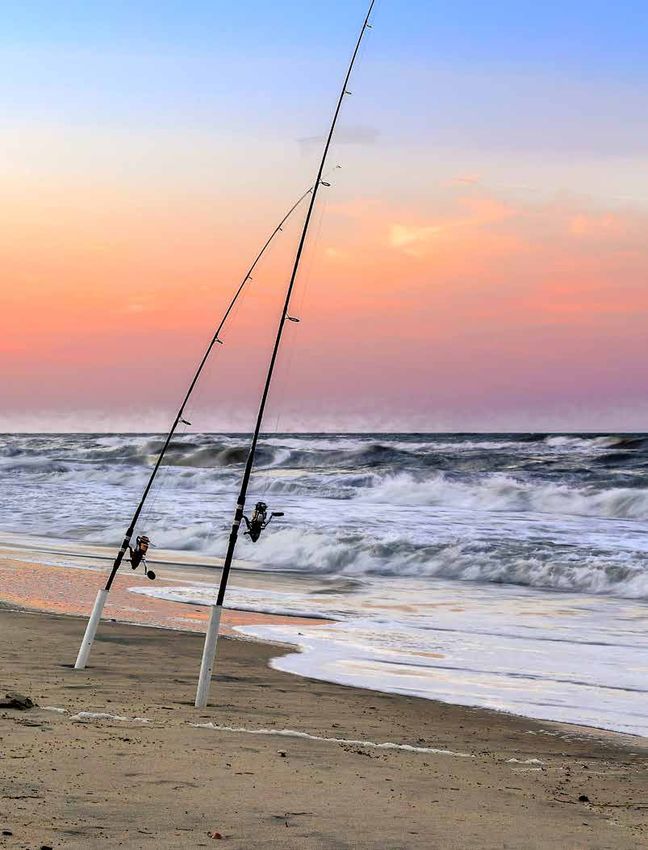
Get a GEICO quote for your boat and, in just 15
                                                                                                    minutes, you’ll know how much you could be saving.
                                                                                                    If you like what you hear, you can buy your policy right
                                                                                                    on the spot. Then let us do the rest while you enjoy
                                                                                                    your free time with peace of mind.

                                                                                                                                          geico.com/boat | 1-800-865-4846

Some discounts, coverages, payment plans, and features are not available in all states, in all GEICO companies, or in all situations. Boat and PWC coverages are underwritten by GEICO Marine Insurance Company. In the state
of CA, program provided through Boat Association Insurance Services, license #0H87086. GEICO is a registered service mark of Government Employees Insurance Company, Washington, DC 20076; a Berkshire Hathaway
Inc. subsidiary. © 2020 GEICO 20_206641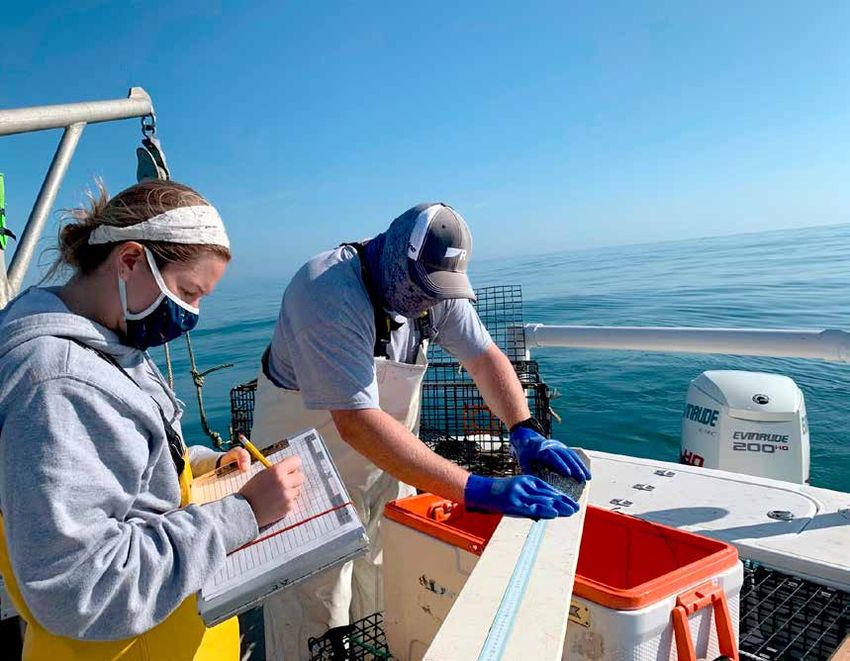
Feature Articles
Contents
4        Governor’s Surf Fishing Tournament
10 Marine Regulations — Finfish
14 Marine Species Identification
16 Marine Regulations — Mollusks and Crustaceans
17 State Seasons, Minimum Size and Possession Limits Chart
18 Federal Recreational Fishing Regulations
19 Shellfish and Non-Commercial Crab Pot License Information
                                                                                                                       6   Ocean
                                                                                                                           Oddities

21 New Online Map Services
22 Skillful Angler Recognition Program
24 New Jersey State Record Marine Sport Fish
26 Health Advisories / Gills to Grills Recipe Corner

Hotlines
New Jersey Fish and Wildlife
Report Marine, Shellfish and Finfish Violations
(609) 748-2050 or call the 24-hour DEP Hotline: 877-WARNDEP
Violators of the Marine Fisheries laws are subject to a $30–$100 per fish or $300 to $3,000 fine.

Federal Marine Fisheries Contacts
NOAA Fisheries                           NOAA Fisheries Office of Law              Federal Fisheries Law
Enforcement Hotline                      Enforcement — Northeast                   Enforcement Field Offices

                                                                                                                       8   COVID-19 Effects on
24-hour non-emergency tipline            Enforcement Division HQ                   Wall: (732) 280-6490
(800) 853-1964                           (978) 281-9249                            Northfield: (609) 415-2941
                                                                                                                           Marine Resources Surveys

                                       Scan this QR code with your
                                       mobile device for instant
                                       access to New Jersey Division
                                       of Fish and Wildlife's website:
                                       NJFishandWildlife.com.

                                       Follow us on Facebook & Instagram
                                       Facebook.com/NJFishandWildlife
                                       Instagram.com/NJFishandWildlife

This is not the full law. Consult the Division of Fish and Wildlife for further details. All persons are reminded
that the statutes, code and regulations are the legal authorities. New Jersey Division of Fish and Wildlife
receives federal assistance from the U.S. Fish and Wildlife Service and thus prohibits discrimination on the
basis of race, color, national origin, disability, age and sex pursuant to Title VI of the Civil Rights Act of 1964,
Section 504 of the Rehabilitation Act of 1973, Title II of the Americans with Disabilities Act of 1990, the Age

                                                                                                                       20
Discrimination Act of 1975 and Title IX of the Educational Amendments of 1972. If you believe that you have
been discriminated against in any program, activity or service, contact New Jersey Division of Fish and Wild-
life, MC501-03, P.O. Box 420, Trenton, NJ 08626-0420. The telephone number is (609) 292-9410. You may
                                                                                                                             Shell Recycling
also write to the Office of Civil Rights, Department of the Interior, 1849 C Street, NW Washington, DC 20240.                Program
Director's Message
DAV E G O L D E N
With 2020 behind us, I know everyone is ready for some hot fishing
action off the beaches and in the offshore waters. I’m happy to say it’s
all here for you in New Jersey! With 120 miles of ocean coastline from
Cape May to Sandy Hook, multiple coastal bays such as the Raritan,
Barnegat and an amazing coastline along the Delaware Bay — abundant
opportunities for anglers exist along the beaches, in the back-bays and
in the nearshore and offshore waters of the state.
The challenges over the last year have increased our appreciation for
the therapeutic value of the outdoors and many have made their way to
the New Jersey coast to experience its beauty and bounty. The staff at
New Jersey Fish and Wildlife remained hard at work during this time Williamstown, MA | Birmingham, AL
to ensure all the elements are in place for you to enjoy a safe and exciting
2021 marine fishing season. The article on page 8 of this Digest describes how Fish and Wildlife staff
not only adjusted but continued to get the job done.
Working with the public to manage fish and wildlife populations is a critical component of our
overall strategy. As resource managers, we are charged with maintaining stable and healthy popula-
tions and to optimize the public benefit of these fish and wildlife populations. Nowhere is this truer
than within New Jersey’s marine ecosystem, and therefore public input is of the upmost importance
About This Guide
in our management strategy here.
Faced with new challenges in staying connected with stakeholders, councils, commissions and
This high-quality guide is offered to you
other biologists during the pandemic, Fish and Wildlife staff turned challenges into opportunities.
by the New Jersey Division of Fish and
A seamless incorporation of new technologies into Fish and Wildlife’s daily operations provided new
avenues for public engagement during a period where “social distancing” was paramount. The result Wildlife through its unique partnership
has been improved and expanded opportunities for stakeholders to get involved. Fish and Wildlife’s with J.F. Griffin Publishing, LLC.
Marine Fisheries Administration now holds all New Jersey Marine Fisheries Council and New Jersey The revenue generated through ad sales
Shellfish Council meetings online through virtual platforms creating a more convenient opportunity significantly lowers production costs and
for the public to provide input on important regulation changes. Visit our website to find out how generates savings. These savings translate
you can log on and have your voice heard. into additional funds for other important
Great information continues to be shared with the public through Fish and Wildlife’s many listservs
agency programs.
and social media platforms. Make sure you’re signed up to receive the latest updates and announce-
ments by visiting NJFishandWildlife.com/lstsub.htm and joining our Facebook page at facebook. If you have any feedback or are inter-
com/NJFishandWildlife. ested in advertising, please contact us at
New for 2021, we have expanded our citizen science reporting tools to improve data collection in 413.884.1001 or at www.JFGriffin.com
marine and estuarine waters of New Jersey. A new platform for our New Jersey Volunteer Angler
Survey program is now available (nj.gov/dep/marineanglersurvey), which is optimized for use by Graphic Design:
smartphones or tablets and makes it easier and more convenient to enter data during or following Jon Gulley, Dane Fay, John Corey,
your fishing trip from any digital device - our goal is to receive at least one report from every angler Evelyn Haddad, Chris Sobolowski
each year. The flexibility of the new platform also allowed for development of a new app (nj.gov/dep/
njmarinewildlife) for the reporting of federally or state listed endangered or threatened marine species
including marine mammals, sea turtles, sturgeons and prohibited shark species. Data received from
the public is a critical component in the proper management of these protected resources. Information
about the updated New Jersey Volunteer Angler Survey, and how to report your catch or sighting,
can be on page 21 of this Digest.
I’m excited about 2021 and I hope your adventures along the coast are memorable. We all know
saltwater fishing in New Jersey can be a great family or solitary experience. We hope you’ll share
these experiences with us through our angler surveys. Remember, we are most effective at managing
this public resource when the public stays engaged. Get out there and go fishing — and tell us about
it when you do! Together we’ll continue to manage the state’s fish and wildlife to ensure that the
opportunities we enjoy today are available for generations to come.
Dave Golden is the Director of the Division of Fish and Wildlife.
Jen Pyle/NJ Div. Fish and Wildlife
All Division of Fish and Wildlife programs strictly adhere to current New Jersey COVID-
19 safety protocols including social distancing guidelines and travel restrictions. Program This guide is also
availability or allowable attendance at programs may change if these guidelines or restrictions
change. Information will be updated and participants will be notified immediately if necessary.
available online at
For more information, visit covid19.nj.gov/.
Seaside Park.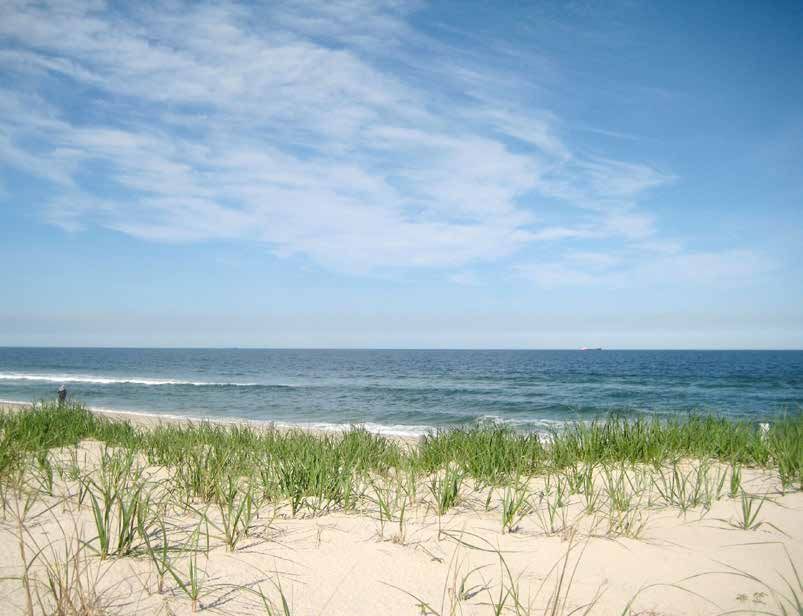
Your License Dollars Make a Difference!
State and Federal partnership improves NJ’s fishing opportunities
                                   When you purchase fishing equipment, motors, sonar and motorboat
                                   fuel in New Jersey, excise tax dollars – paid by manufacturers of that
                                   equipment – come back to New Jersey to support marine fisheries!
    NEW JERSEY DIVISION OF
   Fish and Wildlife
                                   This is the federal Sport Fish Restoration Program.
                                               Your fees and federal Sport Fish
                                               Restoration dollars produce the
                                               following benefits:
     Anglers and boaters                         • Management of public waters
  purchase fishing equipment                     • Artificial reef development
     and motor boat fuels.
                                                 • Marine sport fish research
                                                 • Development and
                                                   management of public
                                                   fishing areas
                     Manufacturers pay
                   federal excise taxes on       • Creation of aquatic
                 fishing equipment, electric       education programs
                 motors, sonar and boaters       • Development and
                       pay fuel taxes.             maintenance of boating-
                                                   associated access facilities
                                                   throughout the state
     Revenue from these
   federal excise taxes is
   distributed to state fish
    and wildlife agencies.

                        State fish and
                      wildlife agencies
                   receive federal funds to
                    implement programs
                        and projects.

      Better fishing and
     boating-associated
   recreation and aquatic
   education increase the
   public’s understanding
   of water resources and
         aquatic life.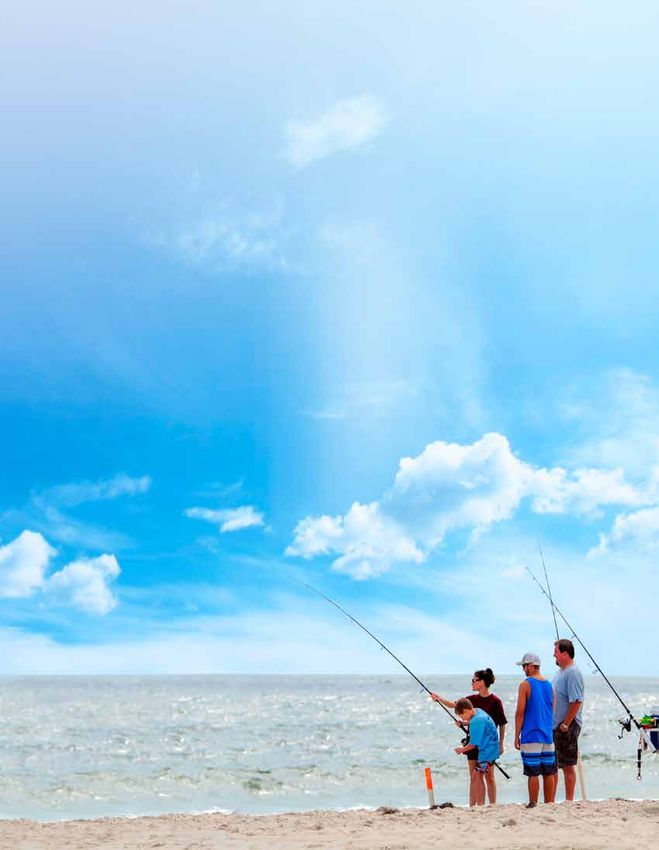
Mark your calendar for New Jersey
the Governor's Surf Fishing
Tournament!
May 23, 2021 State of New Jersey
Island Beach State Park, Seaside Park, NJ Philip D. Murphy, Governor
Sheila Y. Oliver, Lieutenant Governor
Come celebrate the 30th year of the Governor’s Surf Fishing
Tournament! Enjoy a great day of surf fishing with family and friends. Department of Environmental Protection
Shawn LaTourette, Acting Commissioner
The individual who catches the overall largest fish wins the
"Governor's Trophy," a high end rod and reel combo, and will have Division of Fish and Wildlife
their name engraved on the Governor's Cup, which is permanently Dave Golden, Director
displayed at Island Beach State Park. Prizes are awarded to winners in Ginger Kopkash, Assistant Director
a variety of age group and fish species categories. Lisa Barno, Assistant Director
All funds raised by the tournament go toward improving beach access, Joe Cimino, Administrator, Marine Fisheries Administration
surf fishing instruction programs and equipment, plus marine education Jeff Brust, Chief, Marine Fisheries
and restoration projects. Russ Babb, Chief, Shellfisheries
Al Ivany, Chief, Information and Education
The tournament is sponsored
Sean Cianciulli, Chief, Law Enforcement
by NJDEP’s Division of Fish and
Jonathan Carlucci/NJ Div. Fish and Wildlife
Wildlife and Division of Parks Vacant, Chief, Freshwater Fisheries
and Forestry, New Jersey State Jason Hearon, Chief, Land Management
Federation of Sportsmen’s Carole Stanko, Chief, Wildlife Management
Clubs, Jersey Coast Anglers John Heilferty, Chief, Endangered and Nongame Species
Association and New Jersey Cindy Kuenstner, Editor
Beach Buggy Association. New Jersey Division of Fish and Wildlife is a professional, environmental organization dedicated
For more information visit: to the protection, management and wise use of the state’s fish and wildlife resources.
www.NJFishandWildlife. The Digest is available at coastal license agents, bait and tackle shops and Fish and Wildlife
com/gsft.htm or call offices. Information may be reprinted with permission. Subscriptions are not available.
(609) 947-1201. The 2019 Governor's Surf Fishing Tournament
This Digest is designed and produced by J.F. Griffin Publishing, LLC; www.jfgriffin.com.
winner, John Kolacy of Flanders, with the largest
fish of the day — a 37 1/2-inch striped bass. Partial funding for the Digest is provided by the Federal Aid in Sport Fish Restoration Program.
Cover photo: Sunrise surf fishing. Photo: © Tello51 | Dreamstime.com.
New Jersey Fish and Wildlife Councils
Marine Fisheries Council Atlantic Coast Shellfish Council
Richard N. Herb, Acting Chair John J. Maxwell, Chair
Dr. Eleanor Ann Bochenek Walter L. Johnson, III, Vice Chair
Dr. Patrick Donnelly Paul Felder
Warren (Barney) Hollinger George Mathis, Jr.
Jeff Kaelin
Delaware Bay Shellfish Council
John J. Maxwell
Warren Hollinger, Chair
Joe Rizzo
Stephen J. Fleetwood, Vice Chair
Robert R. Rush, Jr.
Richard Malinowski
Kevin Wark
Scott Sheppard
Where to Write Us
New Jersey Department of Environmental Protection, Division of Fish and Wildlife
MC 501-03 • P.O. Box 420 • Trenton, NJ 08625-0420 • NJFishandWildlife.com
New Jersey Division of Fish and Wildlife
Our Mission
The Lowcountry Awaits To protect and manage the state’s fish and wildlife to maximize their long-
term b iological, recreational and economic value for all New Jerseyans.
PROFESSIONAL FISHING GUIDE Our Goals
• T o maintain New Jersey’s rich variety of fish and wildlife species at
FLY AND CONVENTIONAL stable, healthy levels and to protect and enhance the many habitats
on which they depend.
INSHORE × NEARSHORE × OFFSHORE • T o educate New Jerseyans on the values and needs of our fish and
wildlife and to foster a positive human/wildlife co-existence.
Charleston, SC
• T o maximize the recreational and commercial use of New Jersey’s
(843)860-4231 × john@flyrightcharters.com fish and wildlife for both present and future generations.
www.flyrightcharters.com
4
Using The Atlantic States Marine Fisheries Commission
(ASMFC) Interstate Fishery Management Plan for
striped bass now requires using inline (non-offset)
Tips for Using Circle Hooks
When a fish takes your bait, do not sweep the rod
Circle
circle hooks when fishing for striped bass with bait. upward to set the hook. The circle hook sets itself
(See striped bass regulations, page 12.) Using non- when the fish tries to swim away. Simply let the line
offset circle hooks significantly increases survival come tight, then fight the fish.
of released fish. In 2019, more striped bass were
Added Tips for the Survival
Hooks
estimated to have died from catch and release than
were harvested — 2.59 million fish and 2.15 million
fish, respectively. New Jersey Division of Fish and of Released Fish
Wildlife is finalizing regulations and will release
ir le Hooks
• Use barbless hooks or bend barbs down.
additional information as it becomes available.
• Use non-stainless steel hooks. If gut-hooked,
When Fishing with What is a Circle Hook? save lives
leave the hook in the fish and cut the line as close
to the hook as possible. The hook will rust away.
Bait for Striped Bass
• Replace treble hooks on artificial lures with
A circle hook is defined as a non-offset hook where the •Non-offset circle hooks are easier
single hooks.
point curves back perpendicularly towards the shank.
• Use appropriateto unhook
tackle from
suitedfish
to the size of the
The term non-offset means the point and barb are in the
•Non-offset
fish; don’t fight the fish tocircle hooks lead to less
exhaustion.
same plane as the shank. When the hook is laying on injuries
• Keep the fish in the to the when
water fish when compared
de-hooking.
a flat surface, the entire hook and barb should lay flat.
• If you must to j-hook
take styles
the fish out of the water, use a
•Commercial
rubber or soft-mesh and net.
landing recreational
How Do Circle Hooks • Avoid handling anglers
fish have
with used circle hooks
dry hands.
successfully fordry
years
Increase Survival of • Avoid dragging fish across
• Hold fish horizontal with support.
sand or rocks.
Released Striped Bass? • Avoid touching the fish’s gills or eyes.
Using circle hooks reduce occurrences of gut-hook-
Courtesy of Maryland DNR
ing which can cause injuries to internal organs of Non-offset (inline)
the fish. If a striped bass swallows the bait, the circle circle hooks
hook is designed to slide out from its throat and must be used
catch on the corner of its jaw. When a fish is hooked when fishing
in the corner of its jaw, this also leads to shorter for striped bass Non-Offset Offset
Striped bass caught on the F/V de-hooking times and less overall stress on the fish. with bait. “Circle” Hook
“Circle” Hook “Circle” Hook
Queen Mary of Point Pleasant, NJ. Maryland Department of Natural Resources
Fishing and Boating Services
Tawes State Office Building, 580 Taylor Avenue, B-2 dnr.maryland.gov/fisheri
Annapolis, MD 21401 05/2018
410-260-8300 | 800-688-3467 DNR 17-042718-
New Jersey: Stock Status & Management Updates
Marine Fisheries:
Species Status Recent/Next Action
Recreational Surveys American
Depleted; Not overfishing Management stock assessment 2020
Lobster
Be Counted American Depleted;
Re-evaluation of regulations for 2022
You may see New Jersey Division of Fish and Wildlife interviewers at Shad Overfishing status unknown
marine public access fishing sites conducting the Access Point Angler Atlantic Sea
Overfished; Not overfishing Management stock assessment 2020
Intercept Survey (APAIS). The survey targets marine recreational anglers Herring
to obtain information about their fishing effort, catch and participation. Atlantic Potential update stock
The more data collected, the more successful the survey becomes for Overfished; Overfishing
Striped Bass assessment 2022
estimating overall catch, which is an integral factor for managing fisheries.
To strengthen our estimates by collecting even more data, we have Black Sea Not overfished;
Management stock assessment 2021
increased our total individual assignments by more than 20% for 2021. Bass Not overfishing
Marine Fisheries staff are eager to speak with fishing clubs/groups Bluefish Overfished; Not overfishing Management stock assessment 2021
about the importance of the APAIS. We rely heavily on our valued Coastal Research stock assessment:
Varies by species
anglers, creating a joint effort to preserve the state’s natural resources. Sharks Blacktip shark 2020
Invite us to a group meeting or event. Contact Maryellen Gordon at Not overfished;
(609) 748-2020. We look forward to meeting you! Cobia Peer review stock assessment in 2020
Not overfishing
New Jersey Division of Fish and Wildlife staff began conducting the Horseshoe Status unknown; Adaptive Resource Management
For-Hire Telephone Survey in March 2020. Weekly calls are made Crab Moratorium since 2008 assessment 2021
to vessel operators regarding the previous week’s trips. This data is
used to estimate fishing effort in the for-hire sector and is combined Not overfished;
Scup Management stock assessment 2021
with APAIS data. In 2020, 2353 vessels were contacted averaging Not overfishing
approximately 53 vessels per week with a 62% response rate. Spanish Not overfished;
Operational stock assessment 2022
Mackerel Not overfishing
If you’re not contacted directly, you
can submit an easy, online fishing Summer Not overfished;
Management stock assessment 2021
report after each saltwater trip to the Flounder Not overfishing
New Jersey Volunteer Angler Survey at Tautog Overfished; Overfishing Update stock assessment 2021
NJFishandWildlife.com/marinesurvey.
htm. Your reports have a real impact on Winter
Overfished; Not overfishing Management stock assessment 2020
how our oceans are managed. Flounder
For updates or more information, please visit www.asmfc.org
2021 Marine Issue NJFishandWildlife.com New Jersey Fish & Wildlife Digest | 5
Ocean                                                                            Common recreational fish species caught along the New Jersey coast
                                                                                     include striped bass, summer flounder, black sea bass and bluefish. If
                                                                                     you’ve been out on the water enough times, whether scuba diving on a
                                                                                     reef or when bottom fishing, you may have hauled in a peculiar fish and

    Oddities
                                                                                     thought, “What the heck is that?”
                                                                                       Here we explore a diversity of interesting and sometimes overlooked
                                                                                     fishes that swim, slither and crawl around our ocean. Each of these featured
                                                                                     creatures developed their appearances for specific evolutionary reasons
                                                                                     including protection from predators or to make them more effective preda-
                                                                                     tors themselves. Some of these make good to excellent table fare like the
                                                                                     striped sea robin, gray triggerfish and conger eel.
                                                                                       Take some time to appreciate these often-encountered, oddball ocean
                                                                                     dwellers for the role they play in our marine ecosystem and the potential
    By Brian Neilan, Senior Fisheries Biologist                                      spot on your dinner plate that some can fill.

    Ocean pout, eel pout, mutton fish
    Macrozoarces americanus
    Maximum Size: ~3 feet long and up to 12 pounds in weight

    The ocean pout is a benthic (bottom dwelling) fish in our “slithering” category. While preferring to reside in
    hard structure such as natural and artificial reefs, the ocean pout can also be found on sand ridges and lumps
    where it uses its strong paddle-like tail to bury itself.
      Resembling an eel, but not related to true eels, the ocean pout has an underslung mouth with thick, fleshy
    lips that it uses to suck up prey from the ocean floor. Preferred prey reflects its bottom-dwelling lifestyle:
    green crabs, Jonah crabs, sea urchins, and scallops make up a significant portion of the ocean pout’s diet.                             Ocean pout (NOAA)
    One favorite, the sand dollar, is responsible for the bright green teeth revealed when removing the hook from
    a freshly caught ocean pout.
      Given their habits and prey overlap with popular recreational species such as summer flounder and tautog, it is not uncommon to catch an ocean pout. The
    National Marine Fisheries Services does not allow the harvest of ocean pout. If caught, they must immediately be returned to the water.

    Conger eel, American conger, dog eel
    Conger oceanicus
    Maximum Size: 6 feet long and up to 80+ pounds

    Another benthic fish in our “slithering” category is the conger eel. Resembling an American eel, this species
    prefers hard structure and makes its home in the nooks and crannies of reefs, rockpiles and jetties. A vora-
    cious nocturnal predator, the conger eel will eat just about any prey that can fit in its mouth — and some that
    don’t. Adults feed primarily on other fishes and squid, but shrimp, crabs and carrion will be readily devoured
    if available.
      Due to the conger eel’s diet and preferred habitat, they are often encountered as bycatch when targeting other
    structure-associated species such as summer flounder, tautog, black sea bass and cod. Unlike the ocean pout,                                   Conger eel (NOAA)
    conger eels may be harvested with no limitations. This presents anglers with an opportunity to fill their cooler
    with a commonly disregarded fish that makes good table fare. The flesh is white and firm and can be prepared in a variety of ways including fried, grilled,
    broiled or in a fish stew. If you are brave enough to add this slimy creature to your menu, take note to avoid using the tail end as it can be extremely boney.

    Monkfish, goosefish, American anglerfish
    Lophius americanus
    Maximum size: 4+ feet long and 50+ pounds

    The monkfish is certainly among the oddest fish to swim the New Jersey coast and possibly the entire Atlantic
    Ocean. Sometimes described as a swimming stomach with a tail, the head on this fish makes up nearly half
    its total length. This species can expand its mouth wide enough to devour fish nearly the size of the monkfish
    itself. Combined with its mottled brown coloration with fleshy lobes and frills covering its body, the monkfish
    epitomizes that concept of an ocean oddity.
      This benthic ambush predator prefers the fine-grained sediments of the continental shelf where it buries into
                                                                                                                                                  Monkfish (NOAA)
    the sand for concealment, revealing only a modified spine on its head used like a fishing lure to attract prey.
    Any curious fish that inspects the lure is devoured whole in the blink of an eye by the tooth-filled giant mouth.
      Unlike the conger eel, it is no secret that monkfish tastes better than they look. Often referred to as the poor man’s lobster, a keeper monkfish is frequently
    the highlight of an angler’s day because of the delicious meal that awaits.

6   |   New Jersey Fish & Wildlife Digest                                     NJFishandWildlife.com                                                2021 Marine Issue
Striped sea robin
  Prionotus evolans
  Maximum Size: 18 inches long and 2+ pounds

  An angler experienced in bottom fishing with chunk or strip bait has most likely encountered the striped sea
  robin as bycatch when fishing for fluke or black sea bass. Another benthic ambush predator, these notorious
  bait-stealers have a hard, boney head covered in spines that makes unhooking them a prickly affair. This fish
  gets the “robin” name from its huge spread out pectoral fins that look like a pair of wings as it walks along
  the seafloor. That’s correct, sea robins “walk” along the seafloor using modified pelvic fins like fingers to feel
  around in the sediment for prey. Preferred prey includes small crabs, shrimps, mollusks and polychaete worms.
                                                                                                                                       Striped sea robin (NOAA)
    Adding to its unusual appearance, the striped sea robin has the ability to grunt, voicing its displeasure at
  being caught. The sound is generated when the fish vibrates muscles against its drum-like, air-filled swim
  bladder. Although considered a nuisance, those in the know are aware that striped sea robins make very good table fare. With a sharp knife and a pair of
  gloves to protect against the spines, a brave angler can be rewarded with firm white meat that takes well to most styles of cooking.

  Northern stargazer
  Astroscopus guttatus
  Maximum Size: 24+ inches long and 13+ pounds

  Another common bait-stealer, and benthic ambush predator, encountered when bottom fishing for species
  like black sea bass, scup and summer flounder is the northern stargazer. With a closely set pair of protruding
  bug-eyes placed atop its large head, and frilly lips resembling an out-of-date facial hair style, the northern
  stargazer certainly earns the label of an ocean oddity.
    This stout bottom-dweller relies on the element of surprise when catching its prey. Using its short, strong
  tail, the northern stargazer is typically found buried in the sand up to its eyes waiting for small crabs, shrimp,
                                                                                                                                    Northern stargazer (NOAA)
  squid and fish that it snaps up in a flash.
    This odd fish also has a shocking secret: between its eyes are a set of modified muscles that can generate an
  electric shock, surprising an unwary angler attempting to remove a hook. While not strong enough to harm a person, it’s certainly not a reaction one expects
  to experience while unhooking a fish.

  Gray triggerfish
  Balistes capriscus
  Maximum Size: 28+ inches long and 13 pounds

  Not all ugly and oddball fish live a benthic lifestyle, as the gray triggerfish proves. This late-summer visitor
  to the Jersey shore is commonplace in south Atlantic states, but only an occasional bycatch in our waters.
    Diamond shaped in profile, the gray triggerfish is laterally compressed with eyes set on either side of its flat
  head. Like many species mentioned previously, the gray triggerfish’s oddball looks are physical adaptations
  that match its feeding habits and habitat preferences. At the tip of its snout is a pair of thick, fleshy lips and
  large, buck teeth used to grab and crush a variety of hard-bodied prey such as crabs, shrimp, urchins, sand
  dollars and mussels.                                                                                                                      Gray triggerfish (NMFS)
    Atop its head are two specialized dorsal spines that give the gray triggerfish its name. These two locking
  spines are used for anchoring the triggerfish among rock and reef crevices and as defense against predators. Anglers should be aware of these sharp spines when
  handling these fish. The trick to unlocking the spines is to press down on the smaller second spine which serves as the “trigger” to unlock the larger front spine.
    Triggerfish are often caught as bycatch when fishing for tautog, black sea bass and summer flounder and provide a delicious addition to the angler’s haul for
  the day. Their sandpaper-like skin makes them a challenge to fillet. Use gloves and continually sharpen your knife for a safe and effective process.

  These species represent only a portion of the oddball, ugly and downright
  bizarre fishes that an angler may encounter when targeting popular spe-
  cies in New Jersey. Though it may be shocking to pull one of these over the
  rail or onto the beach, look beyond their appearance and you may come to
  appreciate these unique creatures.
    At a time when many stocks of popular sportfish are assessed as
  overfished or depleted, spreading the harvest around to less commonly
  targeted species can play a part to help more popular species recover.
  So, the next time you haul in a fish that makes you think, “What the
  heck is that?” take a picture and do some research. You might learn
  something new about a cool — and possibly tasty — fish!

2021 Marine Issue                                                    NJFishandWildlife.com                                New Jersey Fish & Wildlife Digest         |   7
COVID-19 Effects
    on Marine Resource Surveys
    By Linda Barry, Senior Fisheries Biologist

    In any given year, New Jersey Division of Fish         In mid-March of 2020, due to the spiraling          July of 2020, protocols to minimize the risk of
    and Wildlife's Marine Fisheries Administration       spread of COVID-19 within our state and beyond,       disease spread were approved, thus allowing a few
    biologists and scientists are hard at work crunch-   the State of New Jersey mandated a lock-down          of New Jersey’s Division of Fish and Wildlife field
    ing numbers to assess the stock of the valuable      that included sending most of the state work force    surveys to resume.
    fishery species managed under the auspices of        home to work remotely. Field operations ground
    the Atlantic States Marine Fisheries Commis-
    sion or one of the fishery management councils
                                                         to a halt as health experts attempted to find ways
                                                         to curtail the disease spread.
                                                                                                               Missed Opportunities
    created by the passage of the Magnuson-Stevens                                                             The early summer release of COVID-19 safety
    Fishery Conservation and Management Act in
    1976. Every year since then, Marine Fisheries
                                                         Pre-PPE Protocols                                     protocols came too late to allow adequate sam-
                                                                                                               pling completion for many of the Marine Fisheries
    Administration staff ventured onto the state’s       Without adequate and feasible guidelines in the       Administration surveys. These include, but are
    estuarine and ocean waters to conduct the many       use of personal protective equipment (such as         not limited to, such long-running surveys as listed
    research surveys that are vital components in        masks and gloves), the inability to maintain the      in the table below:
    these assessments. Except for 2020.                  minimum of 6-foot social distancing between field
                                                         personnel and the lack of established protocols for           Survey Name
                                                                                                                                                Year      Target
                                                         testing, quarantining and sanitization, most of the                                   Begun     Species
                                                         Marine Fisheries Administration’s field work —         Delaware River Seine Survey    1980    Striped Bass
                                                         which occurs in confined spaces onboard small
                                                         boats or with personnel in close proximity while       Ocean Trawl Survey             1988     Sportfish
                                                         handling gear such as seine or trawl nets — could      Delaware Bay Trawl Survey      1991     Sportfish
                                                         not be conducted in a way to secure the health and
                                                                                                                American Eel Fyke Net Survey   1999    American Eel
                                                         safety of those working these surveys. Finally, in

                                                                                                                Marine Fisheries staff Samantha MacQuesten and
                                                                                                                 Bill Maxwell collect data while wearing required
                                                                                                                            personal protective equipment (PPE).

8   |   New Jersey Fish & Wildlife Digest                                   NJFishandWildlife.com                                                 2021 Marine Issue
Biological samples for data such as length, FISHING-CRABBING-BOAT RIDES
weight, age and sex normally obtained from
these surveys remain uncollected. Through
the last two to three decades, these surveys
have contributed valuable abundance, bio-
mass, size and life history data to stock
assessments for various species such as
striped bass, summer flounder, black
sea bass, scup, bluefish, winter flounder,
American shad, river herring (alewife and
blueback herring), weakfish, American eel,
spiny dogfish, tautog and horseshoe crab.
Fisheries biologist Brian Neilan
MISS AVALON AVALON LADY
OCEAN FISHING FISHING
Assessment Models works safely in the lab.
4 - 6 - 8 HOUR TRIPS
Accommodate Data Gaps CRABBING
PRIVATE FISHING CHARTERS
Fortunately, stock assessment scientists have methods to handle short-term SUNSET CRUISES SUMMER CAMPS
data gaps when inputting data into assessment models. For example, a coast-
wide striped bass stock assessment from several years ago approached the
absence of young-of-year data from some states by allowing the model to
overlook the missing year. This approach is possible for statistical catch-at-
FISHING APRIL - DECEMBER
age models such as the one used for striped bass. For species using a trend
analysis model, assessment scientists examine a range of possible results
FULL SCHEDULE MISSAVALON.COM
using estimated or skipped values in sensitivity runs to evaluate the most
AVALON FISHING CENTER
reasonable method to handle data gaps.
Some of New Jersey Division of Fish and Wildlife's Marine Fisheries
Administration sampling surveys resumed by mid-summer of 2020. Adap- 14 Street & Ocean Drive, Avalon, NJ
tive adherence to COVID-19 protocols succeeded with the use of protective
equipment and social distancing for surveys conducted on land and for those 609 967 7455
utilizing larger vessels with small crews. email info@missavalon.com
FACEBOOK: missavalonfishing
Telephone and Access Point
Intercept Surveys
These surveys include two data sources for NOAA’s Marine Recreational
Information Program (MRIP) for New Jersey: the For-Hire Telephone
Survey which was conducted as originally scheduled but on a remote, work-
from-home basis and the Access Point Angler Intercept Survey (APAIS)
which resumed in July, albeit on a somewhat curtailed basis. At-sea interviews
could not be conducted due to tight social distancing conditions. Angler
intercepts decreased due to a low rate of encountering anglers wearing masks
and social distancing.
These two surveys gather critical information such as the effort expended
by recreational fishermen, their target species, what was caught, kept and
released and the lengths of harvested fish. Marine Recreational Informa-
tion Program data are crucial for accurately assessing numerous fish stocks
since many fisheries in New Jersey are dominated by the recreational sector.
Data Collections Continue
Gabriel Tackle Co. is a
The Striped Bass Bonus Program, created in 1990, continued enrolling father and son owned bait
participants over the summer via an email-only system to collect angler catch and tackle shop just minutes
data. A ventless trap survey, initiated in 2016 with sampling sites on and from prime fishing and
around three of New Jersey’s artificial reefs, resumed sampling in July after crabbing areas. My son and
having to cancel its planned spring season. A project tracking the movements I have been fishing our entire
of Atlantic sturgeon and other species, like coastal sharks, in Delaware Bay, lives and as fishermen, we
resumed downloading data in August from receivers deployed prior to the want to offer the best tackle
pandemic restrictions. at the best prices with top
These surveys provide the biological and environmental data needed to notch customer service and
accurately monitor and assess the health of important fisheries stocks as well a price match guarantee.
as the forage species on which those stocks depend. We pride ourselves on
For 2021 surveys, staff within New Jersey Division of Fish and Wildlife's customer service. If you don’t see what you want just ask and we
Marine Fisheries Administration are proceeding with conducting monitor- can get it for you. Whether you are a beginner or expert we have
ing and research work as COVID-19 safety protocols allow, providing the everything to help make your day successful on the water!
valuable data needed to rebuild and maintain sustainable marine resources
in New Jersey for generations to come. Gabriel Tackle Co.
561 Mantoloking Road, Brick, NJ • 732-714-6609
Shop online at: gabrieltackle.com
2021 Marine Issue Open all year ‘round! • Rod & reel repair and service 9Finfish
M A R I N E R EG U L AT I O N S
Regulations in red are new this year. Bait Fish
o license is required to take baitfish for personal
N Be the First to Know!
Regulations remain in effect until changed. use with the following gear:
For the most current regulations, go to 1. Dip nets 24 inches diameter or less for taking Get on the List
NJFishandWildlife.com/njregs.htm#marine. Atlantic herring only for live bait. The taking
or possession of river herring (alewife and The Marine Fisheries and Shellfish
Highlights of Regulation Changes: blueback herring) is prohibited. e-mail list, that is. Get the latest
Rules for the recreational harvest of striped bass 2. Bait seines 50 feet long or less. information on Fish and Wildlife events,
and cobia have changed. 3. Cast nets 20 feet in diameter or less. public hearings and other marine resource
• A new interstate Fishery Management Plan 4. Lift or umbrella nets four feet square or less. issues. Our six other lists help you get the
(FMP) mandate requires using inline (non-off- 5. Not more than five killipots. most out of New Jersey’s fish and wildlife
set) circle hooks when fishing for striped bass 6. Not more than two miniature fykes or pots for resources. Sign up today at:
with bait. See page 5 for more information. the taking of eels for bait.
NJFishandWildlife.com/lstsub.htm
• The recreational cobia regulations are: 1 fish per
Fish taken in this manner may not be sold or used
vessel per trip with a minimum size of 37 inches
for barter unless the angler is in possession of a
and no closed season.
commercial bait net license.
New Jersey recreational marine regulations apply No person shall take or attempt to take fish by any
to all fish species when they are possessed in state means from the Deal Lake flume, Lake Takanasse
waters or landed in New Jersey regardless of where spillway or Wreck Pond spillway on any Monday, Fish Measurement
they are caught. Saltwater anglers must comply Wednesday or Friday during the months of April
with the requirements of the New Jersey Saltwater and May.
Recreational Registry Program. See page 13.
Wanton Waste Prohibited
Resource Information Fish of any species which are purposely killed shall
Anyone who takes fisheries resources may be become part of the angler’s daily possession limit
required to provide information on the species, and shall not be returned to the water from which
number, weight or other information pertinent to they were taken. This does not apply to fish which
management of resources. Anglers are encouraged are released alive and subsequently die, but does
to report all fishing activity after each trip. Visit apply even to species without size/possession limits.
Fish and Wildlife's Volunteer Angler Survey at
NJFishandWildlife.com/marinesurvey.htm. Spearfishing
Spearfishing may be conducted by means of a spear,
Methods of Recreational Fishing harpoon or other missile while completely sub-
No person shall take, catch, kill or attempt to take, merged in the marine waters of the state for any
catch or kill any fish within the marine waters of species, except lobster.
1. L ay fish flat on top of, or alongside a
the state by any means except in the manner com- Persons who fish with a spear for species with size
measuring rule, not measured over the body.
monly known as angling with hand line or rod and limits are reminded that it is their responsibility
line unless specifically provided for by statute or to ensure the fish meets the minimum size limits 2. F ish are measured from the tip of the snout
regulation. before being killed or injured. (mouth closed) to the longest part of the tail.
Delaware Fishing License Requirement Sea Turtles &
A Delaware fishing license is required for all non-
resident anglers aged 16 and over fishing either fresh Marine Mammals Prohibited Species
or tidal waters of Delaware. Delaware fishing license It is illegal to take, possess, land, purchase, or sell
It is illegal to intentionally molest, kill or possess sea
information can be found at www.fw.delaware. any of the following species:
turtles, including terrapins, or marine mammals,
gov/Fisheries/Pages/NewFishingLicense.aspx. • Atlantic sturgeon
or to possess any part thereof.
• Diamondback terrapin
New York Fishing Registry Requirement • Shortnose sturgeon
New York offers a free registry to all marine anglers • River herring (alewife and blueback herring; see
fishing in New York. Visit www.dec.ny.gov/per- herring illustrations, page 14)
mits/54950.html. • Various shark species (See page 12 for the full
list of prohibited shark species.)
Finfish
Regulations for most finfish are listed in the table
on page 17.
Interstate Wildlife Violator Compact
Filleting
The filleting at sea of all fish with a size limit, or any
Beware! species of flatfish, is prohibited except for summer
flounder; see Summer Flounder, page 12. Anglers
New Jersey participates in the Interstate Wildlife Violator Compact which means that a violator shall possess no parts of any fish caught on a previ-
with repeat convictions of New Jersey marine fishing laws may face license suspensions in
ous fishing trip. Party boats may fillet fish at sea if
participating states.
they obtain a Special Fillet Permit available from
Fish and Wildlife’s Bureau of Marine Fisheries.
10 | New Jersey Fish & Wildlife Digest NJFishandWildlife.com 2021 Marine IssueOutfitting New Jersey Anglers Since 1997
FISH, SNAP & TAG #HookedOnTD
NEW! MOJO INSHORE RODS
New for 2021, the Mojo Inshore Series provides the flexibility to target
virtually any species along every saltwater coast, while offering a staggering
combination of technology, durability, performance and value.
FEATURES:
• Premium quality SCIII carbon
• Integrated Poly Curve (IPC) mandrel technology
• Sea Guide Hero Hi-Grade guides
• Fuji DPS Deluxe reel seat with gun metal hoods
16000
• Fuji Back Stop lock nut on select models
• Two coats of Flex-Coat slow cure finish Starting at $
Shop Online: TackleDirect.com Order Toll-Free: 888.354.7335 Retail Location: 6825 Tilton Road, Bldg C, Egg Harbor Twp, NJ 08234-4426
Black Sea Bass
Black sea bass are measured along the midline from
the snout to the end of the central portion of the
tail, not to include the tail filaments. (See image,
Top 8 Tips for Releasing Fish Unharmed
page 10.) The recreational regulations for black
sea bass are: open May 15–June 22 with limits of 10 Proper handling and releasing techniques reduce fish mortality.
fish possession and 12.5-inch minimum size; open • Land fish quickly, except when retrieving • To bring a fish out of the water
July 1–Aug. 31 with limits of 2 fish possession and a from depths of 40-feet or more. Fighting a momentarily, use a neoprene net or one of
12.5-inch minimum size; open Oct. 8–Oct. 31 with fish to exhaustion increases mortality as knotless nylon. Handle the fish carefully
limits of 10 fish possession and 12.5-inch minimum does rapidly bringing fish up through the using wet hands, wet cotton gloves or
size; and open Nov. 1–Dec. 31 with limits of 15 fish changing water pressure and temperature similar material to minimize loss of the
possession and a 13-inch minimum size. gradients. fish’s protective slime layer.
• Keep fish to be released in the water as • To revive lethargic fish, hold in a normal,
Bluefish much as possible. Plan ahead with tools upright position. Move the fish forward in
Bluefish recreational regulations: 5 fish (no size and camera. an “S” or figure-8 pattern so that water
limit, open season all year) while fishing from a flows over the gills only from front to back.
party/charter vessel with a valid federal party/char- • Minimize physical injury. Do not touch gills
ter vessel permit and captained by a properly cre- or eyes. Support the weight of the fish • Use circle hooks (not offset) for species
dentialed operator with a valid U.S. Coast Guard along the length of its body. Do not allow that bite and flee, such as striped bass,
endorsement (see important additional information fish to flop around on deck. weakfish or sea bass. Consider pinching
hook barbs with pliers.
regarding for-hire trips at: NJFishandWildlife. • Carefully remove hooks using a dehooker
com/pdf/marine/bluefish4hire.pdf); 3 fish (no or needle-nose pliers.
size limit, open season all year) for all other anglers. • Use plain hooks, not stainless, which
rust away quickly if one must be left in a
River Herring gut-hooked fish. Be prepared with a long-
The taking or possession of any river herring (ale- reach tool to cut the leader at the hook,
wife and blueback herring) in New Jersey is pro- close to the hook’s eyelet.
hibited. See the fish ID illustrations on page 14
for herring species identification.
2021 Marine Issue NJFishandWildlife.com New Jersey Fish & Wildlife Digest | 11Finfish
M A R I N E R EG U L AT I O N S
Regulations in red are new this year. It is illegal to take, attempt to take, catch or kill delineates Delaware Bay from the Atlantic Ocean,
any striped bass from or in any marine waters of the size limit is 17 inches and the possession limit
Sharks this state, by means of a net of any description, or is three fish. The 17 inch minimum size limit
Some species of sharks may be harvested by rec- by any methods other than angling with a hook and applicable to Delaware Bay does not include the
reational fishermen from the shore or from a boat line or by spear fishing. waters of the Cape May Canal east of the Cape
only by hand line or rod and reel. If a shark is It is illegal to possess any striped bass which is less May Ferry Terminal. Transport of summer floun-
caught but not kept, it must be released immedi- than the legal minimum size of 28 inches unless in der caught in Delaware Bay, greater than or equal
ately. Anglers should access the following National possession of a Striped Bass Bonus Permit. It is ille- to 17 inches but less than the 18 inches may occur
Oceanic and Atmospheric Administration website, gal to possess any striped bass 38 inches or greater. in waters east of the Cape May Ferry Terminal
www.fisheries.noaa.gov/resources/educational- Harvest and possession of striped bass from to the George Redding Bridge (Route 47) located
materials, to download helpful materials such as the federal waters (outside three miles) is prohibited. at the entrance of Wildwood provided all fishing
NOAA Fisheries Shark Identification Placard and the Sale of striped bass in New Jersey is prohibited. gear aboard the vessel is stowed with rigs removed
Careful Catch and Release Brochure, which provide and the vessel may not stop to fish for any spe-
a pictorial guide to identifying sharks and tips on Striped Bass Closed Seasons cies. Shore-based anglers fishing at Island Beach
handling and releasing large saltwater pelagic fish. No person may take, attempt to take, or have in State Park (IBSP) may retain 2 fish greater than
All sharks harvested must have heads, tails and possession any striped bass from the following or equal to 16 inches (total length) only at IBSP
fins attached naturally to the carcass until landed, closed waters: during the current open summer flounder fishing
although anglers may still gut and bleed the carcass. season. Shore-based fishing is defined as fishing
Jan.1–Feb. 28: All waters closed except the Atlan-
Filleting sharks at sea is prohibited. Recreational from a pier, jetty, beach, bank or marsh. In all
tic Ocean from zero to three miles offshore. All
size limits for sharks are specified in the state and other waters, the size limit is 18 inches, the
inlets and bays are delineated from ocean waters
federal regulation charts on pages 17 and 18. Refer possession limit is three fish and transportation of
by a Colregs Demarcation line.
to the illustration, below, for the proper measure- summer flounder less than 18 inches is prohibited.
ment of fork length. April 1–May 31: Delaware River and its tributar- Anglers may fillet one legal-sized summer
ies closed from the upstream side of the Calhoun flounder from their daily possession limit catch
Shark St. bridge downstream to and including the Salem for use as bait. This carcass, commonly known as
River and its tributaries. the rack, shall be kept intact so it can be measured
for compliance with the minimum size limit.
Note: Non-offset circle hooks are required to
Anglers shall not be in possession of any parts of
reduce striped bass release mortality while fish-
any summer flounder caught on a previous fishing
ing with bait. See page 5 for more information.
trip; only fish just caught on the current outing.
Summer Flounder (Fluke)
Fork Length Additional Marine Fishing Regulations
The recreational summer flounder open season is
See pages 14–15 for the fish ID pages and
Dr. William Driggers, III/NMFS May 22 to September 19. For Delaware Bay and
pages 17–18 for the regulation charts.
tributaries, west of the COLREGS line, which
The 2021 shark regulations complement exist-
ing federal shark regulations (see 2021 Federal
Recreational Regulations table, page 18). However,
the following additional measures are required for
state waters:
• In state waters, there is no minimum size limit for
non-blacknose small coastal sharks and blacknose
Striped Bass Bonus Program
sharks* in the recreational fishery, but federal
regulations include a 54-inch minimum size limit The Striped Bass Bonus Program will continue in 2021,
for blacknose and finetooth small coastal sharks. where anglers possessing a bonus permit may keep
• All sharks within the Aggregated Large Coastal a striper at 24 inches to less than 28 inches. The
and Hammerhead groups* will have a closed sea- open season for this program is May 15 through
son within state waters from May 15 through December 31. Check website for updates at
July 15 to protect spawning female sharks during NJFishandWildlife.com/bonusbas.htm.
the pupping season. The current allocation from the Atlantic States Marine
* See page 18 footnote for the species list defining Fisheries Commission is 215,912 pounds. Should
shark groupings, including species prohibited New Jersey exceed this quota, any overage would be
subtracted from the following year’s quota.
from harvest.
Application Process: Striped Bass Bonus
Note: To differentiate sharks from dogfish— Program permits are issued via mail only. Go to
dogfish have flat, tiny teeth; spiny dogfish have NJFishandWildlife.com/bonusbas.htm to apply and
dorsal spines in front of the dorsal fins. Neither for regulation or program updates. The permit is non-
are present in other sharks. transferable and valid for the current calendar year. Only
one permit can be used per day. Fishing logs must be
Striped Bass kept and harvest reporting is mandatory.
(includes Hybrid Striped Bass)
Striped Bass Bonus Permit Harvest Reporting: Striper caught from the Queen Mary
The possession limit for striped bass/hybrid striped
The Striped Bass Bonus Permit must be securely off Point Pleasant.
bass is one fish with a size limit of 28 inches to less attached to the fish through the mouth and gill
than 38 inches total length. Anglers participating immediately upon capture and prior to transportation.
in the Striped Bass Bonus Program may possess a Harvest reporting is mandatory and must be
striped bass at 24 inches to less than 28 inches in reported online or by leaving a message at (609) 748-2074.
length. Fish may be harvested in any order.
12 | New Jersey Fish & Wildlife Digest NJFishandWildlife.com 2021 Marine IssueCustom
Custom
CustomRod
Custom
Rod
Rod
Rod
Building
Building
Building&&
Building
&Supplies
Supplies
Supplies
& Supplies
RodRod
&&
Rod
Rod &Reel
& Reel
Reel Repair
Repair
ReelRepair
Repair
ew Jersey Saltwater Recreational
N
Registry Program (NJSRRP) GRUMPYS
GRUMPYS
GRUMPYS
GRUMPYS
BAIT
BAIT BAITBAIT
‘N ‘N TACKLE
‘N TACKLE
TACKLE
‘N-&Close
TACKLE
ATTENTION: Saltwater Anglers Custom Rod
OpenOpen
Open
Open
Building
Early Early
- Close
Early
Early
Supplies
Late
-- Close
Close Late
Late
Late
FSC
FSC
FSC
FSC
Register because you make a difference! FREE. EASY. REQUIRED. Rod &TheLongest
TheThe Reel
Longest
The Repair
Longest
Hours
Longest Hours Around
Around
Hours
Hours Around
Around
The saltwater registry acts as a current contact
list for mail and telephone surveys. Participation
Mon-Sat
Sun
Mon-Sat
OPEN
Mon-Sat
Mon-Sat
PA 32,820
Sun
-
Sun
4:30am
-
L-O-O-O-O-N-G -
4:30am
4:30am
EVERY
4:30am
4:30am
4:30am
4:30am
Sun - 4:30am
NY 6,767
to
GRUMPYS
DAY
to 10pm
to
8pm
to to
to10pm
8pm
toHOURS!
8pm
10pm
10pm
8pm
in the New Jersey Saltwater Recreational Registry
Program (NJSRRP) is vital in achieving accurate
DE 1,568
ALSO INSHORE & OFFSHORE TACKLE! BAIT ‘N TACKLE
recreational fishing estimates, helping to ensure
MD 966
906
906
906906
NE NE
NE
OpenNE Central
Central Central
Central
Early Ave.,
- Ave.,
Ave.,
Ave.,
Close Late
FSC Seaside
Seaside
Seaside ThePark,
Park, Park,
NJ
Longest NJNJ
08752
Hours08752
08752
Around
VA 581
healthy fisheries for future generations. Seaside Park, NJ 08752
FL 510
Do your part to help maintain sustainable fisheries CT 386 About 2Mon-Sat
About
About
AboutMiles 4:30am
2 2Miles
From
2 Miles
From
Miles From
IBSP
From
toIBSP
IBSP
IBSP
10pm
Sun - 4:30am to 8pm
and join the thousands of other anglers who have
already registered with the New Jersey Saltwater
MA 319
tel:tel:tel: 732.830.1900
tel: 732.830.1900
732.830.1900
732.830.1900
906 NE Central Ave.,
www.grumpystackle.com
OH 196
Recreational Registry Program. NC 195
www.grumpystackle.com
www.grumpystackle.com
www.grumpystackle.com
Seaside Park, NJ 08752
About 2 Miles From IBSP
In 2020, the NJSRRP had 162,544 individual
registrants and 705 for-hire vessels. Nearly 71% of individuals were New Jersey residents, totaling tel: 732.830.1900
115,322. Individuals registered from all 50 U.S. states and more than 30 countries. The pie chart www.grumpystackle.com
shows the greatest number of NJSRRP participants from states other than New Jersey.
Anglers are reminded that registrations expire at
the end of each calendar year and must be renewed
annually. For more information on the NJ Saltwater
Recreational Registry Program and to register, visit
www.saltwaterregistry.nj.gov.
Motor Boat Registration & Title Requirements
NJ Motor Vehicle Commission (MVC)
Registration Title
Most boats must be registered to operate on New Jersey waterways. For use on New Jersey waterways, all boats more than 12 feet in length
must be titled, with the exception of ship’s lifeboat, canoe, kayak, inflatable,
• All titled boats must be registered.
surfboard, rowing scull, racing shell, tender/dinghy used for direct
• A
ny boat (including jet skis and non-titled watercraft), transportation between a vessel and shore for no other purposes.
mechanically propelled (incl. electric motors), regardless of
length, must be registered. Boat Safety Certificate (NJSP)
• B
oats greater than 12 feet in length, regardless of propulsion means, A boat safety certificate (from an approved boat safety course; see NJSP
must be titled and registered at an MVC office. website, below) is required to operate a personal watercraft or power
Boats and marine equipment which need not be registered: vessel, including electric motors, in NJ waters (tidal and non-tidal).
• T hose not based in New Jersey or operating here less than 180
consecutive days that are operating under a federally approved
Boat Operator License (MVC)
numbering system from another state An operator license is required to operate power vessels on fresh, non-tidal waters
such as lakes, creeks and rivers. (Minimum age 16 years; with certain exceptions.)
• Ship’s lifeboats
• N
on-motorized vessels used exclusively on small lakes and ponds on For More Information:
private property New Jersey Motor Vehicle Commission
• Racing vessels with New Jersey State Marine Police permit (888) 486-3339 toll free in NJ or (609) 292-6500 from out-of-state
www.nj.gov/mvc/vehicles/boating.htm.
• N
on-motorized inflatable device, surfboard, racing shell, dinghy, canoe
or kayak New Jersey State Police (NJSP)
(609) 882-2000
• Non-motorized vessel less than 12 feet in length www.njsp.org/marine-services
2021 Marine Issue NJFishandWildlife.com New Jersey Fish & Wildlife Digest | 13Marine Species Identification
M A R I N E R EG U L AT I O N S
Herring
Long, filamentous projection
Dorsal fin forward of midlength Round snout from last ray of dorsal fin
Teeth on roof Dorsal fin at midlength
Eye diameter greater of mouth overhangs
than snout length closed mouth
Deep Narrow
body body
No teeth on
roof of mouth
Alewife (a river herring) Atlantic Herring Gizzard Shad
May have a line Eye diameter less Dorsal fin forward of midlength
Large mouth of spots than snout length
No teeth on Lower jaw projects
Upper jaw Largest in the roof of mouth well beyond upper jaw
close to rear herring family when mouth closed
edge of eye
American Shad Blueback Herring (a river herring) Hickory Shad
Alewife, American Shad, Blueback Herring and Hickory Shad illustrations ©Duane Raver; Atlantic Herring illustration ©Victor Young/NH. Fish and Game Department;
Gizzard Shad illustration courtesy of Texas Parks and Wildlife Department ©2012.
Striped Bass Weakfish Bluefish
(Snapper)
Black Sea Bass Atlantic Croaker Winter Flounder
Tautog Black Drum Summer Flounder
(Blackfish) (Fluke)
Red Drum Blue Crab Hard Clam
14 | New Jersey Fish & Wildlife Digest NJFishandWildlife.com 2021 Marine IssueYou can also read


