LOUISIANA
2020 FISHING
REGULATIONS
←
→
Page content transcription
If your browser does not render page correctly, please read the page content below
LOUISIANA 2020 FISHING REGULATIONS
8 Licenses

                                                13 Definitions

                                                16 General Fishing Information
                                               General Regulations...................................16
                                               How to Measure a Fish..............................18
   LOUISIANA DEPARTMENT OF                     Saltwater/Freshwater Line.........................20
      WILDLIFE & FISHERIES                      21 Freshwater Fishing
             2000 Quail Drive
                 Mailing:                      General Information...................................21
              P.O. Box 98000                   Freshwater State Creel & Size Limits..........25
          Baton Rouge, LA 70898
              225-765-2800                      28 Saltwater Fishing
                                               General Information...................................28
     John Bel Edwards, Governor
                                               Saltwater State Creel & Size Limits.............35
      Jack Montoucet, Secretary
   Robert E. Shadoin, Deputy Secretary          43 Other Recreational Activities
     Bryan McClinton, Undersecretary
Patrick Banks, Fisheries Assistant Secretary   Recreational Shrimping..............................43
 Randy Myers, Wildlife Assistant Secretary     Recreational Oystering...............................46
     Col. Sammy Martin, Enforcement            Recreational Crabbing................................47
                                               Recreational Crawfishing...........................49
    DIVISION ADMINISTRATORS                    Reptiles & Amphibians...............................50
        Harry Blanchet, Fisheries
         Jason Froeba, Fisheries                52 WMA & Refuge Regulations
        Kenneth Ribbeck, Wildlife
Buddy Baker, Coastal & Nongame Resources        60 Boating Safety
      WILDLIFE AND FISHERIES                    62 Fish Consumption Advisories
          COMMISSION
        Alfred R. Sunseri, chairman             LDWF MISSION STATEMENT
  William D. “Bill’’ Hogan, vice-chairman
                                                To manage, conserve, and promote wise
            Robert J. Samanie III
                                                utilization of Louisiana’s renewable fish
              Chad J. Courville                 and wildlife resources and their supporting
        William J. “Joe” McPherson              habitats through replenishment, protec-
               Jerri G. Smitko                  tion, enhancement, research, development,
               Dusty J. Guidry                  and education for the social and economic
                                                benefit of current and future generations; to
   For updated information and the              provide opportunities for knowledge of and
  latest regulations visit us online at         use and enjoyment of these resources; and
            www.wlf.la.gov                      to promote a safe and healthy environment
                                                for the users of the resources
  Cover: Martin Miller and his daughter,
   Reese, catching crabs on Rockefeller          HELP STOP POACHING
             Wildlife Refuge.
                                                   REPORT FISHING VIOLATIONS
      INFORMATION HOTLINE                               Operation Game Thief
                                                           1-800-442-2511
          1-800-256-2749                            24 hours a day - 7 days a week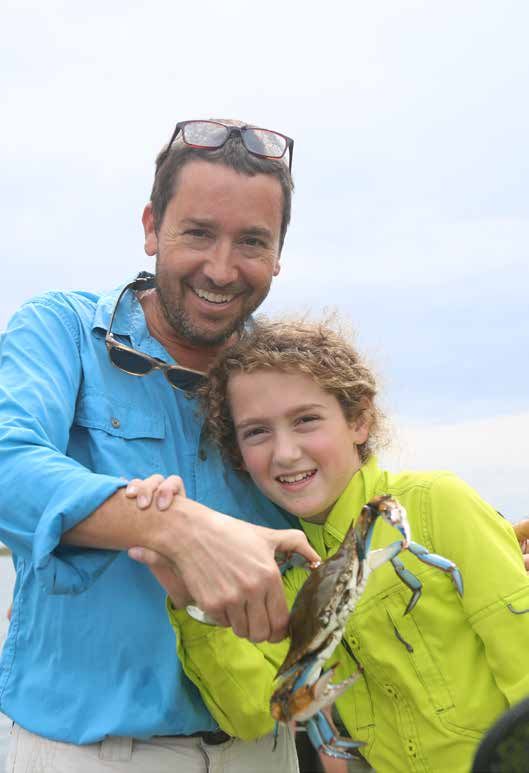
New regulations appear in red text throughout the pamphlet.

MAJOR CHANGES FOR 2020
1.    Effective Aug. 1, 2019, a Louisiana Resident who was honorably discharged from the
      armed forces of the United States or a reserve component of the armed forces of
      the United States, including the National Guard, for the purposes of purchasing a
      fishing/hunting license will be considered a bona fide resident of Louisiana once he/
      she possess a Louisiana driver’s license, or, if not licensed to drive, is in possession
      of a special identification card issued by the Department of Public Safety and
      Corrections under the provisions of R.S. 40:1321
2.    The public operation of water control structures on WMAs is prohibited.
3.    It is required that all WMA users utilize a WMA Self Clearing Permit for ALL
      activities.
4.    ALL nighttime activities on Pointe-aux-Chenes WMA are prohibited.
5.    Commercial fishing in Wonder Lake on Pointe-aux-Chenes WMA is prohibited.
6.    No drop nets left unattended at any time on Pointe-aux-Chenes WMA.
7.    A maximum of 12 drop nets may be possessed/attended per boat or vehicle on
      Pointe-aux-Chenes WMA.

MARINE FISHERIES
Please refer to the LDWF website for current information:
www.wlf.la.gov/fishing/recreational-fishing
1. During 2020, the use of recreational crab traps will be prohibited in designated derelict
     crab trap cleanup areas. Please check our website for the most recent information.
2. During the 2019 legislative session, language was amended regarding the placement
     of escape rings in crab traps.
3. In September 2019, the Wildlife and Fisheries Commission promulgated a Notice of
     Intent to consider modifying the recreational minimum length limits for male shortfin
     mako sharks to 71 inches fork length and 83 inches fork length for female shortfin
     mako sharks. Please check current regulations prior to harvesting mako sharks.
4. The Gulf of Mexico Fisheries Management Council is considering changes that would
     increase the minimum length limit of recreationally harvested cobia to 36 inches fork
     length in federal waters. Please check www.gulfcouncil.org for the most current regu-
     lations.

        Free Fishing Weekend
     JUNE 13-14
                                                   Enjoy a weekend of fishing in Louisiana without
                                                   having to purchase a license. See www.wlf.la.gov
                                                   for special events and more information

This public document was published at a total cost of $????????. 200,000 copies of this public document were
published in the first printing at a cost of $?????????. This document was published by the Louisiana Department of
Wildlife and Fisheries, 2000 Quail Drive, Baton Rouge, LA to inform Louisiana residents and non-residents as to the
rules and regulations governing the fishing resources of the State of Louisiana. This material was printed in accor-
dance with the standards for printing by state agencies established pursuant to R.S. 43:31. Printing of this material
was purchased in accordance with the provisions of Title 43 of the Louisiana Revised Statutes.
LDWF FISHERIES CONTACT INFORMATION
         FRESHWATER OFFICES                             SALTWATER OFFICES
        Minden              318.371.3050               Lacombe             985.882.0027
        Monroe              318.343.4044               Grand Isle          985.787.2163
        Pineville           318.487.5885               New Orleans         504.284.2030
        Lake Charles        337.491.2577               Bourg               985.594.4139
        Lafayette           337.262.2080               Lafayette           337.262.2080
        Baton Rouge         225.765.2337               Lake Charles        337.491.2579
        Lacombe             985.882.5228
        Natchitoches        318.357.3214

                         LDWF ENFORCEMENT OFFICES
                  Have a specific question that you don’t see answered here?
                  Call an Enforcement Office to speak with someone directly.
          Pineville            318-487-5634        Baton Rouge          225-765-2999
          New Orleans          504-284-2023        Lake Charles         337-491-2580
          Lafayette            337-262-2080        Minden		             318-371-3049
          Thibodaux            985-447-0821        Monroe               318-343-2417

         LICENSING / BOAT REGISTRATION INFORMATION
                            (225) 765-2887 or (225) 765-2898
             For specific information on boat registration, please visit
                    www.wlf.la.gov/boat-registration-boat-and-motor-titles

                                          DISCLAIMER
This publication is not an official copy of the laws in effect and should not be utilized or
relied upon as such. It does represent an attempt by the publisher to present, as a public ser-
vice, a partial summary of some of the laws in effect at the time of the printing of this publica-
tion. Substantive changes to the law may very well occur following the printing of this publica-
tion. For these reasons, the accuracy of the information contained within this publication can-
not be guaranteed and the reader is cautioned that it is his responsibility to apprise himself of
the laws in effect at any given time. These laws include those contained within the Louisiana
Revised Statutes, particularly Title 56, the official regulations of the Louisiana Wildlife and
Fisheries Commission, federal laws, and any local or parish ordinances. State laws can be viewed
on the legislative website: www.legis.state.la.us.
Fishing regulations on state Wildlife Management Areas and Refuges may differ from those
contained in this pamphlet. Consult the Wildlife Management Area and Refuge Regulations
portion of this pamphlet or contact the nearest LDWF office for WMA & refuge regulations.

Regulations of the U.S. Department of the Interior and U.S. Department of Commerce strictly
prohibit unlawful discrimination in departmental federally assisted programs on the basis of
race, color, national origin, age, or handicap. Any person who believes he or she has been
discriminated against in any program, activity, or facility operated by a recipient of federal
assistance should write to: Director, Office for Equal Opportunity, U.S. Department of the
Interior, Washington D.C. 20240.
LICENSING
RECREATIONAL FISHING FEES
Non-
Resident
Resident
Basic Fishing Season $9.50 $60.00
Saltwater License (Basic Fishing required) $13.00 $30.00
Basic Fish Trip - 1 day $5.00
Saltwater Trip - 1 day $17.50
Hook and Line (cane pole) $2.50
Charter Passenger License (3-day)1 $10.00 $10.00
Charter Skiff (3-day) 2
$30.00
LA Sportsman's Paradise License 3
$100.00
Senior Fish/Hunt (60 years and older)
4
$5.00
Non-Resident Student Basic Fishing 5
$9.50
NR Student Saltwater Fishing
$5.50
(Basic Fishing required)5
Resident Disabled Basic Fishing6 $2.50
Resident Disabled Saltwater 6
$2.50
Offshore Landing Permit 7
Free Free
MILITARY
Active Military Basic Fishing $9.50 $9.50
Active Military Saltwater $5.50 $5.50
Resident LA National Guard Fish/Hunt $50.00
Resident/Native Retired Military Hunt/Fish $5.00
Resident Surviving Spouse Killed in Action Fish $2.50
FISHING GEAR
Crab Traps (limit 10) $15.00 $60.00
Slat Traps (limit 5) $20.00 $80.00
Trawls - up to 16 feet $25.00 $100.00
Trawls - 16 feet to 25 feet $80.00 $320.00
Oyster Tong (per tong) $5.00 $20.00
Crawfish Traps (limit 35) $15.00 $60.00
Pipes/Drums (limit 5) $10.00 $40.00
Cans/Buckets (limit 5) $10.00 $40.00
Wire Nets (limit 5) 8
$20.00 $80.00
Hoop Nets (limit 5) 8
$20.00 $80.00
8 2020 Louisiana Fishing RegulationsLICENSING
1
Valid to fish from a charter vessel in saltwater areas of the state, with a licensed guide on board
at all times.
2
Valid to fish under the direction of a charter operation in a licensed charter skiff in saltwater
areas of the state.
3
Sportsman’s Paradise License: Includes Basic and Saltwater Fishing, Basic and Big Game
Hunting, Bow, Primitive Firearms, Turkey, LA Duck and WMA Hunting Permit, and all recre-
ational gear licenses (EXCEPT recreational trawls greater than 16 feet in length).
4
Senior Fish/Hunt License: Any resident who reached age 60 on June 1, 2000 or later must
obtain a Senior Hunt/Fish License to hunt or fish. This license is in lieu of basic and saltwater
fishing, basic hunting, big game, bow, primitive firearms, LA duck license, turkey stamp and
WMA hunting permit. It does not include special gear such as trawls, crab traps, crawfish traps,
hoop nets, etc.
5
NR Student: Applies to a nonresident who is enrolled as a full-time student at an accredited
college, university or high school that has a physical campus in Louisiana. Verification of full-time
status on the Department form available at www.wlf.la.gov/licenses. Any person fishing under a
“student license” must carry valid student I.D. card indicating current full time status while hunt-
ing or fishing.
6
LA Disabled Fishing and Saltwater: See page 12.
7
Recreational Offshore Landing Permit (ROLP): See page 10.
8
Recreational wire and hoop nets shall be used only in the geographical areas of the state des-
ignated as freshwater (see page 20).
LIFETIME LICENSES
LIFETIME LICENSE FEES Lifetime fishing licenses include both fresh-
water and saltwater fishing.
Lifetime Fishing
$200 Lifetime licenses are available from Baton
(5-13 years old)
Rouge office only. Allow three weeks pro-
Lifetime Fishing cessing time. Applicants are required to
$300
(14 years and older) have lived in Louisiana for the immediate 6
Lifetime Hunt/Fish months prior to making application to
$200 qualify for resident rates. Mandatory docu-
(0-4 years old)
ments required for applicants over the age
Lifetime Hunt/Fish of 18 are a valid LA driver’s license issued a
$300
(5-13 years old) minimum of 6 months and one of the fol-
lowing:
Lifetime Hunt/Fish
$500 1. Louisiana voter's registration card
(14 years and older) 2. Louisiana vehicle registration or
NR Lifetime Hunt/Fish $3,000 3. Two previous year's state tax filing,
stamped by Department of Revenue
Lifetime Resident and Taxation.
Senior Hunt/Fish $50 (Applications available at www.wlf.la.gov/
(60 or older) licenses or by calling 225-765-2887)
10 times Mandatory paperwork for applicants under
annual fee the age of 18 is the following:
Lifetime Fishing Gear
per gear • Original or certified copy of the birth
type certificate
• Copy of both parents driver’s license
www.wlf.louisiana.gov 9LICENSING
Recreational fishing and hunting licenses may be purchased online at
la-web.s3licensing.com. The license can be printed using your home printer for
immediate use or saved to a mobile friendly device. Methods of payment are
Visa, MasterCard, Discover. A convenience fee is assessed. Customers wanting a
license on durable, waterproof paper can still visit any license vendors.
RECREATIONAL LICENSES
ABOUT THE LICENSE
• Recreational licenses are valid from the date of purchase, are available for pur-
chase each June 1, and expire June 30 of the following year.
• To obtain licenses at resident rates, proof of residency is required. Valid forms of I.D.
include (*NOTE: valid ID must be held for 6 months before buying license):
• Louisiana driver’s license
• Louisiana ID card (issued by the Department of Public Safety)
• Recreational Licenses that are purchased at la-web.s3licensing.com via mobile device
(smart phone, laptop, tablet, etc.) will not receive a license in the mail. You will receive
an email with the attached license that can be saved and/or printed.
• Effective Aug. 1, 2019, a Louisiana Resident who was honorably discharged from the
armed forces of the United States or a reserve component of the armed forces of the
United States, including the National Guard, for the purposes of purchasing a fishing/
hunting license will be considered a bona fide resident of Louisiana once he/she pos-
sess a Louisiana driver’s license, or, if not licensed to drive, is in possession of a special
identification card issued by the Department of Public Safety and Corrections under
the provisions of R.S. 40:1321
WHO NEEDS A LICENSE
Anglers 16 years of age or older who take or possess fish in Louisiana waters must pos-
sess a fishing license.
WHO DOES NOT NEED A LICENSE
• Children under the age of 16 do not need a fishing license (15 and under).
• Residents born before June 1, 1940 who have lived in Louisiana for six months prior to
fishing are exempt from basic and saltwater licenses but MUST have appropriate gear
licenses when using trawls, crab traps, slat traps, oyster tongs, crawfish traps, wire
nets, hoop nets or any other legal fishing gear.
FISHING IN SALTWATER
Title 56, Section 302.1.C.(1) requires that all recreational anglers fishing south of the “salt-
water line” (see page 20) for saltwater species have in their possession a Louisiana saltwa-
ter angler’s license IN ADDITION TO a basic Louisiana fishing license EXCEPT those persons
otherwise exempted. All regulations apply regardless of where the fish is taken.
RECREATIONAL OFFSHORE LANDING PERMIT
Recreational anglers who are 16 years of age or older and charter captains are required to
obtain this permit (free of charge) to possess tunas, billfish, swordfish, amberjacks, grou-
pers, hinds, snappers, dolphinfish, wahoo and cobia. Anglers wishing to obtain or renew a
permit must register or login at rolp.wlf.la.gov. More details on this program are also avail-
able on this site. The requirement for anglers on a for-hire trip to have the permit has been
removed, instead it is required that the charter captain have a valid Charter Recreational
Offshore Landing Permit in his/her possession.
10 2020 Louisiana Fishing RegulationsLICENSING
ACTIVITIES THAT REQUIRE A LICENSE
A valid Basic Fishing License is required to possess fish in Louisiana waters OR to use the
following gears in pursuit of fish:
• Bow and arrow • Cast net with a radius not to exceed 8
• A barbed or barbless spear feet, 6 inches
• Frog gig/catcher • Crabbing on a state refuge or wildlife
• Scuba gear management area (WMA)
• Hook and Line • Crab Traps*
• Trawl*
*Gear licenses for crab traps and/or trawls can be purchased with the requirement of basic
fishing license. If a person wishes to utilize these gear types in the defined saltwater area,
one must also possess a saltwater license.
MILITARY RECREATIONAL LICENSES
• Active-duty members of the United are available at www.wlf.la.gov/
States armed forces, including Na- licenses or by calling 225-765-2887.
tional Guard, are eligible to purchase • A Louisiana resident or native born
annual licenses for the same fee that Retired member of the United States
Louisiana residents pay for annual li- armed forces, including Louisiana Na-
censes. tional Guard, is eligible to purchase a
• An active-duty military member’s combination license to hunt and fish
spouse and/or any dependents may for $5. (Application for this license can
also obtain a fishing license at the Lou- be mailed to the Baton Rouge office or
isiana resident rate. presented to the Baton Rouge office in
• In order to obtain Louisiana resident person).
rate licenses the active-duty member • A Louisiana resident who is a surviv-
of the military, spouse or dependents ing spouse of a member of the United
must present a valid active duty mili- States armed forces, including Loui-
tary ID card at the time of the license siana National Guard, who was killed
purchase. in action while in a combat zone, is
• A Louisiana resident who is a member eligible to purchase a recreational fish-
of the Louisiana National Guard or ing license for $2.50. (Application for
any reserve component of the United this license can be mailed to the Baton
States armed forces may purchase a Rouge office or presented to the Baton
combination license to hunt and fish Rouge office in person).
for $50. Information and applications
www.wlf.louisiana.gov 11LICENSING
TEXAS/LOUISIANA RECIPROCAL
• Louisiana and Texas residents who • Louisiana residents born before June
hold resident licenses from their resi- 1, 1940 are not required to have a li-
dent state or who are exempted from cense to fish border waters, only.
holding resident licenses in their state • Louisiana residents who are 17 to 64
may fish the border waters between years of age must purchase Texas non-
Texas and Louisiana without additional resident fishing license(s) when fishing
licenses. Boundary waters include: in Texas, except when fishing in border
• Caddo Lake waters.
• Toledo Bend Reservoir • Texas residents who are 65 years old
• Sabine River or older may fish in Louisiana public
• Sabine Lake waters (both freshwater and saltwa-
• Sabine Pass ter) as long as they possess valid Texas
• Louisiana residents who are 65 years resident license(s) and comply with
old or older may fish in Texas public Louisiana law.
waters (both freshwater and saltwa- • Texas residents born before Sept. 1,
ter) as long as they possess valid Loui- 1930 must possess Texas resident fish-
siana resident licenses and comply ing license(s) when fishing in Louisi-
with Texas law. ana, except in the border waters.
DISABILITY LICENSES
• Resident veterans who have a perma- • As defined in R.S. 47:463.4(E), Mobil-
nent service-connected disability clas- ity impaired persons that are bona
sification of 50 percent or more, and fide residents of Louisiana, in posses-
residents who are blind, paraplegic or sion of valid identification, and over
multiple amputee can be issued rec- 60 years of age may use one legal slat
reational basic and saltwater fishing trap and/or one hoop net not greater
license(s) for free. than 18 feet by 8 feet, where those
• Residents who are totally and perma- gear are legal, without a license, only
nently disabled and receiving federal for the purpose of catching catfish and
social security disability benefits or only for home consumption.
disability retirement income from a re- • Applications for these licenses can be
tirement system whose members are mailed to the Baton Rouge office or
exempt from social security pursuant presented to the Baton Rouge office
to the Railroad Retirement Insurance in person.
Act or employees of the state or a po- • Application forms for the Resident Dis-
litical subdivision of the state that has abled Sportsman License or Resident
not voluntarily agreed to participate Disabled with Social Security Ben-
in federal social security may qualify efit License are available at www.wlf.
for reduced rate basic and saltwater la.gov/licenses. For more information
fishing licenses. (This exemption does contact Sports License at 225-765-
not apply to Supplemental Security In- 2887
come benefits).
• Residents required to use one or more
artificial limbs or permanent braces
for mobility or a single amputee can
be issued recreational basic and salt-
water fishing licenses for free.
12 2020 Louisiana Fishing RegulationsDEFINITIONS
DEFINITIONS
1. Angling: to fish with rod, fishing pole or hook and line, with or without a reel.
2. Bag Limit/Creel Limit: the maximum number of a species permitted to be taken by one per-
son in any one day.
3. Bait Seine: a net measuring no more than 30 feet in length with a mesh size not exceeding
1/4-inch mesh bar, 1/2-inch mesh stretched, and operated solely on foot and solely by hand,
without any mechanical device, pulley or mechanical assistance whatsoever.
4. Bait Species: all species of fish and other aquatic life utilized for bait.
5. Bandit Gear: vertical hook-and-line gear with rods attached to a vessel and with line retrieved
with rods and with line retrieved by manual, electric or hydraulic reels. (Use prohibited in
state waters)
6. Bona Fide Resident:
A. any person who has resided in this state continuously during the six months immediately
prior to the date on which he applies for any license and who has manifested his intent
to remain in this state by establishing Louisiana as his legal domicile, as demonstrated by
compliance with all of the following, as applicable.
• If registered to vote, he is registered to vote in Louisiana.
• If licensed to drive a motor vehicle, he is in possession of a valid Louisiana driver’s
license.
• If owning a motor vehicle located within Louisiana, he is in possession of a valid Loui-
siana registration for that vehicle.
• If earning an income, he has filed a Louisiana state income tax return and has com-
plied with state income tax laws and regulations.
B. any person who possesses a resident license from any other state shall not qualify for a
resident license in Louisiana.
7. Can: a metal container of not more than 55-gallon capacity which is set for the purpose of
taking fish.
8. Cast Net: a light circular net of vegetable or synthetic materials that is weighted around its
perimeter and is thrown by hand over the water.
9. Crab Dropnet: any device constructed with vegetable, synthetic, or metal fibers and without
flues or throat, attached to a wire frame that forms a net basket and is used for the purpose
of taking crabs. This device shall be operated solely by hand and fished in a stationary, passive
manner.
10. Crab Trap: a cube-shaped, device constructed of wire, no larger than 30 inches on any side,
and with either a bait box or materials providing cover or shelter for peeler crabs. The en-
trance funnels must extend no further than 7 inches into the inside of the trap, with the open-
ings to the entrance funnels on the vertical wall of the trap such that the horizontal diameter
of each opening is at least one and one-half times the vertical diameter of the opening.
11. Crawfish Net: any device constructed with vegetable or synthetic material without flues or
throats attached to a wire frame that forms a net basket and is used for the purpose of taking
crawfish.
12. Crawfish Trap: any device constructed of coated wire with the opening of the throats or flues
not exceeding 2 inches and which is used for the express purpose of taking crawfish.
13. Dip Net: a net, usually a deep mesh bag of vegetable or synthetic materials, on a fixed frame
not to exceed 3 feet in diameter attached to a handle that is held and worked solely by hand
by no more than one individual, and without any mechanical assistance.
14. Finfish: (noun) any of numerous cold-blooded aquatic vertebrates that characteristically swim
with fins, breathe with gills and are covered with skin or scales.
15. Fish: (noun) all finfish, shellfish and crustaceans and all other species of aquatic life.
16. Fork Length: distance from tip of snout to midline of caudal fin. Used to measure some fish
with deeply forked tails, such as amberjack.
17. Freshwater Game Fish: see “Game Fish” definition.
18. Freshwater Recreational Fish: any species of freshwater fish taken for recreational purposes.
19. Fyke Net: any cone-shaped net of vegetable or synthetic fibers having throats or flues which
are stretched over a series of rings or hoops to support the webbing, with vertical panels of
net wings set obliquely on one or both sides of the mouth of the cone-shaped net.
www.wlf.louisiana.gov 13DEFINITIONS
20. Game Fish: all of the following species of freshwater and saltwater fish.
A. Freshwater Game Fish: largemouth bass (Micropterus salmoides), spotted bass (Microp-
terus punctulatus), shadow bass (Ambloplites ariommus), black and white crappie (Po-
moxis nigromaculatus, P. annularis), white bass (Morone chrysops), yellow bass (Morone
mississippiensis), striped bass (Morone saxatilis), hybrid striped bass (striped bass-white
bass cross or striped bass-yellow bass cross), and any species of bream (Lepomis sp.).
B. Saltwater Game Fish: any sailfish (Istiophorus platypterus), blue marlin (Makaira indica),
black marlin (Makaira nigricans), striped marlin (Tetrapturus audax), hatchet marlin (Tet-
rapturus spp.), white marlin (Tetrapturus albidus), and red drum (Sciaenops ocellatus).
21. Hook: any curved or bent device attached to a line for the purpose of taking fish or alligator and
consisting of not more than one eye and one shank with no more than three barbs.
22. Hoop Net: a cone-shaped net of vegetable or synthetic materials having throats or flues and
which are stretched over a series of rings or hoops to support the webbing.
23. Landing Net: means a net, usually a mesh bag of vegetable or synthetic material on a fixed
frame attached to a handle held and operated by hand for the sole purpose of assisting in the
landing of fish legally caught by other legal gear.
24. Lead or Wing Net: a panel of netting of any mesh size or length, with or without weights
and floats, attached to one or both sides of the mouth of a cone-shaped net having flues or
throats, and set so as to deflect or guide fish toward the mouth of the net.
25. Licensee: any resident or nonresident lawful holder of an effective license duly issued under
the authority of the Louisiana Department of Wildlife and Fisheries (LDWF).
26. Lower Jaw Fork Length (LJFL): longest distance from tip of lower jaw to midline of caudal fin.
Used to measure billfish such as marlin, swordfish and paddlefish.
27. Mesh Size: the full measure of the mesh as found in use when measured as follows:
A. Bar measure is the length of the full bar stretched from the near side of one knot to the
far side of the other after being tarred, treated or otherwise processed.
B. Stretched measure is the full stretched distance from the near side of one knot to the far
side of the opposite knot diagonally across the mesh. This measurement shall not be ap-
plicable to weaved or woven nets commonly used for menhaden fishing. In woven nets,
stretched measure is the full stretched distance of the opening of the mesh; bar measure
is one-half of stretched measure.
28. Monofilament: a single untwisted synthetic filament.
29. Nonresident: any person who is not a bona fide resident as that term is defined by R.S.
56:8(69) (See Bona Fide Resident on page 13).
30. Possess: in its different tenses, the act of having in possession or control, keeping, detaining,
restraining or holding as owner, or as agent, bailee or custodian for another. When possession
of fish or other wildlife is prohibited, reference is made equally to such fish or other wildlife
coming from without the state as to those taken within the state.
31. Recreational Purposes: a purpose other than deriving or attempting to derive an income of
any kind from the harvest of fish. “Income” as used herein shall not include a prize or award
offered as a prize in a fishing tournament.
32. Reptiles and Amphibians: native frogs, toads, turtles, snakes, lizards and salamanders.
33. Saltwater Fish: all species of finfish which normally inhabit the saline waters of the marine
and estuarine environment for most of their life cycle.
34. Saltwater Game Fish: see “Game Fish” definition.
35. Saltwater Recreational Fish: any species of saltwater fish taken for recreational purposes.
36. Shellfish: an aquatic invertebrate species having a shell. These species include, but are not
limited to oysters, clams, crawfish, shrimp, crabs and other mollusks and crustaceans.
37. Slat Trap: any device, used solely for the capture of catfish, which is cylindrical, rectangular, or
square in cross section configuration, constructed of slats forming the length of the trap, with
at least one pair of slats spaced at least 1 inch apart from each other on at least three sides
of the trap and which is no more than 6 feet in length, 2 feet in diameter or width and which
has one or more cone-shaped throats, flues or entrances.
38. Slot Limit: protective size limits denoting that fish within the range, inclusive of stated mea-
surements, must be returned to the water immediately.
39. Snagging: a method of hooking fish without the fish taking the bait with their mouth. The
angler jerks the fishing line out of the water as soon as any movement is felt on the line.
40. Stupefying Substances or Devices: explosives or chemicals or comparable destructive fishing
practices as a capture technique.
14 2020 Louisiana Fishing RegulationsDEFINITIONS
41. Take: in its different tenses, the attempt or act of hooking, pursuing, netting, capturing, snar-
ing, trapping, shooting, hunting, wounding or killing by any means or device.
42. Test Trawl: a trawl which is not more than 16 feet along the corkline or 20 feet along the
headline or headrope.
43. Total Length: the longest measurable distance from the outermost portion of the snout
lengthwise to the outermost portion of the caudal fin.
44. Transport: in its different tenses, the act of shipping, attempting to ship, receiving or deliver-
ing for shipment, transporting, conveying, carrying or exporting by air, land or water, or by any
means whatsoever.
45. Trawl: any net, generally funnel-shaped, pulled through the water or along the bottom with
otter boards to spread the mouth open while being fished. The term “trawl” also means and
includes plumb staff beam trawls that do not exceed 16 feet, and that do not use otter boards
but are held open laterally by a horizontal beam, and vertically by two vertical beams (plumb
staffs), and that are used while the vessel is under way. Trawls are only allowed to be used in
state waters when and where the shrimp season is open.
46. Trigger: any tension-loaded device that contains several feet of line and a hook or hooks,
which is baited and set, and which automatically hooks and plays a fish.
47. Turtle Trap: any device designed to attract and/or capture turtles in aquatic habitats. It must
be open above water to allow respiration of air-breathing animals and clearly marked “turtle
trap.”
48. Venting Tool: a device intended to deflate the abdominal cavity of a fish to release the gases
so the fish may be released with minimum damage.
49. Wing Net: see Lead Net on page 14.
50. Wire Net: a cone-shaped net of vegetable (cotton, flax, burlap) or synthetic materials (nylon,
polypropylene, plastic), with a mesh no less than 1-inch square or 2 inches stretched, having
throats or flues and which is stretched over wire of 5-inch mesh or greater to support the
webbing.
www.wlf.louisiana.gov 15GENERAL INFORMATION
SALE OF RECREATIONAL FISH PROHIBITED
All aquatic species caught must be for personal use only and are not to be sold or
used for commercial purposes. It is illegal to buy, sell or trade any game fish.
GENERAL INFORMATION FOR FRESHWATER &
SALTWATER ANGLERS
Louisiana is known around the world as a premier sport fishing destination. The Office of
Fisheries uses scientific management methods to protect and enhance fish environments,
habitats and other populations of aquatic species. As an angler, the decisions you make
and your catch help us sustain the fisheries for present and future generations.
KNOW BEFORE YOU GO!
Want to check the weather and river stages before you leave on your next fishing trip? Call
the National Weather Service’s Dial A Forecast for regularly updated marine forecasts.
• Shreveport 318-635-7575 or www.weather.gov/shv
• Lake Charles 337-439-0000 or www.weather.gov/lch
• New Orleans 504-522-7330 or www.weather.gov/lix
Also stay tuned to the NOAA Weather Radio (NWR) for up to the minute broadcasts.
BEST PRACTICES FOR CATCH AND RELEASE FISHING
Proper fish handling techniques are critical for the survival of your catch.
• Never play the fish to complete exhaustion.
• Handle the fish as little as possible and use wet hands, a wet towel or wet gloves.
• Avoid any contact with the gills.
• Keep the fish in the water as much as possible. Do not let the fish flop on a deck or
beach.
• If you must remove the fish from the water, keep air exposure to a minimum.
• Use a landing net only when necessary. A soft knotless mesh or rubber net is less
damaging to the fish’s eyes, fins and mucus coating (slime).
• Circle hooks, barbless hooks or hooks with crimped barb make removal easier.
• If the hook is deeply buried, cut the line as close to the hook as possible.
• Return the fish to water as quickly as possible. If it is sluggish, gently hold it and move
it forward and back to get water moving across the gills.
A fish that appears to be in poor condition probably has a low chance of survival. If legal,
consider keeping that fish for consumption.
16 2020 Louisiana Fishing RegulationsGENERAL INFORMATION
CARING FOR YOUR CATCH
You can never be too careful when preserving your catch for later consumption. The fish
must be iced down to remain fresh. A fish that feels mushy and has cloudy eyes may have
spoiled and can make you sick.
• Be sure you have plenty of ice on hand. Place the fish on ice as soon as you remove
the hook.
• Pour the ice out of the bag into your ice chest and place a layer of ice above and
below the fish.
• Another technique in keeping fish fresh on hot days or for extended periods is to gut
the fish and pack the body cavities with ice. This practice chills the fish faster.
• Anglers using baskets and live wells should be aware that overcrowded fish die
quickly. If using a stringer, put the stringer through the jaw tissue and not the gills.
Anglers using live wells on their vessel should also be aware of this danger.
• Cleaning your fish at the end of the fishing day is recommended. If you stored your
fish on ice, use fresh ice for the newly cleaned fish.
• Keep the fish as cold as possible and refrigerate them as quickly as possible.
www.wlf.louisiana.gov 17GENERAL INFORMATION
HOW TO MEASURE YOUR FISH
Use these guidelines to measure a fish correctly (refer to Illustrations):
1. Place the fish on its side on a flat board with the jaw closed.
2. Total Length - Measure in a straight line from the tip of the snout to the extreme tip
of the tail fin. Adjust the tail by rotating (Example 1) or by squeezing (Example 2) to
obtain the maximum length of the fish (Figure 1).
3. Fork Length - Measure in a straight line from the tip of the snout to the fork of the
tail (Figure 2).
4. Lower Jaw Fork Length - Measure in a straight line the length from the tip of the
lower jaw to the fork of the tail (Figure 3).
5. Curved Fork Length - Measure from the tip of the upper jaw to fork of tail measured
along the contour of the middle of the body (Figure 4).
6. Carcass Length – Measure the curve from posterior edge of gill opening to anterior
portion of caudal keel (Figure 4).
Figure 1
Example 1. Rotating
Second Dorsal Fin Precaudal
First Dorsal Fin Notch
Anal Fin Caudal
Pelvic Fin Tail Fin
Total Length
Example 2. Squeezing
Total Length
Second Dorsal Fin
First
Dorsal Fin
Pelvic Fin
18 2020 Louisiana Fishing RegulationsGENERAL INFORMATION
Figure 2
Fork Length
Figure 3
Lower Jaw Fork Length
Figure 4
Curved Fork Length
Measurement
Tail Fork
Upper Jaw
Caudal Keel
Dorsal Insertion
Pectoral Fin
Carcass Length
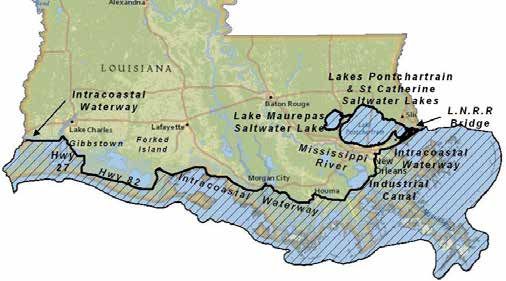
Fish illustrations by Duane Raver www.wlf.louisiana.gov 19GENERAL INFORMATION GENERAL INFORMATION SALTWATER - FRESHWATER LINE The saltwater-freshwater line in Louisiana extends easterly from the Texas state line all the way to the Mississippi state line. The areas north of this saltwater-freshwater line are deemed freshwater. The areas south of the described line, including a number of saltwater lakes and waterways, are legally considered saltwater. Although the actual levels of salt in the water may differ from day to day due to tides and shifts in wind and currents, in most cases, the flora and fauna found on either side of the line differ dramatically. A detailed description of the saltwater-freshwater line can be found below. As with any regulation is- sue, please contact your local LDWF Enforcement Office with any questions you may have (see page 6). NOTE: Persons fishing and/or possessing saltwater fish in these areas are required to have a saltwater fishing license in addition to the basic fishing license. Persons fishing for and/or possessing freshwater fish in saltwater areas are not required to hold a saltwater license. LOUISIANA SALTWATER LINE DEFINITION The Intracoastal waterway from the Texas- way from the Orleans Parish line to the Louisiana boundary to its junction with Mississippi state line. Louisiana Highway 27 at Gibbstown, south along Louisiana Highway 82, east to its Also, the areas south of the above described junction with the Intracoastal Waterway at line, plus the saltwater lakes known as Lake Forked Island, the Intracoastal Waterway Maurepas, Lake Pontchartrain, Lake St. from Forked Island to Bayou Barataria to Catherine, Chef Menteur Pass (except that the Harvey Canal, the Harvey Canal to the 7/10 of a mile section from Bayou Sauvage Mississippi River, the Mississippi River to south to the Intracoastal Waterway), the the Industrial Canal, the Industrial Canal to Rigolets, Unknown Pass, Pass Manchac, the Intracoastal Waterway, the Intracoastal Intracoastal, and that portion of the Waterway to the Rigolets in Orleans Parish Calcasieu Ship Channel from the Intracoastal to the Louisville & Nashville Railroad bridge, Waterway south to the Gulf of Mexico, shall the Louisville & Nashville Railroad right-of- be designated as saltwater areas. 20 2020 Louisiana Fishing Regulations
FRESHWATER FISHING

 No fish of any species from outside of the state of Louisiana shall be liber-
        ated within the state except upon written permission of the
                             Secretary of LDWF.

FRESHWATER FISHING IN LOUISIANA
LICENSE REQUIREMENTS
All anglers fishing in freshwater must possess a valid Basic Fishing License.
A Basic Fishing License is also required to use the following gear:
•   Bow and arrow
•   Barbed or barbless spear
•   Frog gig/catcher
•   Scuba gear
•   Hook and Line
•   Cast net (radius not to exceed 8 feet, 6 inches)
All applicable licenses must be in possession of the fisherman.

FRESHWATER SPECIES YOU CANNOT HARVEST
The federally listed threatened and endangered, or prohibited species listed below are off
limits for recreational take. Civil and criminal penalties may apply for taking the following
aquatic species.
•     Louisiana pearlshell mussel (Margaritifera hembeli)
•     Inflated heelsplitter mussel (Potamilus inflatus)
•     Fat pocketbook mussel (Potamilus capax)
•     Pink mucket mussel (Lampsilis abrupta)
•     Gulf sturgeon (Acipenser oxyrinchus desotoi)
•     Pallid sturgeon (Scaphirhynchus albus)
•     Shovelnose sturgeon (Scaphirhynchus platorynchus)
•     Rabbitsfoot Mussel (Quadrula cylindrica cylindrica)

PROHIBITED FRESHWATER FISH
It is unlawful for any person, firm, or corporation to possess, sell, or transport any of the
following species of fish into Louisiana without first obtaining the written permission of the
secretary of the Department of Wildlife and Fisheries.
•      All species of tilapia
•      Carp (except koi, common carp and goldfish)
•      Freshwater electric eel
•      Rudd
•      All members of the families of Asian swamp eels, snakeheads, walking catfishes, and
       pencil catfishes
Exotic species of Asian carp (silver, bighead, black and grass) taken from state waters must
not be returned to the water and may not be possessed alive.
No person shall have in possession or sell in this state a piranha or Rio Grande cichlid. If an
angler catches a Rio Grande cichlid using legal methods, the fish shall not be returned to
the water or kept alive while in the possession of the angler.
                                                           www.wlf.louisiana.gov          21
FRESHWATER FISHING
DAILY BAG LIMIT
Recreational anglers must not exceed the daily bag limit for any species while on the water.
POSSESSION LIMIT
No recreational anglers can have in their possession more than twice the daily bag limit of
any species of freshwater recreational fish, EXCEPT that anglers may have up to three
times the daily bag limit of black bass (Micropterus spp.) below U.S. Highway 90 in coastal
Louisiana. Anglers may have up to 100 crappie in their possession at Toledo Bend Reservoir.
All freshwater game fish caught in any type of recreational or commercial net or trap must
be returned immediately to the water from which it was taken without injury. See tips for
safely releasing fish on page 16.
No person shall possess filleted fish while aboard a vessel in freshwater. However, for the
purpose of consumption, a person shall have no more than 2 pounds of filleted finfish per
person on board a vessel in freshwater.
METHODS FOR FISHING OR TAKING
FRESHWATER FISH
There are many ways to catch fish and other aquatic species in Louisiana’s beautiful rivers, lakes,
bayous, ponds and streams. The headings below define the legal methods and illegal methods
of take, and certain exceptions that are allowable by species, methods and locations.
Always check with an LDWF Enforcement Office if you have questions. See page 6 for con-
tact information.
LEGAL METHODS OF TAKE
• Hook and Line
• Bow and Arrow
• Yo-yos or Trigger Devices
• Recreational Slat Traps
• Recreational Crawfish Traps (must be marked with a waterproof tag, provided by the
fisherman, with the name and recreational gear license number of the fisherman leg-
ibly printed on the tag, and must have a minimum mesh size of a hexagon of 3/4 by
11/16 of 1 inch from wire to wire not including any coating on the wire)
• Standard Spearing Equipment (used by recreational skin divers submerged in water
when sport fishing)
• Barbed Gig (allowed in saltwater for taking flounder ONLY)
• Recreational Hoop Nets*
• Recreational Wire Nets*
* Allowed only in the geographical areas of the state designated as Freshwater (see map
and definition on page 20).
ILLEGAL METHODS FOR FISHING OR TAKING ALL FISH
It is unlawful to possess any of the prohibited instruments, weapons, substances or
devices described below with the intent to take fish.
• Crossbows
• Poisons
• Spears (see garfish, silver carp and bighead carp exception listed in “Gear Restrictions
by Species” section)
• Stupefying Substances or Devices
• Explosives
22 2020 Louisiana Fishing RegulationsFRESHWATER FISHING
• Guns
• Any instrument or device capable of producing electric current to shock fish
• Snagging Devices (see catfish, silver carp, and big head carp exceptions listed below)
You may not use any aircraft including fixed-wing, dirigibles, balloons, helicopters, or any
other form of aerial surveillance to assist in harvesting finfish, except menhaden and her-
ring-like fish.
GEAR RESTRICTIONS BY SPECIES
Some alternative methods are allowed for catching/taking specific aquatic species.
FRESHWATER GAME FISH GARFISH
Game fish are defined as largemouth bass, LEGAL
spotted bass, shadow bass, yellow bass, • Spears
white bass, striped bass, hybrid striped bass, • Bows and arrows
black crappie, white crappie, and bream LEGAL BAIT SPECIES
LEGAL Including minnows, crawfish and shrimp
• Bream (Lepomis spp.) may not be (does not include game fish)
taken as bait for sportfishing purposes LEGAL
in any form of trap EXCEPT at Toledo • Cast nets
Bend Reservoir, where a minnow trap • Minnow traps
not exceeding 24 inches in length and • Recreational Trawls
having a throat no larger than 1 inch by • Dip Nets (net must be on a fixed frame
3 inches may be used to take bream no larger than 3 feet in diameter
for non-commercial bait purposes worked exclusively by hand, by no
NOT LEGAL more than one person, without any
• Standard Spearing Equipment used by mechanical assistance)
recreational skin divers is prohibited. • Bait Seines (with a maximum mesh
• Bow and Arrow size not exceeding 1/4 inch bar, 1/2
• Possession of game fish with nets or inch stretched and 30 feet in length;
traps including recreational hoop must be operated solely on foot and
nets, slat traps, pipes, buckets, drums, by hand, without any pulley, mechani-
tires or cans including those licensed cal device or assistance whatsoever)
for recreational purposes. SILVER CARP & BIGHEAD CARP
CATFISH LEGAL
LEGAL – snagging devices • Boats
PADDLEFISH (commonly called “spoonbill • Dip nets
catfish,” but are not catfish) • Spears
NOT LEGAL – snagging devices • Snagging
RESTRICTIONS AND EXCEPTIONS BY METHOD
DIVERS
LEGAL
• Standard spearing equipment is the only legal method of take for non-game species
that can be used by a skin diver submerged in water
NOT LEGAL
• The taking of gamefish with standard spearing equipment is prohibited.
MOBILITY IMPAIRED INDIVIDUALS
As defined in R.S. 47:463.4(E), mobility impaired persons who are bona fide residents of
Louisiana, in possession of valid identification, and over 60 years of age may use one legal
slat trap and/or one hoop net not greater than 18 feet by 8 feet, where those gear are legal,
without a license, only for the purpose of catching catfish and only for home consumption.
www.wlf.louisiana.gov 23FRESHWATER FISHING
RESTRICTIONS BY LOCATION
Some Louisiana waterbodies have specific gear restrictions and are listed below.
ANACOCO LAKE, LAKE VERNON, Trotline Restrictions
ANACOCO BAYOU (Vernon Parish) • All trotlines must be marked, tagged,
BUNDICK LAKE (Beauregard Parish) and dated with the owner/user’s
GRAND BAYOU RESERVOIR (Red River name, address, phone number and
Parish) date of placement. The trotline must
SABINE RIVER (DeSoto Parish) be marked on each end with a floating
Fish Net Restrictions object that is readily visible.
The use of fish nets (gill nets, trammel nets, • No person is allowed to set more than
hoop nets, fish seines) is prohibited in: three trotlines with a maximum of 50
• Bundick Lake hooks per trotline.
• Anacoco Lake • All trotlines must have an 8-foot cot-
• Lake Vernon ton leader on each end of the trotline
• A portion of Anacoco Bayou between to insure that if the trotline is left unat-
the two lakes tended, the cotton leader will deterio-
• Grand Bayou Reservoir rate and the line will sink.
• A portion of the Sabine River (from • All trotlines must be attended daily
March 1 - May 15) in the area from the while in service.
Texas line where the river enters Texas
south to a point where the Texas Duck BOGUE CHITTO RIVER
Refuge Canal intersects the old chan- Seines, Nets and Webbing Restrictions
nel of the Sabine River. • The use of seines, nets or webbing for
the taking of fish in Bogue Chitto River
BLACK LAKE, CLEAR LAKE, PRAIRIE from where it enters the state in the
LAKE (Natchitoches Parish) northern part of Washington Parish to
CADDO LAKE (Caddo Parish) where it enters into the Pearl River in
CHICOT LAKE (Evangeline Parish) St. Tammany Parish is prohibited.
LAKE D’ARBONNE (Union Parish) Taking by Hand
LAKE LAFOURCHE (Caldwell Parish) • The taking of fish from logs, buckets,
LAKE SAINT JOSEPH (Tensas Parish) barrels, drums or natural or artificial
Yo-Yo Restrictions nesting areas by hand grabbing is also
• The placement of any artificial object prohibited in this area.
to anchor a yo-yo or trigger device is
prohibited. CYPRESS LAKE AND BLACK BAYOU
• No more than 50 yo-yos or trigger RESERVOIR (Bossier Parish)
devices allowed per person. Hoop Nets, Wire Nets and Slat Traps
• Each yo-yo or trigger device must be • These devices are prohibited from
clearly tagged with the name, address and March 1 - Oct. 31 of each year.
telephone number of the owner/user. • These devices must be removed from
• All fish or any other animals caught or the lakes prior to March 1 of each year.
hooked must be immediately removed POVERTY POINT RESERVOIR
from the device. No person is allowed to possess, set or use
• Each yo-yo or trigger device must be any recreational hoop nets, recreational
re-baited at least once every 24 hours. wire nets, yo-yos, trotlines or slat traps at
• No yo-yo or trigger device is allowed this location.
to be attached to any metallic object.
• Except for an object used strictly in the TCHEFUNCTE RIVER
construction of a pier, boathouse, sea- Seines, nets, webbing or traps of any kind and
wall, or dock, no object which is driven all types, including slat traps, for the taking of
into the lake bottom, a stump, tree, or fish in the Tchefuncte River, and its tributaries,
the shoreline shall be used to anchor a from its origin in Washington Parish to where
yo-yo or trigger device. “Object” it empties into Lake Pontchartrain in St.
means rebar or other metal material, Tammany Parish, are prohibited.
cane, PVC tubing, construction mate-
rial, or any other type of material.
24 2020 Louisiana Fishing RegulationsFRESHWATER FISHING
FRESHWATER STATE CREEL AND SIZE LIMITS
KEY
MLL - Minimum Length Limit SL - Slot Limit
Possession Limit is TWICE the daily creel limit unless otherwise stated.4
FRESHWATER GAME FISH
Largemouth Bass Spotted Bass
BLACK BASS (Largemouth & Spotted) 1
Location Size Limit Daily Creel Limit
All state waters EXCEPT as follows: None 10 daily
Eagle Lake 16” MLL 10 daily
8 daily
Poverty Point Reservoir 15-19” protected SL2 No more than one over 19”
total length
False River (Pointe Coupee Parish) 14” MLL 5 daily
8 daily
John K. Kelly-Grand Bayou Reservoir
14-17” protected SL2 No more than four over 17”
(Red River Parish)
total length
14-18” protected SL2 8 daily
for Largemouth Bass No more than four
Caddo Lake
No length restriction for Largemouth Bass over 18”
Spotted Bass total length
Toledo Bend Reservoir and the 14” MLL for Largemouth Bass 8 daily in combination or
Sabine River3 above Toledo Bend No MLL for Spotted Bass aggregate
Sabine River from Toledo Bend dam 12” MLL for Largemouth Bass 8 daily in combination or
to I-10 No MLL for Spotted Bass aggregate
Sabine River south of I-10 (Louisiana
Statewide regulations apply 10 daily
waters only)
1
NOTE: For enforcement purposes, a spotted bass is defined as a black bass with a tooth patch on the tongue.
2
Fish falling within a protected slot limit must be immediately released.
3
Sabine River upstream from Toledo Bend Reservoir to the point at which the entire river enters TX (state line
is marked with a sign).
4
Anglers may have up to three times the daily bag limit of black bass (Micropterus spp.) below U.S. Highway
90 in coastal Louisiana providing the fish are kept whole or whole gutted in separate bags for each daily take
limit. The bags must be marked with the date fish were taken, the species and number of fish contained in the
bag, and the name and recreational fishing license number of the person taking the fish.
www.wlf.louisiana.gov 25FRESHWATER FISHING
FRESHWATER GAME FISH
Location Size Limit Daily Creel Limit
STRIPED OR HYBRID STRIPED BASS
(or any combination thereof)
5 daily
All state waters None No more than two over 30” Striped Bass
total length
WHITE BASS
All state waters
EXCEPT as None 50 daily
follows:
Caddo Lake, Sabine
River and Toledo None 25 daily White Bass
Bend Reservoir
CRAPPIE
All state waters
50 daily
EXCEPT as None
100 fish possession limit
follows:
Poverty Point,
25 daily Black Crappie
Caddo Lake and None
50 fish possession limit
Sabine River
Toledo Bend 25 daily
None
Reservoir 100 fish possession limit
Eagle Lake 30 daily
11” MLL White Crappie
(Madison Parish) 30 fish possession limit
YELLOW BASS
All state waters
EXCEPT as None 50 daily
follows:
Caddo Lake, Sabine
River and Toledo None No limit
Bend Reservoir Yellow Bass
FRESHWATER NONGAME FISH
Location Size Limit Daily Creel Limit
BOWFIN (Choupique)
All state waters 16” MLL No limit Bowfin
BUFFALO FISH (or their hybrids)
Smallmouth Buffalo
All state waters 16” MLL 25 daily
Bigmouth Buffalo
Yellow Bass: Iowa Department of Natural Resources; Gizzard Shad: NOAA; All other images by Duane RaverFRESHWATER FISHING
FRESHWATER NONGAME FISH
Location Size Limit Daily Creel Limit
CATFISH
Blue Catfish:
12” MLL 100 daily in the aggre- Blue Catfish
All state waters gate. A fisherman may
Channel Catfish:
EXCEPT as possess up to 25 under-
11” MLL
follows: sized catfish of the three
Flathead Catfish: species combined.
14” MLL Channel Catfish
Blue & Channel 50 daily in the aggregate
Caddo Lake, Sabine Catfish: No more than five over
River and Toledo None 30” total length
Bend Reservoir Flathead Catfish: 10 daily Flathead Catfish
18” MLL
FRESHWATER DRUM (Gaspergou)
All state waters 12” MLL 25 daily
Freshwater Drum
PADDLEFISH
2 daily (fish cannot be
30” max lower jaw retained alive & cannot
Statewide fork length be harvested by snag-
ging methods)
Boundary waters
with Texas and Paddlefish
no legal harvest or possession
below the saltwater
line
SHAD
All state waters None 50 pounds daily Gizzard Shad
STURGEON
No legal harvest or
All state waters N/A Sturgeon
possession
OTHER FRESHWATER FISH
Bluegill
All state waters None No limit Redear Sunfish
Spotted Gar
Yellow Bullhead
CRAWFISH
All state waters None 150 pounds dailySALTWATER FISHING
SALTWATER FISHING IN LOUISIANA
STATE AND FEDERAL LICENSES AND PERMIT REQUIREMENTS
STATE LICENSE REQUIREMENTS • An initial or renewal application
1. Basic Fishing License package can be downloaded from
2. Saltwater Fishing License the NMFS Permit Shop or mailed
3. A Recreational Offshore Landing by calling the NMFS at 888-872-
Permit (ROLP), free of charge, is 8862.
required of all anglers to possess • Renew permits by calling the auto-
tunas, billfish, swordfish, amberjacks, mated voice response system at
groupers, hinds, snappers, dolphin- 888-872-8862. Permits will be
fish, wahoo and cobia, EXCEPT those valid from the date of issuance
anglers on a paid for-hire trip where through Dec. 31, 2019.
the captain possesses a valid Charter • A shark endorsement is required
Recreational Offshore Landing Permit, when targeting or possessing
or those anglers that are under the sharks under this permit. See
age of 16, not normally required to hmspermits.noaa.gov for more
have a fishing license. details.
• The Recreational Offshore Landing 2. An Atlantic HMS Charter/Headboat
Permit can be found on the LDWF Permit is required for all charter or
website at rolp.wlf.la.gov or headboat fishing for and/or retaining
through smartphone applications. regulated Atlantic HMS in federal
The iPhone app can be download- waters of the Gulf of Mexico The per-
ed free of charge from the App mit fee is $20. HMS Charter/Headboat
Store by searching for the “LDWF Permit will be valid from the date of
ROLP.” The Android app can also issuance through Dec. 31, 2020.
be downloaded free of charge
from the Google Play Store by Information about obtaining HMS permits
searching for “LDWF ROLP.” and regulations are available at hmspermits.
noaa.gov or by calling 888-872-8862.
All applicable licenses must be in posses-
sion of the fisherman.
FEDERAL LICENSE REQUIREMENTS
The National Marine Fisheries Service
(NMFS) manages the Atlantic Highly
Migratory Species (HMS) Division in the
Atlantic Ocean, Gulf of Mexico and
Caribbean Sea.
1. An Atlantic HMS Angling Permit is
required for vessels fishing for tunas,
billfishes, swordfish and sharks. You
may apply for an initial or renewal
permit in one of several ways. The
permit fee is $20.
• To apply for an initial or renewal
permit online visit the NMFS Permit
Shop at hmspermits.noaa.gov.
28 2020 Louisiana Fishing RegulationsSALTWATER FISHING
KNOW BEFORE YOU GO
The National Marine Fisheries Service has a • 162.400
Memorandum of Agreement with the National Weather • 162.525
Service to broadcast unanticipated and time-critical fish- • 162.550
ery regulatory actions where there is minimal opportu- • 162.425
nity for advance public notice. These broadcasts are • 162.450
issued for four or five days, 24 hours a day, by selected • 162.475
NWR coastal stations. (VHF frequencies in MHz)
SALTWATER SPECIES YOU CANNOT HARVEST
THREATENED OR ENDANGERED AND PROHIBITED SPECIES
The federally listed threatened and endangered, or prohibited species listed below are off
limits for fishing or recreational take. Civil and criminal penalties may apply for taking the
following aquatic species. If any of these protected species are incidentally caught, they
must be released immediately unharmed. See page 16 for tips on safely releasing fish.
• All Whales • Gulf Sturgeon • Nassau Grouper
• Dolphin (mammal) (Acipenser oxyrinchus • Sea Turtles
• Goliath Grouper desotoi) • Smalltooth Sawfish
• Largetooth Sawfish • West Indian Manatee
SHARKS
• Atlantic Angel Shark • Caribbean Sharpnose Shark • Sand Tiger Shark
• Basking Shark • Dusky Shark • Sevengill Shark
• Bigeye Sand Tiger Shark • Galapagos Shark • Sixgill Shark
• Bigeye Sixgill Shark • Longfin Mako Shark • Smalltail Shark
• Bigeye Thresher Shark • Narrowtooth Shark • Whale Shark
• Bignose Shark • Night Shark • White Shark
• Caribbean Reef Shark
RECREATIONAL SALTWATER TOURNAMENT OPERATORS
Federal regulations require any person con- Mailing Address:
ducting a fishing tournament in the federal HMS Tournament Registration
waters of the Gulf of Mexico involving the National Marine Fisheries Service
catch and/or landing of any HMS regulated 263 13th Avenue S.
species to register with the HMS St. Petersburg, FL 33701
Management Division of the National
Marine Fisheries Service at least four weeks Once the registration form has been pro-
prior to start of the tournament. A cessed an Atlantic HMS Tournament
Tournament Registration Form and more Confirmation Number will be produced and
information is available on the NMFS web- provided to the tournament operator.
site at www.nmfs.noaa.gov/sfa/hms/com- NOTE: Registration is not complete unless
pliance/tournaments/registration.html. the tournament operator has received a
To register a tournament, an Atlantic HMS confirmation number from the HMS
Tournament Registration Form must be Management Division of NMFS. For more
completed, signed, and sent to the Atlantic information call 727-824-5399; hmspermits.
HMS Management Division by mail or fax. noaa.gov.
Fax: 727-824-5398
30 2020 Louisiana Fishing RegulationsYou can also read


