NEWS DECODER - 2021-22 Educational Program Brochure - A global educational news service for young people
←
→
Page content transcription
If your browser does not render page correctly, please read the page content below
A global
      educational     NEWS
                      DECODER
   news service for
     young people

2021-22 Educational Program Brochure
About Us
What we do
News Decoder is a global educational news service for          “Working with
young people. We partner with schools around the world to      News Decoder
teach media literacy and journalistic skills that extend
                                                                  has been an
students’ horizons and understanding of global issues. We
help schools fulfill their mission to create better global       eye-opening
citizens.                                                       experience. It
                                                                    helped me
Why we do it                                                       understand
In 2012, the United Nations set global citizenship education
                                                                that there are
as a top priority. Global citizenship embraces the notion       other ways to
that we all belong to a broad community and common              look at issues
humanity, despite differences in political, economic, social
                                                                   beyond the
and cultural systems. Global citizenship education helps
young people develop a set of core competencies. The            simple binary
eight internationally-recognized global citizenship               of right and
competencies are:                                                        wrong.
  empathy                                                              I deeply
  critical thinking and problem solving                             appreciate
  ability to communicate
                                                                   having had
  conflict resolution
  sense and security of identity                                            the
  shared universal values (human rights, justice, peace)       opportunity to
  respect for diversity and intercultural understanding             learn from
  recognition of global issues and their connectedness
                                                                         them."
We understand that teaching these competencies is easier
said than done. It entails helping students develop            –Saga Leslie,
behaviours that underpin great journalism: to challenge
assumptions, separate fact from opinion, consider
                                                                The Thacher
conflicting viewpoints, identify solutions, accept                   School
constructive feedback and communicate clearly and
impartially. As an innovative educational resource, we help
schools teach these critical competencies.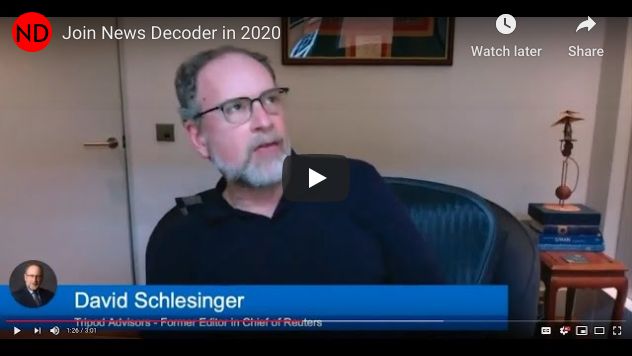
Who we are
News Decoder is led by Nelson Graves, an experienced educator and administrator.
Graves was a correspondent, bureau chief and regional managing editor at Reuters
for 24 years, holding posts in six countries. He later served as admissions director at
Johns Hopkins University’s graduate program in international relations in Italy. Graves
founded News Decoder in 2015.

News Decoder is enriched by a network of more than 50 correspondents who have
decades of experience covering politics, wars, economics, diplomacy and religion for
the world's leading media organizations. They are also authors, professors, scholars
and consultants. News Decoder’s correspondents mentor and coach students at our
partner schools by leading workshops, editing student work and serving as experts in
our global webinars.

Watch the video below to hear from students about
how they have changed as thinkers, communicators
and citizens by participating in our program.
About Our Work

Our 2021-22 educational program
News Decoder is an innovative educational resource for schools committed to
teaching global citizenship. Students at our partner schools have exclusive access to
an array of interactive, hands-on educational services:

                     Content Production: Students identify story topics, pitch their
                     ideas, conduct research and reporting and work with News
                     Decoder's editors to produce multimedia content that is published
                     on our global news site. Faculty can task their students with
                     producing content for News Decoder in their classes, and students
                     can independently work with the News Decoder team to see their
                     story ideas realized in reported articles, personal reflection essays,
                     poetry, podcasts and more.

                     Mentoring: News Decoder’s editorial team works closely with
                     students in the provision of all of our services. In addition to
                     guiding students through a pitching, reporting, drafting and revision
                     process that helps them learn invaluable skills, we offer
                     personalized feedback that challenges students to consider
                     diverse perspectives, check their biases, consult experts and
                     identify solutions to problems.

                     Workshops: We host a series of virtual workshops in the first
                     semester that students from all of our partner schools are invited
                     to join. The interactive workshops are led by News Decoder's
                     correspondents or a member of our editorial team and cover topics
                     such as reporting and drafting techniques and media literacy.

                     E-Learning Courses: Students and faculty have exclusive access to
                     our E-Learning library, which includes journalist-developed courses
                     on media literacy, interviewing, storytelling and podcast creation.

                        Media Literacy: Students are invited to think critically about
                        media’s functions; question who owns media and why; and
                        differentiate good quality media from bad.

                        Reporting 101: Students learn how to secure, prepare for and
                        conduct interviews. They come away equipped to deepen their
                        understanding of complex issues.

                        Drafting 101: Students learn how to craft stories that capture
                        others' attention and convey important information.

                        Podcast Creation: Students learn how to produce a podcast,
                        from start to finish, including podcast best practices.
Co-School Collaboration: We pair each school in our network
with a school in another region and facilitate cross-school
collaboration on webinars and multimedia production. Student
teams from partnered schools work together to identify
reportable topics relating to a common global theme such as
the environment, immigration or social inequality; conduct
reporting; present findings to each other during a one-hour
webinar; and co-produce multimedia packages that showcase
the fruits of their labor.
News Decoder Webinars: Tackling the Big Issues
International Podcast Series: Students can participate in the
creation of our international podcast series, the News Decoder
Podcast, which we co-produce with our media partner
Podium.me and publish through Apple.
Educators' Catalog: Each month, we send faculty our Educators'
Catalog, which is a curated selection of the top educational
articles we have published that month. Our articles impartially
explain — or “decode” — globally significant events, institutions
and innovations and are designed to be used as teaching
resources: articles end with questions that can support student
exercises like Q&A, research projects or debates.
Extending the Classroom: When the coronavirus pandemic ends
and schools resume their student travel programs, News
Decoder will be there to support students in their physical and
intellectual journeys. We help students learn from their
international experiences by encouraging them to probe beyond
the superficial, speak with citizens in overseas destination and
produce multimedia content that reflects on what they learned.
Social Media Promotion: We promote students and partner
schools on our website and social media platforms. Students
who create publishable content can showcase their work when
applying for internships, jobs or university admissions. Schools
can point to the News Decoder partnership and their students’
successes as examples of their innovative commitment to
teaching global citizenship.Global Citizenship Education
News Decoder's educational program is designed to help students develop
journalistic skills and behaviors that foster the global citizenship competencies that
were recognized by a UN Global Citizenship Education Working Group in 2014.
ACTIVITIES OUTCOMES COMPETENCIES
Students acquire these
Students get to... Students learn to... global citizenship
competencies...
Conduct original research Communication skills
Produce multimedia Interview authoritative sources Knowledge of global
content Present information engagingly issues
and impartially Critical-thinking
abilities
Respect for diversity
Consider diverse viewpoints
Receive mentoring by Sense of empathy
Suspend biases
News Decoder staff Problem-solving
Identify global problems and
skills
solutions
Lead meetings with students in Intercultural
Collaborate with
another school understanding
students from another
Identify similarities and Recognition of
school on a webinar
differences in big issues global issues
and multimedia
Conduct research and reporting Communication
package
and present their findings Conflict resolution
Recognition of
Appreciate the complexity of global issues
Read and discuss global issues Appreciation of
our educational Discuss and debate tough universal values
articles questions Critical thinking
skills
Develop journalistic skills and
Communication
behaviors
Intercultural
Participate in our Consult multiple perspectives on
understanding
workshops controversial topics
Problem-solving
Appreciate the benefits of
skills
subject-matter expertiseHow a Partnership Works
News Decoder is an innovative educational
resource that is available to the entire school "The opportunity to
community. Faculty and students from different participate in and
departments take advantage of our resources lead SYA's
throughout the year in different ways.
Nationalism in
Departments and faculty are encouraged to Europe
integrate our resources into their curriculum and webinar provided
courses. Student teams engage directly with us
as they participate in workshops, prepare
me with the tools to
webinars and produce multimedia packages in manage a team and
partnership with students from another world research
region. Students submit multimedia content to
complicated issues."
our twice-yearly storytelling contest and
participate in our international podcast series.
The timeline on the next page shows how
students from a partner school can engage with – Elisabeth
us throughout the school year. The News
Decoder team systematically drives engagement
Wachtel, Student
by organizing and hosting activities and ensuring Ambassador,
faculty and students are aware of how to SYA France
participate in them.
"What is extremely convenient about News Decoder is that it is
flexible. Students can adapt pieces they are working on for
their classes or use this outlet to publish on any other topics of
interest. This gives students the chance to drive their own
learning while honing their critical thinking and communication
skills.”
– Maya Schkolne, Humanities Faculty,
African Leadership AcademyAUGUST
Faculty and Student Ambassadors participate in
a 45-minute online orientation session and meet SEPTEMBER
peers from partner institutions around the world. Students receive log-in credentials to access the
site’s password-protected resources.
Students receive a welcome email introducing
OCTOBER News Decoder and explaining how to engage with
A correspondent leads a workshop with students us.
on our Pitch, Report, Draft and Revise process.
Student Ambassadors and faculty speak to their
Student Ambassadors promote our first of two peers and colleagues about News Decoder.
Storytelling Contests within the school.
Faculty receive the first Educators' Catalog of the
Schools from different regions are paired up to year.
tackle a common topic of global interest in their
webinar and multimedia packages.
NOVEMBER
Students take 30-minute E-Learning courses to
learn about media literacy, research and
interviewing.
DECEMBER
Students submit stories to the first of two Students pitch Contest submission ideas to News
Storytelling Contests. Decoder through our online pitching portal and
receive personalized feedback on how to report
Contest winners are chosen by a jury and and produce content.
awarded cash prizes.
News Decoder facilitates a Brainstorming Session
News Decoder publishes contest winners and between the school’s Webinar & Multimedia Team
other strong contenders on our site. and the student team from their partner school.
JANUARY
News Decoder facilitates a Planning Session
FEBRUARY between school’s Webinar & Multimedia Team
Students take 30-minute E-Learning course to and the student team from their partner school.
learn about producing multimedia content for
global audiences.
MARCH
The Webinar & Multimedia Team co-presents its Students work with News Decoder’s editorial team
research and reporting in a global webinar that or correspondents to shape content from their
features students from its partner school and multimedia package into publishable form.
submits multimedia package that showcases key
findings from their research and reporting. Students pitch Contest submission ideas to News
Decoder through our online pitching portal and
Student Ambassadors promote the second of two receive personalized feedback on how to report
Storytelling Contests within the school. and produce content.
Students are invited to apply to participate in the
News Decoder Podcast.
APRIL
News Decoder interviews and selects students to
participate in the News Decoder Podcast. MAY
Contest winners are chosen by a jury and awarded
Webinar & Multimedia Team’s multimedia cash prizes. News Decoder publishes contest
package is published on our site and promoted winners and other strong contenders on our site.
on News Decoder’s social media platforms.
Students work with News Decoder and Podium.me
Students submit their stories to the second to produce the News Decoder Podcast.
Storytelling Contest.
News Decoder interviews and selects Student
Students are invited to apply to become Student Ambassadors for following academic year.
Ambassadors the following year.
News Decoder solicits feedback from faculty and
Student Ambassadors on our program.Partner With Us
Who we partner with
News Decoder partners with schools and
universities around the world, typically through
annual, recurring partnerships. We are particularly
well-placed to partner with schools that have:
an international outlook or commitment to
If you are global citizenship;
a robust global studies or experiential education
interested in program;
becoming an an IB Diploma Programme;
a Creativity, Activity, Service (CAS) curriculum
academic component;
journalism or media classes, clubs or programs;
partner, or a strong commitment to co-curriculars or extra-
simply want curriculars;
an openness to innovative educational
to learn more, methods; or
we would be an interest in developing any of the above.
delighted to
speak with E: nelson.graves@news-decoder.com
you. Please P: +33.6.6066.0868
contact us.
Our fee
Schools pay an annual fee to partner with us. Fees
cover our nonprofit's costs of hosting a
professional news site and engaging with students.
Our fees may stretch the means of some schools.
We offer financial aid to schools that require it.
Please contact us to learn more.You can also read


