Meeting Mozart - the Wunderkind - Understanding the fantastic talents and travels of young Wolfgang Mozart
←
→
Page content transcription
If your browser does not render page correctly, please read the page content below
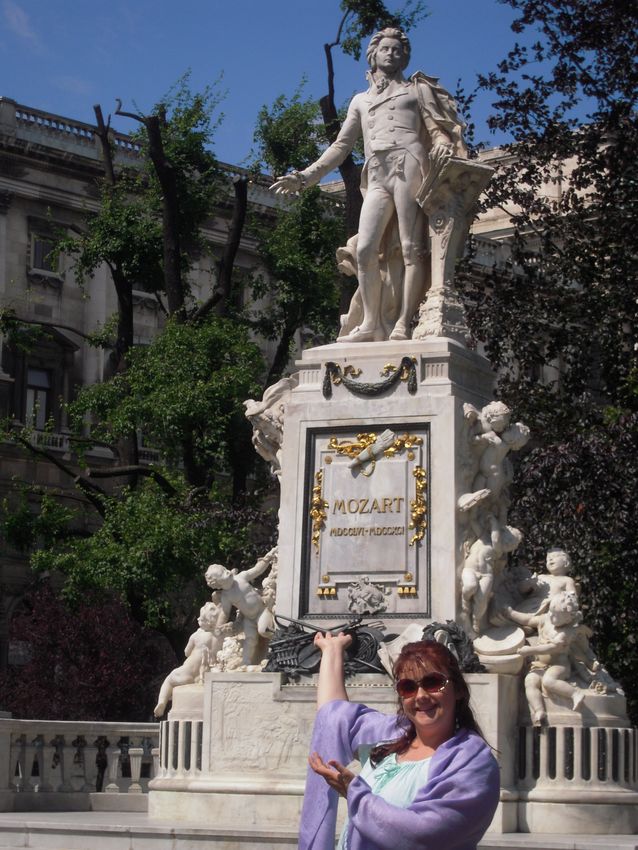
Meeting Mozart - the Wunderkind
Understanding the fantastic talents and travels of
young Wolfgang Mozart
This unit is designed for students grades Kindergarten through fifth grade;
educators are welcome to modify the lessons for younger and older students.
Topics
How well do you know a little boy named Wolfgang Mozart?
• A pictorial pre-test for educators to assess prior
knowledge of subject
What did the town of Salzburg look like when Mozart
was born?
What was appropriate dress for a little boy, young girl,
mother and/or a performing father?
• Visual aides set up around the classroom, dolls,
pictures, maps, picture books
Meet Mozart through videos created to be used as
storybooks
• Chapter 1 – Meet Wolfie
• Chapter 2 – Wolfie begins to perform
• Chapter 3 – Wolfie meets the royal family
- Transitions are developed in the movies for educators to
pause the movie and expound on an interest or topic
A citizen of the Holy Roman Empire
• Research and discussion about court life,
palaces, and the influence of a ruling family
over its citizens
- Visual aides used could be – Disney
‘princess’ picture books, pictures of
the various palaces in Vienna,
pictures of George Washington or
other famous Americans in 1770’s.
• Listening to Austrian folk music, learn a
dance
• Listen to Mozart’s Minuet and Trio and
perform the minuet dance in court style.
What would it be like to be a composer?
• Kindergarten – Second grade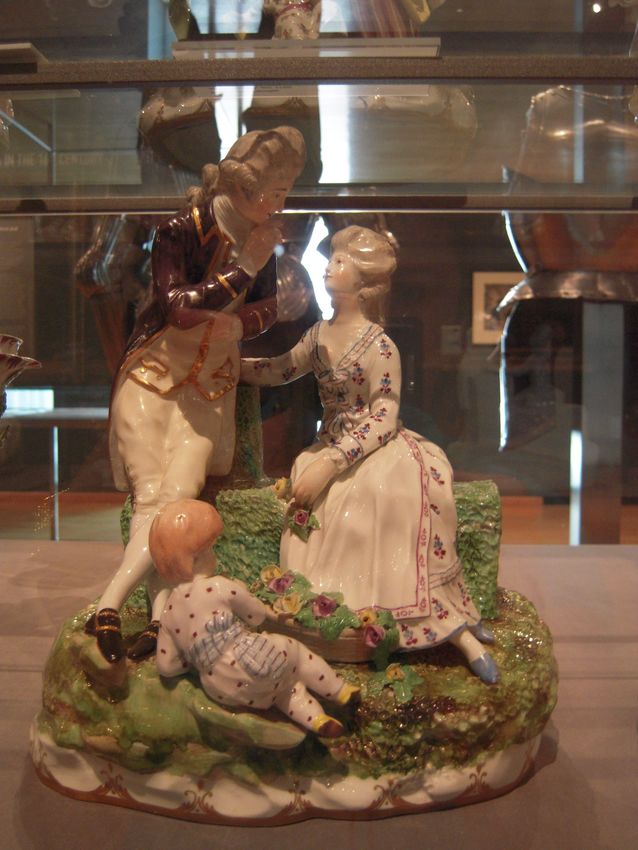
- Compose a word or sound composition based on provided
rhythms and instruments from the music teacher as
young Mozart did while traveling.
• Topics include
o Horse and carriage sounds
o Sounds heard in a fancy ball
o Funny made up or rhyming words
o A letter written to your pet
• Third – Fifth Grade
- Students create and compose their own variation of
“Twinkle Twinkle Little Star” after exploring ideas of how
to create variations from Mozart’s “Variations on Ah vous
dirai-je, Maman”
- Student groups perform their own theme and variation
composition
- Rubric grading sheet, optional
Now, how well do you know the story of Wolfgang Mozart?
• A pictorial post-test for educators to assess knowledge of subject
explored.
I have created 4 lesson plans designed to work with primary (K-2) and
intermediate (3-5) grades, one introductory lesson plan for all grades, a pre &
post test, and rubric and composition design for the Theme and Variations
composition project. Educators are welcome to tailor the lessons to fit the
time allotted for each class and the attention span of each grade level.
Links to Lesson Plan Pages
Introduction Lesson (K-5)
Lesson 2 (K-2)
Lesson 2 (3-5)
Lesson 3 (K-2)
Lesson 3 (3-5)
Lesson 4 (K-2)
Lesson 4 (3-5)
Pre & Post Test (1-5)
Listening Map for Eine Kleine Nachtmusik © Dr. Jana Fallin
Theme & Variation Rubric and Design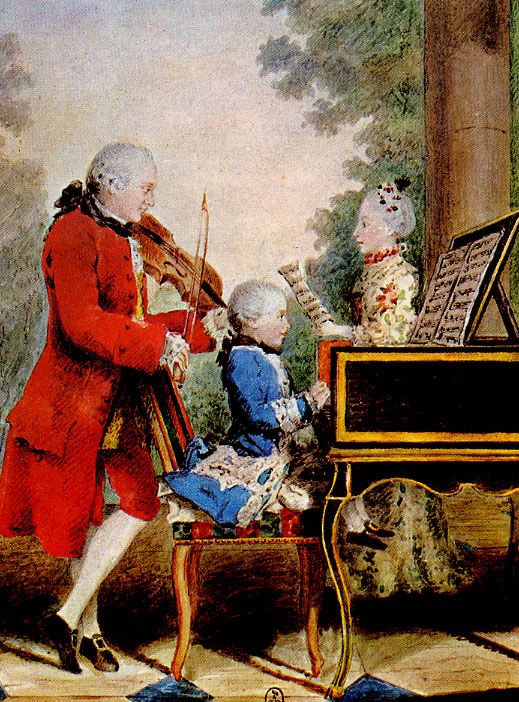
Videos
Chapter 1 – Meet Wolfie
Chapter 2 – Wolfie begins to perform
Chapter 3 – Wolfie meets the Royal Family

                                    Staci Horton
                 NEH participant for Mozart’s Two German Operas
                                   Summer 2010

                                      (back to top)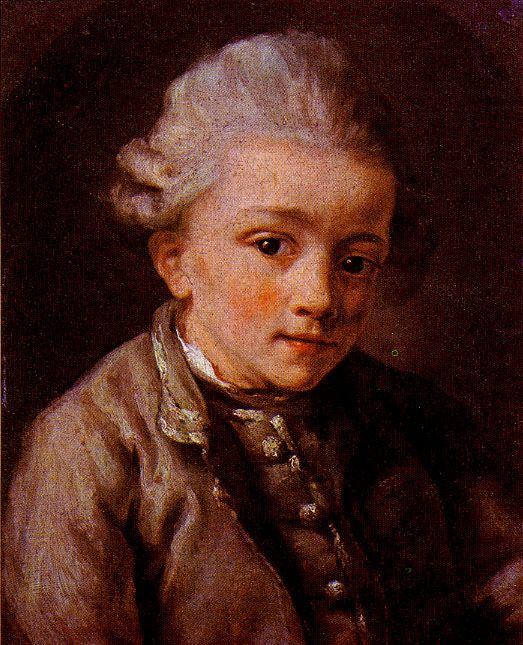
Lesson Plan 1
         th   th   rd   nd   st
Grade: 5 4 3 2 1 & KDG                        Teacher: Staci Horton
Unit: Mozart          Lesson: 1               National Standards: 8 & 9
Objectives: Students will take a pretest on   Materials Needed: Mini-mac, ipod,
their knowledge of Mozart.                    promethean board, pre-test quiz, “Chapter
• Students will watch a 10-minute video       1” video, Austrian dolls and bear, Mozart
    introducing them to Mozart’s early        books, Coloring Book, Pictures, The Sound
    years.                                    of Austria CD
Enroll: While music of Austria CD is playing, I’ll introduce myself. Trac 1-2 And show
the younger grades little dolls. I’m here to introduce you to a famous composer who
lived when America was just becoming a nation.
What do you know of the country Austria?
Experience: All students answer this question: If you woke up tomorrow and could play
any instrument you wanted perfectly with no practice, what instrument would you
choose?

Learn & Label: These next two weeks we are going to learn about a famous composer
named Wolfgang Mozart. And we have some activities to try that will allow you the
opportunity to compose and create your own songs.

Demonstrate: I’m curious to know how much you already know about the composer
Wolfgang Mozart, so I have a quick 10 question quiz for everyone to take and I would
like you to do your best on this. Pass out the expressions and take the quiz and compile
the results (DO NOT SHOW ANSWERS!) After test – Power OFF!

Learn & Label: Watch Chapter 1 of Video

Review: Discuss with your partner (Hand-up, Pair-up) – Austria CD Trac 3
Did you write little songs before you went to Kindergarten?
How many of you knew all the notes and rests before you came to music class?
Do you know the letter names of the lines and spaces of the treble clef?
Did your papa teach them to you or did you learn them in music class?

Celebrate: Sound of Austria CD Trac 11 – Movement Activity
Intro - 4
Section A                          Section B (Grand Right and Left (Gr. 5-3))
Full Circle to Right (8)            Pat legs (2) (Gr. K-2)
Circle Left (8)                     Clap hands (2)
Step in and hands up (4)            Double High 5 Partner’s hand (2)
Step out and hands down (4)         Clap hands (2)
Repeat Section A                    Repeat Section B 3 times
                                    Find a new partner (8)
Form A-A-B-B-A-B                    Repeat Section B
Lesson Plan 2
Grade: Kdg, 1st & 2nd Teacher: Staci Horton
Unit: Mozart Lesson: 2 National Standards: 8 & 9
Objectives: Students will create word Materials Needed: Mini-mac, ipod,
poems and use words to compose as young promethean board, “Chapter 1 & 2” videos,
Mozart did. Austrian dolls and bear, Mozart books, &
Pictures of Mozart
Enroll: Dolls, pictures and books are positioned in room with decorative scarves for
visual reminders of the unit.
Experience: Review what the students remembered from the first video.
Possible questions: Who was the papa, and what was his job?
What was the sister’s name, and what did she play?
Who was the baby?
Learn & Label: Review with video 1, discuss and share during review the names and
faces of the family.
2nd & 1st – Fun with rhyming – Create word poems with bed and mouse
Creating instrument sounds to mimic a hic-up
KDG – Fun with words – Create funny sounds with the word “School.”
Demonstrate: KDG – Creating the word song with a drum beat.
Demonstrate: 2nd & 1st – Choose 3 or 4 students to share their word poem
Pass out egg shaker and wood blocks for students to create their own hic-up or silly song.
Learn & Label: Watch Video 2 – Wolfie begins to perform
Review: Imagine what it would be like to not go to first grade at school, but to spend the
year traveling with your papa. Do you think you would like having your papa as your
teacher? Do you think you would like riding in a carriage all day and not playing
outside? Would you want to practice all day and perform for the governor or even the
president? Do you think you would be excited or maybe nervous?
Review: Let’s see how well you remember our fun dance from Austria. Review and
practice the dance with teacher calling cues.
Celebrate: Wolfie loved to create songs from sounds, next time we meet, I’d like to hear
from you on a word or sound we could compose with.Lesson Plan 2
Grade: 3rd, 4th & 5th Teacher: Staci Horton
Unit: Mozart Lesson: 2 National Standards: 8 & 9
Objectives: Students will watch videos Materials Needed: Mini-mac, ipod,
about Mozart and discuss questions in the promethean board, “Chapter 2” video,
video. Austrian dolls and bear, Mozart books,
• 3rd grade students will actively listen to Listening Map for Eine Kleine Nachtmusik,
Eine Kleine Nachtmusik using the & Pictures of Mozart, “Variations on Ah
provided listening map. vous dirai-je, Maman” barred instruments,
• 4th & 5th grade students will actively white boards, dry erase markers, team
listen to “Variations on Ah vous dirai- assignments of 4th and 5th grade classes
je, Maman” and begin a theme and
variation composition
Enroll: Dolls, pictures and books are positioned in room with decorative scarves for
visual reminders of the unit.
Experience: Review what the students remembered from the first video.
Possible questions: Who was the papa, and what was his job?
What was the sister’s name, and what did she play?
Who was the baby?
Learn & Label: Watch Video 2 – Wolfie begins to perform
Learn & Label: 3rd Grade - Listen to Eine Kleine Nachtmusik.
Demonstrate: Discuss where they have heard the song and determine the meter.
Teach students the minuet while sharing important “unwritten” rules of proper conduct in
the 1770’s
Learn & Label: 4th & 5th Grade – Listen to Mozart’s “Variations on Ah vous dirai-je,
Maman” which is like our Twinkle Twinkle Little Star.
Demonstrate: Have students brainstorm various ways to change the melody
Put students in teams of 4-5 and send them to Orff instruments – their task is to figure out
how to play “Twinkle Twinkle Little Star” and make sure all members of the team can
perform the song.
Review for All: Where was Mozart born? What was his first instrument? How old was
he when he got his violin? Where did the children go on their first performance trip?
How old were they?
Celebrate: Great work everyone, let’s clean up and dance it out!Lesson Plan 3 Grade: Kdg, 1st & 2nd Teacher: Staci Horton Unit: Mozart Lesson: 3 National Standards: 8 & 9 Objectives: Students will create rhythmic Materials Needed: Mini-mac, ipod, patterns with words and perform them on promethean board, “Chapter 3” video, instruments in teams. Austrian dolls and bear, Mozart books, & Students will share prior knowledge of Pictures of Mozart, drums and wooden Mozart gleaned from first two videos. instruments Enroll: Dolls, pictures, books and now puzzles are positioned in room with decorative scarves for visual reminders of the unit. Experience: Review what the students remembered from the second video. Possible questions: What were the father, mother, sister, and boy’s formal names? Where was the Imperial city? Who was the Wolfie’s teacher? And what did he study? Review: Let’s see how well you remember our fun dance from Austria. Allow students to demonstrate the dance with you simply watching and enjoying! Learn & Label:. Creating rhythmic speech patterns in teams. Give each team a like instrument, have students practice imitating the teacher various patterns. Allow teams to play at different times so aural appreciation is a focus. Then play a question and answer game with a phrase, and have one team answer you back with a rhythmic phrase that they can say and play. Encourage teams to play the game amongst themselves. Demonstrate: Allow teams to create their own “answer” to share with the class. Record each demonstration for later evaluation. Learn & Label: Watch Video 3 – Wolfie meets the Royal Family Review: Do you have musical talent that you could use to become famous? Do you think you would like to perform for the President of the United States? Would you be willing to leave school and tour Europe to perform for Kings and Queens as Wolfgang did? Would you miss your family, friends, or maybe your pets? How long would you like to be gone? One week? One month? Three months? Celebrate: Wolfie loved to create to compose and now that you have all created together you are beginning to see the fun it can be to create your own music. (Share high-5’s!)
Lesson Plan 3
Grade: 3rd, 4th & 5th                         Teacher: Staci Horton
Unit: Mozart           Lesson: 3              National Standards: 8 & 9
Objectives: Students will watch videos        Materials Needed: Mini-mac, ipod,
about Mozart and discuss questions in the     promethean board, “Chapter 3” video,
video.                                        Austrian dolls and bear, Mozart books,
• 3rd grade students will perform the         Listening Map for Eine Kleine Nachtmusik,
    minuet to Eine Kleine Nachtmusik and      & Pictures of Mozart, “Variations on Ah
    add in instruments during the trio.       vous dirai-je, Maman” barred instruments,
• 4th & 5th grade students will actively      drums, accessory instruments, white
    listen to “Variations on Ah vous dirai-   boards, dry erase markers, team
    je, Maman” and continue the theme         assignments of 4th and 5th grade classes
    and variation composition
Enroll: Dolls, pictures, books and now puzzles are positioned in room with decorative
scarves for visual reminders of the unit.
Experience: Review what the students remembered from the second video.
Possible questions: What were the father’s, mother’s, sister’s, and boy’s formal names?
Where was the Imperial city? Who was the Wolfie’s teacher? And what did he study?
Learn & Label: Watch Video 3 – Wolfie meets the Royal Family
Review: 3rd Grade - Discuss the “unwritten” rules of proper conduct in the 1770’s
Demonstrate: Adding in instruments to the Trio section, have students demonstrate their
understanding of the triple meter and the feel of the dotted half note pulse.
Learn & Label: 4th & 5th Grade – Listen to each group perform the melody of “Twinkle
Twinkle Little Star.” Note the drum added to the instruments offered, this is to provide
an ostinato for the performance.
Demonstrate: Have students prepare their compositions - Decide who will play each part
of the composition
    1. Melody (on barred instrument)
    2. Ostinato – on Drum, create a good rhythm for the piece
            a. The ostinato must be played during the theme and the variation
    3. Variation – on a melody instrument
            a. Remember – It doesn’t have to be complex!
    4. Your composition needs to have an introduction and a coda (ending).
Review for All: Do you have musical talent that you could use to become famous? Do
you think you would like to perform for the President of the United States? Would you
be willing to leave school and tour Europe to perform for Kings and Queens as Wolfgang
did? Would you miss your family, friends, or maybe your pets? How long would you
like to be gone? One week? One month? Three months?

Celebrate: Great work everyone, let’s clean up & dance it out!
Lesson Plan 4 Grade: Kdg, 1st & 2nd Teacher: Staci Horton Unit: Mozart Lesson: 4 National Standards: 8 & 9 Objectives: Students will create rhythmic Materials Needed: Mini-mac, ipod, patterns with words and perform them on promethean board, Austrian dolls and instruments alone. bears, Mozart books, & Pictures of Mozart, Students will share prior knowledge of drums and wooden instruments, video Mozart gleaned from first three videos. camera & tripod Enroll: Dolls, pictures, books and now puzzles are positioned in room with decorative scarves for visual reminders of the unit. Experience: Review what the students remembered from the third video. Possible questions: Who lived in the Imperial city? Where was the Imperial city? What was the Empress’s name? What did Wolfie do that was NOT good manners? Review: Today is performance day! I will record your Austrian dance with my video camera. Learn & Label: Students may volunteer to answer the teacher’s rhythmic question on a large drum. Back to teams and all students are given instruments and volunteers will now ask the rhythmic (4-beat) question and a team may answer it. Demonstrate: Allow teams to create their own “answer or question” to share with the class. Learn & Label: Read “Mozart” the storybook to students. All this information should be prior knowledge with them, so feel free to ask questions about what should come next in the story to assess them. Review: Set up video camera and invite students to stand on a spot and share their favorite “memories” of Mozart, examples may come from the videos, the instrument games, the visual aides, dancing, etc. Give students time to settle into and enjoy their knowledge of Mozart. They may have more questions about him, like what happens next? Did he ever marry? Have kids? When did he die? Is this a true story? Celebrate: Teach students how Wolfie would say good-bye. Auf wiedersehen or Tschüss!
Lesson Plan 4
Grade: 3rd, 4th & 5th                         Teacher: Staci Horton
Unit: Mozart          Lesson: 4               National Standards: 8 & 9
Objectives: Students will watch videos        Materials Needed: Mini-mac, ipod,
about Mozart and discuss questions in the     promethean board, “Chapter 4 & 5” video,
video.                                        Austrian dolls and bear, Mozart books,
• 3rd grade students will perform the         Listening Map for Eine Kleine Nachtmusik,
    minuet to Eine Kleine Nachtmusik          & Pictures of Mozart, barred instruments,
• 4th & 5th grade students will perform       drums, accessory instruments, white
    their theme and variation compositions    boards, dry erase markers, team
                                              assignments of 4th and 5th grade classes,
                                              video camera and tripod.
Enroll: Dolls, pictures, books and now puzzles are positioned in room with decorative
scarves for visual reminders of the unit.
“Today is performance day! I will record dances/compositions today on my video
camera!”
Experience: Review what the students remembered from the third video.
Possible questions: Who lived in the Imperial city? Where was the Imperial city? What
was the Empress’s name? What did Wolfie do that was NOT good manners?
Review: 3rd Grade – All the partner dancing, instrumentation and what happens when.
Demonstrate: Students perform the dance, add instruments and sing along with Eine
Kleine Nachtmusik.
Learn & Label: 3rd Grade – Students watch Chapter 4 – Wolfie’s travels
Review: Set up video camera and invite students to stand on a spot and share their
favorite “memories” of Mozart, examples may come from the videos, the instrument
games, the visual aides, dancing, etc.
Give students time to settle into and enjoy their knowledge of Mozart. They may have
more questions about him, like what happens next? Did he ever marry? Have kids?
When did he die? Is this a true story?
Review: 4th & 5th Grade – Who is one which team, does everyone have their correct
instruments, what is the next step for your group so you are ready to perform today?
Learn & Label: Watch Chapter 4 – Wolfie’s travels and Chapter 5 – Wolfie’s Operas
Demonstrate: 4th & 5th Grade – Teams will be given time to polish up their variation
and then they will perform it for the class. (Make sure you set up your camera on a tripod
to record their compositions!) Rubric provided for grading assistance.
Review: Using video camera, invite students to stand on a spot and share their favorite
“memories” of Mozart, examples may come from the videos, the composition project, the
visual aides, dancing, opera stories, etc.
Give students time to settle into and enjoy their knowledge of Mozart. They may have
more questions about him, like what happens next? Did he ever marry? Have kids?
When did he die? Is this a true story?
Celebrate: Teach students how Wolfie would say good-bye. Auf wiedersehen or
Tschüss!
                                               (back to top)
Mozart’s Theme and Variation Composition Rubric
Group Members: _________________________________________________________
Basic 1 Proficient 2 Advanced 3 Exemplary 4
Teamwork No teamwork Group tried to Groups mostly Group worded as a
evident. Group work as a whole, worked as a whole, whole on creating
shared negative but a few downers the creating the variation,
comments, no were present which process did get listened to all
effort was made to slowed the creating done, but not much ideas, all members
create a new process down. help was given to helped each other
variation. No one members who perform at their
helped teammates needed extra help best, no downers in
who needed it. the group.
Creativity No specific A specific A variation was A definite
variation was variation was chosen, but the variation was
chosen, the extra found and that’s all group had trouble chosen and
instruments didn’t they had time for. developing it with developed, extra
add a good sound extra instruments instruments were
added and I
sounded very
unique!
Listening to 4 or more 3 members talked 2 members talked Entire team
other members talked while another while another listened
while another group was group was respectfully to
performers group was performing performing other groups
performing performing
Everyone Students were left All members had All members had All members of the
Performed out without an an instrument, but an instrument and team had an
instrument it just sounded like tried to create a instrument and
noise, no structure good sound added positively to
the ensemble
Stayed More then one More then one One leaders, One leader,
Together leader, didn’t start leader, started and started and ended everyone listened
together, didn’t ended together together, some to group, started
end together, no members had and ended together
real listening trouble listening
shown
Comments:
Total Score for the Group: ______________What to do:
1. Figure out the song “Twinkle Twinkle Little Star” on the barred instruments
a. Work as a group with two students trying on the instruments
b. You may write down the notes for your teammates, if needed.
2. All members of the group must successfully play the song before you may
create your variation!
3. Discuss in your group how you want to vary the melody
a. Play melody backwards
b. Add more notes
c. Change keys
d. Mix up the order of the notes
e. Leave out every third note, etc.
4. Decide who will play each part of the composition
a. You need – Melody (on barred instrument)
b. Ostinato – Instrument of choice
c. Variation – on a melody instrument
i. Remember – It doesn’t have to be complex!
ii. The ostinato must be played during the theme and the variation
d. Your composition needs to have an introduction and a coda (ending).
5. You may add in instruments to your composition
a. First come, first served
6. When creating additional rhythms and ostinatos, make sure they don’t over power
the theme and variation.
a. Use word power to remember your new rhythms!
7. Practice the entire piece as a group more then once!You can also read


