The Road to Recovery: Year 7 Catch-up - How Renaissance can support you with your Year 7 literacy and numeracy catch-up students
←
→
Page content transcription
If your browser does not render page correctly, please read the page content below
The Road to
                                               Recovery:
                                               Year 7 Catch-up
                                               How Renaissance can
                                               support you with your
                                               Year 7 literacy and
                                               numeracy catch-up
                                               students

Informed                 Confident                    Accelerated
senior leaders           teachers                     learners
How can I easily track   Where can I get the fast     How can we be sure the
our catch-up students    insight I need to support    interventions selected are
on their way to the      each child?                  making an impact?
expected standard?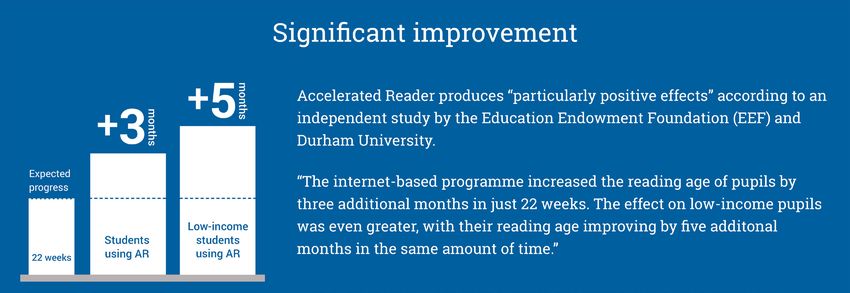
Contents
   Introduction........................................................................................................................................................... 3
   KS2 SATs correlation with Star Assessments................................................................................................ 3
   Managing Year 7 catch-up for 2020-2021...................................................................................................... 4
   Step 1: Identify the students on the system................................................................................................... 6
   Step 2: Star test your students and run your Summary Report................................................................. 7
   Step 3: Run the Suggested Skills Report......................................................................................................... 8
   Step 4: Set up an intervention............................................................................................................................ 8
   Step 5: Log the intervention with Renaissance progress monitoring tool................................................ 9
   Step 6: Star test the students at least every half-term to track progress................................................. 10
   Step 7: Celebrate when they reach the benchmark....................................................................................... 12
   Appendix................................................................................................................................................................. 13

Figures
   Figure 1. Summary Report.................................................................................................................................. 7
   Figure 2. Instructional Planning - Student Report.......................................................................................... 8
   Figure 3. Significant improvement.................................................................................................................... 8
   Figure 4. Student progress monitoring report................................................................................................. 9
   Figure 5. Student progress monitoring report 2............................................................................................. 9
   Figure 6. Summary Report 2............................................................................................................................... 10
   Figure 7. Growth Report...................................................................................................................................... 11
   Figure 8. Attainment and Progress................................................................................................................... 12

Tables
   Table 1. Star Reading and Star Maths score equivalents for KS2.............................................................. 3
                 SATs expected attainment designation
   Table 2. Star Reading and Star Maths score equivalents for KS2.............................................................. 7
                 SATs expected attainment designation 2

                                                                    ©Copyright 2021 Renaissance Learning, Inc. All rights reserved. | www.renlearn.co.uk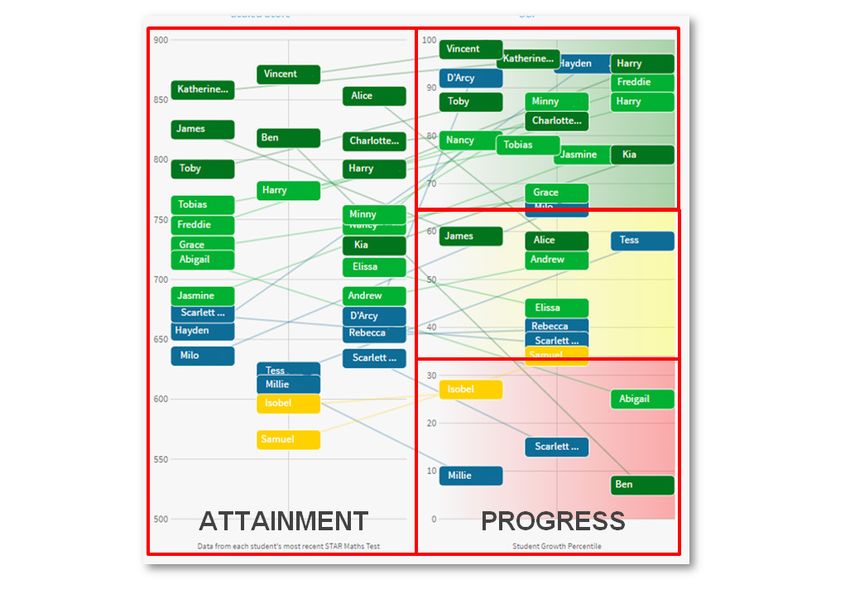
Introduction
Secondary Schools all have the same target for Year 7 students who have not met the Primary standard in
mathematics, reading or spelling, punctuation and grammar: to help them catch up to their academic peers.

Supporting students’ catch up may feel like an onerous task, especially with the workload pressures teachers
are currently facing. It requires 2 steps:

     1. Finding effective evidence-based programmes. This may include research using the Education
        Endowment Foundation’s (EEF) studies or information from the Department for Education’s website.
     2. Measuring progress to identify when students have reached the expected standard— and being
        confident that that measurement is accurate.

Not only is Renaissance Accelerated Reader listed on the DfE’s website and EEF’s website as a programme
that works, but Renaissance Star Assessments has recently undergone a correlation study with the Key
Stage 2 SATs. The correlations are high and mean you can track students using Star Assessment to identify
when they have reached the Primary standard in reading, maths and spelling and grammar.

KS2 SATs correlation with Star Assessments
The main findings of the linking analysis revealed that Star Reading and Star Maths can act as accurate
predictors of the Key Stage 2 SATs outcoming. The chart below provides the equivalent Star scores for each
test which you may wish to use for tracking the expected attainment standard. SATs are reported in scaled
scores ranging from approximately 80-120, with a score of 100 signifying the expected attainment standard
and 110 marking the higher standard. A main purpose in linking Star Assessments to the SATs was to
identi-fy Star scores equivalent to the cut-off score that marks expected attainment.

                                             SATs Scaled Score                     SATs Raw Score   Star™ Scaled Score
              Reading                                  100                              21                 510
                                                       110                              34                 858
               Maths                                   100                              60                 712
                                                       110                              98                 861
                SPaG                                   100                              43                 473
                                                       110                              61                 818

Table 1. Star Reading and Star Maths score equivalents for KS2 SATs expected attainment designation

When your new Year 7 cohort arrives, this 20-minute test (aligned to the National Curriculum) instantly
provides teachers with:
       •   A range of scores, including a Scaled Score that can be compared to the equivalent KS2 expected
           standard.
       •   Insight into the skills those children are ready to learn next.
       •   Progress monitoring tools that show whether the intervention the student uses meets the expected
           standard by the date you set.

©Copyright 2021 Renaissance Learning, Inc. All rights reserved. | www.renlearn.co.uk                                     3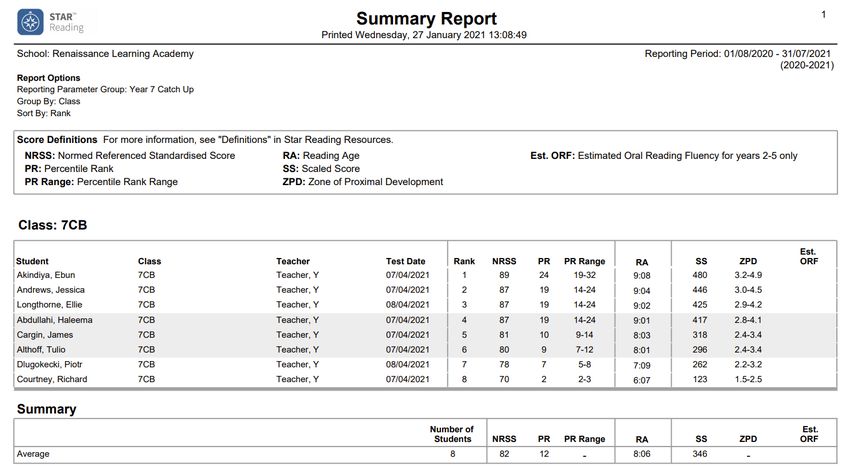
Managing Year 7 catch-up for 2020-21
Ensuring a smooth transition for students beginning Year 7 has never been easy. However, COVID-19 has
presented a unique set of challenges that have made this Year 7 transition even more complex: learning time
has been lost due to the lockdown earlier in 2020; Key Stage 2 SATs were called off; and currently, there is a
constant worry that students and staff will need to self-isolate at any point. Within this booklet, Renaissance
have provided a number of steps on how to assist you in monitoring your Year 7 catch-up students. Given the
current context, there are two key points that will be useful for all of your Year 7 cohort.
Firstly: how are you defining the catch-up students this year?
Renaissance’s linking study between Star Assessments and the Key Stage 2 SATs found that there is a clear
correlation between a student’s performance in Star Assessments and their performance in Year 6 SATs. As
KS2 SATs cancelled last year, you may feel like you’re missing vital data: however, Star Assessment data will
allow you to identify not only where your cohort are working, but how likely it is that they would have met or
exceeded expectations in their KS2 SATs. Steps on how to find and track this information can be found later
in this booklet.

                                             SATs Scaled Score                     SATs Raw Score   Star™ Scaled Score
              Reading                                  100                              21                 510
                                                       110                              34                 858
               Maths                                   100                              60                 712
                                                       110                              98                 861
                SPaG                                   100                              43                 473
                                                       110                              61                 818

Secondly, once you have identified your students who need to catch up, where do you start—especially given
so many of those key skills usually taught in Year 6 may not have been mastered due to lost learning time?
Renaissance have identified the most critical skills at each year level in the English National Curriculum.
Focus Skills, already built into Star Assessments, are defined as skills that:
       • Are essential to progression, involving concepts learners must master in order to move to the
         next step;
       • Support the development of other skills, serving as prerequisites for skills to come,
         and/or;
       • Reflect the emphasis of the curriculum.

Our research has shown that that Year 6 have an above average number of Focus Skills that they need to
master in both Reading and Maths. With the time lost to learning due to COVID-19, it is likely that a number of
this year’s Year 7 students missed key skills that are pivotal for progression in the curriculum.
Whilst Year 7 catch-up has always constituted building on primary learning, it’s likely that this year will require
even more support to counter any learning loss. Renaissance have released booklets that outline what the
Focus Skills are for each year group, so it’s clear and easy to dedicate teaching to the most important skills.
For further information on how we put together the lists of Focus Skills, and how you can use them, you can
watch this webinar led by Gene Kerns, our Chief Academic Officer.

©Copyright 2021 Renaissance Learning, Inc. All rights reserved. | www.renlearn.co.uk                                     4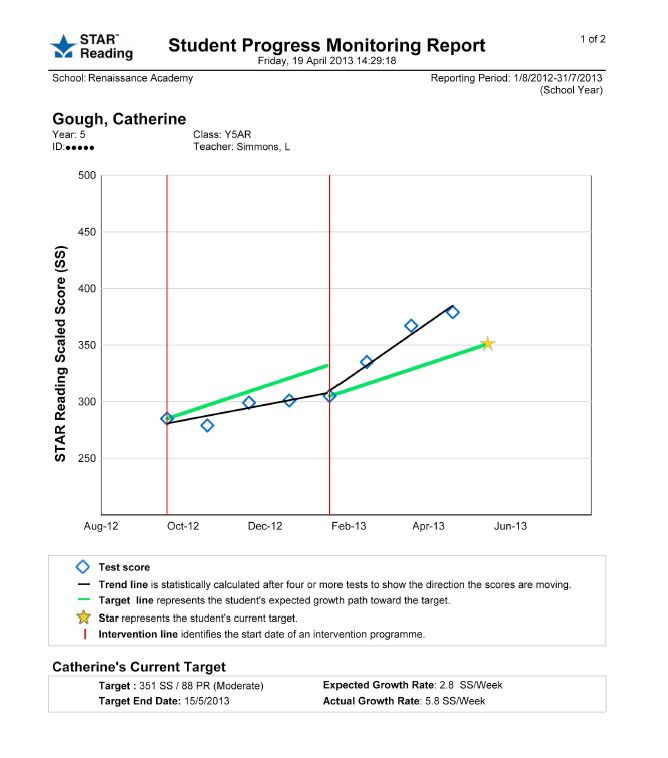
Using Focus Skills™ to support Year 7 catch-up

In our Teacher Workbooks, Renaissance present the Focus Skills™ of each year and domain for Literacy and
Maths. These are the foundational skills that are essential to advancing learning (i.e., concepts learners
must master along the way in order to move to the next step), supporting the development of future skills
(i.e., serve as strong prerequisites for skills to come), and/or reflecting the emphasis of the National
Curriculum at that year level.
 .                                                                                                                                                  .
 National curriculum domains and associated years                                                                                                   National curriculum domains and associated years

                                                                                                                                                               Domain                R      Yr 1    Yr 2     Yr 3    Yr 4     Yr 5      Yr 6      Yr 7     Yr 8      Yr 9    Yr 10     Yr 11

            Domain                R      Yr 1    Yr 2     Yr 3    Yr 4     Yr 5      Yr 6      Yr 7     Yr 8      Yr 9    Yr 10     Yr 11
                                                                                                                                                       Number - Number and
    Phonic knowledge and                                                                                                                                  Place Value
            skills
                                                                                                                                                        Number – Arithmetic
       Word recognition                                                                                                                                    Operations

     Fluency and accuracy                                                                                                                               Number – Fractions
                                                                                                                                                      (including decimals and
                                                                                                                                                            percentages)
          Vocabulary
                                                                                                                                                         Ratio, proportion,
       Discussion skills                                                                                                                                and rates of change

      Understanding and
       interpreting texts                                                                                                                                      Algebra

   Engaging and responding
           to texts
                                                                                                                                                           Measurement

 The Focus Skills are linked to the domains and headings associated with the year-level attainment targets as shown above
 (and colour coded as such throughout the document for easy reference).
                                                                                                                                                              Geometry

                                                                                                                                                             Probability
 Focus Skills by the numbers

                                                                                                                                                              Statistics

                                                                                                                                                    The Focus Skills are linked to the domains and headings associated with the year-level attainment targets as shown above
                                                                                                                                                    (and colour coded as such throughout the document for easy reference).

                                                                                                                                                    Focus Skills by the numbers

Focus Skills are a powerful tool in helping prioritise skills to accelerate learning, especially for those                                          5 | Maths Focus Skills™                                                          ©Copyright 2020 Renaissance Learning, Inc. All rights reserved.

who join Year 7 but are not yet “Secondary-ready”: for example, students who do not understand affixes
 5 | Literacy Focus Skills™                                                       ©Copyright 2020 Renaissance Learning, Inc. All rights reserved.

(Word Recognition: ELA Reading.KS2.Y5- 6.RW.1). By highlighting key skills for each year group and domain,
Focus Skills allow you to quickly see the prerequisite skills students should have mastered in the previous
key stages. It also emphasises the essential Year 7 skills needed to be mastered before continuing secondary
education, ensuring success in later years.

©Copyright 2021 Renaissance Learning, Inc. All rights reserved. | www.renlearn.co.uk                                                                                                                                                                                                                   5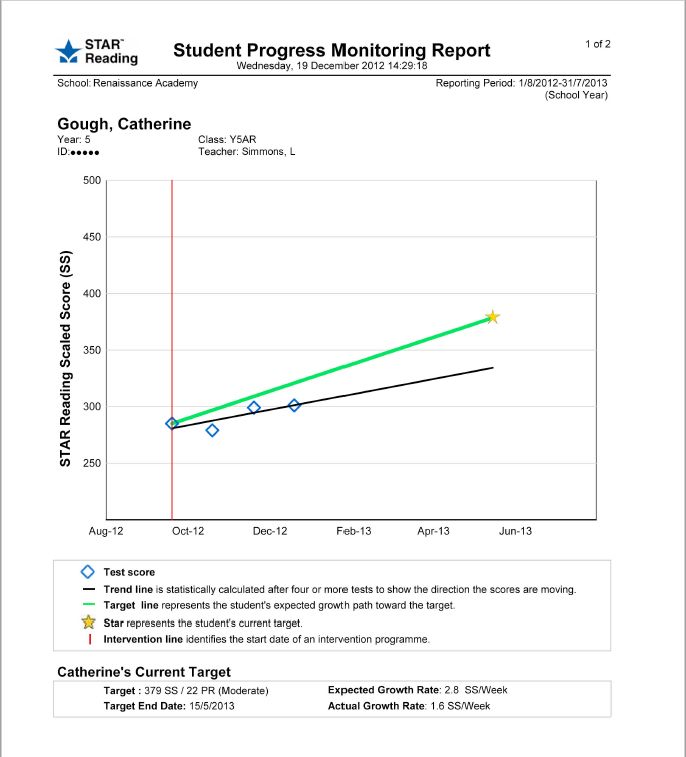
The following guide outlines the 7 steps you may wish to take to support your Year 7 catch-up students:

         1.     Identify Year 7 catch-up students on the Renaissance Home page. This enables you to view
                reports quickly for Senior Leadership or visiting bodies who may want to know if the funding is
                being used effectively.
         2.     Star Test your students and view the summary reports.
         3.     Run the suggested skills report.
         4.     Set up your interventions.
         5.     Log the interventions with your Renaissance progress monitoring tools.
         6.     Star test the students at least every half-term to track progress.
         7.     Celebrate when students meet the expected standard.

Step 1: Identify the students on the system
By listing your Year 7 catch-up students as a characteristic on the system, you can quickly pull reports
for Senior Leadership or visiting bodies who may want to know if the funding is being effectively used.
This can be done through Renaissance Data Integration, Importing a CSV, or adding the characteristic
manually.

For more information regarding importing characteristics, please go here

If you would prefer to add them manually, these are the steps you need:
    1. Set up Year 7 catch-up as a characteristic:
           •   In Renaissance Home, click Users.
           •   Click Set-Up Characteristics.
           •   Click Add Characteristic.
           •   Enter the name of your new characteristic ‘Year 7 catch-up’ and click Add. The new
               characteristic will be added to the list on the right.
           •   Click Done.

    2.        Assign the characteristic to the relevant students:
                • In Renaissance Home, click Users.
                • Click Edit Multiple Students.
                • Select a class or year group and click Search. In the search results, select the students that
                    you wish to apply changes to by ticking the box next to their name, then click Add to add them
                • to the list on the left.
                • Under Select Changes, tick the Add box which will add the characteristic to these students’
                    records.
                • In the drop-down list, select Year 7 catch-up.
                • To apply the changes to the students you have chosen (in the left-hand list), click Save.

    3. Create the search with a Reporting Parameter Group:
          • Open any report (e.g. Renaissance Star Reading/Renaissance Star Maths Summary
               Report) and in the Reporting Parameter Groups option click on Create New or Edit Selected.
          • Type in Year 7 Catch-up for your Reporting Parameter name.
          • Select the criteria for the group of students you want to include in the report by ticking the
               box next to Year 7 catch-up.
          • Click Save. This Reporting Parameter is now saved for you to view in the drop-down menu for
               all reports on Renaissance Home.

©Copyright 2021 Renaissance Learning, Inc. All rights reserved. | www.renlearn.co.uk                              6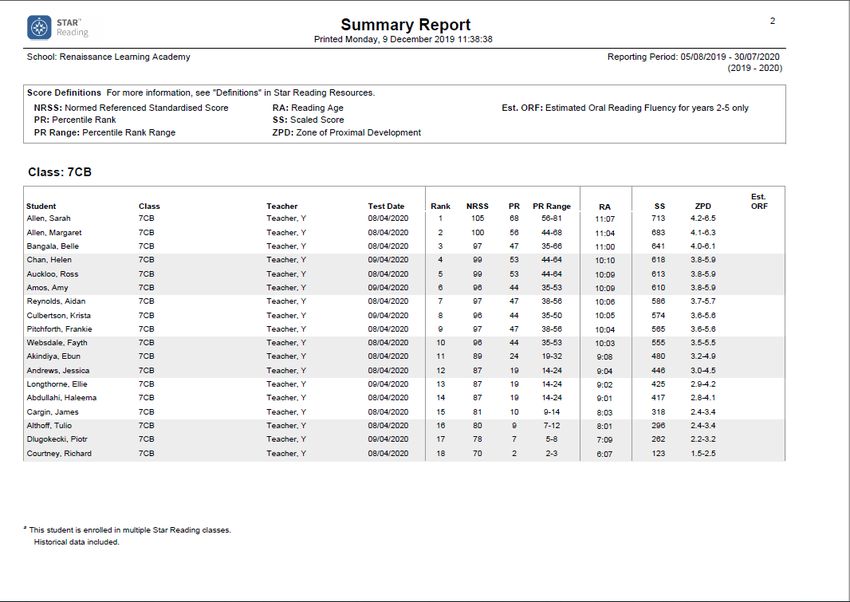
Step 2: Star test your students and run your Summary Report

Star Testing

    •      You may wish to start by preparing students with this quick PowerPoint so they know what to
           expect from the test.
    •      Ask your students to log on to Renaissance Home and click on the blue tile marked Star Reading or
           Star Maths. It may prompt you for a password. The default password is Admin, but your school may
           have changed this. It should take students between 20 and 30 minutes to complete depending upon
           their ability.

The Summary Report

    •      Your summary report will tell you when students have met the expected standard for KS2.

                                             SATs Scaled Score                         SATs Raw Score     Star™ Scaled Score
               Reading                                 100                                  21                   510
                                                       110                                  34                   858
               Maths                                   100                                  60                   712
                                                       110                                  98                   861
                SPaG                                   100                                  43                   473
                                                       110                                  61                   818

Table 2. Star Reading and Star Maths score equivalents for KS2 SATs expected attainment designation 2

Rank your Summary Report to identify when Year 7 students are likely to have reached the expected
standard of 510 in the Scaled Score:

          1.    Log onto Renaissance Home                                 5.   Select your demographic group: Year 7 catch-up
          2.    Click on Star Reading                                     6.   Select Do not group
          3.    Click on Reports                                          7.   Select Rank
          4.    Click on Summary Report                                   8.   Click View Report

                     Figure 1. Summary Report

©Copyright 2021 Renaissance Learning, Inc. All rights reserved. | www.renlearn.co.uk                                           7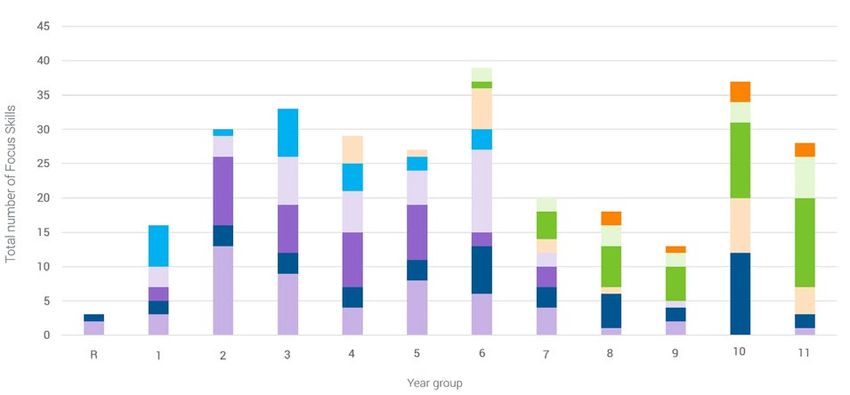
Step 3: Run the Instructional Planning - Student Report
This report will provide you with invaluable information. It uses the scaled score from the latest Star
Reading/Maths assessment and will give a clear indication of where a pupil sits along an entire spectrum
of skills. These are known as ‘learning progressions’ and are directly related to the skills of the national
curriculum, sequenced in a teachable order. This report will also list the focus skills that are regarded as
essential to progress in reading as well as the pre-requisite skills that are needed to move forward. These
may cross year groups, but the skills are sequential and can be trusted. They were developed for
Renaissance in collaboration with National Foundation for Educational Research.

   1. Log on to Renaissance Home
   2.   Click on Star Reading or Star Maths
   3.   Click on Reports
   4.   Click on Instructional Planning Report - Student
   5.   Choose Students/Group
   6.   Click View Report

        Students with similar Scaled Scores can be
        grouped using the Instructional Planning -
        Class report, also in the Reports section.

        More information can be found here.
                                                                          Figure 2. Instructional Planning - Student Report

Step 4: Set up an intervention. For example, Accelerated Reader and/or
       Accelerated Maths can help students reach the expected standard
There are many interventions to choose from. You may wish to look at independent reviews of the various
interventions available. The DfE published a paper on their website about evidence based solutions to
support catch-up, and organisations such as the Education Endowment Foundation complete randomised
controlled trials around many of the programmes to give teachers an idea of what works. Accelerated
Reader is named on the Education Endowment Foundation’s promising projects list.

Figure 3. Significant improvement

 ©Copyright 2021 Renaissance Learning, Inc. All rights reserved. | www.renlearn.co.uk                                         8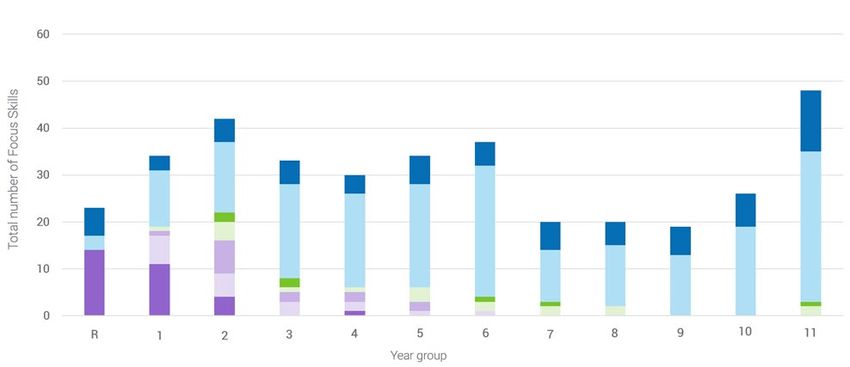
Step 5: Log the intervention with Renaissance progress monitoring tool
Accelerated Reader gathers data on the reading ability and progress of individual pupils which helps
teachers and school leaders support pupils’ independent reading practice. It’s simple really: students read
a book, take a quiz and receive instant feedback. Pupils will be able to access a range of other quizzes too,
including vocabulary quizzes.

Accelerated Maths helps you to personalise maths practice and make data-driven decisions to guide each
one of your students to mastery of curriculum-linked skills.

Remember: no matter what intervention you choose, Star Assessments will help you track what is working
and the impact being made. You can accurately track any intervention on Renaissance Home and pull
reports to prove the effect such interventions have had on students.

    1.     Log onto Renaissance Home
    2.     Click on Star Reading
    3.     Click on Screening, Progress Monitoring and Intervention
    4.     Click on the tab labelled Progress Monitoring and Intervention
    5.     Click Search
    6.     Select the student name
    7.     Click Add Target
    8.     Type in the name of your intervention
    9.     Select the date your intervention will end
    10.    Click Generate Target
    11.    Click Save
    12.    Repeat for all other year 7 catch-up students

     Figure 4. Student Progress Monitoring Report                                      Figure 5. Student Progress Monitoring Report

Top tip: Once the Star Test has been administered 4 times, a trend line appears on the report. This enables
you to see if the student is likely to meet their target using the intervention. If not, you may change their
intervention at that point.

©Copyright 2021 Renaissance Learning, Inc. All rights reserved. | www.renlearn.co.uk                                                  9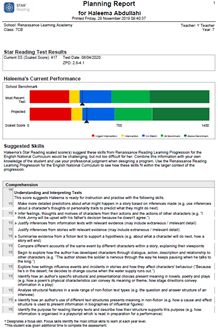
Step 6: Star test the students at least every half-term to track progress

Regularly testing students will provide accurate progress data throughout the catch-up process. Each Star
test will pick up from the students’ previous results and it is important to ensure testing processes are
consistent and conducted with fidelity.

Once you have multiple Star tests completed, view the key reports.

You may wish to watch this short video about preparing your students for a Star Test later in the year. You
may also wish to use this PowerPoint as a helpful reminder of what to expect.

The Summary Report

This report ranks Year 7 students on their scaled score. This allows you to identify when they have reached
the expected standard of 510.

    1.     Log onto Renaissance Home
    2.     Click on Star Reading
    3.     Click on Reports
    4.     Click on Summary Report
    5.     Select your demographic group: Year 7 catch-up
    6.     Select Do not group
    7.     Select Rank
    8.     Click View Report

                                                                                                Those likely
                                                                                                to have met
                                                                                                the KS2
                                                                                                expected
                                                                                                standard

                                                                                                Those
                                                                                                unlikely to
                                                                                                meet the
                                                                                                KS2
                                                                                                expected
                                                                                                standard

     Figure 6. Summary Report 2

©Copyright 2021 Renaissance Learning, Inc. All rights reserved. | www.renlearn.co.uk                           10
The Growth Report
This report will help you see individual growth, as well as progress made throughout the cohort.
1. Log onto Renaissance Home
2. Click on Star Reading
3. Click on Reports
4. Click on Growth Report
5. Select your demographic group: Year 7 catch-up
6. Select Do not group
7. Click View Report
Student has made progress, but is
not yet at the expected standard.
Student has met the 510
scaled score.
Student’s progress has dipped, but is
still above the expected standard.
Student has made progress, but is
not yet at the expected standard.
Figure 7. Growth Report
The Reading Dashboard
This will enable you to not only see student attainment, but also progress compared nationally to their
academic peers.
1. Log into Renaissance Home
2. Click on Reading or Maths Dashboard
3. Click on Growth and Achievement - Reading or Maths
4. You will see the students listed on the left based on their attainment; Reading Age and Chronological
Age for Reading if you are looking at the Reading Dashboard and a Scaled Score if you are looking
at the Maths Dashboard. On the right the same students are ranked based their Student Growth
Percentiles (SGPs) which tell you if nationally they are getting high growth, expected growth and low
growth compared to other students of similar ability.
©Copyright 2021 Renaissance Learning, Inc. All rights reserved. | www.renlearn.co.uk 11Better than
expected progress
Expected progress
Less than expected
progress
Figure 8. Attainment and Progress
Step 7: Celebrate when they reach the benchmark
Celebrate when they meet their Year 6 expected standard! But remember, there’s still a long way to go to
help them catch up with their academic peers. Be sure to review the different interventions you may have in
place and consider how each are working.
You can find certificates to help celebrate outstanding progress on our website:
http://www.renlearn.co.uk/customers/resources
©Copyright 2021 Renaissance Learning, Inc. All rights reserved. | www.renlearn.co.uk 12Appendix Page 3 Education Endowment Foundation’s (EEF) studies: https://educationendowmentfoundation.org.uk/projects-and-evaluation/projects/accelerated-reader/ Department for Education’s website: https://www.gov.uk/government/publications/literacy-and-numeracy-catch-up-strategies Correlation study with the Key Stage 2 SATs: https://doc.renlearn.com/KMNet/R61342.pdf Page 5 PowerPoint: http://www.renlearn.co.uk/wp-content/uploads/2014/08/Taking-a-Star-Reading-test-student- presentation-Secondary.pdf Page 8 Short video: https://vimeo.com/160248660 PowerPoint: http://www.renlearn.co.uk/wp-content/uploads/2014/08/Taking-a-Star-Reading-test-student- presentation-Secondary.pdf Page 10 Website: https://www.renlearn.co.uk/customers/resources ©Copyright 2021 Renaissance Learning, Inc. All rights reserved. | www.renlearn.co.uk 13
©Copyright 2021 Renaissance Learning, Inc. All rights reserved. 020 7184 4040   www.renlearn.co.uk
All logos, designs, and brand names for Renaissance’s products and services, including but not limited to Accelerated Reader, Star Assessment and Renaissance are trademarks of Renaissance
Learning, Inc., and its subsidiaries, registered, common law, or pending registration in the United States and other countries.
You can also read


