NSW Arbovirus Surveillance & Mosquito Monitoring 2022-2023 - Weekly Update: 1 - NSW Health
←
→
Page content transcription
If your browser does not render page correctly, please read the page content below
NSW Arbovirus Surveillance &
Mosquito Monitoring 2022-2023
  Weekly Update: Week ending 10 December 2022
               (Report Number 9)

                            Weekly Update: 1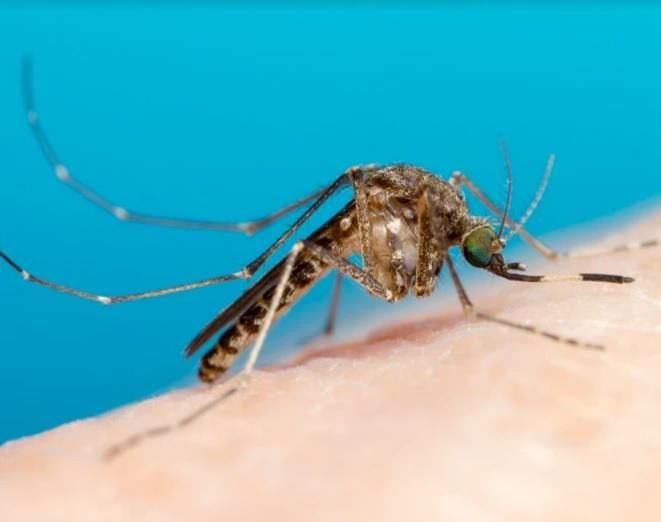
Summary
Arbovirus Detections
•       Sentinel Chickens: There were no arbovirus detections in sentinel chickens.

•       Mosquito Isolates: Barmah Forest virus was detected in mosquitoes collected at Deniliquin, Griffith and Leeton.
        Ross River virus was detected in mosquitoes collected at Temora.

Mosquito Abundance
•       Inland:    LOW at Bourke, MEDIUM at Albury, Armidale, Balranald, Moree, West Wyalong and Young, HIGH at
        Cootamundra, Corowa, Forbes, Grong Grong, Leeton, Macquarie Marshes, Temora and Wagga Wagga, VERY
        HIGH at Deniliquin, Griffith, Menindee and Moama.

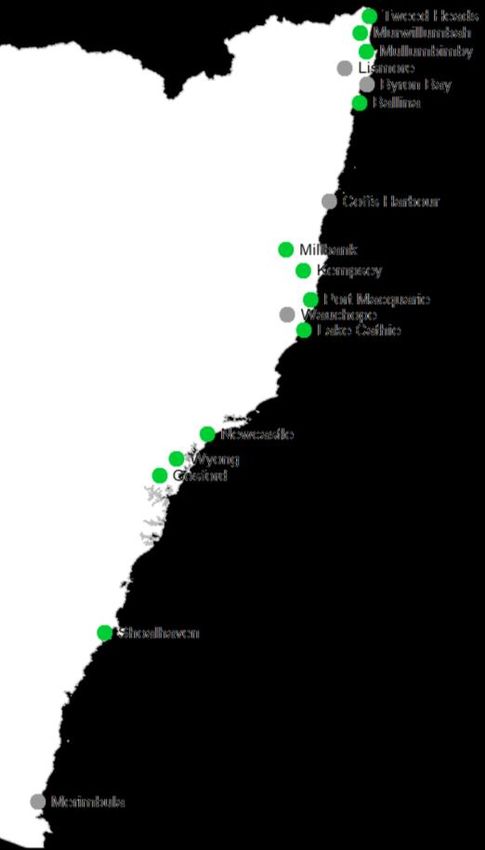
•       Coast:    LOW at Kempsey, Millbank, Mullumbimby, Murwillumbah, Port Macquarie and Tweed Heads,
        MEDIUM at Gosford, Shoalhaven and Wyong, HIGH at Ballina, Lake Cathie and Newcastle.

•       Sydney:       LOW at Bankstown, Blacktown and Canada Bay, MEDIUM at Camden, Georges River, Hawkesbury,
        Hills Shire, Liverpool, Northen Beaches, Parramatta, Penrith and Sydney Olympic Park, HIGH at Earlwood.

Environmental Conditions
    •   Climate:     In the week ending 10 December 2022, rainfall totals were low in NSW. Average January rainfall is
        predicted for NSW in January 2023. Minimum temperatures are predicted to be above average for January in
        western NSW and about average elsewhere. Maximum temperatures are likely to be above average in Far West
        NSW and lower than usual along the coast.

•       Tides:      High tides over 1.8 metres are predicted for 22-28 December, which could trigger hatching of Aedes
        vigilax.

Human Arboviral Disease Notifications
•       Ross River Virus:             5 cases were notified in the week ending 19 November 2022.

•       Barmah Forest Virus:          3 cases were notified in the week ending 19 November 2022.

Comments and other findings of note
Flood warnings are in place for many catchments across inland NSW, although numerous upstream locations are seeing
levels dropping after a period of lower rainfall. Extensive surface water has likely contributed to the high numbers of
mosquitoes collected inland in recent weeks. Most mosquitoes collected at Deniliquin, Forbes, Macquarie Marshes and
Menindee were the species, Culex annulirostris, which is a vector for Japanese Encephalitis virus (JEV). JEV was
detected in NSW for the first time early in 2022 and has more recently been detected in pigs in the Murray River region
indicating that JEV persists in NSW after the 2022 winter.

Edge Hill virus was detected in mosquitoes collected at Grong Grong. Human cases of Edge Hill virus have rarely been
reported. Infection may present as a mild self-limiting febrile illness with body aches.

    Weekly reports are available at:
    www.health.nsw.gov.au/Infectious/mosquito-borne/Pages/surveillance.aspx

    Please send questions or comments about this report to:
    Surveillance and Risk Unit, Environmental Health Branch, Health Protection NSW:
    hssg-ehbsurveillance@health.nsw.gov.au

    Testing and scientific services are provided by the Department of Medical Entomology, NSW Health Pathology,
    Institute of Clinical Pathology & Medical Research (ICPMR) for mosquito surveillance, and the Arbovirus Emerging
    Diseases Unit, NSW Health Pathology (ICPMR) for sentinel chicken surveillance.

    The arbovirus surveillance and mosquito monitoring results in this report remain the property of the NSW Ministry of
    Health and may not be used or disseminated to unauthorised persons or organisations without permission.

    SPHN (EH) 220867
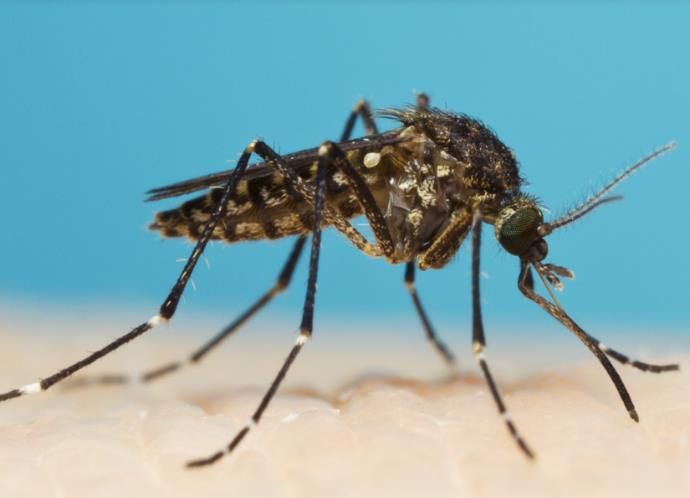
                                               Cover photos:     Bottom left - Common banded mosquito, Culex annulirostris
                                                                  Top and bottom right - Saltmarsh mosquito, Aedes vigilax
                                                                                                        (Copyright 2020)

1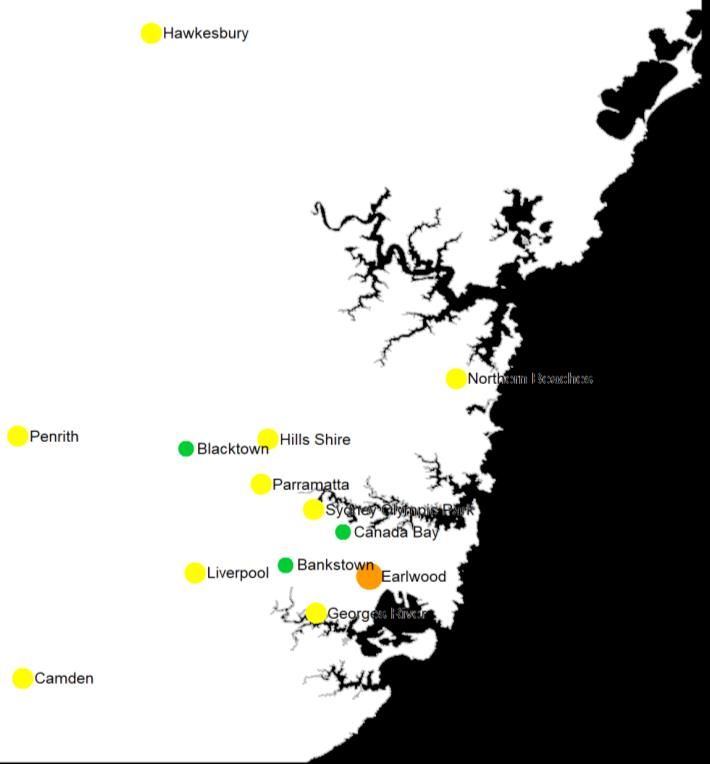
Arbovirus Detections
This section details detections of Murray Valley encephalitis virus, Kunjin virus, Ross River virus, Barmah
Forest virus and Japanese encephalitis virus in the NSW Arbovirus Surveillance and Mosquito Monitoring
Program.

Sentinel chickens
Chickens are bled for detection of antibodies directed against Murray Valley encephalitis virus, Kunjin virus
and Japanese encephalitis virus, indicating exposure to these viruses. Test results for the past two weeks
are shown in the map below and all positive test results for the season are detailed in the table.

Sentinel chicken antibody test results for samples collected in the two weeks to 10 December 2022

There were no positive test results.

Positive test results in the 2022-2023 surveillance season
 Date of sample collection Location                    Virus
 There have been no detections in sentinel chickens in the 2022-2023 surveillance season

2
Mosquito isolates

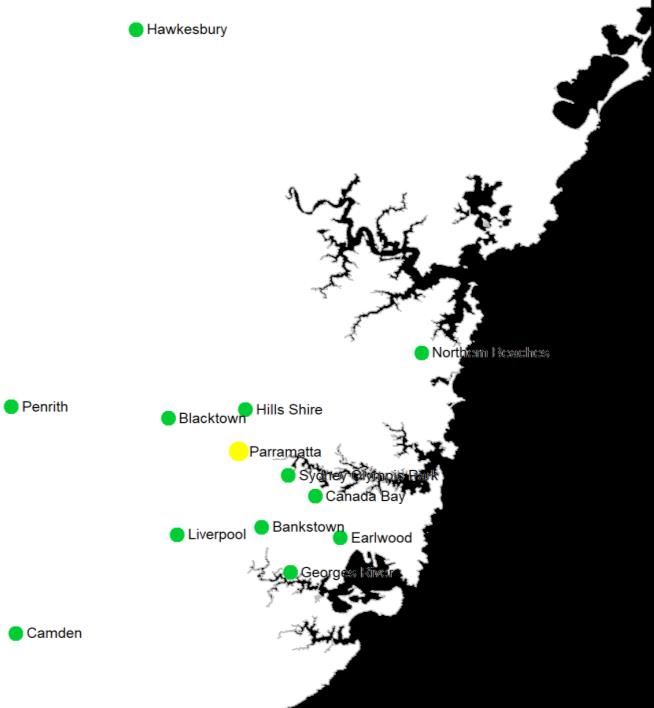
Whole grinds of collected mosquitoes are tested for arbovirus nucleic acids to determine the presence of
arboviruses in mosquitoes. Test results for detections of Ross River virus, Barmah Forest virus and
Japanese encephalitis virus for the past week are shown in the maps below. Detections of all arboviruses
(including Edge Hill virus) for the season are detailed in the table.

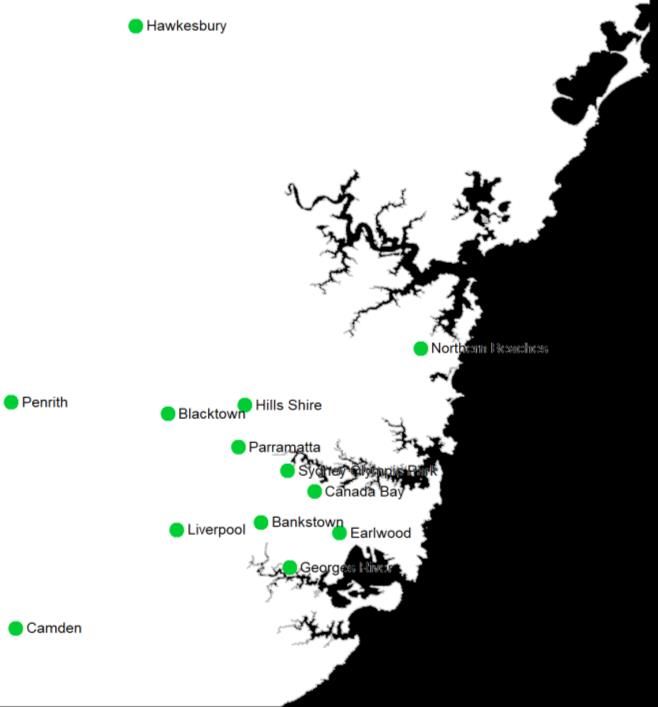
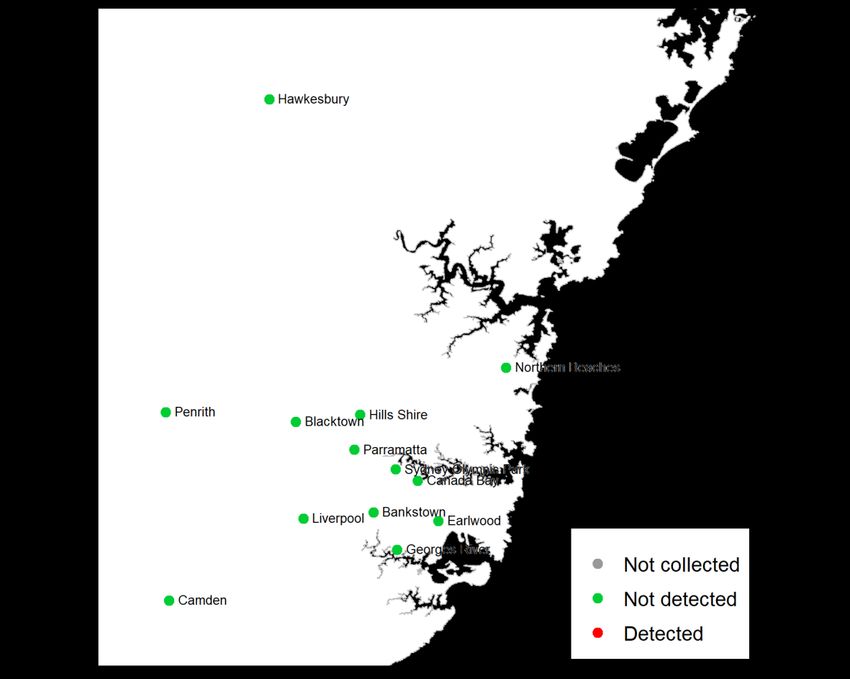
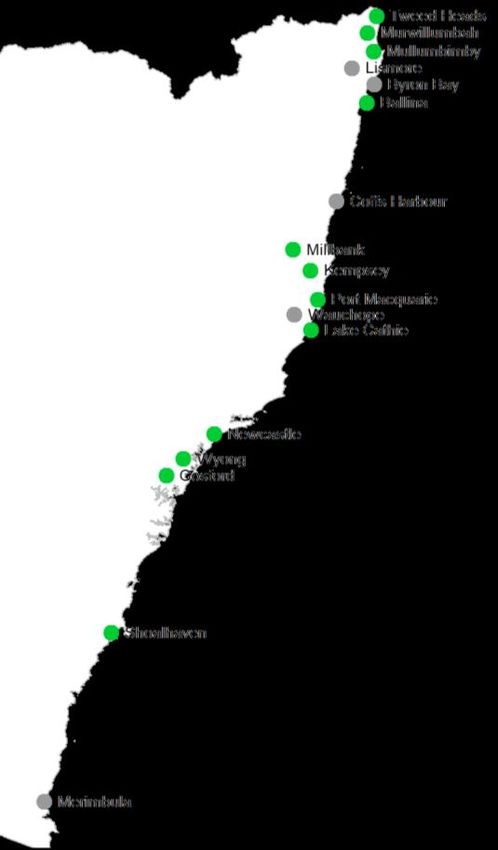
Test results for mosquito trapping sites reported in the week ending 10 December
2022
Barmah Forest virus was detected in mosquitoes collected at Leeton, Deniliquin and Griffith. Ross River virus
was detected in mosquitoes collected at Temora.

Inland and Coastal sites

3
Sydney sites

Arboviruses detected in the 2022-2023 surveillance season

 Date of sample collection                  Location                                     Virus
 14 November 2022                           Macquarie Marshes                            Barmah Forest
 15 November 2022                           Griffith                                     Ross River
 22 November 2022                           Griffith                                     Barmah Forest
 5 December 2022                            Leeton                                       Barmah Forest
 5 December 2022                            Temora                                       Ross River
 5 December 2022                            Grong Grong                                  Edge Hill
 6 December 2022                            Deniliquin                                   Barmah Forest
 6 December 2022                            Griffith                                     Barmah Forest
Note:
Human cases of Edge Hill virus have rarely been reported. Infection may present as a mild self-limiting febrile illness with body aches.

4
Mosquito Abundance
This section details counts of mosquitoes in the NSW Arbovirus Surveillance and Mosquito Monitoring
Program. Each location represents the count average for all trapping sites at that location for the most recent
week that collections were provided prior to preparation of this report.

Culex annulirostris and Aedes vigilax are vectors of interest for Ross River virus and Barmah Forest virus,
Culex annulirostris is also a vector for Japanese encephalitis virus.

Mosquito counts (average per trap per location) for mosquito trapping sites reported
in the week ending 10 December 2022

Inland sites
Total mosquito counts                                                              Key:

Culex annulirostris counts

5
Coastal sites
Total mosquito counts                      Key:

Culex annulirostris counts   Aedes vigilax counts

6
Sydney sites
Total mosquito counts               Key:

Culex annulirostris counts   Aedes vigilax counts

7
Mosquito counts for the 2022-23 surveillance season                                      “Cx. annul” refers to Culex annulirostris and “Ae. vigilax” refers to Aedes vigilax.
Inland                                                                                                                                                                          Key:
                                                                                         WEEK ENDING
                              Oct-22       Nov-22                 Dec-22             Jan-23            Feb-23            Mar-23                Apr-23         May-23
Location     Mosquito    15    22 29   5   12 19    26   3   10     17 24   31   7   14 21 28     4    11 18    25   4   11 18    25   1   8     15 22   29   6   13
Albury       Cx. annul
             Total
Arm idale    Cx. annul
             Total
Balranald    Cx. annul
             Total
Bourke       Cx. annul
             Total
Cootam undra Cx. annul
             Total
Corow a      Cx. annul
             Total
Deniliquin   Cx. annul
             Total
Forbes       Cx. annul
             Total
Griffith     Cx. annul
             Total
Grong Grong Cx. annul
             Total
Leeton       Cx. annul
             Total
Macquarie    Cx. annul
Marshes      Total
Mathoura     Cx. annul
             Total
Menindee     Cx. annul                                   `   `
             Total
Moam a       Cx. annul
             Total
Moree        Cx. annul
             Total
Tem ora      Cx. annul
             Total
Wagga Wagga Cx. annul
             Total
Walgett      Cx. annul
             Total
West         Cx. annul
Wyalong      Total
Wilcannia    Cx. annul
             Total
Young        Cx. annul
             Total

8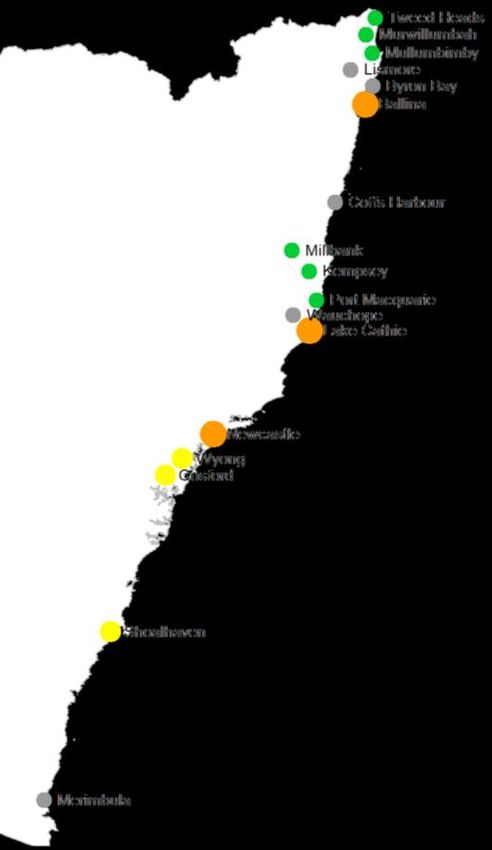
Coastal
                                                                               WEEK ENDING
                               Oct-22       Nov-22              Dec-22            Jan-23         Feb-23            Mar-23                Apr-23         May-23
Location        Mosquito     15 22 29   5   12 19    26   3   10 17 24   31   7  14 21 28    4   11 18    25   4   11 18    25   1   8     15 22   29   6   13
Ballina        Cx. annul
               Ae. vigilax
               Total
Byron Bay      Cx. annul
               Ae. vigilax
               Total
Coffs Harbour Cx. annul
               Ae. vigilax
               Total
Gosford        Cx. annul
               Ae. vigilax
               Total
Kempsey        Cx. annul
               Ae. vigilax
               Total
Lake Cathie    Cx. annul
               Ae. vigilax
               Total
Lismore        Cx. annul
               Ae. vigilax
               Total
Merimbula      Cx. annul
               Ae. vigilax
               Total
Millbank       Cx. annul
               Ae. vigilax
               Total
Mullumbimby    Cx. annul
               Ae. vigilax
               Total
Murwillumbah Cx. annul
               Ae. vigilax
               Total
Newcastle      Cx. annul
               Ae. vigilax
               Total
Port Macquarie Cx. annul
               Ae. vigilax
               Total
Shoalhaven     Cx. annul
               Ae. vigilax
               Total
Tweed Heads    Cx. annul
               Ae. vigilax
               Total
Wauchope       Cx. annul
               Ae. vigilax
               Total
Wyong          Cx. annul
               Ae. vigilax
               Total

9
Sydney
WEEK ENDING
Oct-22 Nov-22 Dec-22 Jan-23 Feb-23 Mar-23 Apr-23 May-23
Location Mosquito 15 22 29 5 12 19 26 3 10 17 24 31 7 14 21 28 4 11 18 25 4 11 18 25 1 8 15 22 29 6 13
Bankstown Cx. annul
Ae. vigilax
Total
Blacktown Cx. annul
Ae. vigilax
Total
Camden Cx. annul
Ae. vigilax
Total
Canada Bay Cx. annul
Ae. vigilax
Total
Earlwood Cx. annul
Ae. vigilax
Total
Georges Cx. annul
River
Ae. vigilax
Total
Hawkesbury Cx. annul
Ae. vigilax
Total
Hills Shire Cx. annul
Ae. vigilax
Total
Liverpool Cx. annul
Ae. vigilax
Total
Northern Cx. annul
Beaches
Ae. vigilax
Total
Parramatta Cx. annul
Ae. vigilax
Total
Penrith Cx. annul
Ae. vigilax
Total
Sydney Cx. annul
Olympic Park
Ae. vigilax
Total
10Environmental Conditions Mosquitoes require water to breed. Rainfall and tides (for the salt marsh mosquito, Aedes vigilax) are important contributing factors for proliferation of mosquito numbers. Unseasonably warm weather can also contribute to higher mosquito numbers. Rainfall In November, rainfall was above average for inland areas of NSW and below average for the Mid-North and North coast. In the week ending 10 December 2022, rainfall totals were low in NSW. Source: Australian Government, Bureau of Meteorology: www.bom.gov.au/climate/maps/rainfall 11
Next month’s rainfall and temperature outlook
The Bureau of Meteorology’s rainfall outlook predicts that NSW is likely to receive average rainfall for
January.
www.bom.gov.au/climate/outlooks/#/rainfall/median/monthly/0

The Bureau of Meteorology’s temperature outlook predicts that minimum temperatures are likely to be above
average in western NSW for January and about average elsewhere. Maximum temperatures are likely to be
above average in Far West NSW and lower than usual along the coast.
www.bom.gov.au/climate/outlooks/#/temperature/maximum/median/monthly/0
www.bom.gov.au/climate/outlooks/#/temperature/minimum/median/monthly/0

Tides
Tidal information is relevant for the prediction of the activity of the salt marsh mosquito, Aedes vigilax. Typically
for NSW, high tides of over 1.8 m, as measured at Sydney, can induce hatching of Aedes vigilax larvae.
Predicted tide heights can provide some indication of when this is likely to occur.

Dates of predicted high tides of over 1.8 m at Sydney (Fort Denison) for December

     •   22-28 December 2022

Source: Australian Government, Bureau of Meteorology: www.bom.gov.au/australia/tides/#!/nsw-sydney-fort-denison
Note: Measured tides at Sydney Port Jackson for the current week are available from the NSW Government, Manly Hydraulics
Laboratory: https://mhl.nsw.gov.au/Data-OceanTide.

12
Human Arboviral Disease Notifications
Under the NSW Public Health Act 2010, human arboviral infections are notifiable in NSW. The NSW Health
Communicable Diseases Weekly Report (CDWR) reports confirmed and probable case numbers by the
week they are received by the NSW notifiable diseases surveillance system, and is available at:
www.health.nsw.gov.au/Infectious/reports/Pages/CDWR.aspx.
The data for Ross River virus and Barmah Forest virus from the CDWR for the latest reported 3 weeks are
below.
Recent notifications of Ross River virus and Barmah Forest virus infections in humans
(by date of case report received)
Week
Latest week 1-week prior 2-weeks prior
(13 – 19 Nov 2022) (6 – 12 Nov 2022) (30 Oct – 5 Nov 2022)
Ross River virus 5 18 11
Barmah Forest virus 3 3 1
Source: CDWR, Communicable Diseases Branch, Health Protection NSW, NSW Health
Notifications of Ross River virus and Barmah Forest virus infections, by month of disease onset (the earlier
of patient-reported onset or specimen collection date), are available online at:
www1.health.nsw.gov.au/IDD/pages/data.aspx. The following figures show this data for November to April of
the current NSW Arbovirus Surveillance and Mosquito Monitoring season (2022-2023), and the same period
in the previous three years.
Source: NSW Health Notifiable Conditions Information Management System (NCIMS), Communicable Diseases Branch
and Centre for Epidemiology and Evidence, NSW Health
13Notes: The data for the previous month are the notifications to date (data extracted on 9 December 2022). Notifications are for NSW residents, regardless of whether the infection was acquired or diagnosed in NSW. Notifications of Ross River virus and Barmah Forest virus infection lag the date of acquiring the infection due to the time taken for symptom development, diagnosis, notification, and other factors. The weekly numbers by date of notification are useful for monitoring recent short- term trends but represent infections that were acquired some time ago. The monthly numbers by date of onset are more timely but less exact because they represent the earlier of patient-reported onset or specimen collection date and are therefore useful for monitoring general trends in human arboviral disease over the course of a season. 14
You can also read


