On-Farm Benefits of Soil Organic Matter - Discovery LINKS connecting science to the farm
←
→
Page content transcription
If your browser does not render page correctly, please read the page content below
Discovery LINKS                                    connecting science to the farm

  Summer 2013
  ARDF Bulletin 5          On-Farm Benefits of Soil Organic Matter
     Neal Mays

                           I
                             f one soil characteristic were to be          nutrients, as well as water, as SOM
                             named which most affects soil quality,        levels increase.
                             health, and productivity, it would prob-
                           ably be soil organic matter. The physical,    • Soil organic matter is approximately
                           chemical, and biological condition of soil      58% carbon.
                           may be enhanced or degraded by land           • Soil organic matter is the substance
                           management practices which either create        that gives most rich, productive soils
                           or destroy soil organic matter. Increasing      their dark color.
                           soil organic matter content on ordinary
                           crop or pasture land often takes years to
                           accomplish, and if the soil surface is left
                                                                         Soil Organic Matter: Cropping Benefits
                           exposed during a heavy rain, productive       • Improves water infiltration and reduces
                           topsoil can be gone in a matter of hours,       the likelihood of runoff, soil crusting,
                           even minutes.                                   and soil erosion.
                                                                         • Improves soil air flow and increases
                           General Facts about Soil Organic Matter         plant available water, which can reduce
                           (SOM)                                           drought stress.
                           • Soil organic matter arises primarily        • Decreases soil bulk density and pene-
                             from decomposed plant matter, but             tration resistance, improving the ability
                             decomposed animal and soil microbial          of root systems to grow and develop.
                             tissues also contribute.
                                                                         • Increases the content of water stable
                           • The soil microbial community is               aggregates in soil. Most soils are crumb-
                             responsible for converting plant and          like after cultivation and have high
                             animal tissue into humus, another             levels of SOM.
                             name for stable forms of soil organic
                             matter.                                     • Improves soil fertility by adding nutri-
                                                                           ents to soil as residues decompose, and
                           • In order to increase SOM, soil nitro-         by supporting a healthy soil microbial
                             gen (N), phosphorus (P), and sulfur           community, which converts some
                             (S) concentrations must be sufficient to      nutrients to plant-available forms.
 Arkansas Discovery          support a healthy soil microbial
   Farms Program             community.                                  • May reduce the need for pesticide
     Department of                                                         applications as the soil food web
     Crop, Soil, and       • As SOM increases, soil N                      diversifies and populations of beneficial
Environmental Sciences       concentration normally increases, as
115 Plant Sciences Bldg.                                                   organisms increase
                             do levels of other nutrients required
 University of Arkansas                                                  • Improves ground and surface water
 Fayetteville, AR 72701
                             for plant growth. There is greater soil
                             storage capacity for these valuable           quality by improving the filtering
Phone: (479) 575-2354
 Fax: (479) 575-3623
                                                                           capacity of soil.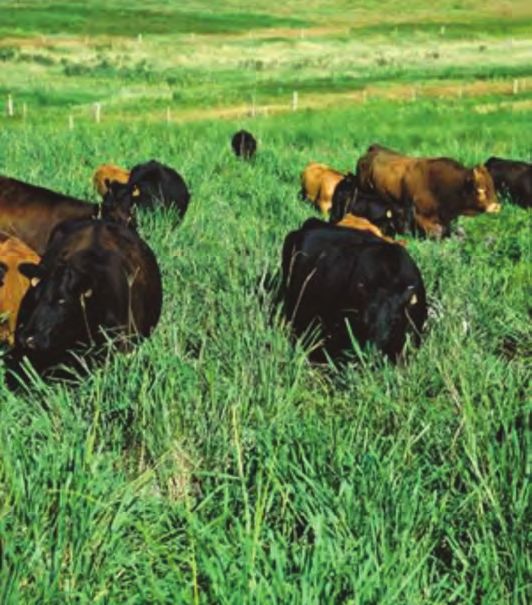
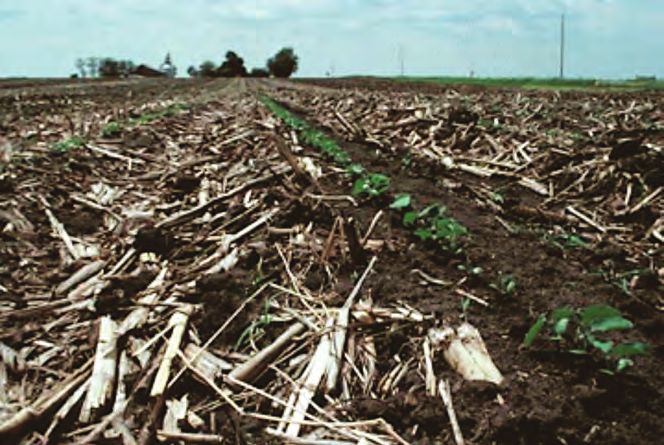
Crop residues decompose and build SOM, while
    protecting the soil surface from crust formation
    and reducing erosion. Photo by Gene Alexander,
    USDA Natural Resource Conservation Service.

    Soil organic matter probably has as much impact on soil        Increasing Grassland Productivity
    fertility and productivity as any measured soil property.
    Maintaining or increasing its level in your soils is akin to   • Creating or enhancing mixed grass/legume stands
    using coupons at the grocery store or keeping your               enhances soil microbial diversity and soil health,
    vehicle running properly. These prac-tices either                rendering the soil more capable of cycling nutrients
    directly save money now or limit how much you spend              between soil and plant and increasing productivity
    later on, and managing SOM is also a money-saving                of the land. Soil microorganisms obtain much of
    endeavor. In grazed pastures and grassland, SOM may              their energy from SOM.
    increase more rapidly than on hayed land, because of           • Pay attention to manure deposits. Heavy manure
    nutrient redistribution in the field.                            deposits in a loafing area are not an efficient return
                                                                     of nutrients to the pasture. Valuable N and P
    Increasing Soil Organic Matter Increases                         may accumulate to extreme levels and be lost due
    Soil Fertility                                                   to leaching through the soil or as runoff during
                                                                     storms. Significant amounts of N can also be lost as
    • SOM effectively works like a bank for plant nutri-             a gas into the atmosphere when N is over-applied
      ents. The higher its content, the more potential for           and soils remain wet.
      nutrient “investments,” and the more “tell-ers”
      there are to distribute nutrients to plants as they          • Creating a grazing plan in which you control where
      need them. On soil test reports, this activity is              the cattle spend their time, and in turn deposit their
      referred to as CEC (cation exchange capac-                     manure, is an effective nutrient management and
      ity). Mineral soils with high SOM generally have a             redistribution plan.
      higher CEC.                                                  • Maintain an appropriate stocking rate. A classic
    • Organic forms of N and P naturally found in SOM                forages textbook recommends “take half and leave
      are routinely changed to plant available forms by              half” of the forage produced. Overgrazing damages
      soil microorganisms. The SOM to N ratio for many               and can kill established grasses and legumes.
      soils is around 20:1, and the top 6 inches of an acre        • Fence cattle out of ponds and streams, while
      of soil is often estimated to weigh around 2,000,000           providing alternative sources of clean water. This
      pounds. Using these estimates, increasing SOM                  practice can help prevent erosion and degradation
      content from 2% to 3% could yield an additional                of adjacent grazing land.
      1000 pounds of total N per acre, some of which
      would be plant available.                                    In cropland, conservation tillage and other SOM-
                                                                   building practices have been the backbone of some
    • Some studies show intensive grazing techniques can           farm management plans for years. In a series of essays,
      improve pasture SOM, as much as 0.35% each year.

2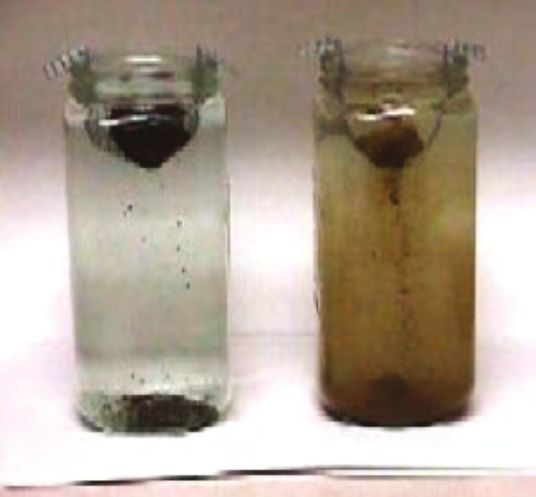
U.S. and Canadian farmers explained their commit-                     Economic Benefits of No-Till or Reduced Till:
ment to land management practices that increase
                                                                      • fewer and smaller tractors required,
SOM and soil carbon. The following are direct obser-
vations made by these individuals, regarding both the                 • less wear on equipment; fewer trips across field,
challenges and benefits associated with limited tillage1.
                                                                      • both of the above yield reduced fuel consumption,

Challenges Created by No-Till or Reduced Till:                        • reduced labor cost,

• weed control; shift to perennial weed species,                      • reduced time in the field,

• increased soil compaction initially,                                • can enter wet fields earlier,

• reduced yield between years 2 and 5 after changing                  • more consistent yields; dry years are better, and
  to no-till,
                                                                      • crop stubble protects seedlings.
• increased tire wear, particularly with corn and bean
  stubble,
                                                                      Soil and Environmental Benefits of No-Till
• cooler soils; affecting planting date, variety selec-               or Reduced Till:
  tion, and creating pest problems (animals, insects,
                                                                      • increase in soil organic matter, of up to 0.5% each year,
  disease),
                                                                      • reduction in bulk density,
• heavy residue can limit creating a good seedbed, and
                                                                      • greater water infiltration,
• starter fertilizer program needed to ensure seedling
  vigor                                                               • reduced soil crusting, runoff, and erosion,
                                                                      • improved soil condition,
                                                                      • moisture conservation and reduced irrigation needs,
                                                                      • long term fertility programs become more stable,
                                                                      • improved wildlife habitat, and
                                                                      • water quality can be improved, as long as nutri-ent
                                                                        management is adapted to avoid accumulation of
                                                                        phosphorus, particularly at the soil surface if
                                                                        fertilizer and/or manure continues to be broad-cast.
                                                                        Injection or shallow incorporation of added
                                                                        fertilizer nutrients should be encouraged to avoid
                                                                        nutrient enrichment of surface runoff.

Soils with high SOM do not readily slake (fall apart) when wetted.
Soil aggregates are stabilized by the C-based compounds in hu-
mus, which is a “glue” holding soil particles together. The soil on
the right would be more likely to crust after a heavy rain, whereas
the soil on the left would retain much of its granular appearance.
Photo courtesy of USDA-NRCS.

                                                                                                                                    3
Conclusions
Implementing farm management strategies which
allow plant residues to remain on the soil surface or
in the root zone have been shown to increase SOM
levels. Soil quality is improved as SOM increases,
resulting in increased soil productivity, and increases
in SOM enhance cropping sustainability, resulting in a
soil whose physical, chemical, and biological condition
favors crop growth with each new season.
“The success of generational farming relies solely on
the stewardship of the present generation. Soil health
is our primary concern, and we are constantly look-
ing for methods of ‘growing’ our soils to higher levels
of biodiversity. In other words, to work in harmony
with natural processes, versus trying to subdue and
control them with commercial heavy iron, will keep
more of our natural resources in place for the next
generation.”
— Kenneth J. Cain, Darlington, Indiana1
Vigorous pasture growth satisfies the nutritional needs of
grazing livestock. The extensive root system of pasture grasses
1
On-farm Benefits of Carbon Management: the Farmer’s release carbon-rich compounds into soil and eventually die and
Perspective, p. 45-65. In: Soil Carbon Management: Economic, decompose , thereby increasing SOM levels. Overgrazed, sparsely
Environmental and Societal Benefits, 2007, CRC Press, Boca vegetated pastures tend to have lower SOM. Photo by Lynn
Raton, FL. Betts, USDA Natural Resource Conservation Service.You can also read


