Open Source, Interoperability and the Digital Markets Act - New European regulation proposals to open up the dominant platforms Vittorio Bertola ...
←
→
Page content transcription
If your browser does not render page correctly, please read the page content below
Open Source,
Interoperability and the
Digital Markets Act
New European regulation proposals to
open up the dominant platforms
Vittorio Bertola – FOSDEM 2021
Who am I

                               Currently head of policy
Internet engineer since 1995   at Open-Xchange
Free software activist
All you need is Perl
                               German open source
Long ago, came up with
                               software company
ICANN’s At Large and the
U.N. IGF                       Maker of
Involved in Internet
governance since ages
                                                          2
1.
Welcome to the
Hotel California

                   3
The Internet!

                4
Federated services:
Email
All email services are compatible
and interoperable
Any email address can write to
any other email address from any
provider
Anyone can offer email services
All standards are open and public
There are many free software
implementations
                                    5
6
7
8
Source: Visualcapitalist.com

                               9
Yes, that’s over two trillion dollars! That’s
$1,610B                bigger than any EU country’s GDP except
           $2,204B                       for France and Germany.
                      $700B

                 $1,174B
      $1,569B                        Market cap on 14 Jan 2021

                                                                       10
715 M€ ?
Ireland Ltd.
104.5 M€
International
LLC (U.S.A.)
4.7 M€ 2.3 M€
Tax/revenue rate: 0.6%
Italy S.r.l.
Google’s Italian advertising revenues in 2018
(Sources: AGCOM, balance sheets – Credits: Altreconomia)
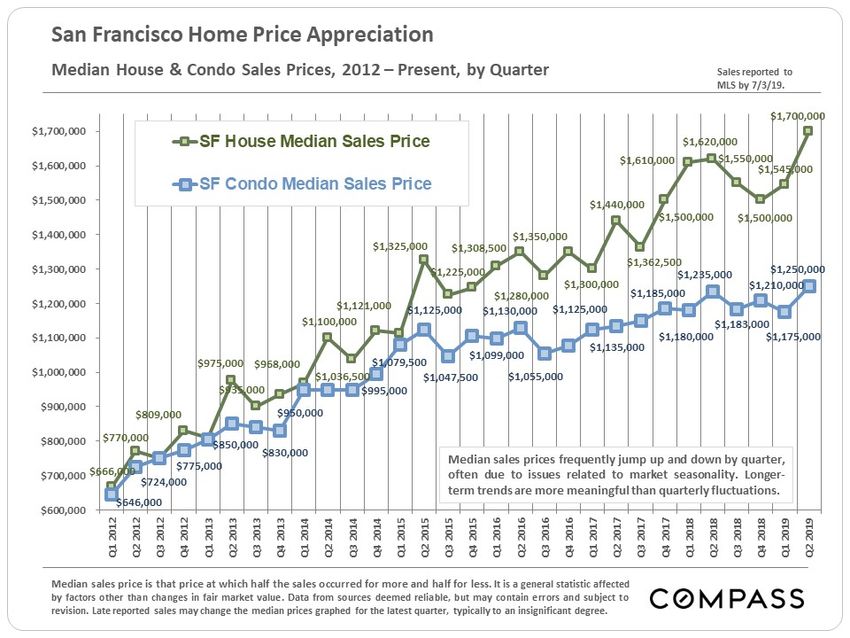
11Median house
price in San
Francisco =
+155% in
7 years
(2012-2019)
121. Platform 2. Silo 3. Lock-In 4. Trojan Horse 5. Control 6. One-stop 7. Over-the-top 8. Closed Monopoly Records 13
Siloed services:
Instant messaging
Each IM service is a walled garden
You cannot communicate with
users of other IM services – you
need an account on each service
If you move, you lose your contacts
and history – you are locked in
Only a few IM services can exist –
you cannot compete or run yours
Either standards are closed, or
deployments are closed                14
I am free and open                         Your app must
   for everyone –                         use my payment
except for Huawei!                          system – and
                                           give me 30%!

                     I will buy out any
                     startup that could
                     ever challenge me!

                                                           15
«Surveillance capitalism»
is the main business
model
Even non-personal, aggregated
information is the key to success
• Best product placement and pricing
• Estimation of credit risk
• Optimization of cloud infrastructure
• Aggregated mobility patterns
• Traffic information from every phone
16Source:
Deutsche
Welle
17The Internet of
other people’s things
We are filling our homes
with devices that send back
encrypted data all the time
We have no control over
what they send
Even if there are laws to
protect us, it is increasingly
impossible to enforce them
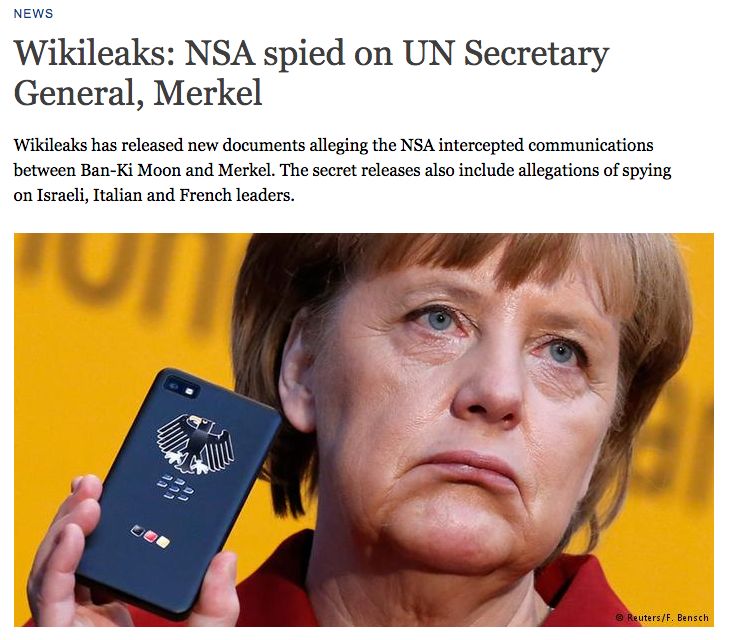
18Source: Politico
19Source:
Financial
Times
202.
Last thing I remember
I was running for the
door
21Source:
European
Council on
Foreign
Relations
22Europe’s requests to big tech
1. Pay taxes here
2. Stop tracking and profiling our citizens
3. Share your aggregated datasets
4. Do not steal our startups
5. Do not kill our competition through your
dominant positions and lock-in practices
6. Stop spreading fake news and illegal content
while making money out of it
7. Do not silence people at your will
8. Let our police intercept criminals
23Open source is fit for
Europe
Europe is an archipelago
of countries, languages,
societies, markets
It works by horizontal
cooperation
It does not produce
GAFAMs, but alliances of
SMEs
24An effective alliance
Freely accessible Competition and
technology consumer defense
Cooperative Enforcement of
development rules
Open standards Funding
25Coming soon (hopefully)
1. Digital Services Act
• Rules and liability on content
• Accountability in advertising and
in moderation
2. Digital Markets Act
• New competition tool
• Blacklist of business practices
• Interoperability requirements
3. Data Governance Act
• Rules for open access to public data
26Digital Services Act
Old E-commerce Directive
(«mere conduit» principle)
GDPR-style global reach
Additional requirements for
non-SME «online platforms»:
recourse, KYBC, flaggers…
VLOPs – over 45M users:
transparency/accountability,
advance risk management,
choice of content curation
27Digital Markets Act
Aimed at business users of
two-sided market platforms
Affects global «gatekeeper»
online platforms
□ Over 6.5B€ turnover
□ At least 3 EU countries
□ Over 45M consumers
□ Over 10k business users
New anti-trust instrument for
non-traditional dominant
positions
28Digital Markets Act’s no-no’s
(Art. 5)
1. Forced data integration across services
2. Exclusivity/best price clauses
3. Mandatory bundling of services
4. Clauses against public recourse
5. Mandatory use of own identity system
6. Intransparent advertising pricing
29Why interoperability?
Dominant platforms should
be required to interoperate
with competitors
Users could choose any app
and service provider
New entrants would have a
chance to succeed
This would enable European
competition and promote
private, user-friendly services
30The DMA’s interoperability clauses
Art. 6.1(f) Art. 6.1(h)
«allow business users and «provide effective portability of
providers of ancillary services data generated through the
access to and interoperability with activity of a business user or end
the same operating system, user and shall, in particular,
hardware or software features provide tools for end users to
that are available or used in the facilitate the exercise of data
provision by the gatekeeper of any portability, in line with Regulation
ancillary services» EU 2016/679, including by the
provision of continuous and real-
time access»
31Our objectives
Interoperability (and
fair competition)
should be for all users,
not just for businesses
Interoperability should
be for all core
consumer services
(messaging, social
media…), not just for
ancillary ones
32Thanks!
Any questions?
You can find me at
@vittoriobertola
vittorio.bertola@open-xchange.com
Credits: Original presentation template by SlidesCarnival modified by myself
License: This presentation is distributed under a Creative Commons CC-BY-SA license
Advance presentation recorded with OBS Studio
33You can also read


