OUR PEOPLE - Anglo American
←
→
Page content transcription
If your browser does not render page correctly, please read the page content below
INVESTING IN OUR PEOPLE OUR PEOPLE

OUR
PEOPLE

Our people are vital to the success of our                                           Formal learning is delivered at both business unit
                                                                                     and Group level, with external training expenditure
business and it is our aim to inspire them                                           across Anglo American in 2014 amounting to
                                                                                     $106 million, 2.3% of total employee costs
to deliver sustainable value that makes a                                            (2013: $104 million, 2% of total employee costs).
real difference.                                                                     Developing strong, accountable and safety-conscious
                                                                                     leaders is essential to achieving our ambitions. We are
                                                                                     focusing on and continuously review high quality leadership
               Guided by our values – safety, care and respect, integrity,           development and have a range of more than 200 external
               accountability, collaboration and innovation – our people             and internal development programmes currently in use
               apply their skills, knowledge and expertise to ensure we              across the Group, We continue to provide basic literacy and
               operate successfully and responsibly. It is our people                numeracy to our employees, contractors and community
               who develop trusting and respectful relationships with                members in South Africa through adult basic education and

                                                                                                                                                       People
               communities, governments, suppliers, partners and mining              training programmes. In addition, we provide training in skills
               peers to ensure that we deliver on our promises. In return,           that are transferable to industries outside mining.
               we reward our people and provide opportunities to help
               them develop and grow.
                                                                                     A DIVERSE WORKFORCE
               THE RIGHT PEOPLE IN THE RIGHT JOBS                                    By year end, 24% of managers were women (2013: 23%),
                                                                                     with 16% of our overall workforce being female (2013: 16%).
               Anglo American initiated a process in 2013 of restructuring           Across our businesses, targets have been set to further
               the organisation with the aim of ensuring that we have the            increase female representation, both within the
               right people in the right roles to deliver effectively and            management population and the workforce as a whole.
               efficiently on our strategic objectives. The roll-out of our new
               Organisation Model is creating a leaner organisation, with            Anglo American embraces all forms of diversity and
               greater clarity on roles and accountabilities and improved            complies with relevant legal obligations wherever we
               lines of communication between levels of the organisation,            operate. We recognise the unique and critical role that
               while also removing unnecessary work and duplication. The             women play in the mining industry, especially in the
               restructuring of the corporate functions and some business            socio-economic environments that surround local
               unit corporate centres was completed in 2014.                         mining operations. While women have historically been
                                                                                     under-represented in the mining sector, Anglo American
                                                                                     believes employing more women will lead to significant
               TALENT MANAGEMENT AND SKILLS                                          and sustainable performance improvement in every aspect
               DEVELOPMENT                                                           of the business.
               To attract and retain the best talent, we seek to offer safe,
               worthwhile and stimulating work, provide opportunities for
               personal development, pay people competitively, recognise
               and reward excellence, encourage diversity and protect
               employee rights. Our approach is underpinned by our
               human resources (HR) standards, management systems
               and processes. During the year, voluntary turnover
               (the number of permanent employee resignations as a
               percentage of total permanent employees) was equal to
               the 2013 figure at 2.0%.
               Providing high quality training is a key attraction and
               retention tool. During the year we supported 3,602
               graduates, bursars, apprentices and other trainees
               (2013: 2,974).

                                                                                  Anglo American plc Sustainable Development Report 2014         28
INVESTING IN OUR PEOPLE OUR PEOPLE

  BUILDING LEADERS AND SHAPING TALENT
                                                                                                                                     Graduates
                                                                                                                                     in the BLAST
                                                                                                                                     programme:
                                                                                                                                     (Left to right)
                                                                                                                                     Tshegofatso
                                                                                                                                     Kole, Thizwilondi
                                                                                                                                     Nkhumeleni,
                                                                                                                                     Emily Nicholls,
                                                                                                                                     Denis Wong,
                                                                                                                                     Shannon Stronach
                                                                                                                                     and Thokozani
                                                                                                                                     Malinga.

                                                                                                                                                              People

  Developing strong, accountable and safety-conscious              prospective recruits have an interview with current
  leaders is essential to achieving our ambitions. Over the        participants on the programme. The recruitment process
  past decade we have been building a robust pipeline of top       is entirely based on merit.
  talent in South Africa through a highly successful graduate
                                                                   The first role for each recruit is typically in the discipline
  recruitment programme called BLAST – Building Leaders
                                                                   they studied, enabling them to adjust to the world of work.
  and Shaping Talent.
                                                                   From there, the participants choose a path of diverse
  The programme was launched in response to a mandate by           experiences to broaden their skills and knowledge, rotating
  the Board in 2004 to develop a pipeline of young people with     positions within the Group every 18 months, including one
  potential in South Africa for succession planning. BLAST is      international assignment.
  designed to offer a compelling value proposition to attract
                                                                   The demographic profile of the recruits over the past 10 years
  high-potential graduates in mining and technical fields and
                                                                   is 72% ‘historically disadvantaged South Africans’, including
  develop them as future leaders. Key attractions identified
                                                                   white women (54% without women), with a female/male ratio
  included opportunities for international exposure and working
                                                                   of 45/55. The retention rate stands at a healthy 94%.
  for a company with a strong ethos around sustainability, and
  in particular supporting host communities.                       The programme aims to keep participants challenged and
                                                                   stimulated. The positive impact of the programme is widely
  BLAST recruits are exceptional performers, fresh from
                                                                   felt, with participants setting a leading example among their
  university, who demonstrate Anglo American’s values and
                                                                   peers. Participants further build their leadership capabilities
  have high emotional intelligence. The annual selection process
                                                                   through a suite of programmes such as the Programme for
  involves a rigorous assessment that includes psychometric
                                                                   Management Excellence and The Achiever Programme to
  tests and interviews. To enhance the recruitment success,
                                                                   reach their full potential.

                                                                                     Anglo American plc Sustainable Development Report 2014              29
INVESTING IN OUR PEOPLE OUR PEOPLE

               Our approach to gender diversity is centred around
               four dimensions:
               ••establishing a working environment and culture that
                 is supportive of women                                                                                                %    0   18763   37526   56289   75052   93815

                                                                                              Africa                  106,971         71
               ••proactively attracting women to work for Anglo American
                 at all levels within the organisation, with a particular focus               South America             34,222        23
                 given to operational roles                                                   Australia                  5,430          4
                                                                                              Europe                     2,124          1
               ••accelerating gender diversity through employee
                                                                                              North America              1,965          1
                 development
                                                                                              Asia                         501          0
               ••improving communication and understanding of                                 Middle East                    15         0
                 gender diversity objectives within our organisation.
                                                                                              Total                   151,228

                                                                                                                                                                                             People
               In our South African operations, we continued to
               promote transformation in the workforce. By year end,
               60% of our management were HDSAs (2013: 64%).

               PROTECTING LABOUR RIGHTS
               As expressed in our Human Rights Policy, and as signatories                                                             %
               to the United Nations Global Compact, we are committed                         Kumba Iron Ore            16,176        11
               to the labour rights principles set out in the International                   Iron Ore Brazil           14,085          9
               Labour Organization core conventions, including the right                      Coal                      24,653        16
               to freedom of association and collective bargaining, the                       Copper                    10,872          7
               eradication of child and forced labour and non-discrimination.                 Nickel, Niobium
               Full observance of these issues is also required of our                        and Phosphates
                                                                                                                         6,997          5
               suppliers in line with the Anglo American Supplier                             Platinum                  52,216        35
               Sustainable Development Code and policy, and compliance                                                                15
                                                                                              De Beers                  22,947
               is audited. At our operations, we have clear policies and
                                                                                              Group departments          3,282          2
               processes in place in order to ensure that we do not employ
               any under-age or forced labour. No incidents of employing                      Total                   151,228
               under-age or forced labour were reported in 2014.                       (1)
                                                                                             These figures reflect the annual average of employees and contractors
                                                                                             during the year.

               FOSTERING SOUND INDUSTRIAL RELATIONS
               Approximately 74% of our permanent workforce is
               represented by work councils, trade unions or other similar
               bodies and covered by collective bargaining agreements.
               In South Africa, the labour relations climate remains a
               particular challenge and concern. Labour instability has been
               exacerbated by inter-union conflict, and is underpinned by
               ongoing systemic societal challenges that are deeply rooted
               in the country’s history and in the legacy of the migrant labour
               system. The five-month strike in the platinum industry by the
               majority trade union AMCU highlighted the adversarial
               nature of the situation. The strike was eventually concluded
               through dialogue and collaboration, with a three-year
               agreement signed on 24 June and backdated to July 2013.
               The process nonetheless exacted a significant toll and
               reflected the need for us to improve relations with our
               employees and their representative bodies.
               Production at the Los Bronces mine in Chile was halted
               for a day as a result of protests by a group of contract
               workers. Employees were evacuated from the premises
               due to incidents of violence, intimidation and damage to
               mine property. The illegal strike came to an end following an
               agreement between the Federation of Contractor Workers
               and contracting companies, with Anglo American acting as
               a sponsor of the agreement, to improve certain working
               conditions and grant bonuses for contractor workers.

                                                                                  Anglo American plc Sustainable Development Report 2014                                                30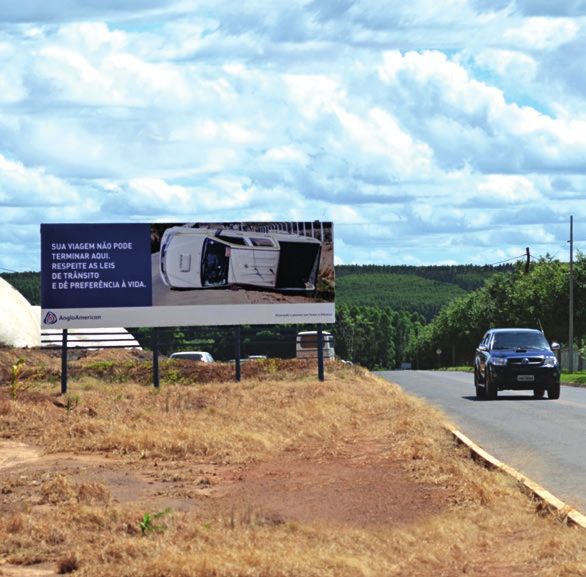
INVESTING IN OUR PEOPLE OUR PEOPLE

  MITIGATING EMPLOYEE INDEBTEDNESS
                                                                                                                                         Image
                                                                                                                                         Employees at
                                                                                                                                         Waterval Smelter
                                                                                                                                         in Rustenburg.

                                                                                                                                                                 People
  Indebtedness is a serious and complex social challenge              Building on this initiative, Platinum and Summit have created
  in South Africa. Many of our employees, especially at our           an employee financial wellness programme, Nkululeko, to help
  Platinum business, are struggling with a level of personal debt     employees to understand and manage their debt. Launched in
  that is difficult to manage. High levels of debt are often rooted   October 2014, the free service has been rolled out at all of
  in challenging social conditions, a lack of basic financial and     Platinum’s operations. By granting Summit power of attorney,
  legal literacy and in reckless unsecured lending by some credit     employees can rely on its consultants to check garnishee
  providers. The situation is made worse by the imposition of         orders for legality, negotiate with creditors, reduce monthly
  ‘garnishee orders’ – by which employers are obliged to deduct       repayments and tax penalties and provide training in managing
  debt repayments directly from salaries.                             personal finances.
  Indebtedness has a deep impact on employees and their               Platinum also uses its employee wellness programmes to
  families and research has shown that it is an underlying cause      assist in identifying debt-related stress.
  of low morale, stress and labour unrest in the mining industry.
                                                                      Mineworkers are often vulnerable to irresponsible lenders
  The five-month-long strike in the platinum sector in the            who act outside of the law and exploit borrowers. Debts from
  first half of 2014 had a material socio-economic impact             unregistered or illegal credit providers are difficult to manage
  on Platinum’s mineworkers, resulting in many increasing             as the practice is difficult to track and there are no legal or
  their dependence on credit still further.                           formal processes to arrange debt repayment. We are working
                                                                      in partnership with local authorities to curtail abuse of
  Platinum is working with labour union representatives to
                                                                      employees by credit providers and debt collectors and to
  find solutions to employees’ financial struggles. The aim is
                                                                      abolish irresponsible micro-lenders. These activities extend
  to ensure that employees’ debts are settled and to foster a
                                                                      across all of Platinum’s operations, including its smelters,
  responsible culture of spending.
                                                                      concentrators and refineries.
  Since 2012, Platinum has engaged Summit Financial Partners
                                                                      Platinum continues to work with government and other
  to audit and determine the validity of garnishee orders. To date,
                                                                      stakeholders, such as the Chamber of Mines, to address
  Summit has managed to return $277,000 to employees.
                                                                      broader employee debt issues. This includes seeking solutions
                                                                      through influencing the regulatory environment and legal
                                                                      action to protect and enforce the legal rights of employees.

                                                                                        Anglo American plc Sustainable Development Report 2014              31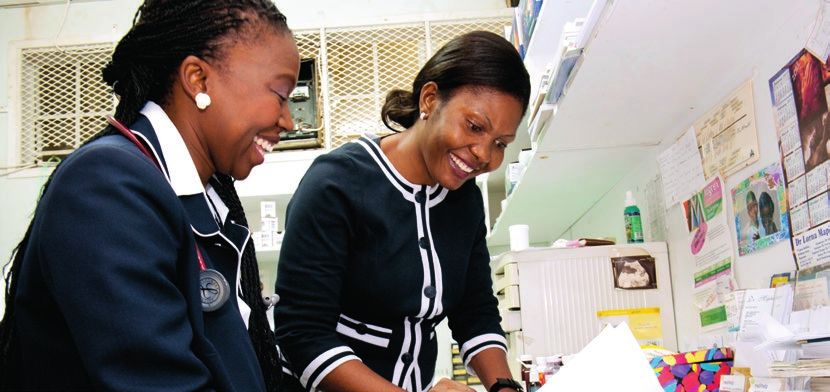
INVESTING IN OUR PEOPLE SAFETY

SAFETY

Providing a safe and healthy workplace is a                                               Total number of fatal injuries and fatal injury
core Anglo American value and remains our                                                 frequency rate 2010–2014

first priority. Effectively managing workplace                                            Fatalities
                                                                                          30
                                                                                                                                                    FIFR
                                                                                                                                                    0.016

safety is a direct investment in our employees                                            25
                                                                                                                                                    0.014

and the business.                                                                                                                                   0.012
                                                                                          20
                                                                                                                                                    0.010

               OUR PERFORMANCE                                                            15                                                        0.008

                                                                                                                                                    0.006
               In 2014, four employees and two contractors lost their                     10
               lives in work-related activities at operations managed by                                                                            0.004

                                                                                                                                                                 People
               Anglo American. While this represents an encouraging                       5
                                                                                                                                                    0.002
               reduction on the eight employees and seven contractors
               who died in 2013, any loss of life is unacceptable and we                  0                                                                 0
               continue to dedicate considerable effort to achieving,                               2010       2011      2012         2013       2014
               and maintaining, zero harm. We worked four months                               FIFR
               fatality-free in 2014, which reinforces our belief that                         Fatalities
               zero harm is achievable.
               In South Africa, three deaths occurred at our Platinum
                                                                                          Lost time injuries, medical treatment cases and
               operations: one incident involved handling materials;
                                                                                          total recordable case frequency rate 2010–2014
               another involved a fall of ground and the third an
               electrocution. One person died at Kumba Iron Ore as a result                                                                        TRCFR
               of a fall from height. At Coal Australia, an employee died                 4,000                                                         2.5
               after being exposed to irrespirable gases in a restricted area
                                                                                          3,500
               underground and a contractor lost his life following a fall of                                                                           2
               ground. For each incident resulting in loss of life or a critical          3,000
               injury, an independent investigation is conducted, remedial                2,500                                                         1.5
               actions taken, and the lessons learned from the incident
                                                                                          2,000
               are shared via the Group LFI process and discussed at
               Board Sustainability Committee and executive                               1,500                                                         1

               management levels.                                                         1,000
                                                                                                                                                        0.5
               Two commuting incidents on public roads in company-                            500
               provided transport resulted in seven of our employees and
                                                                                                0                                                       0
               two contractors losing their lives. Improving safety on public
               roads in communities around our operations is becoming                               2010        2011     2012         2013       2014
               part of our operational safety improvement plans and is the                     TRCFR
               primary focus of a new public road transportation task force.                   Medical treatment cases      Lost-time injuries

               We have made steady progress in managing safety over the
               past few years and our injury frequency rates indicate that
               we are starting to realise the desired step change in our              Our operations continue to focus on the increased and
               performance. By mining category and geographical area,                 improved reporting of, and learning from, high-potential
               we are performing well in the sector, and we aspire to                 incidents (HPIs) as a preventative tool to improve safety
               become industry leaders. While Platinum’s performance,                 performance. During the year, 505 potentially serious safety
               which was influenced by the protracted strike in 2014,                 incidents occurred, during which no injuries were sustained.
               accounts for some of this improvement, injuries throughout             More than 40% of these related to transportation.
               the Group continue to drop.                                            Regulatory and voluntary safety stoppages decreased
               The Group fatal injury frequency rate (FIFR) at the end of             considerably at Platinum and Kumba during 2014.
               2014 was 0.003, representing a 63% improvement on 0.008
               in 2013. Our total recordable case frequency rate (TRCFR),
               which includes any injury that requires more than first-aid
               treatment, continues its downward trend. At 0.81 for 2014,
               it was the lowest on record (2013: 1.08). The Group’s
               LTIFR also improved for the third consecutive year, by 29%
               to 0.35 (2013: 0.49). Injury management categories that
               require particular attention include transportation and
               materials handling.

                                                                                   Anglo American plc Sustainable Development Report 2014                   32
INVESTING IN OUR PEOPLE SAFETY

               DELIVERING ON OUR STRATEGY                                           Effective planning and front-line supervision
                                                                                    Detailed planning and scheduling of tasks, to support the
               Our safety strategy and management approach focus on
                                                                                    delivery of a safe and productive outcome, is a fundamental
               improving our ability to anticipate and prevent harm to our
                                                                                    part of our Operating Model. In the planning and execution
               people. Our principal safety risks relate to transportation,
                                                                                    of work, risks are identified and specifically addressed as
               moving machinery, fall of ground, working at heights and
                                                                                    positive actions to minimise the likelihood of unplanned
               isolation/lock-out. Our risk-based approach is outlined in
                                                                                    events. Effective front-line supervision is critical to ensure
               our Safety Way – a comprehensive framework of roles and
                                                                                    strict adherence to planned work. In early 2014, we
               responsibilities supported by a set of safety principles and
                                                                                    developed a framework to assist business units in providing
               mandatory safety standards. This underpins the delivery
                                                                                    front-line supervisors with the necessary skills and
               of our safety strategy, which is founded on three key
                                                                                    environment in which to deliver consistently safe production
               principles: a mindset of zero harm; the elimination of
                                                                                    and achieve operational excellence.
               repeat incidents; and the consistent application of simple,
               non-negotiable standards.                                            Incident management

                                                                                                                                                         People
                                                                                    Investigating and communicating the root causes of actual,
               Safety-related training extends to our workforce in various
                                                                                    as well as high-potential incidents is an essential part of
               forms, from formal training initiatives to regular or daily
                                                                                    improving controls to prevent repeats. Our LFI process
               safety briefings.
                                                                                    has now been extended to include both health and
               Over the past year we have concentrated on embedding                 environmental incidents, with the intention to use it more
               and reinforcing five specific steps of our safety programme:         broadly across operations. We continue to update learning
                                                                                    materials, investigation tools and techniques. LFI training
               ••leadership
                                                                                    sessions were held at business units throughout the year
               ••effective planning                                                 and more than 200 Level 1 facilitators were trained.
                                                                                    A central database stores incident information and
               ••front-line supervision
                                                                                    distributes notifications and lessons learnt throughout
               ••incident management                                                the Group.
               ••risk management.                                                   While the number of HPIs and hazards reported varies
                                                                                    between business units, the quality of ‘alerts’ is improving.
               The steps are linked: strong leaders provide direction
                                                                                    There is a strong correlation between the root causes of
               to managers who plan and supervise tasks effectively.
                                                                                    HPIs and fatalities, with on-site transportation the most
               Consistent approaches to incident and risk management
                                                                                    common cause. When serious incidents occur, we now
               help us to prevent incidents and learn from those that
                                                                                    engage behavioural-based experts to analyse the human
               do occur.
                                                                                    factor elements involved in their causation.
               It is the intention for all operations to implement safety
                                                                                    Leading performance indicators, such as HPIs, preventative
               improvement plans that prioritise these steps based on
                                                                                    actions and risk mitigation are reported routinely to the
               operational risk reviews.
                                                                                    Board and the executive management of the Group.
               Leadership
               Strong leadership is the first step in making safety part of
               all our decisions and actions. Our leaders regularly visit our
               operations and play a visible role in daily activities. Visible
               felt leadership (VFL) material has been updated and VFL
               and hazard identification training sessions are held at our
               operations and corporate offices.
               Anglo American’s third annual Global Safety Day took place
               in October 2014, with employees and contractors across the
               Group engaging on the theme ‘Managing Change – stay
               safe’. This theme was chosen because change was identified
               as a factor in causing a high percentage of accidents and
               HPIs analysed. The day helps to embed a safety mindset and
               our core safety programmes, with the chief executive and
               business unit CEOs demonstrating leadership support and
               commitment to safety as a core business value.

                                                                                 Anglo American plc Sustainable Development Report 2014             33
INVESTING IN OUR PEOPLE SAFETY

               Risk management
               Anglo American’s Operational Risk Management (ORM)
                                                                                       USING OPERATIONAL
               process helps to create a performance step change by                    RISK MANAGEMENT TO
               providing a consistent and effective way of identifying,                UNDERSTAND AND MANAGE
               prioritising and controlling risk. A Group ORM programme
               team is supporting sites with the integration of ORM into               SINKHOLES ON MINES
               business processes and our longstanding safety, health and              The sudden appearance of a sinkhole in a mining area
               environment (SHE) risk management training courses have                 represents a hazard to both people and the equipment
               been updated accordingly.                                               being used. This is especially true in the use of opencast
                                                                                       mining that takes place on top of old mines where
               Since 2011, every operation has been implementing a                     previous underground workings are hidden from view.
               safety action plan to address gaps identified in its safety             At Coal South Africa’s Landau colliery, a series of
               management. The close-out of actions is now about 92%                   sinkhole incidents, one of which resulted in a loss of life,

                                                                                                                                                            People
               complete. Progress against safety action plans, as well as              highlighted the need for a more systematic approach to
               a number of lagging indicators, is included in business unit            predicting and managing sinkholes.
               CEO performance targets and influences the remuneration                 A multi-disciplinary team at Landau used the
               of all the Group’s executives and managers.                             Anglo American operational risk management (ORM)
               Improving public road transportation                                    process to analyse the complex technical issues
                                                                                       associated with sinkholes. This included a review of how
               Following two fatal public-road transportation incidents                sinkholes form, the physical attributes of old underground
               early in 2014, a transportation task team under senior                  mines and how opencast mining activities affect the
               leadership was established in April to conduct a full                   stability of such areas. The analysis has helped the team
               review of transport processes across the Group and                      to predict the position of sinkholes more accurately, and
               co-ordinate, manage and oversee strategic transportation                identified a broader and more effective range of
               safety-related projects.                                                risk-prevention and post-event recovery measures.

               The following key public-road safety performance initiatives            The introduction of the sinkhole-management system
               have been informed by reviews of best practice and the                  has resulted in a significant increase in the identification,
                                                                                       investigation and management of sinkholes, which are
               findings from a transportation of people audit conducted by
                                                                                       made safe in advance of any mining activity. The mine
               the S&SD risk and assurance team in 2013.                               plan is now more predictable and reliable – there were
               ••In conjunction with the Group supply chain team,                      no deaths or injuries related to sinkholes in 2014, nor
                 a new standardised transportation contract has been                   any unplanned production stoppages.
                 initiated, which mandates the inclusion of improved safety            Landau continues to monitor the effectiveness of the
                 elements in any future contract. Associated fatal-risk                controls that have been implemented and aims to
                 standards have been updated to include minimum bus                    investigate how these can be further improved.
                 design standards and a best-practice document has been
                 included for light vehicles.
               ••We are developing the use of mobile-device technology to
                 improve journey management, information and planning.              Engagement and collaboration
                 This will be piloted in 2015.                                      In South Africa, the Tripartite initiative, a collaboration
                                                                                    with organised labour and government’s Department
               ••Interventions to mitigate poor human behaviour, which is           of Mineral Resources, is progressing well in developing ways
                 attributed to more than 80% of all road deaths, include            to improve our safety performance.
                 providing driver training and assisting with driver selection
                 and management criteria.                                           Our suppliers have an important role to play in helping
                                                                                    us improve our safety performance. Where we purchase
               ••Two pilot projects are under way aimed at improving safety         specific high risk products and services, we have a
                 on high-risk stretches of road serving our operations: at          particularly strong safety focus embedded in our supplier
                 Platinum’s Mogalakwena operation, and Phosphates’                  relationship management process. We work closely with
                 Catalão operation in Brazil. (See case study on page 35.)          suppliers to realise opportunities to develop and introduce
                                                                                    safer equipment and products. This includes researching
                                                                                    opportunities related to autonomous trucking and collision
                                                                                    avoidance technology, drill automation technology and
                                                                                    slot borer and reef miner automation.

                                                                                 Anglo American plc Sustainable Development Report 2014                34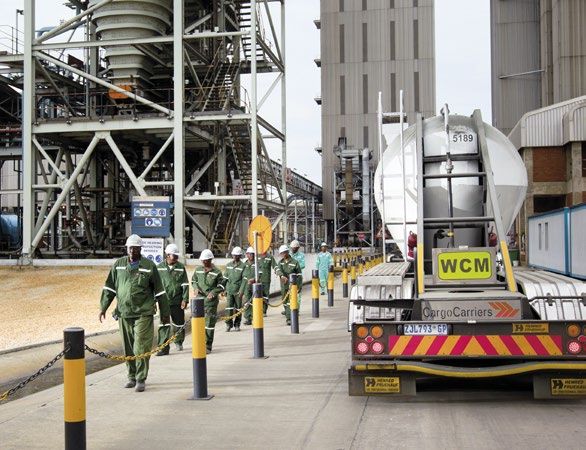
INVESTING IN OUR PEOPLE SAFETY

  IMPROVING PUBLIC-ROAD SAFETY
                                                                                                                                       Image
                                                                                                                                       The road safety
                                                                                                                                       partnership
                                                                                                                                       involving
                                                                                                                                       our Niobium
                                                                                                                                       and Phosphates
                                                                                                                                       businesses,
                                                                                                                                       the local police,
                                                                                                                                       municipal
                                                                                                                                       government,
                                                                                                                                       NGOs and other
                                                                                                                                       stakeholders,
                                                                                                                                       has already had a
                                                                                                                                       dramatic impact

                                                                                                                                                                   People
                                                                                                                                       in improving road
                                                                                                                                       safety in and around
                                                                                                                                       the city of Catalão.

  Driving is a high risk activity in many of the countries in       To lead an effective, co-ordinated campaign to improve road
  which we operate. Many vehicles enter and leave our sites         safety, we partnered with local police, NGOs, government and
  every day and, as a result, the volume of traffic in these        other key stakeholders. Over a 12-month period, we focused
  areas often increases.                                            on raising awareness of safe driving practices and on
                                                                    improving road infrastructure through road safety lectures,
  To mitigate our own impact and support community needs,
                                                                    meetings and workshops.
  we have implemented a Group-wide initiative to improve the
  public-road transportation of employees and contractors,          Our efforts culminated in an intensive road safety week
  with the aim of making each journey as safe as possible.          involving employees across the business units. The project,
                                                                    together with other initiatives implemented locally, contributed
  At our Niobium and Phosphates businesses in Goiás state,
                                                                    to enhanced road safety in the area, with a 70% reduction in
  Brazil, a socio-economic assessment highlighted road
                                                                    the number of lives lost over the campaign period.
  safety to be a major concern for communities in the region,
  particularly the highway BR050 that links our operations with     In 2014, we implemented an internal road-safety campaign
  the city of Catalão. Between 2007 and 2012, 122 people lost       and launched a second external campaign, to broaden the
  their lives and nearly 750 people suffered significant or minor   scope of work along highway BR050 and widen the area of
  injuries in accidents on this stretch of road.                    influence. The principles developed in this project are being
                                                                    transferred to operations in other high risk environments.

                                                                                      Anglo American plc Sustainable Development Report 2014                  35
INVESTING IN OUR PEOPLE HEALTH

HEALTH

Effective management of health risks
protects our people, enhances productivity
and is essential for minimising potential
long term liabilities. Extending our health
promotion activities to the broader community
also supports our internal health drive.

                   Health strategy

                                                                                                                                                                     People
                                                                                    Global health
                                                                                  Developing countries

                                                                                    Communities

                                                                                       Families
                                                                                   (health insurance)

                                                                            Employee health and wellness
                                                                                 (including HIV/AIDS)

                                                                                Occupational health
                                                                        Anglo American’s Occupational Health Way

                                                 Occupational hygiene                                                Occupational medicine
                                                   Leading indicators                                              Leading and lagging indicators

                             Benchmarking               Standards                     Guidelines                          Support                   Assurance

                                                                          HEALTH INFORMATION SYSTEMS

               DELIVERING ON OUR STRATEGY                                                   We have mandatory technical standards that address our
                                                                                            principal health risks, which relate to: noise; inhalable
               Our health strategy addresses three focus areas:
                                                                                            hazards, specifically particulate matter (dust); and
               ••managing occupational health risks to prevent harm to                      ergonomic stress and fatigue. These standards follow a
                 our workforce                                                              common risk management format encompassing risk
                                                                                            assessments, education and training, application of controls,
               ••implementing employee health and well-being
                                                                                            and monitoring and review.
                 programmes, which includes a strong emphasis on
                 combating HIV/AIDS and tuberculosis (TB) within our
                 southern African workforce and their families                              OCCUPATIONAL HEALTH
               ••building partnerships to strengthen health systems,                        Occupational health is comprised of two disciplines,
                 particularly in under-serviced rural areas.                                occupational hygiene and occupational medicine.
                                                                                            Occupational hygiene is about proactively identifying
               Occupational health management forms the foundation of
                                                                                            sources of, and exposure to, health hazards, profiling the
               our health strategy. Our approach is governed through a
                                                                                            associated risks, and preventing release of the hazards
               series of standards, guidelines and assurance processes.
                                                                                            through controls in the working environment. Opportunities
               Anglo American’s Occupational Health Way is underpinned
                                                                                            for improvement are heavily dependent on good
               by three guiding principles: that all occupational illnesses are
                                                                                            measurement, data recording and specialised information
               preventable; that we will learn by assessing and monitoring
                                                                                            systems, which provide for informed decision making.
               exposure to health hazards in the workplace and by
               conducting surveillance for occupational disease in order to
               prevent further harm; and that we apply common, simple and
               non-negotiable standards throughout the Group.

                                                                                       Anglo American plc Sustainable Development Report 2014                   36
INVESTING IN OUR PEOPLE HEALTH

               Maturity levels in respect of the occupational hygiene
               programme, and the availability of occupational hygiene
               resources, vary between business units and sites. Our
                                                                                      HEALTH RISKS REDUCED
               aim is to achieve a consistent level of performance across             THROUGH SUBSTITUTION
               the business, and ultimately a step change, by:
               ••focusing on the management of critical controls
                 (thus preventing significant exposure)
               ••standardising occupational hygiene processes across
                 the Group
               ••building occupational hygiene capacity and capability.
               During 2014, Anglo American endowed a Chair of
               Occupational Hygiene at the University of the

                                                                                                                                                                      People
               Witwatersrand in South Africa for a five-year period
               as part of our effort to develop skilled occupational
               hygiene resources in South Africa and for Anglo American.
               The endowment is for $1.4 million over a period of five years.
               Information management                                                 Welding forms an essential part of the maintenance
                                                                                      of mining equipment. Welders are often exposed to
               We continue to develop and standardise our systems
                                                                                      potentially harmful fumes for prolonged periods, which
               for managing confidential health information. We have                  can have adverse health effects. In 2014, the Sishen
               developed some of the most advanced systems in                         occupational hygiene team investigated different options
               South Africa, which allow health professionals to capture              for reducing the exposure of welders to such fumes.
               each health transaction in online electronic health records,           Several possibilities were investigated, but the nature
               so we can accurately track and analyse the health of all               of welding and layout of maintenance workshops
               employees over time. We have made significant progress                 rendered common control measures (such as ventilation)
               in automatically linking employees’ occupational hygiene               unfeasible. Options around substituting the copper-
               exposure records to their occupational medicine                        coated welding wire commonly used were considered.
                                                                                      It was found that a new type of non-copper-coated
               surveillance records.
                                                                                      welding wire contained fewer toxic elements, resulting
               The reporting of health incidents continues to improve,                in a reduction of welding fumes emitted, and produced
               with more accurate reporting of low level incidents;                   better, more consistent, quality welds. This new type
               these incidents signify failing controls of health-hazard              of wire is being used at Sishen with the intention of
                                                                                      extending it as the norm elsewhere in the business.
               management systems and are the best leading indicator of
               occupational health performance. Health incidents range                Image
                                                                                      Using the new less toxic welding wire, a welder works on a heavy vehicle
               from employee complaints about the working environment                 in the large-vehicle workshop at Sishen iron ore mine in South Africa.
               and observed (or measured) failures of control
               mechanisms, to early signs of exposure and disease
               identified in the medical surveillance programme. The
               indicators are used to ensure that the effective control
               of exposure to health hazards takes place at source.
               We are making progress in integrating health incident
               reporting and investigations with the approach used in
               the safety and environmental disciplines. The integrated
               LFI process is helping to improve the detail reported as
               well as the quality of incident investigations and the
               close-out of actions.

                                                                                Anglo American plc Sustainable Development Report 2014                           37
INVESTING IN OUR PEOPLE HEALTH
Our performance
Throughout the year we continually educated employees
and reinforced messages around managing health hazards,
particularly noise, inhalable pollutants and ergonomic 300 0.300
stresses. We have emphasised that failure to recognise
and manage these hazards now, inevitably results in 250 0.250
occupational disease and disability in the long term.
200 0.200
All our businesses report on the estimated number of
people potentially exposed to health hazards that could 150 0.150
result in occupational disease. We measure exposure
100 0.100
against occupational exposure limits (OELs) set per
individual health risk, above which no employee may be 50 0.050
exposed without the use of personal protective equipment
People
(PPE). Notwithstanding the prescribed use of PPE by 0 0
personnel where necessary, our performance indicators
reflect the number of individuals who would be exposed to 2010 2011 2012 2013 2014
conditions that exceed those limits were they not protected Occupational disease incidence rate (ODIR)
by PPE. This helps to identify those hazards where we can Noise-induced hearing loss
Respiratory disease
improve controls, and perhaps eliminate the need for
Musculoskeletal disorder
PPE altogether. Other
More than 42,000 employees were reported to be working
in environments with noise levels in excess of the OEL. While
this is fewer than in 2013, the figures are prone to fluctuation Anglo American has not recorded any cases of silicosis,
as the nature of work being undertaken on our operations owing to exposure at our mines, since 2011. This is a
changes and reporting matures. The vast majority of positive indication of effective management of exposure to
employees at risk of excessive exposure to noise and respirable crystalline silica over the past 10 years. We still
potential noise-induced hearing loss are underground rock report cases of coal-workers’ pneumoconiosis, which relate
drill operators at our Platinum business, where we continue to historical exposure to coal dust at our South African
to introduce equipment with improved sound attenuation coal mines.
and strictly monitor adherence to the correct use of PPE.
In November 2014, Anglo American South Africa, along
In 2014, about 10,000 employees were reported to be with AngloGold Ashanti, Gold Fields, Harmony Gold and
working in environments where they were potentially at Sibanye Gold, announced the formation of an industry
risk of exposure to inhalable hazards (2013: 13,900). working group to address issues relating to compensation
Our occupational hygiene programmes are focused and medical care for occupational lung disease in the gold
on identifying the sources of inhalable hazards and mining industry in South Africa. The Group has begun to
implementing controls to prevent emissions at source. engage all stakeholders on these matters, including
Much of the reduction in exposure levels between 2013 government, organised labour, other mining companies
and 2014 is a result of the Coal South Africa occupational and legal representatives of claimants who have filed legal
hygiene programme. We also have intensive programmes suits against the companies. The industry working group
in place to ensure that employees and contractors are is seeking a comprehensive solution to address legacy
trained to use PPE and adhere to relevant requirements compensation issues and future legal frameworks that is
in areas where inhalable hazards are present. fair to past and current employees and enables companies
The number of new cases of occupational diseases to continue to be competitive over the long term.
reported was 175, compared with 209 in 2013. This Engagement and collaboration
translates to an incidence rate of 0.175 per 200,000 hours We collaborate with our larger suppliers on initiatives
worked, a 19% reduction. aimed at improving our performance, including, for
The improvement is partially attributable to Coal Australia’s example, improving health and safety features of haul
musculoskeletal injury prevention strategy, as well as fewer trucks and reducing noise levels of rock drills. The ICMM
cases of noise-induced hearing loss (NIHL) reported at the has set an ambition of zero over-exposure on OELs that
business unit following a spike in NIHL claims in 2013. can lead to fatal or disabling occupational diseases, and
Platinum has also recorded a drop in new cases of NIHL Anglo American is supporting the development of a ‘health
owing to its noise reduction programmes, and to an extent, strategy’ and ‘health road map’ to achieve this ambition.
the absence of employees during the strike period in 2014
and the voluntary severance process at the end of 2013.
Anglo American plc Sustainable Development Report 2014 38INVESTING IN OUR PEOPLE HEALTH
EMPLOYEE WELL-BEING
Our health and well-being programmes encourage a MANAGING THE
healthy lifestyle and provide support for the management
of chronic illnesses, including HIV and TB. We offer all our
HEALTH IMPACT OF
permanent employees subsidised individual or family THE PLATINUM STRIKE
health insurance. Our longer term aim is to ensure all long
term contractors have the same access to services as
Anglo American employees.
Our iCARE wellness programme in South Africa provides
annual broad-based health screening to employees, which
includes voluntary counselling and testing (VCT). Wellness
programmes are in place all over the Group and are now
being brought under the iCARE banner.
People
Through these wellness programmes, we strive to reduce
medical absenteeism, which can have a significant impact
on the ability of teams to execute planned tasks safely and
effectively. While our overall medical absenteeism rate
was 4.2% in 2014 (2013: 4.6%), the average rate of most
business units was well below 4%. Platinum’s rate has The five-month strike at our platinum operations in
remained above 6%. South Africa in 2014 had a significant impact on the
health of our employees. Thousands of certificates of
The strike at the platinum mines in South Africa created a fitness expired and hundreds of employees on chronic
challenge to the maintenance of health and well-being of medication for TB and HIV/AIDS defaulted on treatment,
employees and their families. The interruption of chronic- even though we continued to offer it for free to striking
illness management programmes, including treatment care employees. To mitigate the negative impact of the strike,
and support for employees with hypertension, diabetes, our Platinum business guaranteed payment of medical
HIV and, to a lesser extent, TB, was a particular cause for insurance cover and provided access to in-house medical
concern. Concerted efforts are being made to manage the services. Active case-finding and management of TB was
intensified and employees on chronic medication were
challenges. (See case study alongside.)
offered food parcels after collecting chronic medication
The rising incidence of obesity at our South African from first aid stations.
and Australian operations is a concern. Obesity is The channels of communication included bulk text
associated with a range of other chronic medical messages, radio adverts and interviews, voice recordings,
conditions and aggravates the incidence of acute and billboards and news flashes.
chronic musculoskeletal strains. Coal Australia and At the end of the strike, a ‘safe return to work’ plan was
Canada sites have developed most of their wellness implemented, including a safe start-up procedure, a
programmes to address both the occupational and risk-based medical-screening process and the distribution
personal aspects of musculoskeletal disorder prevention. of nutrition and hygiene packs. More than 10,000
Employees have access to clinical, registered nurses employees went through a medical-screening process,
and/or occupational therapists for a range of health approximately 15,000 expired medical certificates were
education programmes on lifestyle factors, disease renewed, new cases of TB were treated as a matter of
prevention and personal health improvements, including priority and those who had defaulted on their HIV
anti-retrovirals were helped to resume treatment.
short term treatment when required.
Support programmes for HIV/AIDS and TB continued
Managing TB and HIV/AIDS after employees completed the ‘return to work’ process.
In southern Africa, pulmonary TB and HIV are inextricably The programme included two-day training sessions,
linked. We are working with governments to tackle the focused primarily on HIV management; direct follow-ups
issue on an industry-wide scale to ensure that the mining with TB patients; a detailed analysis of TB deaths; and
sector performs at the highest standard. audits on TB and HIV reporting at health facilities. Clinical
programme managers also provided specialist support to
We are recognised leaders for our TB and HIV/AIDS all the operational health facilities.
programmes in the workplace and our performance Image
indicators show an encouraging improvement. This is The five-month strike at South Africa’s platinum mines in the first half of
attributable to better management of the condition and an 2014 put a lot of pressure on first aid facilities. Here, at the Sterkwater clinic
close to Platinum’s Mogalakwena mine, nurse Violet Mothapo speaks to a
improvement in case detection and reporting. In spite of patient in the waiting area.
our progress, there remain challenges such as timeous
access, and adherence, to treatment.
Anglo American plc Sustainable Development Report 2014 39INVESTING IN OUR PEOPLE HEALTH
HIV/AIDS indicators
2014 2013 2012(1) 2011 2010
Number of employee VCT cases 59,813 51,954 57,847 – –
Number of contractor VCT cases 48,421 40,814 37,397 – –
% of full-time employee VCT participation 86 75 82 92 94
Estimated HIV+ employees on anti-retroviral therapy (ART) (%) 53 47 45 37 33
Estimated HIV+ enrolment in HIV wellness programmes (%) 78 75 70 61 59
Number of new HIV cases 543 529 527 902 –
AIDS deaths (including tuberculosis cases) 89 125 – – –
Tuberculosis
People
2014 2013 2012(2) 2011 2010
New cases of TB 544 734 677 913 727
TB incidence rate per 100,000 employees 786 1,066 958 1,185 994
Known TB deaths 52 63 59 65 –
(1)
HIV/AIDS and TB data includes Anglo American’s operations in South Africa and Zimbabwe only.
Testing (through our wellness programme) is the entry COMMUNITY HEALTHCARE
point to our comprehensive programme of prevention, care,
Our internal health drive will have limited effect if this is
support and treatment for HIV and AIDS. In 2014, we tested
undertaken in communities where health systems are
and counselled nearly 110,000 employees and contractors
weak. Our activities to promote healthcare in the broader
in South Africa and Zimbabwe. During the year, 86% of the
community include investments in health systems
full-time workforce participated in testing, which means we
strengthening in our neighbouring communities, as well
are very close to the UNAIDS target that 90% of people
as activities aimed at supporting healthcare in developing
living with HIV should know their status.
countries more broadly.
The annual number of new HIV infections within our
Our comprehensive socio-economic assessments in
southern African workforce increased in 2014 and remains
local communities using the SEAT toolbox (see page 42)
unacceptably high – our ultimate aim is zero. We are
include health considerations, which are also included in
encouraged, however, that the estimated number of
social-management plans.
HIV-positive employees enrolled on our HIV wellness
programmes has increased steadily (78% in 2014), as has Investing in community health
the uptake of anti-retroviral therapy (ART) by HIV-positive In South Africa, we continue to partner with the provincial
employees. The UNAIDS global target is that at least 90% and/or municipal health departments in several provinces
of all HIV-positive people should be on ART by the year associated with our operations, in order to help strengthen
2020 in order to end the AIDS epidemic by 2030. health systems. Notable projects in 2014 included the
successful pilot implementation of our electronic health
Our TB incidence showed a significant decrease in 2014
record system, ‘theHealthSource’ (tHS), in the Slovoville
and is now well below the national and mining industry
Primary Healthcare Clinic in partnership with the City of
average (Anglo American: 786 per 100,000 population
Johannesburg. This is the first time that tHS has been
versus the 2013 South African rate: 860 per 100,000
installed in a public-health facility and there have been
population). Regrettably, there were further TB deaths
significant improvements in the efficiency of the service
(related to HIV co-infection). A concerted programme
provided by the clinic as a result.
to try to eliminate TB deaths at Platinum is being rolled
out in 2015. In Brazil, we continue to partner with the NGO Reprolatina
to provide sexual and reproductive health counselling to
communities around our Barro Alto nickel operations, as
well as communities around Niquelândia and our Iron Ore
Brazil developments.
Anglo American plc Sustainable Development Report 2014 40FOCUS:
CREATING VALUE
FOR SOCIETY
CELEBRATING 25 YEARS OF LEADERSHIP mentoring through a sophisticated three-tier approach Society
Images
Dr Lorna
IN ENTERPRISE DEVELOPMENT that matches different levels of entrepreneur maturity and Maphuthuma (left),
allows them to ‘graduate’ from one level to the next, to the Burgersfort Zimele
Since 1989, Anglo American has been pioneering hub manager, with
point where they are able to access commercial banks and
approaches to supporting small- and medium-sized Rose Kgoete. The
achieve their maximum potential. Through this approach, doctor runs a large
enterprises (SMEs), starting with empowering black medical practice
Emerge has supported more than 55,000 jobs since 2008.
South African entrepreneurs, extending into Chile in which was provided
with seed capital
2006, and more recently into Brazil, Botswana and Peru. Recognising the fundamental role of enterprise from the Zimele
development in the success of our own business, in 2012, small business fund.
Our original enterprise development programme, Zimele,
we endorsed a global framework that can be tailored to Nataly Hidalgo
supports more than 38,000 jobs in South African SMEs,
different countries. In Botswana, we are contributing to at her vehicle
mostly in the mining sector and our supply chain, providing maintenance
the government’s economic diversification programme.
equity finance or subsidised loans through a nationwide company DN
In Brazil and Peru, our schemes are designed to reinforce Servicios Integrales,
network of business hubs. Zimele has steadily expanded its near our Mantos
existing supplier development programmes, focusing on
offering, with new funds launched in response to emerging Blancos mine.
farming and other strategic sectors. Emerge has
needs. Today, Zimele’s six funds focus on developing supported her with
businesses in particular sectors, and increasingly support We are also pioneering theme-specific programmes and business advice,
loans for equipment
non-mining-related SMEs. The organisation partners with investigating new concepts. These include the provision and help with
others to deliver on specific mandates. For example, to of capital to build customised houses that could generate developing the
address South Africa’s unemployment challenges, we work an income stream covering most of the properties’ cost, company’s website.
with government to bring the enterprise development model and a fund that could allow SMEs to trade low carbon
to areas where we source our labour. technologies, create green jobs and finance their own
growth via carbon credits (without the support of local
Building on this experience, our Emerge programme in
carbon regulation).
Chile provides access to capital, business advice and
Anglo American plc Sustainable Development Report 2014 41CREATING VALUE FOR SOCIETY HUMAN RIGHTS AND SOCIAL IMPACT MANAGEMENT
HUMAN RIGHTS
AND SOCIAL IMPACT
MANAGEMENT
Inclusive stakeholder engagement underpins DELIVERING ON OUR STRATEGY
our approach to ensuring we respect human Anglo American’s vision is to be partners in the future with
key stakeholders. The ultimate aim is for host communities
rights and respond to stakeholder aspirations and countries to be left better off than they were before
we arrived. This requires avoiding or minimising any harm
and concerns in the communities in which we that our operations may cause, while at the same time
operate. We build durable relationships with maximising socio-economic benefits for communities,
described in the socio-economic development section
these communities and deliver developmental on pages 47-54.
benefits and opportunities aimed at increasing Anglo American’s approach to social performance is
informed by our values and Business Principles, and is
their capacity. implemented through a comprehensive set of social
performance requirements that are detailed in our Social
Way. In 2014, we revised the Social Way following extensive
Socio-economic impacts associated with mining, such as
consultation with stakeholders and consideration of external
population influx and demographic change, land acquisition
standards. The updated Social Way was launched, together
and resettlement, and community health impacts, can
with our new Group human rights policy, on international
trigger stakeholder opposition, resulting in project delays,
human rights day and will be implemented throughout the
disruption to our operations, and reputational damage.
business in 2015.
Incorporating respect for human rights into regular business
practice is both a moral and a business imperative. Our industry-leading Socio-Economic Assessment Toolbox
(SEAT) is the primary means by which we address practical
Our ability to manage social impacts and enhance positive
elements of social impact management and socio-economic
benefits to communities is shaped by growing legal and
development at our operations. We use SEAT to improve
regulatory requirements as well as rapidly developing
operations’ understanding of their positive and negative
societal and stakeholder expectations.
socio-economic impacts; enhance stakeholder dialogue
Society
and the management of social issues; build our ability to
support local socio-economic development; and foster
greater transparency and accountability. Engagement with
local stakeholders is central to the process. Group
operations are required to undertake a SEAT assessment
every three years.
SOCIAL PERFORMANCE STRATEGY
Our social performance strategy is Anglo American Guiding
rooted in our values and Business Values and Good Citizenship
Business Principles
Principles and supported by a rigorous
set of social performance standards. Policies and standards:
Anglo American’s Social Way
Workstreams within our social strategy
are split into the six categories below.
Anglo American social strategy:
to be the partner of choice for
host communities
1 Social education 2 Guidance documents: 3 Social programmes: 4 Leverage core 5 Internal alignment: 6 External engagement:
and training: •• SEAT •• Enterprise development business: •• Business units •• Communities
•• SEAT training •• Exploration SHEC Way •• Social investment •• Local procurement •• Projects •• Governments and
•• Postgraduate diplomas •• Mine Closure Toolbox. •• Partner capacity •• Local workforce •• Supply chain multilaterals
•• Advanced Social development development •• Safety and sustainable •• EITI
Management •• HIV/AIDS testing •• Synergies from development •• Voluntary Principles
Programme. and treatment infrastructure provision •• Human resources •• Global Compact
•• Employee housing. •• Employee volunteering. •• Internal assurance. •• GRI
•• ICMM
•• NGOs.
Performance measurement
and reporting
Anglo American plc Sustainable Development Report 2014 42CREATING VALUE FOR SOCIETY HUMAN RIGHTS AND SOCIAL IMPACT MANAGEMENT
RESPECTING HUMAN RIGHTS We have partnered with the Danish Institute for Human
Rights and Shift’s Business Learning Programme to pilot
Our first duty is to respect the human rights of employees,
and build capacity for human rights due diligence at various
host communities and business partners. Our approach is
levels of our company. Our aims are to raise awareness
aligned with the ‘Protect, Respect and Remedy’ Framework
around human rights, build internal capacity and integrate
and the UN Guiding Principles on Business and Human
human rights due diligence into our relevant corporate
Rights (UNGPs). We meet UN Global Compact Advanced
processes, such as risk management. The pilot projects
reporting criteria, demonstrating our commitment to
will also inform the development and implementation of
responsible business practice.
mitigation measures across the business.
Following a Group-wide gap analysis against the UNGPs
requirements, we developed a stand-alone human rights
MITIGATING SOCIAL RISKS AND IMPACTS
policy (available online at www.angloamerican.com) during
2014 through an internal and external consultation process. Our Social Way defines Anglo American’s governing
We also established the Anglo American human rights framework for social performance. It provides clear
framework to address our principal human rights risks. requirements for all Anglo American-managed sites to
ensure that policies and systems are in place to engage
Human rights commitments have been integrated into our
with affected communities, to avoid, prevent and mitigate
Social Way, and will be further integrated into SEAT and
adverse social impacts, and to maximise development
other relevant policies, procedures, management systems
opportunities. The recently updated version of the
and tools throughout the business.
HUMAN RIGHTS FRAMEWORK
These are the areas where the company is likely to have
the greatest positive or negative impact on human rights Anglo American Values and Business Principles
across its operations. However, operational level due
Society
diligence processes should be conducted to determine
Group human rights policy
salient human rights issues for each local context.
Extractive value chain
Exploration Project Construction Operation Logistics Marketing Closure Post-closure
development
Ongoing engagement with relevant and (potentially) affected stakeholders
Embedding respect for human rights at Group, business unit and site level
Salient human rights risks for Anglo American
Environment Health and Labour rights Land Local Potentially Supply chain Security Transparency Water
safety acquisition and economic vulnerable management and
resettlement development groups governance
e.g. risk of e.g. risk of e.g. risk of e.g. risk of e.g. risk of e.g. risk of e.g. risk of e.g. risk of e.g. risk of e.g. risk of
impact on injuries or sub-standard negative long positive and impact in forced labour excessive use increased impact on
productivity of fatalities on working term impact on negative Indigenous in supply chain of force by bribery and access to, and
fisheries and sites conditions livelihoods impacts on Peoples private or corruption quality of, water
agricultural local economy public security
land
Ongoing risk and impact assessment and management
Communication and training
Complaints and grievance mechanisms
Monitoring and reporting
Accountability
Anglo American plc Sustainable Development Report 2014 43You can also read


