Sustainability Report 2013 - Imperial Logistics
←
→
Page content transcription
If your browser does not render page correctly, please read the page content below

Sustainability
Report 2013
When you live for the road the way we do,
you look at life differently
Imperial Holdings Limited
3     Annual Financial Statements 2013

    About this report

    This sustainability report covers the reporting period for the        Although our operations have undergone expansion and
    financial year ended 30 June 2013. The previous sustainability        reorganisation during the year, the size, structure, ownership
    report was published online at www.imperial.co.za for the             and products/services are not materially different to those
    financial year ended 30 June 2012.                                    covered in the previous report. Our financial reporting profile
                                                                          has however, been changed to better reflect the operational
    This report provides additional detailed information on Imperial
                                                                          structure of the group.
    Holdings’ economic, environmental and social impacts, covering
    the most material sustainability issues affecting our operations.     This report is rated at a C Level in terms of the GRI framework.
    It is intended to be read in conjunction with the 2013 integrated
    report available at www.imperial.co.za, which covers our
                                                                          Report profile
                                                                          In preparing this report we have considered our principal
    financial performance. Together the two reports provide
                                                                          sustainable development risks, associated key performance
    stakeholders with a comprehensive view of our activities,
                                                                          indicators and the issues of concern and interest to our
    impacts, practices and future direction.
                                                                          stakeholder groups. We have been guided by the latest Global
    We believe this report covers all material topics and indicators      Reporting Initiative (GRI) G3.1 guidelines, the principles of
    and represents a balanced and reasonable view of our                  King III, Carbon Disclosure Project and the JSE SRI Index.
    organisation’s economic, environmental and social performance
                                                                          The majority of information and data contained in the report
    for the 12-month reporting period and does not omit significant
                                                                          is derived from internal reporting processes, systems and
    information that could influence a stakeholder’s assessment of
                                                                          records and while we have taken all reasonable steps to ensure
    our operations.
                                                                          accuracy, the report has not been externally verified.
    During the course of the year, as various events take place, we
                                                                          In addition, the decentralised management structure in the
    provide updates on selected material issues via media releases.
                                                                          group means that certain information may be recorded and
    This new information is also made publicly available on our
                                                                          reported in different formats. Every effort has however, been
    website.
                                                                          made to ensure this report meets the material concerns of our
    Profile                                                               various stakeholder groups.
    Imperial is a diversified industrial services and retail group with
    activities spanning logistics, vehicle distribution and retail, car
                                                                          Assurance
                                                                          Imperial’s economic impacts have been externally assured
    rental, parts and industrial products distribution and financial
                                                                          to the extent that these form part of the annual financial
    services.
                                                                          statements of the group, as published in the integrated annual
    — All of these operations are conducted in South Africa.
                                                                          report (available online at www.imperial.co.za). The extent of
    — Logistics operations are conducted in sub-Saharan Africa,
                                                                          this assurance is detailed in the audit report of the integrated
        Europe and the United States of America.
                                                                          annual report.
    — Vehicle retail operations are conducted in the United
        Kingdom, Australia and neighbouring countries in Africa.          Other areas of reporting are either reviewed internally through
    — Financial services operations are conducted in Botswana and         specific governance structures such as internal audit, or via risk
        Lesotho.                                                          review processes.

    Imperial is listed on the Johannesburg Stock Exchange Limited         Certain key health and safety aspects are externally assured,
    (JSE) under the share code IPL.                                       which includes third-party verification of key installations such
                                                                          as warehouses, as well as ongoing audits of environmental
    The group utilises a decentralised management structure that          spillages and facilities by third-party inspectors appointed by
    actively encourages entrepreneurship, innovation and industry-        customers.
    specific best practice.
                                                                          How to use this report
    IMPERIAL employs more than 51 000 people, who are responsible         The “Our performance” section is divided into three chapters
    for the growth and continued success of a group that began as a       which cover the group’s economic, environmental and social
    motor dealer in downtown Johannesburg in 1948.                        impacts. In these chapters we have covered the issues of material
                                                                          concern and interest to our business and its stakeholders.
    Scope and boundary
    The report is intended to be read by both South African and
    international stakeholders. It covers the businesses over which       ● This report has been prepared by Rafiek Sharfuddin
    Imperial has operational control, which include those in Africa,      Group Head of Sustainability
    Europe, the United Kingdom, United States of America and
    Australia. Leased facilities are treated as group-owned for
    reporting purposes.
    The report excludes businesses that have been sold or
    discontinued, and businesses that are held for sale. Impacts
    related to entities not operationally controlled by the group
    have also been excluded, as have assets that are owned but not
    operated by the group.
Imperial Holdings Limited
                                                                                                   Sustainability report   1

                                                      Contents
                                                            ABOUT THIS REPORT
                                                      IFC   Profile
      Fuel usage                                      IFC   Scope and boundary
                                                      IFC   Report profile
                                                      IFC   Assurance
                                                      IFC   How to use this report
      Water use                                             INTRODUCTION
                                                       2 Message from the CEO
                                                       4 Message from the chairman of the social, ethics
                                                         and sustainability committee
                                                       5 Key indicators at a glance
      Energy                                           6 Awards and highlights

                                                            OVERVIEW OF IMPERIAL
                                                       8    Group structure
                                                      10    Key facts
      Environmental incidents                         11    History
                                                      12    Management principles and approach
                                                      12    Unifying and Controlling factors
                                                      13    Business model and creating value
                                                      14    Divisions
      Carbon footprint
                                                            OUR SUSTAINABILITY JOURNEY
                                                      20 Sustainability framework and strategy
                                                      22 Sustainability roadmap

                                                            STAKEHOLDER ENGAGEMENT
                                                      24 Engagement platforms
                                                      26 Materiality

                                                            OUR ECONOMIC IMPACT
                                                      27    Value added statement
                                                      28    Impact on customers
                                                      30    Impact on suppliers
                                                      31    Government as a stakeholder
                                                            OUR ENVIRONMENTAL IMPACTS
                                                      32    Key environmental indicators
                                                      32    Our most material environmental issues
                                                      33    Management approach
                                                      35    Our energy consumption
                                                      38    Our water usage
                                                      40    Carbon emissions
                                                      42    Effluents and waste
                                                      46    Biodiversity
                                                      46    Environmental impacts of products and services
                                                      46    Environmental incidents
                                                            OUR SOCIAL IMPACT
                                                      46    Transformation strategy
                                                      47    Employees
                                                      48    Employee relations and engagement
                                                      51    Occupational health and safety
                                                      54    Transformation and skills development
How to use this report                                55    Employment equity
                                                      56    Investing in communities
The “Our performance” section is divided into three
                                                      58    Human rights
chapters which cover the group’s economic,
                                                      59    GRI INDEX
environmental and social impacts. In these chapters
we have covered the issues of material concern and
interest to our business and its stakeholders.

www.imperial.co.za
Imperial Holdings Limited
2     Sustainability report

    Message from the CEO

    At Imperial we have long recognised that a business that           We are confident that we now have a good baseline against
    does not behave in a socially and environmentally responsible      which to measure our future progress.
    manner will not be sustainable, no matter how strong
    its financial performance. While the delivery of value to           Our business affects a broad array of stakeholders and we have
    shareholders and investors is a key business driver, our focus     structured the report around the broad pillars of economic,
    is not only on economic prosperity but also on maintaining a       social and environmental impact – or “profit, people and
    sustainable environment in which all stakeholders benefit from      planet”. We have addressed the material issues pertaining to
    shared values.                                                     each group.

    We are committed to integrating sustainability practices into      Imperial employees are undoubtedly one of our most important
    our day-to-day core business because we recognise that             stakeholder groups. We rely on their collective talent, energy,
    sustainability is no longer a “nice to have” or even a matter      enthusiasm and commitment for our continued success and
    only of good corporate citizenship – it has become central to      seek to invest in their ongoing development. During the
    business success.                                                  year we invested R175 million in training and development
                                                                       initiatives. These deliver ongoing benefit not only to individual
    We firmly believe that the way a business conducts itself in        employees but to our company as we secure the pipeline of
    society, the way it treats its employees, communities, suppliers   skills we need for future growth and success.
    and the environment have an impact on its bottom line. One
    need only considerr the power of consumer pressure, the very
    real business risks posed by the effects of climate change,
    the effects on business
                        ness of an uneducated and unskilled
    populace, or legislative
                         ative controls to highlight how
    important it is for businesses to employ triple-
    bottom line thinking king when one identifies
                                                                                            R175 million
                                                                                                 Invested in training and
    risks and opportunities
                       nities and formulates future
                                                                                                 development initiatives during
    business strategy.
                                                                                                 the year!

    One of the key sustainability
                        stainability highlights for the
    year was the full, group-wide roll-out of our
    sustainability measurement
                         surement system. This year
    represents the first full financial year that we have
    had the benefit of this reporting system, which
    has standardised thehe definition of key indicators and
    greatly enhanced the collection of data across
    our operations. In a company as large
    and diverse as ours,urs, the benefit
    of such a system   m cannot be
    overstated. Because se we can
    only manage what    at we can
    measure, the accuracy
                        uracy and
    integrity of data is central
    to our ability to improve
                        prove our
    sustainability performance.
                        ormance.
Imperial Holdings Limited
                                                                                                      Sustainability report   3

Looking beyond our own Imperial family to our broader
community I am, as ever, deeply impressed by the work
being carried out by the Imperial and Ukhamba Community                             Water use
Development Trust. During the year, the Trust implemented a
new programme in our adopted schools to establish state-of-

                                                                          nts

                                                                                                              En
the-art libraries with thousands of books, visual equipment and

                                                                         de

                                                                                                                 e
                                                                                                                 rgy
                                                                        Inci
staff school libraries with full-time librarians. This initiative has
ensured learners and teachers derive maximum value from
the libraries we have established, but the project also has
an important job creation spin-off that is close to our hearts.
Librarians are selected and trained from among unemployed

                                                                                                             usa el
family members of Imperial employees.

                                                                            er

                                                                                                               Fu
                                                                                                                ge
                                                                        Oth
I am also proud of the many other corporate social investment
projects being carried out in businesses across our divisions.                        footprint
These projects deliver care and relief to some of society’s most
                                                                                       Carbon
vulnerable and needy individuals. In many cases they are
identified by Imperial employees who are volunteering in their
own communities.

On the environmental front we remain committed to reducing
our environmental impact wherever possible. The year saw
the roll-out of some groundbreaking environmental initiatives,
including the world’s first solar-powered Kia dealership in
                                                                          10 000 50%
                                                                          Children benefited            black
Weltevreden Park. We have made a commitment to follow
                                                                          through IMPERIAL              managment
sustainable building practices in all new developments.
                                                                          UKHAMBA Development
Similarly, the majority of our motor-related businesses have                                            2012: 47,7%
                                                                          Trust
implemented waterless wash bays and many have invested
in water recycling facilities and established rain harvesting
systems to reduce their dependency on municipal water.

The introduction of Carbon Tax in South Africa, together with
rising electricity tariffs, highlighted the importance of our efforts
to reduce our energy consumption and carbon footprint. All our
operations have stepped up their efforts in this regard and the
report contains numerous examples of both “quick wins” and
sophisticated systems to reduce our carbon load.

In this report we have sought to provide a balanced and
transparent view of the ways in which we have integrated
sustainability practices into our business. While we are pleased
with the progress we have made thus far, we also recognise
that integrated sustainability is a journey. What follows is a
snapshot of our current position on this continuum.

We welcome your input and feedback on both our progress
and this report.

Hubert Brody
Chief executive officer
30 September 2013
Imperial Holdings Limited
4     Sustainability report

    Message from the chairman
    Social, ethics and sustainability committee

    In recent years the world has witnessed increasing pressure on       The Trust’s work stands as yet another example of how “doing
    companies to better manage issues of corporate governance            the right thing” dovetails with commercial considerations –
    and responsibility. The legislative environment – both locally       the children we educate today will form the skills pool from
    and abroad – demands that organisations pay attention not            which the business will need to draw its future talent.
    only to their profits, but to the impact they have on society and
    the environment.                                                     The ongoing development of our own people is informed by a
                                                                         similar theme. We believe we have an obligation to upgrade
    While this global trend towards greater compliance should            the skills of people who work for us and recognise that
    be welcomed, what is important is not merely what the law            doing so has a direct impact on the group’s competitiveness
    requires – but what is right from a moral and ethical perspective.   and success. We also take cognisance of the skills shortage
                                                                         that exists in many of the industries in which we operate –
    This is the fundamental guiding principle of Imperial’s approach     in response we train more people in specialist skills than we
    to social, ethics and sustainability. The Imperial I-Pledge          require for our own needs. This delivers an immediate benefit
    campaign and our work in scholar patrols at local schools            to individual trainees and contributes directly to the technical
    are just two examples of our commitment to go beyond                 skills pool in South Africa, while benefiting our own businesses
    compliance and contribute to the greater good of the country.        in the long term.

    At the same time we recognise that sustainability needs to           I am pleased to see that Imperial’s sustainability ethos has been
    be commercially viable. The company’s decentralised, federal         further integrated into the company during the year. In this
    management approach encourages    ges divisions to look at           year’s integrated annual report, you will read about Imperial’s
    sustainability through an entrepreneurial
                                       eurial lens. Throughout the                          expansion activities into Africa, Europe and
    group, businesses have embraced the opportunity to save on                                    the rest of the world. As the group
    costs by implementing sustainable business practices.                                           looks to grow its global footprint,
                                                                                                      we apply the same stringent
    Many of the projects covered in the  e report that follows have                                    social, ethical and environmental
    been pioneering. In sustainability – as in business – it is part                                    standards in all jurisdictions in
    of Imperial’s culture to lead the wayy with new and innovative                                       which it operates – regardless
    solutions to society’s challenges. In
                                        n the environmental arena,                                       of the requirements of domestic
    global firsts include the Weltevreden n Park Kia dealership which                                     law.
    is the only solar-powered Kia dealership
                                        ership in the world and the
    most environmentally friendly motor otor vehicle dealership in                                       Valli Moosa
    South Africa.                                                                                        Chairman: social, ethics and
                                                                                                         sustainability committee
    Among local communities the Imperial
                                       erial and Ukhamba                                                 30 September 2013
    Community Development Trust continues
                                        tinues to carry out
    pioneering work in the field of education.
                                       cation. It has made a
    tangible difference to the education
                                       n and lives of more
    than 10 000 children from under-resourced
                                        sourced
    schools, thanks to the close three-way
                                       way
    partnership it has forged with the Department
    of Education, the schools themselves
                                       es and the
    broader community.
Imperial Holdings Limited
                                                                                                                        Sustainability report   5

Key indicators at a glance
                                                                                                                    2013                2012

Economic
Revenue (Rm)                                                                                                      92 382              80 830
Operating profit (Rm)                                                                                              6 087               5 638
Headline earnings per share (cents per share)                                                                      1 804               1 566
Core EPS (cents per share)                                                                                         1 871               1 623
Dividend per share (cents per share)                                                                                 820                 680
Society
People employed                                                                                                   51 007             47 699
Salaries paid (Rm)                                                                                                12 824             10 703
Training expenditure (Rm)                                                                                            175                171
Training hours                                                                                                 1 436 520          1 306 135
Employee fatalities in road accidents                                                                                  9                 10
Donations to social responsibility causes (Rm)                                                                        42                 46
Investment in Imperial and Ukhamba Community Development Trust (Rm)                                                   7,9                 9,5
Environment
Environmental incidents                                                                                              123                172
Electricity purchased (million kWh)                                                                                  209                164
Fuel consumed (million litres)                                                                                       271                271
Biofuel consumed (million litres)                                                                                   0,23               0,25
CO2 emissions (tonnes)                                                                                         1 182 534          1 072 636
Distance travelled by our logistics road fleet excluding rental vehicles (million kilometres)                        495                487
Water consumed (million litres)                                                                                    1 739               1 701
Further information on the scale of the Imperial group appears in the historical review on page 11, the value added statement on page 27, and
the employment section on page 47 of the sustainability report.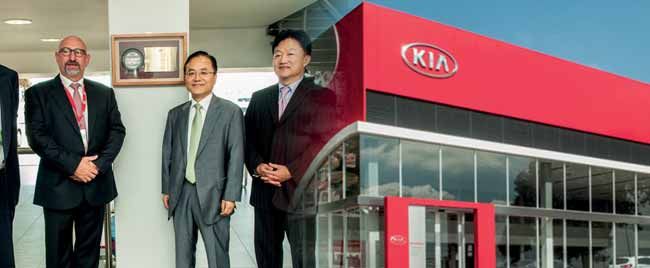
Imperial Holdings Limited
6    Sustainability report

    Awards and highlights

     Imperial                        Imperial                       Imperial                         Imperial Logistics
     Logistics                       Distribution                   Shipping Group                   Refridgerated
     Nedbank Leadership              Silver Award – Supply          Eight Green Awards               Services
     Award for Sustainability:       Chain Business Model:          from the Dutch Green
                                                                                                     Volition and Woolworths –
     CEO – Marius Swanepoel          Logistics Achiever Awards      Award Foundation for
                                                                                                     Gold Award: Transforming
                                                                    environmentally friendly
                                                                                                     a Business Model: Logistics
                                                                    inland fleet of vessels
                                                                                                     Achiever Awards

     TFD Network                                                    Imperial
     Africa                          Europcar                       Logistics                        Imperial
     Best Project over               Voted Africa’s Leading         10th African Access              Toyota Group
     R10 million – Sustainability    Car Hire Company at the 2012   National Business Awards         Global Toyota ECO
     Programme: Green Supply         World Travel                                                    award for environmental
     Chain Awards                    Awards for the seventh                                          conservation
                                     consecutive year in a row

     KIA South Africa                                               Europcar
     Distributor of the year Award                                  Voted number two Top
     from KIA Motors company,        Imperial                       Brand in Car Rental for the      Lindsay Saker
     South Korea                     group                          2013 Sunday Times Top            (VW)
                                     Reached transformation         Brands Awards                    VW Group Dealer
                                     level of 50%                                                    of the Year
                                     black managers

     Mercurius                                                      Imperial Logistics
     Motors                          Imperial                       Corporate Educator of the Year   TFD Network
     (Mercedes-Benz)                 Toyota                         by SAPICS and                    Africa
     Polokwane:                                                     Graduate Employer of
                                     Kempton Park: Toyota Dealer                                     Sustainability Programme –
     Dealer of the Year                                             Choice in the transport and
                                     of the Year                                                     “Driving the Green
                                                                    logistics sector by the
                                                                                                     Movement”: Logistics
                                                                    South African Graduate
                                                                                                     Enviro Achiever Awards
                                                                    Recruiters Association

     Energy                                                         JSE ALSI Top 40
     Efficiency                      Carbon                         Imperial group member of         JSE SRI Index
     Imperial group signs Energy                                    JSE ALSI Top 40
                                     disclosure                                                      Imperial group maintains JSE
     Efficiency Pledge between       Imperial group participated                                     SRI Index inclusion
     Department of Energy,           in the CDP and maintains
     Business Unity SA, National     inclusion
     Business Initiative (NBI)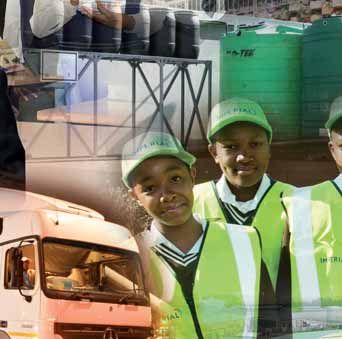
Imperial Holdings Limited
      Sustainability report   7
Imperial Holdings Limited
8      Sustainability report

    Overview of Imperial

    Group structure
    Imperial is a diversified, multinational industrial services and retail group. It is structured on three strategic pillars:
    —Logistics;
    —Automotive and Industrial; and
    —Financial Services.

     Logistics                                            Automotive and Industrial                           Financial Services

     This pillar comprises:                               This pillar comprises:                              This pillar comprises:
     Africa (including South Africa)                      Distribution, Retail and Allied Services            Insurance
     These businesses provide complete                    These businesses import and distribute              These businesses comprise insurance
     logistics solutions including transportation,        a range of passenger and commercial                 operations which are focused on a
     warehousing, distribution and related                vehicles, industrial equipment and                  range of short, medium and long-term
     value-added services within Africa.                  motorcycles and include vehicle                     insurance and assurance products that
                                                          dealerships in South Africa and Australia.          are predominantly associated with the
                                                                                                              automotive market and includes cell
     International                                                                                            captive arrangements.
     These businesses provide complete                    Automotive Retail
     logistics solutions including transportation,        These businesses consist of a large
     warehousing, inland waterway shipping,               network of motor vehicle and                        Other Financial Services
     container and bulk handling, contract                commercial vehicle dealerships                      These businesses comprise the sale of
     manufacturing, subassembly, packaging                representing most of the major original             service, maintenance and extended
     of materials and related value-added                 equipment manufacturers (OEMs) in                   warranty products associated with the
     services within Europe.                              South Africa and commercial vehicle                 automotive market, other financial
                                                          dealerships in the United Kingdom.                  products including joint ventures on the
                                                          The division also manufactures and sells            sale of financial services and commission
                                                          caravans and canopies.                              factoring operations.

                                                          Other Segments
                                                          The Car Rental business consists of
                                                          vehicle rental operations spanning the
                                                          domestic corporate sector and domestic
                                                          and international and leisure sectors,
                                                          with extensive support services and the
                                                          sale of used vehicles.

                                                          The Autoparts business is involved in
                                                          wholesaling and distributing vehicle parts
                                                          and accessories.

    The operations are mainly in Africa and Europe, with considerable potential for expansion into allied services and relevant new geographies
    that have good growth potential.

    Employing 51 000 people, the group actively encourages entrepreneurship, innovation and industry best practice.
Imperial Holdings Limited
Sustainability report 9
IMPERIAL HOLDINGS
LOGISTICS AUTOMOTIVE AND INDUSTRIAL FINANCIAL SERVICES
AFRICA, INCLUDING DISTRIBUTION, RETAIL OTHER FINANCIAL
AUTOMOTIVE RETAIL OTHER INSURANCE
SOUTH AFRICA AND ALLIED SERVICES SERVICES
CAR AND VAN RENTAL MAINTENANCE,
VEHICLE DISTRIBUTION SOUTH AFRICAN INCLUDING USED SHORT-TERM SERVICE AND
INTERNATIONAL
AND RETAIL DEALERSHIPS VEHICLE DEALERSHIPS INSURANCE EXTENDED WARRANTY
AND PANELSHOPS PRODUCTS
INDUSTRIAL UNITED KINGDOM AUTOPARTS FINANCING
LIFE ASSURANCE
DISTRIBUTION DEALERSHIPS DISTRIBUTION JOINT VENTURES
OUTDOOR, LEISURE
AUSTRALIAN
AND AFTERMARKET
DEALERSHIPS
PRODUCTSImperial Holdings Limited
10 Sustainability report
Overview of Imperial continued
Key facts
— Listed on the JSE since 1987
— Market capitalisation of approximately R44 billion at year-end
— Over 51 000 employees
— Leading third-party logistics provider in southern Africa
• Manages/owns over 6 400 vehicles
• Operates from more than 968 locations in 18 countries
• Provides warehousing facilities of 980 000 m2
— Biggest fleet of owned and subcontracted inland water vessels in Europe
• Access to over 700 vessels in Europe
• 100 million tonnes of handling volume per year
— Represent virtually every motor brand in South Africa
— Over 240 new vehicle dealerships
— Over 100 used dealerships branded as Auto Pedigree and Imperial Select
— On average 20 000 vehicles in car rental fleet
— Responsible for one in three car rental transactions in South Africa
— Leading aftermarket vehicle parts distributor in South Africa with 20 owned stores and 419 franchised
stores and workshops, and 46 franchised stores in the rest of Africa
— Over 1,7 million policies under management in Financial Services
— Regent services over 950 dealer outlets throughout southern Africa
— Geographical footprint covering Africa, Europe, United Kingdom, Australia and United States of America
— Helped improve the education of over 10 000 disadvantaged children through the Imperial and Ukhamba
Community Development TrustImperial Holdings Limited
Sustainability report 11
History
1948 Imperial started out as a Chrysler dealership in downtown Johannesburg
1973 Cancelled Chrysler agency and became Toyota dealers, adding trucks to our offering
1975 Started Imperial Truck Hire
1979 Launched Imperial Car Rental and started a transportation business
1987 Listed on the JSE
Imperial Car Rental merged with Hertz
1989 Regent short-term insurance established
Logistics diversified into warehousing
1991 Acquired Springbok Atlas and first Mercedes-Benz dealership
1992 Acquired Tanker Services
1993 – 1999 Various acquisitions of transport companies which were combined to form the SA Logistics business
1995 The formation of Associated Motor Holdings as an importer and distributor of vehicles
Acquired the listed Saficon group to significantly expand the Motor Retail division
1996 Acquired the Renault and Daihatsu distribution rights
Imperial Bank and Regent Life Assurance established
1998 Obtained Kia Distributorship
Acquired European logistics arm from Thyssen Krupp
Acquired Safair
1999 Acquired National Airways Corporation
Acquired controlling interest in Brian Porter Holdings to expand the Motor Retail division
2000 Developed supply-chain services in the Logistics division
Acquired a controlling interest in listed diversified tourism company, Tourvest
Obtained Hyundai distributorship
2001 Disposed of 50,1% of Imperial Bank to Nedbank
Acquired Haniel Reederei Holding GmbH, largest operator of barges on Europe’s inland waterways
2004 Launched Imperial Autoparts
Ukhamba Holdings acquired a 10,1% stake in Imperial in a BEE transaction involving all of Imperial’s black staff and a
community development trust
2005 Acquired Jurgens Caravans
Lereko Mobility acquired a 7,25% stake in Imperial
Imperial entered the Australian car dealership market with the acquisition of nine Ford dealerships in Sydney
2006 The acquisition of a chain of truck dealerships and auto logistics businesses in the UK from RAC plc
2008 Unbundled leasing and capital equipment division as Eqstra
Discontinued Safair and International Trucks distribution
Disposal of Multipart Holdings in the UK, the parts and auto logistics arms of the RAC acquisition
2009 Disposed of Tourvest
2010 Disposed of remaining 49,9% of Imperial Bank to Nedbank
Expanded Automotive Parts business with the acquisition of Midas
Entered the vehicle tracking and fleet management industry with the acquisition of 25,5% of MiX Telematics
Launched Imperial Fleet Management in a joint venture with Wesbank
Acquired Goscor to expand into industrial distribution
Acquired E-Z-GO South Africa to extend product range in Distributorships division
2011 Expanded African footprint in logistics with the acquisition of CIC Holdings and created a separate Africa Logistics division
Awarded distribution rights for Mitsubishi
Acquired Edusport, leading sports and events management company
Created new Financial Services division
2012 In Europe, acquired Lehnkering, one of Europe’s leading specialist logistics companies serving the chemical, agricultural,
petrochemical and steel industries
In Africa, logistics acquired control and increased our shareholding to 80% in Transport Holdings in Botswana, which
provides fuel and other transportation services
Distributorships and Automotive Retail acquired:
— Bobcat, a leading supplier of compact equipment into the construction, mining and agricultural sectors
— Watts Truck and Van, a DAF truck dealer
2013 Acquired 100% of the pharmaceutical distribution and health supply-chain service business conducted by RTT, now
branded as Imperial Health Sciences
Acquired 60% of LTS Kenzam (Pty) Limited, a logistics business that distributes bituminous products throughout southern Africa
60% of KWS Carriers (Pty) Limited, a business focused on the movement of bulk commodities mainly through
subcontractors
Acquired 49% of MDS Logistics plc in Nigeria providing supply chain and logistics solutions
Acquired 100% of Orwell Trucks, a Mercedes commercial vehicle dealer in the UK
Acquired 80% of Afintapart, a commercial distributor
Disposed of our shareholding in National Airways Corporation, to fully exit the aviation industry
Disposed of our interest in the Tourism business subject to Competition Commission approvalImperial Holdings Limited
12 Sustainability report
Overview of Imperial continued
Management principles and approach
Imperial operates on a decentralised management system that encourages the acquisition, nurturing and growth of
large and small entrepreneurial business units, and strives to maximise the synergies between them.
The executive committee of the group oversees all operational activities, balancing the need for a strong entrepreneurial culture with sufficient
and appropriate control and governance.
While the group operates according to a federal system, cohesion across businesses and divisions are achieved through nine unifying factors
and eight controlling factors.
Unifying factors Controlling factors
— Commitment to people development — Delegation of authority policies within the group
— Internal financial covenants, limits and a
— Performance culture
comprehensive financial measurement system
— An active executive board with oversight over
— Social responsibility
all businesses
— Transparency through good communication — Peer reviews and post-acquisition review system
— Divisional finance and risk review committees
— Service excellence
and boards
— Group business loyalty — Internal audit and group risk functions
— Reporting lines and common sense good
— We rally around our group brand
governance
— Financial responsibility and capital efficiency — Social, ethics and sustainability committee
— Nurturing of and tolerance for entrepreneurial
initiativesImperial Holdings Limited
Sustainability report 13
Our business model
Our business model is primarily centred on the following key principles:

Developing Empowering Gaining the Being the Adhering to Pursuing
our people to our people respect of our standard for what we financial best
be skillful, customers, quality know best or practices
confident and suppliers and service and can learn
self-motivating principals reliability
Through these key principles, we ultimately strive to deliver stakeholder value by:
Generating Growing Making a Being a Generating
Cash our positive responsible good
business contribution to corporate returns on
society citizen capital
Our objective is to drive improving returns on capital as this is the Our business model is centred on generating cash in the motor-
ultimate generator of value for shareholders. To deliver on this related businesses to grow the logistics operations, while
objective, the group is continuously seeking growth opportunities continually investigating opportunities to enrich our involvement
in and adjacent to existing industries and geographies. in the motor value chain. The cash generated in our motor-related
businesses allows us to take advantage of attractive opportunities
Our deep involvement in all aspects of the motor value chain within niche sectors of the logistics market in Europe and the fast
provides Imperial with a competitive advantage in this market, growing economies in Africa.
while generating the cash needed to grow our operations.
When we acquire businesses, we maintain their entrepreneurial
spirit and simultaneously mitigate the related acquisition risk by
securing the existing management, often by retaining ongoing
minority management shareholdings in those businesses. Our
shareholder objectives and management incentives are closely
aligned, and our businesses strive to achieve maximum efficiency
in their industries.Imperial Holdings Limited
14 Sustainability report
Overview of Imperial continued
Divisional review
Logistics pillar
The Logistics pillar operates in two key markets – Africa and Europe.
Imperial Africa Logistics is the leading third-party logistics and supply-chain management
provider in South Africa, with extensive operations throughout Southern Africa and a growing
footprint in the rest of the African continent.
Imperial Logistics International provides complete logistics solutions including contract logistics,
warehousing, inland waterway shipping, contract manufacturing in the chemical industry and
related value-added services across major European markets, but predominantly in Germany.
International Logistics
Imperial Shipping Group Lehnkering Panopa Neska Brouwer (associate)Imperial Holdings Limited
Sustainability report 15
Africa Logistics
Bulk commodity Consumer Transport and Specialised Integration
Africa services products warehousing freight servicesImperial Holdings Limited
16 Sustainability report
Overview of Imperial continued
Divisional review continued
Automotive and Industrial pillar
This pillar is focused on the full spectrum of automotive and industrial trading activities of
the group, with the exception of Financial Services. It houses Imperial’s Vehicle and Industrial
Distribution, Retail and Allied Services; Automotive Retail; Car Rental and Autoparts activities.
The divisions included in this pillar are as follows:
— Distribution, Retail and Allied Services.
— Automotive Retail.
— Car Rental.
— Autoparts.
Distribution, Retail and Allied Services
Distribution, Retail and Allied Services
Vehicle distribution, retail Industrial Associates and Australian
and allied services distribution joint ventures dealerships
— Hyundai — Renault
— Kia Motors — TATA
— Daihatsu — Cherry
— Bentley
— Lamborghini
— Lotus
— Mitsubishi MotorsImperial Holdings Limited
Sustainability report 17
Automotive Retail
South African dealerships UK dealerships Non-OEM products
Passenger and Commercial Commercial Accessory
light commercial South Africa United Kingdom and leisure
VEHICLE CONVERSION SPECIALISTSImperial Holdings Limited
18 Sustainability report
Overview of Imperial continued
Divisional review continued
Automotive and Industrial pillar continued
Car Rental
Car rental Used car sales Panel shops
AutopartsImperial Holdings Limited
Sustainability report 19
Financial Services pillar
The Financial Services division provides customers with a broad range of financial services
and products, including vehicle financing (via alliances), insurance and maintenance plans, it
leverages off Imperial‘s strong distribution and retail network capability in the motor vehicle
industry. It also provides niche life and short-term insurance products selectively through
channels outside Imperial. It operates in South Africa, Botswana and Lesotho.
Insurance Regent Insurance
Company Limited
Regent Life Assurance
Company Limited
Other Financial Services
Other Financial ServicesImperial Holdings Limited
20 Sustainability report
Our sustainability journey
We continue to make progress in our sustainability journey and — social and economic development, including the company’s
each year strengthens our understanding and measurement of key standing in terms of the goals and purposes of the 10 principles
sustainability indicators across our business. set out in the United Nations Global Compact Principles, the OECD
recommendations regarding corruption, the Employment Equity
Internally this journey has been guided by the social, ethics and Act and the Broad-Based Black Economic Empowerment Act;
sustainability committee, Imperial’s unifying and controlling — good corporate citizenship, including the company’s promotion
factors the group’s Sustainability Framework and Strategy, and its of equality, prevention of unfair discrimination, and reduction
sustainability roadmap. of corruption, its contribution to development of the
communities in which its activities are predominantly conducted
Social, ethics and sustainability committee or within which its products or services are predominantly
The role of the social, ethics and sustainability committee marketed and its sponsorship, donations and charitable giving;
encompasses all aspects of sustainability. — the environment, health and public safety, including the impact
of the company’s activities and of its products or services;
The committee performs statutory duties as set out in the — consumer relationships, including the company’s advertising,
Companies Act, 71 of 2008 for Imperial Holdings Limited and public relations and compliance with consumer protection laws;
on behalf of subsidiary companies in the group. In addition and
to its statutory duties, it assists the company in discharging its — labour and employment, including the company’s standing in
social, ethics and sustainability responsibilities and implementing terms of the International Labour Organisation Protocol on
practices consistent with good corporate citizenship, with particular decent work and working conditions and the company’s
focus on the following: employment relationships, and its contribution towards the
— The King III Code of Corporate Governance. educational development of its employees.
— Imperial’s sustainability commitments.
— Broad-based Black Economic Empowerment (B-BBEE) The committee comprises non-executive directors who are not
requirements as described in the Department of Trade and involved in the day-to-day business of the group, executive
Industry’s Combined Generic Scorecard (excluding ownership directors as well as other members of senior management of the
targets) and associated Codes of Good Practice. company and is chaired by a non-executive director.
— Imperial’s transformation commitments as described in the
group transformation strategy document and division-specific Business integrity and ethics
B-BBEE plans. The board has adopted a written code of ethics for the group.
— Environmental commitments as described in Imperial’s
environmental policy framework. Without satisfactory profits and a strong financial foundation, it
— Corporate social investment (CSI) commitments as described in would not be possible to fulfil our responsibilities to shareholders,
Imperial’s CSI policy. employees, society, and those with whom we do business.
— Imperial’s Code of Ethics and Corporate Values. However, our corporate actions are not governed solely by
— Health and safety compliance. economic criteria, but also take into account social, environmental
and political considerations.
The committee has a standard agenda item at every meeting
covering material breaches of the group’s code of ethics, if any, We strive to innovate and adopt best practice, wherever we
as well as the steps taken to prevent such breaches. No material operate, working in consultation with stakeholders.
breaches of the group’s code of ethics were reported during
the year. Management and employees operate within a framework that
requires complying with all applicable laws and maintaining the
During the year, the committee discharged its statutory duties highest integrity in conducting the group’s business.
as set out in the Act and Regulations thereto by monitoring the
company’s activities relating to: Our core value is to act with uncompromising honesty and integrity.
Our code of ethics provides guidance to all staff, management and
directors of Imperial and its subsidiaries on adhering to this core
value, although we recognise that no single code can address every
situation individuals are likely to encounter. As such, this code is
not a substitute for employees’ responsibility and accountability
to exercise good judgement and obtain guidance on appropriate
business conduct.Imperial Holdings Limited
Sustainability report 21
Our divisions also include aspects of ethics in their induction We work to keep SHE at the forefront of workplace concerns.
programmes. In addition, the group regularly conducts climate Our objective is to prevent fatalities, work-related injuries and
surveys among its employees and ethics forms an integral part health impairment of our employees.
of the surveys.
Work-related fatalities are comprehensively investigated by
The group also maintains a confidential tip-off facility where any management and considered by the social, ethics and sustainability
instances of criminal activity of breaches of the code of ethics can committee.
anonymously be reported. Reports in this regard are considered by
divisional management structures, internal audit and responsible We recognise the need for environmental stewardship to minimise
board committees. consumption of natural resources and waste generation, and to
minimise the impact of our operations on the environment.
Our code of ethics
At all times the group and, where appropriate, our employees will: Unifying and controlling factors
— Respect others and avoid any form of discrimination. Imperial consists of a number of diverse transport and mobility
— businesses, each with its own challenges, stakeholders and
Abide by the laws of the country in which we operate and
operating environments. In addition to functions controlled or
comply with the code of conduct of all professional and
initiated at group level, each business has its own sustainability
industry bodies to which we belong.
initiatives, designed to address areas of importance in that business
— Avoid any waste, damage and private use of company assets
and the community in which it operates. This stems from the
and resources (including time).
group’s philosophy to empower local and divisional management
— Neither give nor receive bribes.
who are best placed to make decisions relevant to their business
— At the earliest opportunity, disclose in writing to the and industry.
appropriate management all gifts received from clients or
suppliers beyond a token value. However, this decentralised management approach is balanced
— Not divulge any confidential information to any party, or by Imperial’s unifying and controlling factors. These outline the
improperly use company and client information. general principles that govern how the company conducts its
— Market our products and services accurately and charge the business, stipulating the requirements to which all employees
agreed fee or a fair fee where no fee was agreed. must adhere regarding business integrity, quality, health, safety
— Not seek to advance our personal interests at the expense of and environmental protection, human rights, commitment to
the company or our clients. the community, employment practices and compliance with the
— Not engage in any activity, directly or indirectly, which local law.
results or might result in a conflict of individual interests with
the interests of the group. It also provides for periodic review and audit to ensure the
— Not participate, or involve the company in any way, in continued relevance of and conformance to the guidelines.
any scheme that would cause embarrassment to the company
or harm its reputation. If we believe public disclosure of Sustainability Framework and Strategy
any action would be detrimental to the company, this action Our Sustainability Framework outlines the key social, economic
should be avoided. and environmental areas in which our activities have a material
impact and facilitates group-wide measurement, reporting and
management of our performance in these areas. The primary focus
Employment and labour rights areas defined in the Sustainability Framework are:
The group subscribes to the principles of fair labour practices at our — Energy and climate impacts – carbon output.
workplaces, and our conditions of service comply with applicable — Social issues – transformation, diversity and skills development.
laws and industry standards. — Health and safety – road safety and HIV.
— Waste produced by group operations – discharges to air, landfill
The group recognises representative trade unions and has and water.
established forums for communication.
Safety, health and environmental
stewardship
We report regularly at executive, board level and through the
SHE committee on our safety, health and environmental (SHE)
performance. Senior executives and line management are
accountable for the group’s SHE issues and for allocating adequate
financial and human resources within their operations to address
these matters.Imperial Holdings Limited
22 Sustainability report
Our sustainability journey continued
Sustainability roadmap
In 2010, the board approved an all-encompassing sustainability roadmap which outlines the way forward regarding mobilisation, measurement,
reporting and communication across the four key sustainability focus areas.
We are here
Implement modules such as
incident management, CSI
Acquire data Use first reporting reporting, HSE management
Identify key year as baseline
MEASUREMENT collection and reporting areas System
management implementation and perform
and metrics baseline audit
system Manage performance
iro key metrics against
targets v baseline
Data collection
Key group
focus areas: Divisional Set targets
– Energy and workshops to Devise and and identify Continuous Drive projects
Sustainability climate (carbon) identify key agree plans benchmarks for awareness to achieve
MOBILISATION environmental and building of
strategy – Social progress divisional to address
performance areas: understanding
benchmarks
– Health and safety sustainability key gaps and close gaps
– Water reduction – Energy, carbon, at all levels
metrics waste, water
and water
High level quick wins: road safety, Business driven
Ongoing reporting electricity savings, fuel savings, opportunities
empty km project etc
REPORTING Compliance and Report on key metrics
Engage with stakeholders identified on group and
voluntary reporting: to identify their
King III, JSE, GRI divisional level in integrated
reporting needs annual report and ad hoc
Carbon disclosure
publications
Performance against previous commitments
Management commitment Delivery to date
Invest in our people and Investment in training and development – R175 million (2012: R171 million).
their development Expanded our artisan and technician training centres to include two new facilities, which increases our
annual training capacity to 1 400 artisans.
Our Car Rental division also opened its new Europcar Learning Centre, which will continue hosting the training of
its employees in this state-of-the-art facility.
Ongoing focus on reducing We have commissioned 67 waterless car wash facilities in our dealerships, and have installed 25 water
our environmental impact recycling facilities which have significantly reduced the amount of water used to wash our cars and trucks.
We built the first solar-powered Kia dealership in the world here in South Africa.
We built an environmentally friendly state-of-the art UD Trucks dealership in Petoria.
A number of businesses continued to implement energy and water-saving initiatives during the year,
including the installation of energy-efficient lighting, dust and noise pollution reduction measures and water
treatment and recycling projects.
Focus on road safety We have over 135 000 individuals committed to being part of a movement towards safer roads in South
Africa by taking the Imperial I-Pledge as part of our group’s extensive road safety campaign.
We continued to partner with toll concessionaires during the holiday season by putting at their disposal nine
vehicles primarily to bolster route surveillance, patrol support and post-crash care activities.
The Scholar Patrol Improvement Project is training educators and scholar patrollers, road markings are being
refurbished and signage erected, and we donate scholar patrol equipment and high-visibility bibs and caps.
The scholar patrol initiative has to date refurbished equipment for 197 school scholar patrols and reached
over 135 000 primary school learners in road safety awareness.Imperial Holdings Limited
Sustainability report 23
Key developments in our sustainability journey
2010 2010 2011 2011
¶ Imperial Holdings
¶ sustainability committees
¶ divisional workshops
¶ existing systems
board approves established at each of the held at each division to assessed to identify
sustainability roadmap operating entities with related review issues and areas for improvement
senior level sustainability identify key business in addressing the key
appointments drivers of sustainability sustainability focus areas
2012 ¶ 2012 ¶ 2011 
good progress made acquired a sophisticated sustainability sustainability expertise
towards more accurate, measurement and management system, and structures embedded in
complete and reliable data which was used for the first time to collect each division to champion
collection across financial, data relating to Imperial’s carbon footprint the sustainability agenda
operational, safety, health based on the GHG 2011 protocol,
and environmental selected GRI indicators, Carbon Disclosure
management areas. Project, JSE SRI Index and other key metrics.
2012 2013
¶ signed energy efficiency leadership network
¶ first full year that the new web
pledge between Department of Energy, based sustainability management
Business Unity South Africa (BUSA) and the system collects comprehensive data
National Business Initiative (NBI) for the group’s carbon footprint.

¶ 2013 ¶ 2013 ¶ 2013
bedded down our reporting established a set of key baseline data established
framework for performance indicators for each for other indicators including
assurance and disclosure for division and the business as a electricity, fuel and water
sustainability performance on whole, aligned to international
an annual basis and local requirements
Plans for the year ahead
Our sustainability management and reporting system has now been bedded down and we have reliable data to use as baselines going forward.
In the year ahead we plan to identify reduction targets relating to our key impacts on a divisional basis focusing on the following key areas:
— Energy consumption;
— Fuel; and
— Water.Imperial Holdings Limited
24 Sustainability report
Stakeholder engagement
Stakeholders and stakeholder engagement Our customers span virtually every facet of society and include
We value our people and recognise that successful businesses are central, provincial and local government, large, medium and small
built on loyal, motivated and fulfilled employees. Equally important business, various industries and individuals across the world.
is meeting the requirements of investors, customers, suppliers and
other stakeholders. Our interaction with stakeholders reflects our unique culture and
business model. We seek to maximise shareholder value over time
We define stakeholders as entities or individuals that can through an intelligent regard for the interests of all stakeholders,
reasonably be expected to be significantly affected by the from the communities associated with our operations to our
organisation’s activities, products and/or services; and whose business partners.
actions can reasonably be expected to affect the ability of the
organisation to successfully implement its strategies and achieve Our relationship with each of these stakeholder groups has a
its objectives. This definition is derived from the Global Reporting direct impact on the sustainability of our business and our ability
Index regarding identification of stakeholders. to create and maintain resilient, and stable operations. This in turn
enables us to deliver long-term value to shareholders.
Stakeholders in the group include investors, potential investors,
providers of finance, employees, trade unions, customers, We are committed to transparent, ongoing communication and
contractors, suppliers, franchisees, franchisors, motor manufacturers, the development of sound, consultative and mutually beneficial
media, communities, civil society, regulators and government relationships with all stakeholder groups. Our divisions are well
departments. equipped to communicate with stakeholders.
The table below contains a summary of who our key stakeholders are, how we engage with them and the material issues relating to each group:
Stakeholder group
Who is included in this group How we engage them Their material issues
Shareholders Integrated annual report Delivering return on investment
Providers of finance Annual and interim results
Investment analysts presentations
Potential investors Local and international investor
Investors
roadshows and one-on-one
engagements
Conferences
General meetings
Media and regulatory releases
Analysts reports
National and local government Regular liaison with various Payment of taxes
Government and regulators
Johannesburg Securities Exchange (JSE) government departments both at a Labour rights
Self-regulatory bodies company level and through industry Environmental protection
South African and overseas Revenue bodies Employment equity
Services Engagement with municipalities Occupational health and safety
South African Reserve Bank Statutory reporting and regulatory Broad-Based Black Economic
Financial Services Board releases Empowerment (B-BBEE) and
Input on new legislation transformation
Black Economic Empowerment (BEE) Human rights
and Employment Equity (EE) reports Protection of customer rights
and submissions Skills developmentImperial Holdings Limited
Sustainability report 25
Stakeholder group
Who is included in this group How we engage them Their material issues
Staff Regular roadshows and presentations Payment of salaries and benefits
Employees and trade unions
Representative unions Staff development and training Investment in training and career
programmes development
In-house magazines Labour rights
Health, safety and employment equity Skills development
committees Employment equity
One-on-one engagement Occupational health and safety
Bargaining councils B-BBEE and transformation
Operational forums Human rights
Wage negotiations
Ukhamba Trust
Purchasers of goods and services Individual engagement Reliable and value-for-money customer
supplied by the group including Written communications service
individuals, corporates, government Media Protection of customer rights
Customers
and non-government organisations Regular meetings and long-term Protection of customer health and
(NGOs) communication plans safety
Service questionnaires and surveys Safeguarding customer privacy
Contracts and service level agreements
Social media
Call centres
Advertising campaigns
Motor and industrial equipment Dealer forums Service to Imperial
manufacturers Individual engagement Settlement security
Suppliers
Goods and services suppliers Contracts Volume growth
Contractors Franchise and distribution agreements Preferential procurement in accordance
Ongoing engagement to communicate with B-BBEE codes
the group’s requirements and needs
Co-shareholders in group businesses Business meetings Return on investment
Business partners
BEE partners Board meetings and B-BBEE and transformation
Financial and other joint-venture committees
partners Regular reporting
Distribution agreements
Long-term individual relationships
Print media Individual engagements Issues of public interest including
Electronic media Press conferences corporate governance, environmental
Local interest publications, radio and Press releases and social performance
Media
television Communication agencies Financial performance
Social media
Electronic communication
Branding programmes
Individual relationships
People affected by our various Individual engagements Employment opportunities
Civil society and communities
businesses, both positively and Press publications Education
negatively I-Pledge campaign Environmental impact
Ukhamba Trusts and the Imperial and Social investment and upliftment
Ukhamba Community Development B-BBEE and transformation
Trust Human rights
Engagement with and participation
in civil society programmes including
schools and training initiatives
Corporate social investment projects
Employee volunteerism effortsYou can also read


