Programmes GRADUATE - Cattolica International
←
→
Page content transcription
If your browser does not render page correctly, please read the page content below
GRADUATE
programmes
 MSc AND SPECIALISING MASTERS AY 2022/2023
 MILAN | BRESCIA | PIACENZA | CREMONA | ROME

Table of
contents

04                      06                    08                     61                                         62                                           64
Università Cattolica    Location highlights   Facts and figures      Student services                           Settling in                                  Career advising
del Sacro Cuore

10                      14                    15                     65                                         66                                           70
Education abroad and    Notable alumni        Italian higher         Comitato università -                      Admission                                    Application
experiential learning                         education system       mondo del lavoro                           information                                  procedures

18                      56                    58
English-taught          Italian-taught        Italian-taught
programmes              programmes            Specialising Masters       Image Disclaimer: Most images inserted in this publication were taken before the global COVID-19 Emergency.

Università Cattolica
    del Sacro Cuore
    "everything possible in person,
    everything necessary from remote"
    Envisioning life after COVID-19 on-campus is the desire to see our University come alive
    again, to welcome smiling faces in lecture halls and our corridors, to wish you a smooth
    start to a new academic year.

    In 2020 institutions across the globe, including Università Cattolica del Sacro Cuore, were
    compelled to remodel the educational environment. In a short time, COVID-19 radically
    changed the way students received their education and together with their professors they
    were forced to adapt to alternative learning methods. Despite the challenges, Università
    Cattolica’s response from our community was very positive and different learning methods
    paved the way for extensive study and new work opportunities. And we value this.

    However, we foresee a return to campus in person, in full compliance with COVID-19
    preventive and safety measures. Your safety comes first. We are optimistic about getting
    closer to university life, fostered by sharing ideas and experiences. We are excited to see
    the rush of students on their way to class or eagerly waving at friends passing by on
    campus.

    With passion and perseverance, Università Cattolica is putting in an endless effort every
    day to inspire all its members into creating a safe, responsible and educational haven for
    welcoming our students on-campus.

                                                                                                  your safety
    We look forward to meeting you.

4
                                                                                                  comes first   5
Location highlights
Piacenza campus boasts on-campus
1 2 Agribusiness laboratories including
at the heart of europe 3 4
the most recent, SensoryLab, a sensory
analysis laboratory, useful for students
to learn the main sensory evaluation
techniques applied to different food
products from coffee to wine, oil and
chocolate. The idea is to taste food, not
only with the taste buds but to involve
all the senses, from sight to smell, from
5 hearing to touch.
3 - PIACENZA campus
ρ Piacenza is located less than 1-hour train ride away from Milan
ρ A key position in the Northern Italian food valley where approximately
53,000 agricultural businesses are based
ρ €113 billion contributions to the agri-food sector
In Cremona, Università Cattolica has recently
moved and is now housed in the new campus
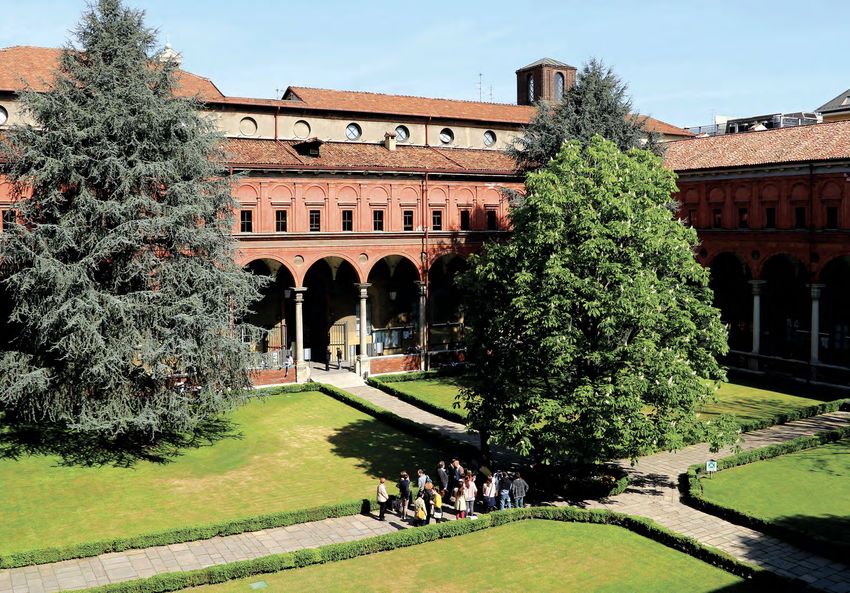
Milan is the campus that offers the highest number in the former Monastery of Santa Monica.
of English-taught programmes. Students may choose The new campus is set to design the future
from a range of undergraduate and graduate for the younger generations, highlighting the
degrees or Specialising Master programmes across importance of learning, and making most of the
eight Schools. Most graduate programmes offer territorial resources.
students the opportunity to undertake an internship
1 - Milan campus or a field project as part of their curriculum.
ρ Cremona has a picturesque historic centre with most sights
clustered around the main square, Piazza del Comune
ρ Milan is the economic capital of Italy with over 3,000 active companies present, ρ A must for music lovers. The city was home to many
ranging from Small and medium-sized enterprises (SMEs) to multinationals luthiers, makers of stringed instruments
ρ The World capital of fashion and design brands, host of many annual international ρ The Teatro Ponchielli (where Mozart once performed) has
events one of the largest stages in Italy and is still popular for
ρ Centrally located campus facilitates access to internships across the city international performances
ρ Conveniently positioned, transport hub with three airports, high-speed trains,
and a 2-hour drive from the Alps and the Ligurian coast 4 - cremona campus
ρ Brescia has a long history, which embraces Roman, Medieval and
Renaissance periods
Università Cattolica, Rome campus is affiliated with the Policlinico Universitario Agostino Gemelli hospital which opened in 1964. It
ρ The city has a very active social and economic fabric
is ranked the best hospital in Italy and in the top 50 worldwide based on the World’s Best Hospital 2021 Ranking by Newsweek.
A new Università Cattolica sustainable campus ρ Rich in cultural and leisure opportunities, it is a thriving tourist
has been developed. Classes will begin in attraction, thanks to its proximity to renowned lakes Garda and Iseo
the 2021/2022 academic year. The building
is designed with a 70-kilowatt solar power
system. The campus will house over 2,000 2 - brescia campus 5 - ROME campus
students from the Schools of Mathematical,
Physical and Natural Sciences, Education,
ρ A true cultural capital. The Eternal City and
Psychology and an undergraduate programme
cradle of western civilisation
from Political and Social Sciences.
ρ An open-air museum: picturesque and
historic bliss, containing many of the
world’s most breathtaking masterpieces,
Visit our website from Michelangelo’s ceiling in la Cappella
Sistina, to the beautiful attractions in Piazza
Navona, la Fontana di Trevi, il Vittoriano, il
Colosseo
ρ A popular set of Academy Award-winning
movies: The Great Beauty, La Dolce Vita,
and Roman Holiday among others
for more information
6 7
about our campuses
de   d in
                                                              Foun
    Università Cattolica
                                                                  1921               14 Subjects in the top 300
    facts and figures                                                                QS World University Rankings by Subject 2021
                                                                                     The QS World University Rankings features 1,300 universities from around the world. Università Cattolica is ranked in the top 43%
                                                                                     of the universities worldwide and stands out in 13 different subjects for its quality in research as well as academic and employer
                                                                                     reputation.

    40,000
    overall number of students
                                       #2
                                      in Italy for
                                                             7,600
                                                               overall number of
    25,000 FTE students*         student-faculty ratio              faculty staff
    * Full time equivalent

                    12 SCHOOLS

    40+                             87                        200+                   International students
    English-taught programmes    research centres        Italian-taught programmes

                                                                                     exchange and degree-seeking                                                                           (Students enrolled in a
                                                                                                                                                                                        BSc/MSc/Specialising Master)

      580+
       partner                                                                       4,803
       universities
                                                                     82              international                         168
                                                                                                                           different
                                                                     different
                                                                     countries
                                                                                     students                              nationalities

         QS Graduate Employability Rankings 2020
                                                                                             +59%                                                                                         2018/19
                                                                                                                                                                                                            2019/20

    #121-130                              #1 TOP 10
                                                                                             international students                                                      2017/18
                                                                                                                                                         2016/17
                                                                                                                                           2015/16

    overall                               in Italy
                                                                                             enrolments                       2014/15

                                                                                                                                            3460         3972           4400             4665             4803
                                                          in Europe
                                          for employer-student connections                   in 6 years                         3015

8                                                                                                                                                                                                                         9
Education abroad and SHORT-TERM STUDY PROGRAMMES
experiential learning AND INTERNSHIP ABROAD
Why study a short-term programme?
Cattolica International is privileged to have a large team of people who plan and manage outbound student mo- Strong focus on employability
bility, by sending students enrolled at Università Cattolica abroad for study or work experiences. There is an office
located at the Milan, Brescia, Piacenza, Cremona and Rome campuses. They bridge the gap between the academic and professional world,
creating awareness for job opportunities and job placement
LONG-TERM STUDY PROGRAMMES There are career-driven prerequisites for each short programme
Why study a long-term programme? Programmes are tailor-made according to the needs of the students
Expand your employment opportunities
WHAT ARE MY OPTIONS?
Learn a new language
SU
Experience a completely different way of life PRO MMER
GRA
MME
S
WHAT ARE MY OPTIONS?
DOU
B
DEG LE
REE
E
NGE G UAG S
EXCHA LA N
AMM
E
G R
PRO
STUDY
D ING
ABROA NTE
ER
U
VOL
ISEP
PERS
ON
2,800+
INTER ALISED students abroad
NSHIP
S
S MU
S per year
E RA
Visit our website
1 UNITED STATES 6 FRANCE
FREE MOV
ER
Top 10 2
3
UNITED KINGDOM
SPAIN
7
8
GERMANY
IRELAND
destination
4 CHINA 9 RUSSIA
countries
5 THE NETHERLANDS 10 AUSTRALIA
10 for more information 11
about our programmes
We work with
                   33 of the top 100
                   Universities in the World
                   (QS World University Rankings 2022)

     RANKING   UNIVERSITY                                                        COUNTRY

        19     COLUMBIA UNIVERSITY                                       UNITED STATES

        82     DURHAM UNIVERSITY                                         UNITED KINGDOM

        31     FUDAN UNIVERSITY                                          CHINA

        70     KATHOLIEKE UNIVERSITEIT LEUVEN                            BELGIUM

        74     KOREA UNIVERSITY                                          SOUTH KOREA

        78     LOMONOSOV MOSCOW STATE UNIVERSITY BUSINESS SCHOOL         RUSSIA

        49     LONDON SCHOOL OF ECONOMICS AND POLITICAL SCIENCES (LSE)   UNITED KINGDOM

        64     LUDWIG MAXIMILIANS UNIVERSITÄT                            GERMANY

        58     MONASH UNIVERSITY                                         AUSTRALIA

        68     NATIONAL TAIWAN UNIVERSITY                                TAIWAN (ROC)

        30     NORTHWESTERN UNIVERSITY CHICAGO                           UNITED STATES

        63     RUPRECHT-KARLS-UNIVERSITÄT HEIDELBERG                     GERMANY

        3      STANFORD UNIVERSITY                                       UNITED STATES

        97     SUNGKYUNKWAN UNIVERSITY                                   SOUTH KOREA

        27     THE AUSTRALIAN NATIONAL UNIVERSITY                        AUSTRALIA

        16     THE UNIVERSITY OF EDINBURGH                               UNITED KINGDOM

        82     TOHOKU UNIVERSITY                                         JAPAN

        72     UNIVERSITÉ DE PARIS SORBONNE PARIS IV                     FRANCE

        55     UNIVERSITEIT VAN AMSTERDAM                                NETHERLANDS

        90     UNIVERSITY OF BIRMINGHAM                                  UNITED KINGDOM

        8      UNIVERSITY COLLEGE LONDON                                 UNITED KINGDOM

        32     UNIVERSITY OF CALIFORNIA BERKELEY                         UNITED STATES

        40     UNIVERSITY OF CALIFORNIA LOS ANGELES                      UNITED STATES

        79     UNIVERSITY OF COPENHAGEN                                  DENMARK

        82     UNIVERSITY OF ILLINOIS AT URBANA-CHAMPAIGN                UNITED STATES

        100    UNIVERSITY OF NORTH CAROLINA AT CHAPEL HILL               UNITED STATES

        47     UNIVERSITY OF QUEENSLAND                                  AUSTRALIA

        77     UNIVERSITY OF SOUTHAMPTON                                 UNITED KINGDOM

        38     UNIVERSITY OF SYDNEY                                      AUSTRALIA

        26     UNIVERSITY OF TORONTO                                     CANADA

        61     UNIVERSITY OF WARWICK                                     UNITED KINGDOM

        93     UNIVERSITY OF WESTERN AUSTRALIA (UWA)                     AUSTRALIA

        45     ZHEJIANG UNIVERSITY                                       CHINA

12
Notable alumni Italian higher education system
our inspiring graduates step by step
Università Cattolica’s multidisciplinary approach prepares outstanding graduates for both the private and the public sectors.
Where could your programme take you? Become one of Cattolica’s inspiring graduates! 1 2 3 1
3 YEARS - 180 ECTS 1 YEAR - 60 ECTS
LAUREA TRIENNALE SPECIALISING
(BSc) MASTER
1 2 3 4
5 6 7 8 1 2 1
2 YEARS - 120 ECTS 1 YEAR - 60 ECTS
2ND LEVEL
9 10 11 12 LAUREA MAGISTRALE
(MSc) SPECIALISING
MASTER
12/13 YEARS
Rocco and Christina Nausicaa Dell’Orto Massimiliano Pogliani 13 PRE-UNIVERSITY
Baldassarre Production Department, NFL Films | CEO IllyCaffè EDUCATION
Founders Zebra Advertisement | Forbes 30 under 30
Forbes 30 under 30 1 2 3
4 5 6 1 2 3
5/6 YEARS - 300/360 ECTS 3 YEARS - 180 ECTS
(BSc, MSc) DOTTORATO DI RICERCA (PhD)
LAW | EDUCATION | MEDICINE
Graduate Degree/Master of Science - MSc and service companies, public bodies and universities.
(Laurea Magistrale) What are the differences between 2-year MSc de-
Course duration: 2 years grees and 1-year Specialising Masters?
ECTS/Credit points: 120
Undertaken after the undergraduate degree and aimed at The 2-year MSc degree:
Concetta Lanciaux Tommaso Migliore Federica D’Alessandra providing rigorous, advanced training in more highly special- ■ Is an academic degree of 120 ECTS
Vice-President of fashion house Louis CEO and Founder - MDOTM (Select- Executive Director Oxford Programme ised areas. Enables students to apply for a PhD at any Italian or ■ Requires a similar academic background for access
Vuitton Moët Hennessy ed for the Silicon Valley acceleration on International Peace and Security | international university. ■ Provides advanced academic knowledge in highly specialised
programme powered by Google for Forbes 30 under 30 areas. Students will write a final dissertation
Entrepreneurs) Specialising Master (Master Universitario) ■ The degree enables students to apply for a PhD at any Italian
Course duration: 1 year or international university, as well as to internships/job
ECTS/Credit points: 60 opportunities
A professionalising programme providing practical knowl-
edge and training through coursework and internships. These The 1-year Specialising Master Diploma:
Masters programmes within the Italian education system do ■ Is a professionalising diploma of at least 60 ECTS
not generally allow access to a PhD programme upon com- ■ Welcomes students from different academic backgrounds
pletion of the Master. Recognition of the Specialising Master ■ Focuses on specific topics and provides practical skills. There is
dedicated time for an internship or project work and students
towards a PhD programme outside of Italy will depend on local
will not write a final dissertation
state regulations or individual doctoral programmes. Univer-
■ The diploma does not give students direct access to a PhD but
sità Cattolica’s English-taught 1-year specialising Master pro-
leads to internships/job opportunities
grammes include consultancy work projects that may lead to
internships/job opportunities.
! CFU = CREDITO FORMATIVO UNIVERSITARIO
Doctoral Programme - PhD (Dottorato di Ricerca)
Romano Prodi Claudio Luti Lorenzo Ornaghi Course duration: 3 years
Former Prime Minister and EU President Kartell Former Rector and Minister of ECTS/Credit points: 180
Commission President Cultural Heritage Undertaken after the completion of a Master of Science or an
equivalent graduate degree. It aims to develop the professional ECTS = EUROPEAN CREDIT TRANSFER SYSTEM
competence to carry out high level research in manufacturing
14 15
Milan Campus

     your degree
     may be the
     ticket

                   but you need to
                   choose the right

16
                   destination           17
2-year Master of Science (MSc)                            1-year Specialising Master

     laurea magistrale                                         1st and 2nd level

     AGRIBUSINESS                   HUMANITIES                 AGRIBUSINESS                       MANAGEMENT
                                                 THE ART AND
      page    AGRICULTURAL AND       page        INDUSTRY OF
                                                                page    VITICULTURE AND            page    ARTS MANAGEMENT
               FOOD ECONOMICS                                               ENOLOGY
       20                             38          NARRATION      24                                 45
              FOOD PROCESSING:                                                                              INTERNATIONAL
      page     INNOVATION AND
                                                                                                   page        BUSINESS
       21         TRADITION                                                                         46        Executive class

                LIVESTOCK AND       MANAGEMENT                 BANKING, FINANCE                             INTERNATIONAL
      page                                                                                         page
                 AGRO-GREEN                                    AND DATA SCIENCE                            BUSINESS ONLINE
       22         INNOVATION         page    GLOBAL BUSINESS
                                                                             CREDIT RISK
                                                                                                    47        Executive class

                                      40       MANAGEMENT       page        MANAGEMENT
                SUSTAINABLE                                                                                 INTERNATIONAL
      page       VITICULTURE                                     32     Applicants must already    page        BUSINESS
                                                                        have a graduate degree
       23       AND ENOLOGY          page        HEALTHCARE                                         48         Regular class

                                      41         MANAGEMENT     page    DATA SCIENCE FOR
                                                                                                            INTERNATIONAL
                                                                 33       MANAGEMENT               page    BUSINESS ONLINE
                                             INNOVATION AND
     BANKING, FINANCE                page                               ECONOMICS AND
                                                                                                    49         Regular class
                                               TECHNOLOGY
     AND DATA SCIENCE                 42       MANAGEMENT       page       FINANCE
                                                                 34     Applicants must already    page     LUXURY GOODS
             APPLIED DATA SCIENCE                                       have a graduate degree
      page       FOR BANKING         page                                                           50       MANAGEMENT
                                                 MANAGEMENT
       25        AND FINANCE          43                                                                      STRATEGIC
                                                                                                   page    MANAGEMENT FOR
      page      BANKING AND                   METHODS AND      COMMUNICATION AND
                                     page                      MARKETING                            51     GLOBAL BUSINESS
                  FINANCE                     TOPICS IN ARTS
       26                             44       MANAGEMENT
                                                                page      CORPORATE
      page     DATA ANALYTICS                                    35     COMMUNICATION
       27       FOR BUSINESS                                                                      POLITICAL SCIENCE
                                                                         INTERNATIONAL
                                                                page       MARKETING               page    ADVANCED GLOBAL
      page       ECONOMICS                                       36       MANAGEMENT                52         STUDIES
       28
             EUROPEAN STUDIES IN                                page    USER EXPERIENCE            page
                                                                          PSYCHOLOGY                      CULTURAL DIPLOMACY
      page   INVESTOR RELATIONS                                  37                                 53
                AND FINANCIAL
       29
               COMMUNICATION                                                                                INTERNATIONAL
                                                                                                   page    COOPERATION AND
                 PHYSICS FOR
      page                                                                                          54       DEVELOPMENT
                TECHNOLOGIES                                   HUMANITIES
       30      AND INNOVATION
                                                                         INTERNATIONAL
                                                                page     SCREENWRITING
                                                                                                   page     MIDDLE EASTERN
      page                                                                                                      STUDIES
               STATISTICAL AND                                   39     AND PRODUCTION              55
             ACTUARIAL SCIENCES
       31

18                                                                                                                              19
AGRIBUSINESS AGRIBUSINESS
AGRICULTURAL AND FOOD PROCESSING:
FOOD ECONOMICS INNOVATION AND TRADITION
laurea magistrale in agricultural and food economics laurea magistrale in food processing
Programme Programme
Campus School Next Intake Total ECTS Edition n. Campus School Next Intake Total ECTS Edition n.
Duration Duration
Agricultural, Food and September Agriculture, Food and September
Cremona, Italy 2 years 120 11 Cremona, Italy 2 years 120 3
Environmental Sciences 2022 Environmental Sciences 2022
Curriculum Curriculum Double degree options
FIRST YEAR “Marketing and consumer behaviour” profile credits FIRST YEAR The Faculty of Agriculture, Food and Environmental Sciences
ρ Business management and finance: (12 ECTS) ρ Multi-channel retail marketing (5 ECTS) ρ Raw materials (12 ECTS) gives participants of the Master of Science in Food Processing:
⧉ Management basics ρ Food consumer psychology and market intelligence (5 ECTS) ⧉ Grains and vegetables Innovation and Tradition the opportunity to undertake the
⧉ Financial accounting and business evaluation ρ Qualitative research methods for the agri-food system (5 ECTS) ⧉ Fruit science second year of their programme at the University of ISARA Lyon,
ρ Technology for food health and safety: (10 ECTS) ⧉ Animal sources France, and receive both degrees:
⧉ Principles of food protection * SUGGESTED OPTIONAL COURSES: ρ Physical chemistry and biochemistry of food (12 ECTS) ■ Master of Science in Food Processing: Innovation and
⧉ Principles of food hygiene ρ Agricultural and food legislation (5 ECTS) Tradition at Università Cattolica del Sacro Cuore
ρ Food microbiology (11 ECTS)
ρ Economic fundamentals of the agri-food system: (10 ECTS) ρ Agricultural, food and environmental policies (5 ECTS) ■ Master of Science in Sustainable Food Systems at ISARA Lyon
⧉ Economics of the agri-food system ρ Agricultural and food supply chain management (5 ECTS)
ρ Food footprint: the environmental impact of the agri-food ρ Food technology and plants (10 ECTS)
⧉ Microeconomics of the agri-food system chain (5 ECTS)
ρ Quantitative methods: (12 ECTS) ρ Food quality assurance and international certifications
ρ Italian language and civilisation (5 ECTS) [1] (5 ECTS)
⧉ Applied statistics for the agri-food system
⧉ Applied econometrics for the agri-food system [1]
only for non-Italian students
ρ Industrial organisation: (10 ECTS) SECOND YEAR
⧉ Strategic decision making Once students have chosen their specialising track, they can ρ Food processing (10 ECTS)
⧉ Industrial organisation of the food system take also one optional course from the other profile. ρ Innovation in food packaging (8 ECTS)
ρ Agricultural and food marketing (6 ECTS) ρ Process control and digitalization in food industry (6 ECTS)
ρ Seminars (1 ECTS) Selected students can attend one or two semesters in the ρ Agricultural and food legislation (5 ECTS)
following partner universities: ρ Digital data processing (5 ECTS)
SECOND YEAR ρ Soft skill seminars (1 ECTS)
In the SECOND YEAR of their curriculum students have an option Double degree options ρ Elective courses (10 ECTS)
between a “Business and management” and a “Marketing and ρ Friedrich-Wilhelms-Universität Bonn (Germany) ρ Final dissertation (20 ECTS)
consumer behaviour” profile. ρ Université Catholique de Louvain (Belgium)
ρ Swedish University of Agricultural Sciences, Uppsala
Common credits (Sweden)
ρ Agricultural and food market institutions (6 ECTS) ρ Wageningen University (Netherlands)
ρ Economics of agricultural and food markets (7 ECTS)
ρ Seminar on theological issues Once enrolled, students can refer to Cattolica International for
ρ Optional courses* (10 ECTS) details. did you know?
ρ Soft skills and entrepreneurship (1 ECTS) This degree will be taught in the brand new campus of Cremona: a completely renovated 16th Century monastery. Historically
ρ Seminars (1 ECTS) Erasmus/Exchange programmes it was devoted to the production of botanical drugs and now will be dedicated to the most up-to-date innovation of food
ρ Final dissertation (20 ECTS) ρ Technische Universität München (Germany) processes. The campus consists of 12,000 square meters of university buildings, high tech labs and teaching rooms, together
ρ North Dakota State University, Fargo (USA) with 20,000 square meters of open green space in the city centre.
“Business and management” profile credits ρ University of California, Davis (USA)
ρ Agricultural and food supply chain management (5 ECTS) ρ Western Sydney University (Australia)
ρ Business planning for start-up (5 ECTS) ρ Griffith University, Brisbane (Australia)
ρ Business strategy and leadership (5 ECTS) ρ Royal Melbourne Institute of Technology (Australia)
career paths:
did you know? As an expert in food product innovation graduates can apply as product developers, with a role in R&D groups of Food
An interactive approach to teaching is a consistent plus to this programme: students benefit from business games as real-life Companies. In managerial positions, they will be combining technology, financial planning and research. Positions as product
business challenges to resolve in team and exchange opportunities during a semester abroad at one of our university partners and innovation managers will be specific for the programme graduates' skills. In addition, as food quality expert, graduates
in Europe or overseas. can become global food production managers. This entails monitoring fundamental aspects of food production, which means
graduates are responsible for creating high quality, safe and healthy products. Graduates are likely to start out as junior food
safety specialist working in the innovation, safety, or quality department of a food company.
career paths:
Managerial positions in agri-food corporations (multinational food companies, small and medium enterprises, retail chains) ·
Managerial positions in professional associations linked to the agricultural and food sector · Consultants for agricultural and
food companies · Professional positions in international organisations · Research positions in universities or applied research
companies
Programme-specific entry requirements
Programme-specific entry requirements ■ Ideal candidates have a background in Science and Food Technology
Ideal candidates have an academic background in agriculture/food and/or in economics, with basic knowledge of ■ We welcome applications from students with other Bachelor degrees (i.e. Biotechnology, Biological Sciences, etc.), however,
mathematics and statistics. these candidates may be required to take integrative exams on Microbiology and Food Technology.
See the entry requirements section on page 66 for general graduate requirements (e.g. language prerequisites). See the entry requirements section on page 66 for general graduate requirements (e.g. language prerequisites).
20 21AGRIBUSINESS AGRIBUSINESS
LIVESTOCK AND SUSTAINABLE
AGRO-GREEN INNOVATION* VITICULTURE AND ENOLOGY
laurea magistrale in Livestock and Agro-Green Innovation laurea magistrale in agricoltura sostenibile e di precisione
Programme Programme
Campus School Next Intake Total ECTS Edition n. Campus School Next Intake Total ECTS Edition n.
Duration Duration
Agriculture, Food and September Agriculture, Food and September
Cremona, Italy 2 years 120 2 Piacenza, Italy 2 years 120 2
Environmental Sciences 2022 Environmental Sciences 2022
Curriculum SECOND YEAR
The course is divided into a common basis of founding and (training course "Animal production and products") Curriculum SECOND YEAR
ρ Economic sustainability of livestock systems (8 ECTS) FIRST YEAR ρ Topics in wine marketing (6 ECTS)
characterising courses and two specialised training courses.
ρ Ruminant science and animal welfare (8 ECTS) ρ Applied statistics and big data analytics (6 ECTS) ρ Automation and robotics in viticulture (7 ECTS)
The training course "Crops for livestock systems" is directed
ρ Precision feeding for adaptation (8 ECTS) ρ Vineyard variability: traditional and precision approaches ρ Applied grapevine ecophysiology (7 ECTS)
to train in: ρ Topics in enology (7 ECTS)
ρ Dairy and meat technologies (8 ECTS) (7 ECTS)
ρ Plant defence and plant production for animal feeding ρ Wine microbiology (5 ECTS)
ρ Free choice course(s) (8 ECTS) ρ Grape and wine biotechnology (8 ECTS)
ρ Modern low impact cultivation methods ρ Soil microbiology and vine nutrition (4 ECTS)
ρ Final dissertation (20 ECTS) ρ Disease and pest management (Pathology) (6 ECTS)
ρ Recycling of production waste ρ English for scientists (3 ECTS)
ρ Disease and pest management (Entomology) (4 ECTS)
The training course "Animal production and products" will ρ Elective courses (12 ECTS)
Internships ρ Grapevine varieties and terroir (7 ECTS)
train on: Advances in enology (8 ECTS) ⧉ Risk analysis of regulated products (12 ECTS)
Students will be able to carry out practical training at the ρ
ρ Methods to improve livestock resilience to climate change experimental farm CERZOO, just renovated and equipped with ⧉ Management of organic viticulture (6 ECTS)
ρ Animal welfare; precision nutrition the most modern devices for precision agriculture, to increase ⧉ Internship or other extracurricular activities related to the
ρ Technological processes of transformation of animal products efficiency and decrease the impact of livestock farming. programme (6 ECTS)
The internship and Final dissertation can be prepared at: ρ Final dissertation (23 ECTS)
FIRST YEAR ρ CERZOO
ρ Livestock production and climate changes (8 ECTS) ρ Laboratories of Università Cattolica in Cremona and Piacenza
ρ Livestock technologies (8 ECTS) ρ Politecnico di Milano with which there is a collaboration and
ρ Statistics and big data management (8 ECTS) student mobility agreement
ρ Soil, plant and livestock microbiota (8 ECTS) ρ National and multinational companies and at other
ρ Livestock genetics and biodiversity (8 ECTS) universities, in Italy and abroad
ρ Plant biotechnology for sustainable forage and energy
production (8 ECTS) Double degree options
ρ Environmental sustainability of livestock systems (8 ECTS) Students have the option to apply for the double degree
ρ Seminars and soft skills (4 ECTS) programme with Politecnico di Milano adding one semester to did you know?
the 2-year programme. Depending on their previous academic
studies, biosciences or engineering, students will be required to Italy is the world’s top wine producer, with over 50% of its production destined for global export. Learning how to interact with
SECOND YEAR
take the classes listed on the website. international stakeholders is a key aspect of the course, making it particularly relevant for international students.
(training course "Crops for livestock systems")
ρ Economic sustainability of livestock systems (8 ECTS) At the end of the two-and-a-half-year programme, students will
ρ Microbiological process for resource recovery (8 ECTS) be awarded two degrees:
ρ Cropping system for feed production (8 ECTS) ρ A Laurea Magistrale in Livestock and Agro-green Innovation
ρ Crop protection in livestock feeding systems (8 ECTS) from Università Cattolica
ρ Free choice course(s) (8 ECTS) ρ A Laurea Magistrale in Agricultural Engineering from
ρ Final dissertation (20 ECTS) Politecnico di Milano
did you know? career paths:
The exceptional learning experience of the programme consists of quality academic teaching and state-of-the-art technology Vineyard manager and/or specialist · Winemaker · Consultant
to address the practical aspects of the course. Students access high-tech laboratories for plants, animals and microorganisms’ Jobs which can fit into the whole value chain (grape production, vinification, bottling, storage, marketing, logistics, consumers'
observations, feed and food analysis and bioinformatics, as well as CERZOO, a unique experimental station fully equipped for perception).
precision agriculture, precision farming and precision feeding technologies.
career paths:
Manager in livestock farms and feed industries · Managerial positions in agri-food corporations offering services to livestock
farming (multinational companies, small and medium enterprises) · Managerial positions in professional associations linked
to the livestock and agriculture · Consultants for agricultural and feed companies · Professional positions in international
organisations · Research positions in universities or applied research companies
Programme-specific entry requirements
Students need to hold an undergraduate degree in the fields of Agricultural and forestry sciences and technologies; Zootechnical
Programme-specific entry requirements sciences and technologies of animal production; Biotechnology; Biological Sciences; Sciences of territorial, urban, landscape
Ideal candidates have a background in Agricultural Science but we welcome applications from students with other Bachelor and environmental planning; Agro-food sciences and technologies; Sciences and technologies for the environment and
degrees (i.e. Biotechnology, Biological Sciences, Food Science, Environmental Science, Engineering, Economics). nature. We welcome applications from students with an academic background in Agricultural and food economics.
See the entry requirements section on page 66 for general graduate requirements (e.g. language prerequisites). See the entry requirements section on page 66 for general graduate requirements (e.g. language prerequisites).
* The course will run only if a minimum number of 10 participants is reached.
22 23AGRIBUSINESS BANKING, FINANCE AND DATA SCIENCE
specialising master in APPLIED DATA SCIENCE
VITICULTURE AND ENOLOGY (VENIT) FOR BANKING AND FINANCE
INNOVATION MEETS TRADITION laurea magistrale in Applied data science for banking and finance
Programme Programme
Campus School Next Intake Total ECTS Edition n. Campus School Next Intake Total ECTS Edition n.
Duration Duration
Agriculture, Food and September Mathematics, Physics and Natural Sciences | September
Piacenza, Italy 1 year 60 6 Brescia, Italy 2 years 120 3
Environmental Sciences 2022 Banking, Finance and Insurance Sciences 2022
Curriculum Faculty and teaching staff Curriculum Elective courses
The Faculty is composed of scholars and professionals sharing FIRST YEAR ρ Laboratory of cloud computing, big data and security
ρ Vineyard variability: traditional and precision approaches
their experience with the class. The teaching staff is made of ρ IT Coding for data science (12 ECTS) (12 ECTS)
(6 ECTS)
ρ Wine-marketing and enotourism (6 ECTS) both Università Cattolica professors and international visiting ρ Probability and statistics (6 ECTS) ρ Applied financial econometrics (6 ECTS)*
ρ Wine making of varietals (6 ECTS) scholars. ρ Analytics accounting (6 ECTS) ρ Sustainable business innovation and finance (6 ECTS)*
ρ Applied grapevine ecophysiology (6 ECTS) ρ Course from the economic/Legal area (6 ECTS) ρ Business analytics and data-driven decision making (6 ECTS)*
ρ Advances in enology (9 ECTS) FORTHCOMING VISITING PROFESSORS ρ Finance and banking (12 ECTS) ρ Cyber security regulation (6 ECTS)*
ρ Disease and pest management toward a sustainable ρ Prof. Emeritus Albert Mas - University of Rovira I Virgili, Spain ρ Elective course (6 ECTS)
ρ Game theory (6 ECTS)*
viticulture (6 ECTS) ρ Foreign language (Italian for international students) (6 ECTS)
ρ Fintech regulation (6 ECTS)
ρ Seminars on Italy-French ethnography, berry sensory analysis PAST VISITING PROFESSORS ρ Quantitative finance (6 ECTS)
and genetic traceability of cultivars in wines will be provided. ρ Prof. Christian Butzke - Purdue University SECOND YEAR
ρ Dynamical systems in finance (6 ECTS)
ρ Prof. Saucier Cédric - University of Montpellier ρ Artificial intelligence and machine learning (6 ECTS)
ECTS of each course also include practical activities, wine ρ Prof. Paolo Sabbatini - Michigan State University ρ Time series analysis and forecasting (6 ECTS)
*Economic/Legal area
tasting and field visits. VENIT also offers extracurricular wine and ρ Prof. Fernando Zamora Marín - Universitat Rovira i Virgili ρ Laboratory of data analytics for banking and insurance (6
field courses. ECTS)
ρ Laboratory of data analytics for investment (6 ECTS)
Each year the “Topic in Enology” course is given by an ρ Elective courses (12 ECTS)
outstanding invited lecturer. ρ Internship/Stage (6 ECTS)
ρ Final dissertation (18 ECTS)
did you know?
Wine in Italy is history, tradition, cultural heritage, pairing with food, and an increasingly important business sector. From 1993 up to
2015, there has been a + 388% export (in value) for the Italian wine sector. Italy has more than 450 cultivars, and grapes are grown
in every region with a multitude of terroirs and wine styles.
did you know?
Students joining this degree will be able to personalise the curriculum to allow focusing on subjects they are less familiar with
and be brought up to speed to become the ideal data analyst: one that does not have a stronger side but is perfectly formed
on both the financial and the technological front.
career paths:
This Master will open up professional opportunities in the fields of viticulture and enology chain; wine marketing and distribution;
restaurants; large scale retail trade and freelancing. Some of the job positions a graduate student can apply for are: Viticulture
educator · Cellar/vineyard assistant · Winemaker assistant · Vineyard technician · Head of vineyard management · Viticulture career paths:
and enology consultant · Enologist · Laboratory assistant Professional financial technology skills related to: managing large banking/financial databases · Filtering significant information
out of conspicuous and heterogeneous data sets · Extracting from massive data insights relevant to several decision-making
processes in the banking/financial industry (e.g. asset allocation, dynamic portfolio choice, risk management, and client
profiling/servicing)
Programme-specific entry requirements
Programme-specific entry requirements Students should have acquired at least 12 ECTS in the area of Information Technology and Mathematics; 12 ECTS in the area
Basics in viticulture and enology are recommended. For those not having such requirement, a pre-course named “Viticulture, of Economics, Corporate Finance, and Statistics; and a total of at least 36 ECTS in a larger pool of subjects which may include
Enology and Pest Pathology” is offered over the three weeks preceding the start of the Master. further exams in Mathematics or Statistics, as well as in Economics and Information Technology.
See the entry requirements section on page 68 for general graduate requirements (e.g. language prerequisites). See the entry requirements section on page 66 for general graduate requirements (e.g. language prerequisites).
24 25BANKING, FINANCE AND DATA SCIENCE BANKING, FINANCE AND DATA SCIENCE
BANKING DATA ANALYTICS
AND FINANCE FOR BUSINESS
laurea magistrale in banking and finance laurea magistrale in data analytics for business
Programme Programme
Campus School Next Intake Total ECTS Edition n. Campus School Next Intake Total ECTS Edition n.
Duration Duration
Banking, Finance and September Economics | Mathematics, September
Milan, Italy 2 years 120 14 Milan, Italy 2 years 120 3
Insurance Sciences 2022 Physics and Natural Sciences 2022
Curriculum Electives courses list Curriculum ELECTIVE COURSES
FIRST YEAR ρ Corporate governance and social responsibility - I part FIRST YEAR ρ Internship/Research assistantship/Field project (8 ECTS)
ρ Advanced financial accounting (5 ECTS) (4 ECTS) ρ Mathematical methods and probability (8 ECTS) ρ Causal methods for policy evaluation (4 ECTS)
ρ Advanced microeconomics (5 ECTS) ρ EU risk governance regulation (5 ECTS) ρ Statistical inference (8 ECTS) ρ Strategic decision-making (4 ECTS)
ρ Applied econometrics (8 ECTS) ρ International corporate finance (8 ECTS) ρ Applied linear models (8 ECTS) ρ Strategic equity transactions (4 ECTS)
ρ Applied statistics for finance (6 ECTS) ρ International financial markets (4 ECTS) ρ Computational statistics (8 ECTS) ρ Data-driven operations and supply chain management
ρ Corporate finance (8 ECTS) ρ Project management (8 ECTS) ρ Database systems and computer programming (8 ECTS) (4 ECTS)
ρ Derivative securities pricing (8 ECTS) ρ Real estate finance (4 ECTS) ρ Principles of management and tech law (8 ECTS) ρ Logic, rationality and decisions (4 ECTS)
ρ Monetary economics (6 ECTS) ρ Internship (8 ECTS) ρ One elective course among: (8 ECTS) ρ Statistical methods for network data (4 ECTS)
ρ Principles of financial regulation (10 ECTS) ⧉ Bayesian modelling ρ Experimental design (4 ECTS)
ρ Quantitative methods for finance (8 ECTS) Double degree options ⧉ New venture development and data-driven strategy ρ Italian course (4 ECTS)
ρ MSc degree in Banking and Finance (Università Cattolica
SECOND YEAR del Sacro Cuore) | MSc in Mathematical Finance o MSc in SECOND YEAR Notes
ρ Investment risk management (4 ECTS) Economics (UNC Charlotte, USA) ρ Statistical learning (8 ECTS) The curriculum is flexible to encourage students to pursue their
ρ Foreign language (4 ECTS) ρ MSc degree in Banking and Finance (Università Cattolica del ρ Time series and spatial data analysis (8 ECTS) interests.
(French, German, Spanish or Italian for international Sacro Cuore) | MSc in Global Finance (Fordham University, ρ Advanced programming and deep learning for AI (8 ECTS) For instance, two broad study tracks are:
students) USA) ρ One elective course among: (8 ECTS) i) Data science methods
ρ Market microstructure (8 ECTS) ρ MSc degree in Banking and Finance (Università Cattolica del ⧉ Stochastic processes and optimisation for machine ii) Applied business analytics.
ρ Risk management (8 ECTS) Sacro Cuore) | MSc in Banking and International Finance (BIF) learning For track i) the recommended choices are:
ρ Electives (12 ECTS) or MSc in Corporate Finance (MF) or MSc in Finance (Cass ⧉ Financial markets and institutions ρ Bayesian modelling
ρ Final dissertation (20 ECTS) Business School, UK) ρ One elective course among: (8 ECTS) ρ Stochastic processes and optimisation for machine learning
ρ MSc degree in Banking and Finance (Università Cattolica del ⧉ Empirical economics ρ Empirical economics or Data visualisation and text mining
Sacro Cuore) | MSc in Finance (HSE-Saint-Petersburg, Russia) ⧉ Marketing analytics
For track ii) the recommended choices are:
⧉ Data visualisation and text mining
ρ New venture development and data-driven strategy
Once enrolled, students can refer to Cattolica International for ρ Elective courses (8 ECTS)
ρ Financial markets and institutions
details. ρ Final dissertation (16 ECTS)
ρ Marketing analytics or Data visualisation and text mining
did you know? did you know?
Students of the School of Banking, Finance and Insurance Sciences can benefit from an internship created exclusively for the Milan is Italy’s startup capital: 15% of the national startups are born in the city (in 2019 they were just over 1,500), and startups
School, with 30 relevant companies coming on campus to interview for different internship positions. are the primary actors driving innovation in the field of big data analytics. A fertile ground for students taking up internships in
their second year, and for job opportunities after graduation.
career paths: career paths:
Trader · Risk manager · Financial analyst · Consultant Data analyst and Business analytics specialist in industries including: manufacturing, technology, logistics, services, finance,
Areas: banking, finance, banking and financial market supervision insurance, and consulting. Suitable graduates may also pursue research-oriented careers enroling in PhD programmes in
Statistics, Data science or related areas, leading to jobs in academia research, centres and industry.
Programme-specific entry requirements Programme-specific entry requirements
Ideal candidates have an undergraduate background in banking and finance. Students should have acquired at least 12 ECTS in the area of Statistics and 14 ECTS in the area of Mathematics.
See the entry requirements section on page 66 for general graduate requirements (e.g. language prerequisites). See the entry requirements section on page 66 for general graduate requirements (e.g. language prerequisites).
26 27BANKING, FINANCE AND DATA SCIENCE BANKING, FINANCE AND DATA SCIENCE
ECONOMICS European Studies
laurea magistrale in economia in Investor Relations and Financial Communication
laurea magistrale in european studies in Investor relations and financial communication
Programme Programme Next Total Edition
Campus School Next Intake Total ECTS Edition n. Campus School
Duration Duration Intake ECTS n.
September ■ Banking, Finance and Insurance Sciences and
Milan, Italy Economics 2 years 120 12 Year 1:
2022 Linguistic Sciences and Foreign Literature
Milan, Italy September
at Università Cattolica 2 years 120 3
Year 2: 2022
■ Communication, Culture and Society
Lugano, Switzerland
at Università della Svizzera Italiana
Curriculum
FIRST YEAR SECOND YEAR
ρ Microeconomics (8 ECTS) ρ Three Economics courses (GDE) among the following: Curriculum ELECTIVE COURSES IN MILAN, ITALY*
ρ Macroeconomics (8 ECTS) (24 ECTS) FIRST YEAR IN MILAN, ITALY ρ Chinese for business and finance (1st level) (6 ECTS)
ρ Mathematics for economic analysis (8 ECTS) ⧉ Industrial organisation ρ Introductory module on communication in banking and ρ Modern standard Arabic for business and finance (1st level)
ρ Empirical economics (8 ECTS) ⧉ International economics finance (0 ECTS) (6 ECTS)
ρ Statistical modelling (8 ECTS) ⧉ Labour economics ρ Accounting for investor relations (6 ECTS) ρ Law for EU financial markets (6 ECTS)
⧉ Monetary economics and asset pricing ρ Corporate finance (3 ECTS) ρ Chinese for business and finance (2nd level) (6 ECTS)
ρ Two business courses among the following: (16 ECTS)
ρ Speech communication (3 ECTS) ρ EU risk governance regulation (5 ECTS)
⧉ Public management ⧉ Political economy of the European Union
ρ Statistical data analysis (3 ECTS) ρ International financial markets (4 ECTS)
⧉ Supply chain management ⧉ Political and public economics ρ Modern standard Arabic for business and finance
ρ English for business and finance (1st level) (3 ECTS)
⧉ Performance measurement ⧉ Policy evaluation ρ A second language among: (6 ECTS) (2nd level) (6 ECTS)
⧉ Corporate governance and social responsibility ρ One of the following (student’s choice subject to approval): ⧉ Français de la finance (1st level)
⧉ Business communication (8 ECTS) ⧉ Deutsch für die Finanzkommunikation (1st level) ELECTIVE COURSES IN LUGANO, SWITZERLAND*
⧉ Corporate strategy ⧉ A course in Economics (GDE) ρ EU Financial systems and bank management (6 ECTS) ρ Advertising and consumer representations (3 ECTS)
⧉ Entrepreneurship ⧉ Internship programme ρ Economics of the EU (6 ECTS) ρ Argumentation in conflict resolution (3 ECTS)
⧉ Business analytics and data mining ⧉ A course among: ρ Principles of financial European regulation (6 ECTS) ρ Brand management (3 ECTS)
⧉ Finance and risk management ⟫ Applied statistics and big data (advanced) ρ English for business and finance (2nd level) (3 ECTS) ρ Comparative public administration (3 ECTS)
ρ One law course among: (8 ECTS) ⟫ Quantitative methods for finance ρ A second language among: (6 ECTS) ρ Digital corporate communication (3 ECTS)
⧉ Transnational business law ⟫ International corporate finance ⧉ Français de la finance (2nd level) ρ Intercultural communication (3 ECTS)
⧉ Principles of financial regulation ⟫ Corporate finance ⧉ Deutsch für die Finanzkommunikation (2nd level) ρ Marketing semiotics (3 ECTS)
ρ Media relations (3 ECTS)
⟫ Project management
SECOND YEAR IN LUGANO, SWITZERLAND ρ Multimodal rhetoric (3 ECTS)
⟫ A course in Business (GDA) ρ Organisational behaviour (6 ECTS)
ρ Financial communication (6 ECTS)
⟫ A course in Law (GDG) ρ Communication strategies in financial disclosure (3 ECTS) ρ Social media management (3 ECTS)
ρ Final dissertation (24 ECTS) ρ Banking strategies and wealth management (6 ECTS) ρ Transmedia narratives (3 ECTS)
ρ Sustainable finance and ethics (3 ECTS) ρ User experience design (3 ECTS)
ρ Online communication design (3 ECTS) ρ Inside the MEM: New dynamics of the Mediterranean and
ρ Current issues in international affairs (3 ECTS) Middle East region (3 ECTS)
ρ Argumentation in finance (6 ECTS) ρ Market system dynamics (6 ECTS)
ρ Investor relations (3 ECTS) ρ Sponsoring and partnership management (3 ECTS)
ρ Conversations with industry experts on private banking ρ Strategies and markets of digital media (3 ECTS)
(3 ECTS)
did you know? or *Students are required to take a total of 12 ECTS credits from
ρ Conversations with industry experts on investor relations the elective courses in Italy and/or Switzerland.
In 2019 the School of Economics awarded an honorary degree to Mario Draghi, former President of the European Central Bank
(3 ECTS)
and Italian Prime Minister in office. Joint degree
ρ Law and practice of capital markets (3 ECTS)
A regular guest of honour at Università Cattolica, Mario Draghi has often lectured privileged students on multiple occasions. Students will be awarded a joint degree in European studies in
Students may have the option to undertake an internship investor relations and financial communication from Università
(9 ECTS - 2 months) starting from the second year of the Cattolica del Sacro Cuore and Università della Svizzera Italiana.
programme.
career paths: did you know?
Financial analyst · Economic consultant · Market research analyst · Policy analyst · Data analyst · Investment analyst · Public This degree’s curriculum is the perfect testimony of the strength of Università Cattolica’s multidisciplinary approach to academics.
sector roles The curriculum covers four distinct yet correlated macro areas: economics/finance, communication, law, and foreign languages:
graduates are professional figures that can work globally in multiple sectors.
career paths:
Investor relations and financial communication, both in private and public institutions · Proxy advisors and shareholders
Programme-specific entry requirements engagement management · Private banking and wealth management · Management and control in financial institutions ·
Ideal candidates have a background in economics and quantitative methods (eg. majors in economics, mathematics, statistics, Professional consultancy in investors relations and financial communications
or business studies).
Applications from students who did not major in the previously mentioned subjects will also be evaluated. In these cases,
submission of an official report for the GRE or the GMAT test with a satisfactory performance level in the quantitative section Programme-specific entry requirements
would help increase their chances of admission. Ideal candidates have an academic background in economics/finance, foreign languages, law, or communication.
See the entry requirements section on page 66 for general graduate requirements (e.g. language prerequisites). See the entry requirements section on page 66 for general graduate requirements (e.g. language prerequisites).
28 29BANKING, FINANCE AND DATA SCIENCE BANKING, FINANCE AND DATA SCIENCE
PHYSICS FOR TECHNOLOGIES STATISTICAL AND
AND INNOVATION ACTUARIAL SCIENCES
laurea magistrale in fisica laurea magistrale in statistical and actuarial sciences
Programme Programme
Campus School Next Intake Total ECTS Edition n. Campus School Next Intake Total ECTS Edition n.
Duration Duration
Mathematics, Physics September Banking, Finance and September
Brescia, Italy 2 years 120 3 Milan, Italy 2 years 120 6
and Natural Sciences 2022 Insurance Sciences 2022
Curriculum Statistical area
FIRST YEAR ρ Statistical modelling (5 ECTS)
Curriculum ρ Data analysis for insurance (9 ECTS)
FIRST YEAR SECOND YEAR ρ Advanced calculus and stochastic processes (9 ECTS) Applied mathematical area
ρ Advanced techniques for physics research (12 ECTS) ρ Two elective courses among: (6 ECTS) ρ Statistics for economics and finance (9 ECTS) ρ Quantitative risk management (5 ECTS)
ρ Quantum physics of atoms and molecules (8 ECTS) ⧉ Coding for data science applications
ρ Accounting and management in insurance (10 ECTS) ρ Actuarial and financial modelling for solvency II (5 ECTS)
ρ Solid-state physics (8 ECTS) ⧉ Artificial intelligence and machine learning
ρ Actuarial life insurance (8 ECTS) ρ Introduction to actuarial mathematics and risk theory
ρ Statistical mechanics and complex systems (8 ECTS) ⧉ Cloud computing technologies
ρ Econometrics (7 ECTS) (10 ECTS)*
ρ One elective course among: (6 ECTS) ⧉ Data management
ρ Quantitative methods for finance (4 ECTS)
⧉ Advanced solid state physics ⧉ Time series analysis and forecasting
⧉ Quantum electronics and photonics ⧉ Business analytics and data-driven decision making Internship (5 ECTS)
⧉ Low temperature physics and quantum technologies SECOND YEAR
ρ 12 ECTS among:
⧉ Physics applied to energetic systems ρ Economics for finance (7 ECTS) *Students who need to strengthen their knowledge in
⧉ Design thinking and start-up launch (8 ECTS)
⧉ Non-linear optics ρ Insurance statistics and advanced risk theory (11 ECTS) Actuarial mathematics, Risk theory and Advanced mathematics
⧉ Economics of innovation (6 ECTS)
ρ One elective course among: ρ Actuarial non-life insurance (8 ECTS) (depending on their Bachelor Degree) might be required to
⧉ Organising and leading change (6 ECTS)
⧉ Cosmology (6 ECTS) ρ Actuarial social security and pension funds (7 ECTS) attend this course at the beginning of the programme to follow
⧉ Project financing and open innovation (8 ECTS)
⧉ Technologies in action lab (4 ECTS) ⧉ Micrometeorology (6 ECTS) ρ Insurance law and regulation (6 ECTS) properly the advanced actuarial courses (in the study plan, this
⧉ Data analysis: techniques and tools (6 ECTS) ρ Internship in partner companies (6 ECTS) ρ Foreign language (3 ECTS) will substitute the elective courses).
⧉ IT coding for data science (12 ECTS) ρ Final dissertation (36 ECTS) (French, Spanish, German or Italian for international
students)
Double degree options
ρ Elective courses [1] (10 ECTS)
MSc degree in Statistical and Actuarial Sciences (Università
ρ Final dissertation (12 ECTS)
Cattolica del Sacro Cuore) | MSc Degree in Mathematical
[1] Finance (UNC Charlotte, USA).
Elective courses list:
Economic and Business area Once enrolled, students can refer to Cattolica International for
ρ Derivative securities pricing (8 ECTS) details.
ρ Risk management (8 ECTS)
did you know? Legal area
ρ EU risk governance regulation (5 ECTS)
This degree is born as a response to explicit needs of the technology industry: to have graduates with a solid STEM knowledge
and honoured problem-solving skills typical of Physicists, matched with soft skills of business managers.
did you know?
The curriculum offered is aligned with the core syllabus of the International Actuarial Association allowing graduate to pursue
careers globally.
career paths: career paths:
Innovation Manager in small and medium-sized enterprise and corporations · Scientist · Research coordinator · Data analytics Actuary in life or general insurance companies, pension funds, public social security agencies, supervisor authorities or financial
expert in: enterprises, start-ups, incubators, science and technology parks, public administrations, public and private research services consulting firMs
institutions Risk manager in banks, insurance companies, financial services consulting firms or non-financial companies.
Programme-specific entry requirements
Students should have acquired at least 12 ECTS in the area of Statistics; 14 ECTS in the area of Mathematics (up to 5 credits may
Programme-specific entry requirements be missing in this two areas), and at least 26 ECTS in a larger pool of subjects which may include further exams in Mathematics
Bachelor degree in physics, engineering, or materials science. or Statistics, as well as in Economics and Computer Science.
See the entry requirements section on page 66 for general graduate requirements (e.g. language prerequisites). See the entry requirements section on page 66 for general graduate requirements (e.g. language prerequisites).
30 31BANKING, FINANCE AND DATA SCIENCE BANKING, FINANCE AND DATA SCIENCE
2nd level advanced specialising master in specialising master in
CREDIT RISK DATA SCIENCE FOR
MANAGEMENT MANAGEMENT
Programme Programme
Campus School Next Intake Total ECTS Edition n. Campus School Next Intake Total ECTS Edition n.
Duration Duration
Banking, Financial and November January
Milan, Italy 1 year 60 14 Milan, Italy Economics 1 year 60 7
Insurance Sciences 2022 2023
Curriculum Curriculum enterprise initiatives have clear business objectives and identify
PROPAEDEUTIC COURSES (18 ECTS) FIELD PROJECT WORK AND SEMINARS (6 ECTS) PREPARATORY COURSES the relationships of Digital enterprise with specific enablers
ρ Statistics (6 ECTS) · Management (2 ECTS) · Statistics (2 ECTS) (Digital marketing, Analytics and Customer relationship
ρ Financial accounting (4 ECTS) Course duration · SAS Programming · R Programming management).
ρ Introduction to credit risk (4 ECTS) The programme consists of 390 hours of lessons. The Data visualisation
ρ Legal framework and retail lending (4 ECTS) importance of work groups and workshops is reflected by the COURSES
This course covers the basics of data visualisation and
total of 610 hours these take, whilst the internship and final Data management and warehousing
exploratory data analysis. Several data visualisation libraries
CORE COURSES (36 ECTS) report requires 500 hours. The course illustrates how to implement and technically
in Python/R starting with simple datasets will be used, then
ρ Client acquisition (12 ECTS) maintain a data warehouse. The focus is on database data
moving to economic and financial data. How to treat errors
ρ Credit portfolio management (8 ECTS) design, extraction, profiling and standardisation along with data
and missing data to avoid the most common representation
ρ Planning (6 ECTS) transformation.
mistakes will also be looked into.
ρ Analytical data processing for credit analysis: SAS (10 ECTS) A detailed analysis of big data quality management is provided.
Text and web mining
Software development and technologies for business
This course focuses on extracting knowledge from the web by
intelligence
applying classification and clustering techniques on hypertext
The course focuses on software development and Object
documents. Students are introduced to information retrieval
oriented programming. Students will gain broad software
and filtering methods. Practical applications on web information
development skills to be able to independently write procedures
extraction and text categorisation are presented.
and functions to expand and automate data analysis studies
and results. Data mining and pattern recognition
The purpose of this course is to provide step-by-step instructions
Statistics and probability (basics)
for the entire data modelling process, with special emphasis
This course aims to deepen the knowledge of inferential
on the business knowledge necessary to successfully use
methods which are useful for empirical research in all areas of
did you know? statistical models. Moreover, students will be able to select
business economics, as well as banking, insurance and finance.
suitable approaches for pattern recognition, and to compare
Together with the theoretical concepts, data sets derived from
Despite over a decade has passed since the Lehman Brothers financial crisis, the fear of another financial crisis hovers amongst alternative methods to implement the best decision process for
empirical studies will be analysed. The open-source software
businesses. That is why the Credit Risk manager is a professional figure that is in extreme demand in the financial sector and the problem under study.
environment for statistical computing and graphics R will be
this programme specialises in addressing that need.
introduced and used throughout. Business intelligence and data analytics
This course illustrates the usage of data and analytics in modern
Management for digital enterprise
business activities. The main focus is on data preparation
The course illustrates the business characteristics of a Digital
to create suitable multidimensional database marketing
enterprise along with the impact of a Digital enterprise on the
frameworks. Demand segmentation and scoring models will
customer experience. At the end of the course, students will
be practical applications.
be able to understand the importance of ensuring that Digital
career paths: did you know?
Risk manager in banks and financial institutions · Risk expert in consulting firms and software house · Risk expert in supervisory Data science has been defined as the “sexiest job of the 21st century” (Harvard Business Review): the shortage of data scientists
authorities poses in fact a serious constraint in many sectors of the economy, whose demand for this professional role is instead rapidly
increasing. Students will be exposed to real business scenarios thanks to experienced professionals teaching 50% of the
Masterclasses. The Master network includes companies such as: Ernst and Young, IBM, Microsoft, and Sky Italia.
career paths:
Data analyst · Business analyst · Business data scientist
Programme-specific entry requirements
Programme-specific entry requirements The Master is addressed to graduates with a Bachelor or Master of Science degree in any of the following fields: Computer
Candidates best suited for the programme will have a 4/5 years degree in Economics, Finance, Mathematics, Physics, Science, Economics, Engineering, Management, Mathematics, Statistics, Physical sciences. Alternative degrees may be
Engineering, or Statistics. considered under specific circumstances.
See the entry requirements section on page 68 for general graduate requirements (e.g. language prerequisites). See the entry requirements section on page 68 for general graduate requirements (e.g. language prerequisites).
32 33You can also read


