Programs GRADUATE - Estudia y Viaja | ISP
←
→
Page content transcription
If your browser does not render page correctly, please read the page content below
GRADUATE
programs
M.SC. AND SPECIALIZING MASTERS A.Y. 2021/2022
 MILAN | BRESCIA | PIACENZA-CREMONA | ROME
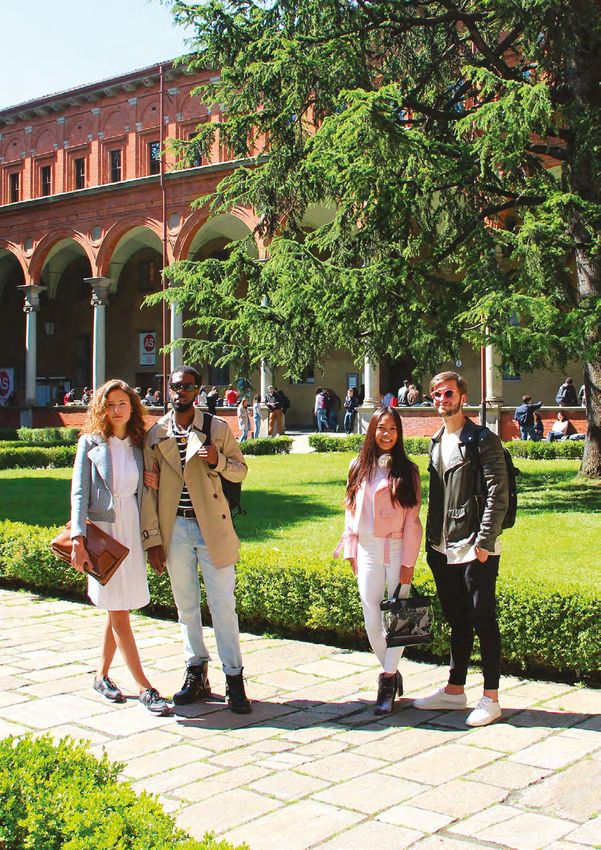
Table of
    contents

    04                     07                    08                     09                        09                10                      12                          14
    Università Cattolica   The                   Università Cattolica   The                       International     Outbound                Notable                     Italian Higher
    del Sacro Cuore        Campuses              del Sacro Cuore        Rankings                  Students          Students                Alumni                      Education System

    ■ Open new doors       ■ Open your heart     ■ Facts & figures      ■ Our spot in the world   ■ Nationalities   ■ Top schools           ■ Our inspiring graduates   ■ Step by step
                                                                                                  ■ Enrollments     ■ Programs
                                                                                                                    ■ Internship vs Study
                                                                                                                      Programs
                                                                                                                    ■ Top 10 destination
                                                                                                                      countries

    18                     36                    55                     59                        62                63                      64                          66
    2-year Master          1-year                Italian-taught         Student                   Career            Comitato Università     Admission                   Next
    of Science (M.Sc.)     Specializing Master   Program                Services                  Advising          Mondo del Lavoro        Information                 Steps

    ■ Laurea Magistrale    ■ 1st and 2nd level   ■ Academic offering    ■ Because we care         ■ What's next     ■ Cattolica's partner   ■ 2-year M.Sc.              ■ Application procedures
                                                 ■ Italian studies      ■ Life at Cattolica                           companies             ■ 1-year specializing
                                                                                                                                              Master

2                                                                                                                                                                                                  3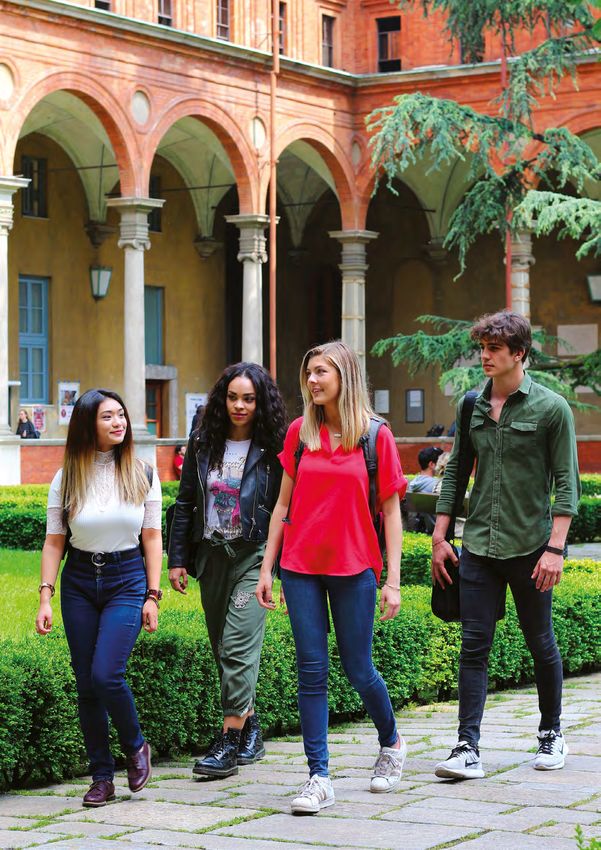
one family
                                                                                                  the cattolica family
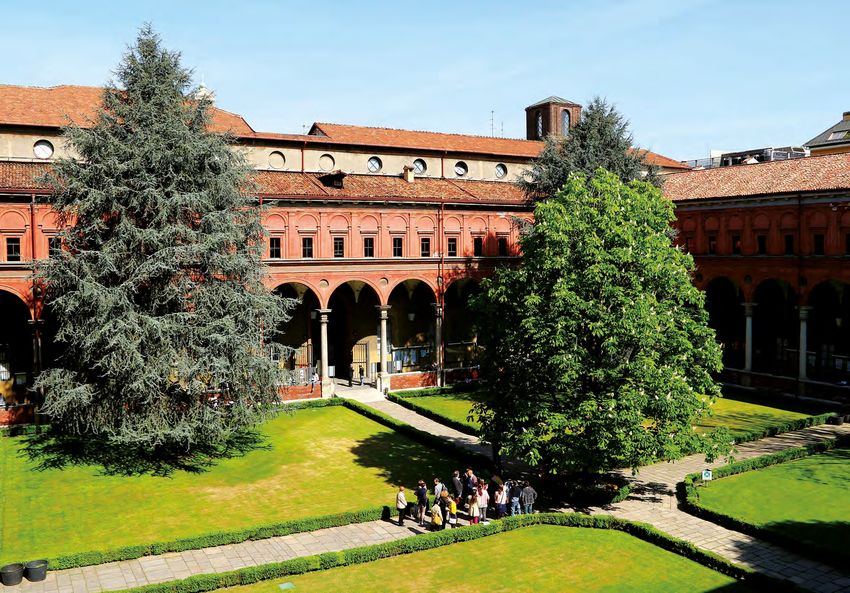
    Università Cattolica
    del Sacro Cuore

    Open new doors
    Università Cattolica del Sacro Cuore, affectionately known as Cattolica, is a comprehensive
    university, covering an impressive range of programs from Medicine, Communication,
    Philosophy and the Arts, through to Economics & Business, Accounting & Finance,
    Agriculture, Psychology and Linguistics.

    In the renowned QS World University Rankings by Subject 2020, Cattolica’s ascendency
    placed the University in formidable company, with 13 disciplines ranked in the top 300
    in the world, or higher.

    Studying at Cattolica is to study at one of our four distinct campuses, each teaching
    subjects relevant to their territory.
    Milan: Italy’s economic, business and communication capital.
    Rome: the Eternal city, featuring the 2nd largest hospital in the country affiliated to
    Cattolica’s Medical Faculty.
    Piacenza-Cremona: located at the cross-roads of Italy’s famous agricultural heart land
    and a pivotal logistics hub.
    Brescia: art and tourism run through its veins but it also hosts Cattolica’s cutting-edge
    Physics and Math labs.

    Whichever your choice of location or subject, you remain part of one family.
    The Cattolica family.

    One whose networks touch every corner of the globe, whose care and commitment
    towards every student binds us as one. And ensures an international study experience
    like no other.

4                                                                                                                        5
Our country                         The campuses
    at the heart of europe              open your heart
                                         Milan, Duomo
                                                                                               Milan in the spotlight
                                                                                               ρ Milan is the economic capital of Italy with over 3,000 active companies present,
                                                                                                 ranging from SMEs to multinationals
                                                                                               ρ World capital of fashion and design brands. Annual international events take
                                                                                                 place in these sectors
                                                                                               ρ Conveniently positioned, making Milan an ideal transport hub with 3 airports,
                                                                                                 high-speed trains, and a 2-hour drive from the Alps and the Ligurian coast
                                                                                               Milan campus highlights
                                                                                               ρ Located in the vibrant heart of the city, with household names at its doorsteps
                                                                                                 and surrounding campus area
                                                                                               ρ Originally a monastery restructured and designed by Renaissance architect
                                                                                                 Donato Bramante in the 16th century
                                                                                               ρ The biggest campus in terms of student population with over 20,000 students

                                        Brescia in the spotlight                                                                     Milan, Duomo          Brescia, New Cathedral
                                        ρ Brescia has a long history, which embraces Roman, Medieval and Renaissance
                       brescia            periods
                                        ρ The city has a very active social and economic fabric
                                        ρ Rich in cultural and leisure opportunities, it is a thriving tourist attraction, thanks
          milan                           to its proximity to renowned lakes Garda and Iseo
                                        Brescia campus highlights
                  piacenza              ρ 6 Schools: Foreign Languages and Literature, Humanities, Education, Psychology,
                                          Political and Social Sciences, Mathematics, Physics and Natural Science
                  cremona               ρ 10 Undergraduate programs, 12 Graduate programs, 1 International Ph.D.
                                          program
                                        ρ The campus has four locations across the historic center of the city

                                         Piacenza, Duomo                                       Piacenza-Cremona in the spotlight
                                                                                               ρ A key position in the Northern Italian food valley where approximately 53,000
                                                                                                 agricultural businesses are based
                                                                                               ρ 113 billion € contribution to the agri-food sector
                                                                                               ρ Piacenza is located less than 1 hour train ride away from Milan

                                 rome                                                          Piacenza-Cremona campus highlights
                                                                                               ρ Piacenza-Cremona is home to 3,000 students. Smaller-sized classes provide an
                                                                                                 intimate atmosphere and a more personal approach
                                                                                               ρ Its strategic location makes it an ideal location for Agribusiness studies with on-
                                                                                                 campus laboratories and plain farm fields in close proximity
                                                                                               ρ Sports center with an area of 8,000 m2 with two volleyball courts, a gymnasium,
                                                                                                 and an outdoor rock climbing wall

                                        Rome in the spotlight
                                        ρ The Eternal city and cradle of western civilization. A true cultural capital                                            Rome, Coliseum
                                        ρ An open-air museum: picturesque and historic bliss, containing many of the
                                          world’s most breathtaking masterpieces, from Michelangelo’s ceiling in la
                                          Cappella Sistina, to the beautiful attractions in Piazza Navona, la Fontana di Trevi,
                                          il Vittoriano, il Colosseo, and many more
                                        ρ A popular set of Academy Award-winning movies: The Great Beauty, La Dolce
                                          Vita, and Roman Holiday among others
                                        Rome campus highlights
                                        ρ Home to Cattolica’s internationally acclaimed School of Medicine and Surgery
                                          which started teaching medicine in November 1961. The School is affiliated
                                          with the Policlinico Gemelli University Hospital, which opened in 1964
                                        ρ 43 faculty members are listed among the Top Italian Scientists
                                        ρ On-campus residences available for international students

6                                                                                                                                                                                      7
d ed in
                                       Foun
    Università Cattolica                                    13 Subjects in the top 300
                                         1921               QS World University Rankings by Subject 2020
    facts & figures

    30.000
    overall number of
                        80+
                          research
                                     7.200
                                       overall number of
    students               centers          faculty staff

                12 SCHOOLS
                                                            International Students
    30+
    English-taught
                                      200+ Italian-taught   exchange & degree-seeking                                         (Students enrolled on a
                                                                                                                           BSc/MSc/Specializing Master)
    programs                                    programs

      580+                                                  4665
      partner                                               international          153
                                            82              students               different
      universities                                                                 nationalities

                                            different
                                            countries
                                                                 +55%
                                                                 international students                       2016/17
                                                                                                                        2017/18
                                                                                                                                        2018/19

                                                                                                    2015/16
     #1 in italy for employer-student connections                enrollments              2014/15

                                                                                                    3460      3972      4400           4665
       QS GRADUATE EMPLOYABILITY RANKING 2020                    in 5 years                3015

8                                                                                                                                                         9
Outbound Students Cattolica students going for
We work with
a study abroad/internship
or research experience. 32 of the top 100
+25% Universities in the World
(QS World University Rankings 2020)
outbound 2016/17
2017/18
2018/19
students 2014/15
2261
2015/16
2152 2308 2629 2823 RANKING
2
UNIVERSITY COUNTRY
in 5 years STANFORD UNIVERSITY UNITED STATES
8 UNIVERSITY COLLEGE LONDON UNITED KINGDOM
18 COLUMBIA UNIVERSITY UNITED STATES
programs
top 3 schools INTERNSHIPS 917
20
28
29
THE UNIVERSITY OF EDINBURGH
UNIVERSITY OF CALIFORNIA BERKELEY
THE AUSTRALIAN NATIONAL UNIVERSITY
UNITED KINGDOM
UNITED STATES
AUSTRALIA
sending students abroad SEMESTER ABROAD 834 29 UNIVERSITY OF TORONTO CANADA
1 SUMMER PROGRAMS 365 31 NORTHWESTERN UNIVERSITY CHICAGO UNITED STATES
ECONOMICS 35 UNIVERSITY OF CALIFORNIA LOS ANGELES UNITED STATES
LANGUAGE COURSES 290
2 42 UNIVERSITY OF SYDNEY AUSTRALIA
DOUBLE DEGREE 133
2823
LINGUISTIC SCIENCES AND 44 LONDON SCHOOL OF ECONOMICS AND POLITICAL SCIENCES (LSE) UNITED KINGDOM
FOREIGN LITERATURES VOLUNTEERING 108 47 UNIVERSITY OF QUEENSLAND AUSTRALIA
3
POLITICAL AND
THESIS RESEARCH ABROAD 87
students 54
58
ZHEIJANG UNIVERSITY - SCHOOL OF MANAGEMENT
MONASH UNIVERSITY
CHINA
AUSTRALIA
SOCIAL SCIENCES
FACULTY LED PROGRAMS
OTHER
41
48
abroad 62
63
UNIVERSITY OF WARWICK
LUDWIG MAXIMILIANS UNIVERSITÄT
UNITED KINGDOM
GERMANY
64 UNIVERSITEIT VAN AMSTERDAM NETHERLANDS
internships vs study programs 66
69
RUPRECHT-KARLS-UNIVERSITÄT HEIDELBERG
NATIONAL TAIWAN UNIVERSITY
GERMANY
TAIWAN (R.O.C.)
2016/2017 2017/2018 2018/2019
+80%
77 UNIVERSITÉ DE PARIS SORBONNE PARIS IV FRANCE
33
69
77 UNIVERSITÉ DE PARIS SORBONNE PARIS IV (CELSA) FRANCE
1666
573
1794
802
1788
1035
student 78
80
UNIVERSITY OF DURHAM
KATHOLIEKE UNIVERSITEIT LEUVEN
UNITED KINGDOM
BELGIUM
enrollments in 81 UNIVERSITY OF COPENHAGEN DENMARK
internships abroad
82 TOHOKU UNIVERSITY JAPAN
INTERNSHIPS STUDY PROGRAMS STUDY+INTERN
in 3 years 84 LOMONOSOV MOSCOW STATE UNIVERSITY BUSINESS SCHOOL RUSSIA
86 UNIVERSITY OF WESTERN AUSTRALIA (UWA) AUSTRALIA
90 UNIVERSITY OF NORTH CAROLINA AT CHAPEL HILL UNITED STATES
1 UNITED STATES 6 FRANCE
95 SUNGKYUNKWAN UNIVERSITY SOUTH KOREA
Top 10 2
3
UNITED KINGDOM
SPAIN
7
8
GERMANY
IRELAND
96
97
THE UNIVERSITY OF NOTTINGHAM
UNIVERSITY OF SOUTHAMPTON
UNITED KINGDOM
UNITED KINGDOM
destination
4 CHINA 9 RUSSIA 98 BOSTON UNIVERSITY UNITED STATES
countries
5 THE NETHERLANDS 10 AUSTRALIA
10 11
Notable Alumni
     our inspiring graduates
     Cattolica’s multidisciplinar approach prepares outstanding graduates for both the private and the public sectors.
     Where could your program take you? Become one of Cattolica’s inspiring graduates!

     Rocco and Christina                           Nausicaa Dell’Orto                            Massimiliano Pogliani
     Baldassarre                                   Production Department, NFL Films              CEO IllyCaffè
     Founders Zebra Advertisement |
     Forbes 30 under 30

     Concetta Lanciaux                             Tommaso Migliore                              Federica D’Alessandra
     Vice-President of fashion house Louis         CEO & Founder - MDOTM (Selected               Co-Vice Chair of the International Bar
     Vuitton Moët Hennessy                         for the Silicon Valley acceleration           Association’s War Crimes Committee
                                                   program powered by Google for                 | Forbes 30 under 30
                                                   Entrepreneurs)

                                                                                                                                           dare to
12
     Romano Prodi
     Former Prime Minister and EU
     Commission President
                                                   Claudio Luti
                                                   President Kartell | President Salone
                                                   del Mobile
                                                                                                 Lorenzo Ornaghi
                                                                                                 Former Rector and Minister of
                                                                                                 Cultural Heritage                        dream big   13
Italian Higher Education System
     step by step
                                      1         2        3                     1                                  1
                                                                                                                                                   push new
        1        2         3
                                   3 YEARS - 180 ECTS
                                   LAUREA TRIENNALE
                                   (B.SC.)

                                    4
                                                                            1 YEAR - 60 ECTS
                                                                            SPECIALIZING
                                                                            MASTER
                                                                                                              1 YEAR - 60 ECTS
                                                                                                              2ND LEVEL
                                                                                                              SPECIALIZING MASTER
                                                                                                                                                  boundaries
       5         6         7        8                                          1        2
                                                                            2 YEARS - 120 ECTS
       9        10        11       12                                       LAUREA MAGISTRALE
                                                                            (M.SC.)
              12/13 YEARS
      13      PRE-UNIVERSITY
              EDUCATION

                                      1         2        3

                                      4         5        6                     1        2         3
                                   5/6 YEARS - 300/360                      3 YEARS - 180 ECTS
                                   ECTS (B.Sc. + M.Sc.)                     DOTTORATO DI RICERCA
                                   LAW | EDUCATION |                        (PH.D.)
                                   MEDICINE
     Graduate Degree/Master of Science - M.Sc.                             What are the differences between 2-year M.Sc. de-
     (Laurea Magistrale)                                                   grees and 1-year Specializing Masters?
     Course duration: 2 years
     ECTS/Credit points: 120                                               The 2-year M.Sc. degree:
     Undertaken after the undergraduate degree and aimed at                ■ Is an academic degree of 120 ECTS
     providing rigorous, advanced training in more highly special-         ■ Requires a similar academic background for access
     ized areas. Enables students to apply for a Ph.D. at any Italian or   ■ Provides advanced academic knowledge in highly specialized
     international university.                                               areas. Students will write a final dissertation
                                                                           ■ The degree enables students to apply for a PhD at any Italian
     Specializing Master (Master Universitario)                              or international university, as well as to internships/job
     Course duration: 1 year                                                 opportunities
     ECTS/Credit points: 60
     A professionalizing program providing practical knowledge             The 1-year Specializing Master Diploma:
                                                                           ■ Is a professionalizing diploma of at least 60 ECTS
     and training through coursework and internships. These mas-
                                                                           ■ Welcomes students from different academic backgrounds
     ters programs within the Italian education system do not
                                                                           ■ Focuses on specific topics and provides practical skills. There is
     generally allow access to a Ph.D. program upon completion
                                                                             dedicated time for an internship or project work and students
     of the Master. Recognition of the Specializing Master towards a         will not write a final dissertation
     Ph.D. program outside of Italy will depend on local state regula-     ■ The diploma does not give students direct access to a PhD but
     tions or individual doctoral programs. Cattolica’s English-taught       leads to internships/job opportunities
     1-year specializing Master programs include consultancy work
     projects that may lead to internships/job opportunities.
                                                                             ! CFU = CREDITO FORMATIVO UNIVERSITARIO
     Doctoral Program - Ph.D. (Dottorato di Ricerca)
     Course duration: 3 years
     ECTS/Credit points: 180
     Undertaken after the completion of a Master of Science or an
     equivalent graduate degree. It aims to develop the professional
     competence to carry out high level research in manufacturing            ECTS = EUROPEAN CREDIT TRANSFER SYSTEM
     and service companies, public bodies and universities.
14                                                                                                                                                             15
Milan Campus

     your degree
     may be the
     ticket

                      but you need
                      to choose the
                              right

16
                   destination          17
2-year Master of Science (M.Sc.)

     laurea magistrale
     20                             21                               22
                                                                     M.Sc. in
                                                                                             23                                        24
                                                                     Applied Data            M.Sc. in
     M.Sc. in                       M.Sc. in                         Science for             The Art and                               M.Sc. in
     Actuarial Sciences             Agricultural and                 Banking                 Industry of                               Banking
     for Insurance                  Food Economics                   and Finance             Narration                                 and Finance

     25                             26                               27                      28                                        29
                                                                     M.Sc. in
                                                                     European Studies
     M.Sc. in                                                        in Investor Relations                                             M.Sc. in
     Data Analytics                 M.Sc. in                         and Financial           M.Sc. in                                  Global Business
     for Business                   Economics                        Communication           Food Processing                           Management

     30                             31                               32                      33                                        34
                                                                                             M.Sc. in
                                    M.Sc. in                                                 Methods                                   M.Sc. in
     M.Sc. in                       Innovation and                                           and Topics                                Physics for
     Healthcare                     Technology                       M.Sc. in                in Arts                                   Technologies
     Management                     Management                       Management              Management                                and Innovation

              THE INFORMATION PROVIDED HEREIN IS SUBJECT TO CHANGE AFTER PRINT.                  FOR UP-TO-DATE INFORMATION, PLEASE CHECK OUR WEBSITE.

18                                                                                                                                                       19
Actuarial Sciences for Insurance Agricultural and Food Economics
laurea magistrale in statistical and actuarial sciences laurea magistrale in agricultural and food economics
Campus School Program Duration Next Intake Total ECTS Edition n. Campus School Program Duration Next Intake Total ECTS Edition n.
Banking, Finance and Insur- September Agricultural, Food and September
Milan, Italy 2 years 120 5 Cremona, Italy 2 years 120 10
ance Sciences | Economics 2021 Environmental Sciences 2021
Curriculum Curriculum
FIRST YEAR Statistical area FIRST YEAR “Food consumer studies” profile credits
ρ Data analysis for insurance (10 ECTS) ρ Applied econometrics (8 ECTS) ρ Business management and finance: (12 ECTS) ρ Multi-channel retail marketing (5 ECTS)
ρ Advanced calculus and stochastic processes (9 ECTS) ρ Derivative securities pricing (8 ECTS) ⧉ Management basics ρ Food consumer psychology and market intelligence (5 ECTS)
ρ Insurance law and regulation (6 ECTS) ρ Risk management (8 ECTS) ⧉ Financial accounting and business evaluation ρ Qualitative research methods for the agri-food system (5 ECTS)
ρ Economic statistics (8 ECTS) ρ Legal area (5 ECTS) ρ Technology for food health and safety: (10 ECTS)
ρ Accounting and management in insurance (10 ECTS) ρ EU risk governance regulation (5 ECTS) ⧉ Principles of food protection * SUGGESTED OPTIONAL COURSES:
ρ Actuarial life insurance (7 ECTS) ⧉ Principles of food hygiene ρ Agricultural and food legislation (5 ECTS)
ρ Econometrics (8 ECTS) Applied mathematical area ρ Economic fundamentals of the agri-food system: (10 ECTS) ρ Agricultural, food and environmental policies (5 ECTS)
ρ Quantitative methods for finance (4 ECTS) ρ Quantitative risk management (5 ECTS) ⧉ Economics of the agri-food system ρ Food footprint: the environmental impact of the agri-food
ρ Actuarial and financial modeling for solvency II (5 ECTS) ⧉ Microeconomics of the agri-food system chain (5 ECTS)
SECOND YEAR ρ Internship (5 ECTS) ρ Quantitative methods: (12 ECTS) ρ Italian language and civilization (5 ECTS) [1]
ρ Economics for finance (8 ECTS) ρ Introduction to actuarial mathematics and risk theory (10 ECTS)* ⧉ Applied statistics for the agri-food system
[1]
ρ Insurance statistics and advanced risk theory (11 ECTS) ⧉ Applied econometrics for the agri-food system only for non-Italian students
ρ Actuarial non-life insurance (8 ECTS) * Students who need to strengthen their knowledge in ρ Industrial organization: (10 ECTS)
ρ Actuarial social security and pension funds (6 ECTS) Actuarial mathematics, Risk theory and Advanced mathematics ⧉ Strategic decision making Once students have chosen their specializing track, they can take
ρ Foreign language (3 ECTS) (depending on their Bachelor Degree) might be required to ⧉ Industrial organization of the food system also one optional course from the other profile.
(French, Spanish, German or Italian for international students) attend this course at the beginning of the program in order to be ρ Agricultural and food marketing (7 ECTS)
ρ Elective courses [1] (10 ECTS) in line with the other students to follow properly the advanced ρ Seminars (1 ECTS) Selected students can attend one or two semesters in the
ρ Thesis (12 ECTS) actuarial courses (in the study plan, this will substitute the elective following partner universities:
courses). SECOND YEAR
[1] Double degree options
Elective courses list: In the second year of their curriculum students have an option
Double degree options between a “Agri-food economics and management” and a “Food ρ Friedrich-Wilhelms-Universität Bonn (Germany)
Economic and Business area
M.Sc. degree in Statistical and Actuarial Sciences (Università consumer studies” profile. ρ Université Catholique de Louvain (Belgium)
ρ Applied econometrics (8 ECTS)
Cattolica del Sacro Cuore) | Graduate Degree in Mathematical ρ Swedish University of Agricultural Sciences, Uppsala
ρ Derivative securities pricing (8 ECTS)
Finance (UNC Charlotte, USA). Common credits (Sweden)
ρ Risk management (8 ECTS)
ρ Agricultural and food market institutions (6 ECTS) ρ Wageningen University (Netherlands)
Once enrolled, students can refer to the International Office for ρ Economics of agricultural and food markets (6 ECTS)
Legal area
details. ρ Seminar on theological issues Once enrolled, students can refer to the International Office for
ρ EU risk governance regulation (5 ECTS)
ρ Optional courses* (10 ECTS) details.
ρ Soft skills and entrepreneurship (1 ECTS)
ρ Thesis (20 ECTS) Erasmus/Exchange programs
ρ Technische Universität München (Germany)
did you know? “Agri-food economics and management” profile credits ρ North Dakota State University, Fargo (USA)
The curriculum offered is aligned with the course syllabus of the International Actuarial Association, so that students learn knowledge ρ Agricultural and food supply chain management (5 ECTS) ρ University of California, Davis (USA)
and skills that are applicable in other countries. ρ Business planning for start-up (5 ECTS) ρ Western Sydney University (Australia)
ρ Business strategy and leadership (5 ECTS) ρ Griffith University, Brisbane (Australia)
ρ Royal Melbourne Institute of Technology (Australia)
career paths: did you know?
Actuary in life or non-life insurance companies, pension funds, public social security agencies, supervisor authorities or financial Business games are an interactive and practical feature of this degree: student teams are given real-life business challenges to resolve,
services consulting firms. a chance to hone not only academic knowledge but also essential soft skills such as team work and problem solving.
Risk manager in banks, insurance companies, financial services consulting firms or non-financial companies.
career paths:
Managerial positions in agri-food corporations (multinational food companies, small and medium enterprises, retail chains) ·
Managerial positions in professional associations linked to the agricultural and food sector · Consultants for agricultural and food
Program-specific entry requirements companies · Professional positions in international organizations · Research positions in universities or applied research companies
Students should have acquired at least 12 ECTS in the area of Statistics; 14 ECTS in the area of Mathematics, and at least 26
ECTS in a larger pool of subjects which may include further exams in Mathematics or Statistics, as well as in Economics and
Computer Science. Program-specific entry requirements
Ideal candidates have a similar academic background in agriculture and economics.
More info at page 64 for general graduate requirements (e.g. language prerequisites) See the entry requirements section at page 64 for general graduate requirements (e.g. language prerequisites)
20 21Applied Data Science for Banking and Finance The Art and Industry of Narration
laurea magistrale in applied data science for banking and finance From literature to cinema and TV
laurea magistrale in lingue, letterature e culture straniere
Campus School Program Duration Next Intake Total ECTS Edition n. Campus School Program Duration Next Intake Total ECTS Edition n.
Mathematics, Pysics and Natural Sciences | September Linguistic Sciences and September
Brescia, Italy 2 years 120 2 Milan, Italy 2 years 120 2
Banking, Finance and Insurance Sciences 2021 Foreign Literatures 2021
Curriculum ELECTIVE COURSES: Curriculum
FIRST YEAR ρ Laboratory of cloud computing, big data and security (12 ECTS) FIRST YEAR SECOND YEAR
ρ IT Coding for data science (12 ECTS) ρ Data management (6 ECTS) ρ English communicative strategies (12 ECTS) ρ English specialized texts (8 ECTS)
ρ Data analysis: techniques and tools (6 ECTS) ρ IT marketing (6 ECTS) ρ English drama on stage and on screen (8 ECTS) ρ Transmedia storytelling (4 ECTS)
ρ Probability and statistics (6 ECTS) ρ Applied financial econometrics (6 ECTS)* ρ History and industry of international cinema (8 ECTS) ρ From novel to film: USA (8 ECTS)
ρ Analytics accounting (6 ECTS) ρ Sustainable business innovation and finance (6 ECTS)* ρ The art and industry of publishing (4 ECTS) ρ Contemporary Italian cinema (4 ECTS)
ρ Course from the economic/Legal area (6 ECTS) ρ Business analytics and data-driven decision making (6 ECTS)* ρ From novel to film: (12 ECTS) ρ Two different options are possible:
ρ Finance and banking (12 ECTS) Britain (with a seminar of comparative literature: ⧉ Foreign language (8 ECTS)
ρ Cyber security regulation (6 ECTS)*
ρ Elective course (6 ECTS) stories across borders) (plus 8 ECTS during the first year: in this case the student will only
ρ Game theory (6 ECTS)* take 4 ECTS in English drama on stage and on screen and only 4
ρ Foreign language (Italian for international students) (6 ECTS) ρ Writing for cinema and television (8 ECTS)
ρ Fintech regulation (6 ECTS) ECTS in From novel to film)
ρ Writing and producing for animation (8 ECTS)
ρ Quantitative finance (6 ECTS) ⧉ Elective courses (8 ECTS)
SECOND YEAR (with a seminar of literature, cinema and TV series for kids
ρ Dynamical systems in finance (6 ECTS) available from the School of Linguistic Sciences and
ρ Artificial intelligence and machine learning (6 ECTS) and young audiences)
ρ Time series analysis and forecasting (6 ECTS) Foreign Literatures (in Italian or English)
* Economic/Legal area ρ Elective course or Internship (4 ECTS)
ρ Laboratory of data analytics for banking andinsurance (6 ECTS)
ρ Laboratory of data analytics for investment (6 ECTS) ρ Final written dissertation (24 ECTS)
ρ Elective courses (12 ECTS)
ρ Internship/Stage (6 ECTS)
ρ Thesis (18 ECTS)
did you know? did you know?
Rarely will graduates from technological subject areas have knowledge of banking and finance, and vice versa: that is why While Rome is still the centre of the Italian film industry with Cinecittà, MIlan is the area where many big companies like Sky, Mediaset,
students joining this degree will be able to personalize the curriculum to allow focusing on subjects they are less familiar with Disney, and Discovery have their headquarters. Milan is also the centre of both the publishing and the advertising industry and of many
and be brought up to speed to become the ideal data analyst: one that does not have a stronger side but is perfectly formed other industries related with the creation of narrative contents.
on both the financial and the technological front.
career paths: career paths:
Professional Fin-Tech skills related to: managing large banking/financial data bases · filtering significant information out of conspicuous Fiction editors · Publishing consultants · Story editors · Producers and buyers for TV series and cinema · Story editors and producers
and heterogeneous data sets · extracting from massive data insights relevant to several decision-making processes in the banking/ for animation · Cinema and TV critics · Authors for novels or any other kind of narrative content · Copywriters
financial industry (e.g. asset allocation, dynamic portfolio choice, risk management, and client profiling/servicing)
Program-specific entry requirements
Students should have acquired at least 12 ECTS in the area of Information Technology and Mathematics; 12 ECTS in the area
of Economics, Corporate Finance, and Statistics; and a total of at least 36 ECTS in a larger pool of subjects which may include Program-specific entry requirements
further exams in Mathematics or Statistics, as well as in Economics and Information Technology. Ideal candidates have an academic background in literature and/or media studies.
See the entry requirements section at page 64 for general graduate requirements (e.g. language prerequisites). See the entry requirements section at page 64 for general graduate requirements (e.g. language prerequisites).
22 23Banking and Finance Data Analytics for Business
laurea magistrale in banking and finance laurea magistrale in data analytics for business
Campus School Program Duration Next Intake Total ECTS Edition n. Campus School Program Duration Next Intake Total ECTS Edition n.
Banking, Finance and September Economics | Mathematics, September
Milan, Italy 2 years 120 13 Milan, Italy 2 years 120 1
Insurance Sciences 2021 Pysics and Natural Sciences 2021
Curriculum Electives courses list Curriculum
FIRST YEAR ρ Corporate governance and social responsibility - I part (4 ECTS) FIRST YEAR ELECTIVE COURSES
ρ Advanced financial accounting (5 ECTS) ρ EU risk governance regulation (5 ECTS) ρ Mathematical methods and probability (8 ECTS) ρ Internship/Research assistantship/Field project (8 ECTS)
ρ Advanced microeconomics (5 ECTS) ρ International corporate finance (8 ECTS) ρ Statistical inference (8 ECTS) ρ Causal methods for policy evaluation (4 ECTS)
ρ Applied econometrics (8 ECTS) ρ International financial markets (4 ECTS) ρ Applied linear models (8 ECTS) ρ Strategic decision-making (4 ECTS)
ρ Applied statistics for finance (6 ECTS) ρ Project management (8 ECTS) ρ Computational statistics (8 ECTS) ρ Strategic equity transactions (4 ECTS)
ρ Corporate finance (8 ECTS) ρ Real estate finance (4 ECTS) ρ Database systems and computer programming (8 ECTS) ρ Data-driven operations and supply chain management (4 ECTS)
ρ Derivative securities pricing (8 ECTS) ρ Internship (8 ECTS) ρ Principles of management and tech law (8 ECTS) ρ Logic, rationality and decisions (4 ECTS)
ρ Monetary economics (6 ECTS) ρ One elective course among: (8 ECTS) ρ Statistical methods for network data (4 ECTS)
ρ Principles of financial regulation (10 ECTS) Double degree options ⧉ Bayesian modelling ρ Experimental design (4 ECTS)
ρ Quantitative methods for finance (8 ECTS) ρ M.Sc. degree in Banking and Finance (Università Cattolica del ⧉ New venture development and data driven strategy ρ Italian course (4 ECTS)
Sacro Cuore) | MSc in Mathematical Finance o MSc in Economics
SECOND YEAR (UNC Charlotte, USA) SECOND YEAR Notes
ρ Investment risk management (4 ECTS) ρ M.Sc. degree in Banking and Finance (Università Cattolica del ρ Statistical learning (8 ECTS) The curriculum is flexible to encourage students to pursue their
ρ Foreign language (4 ECTS) Sacro Cuore) | MSc in Global Finance (Fordham University, USA) ρ Time series and spatial data analysis (8 ECTS) interests.
(French, German, Spanish or Italian for international students) ρ M.Sc. degree in Banking and Finance (Università Cattolica del ρ Advanced programming and deep learning for AI (8 ECTS) For instance, two broad study tracks are:
ρ Market microstructure (8 ECTS) Sacro Cuore) | MSc in Banking and International Finance (BIF) ρ One elective course among: (8 ECTS) i) Data science method and
ρ Risk management (8 ECTS) or MSc in Corporate Finance (MF) or MSc in Finance (Cass ⧉ Stochastic processes and optimization for machine learning ii) Applied business analytics.
ρ Electives (12 ECTS) Business School, UK) ⧉ Financial markets and institutions For track i) the recommended choices are:
ρ Thesis (20 ECTS) ρ M.Sc. degree in Banking and Finance (Università Cattolica del ρ One elective course among: (8 ECTS) ρ Bayesian modelling
Sacro Cuore) | MSc in Finance (HSE-Saint-Petersburg, Russia) ⧉ Empirical economics ρ Stochastic processes and optimization for machine learning
⧉ Marketing analytics ρ Empirical economics or Data visualization and text mining
Once enrolled, students can refer to the International Office for ⧉ Data visualization and text mining
For track ii) the recommended choices are:
details. ρ Elective courses (8 ECTS)
ρ New venture development and data-driven strategy
ρ Thesis (16 ECTS)
ρ Financial markets and institutions
ρ Marketing analytics or Data visualization and text mining
did you know? did you know?
Students of the Faculty of Banking, Finance and Insurance Sciences can benefit from dedicated Internship Days created exclusively Milan is the Italy’s startup capital: 15% of the national startups are born in the city (in 2019 they were just over 1,500), and
for the Faculty, with 30 relevant companies coming on campus to interview for different internship positions. startups are the primary actors driving innovation in the field of Big Data Analytics. A fertile ground for looking for students taking
up internships in their second year!
career paths: career paths:
Trader · Risk manager · Financial analyst · Consultant Data analyst and Business analyst in industries like: manufacturing, services, finance, insurance, and consulting. Suitable graduates may
Areas: banking, finance, banking and financial market supervision also pursue research-oriented careers enrolling in PhD programs in Statistics, Data science or related areas, leading to jobs in academia
as well as research centers.
Program-specific entry requirements Program-specific entry requirements
Ideal candidates have a similar academic background in banking and finance. Students should have acquired at least 12 ECTS in the area of Statistics and 14 ECTS in the area of Mathematics.
See the entry requirements section at page 64 for general graduate requirements (e.g. language prerequisites) See the entry requirements section at page 64 for general graduate requirements (e.g. language prerequisites)
24 25Economics European Studies
laurea magistrale in economia in Investor Relations and Financial Communication
laurea magistrale in european studies in investor relations and financial communication
Campus School Program Duration Next Intake Total ECTS Edition n. Program Next Total Edition
Campus School
Duration Intake ECTS n.
September
Milan, Italy Economics 2 years 120 11
2021 Banking, Finance and Insurance Sciences |
Milan, Italy (year 1) September
Linguistic Sciences and Foreign Literatures 2 years 120 1
Lugano, Switzerland (year 2) 2021
| Communication, Culture and Society
Curriculum
FIRST YEAR SECOND YEAR Curriculum ρ Sustainable finance and ethics (3 ECTS)
ρ Microeconomics (8 ECTS) ρ Three Economics courses (GDE) among the following: FIRST YEAR ρ Online communication design (3 ECTS)
ρ Macroeconomics (8 ECTS) (24 ECTS) ρ Introductory module on communication in banking and ρ Current issues in international affairs (3 ECTS)
ρ Mathematics for economic analysis (8 ECTS) ⧉ Industrial organization finance (0 ECTS) ρ Argumentation in finance (6 ECTS)
ρ Empirical economics (8 ECTS) ⧉ International economics ρ Accounting for investor relations (6 ECTS) ρ Investor relations (3 ECTS)
ρ Statistical modeling (8 ECTS) ⧉ Labor economics ρ Corporate finance (3 ECTS) ρ Conversations with industry experts on private banking (3 ECTS)
ρ Two business courses among the following: (16 ECTS) ⧉ Monetary economics and asset pricing ρ Speech communication (3 ECTS) or
⧉ Public management ⧉ Political economy of the European Union ρ Statistical data analysis (3 ECTS) ρ Conversations with industry experts on investor relations (3 ECTS)
⧉ Supply chain management ⧉ Political and public economics ρ English for business and finance (First level) (3 ECTS) ρ Law and practice of capital markets (3 ECTS)
⧉ Performance measurement ⧉ Policy evaluation ρ A second language among: (6 ECTS)
⧉ Corporate governance and social responsibility ρ One of the following (student’s choice subject to approval): ⧉ Français de la finance (First level) ELECTIVE COURSES (2nd year) (12 ECTS required)
⧉ Business communication (8 ECTS) ⧉ Deutsch für die Finanzkommunikation (First level) ρ Advertising and consumer representations (3 ECTS)
⧉ Corporate strategy ⧉ A course in Economics (GDE) ρ EU Financial systems and bank management (6 ECTS) ρ Argumentation in conflict resolution (3 ECTS)
⧉ Entrepreneurship ⧉ Internship program ρ Economics of the EU (6 ECTS) ρ Brand management (3 ECTS)
⧉ Business analytics and data mining ⧉ A course among: ρ Principles of financial european regulation (6 ECTS) ρ Comparative public administration (3 ECTS)
⧉ Finance and risk management ⟫ Applied statistics and big data (advanced) ρ English for business and finance (Second level) (3 ECTS) ρ Digital corporate xommunication (3 ECTS)
ρ One law course among: (8 ECTS) ⟫ Quantitative methods for finance ρ A second language among: (6 ECTS) ρ Intercultural communication (3 ECTS)
⧉ Transnational business law ⟫ International corporate finance ⧉ Français de la finance (Second level) ρ Marketing semiotics (3 ECTS)
⧉ Principles of financial regulation ⟫ Corporate finance ⧉ Deutsch für die Finanzkommunikation (Second level) ρ Media relations (3 ECTS)
⟫ Project management ρ Multimodal rhetoric (3 ECTS)
⟫ A course in Business (GDA) ELECTIVE COURSES (1st year) (12 ECTS required) ρ Organizational behavior (6 ECTS)
⟫ A course in Law (GDG) ρ Chinese for business and finance (First level) (6 ECTS) ρ Social media management (3 ECTS)
ρ Final dissertation (24 ECTS) ρ Modern standard arabic for business and finance (First level) ρ Transmedia narratives (3 ECTS)
(6 ECTS) ρ User experience design (3 ECTS)
ρ Law for EU financial markets (6 ECTS) ρ Inside the MEM. new dynamics of the middle east
ρ Chinese for business and finance (Second level) (6 ECTS) mediterranean region (3 ECTS)
ρ EU Risk governance regulation (5 ECTS) ρ Market system dynamics (6 ECTS)
ρ International financial markets (4 ECTS) ρ Sponsoring and partnership management (3 ECTS)
did you know? ρ Modern standard arabic for business and finance ρ Strategies and markets of digital media (3 ECTS)
In 2019 the Faculty of Economics awarded Mario Draghi, former President of the European Central Bank, an honorary degree in (Second level) (6 ECTS)
Economics. A regular guest of honor at Università Cattolica, Mario Draghi has often lectured privileged students in multiple occasions. Double degree
SECOND YEAR Students will be awarded a double degree in European studies
ρ Financial communication (6 ECTS) SPS/08 in investor relations and financial communication from Università
ρ Communication strategies in financial disclosure (3 ECTS) Cattolica del Sacro Cuore and Università della Svizzera Italiana.
ρ Banking strategies & wealth management (6 ECTS)
career paths: did you know?
Financial analyst · Economic consultant · Market research analyst · Policy analyst · Data analyst · Investment analyst · Public This degree’s curriculum is the perfect testimony of the strength of Cattolica’s multidisciplinary approach to academics. The curriculum
sector roles covers 4 distinct yet correlated macro areas: economics/finance, communication, law, and foreign languages: graduates are
professional figures that can work globally in multiple sectors.
career paths:
Program-specific entry requirements Investor relations and financial communication, both in private and public institutions · Proxy advisors and shareholders engagement
Ideal candidates have a background in economics and quantitative methods (eg. majors in economics, mathematics, statistics, or management · Private banking and wealth management · Management and control in financial institutions · Professional consultancy
business studies). in investors relations and financial communications
Applications from students who did not major in the previously mentioned subjects will also be evaluated. In these cases,
submission of an official report for the GRE or the GMAT test with a satisfactory performance level in the quantitative section
would help increase their chances of admission. Program-specific entry requirements
Ideal candidates have an academic background in economics/finance, foreign languages, law, or communication.
See the entry requirements section at page 64 for other general graduate requirements (e.g. language prerequisites). See the entry requirements section at page 64 for other general graduate requirements (e.g. language prerequisites).
26 27Food Processing: Global Business Management
Innovation and Tradition laurea magistrale in global business management
laurea magistrale in food processing
Campus School Program Duration Next Intake Total ECTS Edition n. Campus School Program Duration Next Intake Total ECTS Edition n.
Agriculture, Food and September September
Cremona, Italy 2 years 120 2 Piacenza, Italy Economics and Law 2 years 120 5
Environmental Sciences 2021 2021
Curriculum SECOND YEAR Curriculum ρ Business analytics (6 ECTS)
FIRST YEAR ρ Food processing (10 ECTS) FIRST YEAR ρ Elective courses * (15 ECTS)
ρ Raw materials (12 ECTS) ρ Innovation in food packaging (8 ECTS) ρ Strategy and international business (10 ECTS) ρ Thesis (18 ECTS)
⧉ Grains and vegetables ρ Process control and digitalization in food industry (6 ECTS) ⧉ Module corporate strategy (5 ECTS)
⧉ Fruit science ρ Agricultural and food legislation (5 ECTS) ⧉ Module international business (5 ECTS) * ELECTIVE COURSES:
⧉ Animal sources ρ Digital data processing (5 ECTS) ρ Economics of global competitiveness and sustainability (5 ECTS) Students must choose three of the following courses:
ρ Physical chemistry and biochemistry of food (12 ECTS) ρ Soft skill seminars (1 ECTS) ρ Sustainability management (5 ECTS) ρ Corporate governance
ρ Food microbiology (11 ECTS) ρ Elective courses (10 ECTS) ρ Managerial economics (10 ECTS) ρ Mergers and acquisitions (advanced international business)
ρ Agricultural and food supply chain management (5 ECTS) ρ Final dissertation (20 ECTS) ⧉ Module competitive behavior (5 ECTS) ρ Applied economics of globalization
ρ Food technology and plants (10 ECTS) ⧉ Module advanced economics scenarios (5 ECTS) ρ Global challenges & impacts
ρ Food quality assurance and international certifications (5 ECTS) ρ International affairs (10 ECTS) ρ Data science and management
⧉ Module business government relations (4 ECTS) ρ Silicon Valley immersion program
⧉ Module international corporate taxation and tax planning ρ Supply chain and operation management
(6 ECTS) ρ Financial markets and institutions
ρ Performance measurement and controlling (10 ECTS)
⧉ Module international financial reporting (5 ECTS) Double Degree options
⧉ Module performance measurement and incentives (5 ECTS) ■ M.Sc. degree in Global Business Management (Università
ρ Corporate finance (5 ECTS) Cattolica del Sacro Cuore) | MBA in International Business
ρ Internship (6 ECTS) (California State University San Marcos, USA)
■ M.Sc. degree in Global Business Management (Università
SECOND YEAR Cattolica del Sacro Cuore) | Master in International Management
did you know? ρ International human resource management (5 ECTS) (Université Catholique de Lille, France)
ρ Intercultural marketing (10 ECTS)
It seems only right that this degree should be taught in the brand new campus of Cremona: a completely renovated 16th
⧉ Module distribution and trade decisions (5 ECTS) Once enrolled, students can refer to the International Office for
Century monastery, already back in the day it was devoted to the production of botanical drugs and now will be dedicated to
⧉ Module sociology of consumer behavior (5 ECTS) details.
the most up-to-date innovation of food processes. The campus consists of 12,000 sqm covered space of university buildings
ρ Business ethics (5 ECTS)
and high tech labs and teaching rooms, and 20,000 sq m of open green space in the city centre.
career paths: did you know?
As an expert in food product innovation you can apply as product developer, with a role in R&D groups of Food Companies. The Silicon Valley Immersion Program elective course offered in the second year is provided jointly with the University of San
In managerial positions, you will be combining technology, financial planning and research. Positons as product and innovation Francisco and delivered in San Francisco and in Palo Alto, USA. It gives students exclusive insider access to the unique ecosystem
managers will be specific for your skills. In addition, as a food quality expert, you can become a global food production manager. of the Silicon Valley, allowing students to acquire skills that you can use to build a new business venture or to create a product
This entails monitoring fundamental aspects of food production, which means you are responsible for creating high quality, safe and or program inside an existing organization.
healthy products. You are likely to start out as a junior food safety specialist working in the innovation, safety, or quality department of
a food company.
career paths:
HRM · Export manager · Manager · Supply chain manager · Financial officer · Budgeting specialist · Consulting manager
Program-specific entry requirements
■ Ideal candidates have a background in Science and Food Technology
■ We welcome applications from students with other Bachelor degrees (i.e. Biotechnology, Biological Sciences, etc.), however, Program-specific entry requirements
these candidates may be required to take integrative exams on Microbiology and Food Technology. Ideal candidates have a similar academic background in management.
See the entry requirements section at page 64 for other general graduate requirements (e.g. language prerequisites). See the entry requirements section at page 64 for general graduate requirements (e.g. language prerequisites).
28 29Healthcare Management Innovation and Technology Management
laurea magistrale in management dei servizi laurea magistrale in innovation and technology management
Campus School Program Duration Next Intake Total ECTS Edition n. Campus School Program Duration Next Intake Total ECTS Edition n.
Economics | Medicine September Economics and Mathematics, September
Rome, Italy 2 years 120 6 Milan, Italy 2 years 120 4
and Surgery 2021 Physics and Natural Sciences 2021
Curriculum Visiting Faculty in recent years Curriculum ⟫ Strategies for emerging technologies (8 ECTS)
FIRST YEAR ρ Joseph Coyne (Washington State University, USA), Accounting FIRST YEAR ⟫ Internship or Innovation process management field project
ρ International law and health (8 ECTS) ρ Joan Costa-i-Font (London School of Economics and Political ρ IT coding, tools and security (8 ECTS) (8 or 4 ECTS)
ρ Statistics and big data (8 ECTS) Science, UK), Health economics ρ One elective course among: (8 ECTS) ⟫ Master thesis * (12 or 16 ECTS)
ρ Quality and operations management (8 ECTS) ρ Gillie Gabay (College of Management Academic Studies, ⧉ Global challenges and firm strategies ⧉Curriculum in entrepreneurship
ρ Management and innovation in health & social services Israel), Healthcare management ⧉ Economics of innovation ⟫ Design thinking and Start-up launch (8 ECTS)
(8 ECTS) ρ Paul Gemmel (Ghent University, Belgium), Quality and ρ Two elective courses among: (16 ECTS) ⟫ Project financing and open innovation (8 ECTS)
ρ Health economics (8 ECTS) Operation Management ⧉ Omnichannel management ⟫ Marketing innovation (8 ECTS)
ρ Human resources management in complex organizations ρ Stefano Gliozzi (IBM), Statistics ⧉ Organizing and leading change ⟫ Internship or Entrepreneurship field project (8 or 4 ECTS)
(8 ECTS) ρ William Greene (Stern School of Business, New York ⧉ Management control systems and performance ⟫ Master thesis * (12 or 16 ECTS)
ρ Financial and management accounting in healthcare (8 ECTS) University, USA), Health Econometrics measurement ρ One elective course among the following: (8 ECTS)
ρ Epidemiology (8 ECTS) ρ Zahirul Hoque (La Trobe Business School, Melbourne, ⧉ Project and people management (if not already taken)
Australia), Accounting ρ Materials physics and technologies (8 ECTS) ⧉ History of innovation
SECOND YEAR ρ Nuno Lunet (University of Porto, Portugal), Epidemiology + ⧉ Cross-cultural negotiation
ρ Planning and control in healthcare (8 ECTS) ρ Francesco Moscone (Brunel University, London, UK), Health Lab technologies in action (4 ECTS) ⧉ Work psychology and smart working
ρ Healthcare and insurance in comparative systems (8 ECTS) Economics ρ Intellectual property and labour law (8 ECTS) ⧉ Privacy and security
ρ Pharmaeconomics and health technology assessment (8 ECTS) ρ Ligia Paina (Johns Hopkins Bloomberg School of Public ρ One elective course among: (8 ECTS) ⧉ Global challenges and firm strategies
ρ Health econometrics and program evaluation (elective) (8 ECTS) Health, Baltimore, USA), Public Health ⧉ History of innovation ⧉ Economics of innovation
ρ Internship (8 ECTS) ρ Elena Pizzo (University College London, UK), HTA ⧉ Privacy and security ⧉ Omnichannel management
ρ Dissertation (16 ECTS) ρ Thomas Rapp (Université Paris Descartes - Sorbonne Paris ⧉ Cross-cultural negotiation ⧉ Organizing and leading change
Cité, France), HTA ⧉ Work psychology and smart working ⧉ Management control systems and performance measurement
ρ Roberto Ridolfi (FAO), Law
⧉ Project and people management
ρ Rosana Silveira Reis (ISG Paris, France), Innovation Management SECOND YEAR
ρ Joseph Restuccia (Questrom School of Business, Boston ρ Applied statistics for business analytics (8 ECTS)
University, USA), Quality and Operation Management
* Credits assigned to the Master thesis depend on students’
ρ Choose one curriculum between the following two: choice: if students do an internship experience (8 ECTS), the
ρ Magda Rosenmoeller (IESE Business School, University of ⧉ Curriculum in Innovation process management Master thesis corresponds to 12 ECTS; in case students participate
Navarra, Spain), Human Resource Management ⟫ Strategic supply chain management (8 ECTS) the field project (4 ECTS), the Master thesis corresponds to 16
ρ Rosalba Schino (Questrom School of Business, Boston ⟫ Finance and risk management (8 ECTS) ECTS.
University, USA), Accounting
ρ Manuel Villasalero Diaz (Universidad de Castilla-La Mancha,
Spain), Innovation Management
did you know? did you know?
The presence on campus of the 2nd largest hospital in the country, Policlinico Gemelli, gives students the unique opportunity to The degree curriculum has been designed with IBM, Comau, Accenture, Siemens and Adecco, ensuring teaching is industry-relevant
observe and implement in practice the health management theory studied. and up-to-speed with current and future trends of Industry 4.0
career paths: career paths:
Production manager · Management accountant · Human resource officer · Consultant in: Business change manager · Business and market analyst · Product innovation manager · Innovation manager · Entrepreneur
Healthcare providers like hospitals, nursing homes and local health authorities · Companies supplying medical equipment and
devices, pharmaceuticals and biotechnologies · Governmental agencies in charge of regulating the healthcare system · Insurance
companies · Consulting companies
Program-specific entry requirements
A bachelor degree in economics or management is preferred. However - given the interdisciplinary nature of the program -
students with a different academic background are encouraged to apply. A Healthcare Management Lab is organized each Program-specific entry requirements
year before the beginning of the Fall Semester to help students familiarize with key concepts in economics, management and Students should have acquired at least 9 ECTS in the area of Statistics and 14 ECTS in the area of Mathematics.
statistics. A background in Management is preferred.
See the entry requirements section at page 64 for other general graduate requirements (e.g. language prerequisites). See the entry requirements section at page 64 for other general graduate requirements (e.g. language prerequisites).
30 31Management Methods and Topics in Arts Management
laurea magistrale in management laurea magistrale in economia e gestione dei beni culturali e dello spettacolo
Campus School Program Duration Next Intake Total ECTS Edition n. Campus School Program Duration Next Intake Total ECTS Edition n.
September Economics | September
Milan, Italy Economics 2 years 120 7 Milan, Italy 2 years 120 6
2021 Arts and Philosophy 2021
Curriculum ρ Field project or internship (8 ECTS) Curriculum
FIRST YEAR ρ One Business lab course among the following: (8 ECTS) FIRST YEAR ELECTIVE COURSES:
ρ Mathematics for management (8 ECTS) ⧉ Applied statistics and big data (business analytics) ρ Strategy in the arts (6 ECTS) Students can choose the elective courses from the following
ρ Transnational commercial law (8 ECTS) ⧉ Brand management or ones (specifically selected for the MaTam profile), unless already
ρ Managerial economics (8 ECTS) ⧉ Corporate governance and social responsibility ρ HR management in the arts industry (6 ECTS) attended:
ρ Four elective courses among the following: (32 ECTS) ⧉ Cross cultural management ρ Digital in the arts (6 ECTS) ρ Strategy in the arts
⧉ Corporate strategy ⧉ Entrepreneurship or ρ HR management in the arts industry
⧉ Corporate finance (asset pricing and corporate financing) ⧉ International business management ρ Design thinking (6 ECTS) ρ Digital in the arts
⧉ Customer-based marketing strategy ⧉ Public management ρ Accounting and fundraising in the arts (6 ECTS) ρ Design thinking
⧉ Financial accounting and analysis (IFRS) ρ Thesis (12 ECTS) ρ Law and the arts (6 ECTS)
⧉ HR management ρ Research design in arts management
ρ Statistics for arts management (6 ECTS)
⧉ Management control systems BUSINESS LABS ρ Advanced economics and management of arts (12 ECTS)
⧉ Supply chain management By the end of year 1, students apply for being admitted to one In addition, the following courses can be chosen as elective
ρ Advanced English in the cultural industry (6 ECTS)
of 5 business labs: from the degree in Management:
or
SECOND YEAR ρ Consulting companies ρ Italian language (for international students) (6 ECTS) ρ Project management
ρ One Economic elective course among the following: (8 ECTS) ρ Multinational enterprises ρ Cross cultural management
⧉ Industrial organization ρ Luxury and fashion ρ Entrepreneurship
SECOND YEAR
⧉ International economics ρ Small and medium enterprises ρ Corporate governance and social responsibility
⧉ Monetary economics and asset pricing ρ Comparative cultural policy (6 ECTS)
ρ Healthcare organizations
⧉ Political economy of the European Union ρ Social networks theory and analysis for the
⧉ Labor economics cultural sector (6 ECTS)
Double degree options
ρ Three elective courses among the following: (24 ECTS) ρ Urban cultural studies (6 ECTS)
ρ Laurea Magistrale in Management - Università Cattolica del
⧉ Business communication Sacro Cuore | Master of Science in International Marketing ρ Study tour in the visual and performing arts field (12 ECTS)
⧉ Change management (Boston University, USA) ρ Internship (6 ECTS)
⧉ International corporate finance ρ Laurea Magistrale in Management - Università Cattolica del or
⧉ Management information systems Sacro Cuore | Master of Commerce (University of Western ρ Cultural research study (6 ECTS)
⧉ Project management Australia, Australia) ρ Elective courses (12 ECTS)
⧉ Performance measurement ρ Thesis (24 ECTS)
⧉ Work and organizational psychology Once enrolled, students can refer to the International Office for
ρ Business lab: introductory course (4 ECTS) details.
did you know? did you know?
Being a successful manager in a specific sector requires specialist knowledge and skills: general management skills are not enough! Milan has increasingly received global recognition in the arts industry: in 2019 it beat London and New York with the contemporary
The innovative business labs in the second year respond to this need, allowing students to tailor the program according to their career art exhibitions of Fondazione Prada and Hangar Bicocca winning the Global Fine Art Awards.
focus. Students benefit from the involvement of professional testimonials, site visits, case studies, and are involved in fieldwork activities
(either an internship or a field project, based on the demand and overall student performance).
career paths: career paths:
Product manager · Project manager · Key account manager · Export manager · Country manager · Area manager · Human Project manager in art institutions and creative companies · Producer in art and creative companies · Fundraiser for cultural and
resource manager · Business analyst · Consultant · Entrepreneur creative projects · HR advisor for managing artistic and creative teams · Responsible of marketing and communication in the art and
creative field
Program-specific entry requirements
Students need to hold an undergraduate degree either:
■ In a subject relevant to the chosen degree, such as economics, management or business studies; or
■ In other fields if they have studied at least four out of the following five subjects verified through their transcripts: business law, Program-specific entry requirements
financial management, marketing, business organization, management accounting. Ideal candidates have a similar academic background in arts management.
See the entry requirements section at page 64 for other general graduate requirements (e.g. language prerequisites). See the entry requirements section at page 64 for general graduate requirements (e.g. language prerequisites).
32 33Physics for Technologies and Innovation
laurea magistrale in fisica
Campus School Program Duration Next Intake Total ECTS Edition n.
Mathematical, Physical, September
Brescia, Italy 2 years 120 1
and Natural Sciences 2021
Curriculum
FIRST YEAR SECOND YEAR
ρ Advanced techniques for physics research (12 ECTS) ρ One elective course among:
ρ Quantum physics of atoms and molecules (8 ECTS) ⧉ Cosmology (6 ECTS)
ρ Solid state physics (8 ECTS) ⧉ Micrometeorology (6 ECTS)
ρ Statistical mechanics and complex systems (8 ECTS) ρ Two elective courses among: (6 ECTS)
ρ One elective course among: (6 ECTS) ⧉ Coding for data science applications
⧉ Advanced solid state physics ⧉ Artificial intelligence and machine learning
⧉ Quantum electronics and photonics ⧉ Cloud computing technologies
ρ 12 ECTS among: ⧉ Data management
⧉ Design thinking and start-up launch (8 ECTS) ⧉ Time series analysis and forecasting
⧉ Economics of innovation (6 ECTS) ⧉ Business analytics and data-driven decision making
⧉ Organizing and leading change (6 ECTS) ⧉ Low temperature physics and quantum technologies
⧉ Project financing and open innovation (8 ECTS) ⧉ Physics applied to energetic systems
⧉ Technologies in action lab (4 ECTS) ⧉ Non-linear optics
⧉ Data analysis: techniques and tools (6 ECTS) ρ Internship in partner companies (6 ECTS)
⧉ IT coding for data science (12 ECTS) ρ Final dissertation (36 ECTS)
did you know?
This degree is born as a response to explicit needs of the technological industry: to have graduates with a solid STEM knowledge
and honed problem-solving skills typical of Physicists, matched with soft skills of business managers.
Open
career paths:
Innovation manager in SME and corporations · Scientist · Research coordinator · Data analytics expert in: enterprises, start-ups,
incubators, science and technology parks, public administrations, public and private research institutions
Program-specific entry requirements
opportunities
■ Bachelor degree in physics, engineering, or materials science.
See the entry requirements section at page 64 for other general graduate requirements (e.g. language prerequisites).
34 35You can also read


