International Conference on Chemistry Education Sydney, 2016 - Presented June 2013 Presented by Dr Siegbert Schmid Document 1 of 1 - iupac
←
→
Page content transcription
If your browser does not render page correctly, please read the page content below

Photo: Hamilton Lund, courtesy of Destination New South Wales
International Conference on Chemistry Education
Sydney, 2016
Presented June 2013
Presented by Dr Siegbert Schmid
Document 1 of 1

Contents

                           Executive summary                                                                5
                           Your conference at a glance                                                      6
                           Proposal to host                                                                 8
                              Proposal to host                                                              9
                              Host organisation                                                            10
                              Local organising committee                                                   12
                              Theme                                                                        15
                              Letters of support                                                           16
                              Funding strategy                                                             25
                              Additional support                                                           27
                              Budget                                                                       29
                              Sydney’s event hosting experience                                            30
                              Awards and accolades                                                         32
                           Proposed venues                                                                 33
                              Proposed conference venue                                                    34
                              Accommodation                                                                36
                           Destination Sydney, Australia                                                   39
                              Sydney, Australia’s global city                                              40
                              An innovative and inspiring location for business                            41
                              An enviable place to live                                                    43
                              A desirable place to visit and play                                          44
                           Accessibility                                                                   45
                              International access                                                         46
                              Getting around Sydney                                                        52
                           Touring options                                                                 53
                              Sydney and surrounds                                                         55
                              Beyond Sydney                                                                59
                              Around Australia                                                             60
                           Appendices                                                                      63
                              Appendix 1 – Strategic Partners and Members                                  63
                              Appendix 2 - Budget                                                          72
                              Appendix 3 – Useful facts – Sydney, Australia                                75
                              Appendix 4 – Visa fact sheet                                                 77
                           Terms and conditions                                                            82

                                                                                  © Business Events Sydney 2013

2 Business Events Sydney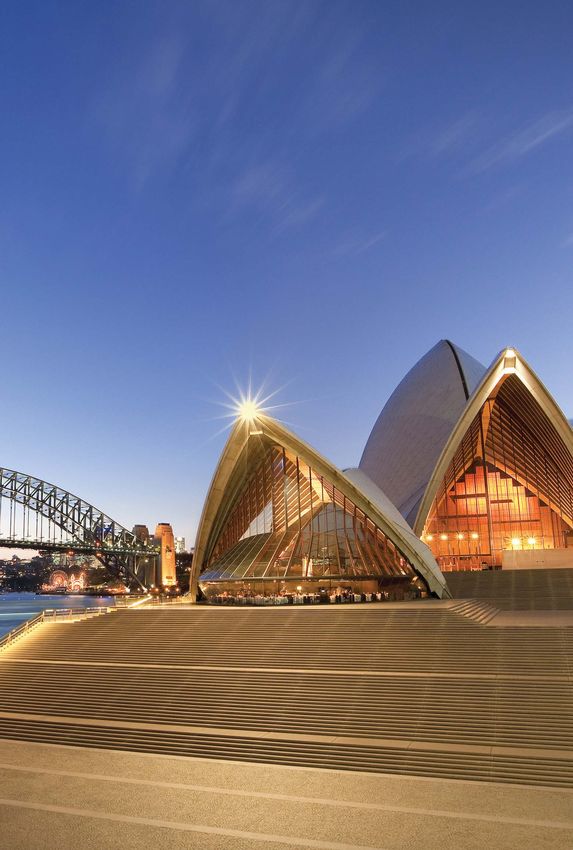
Dr Siegbert A Schmid Dr rer nat habil Tübingen GradDip(HEd) UNSW
Senior Lecturer

Date    31. May 2013

Prof. Mei-Hung Chiu
Chair of the IUPAC Committee on Chemistry Education (CCE)
National Taiwan Normal University
Taiwan

Re: Bid to host the 2016 International Conference on Chemistry Education in
Sydney, Australia.

Dear Prof. Mei-Hung Chiu,

I am writing to advise that the Chemistry Education group in the School of Chemistry of
the University of Sydney wishes to bid for the right to host the International Conference
on Chemistry Education in 2016.

The Chemistry Education group in the School of Chemistry proposes to organise the
event, in conjunction with the local organising committee. All members of the committee
have been involved in organising major national and international conferences. In the
field of Chemistry Education I was most recently involved in organising the 2008
conference of the Chemistry Education Division of the Royal Australian Chemical Institute
(RACI) and was the Chair of the Chemistry Education Symposium at the 2010 RACI
National Convention. Our bid has received the full support of all relevant professional
organisations in Australia and New Zealand.

Chemistry Education in Australia is an expanding field with major changes in the
secondary and tertiary teaching areas either being developed or about to be
implemented, e.g. development of national standards for tertiary education and a first
ever national curriculum for primary and secondary schools. In this context, holding ICCE
in Sydney in 2016 would represent a great opportunity to showcase these developments
to the world and have Australian Chemistry Education receive a major boost from the
exposure to international excellence in Chemistry Education.

The University provides world-class conference facilities and Sydney is a popular and
well regarded conference destination. It is a vibrant, sophisticated city with renowned
success in hosting international events. The attraction of the city, its capacity and

                                                                                ABN 15 211 513 464
School of Chemistry                 T +61 2 9351 4196                           CRICOS 00026A
Faculty of Science                  F +61 2 9351 3329
Rm No 223, Chemistry Building F11   E siegbert.schmid@sydney.edu.au
The University of Sydney            sydney.edu.au/science/chemistry/~siegbert
NSW 2006 Australia

                                                                                        Business Events Sydney   3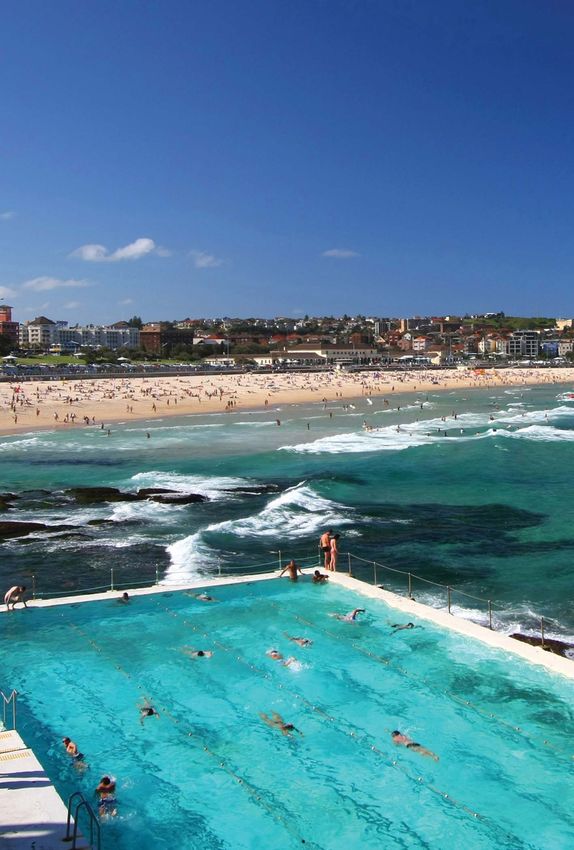
capabilities have been highlighted by its successful hosting of the 2000 Olympic and
              Paralympic Games, the 2003 Rugby World Cup and many other major international
              conferences.

              Sydney is a modern and sophisticated city, with a wide variety of world-class
              infrastructure and state-of-the-art facilities and services. It is cosmopolitan and its
              multiculturalism and lifestyle make it one of the most desirable destinations in the world.
              There are many activities available in Sydney, from cruising the beautiful Harbour to
              visiting the famous Opera House or enjoying a swim at one of our renowned beaches.

              In bidding for the right to host the International Conference on Chemistry Education, the
              local organising committee has the full support of Business Events Sydney, the NSW
              Government and the tourism industry of Sydney. We welcome this opportunity to
              demonstrate that the local industry and Sydney have the facilities, expertise and
              experience to stage an outstanding Conference in 2016.
              .

              Kind regards,

              Chair, ICCE2016 Organising Committee

4 Business Events Sydney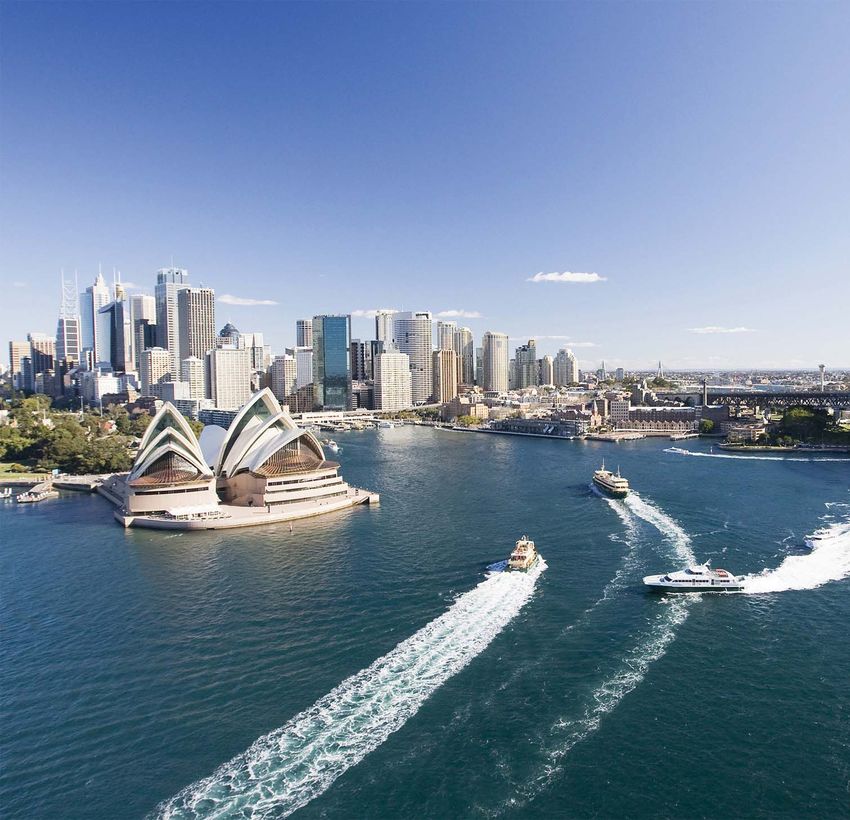
Executive summary

The Chemistry Education Group at the University of Sydney with the support of Institute for Innovation in Science
and Mathematics Education at the University of Sydney, the Royal Australian Chemical Institute, the Education
Specialist Group of the New Zealand Institute of Chemistry and the Australian Science Teachers Association
welcomes the opportunity to propose Sydney, Australia to host the International Conference on Chemistry Education
(ICCE) in 2016. This proposal has the full support of Business Events Sydney and its partners - the New South Wales
Government, Destination New South Wales, the University of Sydney as the proposed venue and the city’s business
tourism industry. Financial support of up to A$30,000 has been committed by the NSW Government should Sydney
be selected as host city.

The local organising committee has strong representation from the Australian and New Zealand secondary and
teritary chemistry education community. All members have strong links with their respective professional
organisations providing access to many thousands of members in total.

The University of Sydney as the proposed conference venue has world-class conference facilities available. In
addition, the School of Chemistry has dedicated state-of-the-art chemistry laboratories, which can be utilised for
any practical sessions and workshops with technical staff available during these sessions. Furthermore, lecture
theaters that allow chemical demonstrations are also available in the School.

Sydney’s high profile and impressive track record of hosting more than 400 major events and 500,000 delegates
over the past decade makes it Australia’s number one conference destination. Global media coverage of these
successful events has generated enormous visibility for Sydney and established the city as a desirable destination
for both business and leisure tourism.

Sydney is easily accessible to delegates around the globe, with 34 international airlines offering 607 international
flight arrivals each week. The city’s close proximity to the Asia Pacific region provides excellent opportunities to
access one of the fastest growing delegate bases. Close proximity to the Asia Pacific provides direct access to one of
the largest growing delegate bases. Overall visitors from Asia comprise around 40 percent of visitors to both
Australia and Sydney. The Australian Government’s International Event Coordinator Network service is able to
provide delegates with assistance with visa applications - this is the only service of its kind in the world.

The city centre is situated just 8 kms from Sydney International Airport, minimising transfer time and costs
for delegates. From five star luxury hotels to budget rooms and hostels, Sydney caters for all requirements with an
extensive range of accommodation choices and more than 33,000 rooms available in and around the city centre.

Sydney benefits from one of the most resilient economies in the world, making it a safe destination choice for
conferences today and in the future. Be inspired in one of the world’s foremost educational cities. Sydney is home to
many highly respected international thought leaders, innovators and researchers and more than A$6 billion is spent
annually on research programs.

The recipient of many accolades, Sydney earned the title of the world’s best city in 2011 in the Conde Nast Traveler
Magazine Readers’ Choice Awards, and International Festivals & Events Association’s World’s Best Festival and
Event City in 2010 and 2011. Rich in cultural diversity, wherever your delegates are from, Sydney will always make
them feel welcome.

Around 30 per cent of Sydney’s population speak a language other than English. Culturally diverse social and dining
experiences to suit all tastes and budgets can be found in the city centre or are within easy reach on the cost
effective public transport network.

Sydney looks forward to welcoming the delegates for ICCE in 2016.

                                                                                                  Business Events Sydney   5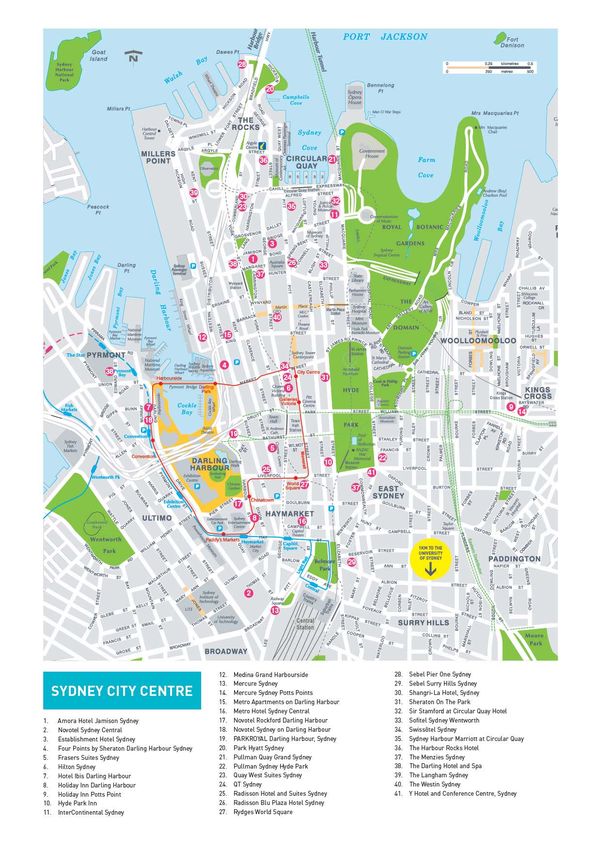
Your conference at a glance

Proposed venue             The University of Sydney

Proposed dates             Sunday 10th - Friday 15th July 2016
                           July is winter in Sydney. Sydney’s subtropical climate is temperate all year
                           round with mild winters.

Theme                      Bridging the Gap

Funding support            Funding support to be provided by BESydney is based on the following delegate
                           attendance

                           350+ delegates: $20,000
                           500+ delegates: $30,000

                           The funding is to be used to offset the marketing and promotions associated
                           with this conference to drive delegate registrations.

Proposed fees              IUPAC Members Early Registration                                                A$550
                           IUPAC Members Standard Registration                                             A$660
                           IUPAC Members Student Early Registration                                        A$350
                           IUPAC Members Student Standard Registration                                     A$395
                           Non Members Early Registration                                                  A$660
                           Non Members Standard Registration                                               A$740
                           Non Members Student Early Registration                                          A$395
                           Non Members Student Standard Registration                                       A$450

Accommodation              A multitude of 3-5 star accommodation options are nearby to the venue and in
                           the city centre.
                           Average room rate:
                           Three star                                                                      A$139
                           Four star                                                                       A$196
                           Five star                                                                       A$293
                           For the budget conscious, hostels and on-campus accommodation is available.
                           Women’s College at University (open to all guests)                              A$83

Flights                    37 international airlines, over 580 international flights per week
                           Singapore                                                                       A$612
                           Hong Kong                                                                       A$711
                           Los Angeles                                                                     A$1273
                           London                                                                          A$1554

Airport                    8km from the city and conference venue.
                           Transfer costs:
                           Taxi                                                                            A$30-50
                           Train                                                                           A$18

6 Business Events Sydney
Your conference at a glance

Entry Visa        Passport holders from most countries can apply for eVisitor or Electronic
                  Travel Authority (ETA) visas online with immediate approval. Simplify the visa
                  application process for your delegates with free advice and assistance from the
                  Australian Government’s International Event Coordinator Network service - the
                  only service of its kind in the world.

                                                                                            Business Events Sydney   7
Proposal to host

8 Business Events Sydney
Proposal to host

Invitation to host ICCE 2016
                                                            The regulatory environment in Australia has recently
The Chemistry Education Group at the University of          changed with the advent of the Tertiary Education
Sydney (USyd)                                               Quality and Standards Agency (TEQSA). TEQSA and the
                                                            application of standards to Australian universities mean
supported by                                                that all institutions are developing ways of evaluating
• The Institute for Innovation in Science and               their degree structures.
  Mathematics Education (USyd)
• The Chemistry Education Division of the Royal             The introduction of a first national curriculum in
  Australian Chemical Institute (RACI)                      Science for secondary schools brings big changes to the
• Education Specialist Group of the New Zealand             Australian system. In addition the Federal Government’s
  Institute of Chemistry (NZIC)                             Enhancing the Training of Mathematics and Science
• The Australian Science Teachers Association (ASTA)        Teachers Program will drive a major improvement in
                                                            the quality of mathematics and science teachers by
                                                            supporting new pre-service programs in which faculties,
Proposing committee:                                        schools or departments of science, mathematics and
Siegbert Schmid (Chair), Suzanne Boniface (NZIC), Adam      education collaborate on course design and delivery,
Bridgeman, Glennys O’Brien (ChemNet), Bob Bucat, Vic        combining content and pedagogy so that mathematics
Dobos (CEO ASTA), Ian Jamie (RACI), Madeleine Schultz       and science are taught as dynamic, forward-looking and
(ChemNet), Roy Tasker                                       collaborative human endeavours.

Professional conference organiser:                          For these reasons, it is timely to host ICCE 2016 in
ICMS Australasia                                            Australia where an active and vibrant group of chemical
                                                            educators will provide a platform for all attendees
Introduction                                                to benefit from interactions with their national and
Australia and New Zealand have a proud tradition of         international colleagues.
engagement with chemical education including hosting
the 14th ICCE in July 1996 in Brisbane. The Australian
Journal of Education in Chemistry (AusJEC) was founded
in 1978 and continues to allow the dissemination of
chemical education research. The ASELL project
(Advancing Science by Enhancing Learning in the
Laboratory) and its predecessors have brought together
chemistry educators for more than a decade with the
aim of improving university teaching specifically through
improved student practical experiences. This project
continues to expand and has included international
participants for some time.

Since 2011, the community of chemical educators
in Australia has come closer together due to the
foundation of the Chemistry Discipline Network, funded
by the Australian Government’s Office for Learning and
Teaching. This group, with membership over 100, holds
monthly on-line meetings and annual face-to-face
meetings and has resulted in a much more close-knit
community than was previously the case. In addition,
several face-to-face meetings have been held in 2011 -
2013 of a subgroup of these active chemistry educators
to discuss the statement of Threshold Learning
Outcomes for chemistry and their articulation.

                                                                                                 Business Events Sydney   9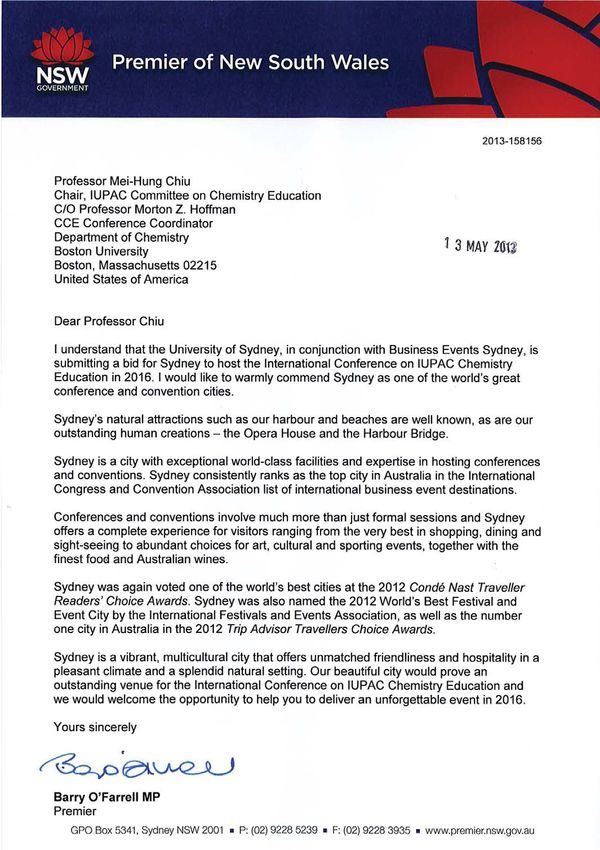
Host organisations

The Chemistry Education Group at the University of Sydney is the host for ICCE 2016 with strong
support from the other organisations listed below.

The Chemistry Education Group at the University of           sectors, in food and hygiene; climate and environment;
Sydney                                                       energy and resources; analytical and forensic; health
                                                             and biotechnology; education and the public service.
The Chemical Education Group at the University of
Sydney is active in all areas of Chemistry Education,        Strategic goals:
including curriculum innovation, development of
teaching materials, chemistry education research and         • RACI is the voice of chemistry in Australia
policy development. It does this in collaboration with all   • RACI advocates the importance of chemistry to the
stakeholders nationally and fosters many international         public and all levels of education, industry and
links as well.                                                 government
                                                             • RACI supports the professional needs and interests of
The group is an integral part of the Institute for             all its members
innovation in science and Mathematics Education, has
close links with the Royal Australian Chemical Institute     Education Specialist Group of the New Zealand
and strong collaborations with their New Zealand             Institute Chemistry (NZIC)
counterpart.                                                 (http://nzic.org.nz/)

The Institute for Innovation in Science and                  The NZIC represents some 1000 members involved in
Mathematics Education at the University of Sydney            the profession of chemistry. Members participate in the
(http://sydney.edu.au/iisme/)                                study, practice, teaching, promotion and management of
                                                             chemistry.
The Institute for Innovation in Science and Mathematics
Education (IISME) aims to rejuvenate science and             The objectives of the Institute are:
mathematics education by enriching research,
innovation, leadership, outreach, the student                • To promote the science and practice of chemistry in
experience, and educator opportunities. IISME work with        all its branches and the usefulness and efficiency of
researchers, teachers, decision-makers, and the general        persons engaged therein.
public to bring modern scientific and mathematical           • To raise the status and to advance the interests of the
ideas into 21st century education.                             profession of chemistry and of those engaged therein
                                                             • To provide for the delivery of lectures, and the holding
IISME consists of various units within the Faculty             of exhibitions, classes and conferences calculated to
of Education and Social Work and the Faculty of                advance the cause of chemistry.
Science representing a large number of academics,
science communicators, technical specialists, student        Asta
researchers and other professionals.                         (http://asta.edu.au/)

The Royal Australian Chemical Institute (RACI)               The Australian Science Teachers Association (ASTA)
(http://www.raci.org.au/)                                    is the national professional association for teachers
                                                             of science. It is a federation of Science Teachers
The Royal Australian Chemical Institute was founded          Associations from all eight Australian states and
in 1917 as both the qualifying body in Australia for         territories and has approximately 4000 individual
professional chemists and a learned society promoting        members.
the science and practice of chemistry.
Almost one hundred years on and RACI has over 5000           ASTA publishes one substantial journal, Teaching
members with an extensive nationwide network and             Science and organises CONASTA, the annual conference
a presence in every State and Territory. Our members         of ASTA, a flagship activity of professional development.
work across all Australian industrial and academic

10 Business Events Sydney
Host organisations
The CONASTA program typically provides a diversity
of lectures, workshops and excursions, plus national
and international keynote addresses of interest to the
general and specific science educator.
Another flagship activity is the production of the ASTA
National Science Week Schools Kit and Resource Book.
This contributes to raising awareness of the value
and relevance of science, technology, engineering
and innovation in our daily lives to all schools across
Australia and makes it possible for schools from the
remotest parts of Australia, to the metropolitan hubs to
be involved in National Science Week.
Business Events Sydney 11Local organising committee
The local organising team represents the strengths and breadth of Australasian Chemistry
Education with members representing both the secondary and tertiary education sectors.
ICCE 2016 - Local Organising Committee The local organising team represents the strengths
and breadth of Australasian Chemistry Education
Dr Siegbert Schmid with members representing both the secondary and
Chair ICCE 2016 Committee tertiary education sectors. All members have extensive
Senior Lecturer, School of Chemistry experience in organising conferences, especially in
The University of Sydney Chemistry Education. All members are part of extensive
professional networks and will be able to use those
Dr Suzanne Boniface links to maximise participation in and impact of the
Chairperson, Chemistry Education Specialist Group, New conference.
Zealand Chemistry Institute
Victoria University, Wellington New Zealand Dr Siegbert Schmid (Chair, Local Organising
Committee) is active in chemistry education research
Associate Professor Adam Bridgeman and has supervised a number of PhD and Honours
Associate Professor and Director of First Year Studies students in chemistry education. He is a Past Chair
Associate Dean for Learning and Teaching, School of of the RACI Division of Chemistry Education. He is on
Chemistry the management committee of ChemNet, has chaired
The University of Sydney its resources working party and is a mentor for junior
academics on a SaMnet project. He has been recognised
Dr Glennys O’Brien with a number of teaching awards, including the Vice
Co-director ChemNet Chancellor’s Award for Outstanding Teaching (University
Director of First Year Studies in Chemistry, University of of Sydney 2012) and an Office of Learning and Teaching
Wollongong Citation Award (2012) for Excellence in Teaching. He has
chaired the Chemistry Education stream of the 2010
Professor Bob Bucat RACI Congress, co-chaired the International Conference
Honary Teaching Fellow on Aperiodic Crystals in 2012 and been on the organising
The University of Western Australia committee for other smaller conferences and events.
Mr Vic Dobos Dr Suzanne Boniface (Chair, Chemistry Education
Chief Executive Officer Specialist Group, New Zealand Institute of Chemistry)
Australian Science Teachers Association is responsible for first year chemistry courses at the
School of Chemical and Physical Sciences, Victoria
Dr Ian Jamie University of Wellington. She has modernised the
Chair, Chemistry Education Division teaching of chemistry, as reflected in the reorganisation
Royal Australian Chemical Institute of courses to better meet the current needs of students,
Senior Lecturer, Macquarie University the introduction of active learning into lectures and
tutorials and the use of quizzes and videos in laboratory
Dr Madeleine Schultz preparation. Suzanne is also a qualified high school
Co-Director, ChemNet teacher and has extensive experience in curriculum and
Senior Lecturer, Queensland University of Technology assessment development including writing resources
and textbooks for high school chemistry in New Zealand
Professor Roy Tasker and for the Pacific. She organises an annual symposium
Professor of Chemistry Education for tertiary chemistry educators and regular professional
Dean’s Unit - School of Sciences and Health development opportunities for high school chemistry
University of Western Sydney teachers. She has chaired the organising committee for
the biennial Chemistry Education conference held in
12 Business Events SydneyLocal organising committee
Wellington in 2003 and co-chaired the National Science the International Union of Pure and Applied Chemistry
Teachers conference organising committee in 2008. 1994–2002 and its successor, the Committee on
Suzanne networks extensively with chemistry educators Chemical Education 2002-2004 and from 2002 also
from around NZ and internationally, and is the NZ on the sub-committee on Public Understanding of
representative on the IUPAC CCE committee. Chemistry of the IUPAC CCE. He has been involved in
organising many successful conferences, including
A/Prof. Adam Bridgeman (Member, Local Organising ICCE14, Brisbane, 1996 and served as member of the
Committee) is the Director of First Year Studies international advisory committee for many subsequent
(Chemistry) and Associate Dean Learning and Teaching ICCEs.
(Science) at the University of Sydney. He is an integral
member of various chemistry and science national Mr Vic Dobos (CEO Australian Science Teachers
networks and has received a number of institutional and Association) runs the Australian Science Teachers
national teaching awards in the UK and Australia. As Association. As part of his duties he organises the
well as organising local events, he was on the organising annual conference of the Association that is regularly
committee for the World Congress of the ‘World attended by many hundreds of school teachers
Association of Theoretical Orientated Chemists’ held from around the nation. He has a strong interest in
at the Darling Harbour Convention Centre in 2008 and strengthening the ties between the secondary and
on the organising committee for the first joint Dalton- tertiary education sectors and ICCE 2016 seems a
Faraday Discussion Meeting in 2004. fantastic opportunity to further this cause.
Dr Glennys O’Brien (Co-director, ChemNet; Director Dr Ian Jamie (Chair, RACI Division of Chemistry
of First Year Studies in Chemistry, University of Education) has interests in experiential learning,
Wollongong,) is a co-director of the OLT-funded particularly through laboratory-based learning, and
Chemistry Discipline Network in Australia. Within promoting engagement in science and tertiary pathways
this role Glennys has been involved in convening and to Indigenous and rural area secondary students. He
facilitating several workshops for nationwide discussions is one of the founders of the Advancing Chemistry by
and has close ties across the country with chemistry Enhancing Laboratory Learning project (ACELL) and
teaching academics. Glennys was a member of the 2012 the National Indigenous Science Education Program.
Australian Conference on Science and Mathematics He is Chair of the Division of Chemical Education within
Education organising committee. Within her role as the Royal Australian Chemical Institute. He is the Chief
Director of First year Studies at UOW, Glennys has Examiner of the NSW Board of Studies Higher School
designed and implemented a number of teaching Certificate Chemistry Examination Committee. He
innovations associated with moves from passive to has been awarded various teaching awards including
active learning and engagement. Glennys has a number the 2011 Australian Learning and Teaching Council
of institutional roles, including as member of both (ALTC) Award for Programs that Enhance Learning
University and Faculty Education committees. and the Macquarie University Vice Chancellor’s Award
for Teaching Excellence. He has been a finalist in the
Prof. Bob Bucat (Member, Local Organising Committee) Eureka Awards for Promoting Understanding of Science
has been strongly involved in Chemistry Education in in 2008, 2009, and 2010. He was the Division of Chemical
Australia and internationally for more than two decades. Education representative on the Program Committee of
He has received a large number of prestigious awards the 2005 RACI National Convention and a member of the
including the inaugural Fensham Medal, The Royal 2012 Australian Conference on Science and Mathematics
Australian Chemical Institute Award for Outstanding Education organising committee. As part of the National
Contribution to Chemical Education (2010) and the Indigenous Education Program he has been involved
Distinguished Contribution to Chemistry Education in organising many in-school and community-centre
Award, presented at the joint ICCE/ECRCE meeting hands-on science demonstrations and workshops.
(2012). In addition, he was chosen as one of 11
“Living Luminaries of Australian Chemistry” by the Dr Madeleine Schultz (Co-director, ChemNet) is a co-
Royal Australian Chemical Institute to celebrate the director of the OLT-funded Chemistry Discipline Network
International Year of Chemistry (2011). He was a titular in Australia. She has organised and run one-day
member of the Committee on Teaching of Chemistry of symposia for the inorganic chemistry community in
Business Events Sydney 13Local organising committee Queensland (QICS, the annual Queensland Inorganic Chemistry Symposium) as well as several professional development programs for high school teachers including laboratory experiments. As co-director of the Chemistry Discipline Network she has close ties to a large number of chemical educators in Australia, New Zealand and the Pacific region, as well as in Germany. Within her academic position at QUT she has implemented multiple strategic changes to improve student learning in both the laboratory and lecture environments. She is the recipient of a Vice-Chancellor’s award for excellence in teaching. Prof. Roy Tasker (Member, Local Organising Committee) is Professor of Chemistry Education at the University of Western Sydney, and Provost of its Hawkesbury campus. His primary teaching responsibilities are in first-year chemistry, and his research interests are in how and what students learn using interactive multimedia resources. He has won a number of awards including the 2011 Prime Minister’s Award for Australian University Teacher of the Year and the Royal Australian Chemical Institute (RACI) Chemical Education Division Medal in 2002. He is also a consultant for universities in Australia and Singapore interested in moving away from passive delivery of information to interactive, evidence- based teaching in face-to-face contexts. This involves developing learning designs, informed by an evidence- based model for how we learn, and mediated using wireless student response technology and data mining analytics to monitor learning gains and affective factors. In 2007 he chaired the prestigious Gordon Research Conference on Visualization in Science and Education at Bryant University, RI, USA. 14 Business Events Sydney
Theme

The iconic Sydney Harbour Bridge features every New Year’s Eve as the background for a fireworks display that is
watched by over 1 billion people worldwide. For ICCE 2016 it provides the focus for our theme:

                                                 “Bridging the Gap”

The Local Organising Team will apply itself to ensure that as many bridges are crossed and gaps closed as we
possibly can. In dialogue with the National and International Advisory Committees this will include breaking down
some familiar conference structures. The focus will be more on interactivity and demonstration rather than content
delivery during the conference sessions. We will partially move away from the traditional format of a conference,
i.e. long plenary sessions followed by short talks in parallel sessions. Instead, ideas may be shared in workshop
and discussion formats with more time spent in discussion than on presentations. All poster sessions will also
be organised to maximise discussion and interaction between participants and held at prime times during the
conference and in a prime location. All participants will leave the conference invigorated and with new ideas and
resources as well as new friends and colleagues.

Suggested topics within the theme are
• From research into practice
• Connecting secondary and tertiary teaching
• Interventions to improve engagement and motivation
• Advances in understanding student learning
• Greening the teaching laboratory
• Benchmarking international learning outcomes
• The formal curriculum and the real world
And more, as suggested by the National and the International Advisory Committees as well as the wider Chemistry
Education Community.

Image courtesy of Tourism Australia Copyright

                                                                                               Business Events Sydney   15
Letters of support Through strong collaborative partnerships across the State, Sydney has established itself as Australia’s number one conference destination, hosting more than 400 major events over the past decade. Working together, Business Events Sydney, its stakeholders, State and Federal Government partners and airline partner Qantas aim to maximise your event’s attendance, return on investment and legacy benefits. A list of BESydney’s Strategic Partners can be found in the appendices. This bid for the International Conference on Chemistry Education to be held in Sydney, Australia is welcomed and supported by the NSW Government and industry and most importantly the professional organisations in Australia and New Zealand as demonstrated in the following letters of support: • New Zealand Institute of Chemistry, Dr Suzanne Boniface, Chairperson Chemistry Education Specialist Group • Australian Science Teachers Association, Vic Dobos, Chief Executive Officer • Royal Australian Chemical Institute, Professor Mark Buntine, President • NSW Government, Barry O’Farrell, Premier of New South Wales • NSW Government, George Souris, Minister for Tourism • City of Sydney, Clover Moore, Lord Mayor of Sydney • Tourism Australia, Andrew McEvoy, Managing Director • Business Events Sydney, Lyn Lewis-Smith, Chief Executive Officer 16 Business Events Sydney
28th May 2013

Dr. Morton Z. Hoffman
Professor Emeritus of Chemistry
Department of Chemistry
Boston University
Boston, MA 02215

Dear Professor Hoffman,

On behalf of the Royal Australian Chemical Institute [RACI] it gives me great pleasure to endorse the Sydney bid to
host the IUPAC 24th International Conference on Chemical Education.

The RACI is the professional body for the chemical sciences in Australia. It acts both as the qualifying body in
Australia for professional chemists, and as a learned society promoting the science and practice of chemistry. With
5,000 members it has a presence in every Australian State and Territory.

A primary focus of the RACI is in the educational area and the organisation is involved in the educational process
from primary schools with crystal growing competitions through secondary schools with the ANCQ quiz being
taken by 120,000 students annually and into tertiary education where the institute accredits chemistry degree
programs. With this in mind the RACI pledges to support and assist the conference organisers to develop a
premium conference for the chemical educators of the world.

Sydney is the perfect city to host the conference being the largest city in Australia with extensive conferencing and
accommodation infrastructure and an ethos of warmly welcoming visitors from all over the world. I am confident
that all the delegates will be warmly received and have a first class chemical educational experience.

Professor Mark A. Buntine
FRACI CChem
President RACI

                                               Founded in 1917 Reg No A0040386D
                                                     ABN 69 030 287 244
                          NATIONAL OFFICE: 21 VALE STREET NORTH MELBOURNE VICTORIA 3051
                             TEL: (03) 9328 2033 FAX: (03) 9328 2670 e-mail member@raci.org.au

                                                                                                  Business Events Sydney   17
18 Business Events Sydney
Business Events Sydney 19
20 Business Events Sydney
Business Events Sydney 21
22 Business Events Sydney
Business Events Sydney 23
24 Business Events Sydney
Funding strategy

Sydney’s unique destination appeal combined with a           A marketing tool kit is also available from Business
strong and stable economy, an innovative nature, highly      Events Australia (BEA), including downloadable videos,
skilled workforce and enviable lifestyle - in conjunction    images, PowerPoint presentations, eCards and a “green
with our world class facilities - ensures the choice of      checklist” for event planners. BEA can also provide
Sydney and Australia as your conference destination will     collateral such as delegate-boosting broadsheet maps,
positively impact the financial and social success of your   Aussie dictionaries and posters.
conference.
                                                             Marketing collateral
Government funding
                                                             1. Logo development
The NSW Government has offered up to A$30,000 to the         2. Brochure
University of Sydney should Sydney be selected for ICCE      3. Postcard
in 2016. The funding is to be used to offset the marketing   4. Giveaways
and promotions associated with this conference to drive
delegate numbers.
                                                              1                                                                                    2
Marketing your conference

Business Events Sydney (BESydney) is the official
organisation responsible for promoting Sydney and New
South Wales (NSW) as an international business meeting
and conference destination.

With a global network spanning Asia, Europe, and
the Americas, BESydney’s extensive knowledge and
experience has been helping the business community to
bring international and national conferences and events       3                                                                                    4
to Sydney for more than 40 years.
                                                               XIX Conference of
                                                               The Asia Pacific

BESydney will work with the University of Sydney to            Band Directors’
                                                               Association
                                                               Sydney, Australia
                                                               July 2016
help plan and market your event in order to maximise
delegate registrations. The following support will be
provided, free of charge:
                                                                                   Photo: Hamilton Lund, courtesy of Destination New South Wales

• Arrange a site inspection for four committee
  members including all Sydney ground costs.
• Assist the host association in tendering for a
  Professional Conference Organiser (PCO).
• Provide professional marketing collateral to promote
  your event, such as images, logos, brochures,
  postcards and giveaways.
• Promote your conference in the media.
• Provide advice to the PCO on all aspects of the event,
  including the visa application process.
• Provide access to BESydney’s comprehensive
  membership directory of more than 200 leading
  business events suppliers, including hotels, tour
  guides, and restaurants (refer to Appendix)

                                                                                                                                                       Business Events Sydney   25
Funding strategy
Over the last decade (2002 – 2011)
BESydney has hosted 404 events
delivering a total of 562,193 delegates
to Sydney.
Sydney played host to the 2002
World Ophthalmology Congress.
Working with an Australian PCO, the
organising committee achieved a
budget surplus of A$2million.
Of this surplus, A$800,000 was
returned to the international
secretariat as per their hosting
agreement.
The remaining A$1.2million was used
to establish The Eye Foundation,
which funds research into blindness
and participates in development
projects in disadvantaged
communities.
26 Business Events SydneyAdditional support
Destination New South Wales
Destination NSW (DNSW), a New South Wales (NSW) Government Statutory Authority,
devises and implements strategies to grow Sydney and NSW’s visitor economy. The
organisation’s key focus is on driving tourism and acquiring and developing major
sporting and cultural events for Sydney and regional NSW.
DNSW is a major investor in Business Events Sydney and together the organisations
work to enhance the business event experience in Australia’s global city and
surrounding regions. DNSW manages the NSW Major Event Calendar and there
are opportunities for international conventions, incentive travel reward programs,
corporate events and exhibitions to align with these key sporting and cultural events
and maximise the NSW delegate experience. DNSW holds a wealth of information
about NSW tourist attractions and can help with information for pre- and post-touring
options, as well as promotional tools including images and their popular Official Guide
to Sydney, both of which can be used by event planners to promote and deliver their
event in NSW.
For further information please visit: www.destinationnsw.com.au
Business Events Australia is a dedicated unit of Tourism Australia, with a brief to
position Australia as a world-class sustainable business events destination for
corporate meetings, incentives, association conferences and exhibitions. Business
Events Australia achieves this through global trade marketing initiatives that promote
Australia’s unique attributes for the sector. Business Events Australia provides
meeting planners with access to a marketing tool kit to assist in marketing their
next business event in Australia. The marketing tool kit can be accessed through the
dedicated website: www.businessesevents.australia.com and includes tools such
as downloadable videos, images, PowerPoint presentations and eCards. Available
collateral includes delegate boosting broadsheet maps, Aussie dictionaries and
posters.
For further information please visit: www.events.australia.com
The International Seminar Support Scheme (ISSS) is an Australian Government
aid program administered by the Australian Agency for International Development
(AusAID). The scheme assists participants from developing countries to attend
development-focused seminars in Australia. Through enabling their participation, the
scheme aims to develop knowledge, technical expertise, networks and policies relevant
to pursuing sustainable development and reducing poverty in developing countries.
Assessment of applications is dependent on the ability to demonstrate economic
development and social advancement of developing countries. Up to four (4) delegates
per developing country could be granted the support up to the value of A$50,000.
For further information please visit: www.ausaid.gov.au/business/other_opps/isss.cfm
Business Events Sydney 27Additional support
Financial assistance may be sought for a congress where it will bring a demonstrable
benefit to employment, research or development in New South Wales. To measure
the benefit, the department may conduct an Economic Impact Assessment. Areas
which need to be addressed in an application for assistance include demonstrating
the case for Government support; the comparative advantages and disadvantages of
attracting this project to NSW and the direct impacts of the project (financial, social,
and environmental).
For further information please visit: www.trade.nsw.gov.au
Business Events Sydney will, on behalf of your association, approach our key partner
airline Qantas to seek support for your congress. Qantas is Australia’s leading domestic
airline, and is part of the oneworld alliance, which has established itself as the most
global of the world’s airline alliances over the past few years. Now comprising 12 of
the world’s leading airlines - Qantas, American Airlines, Air Berlin,British Airways,
Cathay Pacific, Finnair, Iberia and LAN Airlines, Japan Airlines, Malaysia Airline,Royal
Jordanian and S7 Airlines - oneworld provides services to 800 destinations on 6
continents. Financial support from airline partner Qantas may also be available in the
form of discounted airfares for registered delegates.
The International Event Coordinator Network (IECN) is part of the Department of
Immigration and Citizenship and can assist with the specific visa options available to
delegates should the bid for the event be successful.
The IECN offers visa advice and assistance to event organisers who wish to bring
international visitors to Australia to participate in events (whether as speakers,
presenters, or simply attendees) and international visitors who wish to attend an event,
conference or meeting in Australia.
Under Australia’s universal visa system, all visitors to Australia must have a valid visa
to travel to and enter Australia (other than New Zealand passport holders who will
normally be granted a Special Category visa on arrival, provided they meet health
and character requirements; and permanent residents of Norfolk Island who may
be granted a Permanent Resident of Norfolk Island visa on arrival). There are many
visa options available to people wishing to visit Australia. The appropriate visa option
will depend, amongst other things, on the person’s purpose for visiting the country.
Please see the following links for guidance on the visa options presently available to
international visitors entering Australia for business or tourism purposes:
www.immi.gov.au/skilled/business
www.immi.gov.au/visitors/tourist
Well ahead of the event, organisers should contact the IECN so that processing
arrangements can be put in place and the relevant overseas visa offices are advised to
ensure that any potential difficulties can be addressed quickly in order to facilitate the
smooth entry of delegates upon their arrival in Australia.
Information on the IECN is available on the Department’s website:
www.immi.gov.au/visitors/event-organisers-participants/iecn.htm
28 Business Events SydneyBudget
Budget
An indicative budget for ICCE 2016 has been prepared by ICMS Australasia and is included in the appendices. The
budget is based on scenarios of 250, 350 and 400 delegates, proposing the University of Sydney as the conference
venue.
250 delegates 350 delegates 400 delegates
Total income $223,591 $306,954 $338,636
Expenses $227,690 $266,444 $289,322
Surplus -$4,100 $40,510 $49,314
Professional Conference Organiser
ICMS Australasia Pty Ltd
Level 9
234 George Street
Sydney NSW 2000
Phone: 61 2 9254 5000
Fax: 61 2 9251 3552
Website: www.icmsaust.com.au
ICMS Australasia is the longest established professional conference organising (PCO) company in Australia.
ICMS Australasia have successfully delivered award-winning conferences for international and national associations,
government departments and corporate clients. With a very strong team of senior personnel and proactive staff,
they offer continuity and expertise to clients, ensuring the delivery of a landmark event. Within the last 15 years,
they have managed over 265 meetings, ranging in size from 100 to 9,000 participants. They have hosted over 250,000
delegates, speakers, exhibitors and sponsors providing us with extensive professional experience and contacts in
both the national and international communities.
ICMS Australasia excels in working with national associations and Australian experts in their field, particularly in
the preparation of Sydney bids for international meetings. We would be delighted to offer our expertise in this area to
assist in bringing your international colleagues to Sydney.
Business Events Sydney 29Sydney’s event hosting experience
Sydney’s experience in Past and future Estimated
planning and managing conferences and events Year attendance
conferences, in addition to
23rd IUPAC Conference on Physical Organic
its comprehensive events Chemistry 2016 200
infrastructure, has earned
the city the enviable status of Asia-Oceania Conference on Neutron Scattering 2015 500
Australia’s leading conference
destination. Boasting a 6th Kepler Asteroseimic Science Workshop 2013 200
demonstrable, successful Joint Australian Association for Research in
track record for attracting Education and Asia Pacific Educational Research
national and international Association Conference 2012 1,400
events, Sydney has played
host to a broad spectrum of XV International Conference on Small-Angle
Scattering (SAS) 2012 400
industries and delegate sizes,
ranging from 50 to 200,000. Robotics Science and Systems Conference 2010 400
Sydney has hosted some of the International Conference on Nanoscience and
world’s most memorable global Nanotechnology 2010 700
events, including the 2000 Olympic
and Paralympic Games, the 2003 20th International Symposium on the Forensic
Rugby World Cup, the APEC World Sciences 2010 962
Leaders Summit in 2007 and World
Youth Day during 2008. 3rd Elsevier International Nurse Education
Conference 2010 2010 400
Further examples of previous
and upcoming Sydney and NSW Dynamic Days Asia Pacific 2010 300
conferences and events are listed
adjacent, demonstrating the city and World Congress of the Society of Environmental
State’s appeal to a wide range of Toxicology and Chemistry 2008 800
international associations and their
delegates. World Congress of Theoretical and Computational
Chemists 2008 600
The following pages provide
information on just a few of International Congress on Heterocyclic Chemistry 2007 500
the conferences that have been
successfully held in Sydney.
30 Business Events SydneySydney’s event hosting experience
Sydney conference case studies
34th International Symposium on Remote Sensing of
Environment, Sydney, 10-15 April 2011
Held in Australia for the first time since the series began
in 1962, this important biannual event showcased the
importance of satellite and airborne images of Earth in
influencing many aspects of life – from urban planning
to tsunami warning systems.
Conference venue
Sydney Convention and Exhibition Centre,
Darling Harbour Precinct
Conference outcomes
• 557 delegates from more than 60 countries, including
leading spatial information academics, scientists and
those from the world’s space agencies such as NASA.
• More than 400 technical presentations and 24
exhibition booths showcasing the latest technology.
• Holding the Symposium in Australia provided the
opportunity for local academics to have exposure to
global industry leaders and, importantly, to showcase
local advances.
Testimonial
“One revelation to me was the strong role Australia is
playing in forest carbon tracking together with a number
of countries around the world. The program provides
comprehensive information on forest carbon stocks, which
is crucial for monitoring the reduction of emissions from
deforestation and forest degradation.”
“More than two thirds of the people attending were
international visitors, which is a terrific outcome. We’re
grateful to Business Events Sydney for their support
in helping to bring the Symposium to Sydney and the
connections they provided the local organising committee –
this all contributed to the success of the event.”
“The location of the Sydney Convention and Exhibition
Centre was fantastic – it’s in close proximity to the
University where we held a number of workshops, as well
as hotels, the CBD and entertainment districts.”
Emeritus Professor John Trinder, Co-chair of the
Symposium
Business Events Sydney 31Awards and accolades
AND Sydney is one of the world’s
favourite places to live, meet
and celebrate. Building on
In the past, Sydney has also been
given titles including “World’s
Friendliest City”1 and was ranked
THE its large-scale debut onto
the world stage with the
third in the world for health, safety
and security2.
WINNER 2000 Olympic Games, Sydney
has gone from strength
to strength as a hub for
It isn’t simply Sydney’s tourist assets
and friendly disposition that have
caught the world’s attention. The
IS…. business, tourism and events.
Aside from stunning natural
city’s dynamic business environment,
culture of innovation and world-
leading focus on sustainability
SYDNEY! beauty, balmy weather,
famous beaches and soaring
architectural icons, it’s the
also set it apart. PwC’s Cities of
Opportunity 2012 report uncovers
that Sydney ranks first overall for
sustainability and an impressive
buzz of contagious energy sixth for intellectual capital and
that sets the harbour city innovation. The harbour city was
apart. Sydney has consistently also ranked in the second highest
ranked as one of the world’s category as an ‘Alpha+ World City’ by
most liveable cities by The the Globalisation and World Cities
(GaWC) study group, indicating its
Economist. influence on its region and the world.
Awards and accolades highlight
Sydney’s appeal to international Sydney has received many accolades
visitors, a fact that undoubtedly for its expertise and professionalism
aids in boosting the steady flow of in conference and event delivery,
delegates who flock to its shores for built on a strong track-record in
business events. both business and major events. A
fusion of world-class venues, expert
Sydney is: suppliers, support from the NSW
Government and a unique postion
• Ranked #1 as the World’s in the Asia-Pacific region mean that
Favourite Overseas City (Condé Sydney has been:
Nast Traveller UK Reader’s Choice
Awards 2012) • Ranked as the World’s Best
• Ranked #1 city in Oceania Festival and Major Events City
region (Condé Nast Traveller USA by the International Festival and
Reader’s Choice Awards 2012) Events Association in 2012.
• Ranked #1 city in Australia (Trip • Ranked as Australia’s #1
Advisor Traveller’s Choice Awards business events destination, (UIA
2012) City Rankings, 2011)
• Ranked #1 Australasian City
(Travel+Leisure Awards 2012)
• Ranked as the World’s Best
Summer City (Lonely Planet in
2012)
1
Voted by UK readers of The Sunday Times, 2003
2
PwC Cities of Opportunity Report, 2012
32 Business Events SydneyProposed venues
“When one looks at a city which has its convention
centre situated so close to hotels and the business
district, one realises that this is a city that pays
attention to the meetings industry and recognises
the benefits it provides to a city. Sydney certainly
does all this.”
Joycelyne Mülli, International Conference Manager,
International AIDS Society (IAS) 4th Conference on HIV
Pathogenesis Treatment and Prevention, 2007
Business Events Sydney 33Proposed conference venue Proposed dates for the International Conference on Chemistry Education are 10-15 July 2016. The dates are during school and universities holidays in Australia to maximse the number of domestic attendants and allow access to the university facilities. The University of Sydney The University of Sydney as the proposed conference venue has world-class conference facilities available. The main lecture theatres and breakout rooms have been built over the last few years. They are all air- conditioned and fulfil all multimedia and communication requirements. In addition, the School of Chemistry, adjacent to the main conference venue, has dedicated state-of-the-art chemistry laboratories with modern instrumentation, including a dedicated X-ray powder diffractometer. The laboratories were renovated in early 2013 and can be utilised for any hands-on practical activities and workshops. Technical assistance, chemicals and equipment are included in the conference bid for delegates who propose experimental activities. Furthermore, the School has newly refurbished lecture theatres, which are set-up for chemical demonstrations including all required audio visual equipment. 34 Business Events Sydney
Proposed conference venue

                            Business Events Sydney   35
Accommodation
Accommodation on campus at Sydney University UniLodge Sydney
http://www.unilodge.com.au/Sydney/
Women’s College provides high standard Cnr Bay St & Broadway
accommodation for up to 275 conference guests. The Broadway, Sydney
College offers a variety of rooms. Most are individual NSW 2007
study bedrooms with shared bathroom facilities. There Tel: 61 2 9338 5075
are some twin rooms, as well as a number of rooms with Fax: 61 2 9338 5111
ensuite bathrooms. Several rooms have balconies and
most have garden views. Linen and towels are provided. UniLodge Sydney provides you high quality, fully
The College is a non-smoking environment. Dining furnished student accommodation within 10 minute
options include bed and breakfast to full board. Other walking distance to the University of Sydney, UTS
facilities include reception, wireless internet, laundries, and other Sydney Colleges. Just as close are major
tv lounges, tea and coffee making facilities. Parking is shopping centres, cinemas, theatres, Darling Harbour
available on site (charges apply). and Chinatown.
Tentative rates for 2016 are as follows Waldorf apartments
www.sydney-south-apartment.com.au
Single room rates $A83 Corner of Chippen and Cleveland Streets, Chippendale
Single room have shared bathroom facilities for both 2008
female and males. Phone: 1300 555 039 or 8356 1500
Fax: 9690 9691
Twin room rates A$137 for two people
Waldorf Apartment Hotel Sydney South is located within
Ensuites rooms available $118 10 minute walking distance to the University of Sydney. It
One ensuite bathroom between two bedrooms offers self contained studio and 1 bedroom apartments
(limited number available) available. They have full kitchen, laundry facilities,
complimentary pay TV and security parking space. The
Accommodation around University of Sydney complex provides a pool, roof-top BBQ, gym, spa, sauna
and coffee shop. Apartments can accommodate up to 4
Rydes Camperdown people for short or long term stays.
www.rydges.com/camperdown
9 Missenden Road, Camperdown 2050 The Hotels Combined website offers a 10% rebate to
Phone: 9516 1522 all teritary educational institution students and staff
Fax: 9519 4020 worldwide. For further information please see www.
hotelscombined.com/Educationsupport.
Rydges Camperdown is within 5 minute walking
distance to the University of Sydney and offers 144
accommodation rooms, each with ensuite bathroom,
LCD Television, Broadband Internet, Wireless & Dial Up
Internet, Tea & Coffee facilities, Hairdryer, Iron & Ironing
Board.
36 Business Events SydneyAccommodation
The beautiful city and surrounds of Sydney
offer an extensive choice of accommodation
to suit every style and budget. Whether Sydney has 8 of the top 10 hotels
you are looking for five-star luxury suites, in Oceania. (Condé Nast Traveler
contemporary and spacious serviced Magazine Readers’ Choice Awards
apartments, boutique hotels or budget 2012)
university accommodation, Sydney can meet
the needs of your delegates.
Sydney has 33,286 hotel/motel rooms and serviced venue for the International Conference on Chemistry
apartments4, with approximately half located in the Education.
city centre within walking distance or a short taxi ride
to major venues and tourist attractions. Average room
rates are provided below in Australian dollars. For
conversion to another currency please visit www.xe.com
Most of the internationally renowned hotel groups
are represented in Sydney and our four and five-star
properties rival the best in the world. Sydney’s serviced
apartments provide a convenient and cost-efficient
option for delegates travelling with family members or
colleagues. While still providing all the housekeeping
and room service conveniences of a serviced hotel, these
one, two or three bedroom apartments feature home
comforts such as self-contained kitchens, laundries, and
additional bathrooms.
Also on offer within the city centre is a range of
accommodation options suitable for delegates who
are more cost conscious, from budget apartments and
hotels to backpacker accommodation and university
housing, all within close proximity to the proposed
Average cost
Star No. of No. of per room
rating establishments rooms night A$
1-star 4 140 A$46
2-star 20 1,076 A$98
3-star 103 6,747 A$139
4-star 124 17,855 A$196
5-star 24 7,052 A$293
4
Australian Bureau of Statistics (ABS), Tourist Accommodation, Small Area Data, Sydney, Dec 2012
Business Events Sydney 37You can also read


